Category Archives: Sipping Espresso

Thanksgiving in Italy

Can you believe that they don’t celebrate Thanksgiving here in Italy?!  They also don’t celebrate the Fourth of July, Memorial Day or Labor Day!  I know weird, right?!
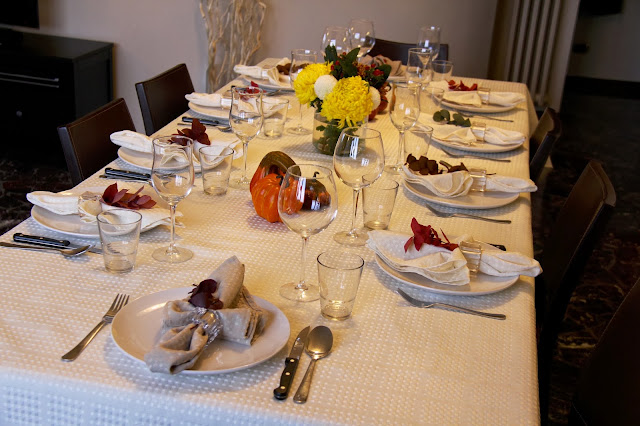
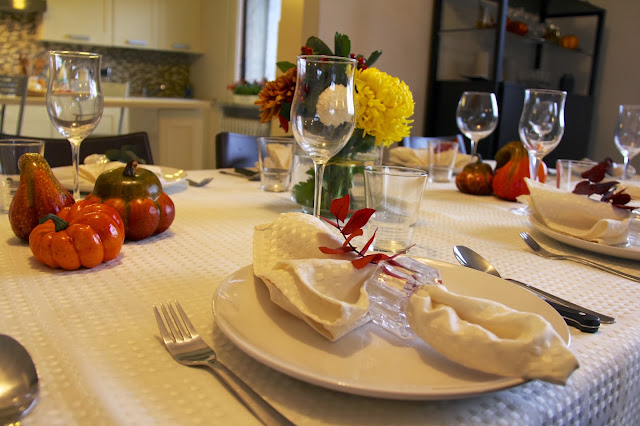
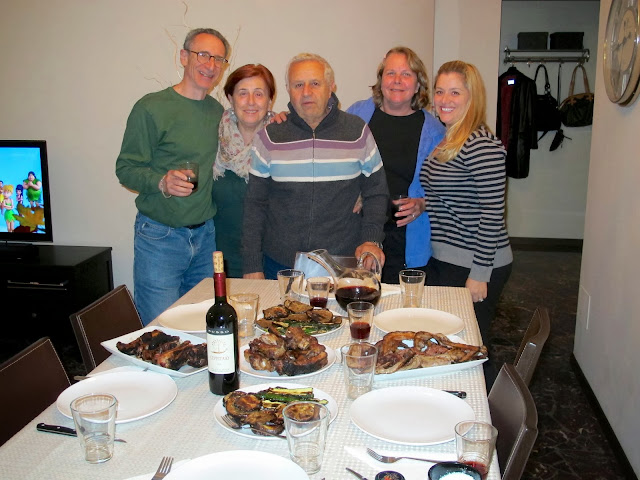
Our Thanksgiving table is set
Thanksgiving is one of my favorite holidays.  Of course I love the spirit of Christmas, the fun costumes of Halloween (another holiday that they don’t really celebrate), the fireworks of our Independence Day… but nothing can match the guilt-free ability to gorge on delicious food all…day…long!  And if that wasn’t good enough, you are then permitted… nah, encouraged to lay on your duff and watch football until it’s time to re-heat a plate of leftovers.

Julia was Superwoman for Halloween this year –
even though she was one of few kids dressed up
We knew that we weren’t going to give up our tradition of Thanksgiving just because we are living in another country.  In fact, we were excited to share our holiday and traditions with Jen’s relatives. Ideally, we would have eaten our Thanksgiving dinner along with the other people in America (well, six hours ahead anyway) – but we will be out of town during the holiday.  So we decided to host our Thanksgiving dinner early.  Before we could take our first bite of that delicious dinner, we needed to plan a menu.  And if you’ve ever been around my wife when she plans an event… if we have an official menu, then we’ll also need an official outline for the entire week leading up to the event.
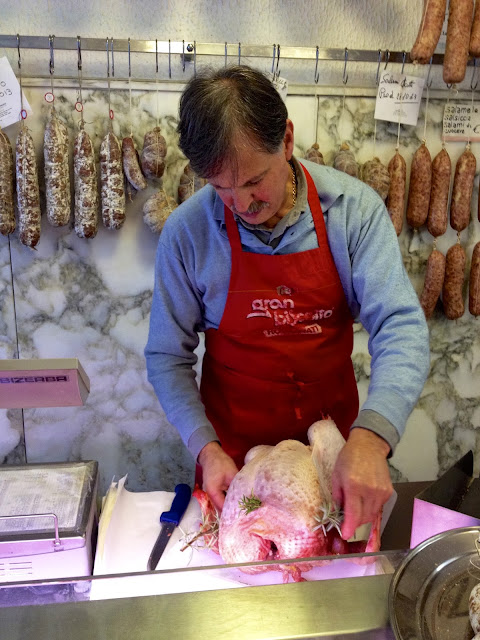
I had many small jobs, but the most important – procurement of the bird and selecting the wine.  For the turkey, I went to our local macelleria (butcher shop), Macelleria Ostinelli.  You see, you cannot just go down to the supermarket and pick up a whole turkey.  It simply doesn’t exist here.  Italians eat turkey, but they are either quartered or filleted – never sold whole.  In fact our macellaio (butcher), Marco had to call his “turkey guy”, Lorenzo just to confirm that they could even have a whole turkey delivered within three days.  It was the first whole turkey Marco had ever sold in 20+ years of being a butcher.  We got the green light from Lorenzo and went home to continue planning.
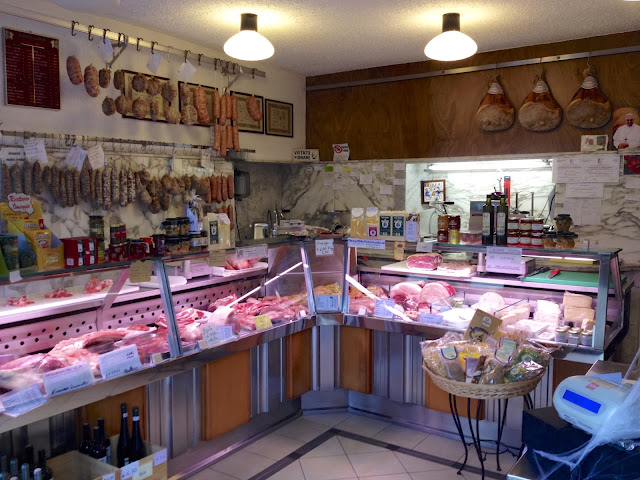
Inside Macelleria Ostinelli
Our macellaio (butcher), Marco prepares our turkey
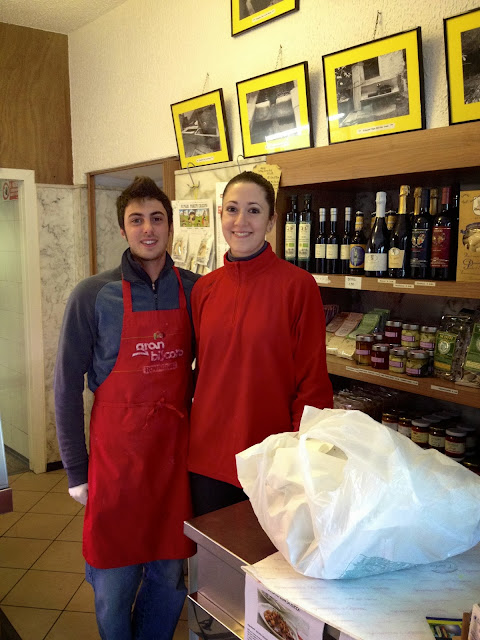
His son, Paolo and niece, Francesca
“Cook me like one of your French turkeys, Jack”
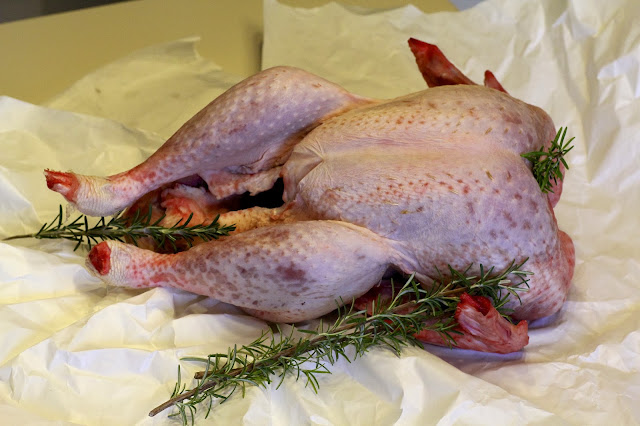
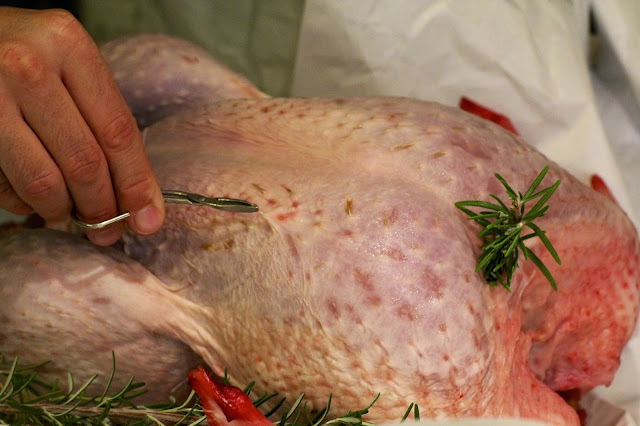
The turkey was so fresh that it was still red… and needed a few extra feathers plucked
The wine was a much more complicated process.  I went into a wine shop I’ve been wanting to try; one just outside of downtown Como.  The selections of fine Italian wine seemed endless.  I chose three wines that are classified as Denominazione di Origine Controllata e Garantita (DOCG), a designation that connotes some of Italy’s best-known and highest quality wine.
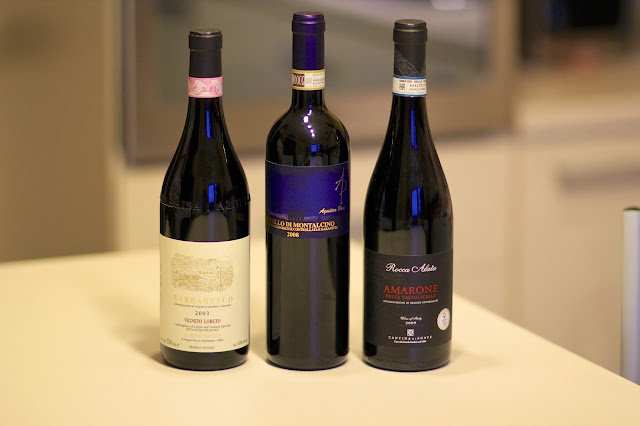
A trio of wine from all over Italy
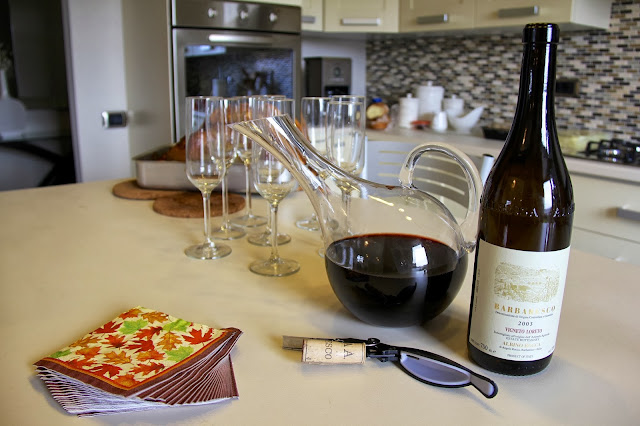
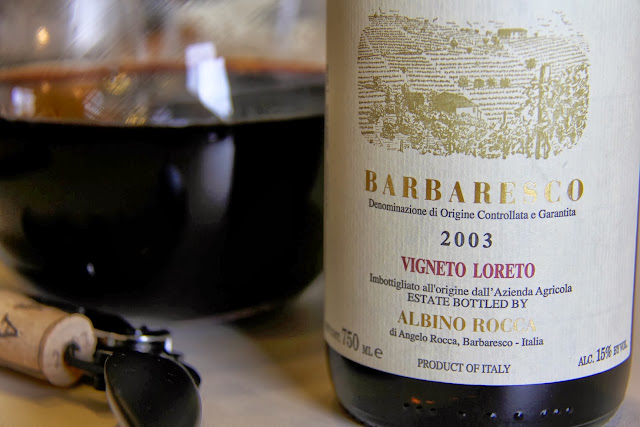
I opted to start our meal with a Barbaresco (having recently come back from Piemonte).  I picked a 2003 Vigneto Loreto from Albino Rocca – a producer that obtains their [nebbiolo] grapes from the finest area in the region.  I thought that the balanced flavor profile of this Barbaresco would do nicely to awaken our palates.
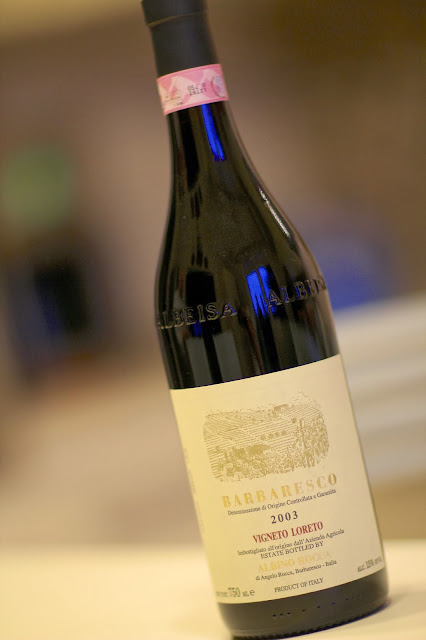
2003 Barbaresco Abino Rocca, Vigneto Loreto
For our second wine, I selected a 2008 Brunello di Montalcino.  Tuscany is known for many things and their wine is nothing short of spectacular.  Agostina Pieri produces a fine example of the wine that incorporates one of my favorite Italian grapes, Sangiovese.  The bold flavors would serve as a nice progression from the more tannic and refined Barbaresco.
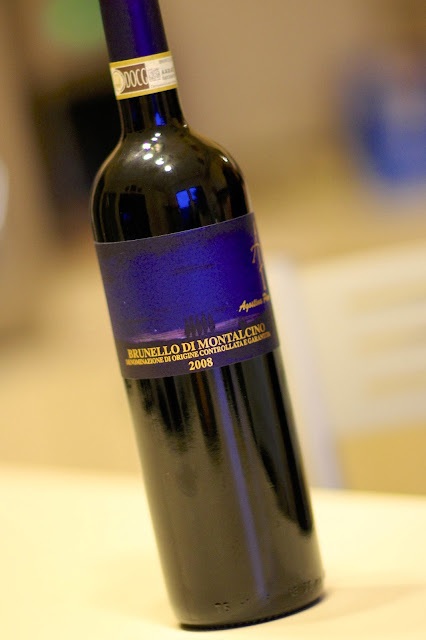
2008 Brunello di Montalcino Agostina Pieri
Finally, I wanted a wine to shout from the rooftops – so I chose a big, bold Amarone della Valpolicella.  Jen and I were just recently introduced to this type of wine by my uncle, and it was love at first taste.  A unique harvest and fermentation process yield a ripe, raisiny and full-bodied wine that jumps across your tongue and waltzes with your tastebuds.  How could this not be the perfect wine to finish the afternoon?!  Cantina di Soave produces a wonderful Amarone, Rocca Alata.
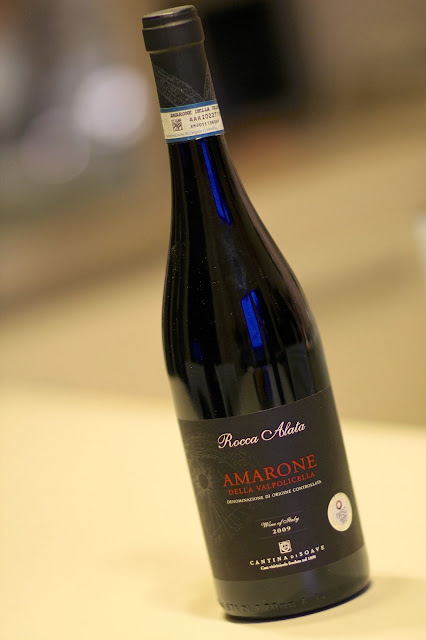
Amarone Cantina di Soave, Rocca Alata
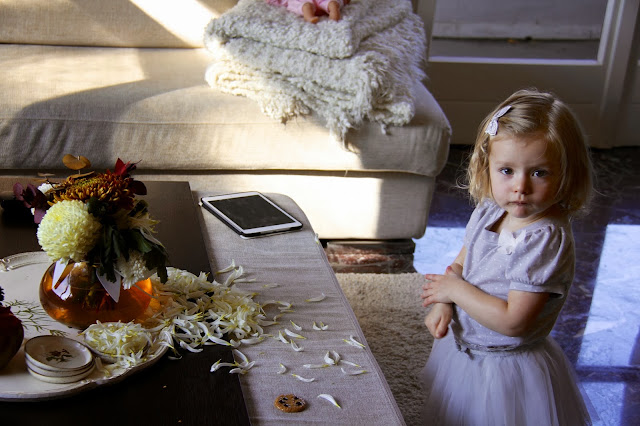
The night before our guests arrive, I helped Jen set the table.  Well, I mainly played defense against Julia while Jen set the table.  I let her get a goal past me the next day when she ripped up part of the bouquet just before our guests arrived!
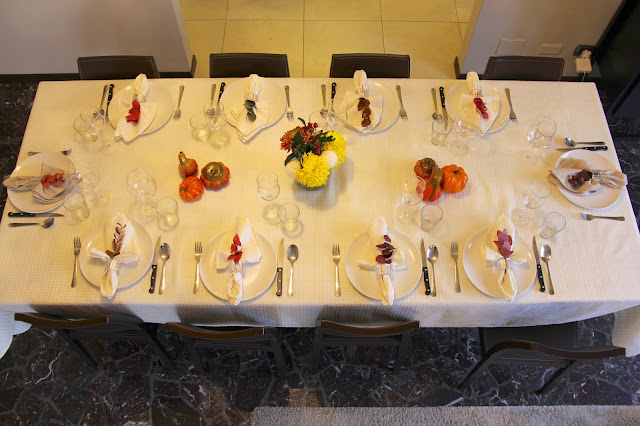
Jen’s table
We used seasonal flowers as part of the decoration
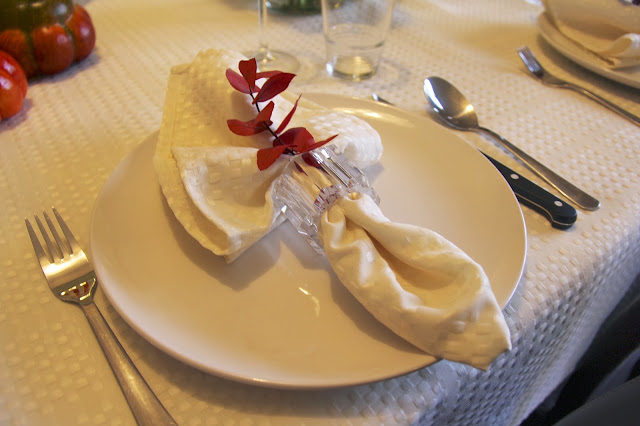
A place setting
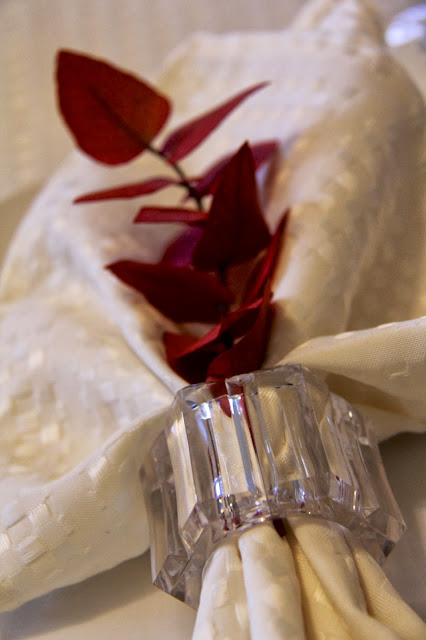
A napkin before it got messy with delicious food
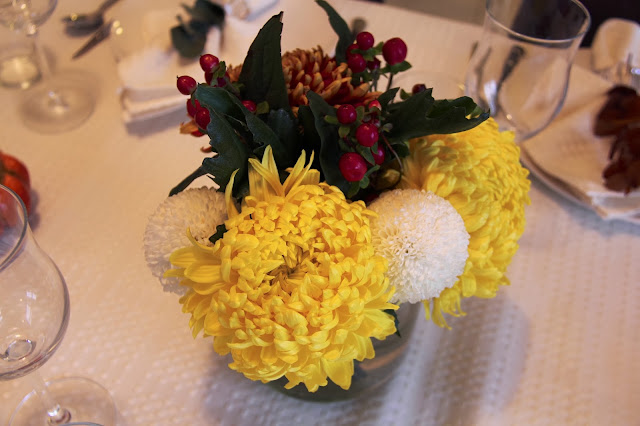
Center bouquet
Julia got to the other bouquet – I love her look as if to say, “I didn’t do it”
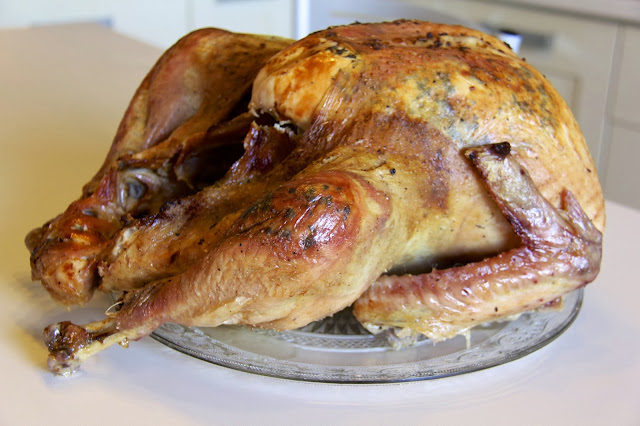
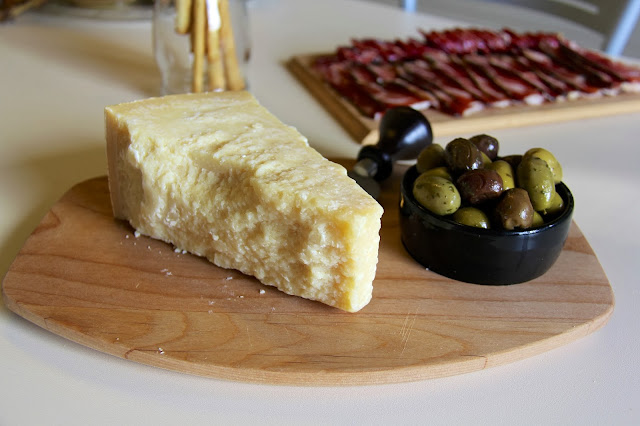
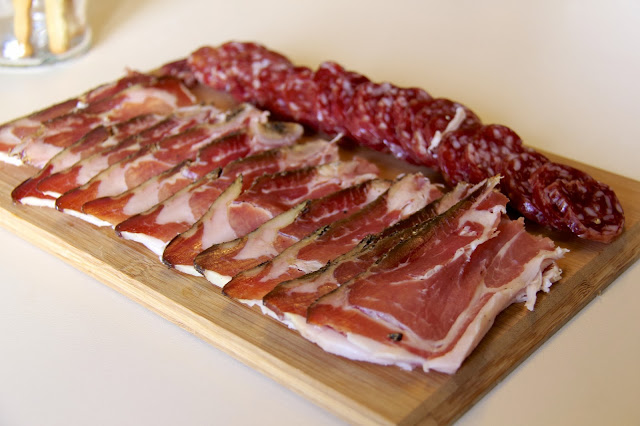
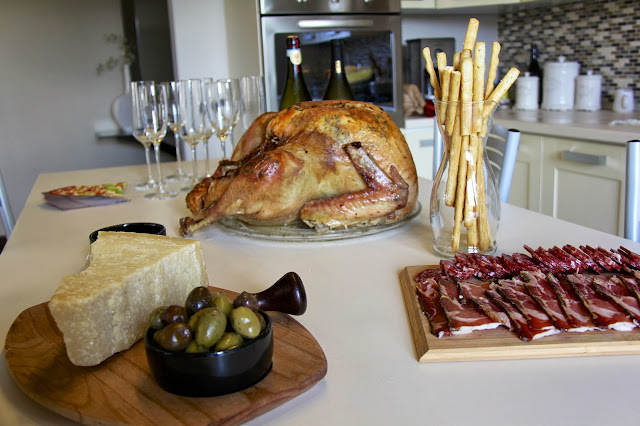
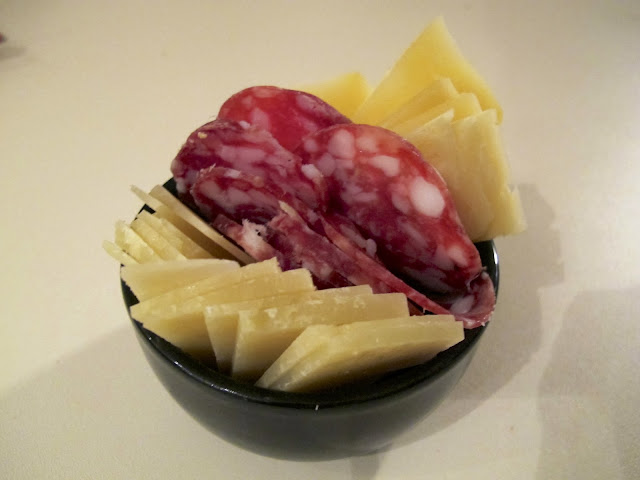
Jen had perfectly timed the turkey to come out and rest next to all of our antipasti.  I am willing to bet that we hosted one of the few thanksgiving dinners in the world to start with olives, grissini (Italian breadsticks), salami and parmigiano.  Our 7.4 kg (16.3 lb) turkey was quite the showstopper as Jen’s Italian relatives walked in.  It was one of the first times ever that I have seen Italians take out their cell phones to take pictures of food.  For them, food should be eaten – not photographed (I’ve been called, pazzo more than once).  So it was quite a reward for all our hard work to see jaws dropped and cell phones flashing.
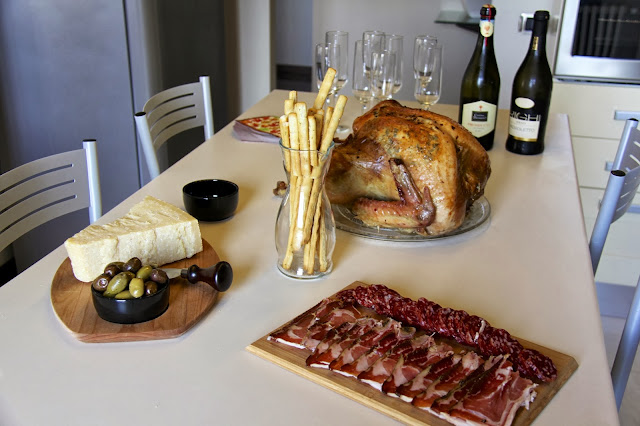
Our welcome table
The turkey came out moist and delicious
36-month aged Parmesano cheese and olives
Speck and salami
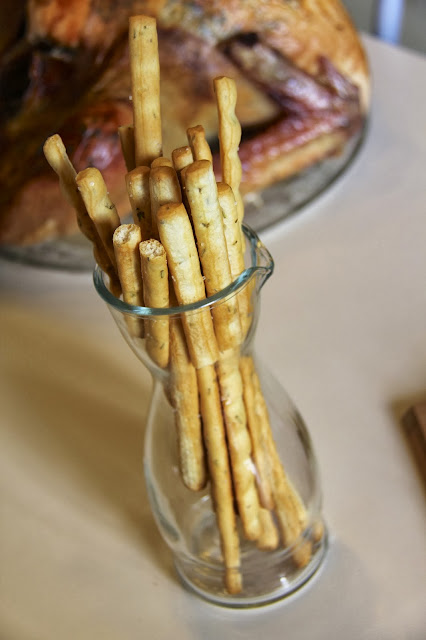
Grissini
Let’s get the party started
Let’s get the wine decanted…
This is going to be good
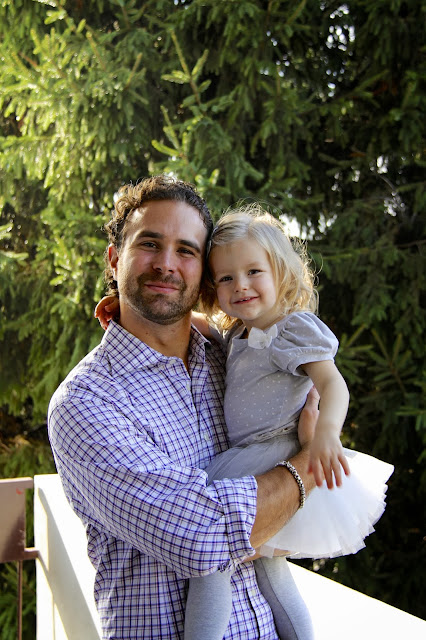
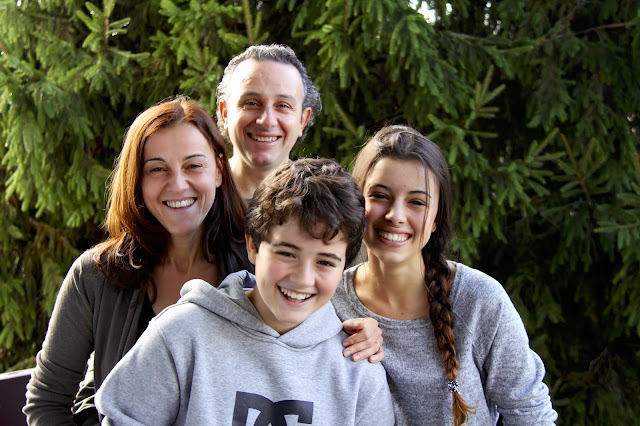
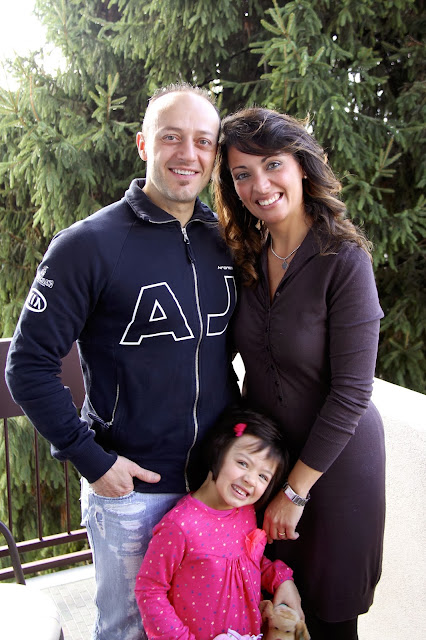
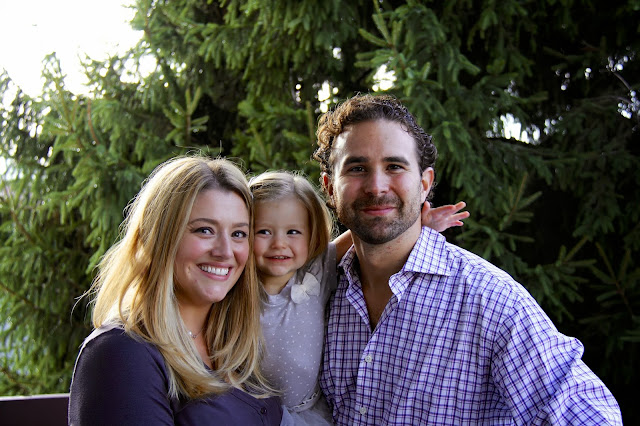
After proscecco and antipasti, we each took turns taking family photos on the balcony.  I’m glad that Jen suggested this – it gave each family a nice keepsake from a pleasant afternoon.
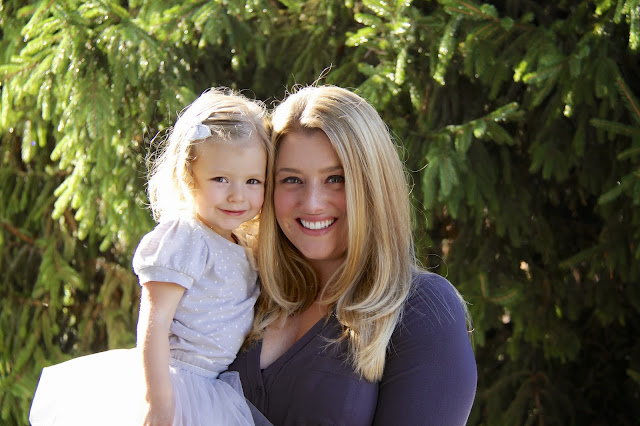
My girls
Love this peanut
Gianni and Giusi along with their son Marco and daughter Sara
Massimo and Alessandra with their daughter Bea
You know this cast – Greg and Jen with our daughter, Julia
Franco and Claudia – Franco actually smiles for a photo!!
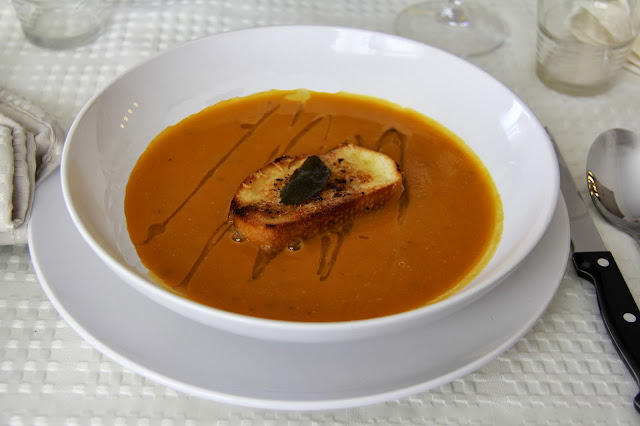
We eventually made our way to the table for our first course, a squash soup with parmesano croutons.
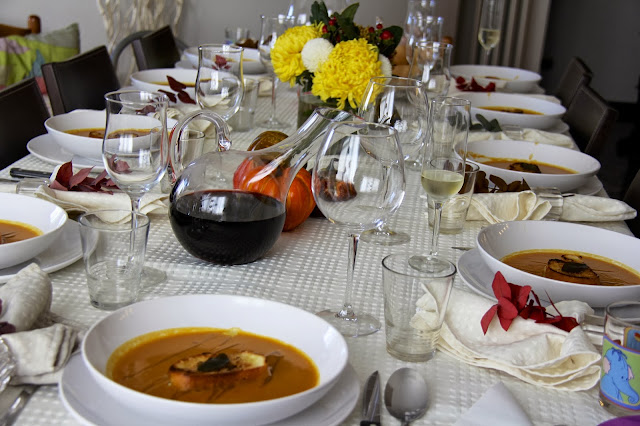
Now we’re ready to really dig in
A drizzle of fine olive oil enhances the taste and presentation
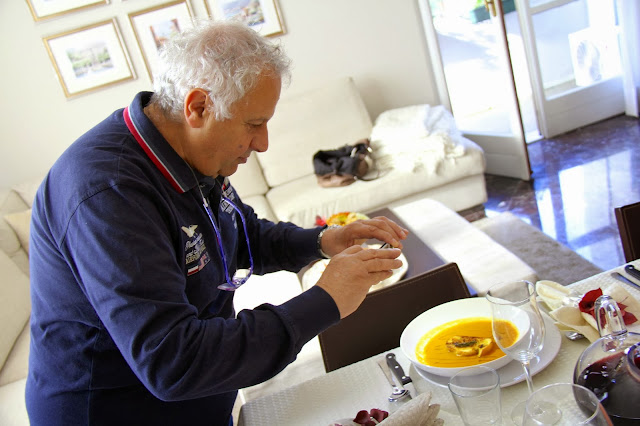
Franco took a picture of the soup as well as the turkey – this was a first!
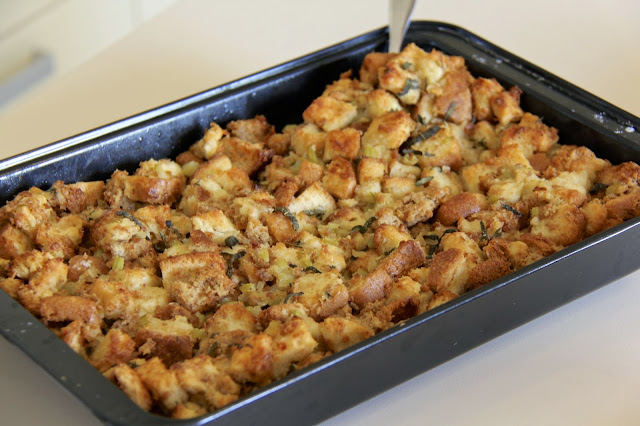
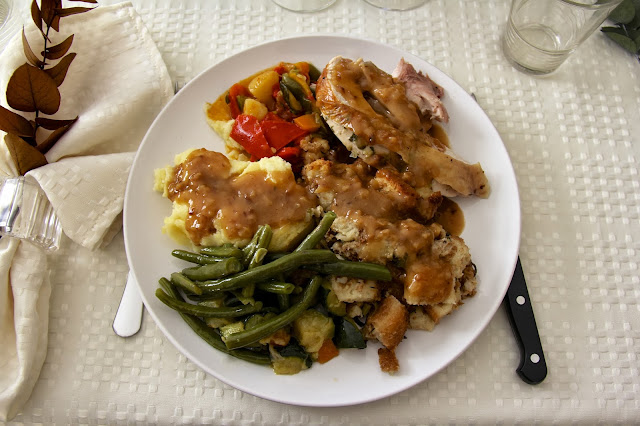
Next, we brought out all the food.  We had the stuffing (I had to explain it as “cooked bread”).  We had mashed the potatoes.  We had the gravy“questa è una salsa” (this is a sauce).  Pouring a “sauce” over everything was definitely a foreign concept.  Claudia made the vegetables – green beens and a ratatouille.  And of course, we had the turkey.  A roasted lemon sage turkey that was delicious.  I explained that the goal was to cram your plate so full that none of the plate was visible.  Jen’s cousins Gianni and Marco understood the goal… no one else quite got it.  We went around the table to say what we were most thankful for and dug in.
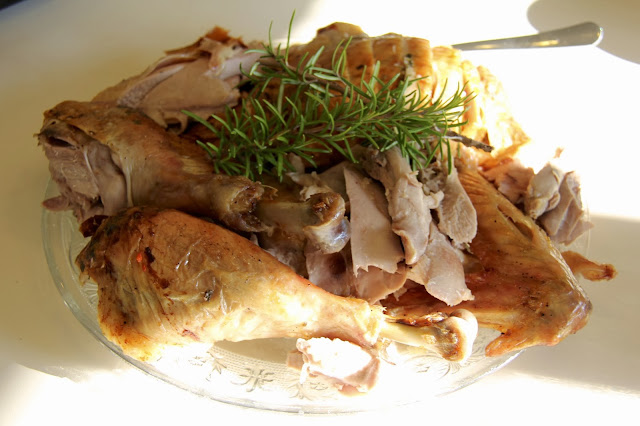
A plate of the carved turkey
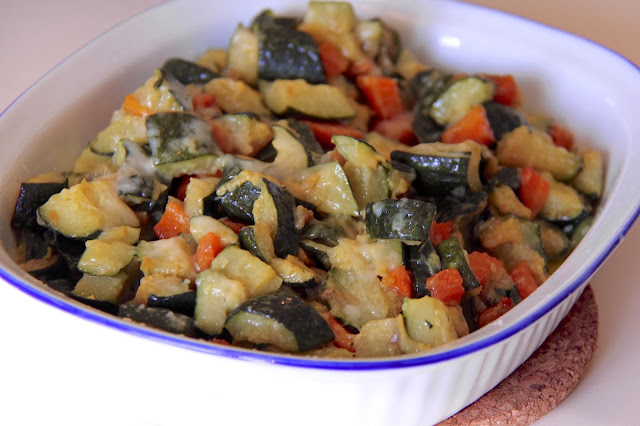
Claudia’s vegetables
Jen’s stuffing
My plate – a proper American Thanksgiving plate
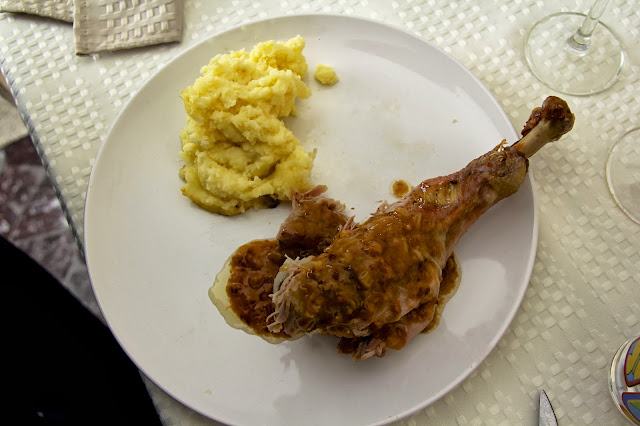
Franco’s plate – he didn’t quite get the idea to cover it
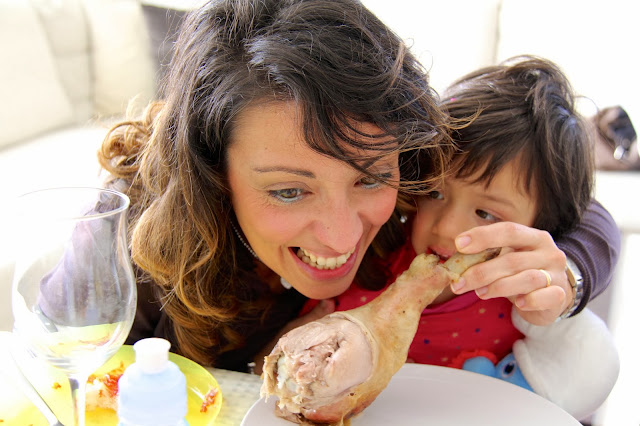
Alessandra plays around with Bea, who has likely never seen a turkey leg
Gianni brought a delicious wine that we opened
We never even finished my selections
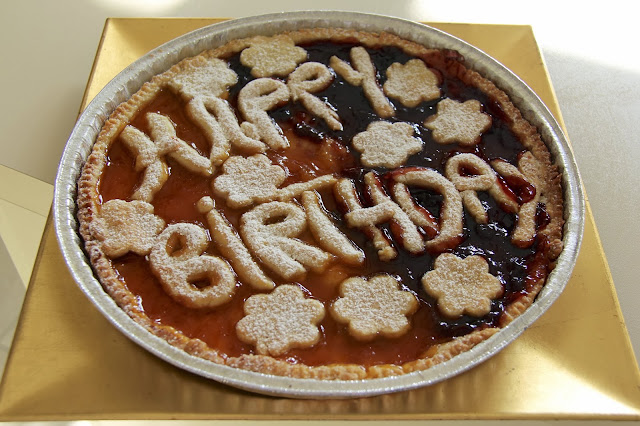
When we had finally finished eating our dinner, it was time for dessert.  Jen made a wonderfully American apple pie.  Her cousins Alessandra and Giusi were surprised when she told them that she made her own pie crust from scratch.  When they tasted it, they both immediately asked for the recipe (which secretly filled me with pride for my wife).  Giusi was so cute, she literally took out a notepad, ready to write – Jen had to promise to work on the measurement conversions and translation and email it at a later date.  Equally as impressive was the torte (pie) that Alessandra made.  Jen’s birthday had just passed and so she added a surprise element to the dessert.  It tasted every bit as good as it looked.
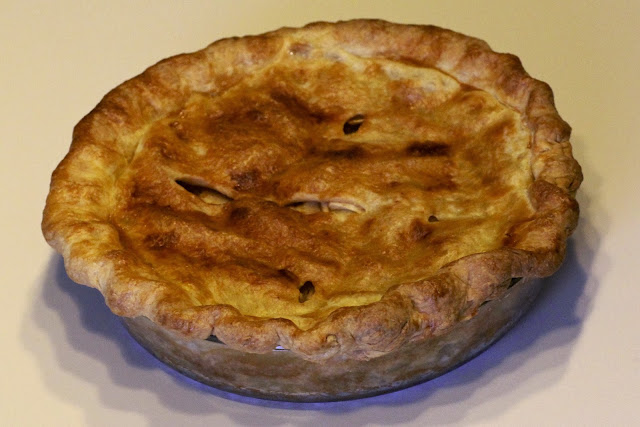
Jen’s apple pie
Alessandra’s torte
I have to say – Jen’s first Thanksgiving Dinner was A-M-A-Z-I-N-G!!  There were no hiccups, very little stress and it was absolutely delicious!
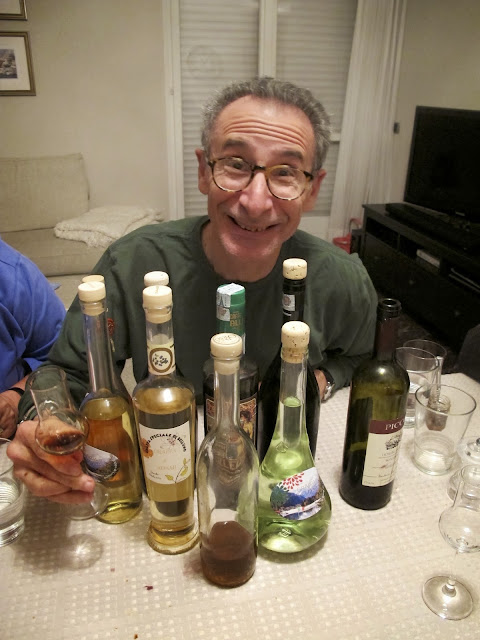
Of course, we finished the day off with grappa and whiskey and the most important part of Thanksgiving… a game of football on the television.  Only, it wasn’t a game.  It was a match.  And it wasn’t football.  It was fùtbol (soccer).  Oh well, you work with what you’ve got.
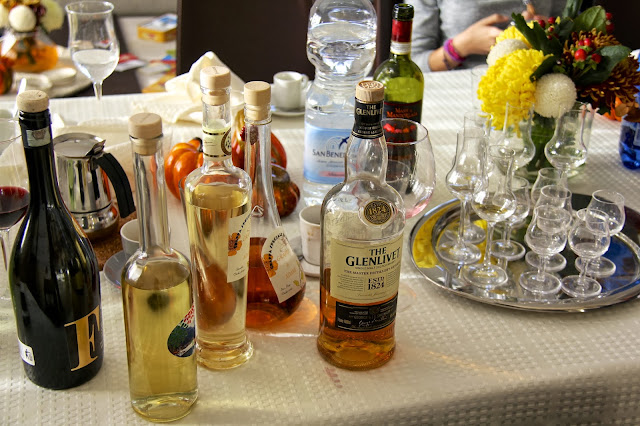
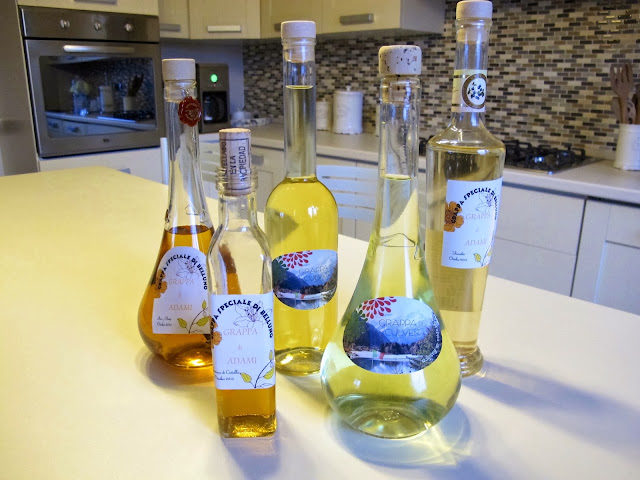
Our grappa and whiskey
Teenaged girls are the same in any country
Julia puts on a performance
Jen did Sara’s hair – I thought she looked beautiful
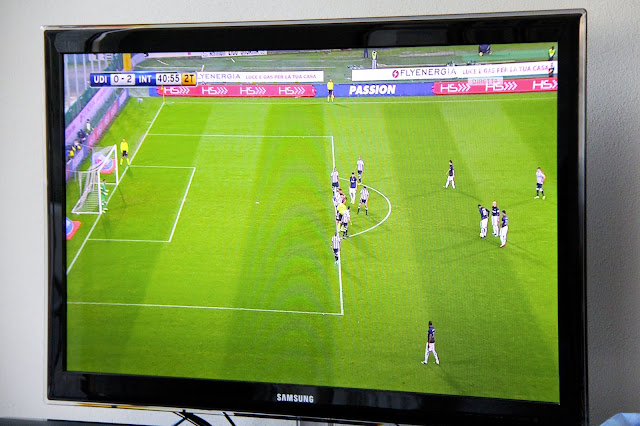
Soccer plays on the TV – not quite the football game I’m used to after a Thanksgiving dinner
I hope you enjoyed!
In case you’re interested in viewing the menu that Jen created, I copied and pasted her menu (and then, without her permission… her outline)!  Shhhh, don’t tell.
Menu
Antipasti
Cheese
Salami
Speck
Olives
Breadsicks
Wine: Proscecco – 2012 Cantina Trevigiana
            Pignoletto – 2012 Righi Reno
Primo
Squash Soup with Parmesan Croutons
Wine: Barbaresco – 2003 Vigneto Loreto (Albino Loreto)
 
Secondo
Roasted Lemon Sage Turkey
Gravy
Stuffing
Mashed potatoes
Green beans with shallots
Claudia’s ratatouille
Wine: Brunello di Montalcino – 2008 Agostina Pieri
            Amarone Della Valpolicella – 2009 Rocca Alata
Dolce
American Apple Pie
Alessandra’s Torta con marmellata
Drinks: Espresso, Grappa

Jen’s Outline [CONFIDENTIAL]

Thursday

Iron table cloth and napkins

Friday

Make Squash Soup
Prep Stuffing
Friday Shopping
Grate Cheese
Dry the bread for stuffing

Saturday

Pick up Turkey
Buy Flowers
Arrange Flowers
Brine Turkey
Make Pie
Make Stuffing
Set the table
Wash pots in the dishwasher
Make mashed potatoes
Make compound butter for turkey

Sunday

6:30 – Turkey comes out of the refrigerator and 2 sticks of butter
7:00 – Take compound butter out of the refrigerator and prep turkey
7:15 – Pre heat oven
7:45 – Turkey goes in the oven
8:00 – Jen and Julia shower
9:00 – Make croutons and fry sage for soup
9:30 – Take stuffing and potatoes out of the fridge
11:15 – Turkey comes out of the oven to rest and stuffing needs to be made
11:25 – Prepare Gravy
11:50 – Greg to cut salami and speck
12:00 – Put stuffing and potatoes in the oven and set up Antipasti
12:30 – Guests arrive
1:00 – Lunch is served

Vinegar and Ice Cream – A Delicious Combo!

It’s likely that you may think I’ve gone off my rocker.  Vinegar on a salad – of course.  Vinegar on french fries – sure.  But vinegar on ice cream?!  Greg, you must be crazy?!  I assure you, I am not (well, at least when it comes to this point).  Provided one very important detail is in play… that the vinegar used is aged balsamic vinegar from Modena.  This dark, delicious treat becomes sweet and thick (almost, syrupy) once it has been aged 12(+) or 25(+) years.

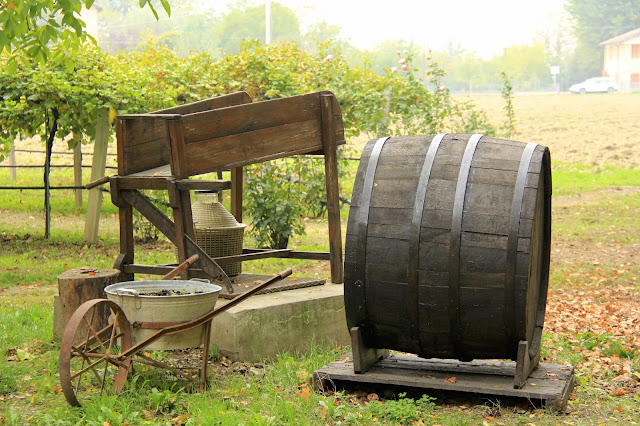
Old fashioned equipment used to make vinegar now stands as decoration

I have been a fan of all things vinegar for as long as I can remember.  Admittedly, a strange condiment choice (above ketchup or mayonnaise) – but the heart wants what the heart wants.  Although we use apple cider vinegar every single day, I have always been quite fond of balsamic vinegar.  Just the right amount can add the perfect hit of acid to round out a caprese salad.  However, I recently learned that I have become accustomed to eating the equivalent of a McDonald’s value meal when a readily available filet mignon was just around the corner.  But let’s back up and find out how I discovered this…

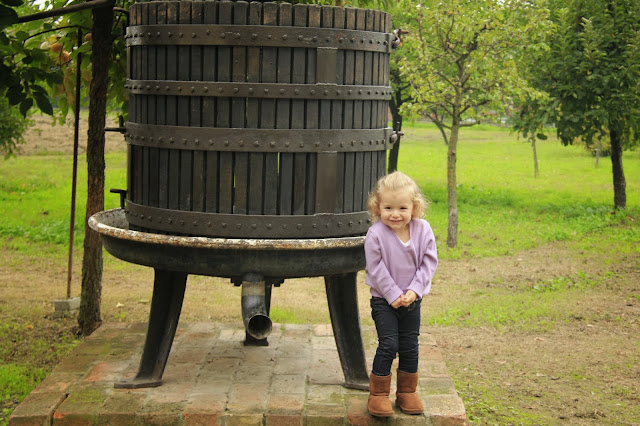
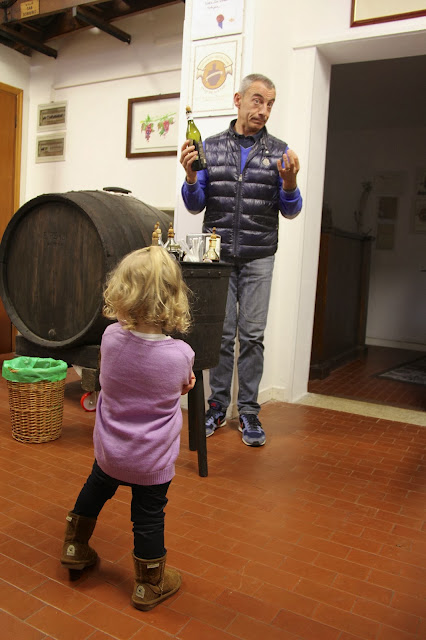
Julia stand by an old grape press
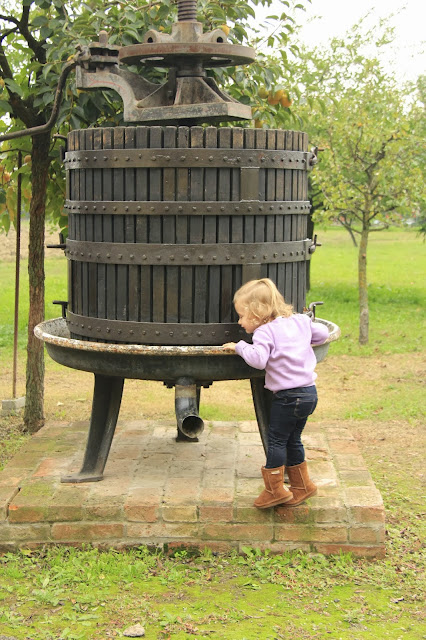
She’s a curious little girl
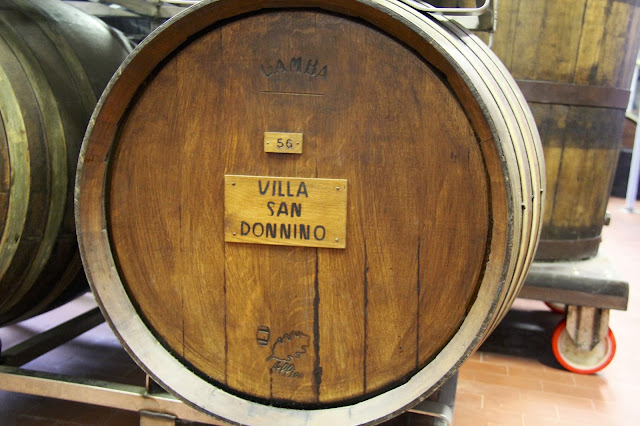
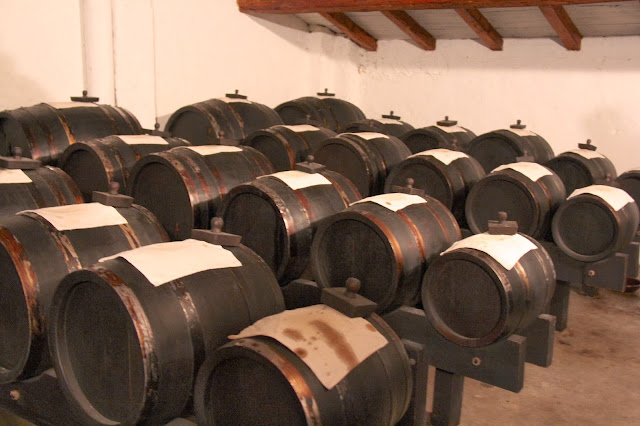
One of the barrels used for aging
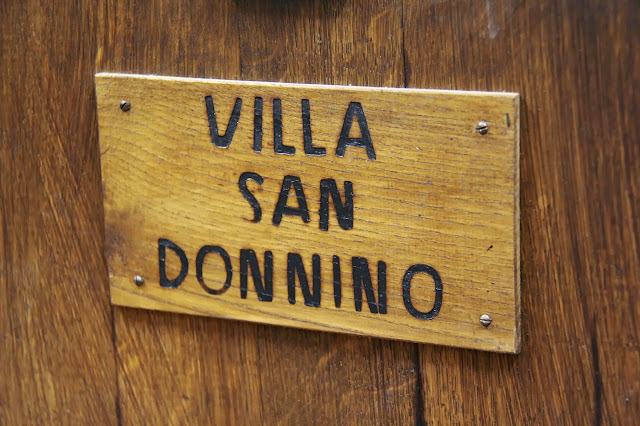
Villa San Donnino has been a family run business for three generations
When my aunt Deborah and uncle S came to visit, we ventured on a road trip to the Emilia-Romagna region of Italy.  If you read that particular post, you learned that Emilia-Romagna is widely known for two things – cars and food.  One of the most significant contributors to the food column is the aged balsamic vinegar that is produced exclusively in Modena.  On our final day of the road trip, we arranged for a private tasting with a local producer, Villa San Donnino.  Jen had learned that a tour and tasting at Villa San Donnino was one of the top-rated attractions on Trip Advisor.  Once again, our favorite online guide for all things travel hit a home-run.

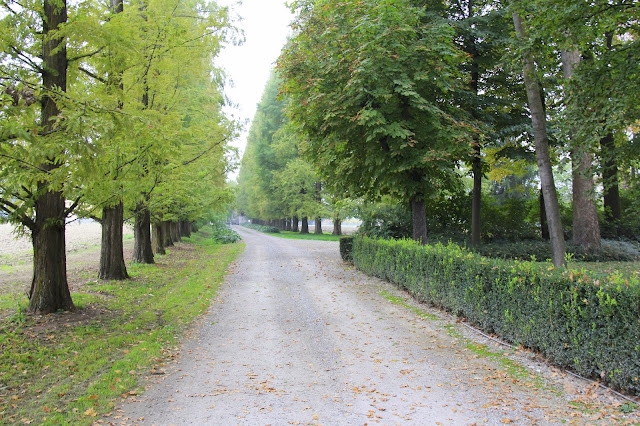
The driveway leading toward the villa
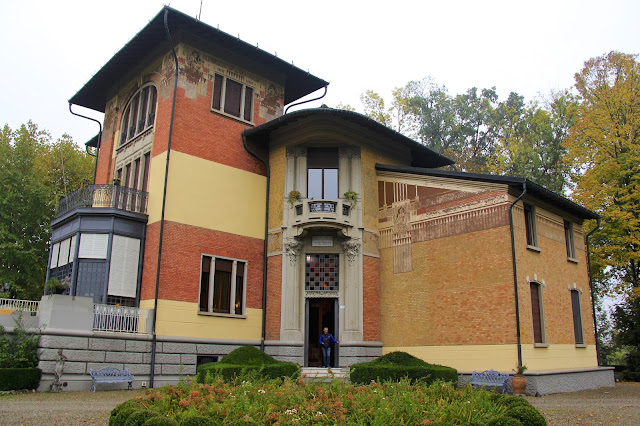
The villa of, Villa San Donnino
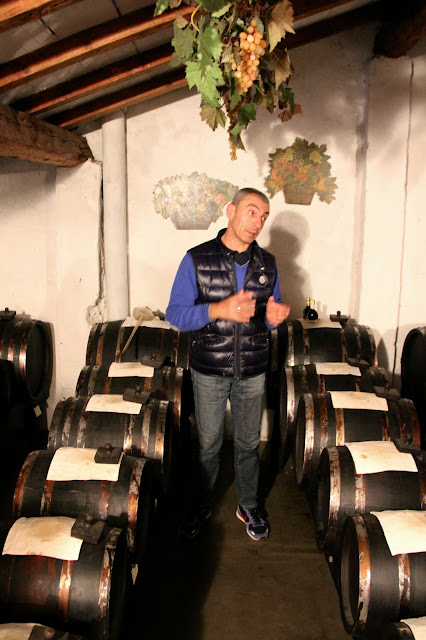
The important aging process begins here, in these barrels

Not only did the overall experience exceed our expectations – it raised the bar for what events like this should be all like over the country.  The owner and third generation producer, Davide greeted us warmly and took us into the portion of the property where the vinegar is aged.  He first gave us a brief explanation of the vinegar itself.  It was summarized nicely in a marketing brochure I took from the villa, so I will copy the text below:

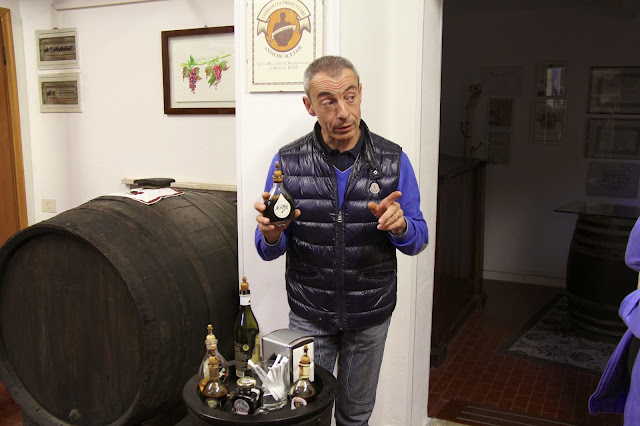
Davide explains the rigorous balsamic making process

Traditional Balsamic Vinegar of Modena is unique from all other vinegar based condiments.  Unlike ordinary vinegar which has its origins in an alcoholic liquid, balsamic vinegar is produced directly from grape juice.  Grapes, harvested in the region in which balsamic vinegar is produced, are crushed and their liquid – “must” – is boiled in an open vat over a fire.  This liquid is then placed in a high quality wooden barrels in which, through an oxidation process, it is transformed into vinegar.  The barrels are kept in a vinegar loft – acataia – where over a number of years, the precious liquid inside is lovingly cared for through a special technique involving transfers and topping up.  Over many years macrobiotic and enzymatic modifications unite to achieve an exceptional balance in the fragrance and flavor. 

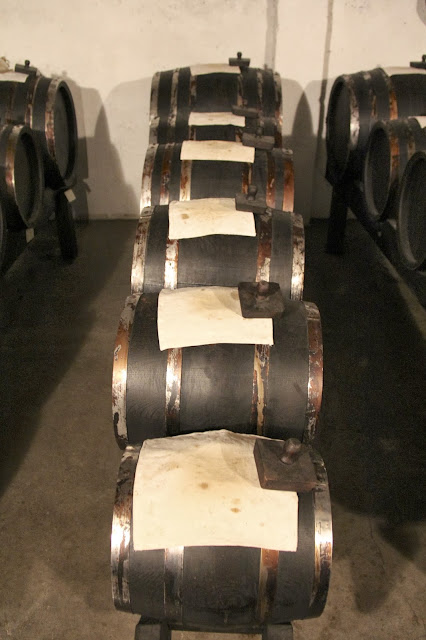
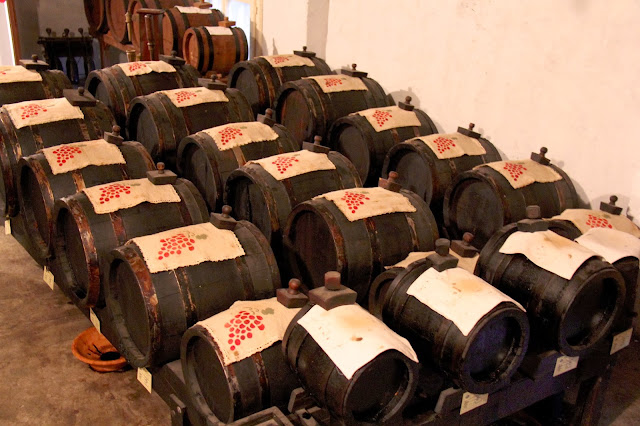
As we climbed the stairs to the acataia (vinegar loft) we were first greeted by the unique and pleasant aroma permeating throughout the loft.  Davide began to explain the aging process, having already described that his balsamic vinegar juice comes exclusively from grapes on his property.  In order to properly age vinegar, you must use a batteria, a series of five or six barrels that descend in size.  A process of “topping” off from the larger barrels into the subsequent smaller barrels is done over many years in order to replace evaporated liquids.  Since the last, smallest barrel is the object from which the final contents are removed for bottling – there is no way to identify a specific amount of time in the barrels (i.e. twelve years).  Because the liquids have been mixed from the larger barrels over many years, a unique system of labeling was created.  A balsamic vinegar that was aged for 12 years will have been aged for at least twelve years (meaning, that 12 years is the youngest portion allowed in that mixture).  The same is true for 25 years and the extremely rare 50 year vintages.

A batteria, aging the vinegar
Another room with a different collection of barrels
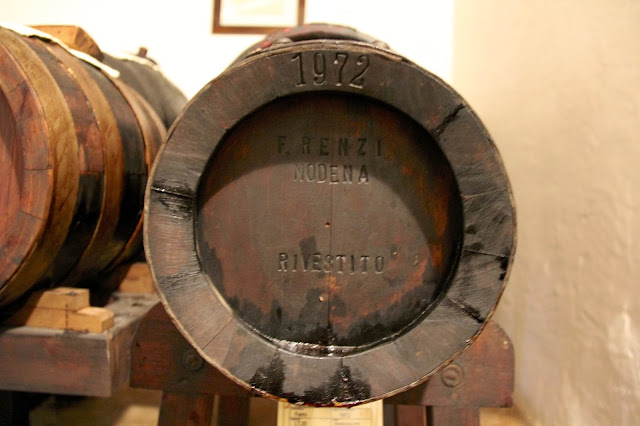
This reserve vinegar has been aging since 1972

As Davide was explaining the process, we all noticed that he acquired a little two-foot groupie.  Our little Julia seemed more than just enamored with Davide, she fell head over heels for him!  She kept asking him to pick her up and would require his attention at almost every point hereafter.  It was hard for Davide to focus on the remainder of his tour, when at each turn he would hear a little voice saying, “Davide… hold me!”  If she liked him this early on in the tour, she loved him when he brought out the gelato (ice cream) for us to try.

Davide with S and Deborah
Julia holds Davide close for a photo
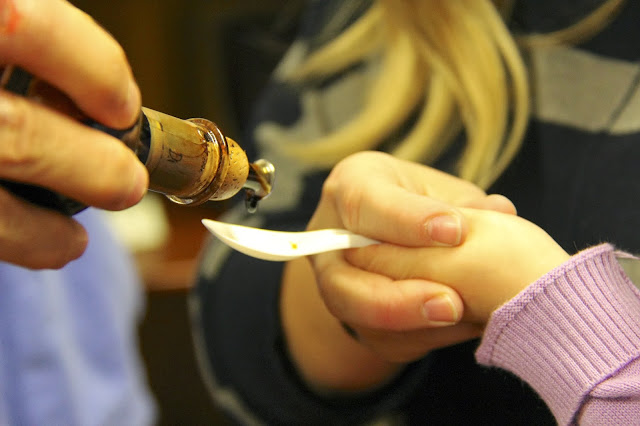
Davide brings Julia in to taste the vinegar with ice cream – she wouldn’t let him go

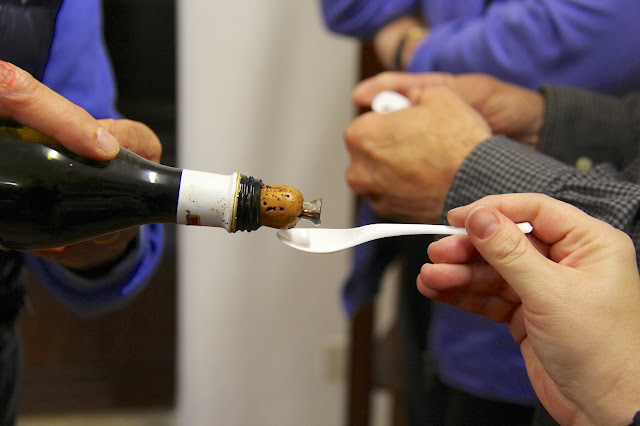
You see, as I mentioned earlier, aged balsamic vinegar has a wonderfully sweet taste with a somewhat thick consistency.  It pairs wonderfully with fruit (melon, strawberries), meat (a nice hearty steak), cheese (a few drizzles over parmigiano)  and especially ice cream!*  In order to prove this point, Davide had arranged a tasting – a  “flight” of vinegars, if you will.  We started with a store-bought, uncertified vinegar.  It was not good.  Then we moved onto his white vinegar before climbing the ladder through his 12 year and on to the 25 year.  Each one was more magical than the last.  When he drizzled it on the ice cream, we couldn’t believe how well it paired.  Julia was such a fan of the vinegar that she didn’t want anything to do with the ice cream, and just wanted more vinegar!  This is one Italian baby!

A display set, ready for us to taste
Davide explains the differences of the vinegars to an enamored fan
“Let the tastings begin!”
Davide gave us a very informative and interesting lesson
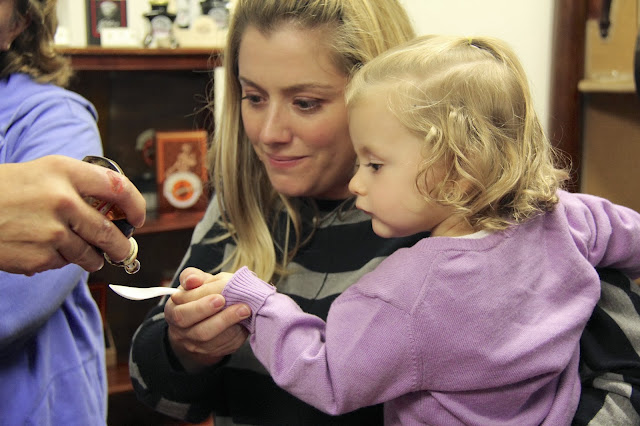
Julia did not want to miss her turn tasting
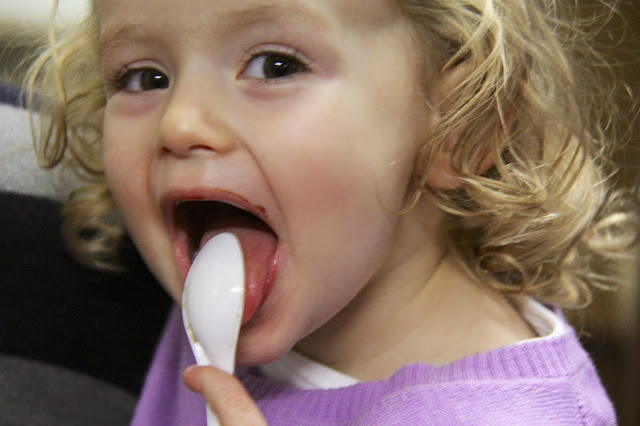
She loved the vinegar of Villa San Donnino
“More please!”
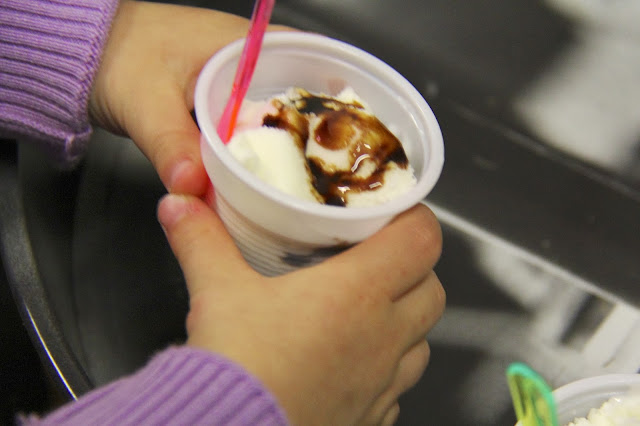
The vinegar coats the ice cream like a sweet syrup
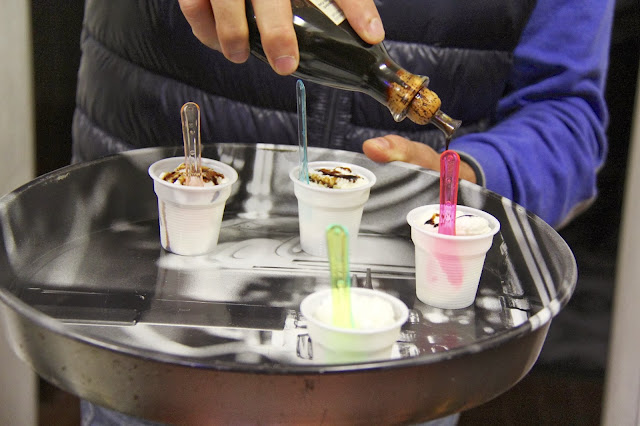
Davide drizzles the vinegar for the rest of the group

As the tour wound down, Davide was starting to feel more like a family member than someone we had just met.  Each couple bought some of his wonderful aged balsamic.  Jen and I got some to use here in Italy and some for when we move home (unlike olive oil, the vinegar can last for many years in the bottle).  I think S and Deborah bought his entire supply, including an affinato (aged 12+ years), an extravecchio (aged 25+ years) and the riserva (aged 50+ years).  I think I’ll risk facing ten years in prison to smuggle home a wheel of parmigiano-reggiano cheese if S will promise to drizzle some of his riserva on it!

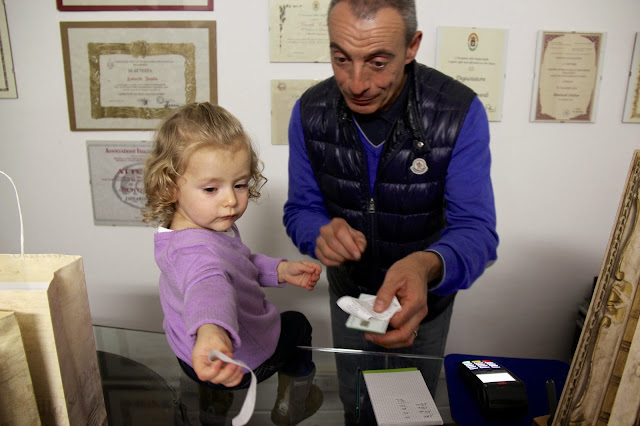
Julia helps Davide ring her father up
S and Davide take a picture with his new 50 year Riserva
All of a sudden, we all heard, “anche io” (“me too” or “so do I)
Julia didn’t want them taking a picture without her
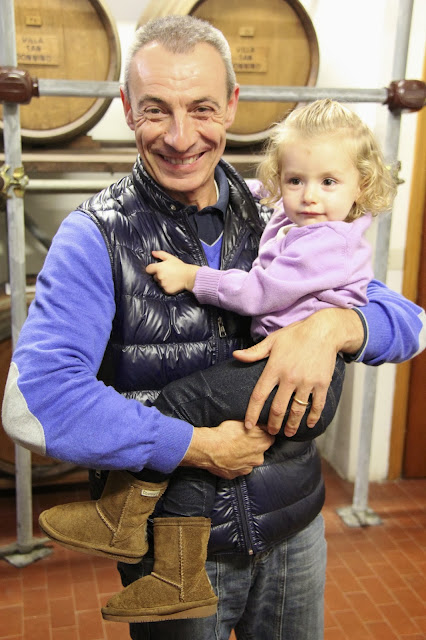
Davide holds Julia for a hug
Julia gives Davide a big hug

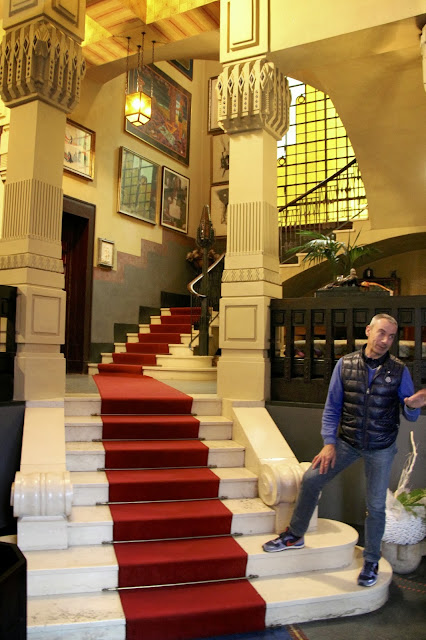
When we had completed the tour and acquisition of our newfound condiments, Davide did something that I suspect he doesn’t do for most tour groups.  He offered to open his private home to us, the villa pictured in the brochure.  This villa was acquired by his grandfather in the 1940’s and has stayed with the family ever since.  In fact, the villa itself plays an integral role in the history of Acetaia Villa San Donnino.  After acquiring the property, his grandfather happened upon a barrel used for making vinegar and so he thought he would “give it a try”.  Over seventy years later, the family is still making vinegar in the traditional way.  Davide explained that to be included in the small fraternity of roughly 80 producers in the world… you must have time, patience and a passion that cannot be taught.  The tour of his home was simply amazing, jaw dropping examples of art and collectables abound around each corner.  It was no wonder that Bernardo Bertolucci chose this location to film part of his movie, 1900, staring a young Robert DeNiro and Gérard Depardieu.

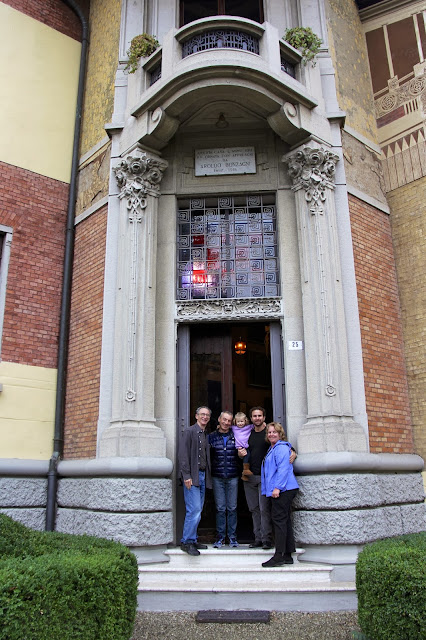
Everyone prepares to go into Davide’s home
Quite a grand entrance
The ceiling above the staircase
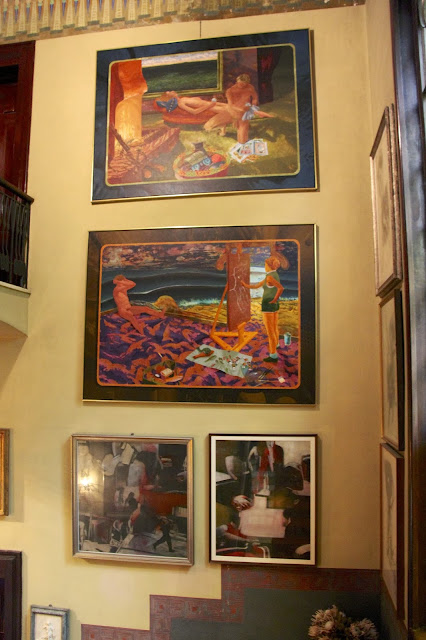
Stunning artwork adorns nearly every wall
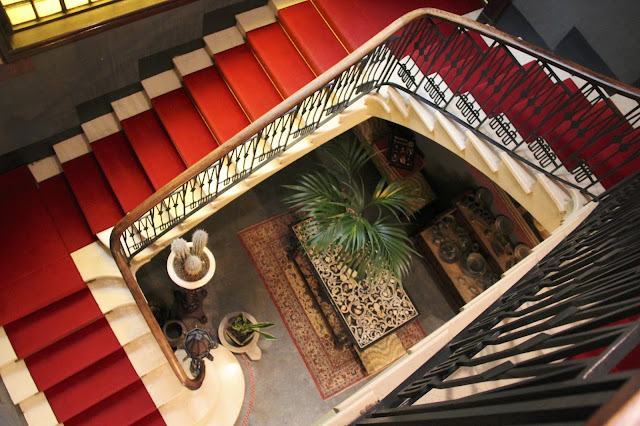
The stairwell from the second floor
A collection of smaller original prints frame an antique desk nicely
A stairwell leads to an annex full of glass pieces
If this dining room could talk… I can’t imagine the history it’s seen.  Robert DeNiro, for starters…
This was one of the more beautiful chandeliers I’d ever seen

As the sun was setting on a long and wonderful day, we bid Davide a fond farewell and Julia tossed her new friend many many kisses.  We will definitely come back to see Davide again and re-stock our balsamic vinegar; if you find yourself anywhere near Modena, I suggest you pay him a visit as well!

Villa San Donnino
Strada Medicina 25/1
San Donnino MO 41126
www.villasandonnino.it

*These are just a few of the wonderful uses for the condiment.  While there are many, many uses for aged balsamic – most applications require a unique understanding of the complexities of this liquid gold.  Since it is very expensive and can also overpower a dish with careless use, it is recommended that you do a quick bit of research before adding to your next dish.

Would You Like To Join Me For a Run?

I have a love-hate relationship with running.  I love the feeling of finishing a five or six mile run.  I hate the agony I get in my calves the next day.  I love pushing myself to run a distance further than I’ve ever run before.  I hate pushing myself through that first mile after foolishly taking four months off during the winter.  Currently, I’m learning to find a proper balance in my on-again off-again relationship with running.  Since living abroad, I’ve discovered a renewed commitment to running.  I am lucky enough to have some of the most amazing routes in my own backyard – a benefit that definitely keeps me on the trail a little longer.

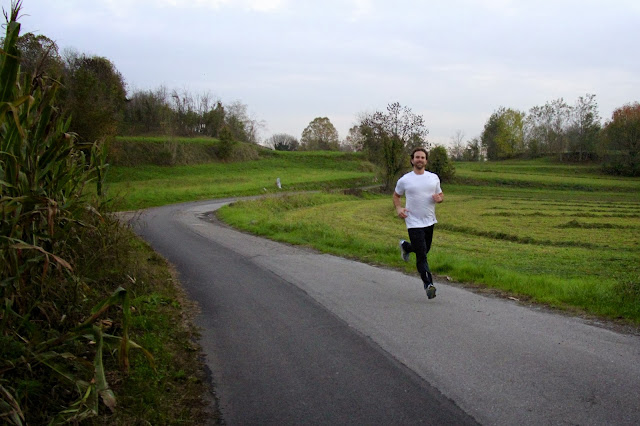
“Please, come join me along my run”
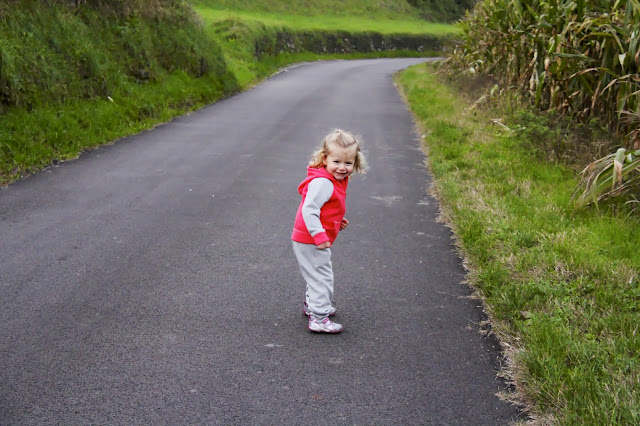
Julia loves to join me on an occasional run

We have been really lucky with some wonderful weather this fall.  Just this morning, I went for a jog in shorts and a lightweight jacket.  I understand it’s a lot colder at home, so I would like to invite you to “come for a run with me”.  I have several routes that I take on a regular basis depending on how long, how far, or how much of a vertical climb I want.  Or sometimes, I’ll just go out and try to find something new.

Running along the trail
“I want to go for a run with you guys!”
“Here I go!”

One of my favorite routes (and probably the one that I take most consistently) is a 5K loop (3.1 miles) around the neighborhood.  I have taken many of the friends and family that have visited with me on this very same run.  And now you can join me!  I’ll map the distances, using mapmyrun so that you know how far we’ve gone.

Let’s get started…

WE TURN RIGHT OUT OF THE NEIGHBORHOOD, HEADED DOWN STRADA PROVINCIALE – WATCH OUT FOR CARS DURING RUSH HOUR

.15 miles

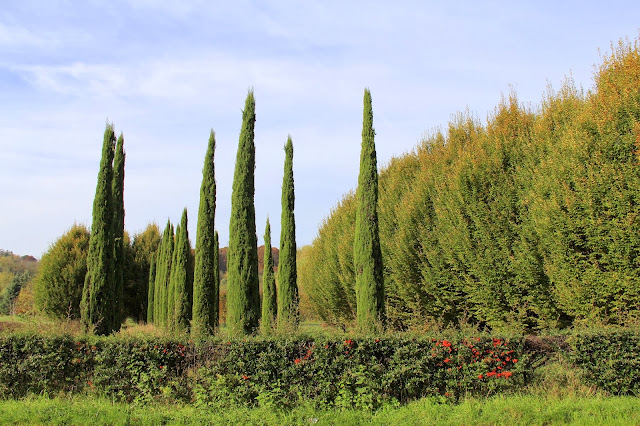
SOON WE’LL COME UPON A BEAUTIFUL COLLECTION OF ITALIAN CYPRUS TREES

.27 miles

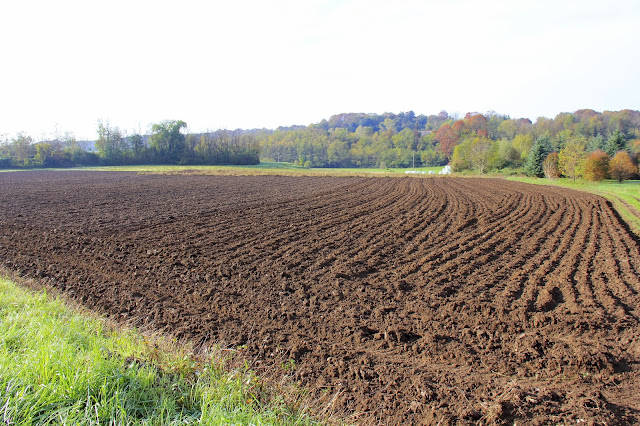
SUBSEQUENT TO THE TREES WE’LL SEE THIS FIELD, WHICH MEANS YOU WON’T HAVE A PLEASANT AROMA FOR THE NEXT 1/10 OF A MILE

.29 miles

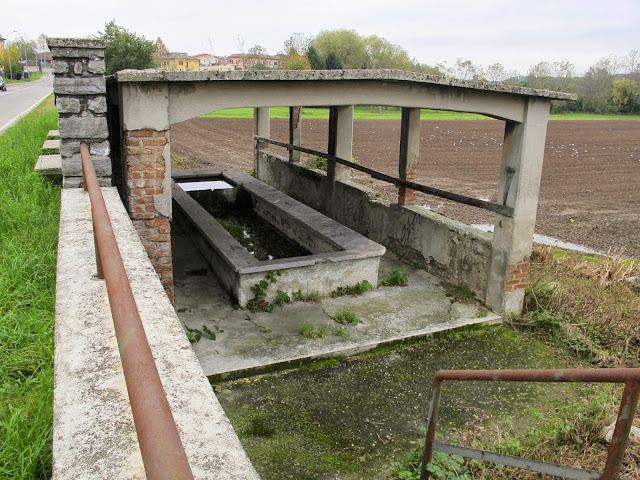
WE PASS A LAVATOIO (WASH BASIN) THAT IS AT LEAST 120 YEARS OLD – THIS WAS ONCE USED TO CLEAN THE CLOTHES OF THE PEOPLE NEARBY

.33 miles

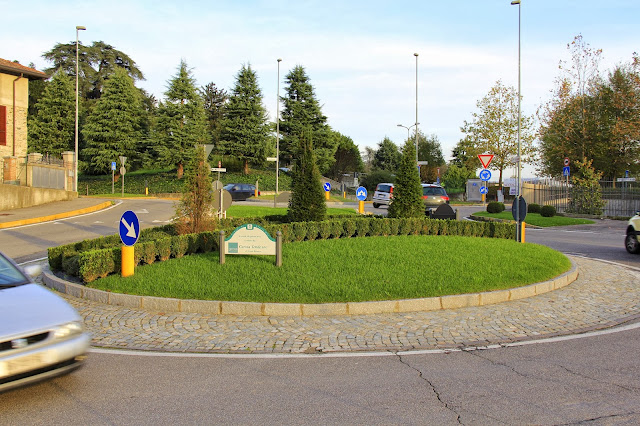
AT THE TOP OF THE HILL WE COME SMACK INTO THE DANGER ZONE!  THE DOUBLE ROTONDA (ROUNDABOUT) – BE CAREFUL HERE!

.47 miles

THIS IS ONE OF MY ABSOLUTE FAVORITE PARTS OF THE RUN, WHERE THE VIEW SPANS FOREVER AND AN ANCIENT VILLA REACHES FOR THE CLOUDS

.75 miles

WE START A MILD DESCENT

.84 miles

QUICK!  LOOK LEFT – THERE IS A BRIEF OPENING WITH A STUNNING VIEW

.87 miles
.87 miles
.87 miles

KEEP ON MOVING, BUT BE SURE TO HUG THE FENCE LINE TO YOUR RIGHT.  CARS ARE LIABLE TO FLY BY

.90 miles
.91 miles

GET READY TO ROUND THE BEND – WATCH OUT FOR CARS AND BICYCLES

.93 miles
.99 miles

CONGRATULATIONS – WE JUST FINISHED OUR FIRST MILE!  PEEK TO YOUR LEFT FOR A UNIQUE VIEW OF THE VILLA

1.02 miles

DON’T FORGET TO LOOK LEFT INTO THIS OPEN FIELD AND BEYOND TO THE MOUNTAINS…

1.13 miles
1.15 miles
1.15 miles

NEXT, LOOK AHEAD AS THE VILLA MATERIALIZES IN FRONT OF YOU

1.15 miles
1.16 miles

I OFTEN WONDER HOW MANY THOUSANDS OF TRAINS THIS LITTLE HOUSE HAS SEEN PASS BY

1.18 miles

CROSSING OVER THE RAILROAD TRACKS – BE CAREFUL

1.19 miles

YOU’RE JUST AS LIKELY TO PASS A TRACTOR AS YOU WOULD BE TO PASS A CAR

1.25 miles
1.27 miles
1.27 miles

I LOVE THIS GROUP OF UNIQUE TREES ON THE PROPERTY

1.27 miles

NEXT, WE WILL START OUR ASCENT UP AN ANCIENT ROAD

1.32 miles
1.41 miles

A GLANCE BACK OVER OUR SHOULDER LETS US KNOW WHERE WE’VE RUN

1.44 miles
1.44 miles
1.44 miles

HERE, WE CAN CHECK OUT THE LOCAL EVENTS FOR OUR COMMUNITY

1.47 miles

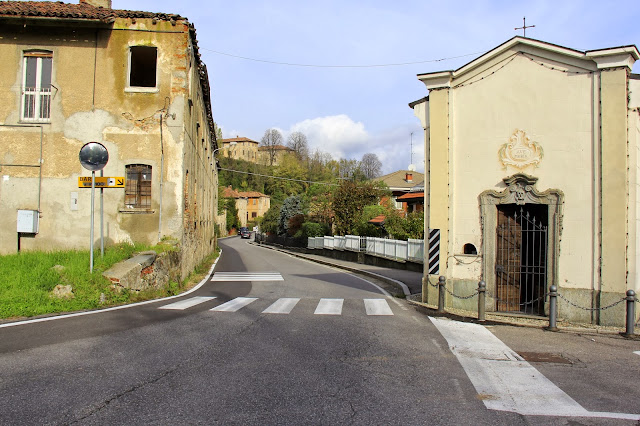
LOOK TO YOUR LEFT TO SEE ONE OF THE MANY CHURCHES IN THE AREA

1.48 miles

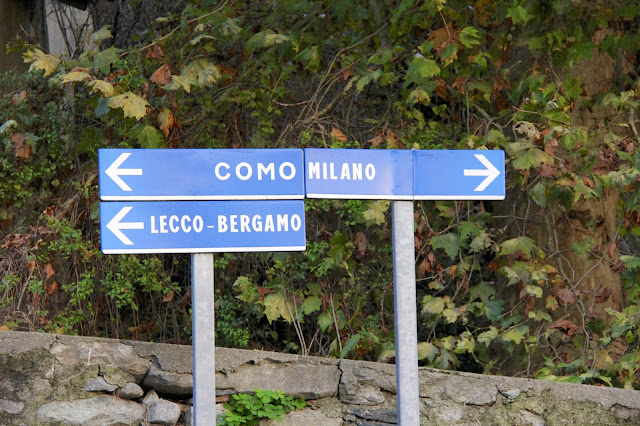
WE HAVE AN IMPORTANT DECISION TO MAKE HERE… I DON’T SUPPOSE MY LEGS WILL CARRY US THE 40 KM (24 MILES) TO MILANO, SO WE’D BETTER GO LEFT

1.58 miles

THE ROAD CROSSING IS A LITTLE DICEY HERE – LOTS OF BLIND SPOTS.  I ALWAYS HUSSLE PAST THE CRYPT TO OUR RIGHT

1.61 miles
1.65 miles

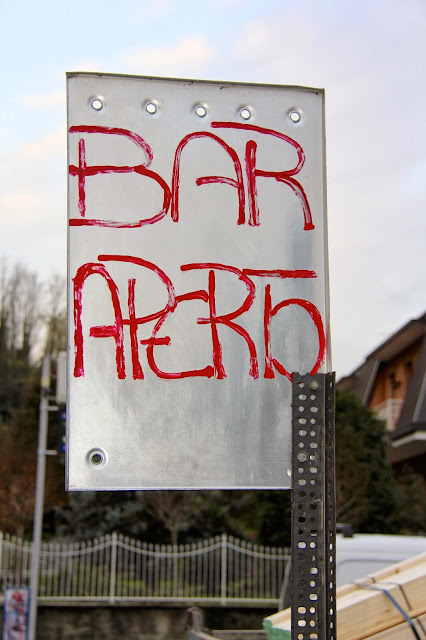
HERE, WE PASS A BAR THAT IS “ALWAYS” OPEN

1.65 miles

THE BAR – FEEL FREE TO STOP FOR AN ESPRESSO IF YOU FORGOT TO HAVE YOURS BEFORE OUR RUN 

1.65 miles

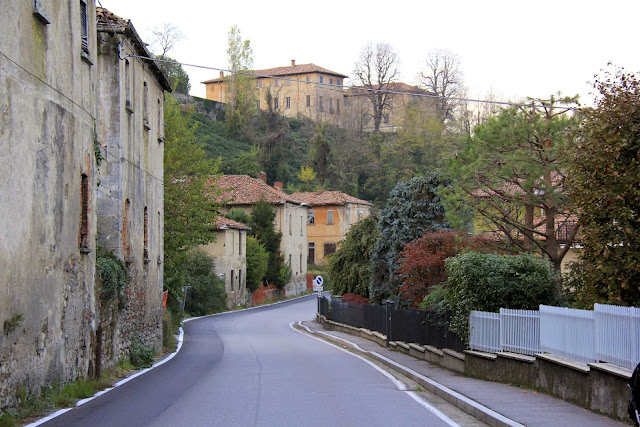
WE WILL NEXT PASS A SECTION OF TOWN THAT EXPERIENCED IT’S HEYDAY 50 YEARS AGO… 100 YEARS AGO… 200 YEARS AGO?!

1.75 miles
1.77 miles
1.78 miles

BE CAREFUL – THE ROAD IS VERY NARROW – TOO TIGHT FOR TWO CARS TO PASS AT ONCE.  IT’S NOT UNCOMMON TO GET PINNED AGAINST THE RIGHT WALL

1.79 miles

LOOK TO YOUR RIGHT – QUITE A VIEW OF THE VALLEY.  TO OUR PREVIOUS GUESTS… DO YOU RECOGNIZE THE BENNET (OUR GROCERY STORE)?

1.83 miles

WE HAVE TO MAKE A SHARP LEFT OFF THE MAIN ROAD AS WE APPROACH ANOTHER FAVORITE STRETCH OF THE RUN

1.90 miles
1.92 miles

THIS TWO LANE ROAD BECOMES EXTREMELY NARROW – I PREFERRED WHEN IT USED TO BE MUCH MORE RUGGED.  THEY RECENTLY PAVED IT… WELL HALF OF IT

2.05 miles
2.08 miles
2.11 miles
2.11 miles
2.11 miles

 CONTINUE ALONG THIS REMOTE ROAD

2.19 miles

WE PASS A CORNFIELD ON OUR RIGHT – THIS WAS JUST HARVESTED THREE DAYS AGO – I THINK THEY USE IT AS CATTLE FEED

2.25 miles

WE APPROACH AN INTERESTING PART OF THE RUN… ANOTHER SECTION OF HOUSING WHOSE HISTORY ENDED LONG AGO.  I OFTEN WONDER WHEN A NEW STORY WILL BE WRITTEN FOR THESE ANCIENT PROPERTIES

2.38 miles
2.40 miles
2.41 miles

WE PASS THROUGH OUR FINAL STRETCH OF OLD, VACANT PROPERTIES

2.47 miles

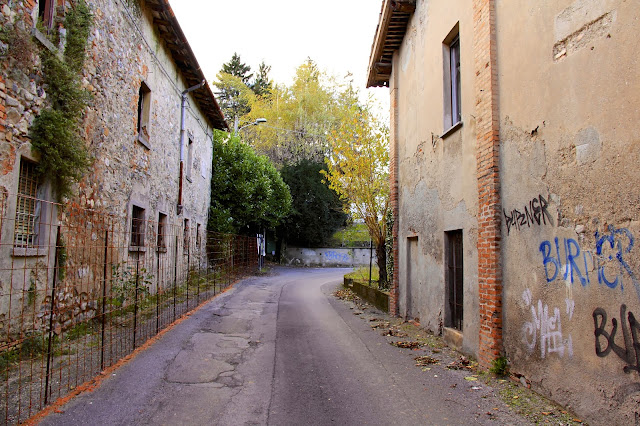
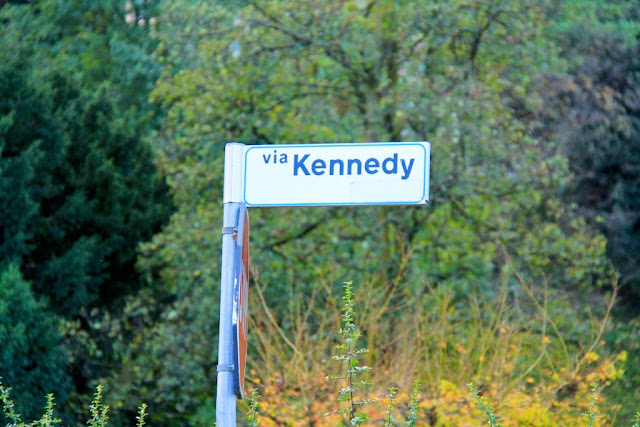
NOW WE WILL TURN ON TO VIA KENNEDY, WHICH ALWAYS CRACKS ME UP

2.53 miles

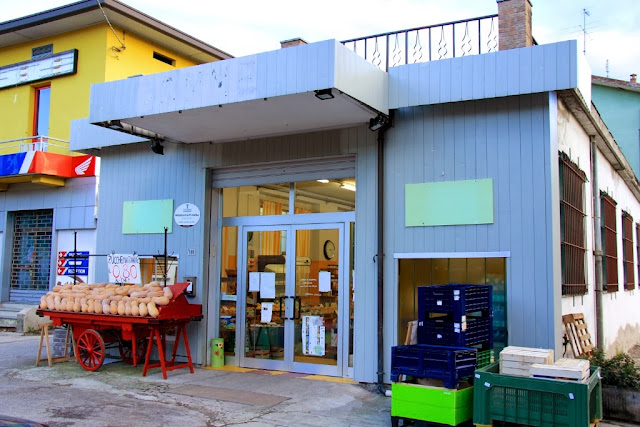
NOW THAT WE’RE BACK IN TOWN, IF YOU GLANCE OVER YOUR RIGHT SHOULDER, YOU WILL SEE OUR FAVORITE FRUIT STAND – YOU CAN SEE THAT ZUCCHE (SQUASH AND PUMPKINS) ARE THE SEASONAL VEGETABLE

2.70 miles

OK – DIG DEEP.  WE’VE GOT AN UPHILL CLIMB, BUT WE’RE IN THE FINAL STRETCH.  WE’RE GOING TO RUN RIGHT THROUGH THE CENTER OF TOWN

2.83 miles

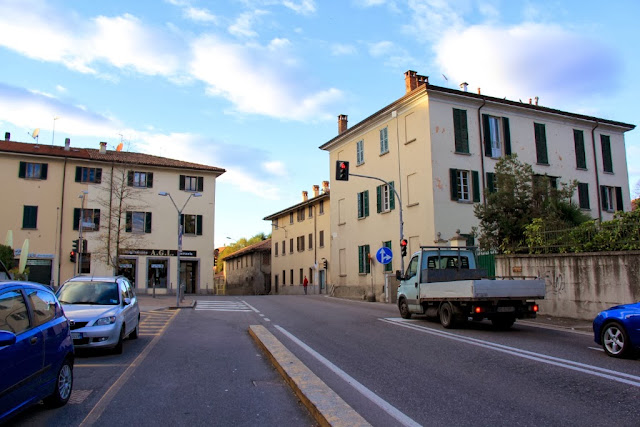
LOOKING LEFT, YOU’LL SEE MY FAVORITE STREET IN OUR TOWN OF ALZATE BRIANZA

2.89 miles

THIS IS IT… NEARLY HOME.  A SLIGHT DOWNHILL DESCENT HELPS US – TIME TO PICK UP THE PACE… MY BROTHER-IN-LAW CALLED THIS MY FINAL “KICK”

2.91 miles

WE’VE ARRIVED AT THE ROTONDA BY OUR HOME – FULL SPRINT NOW WITH WHATEVER IS LEFT IN THE TANK

3.03 miles

TURN RIGHT DOWN OUR STREET… 

3.05 miles

WE DID IT!!  WE’VE ARRIVED HOME JUST IN TIME FOR LUNCH.  PASTA IT IS – HEY WE EARNED IT!

3.10 miles – nicely done

IF YOU’D LIKE TO REWARD YOURSELF WITH A NICE DRINK LATER IN THE EVENING, HEAD BACK INTO TOWN TO THE AB CAFE

The best “happy hour” in town
Don’t forget, gang – there’s always time to stop and smell the roses

I hope you enjoyed coming with me on my run today!  I certainly appreciated the company!

An Unexpected Gem

Living in Italy grants us access to a lot of great restaurants.  We fully take advantage of that and eat at… a lot of great restaurants.  I recently read that 75% of the food in Italy is great and 25% of the food is exceptional.  I would agree with that – most meals leave you feeling completely satisfied and pleased with the overall experience.  But occasionally, you’ll find yourself “mmm’ing” and “aahhh’ing” with more delight than you intended to express aloud.

We can usually spot these exceptional places before we’ve walked in the door.  We may have heard about the joint from a friend or relative.  It’s possible I’ve read about it on the internet or a travel book.  Or sometimes, we just walk into a place and the intense amount of “old-world charm” smacks us in the face.  We’re greeted by a little nonna (grandma) who then scurries to the back to cook our meal – and we just know that we are in for a treat.  Since it is usually one of those three paths that lead to our exceptional meals, I had all but dismissed, Osteria da Clo’ Filomena when we made our reservation.  The reason for the swift dismissal, you ask?  Well, the restaurant was in our B&B, in a remote part of Emilia-Romagna, surrounded by nothing by small villages and towns.  I’m usually quick to dismiss restaurants in hotels anyway, with a few exceptions.  Furthermore, the place was empty.  I wasn’t surprised, because it would probably be a 20-30 minute drive for most patrons to arrive.  I assumed that the restaurant was in place, merely to service the guests of the hotel and therefore had to serve mediocre food (which, if you remember still falls into the 80% “great” category).

The Osteria at night – the outdoor patio is used in the spring
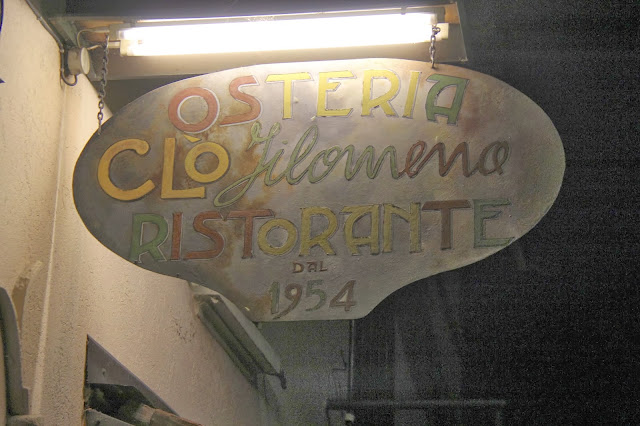
The ristorante opened in 1954

I am happy to say that I have never been so wrong!  And we weren’t the only ones in on the secret – by the time we left, the place was nearly full.  People had been coming in from [presumably] all over – from towns and villages several miles away.  The waiters, two young men (I regret not getting their names) were very helpful and pleasant.  Our server spoke fluent English, but indulged me and kept the conversation in Italian until I really needed the help on a word or two.

Our group decided that we would order several dishes and that we would be generous with each other when it came time to share.  There were too many things to taste to keep each dish all to ourselves.  Our group?  Four weary travelers (and a baby past her bedtime), comprised of myself and Jen as well as my aunt Deborah and uncle S, visiting from the States (read about their trip HERE and HERE).

Antipasti

For the antipasti (appetizer), each couple elected to order the:

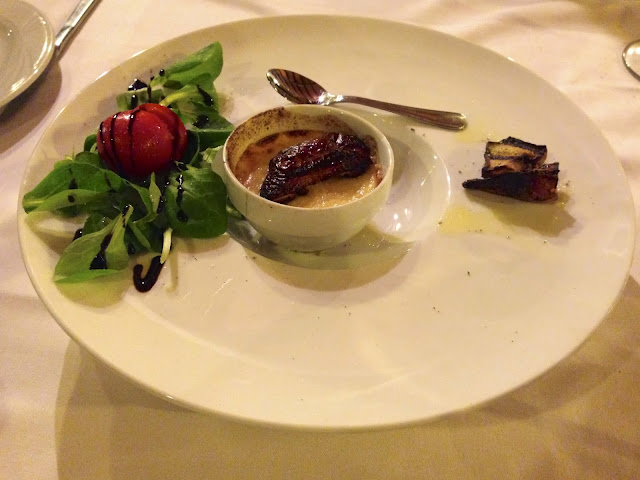
Creme Brulè ai Quattro Formaggi con Porcini e Balsamico  

Four Cheese Creme Brulè with Porcini Mushrooms and Balsamic Vinegar
This dish was so tasty, we asked what the four cheeses were so that we could attempt to recreate it at home

Primi Piatti

For our primo (first course), each couple shared a pasta:

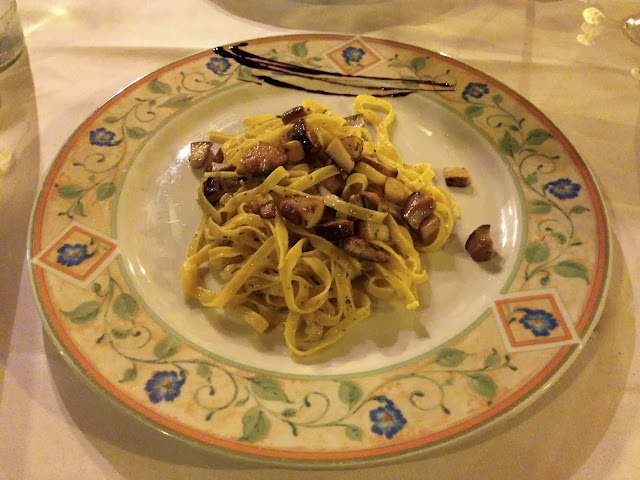
Tagliatelle ai Fungi Porcini (S and Deborah)

Tagliatelle Pasta with Porcini Mushrooms
Dishes with porcini mushrooms were among the restaurant’s specialties

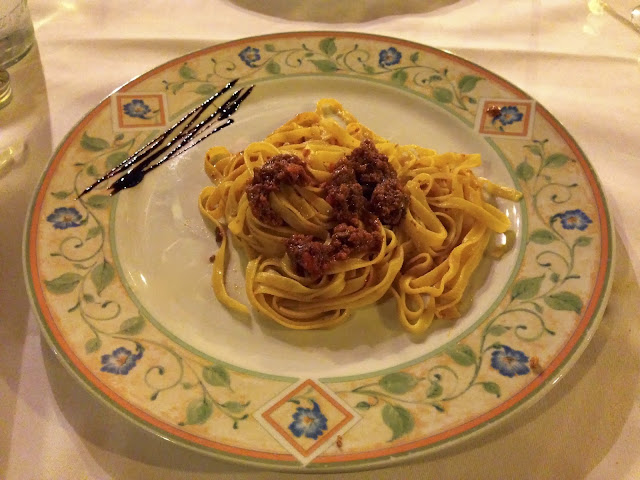
Tagliatelle al Ragù alla Bolognese (Greg and Jen)

Tagliatelle Pasta with a Meat Ragù
Jen and I like to try classic examples of Bolognese – it is a dish that has subtle changes across various regions of Italy

Secondi Piatti Tipici

For our secondo (main course), each couple shared once again:

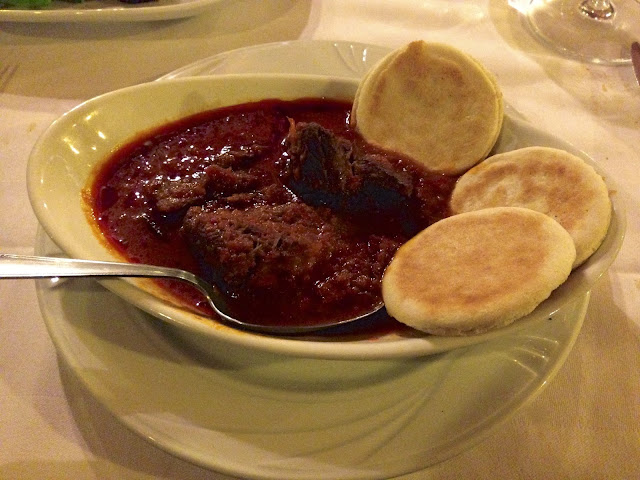
Spezzatino Rosso di Cinghiale con Tigelle (S and Deborah)

Red Stew of Boar with Tigelle
Tigelle is a bread that looks like a small pancake, local to the region

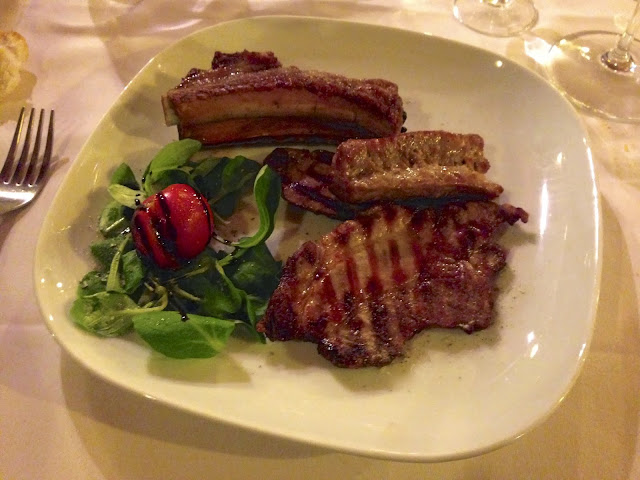
Grigliata Mista di Maiale (Greg and Jen)

Mixed Grill of Pork
This is a fairly common dish throughout Italy, but this was superior to most – perfectly seasoned and tender

Contorni

For our side dishes we selected:

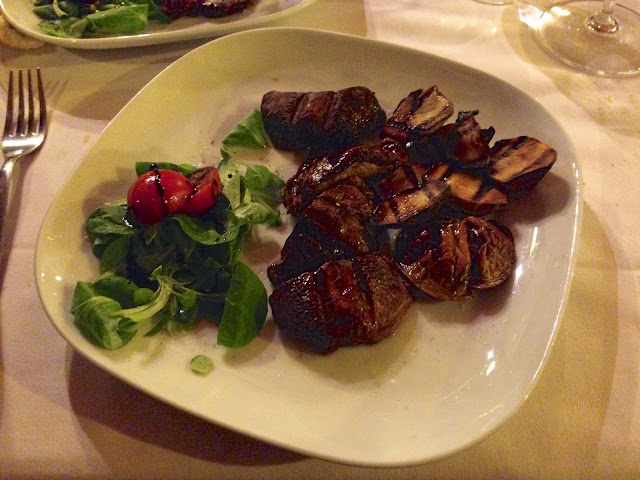
Funghi Porcini Grigliata (a seasonal dish)

Grilled Porcini Mushrooms
This dish is only served during “mushroom season” (September, October, November)

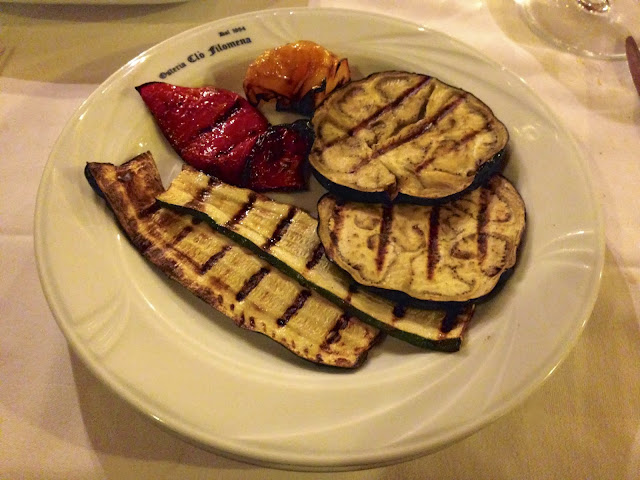
Verdure alla Griglia

Grilled Vegetables
A simple and healthy selection from the grill

Dolce

For me, dessert is usually the weakest part of the meal – I was proved wrong once again.  I had to tell myself over and over that it was impolite to pick my plate and lick the remaining chocolate residue.  We all shared:

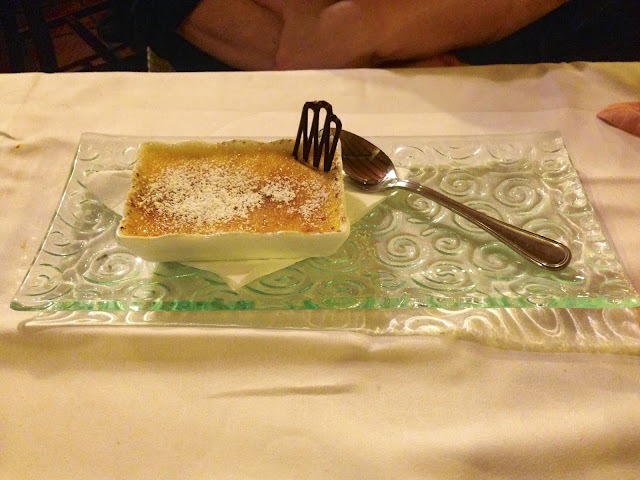
Creme Brulè

Creme Brulè
As delicious as it looks

Torta al Cioccolato di Lave

Chocolate “Lava” Cake
Jen had to restrain me from licking the plate

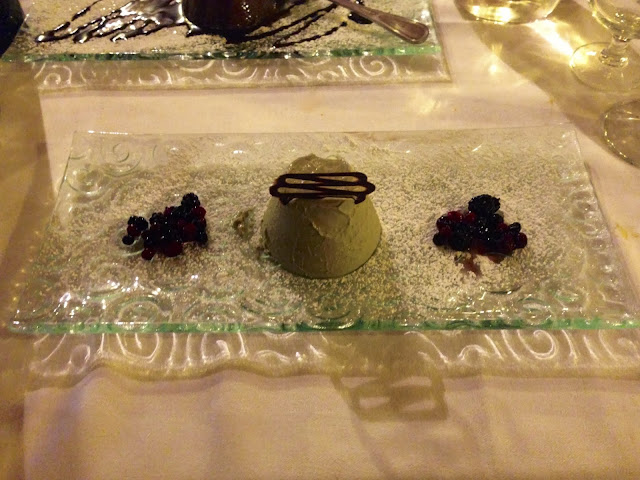
Torta di Pistacchio

Pistachio Cake
I’m not a huge pistachio fan, so it came as no surprise that this was my least favorite of the trio

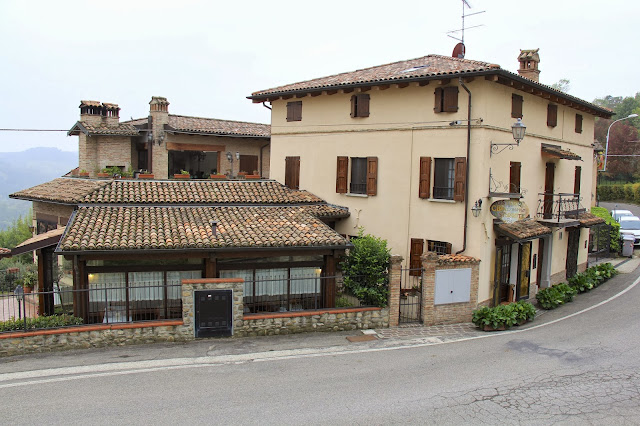
We were fortunate to have found, Osteria da Clo’ Filomena as a byproduct of first discovering the hotel in which we were staying,  La Locanda Gli Ulivi.  From what I could gather, the restaurant was established first, in 1954 – and is still the main draw on the property.  The hotel is a charming B&B, set just far enough away from Modena and Bologna that you can’t help but become immersed in the nature and hills of vineyards.

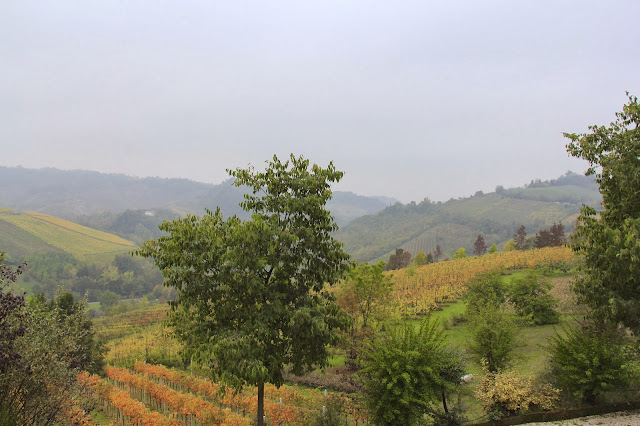
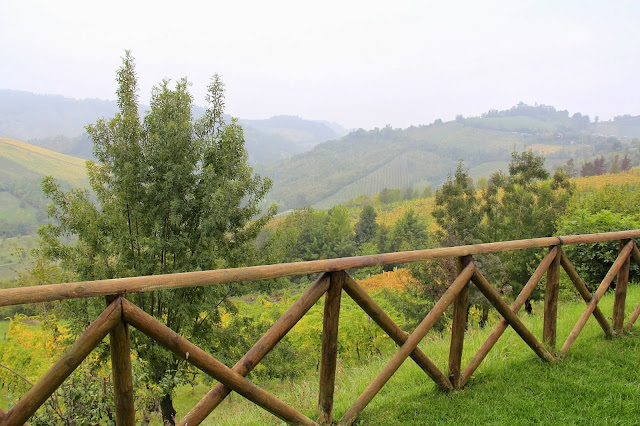
The rolling vineyards behind Osteria da Clo’ Filomena

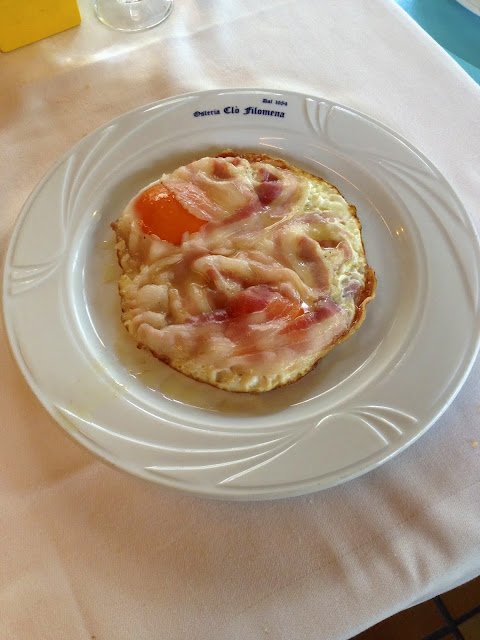
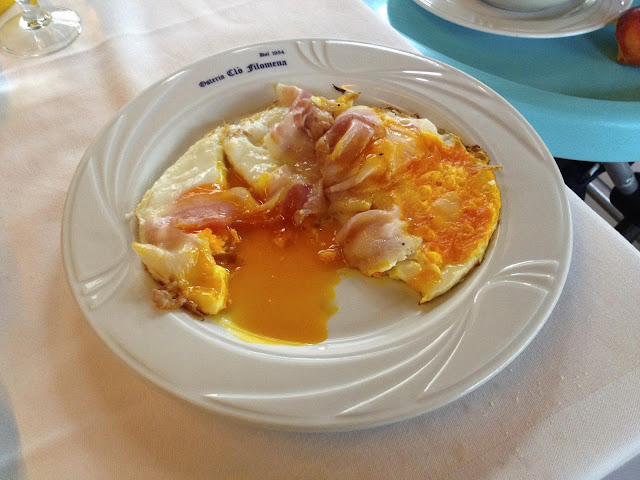
In the summer, a small waterfall cascades on the patio as diners eat under a setting sun and in the winter the fireplace is always glowing – warming the patrons next to the chestnut wood tables.  If you stay at the hotel, you can expect a breakfast as delicious as the one pictured below.

Eggs, made to order
Perfectly cooked with delicious pancetta
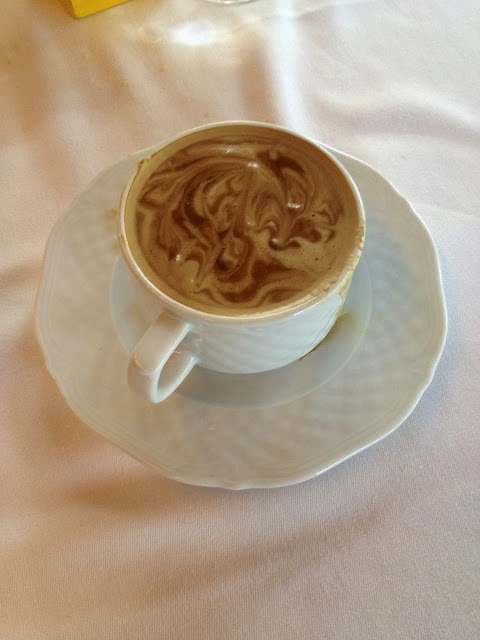
Cappuccino con doppio espresso (cappuccino with double espresso)
Next time you’re in Emilia-Romanga, stop by and have a meal.  Be sure to tell everyone that we said, “ciao!”
 
Locanda Gli Ulivi
Via Montebudello 33 
40050 Monteveglio (BO) Italy
www.locandagliulivi.it

Loosen Those Belt Buckles – Some Serious Eating Ahead

Before I’ve even written the first word of this post, my OCD brain is trying to figure out if this post should be categorized under the “Food” or the “Travel” sections of the blog.  I will be taking you along with us on our travel adventure to go eat some of Italy’s best food.  It’s quite the dilemma…

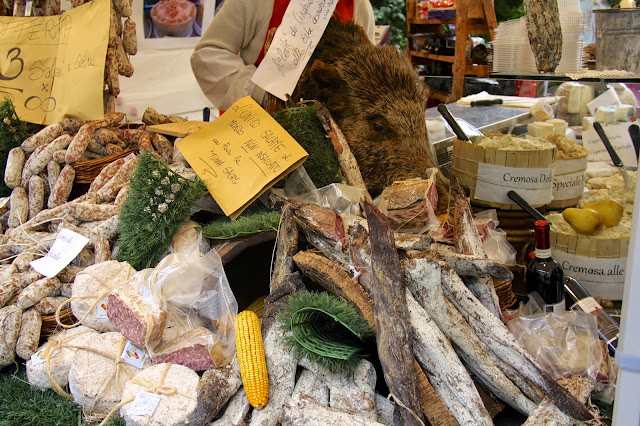
A selection of salumi (cold cuts), formaggi (cheese) and the cinghiale (boar) that gave his life to the cause

You may have read about part of our visit with Aunt Deb and Uncle S where we ventured into the wine region of Piemonte during the first portion of their visit.  Their two week sojourn in Italy included a mission to explore the best of what the country has to give.  It was no coincidence then, that their adventure had been neatly divided into three of the country’s best offerings.  Part I was Vino (wine).  Party II was Cibo (food) – the subject of today’s post.  Lastly, Part III was Storia (history).  Since they experienced the rich history of Pompeii and Venezia on their own, I will let them tell you all about it at their next dinner party.  I’ll simply report on the parts during which we were present… and luckily for us, we were present for a three day trip into Italy’s richest “food region”, Emilia-Romagna.

“Now I’m hungry – let’s eat!”

I always laugh when I speak to Italians about their trips to the United States.  Before they even tell me, I know that they’ve been to New York City and then Miami (bypassing Washington DC; a detail they don’t want to admit but one that I always extract).  If they’re fortunate enough to have a lengthy stay, they will then travel to Las Vegas on their way to Los Angeles.  Occasionally, they may venture up the coast to San Francisco before returning home.  That’s it.  Every.  Single.  Time.  Heck, I don’t blame them – they were raised in large part on American cinema, and that’s what most Europeans see as the sum total of the United States – New York and LA.  And of course, who wouldn’t want to throw a trip to Vegas in the mix?!  Likewise – it is the same for Americans coming here.  Where do we go?  Rome.  Milan.  Venice.  Tuscany (Florence and Pisa) and occasionally the Italian Riviera if there’s time.   But there is so much of this country that is left undiscovered (I feel like we travel non-stop and we still haven’t gotten a flavor of more than 10% of Italy).  One region in particular that is largely overlooked is Emilia-Romagna.  Heck, I’m willing to bet you probably haven’t even heard of it!  But there are a few things that I know you know.  You’ve heard of Ferrari, Lamborghini and Maserati.  They’re all produced here, in Emilia-Romagna.  Or aged balsamic vinegar?  That also comes from here, in Modena.  What about parmigiano reggiano (parmesan cheese)?  Or prosciutto?  I’d be wiling to bet that you’ve even heard of Ferrara chocolate.  With culinary delights like these, it’s no wonder that Emilia-Romagna is often considered the “heart” of Italian cuisine.

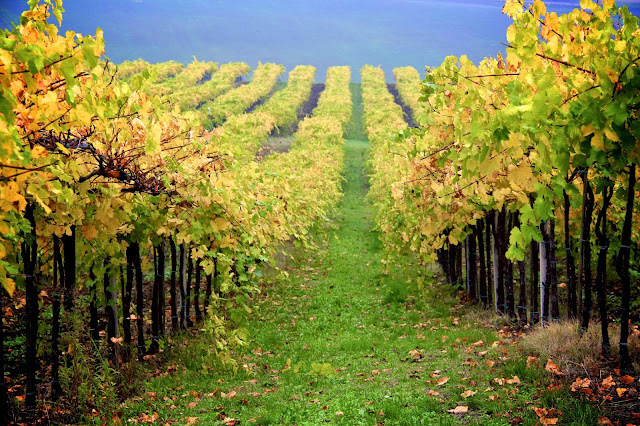
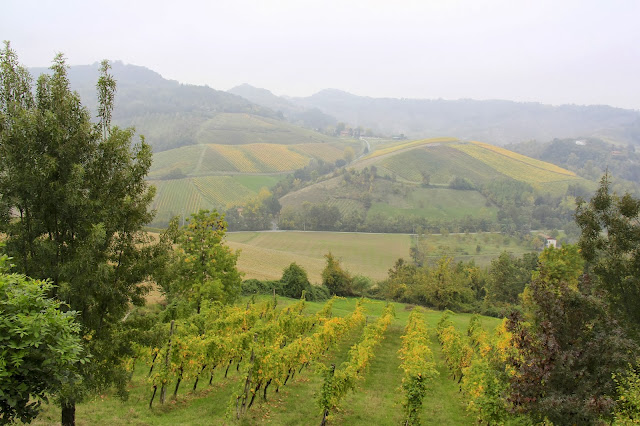
Vineyards in Emilia-Romagna
S studies the frame of his photograph
The colors at this time of year were stunning
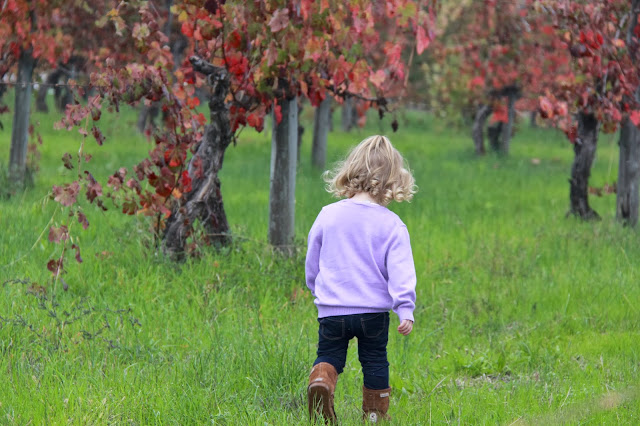
Julia takes a stroll and soaks up all that Emilia-Romagna has to offer

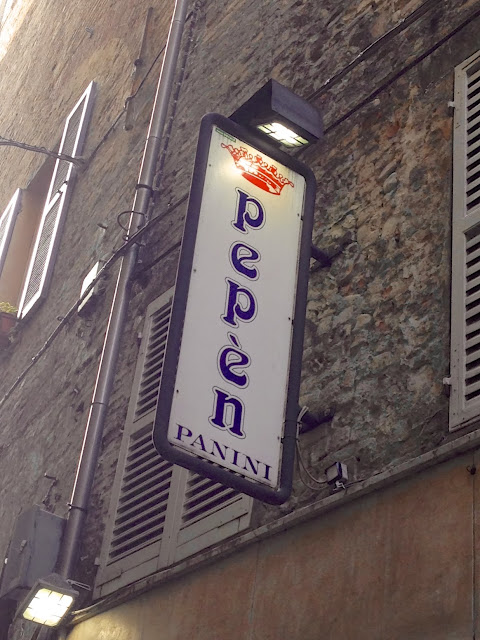
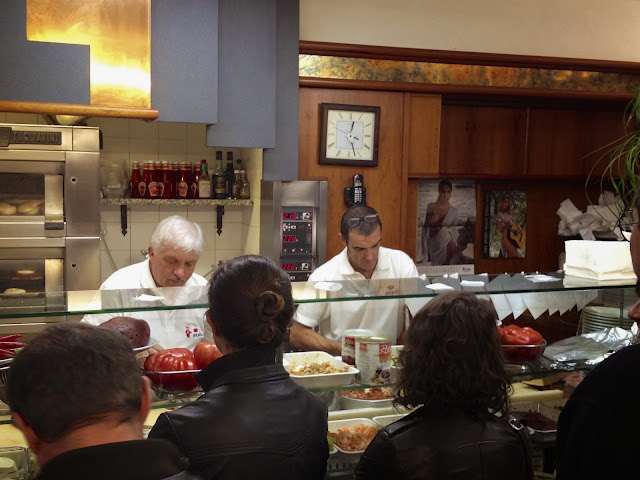
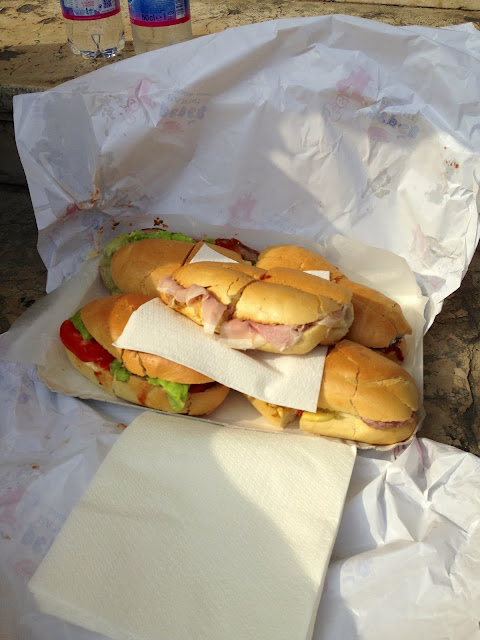
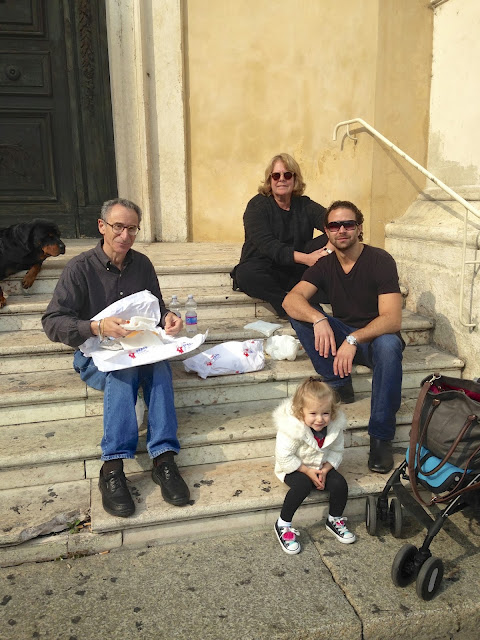
On our first day, we stopped in Parma (of Proscuitto di Parma fame) to begin our culinary escapade. We started small – just panini (sandwiches) at the most popular sandwich place in northern Italy, Pepèn.  I was not at all surprised to learn that this tiny shop that has been around for over 200 years does not have a website.  I think that they figured out the perfect panino (sandwich) somewhere in the past 100 years and have unabashedly decided not to change a thing since (earning them a #1 rating out of 430 restaurants reviewed on TripAdvisor – although calling it a “restaurant” is a stretch).  Uncle S and I crowded into the tiny restaurant and I told the sandwich maestro to give us a mixture of some of his favorite concoctions.  We awoke our taste buds with succulent porchetta, life-changing salsiccia crudo (raw sausage) and mind-altering gamberi piccanti (spicy shrimp) – all on perfectly toasted buns (these were just some examples of our sandwiches – we got many more to share).   Since the place doesn’t really have any seats, we camped out on the steps of Chiesa Cattolica Parrocchiale San Pietro (St. Peter’s Catholic Church Parish) in Piazza Garibaldi Giuseppe to enjoy our delectable treats.

Pepèn is hidden on a small side street – you have to know where you’re going to get there
These two guys have been making panini in this crowded little shop for many years
One package of our delicious panini
We camped out on the stairs of the church to eat our lunch
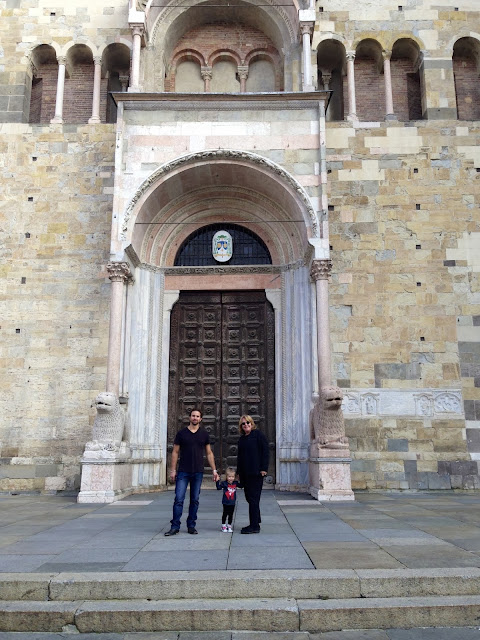
Julia escorts Deborah and me into the Cattedrale di Parma
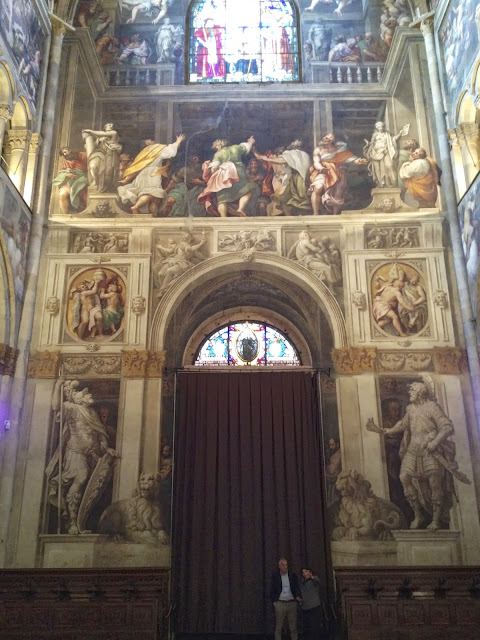
Amazing frescoes adorned every single wall in the church
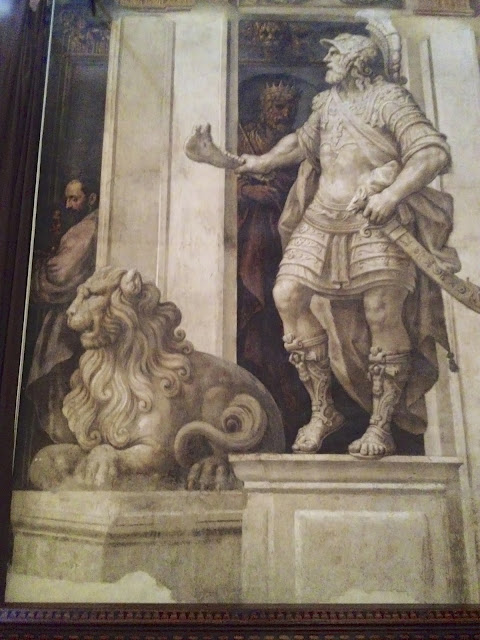
The paintings on the wall were so lifelike I was mesmerized
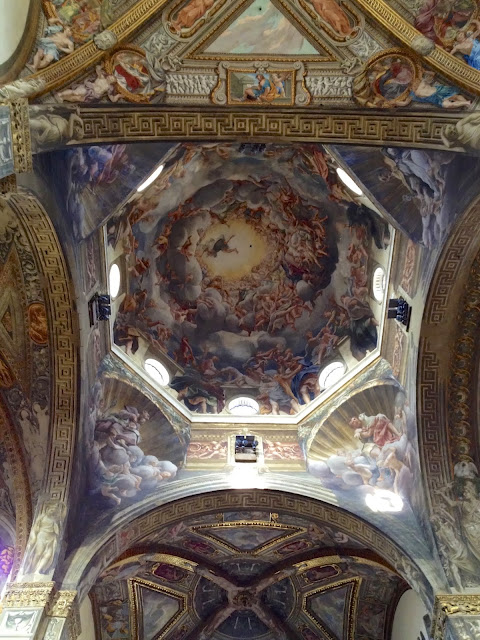
The ceiling amazed all of us inside the Cathedral
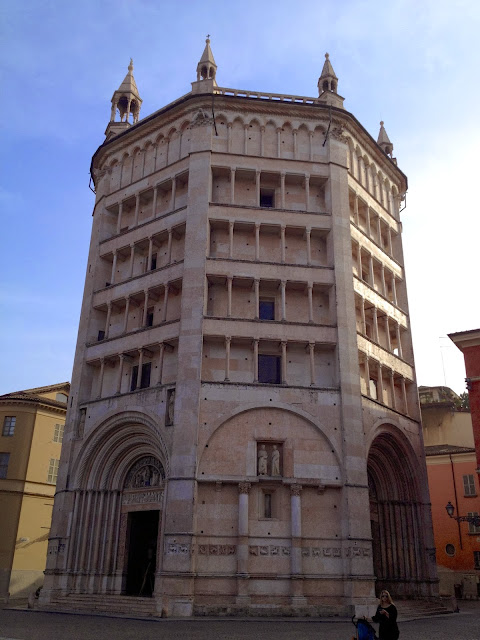
The Baptistery of Parma, commissioned in 1196 by the city counsel of Parma

After a complete and rewarding day in Parma, we drove the forty five minutes to our B&B, just outside of Modena.  After researching for many hours, we had booked a stay at, Locanda Gli Ulivi because it was centrally located to the places we would be visiting and has a wonderful online presence (great reviews and photos across our most reliable travel websites).  We were not disappointed with the place – it was simply wonderful.  Since we were weary road warriors on that first day, we decided to eat at the hotel’s restaurant, Osteria  Clo ‘Filomena that night.  Since the food was so wonderful and I was able to capture a picture of each course, I’ll complete a separate post about that meal.

Locanda Gli Ulivi
“Come on in…”
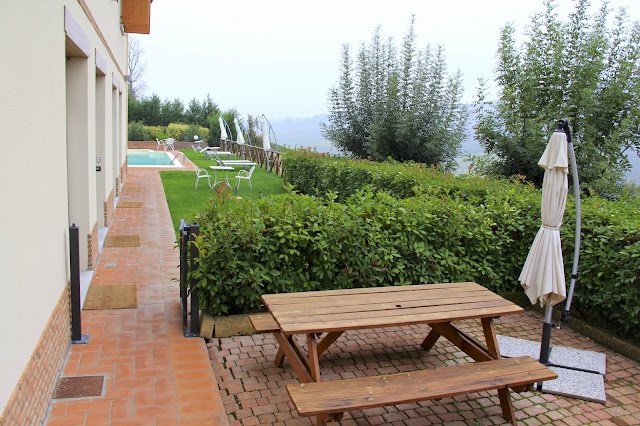
Our backyard
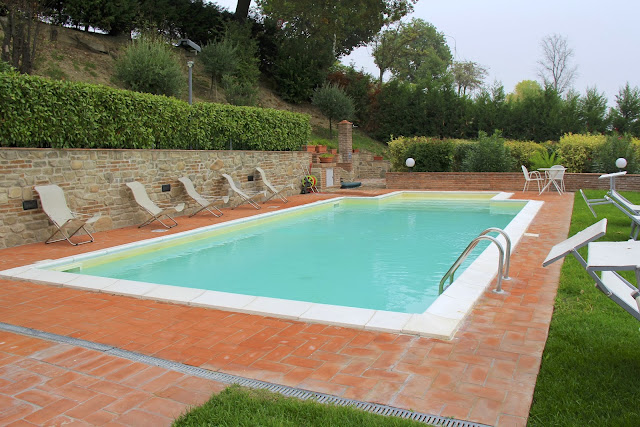
The pool
A nice place for a picnic
View from immediately across the room
Same place, looking to the right
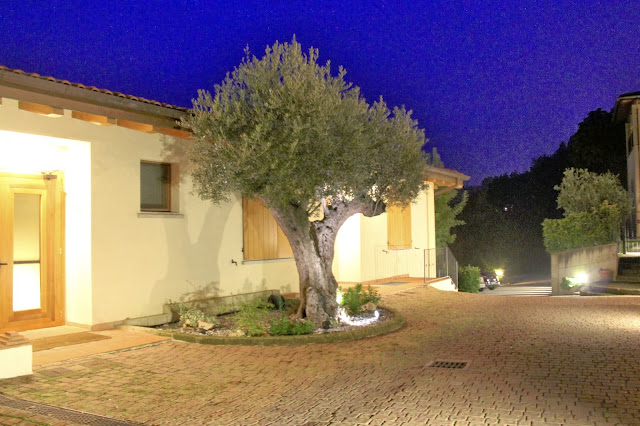
An olive tree at night inside the property
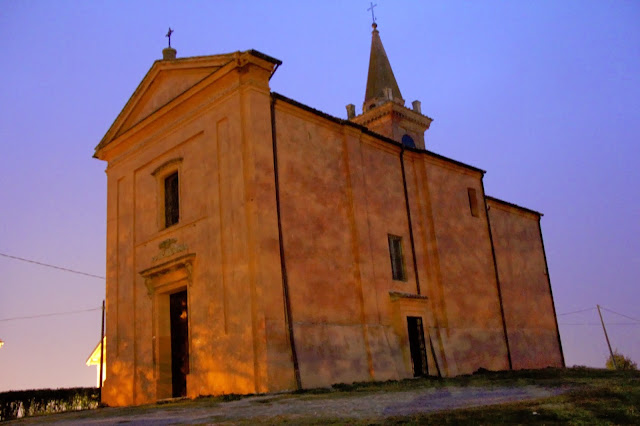
An old church across the street, lit up by the purple sky of early evening

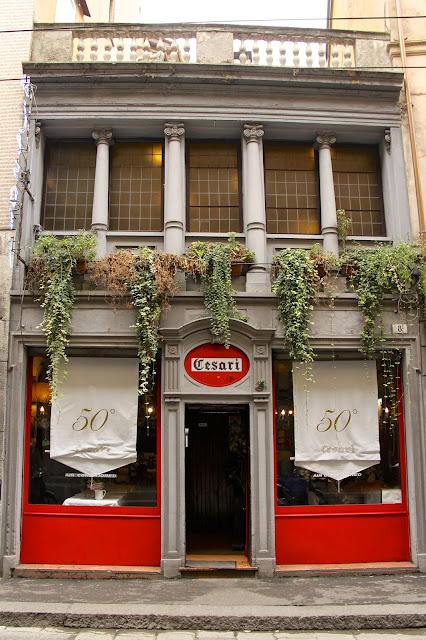
The next day, we departed with our sights on the largest city and capital of Emilia-Romagna, Bologna.  To most Americans, bologna is a processed meat (that you either love or hate) sandwiched between two pieces of good ol’ fashioned white bread.  In the States, we named “our” bologna after the city that is a major producer of mortadella – a staple meat of Bologna (and very similar – but much, much tastier than “our” bologna).  My bologna has a first-name, and it’s…”send this back and bring me a slice of mortadella, please!”.   To most Europeans, Bologna is much more than just a processed meat.  It is a university town.  Home to the oldest university in the world, University of Bologna, founded in 1088.  Today, the university accepts students from all over the world – eager to complete a full program, or just a study abroad in the seventh most populated city in Italy.  We walked around all day, stopping for a wonderful lunch at Cesari – a selection from S and Deb’s Fodor’s guidebook.  The gang at Fodor’s know what they’re doing, it was a wonderful place.

Cesari was as delicious as it was charming
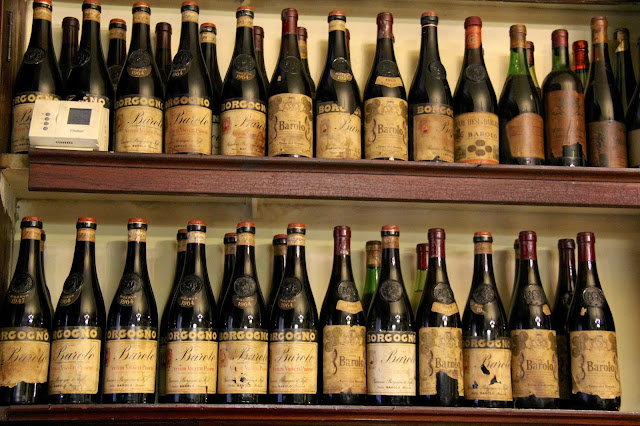
“Hey… we recognize that wine”
(from a tasting we did at Cantina di Borgogno a few days earlier)

We spent more time walking though this historically significant and important city, before ducking into a building with a much more modern vibe.  Eataly is the brainchild of Oscar Farinetti; a store that is a proud Italian marketplace, selling the best ingredients and offering access to goods that are otherwise hard to acquire on a massive scale (imagine a Whole Foods on steroids that just sells Italian products).  Even though Oscar opened his flagship 30,000 sq. ft store in Torino in 2007, the company really took off with locations around the world (including New York City) when B&B Hospitality Group (Mario Batali and Joe Bastianich) became a partner.   Admittedly, the Bologna location was very underwhelming in size and scale (especially compared to the unique Torino store) – but we were still able to acquire some wonderful salumi (variety of cured meats) and formaggi (cheeses).  That night, we procured reservations at the the most exclusive table in all of Italy – we had a little picnic in S and Deb’s room.

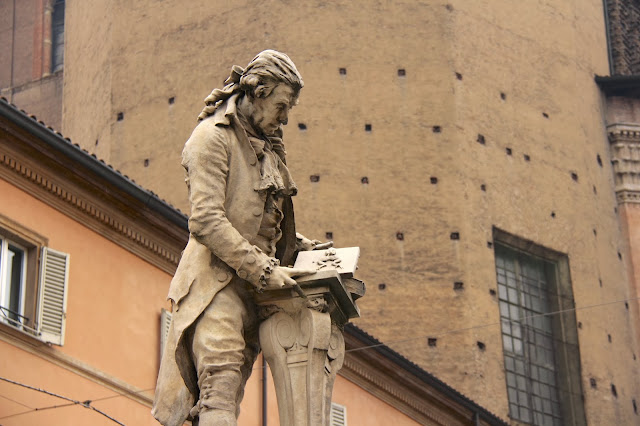
A statue stands near the University of Bologna
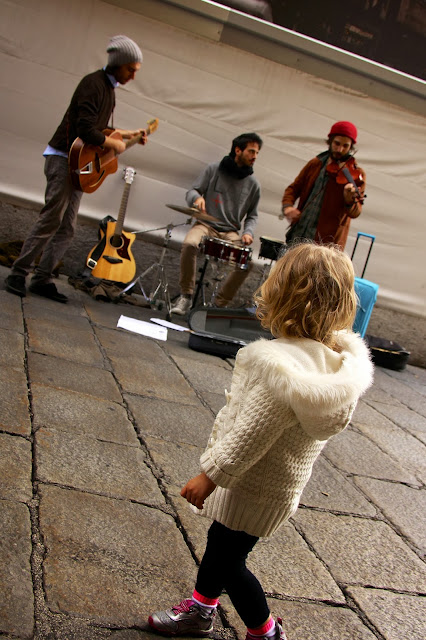
Julia becomes taken with a small group of performers
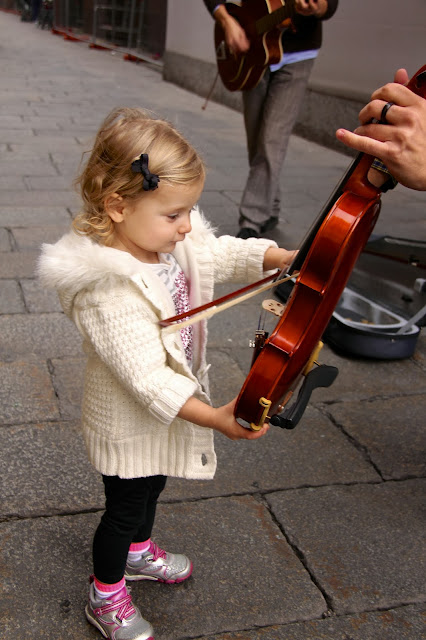
She takes a shot at playing – she started with some Mozart
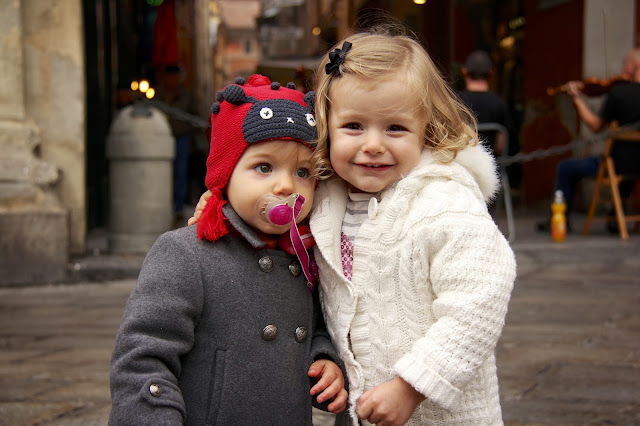
Julia made a friend in the main piazza
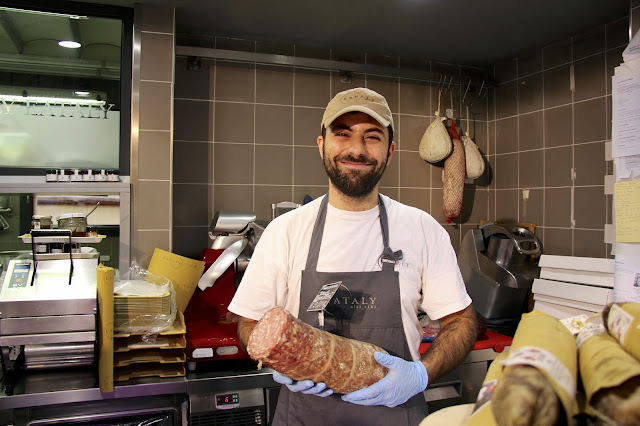
Inside Eataly, our friend helps us select the best meats and cheeses for our picnic
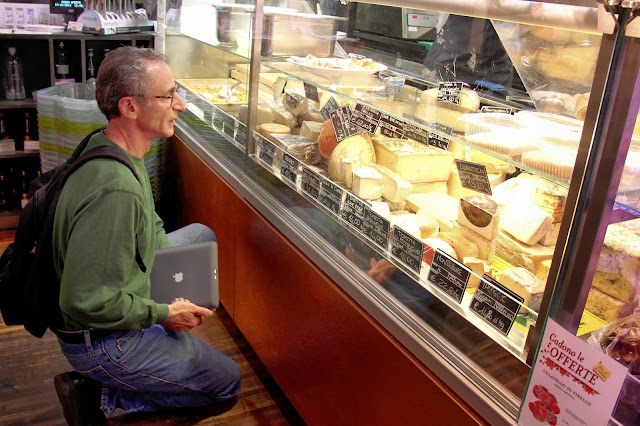
S takes his job selecting for the group very seriously.  Good thing he did, we had a wonderful meal
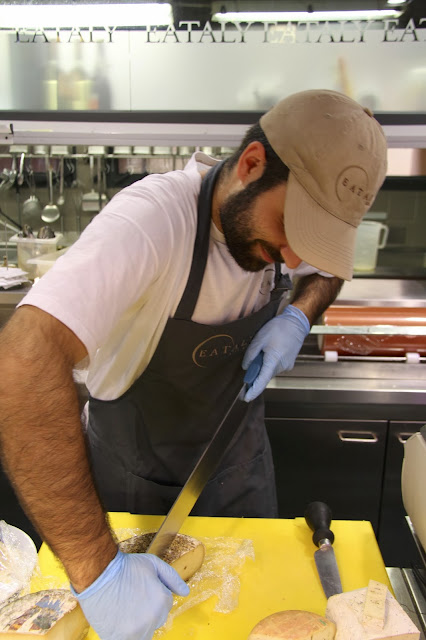
He cuts us a hard cheese
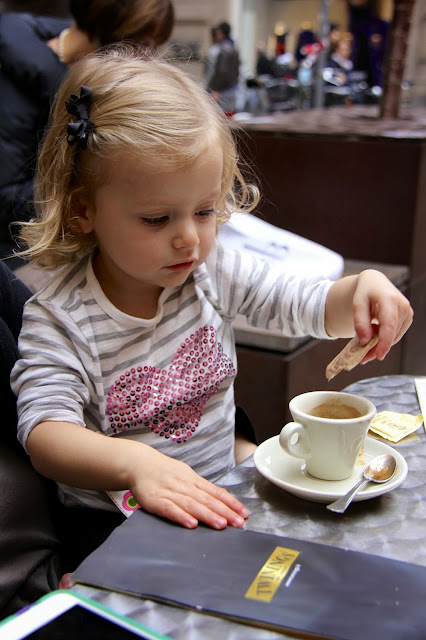
After our visit to Eataly, we needed a little coffee
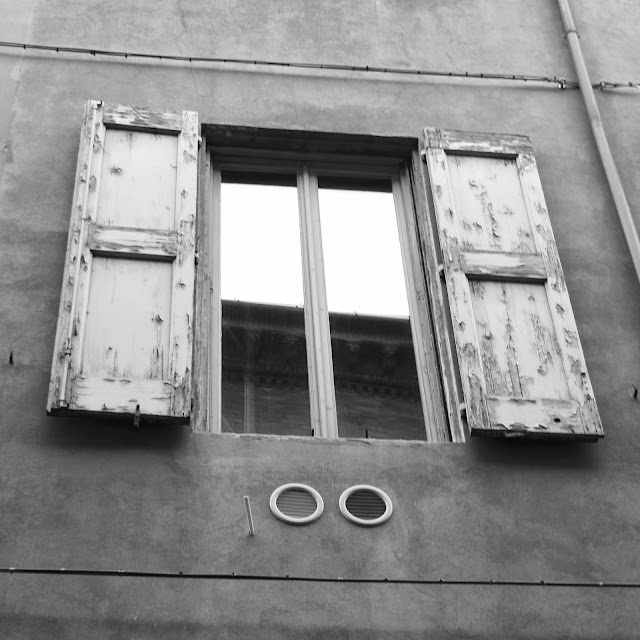
I just thought this window was interesting
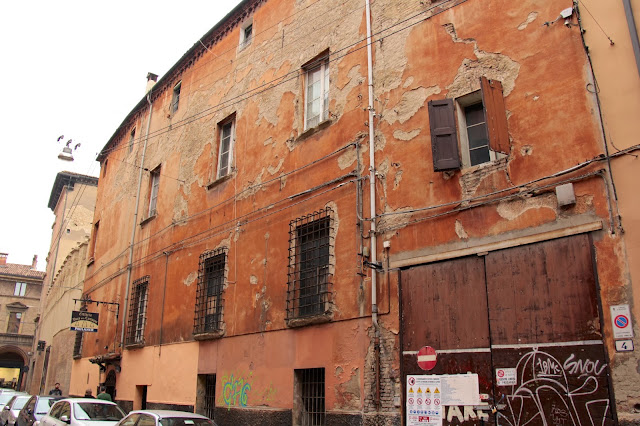
As well as this ancient building
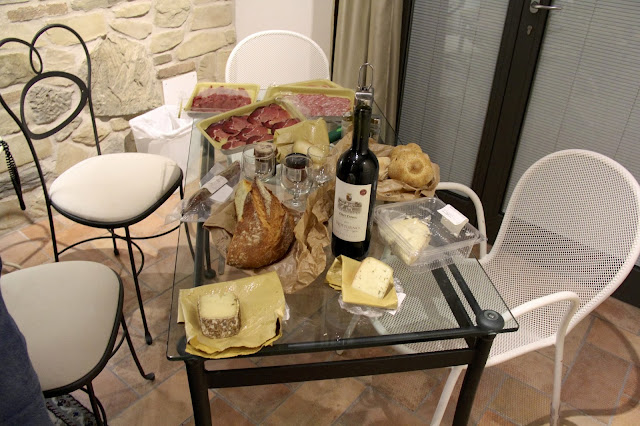
The table is set
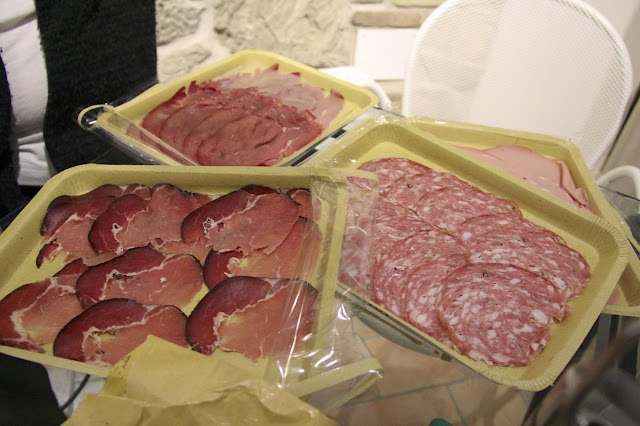
Our salumi (meats)
S and Deb are about to dig in with us

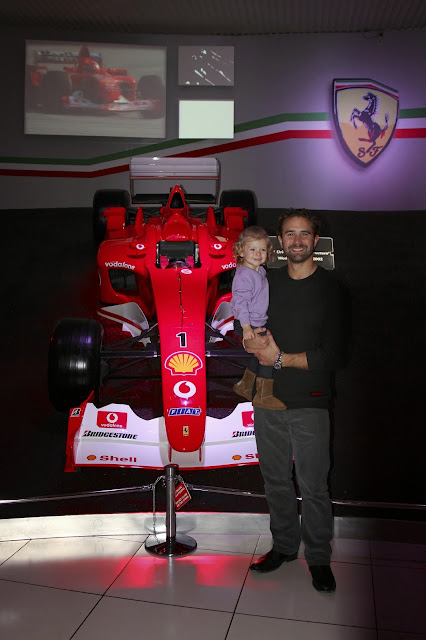
Our final day in Emilia-Romagna was no less packed with activities than the first two.  We had scheduled a visit to the Museo di Ferrari (Ferrari Museum), exploration of Modena (with a stop for lunch) and a balsamic vinegar tasting.  Car enthusiasts the world over can appreciate a visit to the “mecca of all things automotive”.  This is what Modena can offer you – Ferrari and Maserati all have their factories within a few kilometers of the city (Lamborghini moved their headquarters from Modena to Bologna).  Ferrari chose to name one of their models after the city itself (Ferrari Modena 360).  We chose to learn a little bit about the legacy of Enzo Ferrari himself, one of the world’s truest visionaries.  The museum did not disappoint….

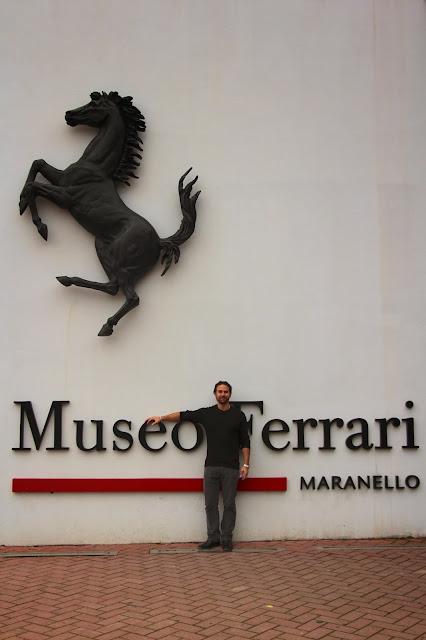
Museo Ferrari in Maranello
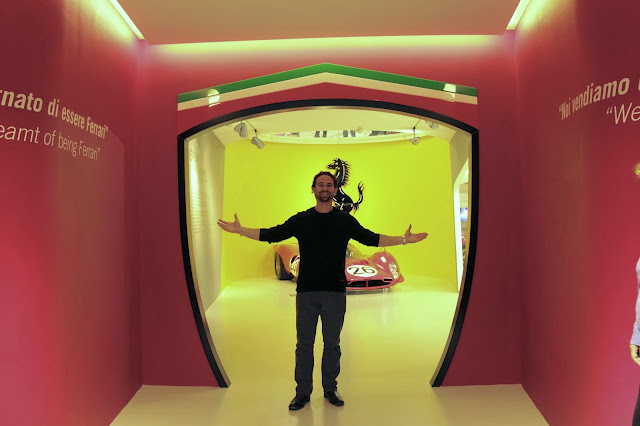
“Welcome to paradise!” 
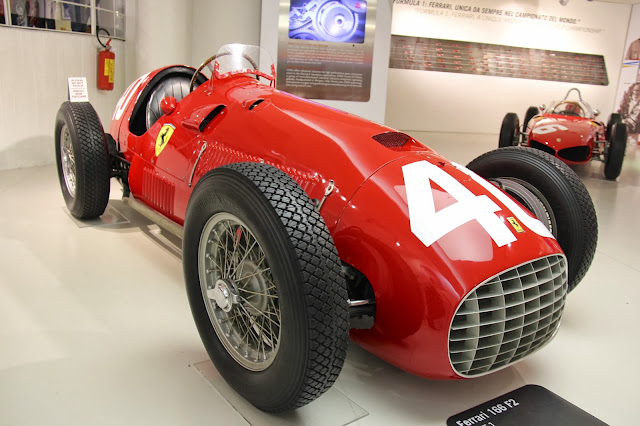
An old Ferrari 166 F2
This classic symbol is at the heart of most men’s desires
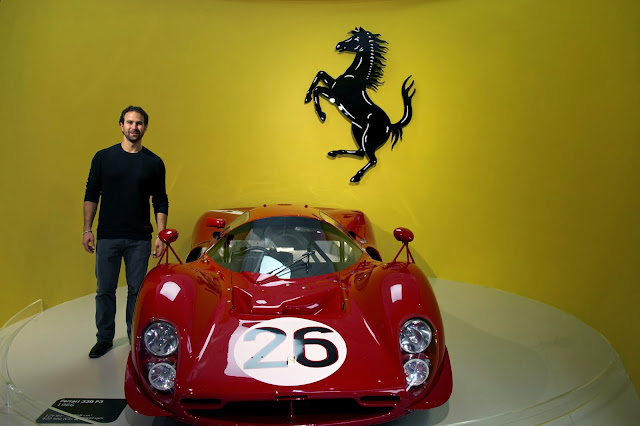
1966 Ferarri 330 P3
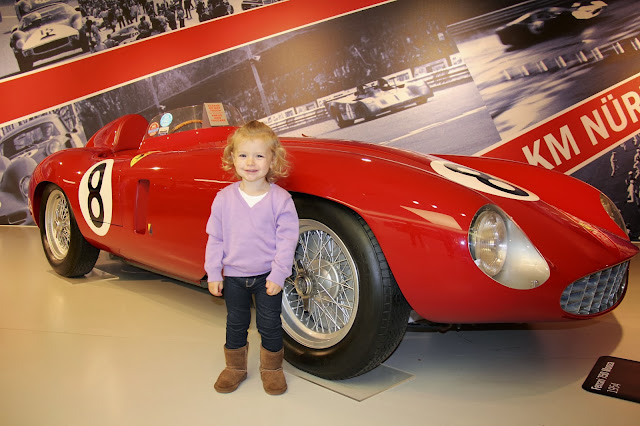
1954 Ferrari 750 Monza
F1 Constructors’
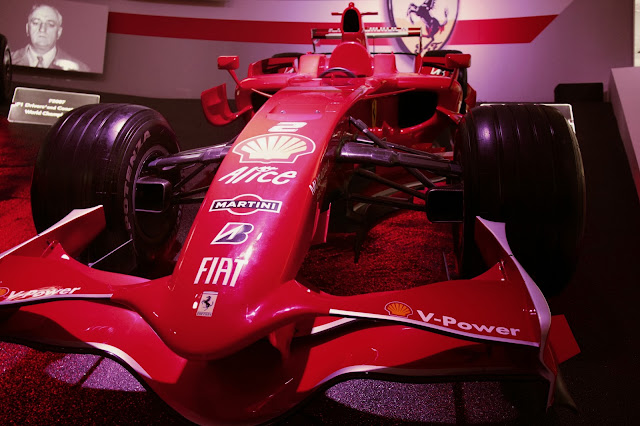
Formula 1 World Champion 2008
Julia and I sure felt like champions
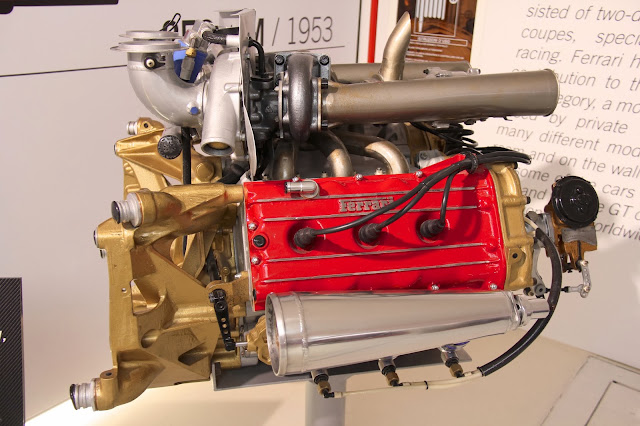
The heart that powers the machine
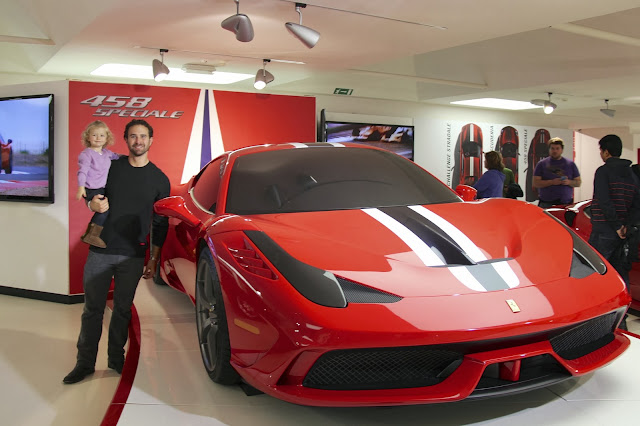
2013 Ferrari 458 Speciale
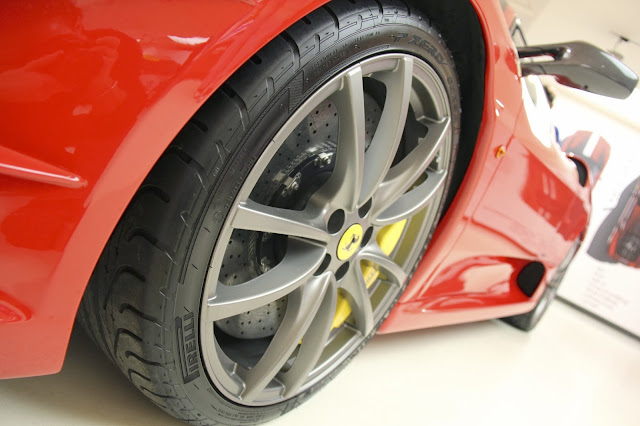
These babies can grip – Pirelli is the tire of race professionals
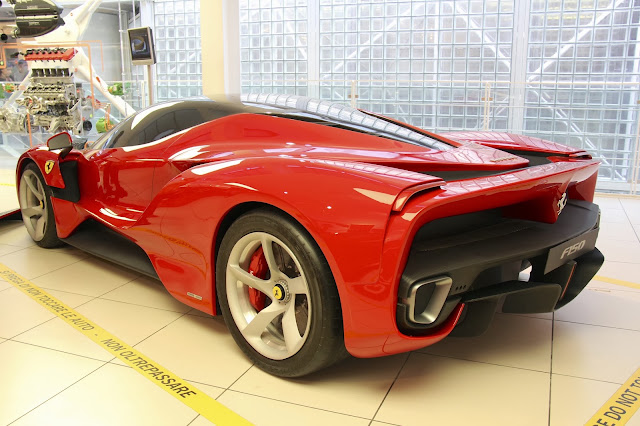
Concept car of the future
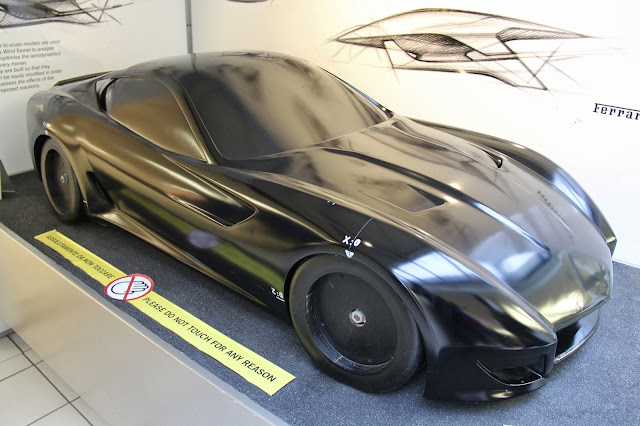
This is a clay model – what they use to construct a concept in the early stages of development

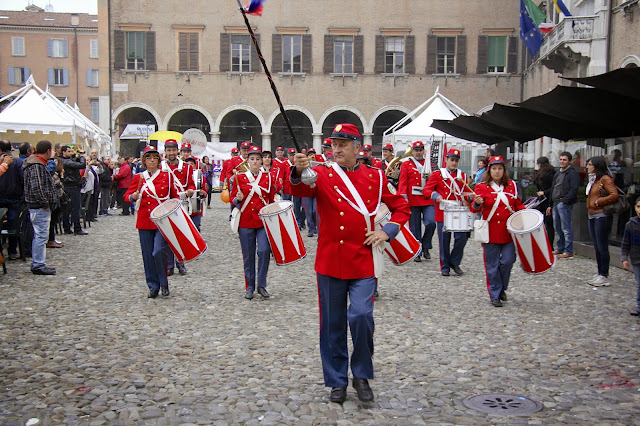
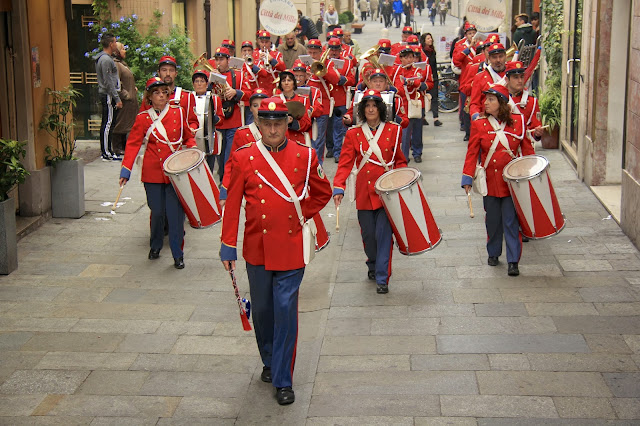
After soaking up all things, Ferrari – I drove us (albeit, much slower than a Ferrari could have gone) to the center of Modena.  The town itself is a wonderful place, certainly worthy of a daily visit.  It is believed that the city was already in existence by the 3rd century.  Here in the 21st century, we lucked out and caught an open air market in the center of town.  We were also treated to a marching band that passed us twice as we strolled through the city.

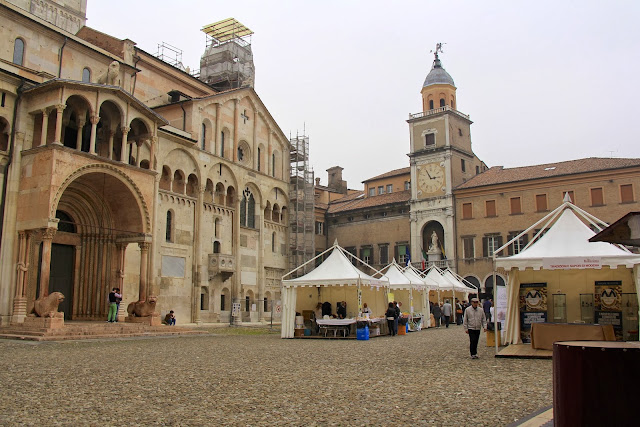
Main piazza in Modena – a street fair had been set up
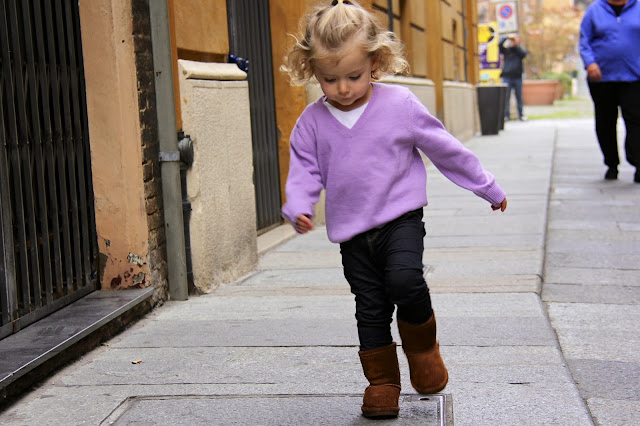
Julia runs through the city
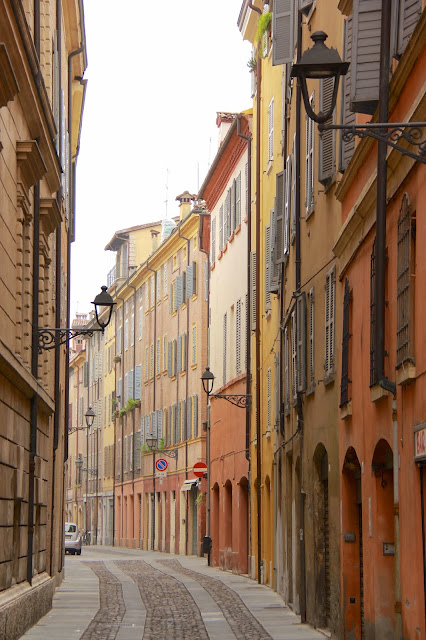
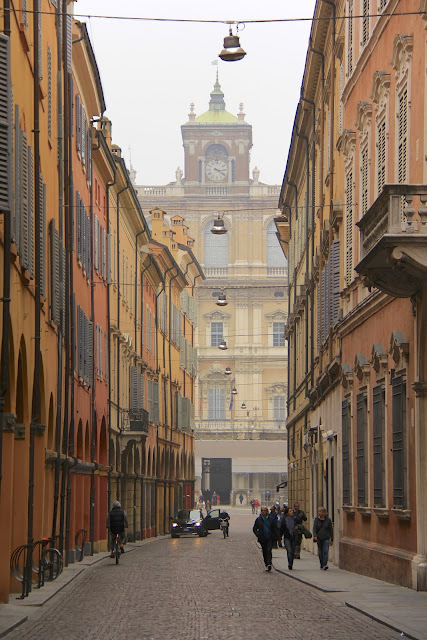
The streets of Modena were beautiful
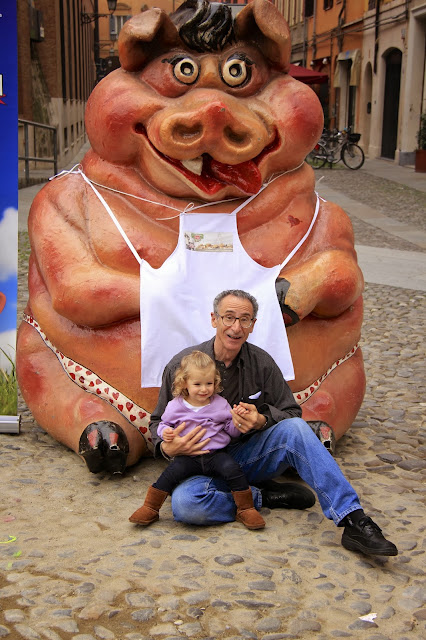
S and Julia sit by their new friend
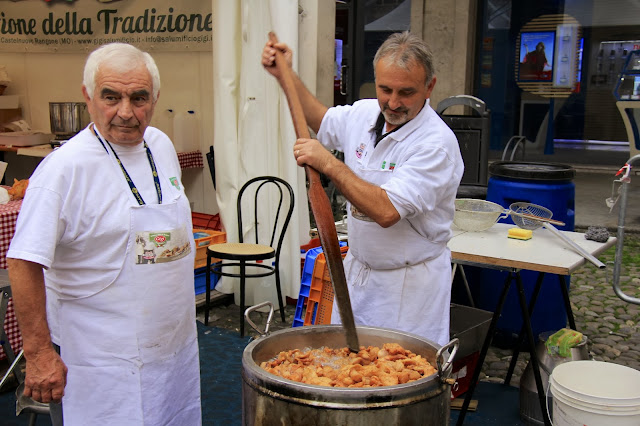
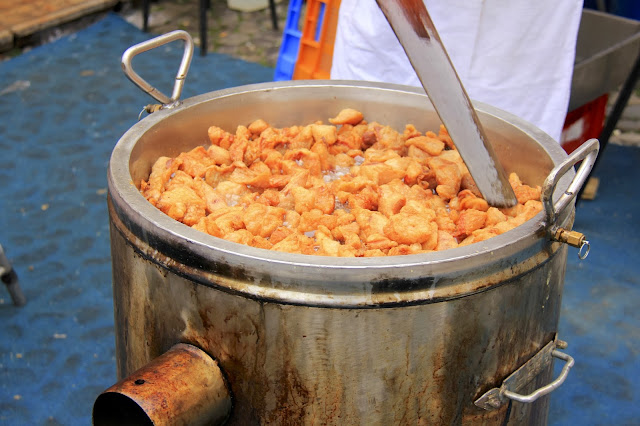
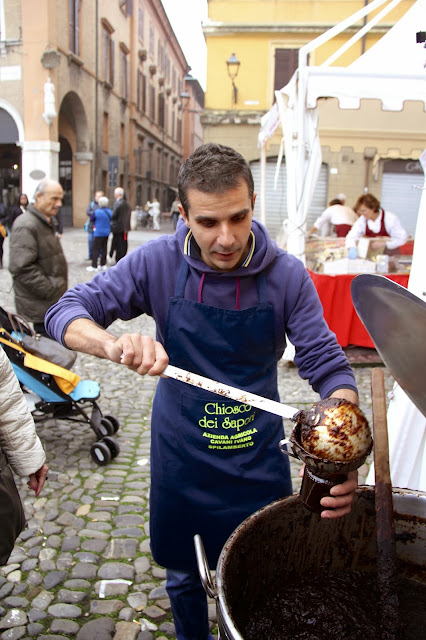
Meanwhile, these two are deep frying pig skins
Crispy, delicious and probably 130% fattening
S bought some prune jam – here he is bottling the jar for S
A marching band happened to pass through as we were in the market
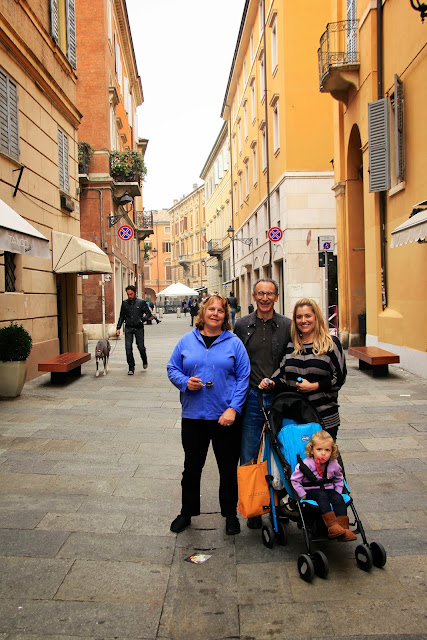
Walking through the city again – there are a lot of pedestrian streets in Modena
Family photo
We ran into the marching band a second time

The day passed by [too] quickly and we had to bid a fond farewell to Modena – we had an important event coming up later that afternoon.  A tasting at one of Modena’s finest producers of aged balsamic vinegar – Acetaia Villa San Donnino.  Since it was such a fun and noteworthy event, I will post about it separately.  After our trip back from Emilia-Romagna, S and Deborah took off for Pompeii and just a few days later, we were hugging our goodbyes.  It’s amazing how quickly time time goes when you are filling it with great food and wine!

Our Second Love – A Bunch of Old Grapes

Jennifer, Julia and I had a wonderful time when my Uncle S and Aunt Deborah came to visit us this past March.  That’s why we were thrilled when they mentioned that they would like to come back to Italy again this fall.  They wanted to do a bit of traveling and invited us to join them on their adventures, using our condo in Como as a “home base”.  They had sketched a rough itinerary and just wanted a little help filling in the blanks – assistance I was happy to give.  They knew that they wanted to spend some time with us here in Como, some time in Piemonte and Emilia-Romagna (two regions adjacent to our region of Lombardia) as well as a quick jaunt down to the historically significant city of Pompeii and another to Venezia.

S and Deborah standing near the divide of Lake Como

Jen and I share the responsibility of planning our trips – researching restaurants, activities and hotels.  But they’re usually in three or four day stints and one location at a time.  This time, I had to navigate through a two week itinerary, complete with activities, restaurants, hotel stays and all at new locations each day.  Putting the puzzle pieces of their trip together was a challenge not for the faint of heart.  Jen and I dug in, and by the time S and Deb landed in Milan, we had an itinerary that we were both proud of.  I think all of us agreed that it came together quite nicely.  Of course, the key ingredient was the company, mixed with a little food and wine!

I manned the grill for a family feast on their second night.  I’ll get Franco to smile for one of these pictures, yet…
S enjoys a little grappa after our meal
S gives us a thumbs up as he displays our first two days worth of “work”

We divided the trip into the three things that Italy is best known for.  Part I was wine.  Part II was food.  And part III was history.  Jen and I accompanied S and Deb for parts I and II (our personal favorites) and let them venture off on their own for part III.  This clean break in adventures divided the trip quite nicely and will also allow me to easily organize these blog posts into two parts.  Easy breezy, vino-squeezy.  However, before we hit the open road, we spent a day here on Lake Como in one of our favorite towns – Bellagio (if you’ve been reading this blog for a little while, you’ve seen us here many times before).  The unique beauty of the town is like nothing else on the world.

The weather was absolutely beautiful the day we drove to Bellagio
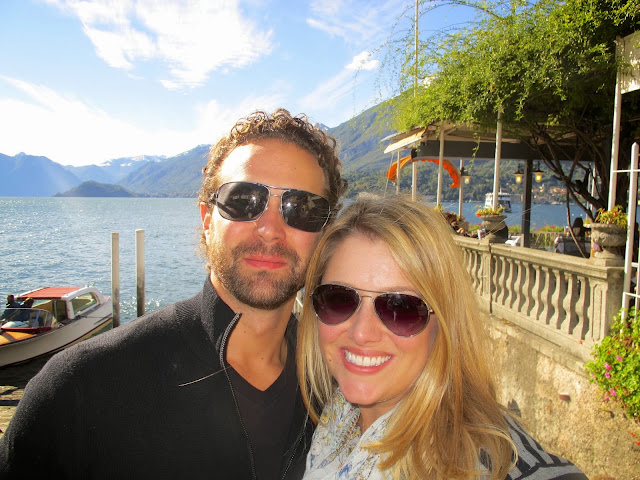
I teach my uncle how to take a “selfie” (after explaining what a “selfie” was)
Bellagio from above – a unique vantage point.  Bellagio divides Lake Como into the two “legs”
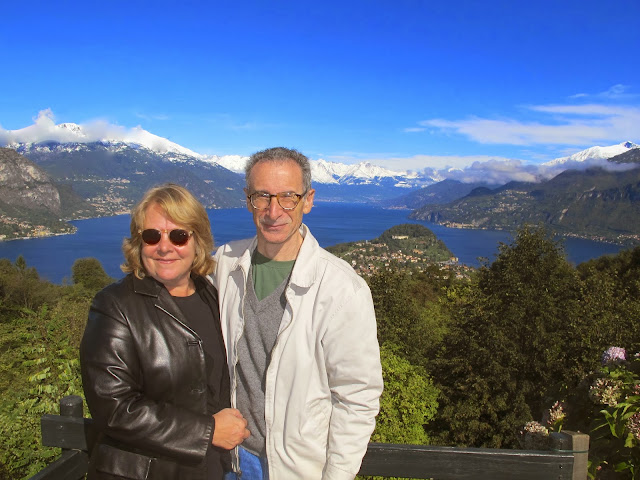
Jen and I pose for a picture
S and I take a picture together
My two girls
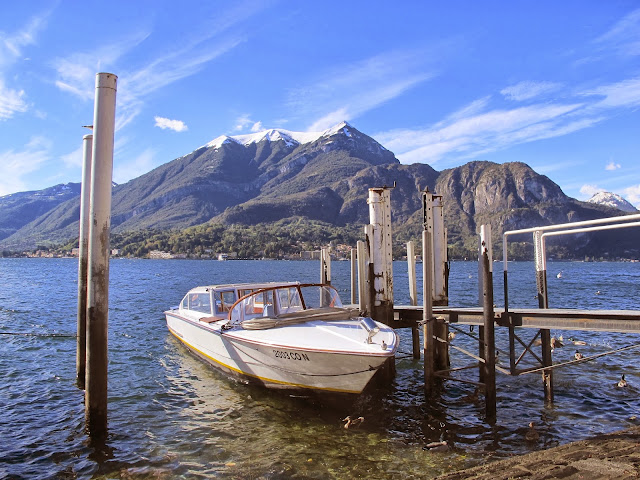
Bellagio is a beautiful town at the center of Lake Como
A boat rests after bringing passengers from another lake town
“Hey… I think I’ll make this my profile pic”
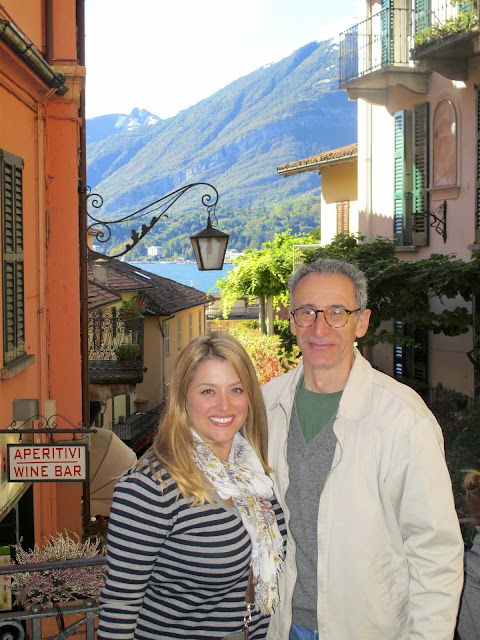
Jen and S stand near the wine bar where we had lunch
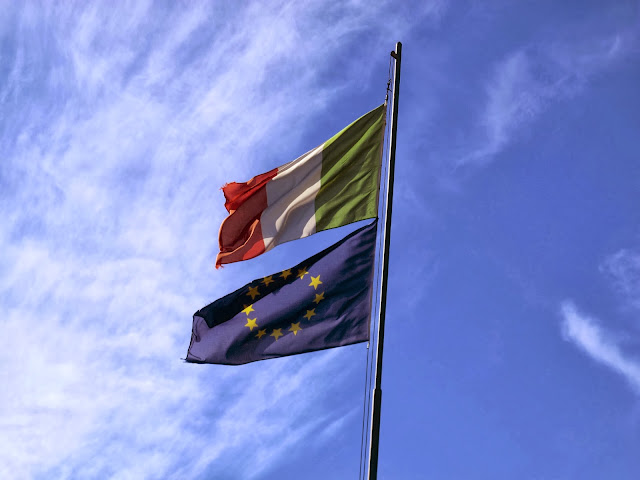
The Italian flag blows in the wind alongside the European flag

Piemonte (Piedmont) is a region in northwest Italy that borders France to the west and [our region of] Lombardia to the east.  The capital city of Piemonte is Torino, which was once the capital of all of Italy and the springboard for the unification of the country.  Of the twenty regions in Italy that each produce wine, Piemonte is probably the most well-renowned for their vintages.  The rolling hills and mild climate result in some of the world’s best wine – the Barolos and Barbarescos produced here are often the prize jewels of wine cellars the world over.   These wines, made primarily from the nebbiolo grape age very well, and in fact improve and develop richer and more powerful flavors as the decades pass.  It was easy that to recognize that this portion of our trip was going to be entitled simply, Vino (wine).

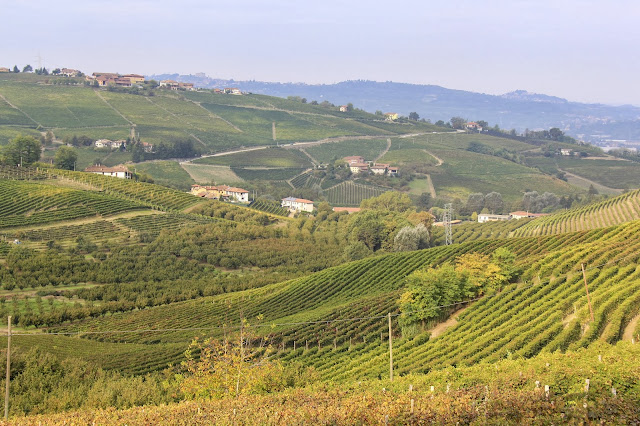
The rolling hills of Piemonte are a perfect place to grow grapes
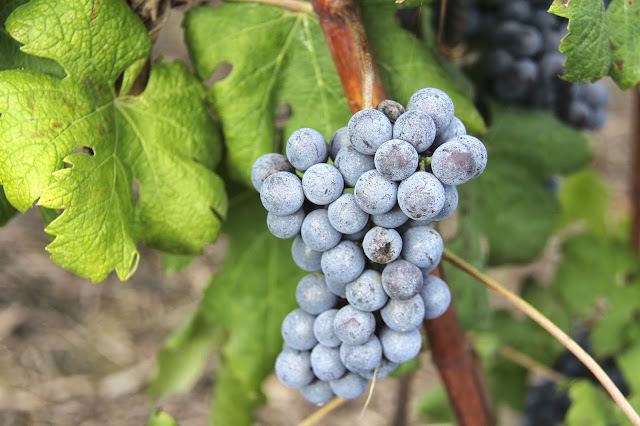
They look delicious now… just wait until they are turned into a Barolo or Barbaresco
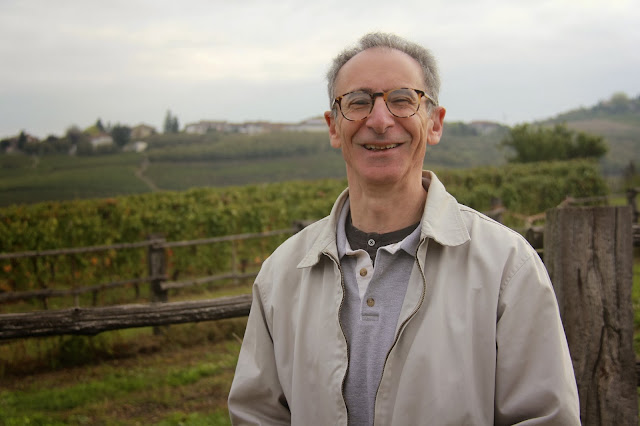
S stands in front of a field of grape vines early in the morning
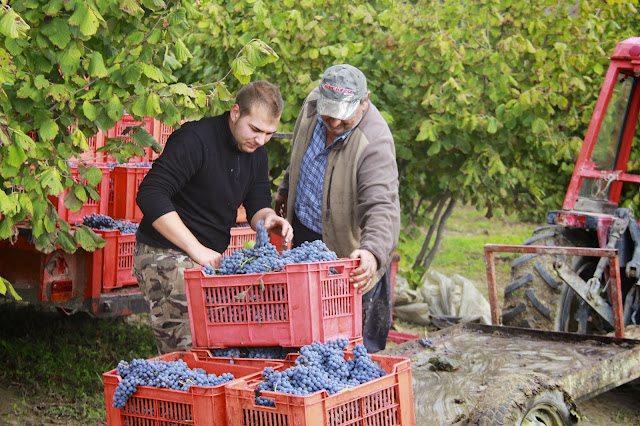
A father and his son load grapes onto a flatbed during their harvest
The finished product of our five nights together in the condo – wine was definitely a theme central to their visit

We spent the first day of our road trip in the small village of Barolo.  During our drive to Barolo, S imparted some of his knowledge about the famous wine, which I’ll now share with you.  Historically, Barolo wines were very rich on tannin and therefore could require as many as ten years to soften enough to drink.  The long fermenting time and aging process in large, wooden barrels causes this complexity in the wine.  The problem with this method is that it is very time-consuming and therefore expensive.  A newer breed of producers have cut the fermenting time by as much as 2/3 and age the wine in smaller, French oak barrels.  This allows the consumer to drink the wine much earlier and appeals more to the more modern, international palate (it creates a fruitier wine).  As an aside, the more modern palates that prefer “big”, fruitier wines is often attributed to world-famous wine critic, Robert Parker (often referred to as the “Parkerization” of wine).  The differing styles in Barolo has created a controversy between “old” and “new” – a conflict often referred to as the, Barolo Wars.

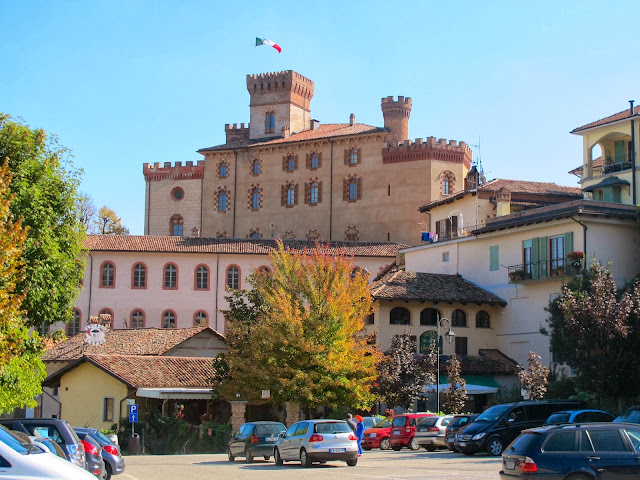
Castello di Barolo stands proudly overtop the town with the same name
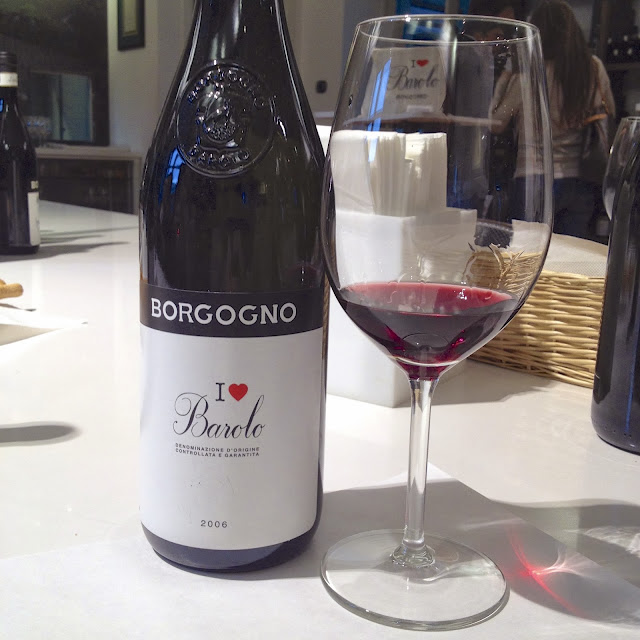
I ♥ Barolo!

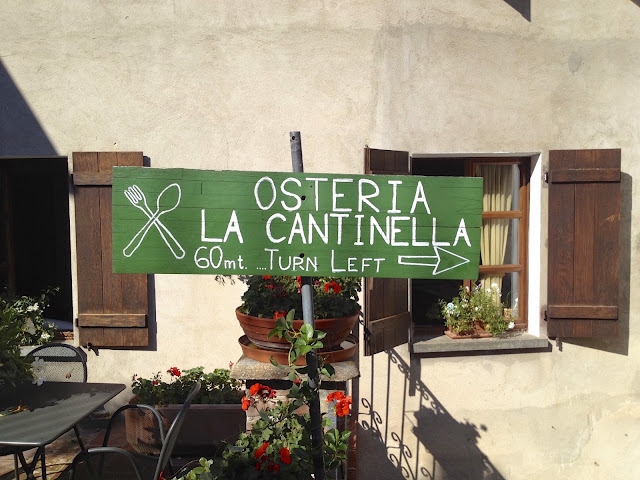
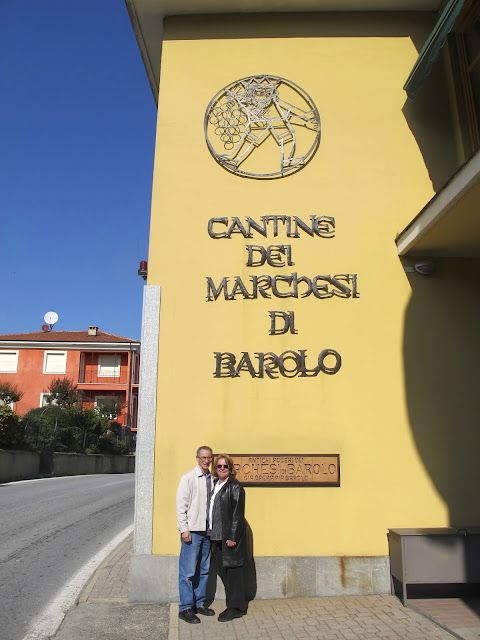
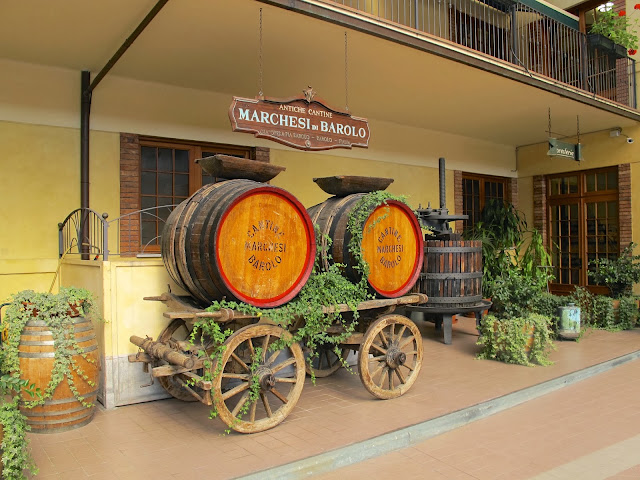
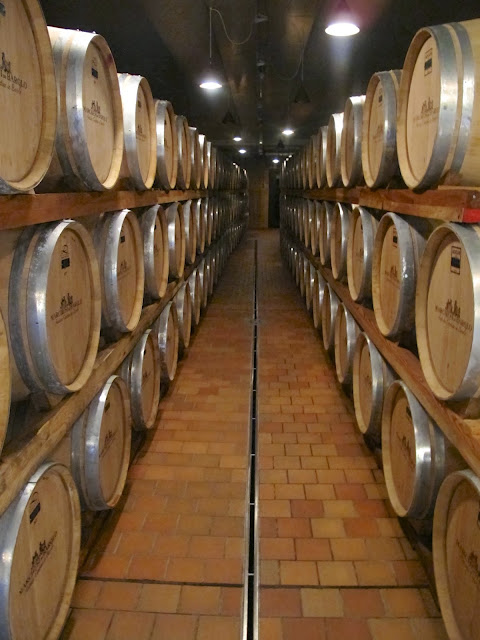
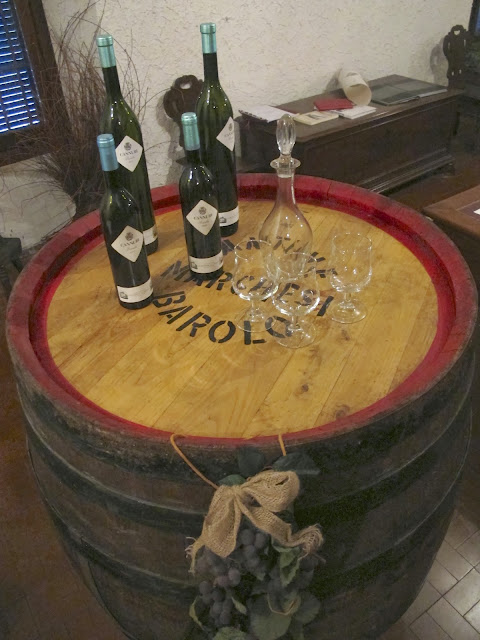
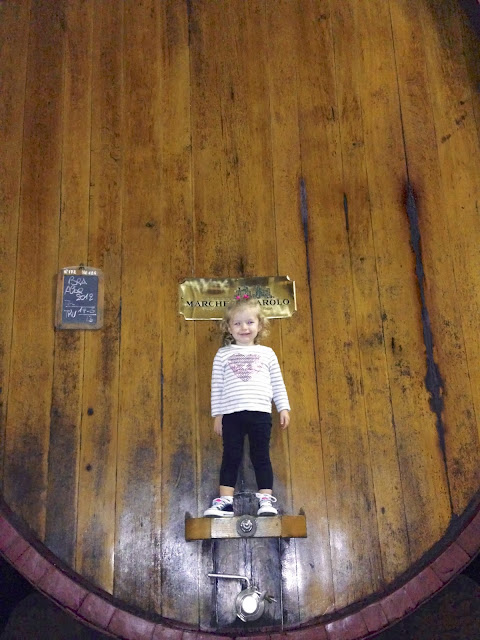
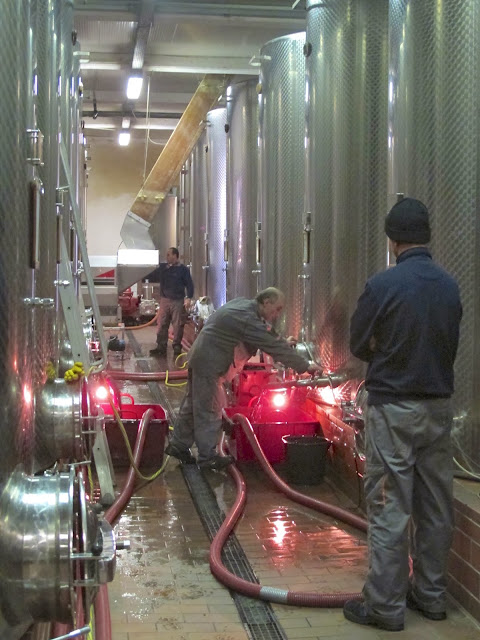
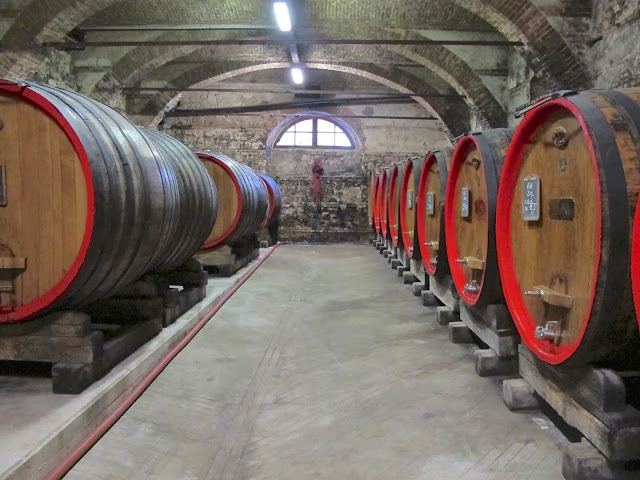
After a wonderful lunch at Osteria Cantinella, I had pre-arranged for a tour and wine-tasting at Marchesi di Barolo.  This particular cantina boasts a very genuine and interesting history (I encourage you to click on the link and visit their website).  It was explained to us that this particular winery was where Barolo itself was born – we even saw the original cask that was home the world’s first Barolo over 200 years ago.  Our tour began in one of the cantina’s vast rooms where they were aging wine in botte di vino (wine casks).  These barrels were made from oak from several countries.  S and Deb saw some of the barrels were made by an American cooper (barrel maker) they know in Napa Valley.  Small world!  We next moved into the Marchesi’s private family cellar, where an impressive collection of wines rendered us all speechless.  As we descended down into the heart of the cantina, we saw the juice of fresh “crush” flowing though long winding hoses, attached to the floor above where tractors were dumping the grape fresh from the “harvest”.  This was exciting for all of us, knowing that we played a small part in the 2014 vintage (primarily by not tripping over the hoses and spilling the precious nectar on the floor).  After the tour, we enjoyed a tasting of some of their finer wines – a wonderful way to casually spend the afternoon.

We merely had to follow the signs to reach our restaurant
Our group is eager to dine at Osteria Cantinella
S and Deborah stand just outside Cantine dei Marchesi di Barolo
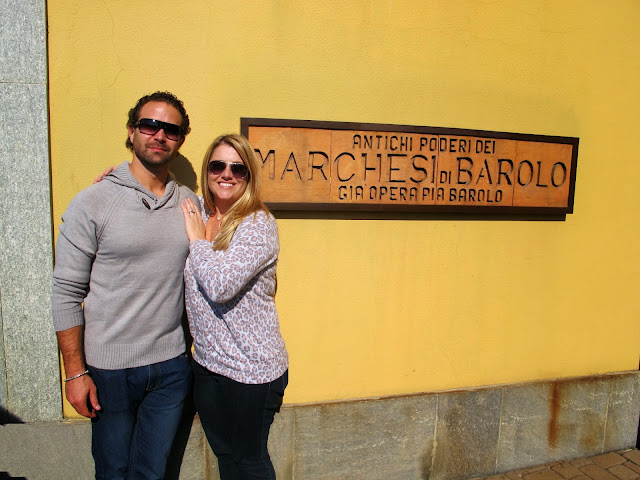
Jen and I take a picture here as well
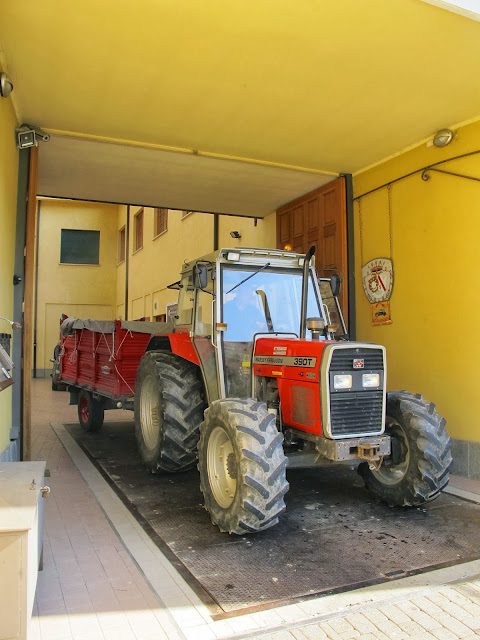
Tractors were coming in out along with us, bringing grapes fresh from harvest
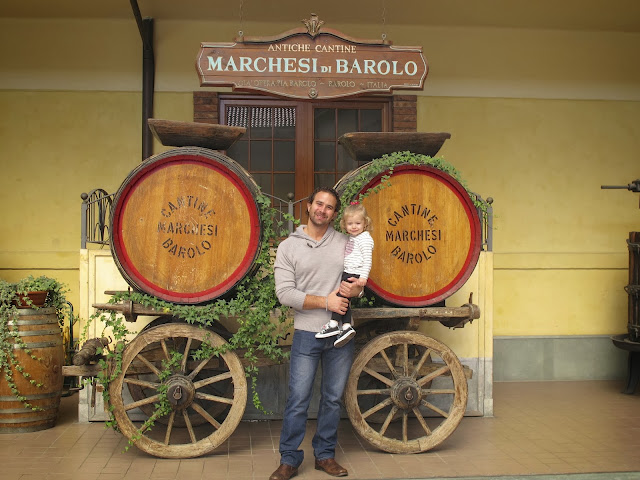
A display in the interior courtyard shows an old fashioned way to transport the wine from town to town
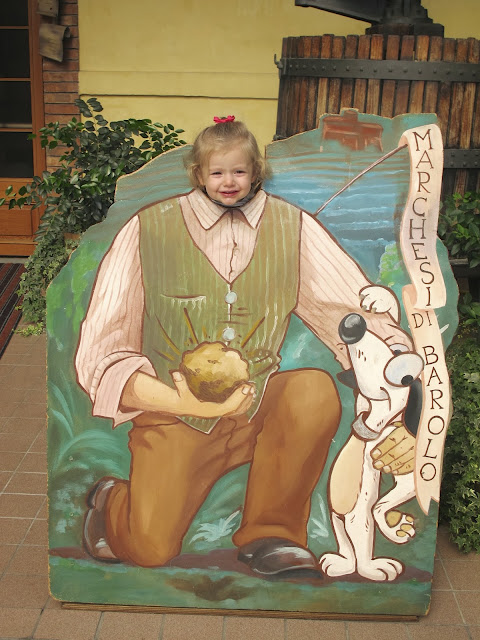
Julia also doubles as an expert Truffle Farmer
We smile in front of the old fashioned barrels and wagon
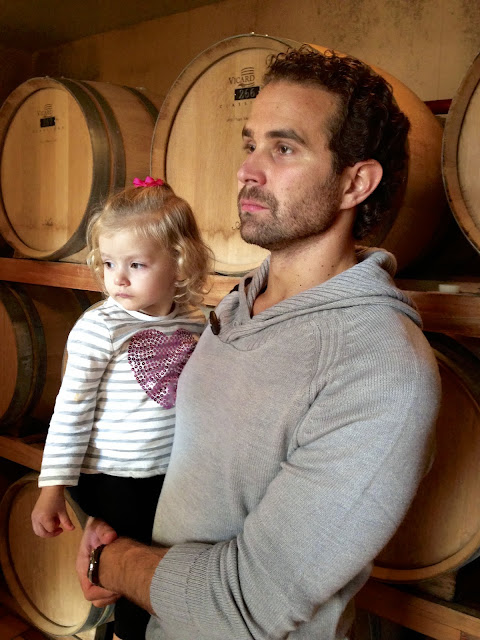
French oak botte in the first room we visited
Julia and I listen to our tour guide
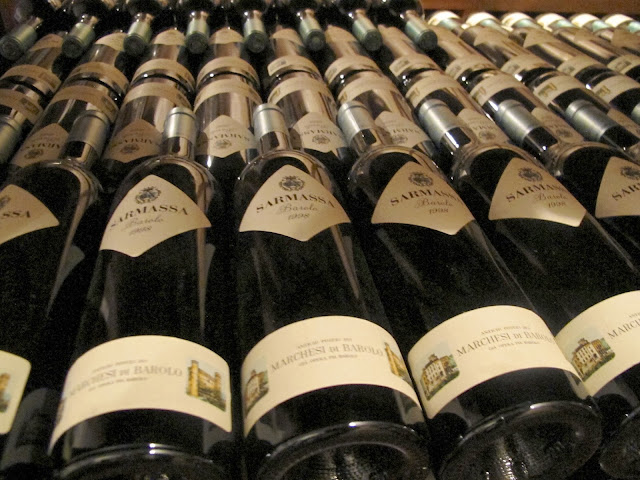
Barolo can age in the bottle for many years, most Barolo shouldn’t even be opened for at least 10 years
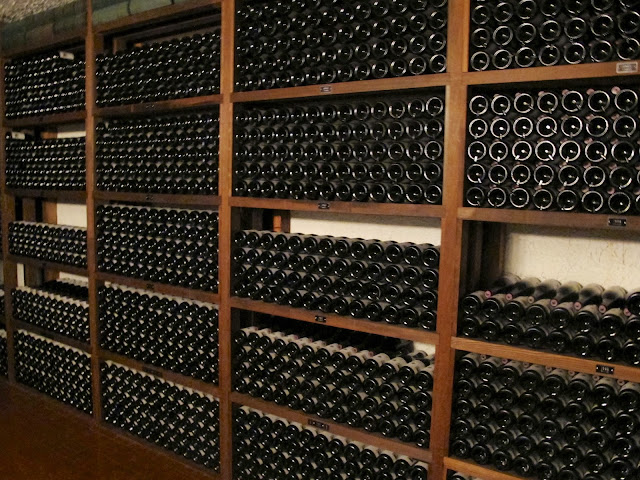
Going into the personal cellar of the family… quite the collection
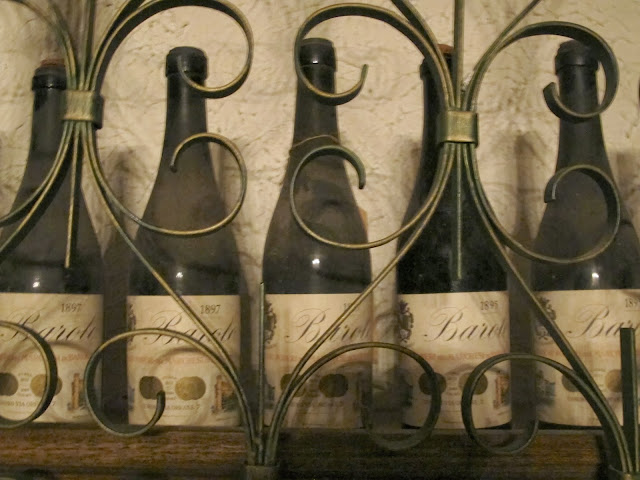
Some of the much older bottles are on display – these are no longer for drinking (hence the vertical position)
The oldest bottle in the cellar is from 1859 (not drinkable) and the oldest that is still drinkable is from 1938
A private tasting area
Some of these large barrels date back as far as the 1950’s
Downstairs the juice from the crush flow into these large steel vats through long hoses
These large barrels are made by hand and are very expensive
A basket that was once used for the harvest many years ago is now used as decoration
Tractors dump the grapes they collected at harvest into a machine that crushes them
Our guide showcases one of the bottles that we would be tasting – this a Barbaresco
Deborah and Julia start a dance party

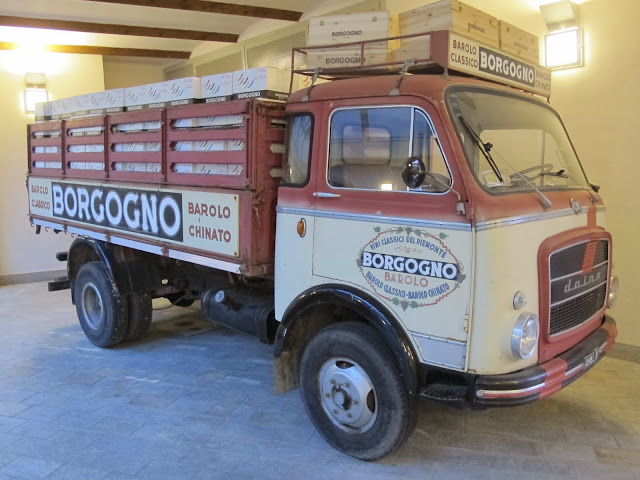
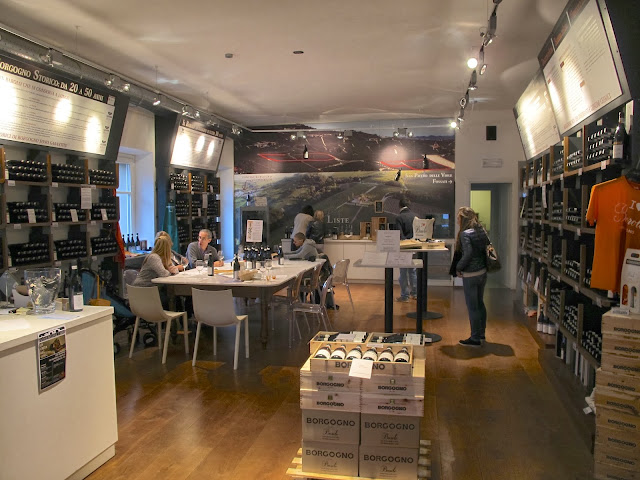
But we weren’t done – we still had another tasting on the books.  We next went to Borgogno – a producer of fine wine since 1761.  We opted for the more comprehensive vertical flight, consisting of six different wines.  I cannot accurately describe to you the pure bliss one can discover whilst sipping on some of the worlds best wines, with fun people who’s company you really enjoy and basking in the glory of a napping baby.  We tried our best to “play it cool” but I think perhaps got a little rowdier than we even realized.  You have to give us a break, we had each had several glasses of wine at this point.  Between me and S (mainly, S) – we bought so much wine that they included two of the four tastings and threw in canvas bags, custom wood cases and bottle openers.  If you find yourself in Barolo – duplicate our exact schedule of eating and drinking – it was an amazing day.

We walk through Barolo on our way to Borgogno (the tall white building)
One of their old trucks now sits on display in the cantina
A wonderful place to taste wine, surrounded by all the amazing bottles that can be acquired with the simple swipe of a card
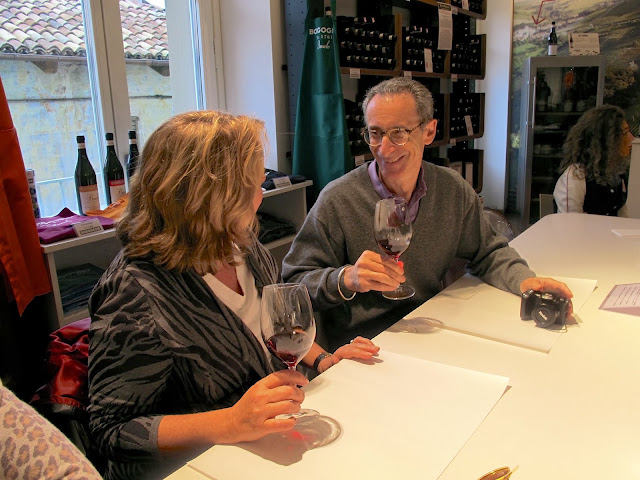
S and Deborah share a laugh
Jen explains what a “selfie” is and shows her how to do it
I wouldn’t call Deborah’s first attempt “successful”
“Here, let a pro show you how it’s done”
Deborah’s second attempt was much better – I think she’s nailed the “selfie”

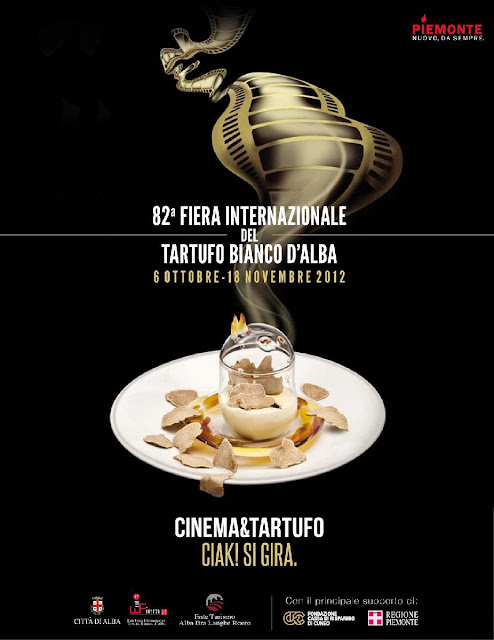
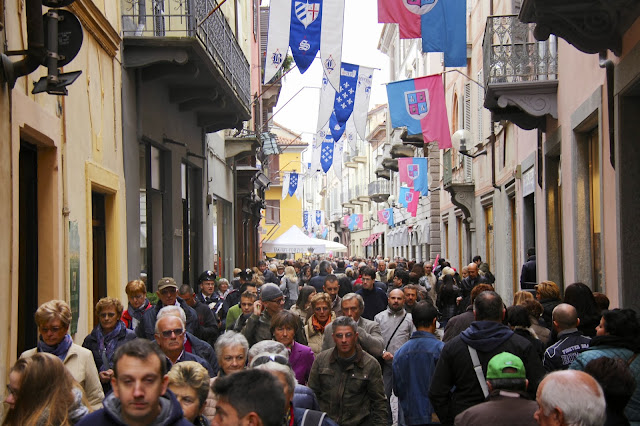
For 83 years, Alba has been host to the Fiera Internazionale del Tartuf Bianco d’Alba (International White Truffle Fair of Alba).  This year, the festival is open for five weeks, from the 12th of October until the 17th of November, spanning across the entire city.  There are hundreds of events (including a donkey race, music concerts and food & wine tastings), vendors set up in markets throughout the city, celebrity chefs dropping in all over town, cooking demonstrations and of course – thousands upon thousands of truffles.  Admittedly, we were undertaking a “food” related activity in the “wine” portion of our trip – but we have learned that nothing pairs with the worlds most exquisite wine better than one of the world’s most elusive and desirable food items.

Last year’s poster for the event
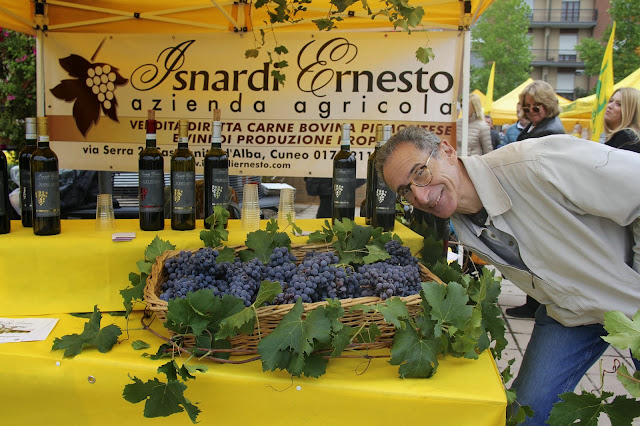
S gets close the grapes of a small producer selling his wine
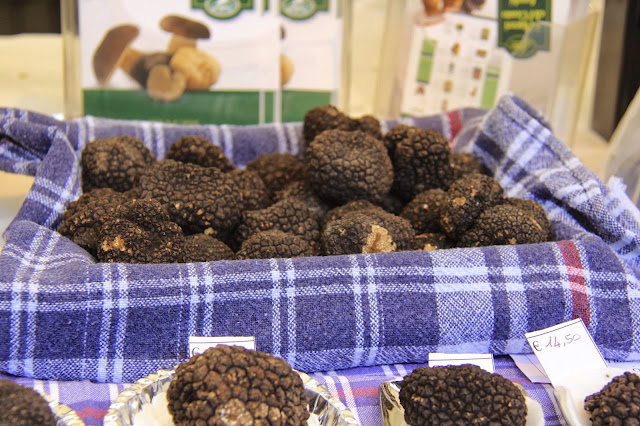
Some black truffles displayed for sale
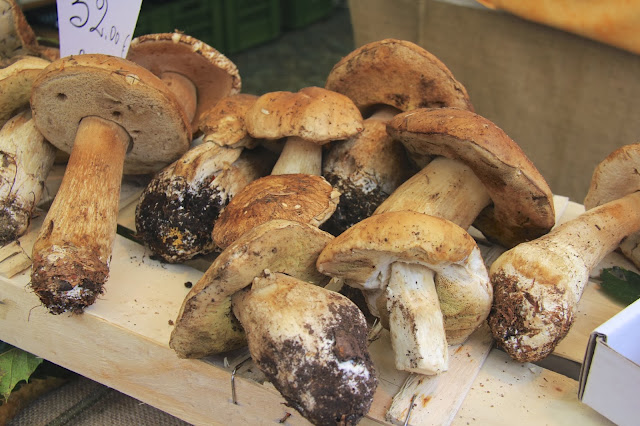
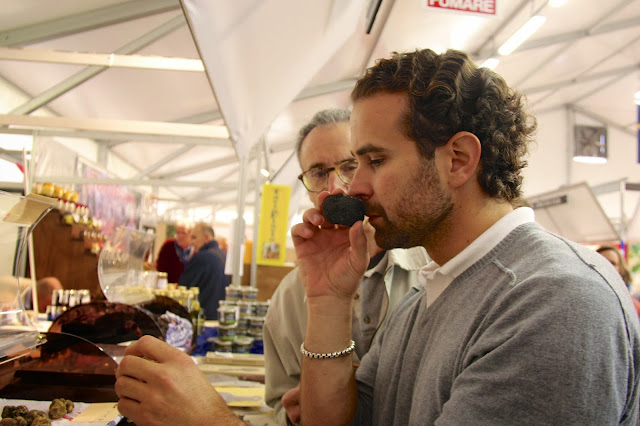
It is the season for truffles as well as mushrooms – there were some fine examples for sale
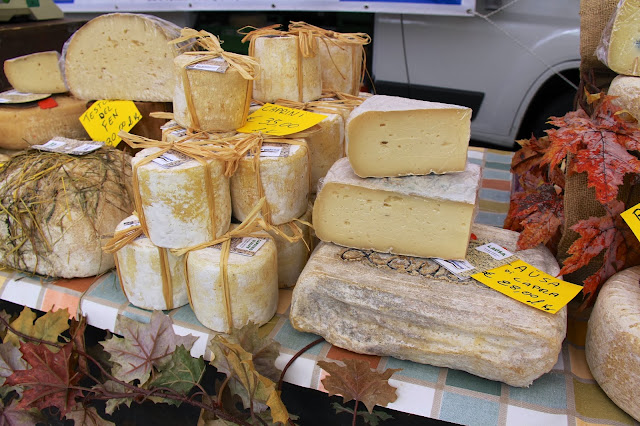
A cheese vendor showcases his various goat, cow and sheep cheese
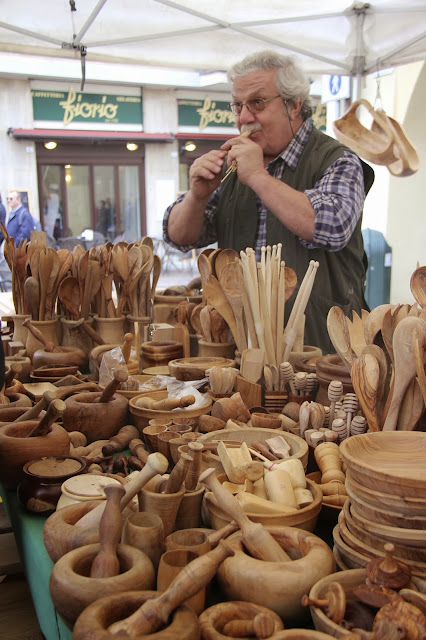
This artisan hand crafts items out of olive wood – Deborah got several spoons
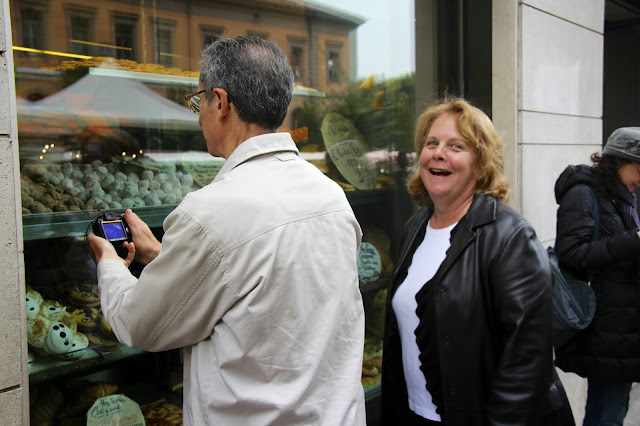
Deborah laughs as S takes a picture of the window display at a pasticceria (pastry shop)
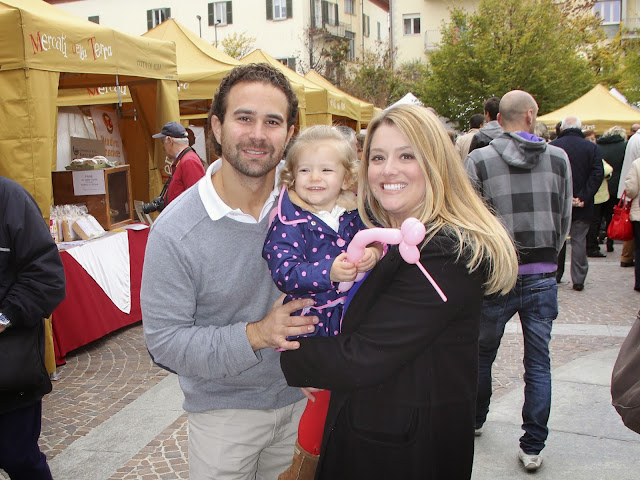
Family photo in one of the markets
The city is flooded with thousands of visitors each day during the month-long event

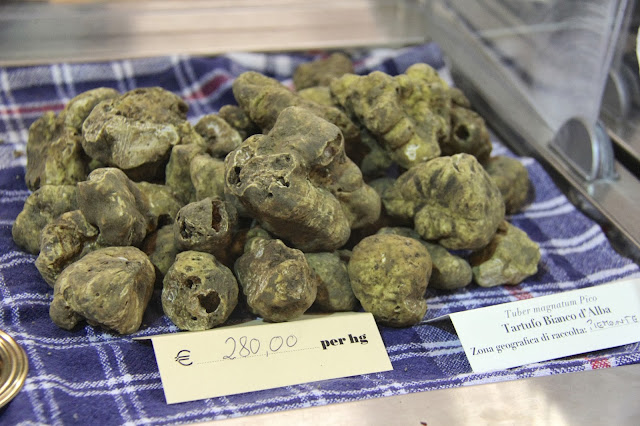
Like many of the world’s finer foods, a truffle may seem strange to many people (caviar = fish eggs, foie gras = goose liver, etc.).  A truffle is in fact, a fungus – but nonetheless, affectionately referred to by many as the diamond of the kitchen.  It is no wonder that this event is considered the Sundance Film Festival of the culinary world.  The likes of Mario Batali, Joe Bastianich and dozens of other celebrity chefs make appearances each year.  Lesser known restaurateurs can be seen in the main truffle tent, intently smelling every single truffle and purchasing thousands of euro’s worth of this little, spongy item.  They will use the ingredient in various recipes (soups, stews, meat dishes and anything else their creative minds can concoct), but primarily – they will shave the truffles over pasta, table-side.

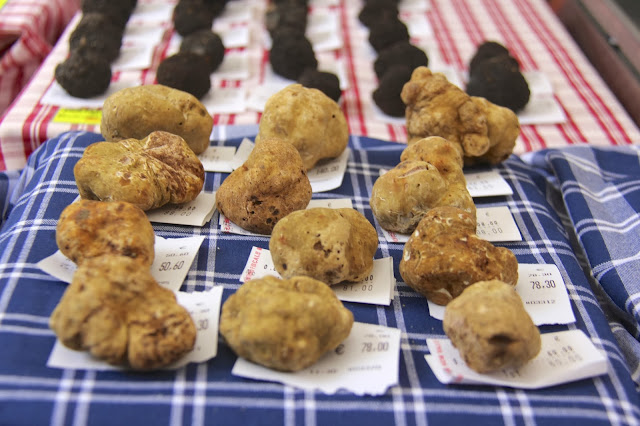
A collection of white truffles in the front – black truffles are in the background

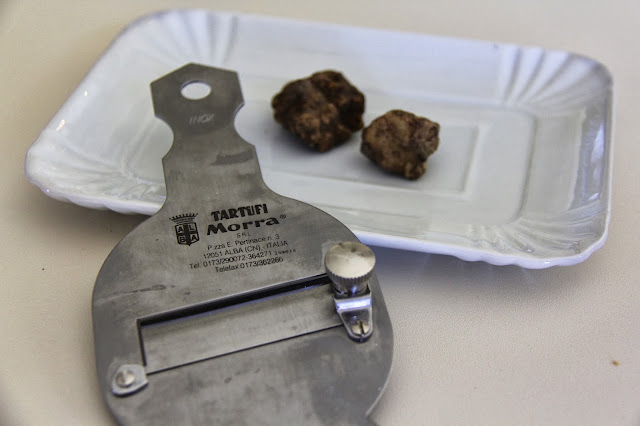
Truffles are small, hard to acquire and require the perfect soil conditions to achieve a proper balance. Italy is regarded as the foremost area for the natural cultivation of truffles (and the ultra-elusive “white truffle” grows in the Langhe area, specifically Alba as well as Tuscany and Abruzzo).  As popularity and demand has increased, other countries have tried to cultivate white truffles (including Slovenia, Croatia and now even China).  It is commonly accepted that these areas produce a lesser-quality truffle.  One of the benefits of purchasing your truffles within the main enclosed tent at the festival is that you are guaranteed a certified, locally cultivated truffle.  Many of the merchants selling their truffles were the actual farmers themselves.  Today, farmers mainly use Truffle Dogs to sniff out the truffles.  Historically, Truffle Pigs were used (because of their acute sense of smell and innate ability to find truffles) – but their love of the delectable treat often had them eating the merchandise before the farmers could snatch them from their snouts.  The Truffle Dogs have to be trained to find the goods, but are much easier to control.  We sniffed out some of our own truffles and plunked down €50 to acquire two small truffles and a truffle shaver.

White truffles for sale – they are not cheap!
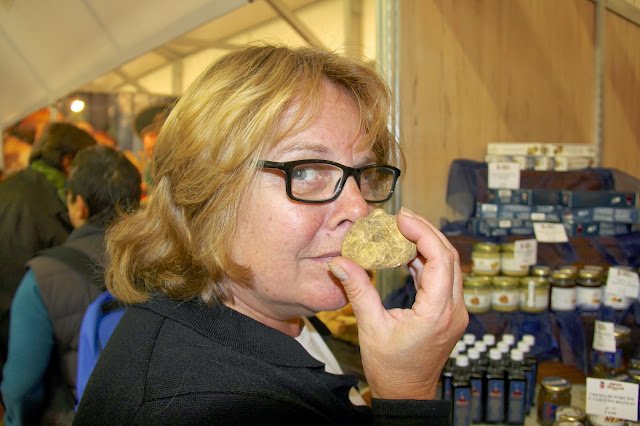
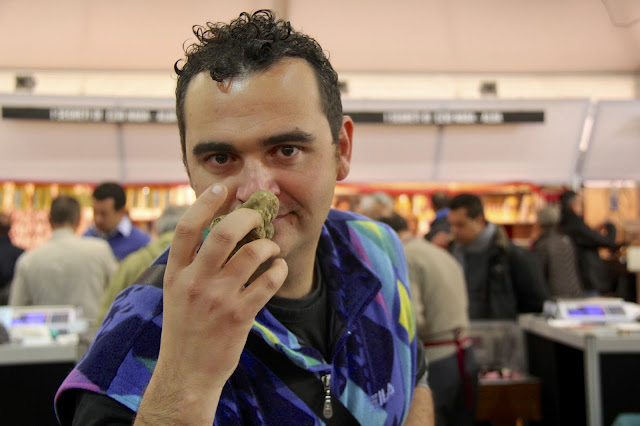
Deborah catches the scent of a beautiful specimen – that truffle probably cost around €300 ($400)
I give the truffle a smell as well
This guy really knows how to do it and shows us – it’s all in the wrist and perfectly timed nostril flare
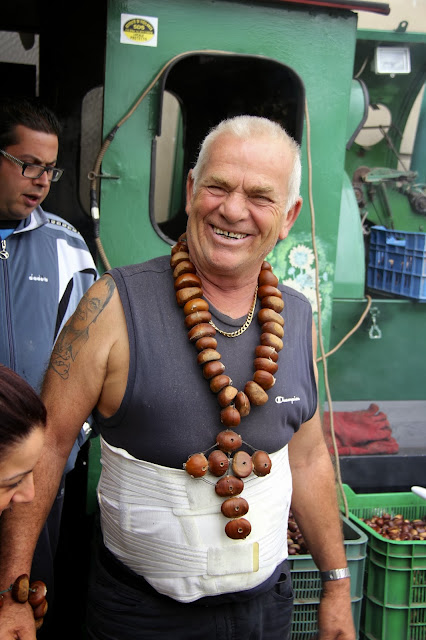
We found this guy selling roasted chestnuts outside
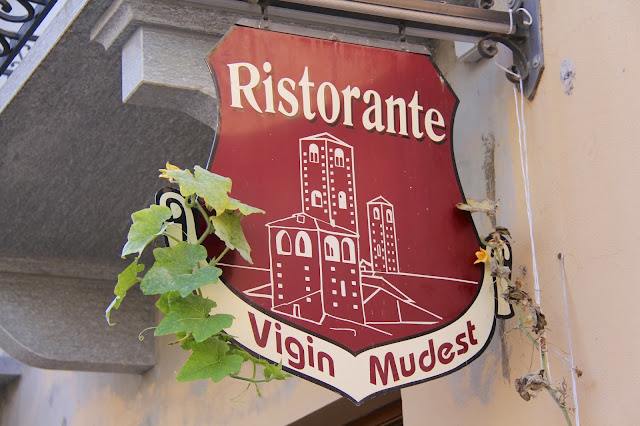
After touring the markets, we had lunch at Ristorante Vigin Mudest
Ever heard anyone say, “this sauce is so good I could drink it”?  Well, when S says it – he really means it
I became the “garbage disposal” of the group, finishing everyone’s plates (3 plates and a bowl)
Julia hugs her great aunt and uncle after lunch
Before we left Alba, Julia insisted on ripping her shoes and socks off

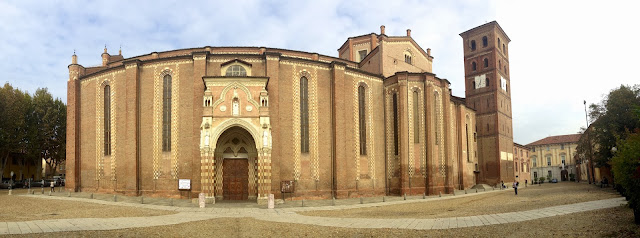
Our final stop in Piemonte was a visit to Asti, a city that has been occupied since the Neolithic Period and today boasts a population of about 75,000 inhabitants.  Unfortunately, we caught the city on a Monday… during lunchtime.  This meant that virtually every museum, shop and attraction was closed.  We ate a makeshift lunch of pizza and flatbread on park benches before heading for home.

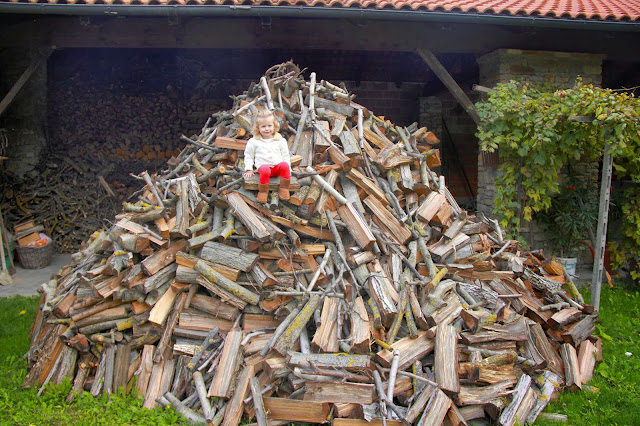
Julia built a throne of her own from some firewood at our agriturismo
Cattedrale di Asti (Cathedral of Asti) dates to 1309
Ruins of an ancient tower that had been built into a more modern home

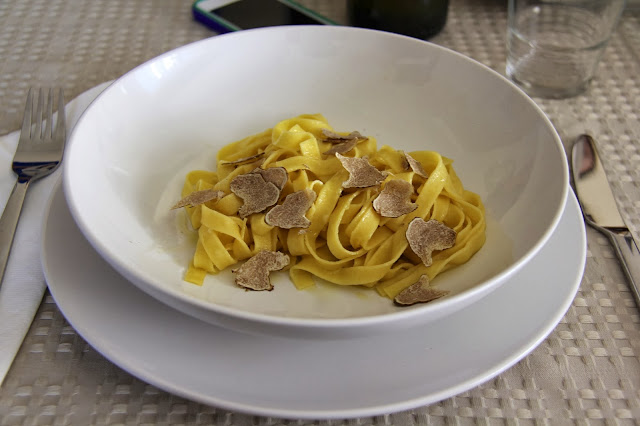
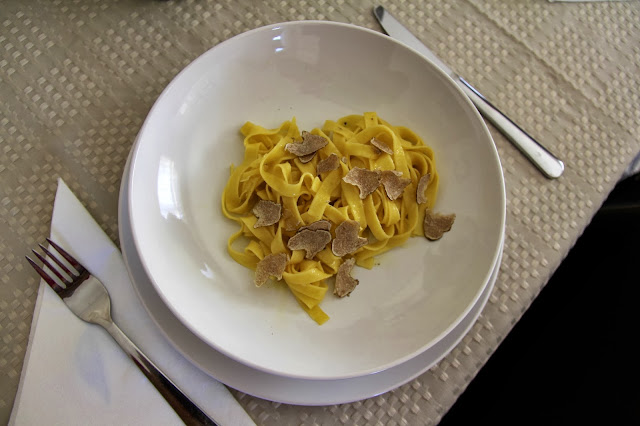
A couple days later, we took our prized truffles out of the refrigerator and cooked tagliatelle con olio with shaved truffle.  It was a delicious lunch that nearly put us in a content, comatose state – a good way to tease our pallets for Part II of the trip.  We would depart the next morning for Emilia-Romanga.  If Part I was entitled Vino, then Part II of their trip would definitely be called Cibo (food).

This is what €50 ($68) worth of truffles looks like
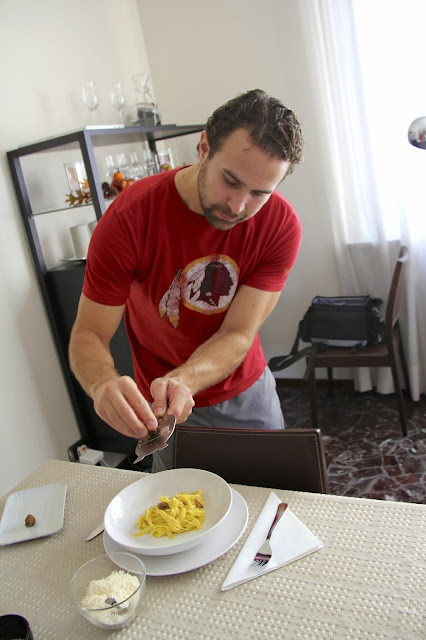
I shave the white truffle on my pasta
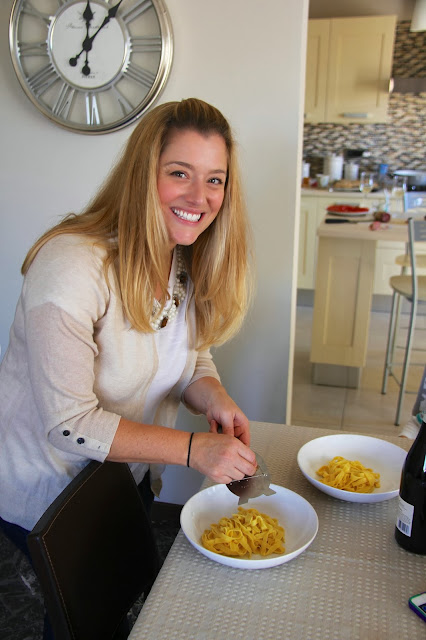
Jen takes her turn
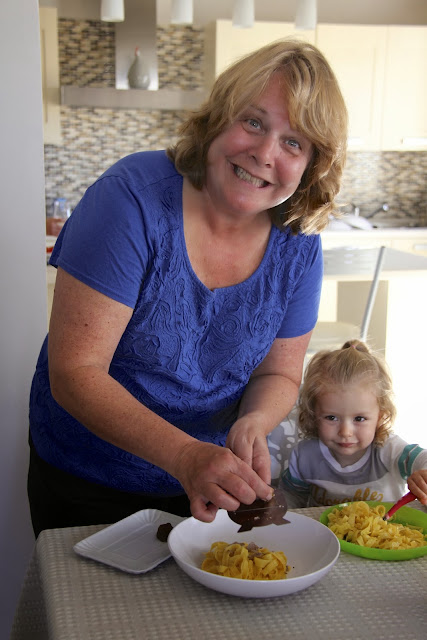
Deborah is happy to shave her truffles
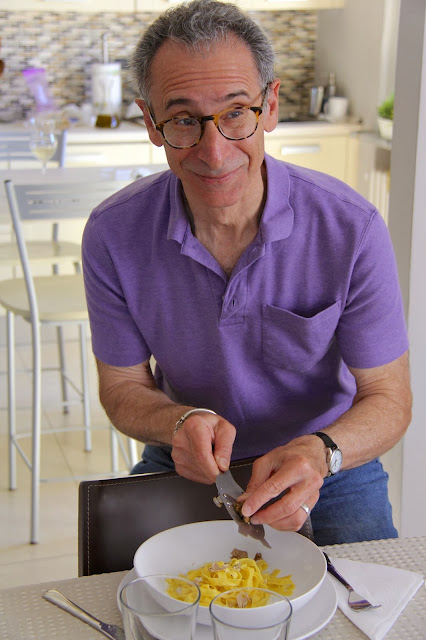
S looks great when he’s shaving truffles
Now that looks great!
It tasted great too
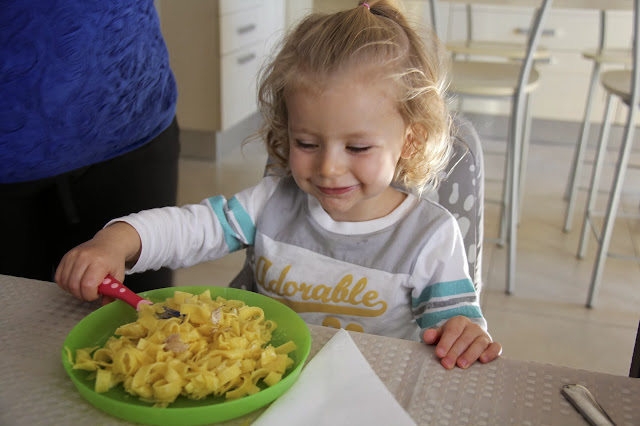
Even Julia got to try some truffles
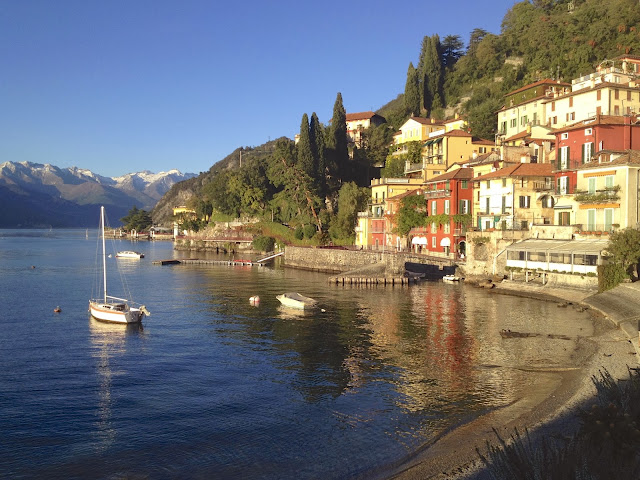
We visited Varenna after our truffle lunch
That night we all went to dinner at Ristorante Simposio to celebrate Claudia’s birthday – still can’t get Franco to smile

Join us for Part II coming soon…

Don’t Buy The Jarred Stuff!

I know this is Jen’s Kitchen, but I’m sorry to report that you’ve got me (Greg) writing this one. This area of the blog is Jen’s domain – but she was having trouble getting her writing juices going, so I offered to give her a hand (her timing in the kitchen may be pure perfection, but if I don’t get this post going, it’s sure to be over-cooked).
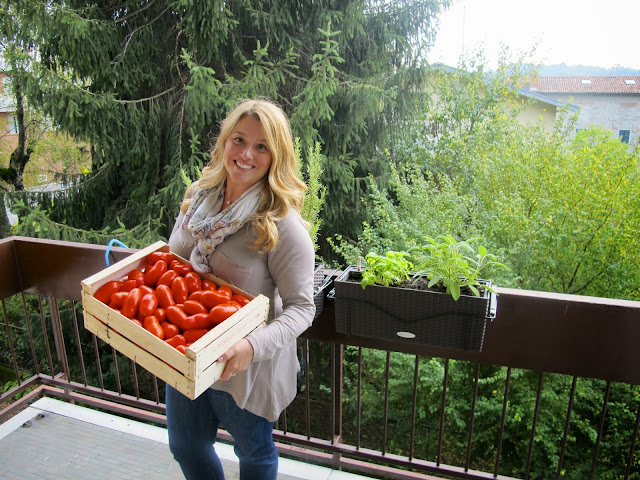
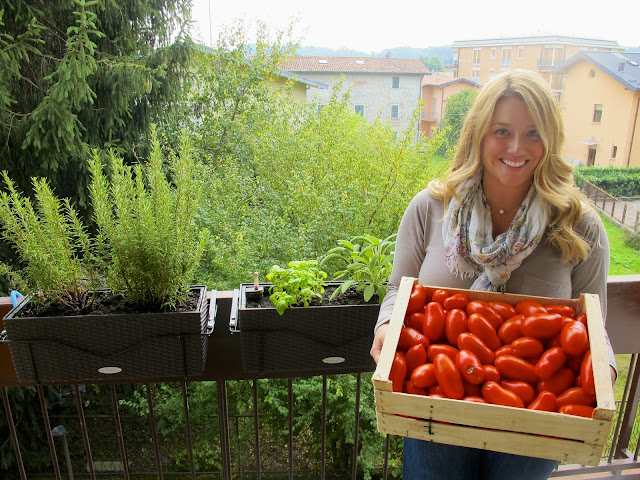
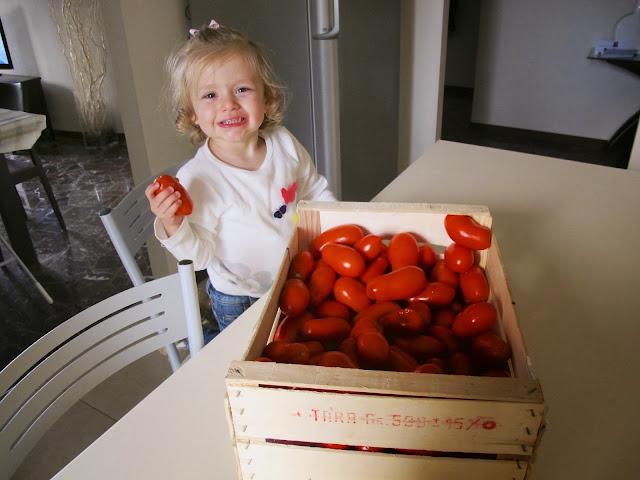
Jen shows of her tomatoes

I may not know a lot, but I have learned two things while living in Italy:

First, every home has two types of olive oil.  They all have the generic store bought one (that’s still delicious) for cooking and salads as well as the “special” olive oil that is pressed by someone’s nonno in some small town in the mountains somewhere…

Second, (along the same vein) every home has homemade passata (tomato purée) that is either fatto in casa (made in house) or gifted by a friend of family member.  Why the homemade passata, you ask?  And what the heck is passata to begin with?!  Well, let’s travel back several thousand years to a time when food was seasonal, fresh and delicious.  In the time of the ‘hunters-gatherers’ people would eat whatever they could get – whatever was walking around and growing nearby that time of year.  They quickly learned that proper storage of proteins (those delicious saber-toothed tigers) was an important part of surviving the winter.  Fast forward to the early 19th century and technological advances allowed people to store fresh vegetables alongside their meat and fish.  Since Italians love to cook with fresh, unaltered flavors – the benefit of having access to tomatoes year round was paramount.  Grazie, Louie Pasteur for your contribution to Italian cuisine.  So, the passata that we are talking about, is simply a puréed tomato that is jarred and stored in the cupboard for use throughout the winter.

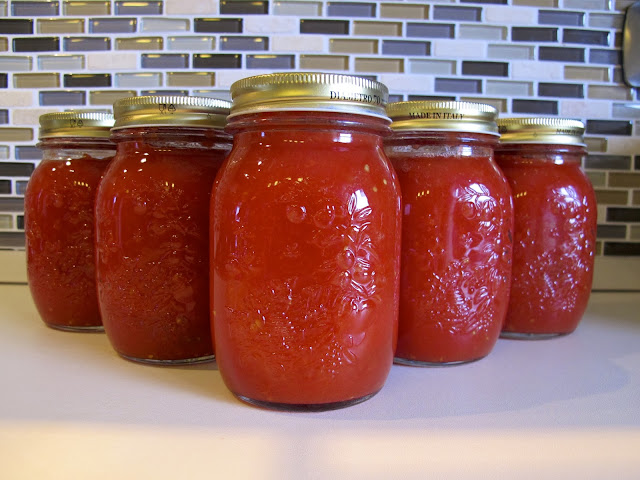
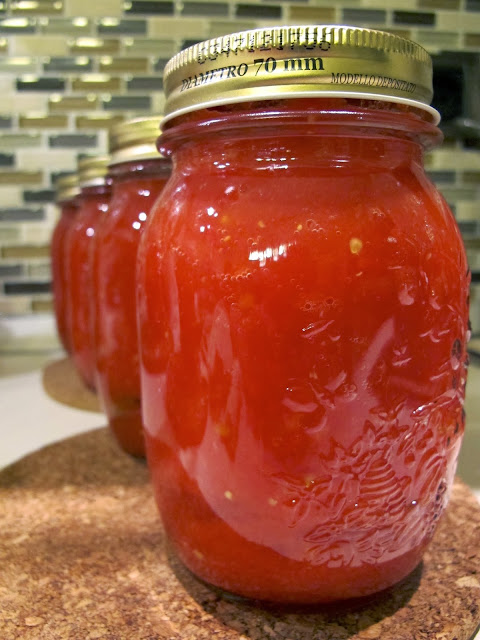
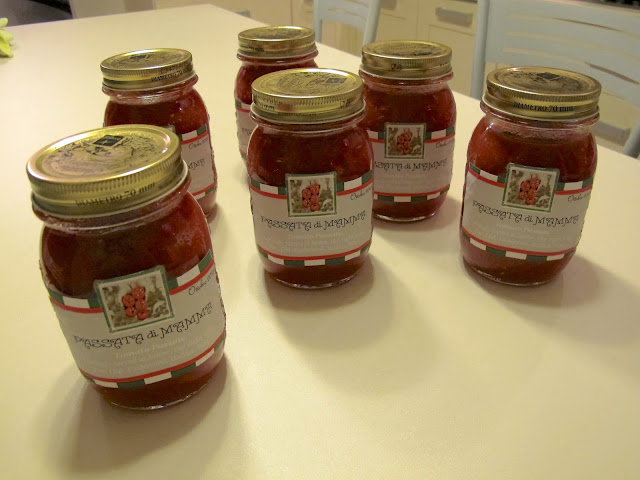
Our freshly jarred passata

Many recipes call for a tomato purée  including soups, stews, sauces and dishes that require a tomato flavor (Jen’s easy and delicious marinara recipe).  Most of the tomato purée sold in the US is processed and has a different consistency than passata.  While that type of purée also has it’s purpose in Italian cooking, you can’t be without freshly jarred passata.  At the end of the “tomato season” (early fall) all the grocery stores and fruit stands recognize this fact, and sell crates of San Marzano tomatoes for (in this case, we bought Roma tomatoes).

Here’s how you do it:

Equipment

>Canning jars and lids (the ones that have the little “pop” and can be sealed)
>Several large pots
-One to boil the tomatoes
-One to puree the tomatoes
-One to boil the jars in order to seal them
>A passaverdura (vegetable mill)
>Funnel to pour the purée
>Kitchen dishtowels to separate the jars (in order to prevent breakage)

Ingredients

>The best tomatoes that you can find (Jen’s preference is San Marzano)
>Basilico fresco (fresh basil)
>Coarse salt (the kind you would use in pasta water)

*Note – the ratio of tomato to passata roughly 2 to 1 (so for 10lbs of passata, you’ll need 20lbs of tomatoes)

Get the freshest tomatoes you can find
It’s always a benefit if you have a willing helper
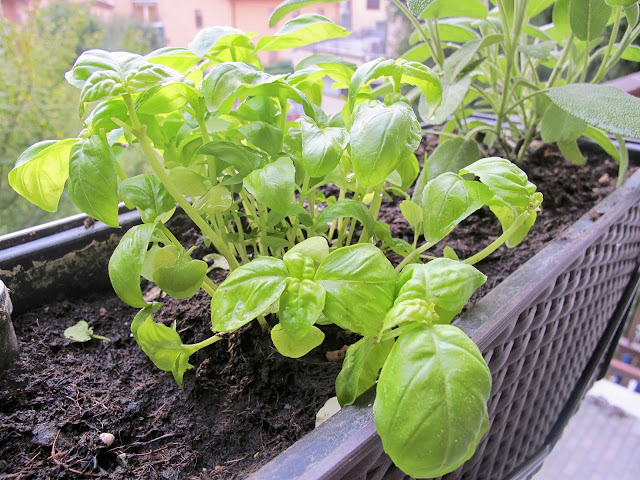
We have basil growing on our balcony

Steps

>Clean and sterilize your jars (run them through your dishwasher)
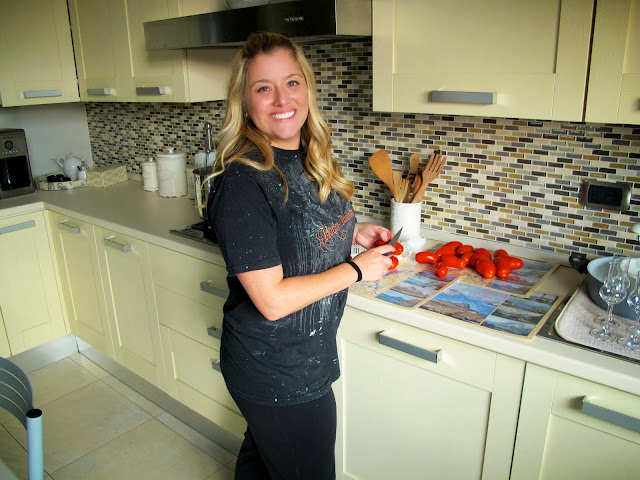
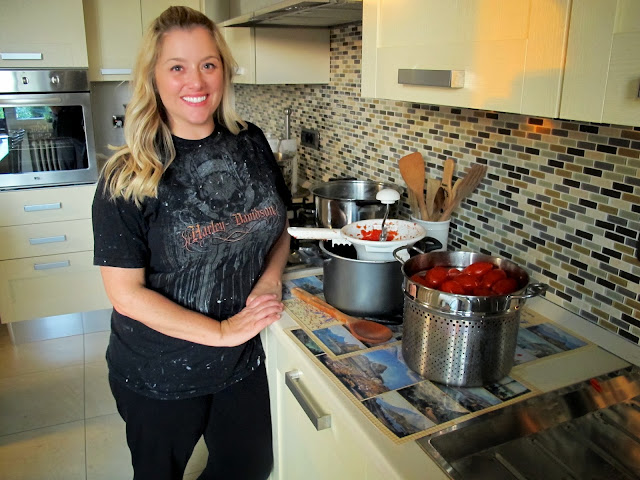
>Put on your husbands nasty old painting tee-shirt; you will get messy

Clean any bruised or damaged tomatoes

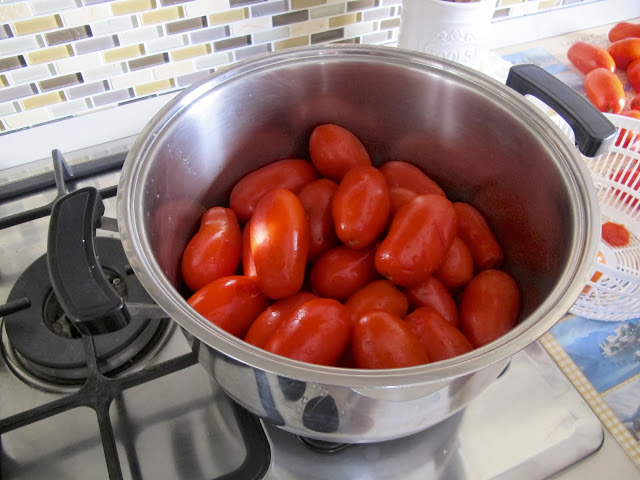
>Place the tomatoes in the pot, cover with water

Place your tomatoes in a pot and cover with water

>Add salt to the water (you’ll need 7 teaspoons of salt for 20 pounds of tomatoes)
>Cover pot and bring water to boil
>Once water boils, remove lid and let simmer for 15 minutes
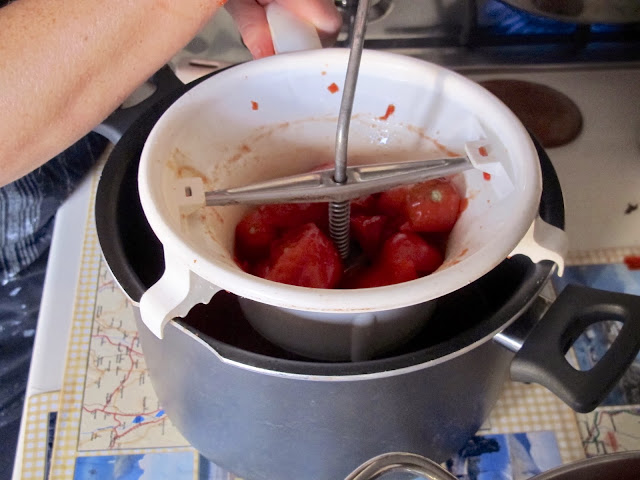
>Remove tomatoes and place into the vegetable mill (which will rest over another large pot)

Place the tomatoes in the mill

>Grind tomatoes through the mill, which remove the skins and seeds

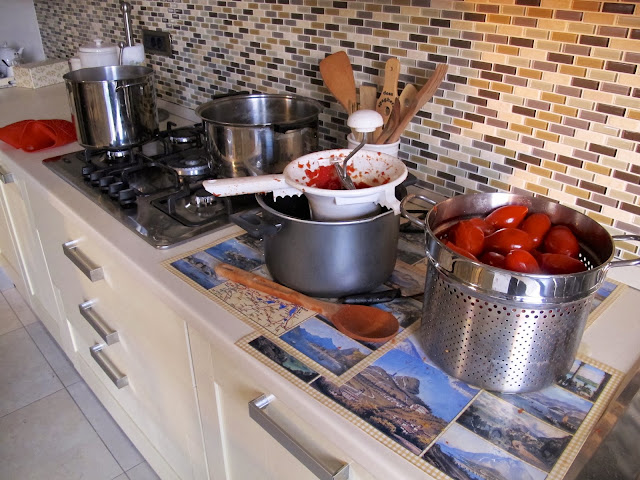
You can see the entire station set up here – it’s quite the process
This one was a pro managing her assembly line
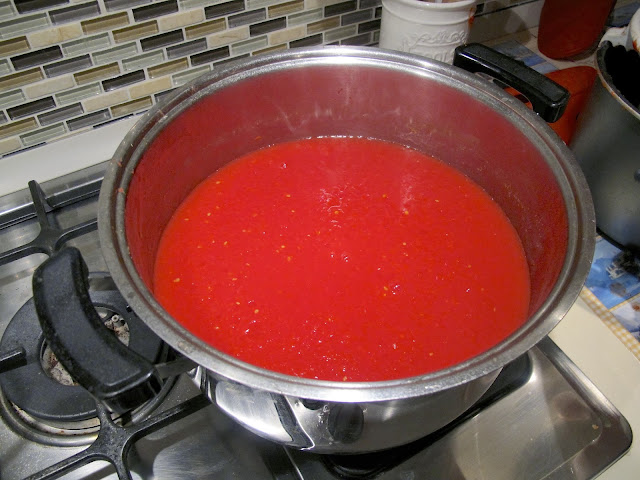
The passata once it has been strained through the passaverdura (mill)

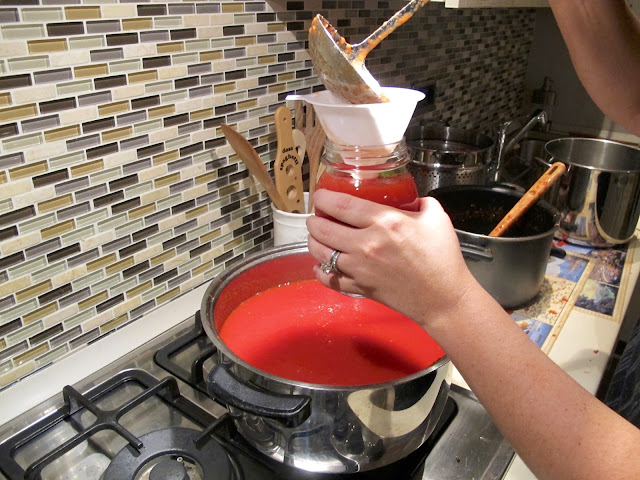
>Now you’re jarring begins – place 3 fresh basil leaf in the bottom of each jar and filter the passata through the funnel to the top of the jar

Pass the passata through the filter so that it all fits into the jars – leave about an inch at the top
If your husband is a dream and a catch wrapped up in a bundle of charm – maybe he’ll make you a snack :-)

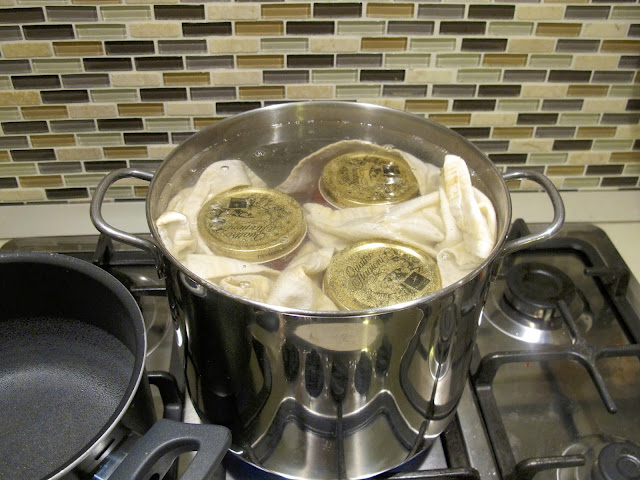
>Place a towel in the bottom of your third pot and place jars inside, separating by additional dishtowels.  This will prevent breakage while working with a fragile medium
>Add enough water to cover the jars by roughly an inch (lukewarm water; cold water will cause the jars to break)

The simmering bottles, protected from one another by a dishtowel

>Simmer on a low boil for 45 minutes, removing once they are cool enough to touch
>Rest in a cool, dry place and leave them alone.  The jars will create a vacuum seal within the next 12 hours.  You can test the seal because the little “pop” in the center of the lid will “suck down”

You’ve done it!  You have passata

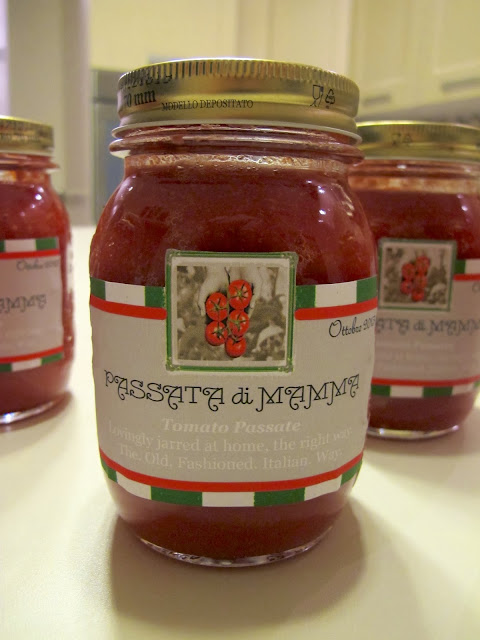
Congratulations!  You have just made genuine, Italian passata!  One last step is to have fun creating your own labels.  I made these for Jen at the same time I made our grappa labels.  Do you like them?

Have fun – add some custom-made labels
Come have some of our “Passata di Mamma” – we would love to make some sugo for you

Let us know if you try this and have the benefit of enjoying fresh tomato passata all winter long!

Oktoberfest… What More Can I Say?!

The title says it all.  What commentary can I possibly add to a post who’s pictures tell the entire story?!  Normally, I envision my readers hanging on to my every word and each carefully crafted pun (I said that I “envision” it… I know it doesn’t really happen) – but this time, I think I’ll let the pictures do most of the talking.  Of course, I do have to give some sort of framework around the pictures (hey, it is my blog, after all).

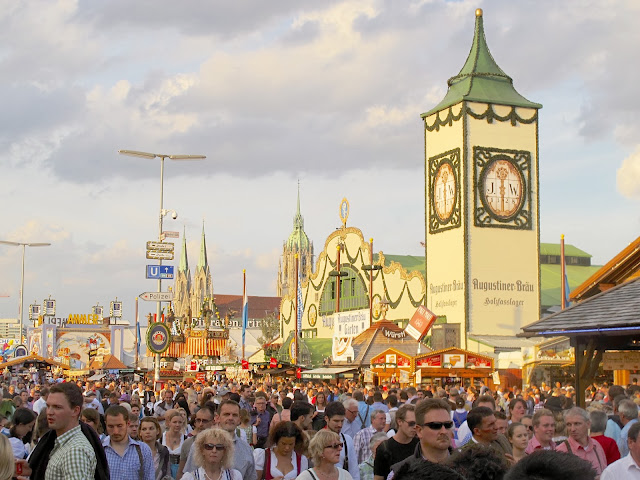
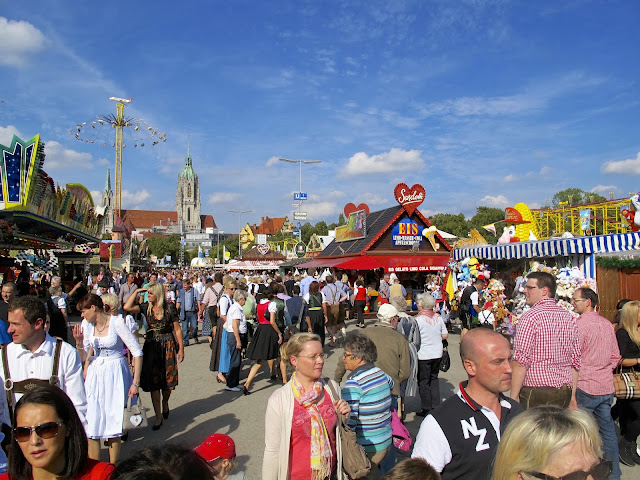
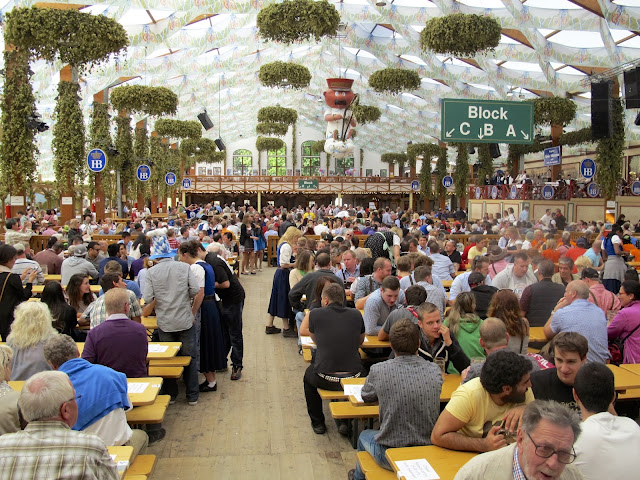
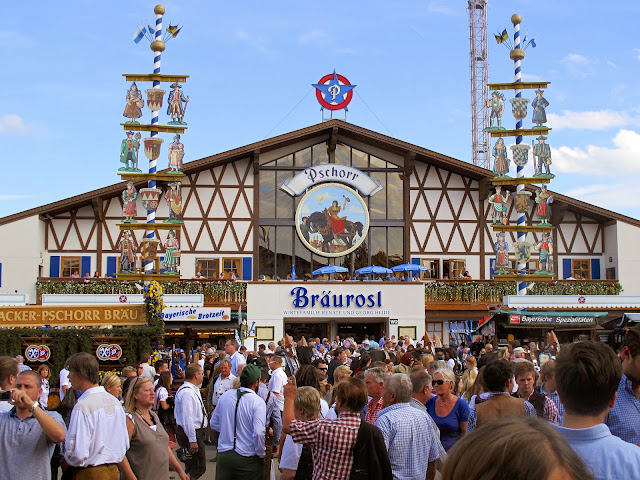
Crowds fill the streets during Oktoberfest 2013

You may have just read about Josh and Abby’s visit where we ate too much, indulged too much and just did… too much!  You know, the norm.  We were lucky enough to also have Dave and Jill drop in for part of their trip and join us again in Munich, Germany for Oktoberfest.  We were excited to get to the party – but before we could drink our first liter of beer in Munich, we needed to get there.  There is no better way to travel through Europe than the train – and when you have an overnight-train option, it’s a win.  You get your “hotel room” for the night included in the cost of transportation.  But travelers be forewarned – the Ritz… It.  Is.  Not!

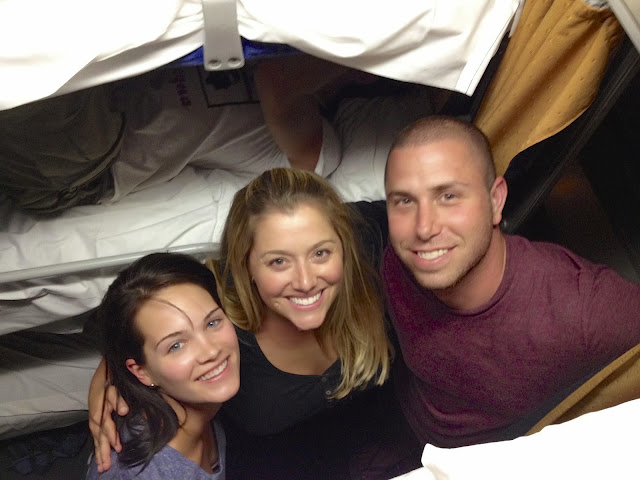
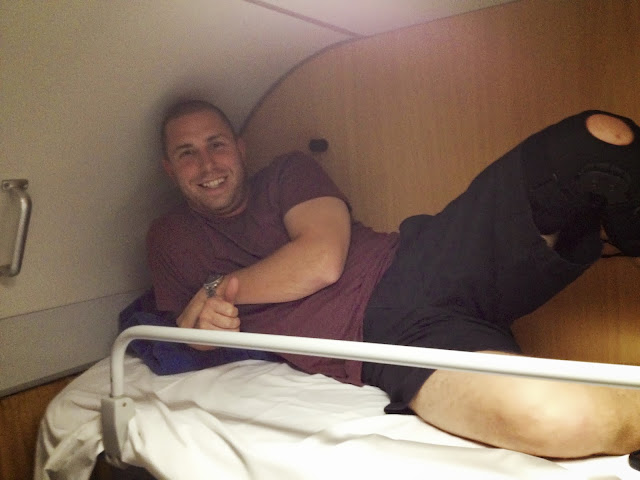
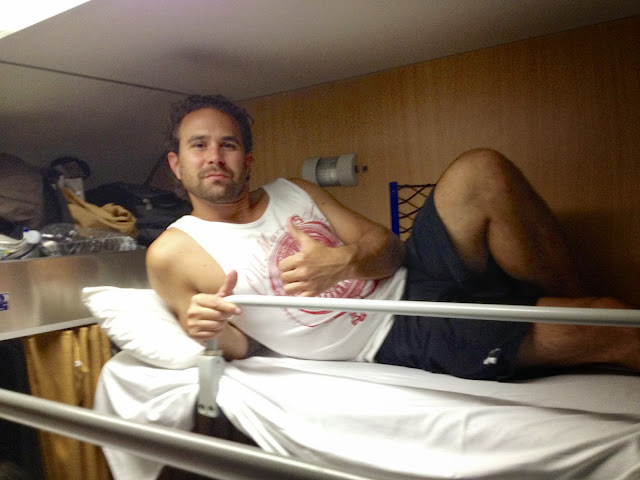
We took up four of the six bunk beds in our tiny room – luckily our “neighbors” were normal and smelled fine
Plenty of headroom in the top bunk
I settled in nicely

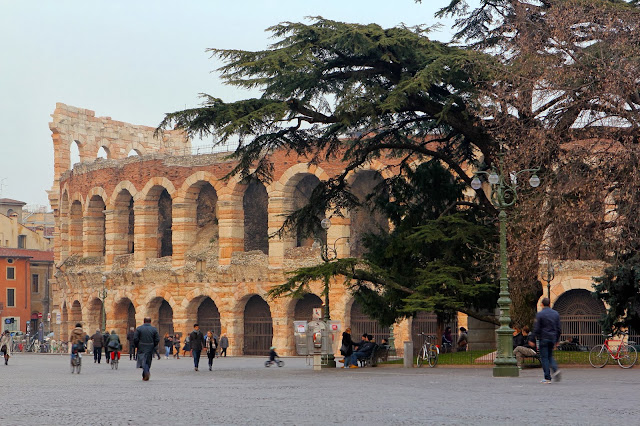
I couldn’t figure out why Google Maps said that the capital city of the German state of Bavaria was only about 6 hours by car and nearly 11 hours by train.  We figured out the mystery when our train stopped in Verona for four hours – and they cut the air conditioning to conserve energy (I’m sweating just thinking about it).  Josh and I were wide awake when we pulled into Verona at 11:00pm, so we opted to hop off the train for a few minutes and inhale some fresh air.  Since we had plenty of time, we thought we’d go for a short walk.  Forty minutes later, the Arena di Verona appeared before us and light up the night’s sky.  We certainly didn’t envision being in the middle of Verona just after midnight, but all of a sudden… there we were.  In fact, we were so unprepared that we were wearing our pajamas and flip flops, with very little money and no cell phones on our person.  The fact that I couldn’t take a picture of us in our tank tops and shorts in front of the colosseum was depressing (I had the blog in mind) – but it was quite a fun adventure.  We certainly stuck out more than any normal American tourist possibly could – the place was packed with people as a concert had just let out.  We took a cab back to the train station and experienced a moment of panic when we discovered all the doors to the station had been locked with heavy chains and deadbolts (meanwhile, the girls were asleep on the train with no way to contact us).  We found the one open entrance and still had plenty of time to share some whisky with people from our train, as our feet dangled over the tracks.

The arena in Verona – I borrowed this image from a trip I took earlier this year.  We were walking around this main piazza in our pajamas

When we pulled into Munich the next morning, we were actually feeling quite refreshed despite a horrible night’s sleep.  We were blessed with an early check-in at the hotel, so we quickly showered and got ready for the day.  We ended up arriving in the Theresienwiese (the fairground where Oktoberfest is held) by a respectable 11:00am.  There have been a few things in my life that have completely overwhelmed me.  Seeing my bride walk down the aisle.  Witnessing the birth of my daughter.  And now I can add to that list… Oktoberfest.

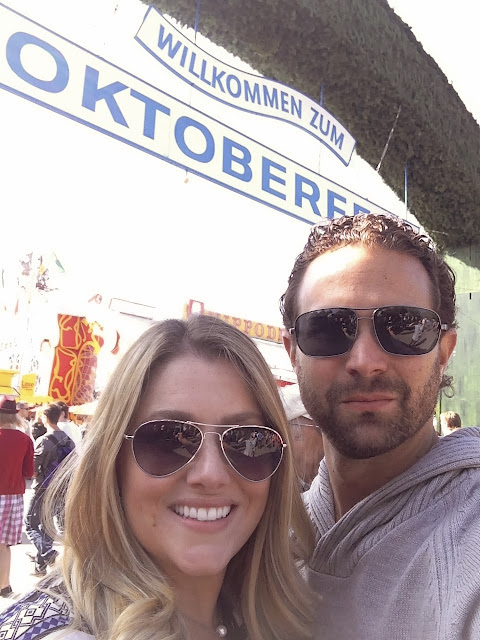
Passing under the main gates for the first time in our lives
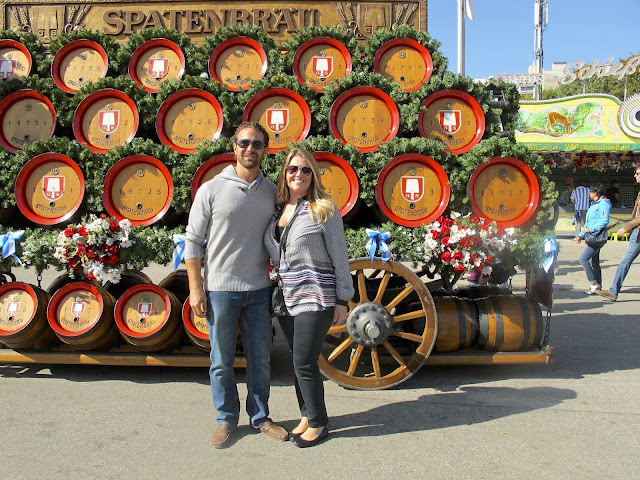
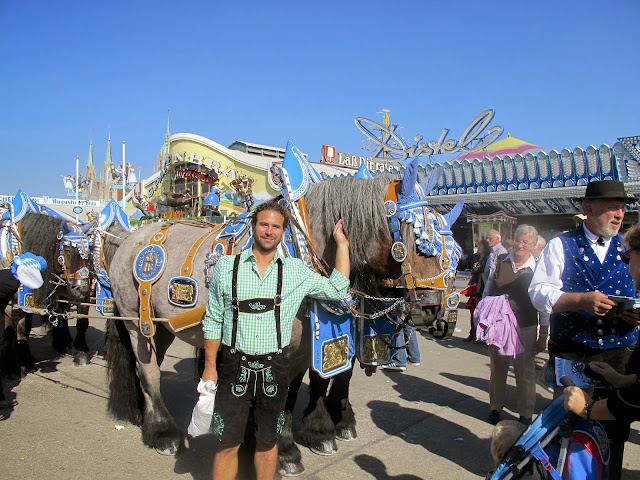
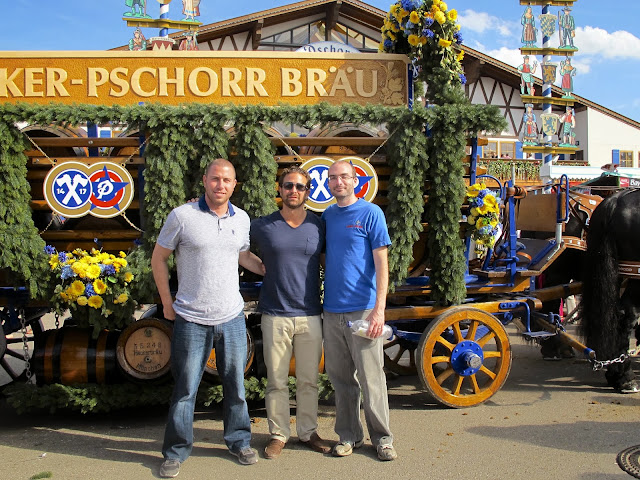
Each of the tents had their official wagon of barrels in front as part of the display

Oktoberfest is the world’s largest fair, held each year over a period of 16 days.  The fair is host to over six million visitors from around the world.  That’s like inviting every single person in the country of El Salvador to come stay in your city for two weeks!  A staggering seven million liters of beer are consumed during the festival.  Only beer conforming to the Reinheitsgebot (beer brewed within the city limits of Munich and containing 6% alcohol) may be served at Oktoberfest.  There are only six brewers that meet this requirement and have the right to serve their beer.

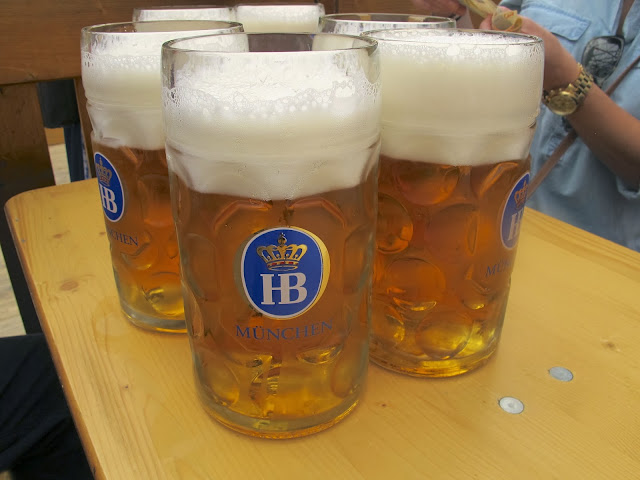
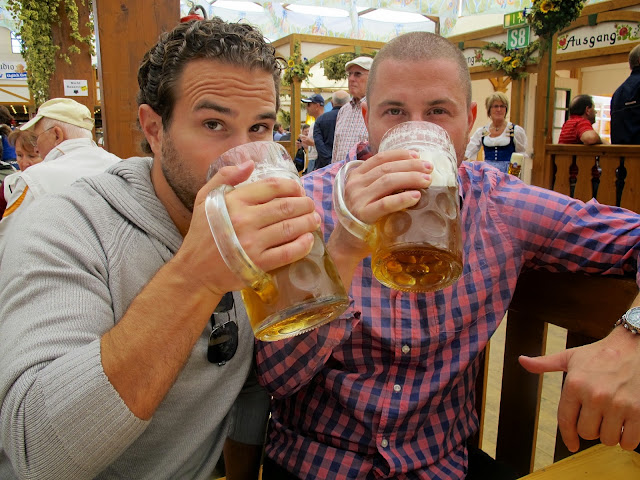
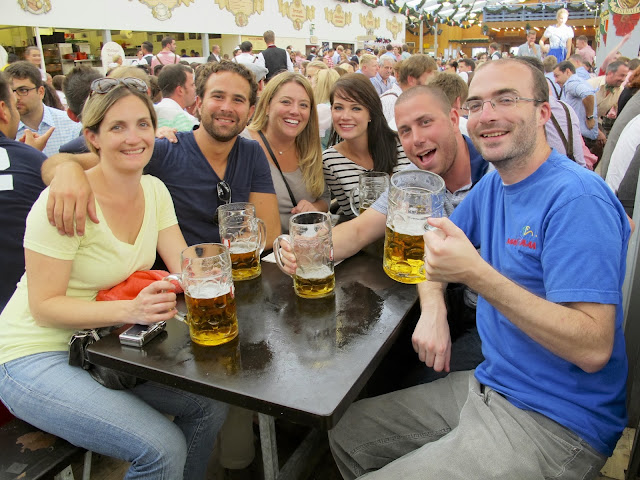
Our first four liters of official Oktoberfest beer

How did this all get started, you say?  Well, on October 12, 1810 King Ludwig I married Princess Therese of Saxe-Hildburghausen.  The good citizens of Munich were invited to attend the joyous festivities in the fields in front of the city gates.  The fields adopted the name, Theresienwiese (Theresa’s Meadow).  The festival grew significantly in attendance as well as production value over the next two hundred years.  The modern festival is all contained within the current Theresienwiese – an enclosed fairground in the southwest portion of the city.  The fair is broken into a maze of streets divided by large tents (the Hippodrom, the Armbrustschützenzelt, etc.) and small tents (Ammer Hühner & Entenbraterei or Bodo’s Cafezelt, for example).  The tents are where most attendees spend the majority of their time – where all the beer drinking, rebel rousing, singing and chaos takes place.  The rest of the fairgrounds are comprised of the food vendors (serving traditional foods, such as Schweinebraten, Würstl and Käsespätzle), souvenir stands (where you can purchase a traditional steinkrug – beer stein) and carnival games and rides.  Take it from me – you do not want to get separated from your group after consuming half a dozen liters… the grounds all begin to look exactly the same.  You might decide to break down and cry like a 9 year old girl who got separated from her parents (I’m not confirming or denying this actually happened).

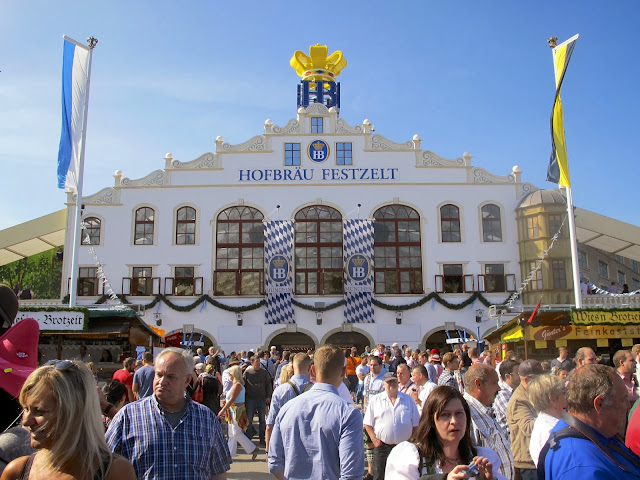
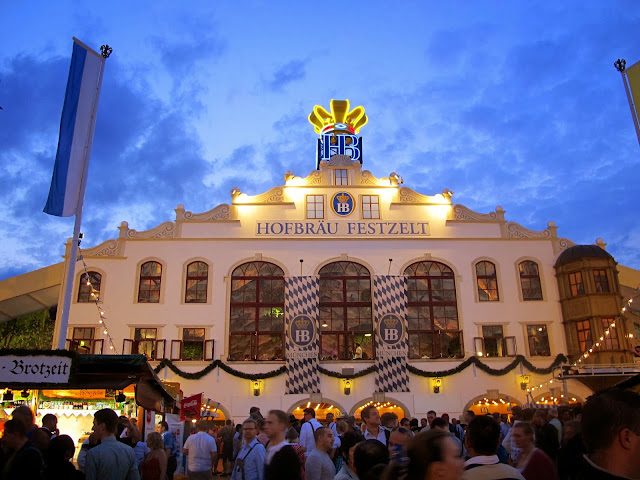
One of the larger tents – Hofbräu-Festzelt (Hofbräuhaus tent)
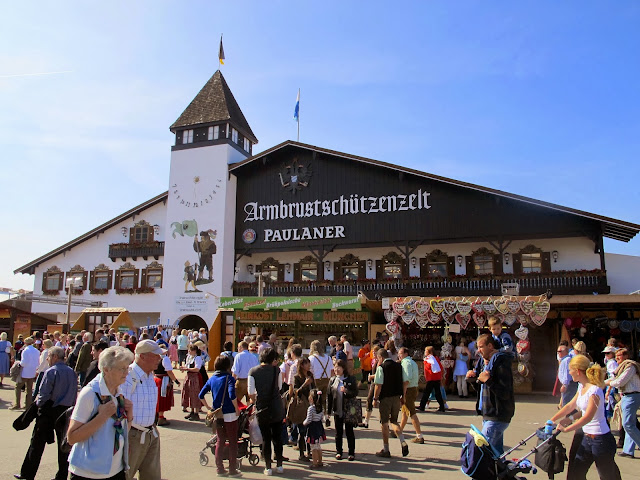
Another of the large tents – Armbrustschützenzelt (Paulaner Beer)
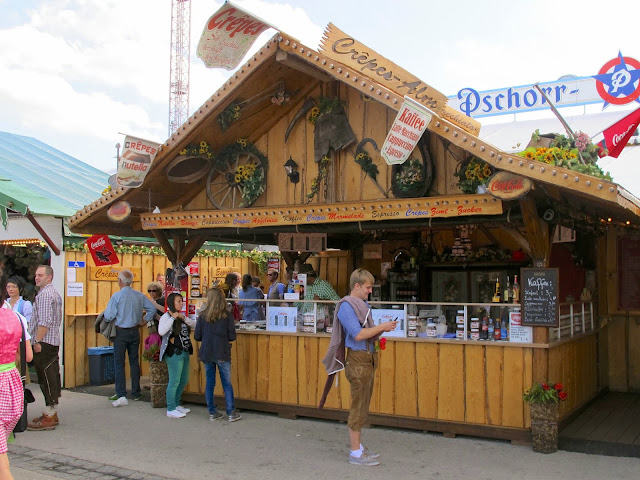
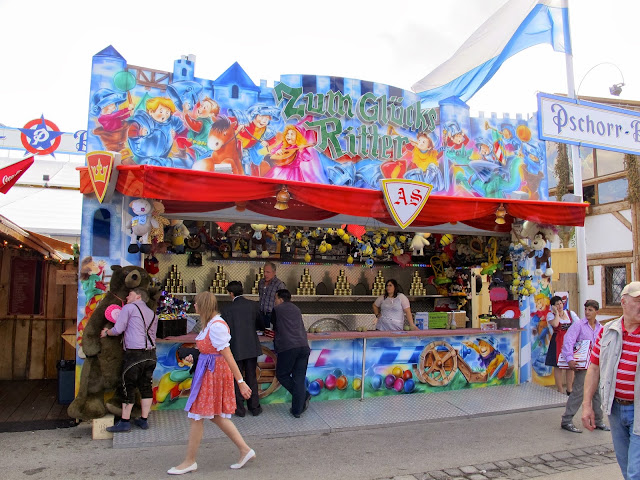
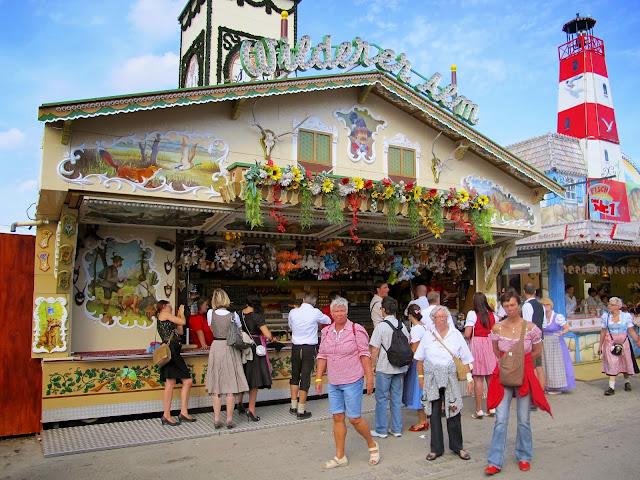
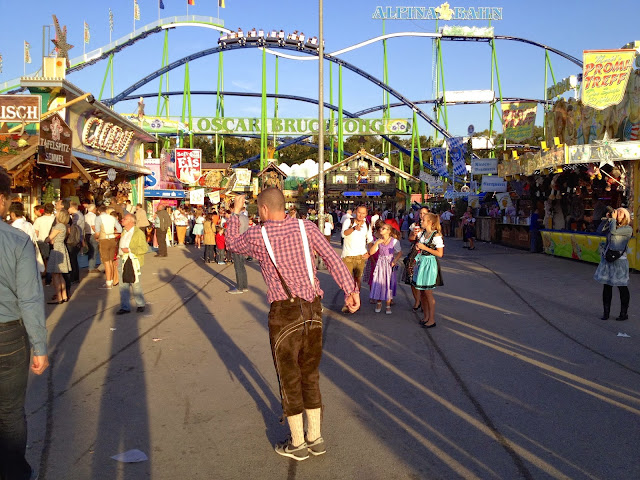
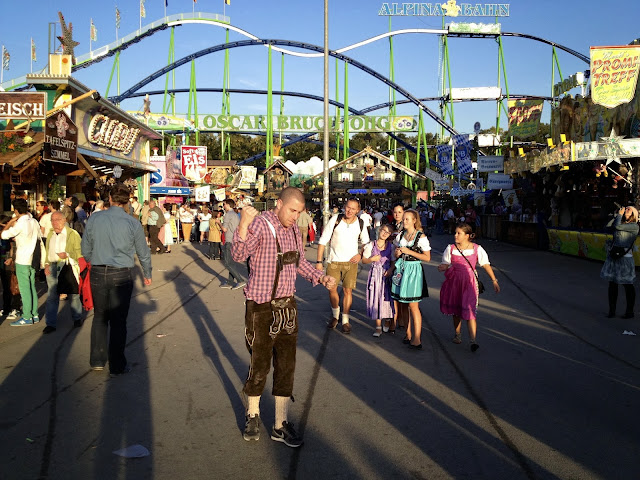
A street scene in the fairground – carnival rides and games as well as various vendors
Food stand
Carnival game – knocking cans over
Another carnival game – rifles

Since we had arrived at a respectable hour (before noon) we took a chance on one of the more popular tents, Hofbräu-Festzelt – the counterpart of the famous, Hofbräuhaus.  We settled into a wonderful spot, with plenty of space to spread out and enjoy our first tasty bier (beer) and brezen (pretzel). Some Aussies sat down next to us and the real party began.  Our new friends were hilarious, fun and really made the party!

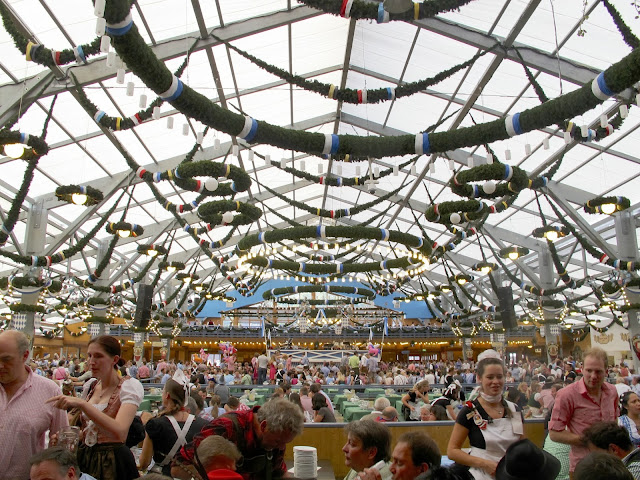
Walking in to the Hofbräu-Festzelt
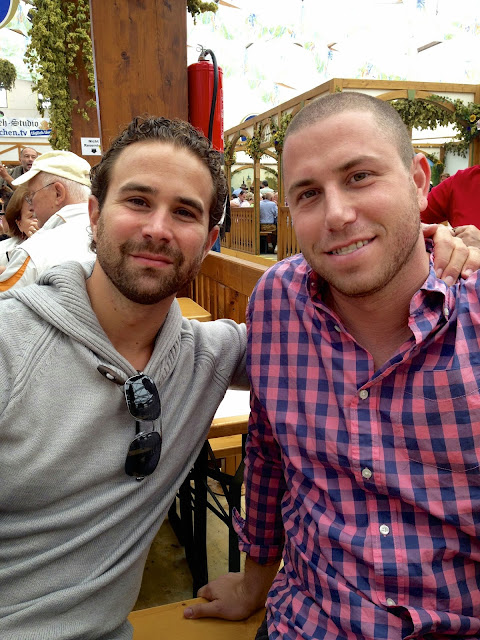
Josh and I smile for a photo while we wait for our first beir
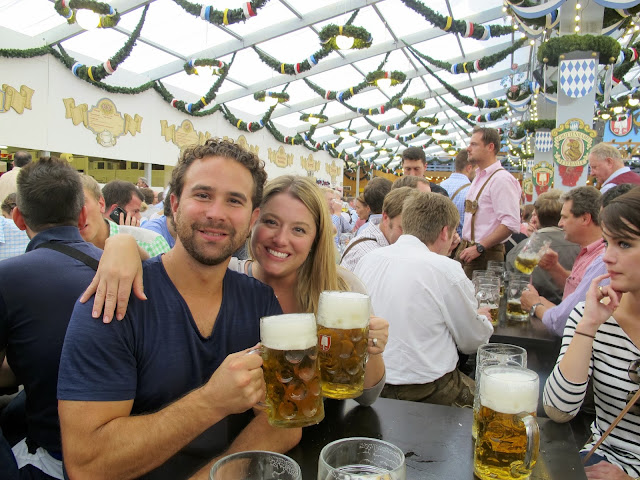
The delicious first “taste” of Oktoberfest
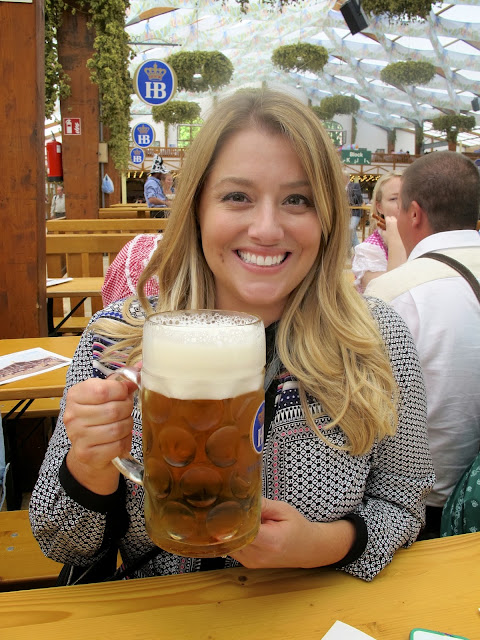
Jen’s first beer
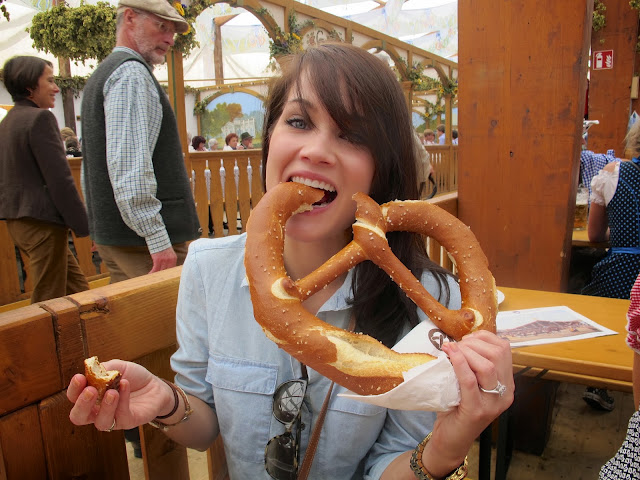
Abby’s first brezen
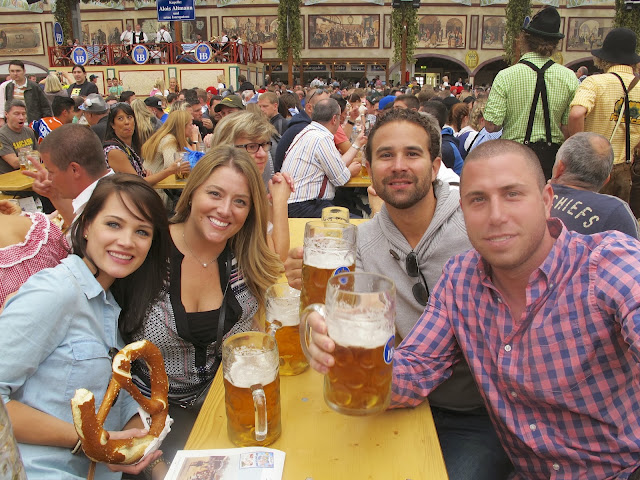
A group shot at our first table
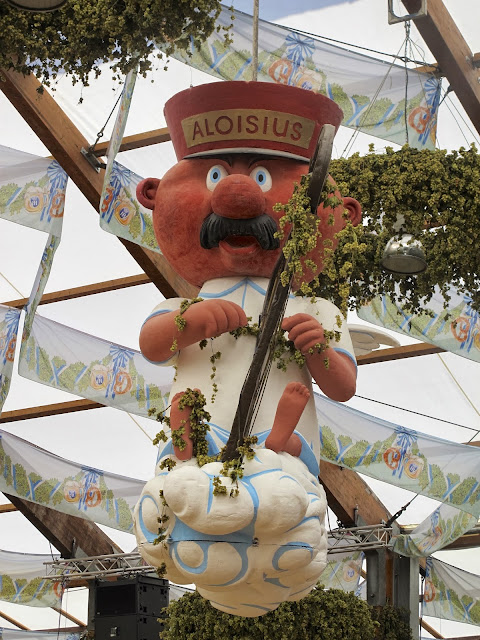
Aloisius waits patiently for the girls to start throwing their bras up toward him
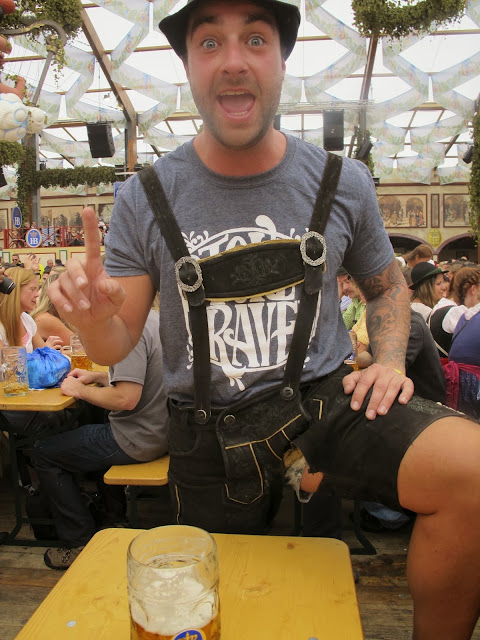
Our crazy Aussie friend, demonstrating his “angry dolphin” and his torn lederhosen

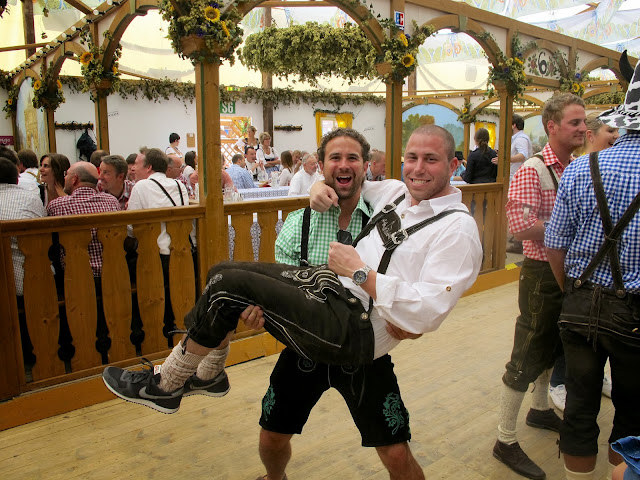
Despite the fun we were having, I had one harrowing thought repeating over and over in my head – “I’m not wearing any lederhosen!”  The garment of Bavarian working-class men has become the traditional garb of the festival… and there I was wearing a stupid sweater and a pair of jeans.  I felt as uncomfortable as if I had shown up to an interview wearing sweatpants and an REO Speedwagon tee shirt.  I was able to convince Josh to head to the “lederhosen outlet” we saw adjacent to the fairground’s entrance.  We found a Turkish businessman that owned a booming store with plenty of folks in the exact same predicament as us… people that showed up not realizing everyone gets into the spirit of tradition.  I asked to see his cheapest pair of lederhosen, I tried them on and selected a matching shirt.  After some quick negotiating, I was all dolled-up for €60.  But that wasn’t the end of it.  You see, Josh had tried on the same pair, but it didn’t compliment his butt properly.  So he tried on another pair.  The color of that pair didn’t compliment his eyes (or something like that).  A third pair didn’t flatter his calves properly.  Finally, he ended getting the perfect pair, a traditional shirt, socks and who knows what else.  His total?  €150 (about $210)!  I’m laughing to myself all over again as I’m typing this.  He was so mad at me the entire walk back (for “making” him buy lederhosen) that he barely talked to me.  His temper was further exasperated when Abby couldn’t believe how much he spent for such a “stupid shirt”!  He ended up throwing his new shirt away and putting his original shirt on under his lederhosen. Now that we were properly dressed, I could relax and start drinking!

I came back ready to really join the party
A local photographer for a Munich paper got a photo of this beautiful couple
Now that I’ve got my lederhosen, I’ve got a big grin
Jen and Abby got to work while we were out
Silly girls
If someone stands up on their bench, it means they have to “skull” or drink their entire beer
Finishing it will earn you cheers; falling short will land you public shame and jeers from the crowd
My new buddy helps me track my consumption of steins
Abby poses for a picture in a picture in a picture…

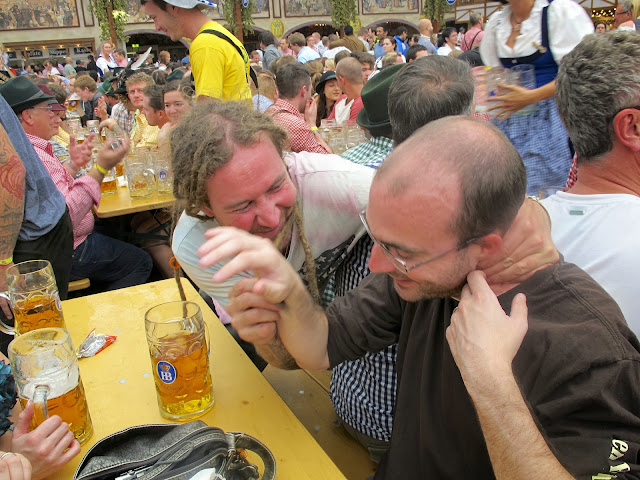
Dave and Jill found our spot in the tent while Josh and I were buying our lederhosen and the party really started to take off.  We spent some more time in the Hofbräu-Festzelt, before deciding on a change of scenery.  We walked toward another tent (I couldn’t tell you which one if my life depended on it), stopping only for some würstl (sausage) and to pick each other up off the ground.  All the carnival games had gotten Josh and my typical competitive  juices flowing – and so we left the group momentarily to compete.  He took me in the first competition (knocking pins over) and I crushed him in the next (shooting ducks with a rifle… how I was able to hit 8/10 I’ll never know).  While we were decided what the tie-breaker should be, we somehow just devolved into wrestling in the middle of the festival.

Dave and Jill join us in the first tent
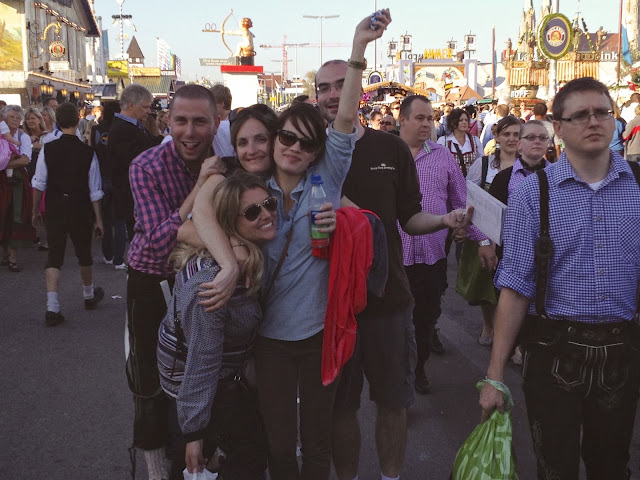
Group photo
Dave and Jen cheers
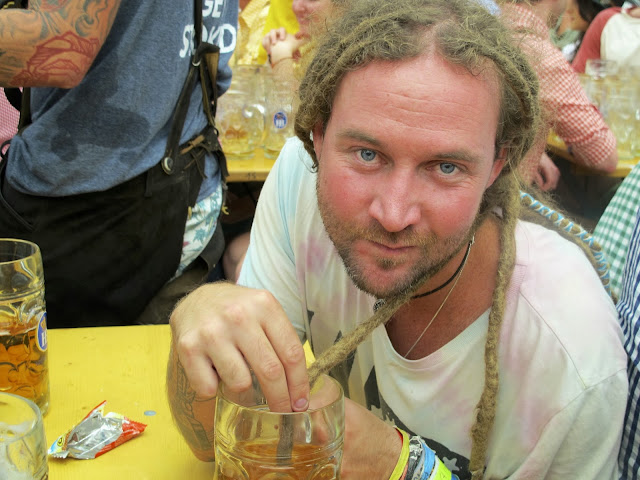
This guy was soaking his dreads and having people suck the beer from them
He tries to get Dave to participate
We shuffle from our first tent to our second…
Our second tent – they were serving Hefeweizen
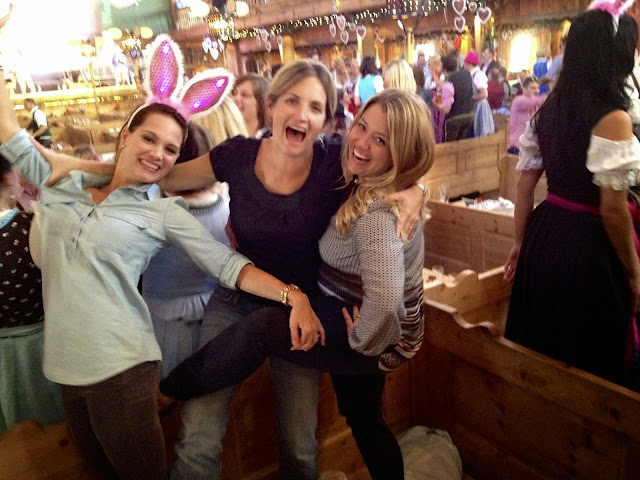
The girls were dancing… not sure where the bunny ears came from
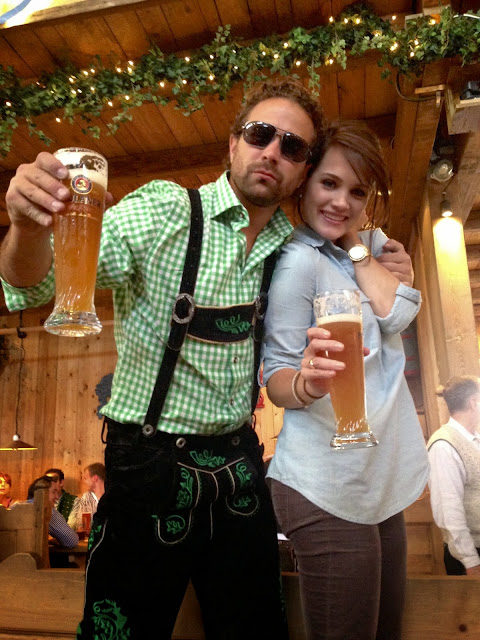
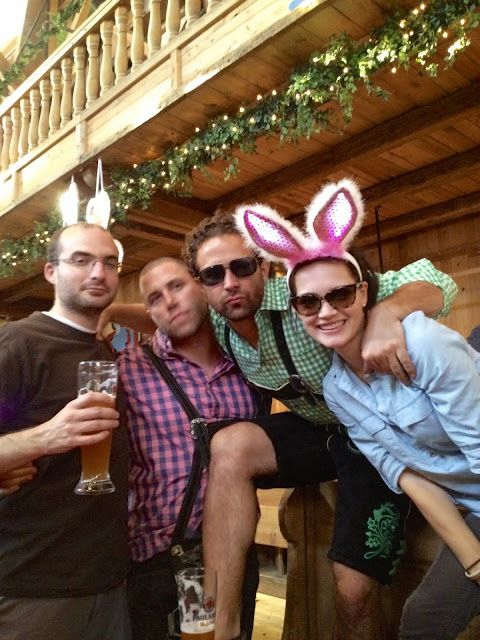
Three different version of “Blue Steel” and a pretty smile
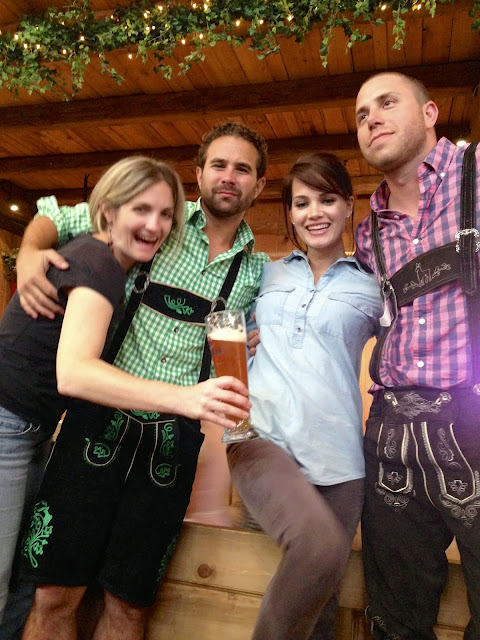
Another group shot
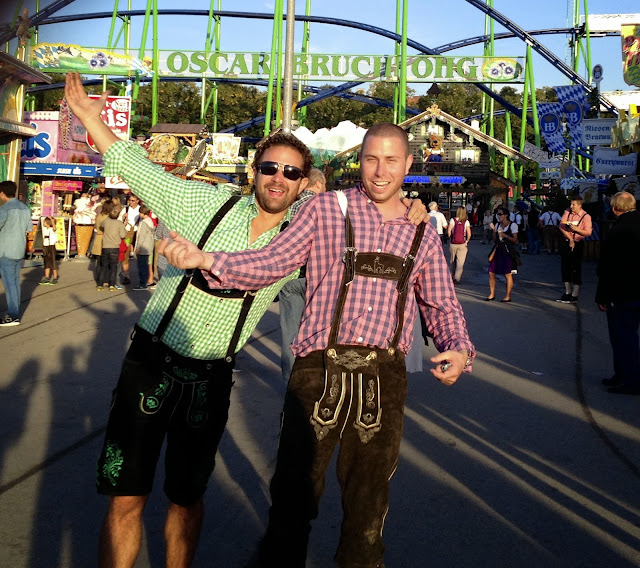
Josh and I venture to the outside world
Josh does a little shimmy…
…. and a shake
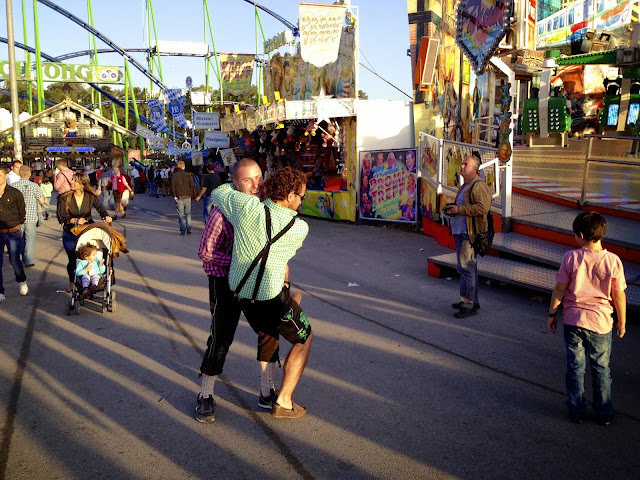
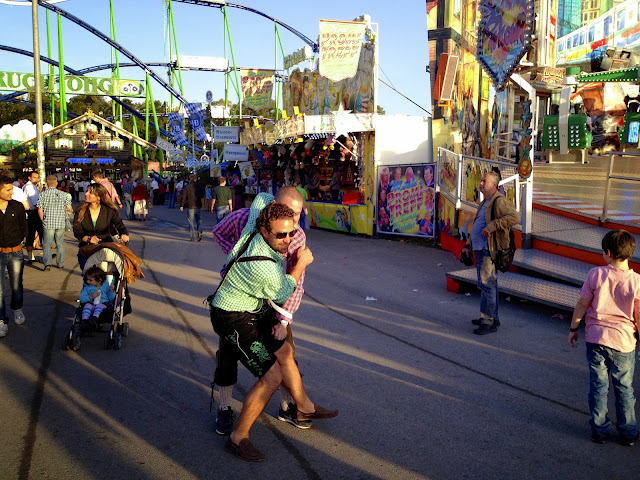
We start wrestling
I think it just turned into big man-hugs
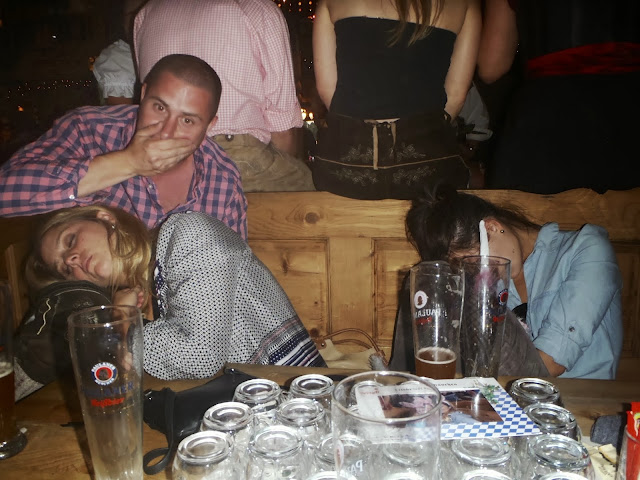
This is what Josh found when he got back – the girls were just taking a short power-nap.  They did rally though

We kept the party going for several more hours before finally heading home.  It felt like 2:00am but was actually only about 10:30pm.

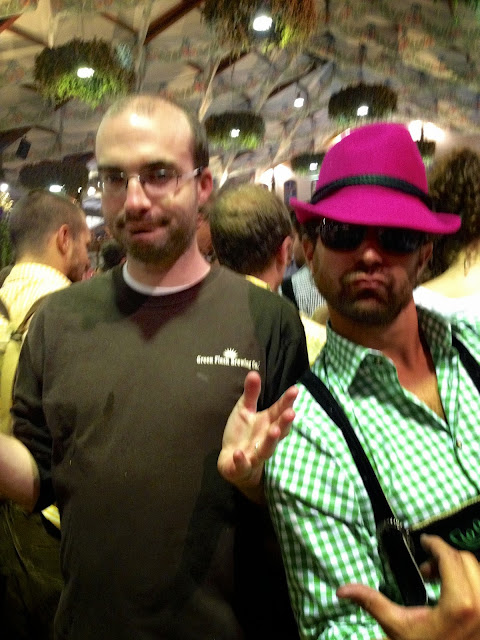
Classic – I couldn’t tell you where this hat came from
One of our last photos of the night

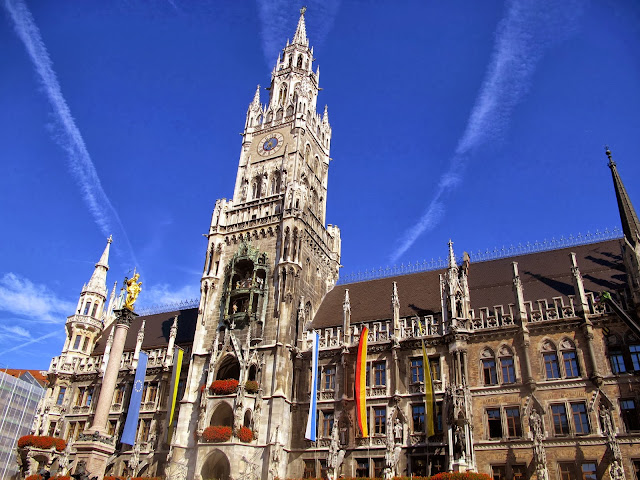
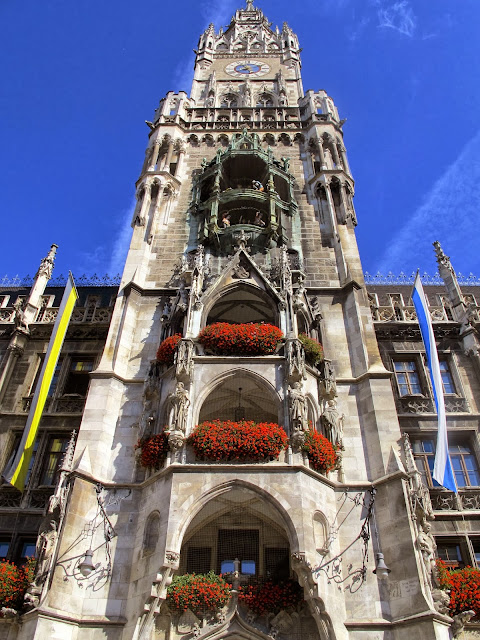
The next day, we enjoyed a fabulous breakfast sponsored by our hotel, the New Orly.  We still had so much of the city to absorb, so we eagerly set out as soon as we gulped down our final freshly squeezed orange juice.  Our first stop – Abby’s lifelong quest to see the Rathaus-Glockenspiel in the Marienplatz (center of the Old Town).  The Rathaus-Glockenspiel is basically a giant cuckoo clock in the Town Hall building – but instead of a bird popping out, 32 life-sized figured dance to 43 bells and tell the story of Renata of Lorraine’s marriage to Duke Wilhem V (the founder of Hofbräuhaus and my personal hero).

Neues Rathaus (New Town Hall) in the Marienplatz
The central tower housed the Rathaus-Glockenspiel
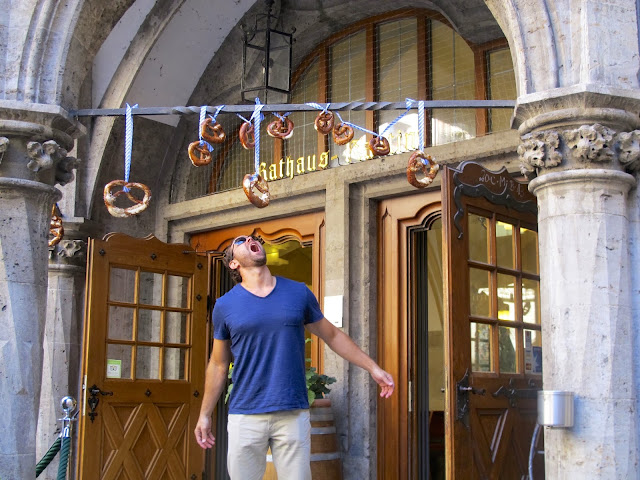
A collection of pretzels dangling just out of reach
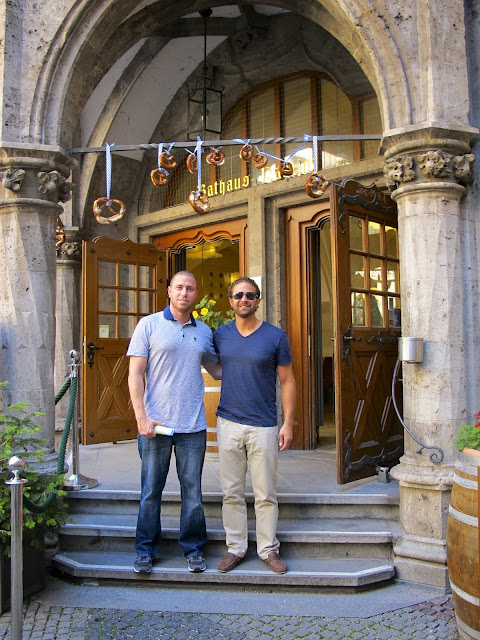
Josh and I stand under the pretzel tree

After witnessing the dancing figures, we walked around, taking in the sights of Altstadt (Old Town) – including impressive churches like the Dom zu Unserer Lieben Frau and Theatinerkirche St. Kajetan as well as the Royal Gardens and so much more.

Beautiful building in the Altstadt
The Frauenkirche (Dom zu Unserer Lieben Frau, “Cathedral of Our Dear Lady”)
Theatinerkirche St. Kajetan (Theatine Church of St. Cajetan)
I’m happy to embrace all of Munich at once
Josh and Abby in the Royal Gardens
Me and Jen in the Royal Gardens
We were lucky to have a beautiful second day

At this point we had been in Munich for nearly two days and had yet to visit a biergarten (beer garden), so we asked some locals for their recommendation and set our sights toward the Chinesischer Turm (Chinese Beer Garden) located in the middle of the Englischer Garten (English Garden), Munich’s largest park.  We settled in for a beer outside and listened as the band played some traditional German music.  We grabbed lunch and awaited Dave and Jill’s arrival.

Inside the Chinese beer garden
This is where our group reunited for the second time
The Englischer Garten has a unique feature – a man-made wave pool in one of the park’s rivers
We watched the surfers catch gnarly waves for a little while

After everyone had their fill of beer and food, we walked to the train station and headed back to the Theresienwiese for Round 2 of official Oktoberfest festivities (FYI – the Aussies we had been congregating with the day before had been in Munich five days and hadn’t once explored outside the fairgrounds – I don’t think I’ve had stamina like that since I was 18 years old).  We visited a few more tents, drank a few more liters and ate a few more würstl’s.  A highlight of the day was when we were sitting with some proper English lads and recounted the tales of our insane Australian friends from the day before.  Not wanting to be outdone by the offspring of their country’s prisoners, one of the chaps took off his shoe and drank beer from it!  Then they left to go ride roller coasters.  I don’t think they quite reached the same level as the Aussie’s – but they got an “A” for effort.

Round Two begins…
We stop for a photo before settling in to our first tent
We chose the Bräurosl tent for our second day
Inside the tent – it was hard to find seats because it was late in the day
The entire gang on the second day
Jen and I salute another day of fun
I didn’t know Robert De Niro’s older brother would be at Oktoberfest
Having fun
Our British pal
Oh, that’s just nasty
I pretend to do the same thing with a shoe I found – what was I thinking?!
I am about to buy my last würstl of the trip
I ordered the biggest one they sold
We shared our final table at Oktoberfest with native Bavarians
The Hofbräu-Festzelt as our time in Munich comes to a close

As the sun was setting we headed back to the train station and boarded our overnight train back to Como.  Josh and Abby disembarked the train in Verona, venturing on their own to Venice for a romantic day-trip and overnight stay.  We had an amazing time in Munich with our wonderful friends Josh, Abby, Dave and Jill – something that we’ll never forget.  If you have never been to Oktoberfest… add it to your bucket list.  Jen and I will be happy to go back with you!

Abby brought Julia back an authentic lebkuchenherz (heart-shaped gingerbread cookie)

The Perfect Recipe – Great Friends, Food & Tons of Fun

Sometimes living abroad is hard.  Like when you miss a good friend’s wedding in upstate New York – an event that turned out to be the social gathering of the year (according to Facebook pictures and word of mouth). Thankfully Dave and Jill completely understood when we declined to come.  Or when one of your best friends tells you that he’s planning on “popping the question” via email, because there’s really no easier way.  Those are the types of conversations that should be reserved for a late night in a neighborhood bar, complete with lots of back pats and free rounds for the groom-to-be.  Thankfully, Josh was great about keeping me in the loop, sending us pictures of his wonderful proposal to Abby in Charlestown earlier this year (and even calling us via FaceTime shortly afterward).  So, yeah – living abroad can be hard when you miss these special moments in your friends and families lives.  However… when we’re able to host our friends and family here, we are always grateful for the experience abroad.

Abby, Josh, Jill, Dave, Jen and Julia

For that reason, we were absolutely thrilled when we heard that Josh and Abby were going to come visit us.  We coordinated the timing of their trip so that they would be visiting during a beautiful time of year and the start of Oktoberfest in Munich, Germany.  As soon as they booked their airfare, I reserved our train tickets to Munich, which I’ll write about in the upcoming post.

Josh and Abby in Varenna

Shortly after learning of Josh and Abby’s visit, we got even more good news.  Our friends Dave (aka, Dr. Dave) and Jill were also going to be in Europe at the same time and wanted to spend time with us here in Como.  I mentioned that we would also be going to Oktoberfest and they were able to arrange it so that they could join us there too!  While they didn’t stay with us in either locale, they coordinated close quarters so that we could spend time together.

Dave and Jill in Brunate

When Josh and Abby arrived in Italy, we opted for a new strategy.  We decided to be “low-key” for the first day.  We even allowed them the option to take a nap, if they wanted.  In the past, we have cooked massive meals, whisked people immediately to downtown Como and forced them to stay awake in order to stave off jet-lag.  However, we’ve learned that visitors often forget their first day – it’s simply too much, too fast (especially in a comatose state).  So when I got them home safe and sound, we simply walked across the street to one of our local favorites, Quattro Staggione.  Even though the food is Italian (shocker), the restaurant is fashioned after a German beer garden.  Jen and I decided that it would be a good start to get us in the mood for our upcoming trip to Germany.  We capped the night off with more food and drinks and they hit the sack early, ready to begin their world-wind trip freshly rested.

The plan the following day was to meet Dave and Jill at our place, before heading to Antichi Sapori – the best pizza place in all of northern Italy.  They were driving down from Switzerland and ended up getting lost – opting instead to meet us at the restaurant.  When they finally arrived, we rushed through our meal so that we could reach our next destination quickly…  an activity that had me as giddy as a nerd at Comic-Con.  I had arranged for something that I’ve wanted to do since we moved here – a privately rented boat to drive around Lake Como.  I’d looked into it in the past, but only found prohibitively expensive companies or boat operators that drove you themselves.  I wanted to be the one to get behind the wheel and really open’er up .  On a previous visit to Tremezzo, I discovered a company that was not only reasonably priced – but also gave you free reign of their boats (with surprisingly little information in exchange.  Luckily for them, I do actually have my boating license).  Josh grabbed some wine and beer and we got on the water ready to enjoy the sights and sounds of Lake Como from the middle of the lake itself!

I pull the boat away from Tremezzo – Josh and Abby settle in for the ride
Julia loved the wind in her hair
The towns along the lake are even prettier to see from the water
I stop driving to pose for a picture with Jen
Josh and Abby enjoying time aboard our boat
Dave and Jill on Lago di Como
Julia gives us a smile
Family photo in front of Bellagio
The “girls”
The “guys”
Isola Comancia – I’ve never been so close
Julia decides to hang out with the boys and helps me drive
I relax in the back with a beer and my girl…
…who promptly lost interest in me when Josh took over driving.  Guess she likes men with power
The entire crew on the dock after we returned

After a fun-filled day on the lake we made it home with enough time for Jen to cook a wonderful meal.  We had all the usual suspects (cheese, salami, olives, salad, bread, etc.) with osso buco served over a risotto milanese as the star of the show (Abby had her first taste of veal and her first taste of bone marrow all in one sitting).  We also had several bottles of wine to accompany the meal.  After the food stopped coming, we broke out the traditional grappa.  Usually, grappa signals the end of the meal and drinks – but not with this crew!  After grappa, I took the guys down to my cantina (wine cellar) and brought back a special bottle of whiskey I had gotten in Scotland earlier this year.  The girls opened another bottle of wine and the party continued.  Eventually, someone decided it was a good idea to go to the bar next door and close the place down… it was not a good idea!

The late night started out innocently enough…
…and then turned into this…
…and some of this!

After breakfast the next day, Dave and Jill came back to our place and we all went into Como together.  We walked around Como for a bit and then took the funicolare (cable car) up the mountain to the small town of Brunate.  We had a phenomenal lunch overlooking the lake as well as Como.  Later that night, it was another favorite for us – Ristorante Simposio in Inverigo Hotel, a four-star hotel near our home.  We were excited to order the zuppa di mare – a mixed seafood dish that [at this particular restaurant] is absolutely huge.  The six of us shared the dish as an appetizer, couldn’t finish it and were full before our entrees arrived.  And they claim that this dish is for two!

We relaxed in the restaurant’s garden with some vino rosato while we waited for our table
The group enjoyed a wonderful lunch with a great view
Photos compliments of Julia
Hanging out at one  of the panoramic spots in Bruante
The zuppa di mare that we’ve always wanted to order, but never had enough people
Dave ordered branzino arrostito al sale (branzino roasted in salt)

The following evening we would depart for Germany on an overnight train (Dave and Jill drove separately in their rental car).  But we had all day to fill, so we formulated a plan to go hiking in Switzerland.  Our home is close to Lugano, Switzerland – a wonderful city surrounded by beautiful Swiss mountains.  Dave and Jill researched a popular climb and so we set out for a vertical ascent that would reward us with wonderful views of the Lago di Lugano and the city below.

Lago di Lugano – the city is on the left of the lake
Josh and Abby along the hike
Dave downplayed the vertical climb of the hike – both Jill and Josh have recently had major reconstructive knee surgery

Of course, the next part of this adventure was our time in Germany – but that warrants it’s own post.  So, I’ll conclude this portion of blog with the remainder of Josh and Abby’s trip.  After we all returned from Munich, they ventured off on their own to Venice and Verona before returning home to Como.  We wanted to spend their last couple days exploring towns along Lake Como and made the decision to discover a new town together (we’ve been to many of the popular lake towns, but there is still so much for us to explore).  I’m glad that we agreed to explore together, because Josh and Abby helped us find Varenna – one of our new favorite towns along the lake.  We spent all day exploring the town and the castle, Castello di Vezio.

Varenna is a beautiful new town that Josh and Abby helped us find
Josh and Abby cuddle for a picture
Family photo by the water
Josh shares his bench with Julia and she shares some gelato with him
“Mom, smile like this!” 
Good place for a photo
“You guys go on ahead, I’ll just hang out here”
Vivid placard on the wall of Chiesa di S. Giorgio 
“Cheese!” 
“On top of the world!”

Even though Castello di Vezio is privately owned, it is open to the public all year round.  The castle, which dates back to 1169 – boasts a wonderful collection of collection of birds of prey, including a fantastic horned owl and some magnificent hawks.  There is a garden of wooden statues and totems carved by local artists such as, Luigi Gambato.  But most interesting were the “ghosts” that greeted you at the gates (a shocking image as you round the corner) and adorned the caste’s walls and towers. They are made from white chalk each summer by using the frames of willing tourists that sit and allow the artists to sculpt around them.  We spent our final day in Como and then bid Josh and Abby a fond farewell as they boarded their plane headed back to Washington DC.

Julia helps Josh pick his final outfit – she models one of his shirts
A tower of Castello di Vezio
The castle was in amazing shape for being nearly 1,000 years old
Beautiful doorways and walls
The trees on the castle grounds were stunning
The ghosts of Vezio offered a strange and haunting welcome
Everywhere you turned, you were being watched
Josh tests the sturdiness of an ancient walkway
Julia ascends the stone steps of a tower with me
The fortress was located with an open view of the lake – located centrally across from Bellagio
The main tower of Vezio
Oh, who’s that poking out on top of the tower?!
I embarked on a climb to the top alone
Looking down I saw a couple of familiar faces
They had an impressive display of birds – this falcon put on a demonstration with a Falconer
This was another Falcon in a different part of the castle
Looking down on the town of Varenna from high atop the cliffs
We discovered the castle’s ancient prison
Josh descends into the depths
Julia is having way to much fun in jail
The prison was just carved out tunnels in the stone
Julia borrows a free ride on their last day in Como

I hope you’ve enjoyed hearing a bit about some of the great times we had with close friends.  Keep an eye out for the upcoming Oktoberfest post – the fun we had there wasn’t quite so innocent…

Learn How To Make Grappa At Home

Before Jen blindsided me so many months ago with the suggestion that we move to Italy, I never thought I would know how to make grappa.  Honestly, I never thought that I would ever even like grappa!  But like so many other things I swore I’d never change about myself, living in Italy has transformed that part of me (keep an eye out for me sporting a “puffy” coat this winter – a style I hated when I first moved here and now think is the coolest thing to come of the runways of Milano).

A selection of grappa offered in a restaurant in Lago Maggiore
Grappa is an alcoholic beverage that is served in Italy as a digestivo (digestive) after a meal.  We have learned that Italians take the digestion of their meals very seriously and have structured the order of eating in such a specific way as to aid in the digestion.  A full blown Italian meal will include the following:
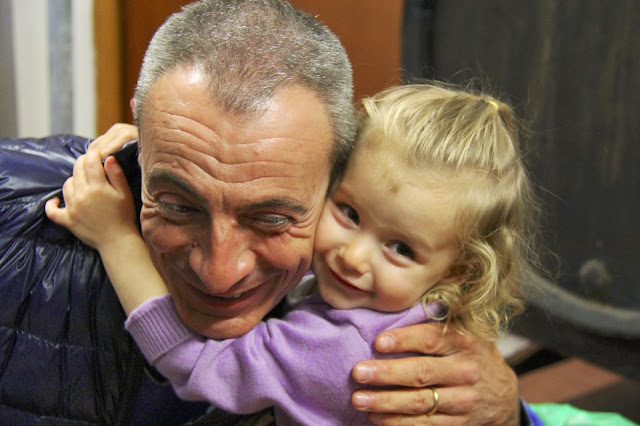
Antipasto
Appetizer (cured meats, aged cheeses, olives, etc.)
|
Primo
First Course – usually a pasta or risotto
|
Secondo
Main course – usually a meat or fish
|
Contorno & Insalata
Side Dish & Salad
|
Dolce
Dessert
|
Caffe
Espresso
|
Grappa!

You’ll notice that you’ll begin with the antipasto as a medium to enhance the appetite.  The pasta course lays the “foundation” for the meal and acts as a base (note: when served as a primo, you should only serve roughly 80 grams of pasta).  Next you’ll move onto your main dish and vegetables – the “center” of the meal.  After that you’ll progress on to your salad (as opposed to having the salad first) because Italians believe that finishing your meal with the light and refreshing salad helps aid in digestion (add this to the list of things that I’ve changed in my daily life).  Finally, the dessert rounds out the meal and the coffee always comes last.  But when you eat like this, you’ll need one final component to assist in proper digestion – your ammazzacaffè (coffee killer).  In many cases, this will come in the form of a grappa.
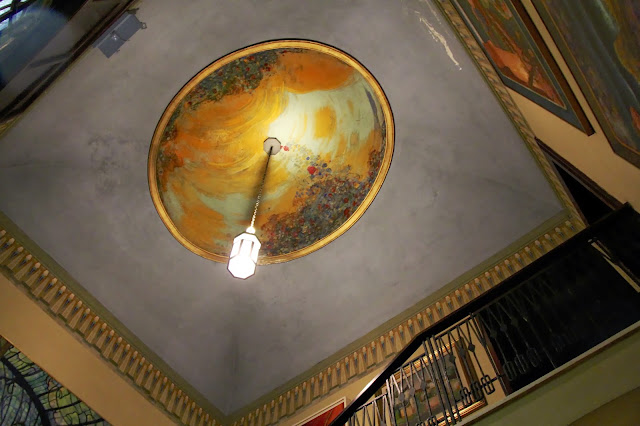
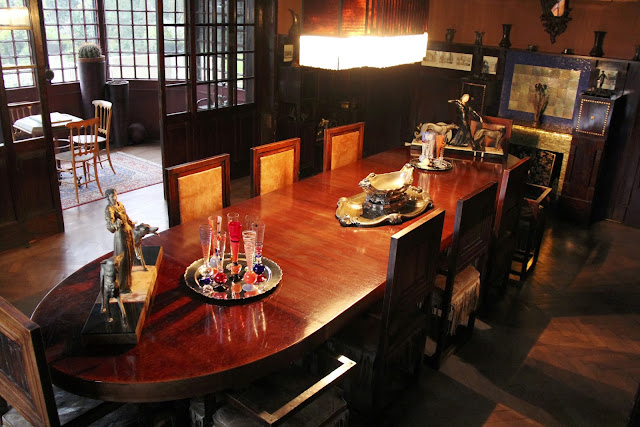
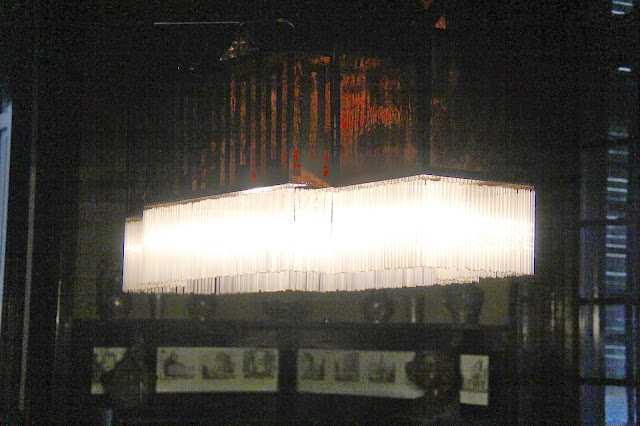
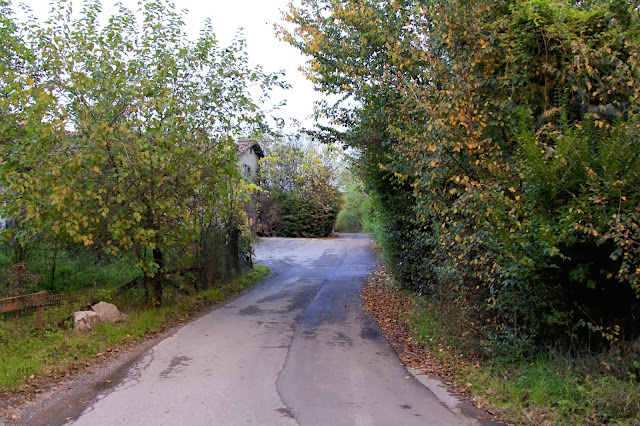
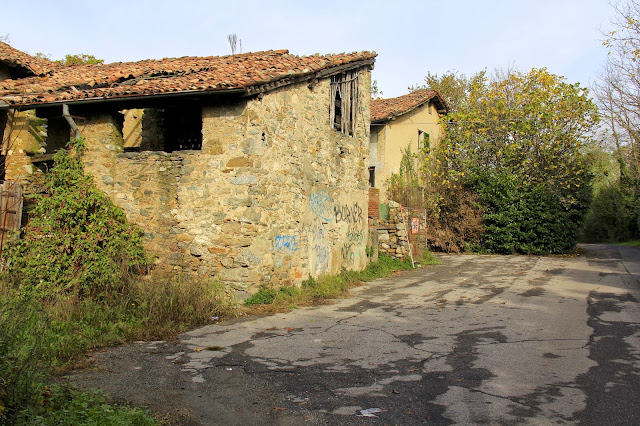
A glass of my favorite grappa in a proper bicchierino (small glass)

I have had the good fortune to have visited Italy many times before moving here, so grappa was not foreign to me.  I’d choked the stuff down on many previous occasions, admitting to the table that I wasn’t a fan – but not leaving a drop behind, lest my manhood be challenged.  However, somewhere along the way I have not only grown accustomed to drinking grappa – I have become quite the fan.  I seldom finish a heavy meal without a grappa and I would be lying to you now if I didn’t tell you that I am presently sipping a nice Grappa Casereccia as my fingers glide across the keyboard (the same grappa pictured above).

The only thing better than drinking grappa is making your own grappa.  You see, while the distilling process of grappa is more or less the same, the taste can vary greatly between types (grappa is made by distilling the skins, pulp, seeds and stems left over from the winemaking after pressing the grapes).  The quality of grapes used, the specifics within the distillation process and any additional processes can alter the flavor of the grappa.
Claudia (Jen’s aunt upstairs) is fortunate enough to be from a region in Italy that [I personally believe] stands out above many other fabulous grappa-producing areas.  She has brought back many different types for us to try and our liquor cabinet has expanded and contracted like the aged wood of the barrels themselves.  In addition to supplying us with some of Belluno’s best grappa, she has an incredible knack for making her own.  She taught us her secrets and now I’m going to impart them on to you.
Our liquor cabinet – please don’t play “I spy” with how many bottles of grappa are in there!

First, you start with a “white” grappa.  This is a plain grappa that does not have any flavors and uses the traditional distilling process.  Next, you pick your “flavor”.  This can be anything from a melissa (a plant that tastes a lot like mint) to a pino mugo (a small pine-cone unique to the Dolomites). For our first batch of grappa, Jennifer selected basilico (basil) and limone (lemon).

The ingredients

BASILICO (BASIL)

Ingredients

>1 liter of grappa (white)
>20 leaves of fresh basil
>Lemon peels

Preparation

>Place the grappa into a jar
>Add 10 unwashed leaves (if the plant is dirty, wash and let dry)
>Leave the liquid for three weeks in a warm place, not exposed to the sun
>Filter the basil and leave for another three weeks with remaining leaves

Note: basil is particularly suitable to be combined and to macerate together with other fine herbs

LIMONE (LEMON)

Ingredients

>1 liter of grappa (white)
>Lemon peels of two lemons
>6 leaves of sage
>2 cloves
>1 tablespoon of sugar

Preparation

>Add all the ingredients of the grappa in a jar and leave in a hot place for two weeks
>Shake the bottle occasionally
>Filter and leave for another four weeks

The jars after the filtration process
Now that they’ve been filtered, they’re set to rest a little longer
Once complete, pour contents into bottles of your choosing (in our case, old grappa bottles)
If you really want to get nutty, make custom labels
Claudia was simultaneously making grappa of her own and gifted us many bottles (hers was better)
I hope that you’ve found this to be informative and fun.  Making grappa is not the hardest thing in the world, you just need some time and access to good grappa (admitadly, we did chose two of the easier recipes).  If you end up trying it at home – let me know.  And if you haven’t tried grappa yet, eat a big meal and have a sip.  You may be cursing me as the first taste burns your throat, but thanking me as it frees open your full stomach.
Cincin! (cheers)