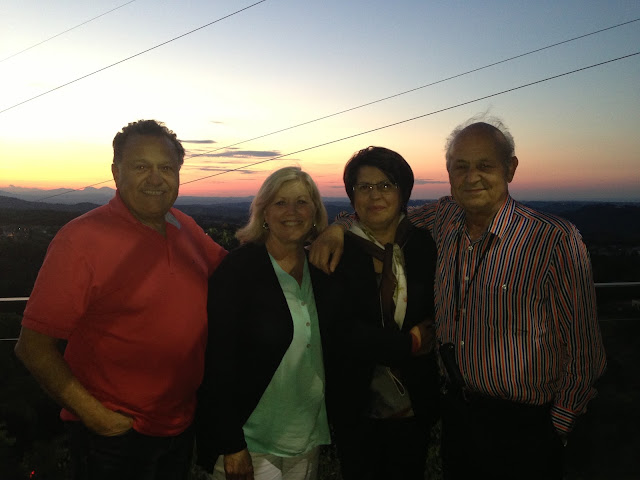
Jennifer, Julia and I had a wonderful time when my Uncle S and Aunt Deborah came to visit us this past March. That’s why we were thrilled when they mentioned that they would like to come back to Italy again this fall. They wanted to do a bit of traveling and invited us to join them on their adventures, using our condo in Como as a “home base”. They had sketched a rough itinerary and just wanted a little help filling in the blanks – assistance I was happy to give. They knew that they wanted to spend some time with us here in Como, some time in Piemonte and Emilia-Romagna (two regions adjacent to our region of Lombardia) as well as a quick jaunt down to the historically significant city of Pompeii and another to Venezia.
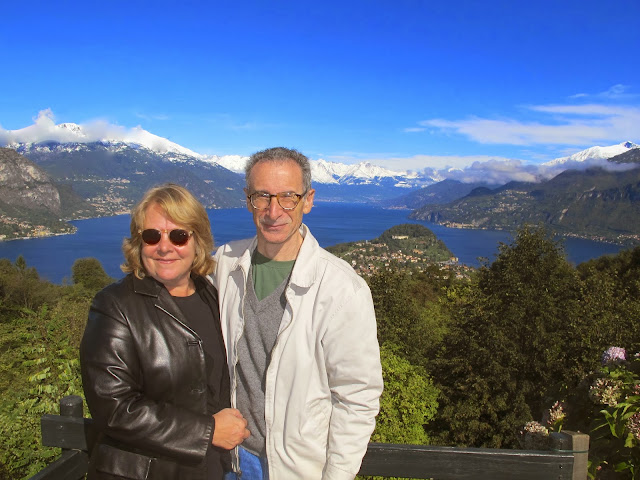
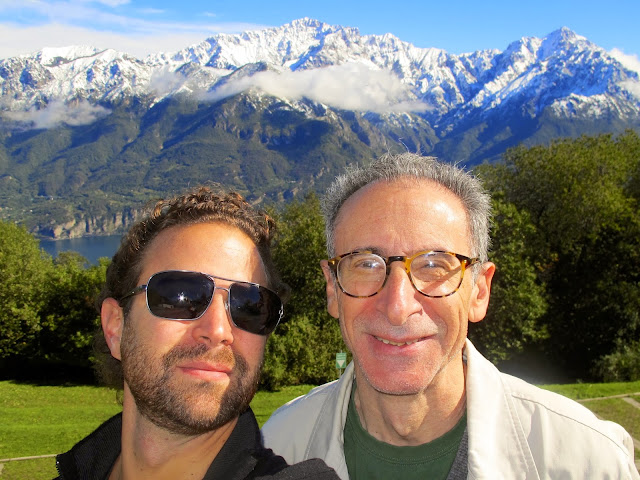
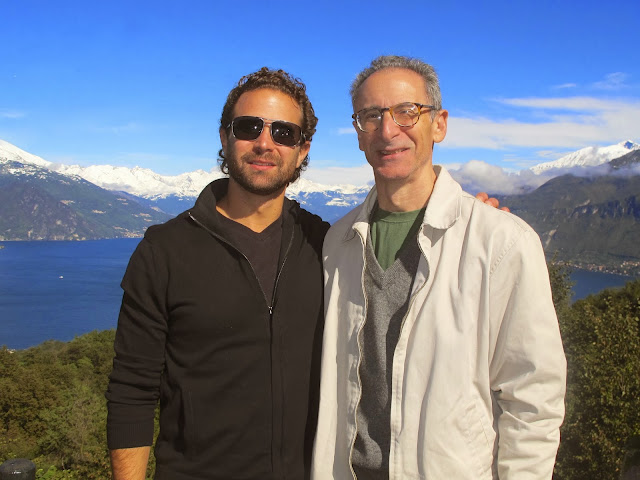
S and Deborah standing near the divide of Lake Como
Jen and I share the responsibility of planning our trips – researching restaurants, activities and hotels. But they’re usually in three or four day stints and one location at a time. This time, I had to navigate through a two week itinerary, complete with activities, restaurants, hotel stays and all at new locations each day. Putting the puzzle pieces of their trip together was a challenge not for the faint of heart. Jen and I dug in, and by the time S and Deb landed in Milan, we had an itinerary that we were both proud of. I think all of us agreed that it came together quite nicely. Of course, the key ingredient was the company, mixed with a little food and wine!
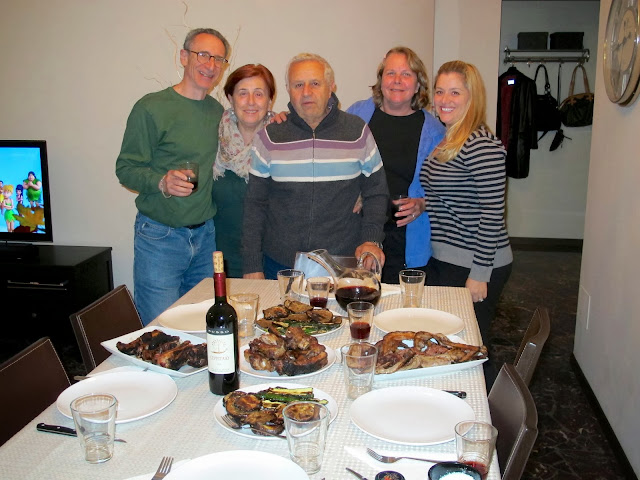
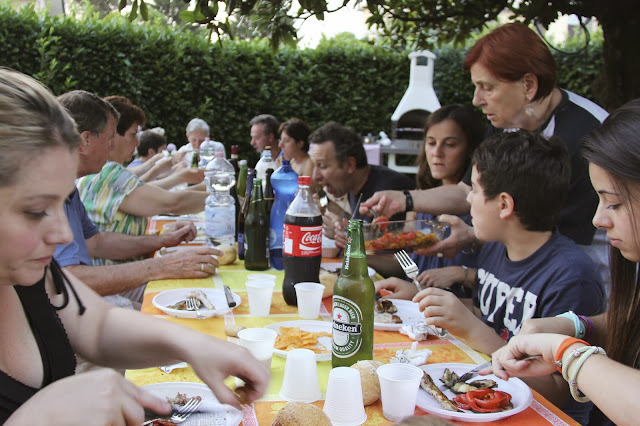
I manned the grill for a family feast on their second night. I’ll get Franco to smile for one of these pictures, yet…
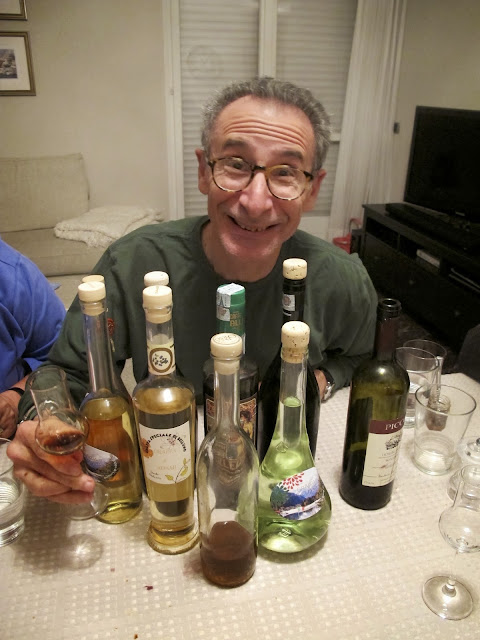
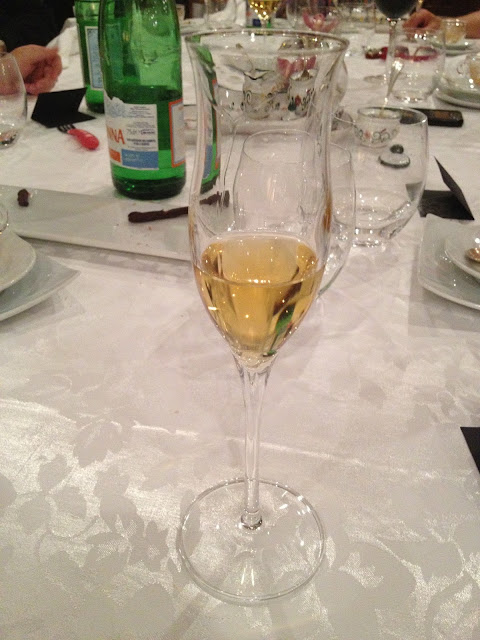
S enjoys a little grappa after our meal
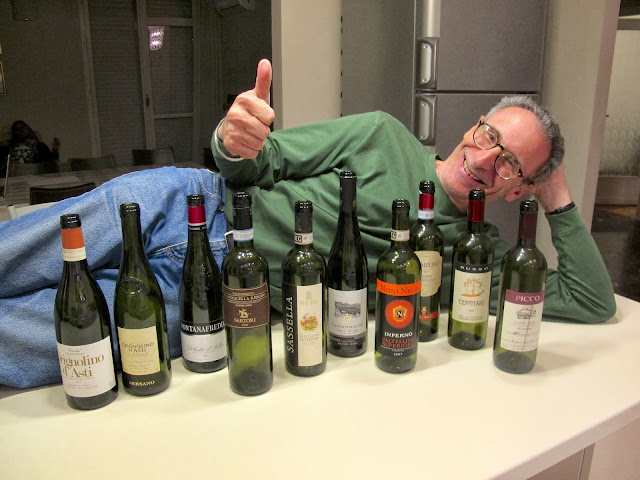
S gives us a thumbs up as he displays our first two days worth of “work”
We divided the trip into the three things that Italy is best known for. Part I was wine. Part II was food. And part III was history. Jen and I accompanied S and Deb for parts I and II (our personal favorites) and let them venture off on their own for part III. This clean break in adventures divided the trip quite nicely and will also allow me to easily organize these blog posts into two parts. Easy breezy, vino-squeezy. However, before we hit the open road, we spent a day here on Lake Como in one of our favorite towns – Bellagio (if you’ve been reading this blog for a little while, you’ve seen us here many times before). The unique beauty of the town is like nothing else on the world.
The weather was absolutely beautiful the day we drove to Bellagio
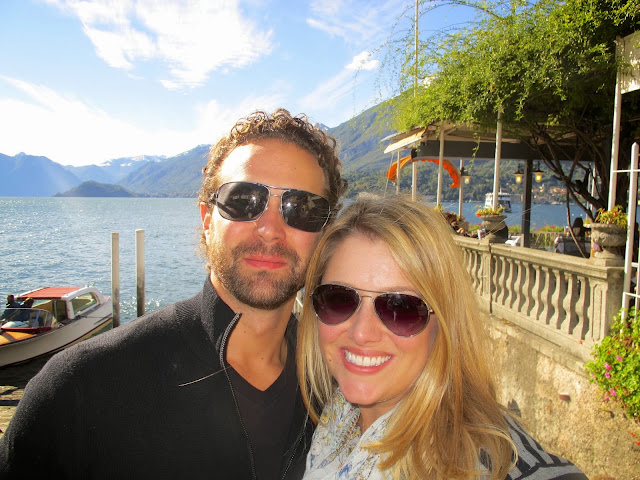
I teach my uncle how to take a “selfie” (after explaining what a “selfie” was)
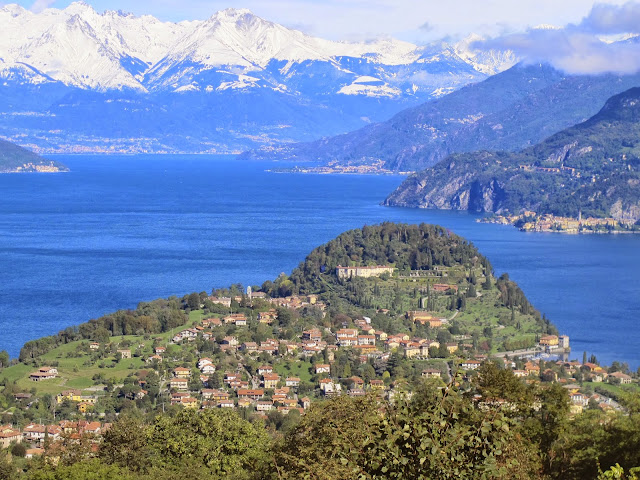
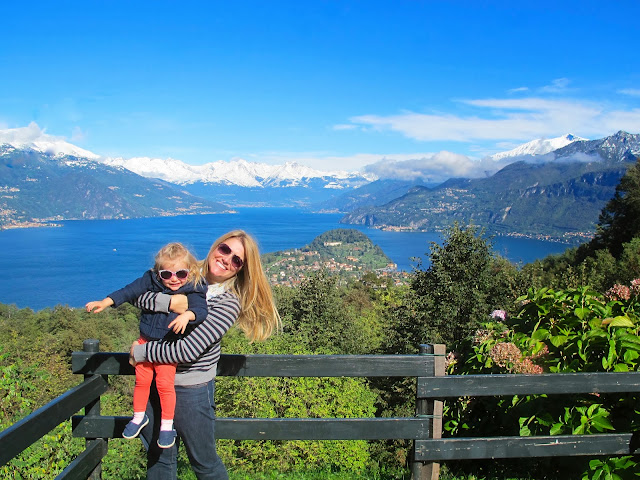
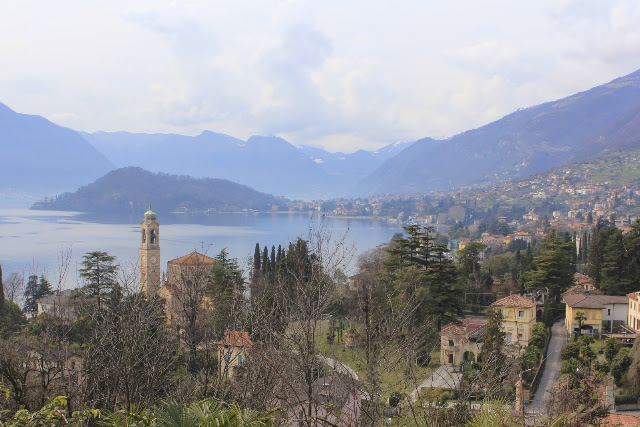
Bellagio from above – a unique vantage point. Bellagio divides Lake Como into the two “legs”
Jen and I pose for a picture
S and I take a picture together
My two girls
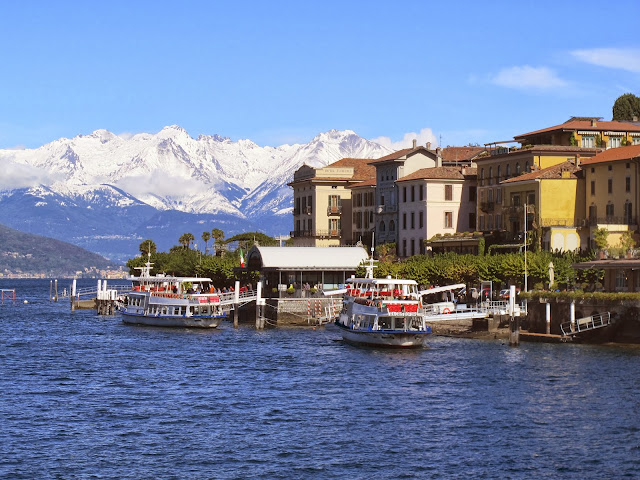
Bellagio is a beautiful town at the center of Lake Como
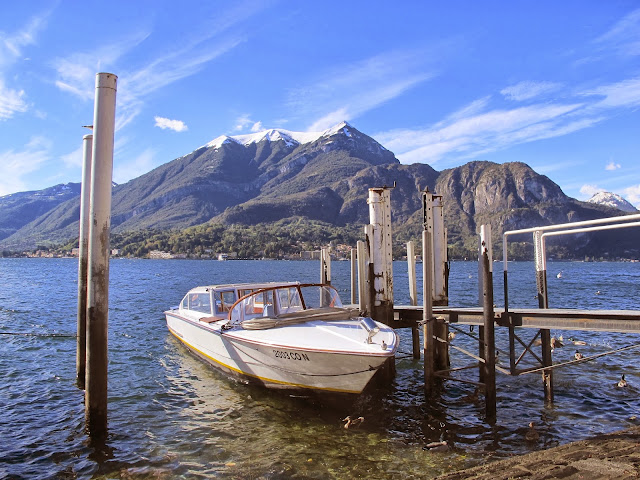
A boat rests after bringing passengers from another lake town
“Hey… I think I’ll make this my profile pic”
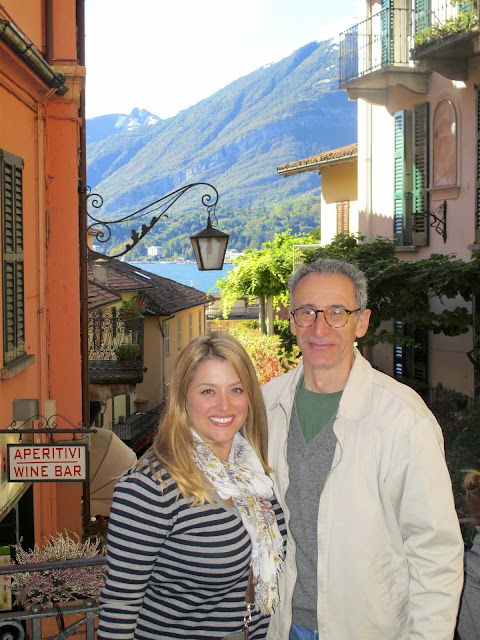
Jen and S stand near the wine bar where we had lunch
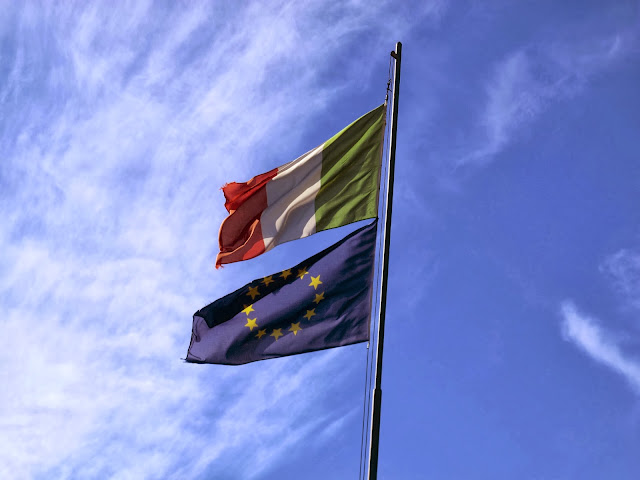
The Italian flag blows in the wind alongside the European flag
Piemonte (Piedmont) is a region in northwest Italy that borders France to the west and [our region of] Lombardia to the east. The capital city of Piemonte is Torino, which was once the capital of all of Italy and the springboard for the unification of the country. Of the twenty regions in Italy that each produce wine, Piemonte is probably the most well-renowned for their vintages. The rolling hills and mild climate result in some of the world’s best wine – the Barolos and Barbarescos produced here are often the prize jewels of wine cellars the world over. These wines, made primarily from the nebbiolo grape age very well, and in fact improve and develop richer and more powerful flavors as the decades pass. It was easy that to recognize that this portion of our trip was going to be entitled simply, Vino (wine).
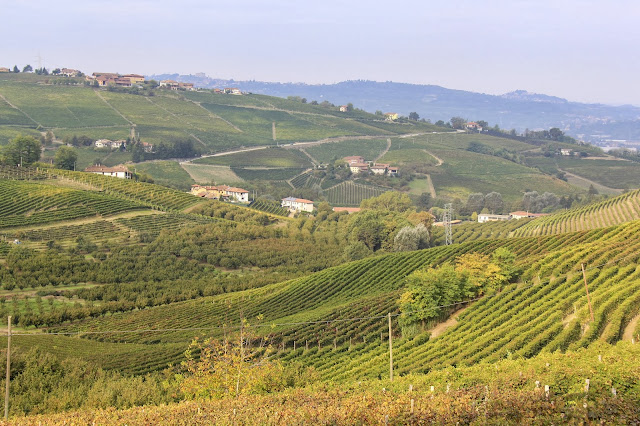
The rolling hills of Piemonte are a perfect place to grow grapes
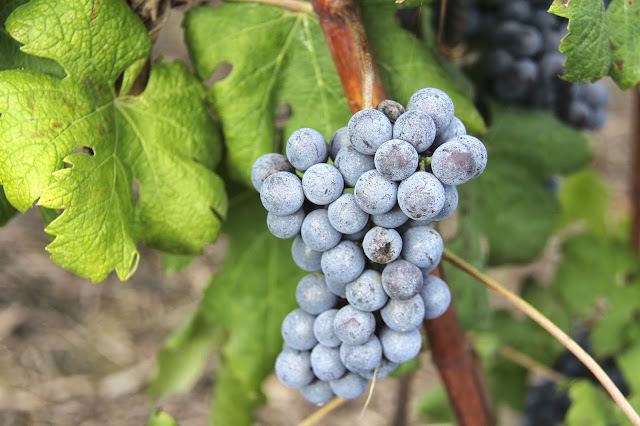
They look delicious now… just wait until they are turned into a Barolo or Barbaresco
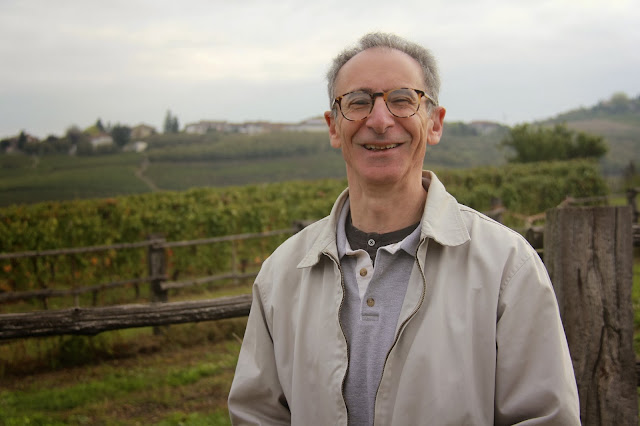
S stands in front of a field of grape vines early in the morning
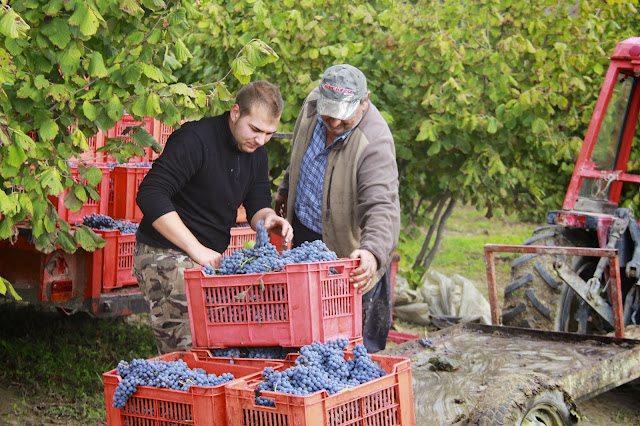
A father and his son load grapes onto a flatbed during their harvest
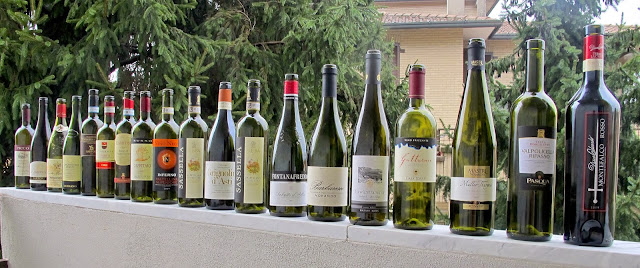
The finished product of our five nights together in the condo – wine was definitely a theme central to their visit
We spent the first day of our road trip in the small village of Barolo. During our drive to Barolo, S imparted some of his knowledge about the famous wine, which I’ll now share with you. Historically, Barolo wines were very rich on tannin and therefore could require as many as ten years to soften enough to drink. The long fermenting time and aging process in large, wooden barrels causes this complexity in the wine. The problem with this method is that it is very time-consuming and therefore expensive. A newer breed of producers have cut the fermenting time by as much as 2/3 and age the wine in smaller, French oak barrels. This allows the consumer to drink the wine much earlier and appeals more to the more modern, international palate (it creates a fruitier wine). As an aside, the more modern palates that prefer “big”, fruitier wines is often attributed to world-famous wine critic, Robert Parker (often referred to as the “Parkerization” of wine). The differing styles in Barolo has created a controversy between “old” and “new” – a conflict often referred to as the, Barolo Wars.
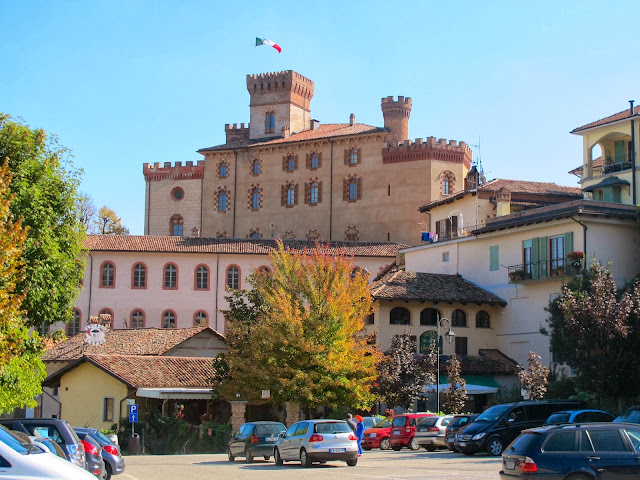
Castello di Barolo stands proudly overtop the town with the same name
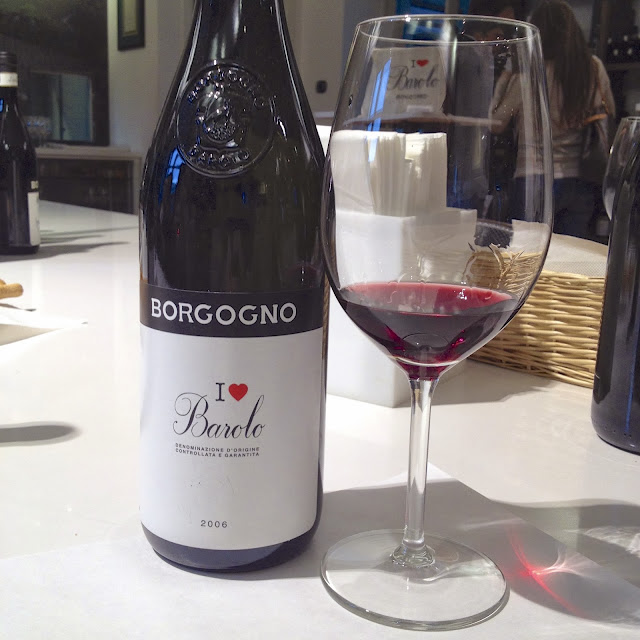
I ♥ Barolo!
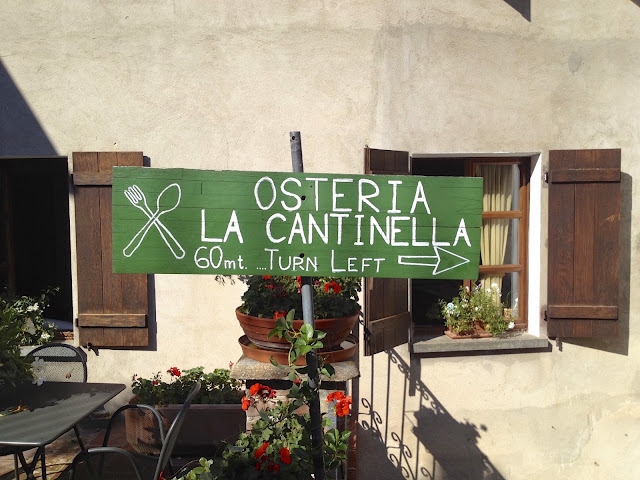
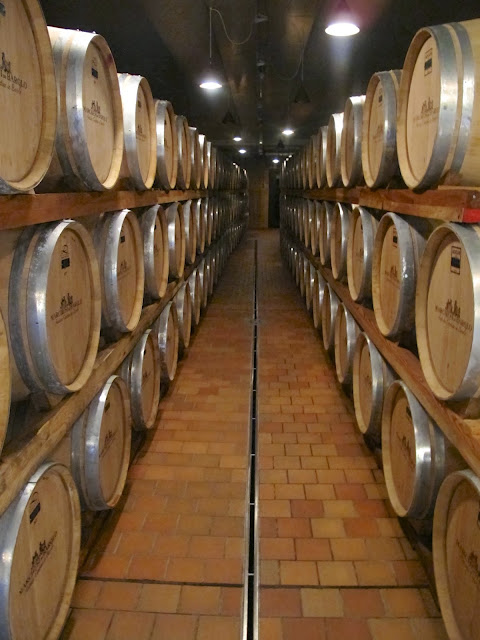
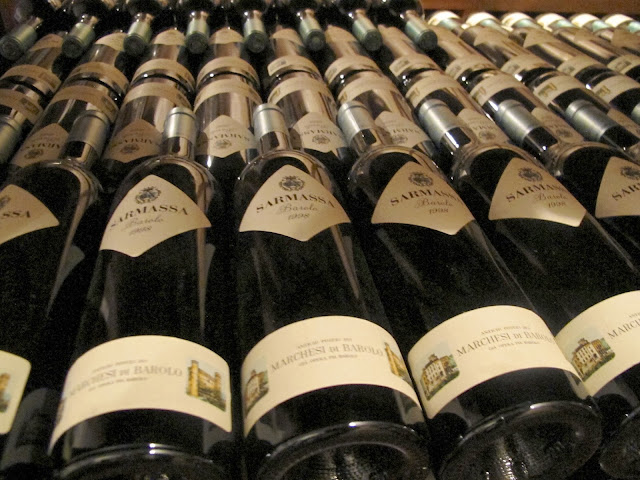
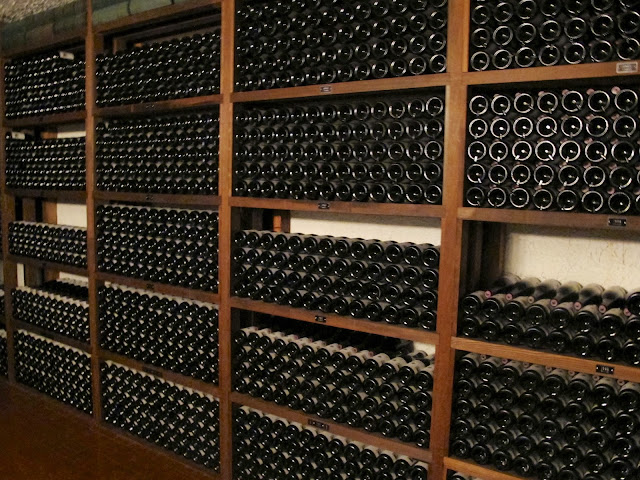
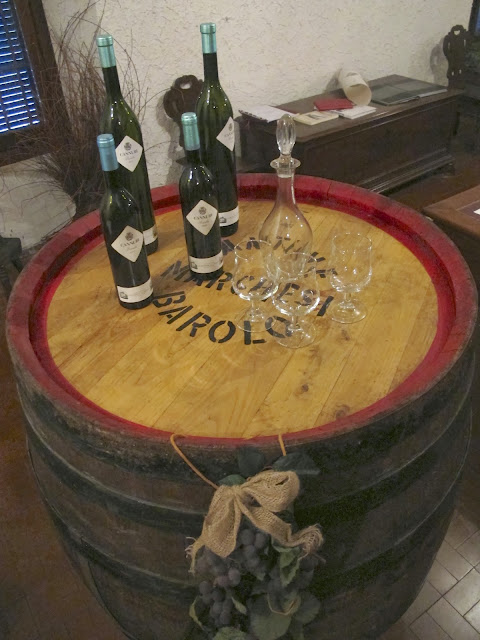
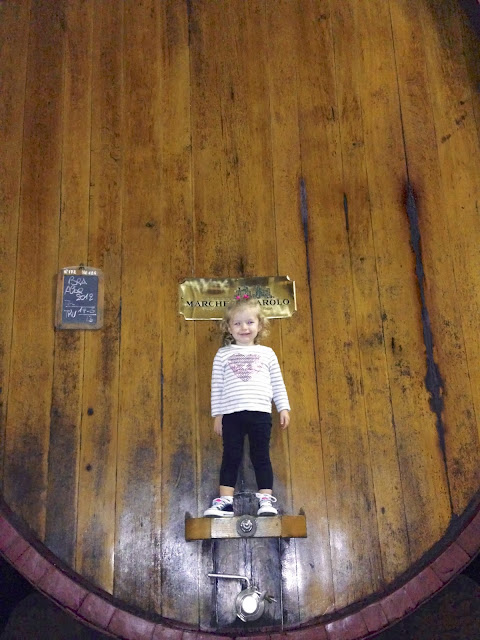
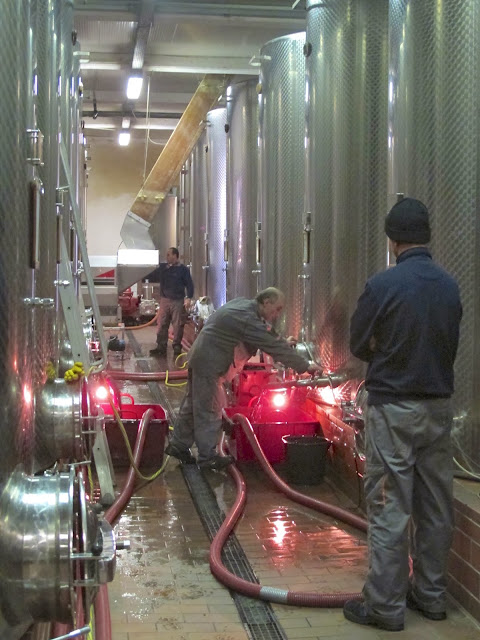
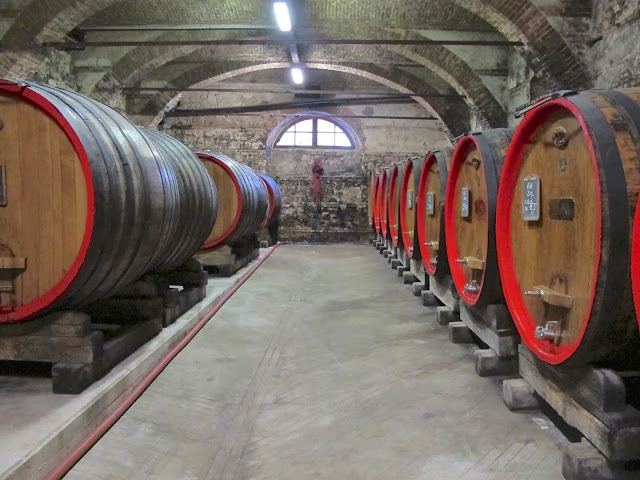
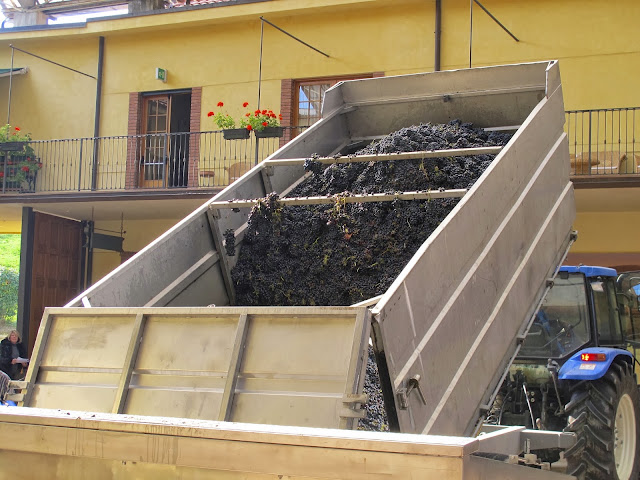
After a wonderful lunch at Osteria Cantinella, I had pre-arranged for a tour and wine-tasting at Marchesi di Barolo. This particular cantina boasts a very genuine and interesting history (I encourage you to click on the link and visit their website). It was explained to us that this particular winery was where Barolo itself was born – we even saw the original cask that was home the world’s first Barolo over 200 years ago. Our tour began in one of the cantina’s vast rooms where they were aging wine in botte di vino (wine casks). These barrels were made from oak from several countries. S and Deb saw some of the barrels were made by an American cooper (barrel maker) they know in Napa Valley. Small world! We next moved into the Marchesi’s private family cellar, where an impressive collection of wines rendered us all speechless. As we descended down into the heart of the cantina, we saw the juice of fresh “crush” flowing though long winding hoses, attached to the floor above where tractors were dumping the grape fresh from the “harvest”. This was exciting for all of us, knowing that we played a small part in the 2014 vintage (primarily by not tripping over the hoses and spilling the precious nectar on the floor). After the tour, we enjoyed a tasting of some of their finer wines – a wonderful way to casually spend the afternoon.
We merely had to follow the signs to reach our restaurant
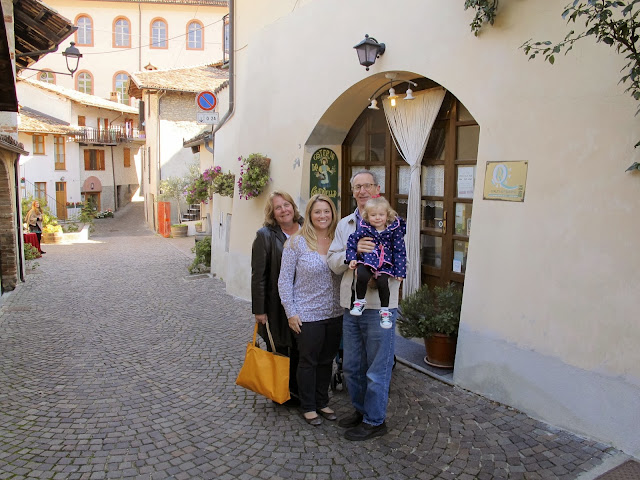
Our group is eager to dine at Osteria Cantinella
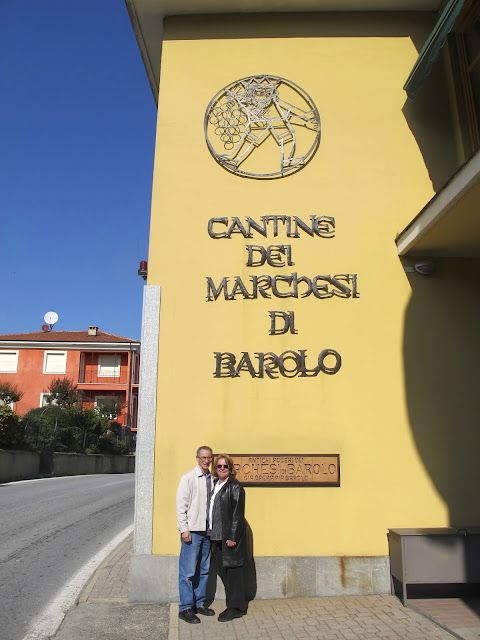
S and Deborah stand just outside Cantine dei Marchesi di Barolo
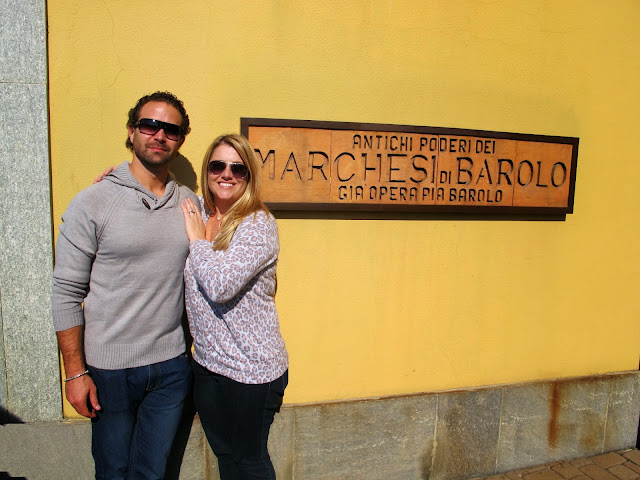
Jen and I take a picture here as well
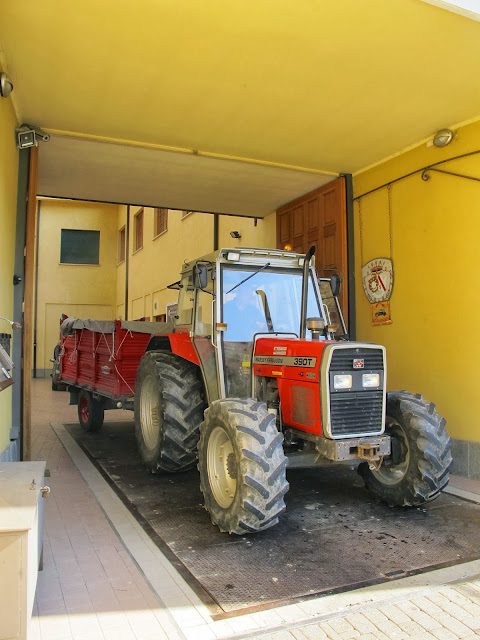
Tractors were coming in out along with us, bringing grapes fresh from harvest
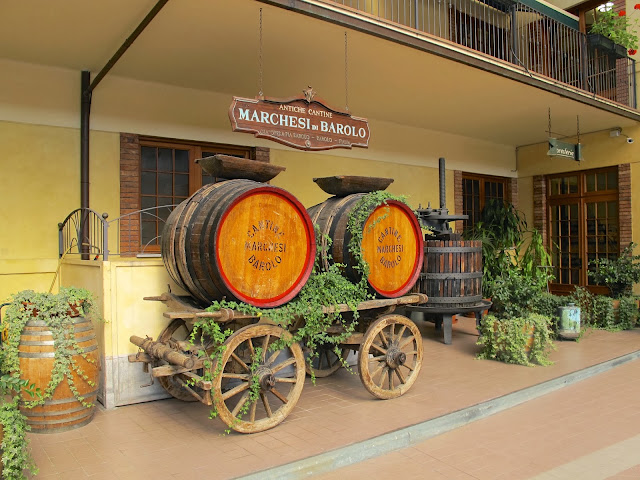
A display in the interior courtyard shows an old fashioned way to transport the wine from town to town
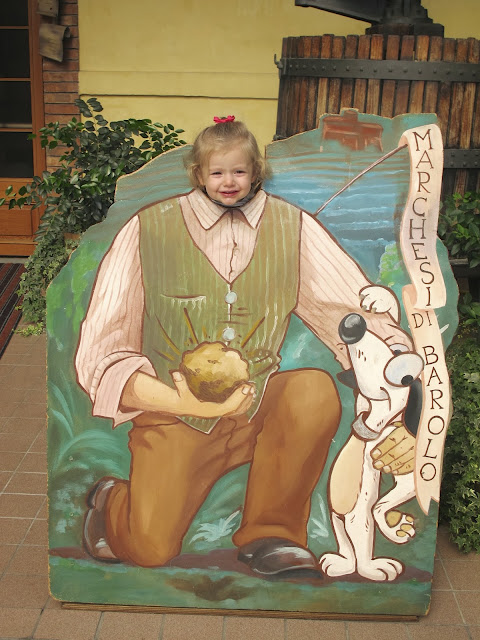
Julia also doubles as an expert Truffle Farmer
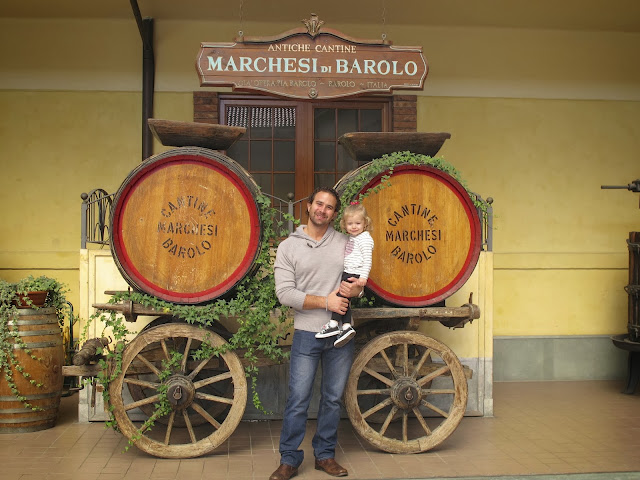
We smile in front of the old fashioned barrels and wagon
French oak botte in the first room we visited
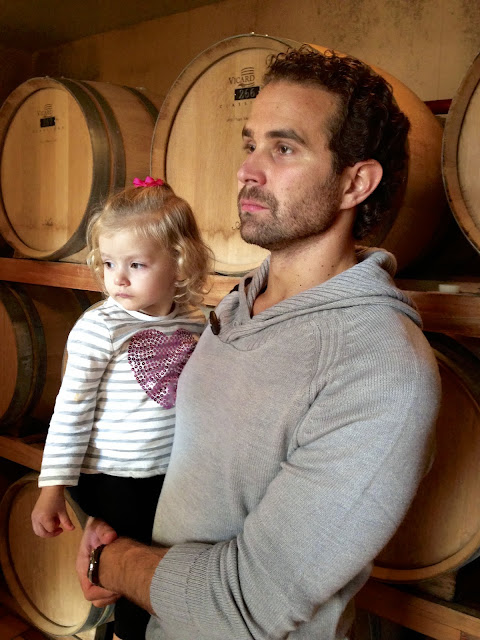
Julia and I listen to our tour guide
Barolo can age in the bottle for many years, most Barolo shouldn’t even be opened for at least 10 years
Going into the personal cellar of the family… quite the collection
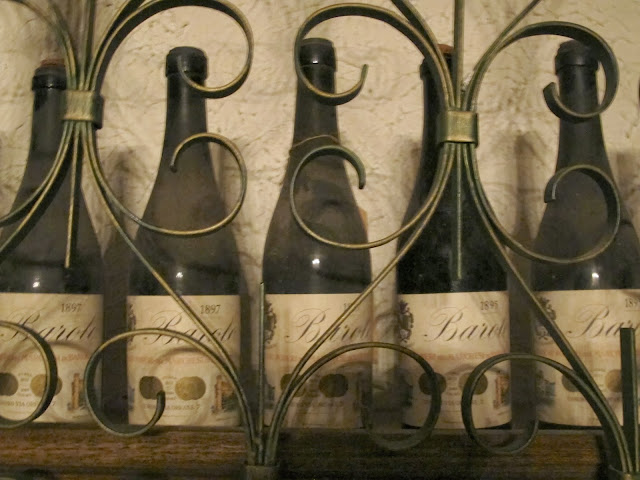
Some of the much older bottles are on display – these are no longer for drinking (hence the vertical position)
The oldest bottle in the cellar is from 1859 (not drinkable) and the oldest that is still drinkable is from 1938
A private tasting area
Some of these large barrels date back as far as the 1950’s
Downstairs the juice from the crush flow into these large steel vats through long hoses
These large barrels are made by hand and are very expensive
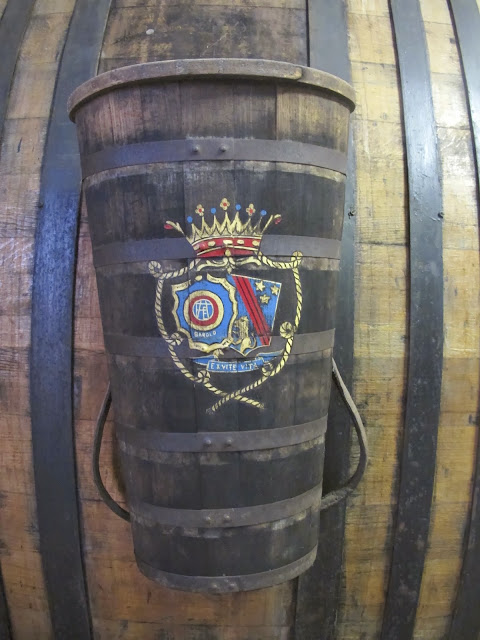
A basket that was once used for the harvest many years ago is now used as decoration
Tractors dump the grapes they collected at harvest into a machine that crushes them
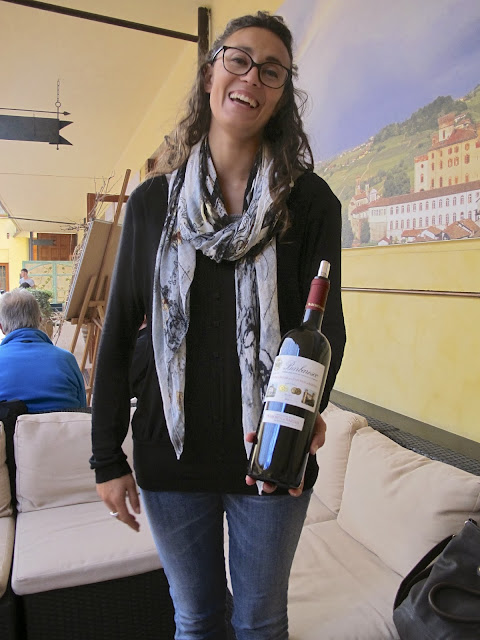
Our guide showcases one of the bottles that we would be tasting – this a Barbaresco
Deborah and Julia start a dance party
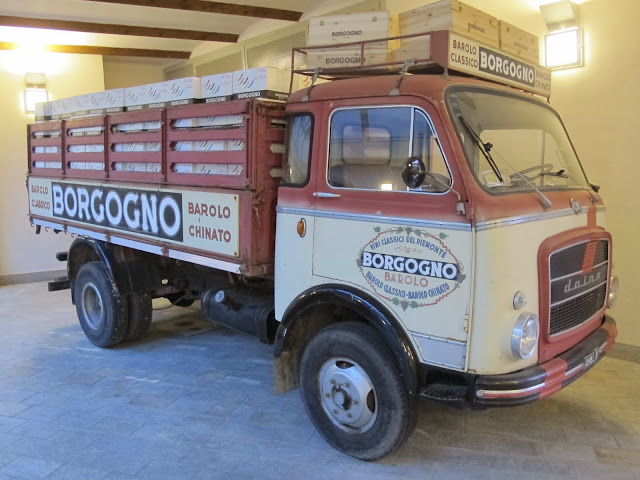
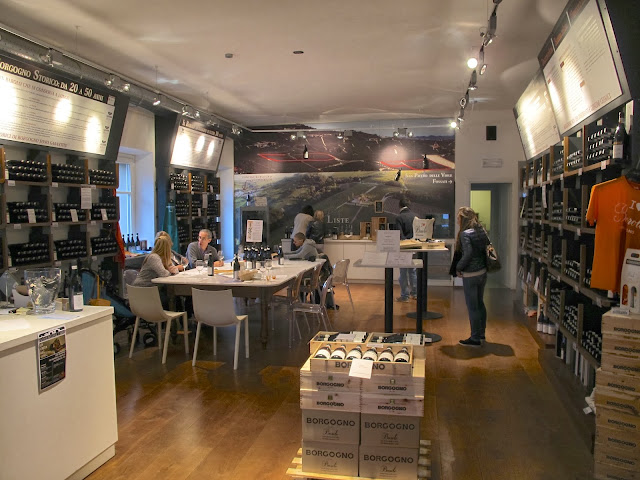
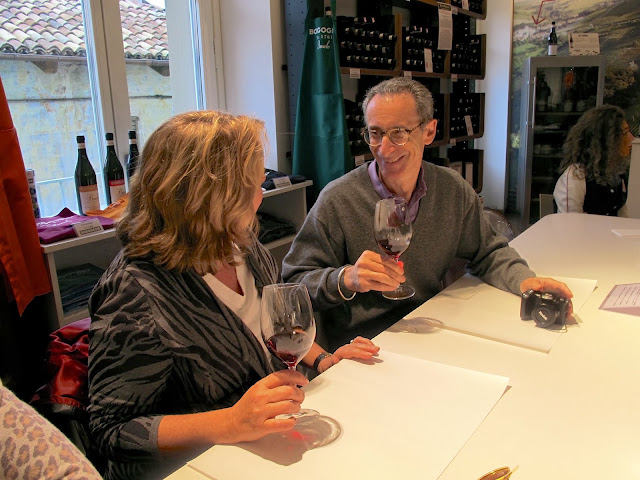
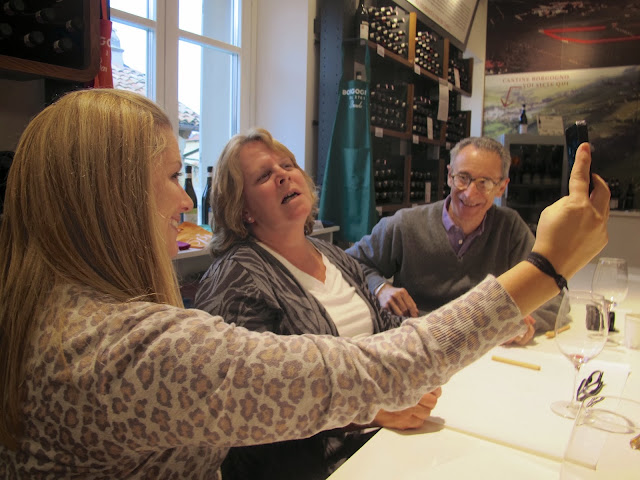
But we weren’t done – we still had another tasting on the books. We next went to Borgogno – a producer of fine wine since 1761. We opted for the more comprehensive vertical flight, consisting of six different wines. I cannot accurately describe to you the pure bliss one can discover whilst sipping on some of the worlds best wines, with fun people who’s company you really enjoy and basking in the glory of a napping baby. We tried our best to “play it cool” but I think perhaps got a little rowdier than we even realized. You have to give us a break, we had each had several glasses of wine at this point. Between me and S (mainly, S) – we bought so much wine that they included two of the four tastings and threw in canvas bags, custom wood cases and bottle openers. If you find yourself in Barolo – duplicate our exact schedule of eating and drinking – it was an amazing day.
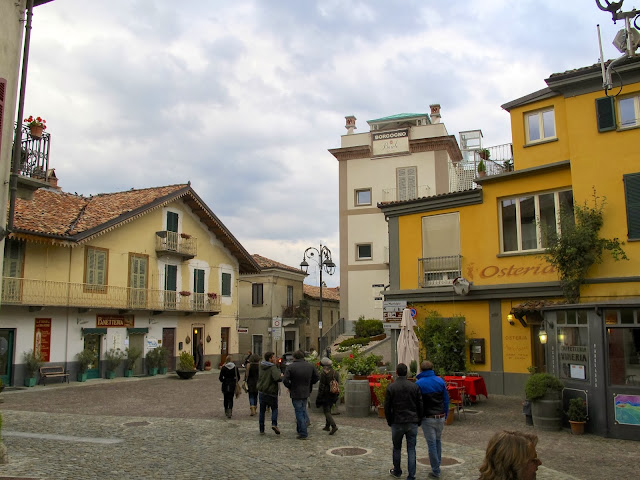
We walk through Barolo on our way to Borgogno (the tall white building)
One of their old trucks now sits on display in the cantina
A wonderful place to taste wine, surrounded by all the amazing bottles that can be acquired with the simple swipe of a card
S and Deborah share a laugh
Jen explains what a “selfie” is and shows her how to do it
I wouldn’t call Deborah’s first attempt “successful”
“Here, let a pro show you how it’s done”
Deborah’s second attempt was much better – I think she’s nailed the “selfie”
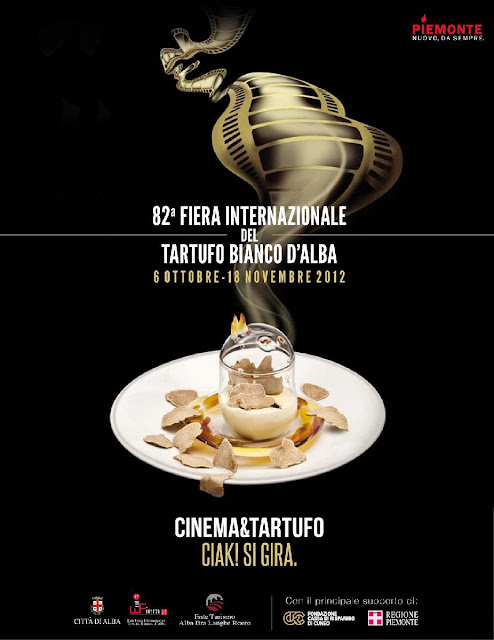
For 83 years, Alba has been host to the Fiera Internazionale del Tartuf Bianco d’Alba (International White Truffle Fair of Alba). This year, the festival is open for five weeks, from the 12th of October until the 17th of November, spanning across the entire city. There are hundreds of events (including a donkey race, music concerts and food & wine tastings), vendors set up in markets throughout the city, celebrity chefs dropping in all over town, cooking demonstrations and of course – thousands upon thousands of truffles. Admittedly, we were undertaking a “food” related activity in the “wine” portion of our trip – but we have learned that nothing pairs with the worlds most exquisite wine better than one of the world’s most elusive and desirable food items.
Last year’s poster for the event
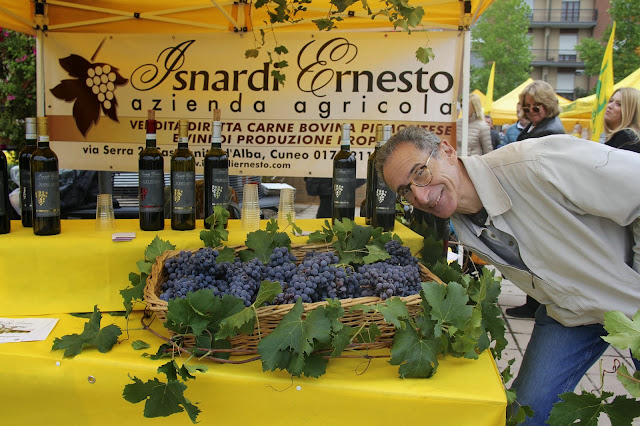
S gets close the grapes of a small producer selling his wine
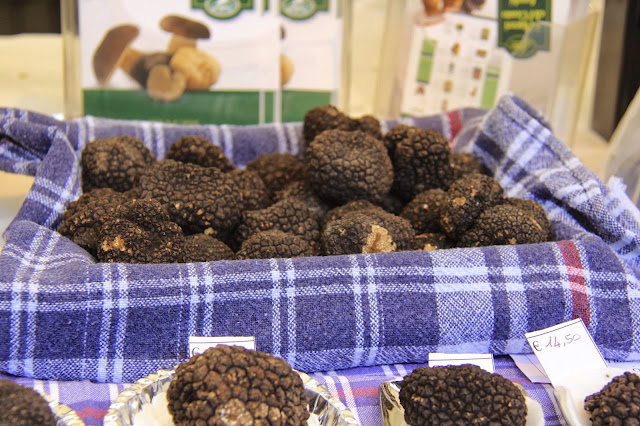
Some black truffles displayed for sale
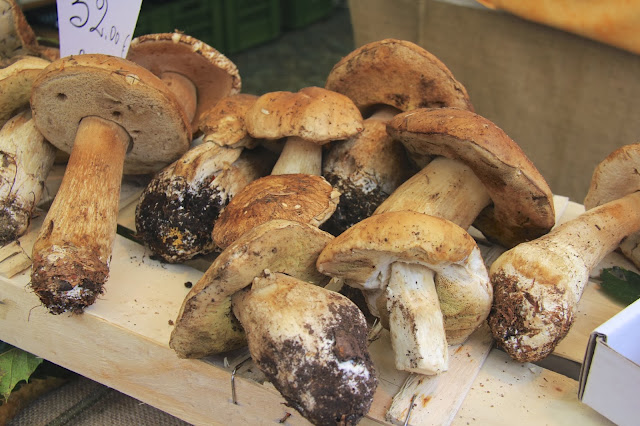
It is the season for truffles as well as mushrooms – there were some fine examples for sale
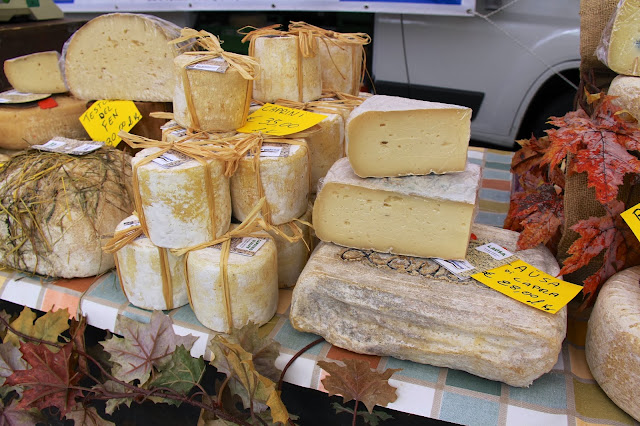
A cheese vendor showcases his various goat, cow and sheep cheese
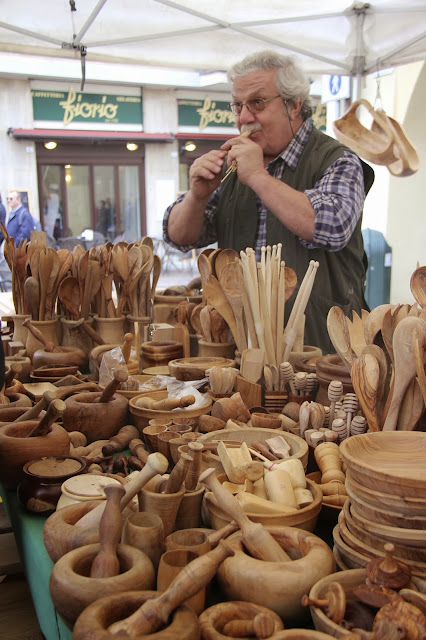
This artisan hand crafts items out of olive wood – Deborah got several spoons
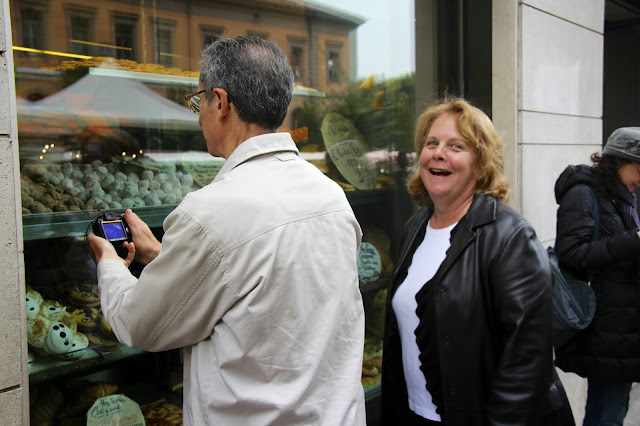
Deborah laughs as S takes a picture of the window display at a pasticceria (pastry shop)
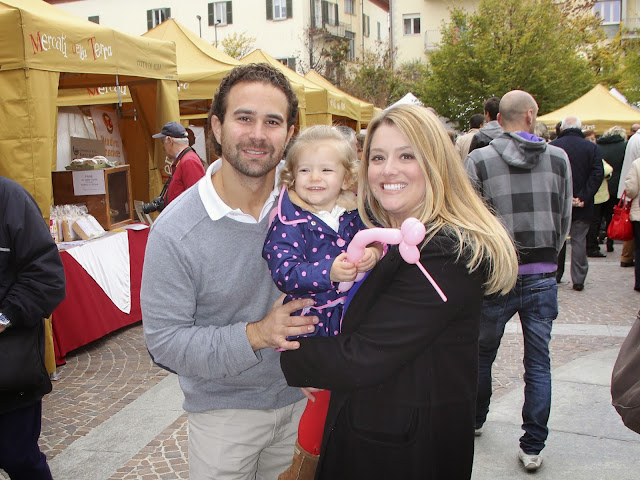
Family photo in one of the markets
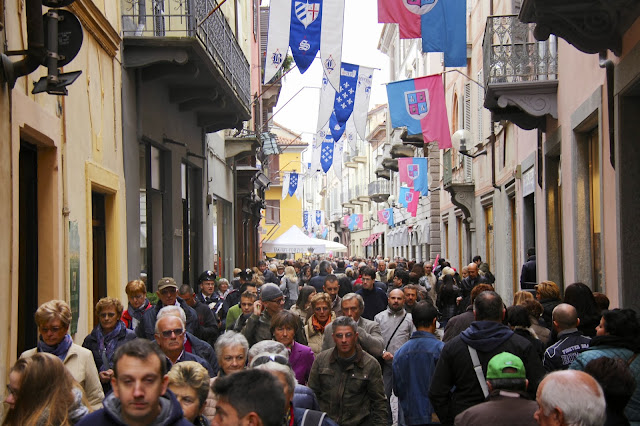
The city is flooded with thousands of visitors each day during the month-long event
Like many of the world’s finer foods, a truffle may seem strange to many people (caviar = fish eggs, foie gras = goose liver, etc.). A truffle is in fact, a fungus – but nonetheless, affectionately referred to by many as the diamond of the kitchen. It is no wonder that this event is considered the Sundance Film Festival of the culinary world. The likes of Mario Batali, Joe Bastianich and dozens of other celebrity chefs make appearances each year. Lesser known restaurateurs can be seen in the main truffle tent, intently smelling every single truffle and purchasing thousands of euro’s worth of this little, spongy item. They will use the ingredient in various recipes (soups, stews, meat dishes and anything else their creative minds can concoct), but primarily – they will shave the truffles over pasta, table-side.
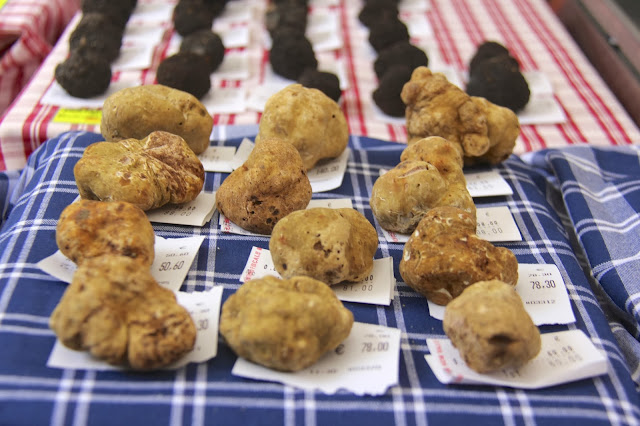
A collection of white truffles in the front – black truffles are in the background
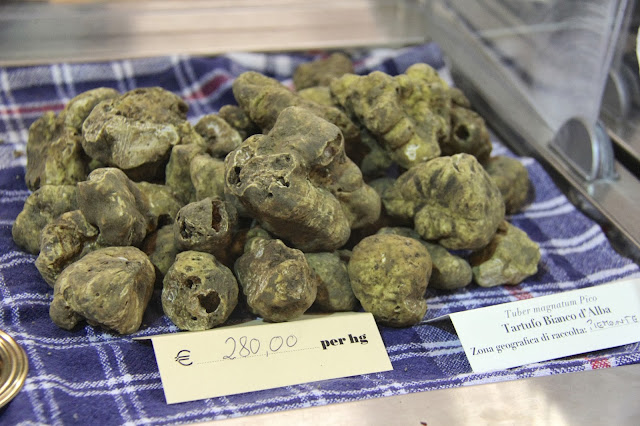
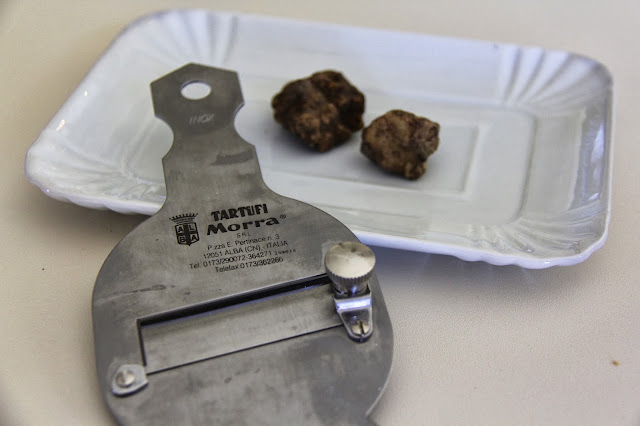
Truffles are small, hard to acquire and require the perfect soil conditions to achieve a proper balance. Italy is regarded as the foremost area for the natural cultivation of truffles (and the ultra-elusive “white truffle” grows in the Langhe area, specifically Alba as well as Tuscany and Abruzzo). As popularity and demand has increased, other countries have tried to cultivate white truffles (including Slovenia, Croatia and now even China). It is commonly accepted that these areas produce a lesser-quality truffle. One of the benefits of purchasing your truffles within the main enclosed tent at the festival is that you are guaranteed a certified, locally cultivated truffle. Many of the merchants selling their truffles were the actual farmers themselves. Today, farmers mainly use Truffle Dogs to sniff out the truffles. Historically, Truffle Pigs were used (because of their acute sense of smell and innate ability to find truffles) – but their love of the delectable treat often had them eating the merchandise before the farmers could snatch them from their snouts. The Truffle Dogs have to be trained to find the goods, but are much easier to control. We sniffed out some of our own truffles and plunked down €50 to acquire two small truffles and a truffle shaver.
White truffles for sale – they are not cheap!
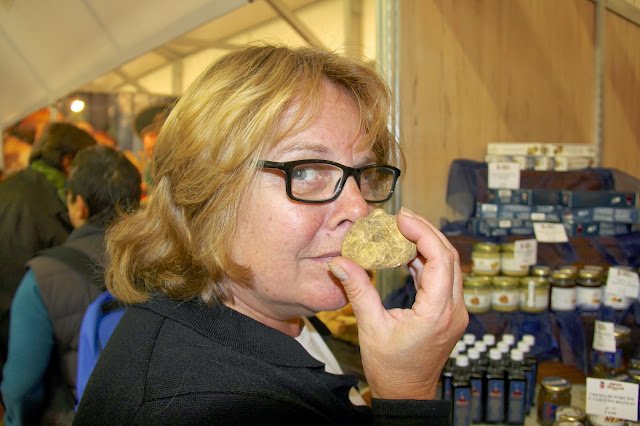
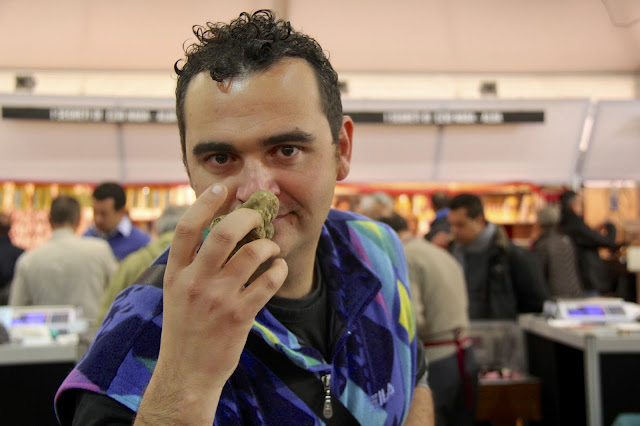
Deborah catches the scent of a beautiful specimen – that truffle probably cost around €300 ($400)
I give the truffle a smell as well
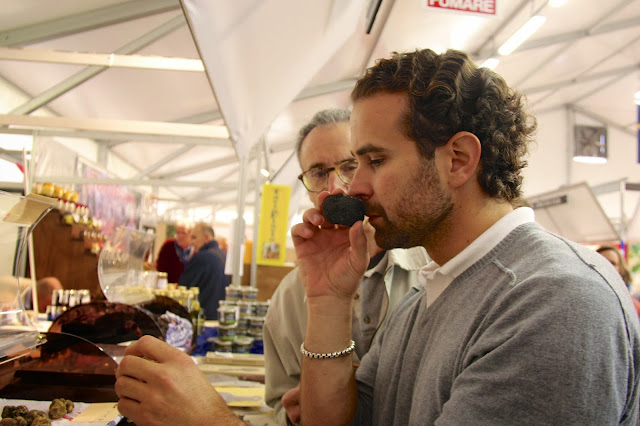
This guy really knows how to do it and shows us – it’s all in the wrist and perfectly timed nostril flare
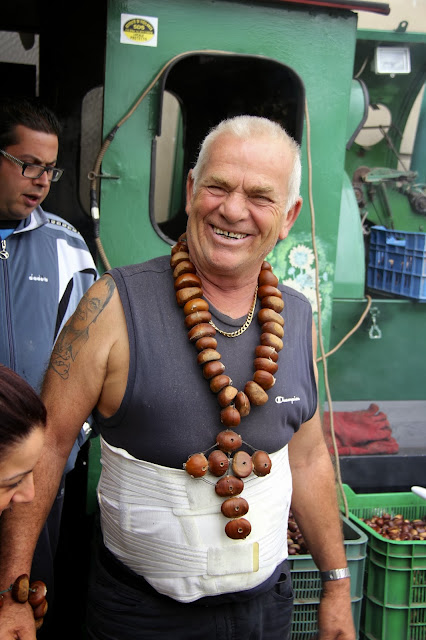
We found this guy selling roasted chestnuts outside
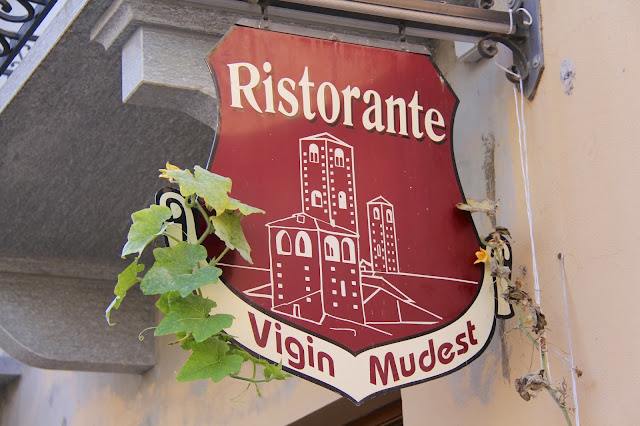
After touring the markets, we had lunch at Ristorante Vigin Mudest
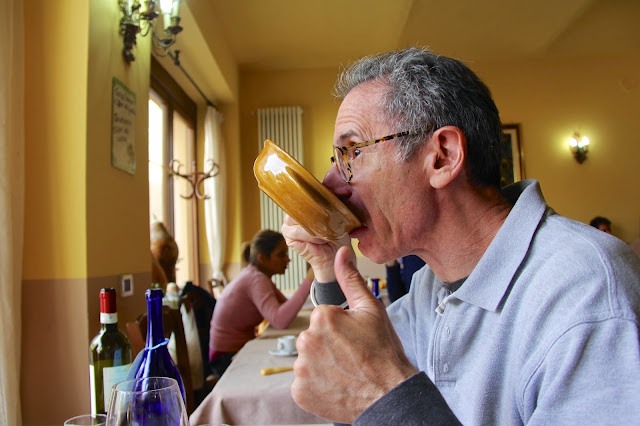
Ever heard anyone say, “this sauce is so good I could drink it”? Well, when S says it – he really means it
I became the “garbage disposal” of the group, finishing everyone’s plates (3 plates and a bowl)
Julia hugs her great aunt and uncle after lunch
Before we left Alba, Julia insisted on ripping her shoes and socks off
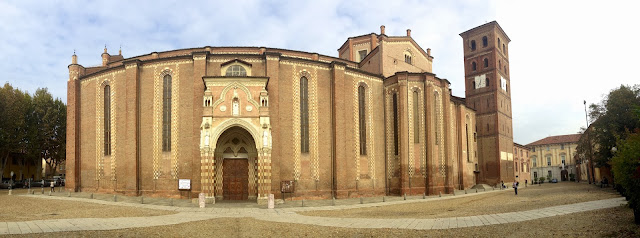
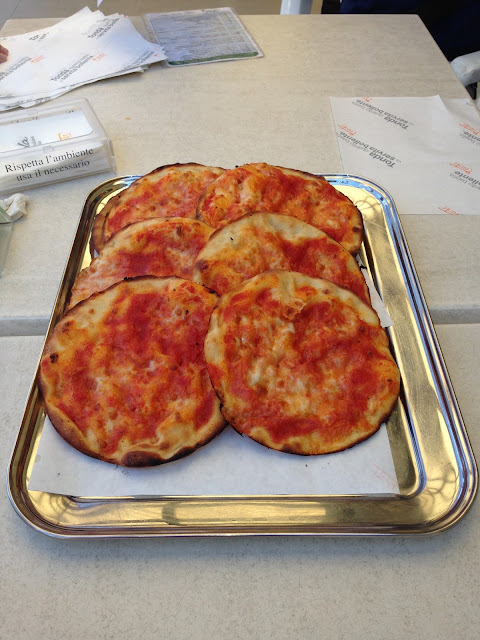
Our final stop in Piemonte was a visit to Asti, a city that has been occupied since the Neolithic Period and today boasts a population of about 75,000 inhabitants. Unfortunately, we caught the city on a Monday… during lunchtime. This meant that virtually every museum, shop and attraction was closed. We ate a makeshift lunch of pizza and flatbread on park benches before heading for home.
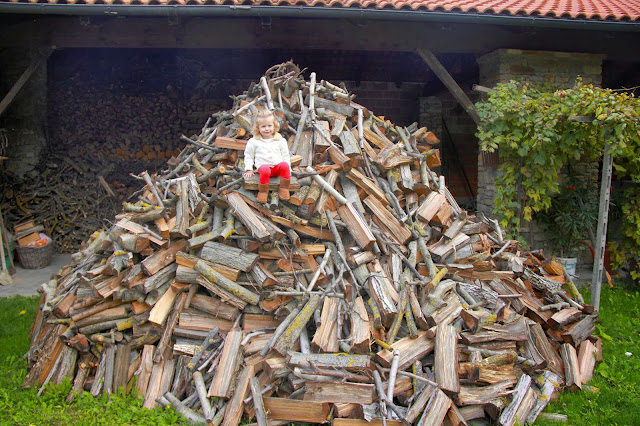
Julia built a throne of her own from some firewood at our agriturismo
Cattedrale di Asti (Cathedral of Asti) dates to 1309
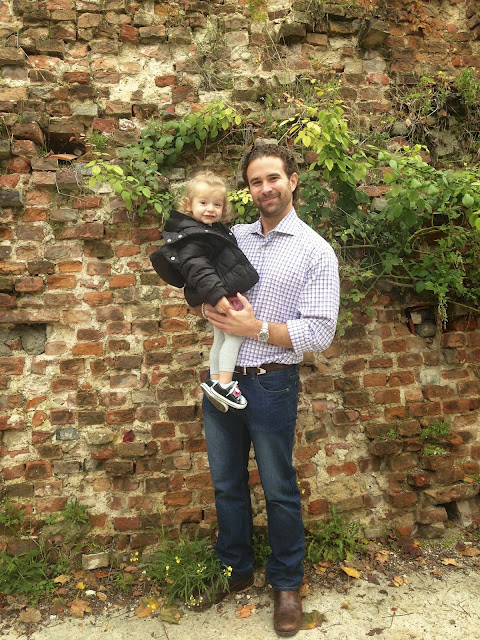
Ruins of an ancient tower that had been built into a more modern home
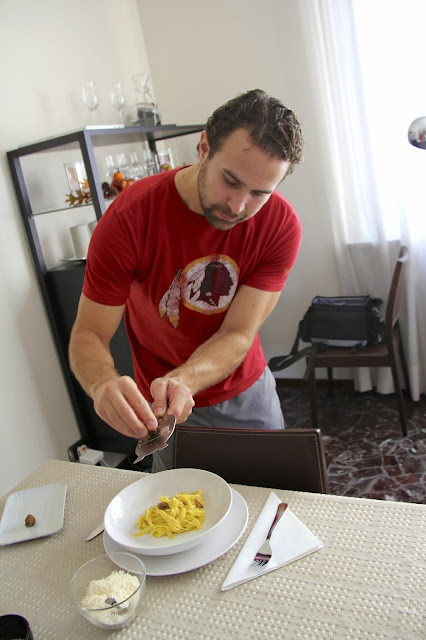
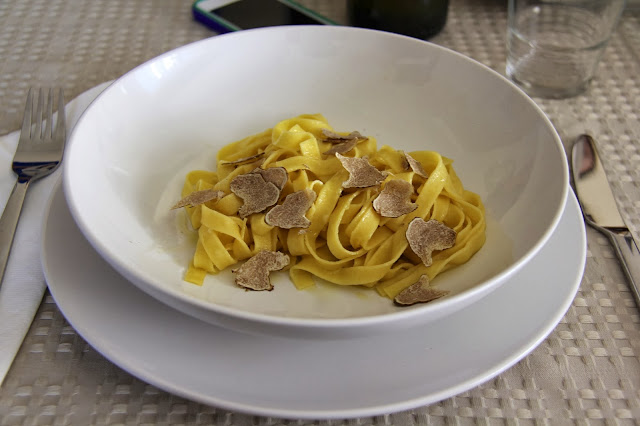
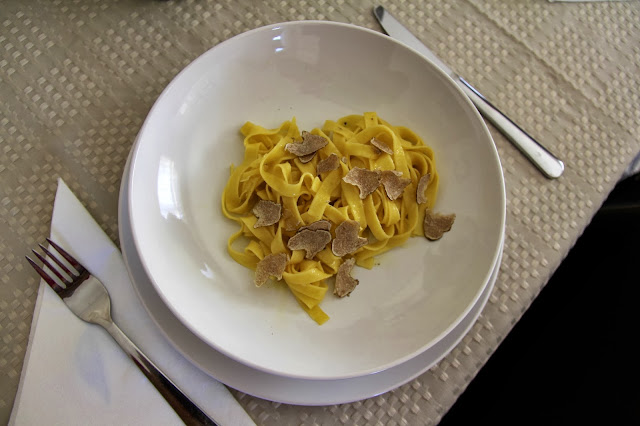
A couple days later, we took our prized truffles out of the refrigerator and cooked tagliatelle con olio with shaved truffle. It was a delicious lunch that nearly put us in a content, comatose state – a good way to tease our pallets for Part II of the trip. We would depart the next morning for Emilia-Romanga. If Part I was entitled Vino, then Part II of their trip would definitely be called Cibo (food).
This is what €50 ($68) worth of truffles looks like
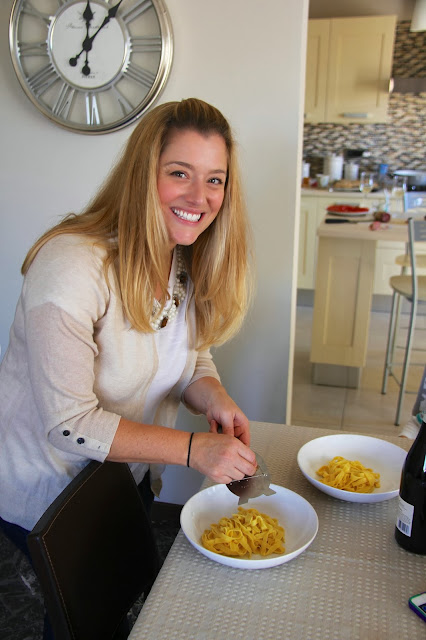
I shave the white truffle on my pasta
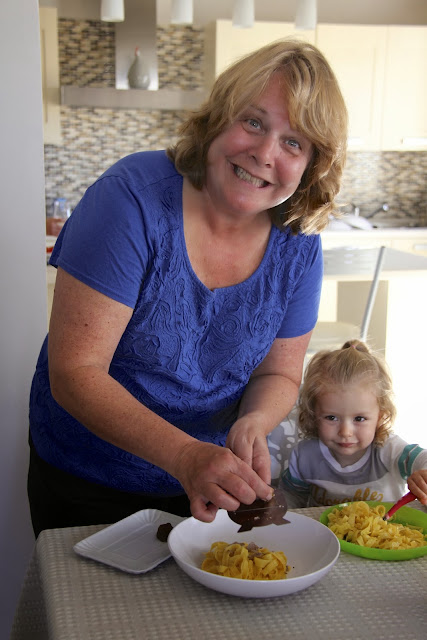
Jen takes her turn
Deborah is happy to shave her truffles
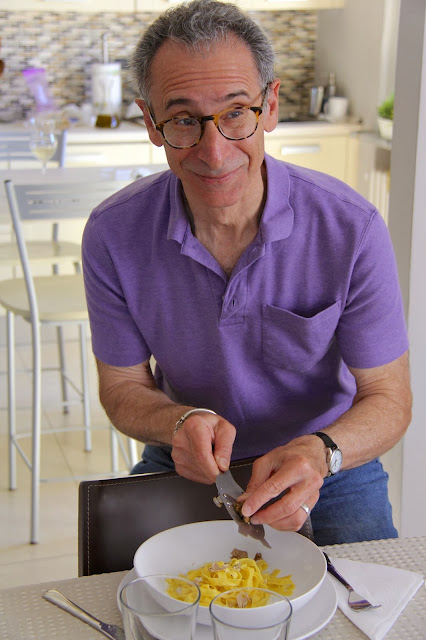
S looks great when he’s shaving truffles
Now that looks great!
It tasted great too
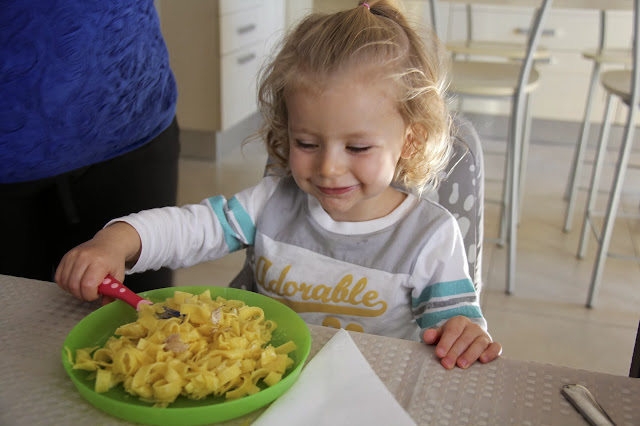
Even Julia got to try some truffles
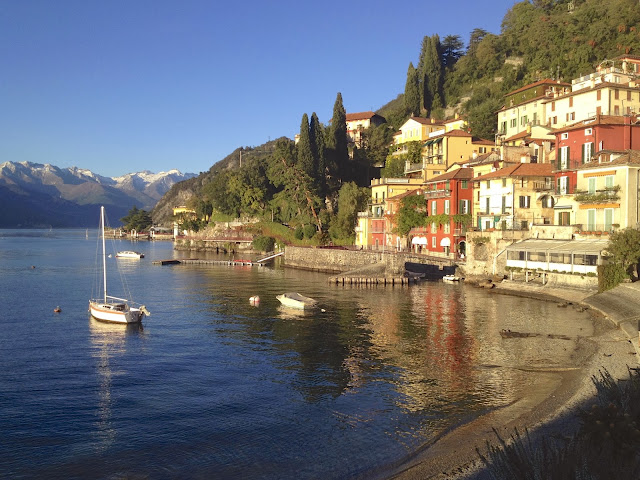
We visited Varenna after our truffle lunch
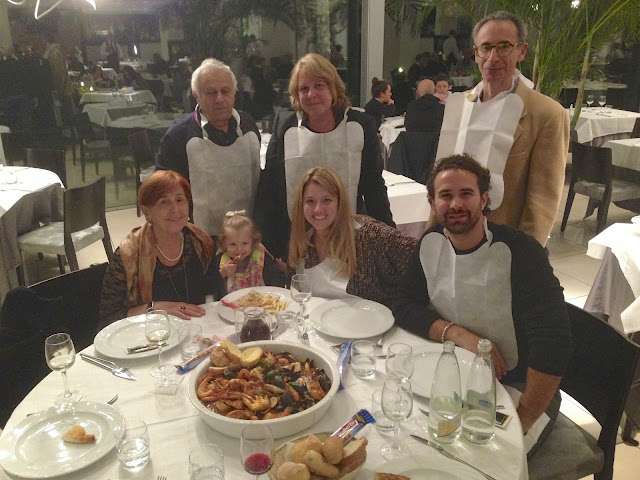
That night we all went to dinner at Ristorante Simposio to celebrate Claudia’s birthday – still can’t get Franco to smile
Before Jen blindsided me so many months ago with the suggestion that we move to Italy, I never thought I would know how to make grappa. Honestly, I never thought that I would ever even like grappa! But like so many other things I swore I’d never change about myself, living in Italy has transformed that part of me (keep an eye out for me sporting a “puffy” coat this winter – a style I hated when I first moved here and now think is the coolest thing to come of the runways of Milano).
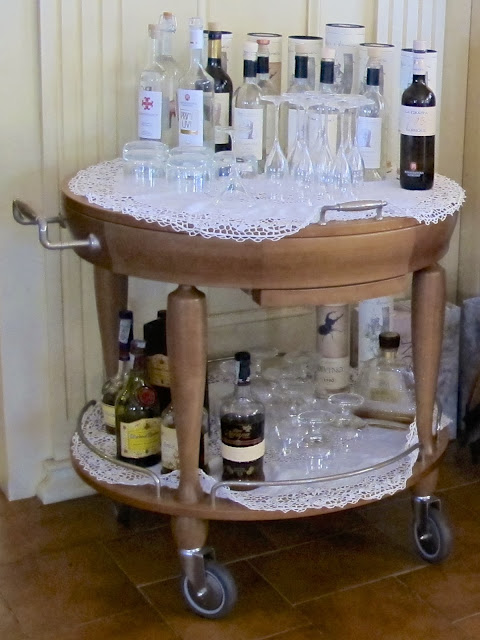
A selection of grappa offered in a restaurant in Lago Maggiore
Grappa is an alcoholic beverage that is served in Italy as a digestivo (digestive) after a meal. We have learned that Italians take the digestion of their meals very seriously and have structured the order of eating in such a specific way as to aid in the digestion. A full blown Italian meal will include the following:
You’ll notice that you’ll begin with the antipasto as a medium to enhance the appetite. The pasta course lays the “foundation” for the meal and acts as a base (note: when served as a primo, you should only serve roughly 80 grams of pasta). Next you’ll move onto your main dish and vegetables – the “center” of the meal. After that you’ll progress on to your salad (as opposed to having the salad first) because Italians believe that finishing your meal with the light and refreshing salad helps aid in digestion (add this to the list of things that I’ve changed in my daily life). Finally, the dessert rounds out the meal and the coffee always comes last. But when you eat like this, you’ll need one final component to assist in proper digestion – your ammazzacaffè (coffee killer). In many cases, this will come in the form of a grappa.
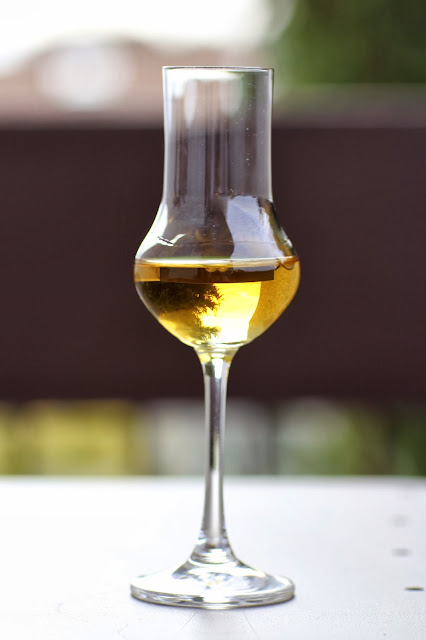
A glass of my favorite grappa in a proper bicchierino (small glass)
I have had the good fortune to have visited Italy many times before moving here, so grappa was not foreign to me. I’d choked the stuff down on many previous occasions, admitting to the table that I wasn’t a fan – but not leaving a drop behind, lest my manhood be challenged. However, somewhere along the way I have not only grown accustomed to drinking grappa – I have become quite the fan. I seldom finish a heavy meal without a grappa and I would be lying to you now if I didn’t tell you that I am presently sipping a nice Grappa Casereccia as my fingers glide across the keyboard (the same grappa pictured above).
The only thing better than drinking grappa is making your own grappa. You see, while the distilling process of grappa is more or less the same, the taste can vary greatly between types (grappa is made by distilling the skins, pulp, seeds and stems left over from the winemaking after pressing the grapes). The quality of grapes used, the specifics within the distillation process and any additional processes can alter the flavor of the grappa.
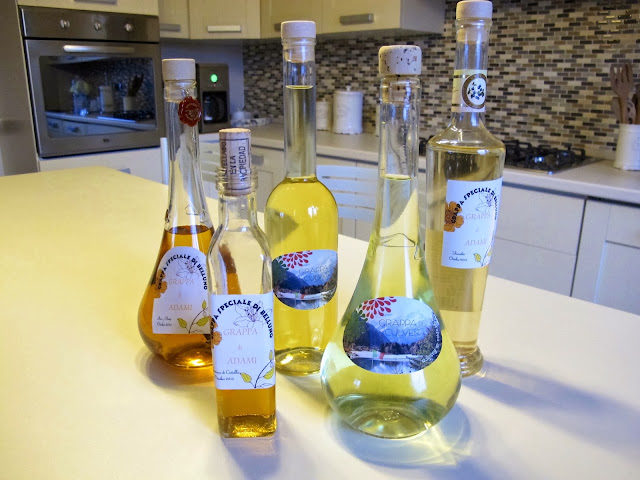
Claudia (Jen’s aunt upstairs) is fortunate enough to be from a region in Italy that [I personally believe] stands out above many other fabulous grappa-producing areas. She has brought back many different types for us to try and our liquor cabinet has expanded and contracted like the aged wood of the barrels themselves. In addition to supplying us with some of Belluno’s best grappa, she has an incredible knack for making her own. She taught us her secrets and now I’m going to impart them on to you.
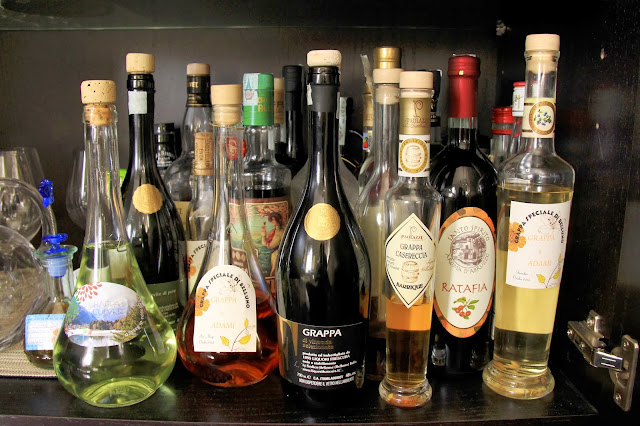
Our liquor cabinet – please don’t play “I spy” with how many bottles of grappa are in there!
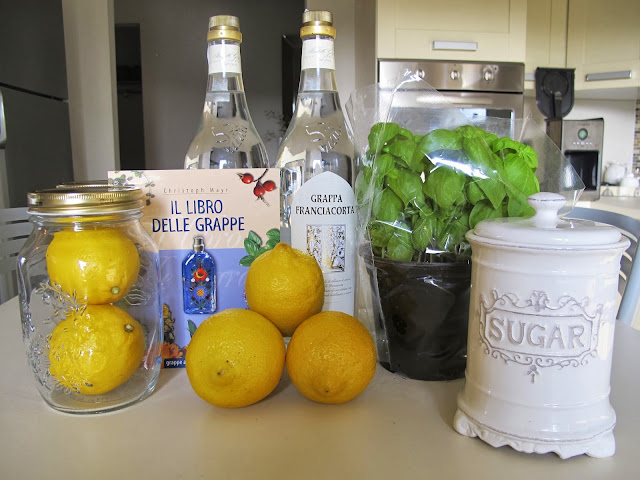
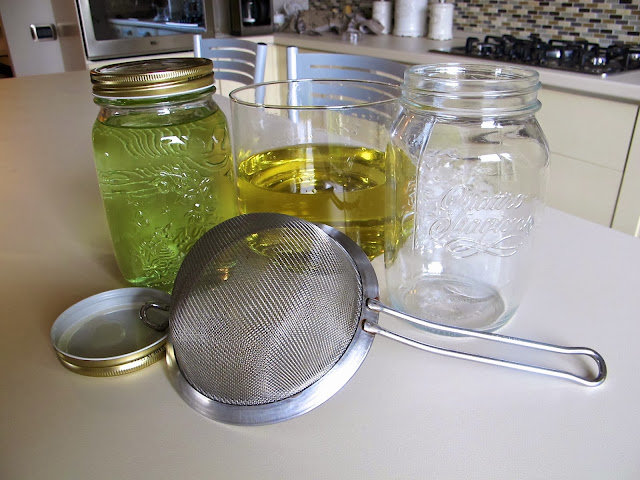
First, you start with a “white” grappa. This is a plain grappa that does not have any flavors and uses the traditional distilling process. Next, you pick your “flavor”. This can be anything from a melissa (a plant that tastes a lot like mint) to a pino mugo (a small pine-cone unique to the Dolomites). For our first batch of grappa, Jennifer selected basilico (basil) and limone (lemon).
The ingredients
BASILICO (BASIL)
Ingredients
>1 liter of grappa (white)
>20 leaves of fresh basil
>Lemon peels
Preparation
>Place the grappa into a jar
>Add 10 unwashed leaves (if the plant is dirty, wash and let dry)
>Leave the liquid for three weeks in a warm place, not exposed to the sun
>Filter the basil and leave for another three weeks with remaining leaves
Note: basil is particularly suitable to be combined and to macerate together with other fine herbs
LIMONE (LEMON)
Ingredients
>1 liter of grappa (white)
>Lemon peels of two lemons
>6 leaves of sage
>2 cloves
>1 tablespoon of sugar
Preparation
>Add all the ingredients of the grappa in a jar and leave in a hot place for two weeks
>Shake the bottle occasionally
>Filter and leave for another four weeks
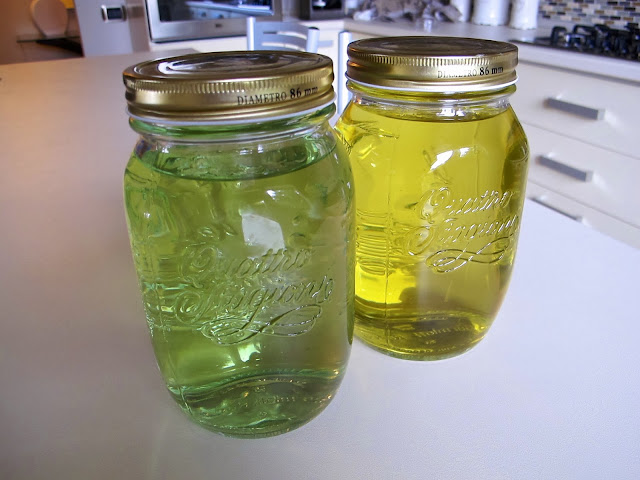
The jars after the filtration process
Now that they’ve been filtered, they’re set to rest a little longer
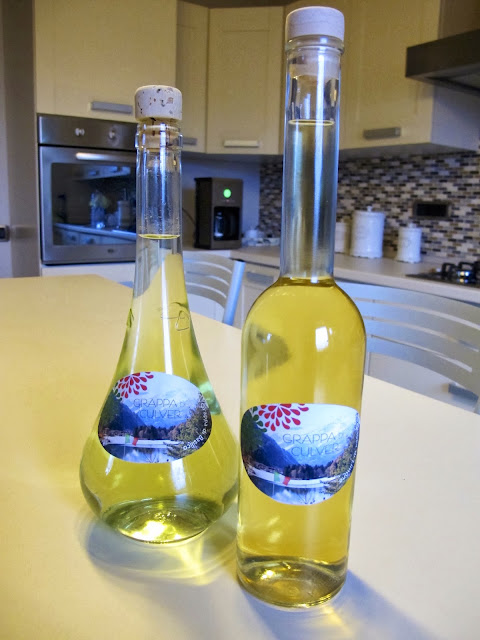
Once complete, pour contents into bottles of your choosing (in our case, old grappa bottles)
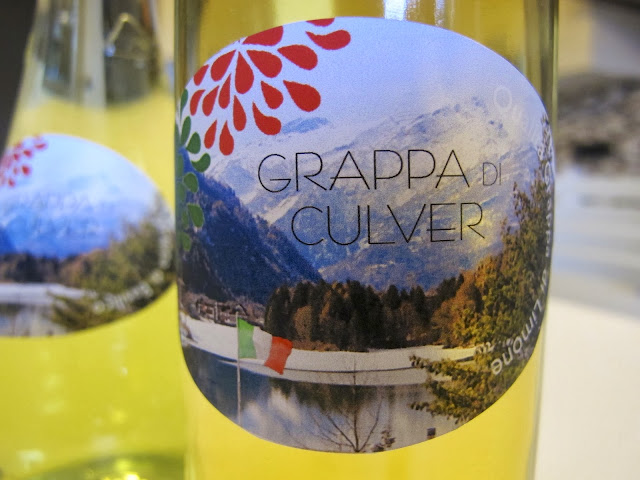
If you really want to get nutty, make custom labels
Claudia was simultaneously making grappa of her own and gifted us many bottles (hers was better)
I hope that you’ve found this to be informative and fun. Making grappa is not the hardest thing in the world, you just need some time and access to good grappa (admitadly, we did chose two of the easier recipes). If you end up trying it at home – let me know. And if you haven’t tried grappa yet, eat a big meal and have a sip. You may be cursing me as the first taste burns your throat, but thanking me as it frees open your full stomach.
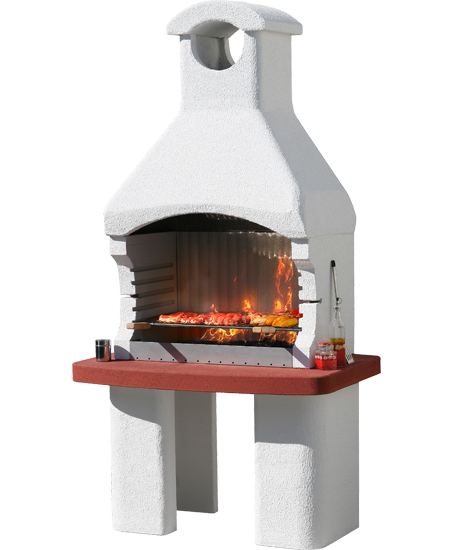
When our friends, Nathan and Danielle had come to visit this past spring – Danielle pointed at a unique outdoor-oven-with-a-chimney-thingy in a neighbors yard and asked what it was. I replied with all the confidence in the world that it was an Italian-style BBQ, but in reality I wasn’t positive. I had seen the smoke billowing through the chimney and I had seen many of these things in other neighbors yards – but I had never inquired about it. I asked my “go-to guy for all things Italian”… Jen’s uncle, Franco. He confirmed that it was in fact a BBQ and a fairly typical one in Italy. So, my educated guess was right. Whew!
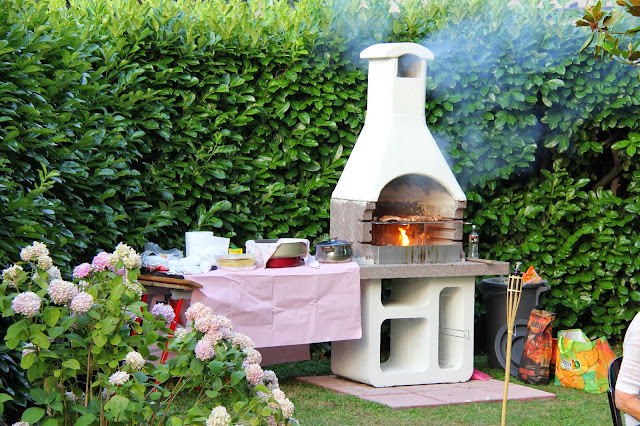
Classic Italian style outdoor grill
I noticed shortly thereafter that the typical gas Weber grills we’re accustomed to using in the States are non-existent here. In fact, it’s possible you may see a round charcoal grill – but more often than not, it’s one of these large, permanent fixtures that people use to grill.
Jen may rule the kitchen around here, but I’ve always loved to rock the grill! As soon as I learned of this wonderful outdoor oven (it’s really more of a wood burning oven, than a simple grill) I knew that we absolutely needed one. However, we live in a condo with other families and we needed everyone’s approval before one of these beauties could bask in our communal yard. Franco became the champion of the project and pitched it at the very next board meeting. The grill got a unanimous vote and so when Jen’s parents were here visiting, we went to acquire the grill.
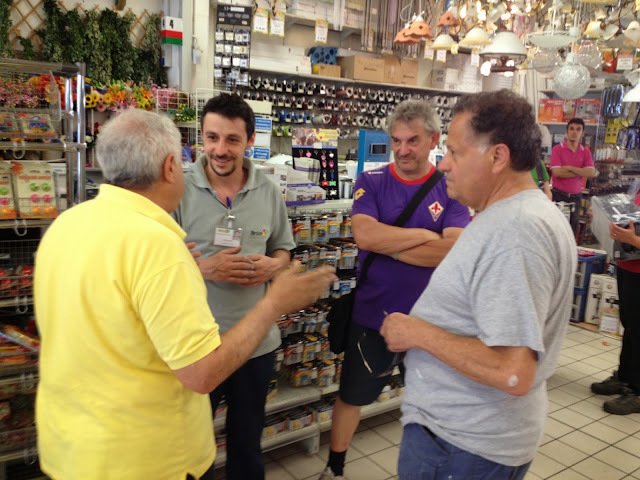
Franco, Dominic and Gianfranco discuss the various merits of certain grills with the clerk
Once again, I learned that things that are usually simple in the States (i.e. buying a car or procuring cell phones) is not necessarily the case in Italy. Buying a grill requires many visits to the store, many discussions, lots of construction and many more discussions. I was a little taken aback when Franco picked up cement and outdoor paint, realizing this was going to be a much bigger project than I originally expected.
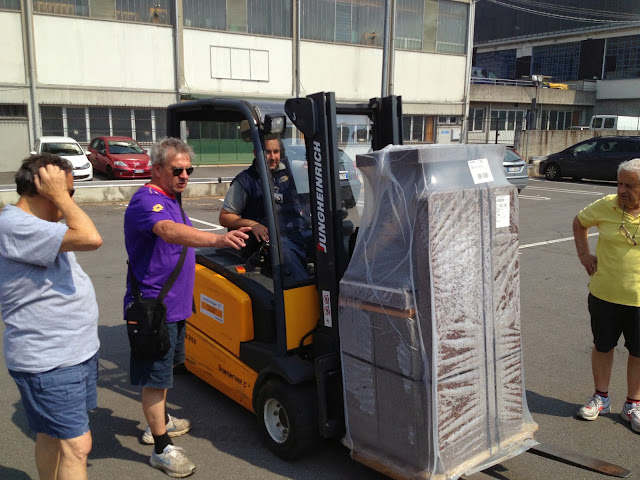
Collaborating on the best way to load the grill into the truck
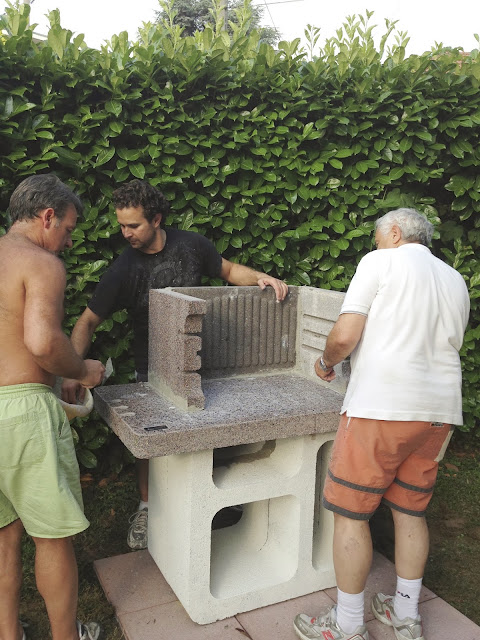
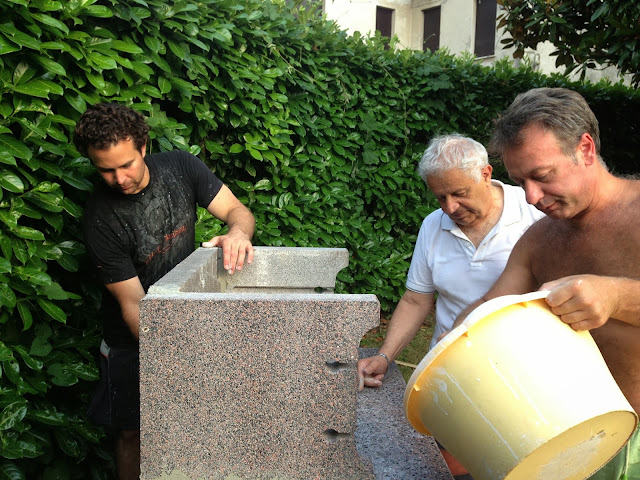
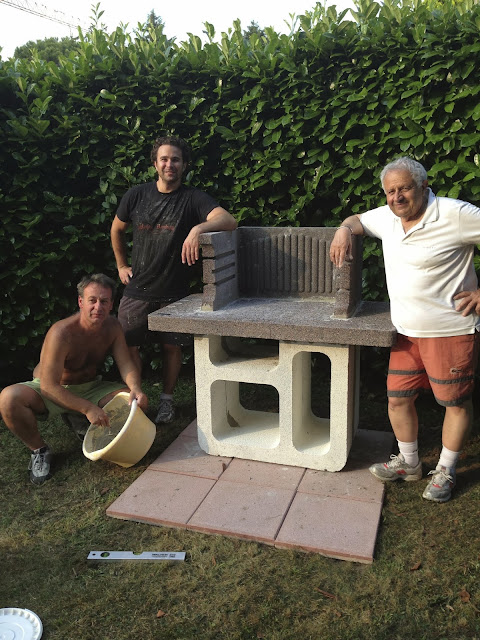
After our second or third visit to the hardware store, Dominic purchased the grill and we loaded it onto a friend’s truck. He helped us deliver it to the building and we carried the unbelievably heavy grill, piece by piece into the yard. A week or so into the project and we were only marginally complete. The grill lay disassembled, piles of cement and stone until we all returned from a quick jaunt to Scotland. By the time I was finally able to roll up my sleeves and start slinging cinder blocks – Jen’s parents had boarded a plane bound for the States. Sadly, Dominic never got to enjoy the BBQ that he helped acquire. That certainly didn’t stop his brother, Franco from encouraging me to send him images of our first festa (party). Brothers will be brothers!
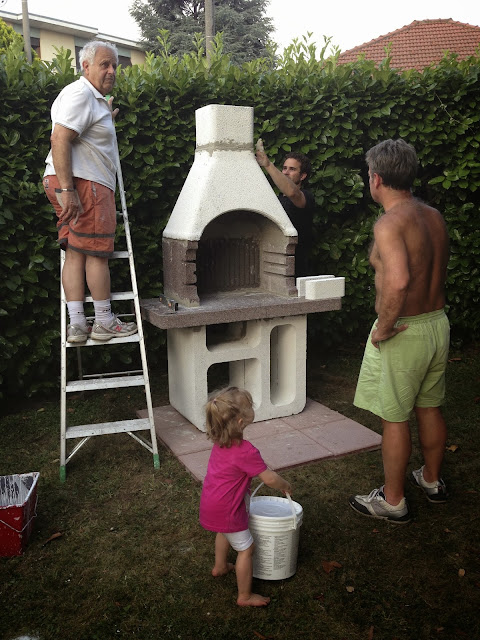
Construction begins
Stefano helps mix the cement as Franco and I set the frame
Stage One complete!
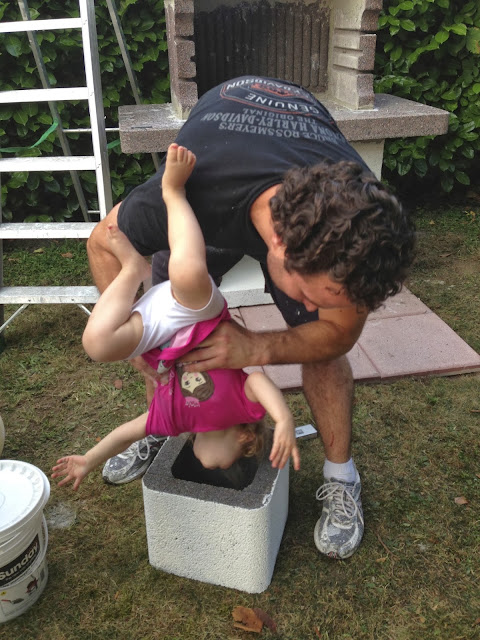
Claudia scolds me in Italian for dunking Julia’s head
Julia thought this was the funniest thing
Julia wanted to help
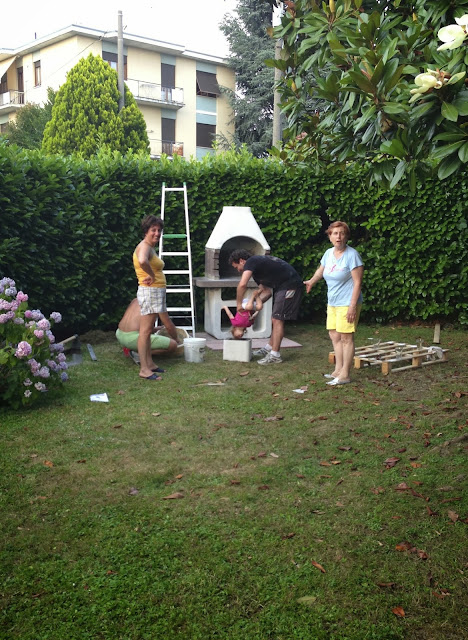
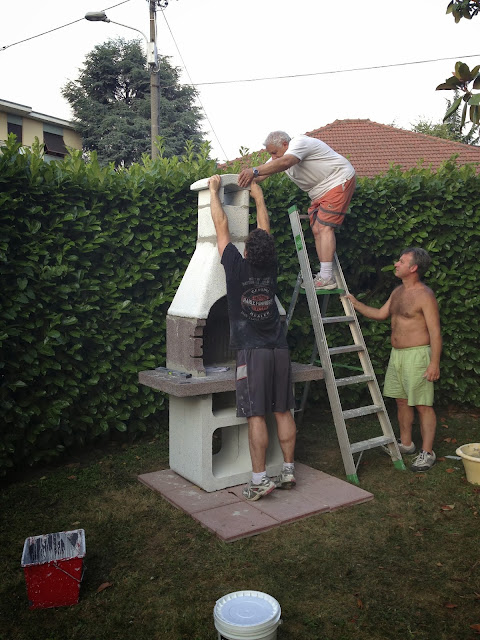
We place the final piece
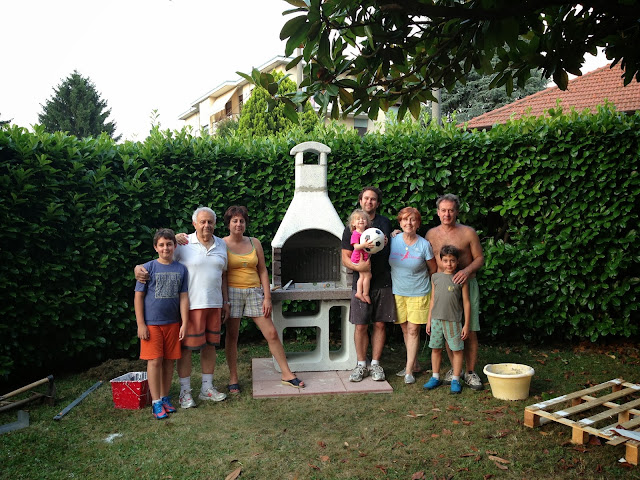
And we’re done! Our new grill is complete
My beautiful baby
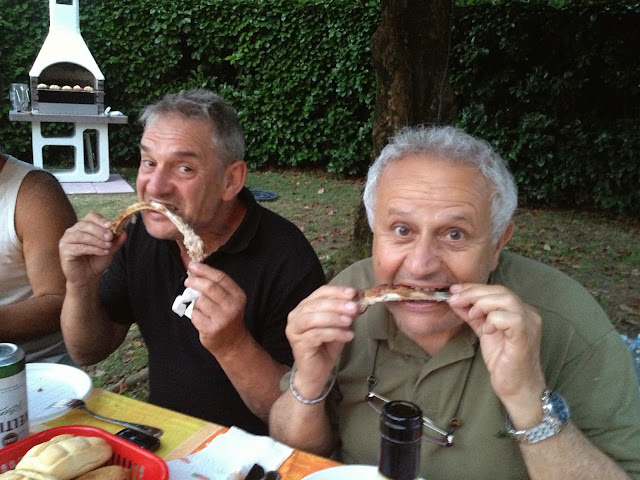
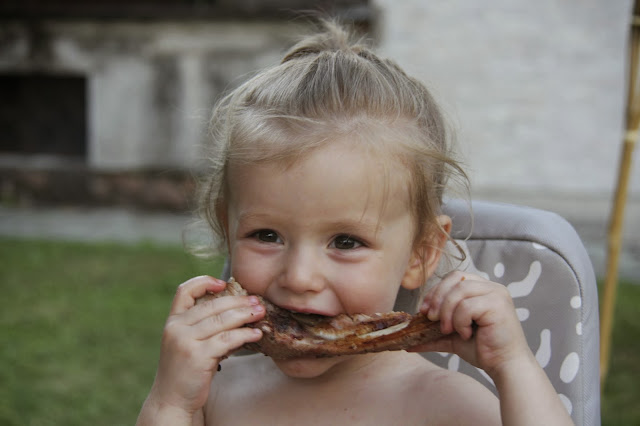
The first party we had was a blast. Our neighbors below are from Naples – and boy, do they know how to party. They had extended family show up and bring delectable treats with them. I was pushed away from the grill as Aurelia and her husband, Stefano took over. As I watched a jaw-dropping amount of meat depart the grill – I was glad I had been sent to the sidelines. I know now that I was out of my depth. We feasted on pork ribs, beef ribs, lamb, porchetta, speck and various types of salsiccia (sausage). Our waistlines thanked us for the grilled vegetables – eggplant, zucchini, peppers and more. We devoured homemade salumi and cheeses that kept appearing each time I turned around. Of course, the cheeses were from all over Italy (“this is from Veneto… aged 24 months” or “my grandmother made this in Napoli… it stayed under ground for 36 months”). Hours later, the desserts (insert image of the best homemade tiramisu’s I’ve ever had) and then the coffee appeared. This was quickly followed by round after round of grappa (homemade, of course). All this – and it was just a first of many parties!
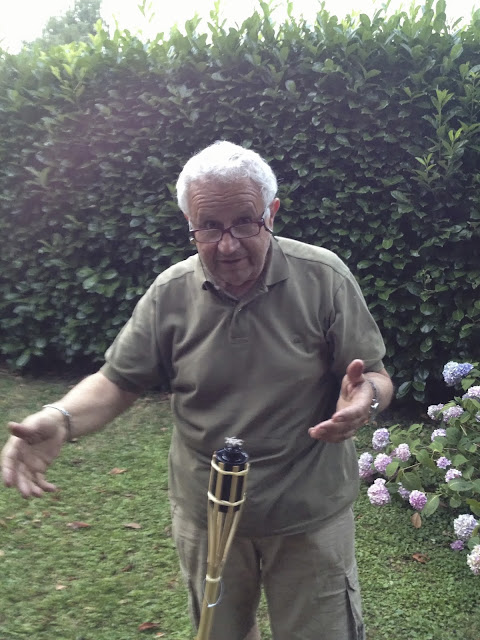
Franco shows me how it’s done
This was the first image that I sent to Dominic – I still feel guilty, but Franco and I got a kick out of it
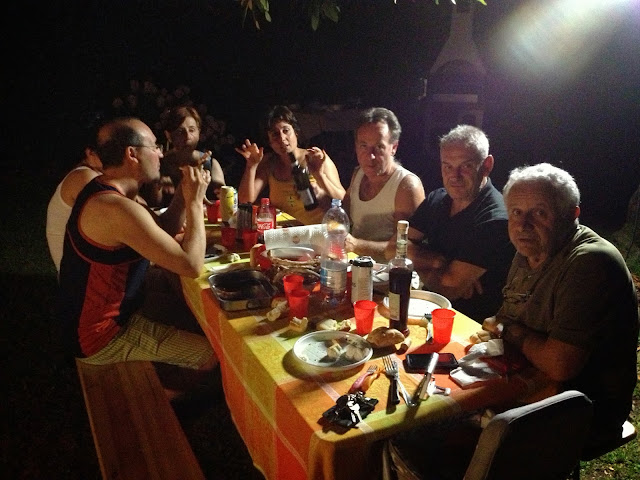
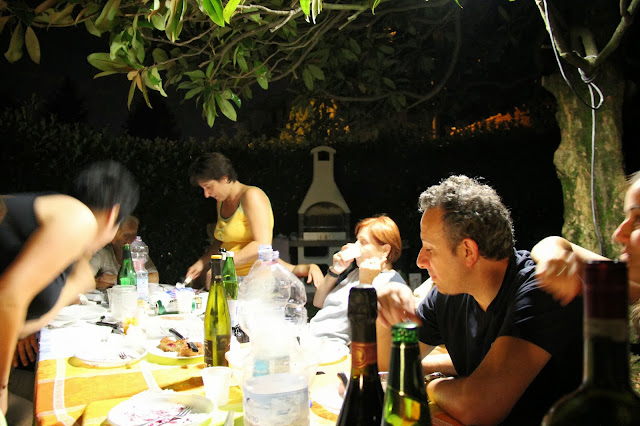
Our first festa went late into the night
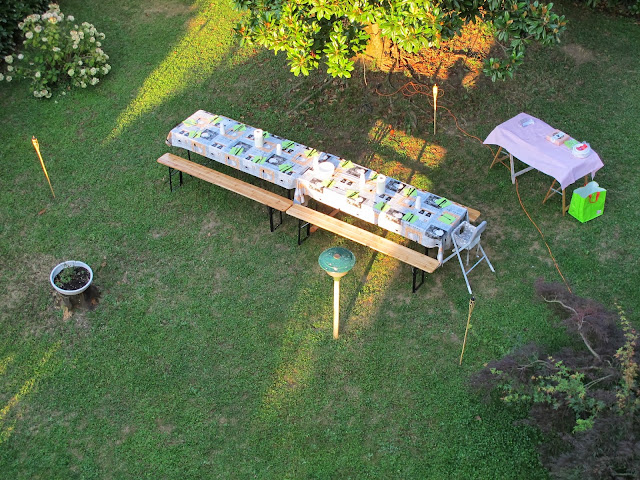
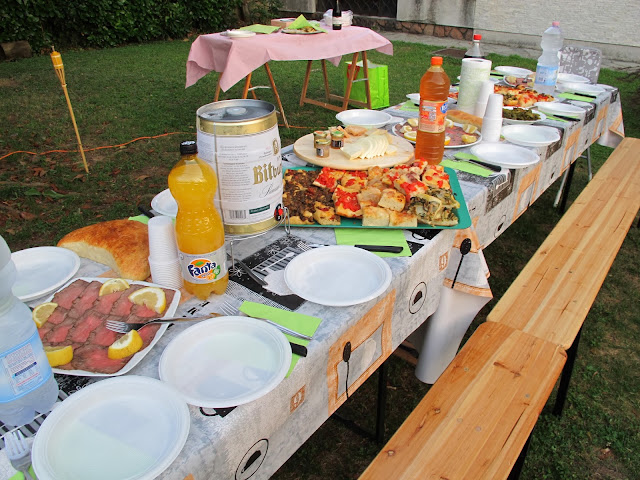
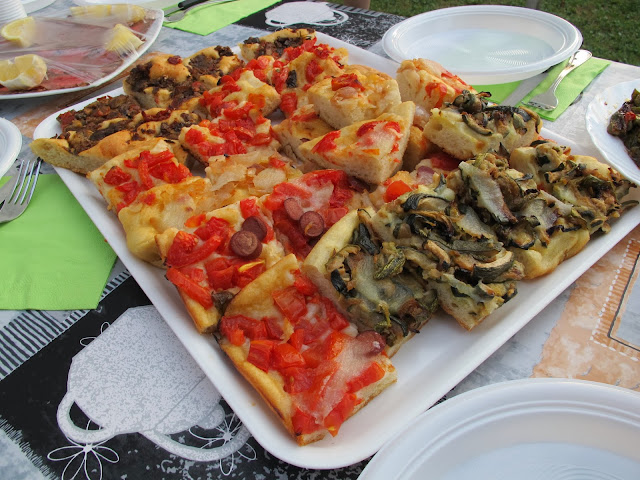
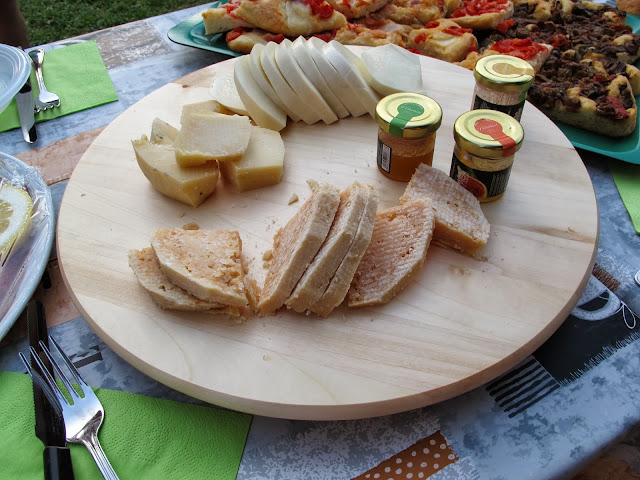
Since then, we’ve had many more outdoor parties – including a pizza party, where all the Napolitane baked their own bread and made pizza from scratch.
Setting the table
Now the food has arrived
All different types of homemade pizza
Various types of homemade cheeses from Napoli
Stefano got a mini-keg of beer
Aurelia teasing us for taking so many photos
The food was delicious
Cousins and nieces and nephews. Neighbors and friends – the best kind of pizza party
This seemed to be the easiest way to transport all the grappa
When my parents were here visiting, we decided it was another good time for a BBQ.
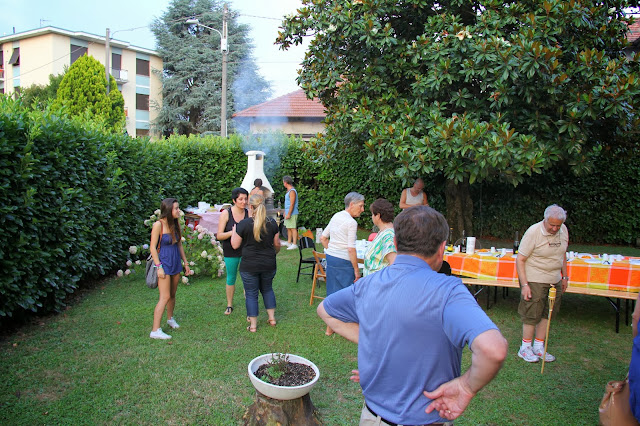
Everyone gathers around, doing various tasks
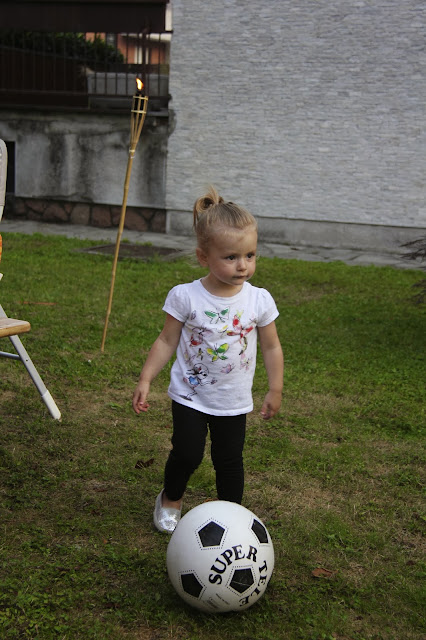
Julia plays a little calico (soccer)
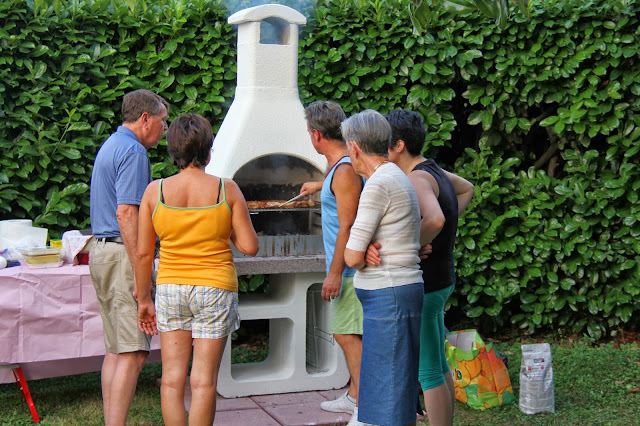
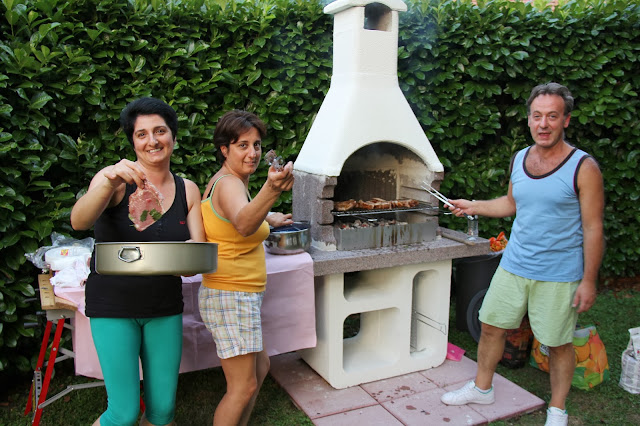
Stefano gets a few lookey-loo’s while grilling (including my dad, who couldn’t understand a word being said)
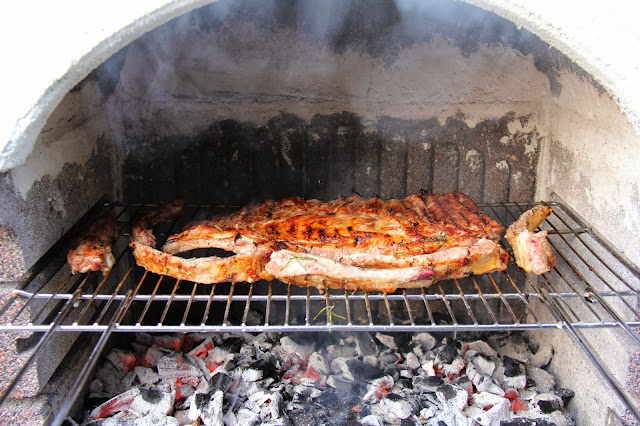
Beef ribs get a nice sear while the charcoals glow beautifully
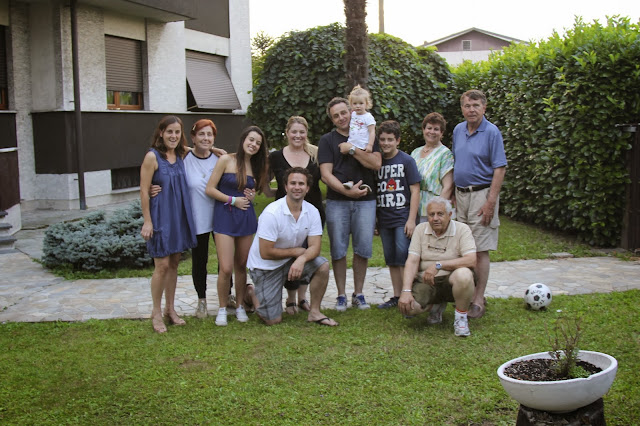
Jen’s cousins, Franco and Claudia and my parents
Aurelia telling me “smettere” (stop) with the photos. Her sister Angelina shows me the meat
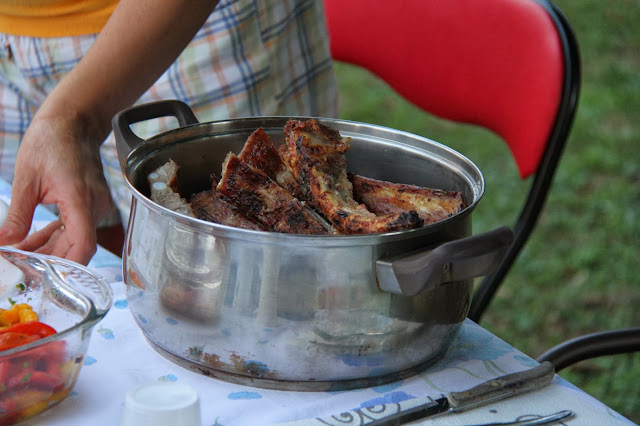
The pot kept getting magically refilled with grilled meat before it was ever emptied
Everyone digs in
Julia was certainly no exception
Another late party
Another time, we wanted to bring all the family together and so all of Jen’s cousins came for a festa.
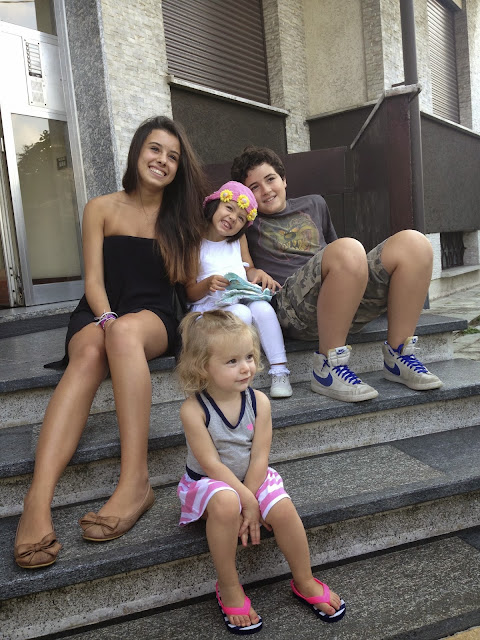
The younger generation of cousins pose together
I’ve used the grill for a simple meal for the five of us (myself, Jen and Julia along with Franco and Claudia) and not to be outdone by any Italians – I got about three times more meat than necessary.
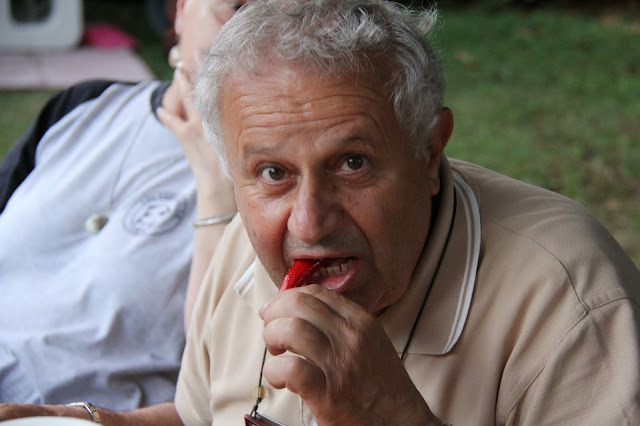
Would you eat an entire picante peperoncino – Franco shows us how it’s done
All told, we’ve had a wonderful grilling season and while I’m anxious for the fall and then winter – I’m already looking forward to the time when I can dust off the ol’ tongs and have another Italian-style BBQ!
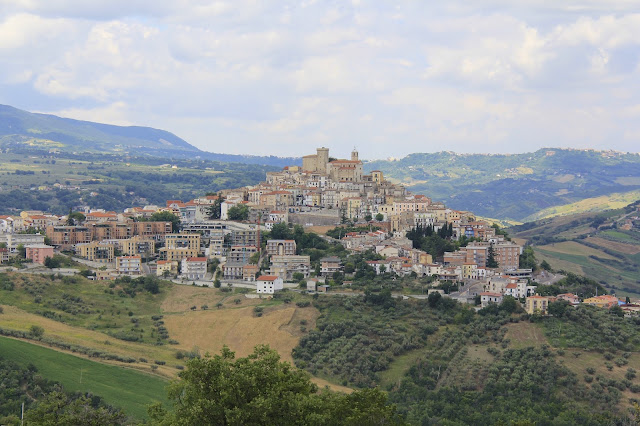
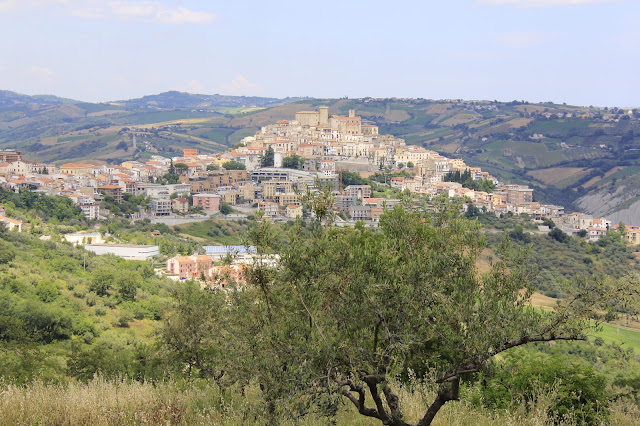
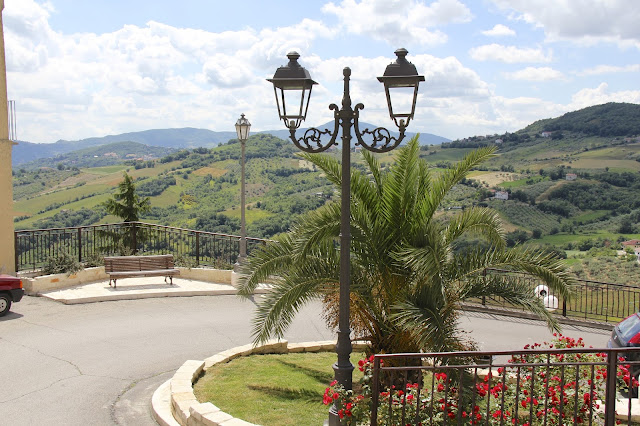
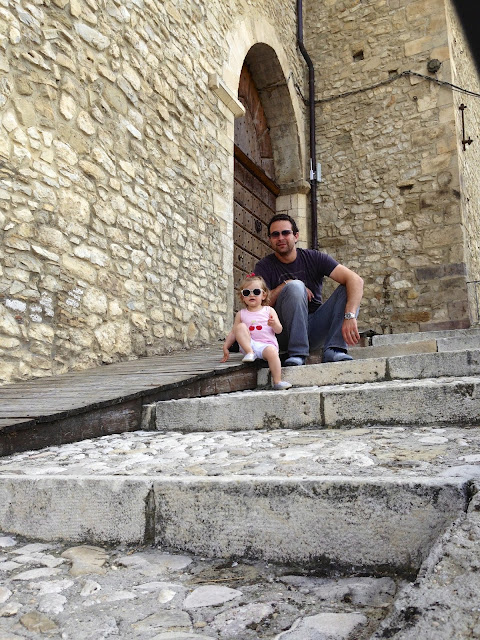
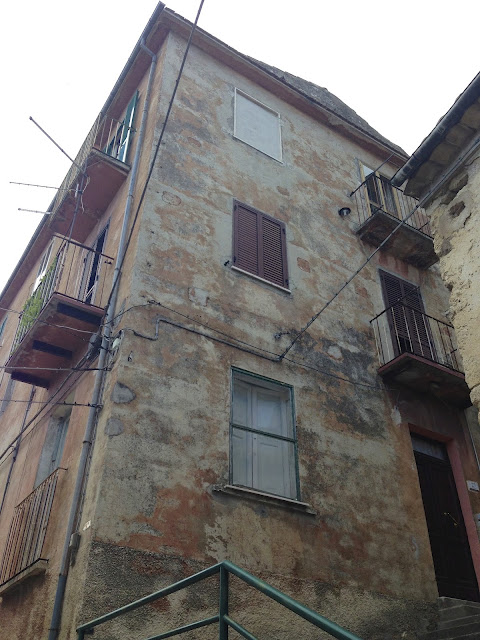
Recently, Jen’s family came to visit (HERE) and since we’re not the type of family that does well sitting still, we planned a couple trips within their trip. One of these week-long sojourns was an impromptu visit to Civitella in the Abruzzo region- Jen’s nonna’s (grandma’s) hometown. The official name of this gem of a village is actually, Civitella Messer Raimondowhich is home to less than 900 residents. Jennifer and Jessica grew up going to visit their nonna and family friends in Civatella during many of their summers abroad. Since I had never been to see such an important part of my wife’s family history – I was excited to go.
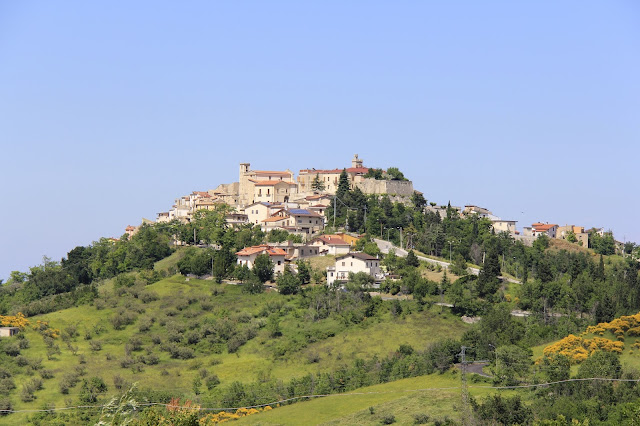
Civitella Messer Raimondo – the place where it all started!
There were only four of us that made the decision to go to Civitella because Jen’s sister, Jessica had gone off for the weekend to visit a friend in London. When we made the decision to go, we realized it would be easiest to pick Jessica up at the airport in Milan and continue the remaining four hours south (already having a one hour head start). We played out a few scenario’s in our head’s where we told Jessica we were going to whisk her immediately from a fabulous weekend of high-end parties with twenty-somethings in one of the world’s most fabulous cities to a small village in a rural part of Italy with her immediate family and a baby. Putting ourselves in her single, Sex In The City mindset… I think we all realized this would be a hard adjustment of vacation speeds for her. She’d most likely want to fly in from London and come home to Como for a day or two to decompress before re-packing. At a minimum, she would want to drive home and pack for herself before turning around and heading back out (all very understandable). Of course, this would add anywhere from 3 hours driving to shortening our trip by a couple days. We were not sympathetic to her anticipated needs and so we formulated a plan. We would pick her up from the airport with the car packed and ready to go. We would simply drive south and when she eventually realized we weren’t approaching Como, we would already be two-three hours in the wrong direction. We were all on pins and needles as we picked her up. I whisked her bag out of her hands and into the fully packed trunk. We peppered her with questions about her weekend so she wouldn’t notice signs heading South as opposed to North. Jen almost blew the whole operation when she burst out laughing so hard that she cried. Luckily, she covered with some lame excuse and Jessica’s usually razor-sharp intuition was dulled from a long weekend of fun. When we were about 20 minutes away from the airport a calm washed over us all… we pulled it off! Of course, the eventual earthquake of truth wouldn’t be far off from rocking the car and crushing Jessica’s plans of a relaxing afternoon at home. After being in the car for well over an hour, her suspicions could no longer be redirected and I delivered the news to her through choked back laughter. She was less than entertained…
“Five hours in the freaking car after flying all day!”
“NO paparazzi!”
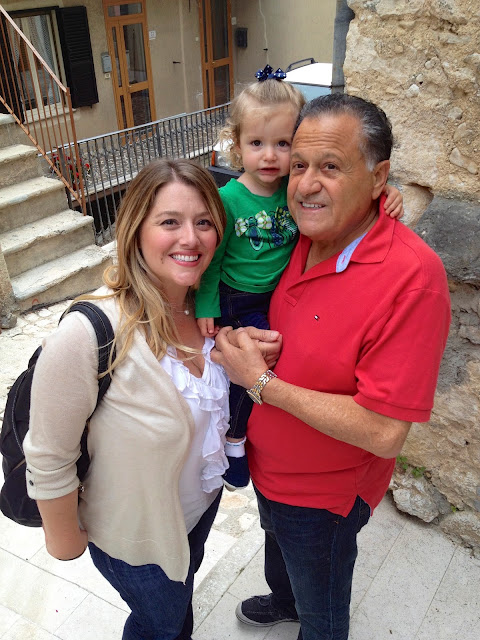
Even though my father-in-law, Dominic grew up in Africa; nearly all his Italian roots are traced back to this small village. So, it’s no surprise that so many years later he still has friends all over the region. Even though his mamma’s house was big enough to accommodate us, it was easiest and most comfortable to stay at a B&B owned by some family friends in the larger town “next door”, Fara San Martino. La Piazetta is owned and run by Pietro and his wife Antonietta – a beautiful B&B, perfect for our family. Once we got settled in, we visited a nearby town, Casoli before heading to Civitella and Jen’s nonna’s house – a home that has been in their family for at least five generations. We ran into the neighbors, Antonino (Tonino) and Maria across the “street” (really, more of a cobblestone alley) and they invited us in for a coffee. This somehow turned into a full meal with homemade salumi (various types of cured meats), fresh fruit, fried cheese and homemade wine. We were a bit full from a big lunch, but I’d like to see you try telling an Italian woman you’re not in the mood to eat! We were glad we did – it was all wonderful.
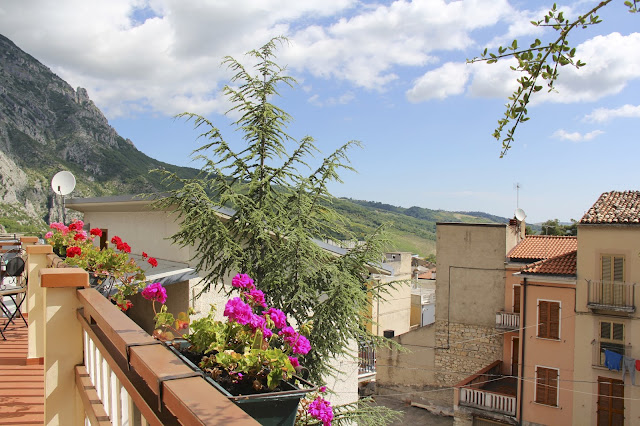
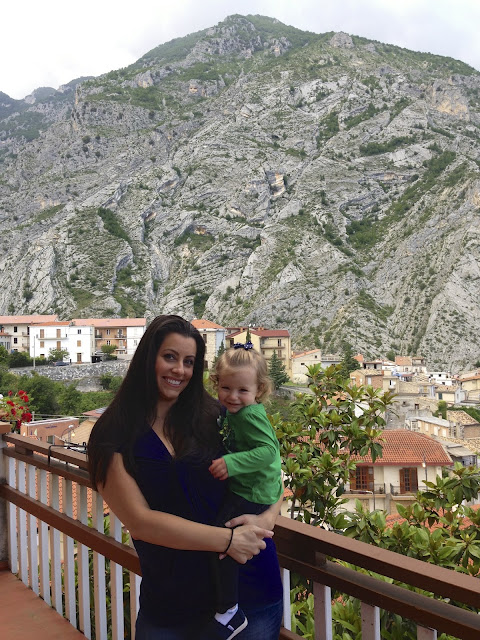
The view from Dominic and Diane’s balcony in La Piazetta
Jess and Jules at the hotel
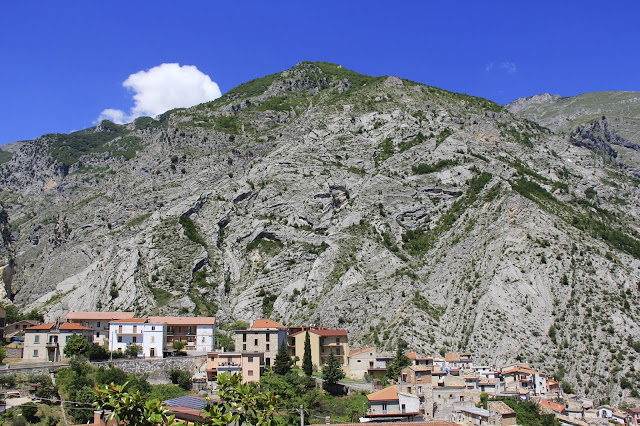
A view in Fara San Martino – you’re quite literally next to the mountain
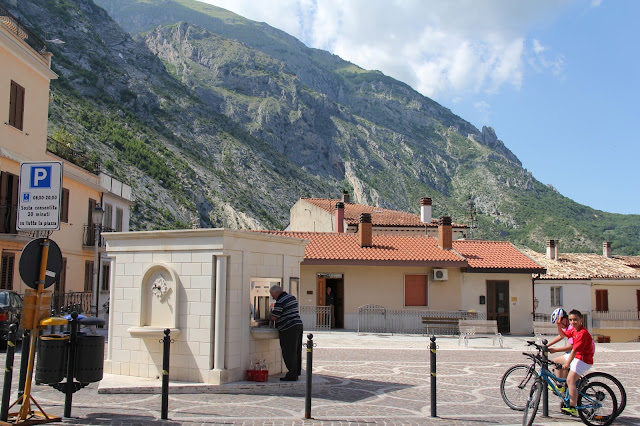
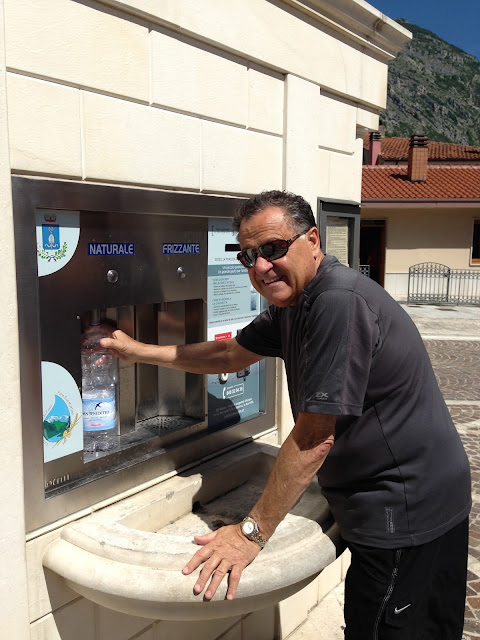
The fountain in the center of Fara San Martino, you can fill up your bottles with mountain water
Dom giving it a go – perhaps the best water we’ve ever had
Casoli from afar – where we went after breakfast the first day
Another view of Casoli
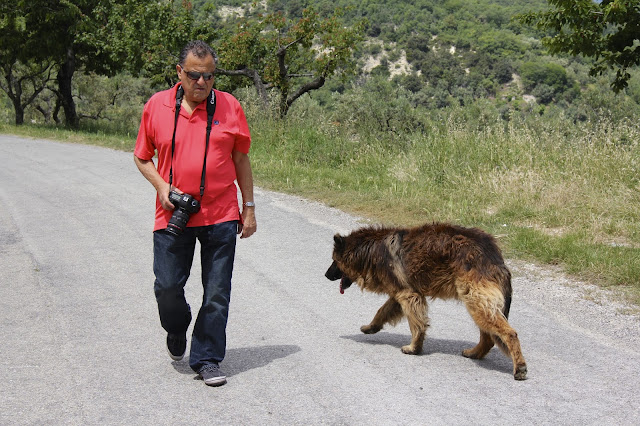
This dog came to say “hello” as we each snapped the above image – I think we can all read Dom’s mind here…
A street scene in Casoli
Me and Julia in front of the Castello Masciantonio
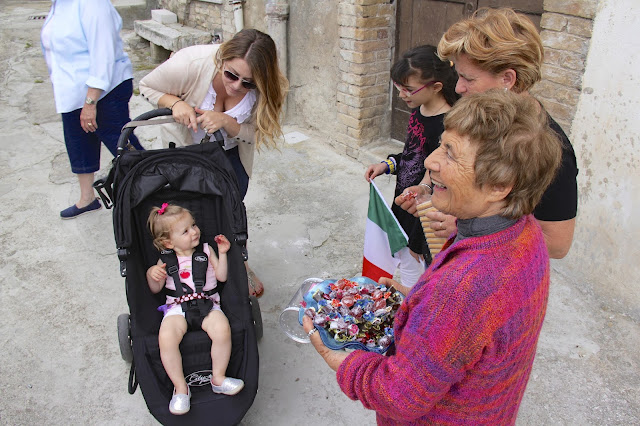
We asked these ladies for directions and they also gave Julia candy and biscotti in addition to the directions
Julia crosses the street, content after a lunch of pasta and lamb (her real shirt was covered in sauce)
Jen’s Nonna’s house
Three generations out front of mamma, nonna and bisnonna’s home
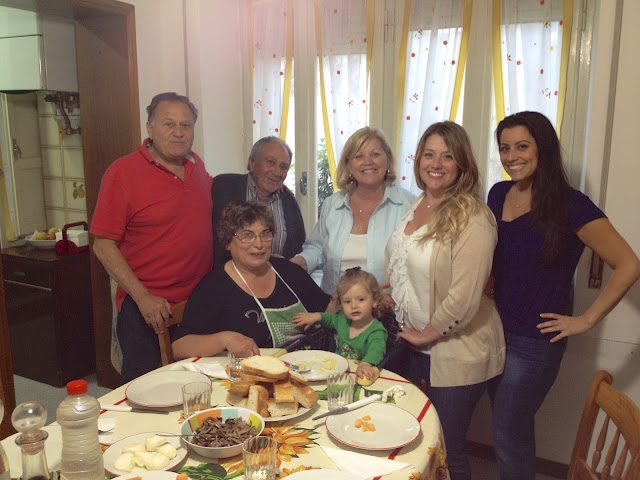
A wonderful makeshift lunch – well done when you have six surprise houseguests
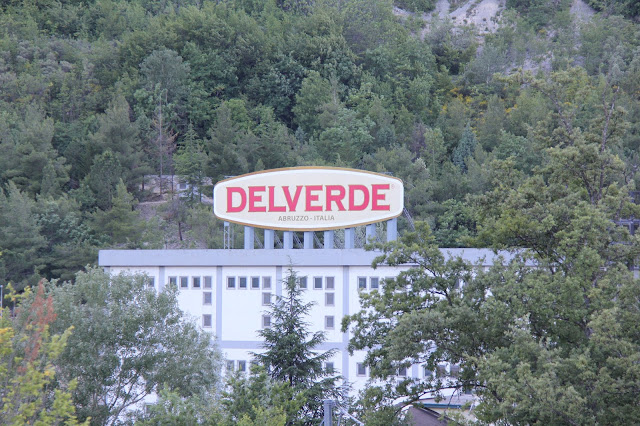
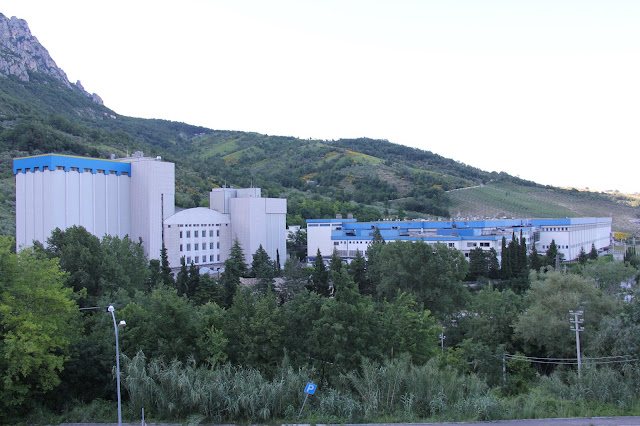
Pietro’s cousin (also named Pietro) brought Dominic into the pasta business years go (nearly two decades ago). This Pietro (the pasta Pietro, not the hotel Pietro) ran Delverde (a large high-quality pasta company) for years before branching off and starting his own gluten free pasta company, Farabella. Their family owned company now makes wonderful pasta that fits perfectly within a quickly growing segment of the market. Their factory is nestled amongst the other three companies all sharing the precious mountain water that is a critical ingredient to their pasta. Along with Farabella, DeCecco (you’ve definitely seen it in your grocery store), Delverde (you may have seen it) and Giuseppe Cocco (you probably haven’t seen it unless you go to high-end Italian specially stores) make up the four corners of this pasta-prodcuing town. I would suspect that these four companies within close proximately to each other produce a large percentage of the world’s intake of pasta – to be eclipsed only by one company, the Wal-Mart of the pasta world, Barilla located all over Italy and the world.
Delverde pasta company
DeCecco takes up the most real estate, by far
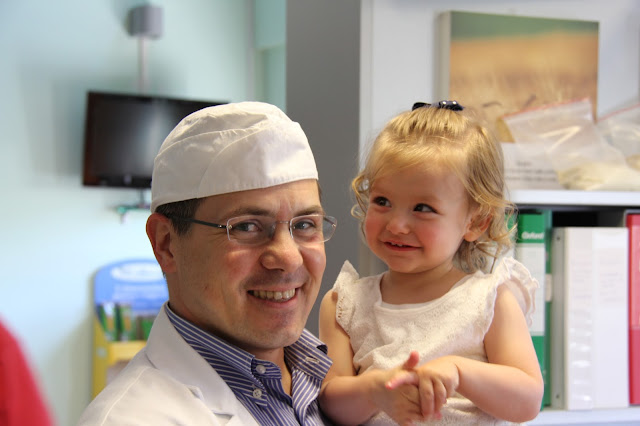
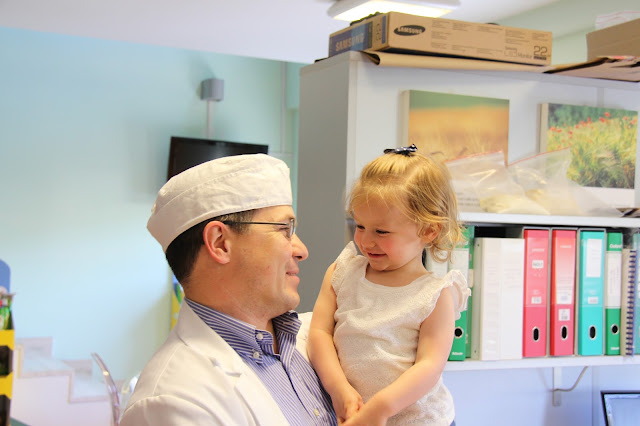
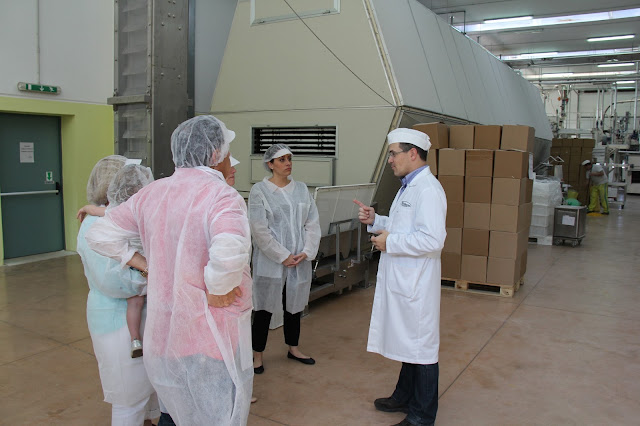
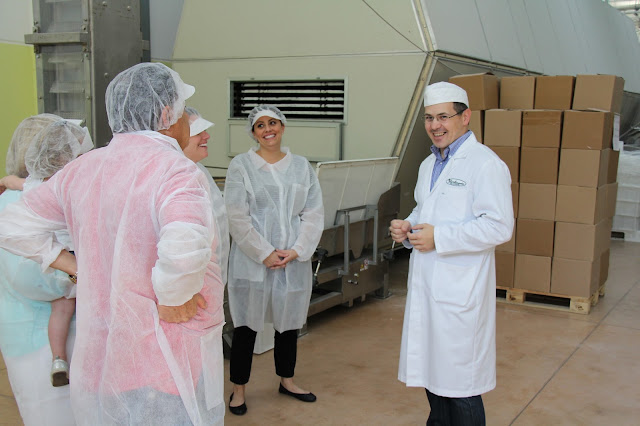
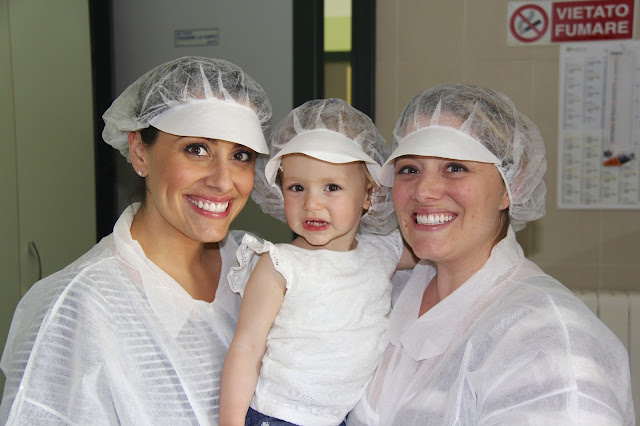
When Dominic was working for Pietro and Delverde in the 90’s, their families grew very close. In fact, Pietro sent his son, Antonio and his daughter, Marilina to live with Jen and her family at separate times. They learned perfect English and a perhaps even a few of our American habits. Antonio was so excited to see us in his hometown, he happily adopted the role as our tour guide. He started showing us all over Abruzzo, starting with a tour of their amazing factory.
Is Julia in love with Antonio or his hat?
Oh, DEFINITELY Antonio!
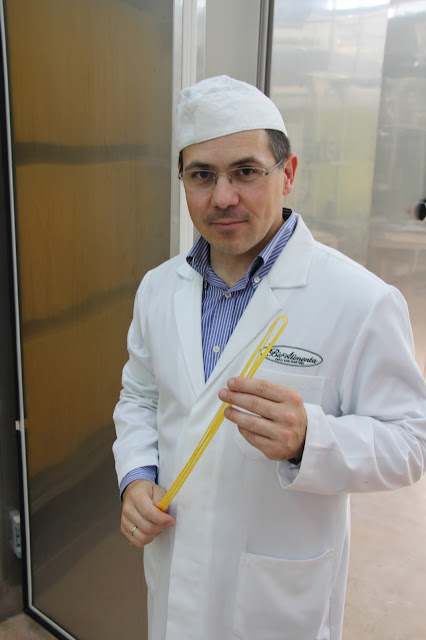
Antonio starts the tour
I embarrassed him, taking pictures of his tour. I assure you, he was excellent under pressure
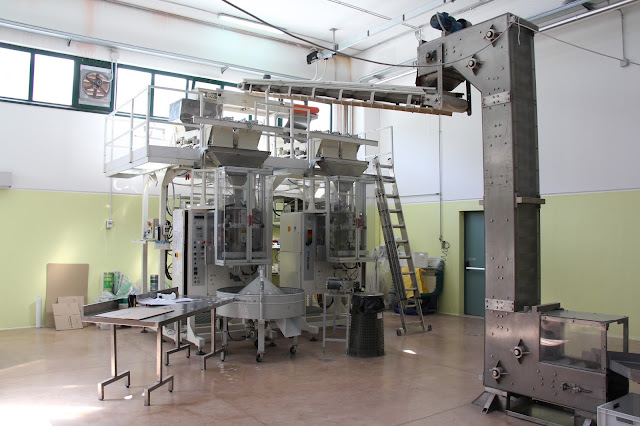
Some of the unbelievably clean and technologically advanced machinery
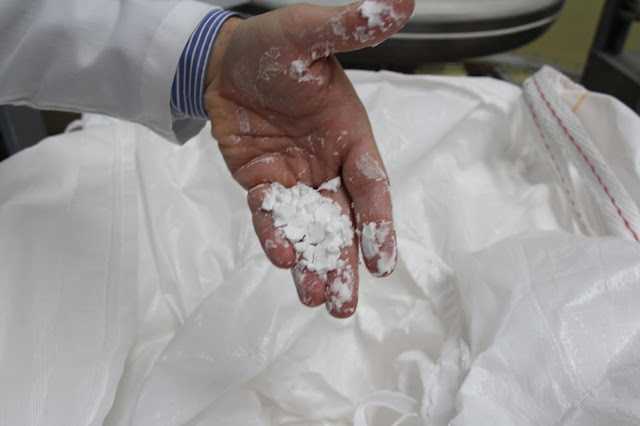
Antonio shows us some of their flower and explains it’s properties
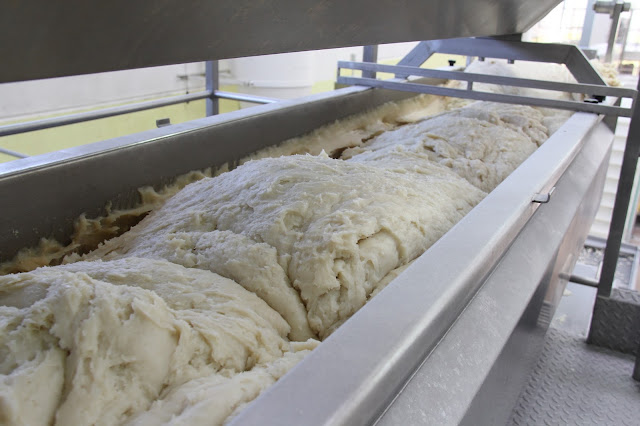
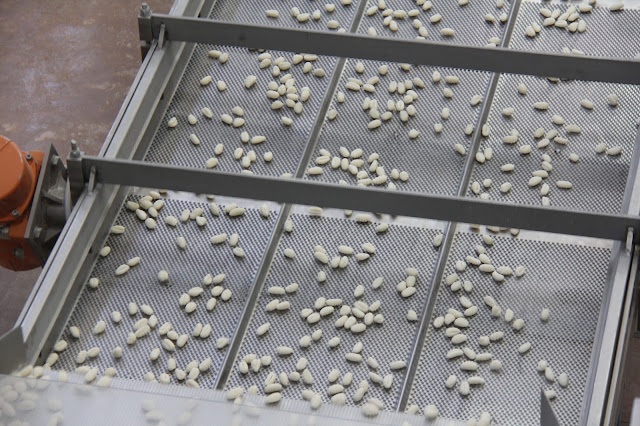
They were making gnocchi that day. The mix goes through a long road on it’s way to become…
Gnocchi!
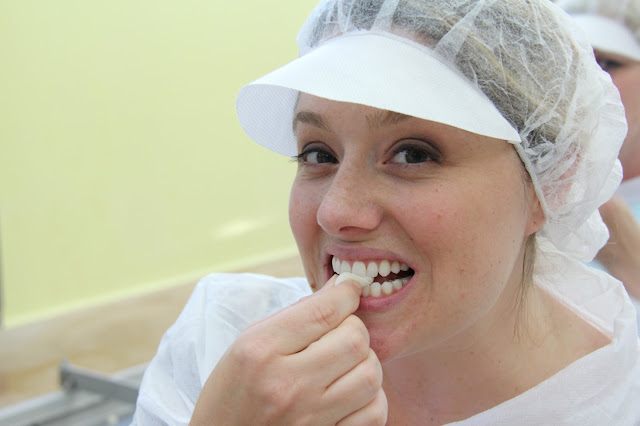
We could eat the gnocchi uncooked, right off the line. It was still warm from the dough mixing
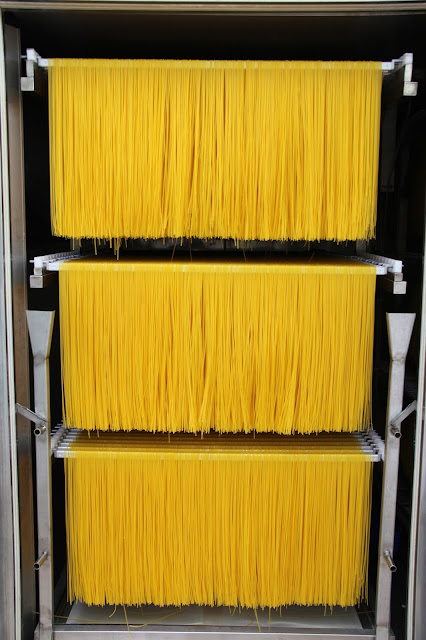
Some spaghetti set aside to dry and properly form
Antonio, didn’t you learn not to play with your food?!
What a great tour for the girls
After the pasta tour we went to a nearby town, Guardiagrele for some sightseeing and shopping. Later that evening, we met Antonio’s parents for dinner at one of their favorite restaurants in that area, Villa Maiella. We had no idea what we were in for! I think there something like 10 courses (I missed photographing a couple) and each one was better than the last! The restaurant is mentioned in the Michelin Guide for Italy and Mario Batali praises it as one of his favorites in Abruzzo (HERE). It was nearly midnight before the bountiful cornucopia of food and wine stopped flowing.
Dusk sets in Guardiagrele
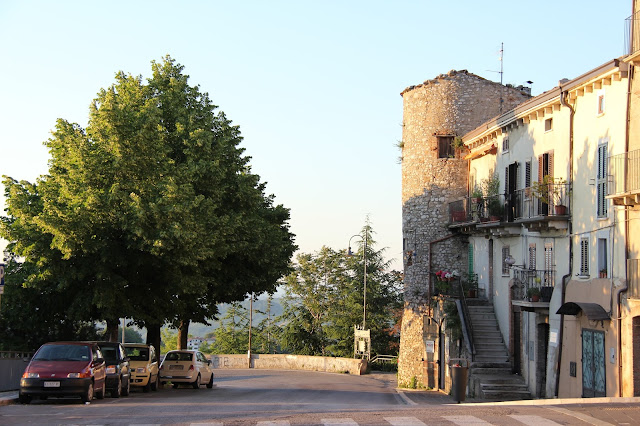
Street scene
We went to a park
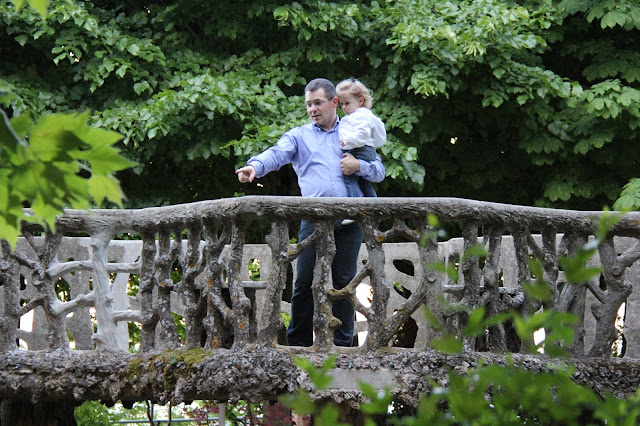
Julia loved this particular bridge
Julia reaching for something she shouldn’t… we’ve never seen that before!
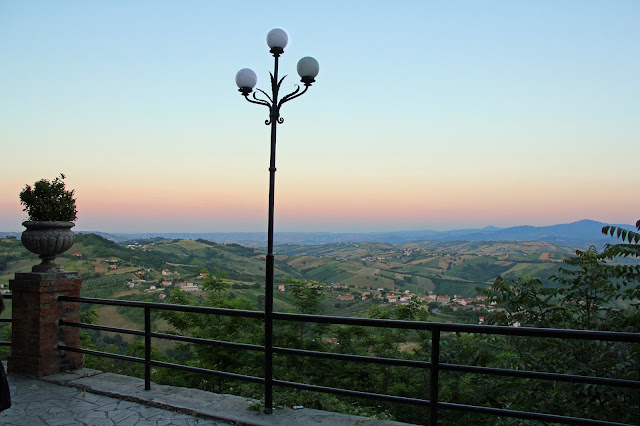
View from Guardiagrele
Dominic, Diane, Rosanna & Pietro
“Cin cin!”
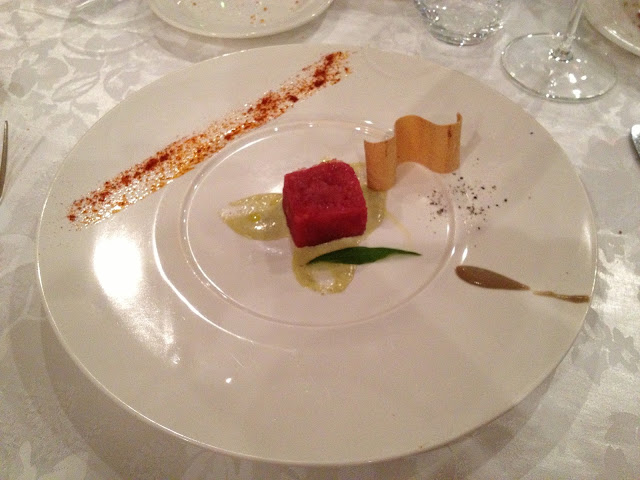
Bistecca alla tartara (steak tartare)
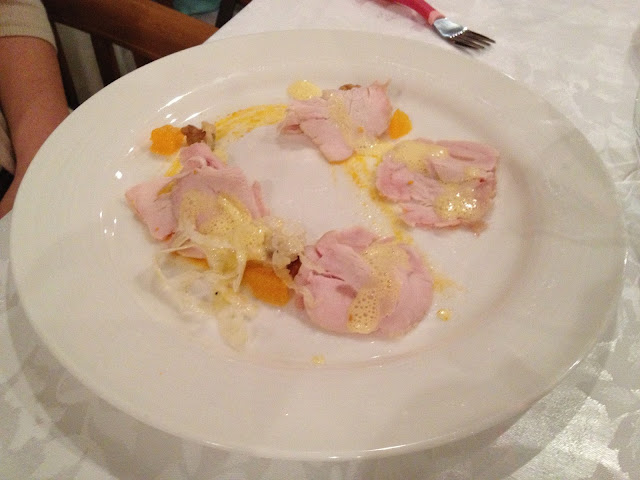
Bianco di tacchino con finocchi, noci e arancia (White turkey with fennel, orange and nuts)
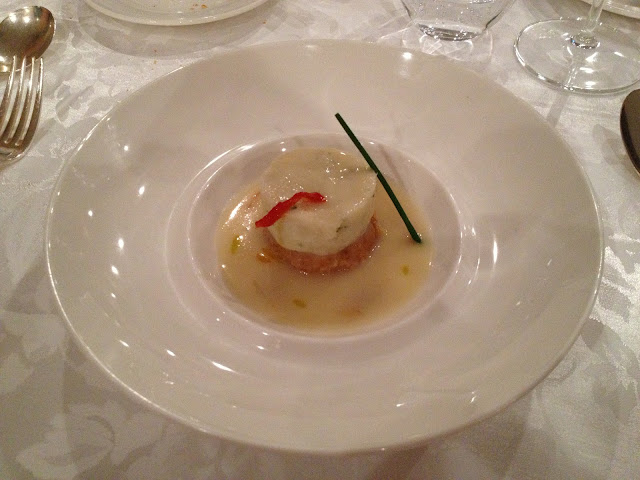
Riso, patate e baccala (rice, potatoes and salt cod)
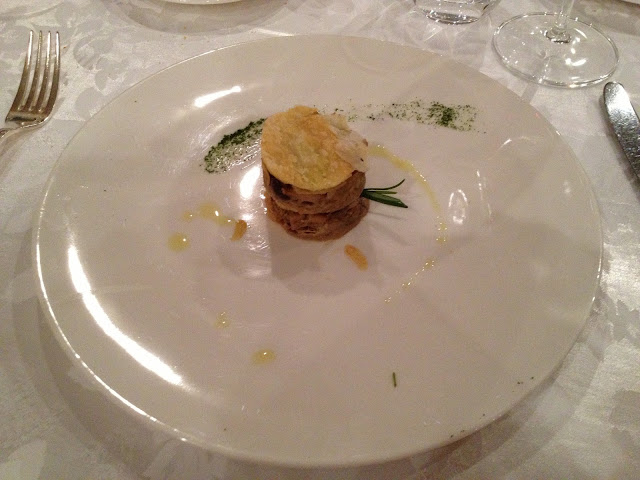
Millefoglie ai porcini (puff pastry with mushrooms)
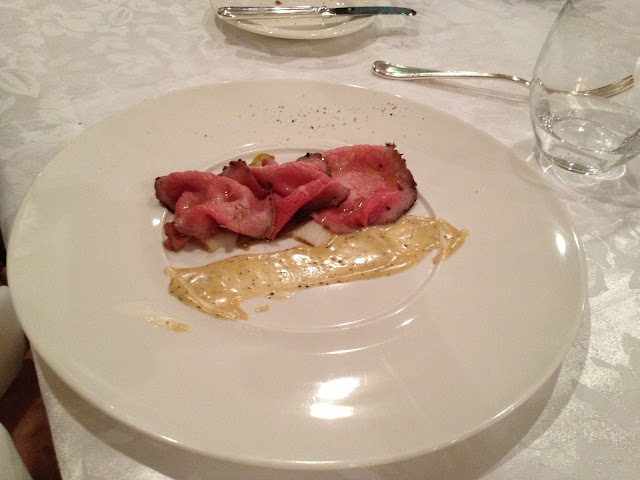
Manzo leggermente scottato (lightly seared beef)
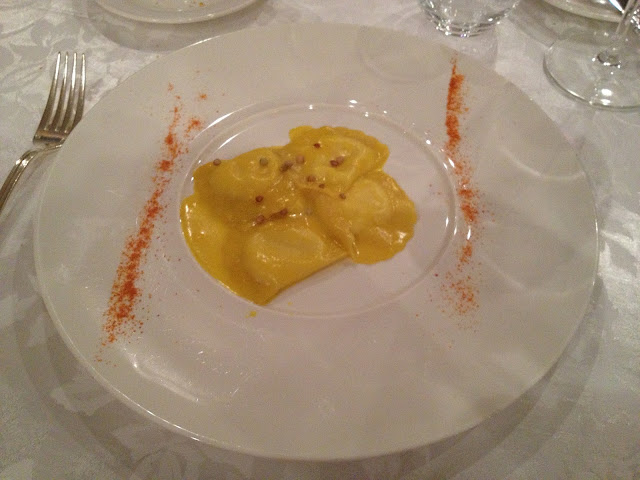
Raviolo di burrata allo zafferano (homemade burrata ravioli with saffron)
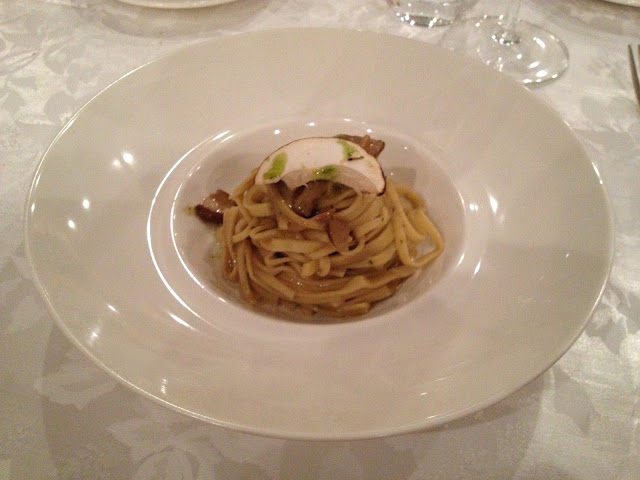
Tagliatelle di semola grezza con porcini (homemade tagliatelle pasta with raw porcini mushrooms)
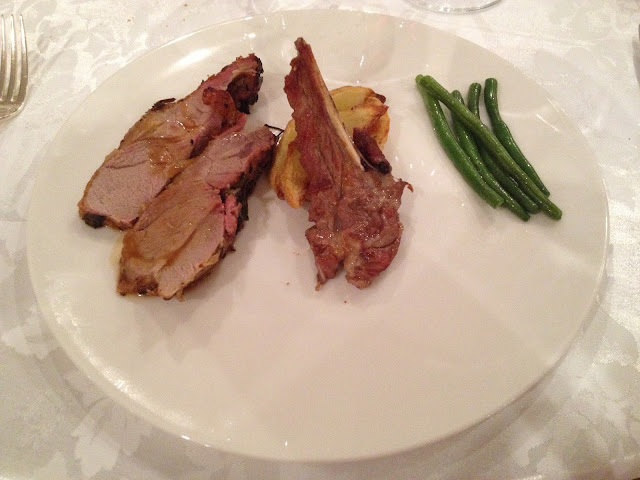
L’agnello: al ginepro e alla brace (lamb prepared two ways, with juniper and grilled)
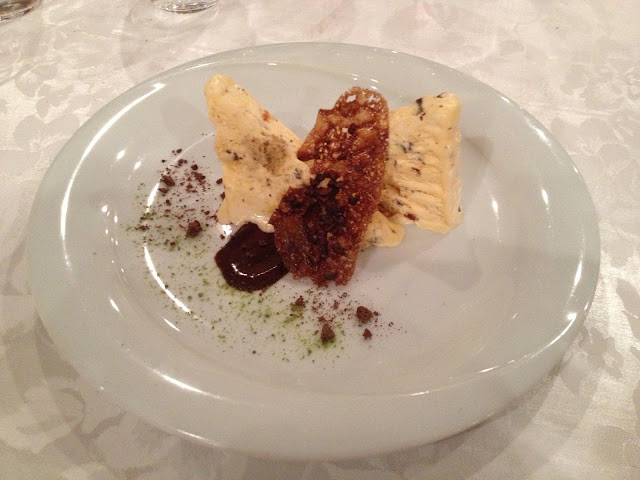
Semifreddo al parrozzo (homemade parfait)
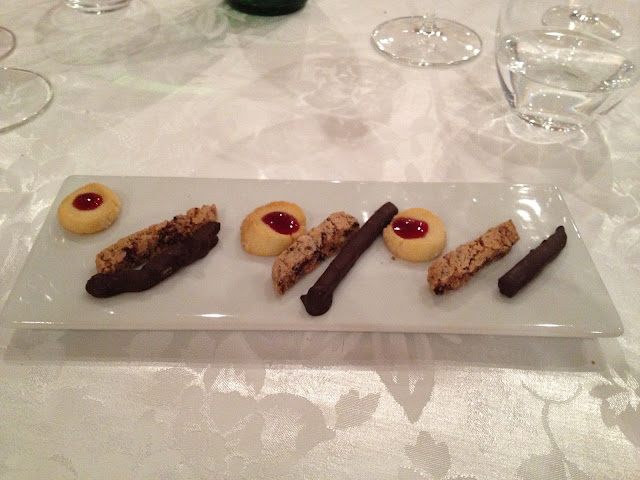
Various biscotti and other desserts served with the espresso
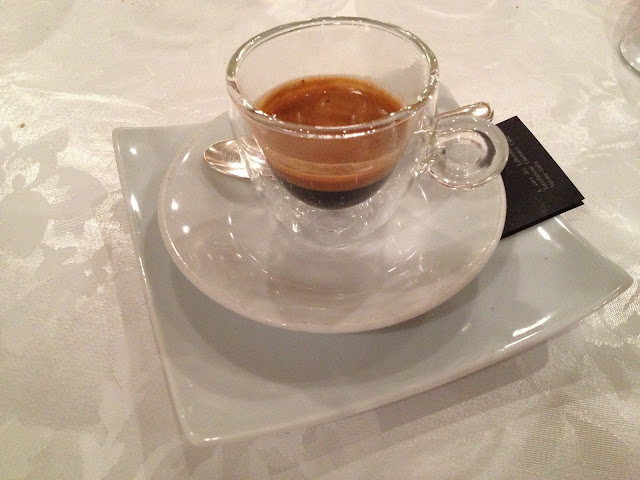
Of course we needed our cafe…
…then our grappa!
The next day, Antonio took us to his home in the beautiful beach town of Pescara (about 45 minutes away).
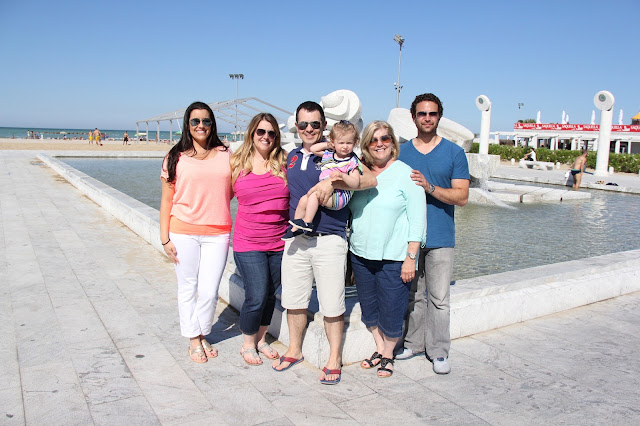
Group shot in Pescara
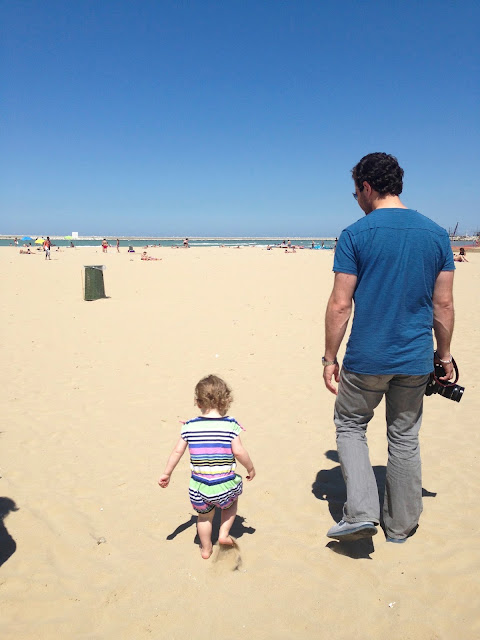
Spending time on the beach with dad
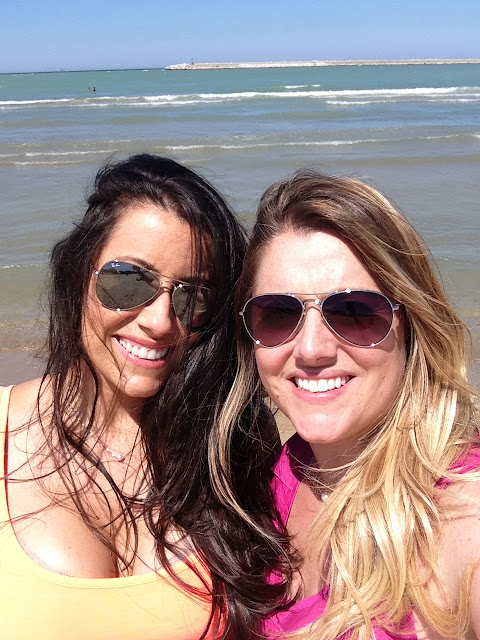
Sisters in the sun
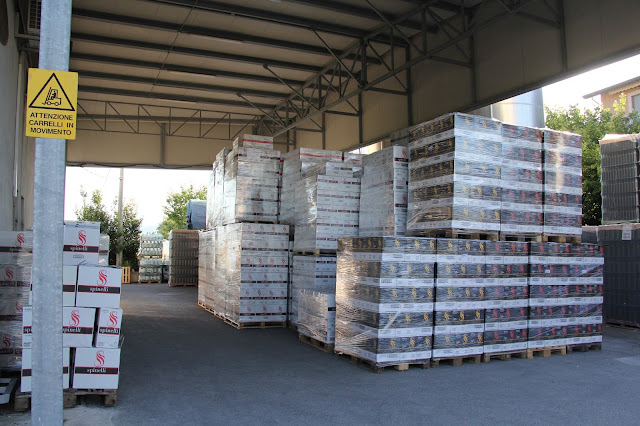
After seeing Antonio’s home and spending a little time on the beach, he took us to a friend’s winery, Cantine Spinelli. Anotnio’s friend and owner, Carlo toured us through the existing facilities as well as through the impressive expanded facilities, currently under construction. I was awe-struck by the scale of it all – they produce wine that is shipped all over the world and they are continuing to grow. At the end of the tour, he presented us a gift of many different bottles of his wine, including several bottles of Montepulciano d’Abruzzo – my favorite wine produced in this region of Italy.
Spinelli wines
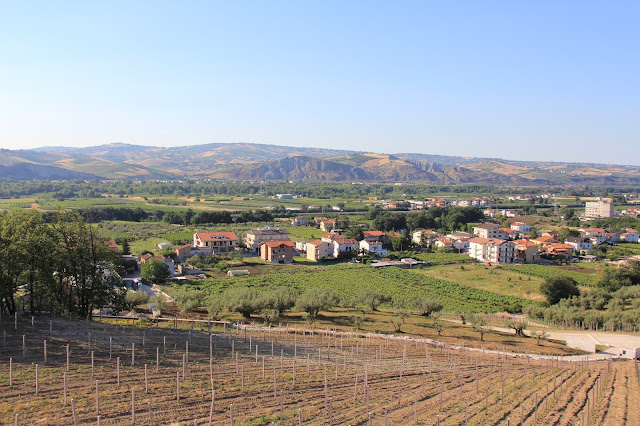
View from the winery
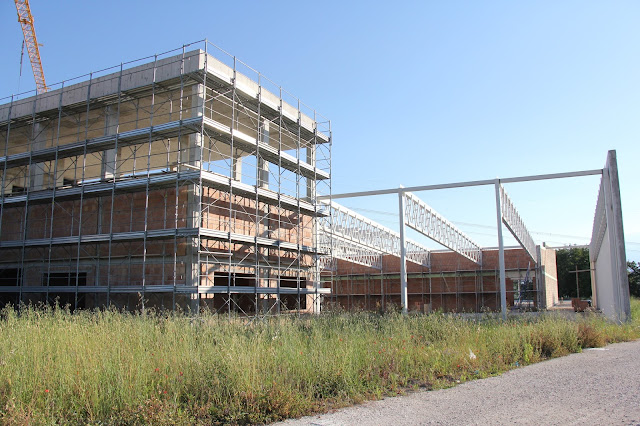
Impressive new facility under construction
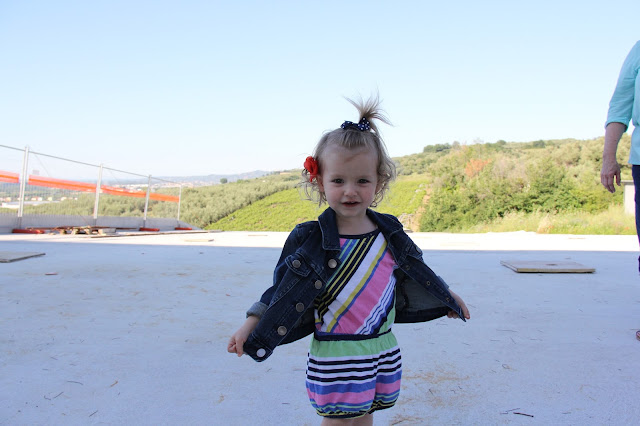
Julia on the roof of the new building
Wine ready to ship
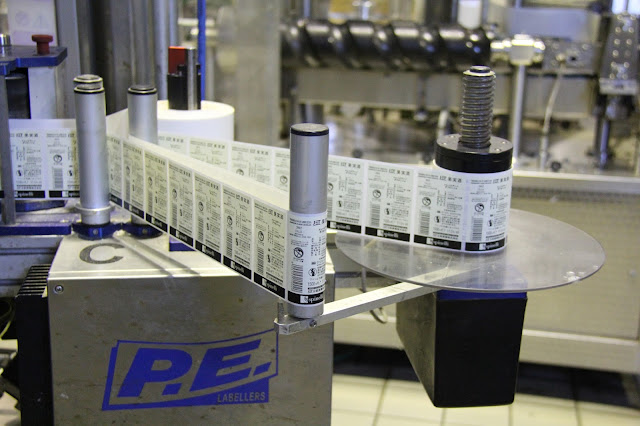
They ship all over the world – these labels were in Chinese for their distribution over there
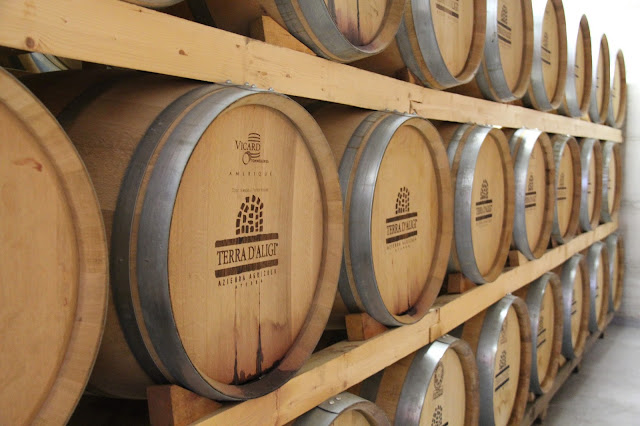
Inside the private cantina of some of the finer vintages
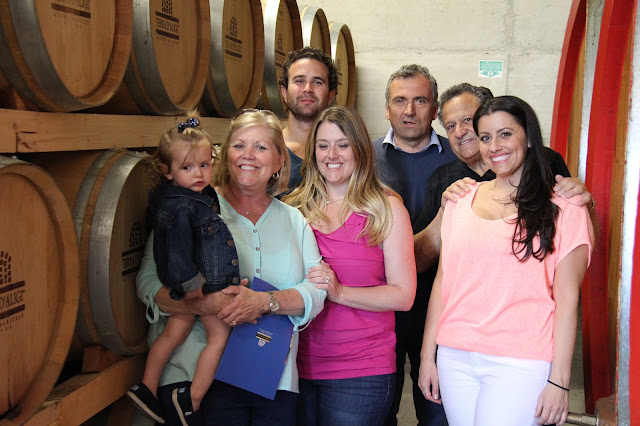
Everyone with Carlo
After being such a good tour guide, Antonio did have to get some actual work done – so we temporarily relieved him of his duties and made our own way to the beach for a day. We had lunch at the same beach-pizza place Antonio showed us the day before and spent some fun in the sun.
“I’m heeeere… let’s get this party started!”
“This sand needs to be moved from here to there, stat!”
“I’ve gotta take a break… have you seen my milky colored skin?”
“Our” new pizza place that Antonio had showed us the day before
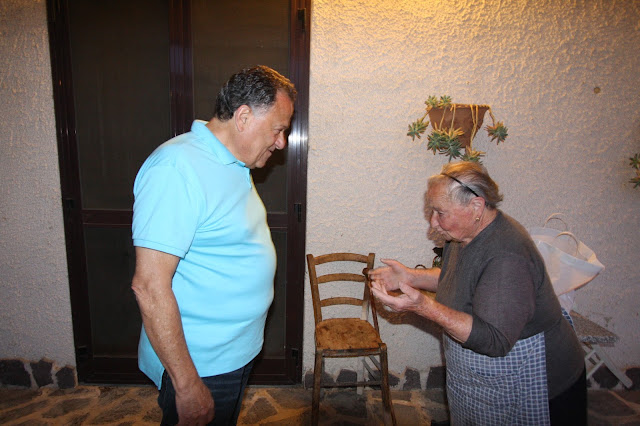
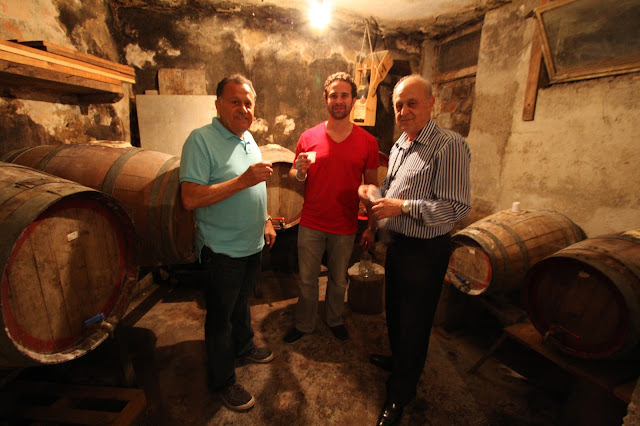
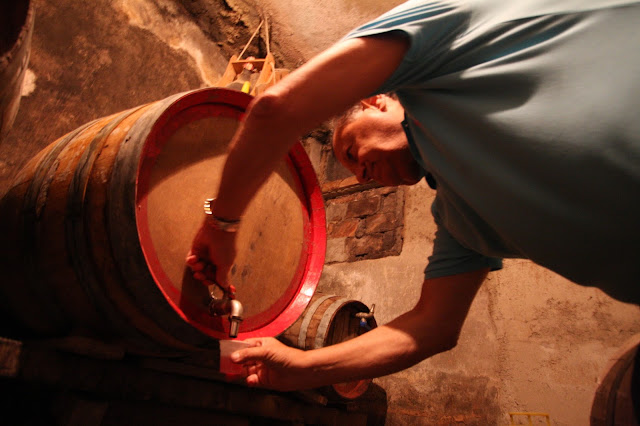
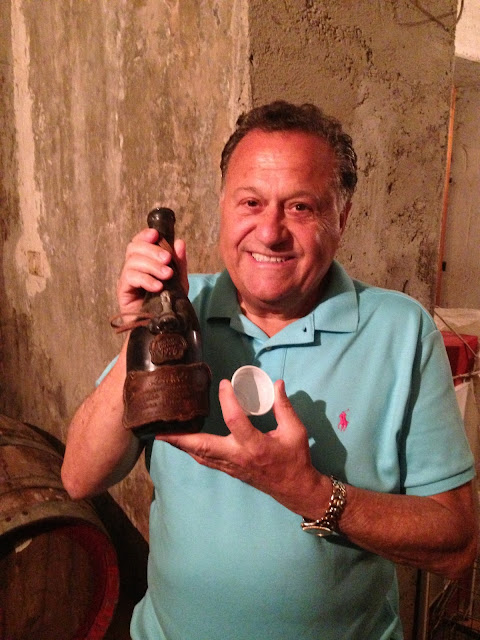
At the end of the day, we went to Pietro and Rosanna’s home (Antonio’s parents) and had an exceptional dinner cooked by Rosanna. Pietro took Dominic and me into his private cantina (wine cellar), where he makes his own wine. He let us try all the various vintages and allowed both Dominic and I to each pick a wine to accompany dinner. Like so many other things with us, this became a small competition – each of us willing the group to drink the wine we selected (if memory serves, my decanter was emptied first). Pietro presented Dominic with a 1974 Barolo, a generous and exceptional gift.
The gang’s all here (at Pietro and Rosanna’s)
They had some fun playground equipment that Julia could’t get enough of
“Guarda me!”
Jen caught us taking in the incredible view from their balcony
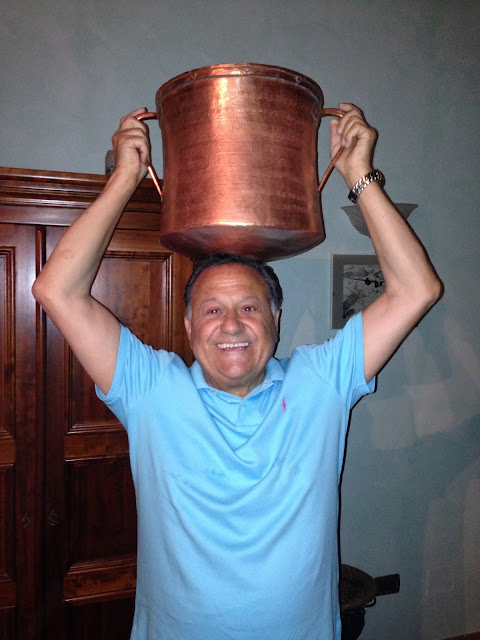
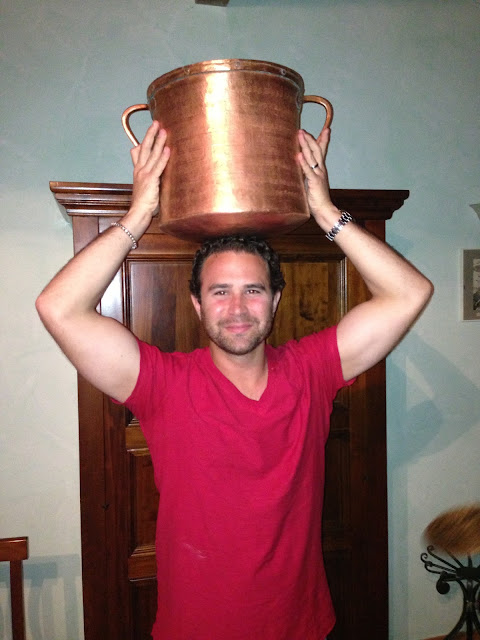
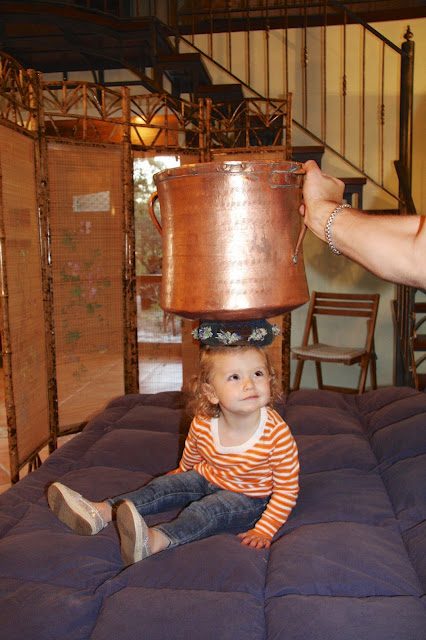
They had a traditional copper pot that was used hundreds of years ago to transport water
It wasn’t so easy to balance without hands
“It’s not so hard, see I can do it!”
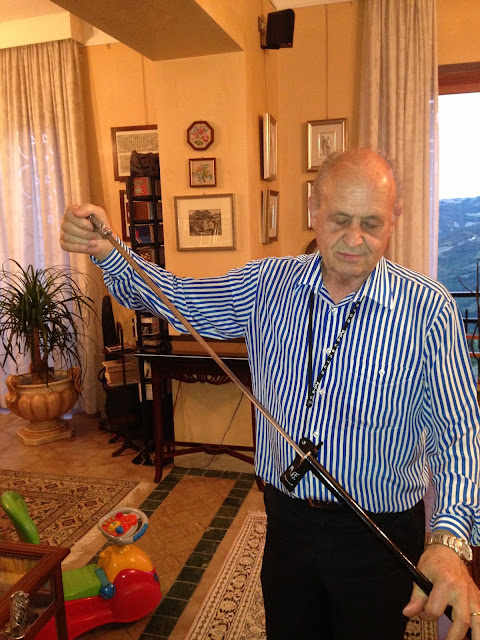
Pietro shows me one of his prized cane… with a sharp surprise inside (a long blade)
Antonio’s grandmother, fresh from working in the yard and telling Dominic that she remembered him as a boy
Inside Pietro’s private cantina
Dominic enjoyed his free samples
Dom’s wonderful new gift
A beautiful table set by Rosanna
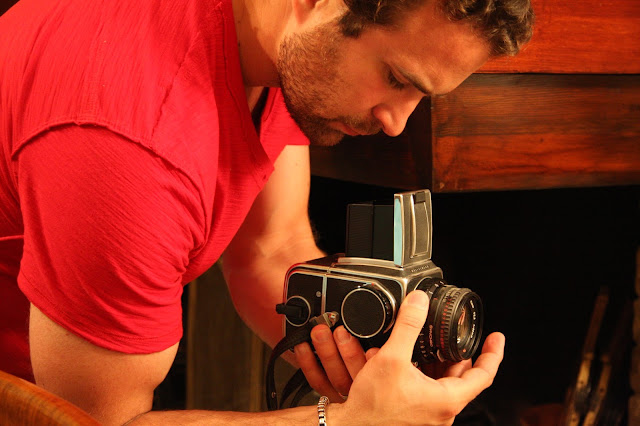
Pietro had an amazing old Leica SLR camera Antonio brought out to show us
A long a fun-filled week had past. We needed to get back to Como because we had an important birthday party to plan… Julia’s second birthday party!
Jen, Julia and I spent a few days exploring France – from the French Riviera (blog post HERE) to Côtes du Rhône (first blog post HERE). I knew that the dining experience would be different than what we’ve grown accustomed to while living in Italy, but I think I underestimated just how different it would be.
I’ll point out a couple of the noticeable differences. If you’ve been reading this blog, you’ll know that I have made many references to pranzo, or lunch. While the literal definition is simply, lunch – it should be modified to be more along the lines of, large meal in which copious amounts of pasta are finished with meats and salads and where the act of gathering is as important as the meal. Wine and grappa are a must. Since lunch is usually the “big deal”, that means we partake in a very light dinner. Whereas in France, dinner was the star meal of the day. Although, many of our days in France we also had a big lunch, and so our stomachs questioned our brains when we sat down to a second coursed-out meal at dinner time.
Furthermore, the food itself is different in two distinct ways. It also happens to be similar in two ways. The differences – the types of food and the preparation. The food served in France is not the same as the food in Italy. Cassoulet as opposed to pasta. Duck and pigeon as opposed to veal and pork. Foie gras as opposed to cured meats. Further, the preparation is different. Italians cook with fewer ingredients and prefer simple, fresh cooking – a style I would classify as rusitco. The French have a more refined style of cooking whereupon layers of flavor are built with many different ingredients and multiple sauces are used to style and accompany the dish. The presentation itself is much more polished, even at the most simple of places. The similarities – they both use the freshest of ingredients, usually sourced locally at markets and they are both delicious in their own unique way.
There are subtle differences in even the small things. The bread and the cheese are different. The wine is different. The pastry is different. However, one thing remained consistent as we crossed the border into France and then back again. We still remained within the cradle of food’s most wholesome birthplace – and the food in France was wonderful.
It is for this reason that I decided to feature a blog post dedicated to some of the meals we enjoyed while we were in France. I’ve done a few “food posts” about dining experiences in Italy – so now it’s time to widen the circle. Please excuse some of the photos – iPhone’s were used at times. I only feel comfortable brandishing my large Canon camera in certain situations.
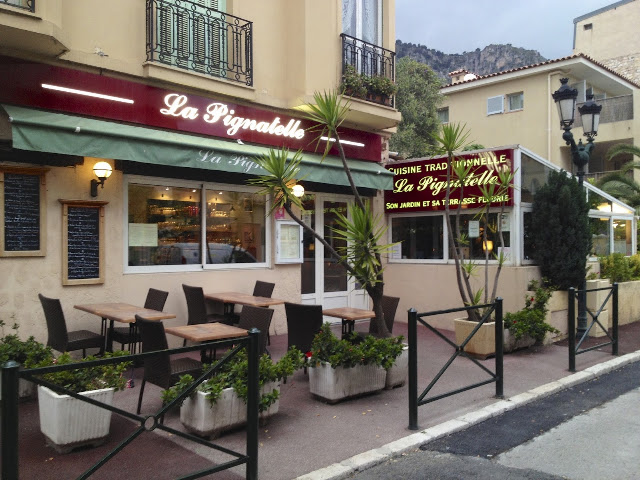
In Beaulieu-Sur-Mer, we found La Pignatelle, a charming restaurant that presents dishes in the Provençale style. We had lost the benefit of our cell phone’s internet (in a different country – roaming charges apply) and so we couldn’t “google” where to eat. We did it the old fashioned way – walking around, reading menu’s and assessing by looks. We lucked out, and had a wonderful meal. Jen ordered only an entrée, while I opted for the 3-course tasting menu with the understanding that I would be sharing some of my dessert! The owner, Christophe was a saint and patiently explained each dish’s ingredients and preparation. My favorite was when he got to the dessert we ultimately selected and his description was (read this to yourself in a French accent), “oohh… that one is too hard. Trust me – it is delicious, just order it”.
La Pignatelle – turned out that it has received 4.5 / 5 on Trip Advisor – worthy of the rating
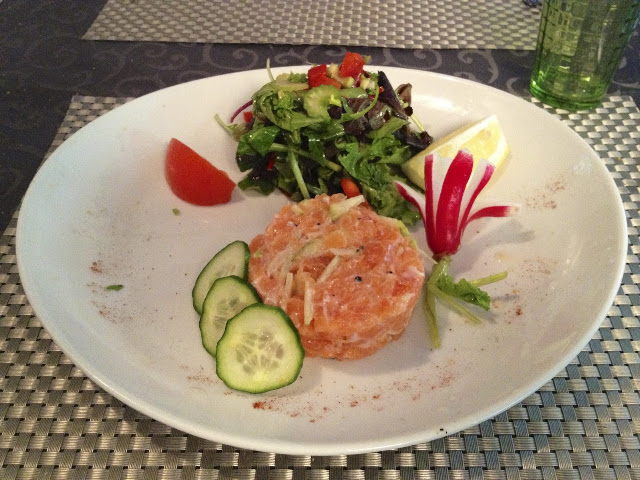
Tartare de Saumon frais et pomme Granny-Smith (Fresh salmon tartare with Granny-Smith).
The pairing with the Granny-Smith was divine, even though I was skeptical
Cuisse de poularde au pot, riz basmati (chicken leg cooked in a pot with basmati rice)
I substituted the basmati rice for pommes de terre rôties (roasted potatoes)
Aïoli Provençal (cabillaud) et son court-bouillon de légumes frais
(Cod prepared Provencal-style with vegetables cooked in the fish broth)
Jen’s Aïoli – more mayonnaise than we’re accustomed to
Paris Brest – the dish he couldn’t describe, but well worth eating!
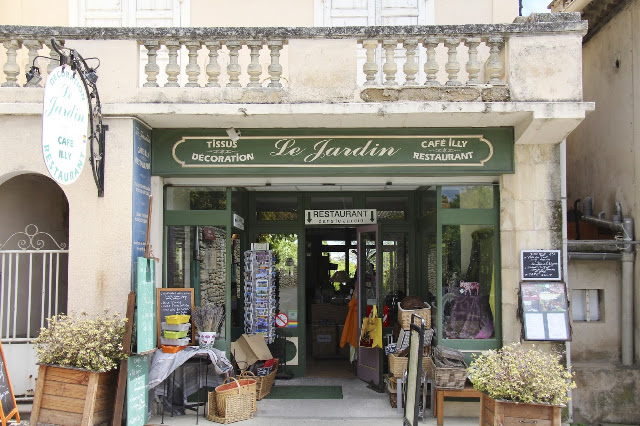
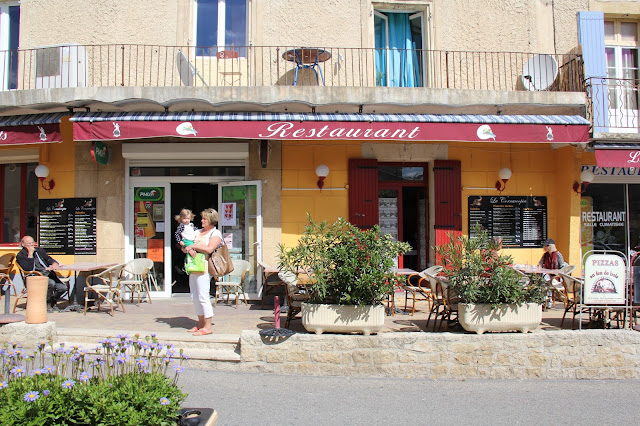
The next day, we met our friends Michel and Shirley at their home in Sablet. They easily slipped into the role of Guide de tous Cuisine Française (Guide of all French Cuisine) by taking us to some wonderful restaurants. On our first day in Côtes du Rhône, we enjoyed a casual outdoor lunch at Le Jardin.
Le Jardin (The Garden)
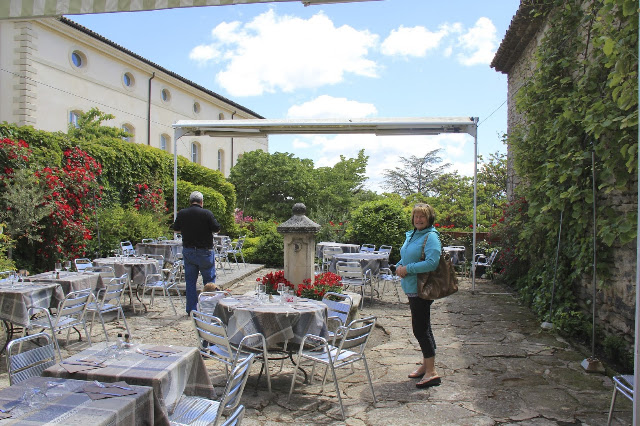
The garden in the back – simply a beautiful setting for lunch
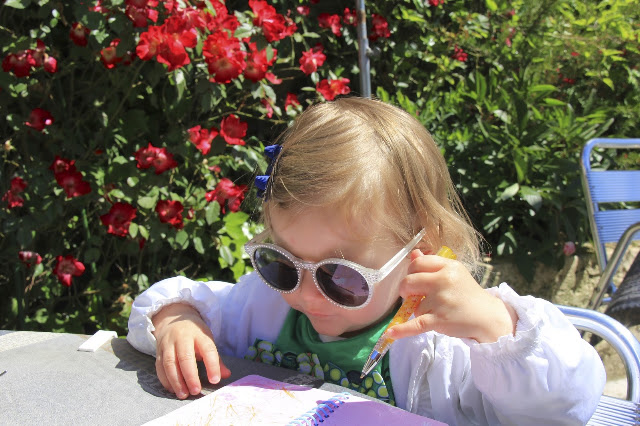
Julia used the time waiting for lunch to create her best Chagall
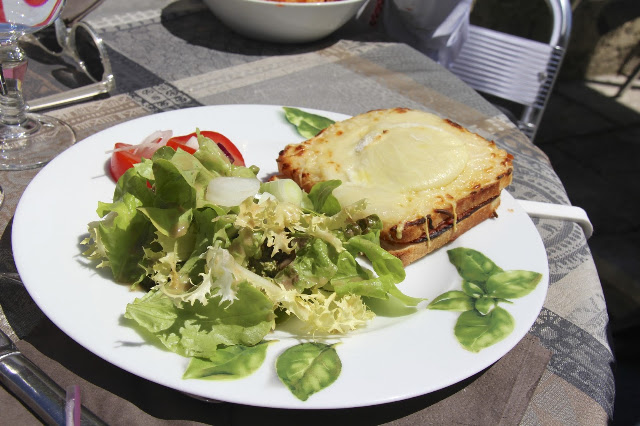
Jen ordered a croque-monsieur with salade fraîche (fresh salad)
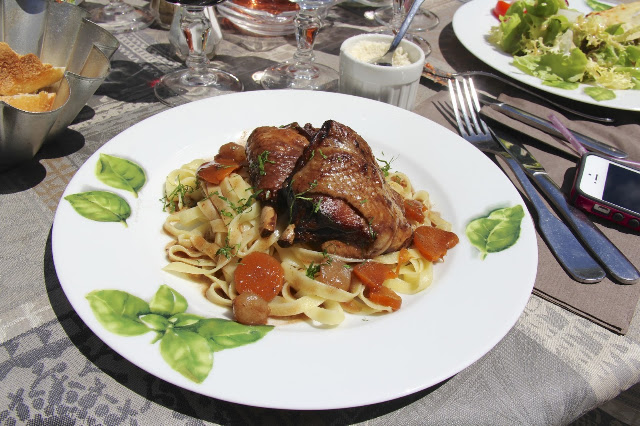
I had seared duck breast over a bed of pasta
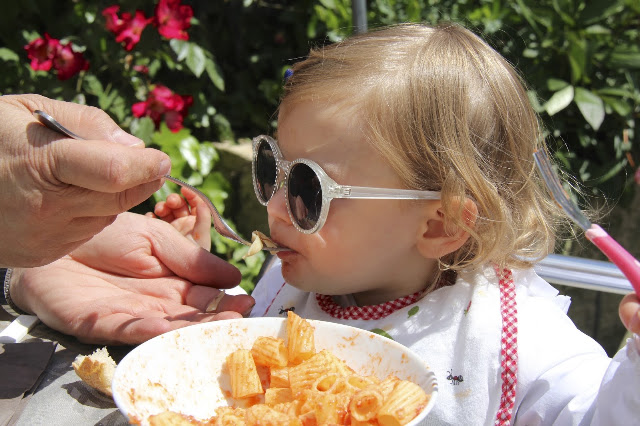
Julia couldn’t kick the pasta habit so quickly so we indulged her – Michel helps her eat
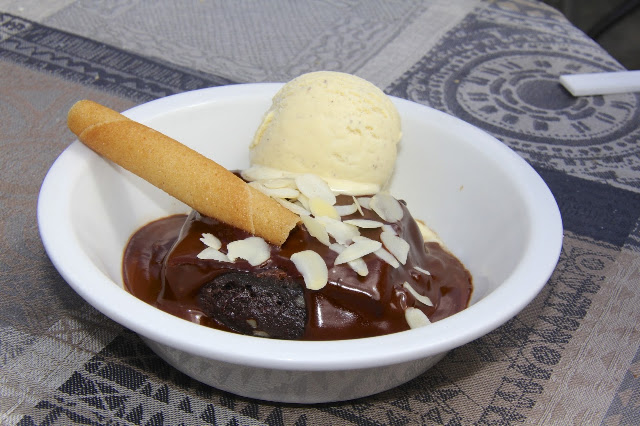
Dessert for Julia – “brownie” with hot chocolate and ice cream
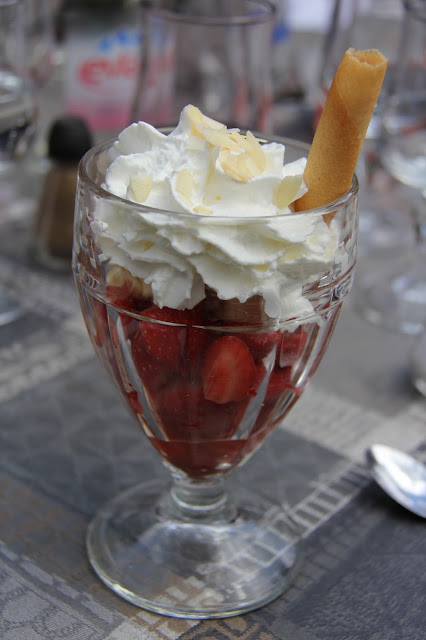
Fraises à la crème fouettée (strawberries with whipped cream)
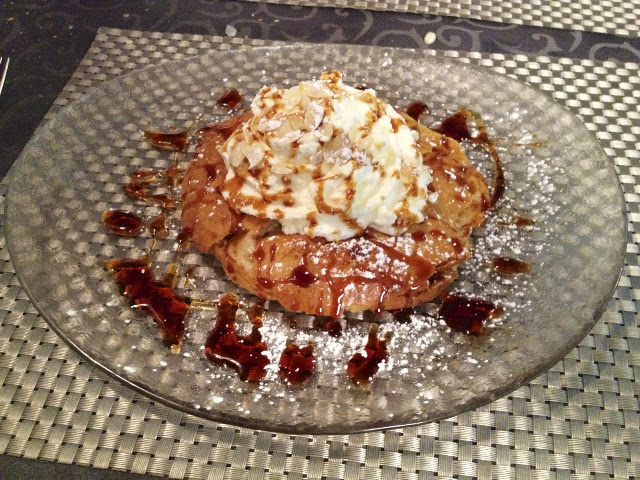
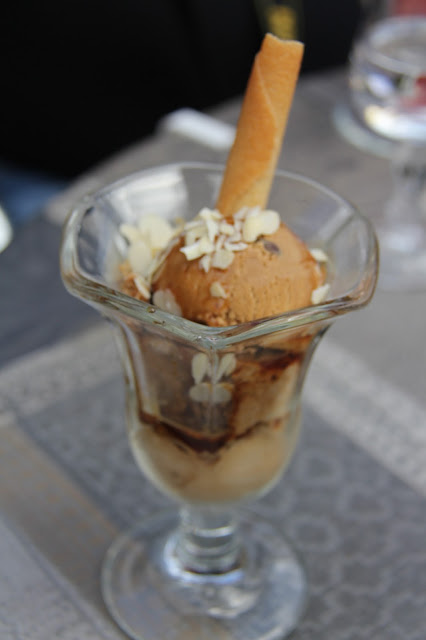
Coffee-flavored ice cream with a warm chocolate drizzle
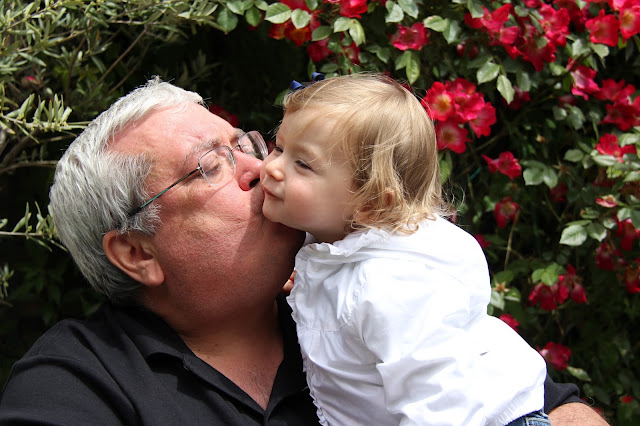
Julia was all kisses after lunch
That night, we meet their friends, Bruno and Sylvie Bordeaux, the owners of the local Cafe des Sports, just a moments walk from Michel and Shirley’s home. I never use last names in my blog, but their surname is simply too fantastic and too perfect not to use – Bordeaux! Michel and Shirley became fast friends with Bruno and Sylvie in recent years, and they graciously took us toCôteaux et Fourchettes (translated to Hills and Ranges) in a nearby town, Cairanne. This was one of the more memorable meals, because of my entrée selection as well as the fact that it seemed to hit most of the formal French dining traditions in a modern setting and style. You’ll see below that I ordered the pigeon… a first for me! And boy, was it delicious. While I waited 32 years to try pigeon, Julia has now eaten it before she turned 2 years old. Not only did she love pigeon, but she also couldn’t get enough of Jen’s foie gras (we drew the line at the tartare… I think she should at least be 3 years old before consuming raw beef). I think she would have done just as well in France as she is in Italy.
Out front of Bruno and Sylvie’s restaurant and bar
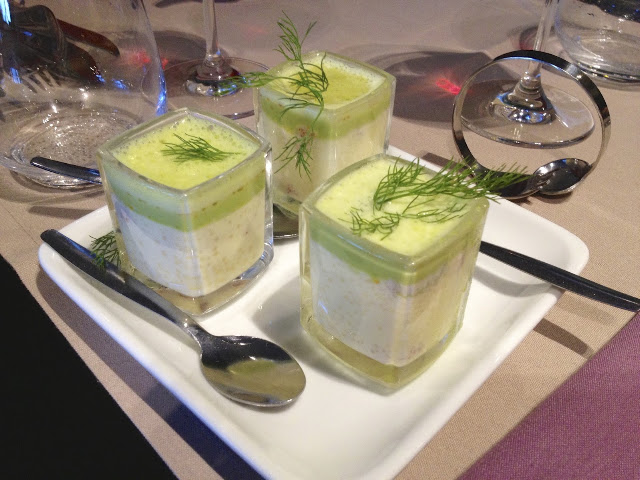
Amuse-bouche (“mouth amuser” typical in French restaurants)
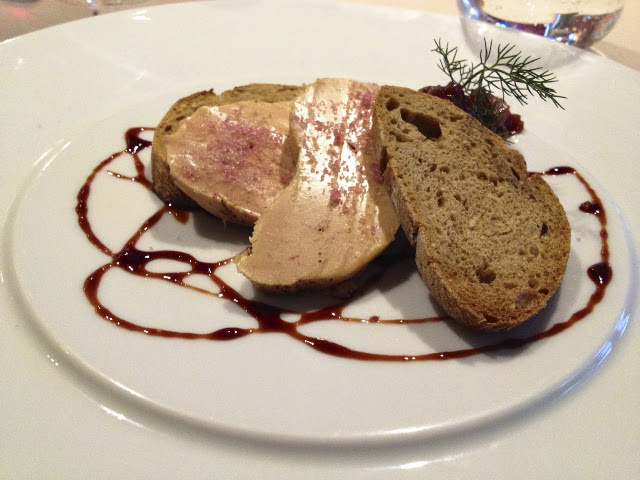
Jen started with the foie gras – the best either of us have ever had
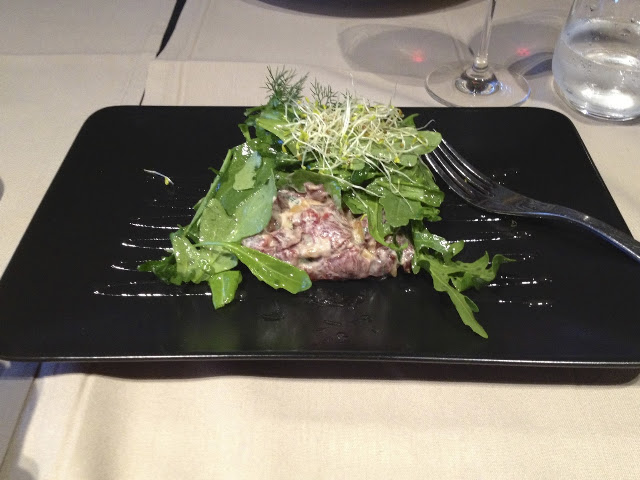
I started with a steak tartare – which you could tell was an obviously high-grade filet
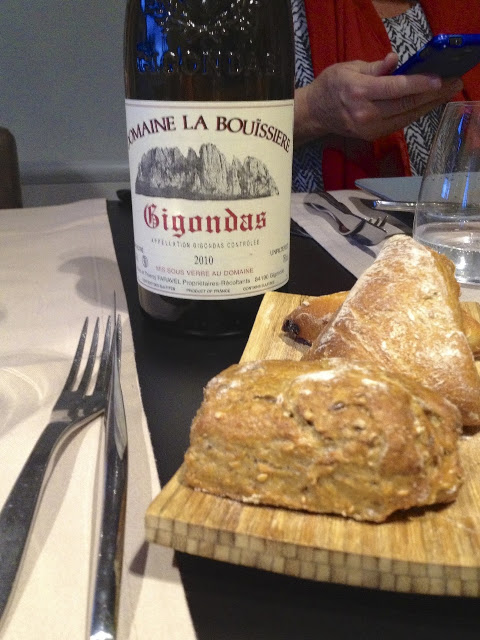
Wonderful bread accompanied the table
The wine Michel selected was wonderful, from Gigondas – a nearby village
Jen had a seared filet over a wild bed of rice
I had the 1/2 pigeon over sautéed red cabbage with red pepper and saffron clafoutis
Bruno and I each opted for the extra cheese course, which was simply amazing
Chocolate mousse in tuple with grillot sorbet
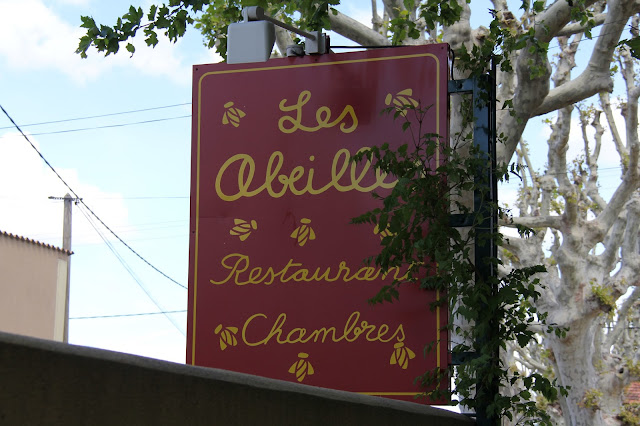
The next day was marked by a visit to Les Abeilles, one of Michel and Shirley’s local favorites (website). The lunch was in the middle of a day spent wine tasting (blog post coming soon) and so our moods matched the delicious flavor of the food.
Les Abeilles
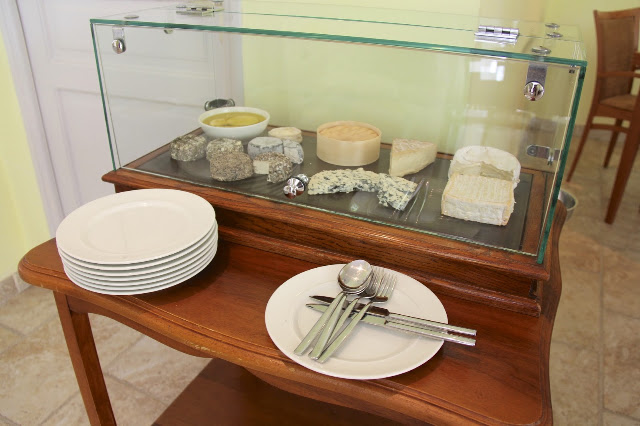
As delicious as these cheeses are, I would think sticking your nose in their would be equivalent to water board torture
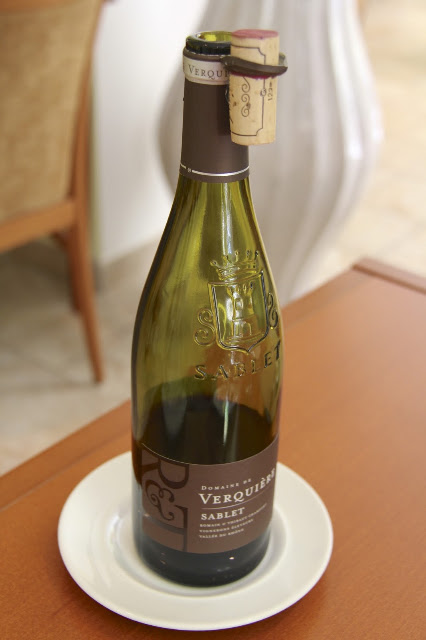
Check out the cork holder – I’ve tried without success to imitate
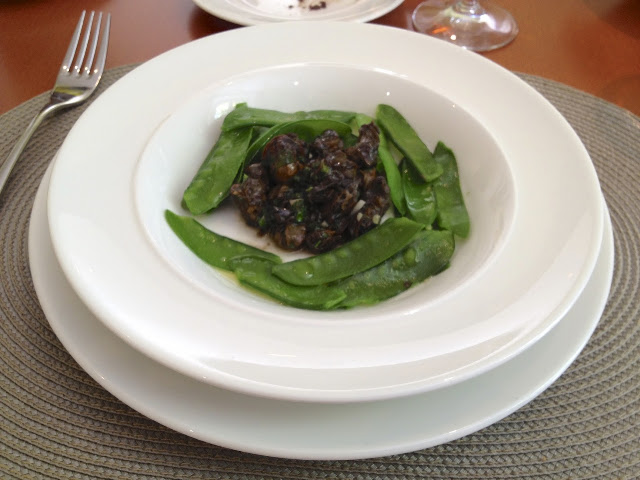
I ordered the Huîtres fraîches ou gratine (escargot – snails)
Jen had Petits gris de Provence en ravioles au bouillon d’épinards
I had the Pièce d’agneau rôtie et légumes (piece of roast lamb and vegetables)
Jen enjoyed the Bœuf braisée aux oignons (braised beef with onions)
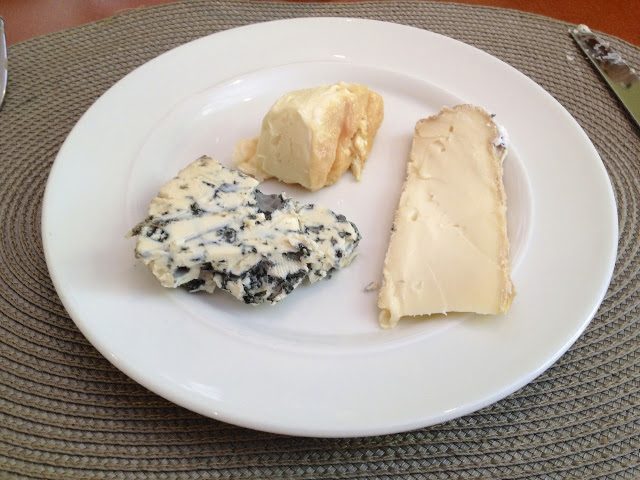
My three cheese choices – some of the most amazing cheeses I’ve ever had
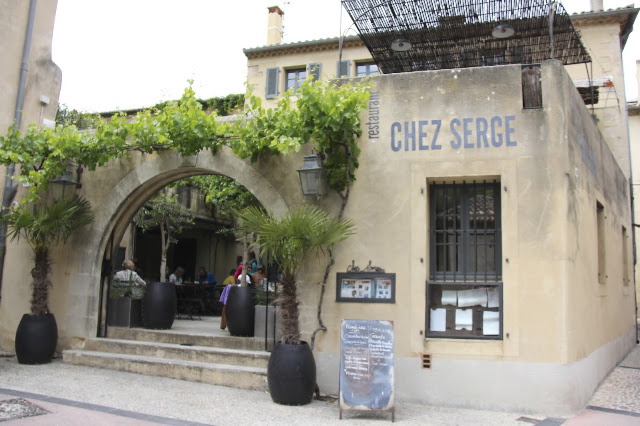
Our final day was spent visiting the markets of Carpentras, and our lunch was spent on the balcony of Chez Serge. The refreshing selection of soup and fish marked the perfect meal to fit our moods.
Chez Serge
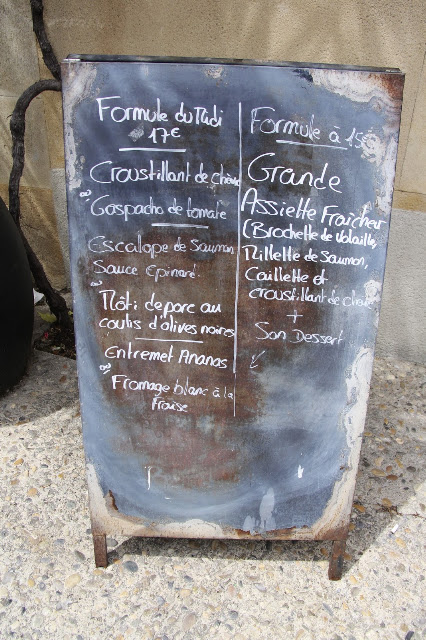
Loved the daily menu board posted out front
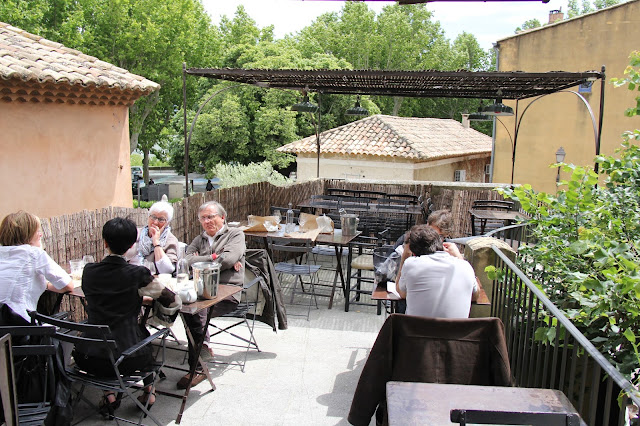
The roof terrace
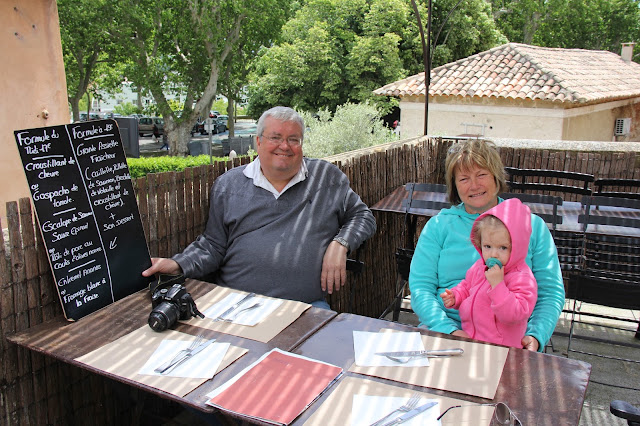
Getting ready for our meal – I loved the classic cafe menu board used to display the daily menu table side
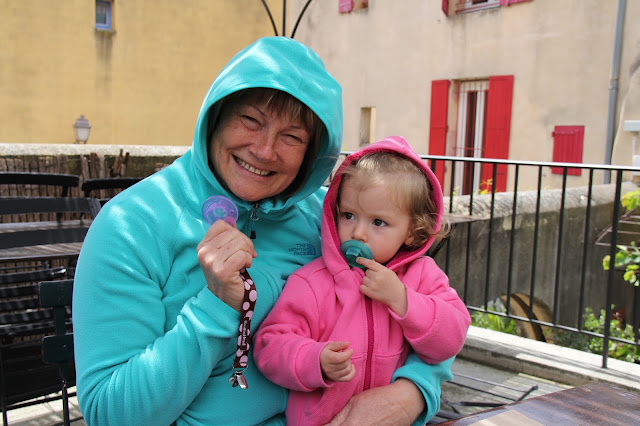
Shirley doing her best Julia impression. Wait, is it the other way around?!
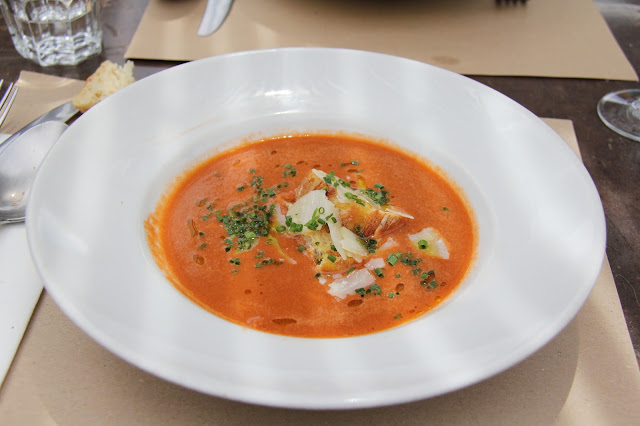
Michel and I started with a fantastic gaspacho de tomate with shaved parmesan and home made crouttons
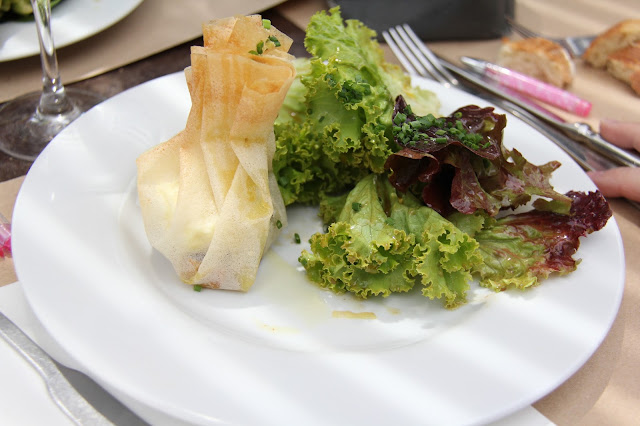
Jen started with a croustillant de chèvre (crispy purse of goat cheese)
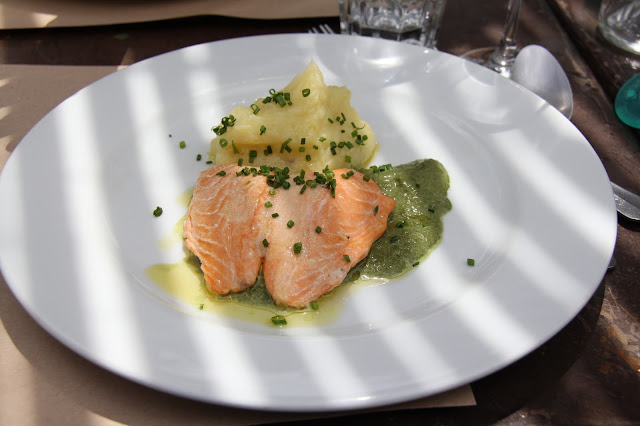
Michel and I repeated again – escalope de saumon sauce epinard (steak of salmon with spinach sauce)
Entremet ananas (a pineapple dessert)
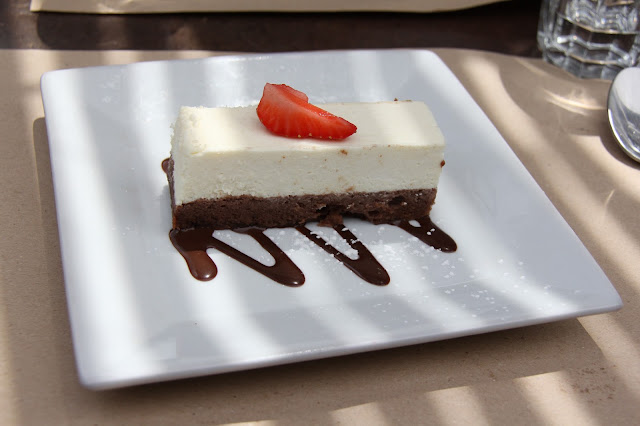
Fromage blanc ā la fraise (white cheese with strawberries) – quiet delicious
I hope you enjoyed this brief tour of part of our French dining experience. We hope to repeat again sometime in the future. Of course, not until we loose all the calories we consumed the first time around… I’m thinking that will be sometime in 2014.
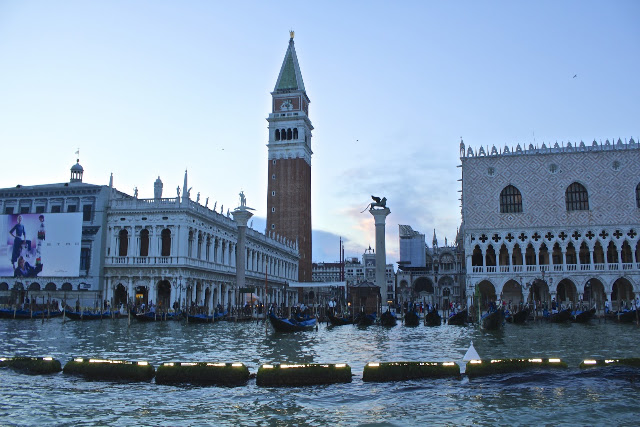
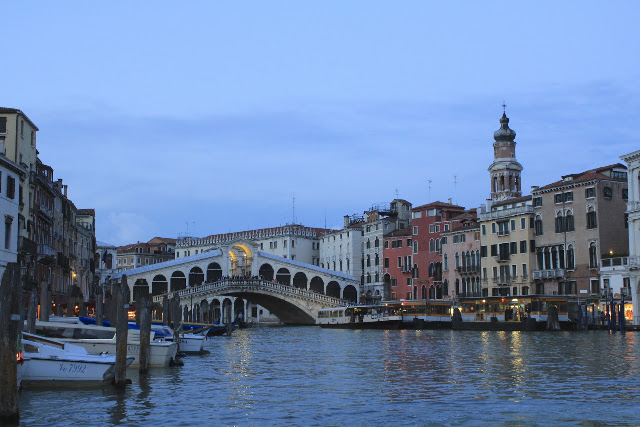
One of the true gems of the world…. Venezia (Venice). The name alone evokes powerful feelings for many people. Romantic gondola rides, historical architectural treasures, beautiful creations blown from Murano glass, unique hand-crafted masks and always… always a city constructed with streets of water. Amazingly, the entirecity is listed as a World Heritage Site in order to preserve it’s unique beauty. According to my Wiki research, Luigi Barzini described it in the New York Times as “undoubtedly the most beautiful city built by man”. I’d have to agree with Luigi!
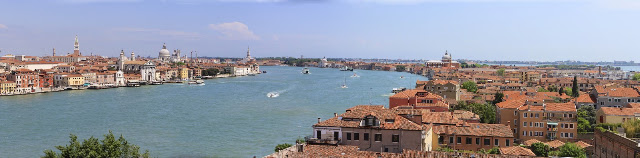
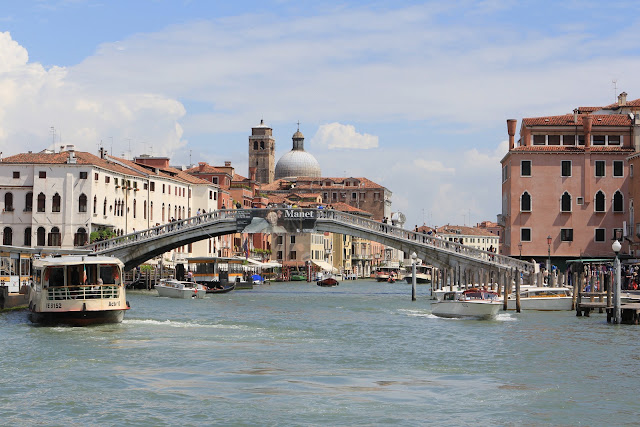
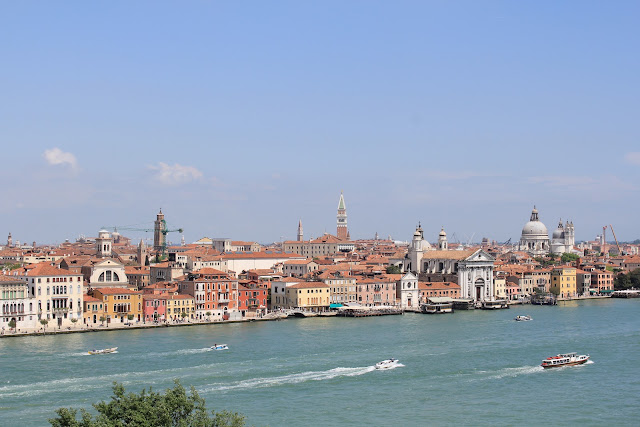
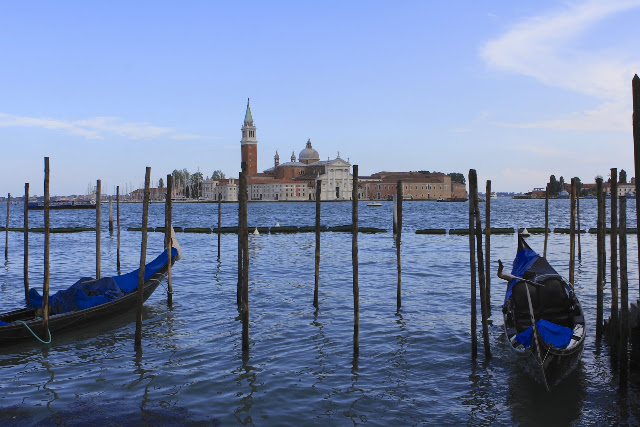
Panoramic view from the roof of our hotel
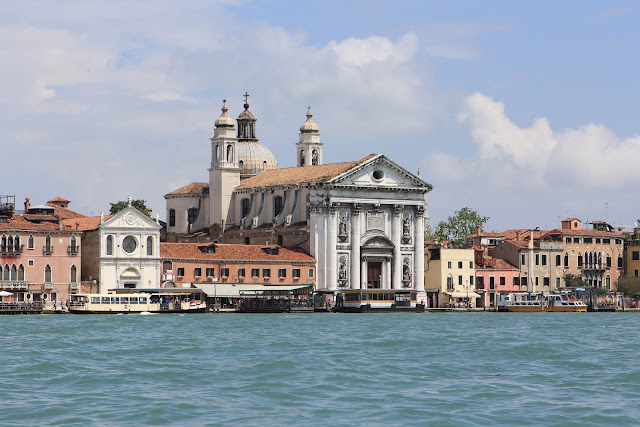
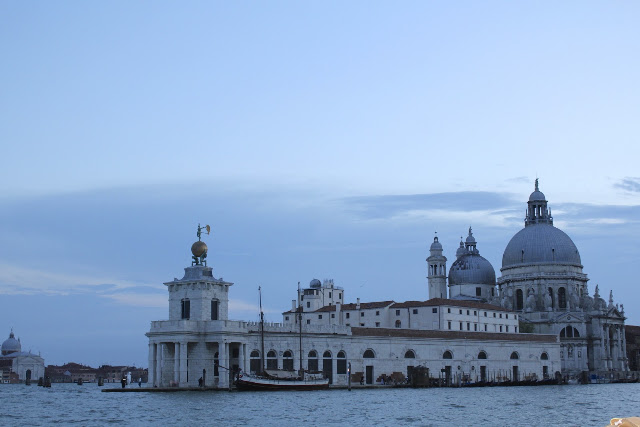
Venice from the water
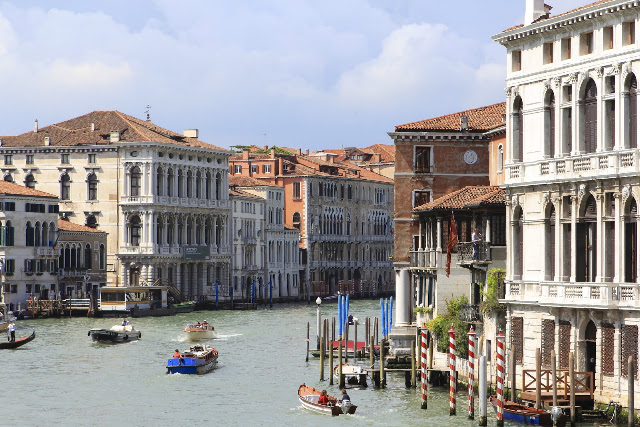
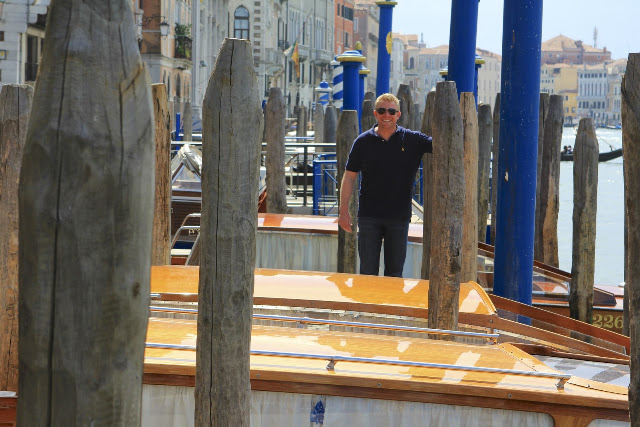
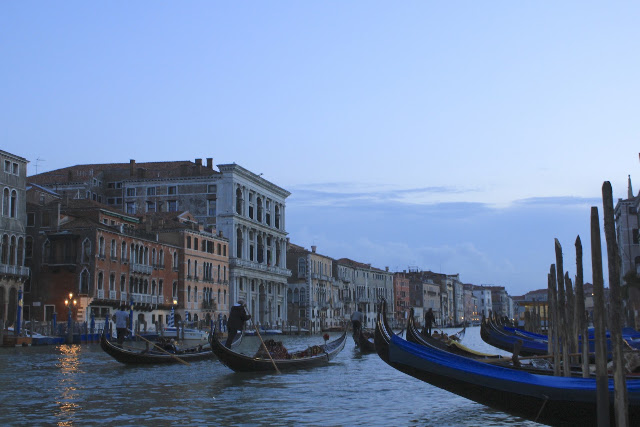
The Grand Canal
More of the Grand Canal
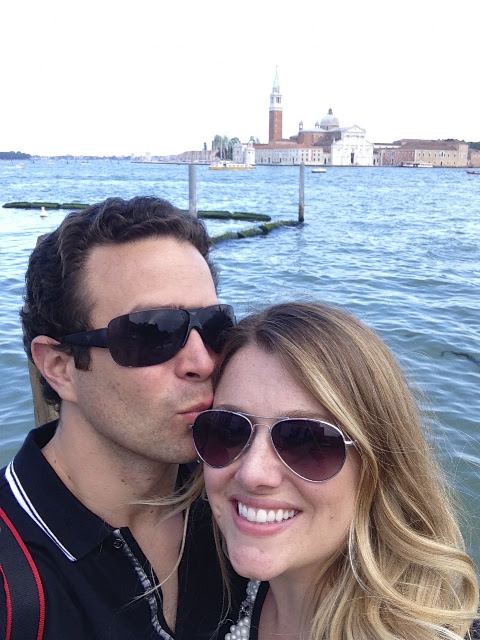
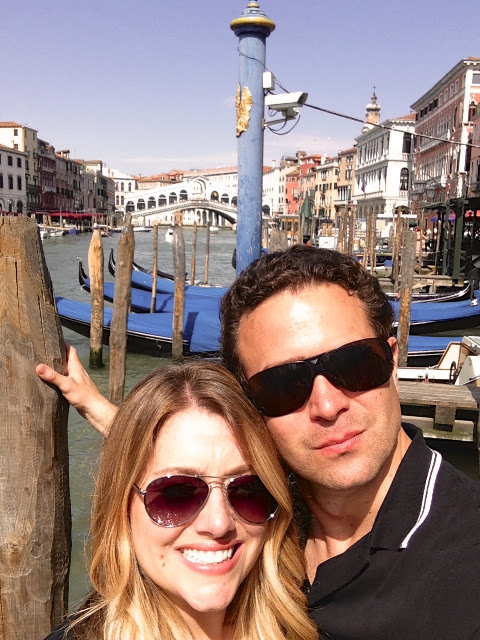
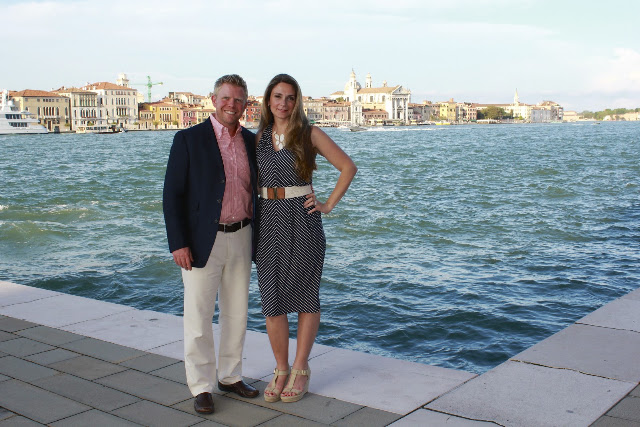
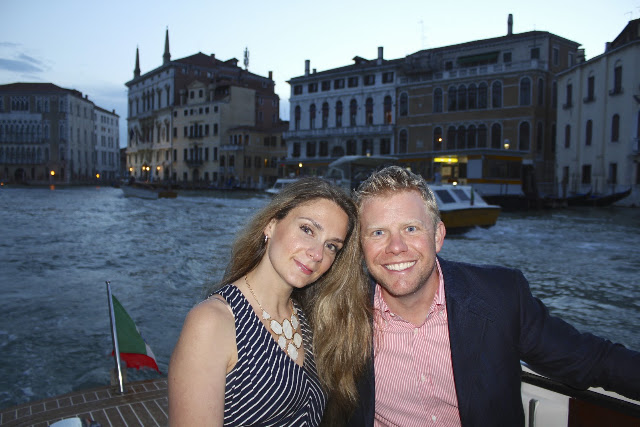
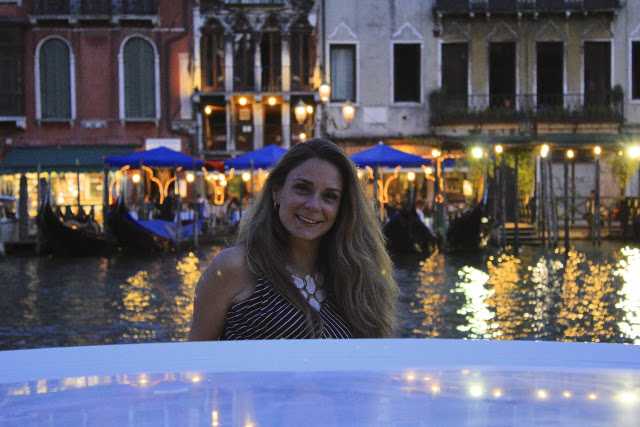
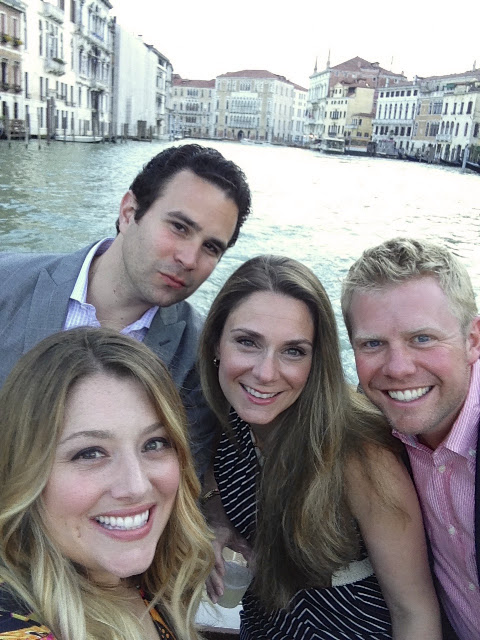
Happy to be here
Our good friends Nathan and Danielle joined us recently for a whirlwind visit filled with food, wine and lots of fun (read about it HERE). We punctuated their trip with a stopover in this romantic city. I was intrigued by the history of such a unique place and just did a little research. Venice consists of 117 islands, formed by 177 canals and connected by 409 bridges. I kept waiting for that “ah-ha” moment when I discovered the name of the genius city planner that decided to create a magical city on the water. But unlike Bugsy Siegel’sLas Vegas or Sheikh Maktoum bin Rashid’s reinvention of Dubai – there was no one person that can be credited with the conceptualization of Venice. The truth is that refugees fleeing from invasion of the Lombards sought shelter in the marshland that is now Venice. And how do any cities really get built? A collection of people working together to establish trade and industry, creating habitation and then services to support the population. And so the city grew around the marsh and homes and churches and municipal buildings were constructed. This begs another question. How can you build a city on water?
The city built on water
Piers and bridges everywhere
Loved this view
There is a tree that grows in Slovenia and Croatia called an alder tree that is noted for it’s water resistance. Thousands of these trees were imported (and subsequently credited as a contributing factor for the barren land of the Kras region). The tree trunks were fashioned into piles that were submerged in the water, penetrating the sand and mud until settling in the much denser layer of compressed clay. Foundations were laid on the piles and buildings of stone and brick were constructed on these footers.
Peekaboo!
Cheese!
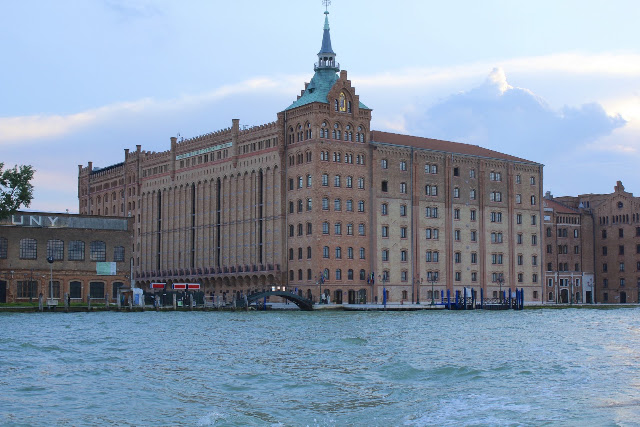
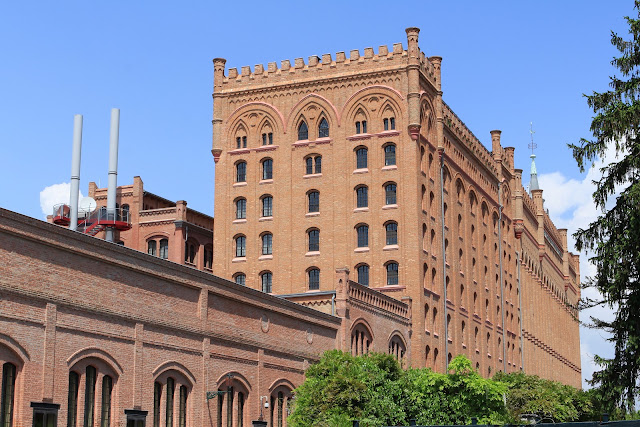
So now that you know the history, you can join us on our journey. We arrived early in the day via train (the easiest way into the city) and checked into our hotel. Our hotel, Molino Stucky is on the island of Giudecca, set in a beautifully renovated flower mill. After a quick lunch on the roof, we hoped on our hotel’s private ferry to the main island. We toured through the streets and canals, passed over bridges and stopped in shops. The girls bought scarves, glass and other souvenirs while Nathan and I took in all the scenery. We visited the infamous Piazza San Marco and fought for space among the crowds of tourists. We stopped for an afternoon cocktail on the water and eventually made our way back to the hotel to change for dinner.
Our hotel from the water
Hotel from the opposite side
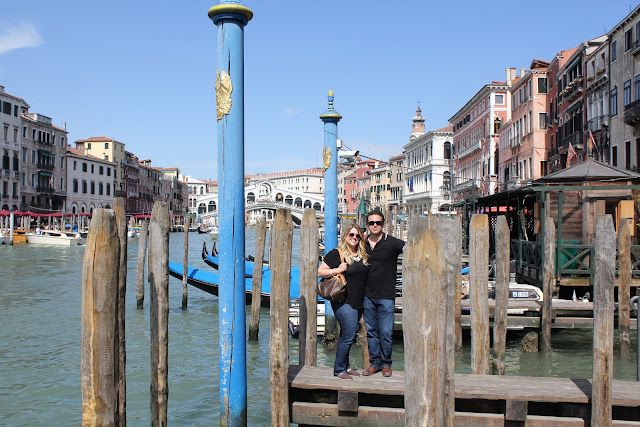
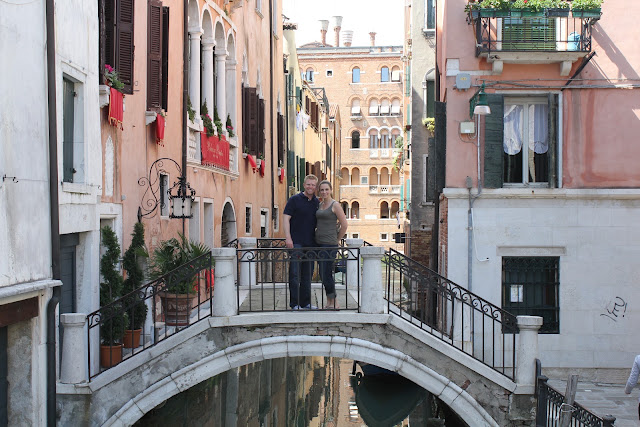
Nathan and Danielle on one the pedestrian bridges
Looking good
Having fun touring
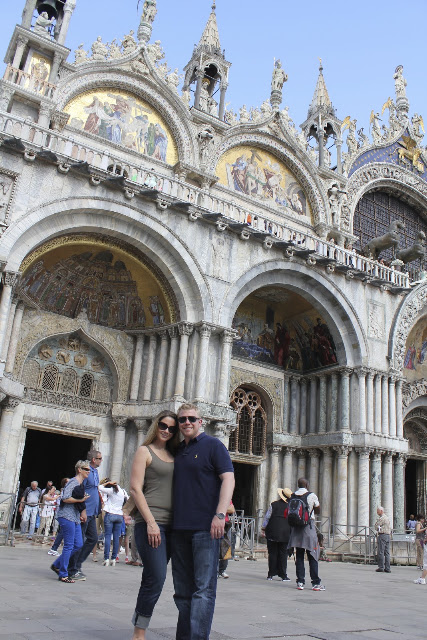
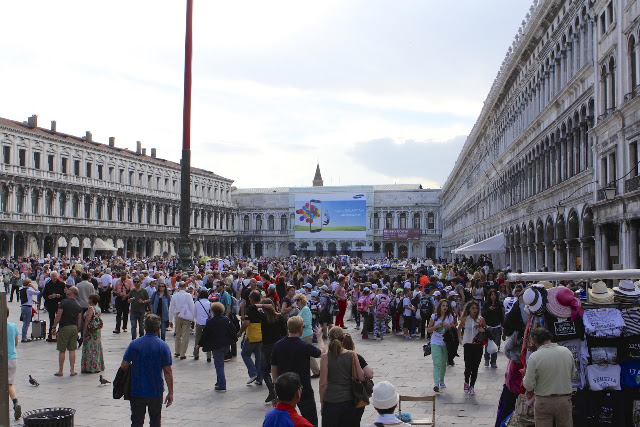
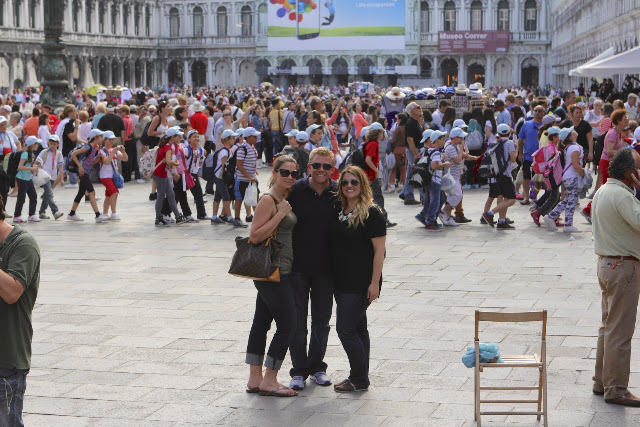
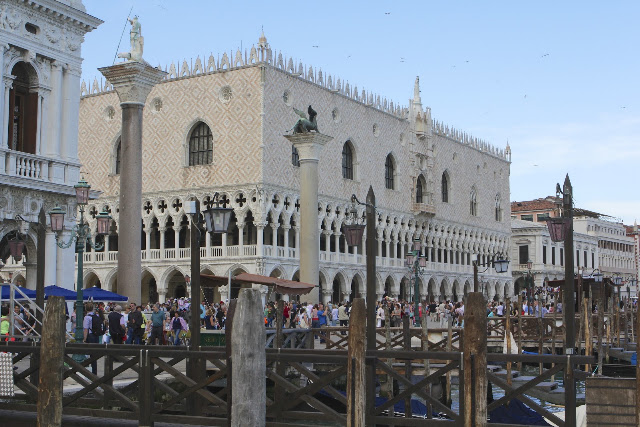
Piazza San Marco
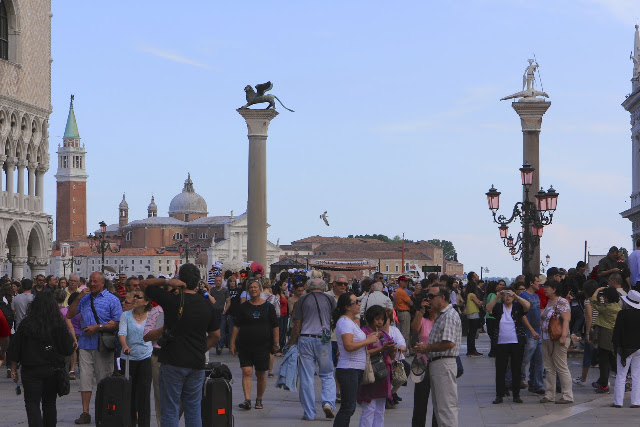
The lion is symbolic of the Veneto region
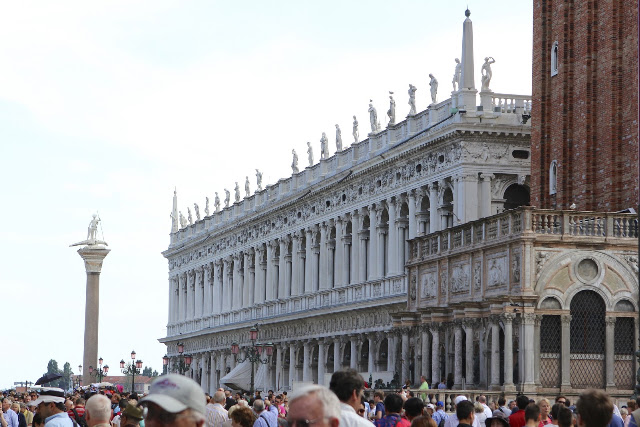
Incredible architecture – the Libreria (library)
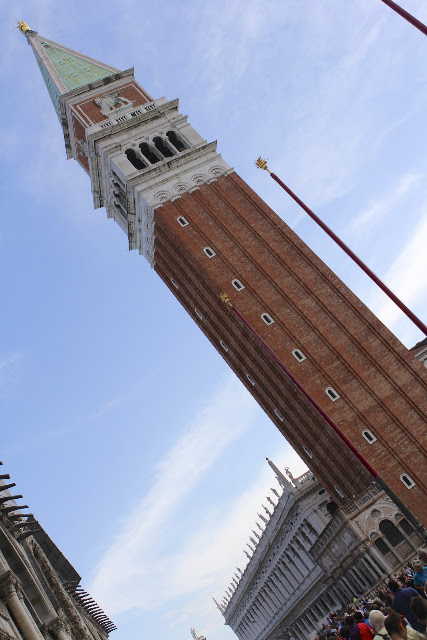
The Campanile – Bell Tower
My three favorite people in the crowd
Procuratie Nuove built by Vincenzo Scamozzi c.1580
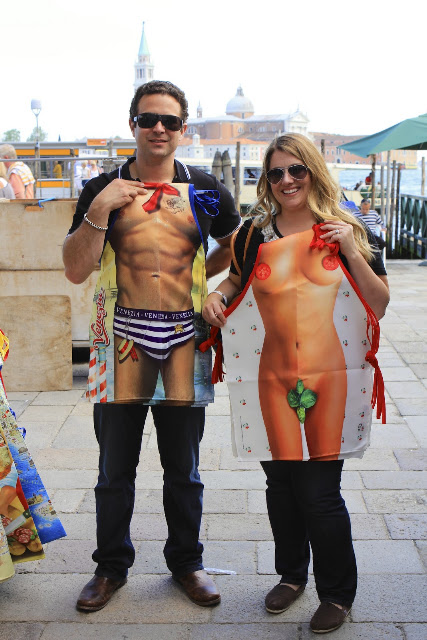
Those aren’t aprons – we just lifted our clothes
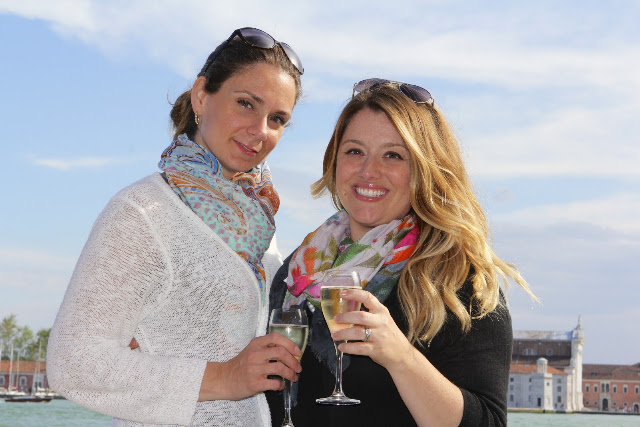
The girls enjoying their prosecco
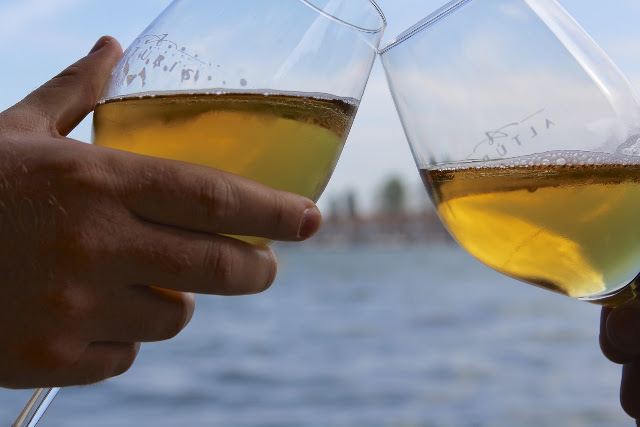
Looks like a romantic moment – really it’s just Nathan and I clinking our beers
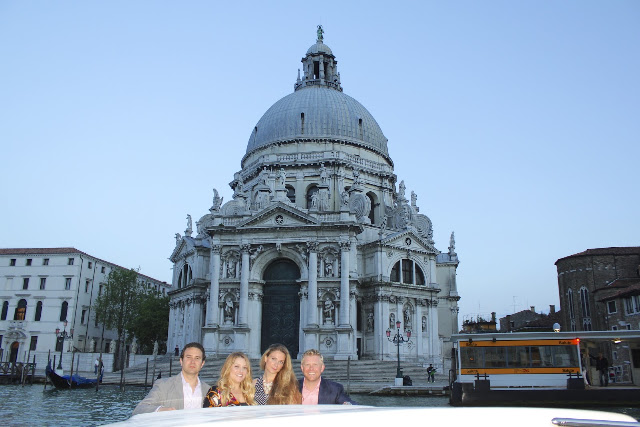
After freshening up, we met in the lobby and discovered that we were in for a real treat. Nathan and Danielle had reserved a private boat to tour us through Venice – a wonderful journey elevated by the setting sun . We stopped for some wine and cheese and sat back to enjoy the ride.
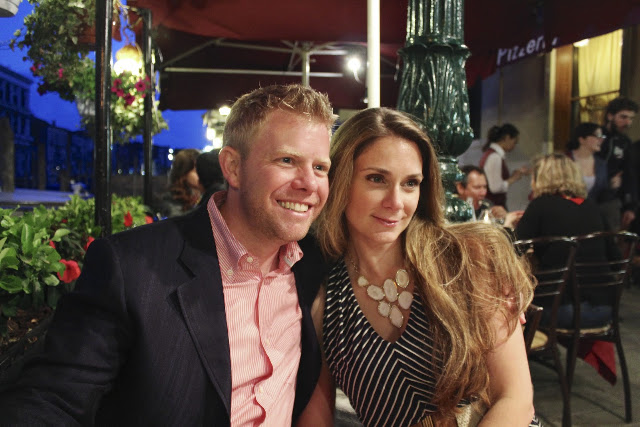
Now look a this couple!
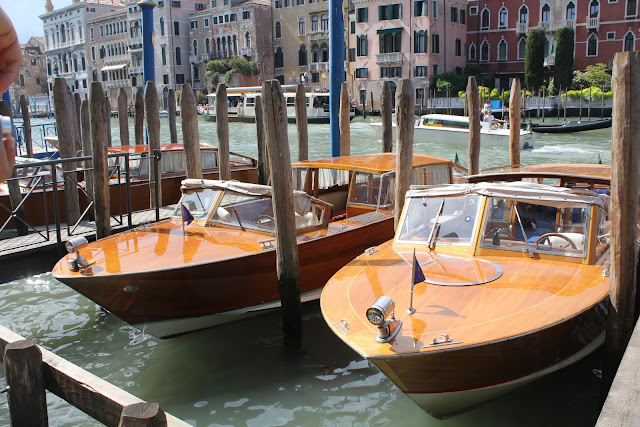
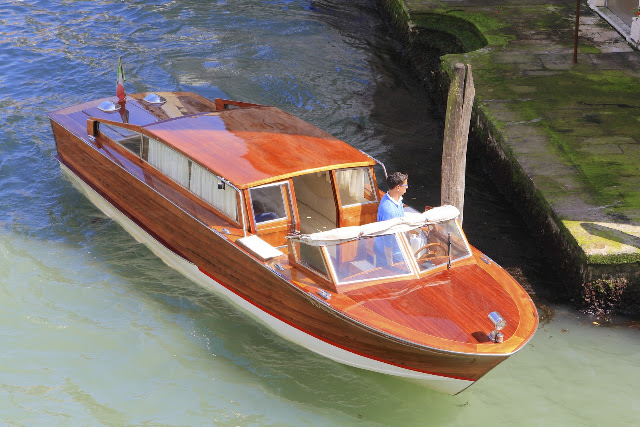
Some similar boats to the one we had
Traveling in style
View of Piazza San Marco from the boat
Along the tour
Stopping for a photo on the boat
Nate and D
Magical at night
The gondoliers were still out as the sun was setting
Danielle on the water
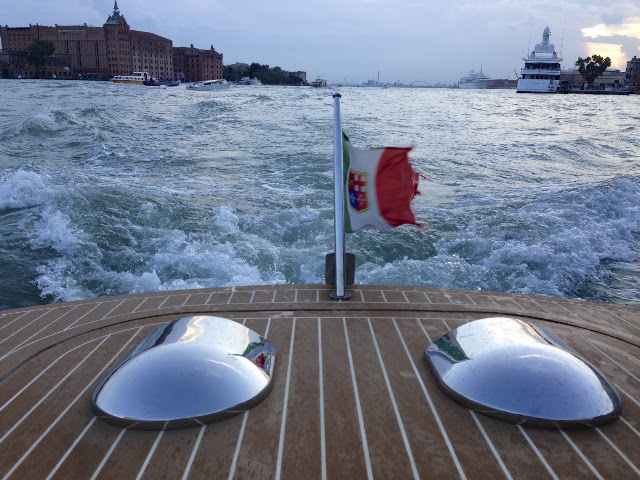
From the rear of the boat
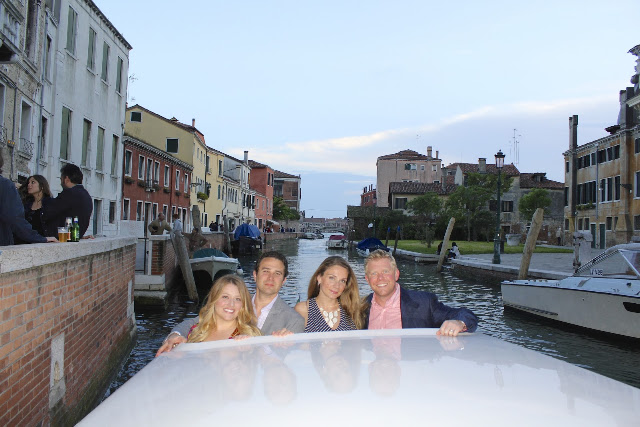
All of us on board
Similar to our boat
Eventually our driver dropped us at one of his local favorites for seafood. We settled into a table directly on the canal and enjoyed ordering a variety of food to taste and share. At one point, I felt something wet kissing my feet and realized the water in the grand canal had risen high enough to splash the patrons (me) sitting on the edge.
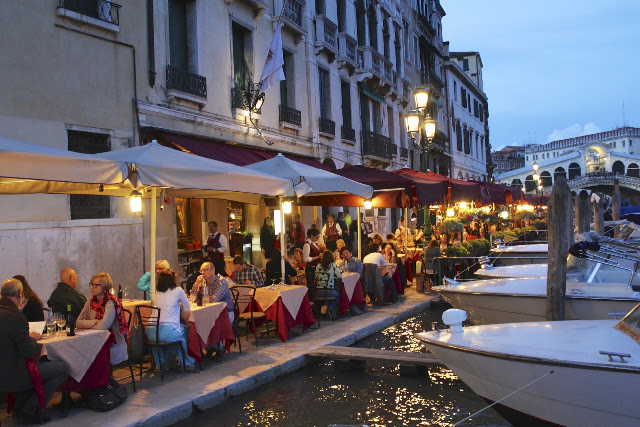
Our restaurant
What a wonderful setting
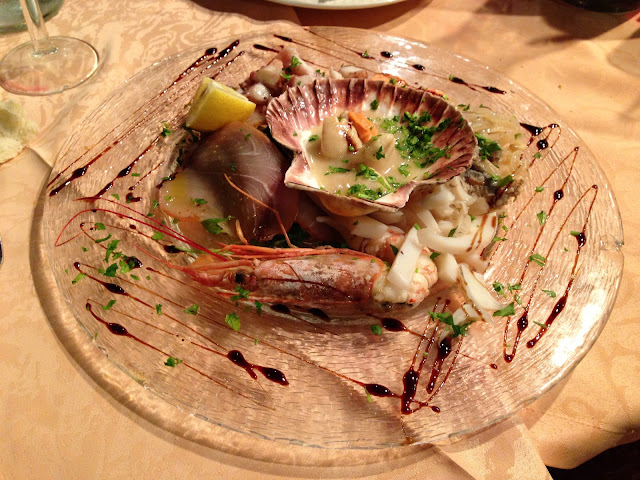
Starter – mixed seafood
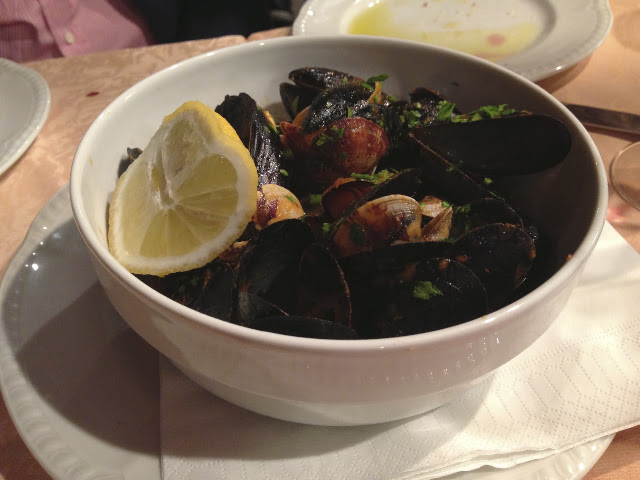
Mussels and clams
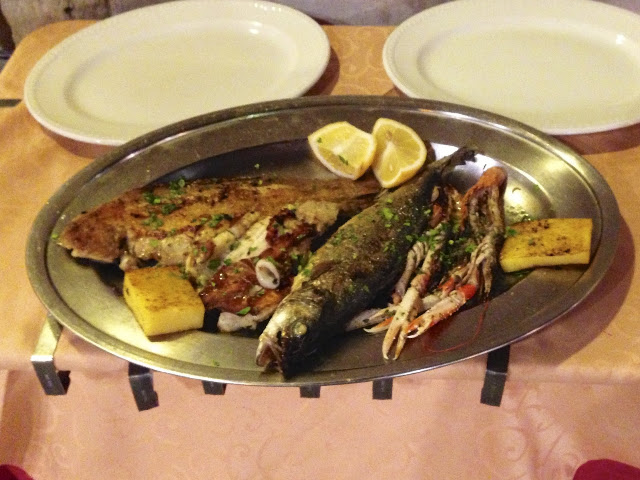
Nathan and I shared grigliata mista di pesce (mixed grilled seafood)
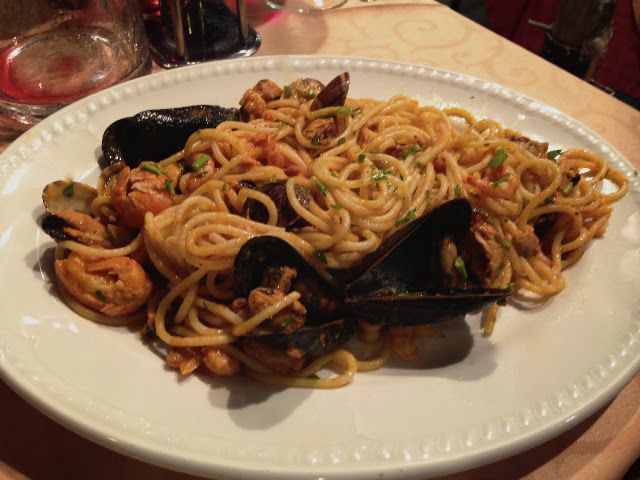
Jen got pasta with a variety of seafood
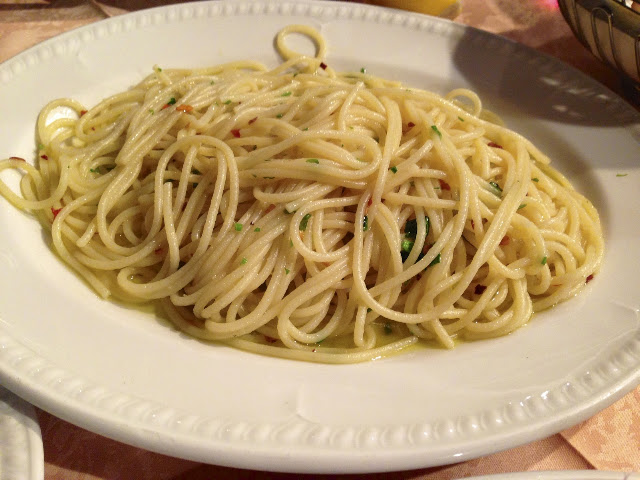
Pasta Aglio e Olio
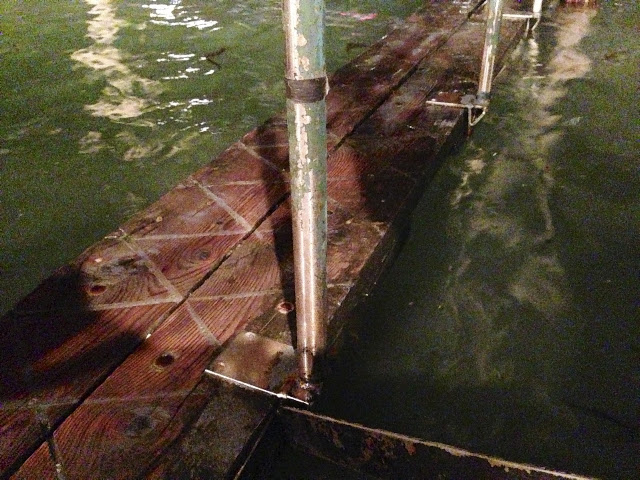
The water started rising above the pier
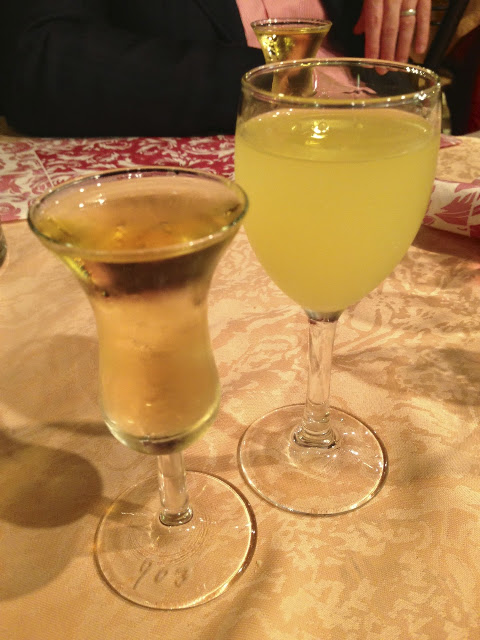
Our grappa and limoncello after dinner
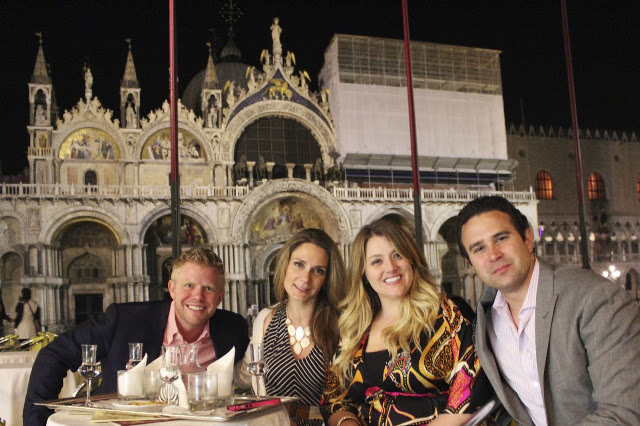
When dinner was over, we wound our way through the city at night to discover an entirely different Venice than the one we had seen all day. Long after the sun sets, the landscape of the city changes significantly. Without droves of tourists jockeying for the position to snap a photo (myself included) you are able to re-discover an entirely new place. Piazza San Marco becomes a magical amphitheater where dueling bands play wonderful music and the crowd shifts back and forth to capture the best view possible. We outsmarted the crowd and took up seats directly in front after ordering a nightcap. It was a great way to end the day before hopping on a boat back to our hotel.
In front of the Basilica
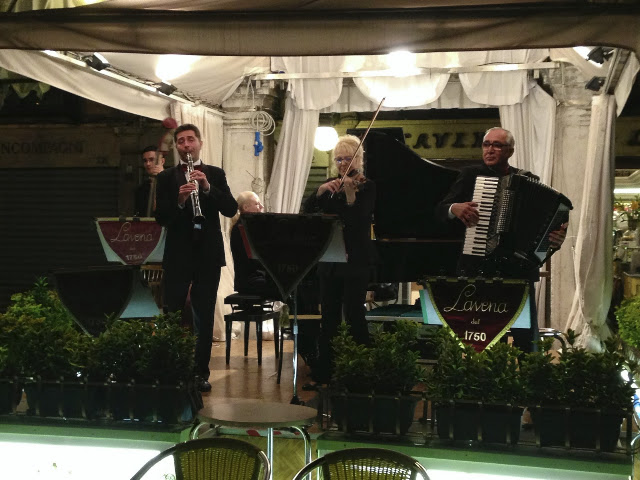
One of the “dueling bands”
Our trip to Venice had come to an end as had Nathan and Danielle’s visit with us. We spent one final day with them in Milano (Milan) and bid them buon viaggio (a good trip) back home. We were so thankful we got to do so many wonderful things with friends so special to us. After dropping them off, we rushed home and immediately started prepping for my sister’s visit… she would be arrived just a couple days later. Stay tuned for upcoming posts about their visit – more action packed fun.
That title will make sense soon. Please, read on. Unless you’re a member of PETA. Then, please stop and choose another post!
“I’m getting out of here – I don’t want to hear about bunnies for lunch!”
You may have read HERE about when our Uncle S. and Aunt Deborah came to see us last week and we enjoyed a very nice visit with three days full of wonderful food. Well, the meal we shared on day three was truly blog-worthy!
I don’t think S. or Deb knew what to expect when they came; and so they came open for anything. But since one of their good friends had been to Lake Como some time ago, he mentioned a few top sights and restaurants to consider. One particular restaurant, Al Veluu appeared to be unbelieveably perfect for us. Al Veluu sits atop a hillside in the wonderful lake town of Tremezzo, thus extending picturesque views of Lake Como (a town we wanted to show them anyway). Their well designed and informative website features images of the lake that somehow seem to take second place to the images of their food. And since I happen to know their referring friend has impeccable taste, it was evidence enough for me!
Hilltop view of Tremezzo
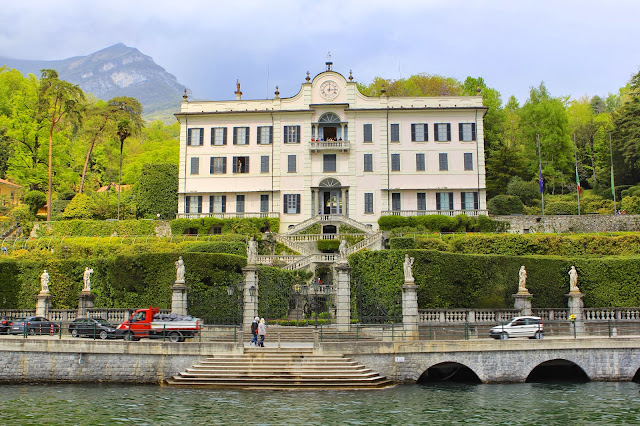
Jen and I discovered the town of Tremezzo whilst exploring the lake at the beginning of our trip, this past January. We were just out for a drive and promised that we would return to explore further as soon as we could. One of the main sights of Tremezzo is Villa Carlotta, a stunning villa with impeccable gardens. Unfortunately, we were three days ahead of the seasonal opening of the villa and thus unable to see. Expect a blog post about it in the near future.
Villa Carlotta
We allotted plenty of time for a relatively short drive. We needed to wind our way to the base of the lake and up with western side of the west leg. In this case, it was as much about the journey as the destination. While winding through the narrow streets of lake town after lake town, we took in the sites of the water and incredible villas (including that of the local celebrity, George Clooney – no, he wasn’t out).
Al Veluu – our intended destination
Timing it perfectly, we arrived at Al Veluu just as they should have been opening for pranzo (lunch). However, as you know – the best laid plans are always the first to go awry. The place seemed to have a few too many construction workers and too few diners. I went up to talk to the proprietors and see what was going on. Turns out, the only thing on the menu was renovations. Fortunately, the owner, Luca was very nice and suggested another place, La Fagurida. He even invited us to stop by on the way back for a limoncello (lemon drink). He also shared that if we were fans of rabbit (I am), we could do no better than La Fagurida.
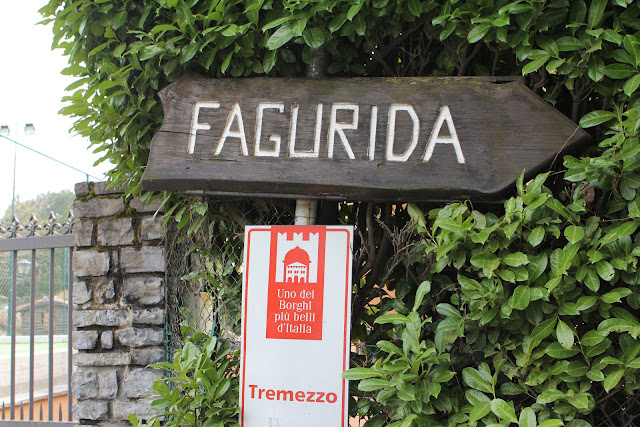
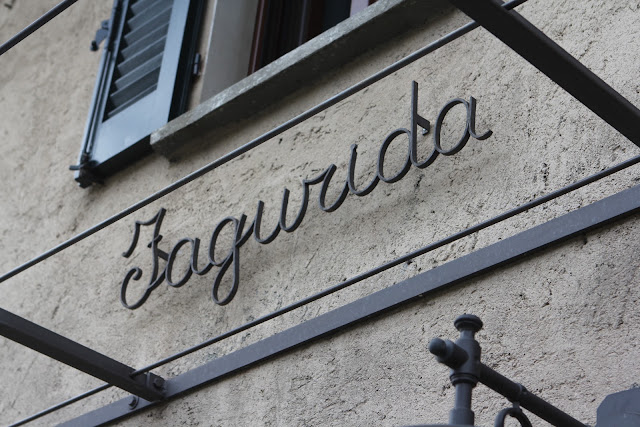
Easy-to-miss sign to La Fagurida
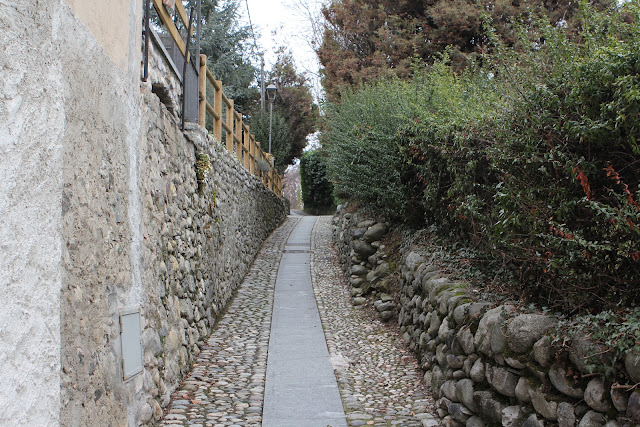
Tight squeeze down the driveway – took it sloooow
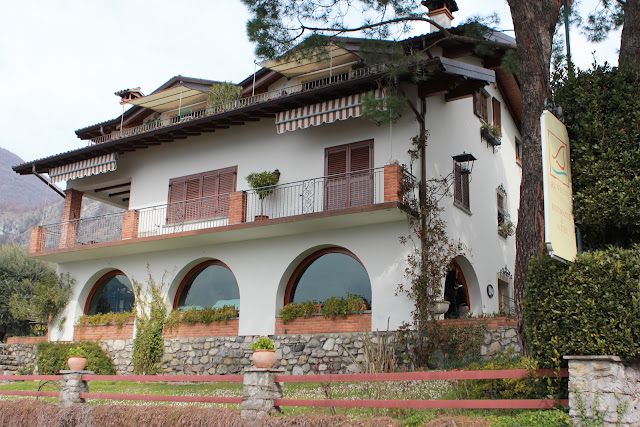
La Fagurida – the owners live above
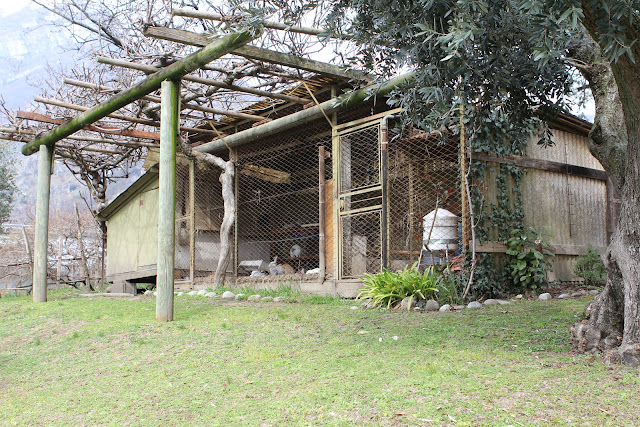
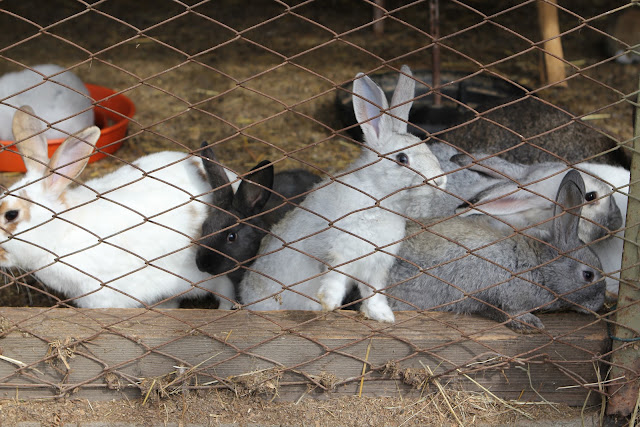
We drove up the hill another 300 meters and found the restaurant (he cautioned us not to drive too quickly, lest we miss the small sign). We were charmed by the restaurant’s exterior and even more amazed to see the menu’s pièce de résistance in an open-air cage out front. There was a large cage of bunnies out front. They looked so cute and playful, it even made me think twice about ordering one! While the title jests that I got to pick my own – I assure you, that wasn’t the case. I don’t know if I could have handled that (strangely though, when it comes to lobster I have no problems).
Coniglio Gabbia (Rabbit Cage)
As delicious as they are adorable!
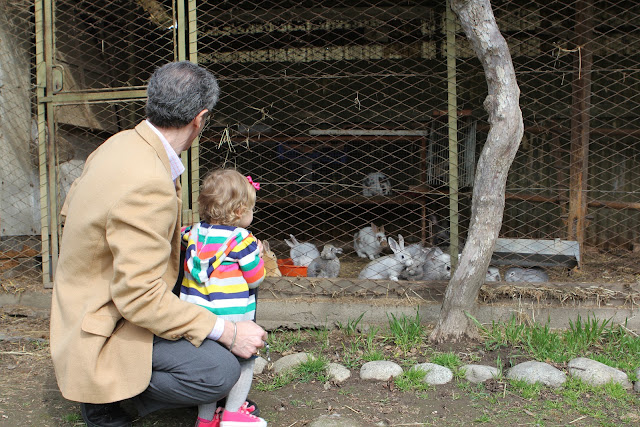
S. and Jules playing with the bunnies
We ordered several wonderful primi (first courses) from the menu and settled in for what looked to be a promising meal. Our table was quickly covered with delectable treats, including the most amazing polenta that any of us had ever had. In fact, we ordered so much that we couldn’t even finish (wanting to save room for our main courses). We should have known that not finishing your food is not an option in an Italian woman’s kitchen and she literally made me and S. finish every plate.
Antipasti della casa
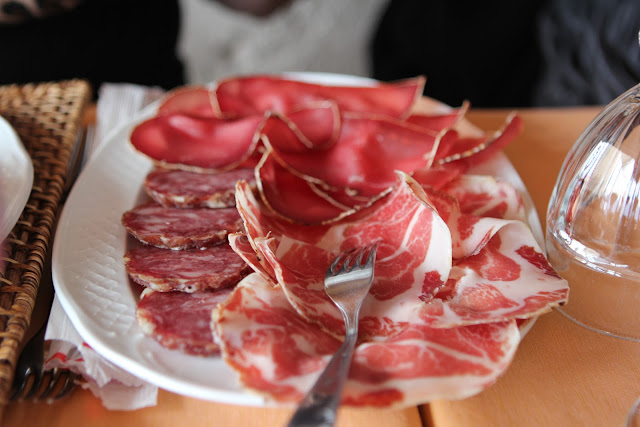
Prosciutto, salami and bresaola
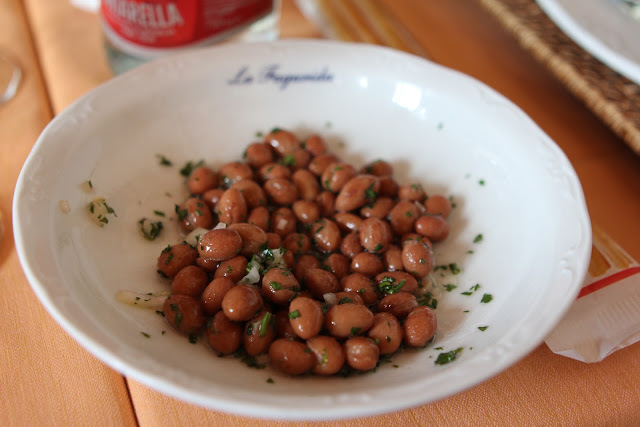
Insalata fagioli borlotti
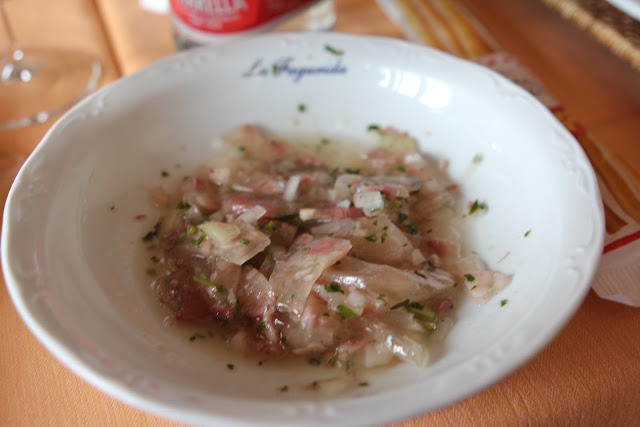
Insalata gelatina
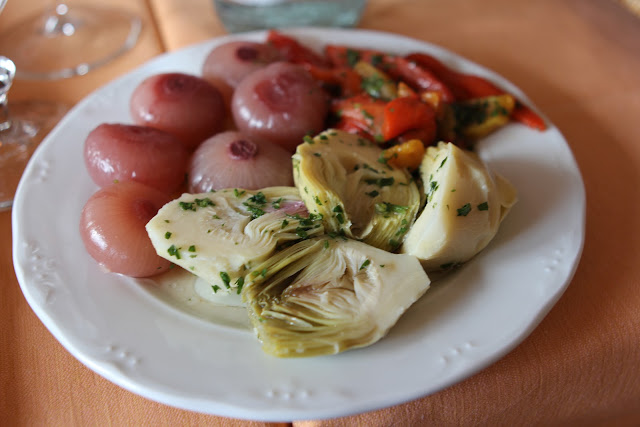
Cipolle, carciofi e peperoni arrostiti
(Onions, artichokes and roasted peppers)
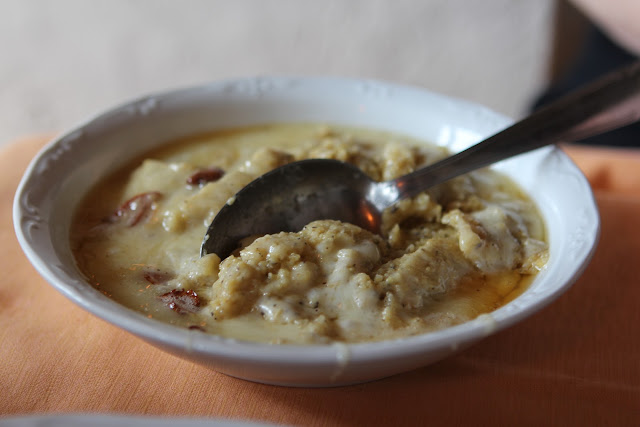
Polenta uncia e classica
Our secondo (main course) was brought to the table and we each eagerly dove in.
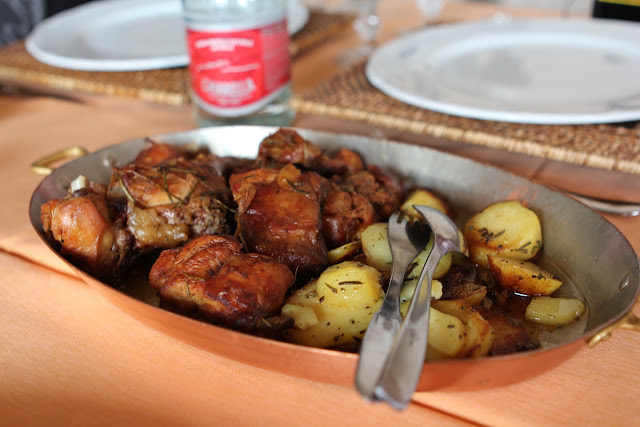
Coniglio arrosto (roasted rabbit) for two
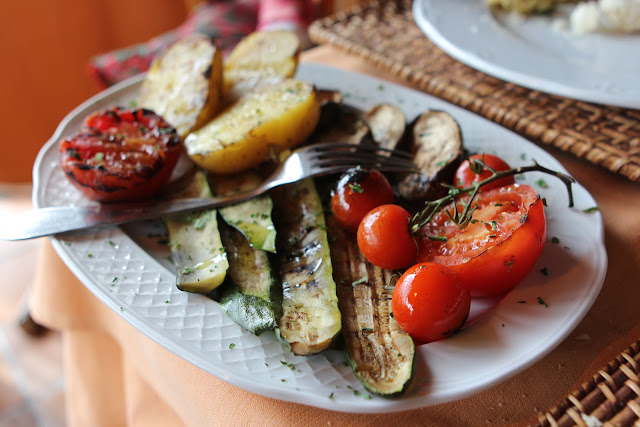
Verdure alla griglia (grilled vegetables)
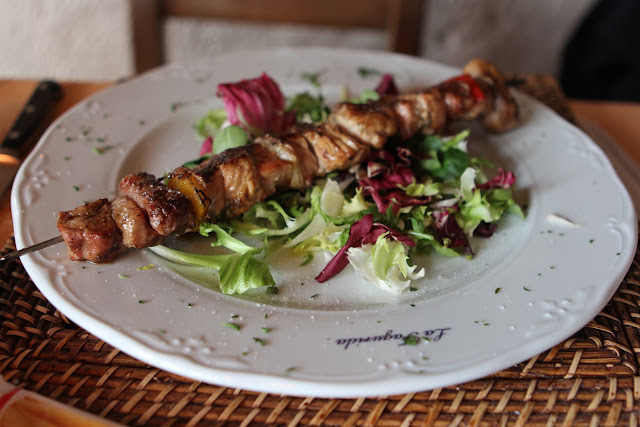
Spiedino de carne mista (skewer of mixed meats)
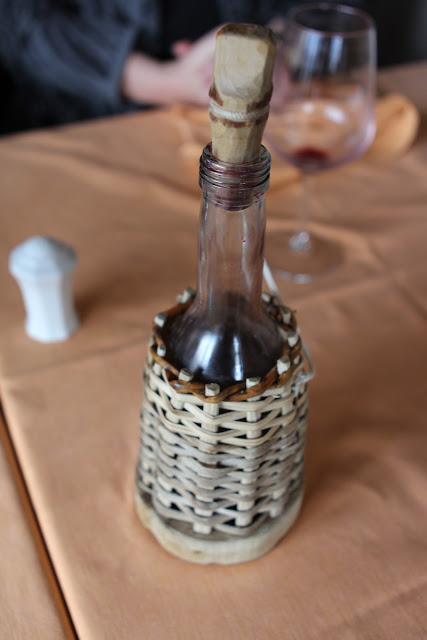
Vino della casa in a wonderful bottle
We finished with dessert for Julia and soaked up the view one last time. We wound our way back into town for some coffee and pastries.
Did I feel a bit guilty about staring my lunch in it’s adorable little face? Perhaps a bit – but my guilt was eased by the memory of the delectable meal. As it turns out, they serve about 1,000 rabbits a year – so I was just one of many guilty parties.
Last week, we received a visit from our Uncle S. and Aunt Deborah who were traveling through Europe on business. They had planned a stop over visit us before traveling by train to their next destination. We had also coordinated with Jen’s mom, who was departing on the same day they arrived, which saved us a trip to the airport and allowed us to spend the day in Milano (never a bad thing). Whoever said planning is overrated never had traffic and a two year old to contend with.
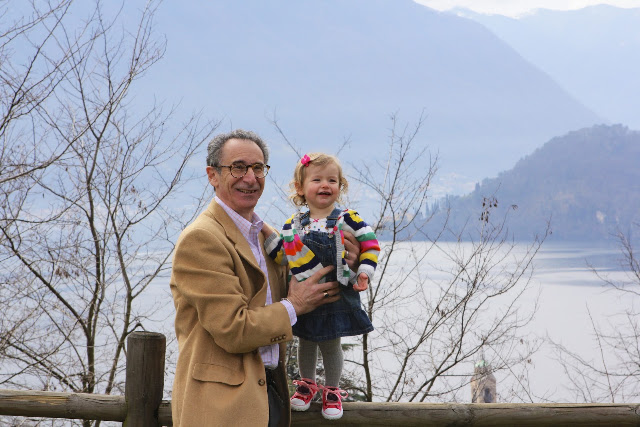
Julia with her great-uncle S.
Julia was sad to see her Nonna leave, but excited to have new visitors to play with. She instantly recognized S. and Deb as they arrived through customs. Since it was early evening when they landed, we took them back to our condo and had a “light” dinner of bread, salami, salami piccante (spicy salami) prosciutto, cheese, a cannelloni bean salad, acciughe in salsa verde (anchovies in green sauce), insalata finocchio (fennel salad) and insalata caprese with some wonderful buffalo mozzarella. Franco and Claudia came downstairs to join the party and brought some additional goodies of their own. Of course, we had more than a bottle or two of some good vino along with grappa and limoncello to wash it all down.
Julia found a left-handed drinking buddy
We had a long list of activities we wanted to accomplish while they were here, but the three days we had wasn’t enough time to do it all. The only thing to do… plan our lunches and work backwards from there! Since most restaurants are closed one day a week (either Monday, Tuesday or Wednesday depending on the restaurant) and the weather predicted to change dramatically over those three days – I spent a good 30 minutes figuring out the rubik’s-cube that was their trip.
We spent the first day in Lecco (the other “leg” of the lake), the second day eating sopra (above) with Franco and Claudia (who live above us) and the final day in Tremezzo (another lake town). Since both S. and Deb had read the blog post HERE about a wonderful restaurant we discovered who’s cuisine is matched only by the adventure you must undertake to arrive – that was pre-penciled in.
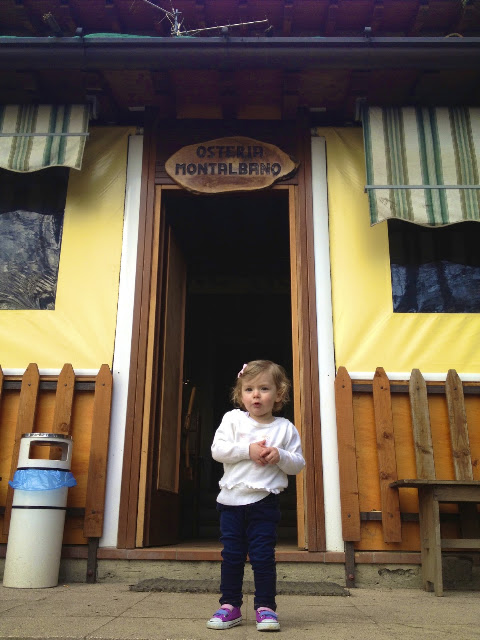
Julia was excited to return to Osteria Montalbano
A quick summary of the restaurant, Osteria Belvedere Montalbano in Lecco (or click the link above); Lake Como has two “legs” with Como at the “foot” of the west leg and Lecco at the foot of the east leg. Lecco has stunning mountains that surround the lake. In order to find the restaurant, you must drive through the town, into a residential area on one of the mountains, enter a private road and continue to wind your way up the mountain. As you approach the end of the road, you’ll find a dirt path that is covered with stones and trees. Turn on your all wheel drive and wind your way up the path for 20 minutes before finding this jewel.
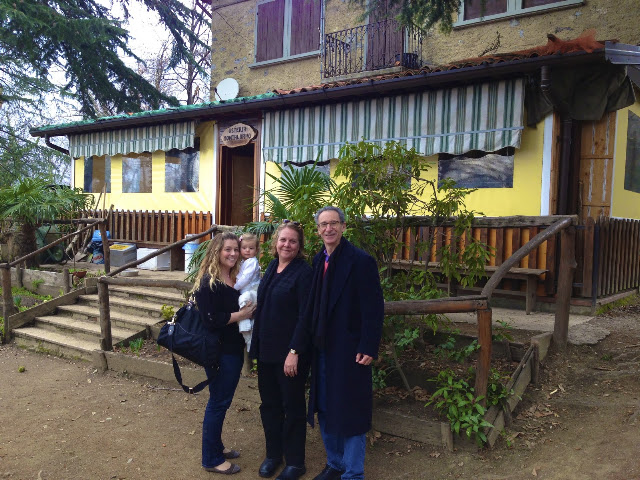
Everyone in front of one of our favorite restaurants
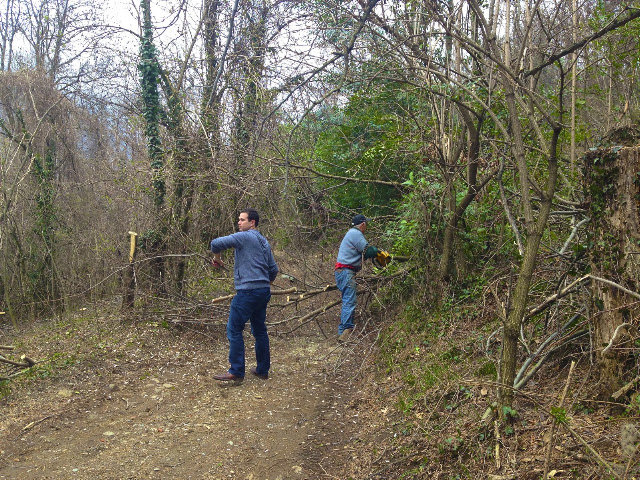
On our first trip, we were lucky enough to make it up this tiny/dangerous road unscathed. This time everything appeared to be going well, when suddenly we came across an obstacle. The road was closed half-way up because a local farmer was chopping trees and one laid clear across the “road”, blocking our path. There is NO turning around or backing down – our only option was to push forward. I hopped out of the car and asked him when he would be done. He said that it would be about 20-30 minutes. I volunteered to help and S and I became his gofers while he continued to skillfully wield his chainsaw. He jokingly said, avete fame (you must be hungry)! We were on our way in less than 10 minutes!
Nothing is going to keep us from getting there!
The food was as spectacular as the first visit and the quantity could have fed a small army, let alone four travelers. Since the menu is seasonal, many of the dishes were repeats for Jen and myself – but we had a couple new dishes, pictured below.
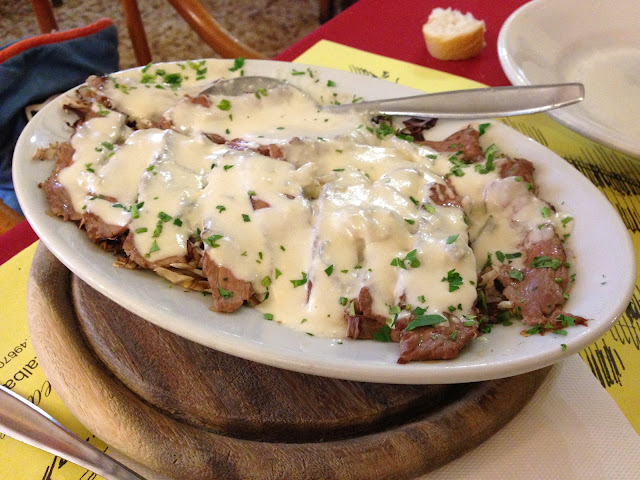
Filet with radicchio and a gorgonzola cream sauce
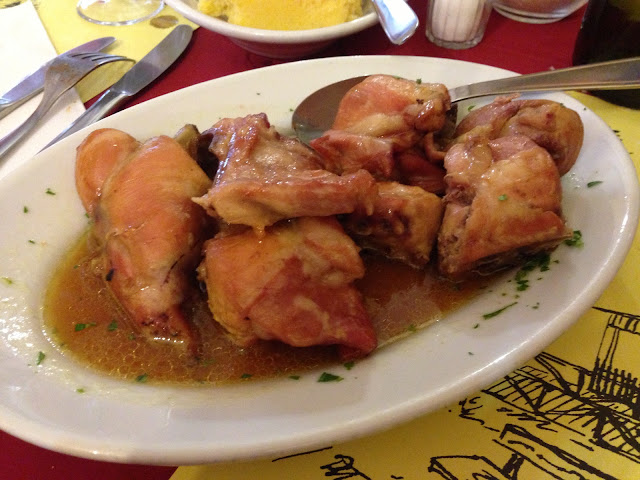
Roasted rabbit with a white wine reduction
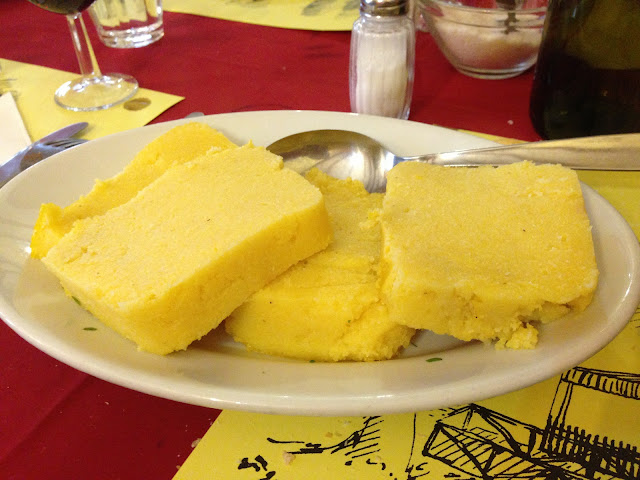
Pan fried polenta
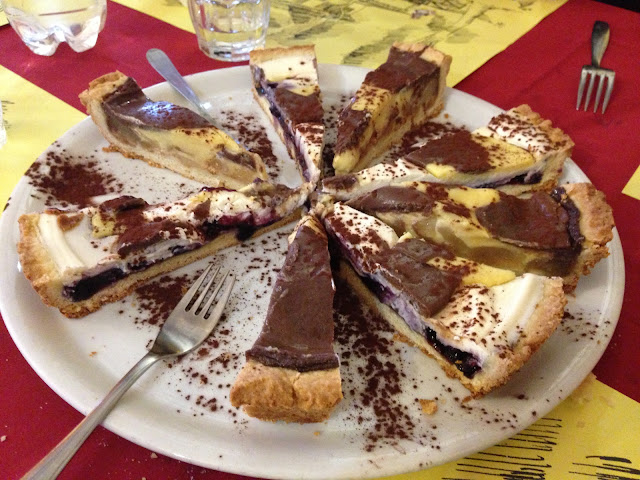
Half pear / half blubbery torte with custard
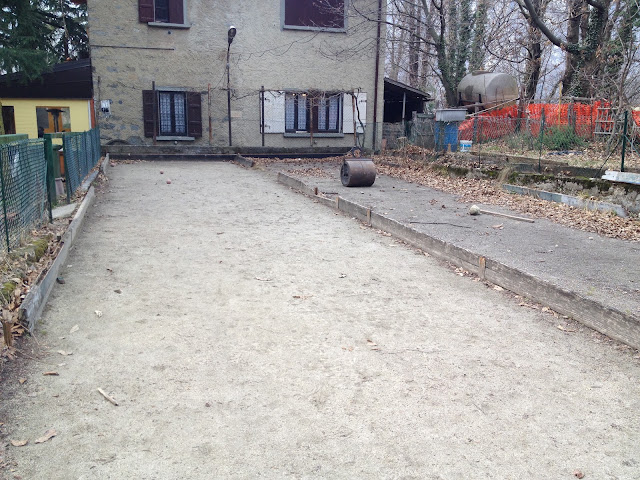
As we were leaving, we noticed a bocce-ball court that looked like it will be a lot of fun when the weather warms. S. made an astute and funny observation that there wasn’t a flat patch of earth anywhere to be seen for miles, yet they had a perfectly manicured surface to play bocce-ball on the top of a mountain!
Anyone up for a game?
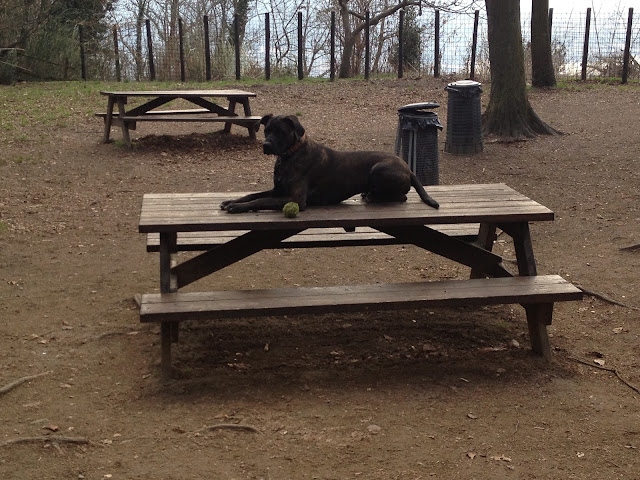
This is my bench… don’t even think about it!
Deb and Julia sharing a laugh
We’re looking forward to visiting Osteria Belvedere Montalbano again when our next adventurous visitors come to see us!