Category Archives: Shopping

Things Are Just a Little Different… Part IV

If you’ve been a loyal reader of this blog or have spent a little time playing around on the pages, you’ll see that I’ve started a “series” that highlights some of the differences between Italy and our native America.  Some of the differences are strange to us, many of them make perfect sense and others are just plain silly.  If you’d like to see where the series began, take a look back here:

Part I
Part II
Part III

Just like the previous editions, I will group these differences by category.  Without further adieu, Parte Quattro (Part Four)…

♠♣♥♦     ♠♣♥♦     ♠♣♥♦

CARS

The automotive industry in Italy is one of the major contributors to the country’s GDP.  The industry provides nearly a quarter million jobs and produces some of the world’s best cars.  But it’s not just Ferrari’s and Lamborghini’s on the roads here.  We have also learned a couple other things about the automobiles on the road.

Where are the trucks?  A Texan might have a harder time adjusting here than we did.  Finding a pickup truck is akin to finding the perfect blue-ribbon bull at the county fair (did I take the Texas thing too far?).  There are virtually no trucks on the road and I can count the number of large pickups I’ve seen on one hand.  If you do come across a pickup truck, there is a 90% chance that it is for work-purposes only.  No major commentary here, just an observation.

This little guy is about all the truck you're going to get around here
This little guy is about all the truck you’re going to get around here

You’d better not buy the Big Gulp!  At least not if you want to rest it in your car while you drive… most cars don’t have cup holders. This may seem strange to most Americans (certainly, there are times I miss my old car), but it’s not that crazy when you think about the culture here.  Italians drink small espresso’s at the bar (not 20oz Starbucks coffees) and I’ve never seen anyone over 15 years-old drink a soda.  McDonalds drive throughs are not a big thing and so there is really no major need for a cup holder.  And, oh yeah – a Big Gulp was never really a viable option, they don’t have 7-11‘s either.

“No cup holders? Well, where am I supposed to put this?”
No space for this adorable Coke (note the spelling of Julia)

Keep your eyes on the road.  I remember a couple years ago in America, I was driving with extreme caution because I was passing by a cop.  It turned out that it didn’t matter because he was not looking at me, but rather at the text message he was composing while cruising by at about 70mph.  If the police don’t pay much regard to “no texting while driving”, how can citizens take it seriously?  It’s completely different here – I mean, completely!  They don’t even HAVE  a “Don’t Text While Driving” campaign.  You know why?  EVERYONE KNOWS IT’S RIDICULOUS TO TEXT AND DRIVE!  Maybe it’s the narrow roads, maybe it’s the break-neck speed at which everyone drives, or maybe it’s just that people understand how dangerous it is.  In any event, it’s a relief to see.

You don't see texting and driving here in Italy
You don’t see texting and driving here in Italy

Make way for the VIP… motorcycle parking is right over here. Now, this is something I could get into when I move back home!  A lot of places have a designated area for motorcycle parking.  This is great, because cars don’t lose full parking spaces to something 1/3 of their size.  Obviously, it’s great for bikers who don’t have to spend time circling the lot.  Additionally, these motorcycle parking spaces are put to good use year round – bikes are out on the road from January 1st through December 31st; not just in the spring and summer.

Motorcyclists use their bikes year round
Motorcyclists use their bikes year round – she’s wearing a winter coat, gloves and pant warmer
That makes it easy to justify
Year-round motorcycle use makes it easy to justify “motorcycle parking”

A free pen?  Pen-shmen.  Give me something good!  Little freebies are appreciated in Italy, just like in America.  I tease my father in law, because if you open any of his drawers, you are likely to see dozens of TD Bank pens and Wells Fargo notepads (apparently, his banking loyalty goes only as far as their freebies).  It’s no different here, except for the free swag.  I recently got my car serviced and became the proud recipient of a bag of riso (rice).  Leave it to Italians to find a way to incorporate food into anything!

SHOPPING

Consumers in Italy shop for many regional goods; they have a strong preference for products made in their native land.  And who can blame them?  Italy is arguably the best place to buy clothes, food and many other products.  Certainly, we are taking advantage while we are here.

Are you happy with your product?  Good, because you had better be satisfied.  Don’t even think about returning it!  I’ve noted in the past that Italian businesses don’t offer nearly the same level of customer service that we’re accustomed to.  But if you want to see the worst they have to offer – just try to return a product.  You’ll get looked at like you just committed murder.  If by some miracle, their store policy actually allows for returns (the newer, big box stores will let you exchange merchandise for credit), a surly employee will demand a receipt before scrutinizing the merchandise as if your intention to swap out the original product for some inferior one as if you were Warner Bros exchanging Christian Bale for Ben Affleck.45555589

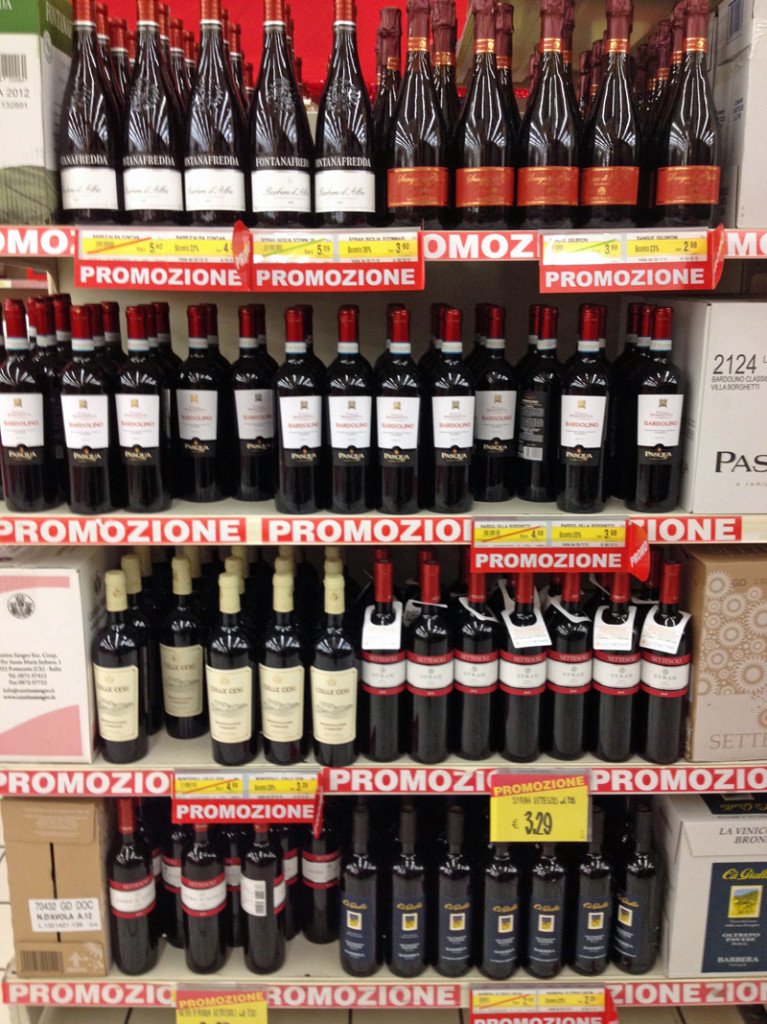
SALE!  SALE!  SALE!  Well, you’d better break out the credit card… this stuff is at a steep 30%-70% discount!  SALDI (sale) is the favorite sign of merchants all across the country.  It seems that there are always sales going on.  And you know what… they’ve got this guy hook…line…and sinker!  We love buying our stuff when it’s on sale, be it at the grocery store or the clothing store.
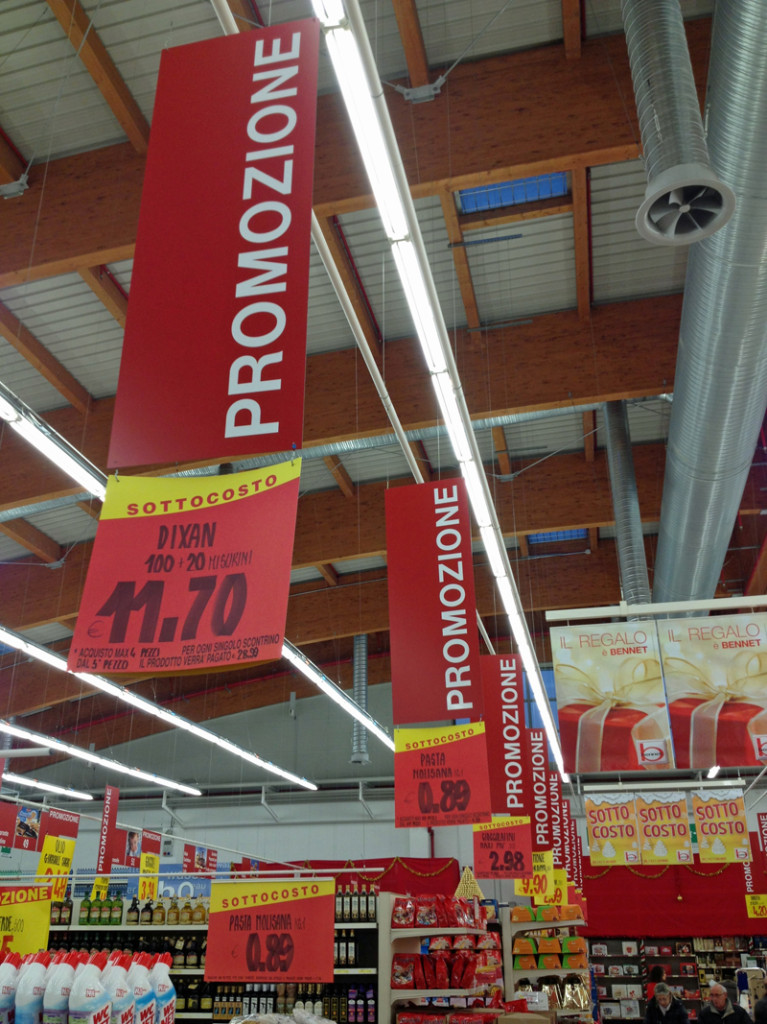
PROMOZIONE!  There is always a great sale going on in our grocery store
PROMOZIONE! There is always a great sale going on in our grocery store
But the BEST sales are when the wine is deeply discounted!

What did I just hear?!  Did you just hear what you think you heard? Well, if what you think you heard was vulgar lyrics while shopping for bread in the grocery store, then you would be right.  Whether from a lack of understanding of English or a lack of censorship; it is not uncommon to hear Brittany Spears telling you to “turn this sh*t up!” when you’re walking through the Bennet (our grocery store).

“Please don’t hit me one more time!”

PETS

The pets here are more or less the same as back at home.  Most people prefer dogs and cats, but you have your occasional bird or even lizard depending on the personality of the owner.  I would suggest that there are certainly more farm animals that are considered “part of the family” though – Claudia (our aunt) grew up loving her prized cow (and one of her best friends).

We welcome you with open arms, Paris Hilton.  Back at home, only big celebrities can get away with bringing their pets anywhere they want.  Here, it’s normal to see dogs outside of the park and inside your favorite restaurant.  And I’m not just talking about “purse-dogs”.  I mean, full on German Shepard’s in grocery stores, restaurants, subways (the subterranean transport – not the sandwich shop) and museums.  Dogs really are that extra family member.

Jen and Fido checking out the sights from inside Jen's hair salon
Julia and someone’s dog checking out the sights from inside Jen’s hair salon

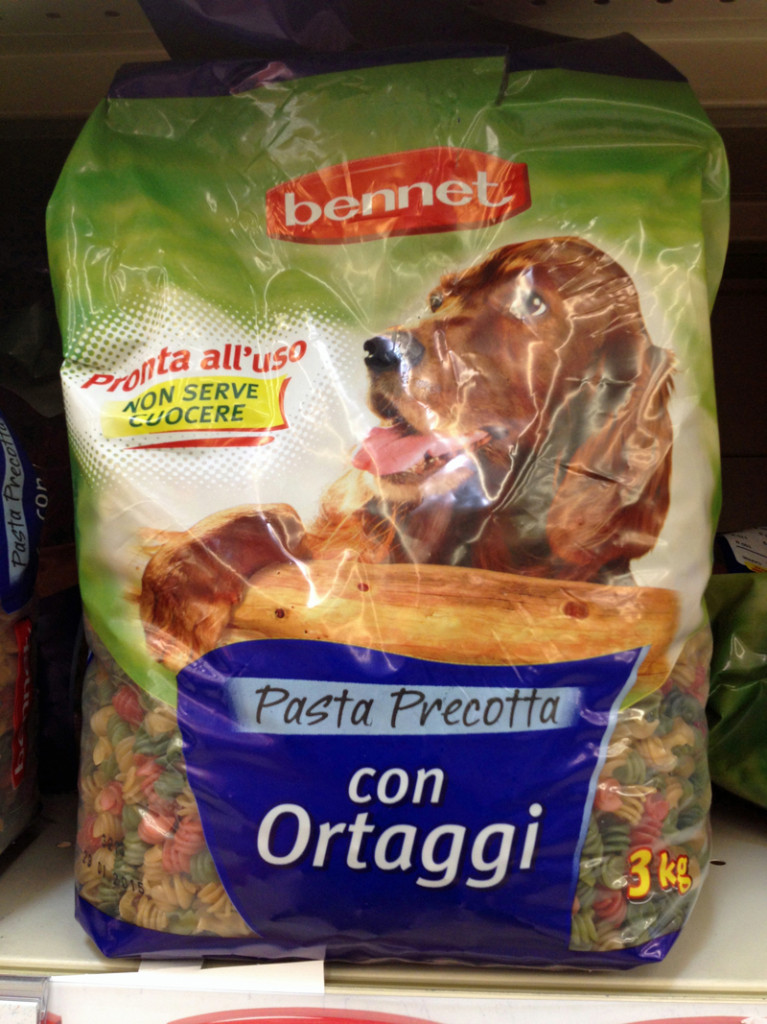
100 grams of pasta is the rule… no exceptions.  Cento grammi di pasta (100 grams of pasta) is the acceptable amount of pasta to eat (unless you’re having a secondo, in which case 80 grams is the way to go).  Italians can accurately grab that exact amount of pasta from the package without looking twice or using a scale.  So, if we’ve already determined that pets are really that extra family member – why should they be deprived of their daily pasta?  A lot of the dog food here is served in pasta form.  Buster knows the difference between  his fusilli and bocconcini cuts of pasta just as well as his owner, Giovanni.
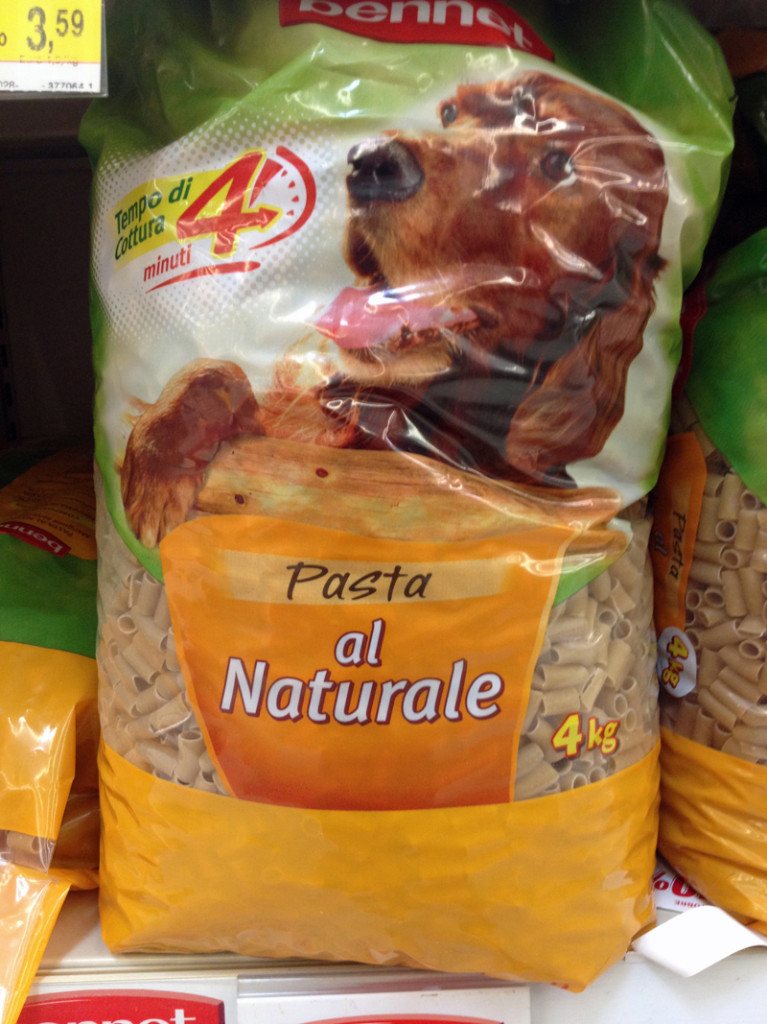
Pasta Naturale for Fido
Or perhaps her prefers pasta pre cotta with ortaggi
Or perhaps her prefers pasta pre cooked with ortaggi

♠♣♥♦     ♠♣♥♦     ♠♣♥♦

I’ve got even more to write, but then again… I’d like to stretch this series as long as the most perfect franchise ever, Police Academy (and I’m even talking about that seventh installment, the classic gem with a 3/10 rating Mission to Moscow).  See you next time…

Five Diamond Christmas Tour of Italy

Most people visit Europe in the spring or summer.  Of course, these are great times of year to see such a magical and historical place.  But may I suggest to you a unique alternative?

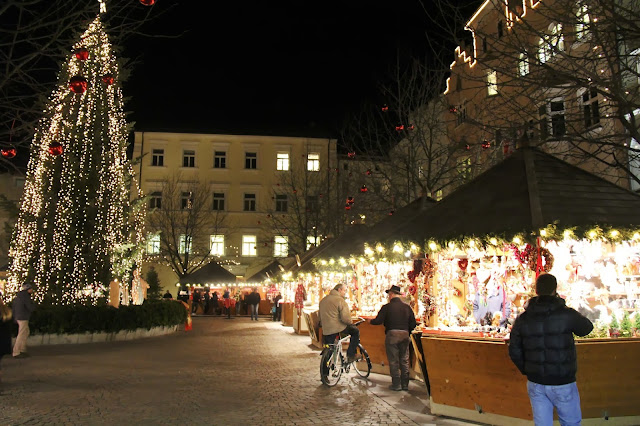
Come in December, when the weather is at it’s coldest and the people are their warmest.  When the cobblestone streets are strung with lights and the ancient buildings are trimmed with garland. Imagine your most magical place for the holidays – a winter wonderland, if you will.  You will be sure to find something that fits your image here in Europe.  There are amazing markets and festivals across the continent.  Some countries boast cities that are particularly renowned for their holiday cheer.  Finland, Germany and Austria are at the top of the list.  Denmark and Switzerland are there as well.  And of course, our personal favorite place to be for Christmas is right here in Italy.  Before you plan your next Christmas vacation, add Europe into the running.

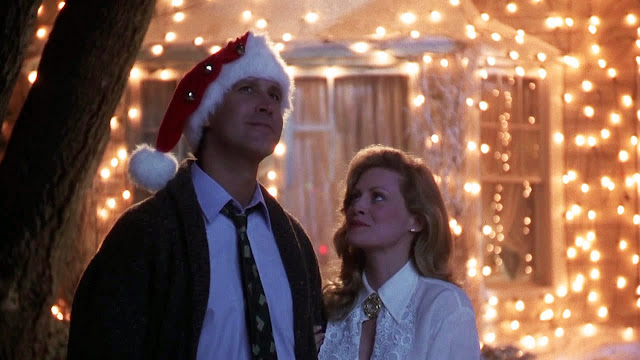
“Boy, Clark – I think we should go to Europe next year”

We had been toying with the idea of visiting another country to experience some of the large and festive Christmas markets (two of the top cities in the running were Cologne, Germany and Lapland, Finland). As we did more and more research, we kept noticing many towns in Italy topping the lists. We decided to stay close to home and shop in a language we know (well, sort of).  Jen came across this article describing some of the best Christmas towns in the Trentino Alto-Adige region of Italy. One look at the photos of each town and I was sold.  Beyond that, I was eager to explore this region of Italy for it’s unique wines and always breathtaking Dolomiti mountains.  So I went to work on google maps and figured out that we could comfortably see five cities (with a bonus sixth on the return) over a period of three days.  We would visit Vipiteno, Bressanone, Brunico, Bolzano and Merano with another full day reserved for the region’s capital city, Trento.

When I plotted our course, I literally sketched a rough map on a piece of scratch paper and realized that four of the five towns made a diamond shape.  The fifth was sort of floating off to the right side, but for creative purposes – we’ll just stick to the “Five Diamond Christmas Tour”.  It has a better ring than “Four Points & That Other One Tour”.

“Sounds great, dad – lets GO!”

We carefully chose our hotel, located just outside of Bolzano.  What I didn’t pay much attention to was the name of the actual town, Soprabolzano (literally meaning, above Bolzano).  ABOVE Bolzano it was.  Our hotel sat roughly 4,100 ft above the town, which gave us two options.  Drive up the winding and perilous mountain road or take the 15,000 ft cable car (gondola) ride.  I opted to drive, even when the snow fell and the tailgaters lined up behind me.

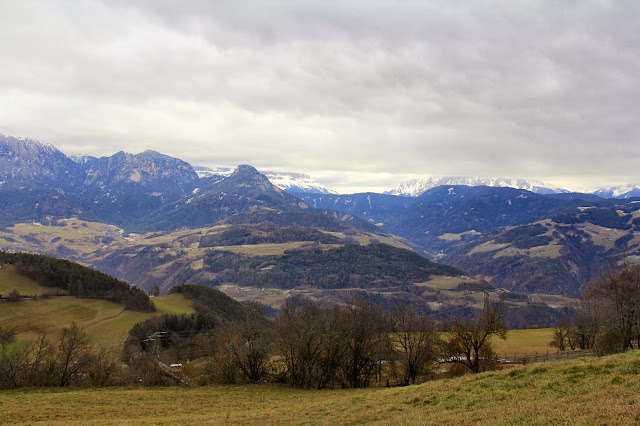
The view from the road leading to our hotel

We were surprised to learn from Franco and Claudia (Jen’s aunt and uncle) that the area of Italy we were visiting was more Austrian than Italian.  They couldn’t have been more correct.  We definitely felt as though we were in Austria (which feels just like you’re in Germany).  The houses are constructed with charming German architecture (picture gingerbread houses).  The food served in the restaurants is German (picture sausages and sauerkraut).  The people even spoke German instead of Italian!  It was strange to experience, because we were in Italy – but it was also nice because it felt like a more unique “vacation” away from our normal lives. Funny, we were nervous to order pasta for the first time in Italy because we felt like it would be ordering pasta in Germany (something you would never do).

VIPITENO (Sterzing – German)

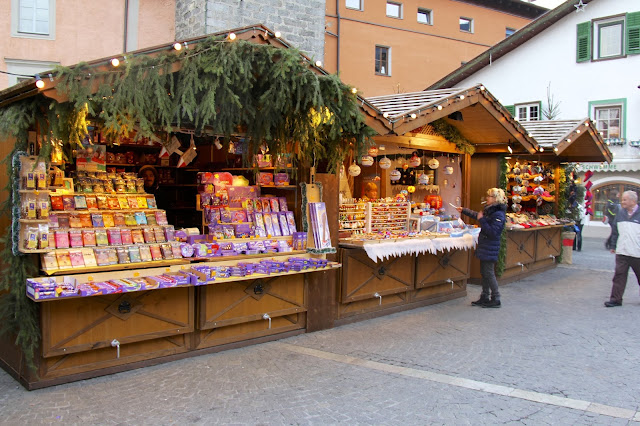
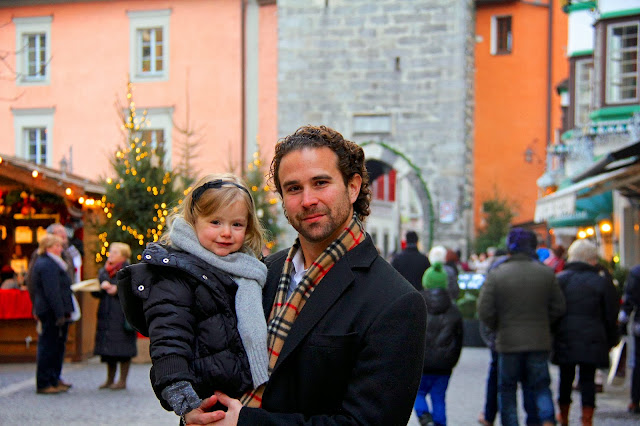
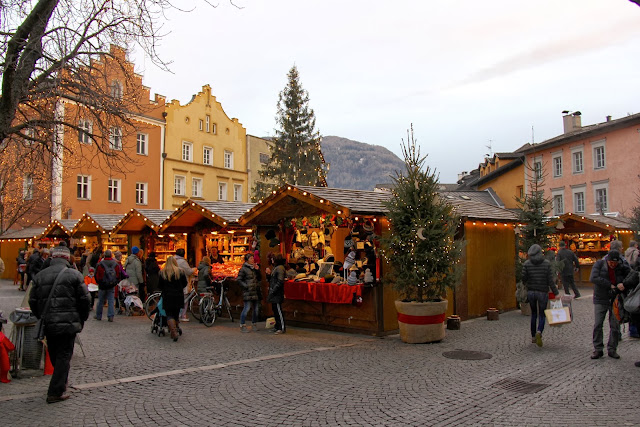
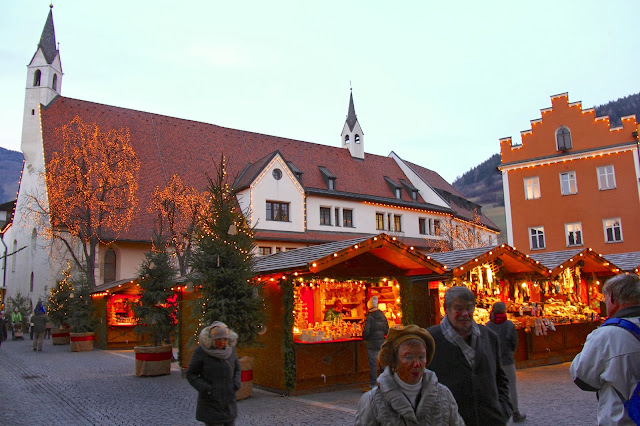
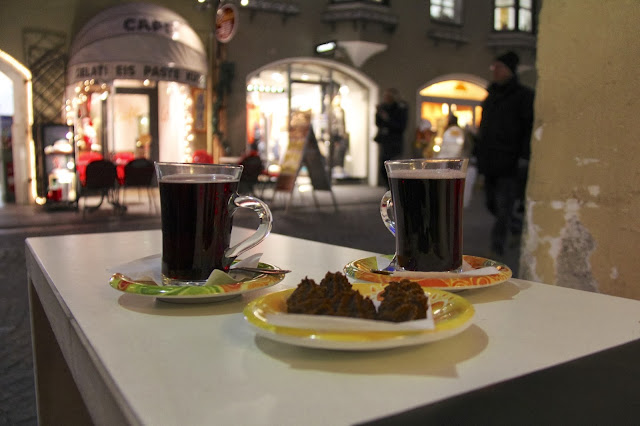
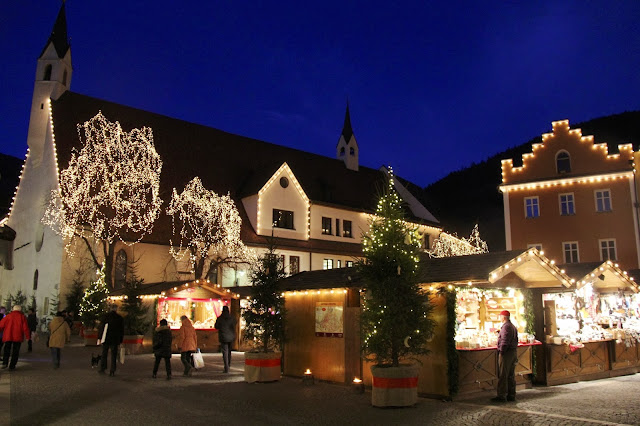
On the first day of our “Christmas Tour” we drove from our home directly to the northernmost town, Vipiteno.  We arrived after lunch and took our time strolling through the market and the charming streets.  We were eager to see the setting sun because we knew that meant the Christmas lights would soon be ablaze.  We stopped for a vin brulé to warm up and sit for a bit.  As opposed to going inside the restaurant, we instead opted to sit outside under the blankets they provided for their guests.  It was cozy, fun and comforting.  Eventually, we had to tear ourselves away from Vipiteno because we had one more stop on the schedule.

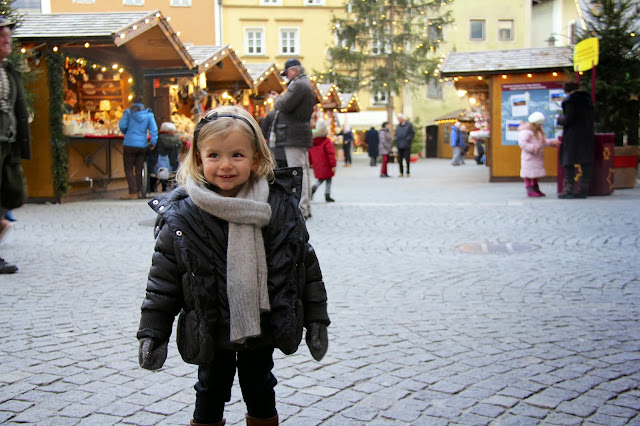
Julia is excited as we enter the market
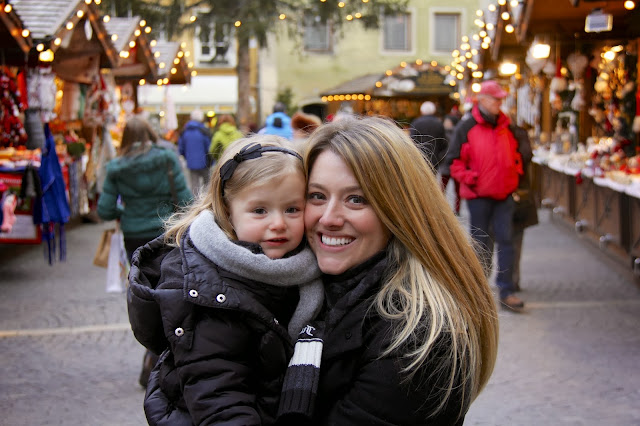
Jen and Julia hugging
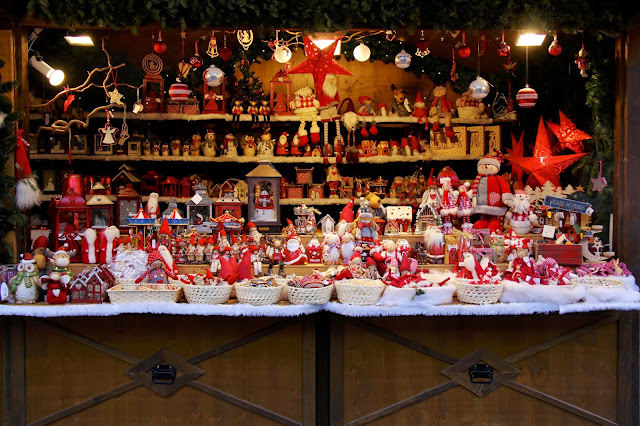
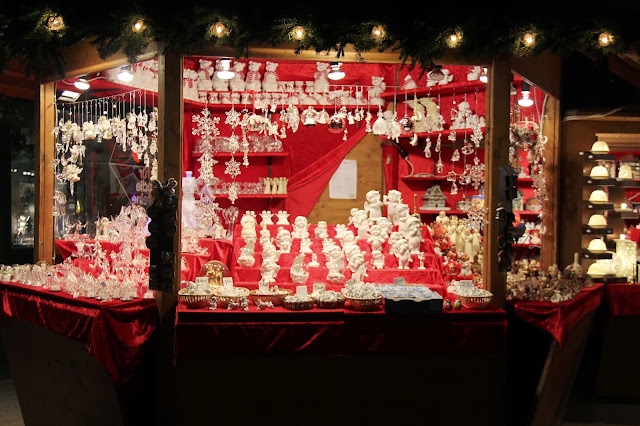
One of the stands, selling a variety of Christmas ornaments
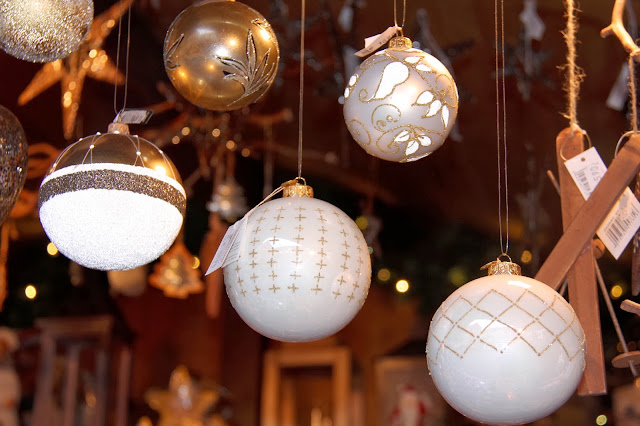
Some beautiful ornaments
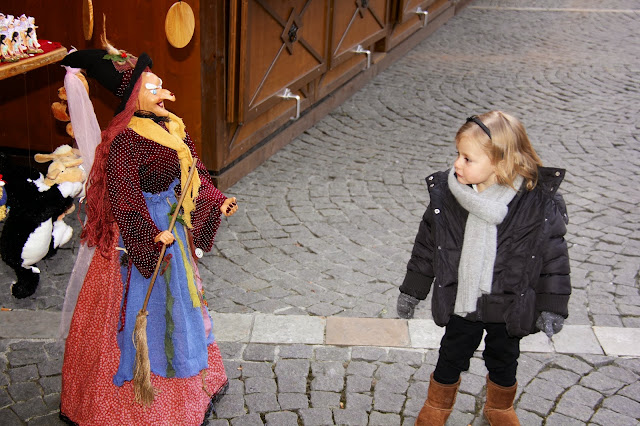
Julia sizes up a Befana (Italy’s Christmas Witch)
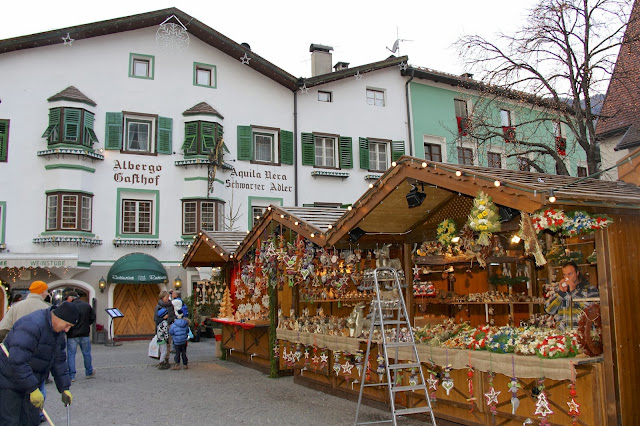
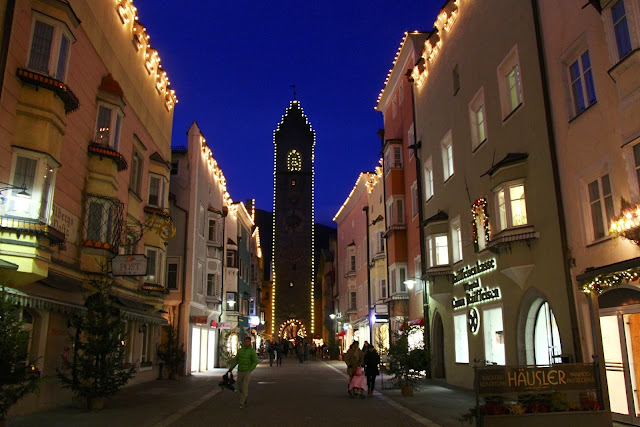
The charming town square
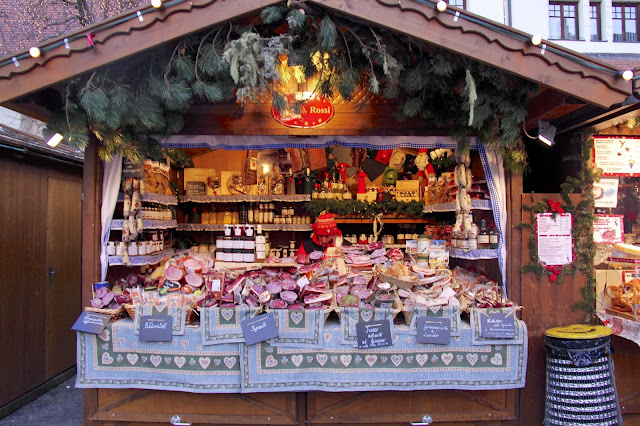
Another stand selling local specialties
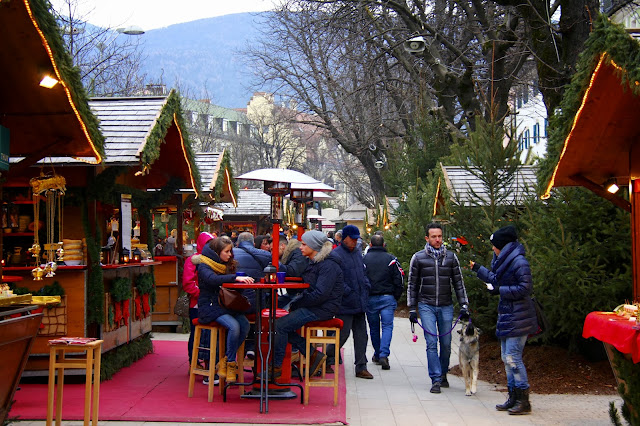
More Christmas stands
My favorite little girl
The lights got a little brighter as it got a little darker
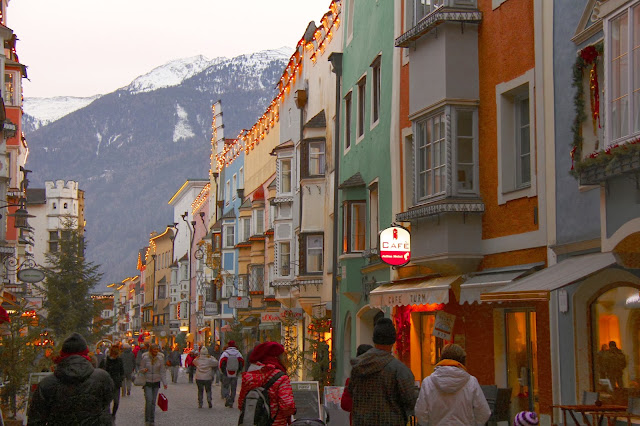
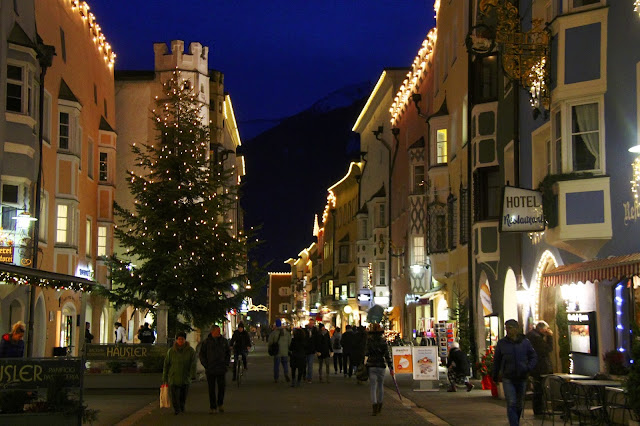
The main street was stunning with a beautiful mountainous backdrop
The main piazza
We stopped to warm up and enjoy some vin brulé
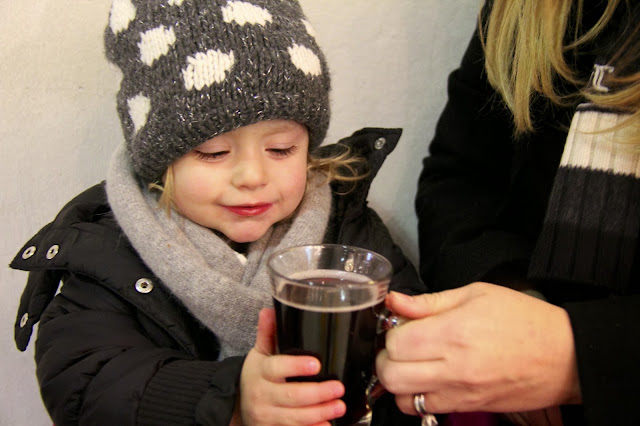
Julia warms her hands on mom’s cup
The sun officially sets
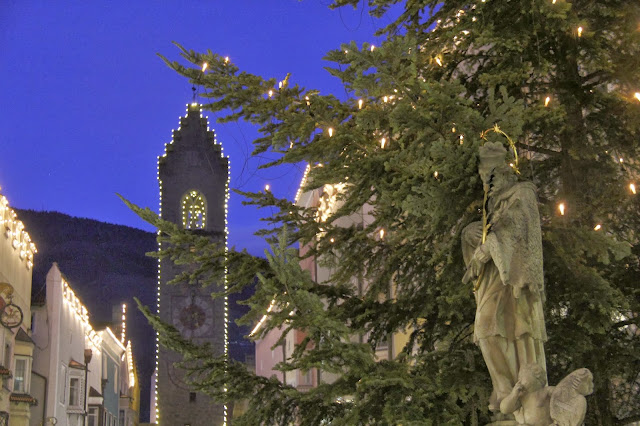
Vipiteno at night
The main square at night
Vipiteno was simply beautiful

BRESSANONE (Brixen)

I almost scratched Bressanone from the list – originally, I didn’t think I could fit all five towns and this was the one that I felt could be sacrificed.  We were VERY glad that we kept it in the itinerary.  This was arguably one of our favorite towns.  We didn’t realize that it is the third largest and and oldest town in the province.  Bressanone is absolutely full of charm.  Beyond all the Christmas festivities, we enjoyed just walking around the city itself, although most everything had closed by the time we finished dinner.

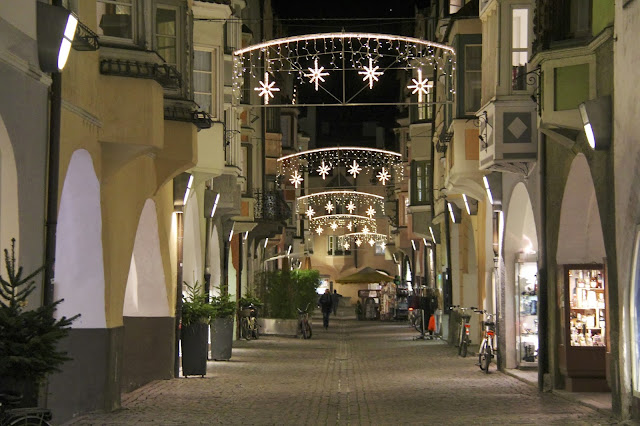
One street leading to the main piazza
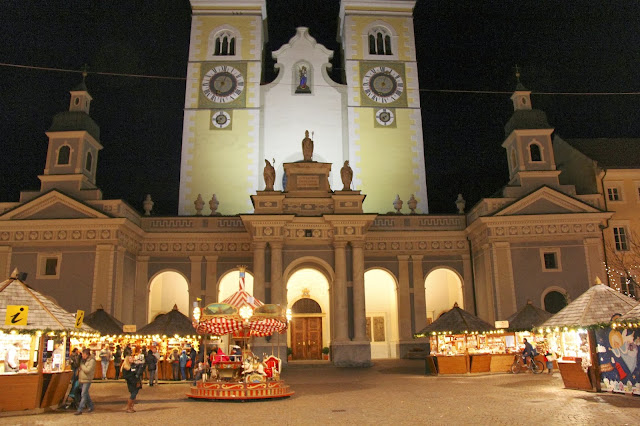
The market in the main piazza
The booths were different than the previous town
Julia rode the carousel in front of the main church
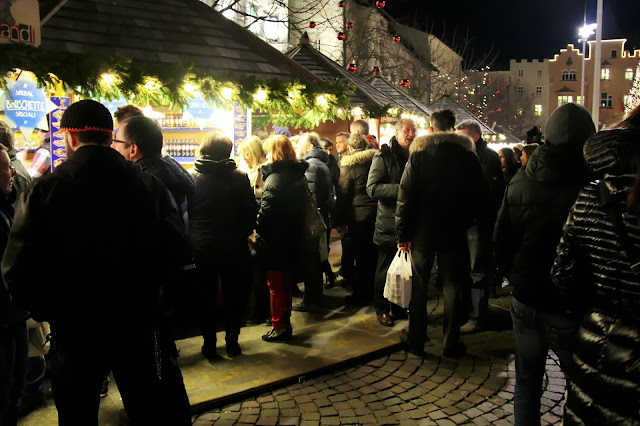
The most crowded and popular stands were always the ones selling vin brulè – they had an outdoor “bar” vibe
Holiday decorations

SAN CANDIDO (Innichen)

Did you catch it?  San Candido was not listed as one of the five towns above.  Franco and Claudia suggested that we add it to the voyage – they described the town as “piccolo ma bello” (small but beautiful).  It was only a half an hour away and snuggled tightly in the Dolomites, so it was a no-brainer for me.  They didn’t have nearly the amount of Christmas decorations as the originally planned towns, but it truly was “small but beautiful”.  Plus, there are only a handful of towns in the world that are nestled in the Dolomite mountains, so it was certainly worth the extra drive.

Julia and I enter the charming town of San Candido
Our first snow of the season
Julia remembered how much she loved to eat it
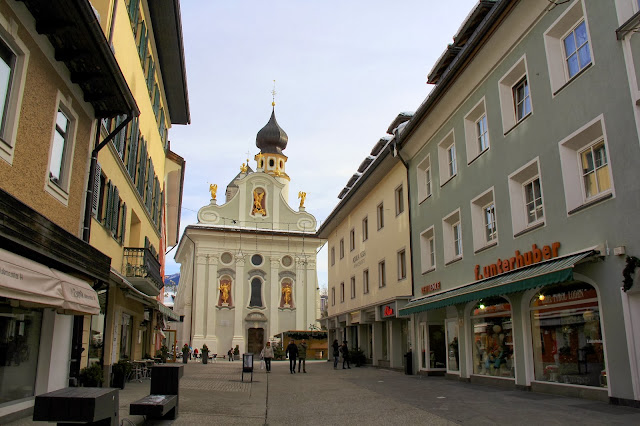
Main street in the town
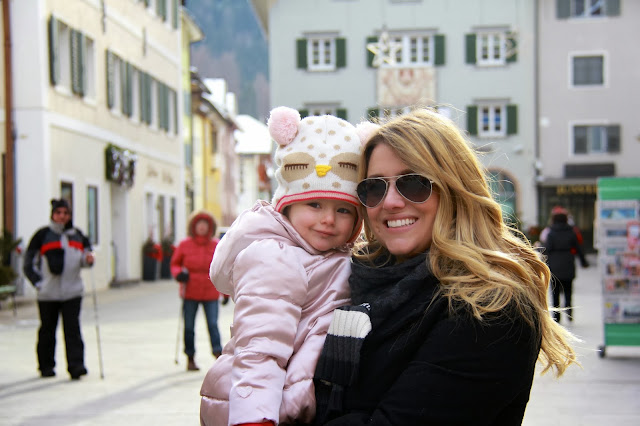
Jen and Julia in the main piazza
“Hey guys, wait for me!” 
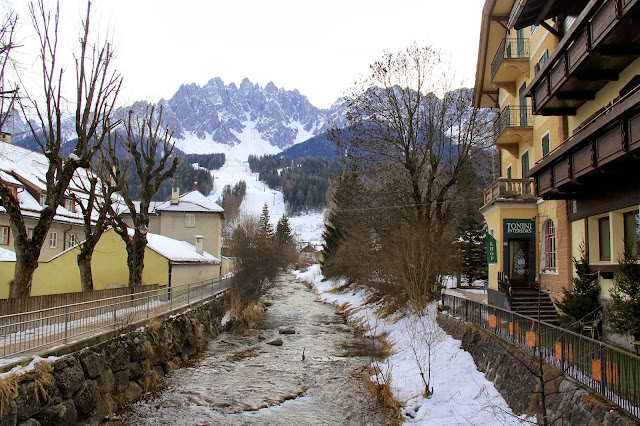
A small river runs through town
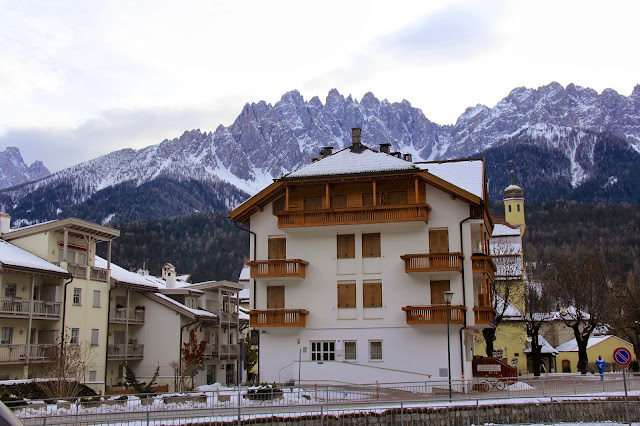
The Dolomites surround the town
Another town we passed on the way out

BRUNICO (Bruneck) 

Our second stop of the second day was Brunico.  We strolled through the markets and then through the city streets.  It was a beautiful town, but the markets were small in comparison to the other towns – so we didn’t spend a tremendous amount of time here.

The market surrounded the outer wall of the main city street
They had some great stands with local food and crafts
As usual, the busiest stands were the ones serving the drinks
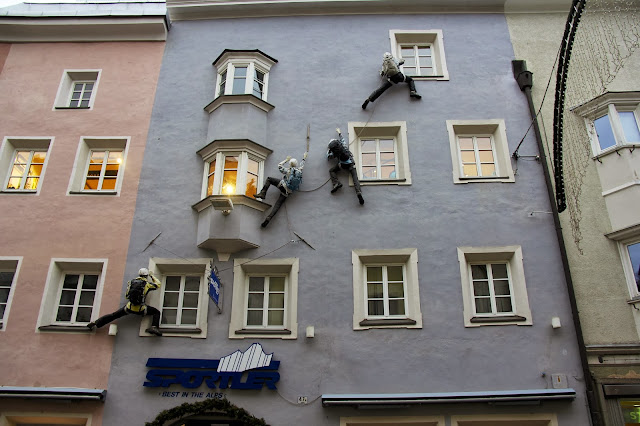
I just loved this outdoor sports store’s display
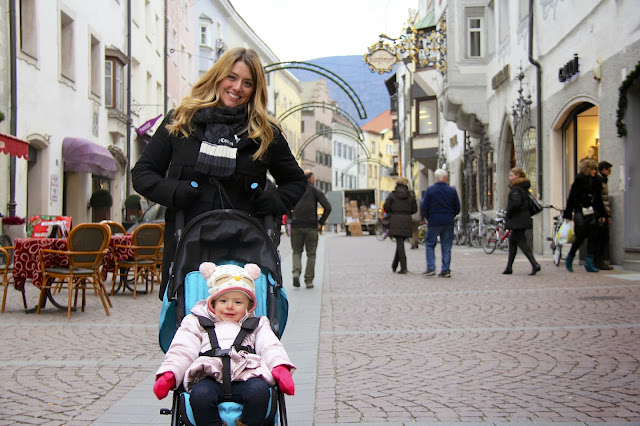
Jen and Julia in the center of Brunico

BOLZANO (Bozen)

We didn’t think that anything could top Bressanone, which we had seen the night before.  We were wrong.  We arrived in Bolzano after nightfall and our eyes opened wide as we walked into the center square.  Of all the towns, this one had the biggest Christmas market by far.  They had the most decorations.  They had the best rides for kids (a toy train that Julia loved riding).  In conclusion, one could say they had the most charm.  Beyond the markets, we loved losing ourselves in the city streets, taking in the restaurants and the shops.  We had a wonderful dinner and walked some more.  It was the perfect end to a fun-filled day.

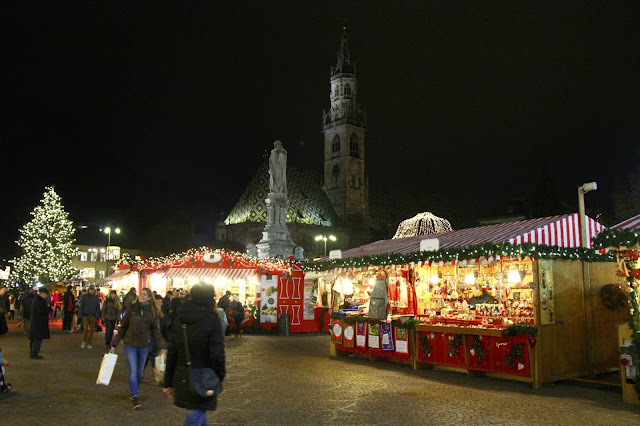
The markets and main church of Bolzano
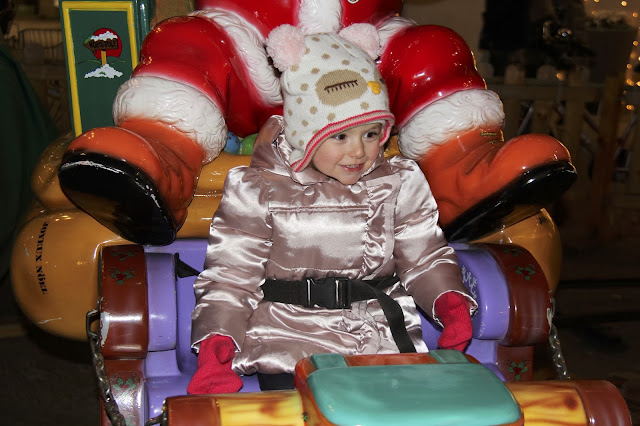
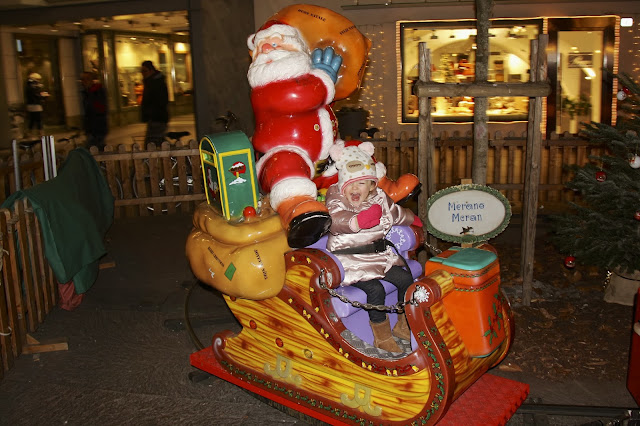
Julia goes for a train ride on Santa’s sleigh
For a kid that’s always happy, I’ve never seen her this tickled
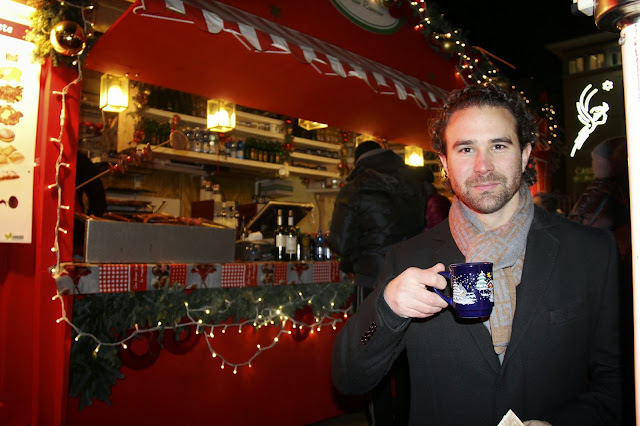
We stopped for a little vin brulé
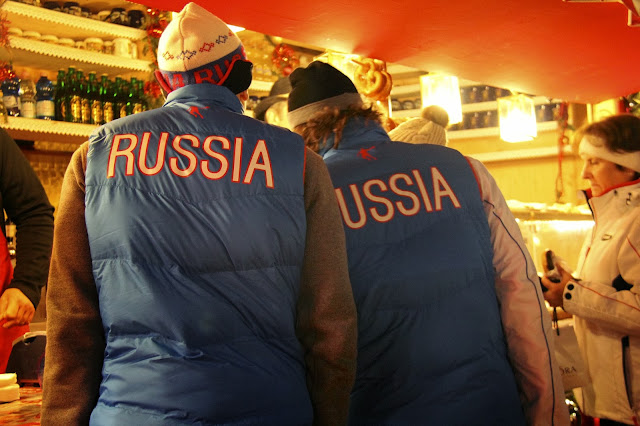
Looks like the Russian hockey team also wanted a little vin brulé to warm up
They had a secret Christmas garden off the main piazza
Family photo in the garden
Vendors and crowds flanked the garden made out of Christmas trees, lights and ornaments
Julia floats through the trees
We just loved the garden
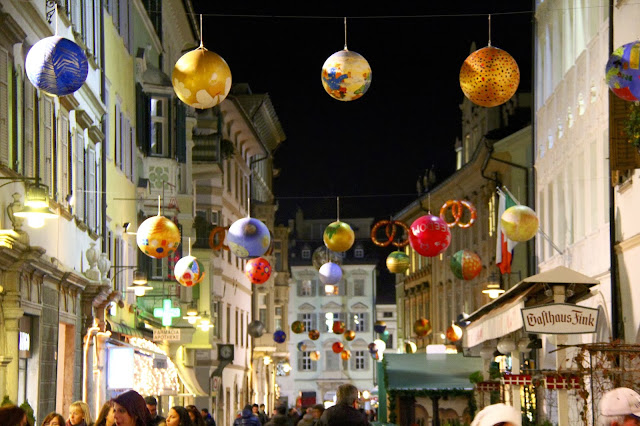
Big ornaments on this street were a nice surprise from the lights that are usually strung across
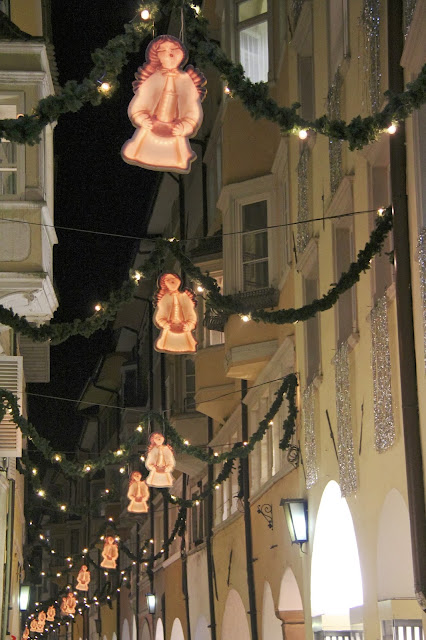
Angels glide across the rooftops

Sadly, our final day was marred by a heavy rain.  Our final two stops, Merano and then Trento (two of the places we were most excited about) were unfortunately, scratched from our trip.  We didn’t think it would be nearly as much fun to walk around in the rain.  If you do decide to take my “Five Diamond Christmas Tour” – do as I say, not as I do.  Stick to my original itinerary (VipitenoBressanoneBrunicoBolzano, Merano and then Trento) and be sure to check the weather forecast!

Hope you enjoyed – Merry Christmas!

Vinegar and Ice Cream – A Delicious Combo!

It’s likely that you may think I’ve gone off my rocker.  Vinegar on a salad – of course.  Vinegar on french fries – sure.  But vinegar on ice cream?!  Greg, you must be crazy?!  I assure you, I am not (well, at least when it comes to this point).  Provided one very important detail is in play… that the vinegar used is aged balsamic vinegar from Modena.  This dark, delicious treat becomes sweet and thick (almost, syrupy) once it has been aged 12(+) or 25(+) years.

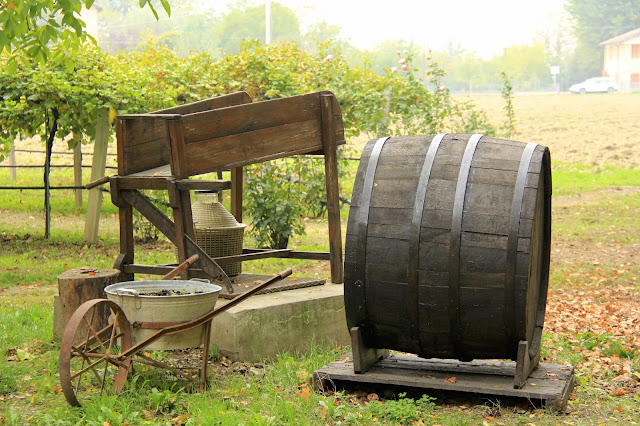
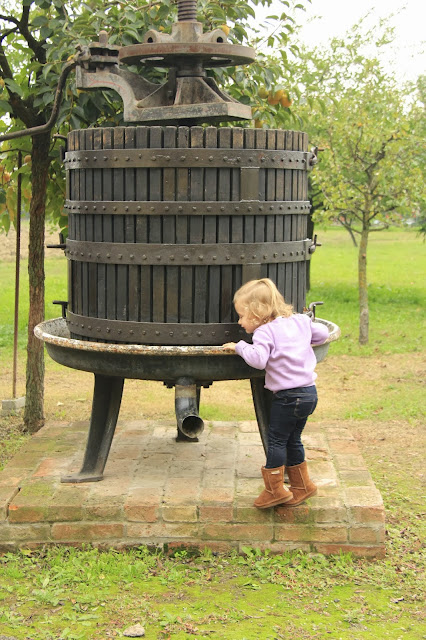
Old fashioned equipment used to make vinegar now stands as decoration

I have been a fan of all things vinegar for as long as I can remember.  Admittedly, a strange condiment choice (above ketchup or mayonnaise) – but the heart wants what the heart wants.  Although we use apple cider vinegar every single day, I have always been quite fond of balsamic vinegar.  Just the right amount can add the perfect hit of acid to round out a caprese salad.  However, I recently learned that I have become accustomed to eating the equivalent of a McDonald’s value meal when a readily available filet mignon was just around the corner.  But let’s back up and find out how I discovered this…

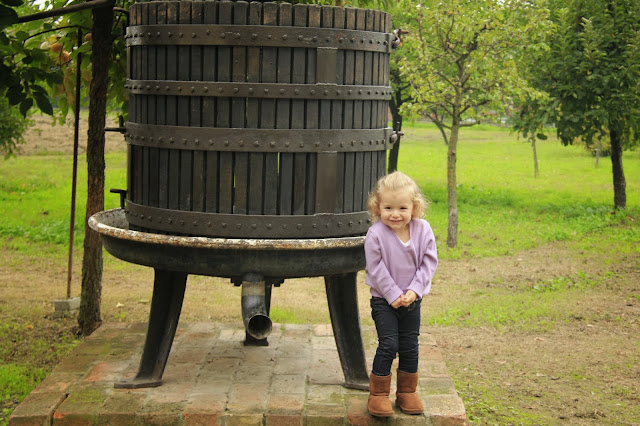
Julia stand by an old grape press
She’s a curious little girl
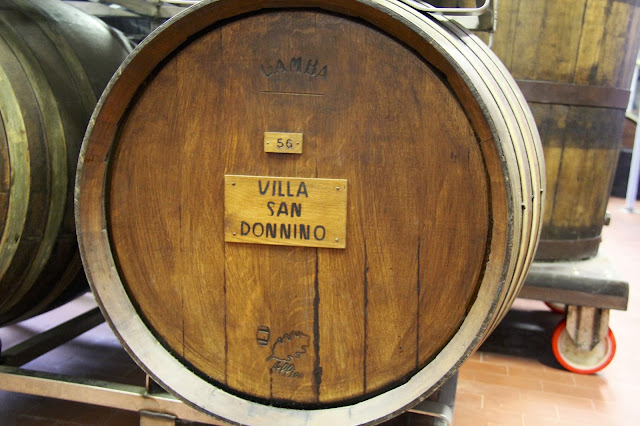
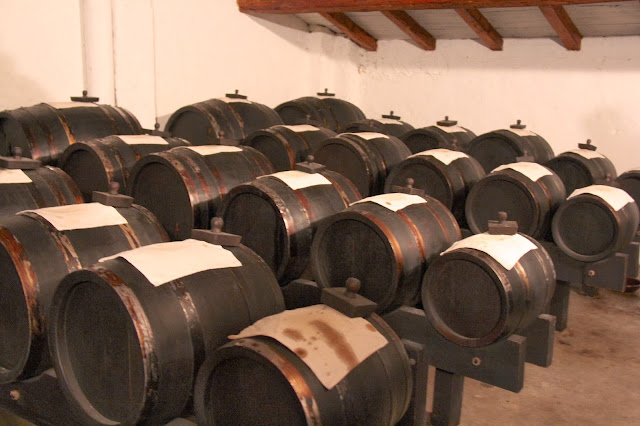
One of the barrels used for aging
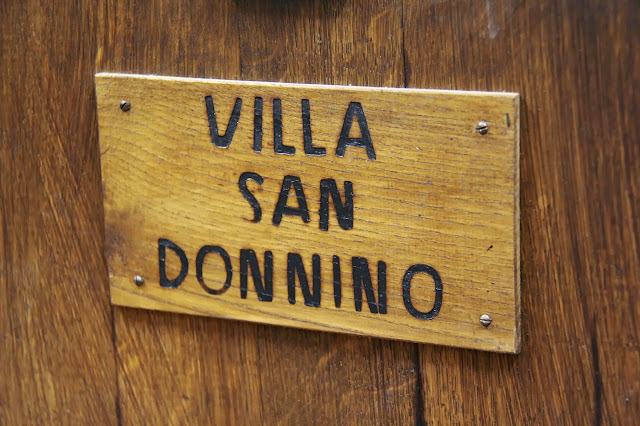
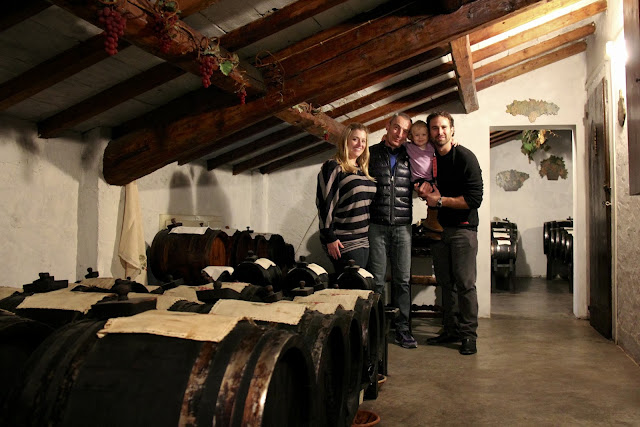
Villa San Donnino has been a family run business for three generations
When my aunt Deborah and uncle S came to visit, we ventured on a road trip to the Emilia-Romagna region of Italy.  If you read that particular post, you learned that Emilia-Romagna is widely known for two things – cars and food.  One of the most significant contributors to the food column is the aged balsamic vinegar that is produced exclusively in Modena.  On our final day of the road trip, we arranged for a private tasting with a local producer, Villa San Donnino.  Jen had learned that a tour and tasting at Villa San Donnino was one of the top-rated attractions on Trip Advisor.  Once again, our favorite online guide for all things travel hit a home-run.

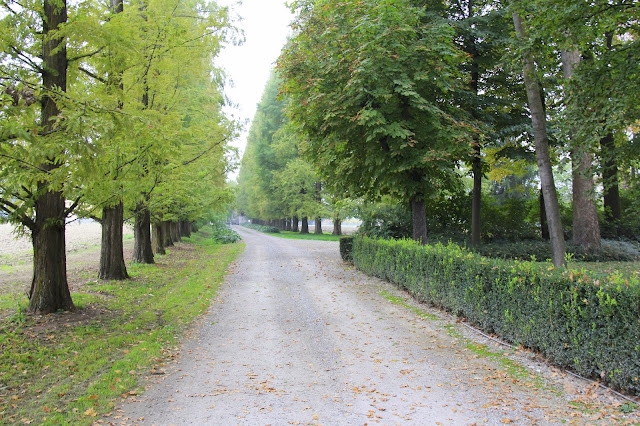
The driveway leading toward the villa
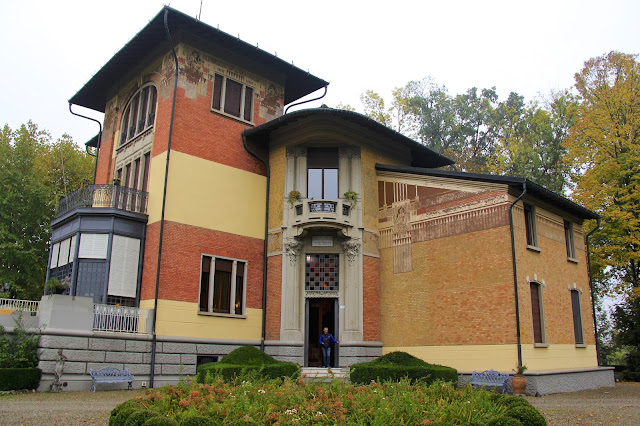
The villa of, Villa San Donnino
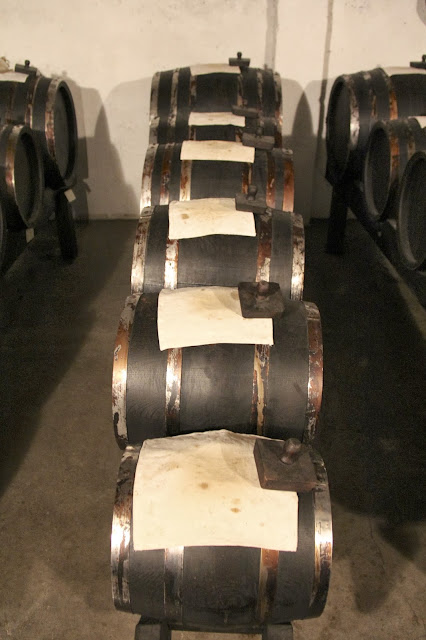
The important aging process begins here, in these barrels

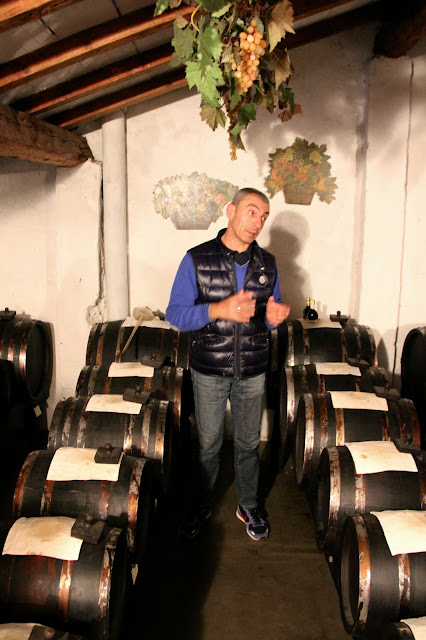
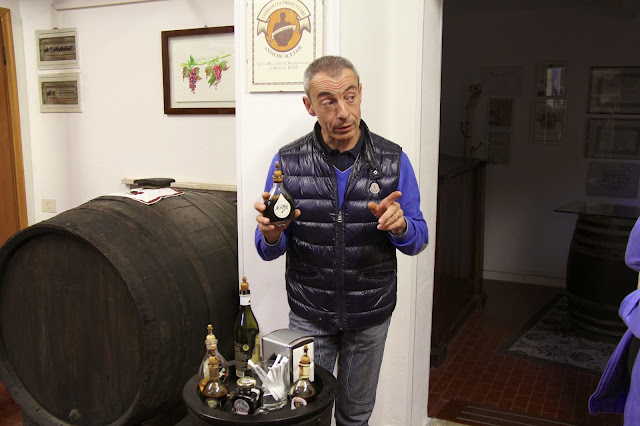
Not only did the overall experience exceed our expectations – it raised the bar for what events like this should be all like over the country.  The owner and third generation producer, Davide greeted us warmly and took us into the portion of the property where the vinegar is aged.  He first gave us a brief explanation of the vinegar itself.  It was summarized nicely in a marketing brochure I took from the villa, so I will copy the text below:

Davide explains the rigorous balsamic making process

Traditional Balsamic Vinegar of Modena is unique from all other vinegar based condiments.  Unlike ordinary vinegar which has its origins in an alcoholic liquid, balsamic vinegar is produced directly from grape juice.  Grapes, harvested in the region in which balsamic vinegar is produced, are crushed and their liquid – “must” – is boiled in an open vat over a fire.  This liquid is then placed in a high quality wooden barrels in which, through an oxidation process, it is transformed into vinegar.  The barrels are kept in a vinegar loft – acataia – where over a number of years, the precious liquid inside is lovingly cared for through a special technique involving transfers and topping up.  Over many years macrobiotic and enzymatic modifications unite to achieve an exceptional balance in the fragrance and flavor. 

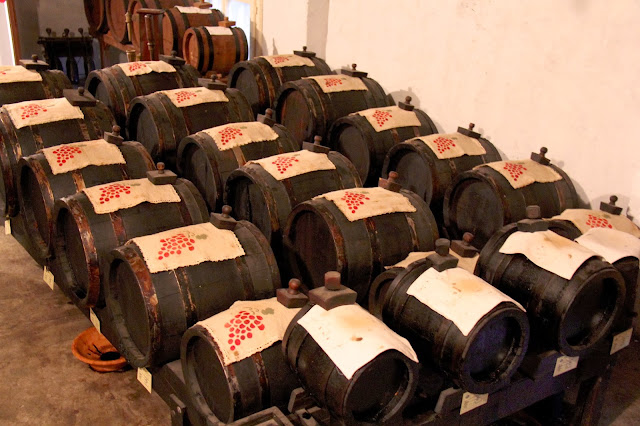
As we climbed the stairs to the acataia (vinegar loft) we were first greeted by the unique and pleasant aroma permeating throughout the loft.  Davide began to explain the aging process, having already described that his balsamic vinegar juice comes exclusively from grapes on his property.  In order to properly age vinegar, you must use a batteria, a series of five or six barrels that descend in size.  A process of “topping” off from the larger barrels into the subsequent smaller barrels is done over many years in order to replace evaporated liquids.  Since the last, smallest barrel is the object from which the final contents are removed for bottling – there is no way to identify a specific amount of time in the barrels (i.e. twelve years).  Because the liquids have been mixed from the larger barrels over many years, a unique system of labeling was created.  A balsamic vinegar that was aged for 12 years will have been aged for at least twelve years (meaning, that 12 years is the youngest portion allowed in that mixture).  The same is true for 25 years and the extremely rare 50 year vintages.

A batteria, aging the vinegar
Another room with a different collection of barrels
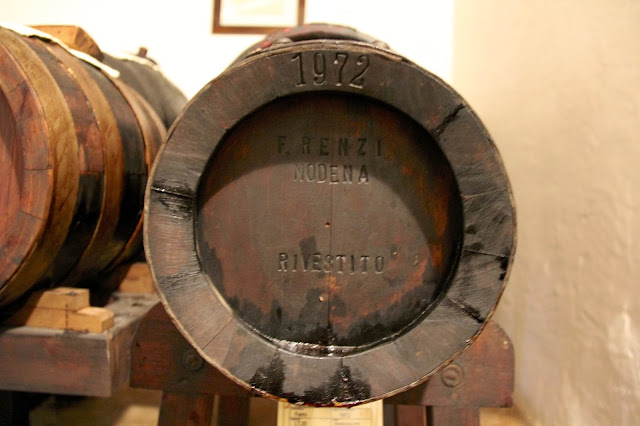
This reserve vinegar has been aging since 1972

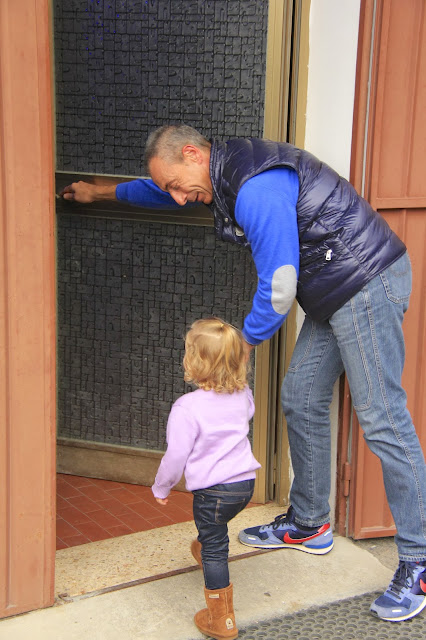
As Davide was explaining the process, we all noticed that he acquired a little two-foot groupie.  Our little Julia seemed more than just enamored with Davide, she fell head over heels for him!  She kept asking him to pick her up and would require his attention at almost every point hereafter.  It was hard for Davide to focus on the remainder of his tour, when at each turn he would hear a little voice saying, “Davide… hold me!”  If she liked him this early on in the tour, she loved him when he brought out the gelato (ice cream) for us to try.

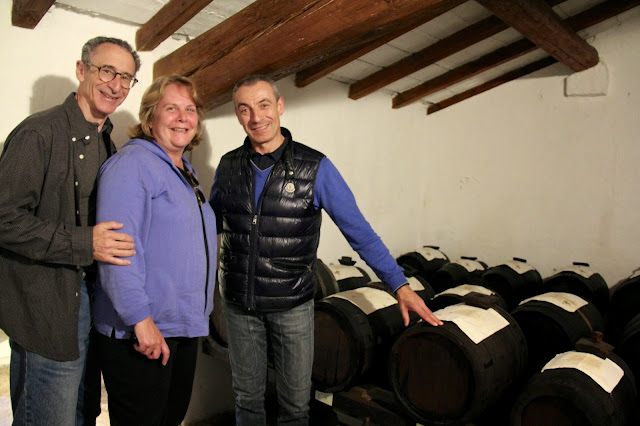
Davide with S and Deborah
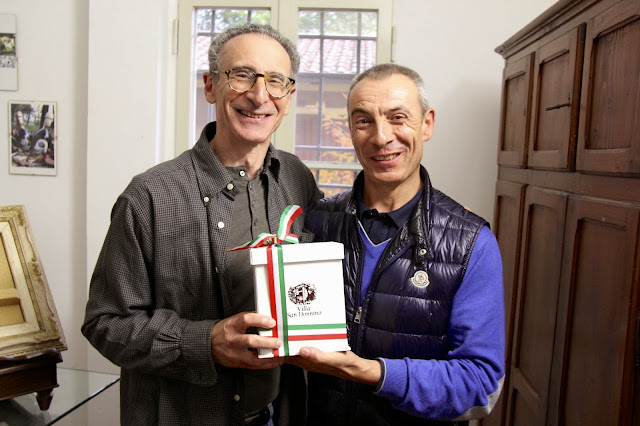
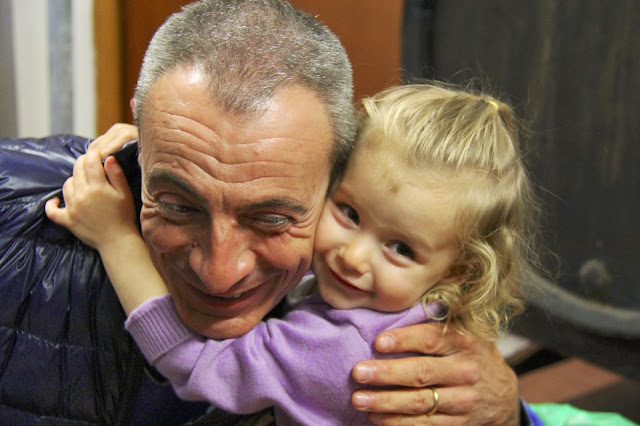
Julia holds Davide close for a photo
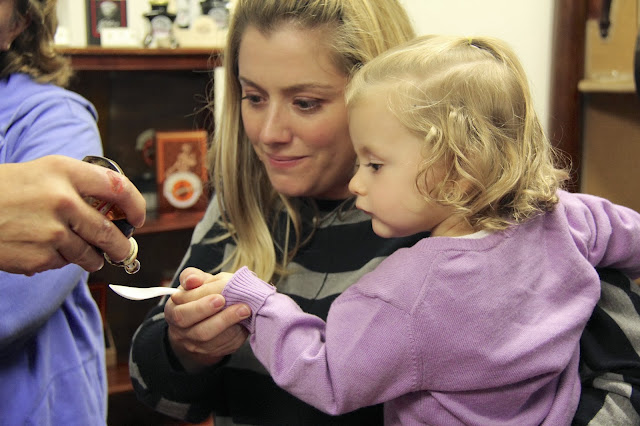
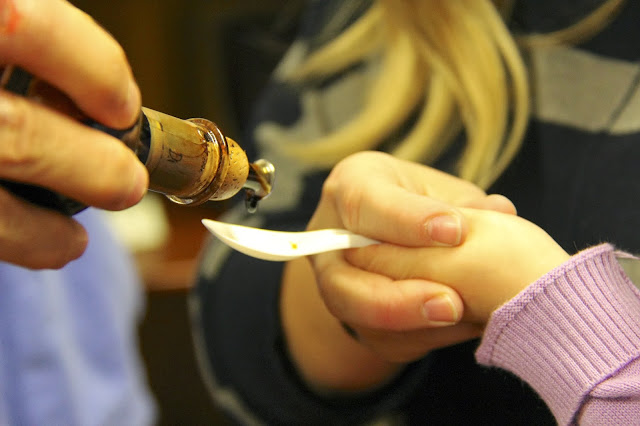
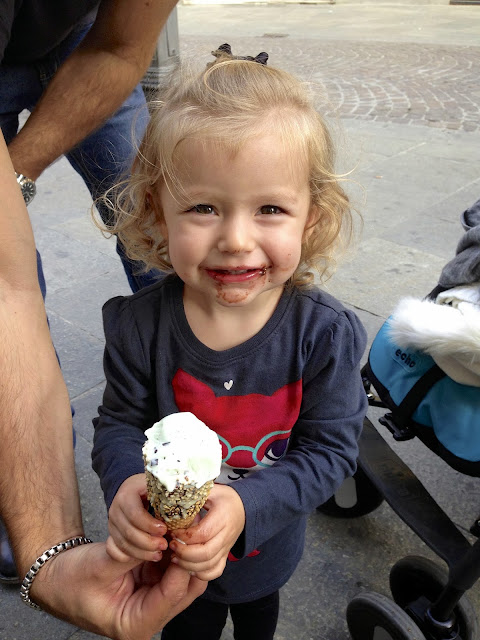
Davide brings Julia in to taste the vinegar with ice cream – she wouldn’t let him go

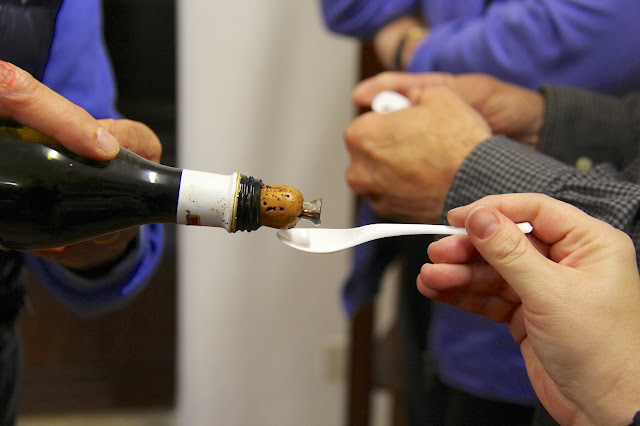
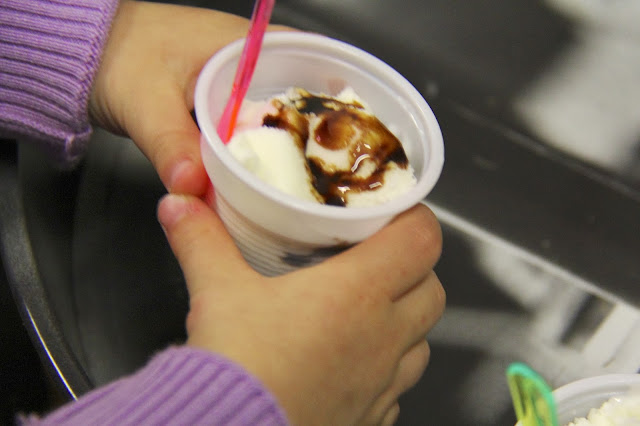
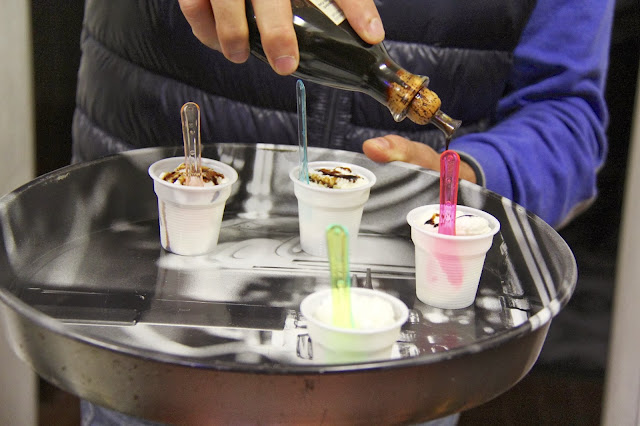
You see, as I mentioned earlier, aged balsamic vinegar has a wonderfully sweet taste with a somewhat thick consistency.  It pairs wonderfully with fruit (melon, strawberries), meat (a nice hearty steak), cheese (a few drizzles over parmigiano)  and especially ice cream!*  In order to prove this point, Davide had arranged a tasting – a  “flight” of vinegars, if you will.  We started with a store-bought, uncertified vinegar.  It was not good.  Then we moved onto his white vinegar before climbing the ladder through his 12 year and on to the 25 year.  Each one was more magical than the last.  When he drizzled it on the ice cream, we couldn’t believe how well it paired.  Julia was such a fan of the vinegar that she didn’t want anything to do with the ice cream, and just wanted more vinegar!  This is one Italian baby!

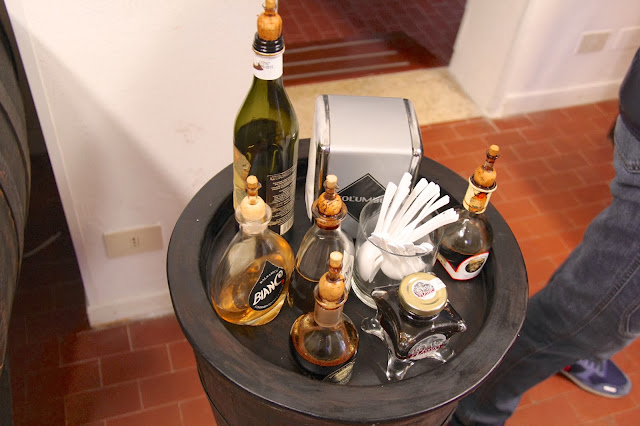
A display set, ready for us to taste
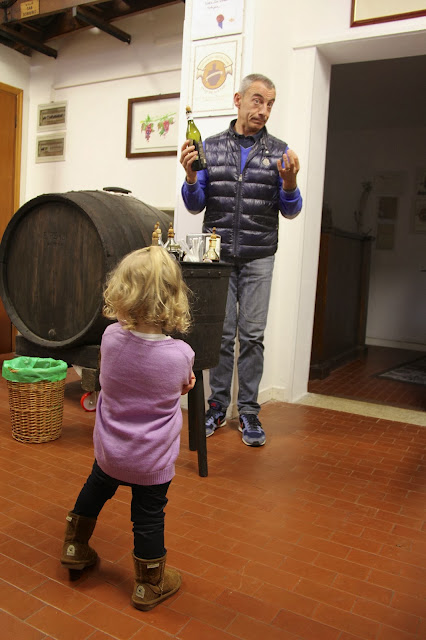
Davide explains the differences of the vinegars to an enamored fan
“Let the tastings begin!”
Davide gave us a very informative and interesting lesson
Julia did not want to miss her turn tasting
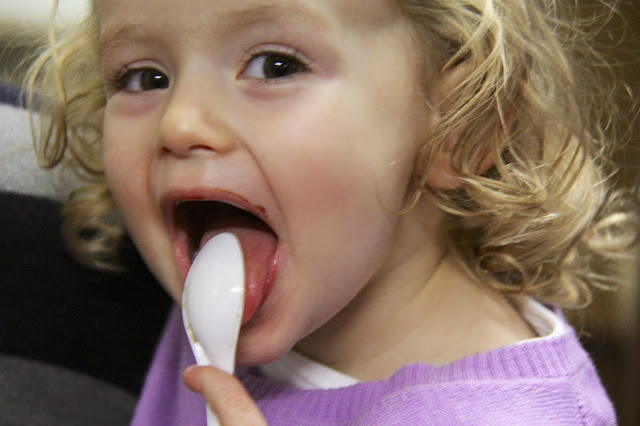
She loved the vinegar of Villa San Donnino
“More please!”
The vinegar coats the ice cream like a sweet syrup
Davide drizzles the vinegar for the rest of the group

As the tour wound down, Davide was starting to feel more like a family member than someone we had just met.  Each couple bought some of his wonderful aged balsamic.  Jen and I got some to use here in Italy and some for when we move home (unlike olive oil, the vinegar can last for many years in the bottle).  I think S and Deborah bought his entire supply, including an affinato (aged 12+ years), an extravecchio (aged 25+ years) and the riserva (aged 50+ years).  I think I’ll risk facing ten years in prison to smuggle home a wheel of parmigiano-reggiano cheese if S will promise to drizzle some of his riserva on it!

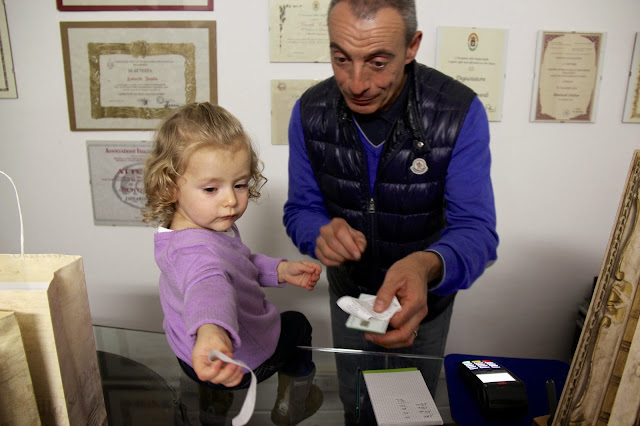
Julia helps Davide ring her father up
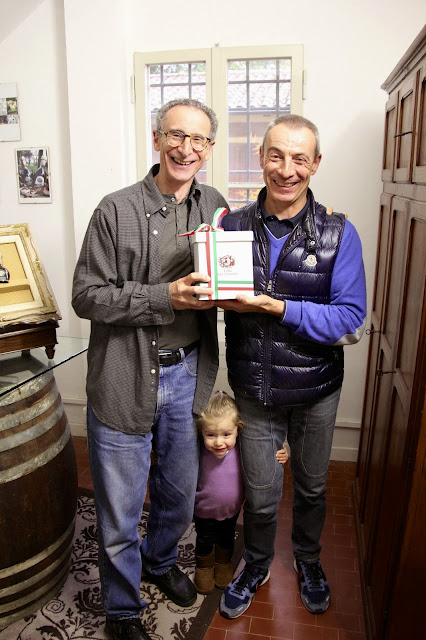
S and Davide take a picture with his new 50 year Riserva
All of a sudden, we all heard, “anche io” (“me too” or “so do I)
Julia didn’t want them taking a picture without her
Davide holds Julia for a hug
Julia gives Davide a big hug

When we had completed the tour and acquisition of our newfound condiments, Davide did something that I suspect he doesn’t do for most tour groups.  He offered to open his private home to us, the villa pictured in the brochure.  This villa was acquired by his grandfather in the 1940’s and has stayed with the family ever since.  In fact, the villa itself plays an integral role in the history of Acetaia Villa San Donnino.  After acquiring the property, his grandfather happened upon a barrel used for making vinegar and so he thought he would “give it a try”.  Over seventy years later, the family is still making vinegar in the traditional way.  Davide explained that to be included in the small fraternity of roughly 80 producers in the world… you must have time, patience and a passion that cannot be taught.  The tour of his home was simply amazing, jaw dropping examples of art and collectables abound around each corner.  It was no wonder that Bernardo Bertolucci chose this location to film part of his movie, 1900, staring a young Robert DeNiro and Gérard Depardieu.

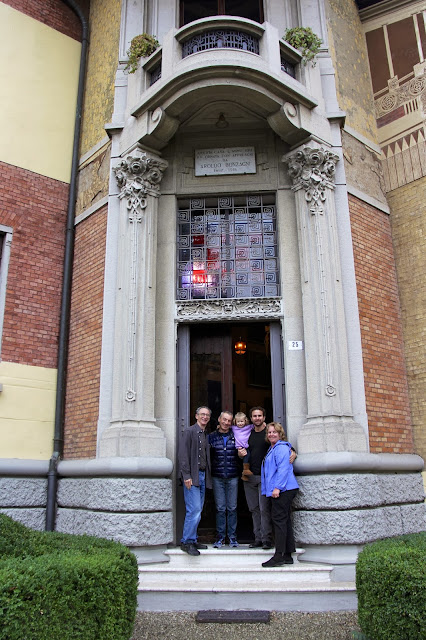
Everyone prepares to go into Davide’s home
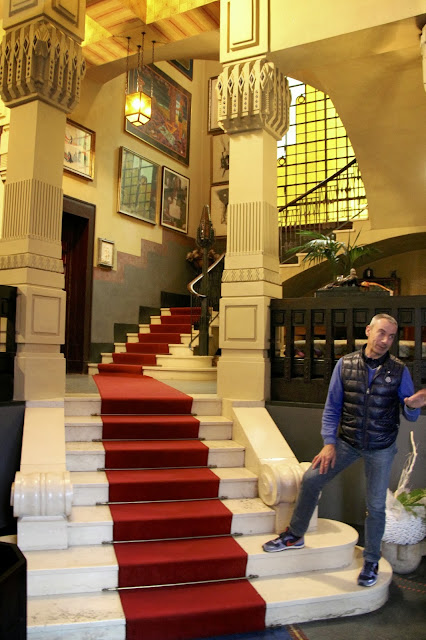
Quite a grand entrance
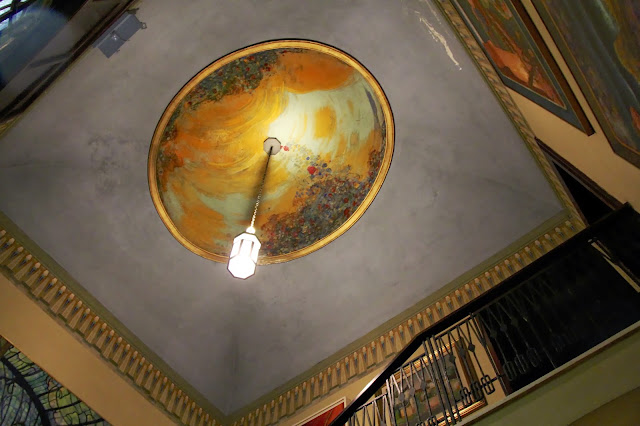
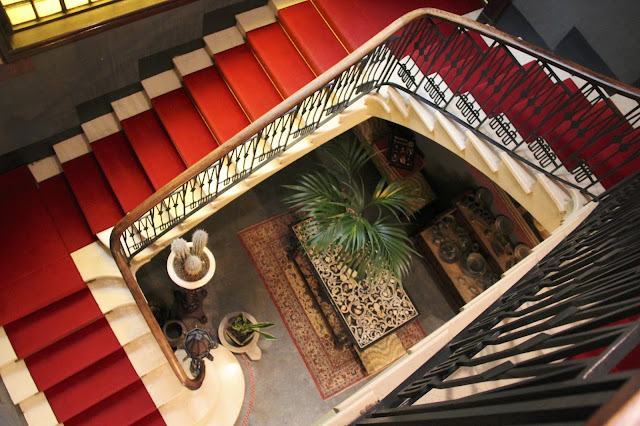
The ceiling above the staircase
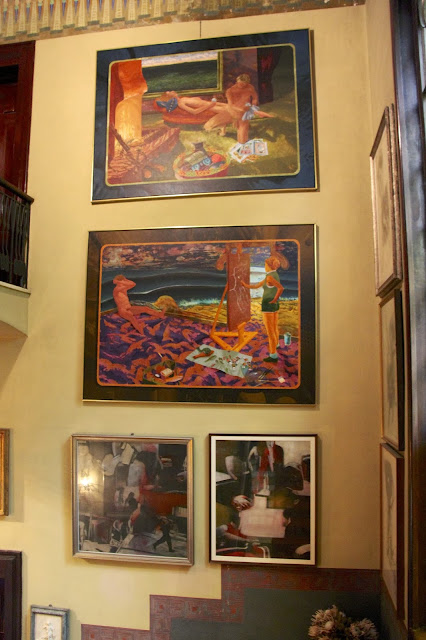
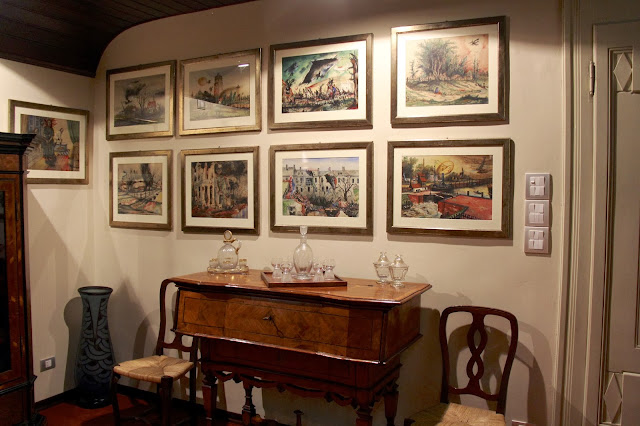
Stunning artwork adorns nearly every wall
The stairwell from the second floor
A collection of smaller original prints frame an antique desk nicely
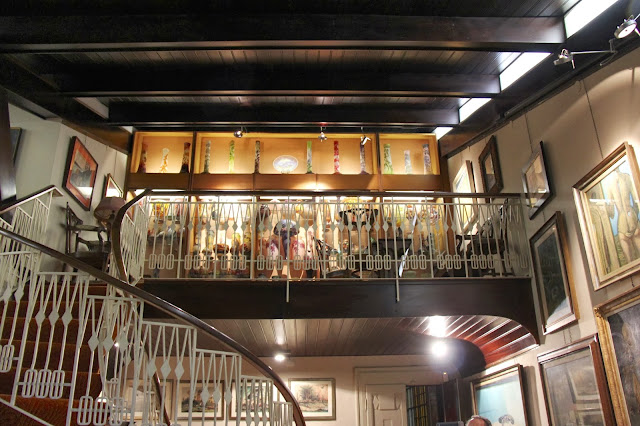
A stairwell leads to an annex full of glass pieces
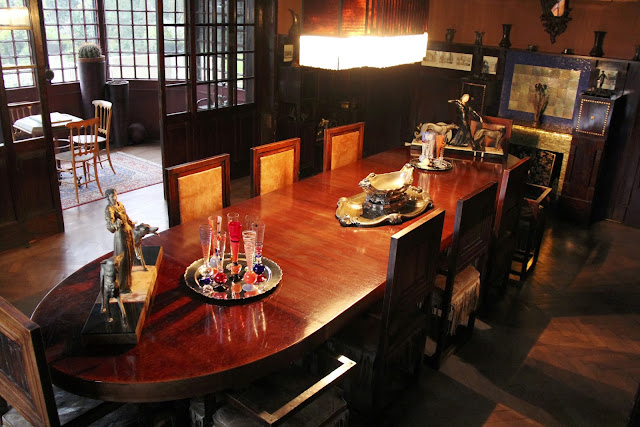
If this dining room could talk… I can’t imagine the history it’s seen.  Robert DeNiro, for starters…
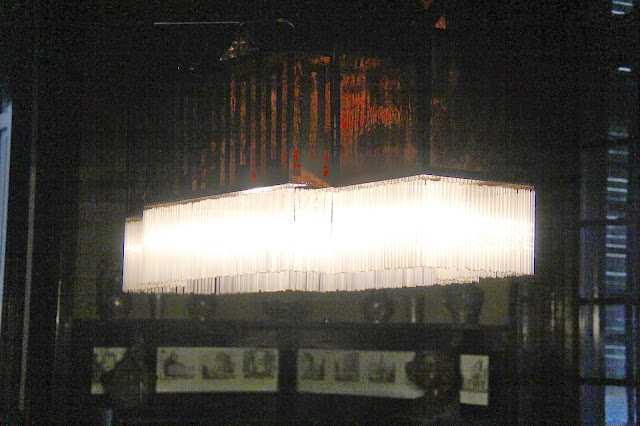
This was one of the more beautiful chandeliers I’d ever seen

As the sun was setting on a long and wonderful day, we bid Davide a fond farewell and Julia tossed her new friend many many kisses.  We will definitely come back to see Davide again and re-stock our balsamic vinegar; if you find yourself anywhere near Modena, I suggest you pay him a visit as well!

Villa San Donnino
Strada Medicina 25/1
San Donnino MO 41126
www.villasandonnino.it

*These are just a few of the wonderful uses for the condiment.  While there are many, many uses for aged balsamic – most applications require a unique understanding of the complexities of this liquid gold.  Since it is very expensive and can also overpower a dish with careless use, it is recommended that you do a quick bit of research before adding to your next dish.

Loosen Those Belt Buckles – Some Serious Eating Ahead

Before I’ve even written the first word of this post, my OCD brain is trying to figure out if this post should be categorized under the “Food” or the “Travel” sections of the blog.  I will be taking you along with us on our travel adventure to go eat some of Italy’s best food.  It’s quite the dilemma…

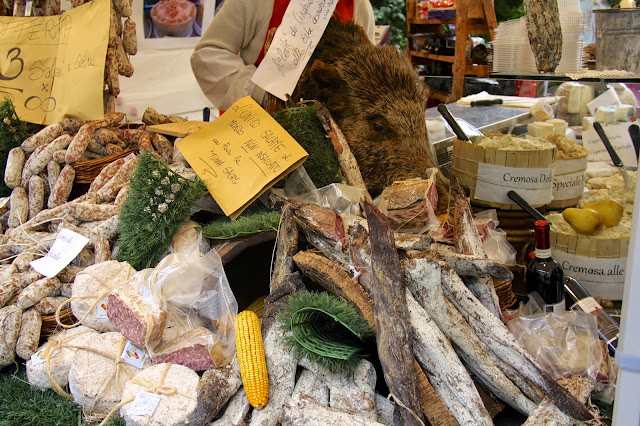
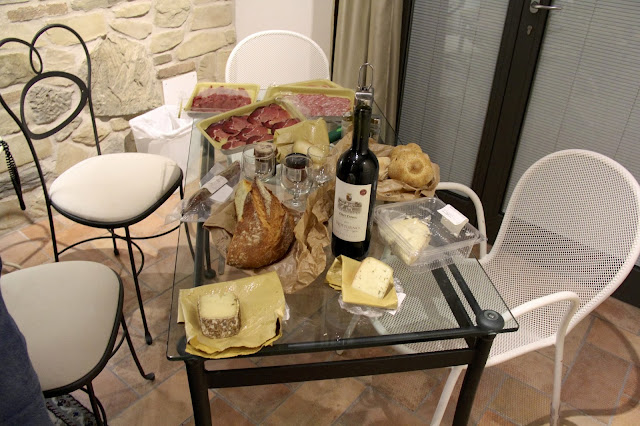
A selection of salumi (cold cuts), formaggi (cheese) and the cinghiale (boar) that gave his life to the cause

You may have read about part of our visit with Aunt Deb and Uncle S where we ventured into the wine region of Piemonte during the first portion of their visit.  Their two week sojourn in Italy included a mission to explore the best of what the country has to give.  It was no coincidence then, that their adventure had been neatly divided into three of the country’s best offerings.  Part I was Vino (wine).  Party II was Cibo (food) – the subject of today’s post.  Lastly, Part III was Storia (history).  Since they experienced the rich history of Pompeii and Venezia on their own, I will let them tell you all about it at their next dinner party.  I’ll simply report on the parts during which we were present… and luckily for us, we were present for a three day trip into Italy’s richest “food region”, Emilia-Romagna.

“Now I’m hungry – let’s eat!”

I always laugh when I speak to Italians about their trips to the United States.  Before they even tell me, I know that they’ve been to New York City and then Miami (bypassing Washington DC; a detail they don’t want to admit but one that I always extract).  If they’re fortunate enough to have a lengthy stay, they will then travel to Las Vegas on their way to Los Angeles.  Occasionally, they may venture up the coast to San Francisco before returning home.  That’s it.  Every.  Single.  Time.  Heck, I don’t blame them – they were raised in large part on American cinema, and that’s what most Europeans see as the sum total of the United States – New York and LA.  And of course, who wouldn’t want to throw a trip to Vegas in the mix?!  Likewise – it is the same for Americans coming here.  Where do we go?  Rome.  Milan.  Venice.  Tuscany (Florence and Pisa) and occasionally the Italian Riviera if there’s time.   But there is so much of this country that is left undiscovered (I feel like we travel non-stop and we still haven’t gotten a flavor of more than 10% of Italy).  One region in particular that is largely overlooked is Emilia-Romagna.  Heck, I’m willing to bet you probably haven’t even heard of it!  But there are a few things that I know you know.  You’ve heard of Ferrari, Lamborghini and Maserati.  They’re all produced here, in Emilia-Romagna.  Or aged balsamic vinegar?  That also comes from here, in Modena.  What about parmigiano reggiano (parmesan cheese)?  Or prosciutto?  I’d be wiling to bet that you’ve even heard of Ferrara chocolate.  With culinary delights like these, it’s no wonder that Emilia-Romagna is often considered the “heart” of Italian cuisine.

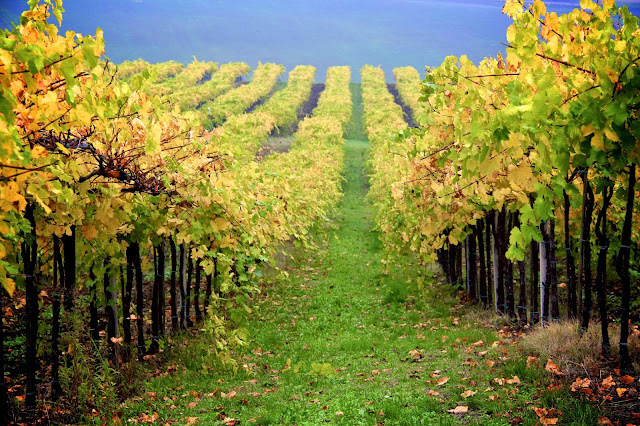
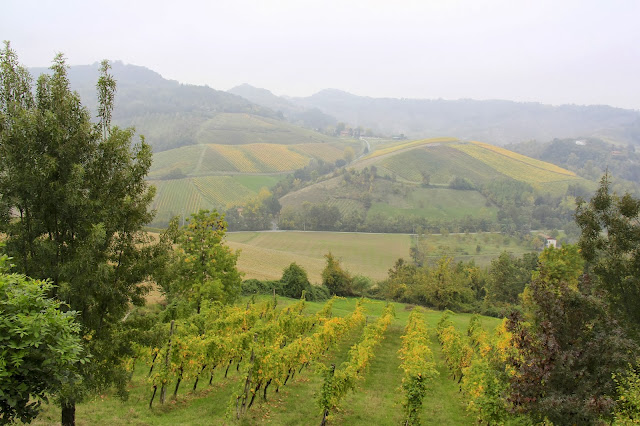
Vineyards in Emilia-Romagna
S studies the frame of his photograph
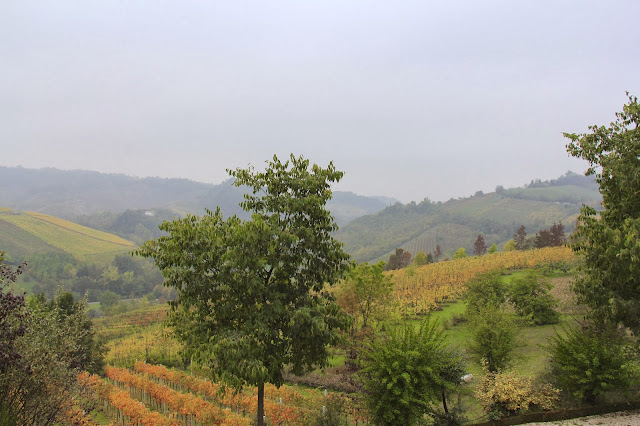
The colors at this time of year were stunning
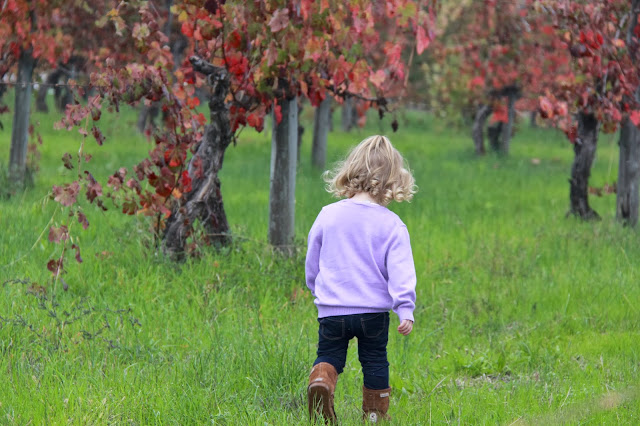
Julia takes a stroll and soaks up all that Emilia-Romagna has to offer

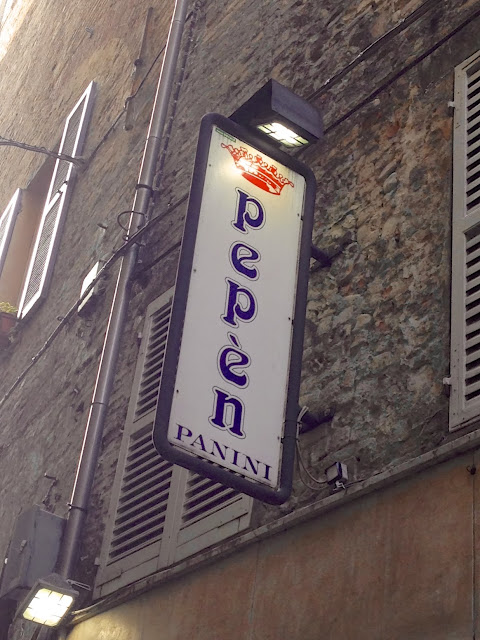
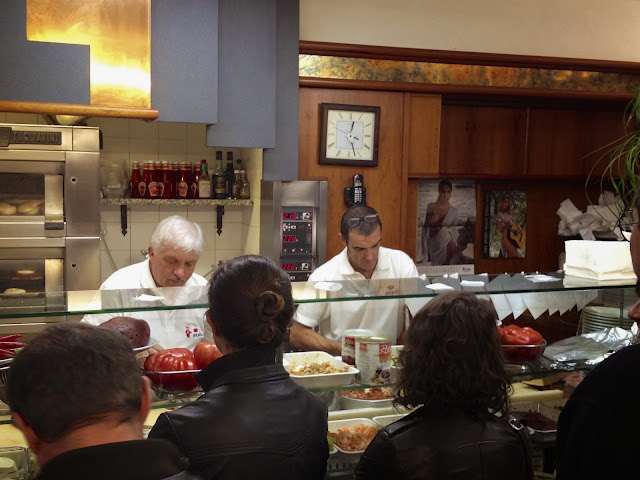
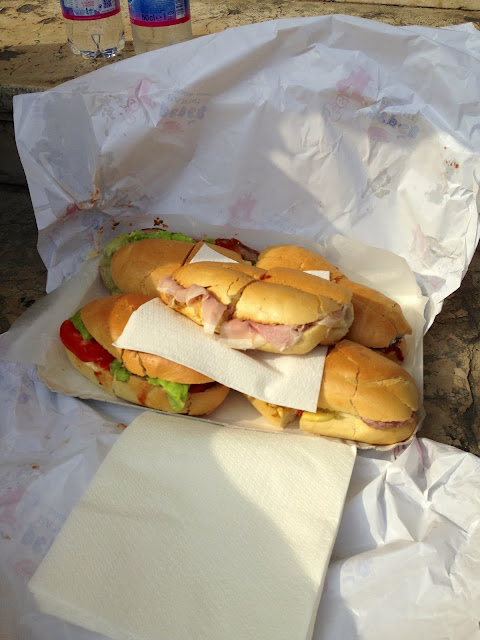
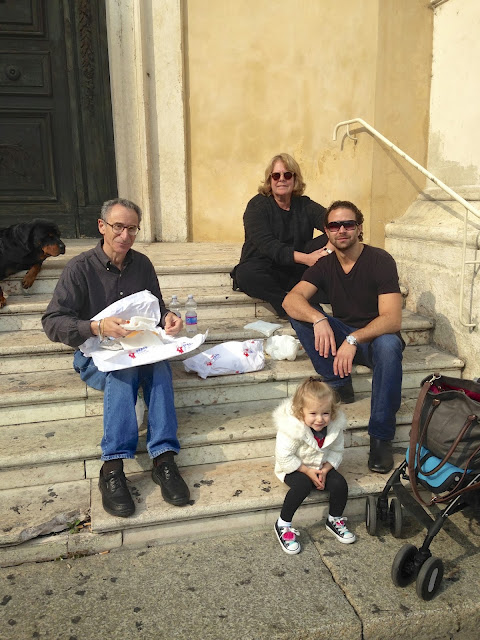
On our first day, we stopped in Parma (of Proscuitto di Parma fame) to begin our culinary escapade. We started small – just panini (sandwiches) at the most popular sandwich place in northern Italy, Pepèn.  I was not at all surprised to learn that this tiny shop that has been around for over 200 years does not have a website.  I think that they figured out the perfect panino (sandwich) somewhere in the past 100 years and have unabashedly decided not to change a thing since (earning them a #1 rating out of 430 restaurants reviewed on TripAdvisor – although calling it a “restaurant” is a stretch).  Uncle S and I crowded into the tiny restaurant and I told the sandwich maestro to give us a mixture of some of his favorite concoctions.  We awoke our taste buds with succulent porchetta, life-changing salsiccia crudo (raw sausage) and mind-altering gamberi piccanti (spicy shrimp) – all on perfectly toasted buns (these were just some examples of our sandwiches – we got many more to share).   Since the place doesn’t really have any seats, we camped out on the steps of Chiesa Cattolica Parrocchiale San Pietro (St. Peter’s Catholic Church Parish) in Piazza Garibaldi Giuseppe to enjoy our delectable treats.

Pepèn is hidden on a small side street – you have to know where you’re going to get there
These two guys have been making panini in this crowded little shop for many years
One package of our delicious panini
We camped out on the stairs of the church to eat our lunch
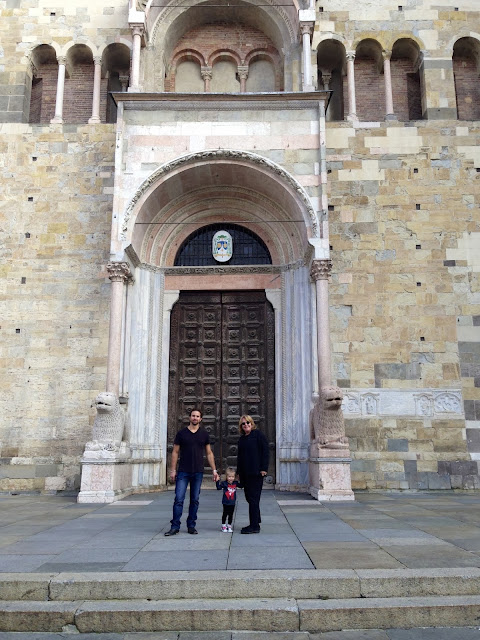
Julia escorts Deborah and me into the Cattedrale di Parma
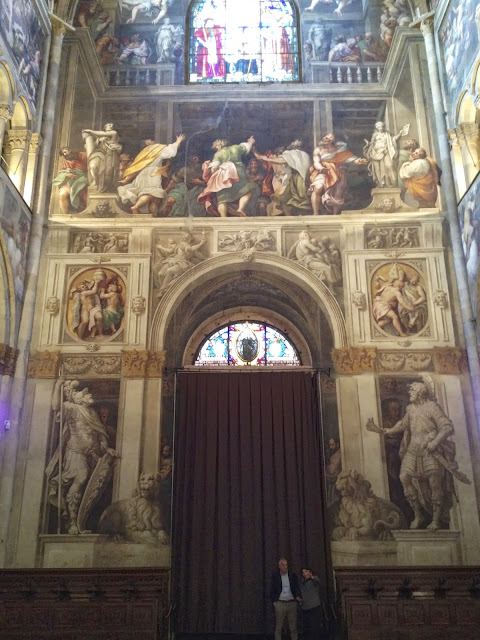
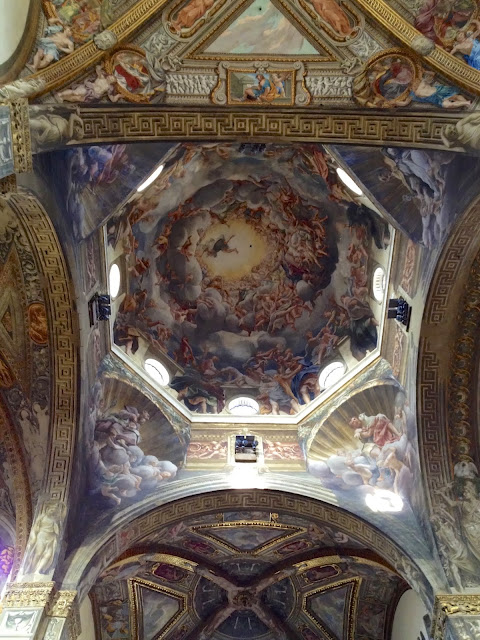
Amazing frescoes adorned every single wall in the church
The paintings on the wall were so lifelike I was mesmerized
The ceiling amazed all of us inside the Cathedral
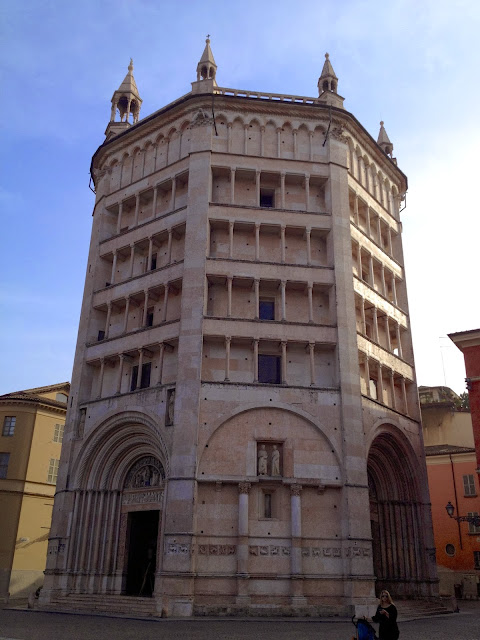
The Baptistery of Parma, commissioned in 1196 by the city counsel of Parma

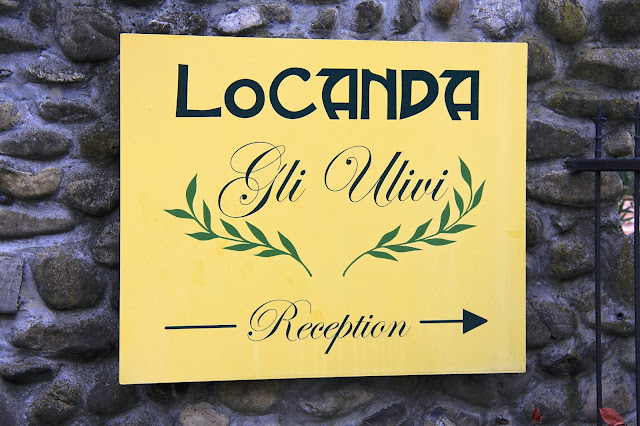
After a complete and rewarding day in Parma, we drove the forty five minutes to our B&B, just outside of Modena.  After researching for many hours, we had booked a stay at, Locanda Gli Ulivi because it was centrally located to the places we would be visiting and has a wonderful online presence (great reviews and photos across our most reliable travel websites).  We were not disappointed with the place – it was simply wonderful.  Since we were weary road warriors on that first day, we decided to eat at the hotel’s restaurant, Osteria  Clo ‘Filomena that night.  Since the food was so wonderful and I was able to capture a picture of each course, I’ll complete a separate post about that meal.

Locanda Gli Ulivi
“Come on in…”
Our backyard
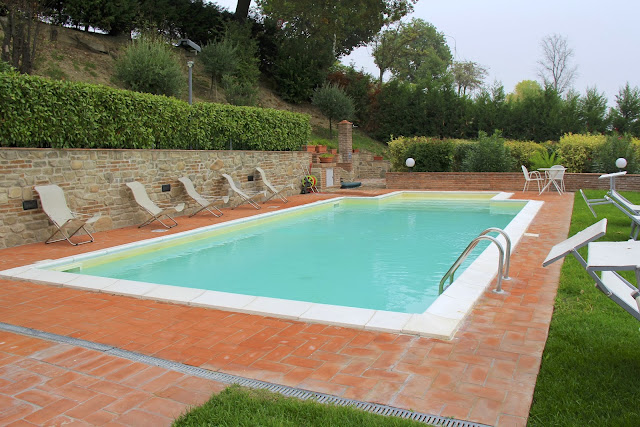
The pool
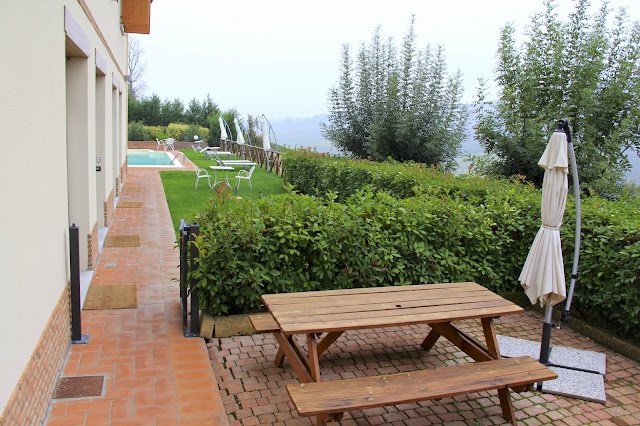
A nice place for a picnic
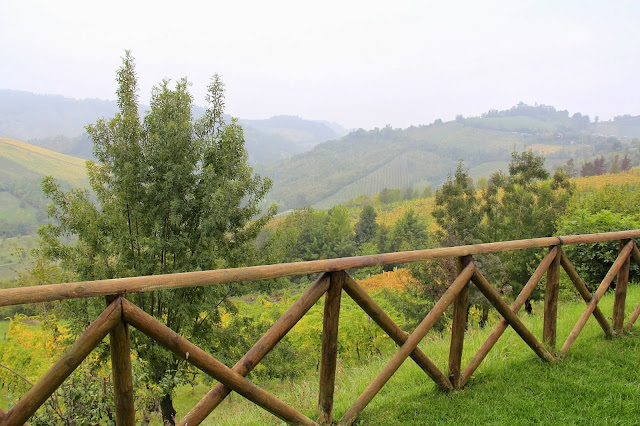
View from immediately across the room
Same place, looking to the right
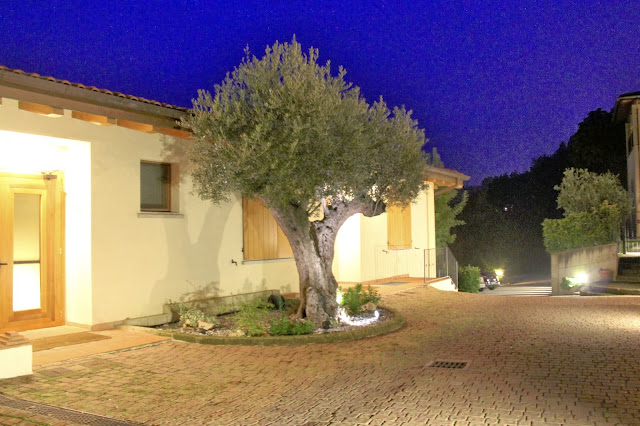
An olive tree at night inside the property
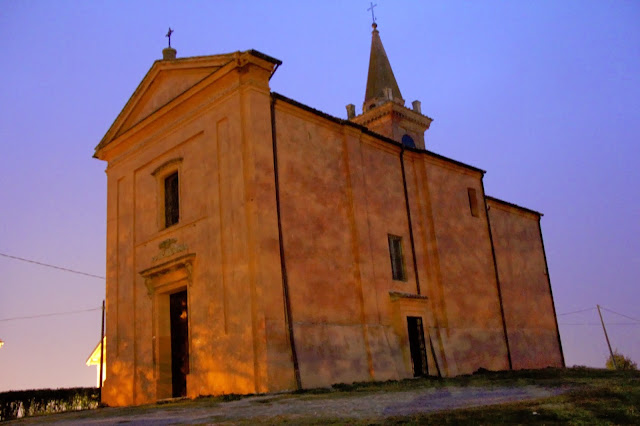
An old church across the street, lit up by the purple sky of early evening

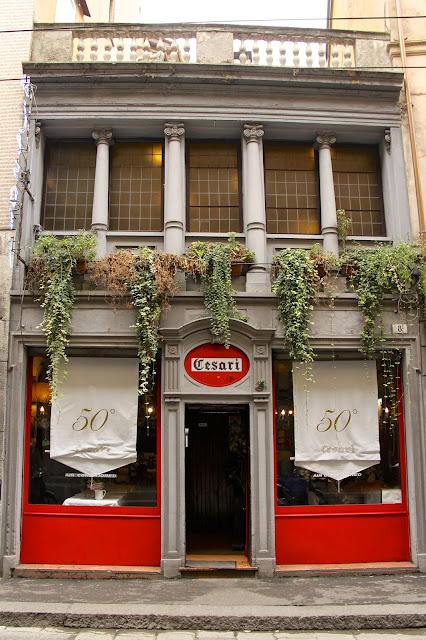
The next day, we departed with our sights on the largest city and capital of Emilia-Romagna, Bologna.  To most Americans, bologna is a processed meat (that you either love or hate) sandwiched between two pieces of good ol’ fashioned white bread.  In the States, we named “our” bologna after the city that is a major producer of mortadella – a staple meat of Bologna (and very similar – but much, much tastier than “our” bologna).  My bologna has a first-name, and it’s…”send this back and bring me a slice of mortadella, please!”.   To most Europeans, Bologna is much more than just a processed meat.  It is a university town.  Home to the oldest university in the world, University of Bologna, founded in 1088.  Today, the university accepts students from all over the world – eager to complete a full program, or just a study abroad in the seventh most populated city in Italy.  We walked around all day, stopping for a wonderful lunch at Cesari – a selection from S and Deb’s Fodor’s guidebook.  The gang at Fodor’s know what they’re doing, it was a wonderful place.

Cesari was as delicious as it was charming
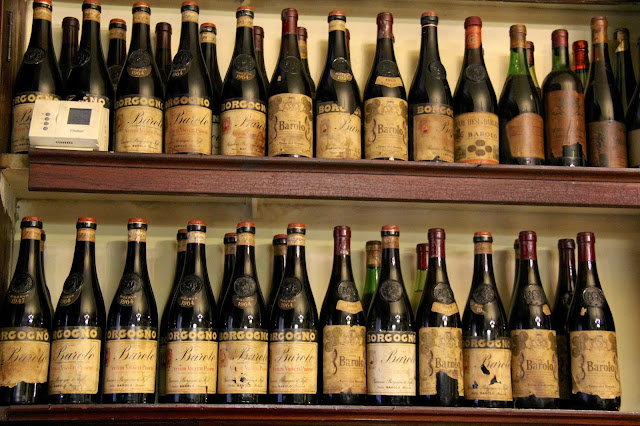
“Hey… we recognize that wine”
(from a tasting we did at Cantina di Borgogno a few days earlier)

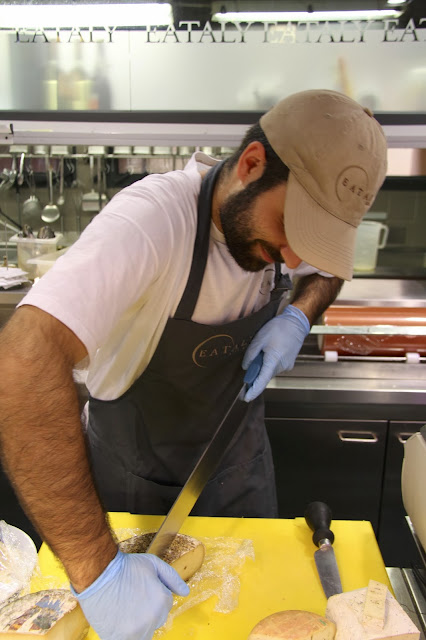
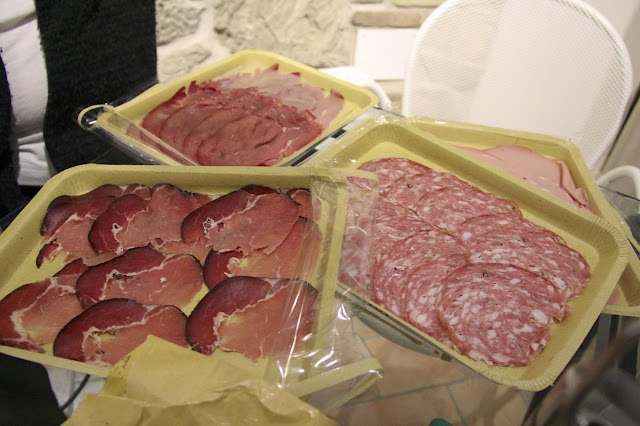
We spent more time walking though this historically significant and important city, before ducking into a building with a much more modern vibe.  Eataly is the brainchild of Oscar Farinetti; a store that is a proud Italian marketplace, selling the best ingredients and offering access to goods that are otherwise hard to acquire on a massive scale (imagine a Whole Foods on steroids that just sells Italian products).  Even though Oscar opened his flagship 30,000 sq. ft store in Torino in 2007, the company really took off with locations around the world (including New York City) when B&B Hospitality Group (Mario Batali and Joe Bastianich) became a partner.   Admittedly, the Bologna location was very underwhelming in size and scale (especially compared to the unique Torino store) – but we were still able to acquire some wonderful salumi (variety of cured meats) and formaggi (cheeses).  That night, we procured reservations at the the most exclusive table in all of Italy – we had a little picnic in S and Deb’s room.

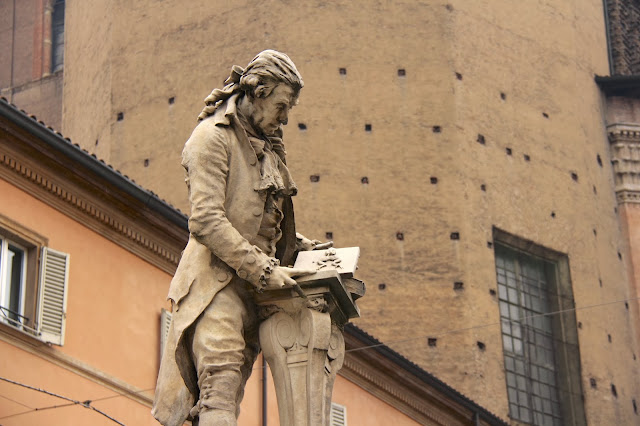
A statue stands near the University of Bologna
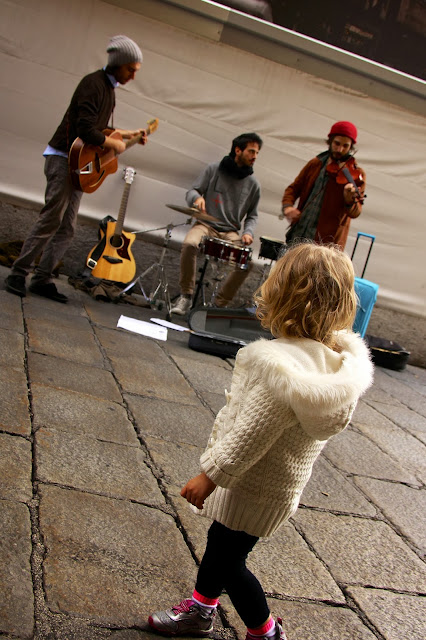
Julia becomes taken with a small group of performers
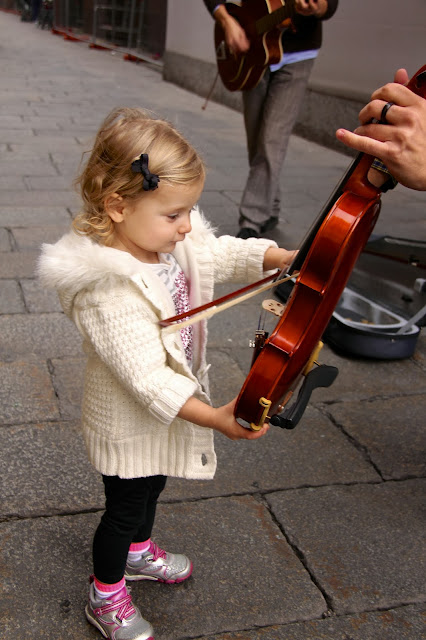
She takes a shot at playing – she started with some Mozart
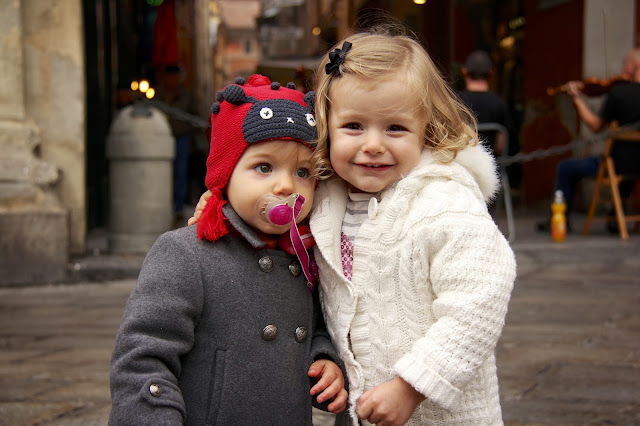
Julia made a friend in the main piazza
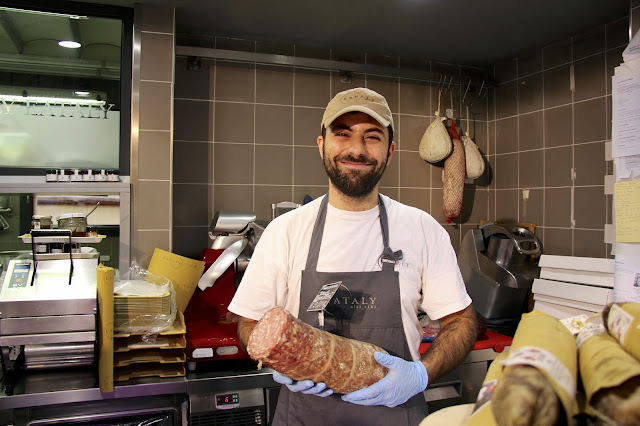
Inside Eataly, our friend helps us select the best meats and cheeses for our picnic
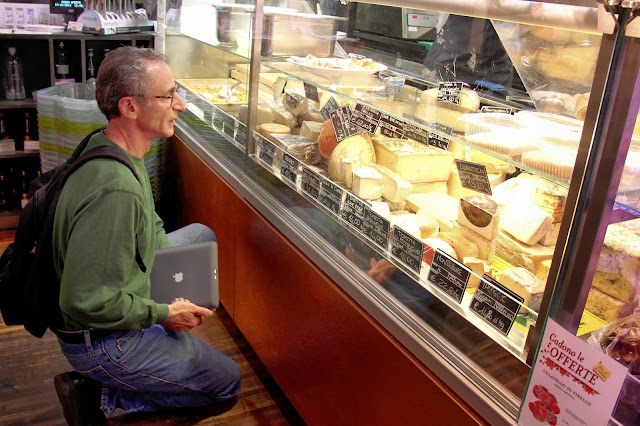
S takes his job selecting for the group very seriously.  Good thing he did, we had a wonderful meal
He cuts us a hard cheese
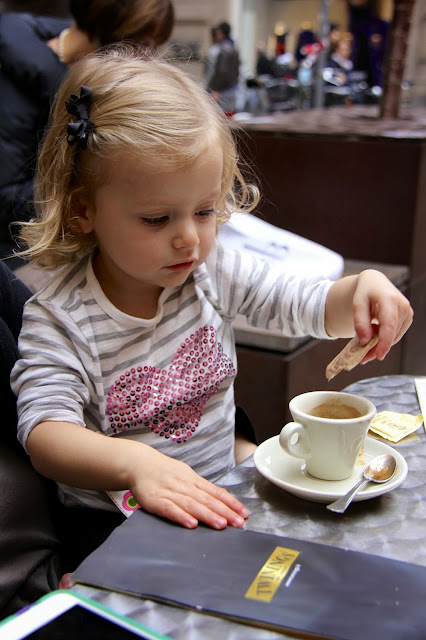
After our visit to Eataly, we needed a little coffee
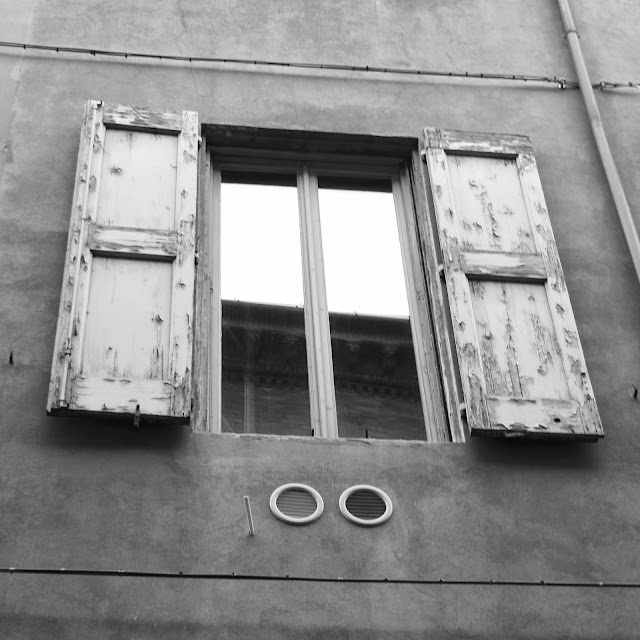
I just thought this window was interesting
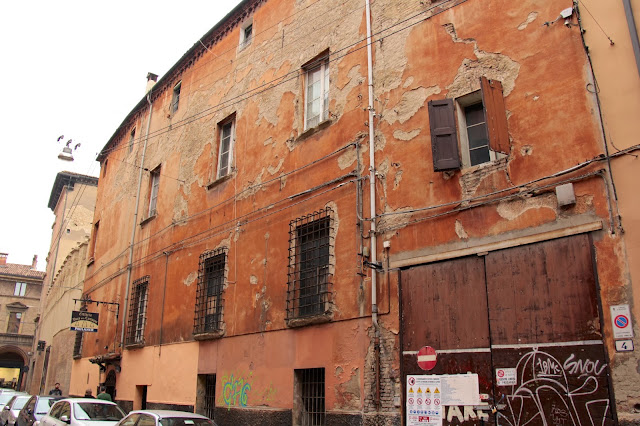
As well as this ancient building
The table is set
Our salumi (meats)
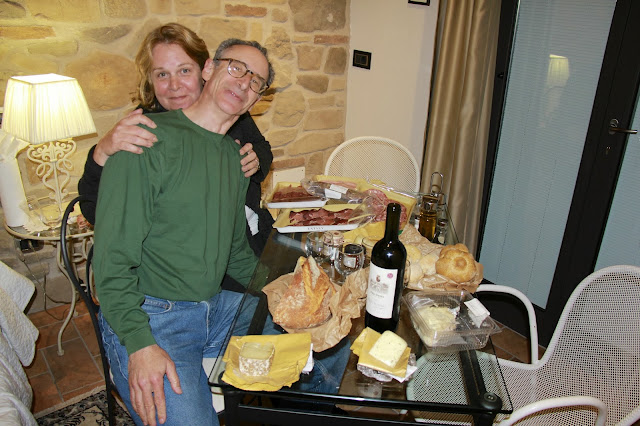
S and Deb are about to dig in with us

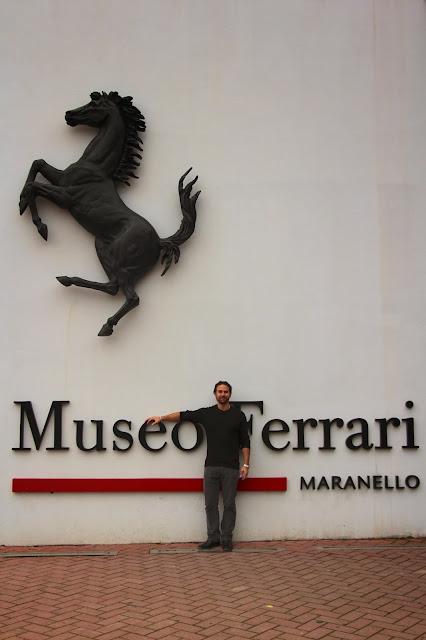
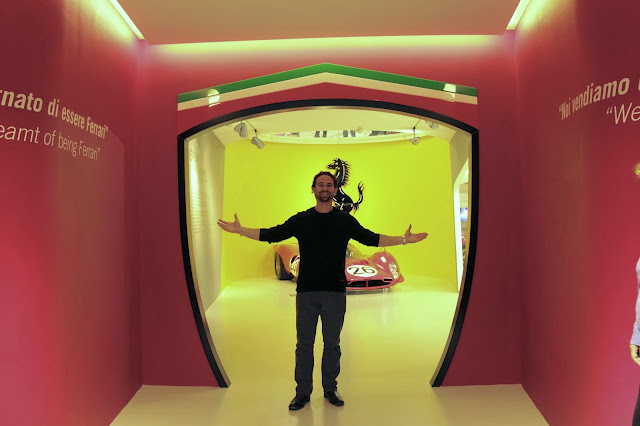
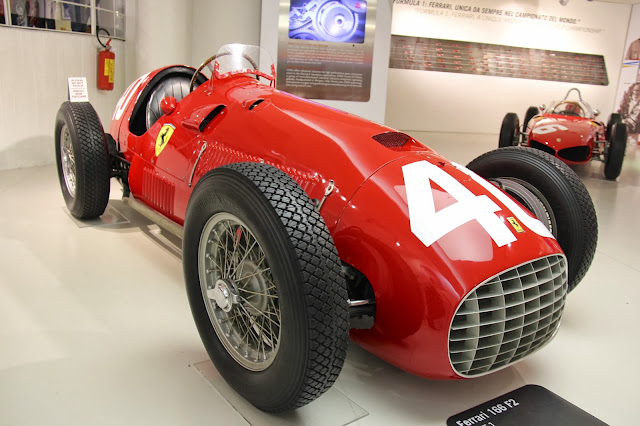
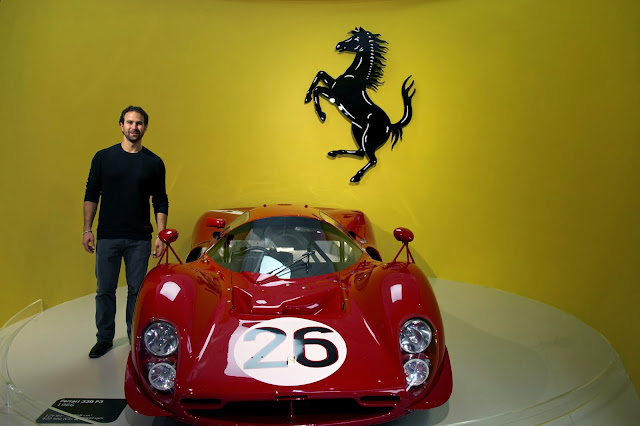
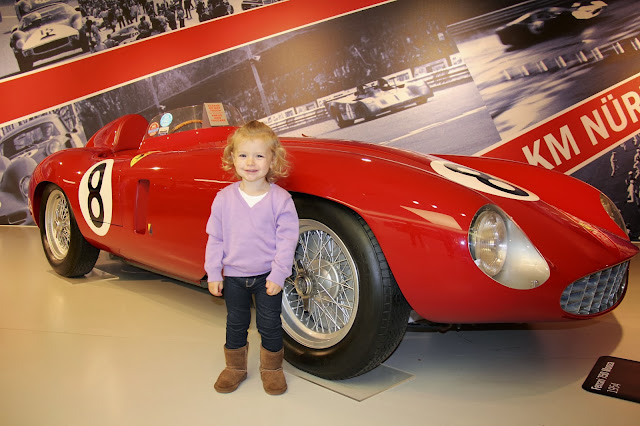
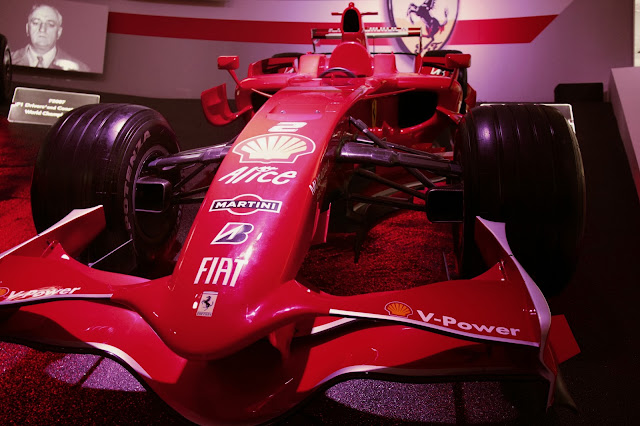
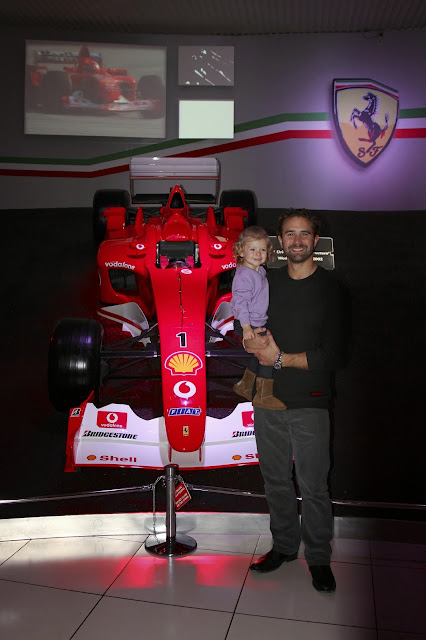
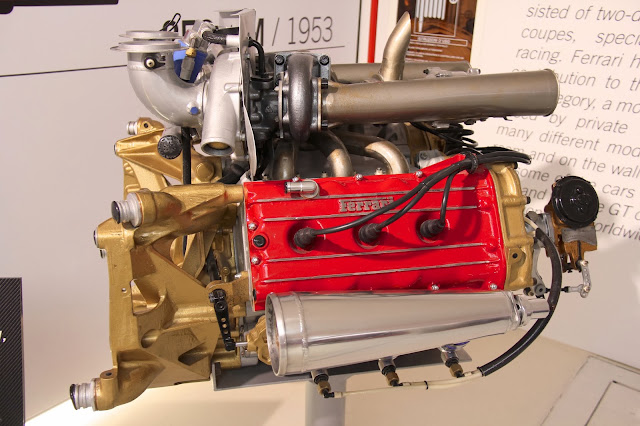
Our final day in Emilia-Romagna was no less packed with activities than the first two.  We had scheduled a visit to the Museo di Ferrari (Ferrari Museum), exploration of Modena (with a stop for lunch) and a balsamic vinegar tasting.  Car enthusiasts the world over can appreciate a visit to the “mecca of all things automotive”.  This is what Modena can offer you – Ferrari and Maserati all have their factories within a few kilometers of the city (Lamborghini moved their headquarters from Modena to Bologna).  Ferrari chose to name one of their models after the city itself (Ferrari Modena 360).  We chose to learn a little bit about the legacy of Enzo Ferrari himself, one of the world’s truest visionaries.  The museum did not disappoint….

Museo Ferrari in Maranello
“Welcome to paradise!” 
An old Ferrari 166 F2
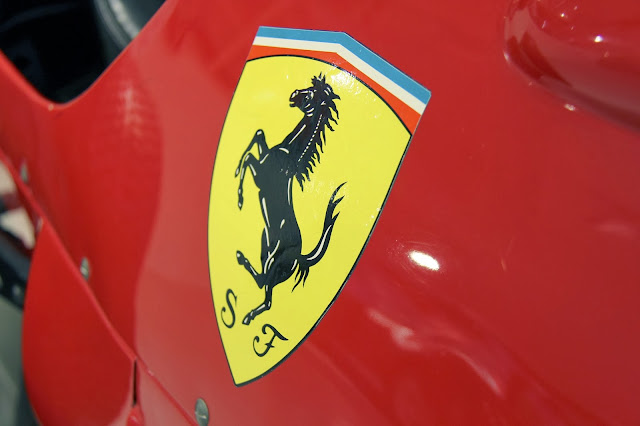
This classic symbol is at the heart of most men’s desires
1966 Ferarri 330 P3
1954 Ferrari 750 Monza
F1 Constructors’
Formula 1 World Champion 2008
Julia and I sure felt like champions
The heart that powers the machine
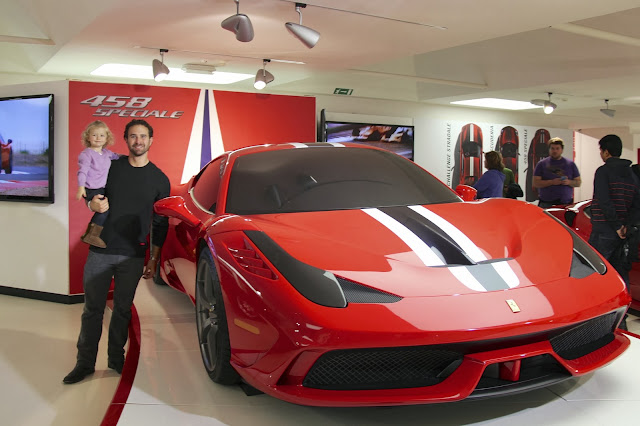
2013 Ferrari 458 Speciale
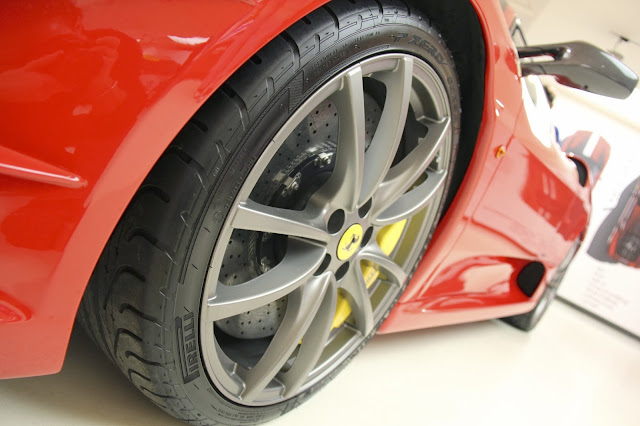
These babies can grip – Pirelli is the tire of race professionals
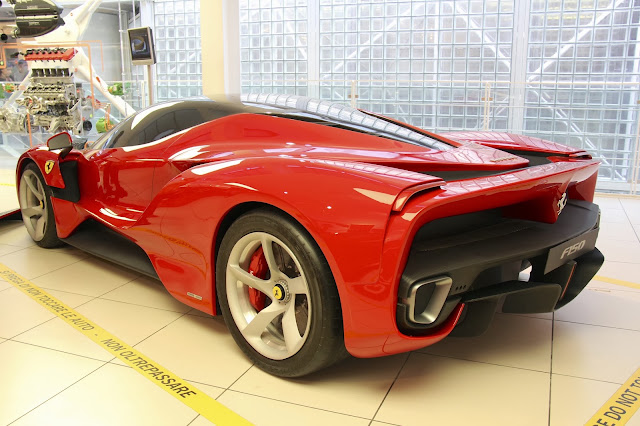
Concept car of the future
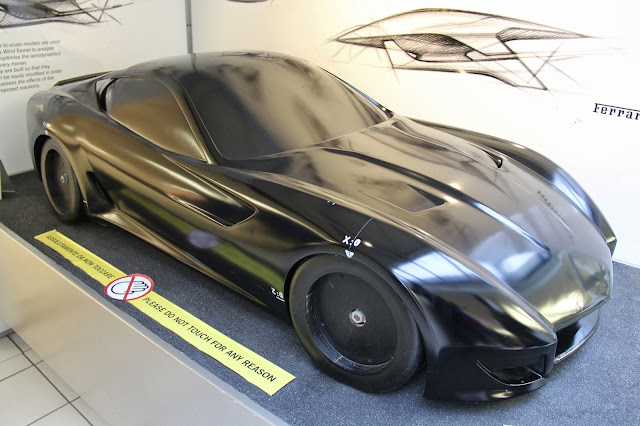
This is a clay model – what they use to construct a concept in the early stages of development

After soaking up all things, Ferrari – I drove us (albeit, much slower than a Ferrari could have gone) to the center of Modena.  The town itself is a wonderful place, certainly worthy of a daily visit.  It is believed that the city was already in existence by the 3rd century.  Here in the 21st century, we lucked out and caught an open air market in the center of town.  We were also treated to a marching band that passed us twice as we strolled through the city.

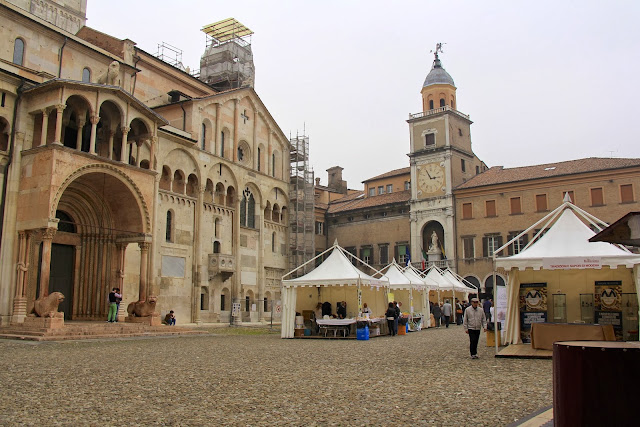
Main piazza in Modena – a street fair had been set up
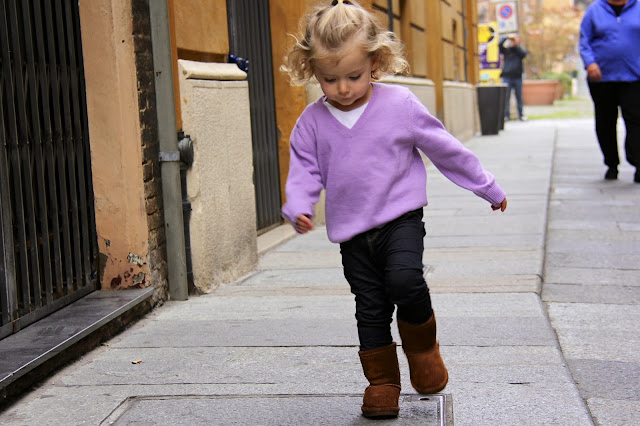
Julia runs through the city
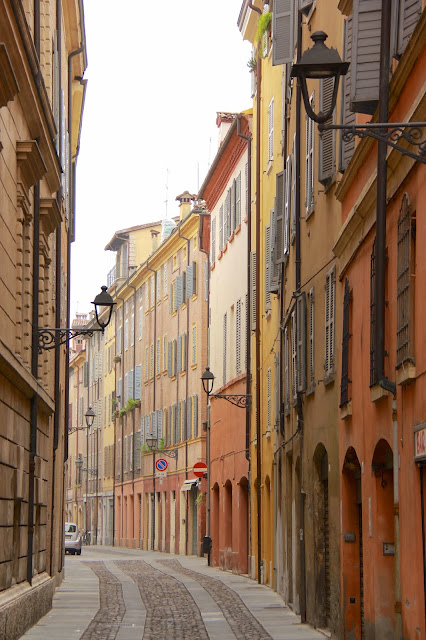
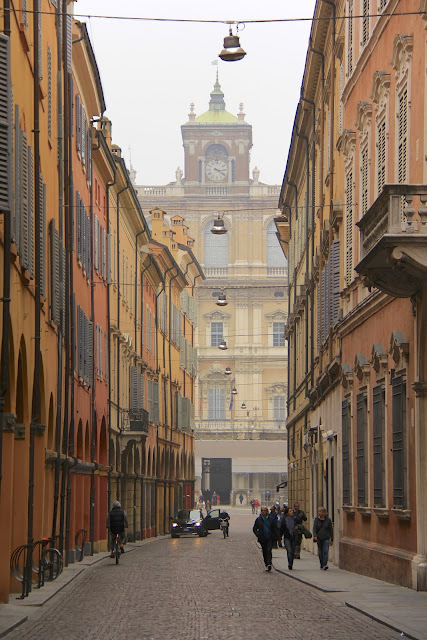
The streets of Modena were beautiful
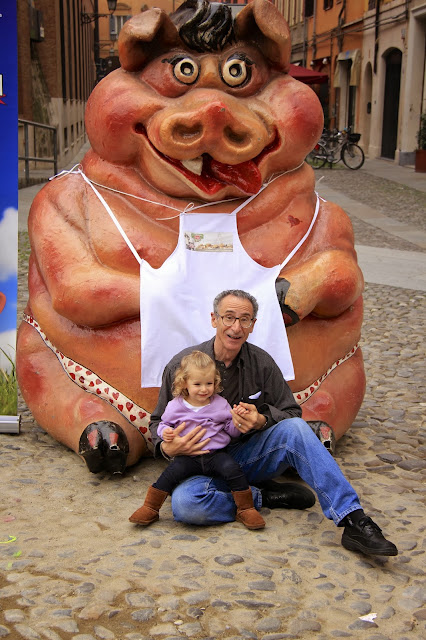
S and Julia sit by their new friend
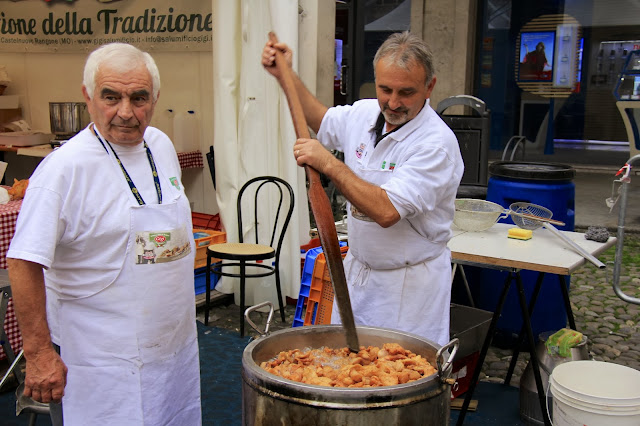
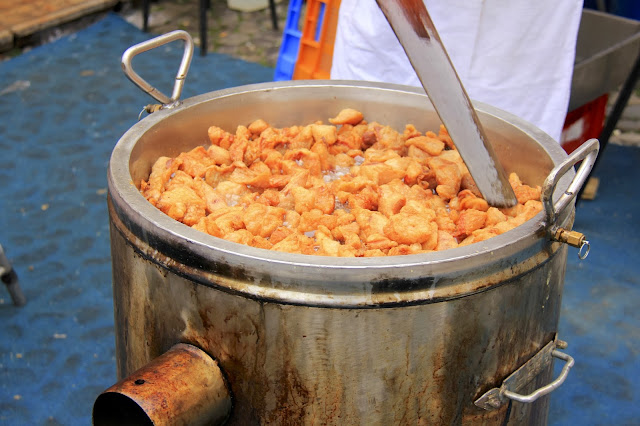
Meanwhile, these two are deep frying pig skins
Crispy, delicious and probably 130% fattening
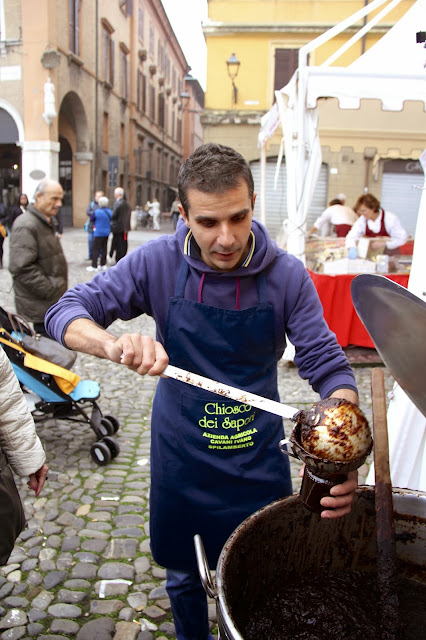
S bought some prune jam – here he is bottling the jar for S
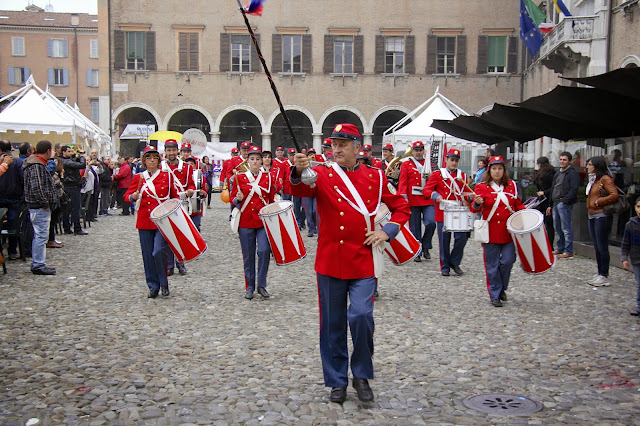
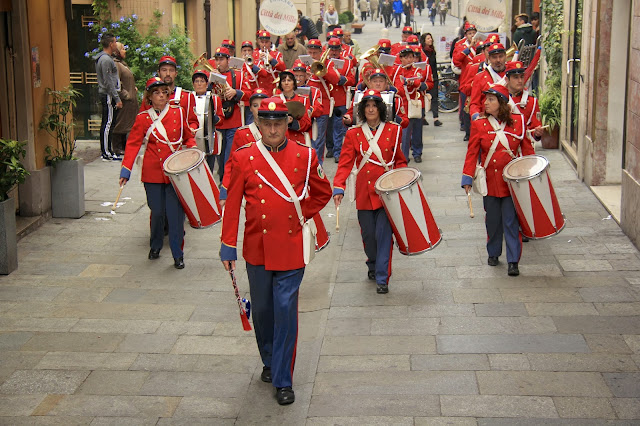
A marching band happened to pass through as we were in the market
Walking through the city again – there are a lot of pedestrian streets in Modena
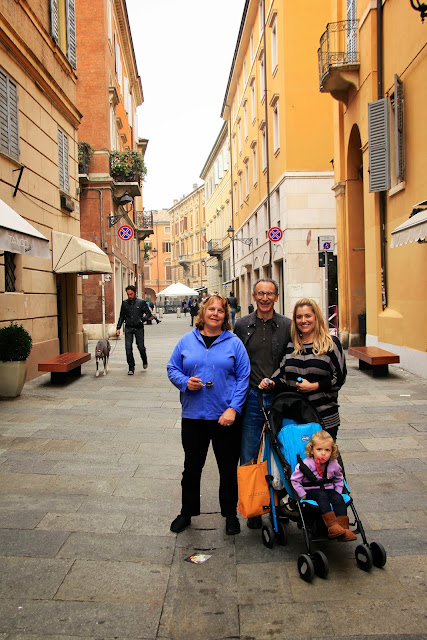
Family photo
We ran into the marching band a second time

The day passed by [too] quickly and we had to bid a fond farewell to Modena – we had an important event coming up later that afternoon.  A tasting at one of Modena’s finest producers of aged balsamic vinegar – Acetaia Villa San Donnino.  Since it was such a fun and noteworthy event, I will post about it separately.  After our trip back from Emilia-Romagna, S and Deborah took off for Pompeii and just a few days later, we were hugging our goodbyes.  It’s amazing how quickly time time goes when you are filling it with great food and wine!

Come Here, You Turkey!

In my most recent blog post, we embarked on a cruise throughout the Mediterranean.  I’d love for you to continue the adventure with us as we head to Istanbul, Turkey and the beautiful Greek island of, Lesbos.  I’ll finalize our voyage in an upcoming post that will include the final ports of call and some more stories about our shipboard life.

“Oh, tell me… tell me all about it!”

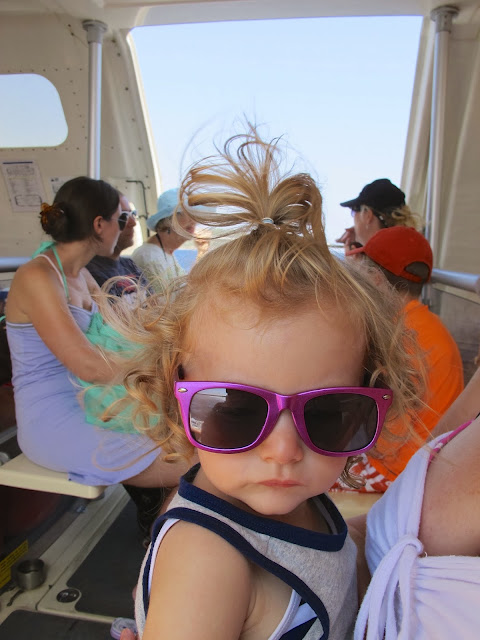
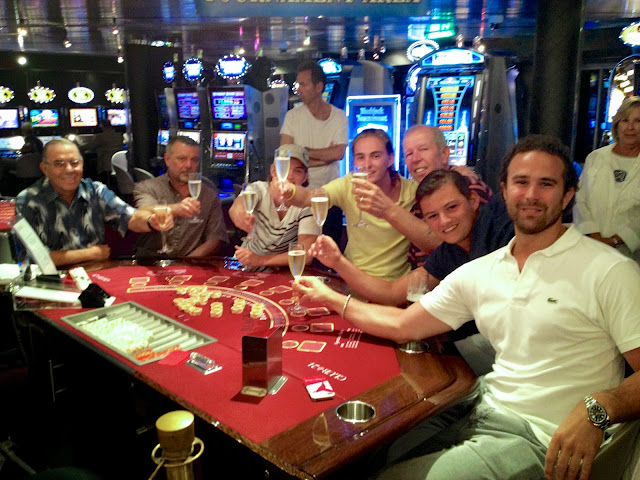
When I last left you, we had visited Venice, Olympia and Athens.  By this point in the cruise, we really hit our stride and had fully immersed ourselves in everything Holland America’s Nieuw Amsterdam had to offer.  We were overeating delicious food (and then trying to work some of it off in their state-of-the-art gym), spending time in the casino (maybe too much time… literally every casino worker knew me by name), taking in shows and making friends all over the ship.  We found a couple of other families with small children, but for the most part – we were in the minority (not fitting into your typical “cruise-goer” demographic).  I’ll tell you what… if you ever want affirmation about your kids cuteness – go on a cruise with thousands of grandparents missing their grandkids.  They were all so happy to pay us compliments about Julia that it made us excited to take her anywhere on board.
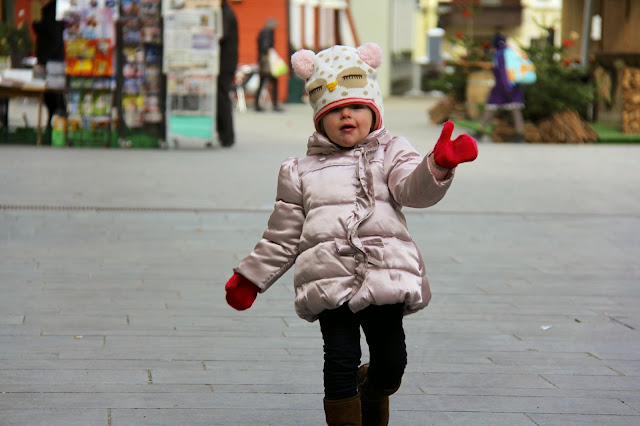
Julia made friends wherever she went
She gained a large following of fans
That grew the longer we were on board

Midway through the cruise, we arrived in Istanbul, Turkey.  This was to be the only port mid-voyage that had an overnight stay, allowing us two days to explore the massive city.  To describe Istanbul as “massive” is underselling it.  The city boasts a population of nearly 14 million people in the urban area alone and is ranked as the second largest city in the world ranked by population within city limits [source].  It is the only city in the world that stretches across two continents (Europe and Asia).  Istanbul is home to over 3,000 mosques and welcomes nearly 12 million visitors each year.  These are just a few of the fun facts about this amazing city, so yeah… massive really undersold it!  If only there was some sort of book… kind of like a dictionary… that would give you alternate versions for specific words…

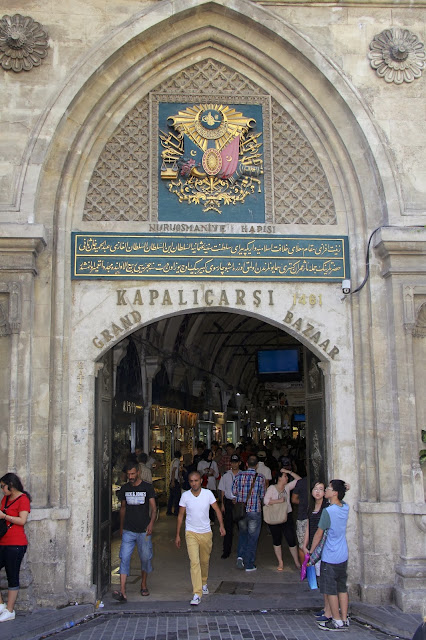
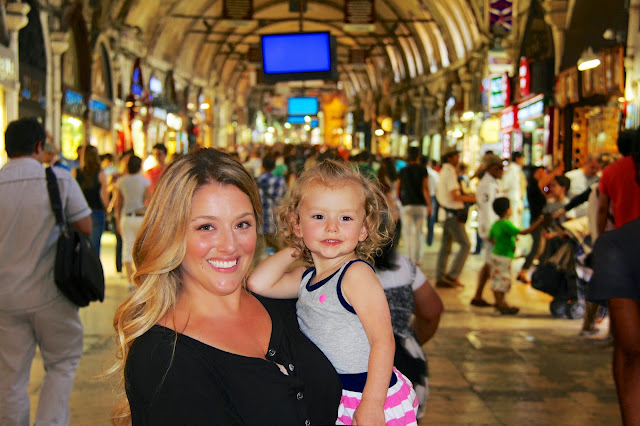
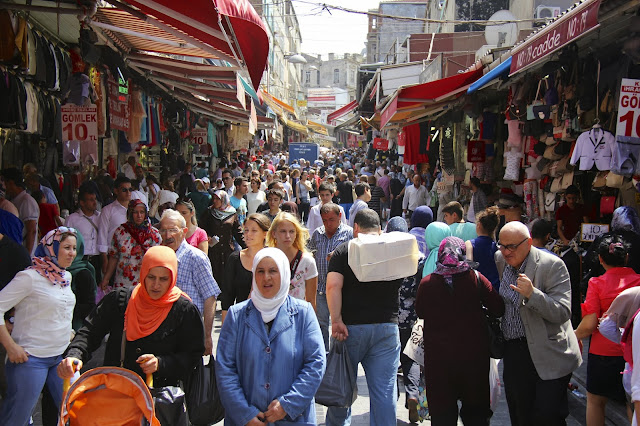
When we got off the ship on the first day, we took a bus directly to the Grand Bazaar.  This location was ideal, because it would afford us the time we wanted to shop and then walk around that particular area of the city.  We walked through the gates of the Grand Bazaar and our mouths dropped. I still remember the first time I went to a flea market.  My great aunt Barbara took me to a market in New York when I was 8 years old.  I was awestruck by all the amazing things that could be found with just a little looking.  She bought me a brand new GIJoe Cobra Stun vehicle that I probably still have in a basement somewhere to this day.  If I could reconstruct that image of my first market in my mind, with all my boyish enthusiasm and multiply it by a hundred – it couldn’t reach the level of awe I found myself in as a man standing in the Grand Bazaar.  You can even factor in the fact that I had a wife repeatedly telling me, “I’m ready to shop – make sure you have plenty of Euro’s handy” weighing on my mind!

Main Gate of the Grand Bazaar
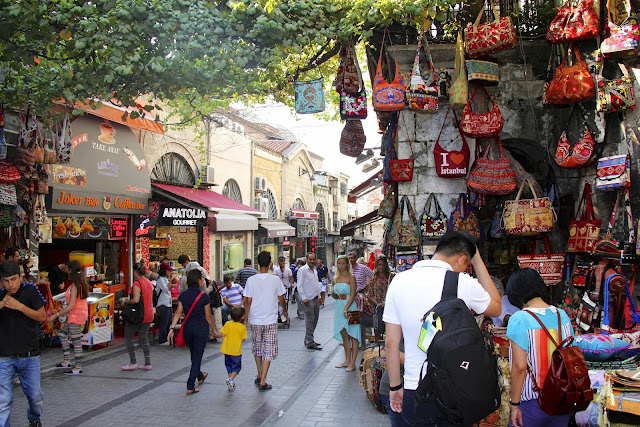
Shops extend around the outside of Grand Bazaar

The Grand Bazaar is like nothing we’ve ever seen.  It is an enclosed market that ranks among the oldest in the world.  61 city streets house 3,000 shops that eagerly accept the money of up to 400,000 visitors every single day.  This does not include the open air markets that have been built around the Bazaar and dominate many more city streets.  Originally, each shopkeeper was allotted a 6′ or 8′ dolap (stall) in which to showcase their wares, the finest of which were kept hidden in drawers.  The market was erected after the Ottoman Empire between 1455 and 1460.  It reached it’s final form in the 17th century and not much has changed since.  The main reason for the collective, enclosed space were to prevent against theft, fire and uprising.  Even though the Turkish Lira is the currency of the country, merchants accept US dollars, Euros or Turkish Lira.

Jen and Julia enter the Grand Bazaar
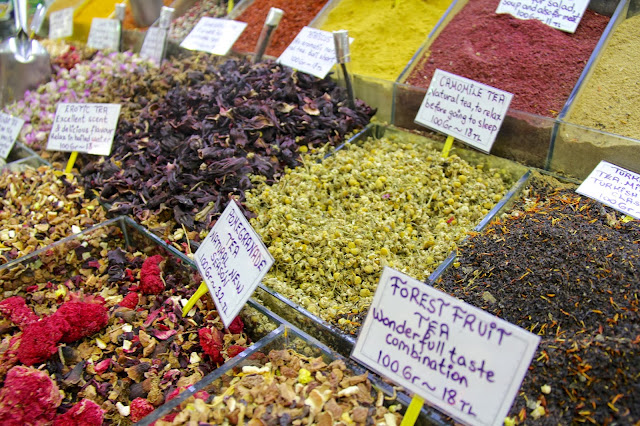
Some teas for sale
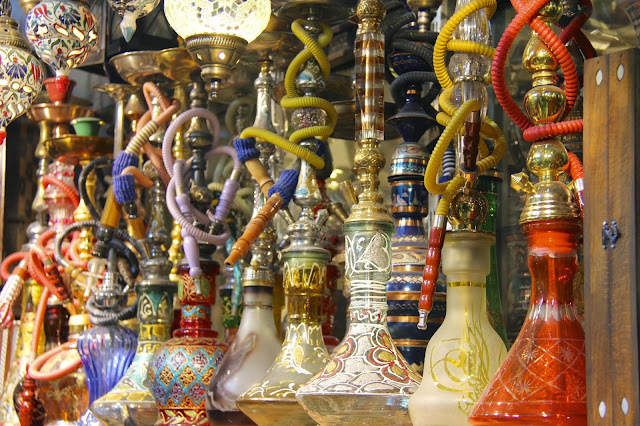
The Turkish nargile (hookah) became popular during the Ottoman Empire
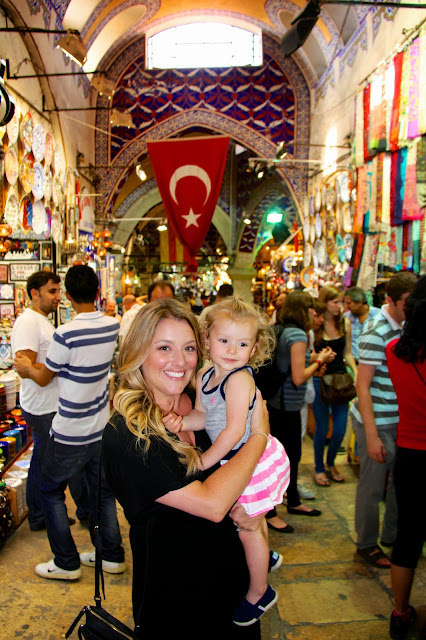
Jen and Julia with a Turkish flag behind them
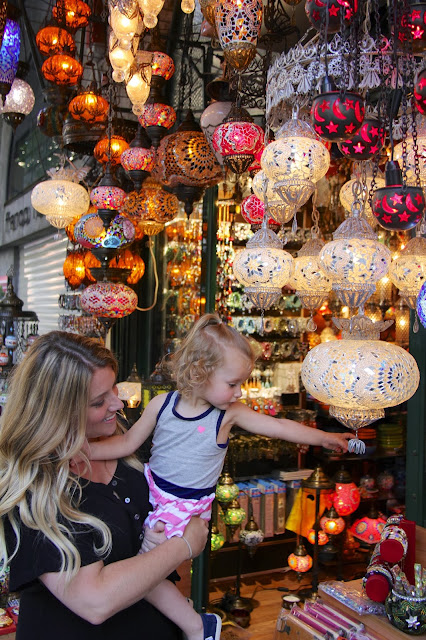
Julia was fascinated with the beautiful lamps
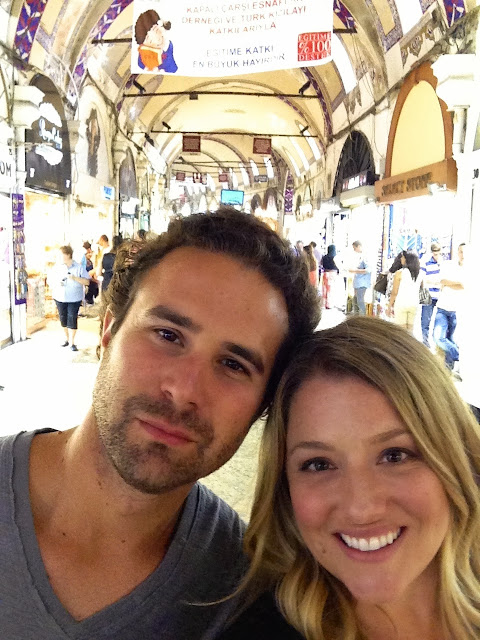
Jen and I pause for a picture in the market

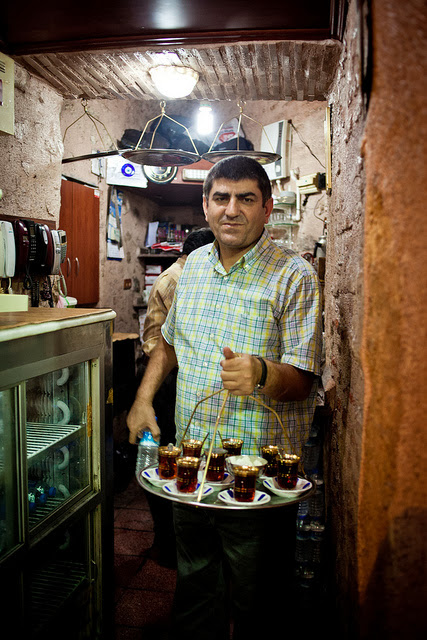
We didn’t notice any food vendors or restaurants inside the Bazaar – it turns out, the merchants have been bringing their lunches in boxes called sefertas for hundreds of years.  However, they can get simple dishes like döner kebabs delivered right to their stalls (although, it’s more common for one of the merchants to bring back lunch for the entire shop).  What I did notice quite a bit (and became somewhat fascinated with) was the bustling tea delivery business.  Turkish tea is a huge part of the culture throughout the country.  Tea is most often consumed in Turkish households – offering it to guests is a part of Turkish hospitality.  It’s no different in the Bazaar; the custom of drinking tea blends the important tradition hospitality with the other main component for drinking the tea  – the social congregation of men.  Tea runners (as I was calling them) would skillfully whisk past the crowds and deliver un-spilled tea by balancing the cups on a tray with a long handle.  What fascinated me the most was that I never saw any money exchanged for the tea.  I imagined the tea runners marking how much tea a merchant drank and collecting on the tab at the end of the week.  I have searched the internet to prove or disprove my theory of a “tab” system – but I could not find anything. Any Turkish merchants or Tea Salesmen reading this – please weigh in.

Guys like these would run all over the market, delivering tea
*photo credit – flickr: photographer unknown

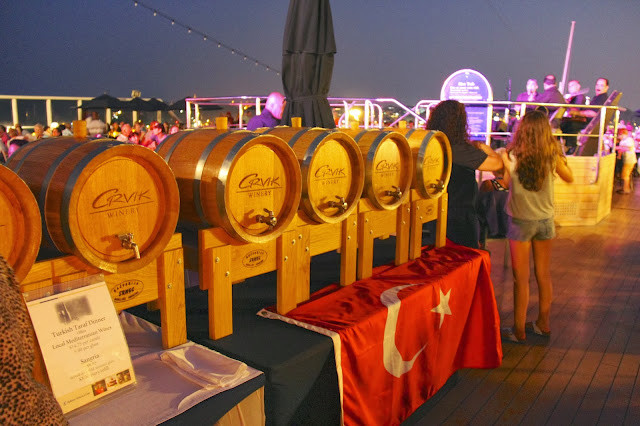
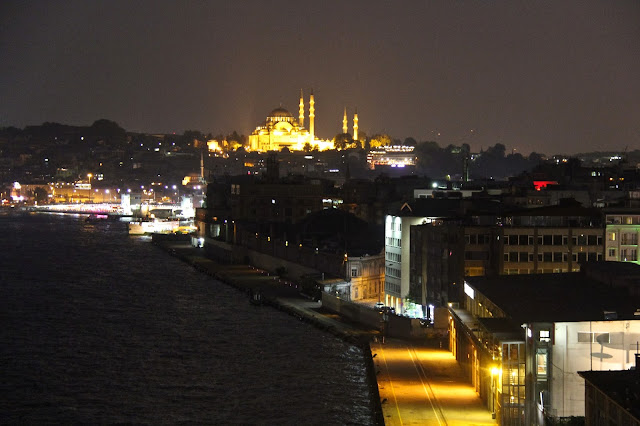
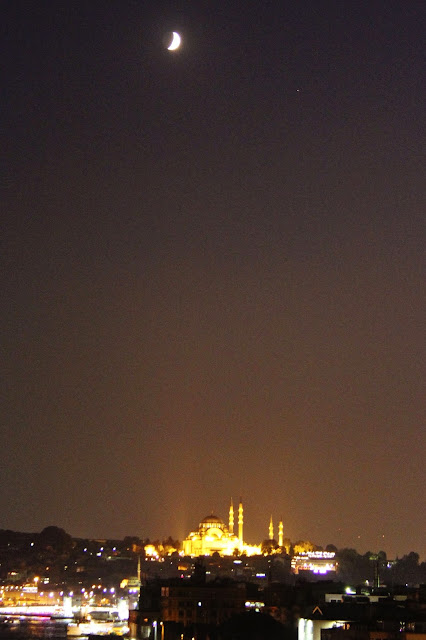
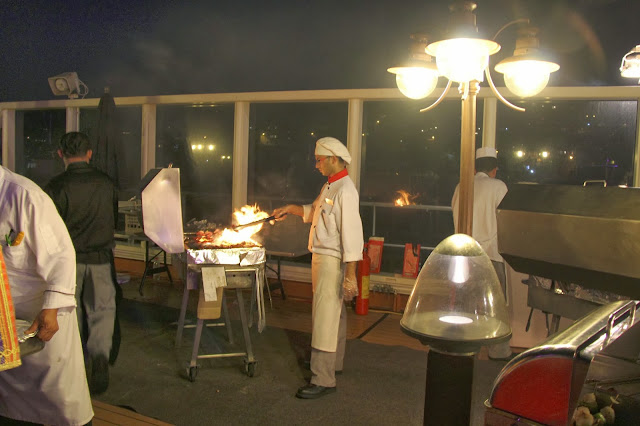
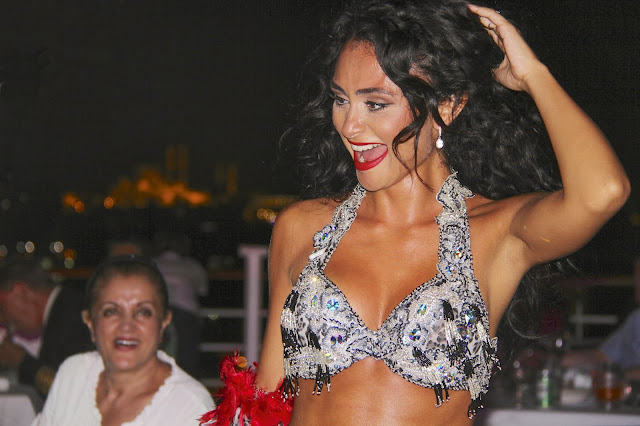
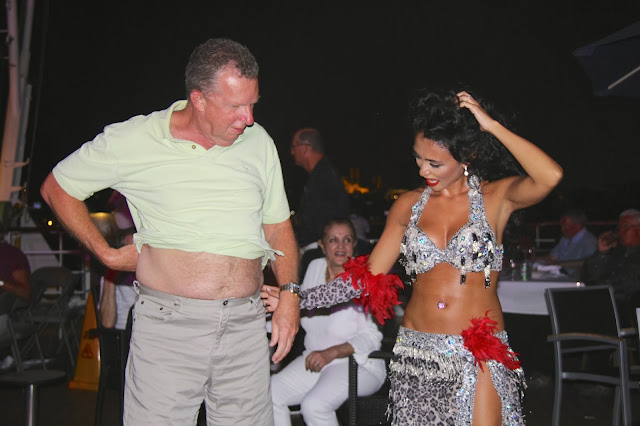
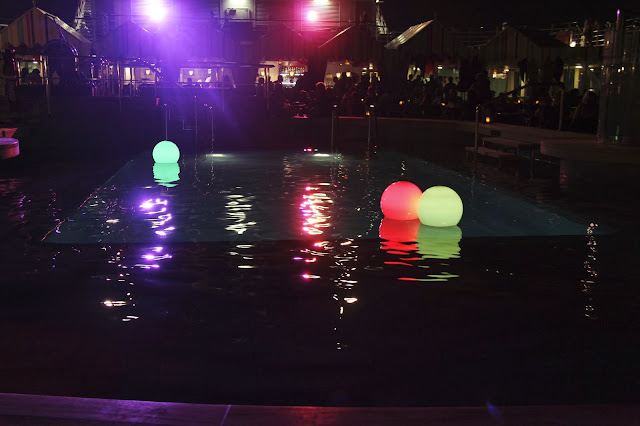
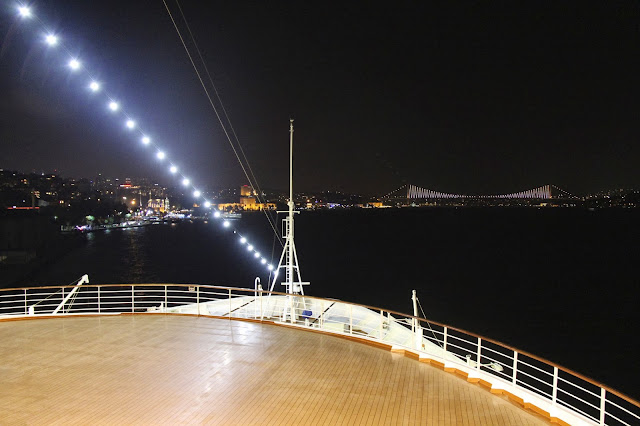
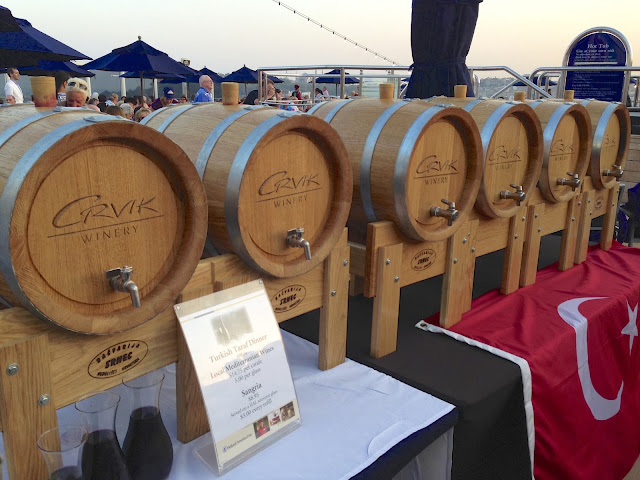
We spent hours navigating the maze that is the Grand Bazaar before we realized the sun was setting.  Our intention was to walk the city around after we’d shopped.  We had the flexibility to stay out as long as we liked because our ship wasn’t leaving until the next day; although we agreed that we were ready to head “home” for the night and set out early the next day.  It turns out that it was a good thing we did!  The ship was hosting a Turkish Taraf – a poolside party complete with live music, a Turkish belly-dancer, exotic drinks and spicy kebabs.  An outdoor pool party is always a great thing, but if you have the shimmering city lights and uplight mosques of Istanbul framing the backdrop (and did I mention the belly-dancer), there is no greater party combination in the world (this is coming from the guy that was basically the President of Parties in college).

A variety of wine was served at the party – live band in the background
The Blue Mosque at night
The quarter moon looked exactly like quarter moon on the Turkish flag
They were grilling authentic Turkish food
The belly dancer takes the stage
She recruited guests to help her move and move their own hips
The pool was decorated with lights
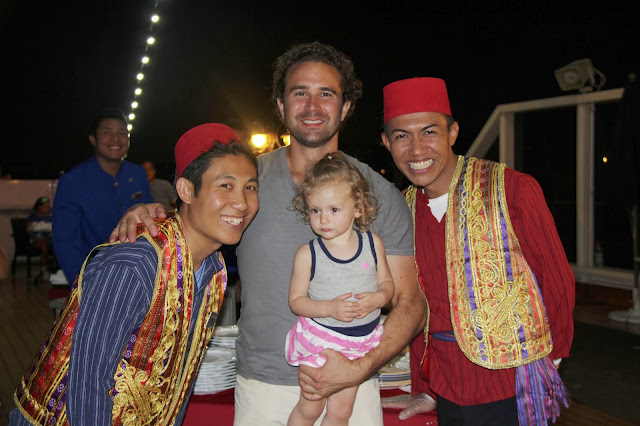
The crew dressed the part
The scenery was beautiful

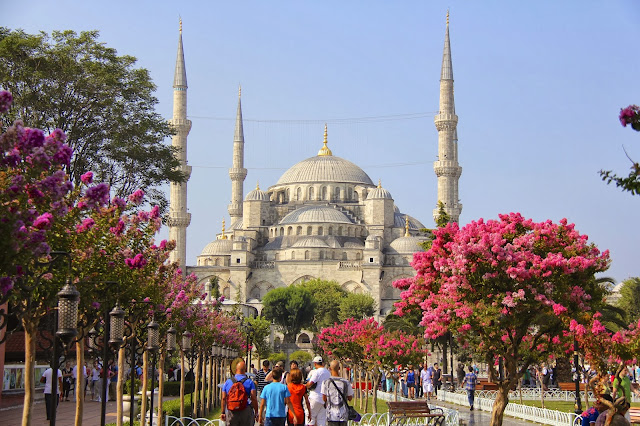
The next day we got an early start – with so much of the city left to take in, we wanted to get in as much as physically possible.  We decided we would try to beat most of the crowds and start with the mosque’s.  Specifically, the Hagia Sophia and the Blue Mosque – which sit opposite one another.  We only ended up touring the Sultan Ahmed Mosque – or Blue Mosque, as it’s commonly called due to it’s blue tiles that adorn the inside walls.  The mosque’s construction began in 1609 when it was commissioned by Sultan Ahmed I to not just rival the Hagia Sophia, but to surpass it.  The mosque has an unprecedented six minarets (still the only mosque in Istanbul with six to this day), which garnished the wrath of the public.  The display of six minarets was preserved for the Prophet’s mosque in Mecca – therefore the Sultan was criticized for incorrectly thinking that he was the man.  The prevailing urban legend is that there was a miscommunication in which the Sultan told his architect he wanted gold minarets (altin minare) and the architect understood six minarets (alti minare).  Seems fishy to me – sounds like he concocted a scapegoat to shift the heat off himself.  Ultimately, he corrected the situation by shelling out the dough to build a seventh minaret on the Prophet’s mosque in Mecca.  Whatever the correct history, it was fascinating to absorb in the first person.

We started our day before the city really woke up – just shop keepers setting up
Sulton Ahmed Mosque (the Blue Mosque)
Approaching the mosque
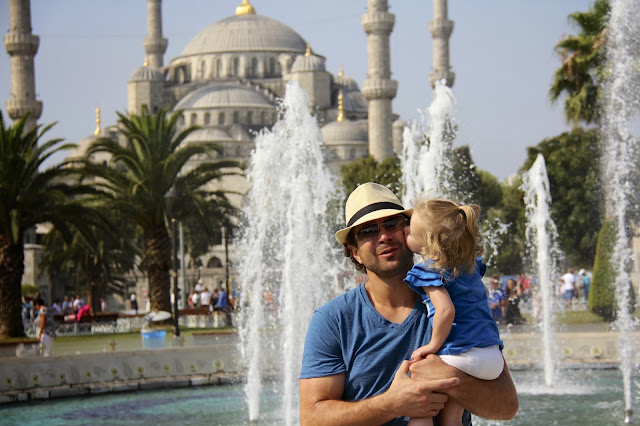
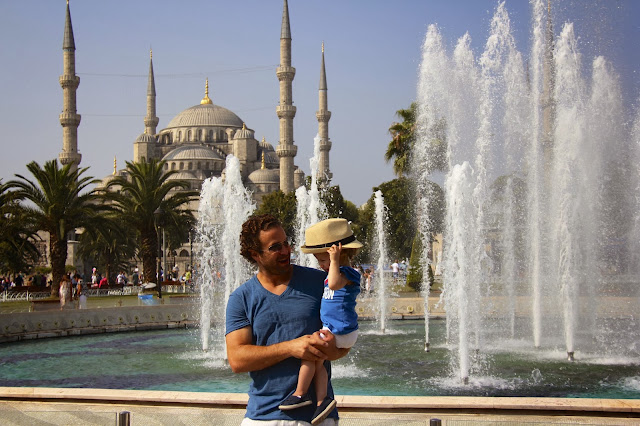
We had fun playing in front of a fountain
Julia steals my hat – I guess she wanted to block the sun
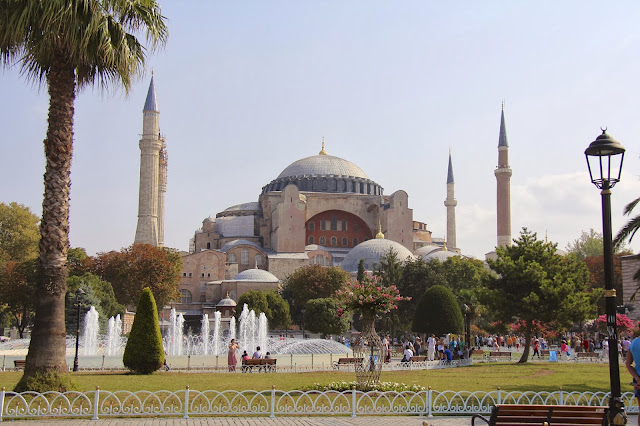
Hagia Sophia Mosque
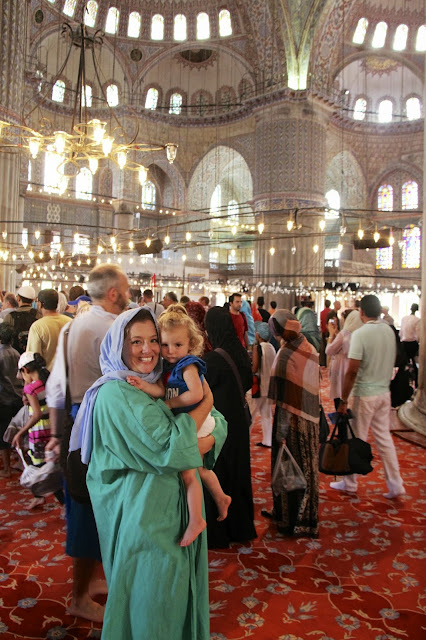
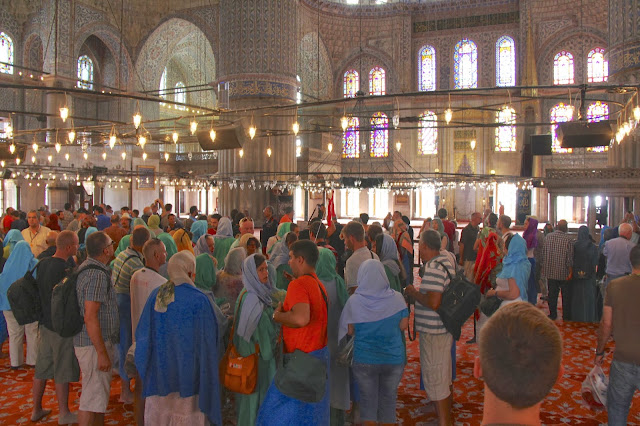
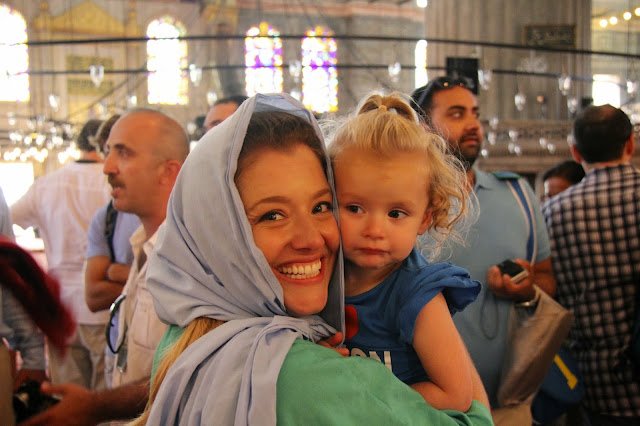
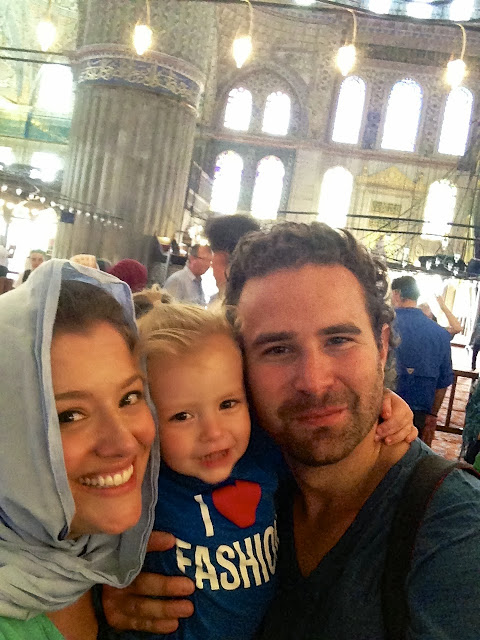
All female visitors are required to wear proper garments
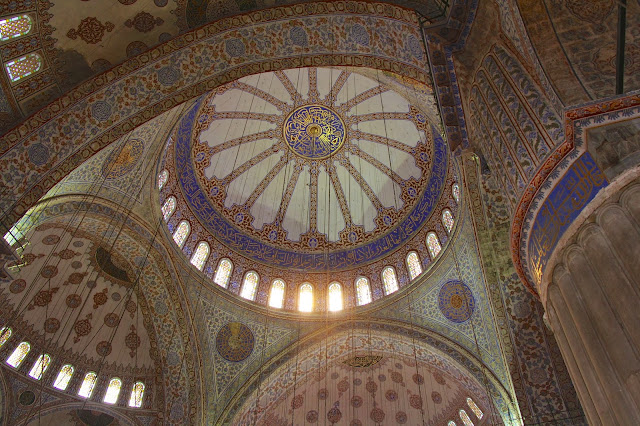
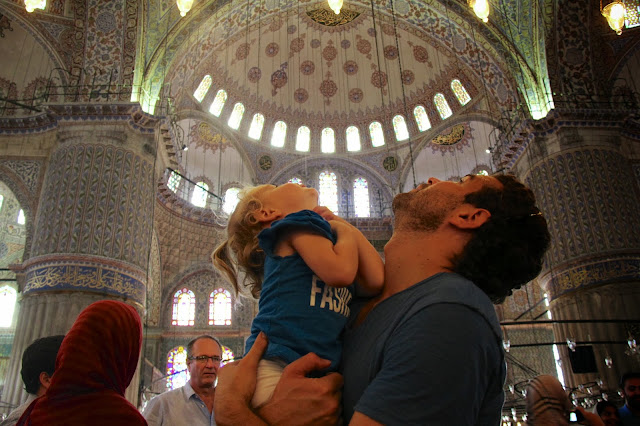
The ceiling and some of the blue tiles that are the reason for the nickname, Blue Mosque
The mosque sees a large number of visitors every day
It’s impossible not to gaze upward at the amazing display of over 20,000 handmade tiles
Jen and Julia in the mosque
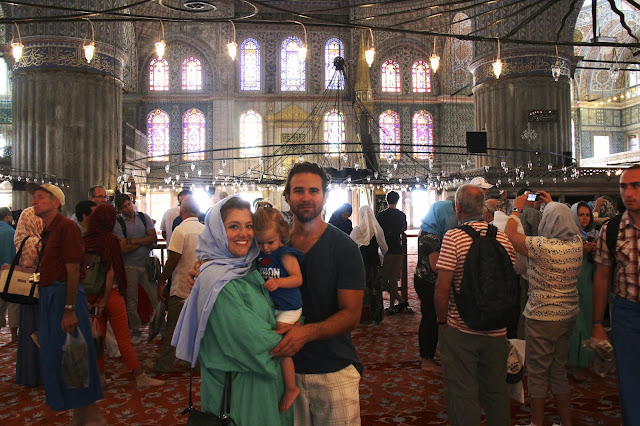
Family photo in the mosque
Another family photo

After the mosque tour, we headed northeast by foot to the Topkapi Palace.  The palace was the primary residence of Ottoman Sultans for over 400 years.  To this day, the residence consumes more land mass along the shoreline than any other single property and has been deemed by UNESCO as “the best example of ensembles of places of the Ottoman period.”  We were very excited to see the palace, but unfortunately it was closed and so we had to settle for a stroll through the public gardens.

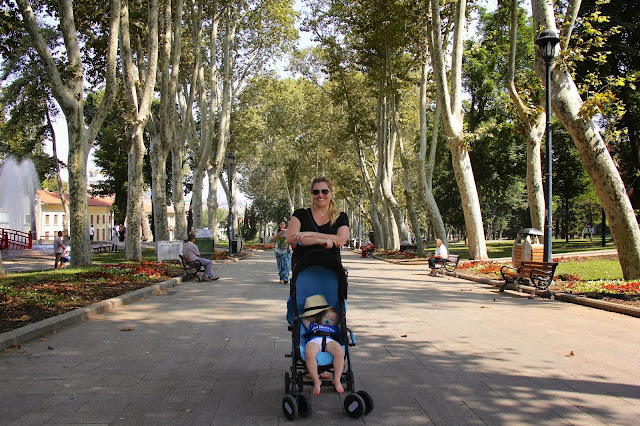
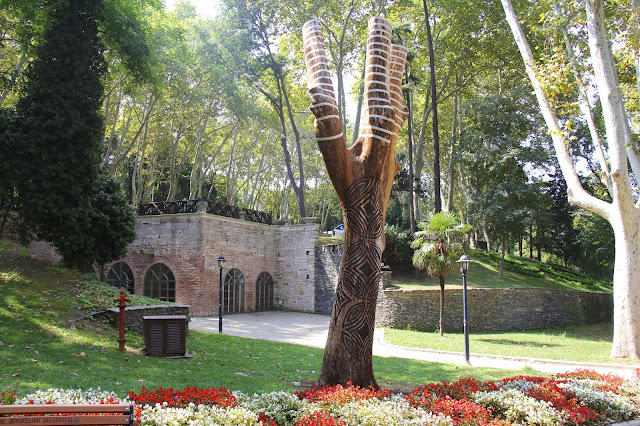
Inside the gardens of the Topkapi Palace
This unique tree appeared as if it had tattoos

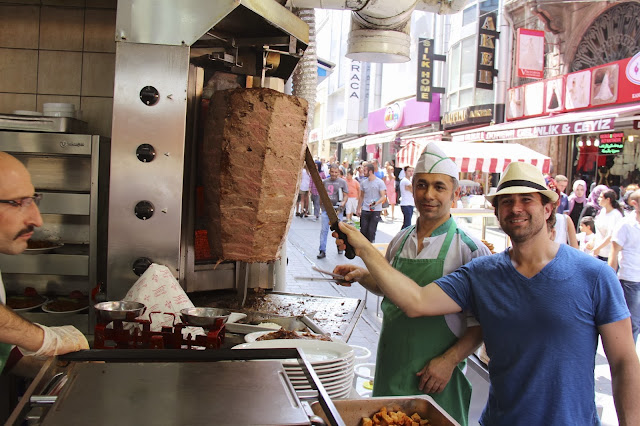
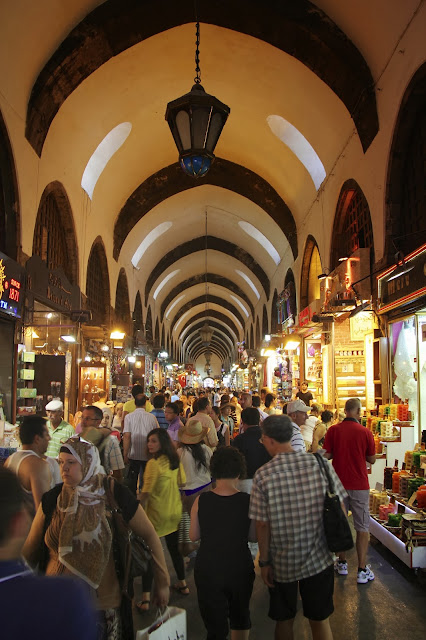
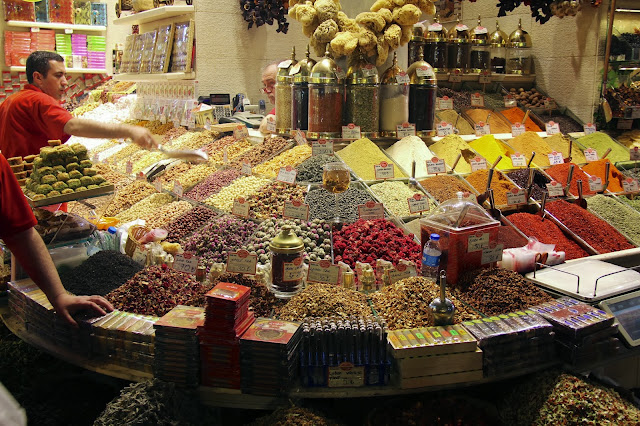
After a long walk to our next destination, we first wanted to stop and have lunch.  I had been dying for one thing since arriving in Turkey – a döner kebab.  We found a restaurant that looked perfect and ducked inside for lunch.  Just prior to walking in, we heard the adhan, called out by the muezzin from mosques across the city – amplified by loudspeakers.  More commonly known in English as the call to prayer, this unique chant is called out five times a day, summoning Muslims for mandatory worship.  After lunch we entered the famous Spice Bazaar – the center for spice trade in Istanbul.  The market is the city’s second largest covered market behind the Grand Bazaar.

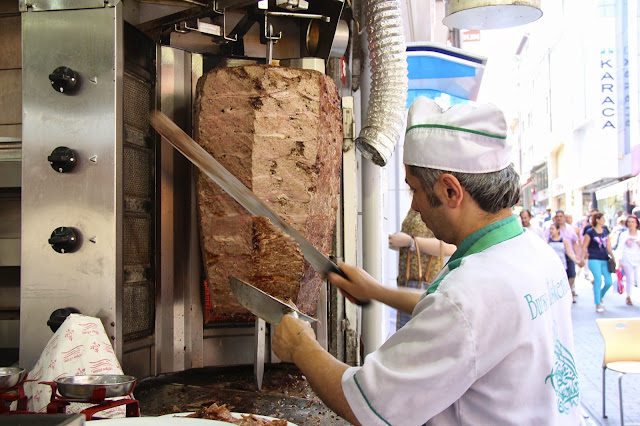
Döner kebab – a mixture of meat, usually veal and or beef with lamb and sometimes chicken
The only thing better than a freshly made döner kebab is one that you slice yourself!
Entering the Spice Bazaar
Merchants showcase their wares, including the ever-popular, Turkish Delight
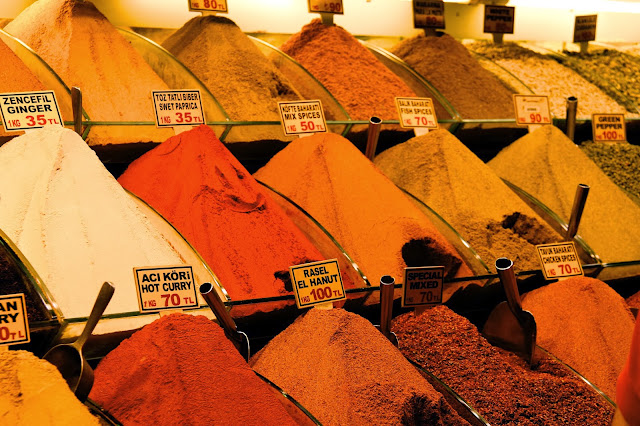
Here you can find most all spices, from hot curry to sweet paprika
The markets in Istanbul seemed endless – this is departing the Spice Bazaar
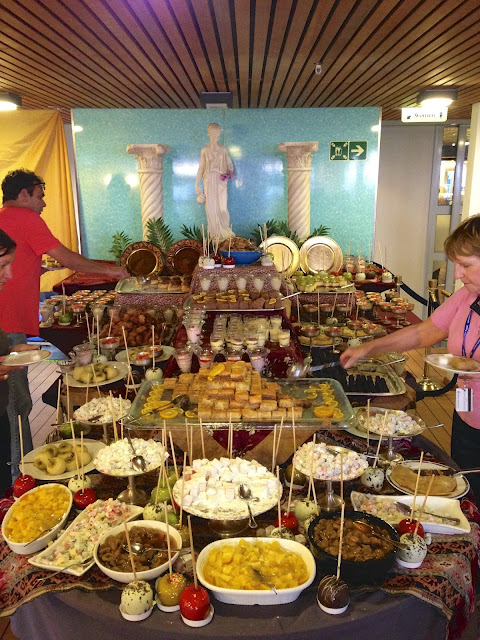
The ship hosted another party, this time a “sail away” party that included wonderful wine
As well as delectable and authentic treats

After our trip to the bustling city of Istanbul, a little bit of unplugging was just what we needed.  We easily accomplished this on the island of Lesbos, Greece.  This Greek island in the northern part of the Aegean Sea is Greece’s third largest, with a bustling capital (Mytilene) and 200 miles of coast line).  Some ports were too small for our monolithic cruise ship, and so we had to use the tender system.  All large cruise ships are equipped with smaller boats that can transport passengers from the ship to land when arriving in smaller ports of call.  Generally, you are assigned a group number (depending on how quickly you arrive to collect it) and then send ashore in that order.  Surprisingly, we arrived fairly early and got to shore just in time to snatch up one of the few remaining tiki huts on the beach.  After that, it was clear sailing – nothing but relaxing and sitting in the crystal clear water.  Oh, and one more thing… skipping stones.  The ocean was just full of perfect stone-skipping rocks.  I could easily average six skips but got as high as fourteen skips – the crowing achievement of the day, only to be topped by making the final table at the Casino’s Blackjack Tournament later that night.

We rode in the tender to get to Lesbos
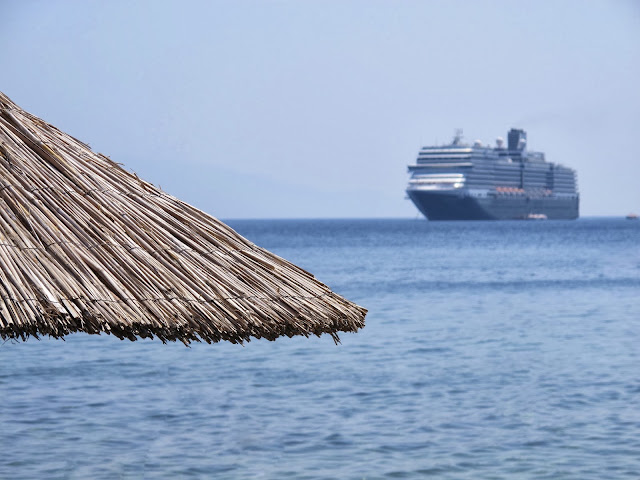
A view of our boat from the tranquil setting under our beach umbrella
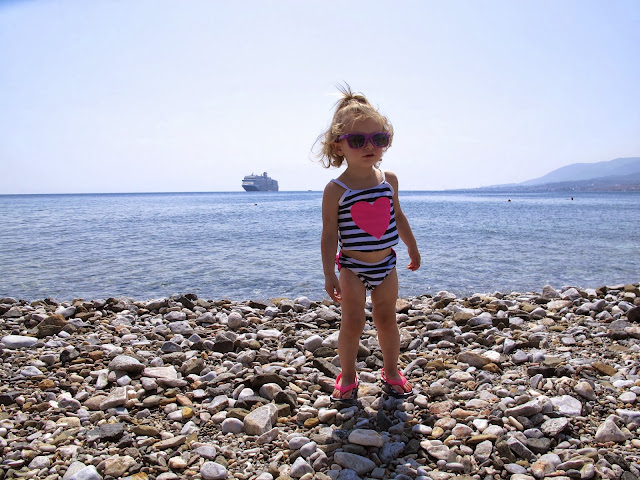
Julia poses for a picture
Skipping rocks with Daddy
Julia wanted to try on her now – she almost got the hang of it
The water was so clear it was fun to just soak
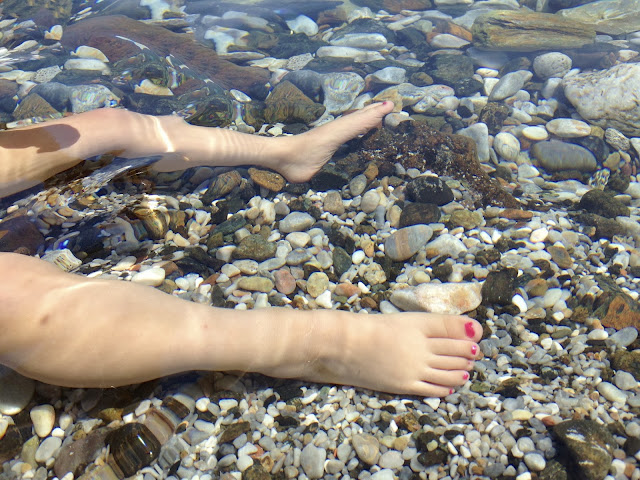
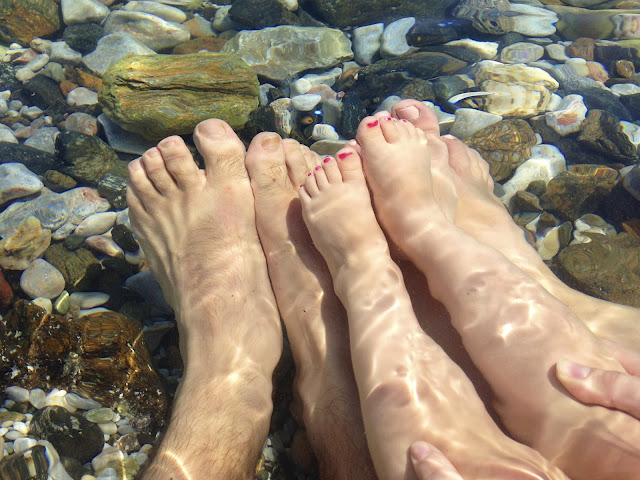
Family toesies
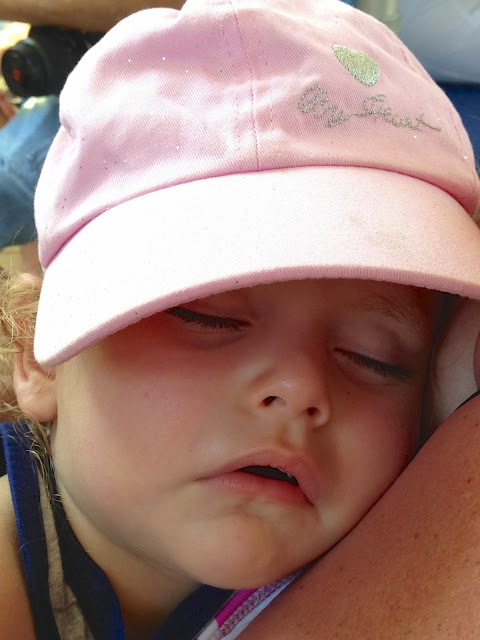
The sun wore Julia out – she was asleep on the ride back
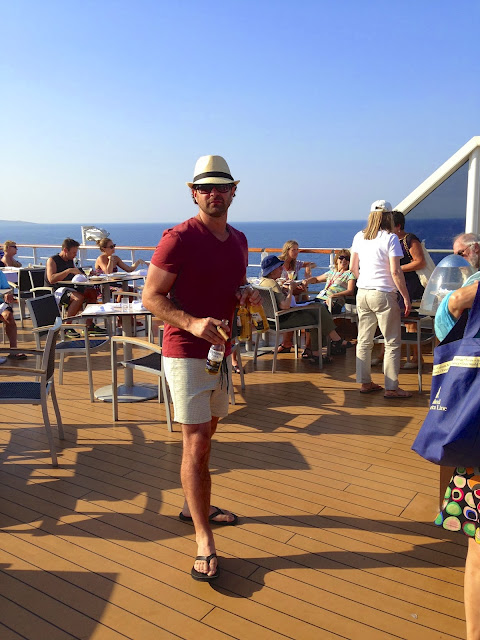
Two beers and a cigar – oh man, oh man!  Relaxing on the ship as we sail away
I’m posing for a picture with my girl, little did I know what she was up to under my hat!
Blackjack tournament final table.  Got knocked out doubling down on 10 against a dealer 6.  It would have given me an unbeatable chip stack with three hands left.  The winner had no idea what he was doing which put me on tilt
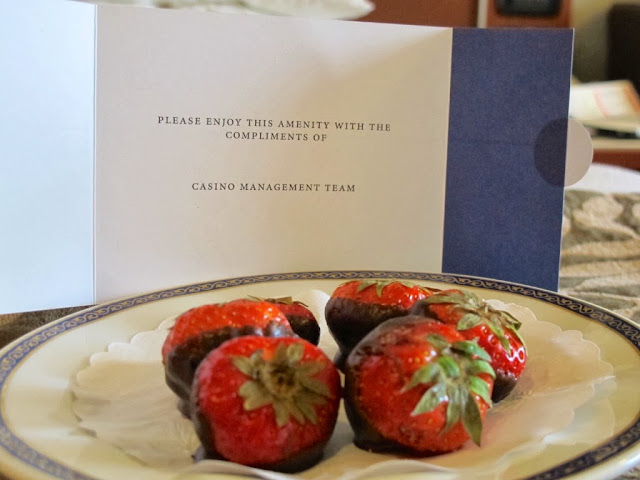
The casino would send up desserts and bottles of wine with their compliments.  Perhaps I was too frequent of a visitor??

We still have plenty more adventure to come… please tune back in to the final section of our cruise in the next post.
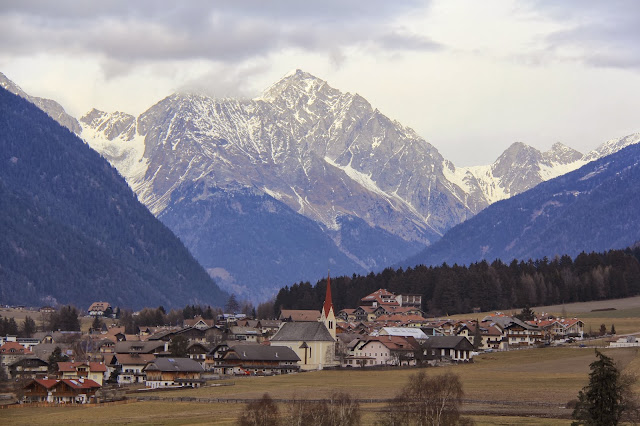
Wherefore art thou Julieta? Oh… Your Home is in Verona

I know its really, “O Romeo, Romeo!  Wherefore art thou Romeo?” but it’s not his home in the middle of Verona that draws thousands of visitors each day; so I took a little creative liberty with the title.  More on our visit to this popular tourist destination in a moment.  Let’s back up and set the stage…
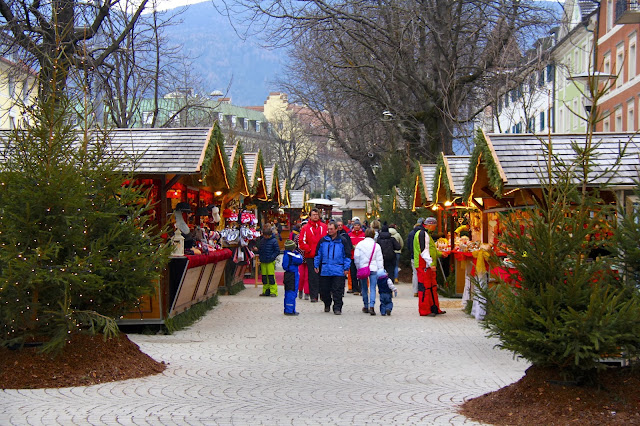
Soaking up the view

Verona is a beautiful city in the Veneto region of Italy, in the Northeast Italy. The capital of Veneto is Venezia (Venice) – the world famous city built on canals.  While Venice is usually one of the most well-known destinations in this part of the country, it should not overshadow Verona – a charming and breathtaking city unto itself.  Since Jen’s parents bought their home in Como a few years ago, Verona has been on our “bucket list” of desired destinations.

Jen’s mom came for a visit in late February and during a break in the cold weather, we decided touring a new city was a great idea.  Since Verona is only two hours away by car and we had been wanting to go, it was an easy selection.  The night before we prepared for a full day’s voyage – plenty of diapers and cheerios… and even a few things for the baby.
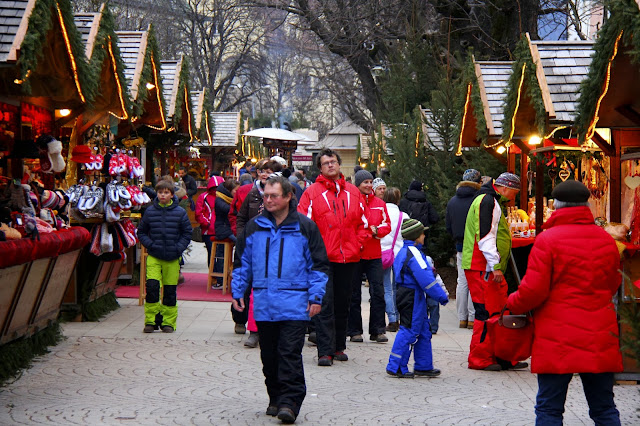
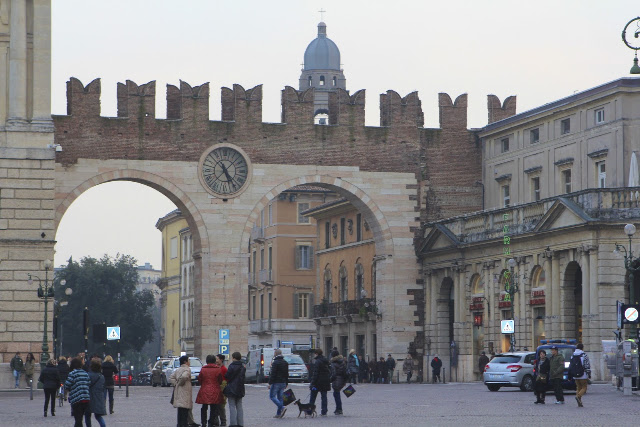
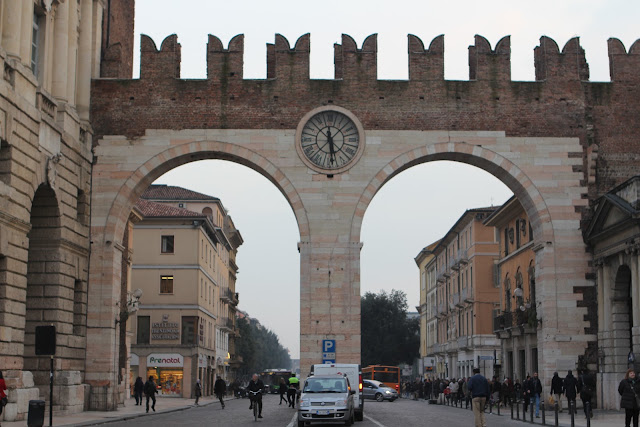
We set out early and drove straight toward the center of town.  As we approached the city, we neared a roundabout that was created around one of the original stone gates from the old city – dating back over a thousand years.  Crossing through the roundabout and straight toward the city, a much more modern street lined with homes and street level shops guided us right into the “newer” main gate of the city, under which we drove the car.

The main city gate
We drove through this gate to enter and exit

This particular gate (pictured above) was built in the 16th century to protect the city from invaders.  Verona’s central location lent to wonderful trading routes and heightened the importance of the city throughout Europe (even before Roman times).  It was this critical location that also put it right in the path of invaders and so the walls were built to fortify the city.

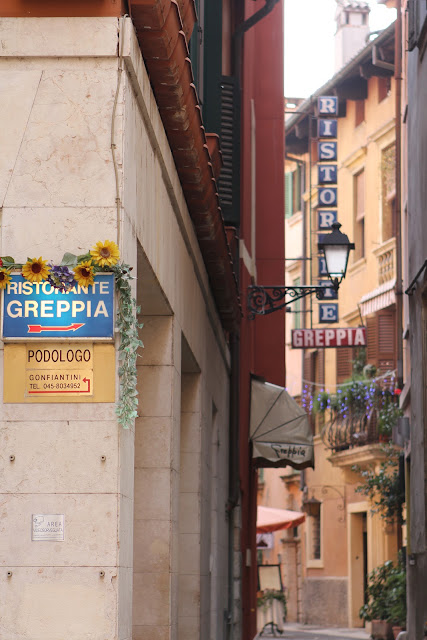
We arrived in the city at my favorite time of day – just in time for pranzo (lunch).  We had gone to our trusty advisor, Trip Advisor before departing and already picked a place to eat.  You can read about our wonderful/delicious/frightening/not-delicious-for-me dining experience at Ristorante Greppia HERE.

Ristorante Greppia
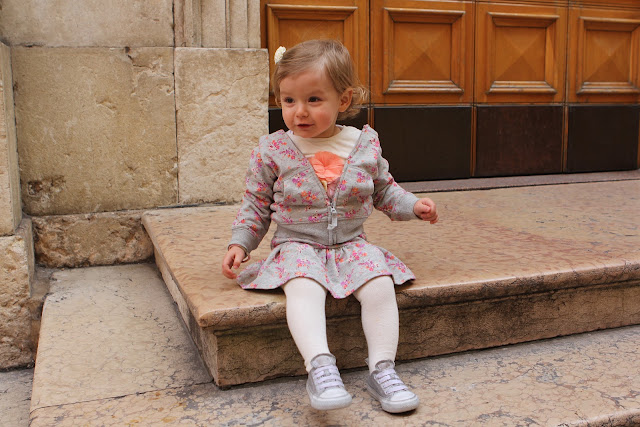
Julia was full and happy after lunch

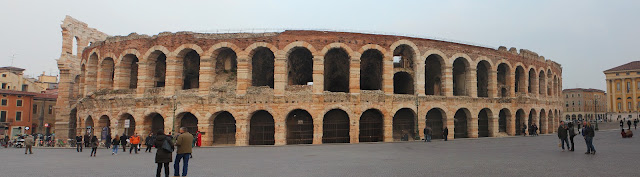
On our way to the restaurant we walked directly into the Arena – an amazing Roman ampitheatre, third in size behind Rome’s Colosseum and the arena at Capua (not sure what that is… I’ll have to check it out).  The ampithere was used for gladiator games, among other things – and is surprisingly still intact.  In fact, it’s still used today in the summer for fairs, theatre and operas.

Verona’s Arena
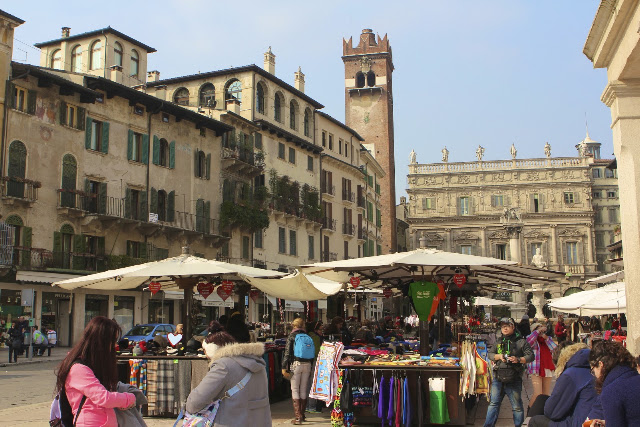
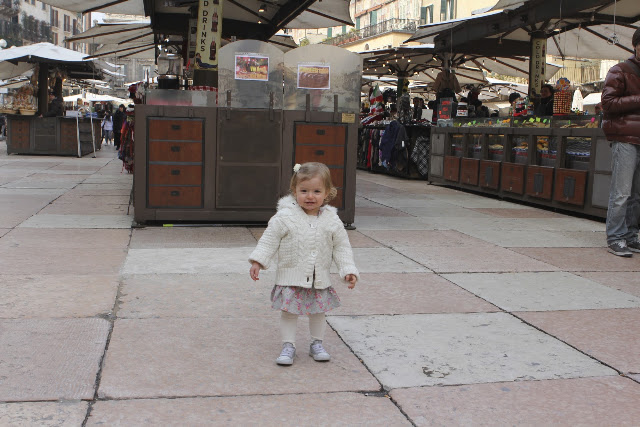
After lunch we took a stroll through town, toward one of the main piazza (town square), Piazza delle Erbe.  Here are some of the shots of the market, surrounded by the Roman architecture as well as Julia having fun near  fountain.
Markets in Piazza delle Erbe
“Dad, give me some cash to go shopping”
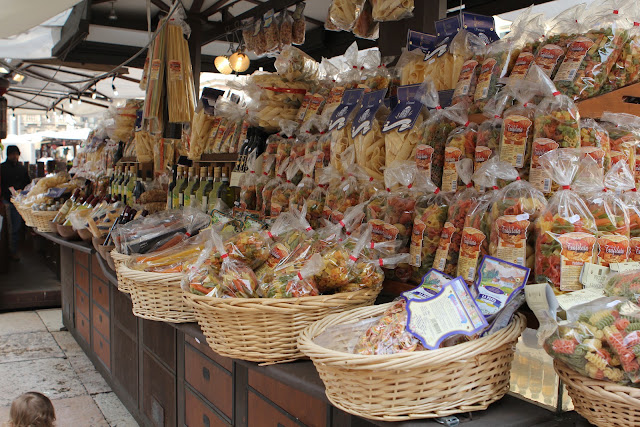
Spices, pasta and cured meats
Julia was happy as could be
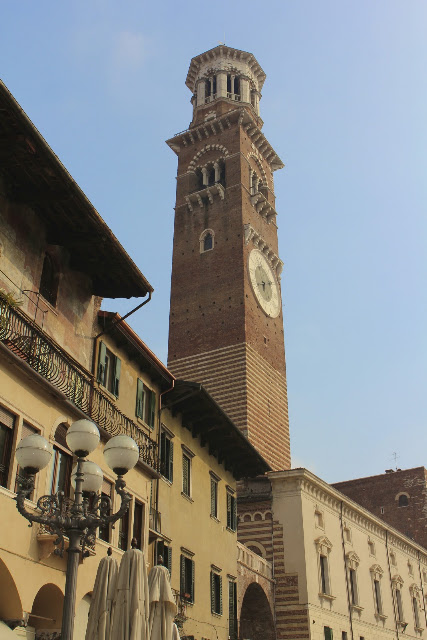
Torre (tower) dei Lamberti – 1463

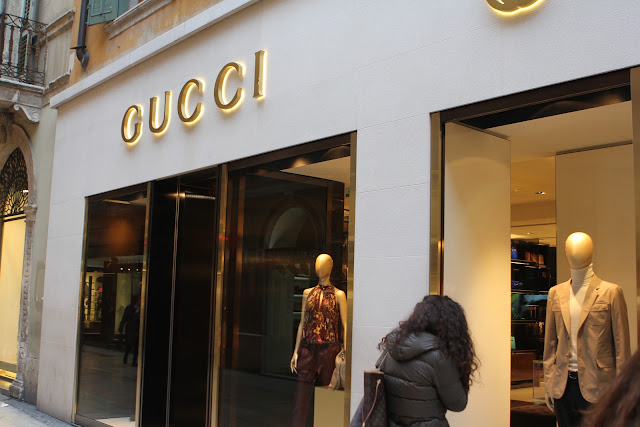
We found ourself on, Via Mazzini – one of the main shopping streets and filled with high end goods.

Gucci, Prada and Dolce Gabbana – Oh My!

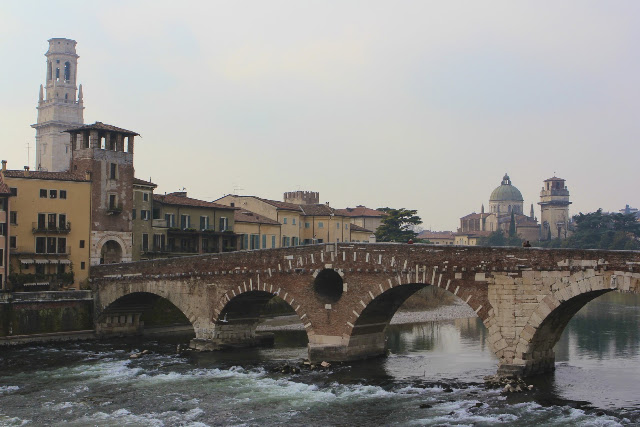
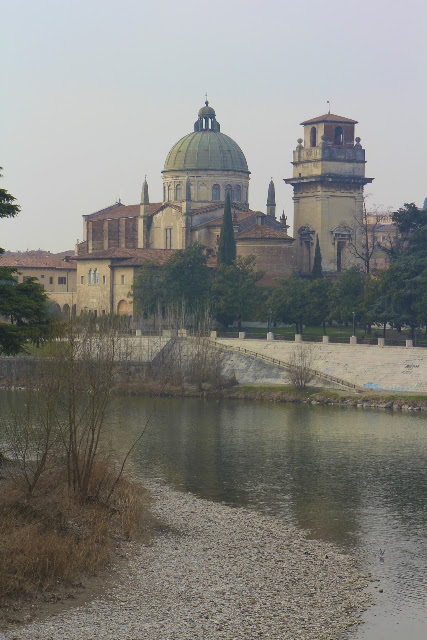
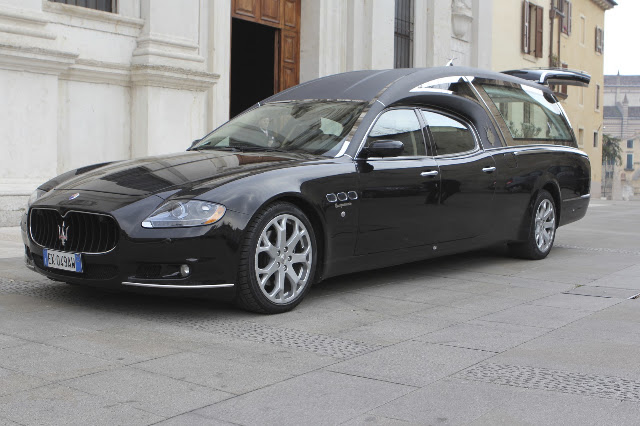
As we wound our way through the streets of Verona, we crossed over Ponte Pietro – one of the main bridges exiting the city, spanning the river that borders the northern end of the city .  We found ourselves at the Duomo (the city’s main church), where a funeral was presiding.  It was obviously someone of great wealth and importance – there were hundreds of people in attendance and a beautiful hearse (is that an oxymoron) by none other than the Italian race car, Maserati at the ready.

Ponte (bridge) Pietro
The Duomo
This is the way I want to go out!

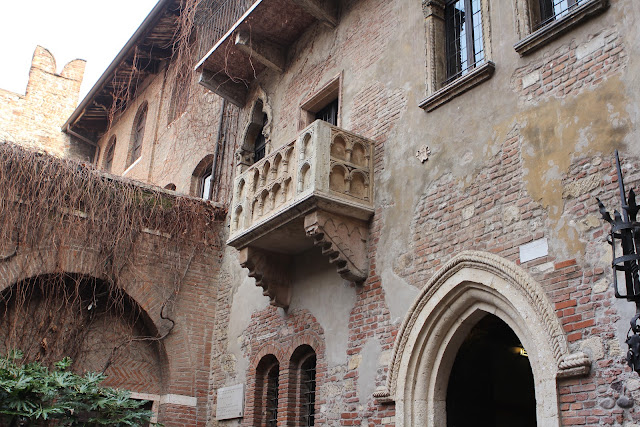
We stopped for a coffee (it was now the “coffee hour” of 4:00 and our internal coffee clock alarms were sounding).  Diane enjoyed a tea – a luxury she doesn’t usually get around less forgiving coffee drinkers in the family (tea takes a lot longer to sip than an espresso).  After fueling up, we had one last mission to accomplish – a visit to Casa di Giulietta (Juliet’s house) from the world famous Shakespeare play, Romeo and Juliet.  Of course, in actuality – it’s spelled Giulietta.*  Turns out that three of Shakespeare’s plays were set in Verona – the beauty of the city must have intrigued him.  Or else he got a really good deal on hotel rooms.  Probably used Priceline.

Giulietta’s Balcony – “Romeo o’ Romeo”

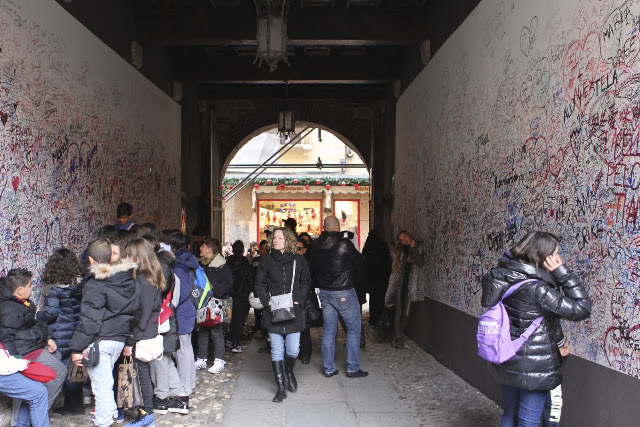
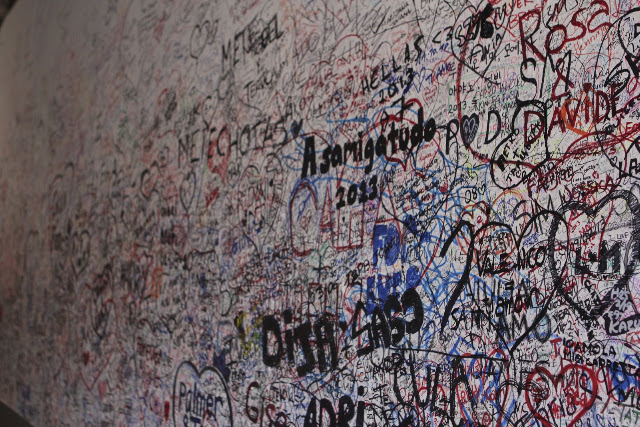
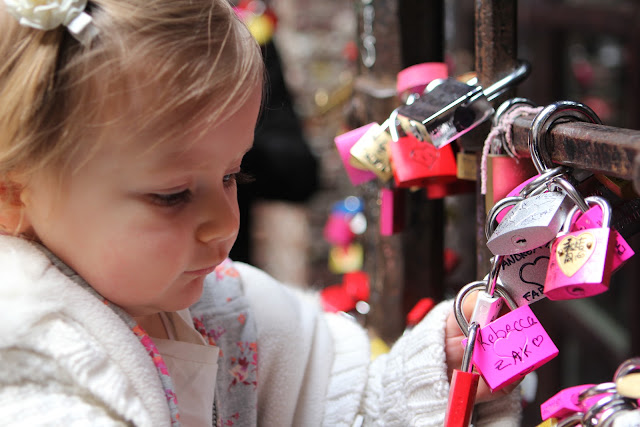
Giulietta’s house (which is of course not really her house since she is a fictional character) is contained in a small courtyard, accessed through a dark tunnel.  A few funny traditions have developed at home.  Firstly, it is a must that you sign the wall of the tunnel as you enter the courtyard.  Next, young lovers can memorialize their love by engraving their names on a padlock and attaching it to the gate in the back of the courtyard.  The romantics can write love letters and stick them in the crevices of the adjacent wall or attach them with chewing gum.  And for some reason (I’m assuming love or lust related) you can get in line and touch the bosoms of the female statue in the courtyard.

Tunnel leading to the courtyard
Young lovers inscribe their names on the wall
Julia memorializing her love for her parents

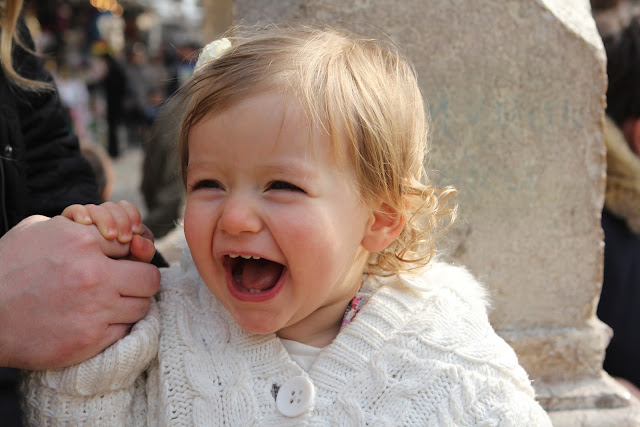
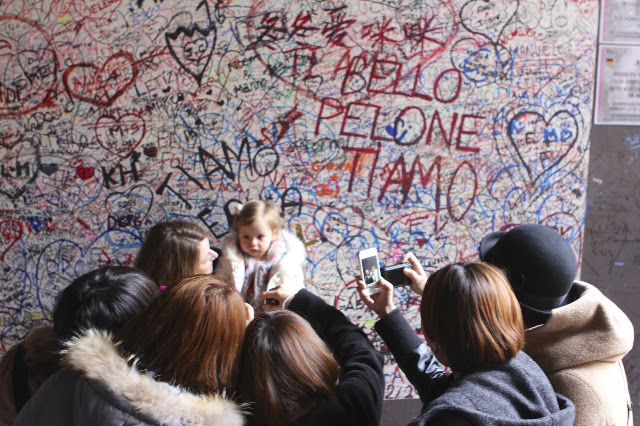
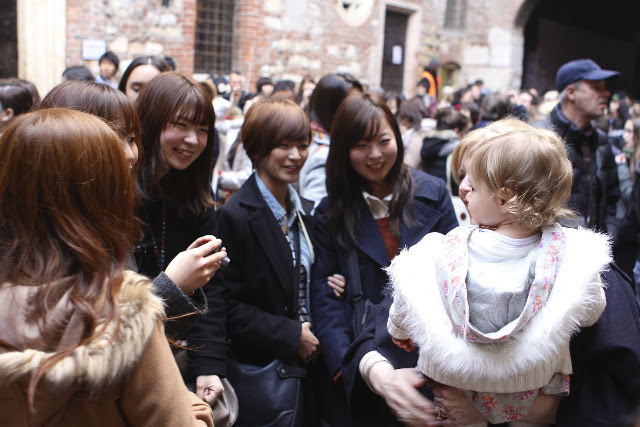
Of course our favorite part of the visit was that our very own Giulietta (which literally means, Little Julia) was a celebrity in her own right.  The courtyard was packed with tourists from Taiwan and China that absolutely loved her and crowded around her to take her picture or pose with her.  Several of them wanted to kiss her on the check for a photo.  And since our little comedian/actress loves an audience – she was happy to oblige her adoring fans!

Paparazzi – smile!
“Nice to meet you, ladies”
The girls in Piazza Bra
Giulietta found her real Romeo

We walked a bit more, stopped for a wonderful gelato (ice cream) and another coffee and headed home.  I would say that Romeo wasn’t the only one to have a great time in Verona.  In fact, given how his love affair ended – I’d say we had a much better time in Verona than good ‘ol Romeo!

*Ironic side note – Jen debated spelling our daughters name the Italian way – G-I-U-L-I-A and I protested that I don’t want her to grow up with people constantly misspelling her name and we agreed on the more common J-U-L-I-A.  Of course, now everyone spells it wrong (assuming it’s Giulia).  We both find it funny and think it’s cute the alternate way while we’re living in Italy.

The Rodeo Drive of Switzerland

It still tickles me that when I wake up and ask Jen, “what do you want to do today” – the answer might be something like, “let’s go to Switzerland”.  What a great idea!

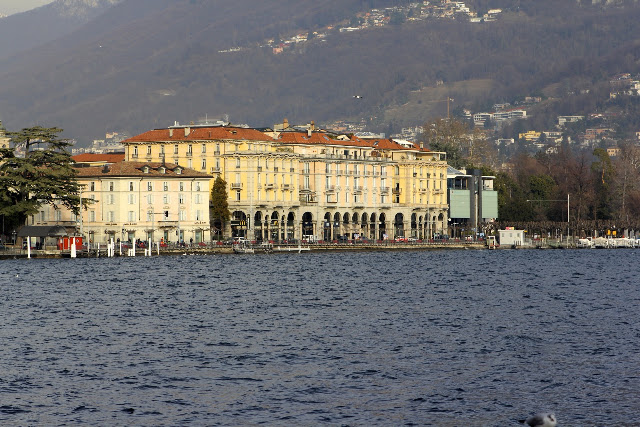
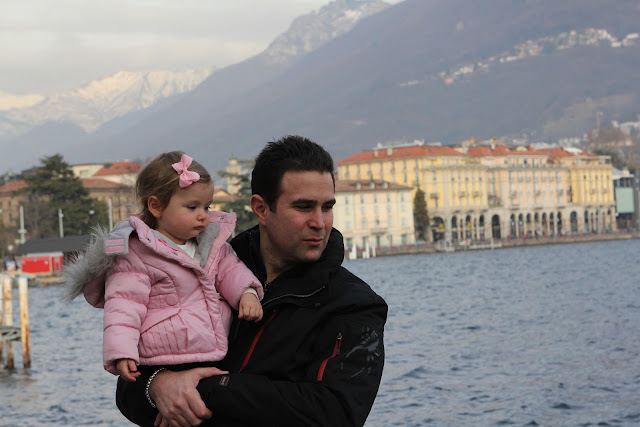
Our home in Lake Como, Italy is very near the Swiss-Italian border.  We have always been fond of a neighboring lake town, Lugano, Switzerland.  Since the trip is only about 30 minutes, the idea to hop over the border for lunch appealed to us quite a bit.
Lugano, Switzerland
Switzerland is a beautiful country with some of the most breathtaking landscapes you’ll see.  The most interesting thing [to us] about Switzerland is that it’s a country that in many respects, assumes the identity of its neighboring countries.  It is a landlocked country bordered by Germany, France, Italy and Austria.  The Swiss do not have their own language; each Swiss “region” instead adopts the tongue of the closest neighboring country (either German, French or Italian).  Additionally, the food served in each region follows the same trend of marrying the food of it’s neighbor-country.  However, we have found that the architecture seems to be uniquely Swiss throughout most of the country.  Despite not having a shared language or cuisine, the Swiss have found a strong sense of pride in their country and it’s ideals.
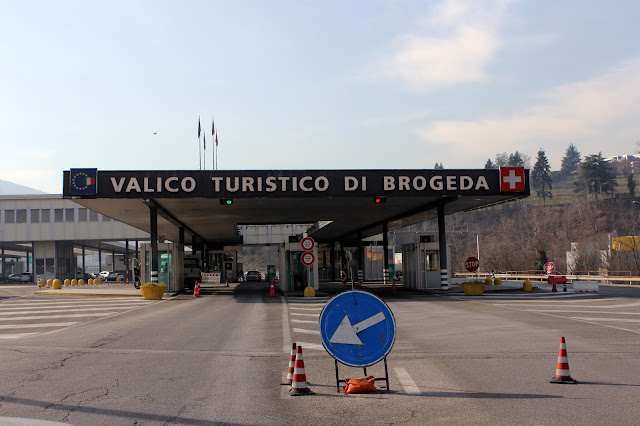
Border crossing from Italy into Switzerland
The two economic epicenters of the country are Zurich and Geneva.  If you’ve ever see a gangster or action movie – you’ll know that banking is a large industry, originally praised for it’s client privacy, security and discretion.  If you’re a legitimate business magnate or Vito Corleone, you most likely have a Swiss bank account.  Banking is just one of many reasons that Switzerland is one of the richest countries in the world.
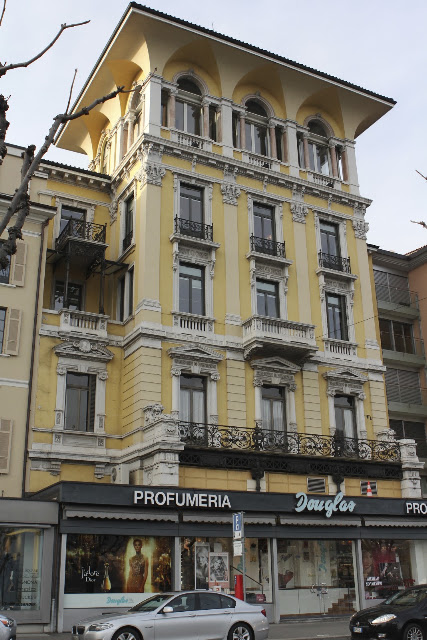
Homes atop a perfume shop
Switzerland also produces some of the worlds finest timepieces.  Some of the more infamous Swiss made timepieces include Audemars Piguet, Breitling, Cartier, Chopard, IWC, Patek Phillipe and of course, Rolex – to name a few.  Much to my disappointment – they are no cheaper if you buy them in Switzerland (in fact, quite a bit more thanks to a weak dollar).  An interest tidbit that I just learned… over half of the world’s watches sold are made in Switzerland (in terms of value).
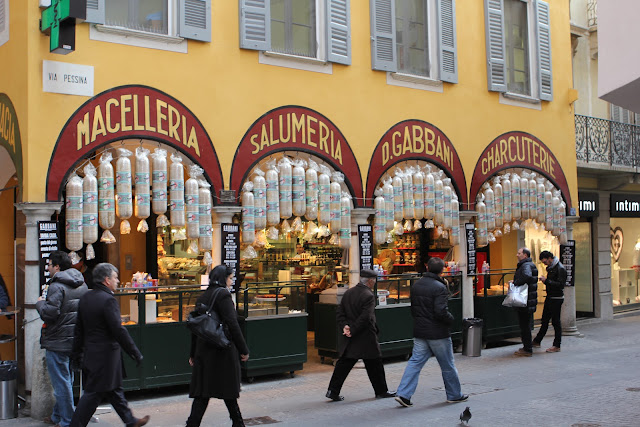
A shop that sells wonderful panini, meats and cheeses
As we departed to cross the border, we researched a good place to eat and found, Grotto Mulino Pregassona.  It was a bit of a trek because the restaurant was a ways away from the center of the town. We put our faith in the reviews of others and were pleased with the results when we saw the charming restaurant as we pulled up.
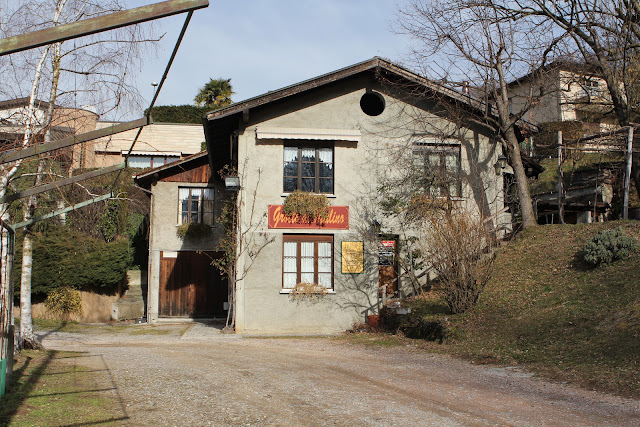
Grotto Mulino Pregassona
We eagerly exited the vehicle and sauntered up to the restaurant, expectations high.  Odd, the windows looked dark.  And door seemed to be tightly pulled shut.  Because it was closed – oh, that explains things.  Upon further inspection we discovered (thanks to a rough job translating) the restaurant was closed for the season and would re-open in April.  APRIL!  Oh yeah, I forgot – we’re on the Italian side.  Should have read those reviews a bit closer.
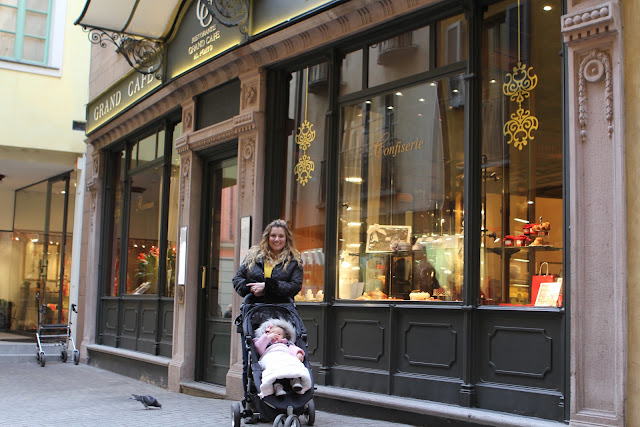
We drove back into the main part of town, the Centro (Center) of town.  We walked around a bit and settled on a place to eat (it was OK, but not blog-worthy… sorry, no photos).  As we walked around we enjoyed the sites and sounds of the people, and loved taking in the beautiful shop displays.  There are custom pasticcerie (pastry shops) sandwiched between Chanel, Louis Vuitton, Armani and the countless Swiss watch shops (hence, our nickname of the Rodeo Drive of Switzerland).
Jen and Julia window shopping
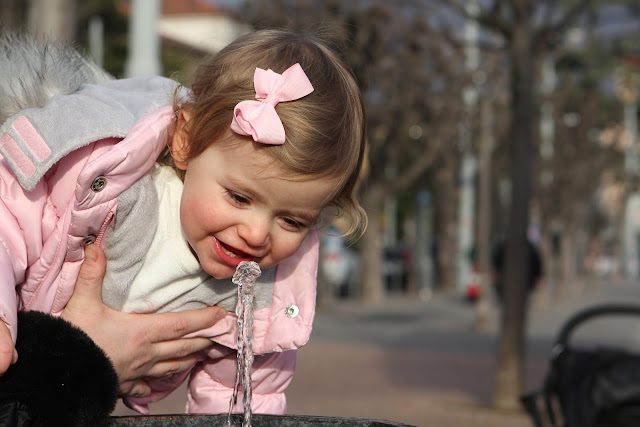
Time for a giggle
Looking at the ducks on the lake
Sometimes sightseeing is better to do alone
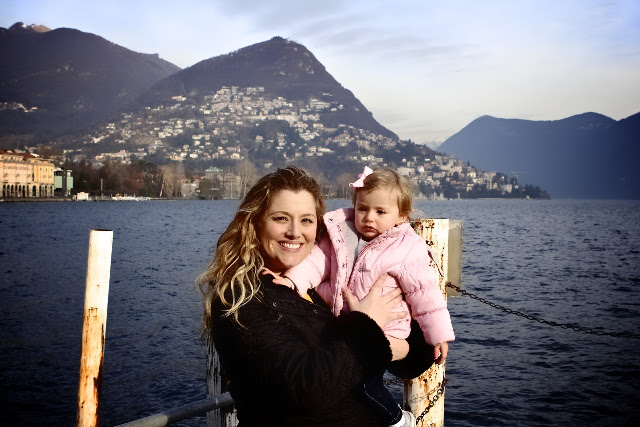
Jen and Julia on a pier
Time to stop for a drink
It was a short trip around the bend, but well worth it.  We can’t wait to visit Switzerland again soon!

Saturday Market in Como

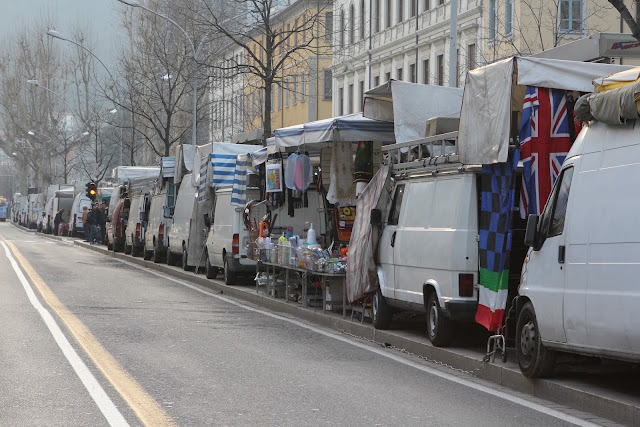
Every Tuesday, Thursday and Saturday there is a market on the north side of Como.  It exists just outside the old fort wall that surrounds the original city.  There is a collection of over a hundred vendors, most which arrive in their vans and vend from open doors.

Vans – vending on the other side

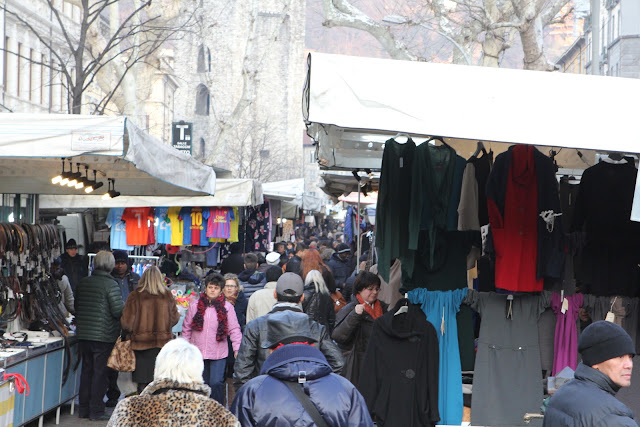
We strolled through and decided there was nothing we needed before moving on to a late afternoon snack (more on that in a subsequent post).  Below you’ll see a collection of the random items you can purchase if you so choose.

The Market
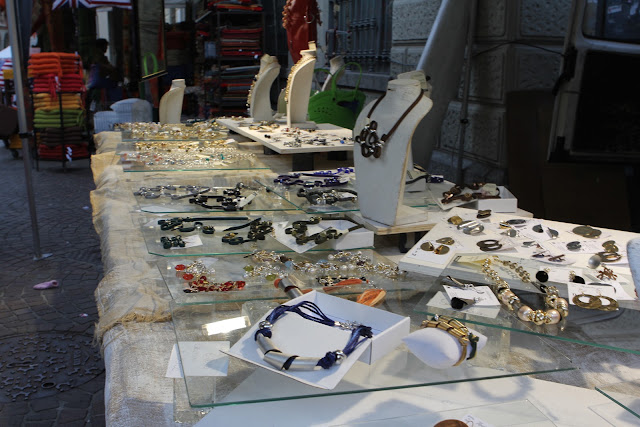
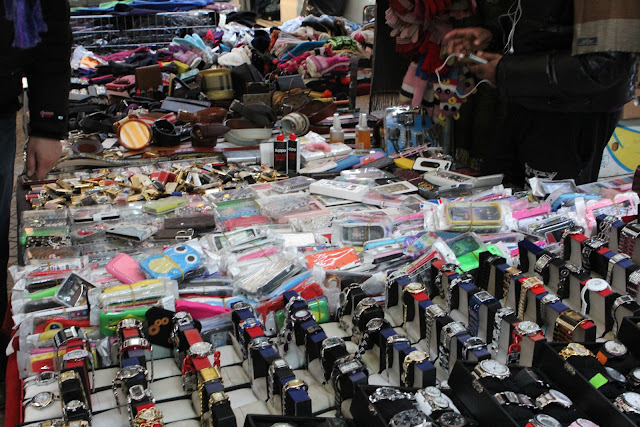
Some “fine” jewelry
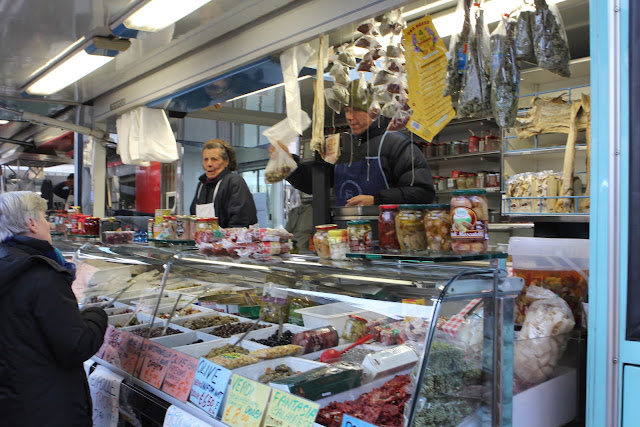
Snacks
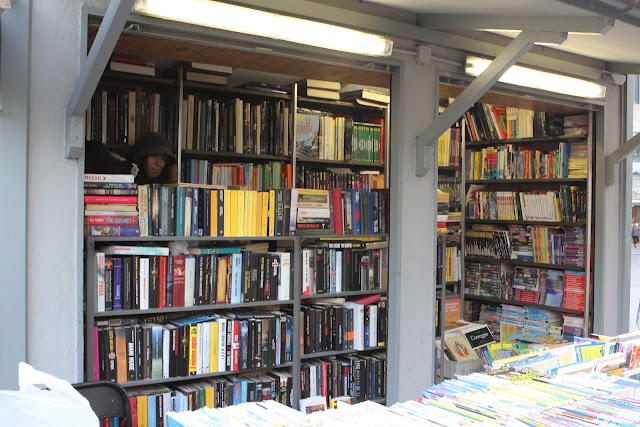
Books
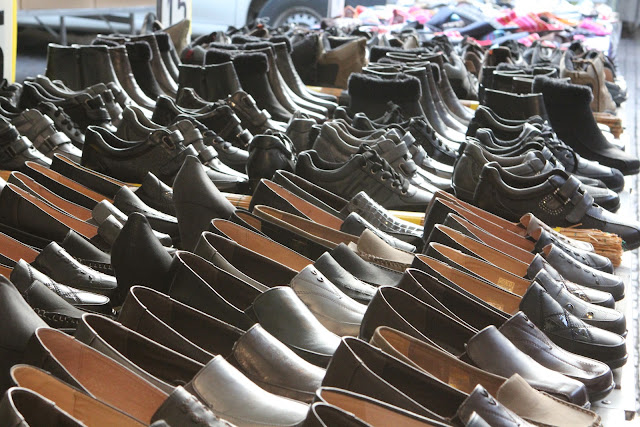
Shoes
Anything you can imagine
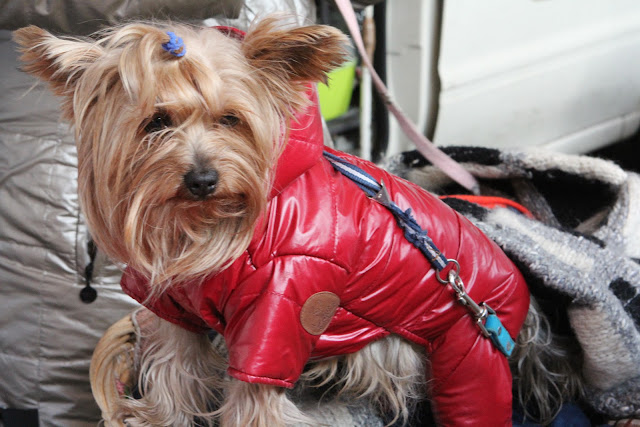
And of course… even the dogs show up in high fashion
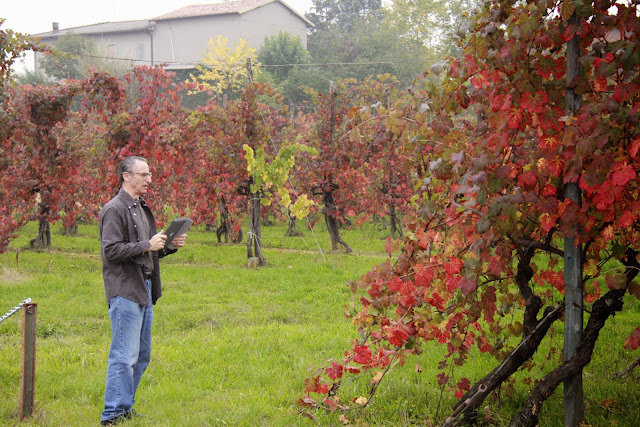
Now you see why we didn’t need anything.  But of course, it was still fun to walk around!