So, I’m back here on Sipping Espresso… blogging. Weird. I’m in America. I’m blogging aboutItalyfromAmerica. Can I do that?! Is that even allowed?! Well, I promised you in my Final Blog Post From Italy that I would finish our tale of overseas adventure and intrigue (OK, OK – more like overseas adventure of gluttony and transparency), so I suppose that I’ll have to make good on my word. For those of you that are sick of hearing about these adventures… I’m sorry, but I’m OCD and I am not much good at leaving things unfinished.
“Well, get going already Dad and tell us this story”!
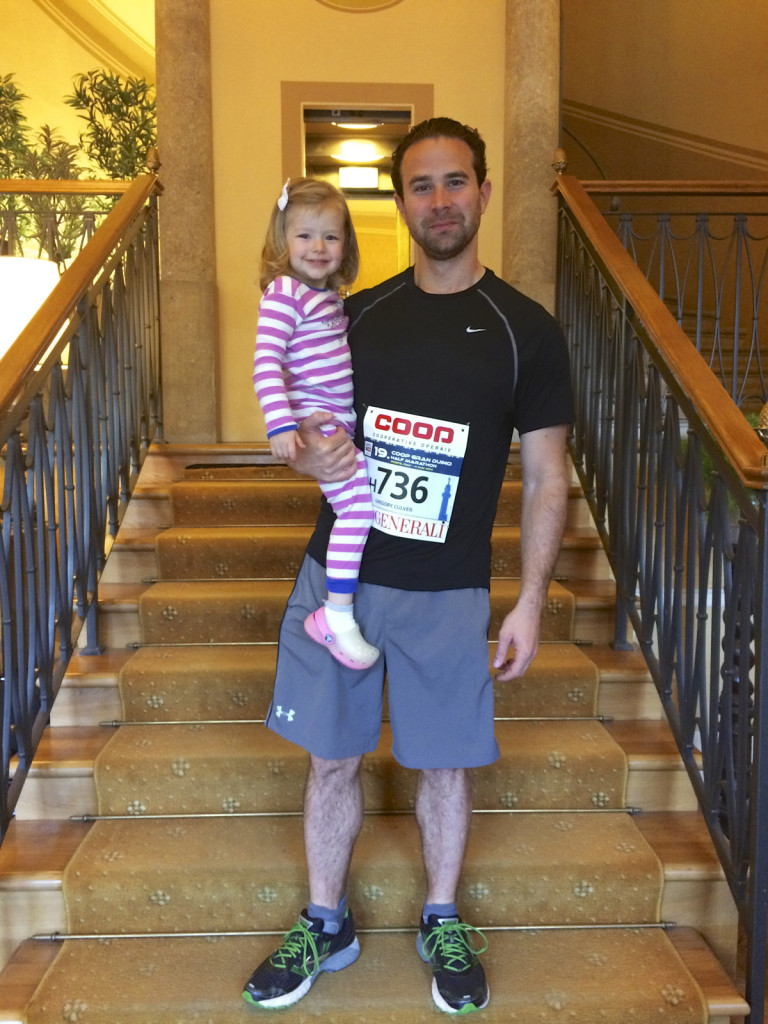
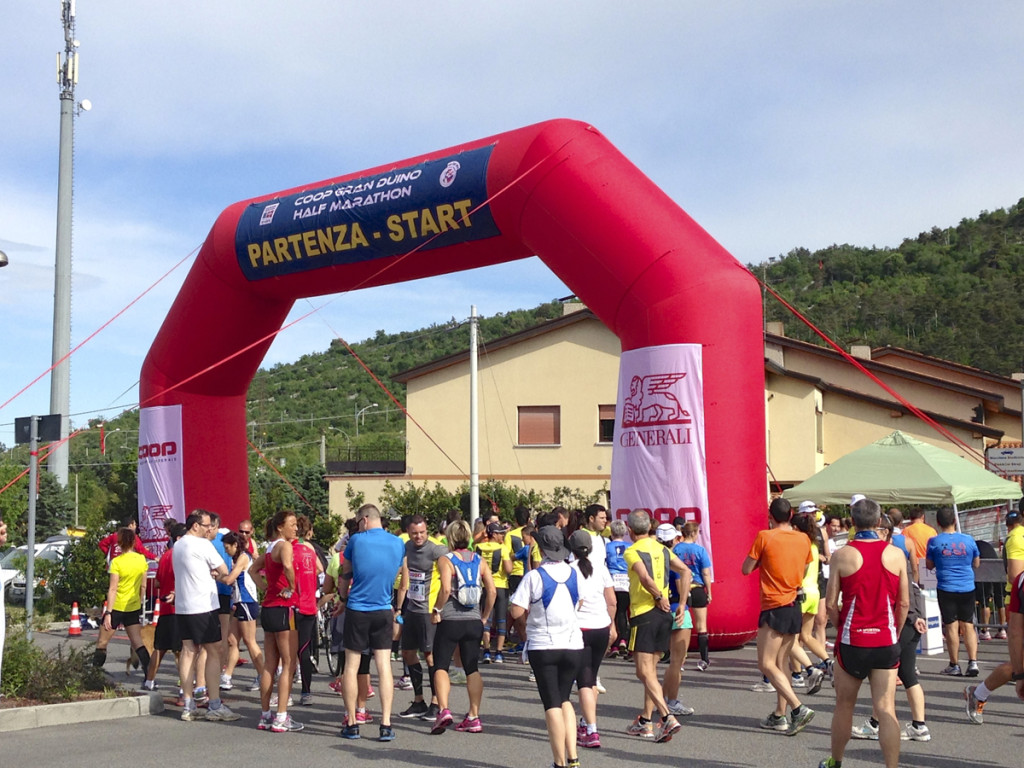
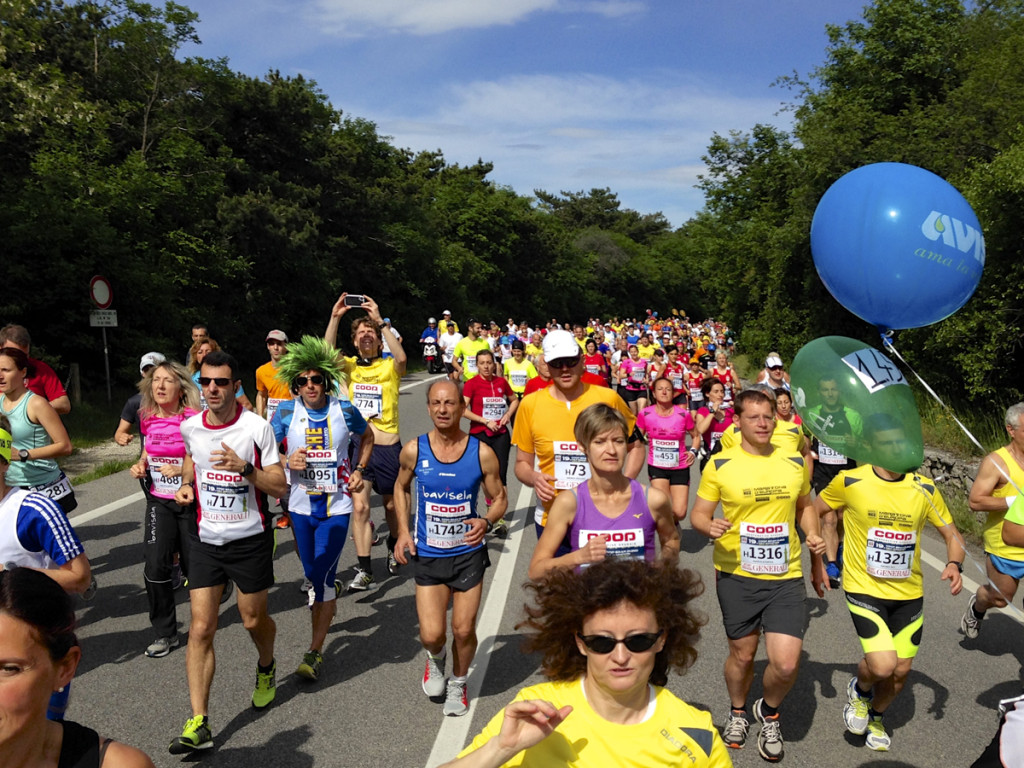
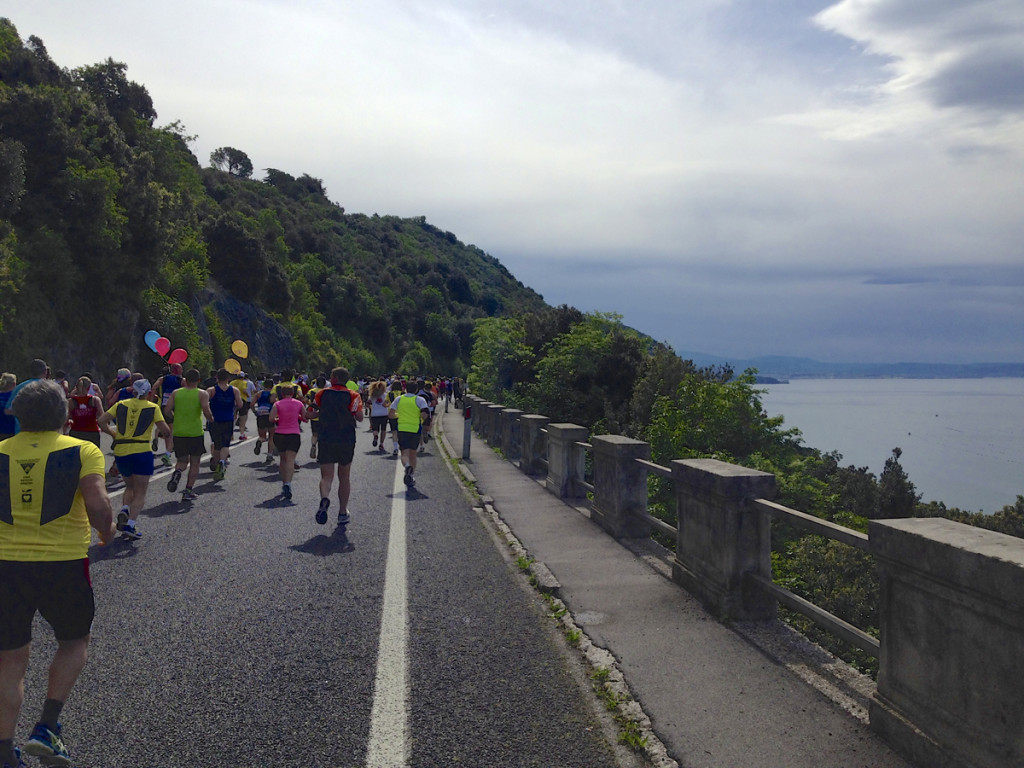
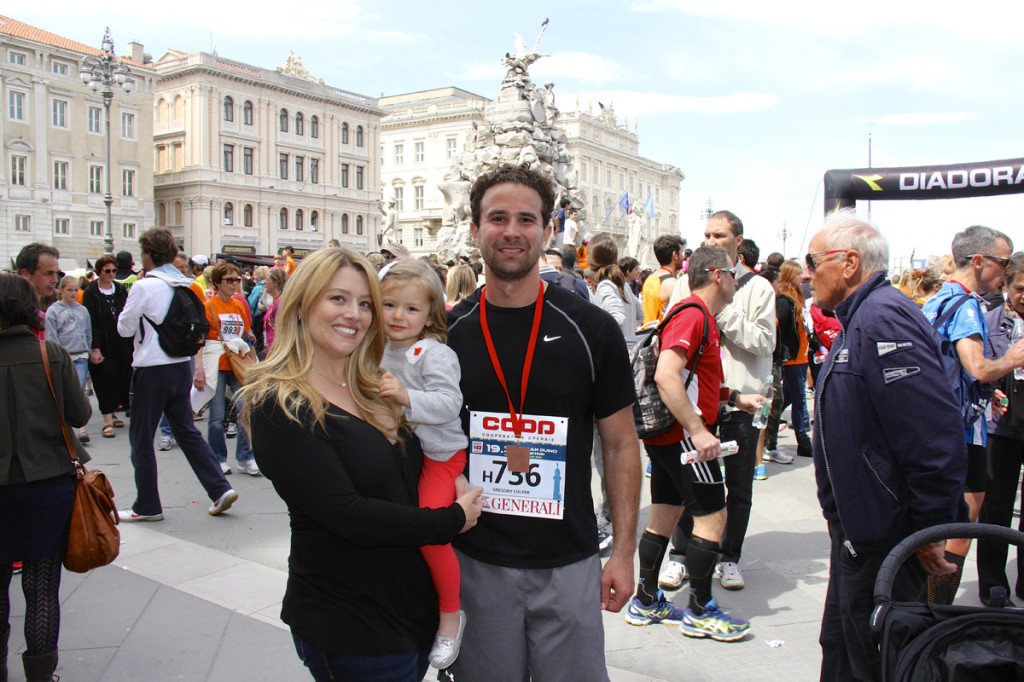
So, let’s flash back; way, way back to this past spring when Jen’s sister came to visit. Just as they departed for Venice and Rome, we took our own leave from Como and headed toward the metropolitan city of Trieste. When I think about what brought us to Trieste, I finally understand the word bittersweet. We undertook the four-hour road trip to Italy’s easternmost city so that I could run in the Maratonina d’Europa (Europe’s Half Marathon). Despite having to add the somewhat embarrassing “ina” suffix to the end of Maratona (changing the meaning to “very little”), completing my first half-marathon was a very “sweet” accomplishment for me. However, the impetus behind the race was a very “bitter” one. Jen and I had started listing all the things that we wanted to do before our time in Italy came to an end. This particular road trip checked many of our boxes; competing in a race in Europe, a visit to the city of Trieste, time in the region of Friuli–Venezia Giulia, capped off with a visit to Slovenia (upcoming post). Now, that checked a lot of boxes, so careful planning began and hotels rooms were booked.
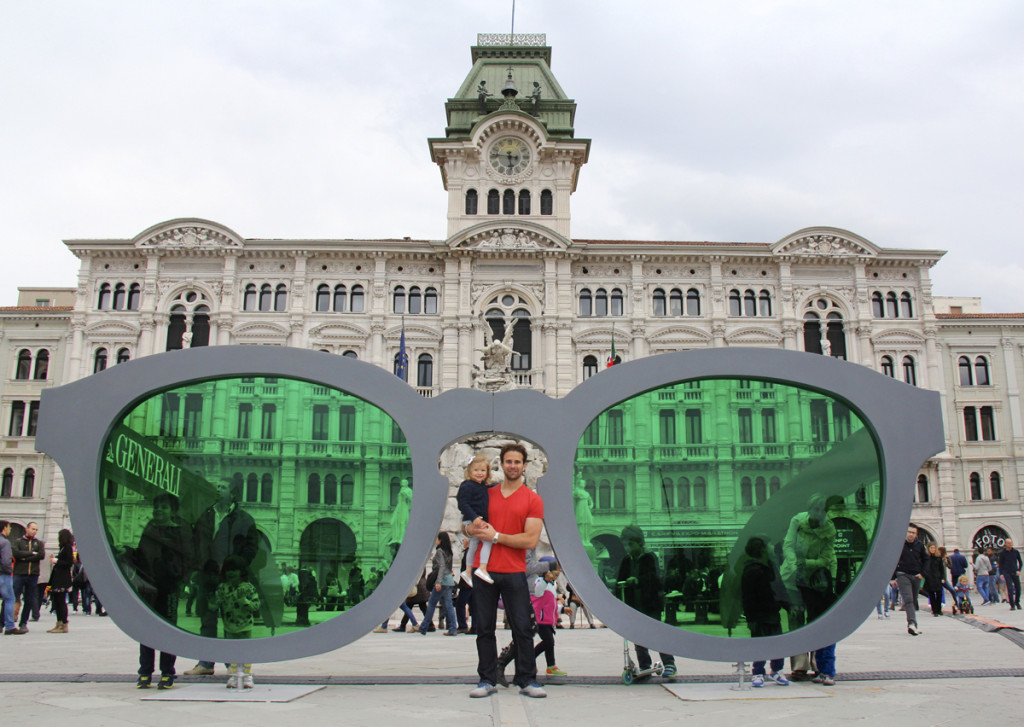
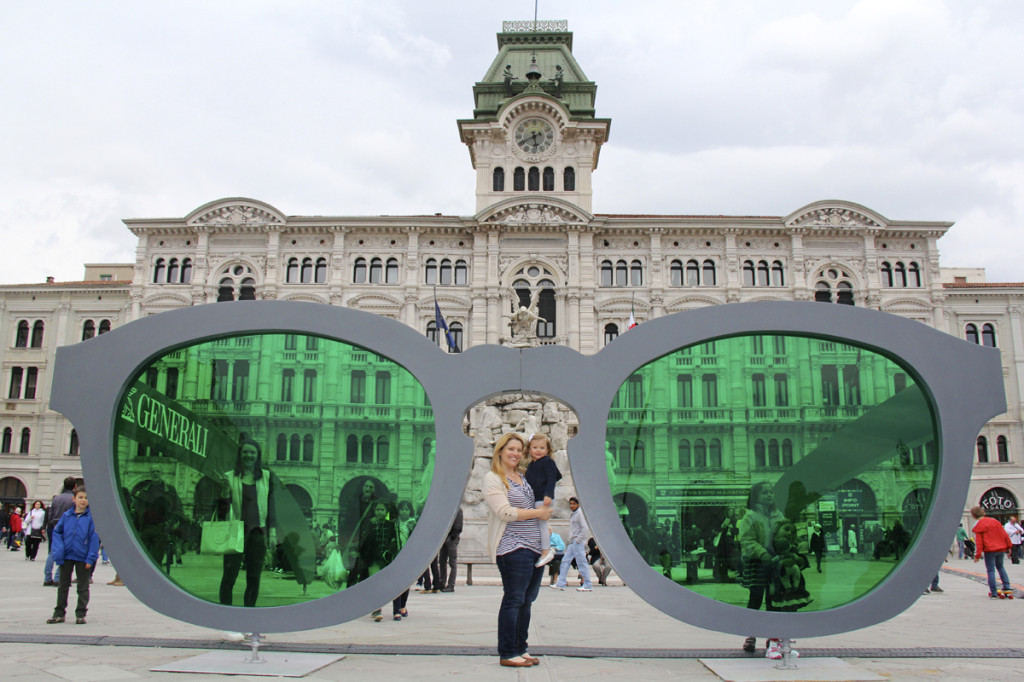
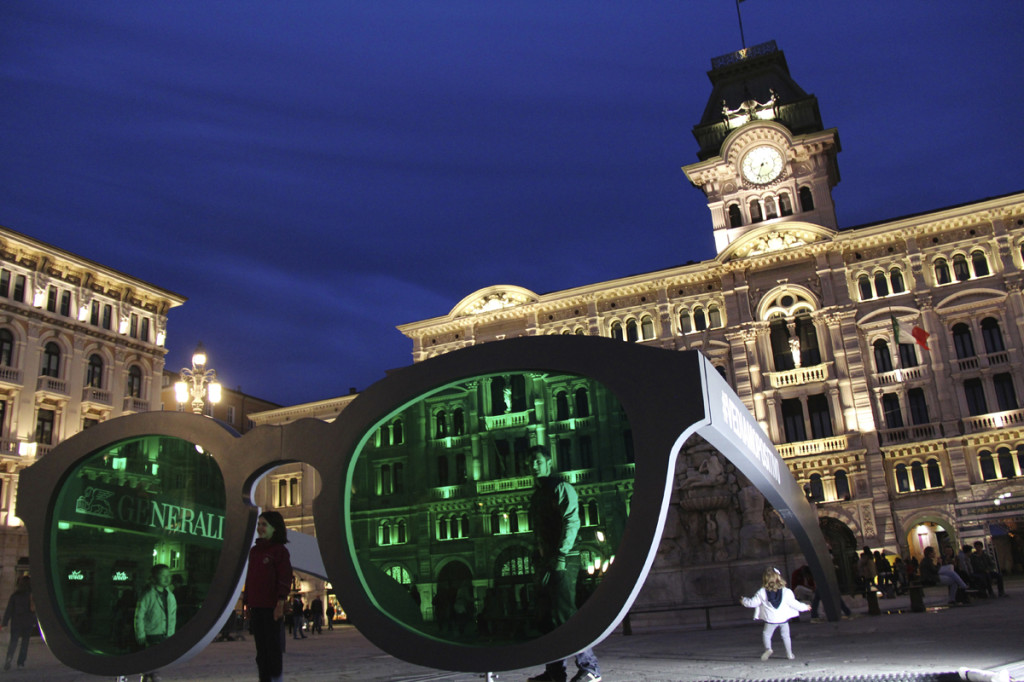
Julia and I stand in front of the glasses they had set up for the race
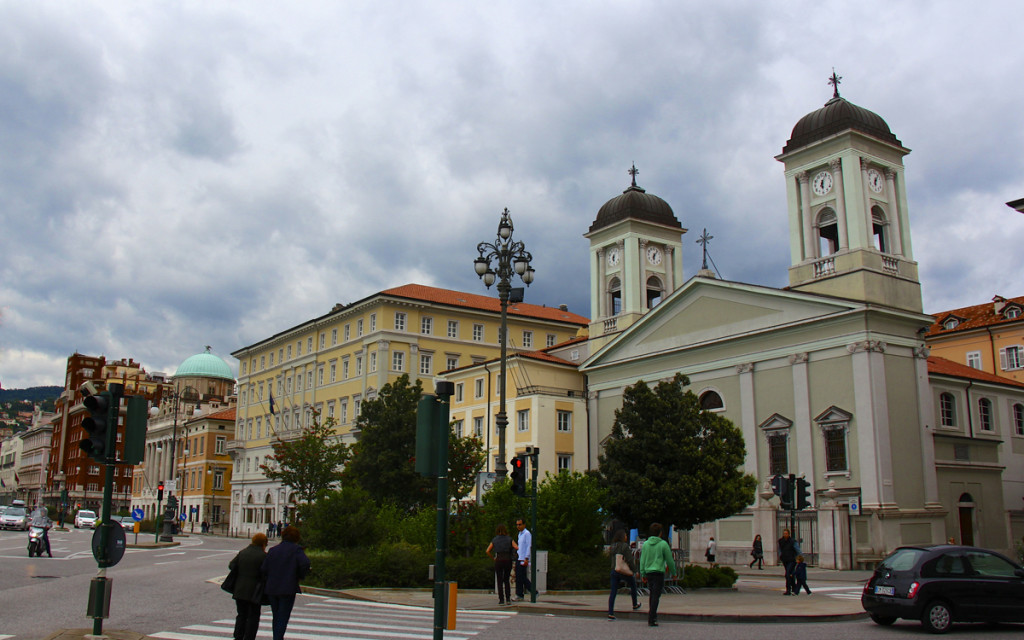
Here’s how I would sum up Trieste – it is a MUST-SEE city. Sometimes I find myself guilty of trying to label a city by comparing it to another city. “Rome is like New York, but much older and without the high-rises”. Sometimes, you’ve just got to stop and appreciate where you are for what it is. Don’t try to “label” the place or put it in a box; its easy to fall into that trap with Trieste. A city that has bounced back and forth between Slovenian, Austrian and Italian rule leaves us with a place today that is proud of its blend in architecture and attitude. Trieste is a city not at all confused about its confusing identity. With a rich mix of Slavic, Germanic and Latin influences – I am simply content to label this magical place as one of the most “European” cities I have ever visited.
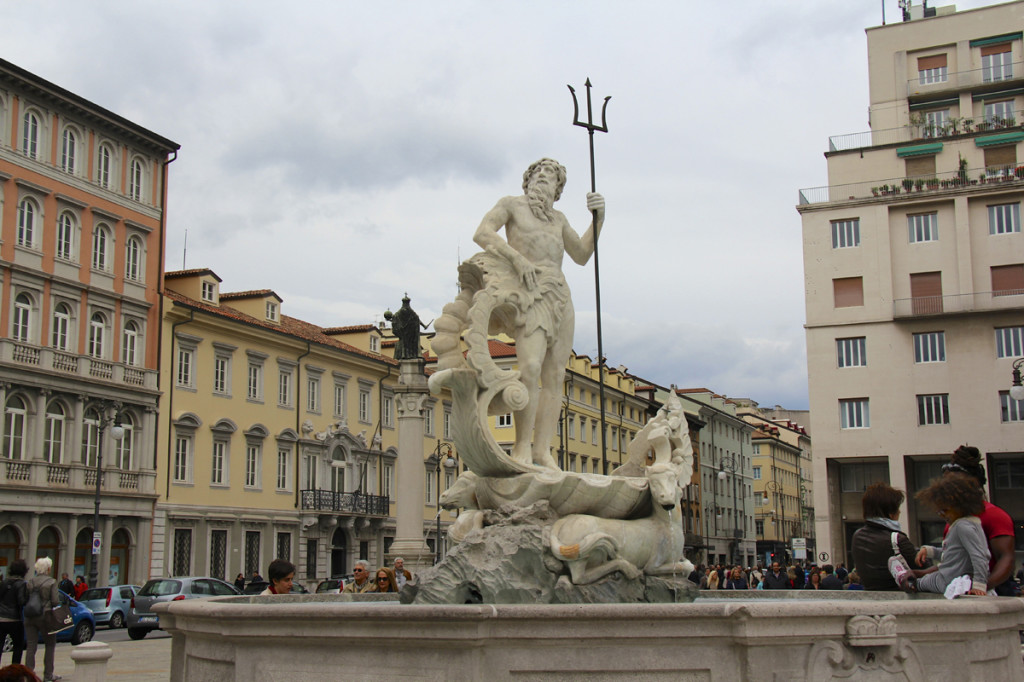
We’re finally here in Trieste!Fountain that accurately describes Trieste’s ties to the seaAlong Corso Cavour, the main street adjacent to the cities famous piazza
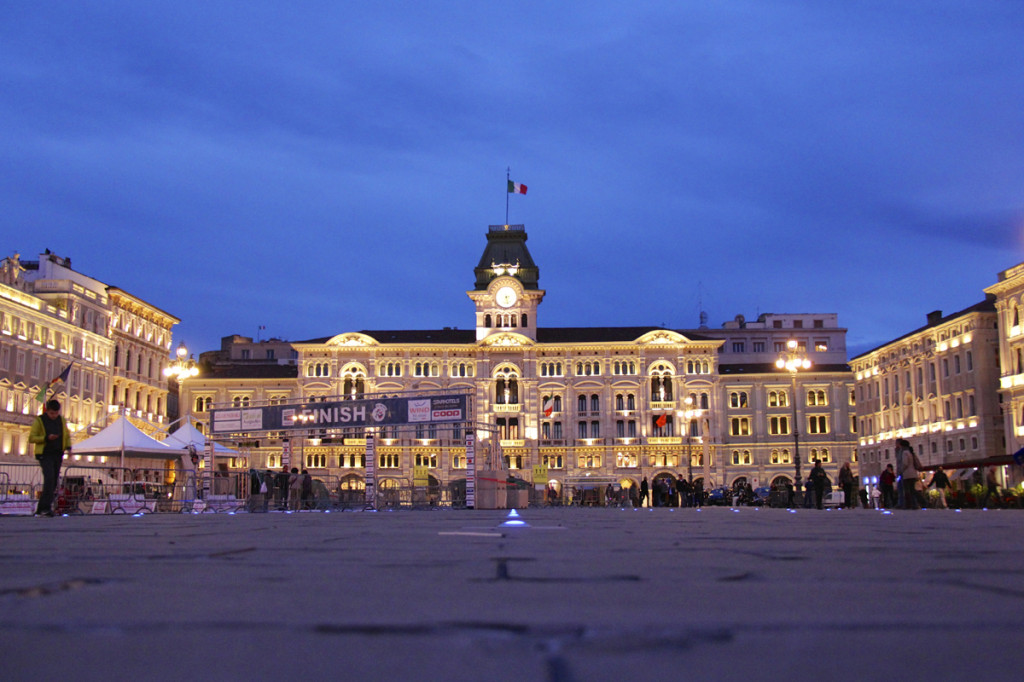
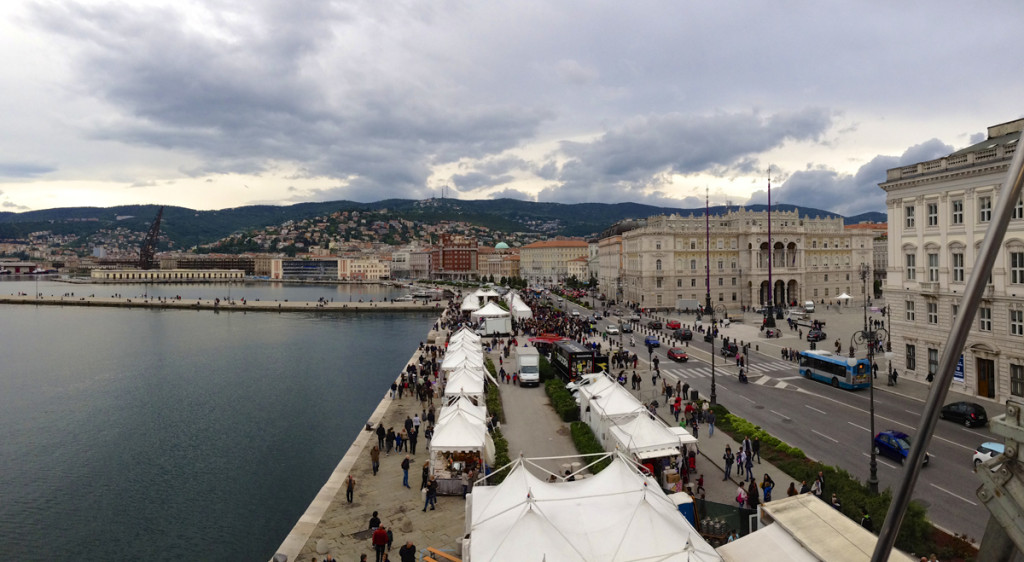
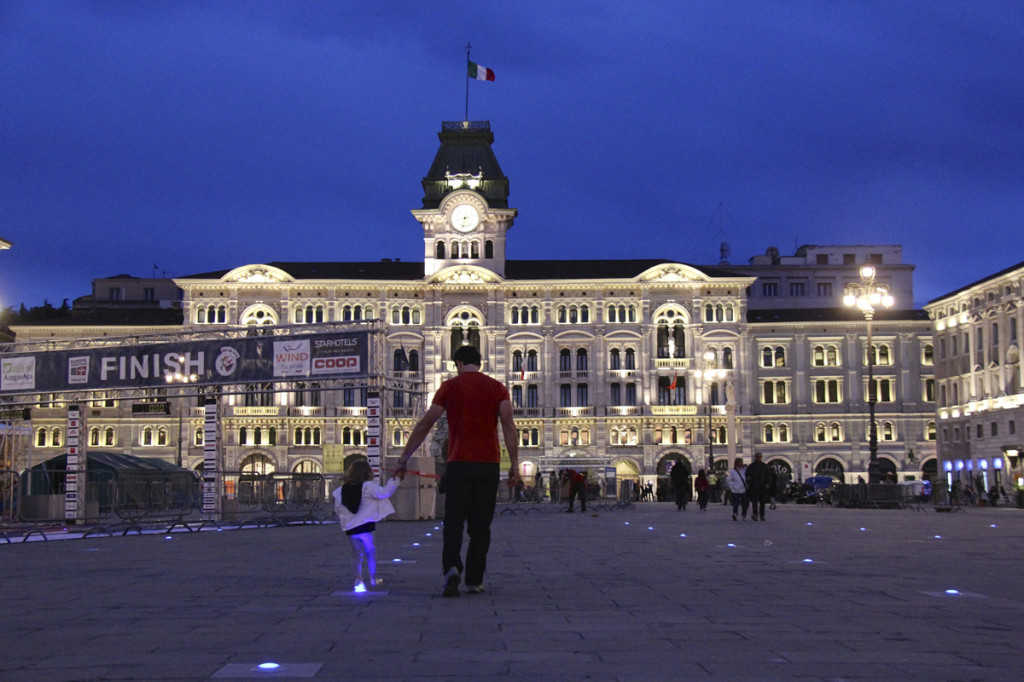
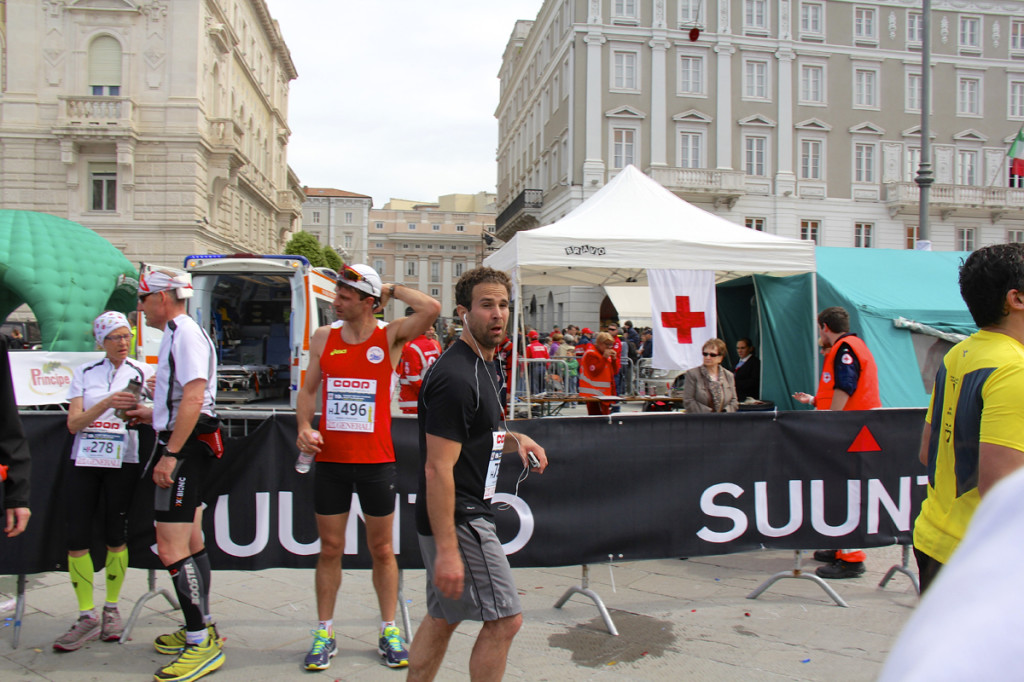
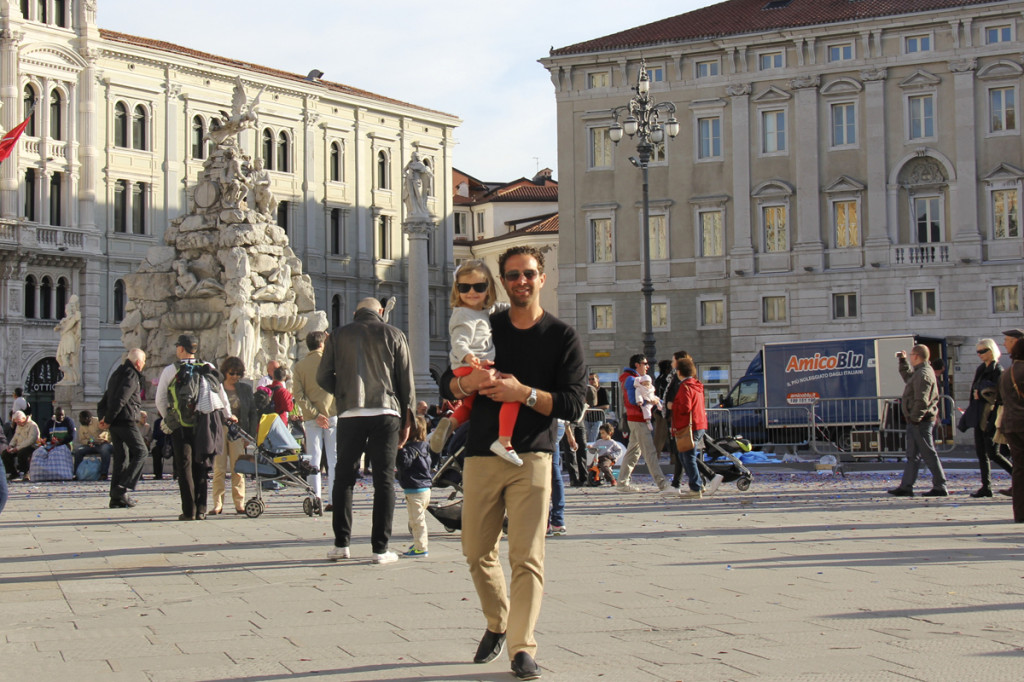
My race was on a Sunday and so we arrived Saturday with a planned departure on Monday. After we checked into the hotel, we strolled down to the Piazza Unità d’Italiato register for my race. I had often heard this piazza referred to as “the most beautiful piazza in Italy” and what I saw did not disappoint. The grand square is the largest of any on the water in all of Europe. On this particular spring weekend the piazza was also the location of my finish line.
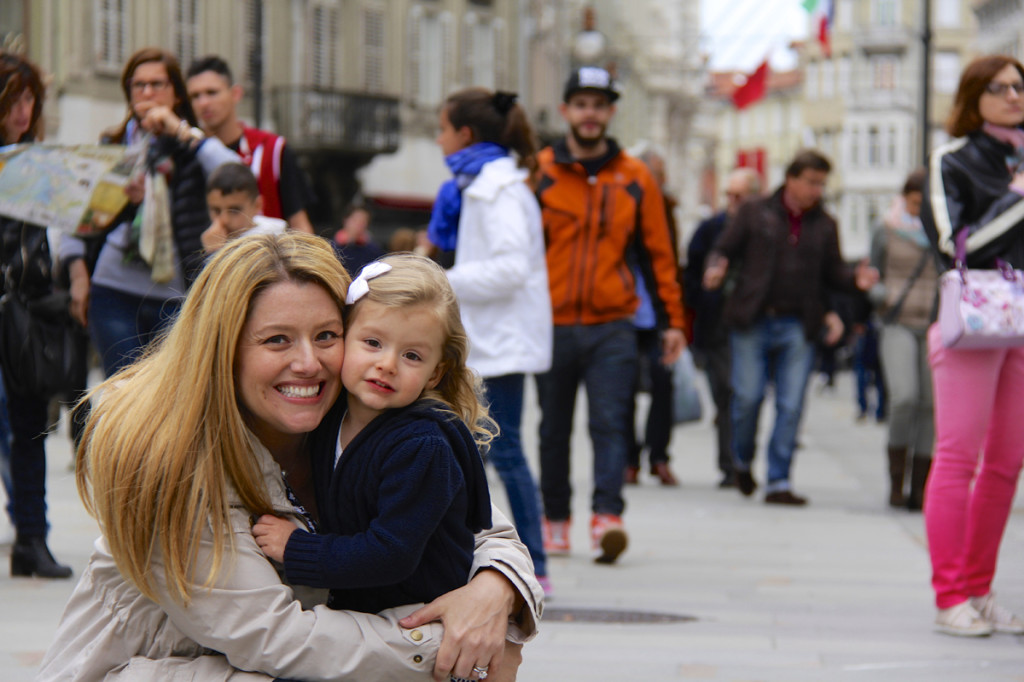
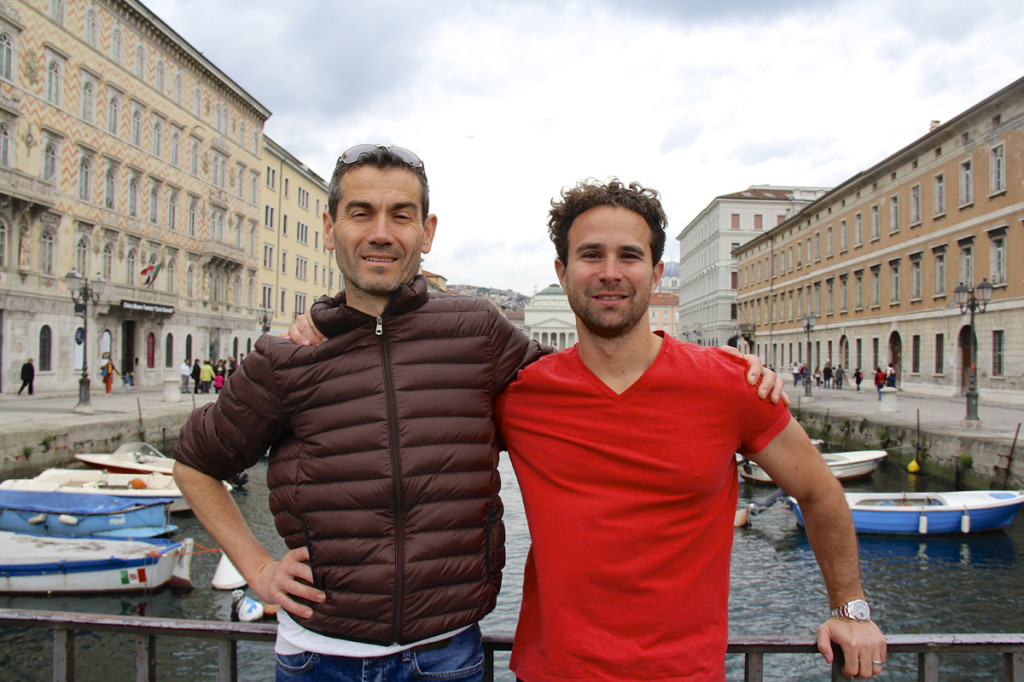
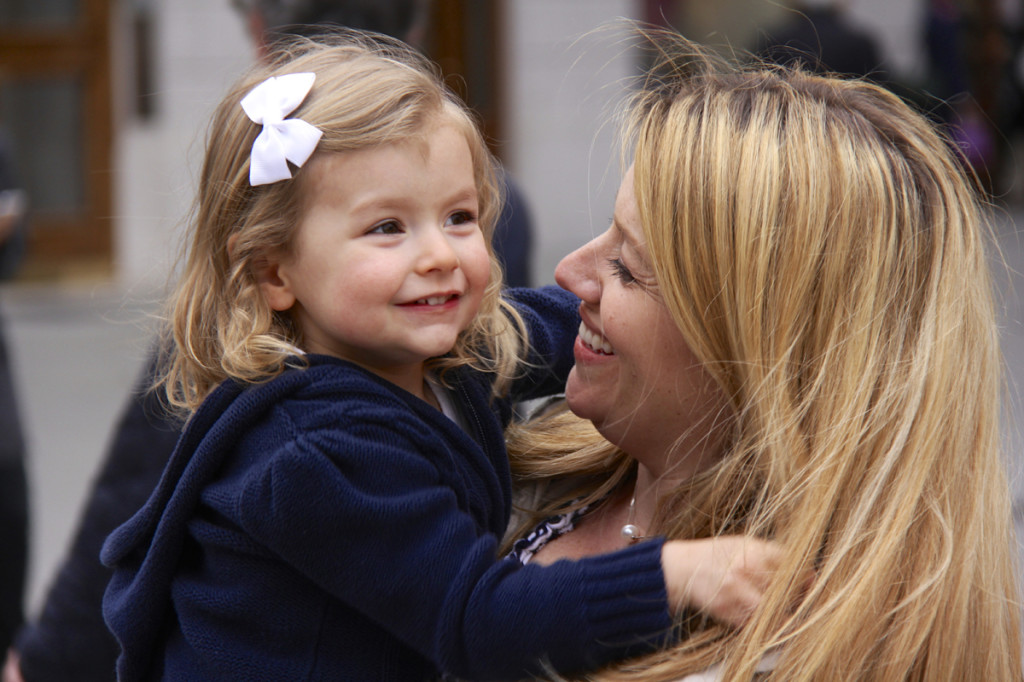
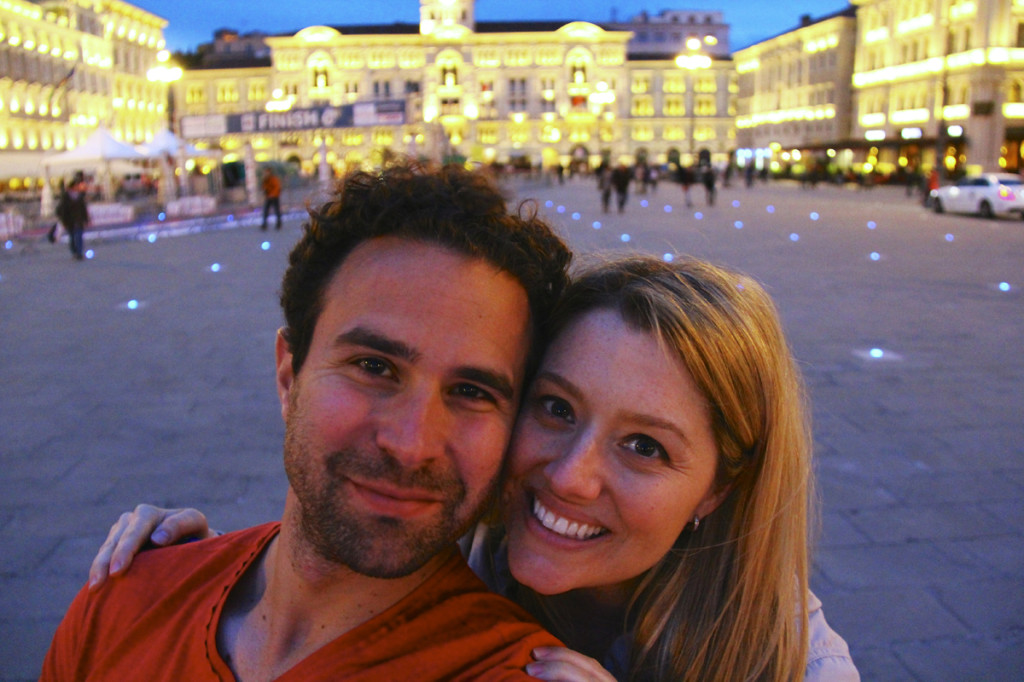
We walked down with a friend I made in the hotel – he was also running in the raceJen hangs out with Julia in the squareThe Piazza Unita d’Italia at nightJulia hugs Jen while we were walking around
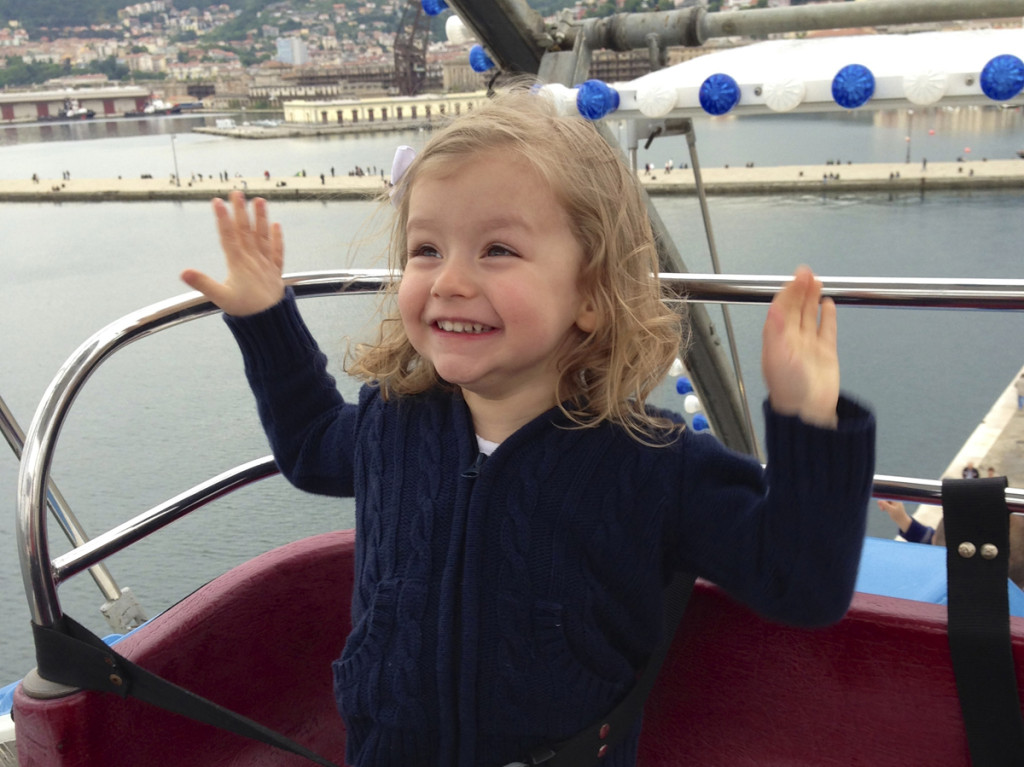
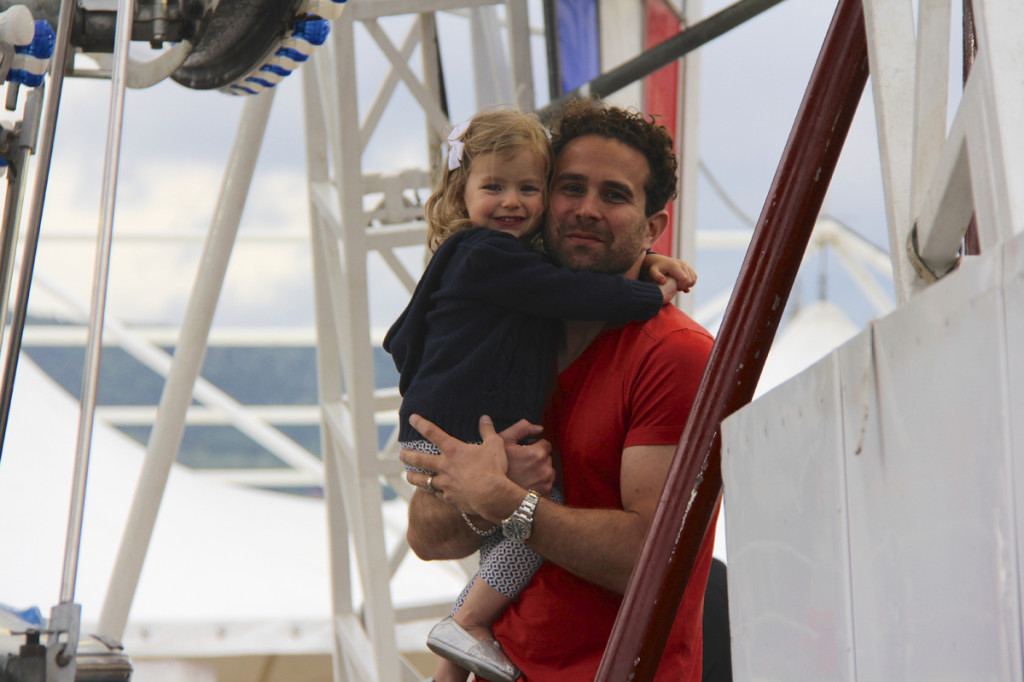
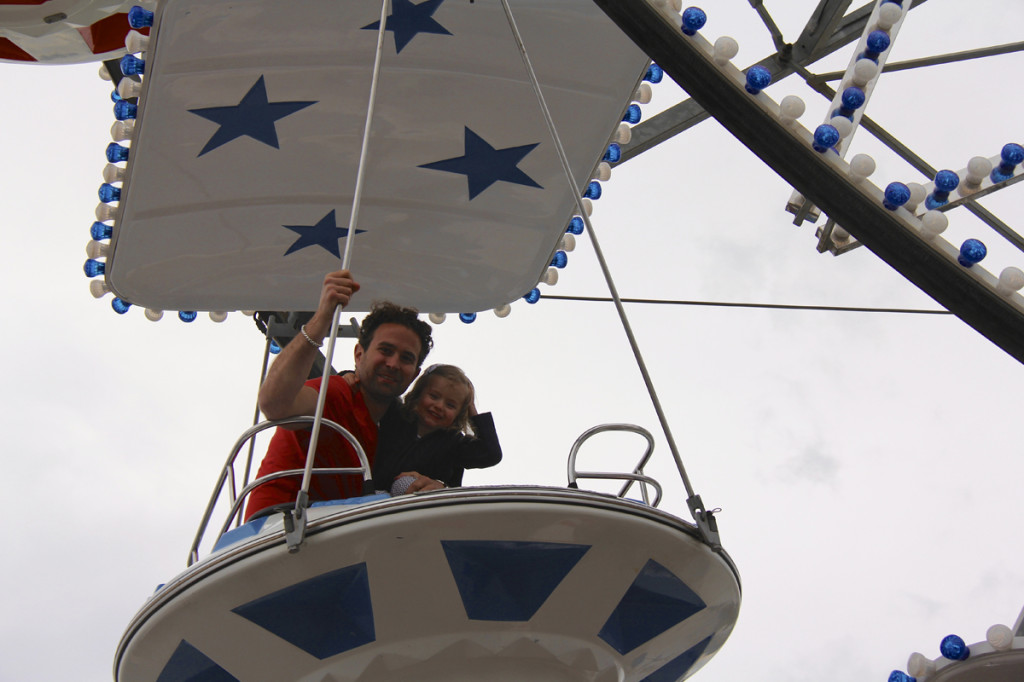
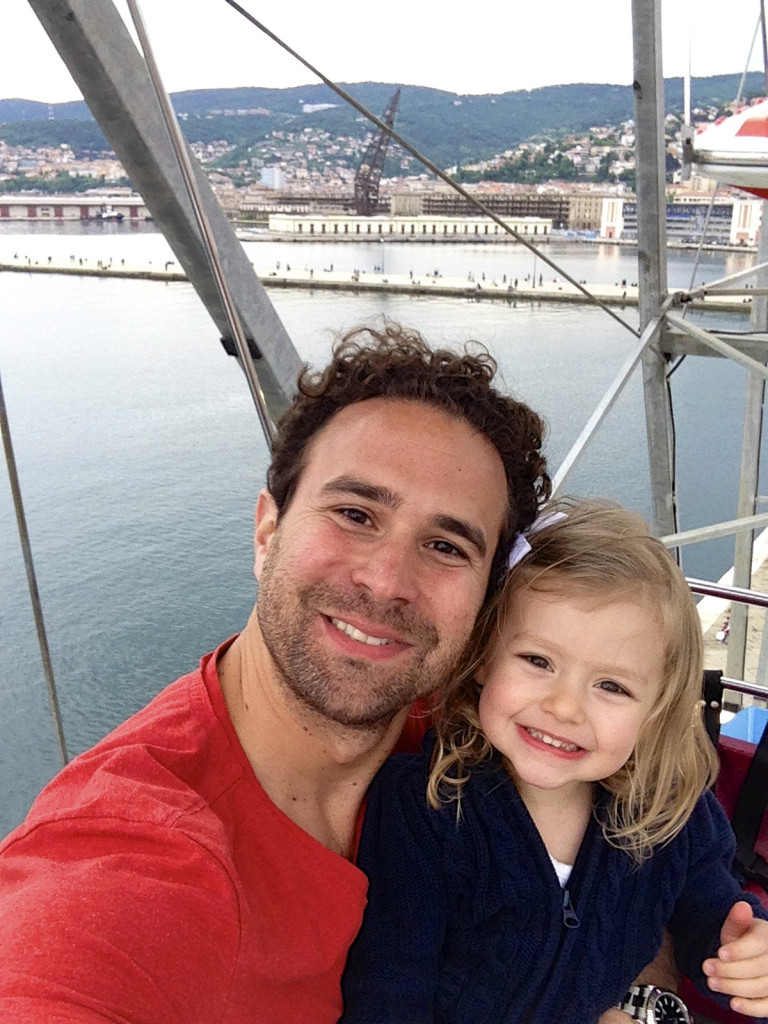
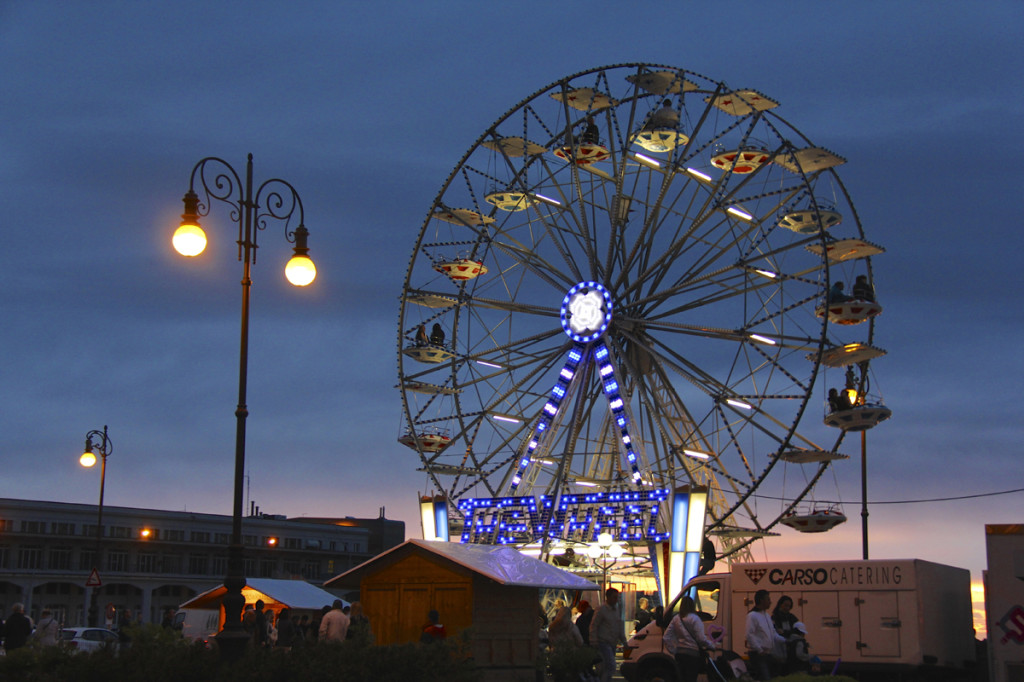
We didn’t have much to worry about the night before the race, so we strolled through the piazza and walked the roads along the water. They had all sorts of fair-type events set up for the race, including tents serving beer, desserts and carnival rides. I took Julia on the Ferris Wheel and got a great view of the city and the harbor. After the fun, we took in a spectacular seafood dinner near the harbor (mm’mmm I’m making myself hungry for fresh Italian food. Never had that problem while writing until now, when I can’t get it quite as easily).
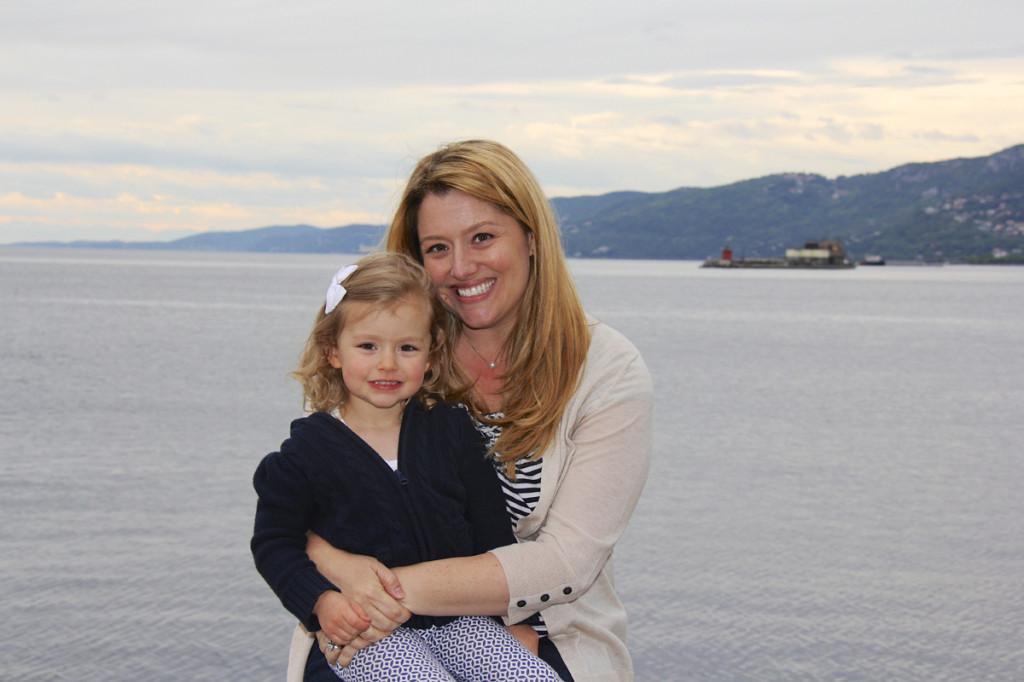
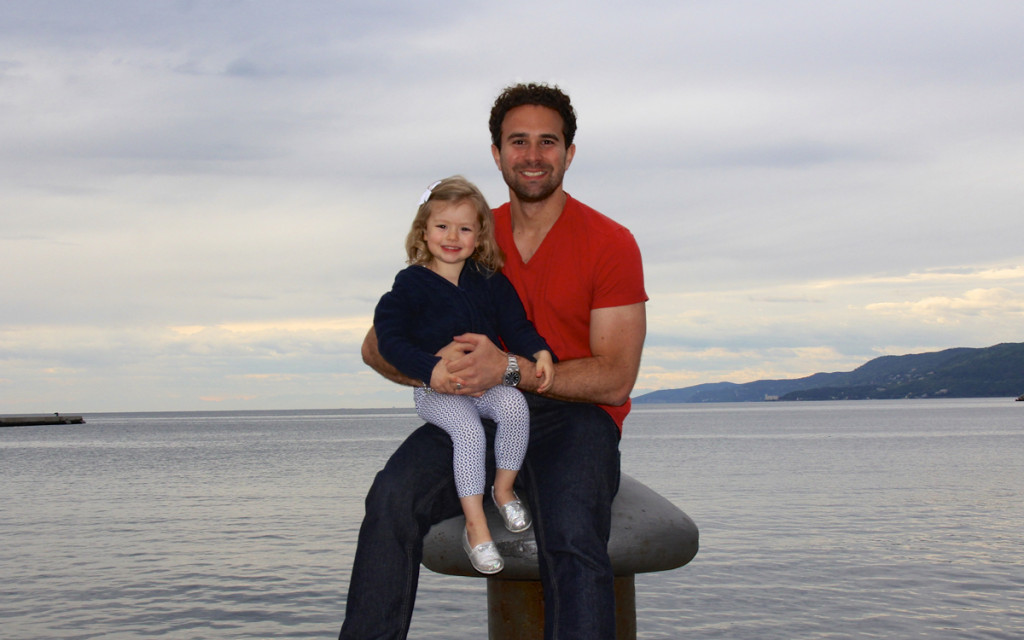
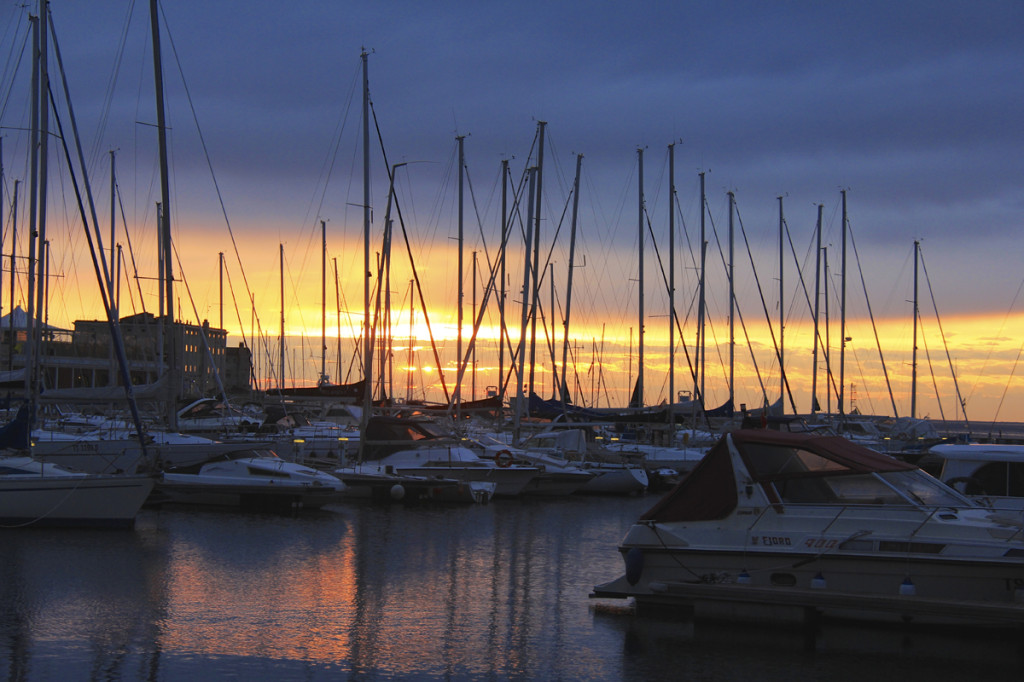
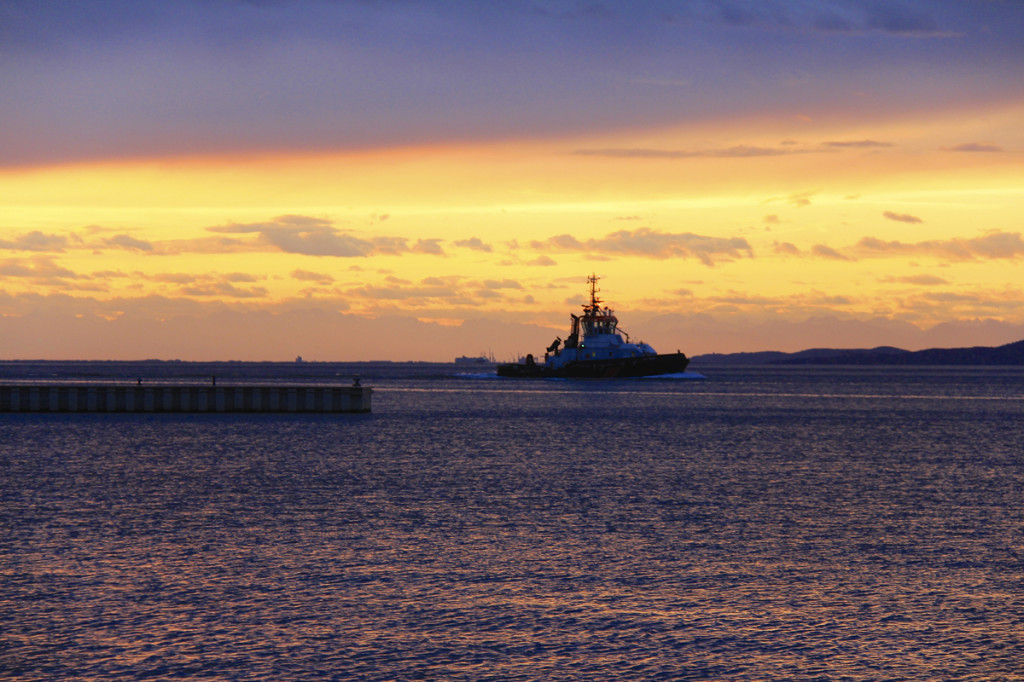
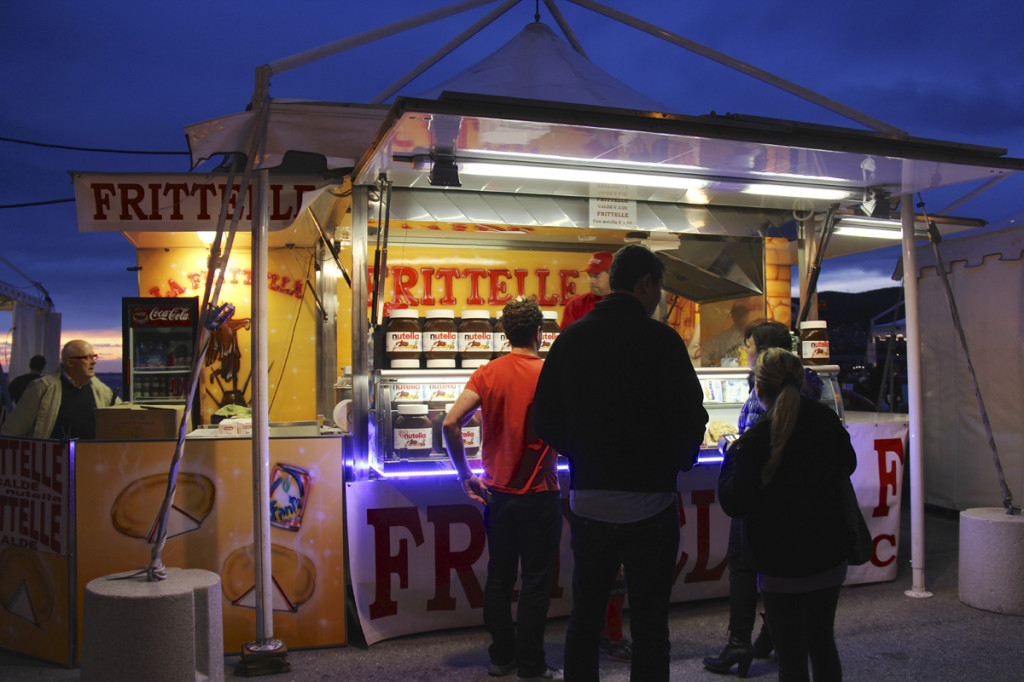
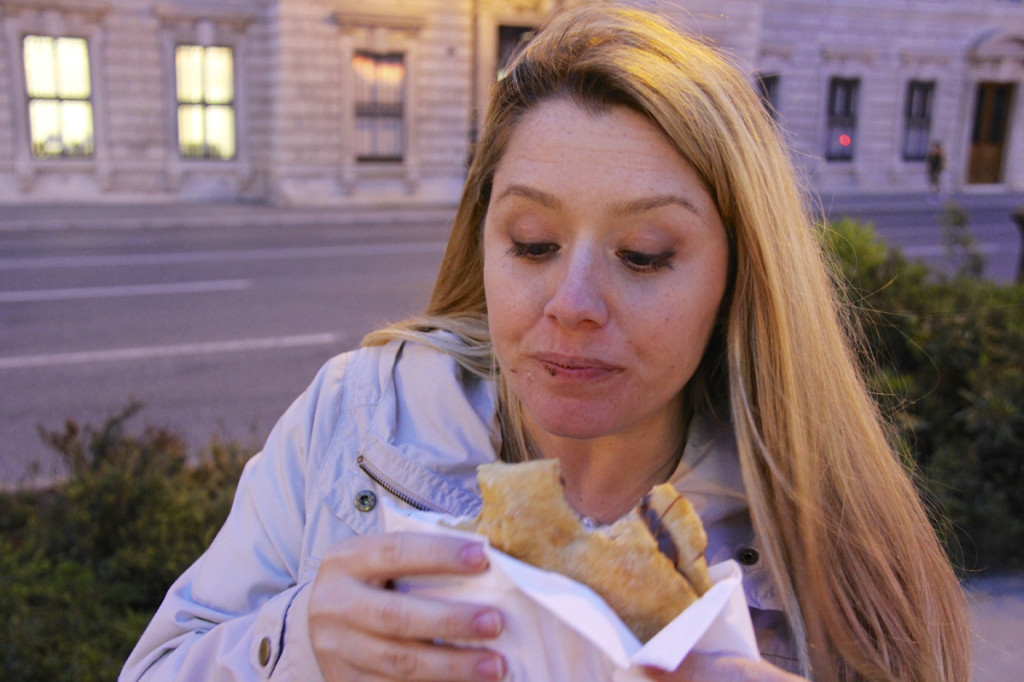
I get ready to take her on her first ferris wheelAway we go…Daddy/Julia selfieView from our car at the top of the ferris wheelThe sun set shortly after our ridePicture with momPicture with dadThe sunsets in Trieste were like nothing I’ve ever seenThe light play from the sky was this stunning both nights we were thereWe had to try some delicious frittelle with Nutella“Honey… you’ve got a little Nutella, riiiiight there”Walking through the piazza with daddyJulia loved playing with the glassesSelfie at dusk
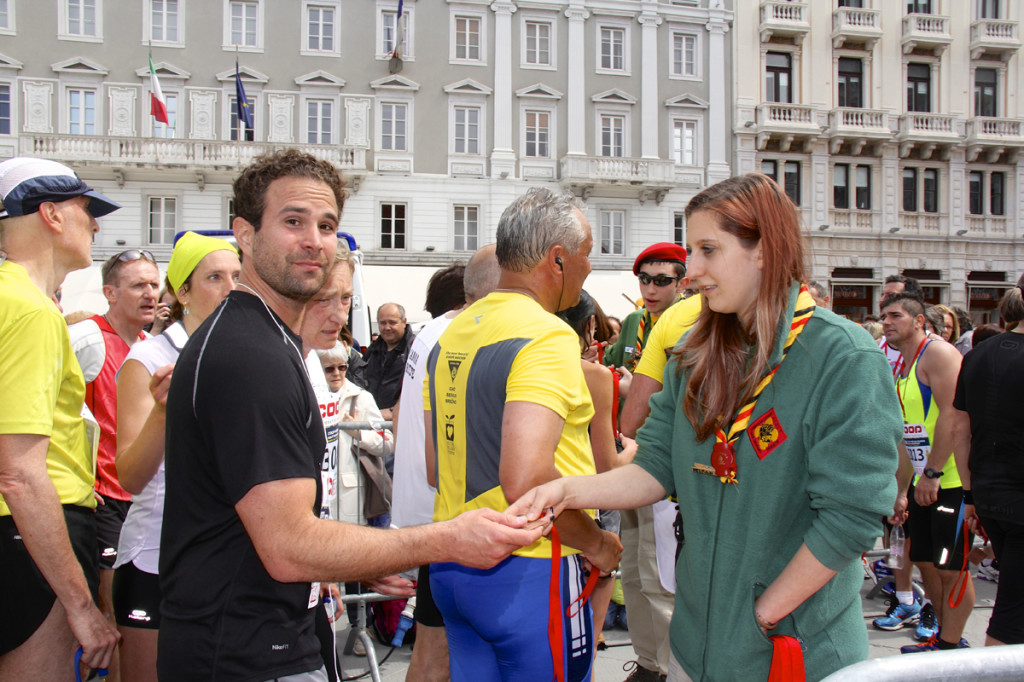
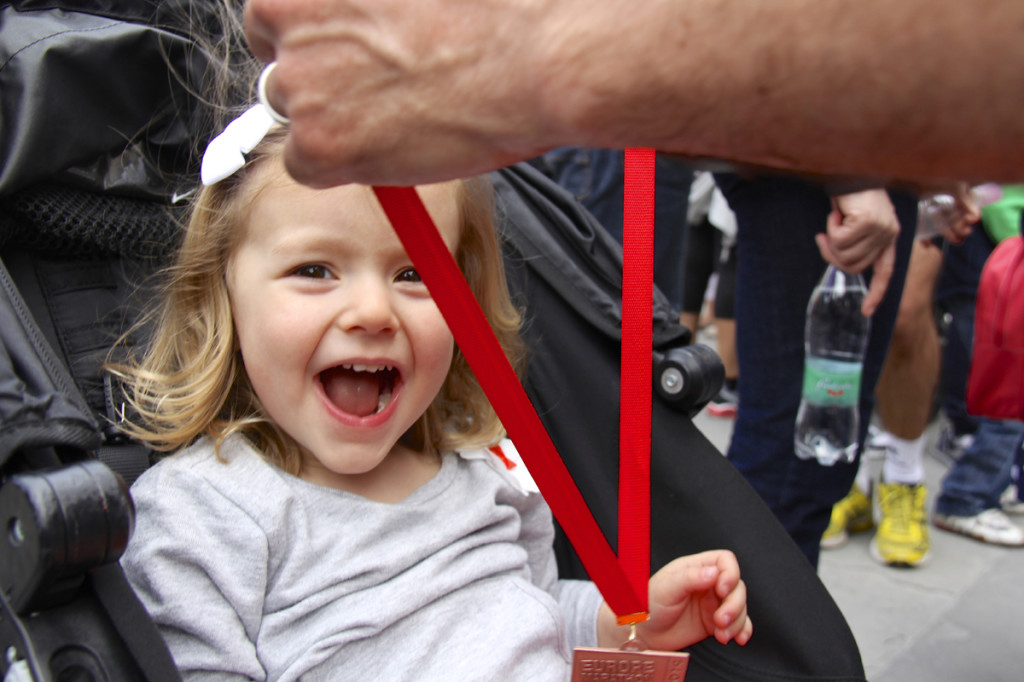
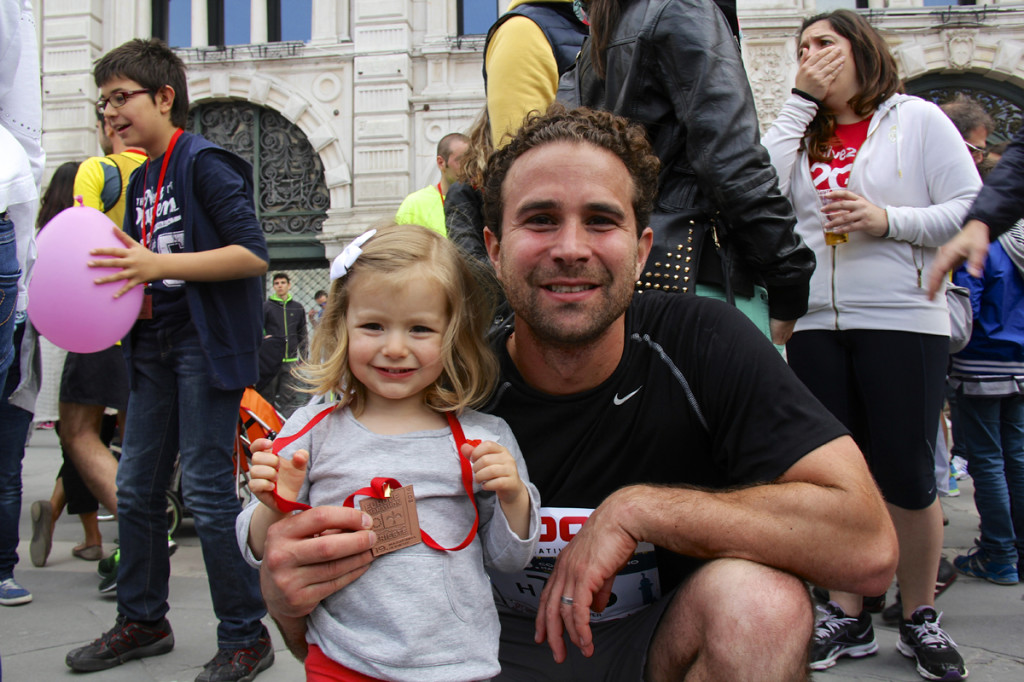
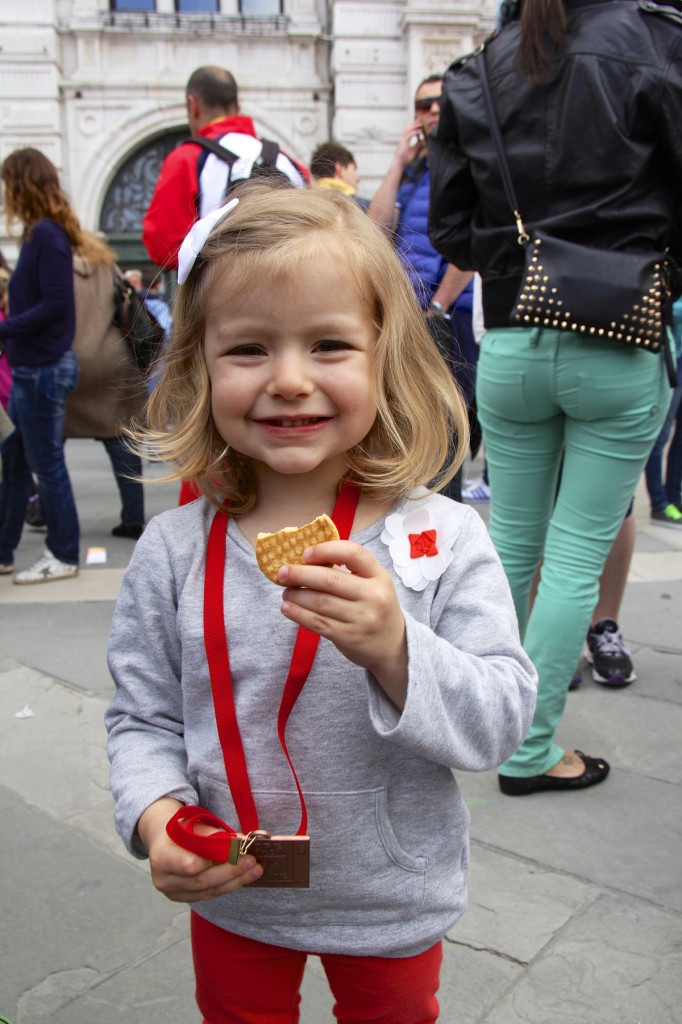
On race day, I was up and at ’em early – ready to beat my goal time (which I didn’t do). Of course, I forgot that I was in Italy and so the start of the race was a little later than I originally planned. I kept warm by jogging around the parking lot and taking in the crowds. I was tickled when I ran past the snack tents used for refueling depleted calories (usually covered by bananas and power bars) and found brioche and other Italian pastries. When I finished, I could not have been more pleased to be greeted by Jen and Julia; and to have Julia wear my medal.
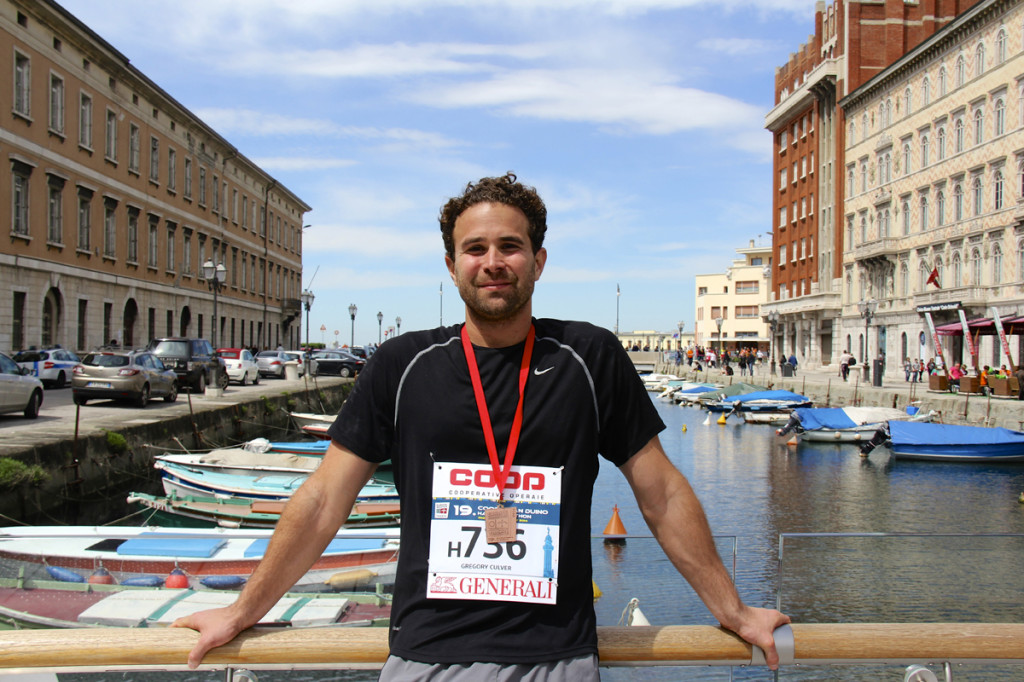
Julia got up early to see me offThere wasn’t much happening at the start line until after the race was supposed to beginAnd we’re off!I had the sea to my right for almost the entire half-marathonI felt (and looked) like death, but I crossed the finish lineBut I got my medal…Which I was happy to give to JuliaMy little peanut was proud of me… that was the best part of allJulia may have been more interested in the biscotti than the medalFamily picturePicture along the Canale Grande (Grand Canal) that runs through the city streets
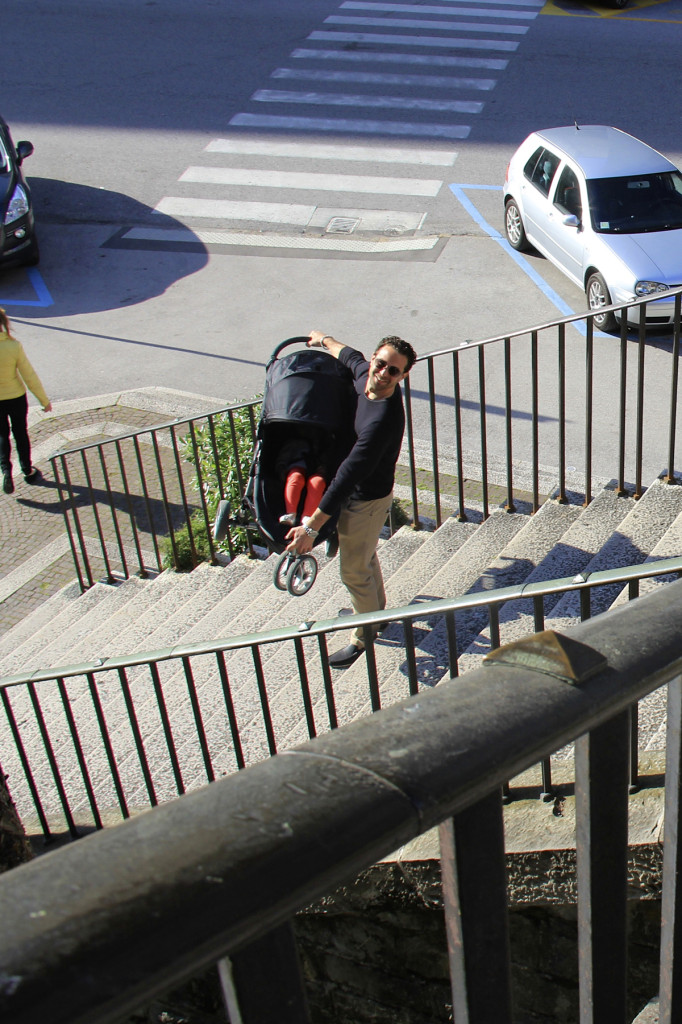
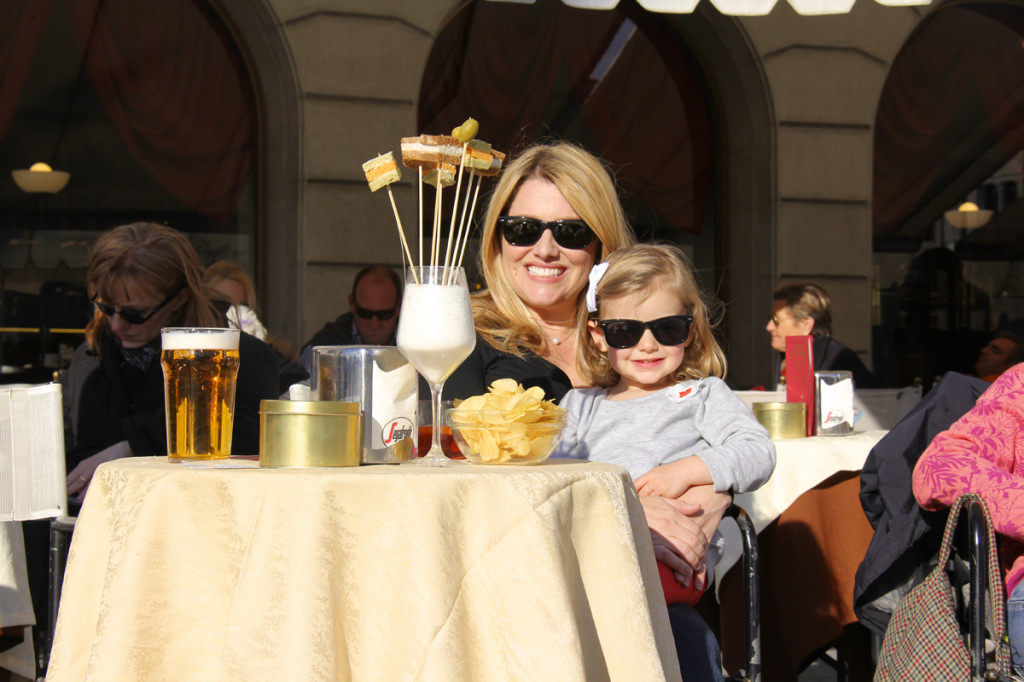
After the race, we stopped for a quick snack and beer (hey, I earned it) before going back to the hotel to change. Then, it was time to tour the city! Even though my marathon race was just a maratonina, I’m sure that we walked the remaining 13.1 miles as we wound through Trieste’s ancient streets. This was especially challenging, since the first part of the tour required me to carry Julia and her stroller up the Scala Giganti (Giant Steps). We capped it all off back in the Piazza Unità d’Italia for happy hour before a wonderful dinner.
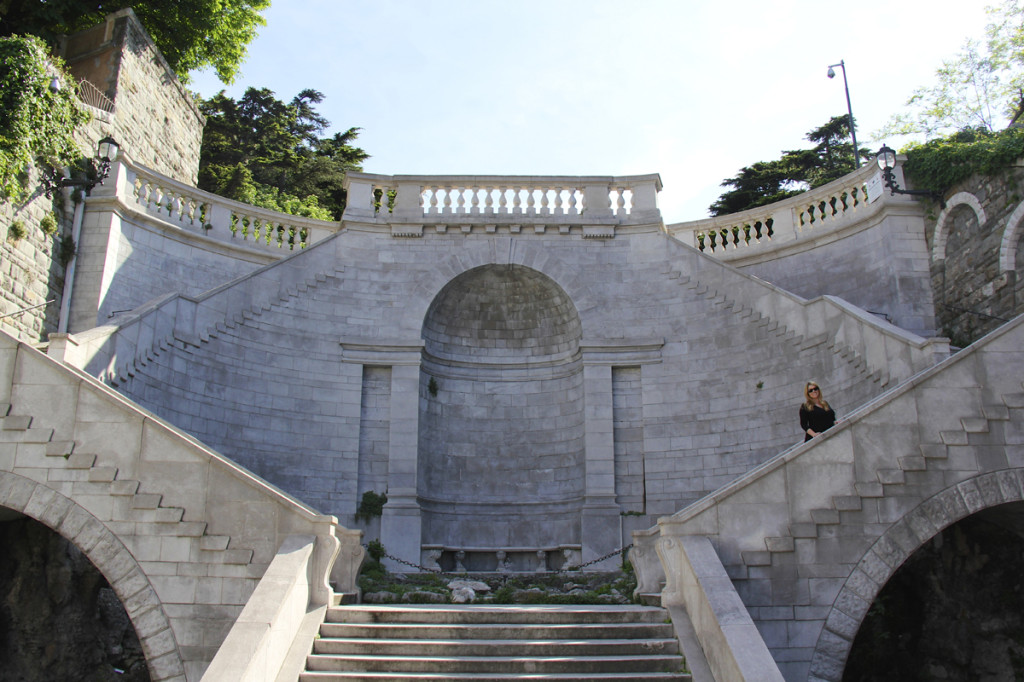
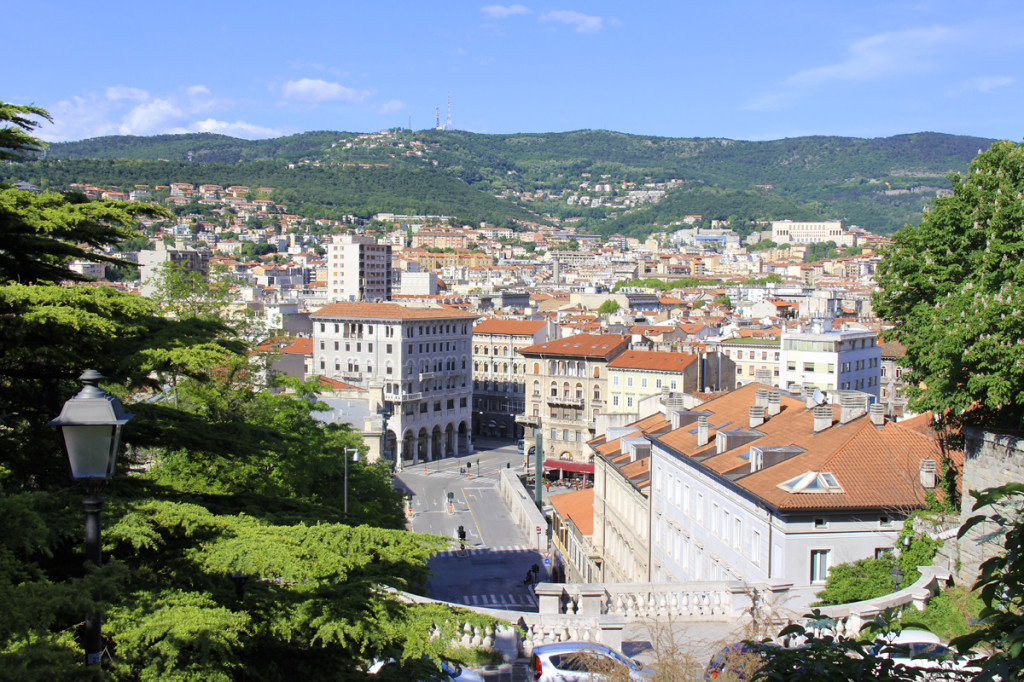
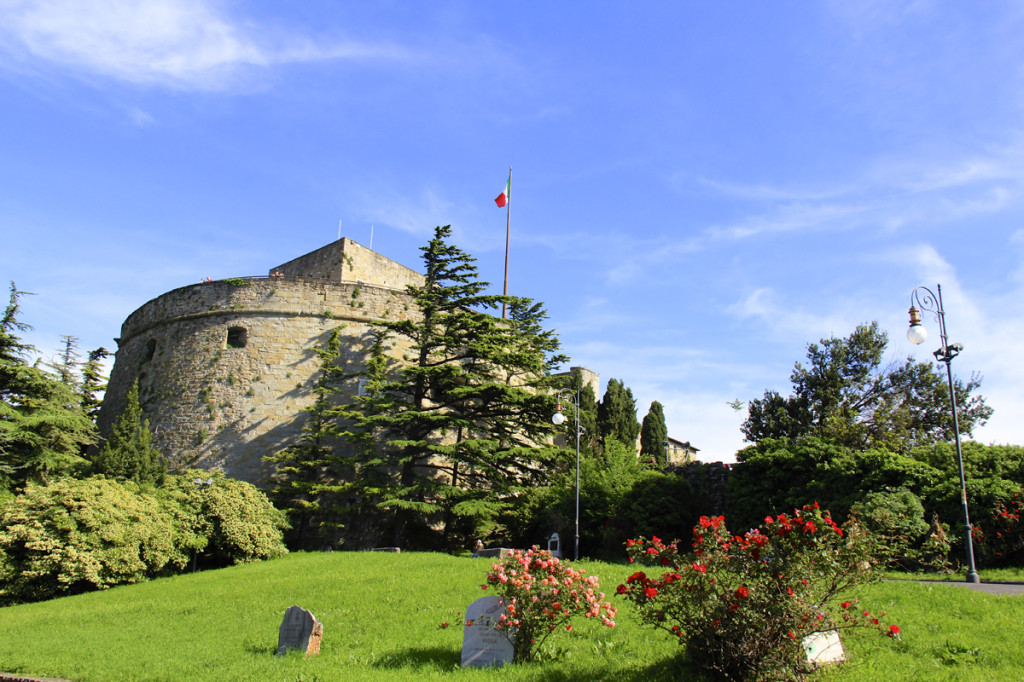
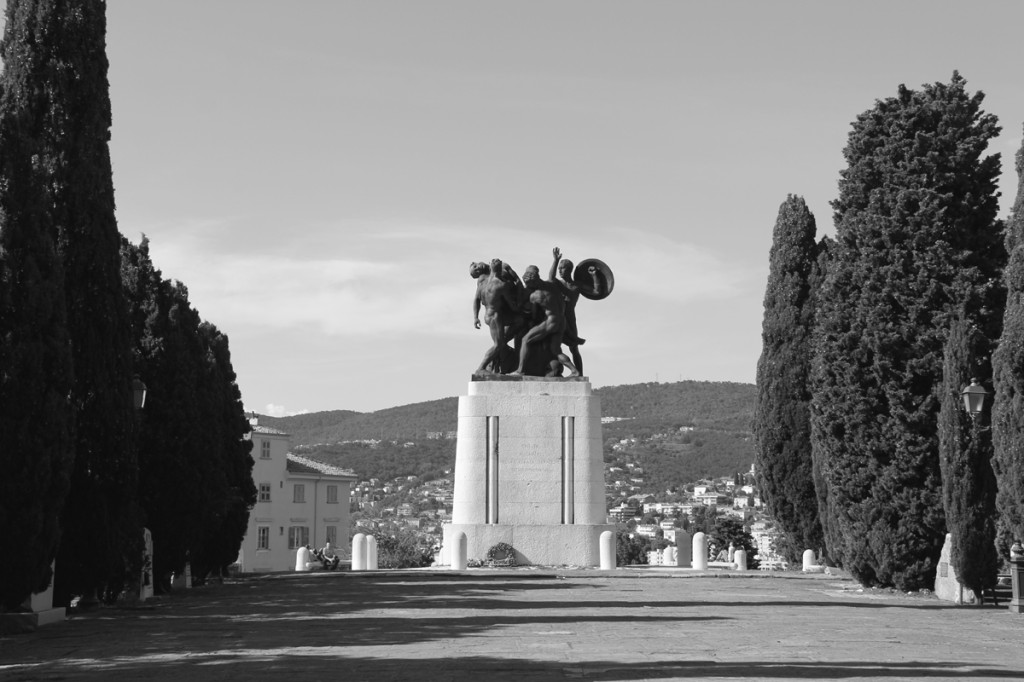
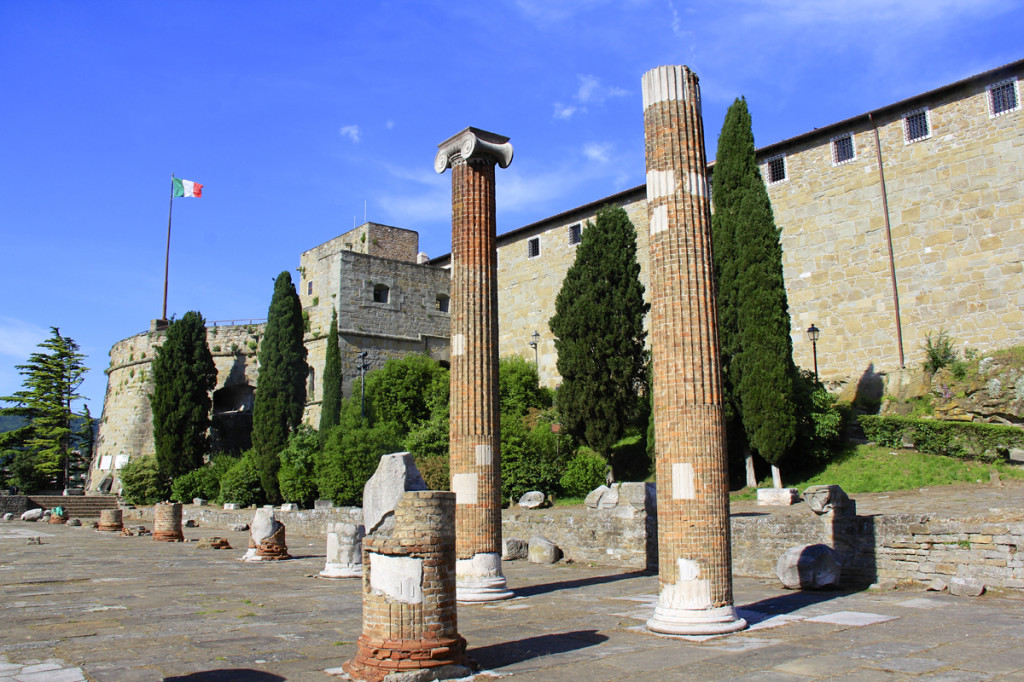
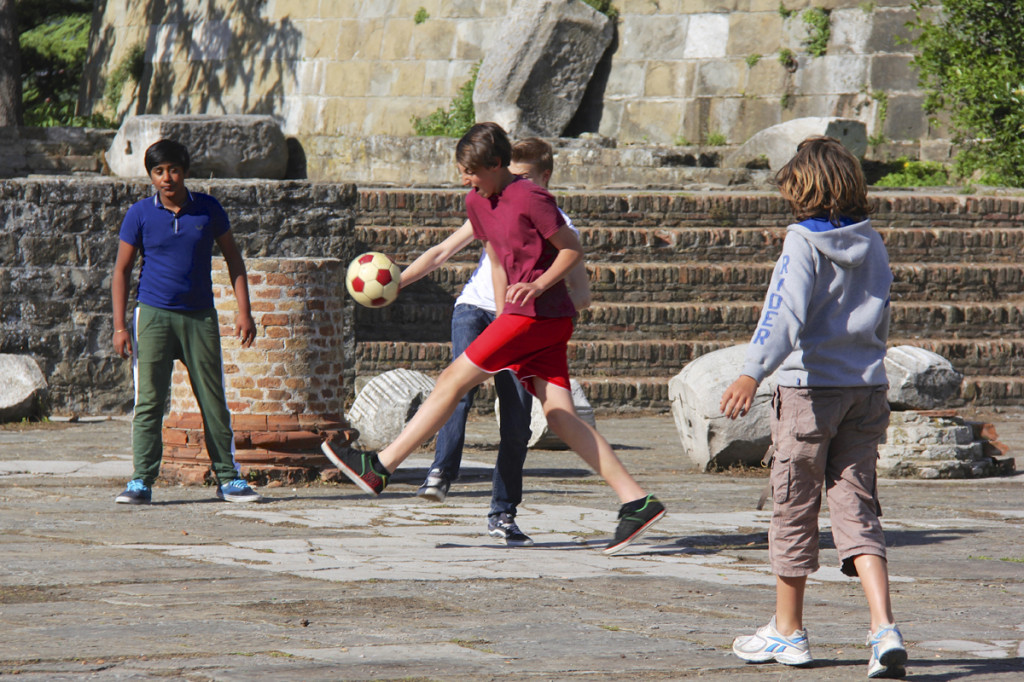
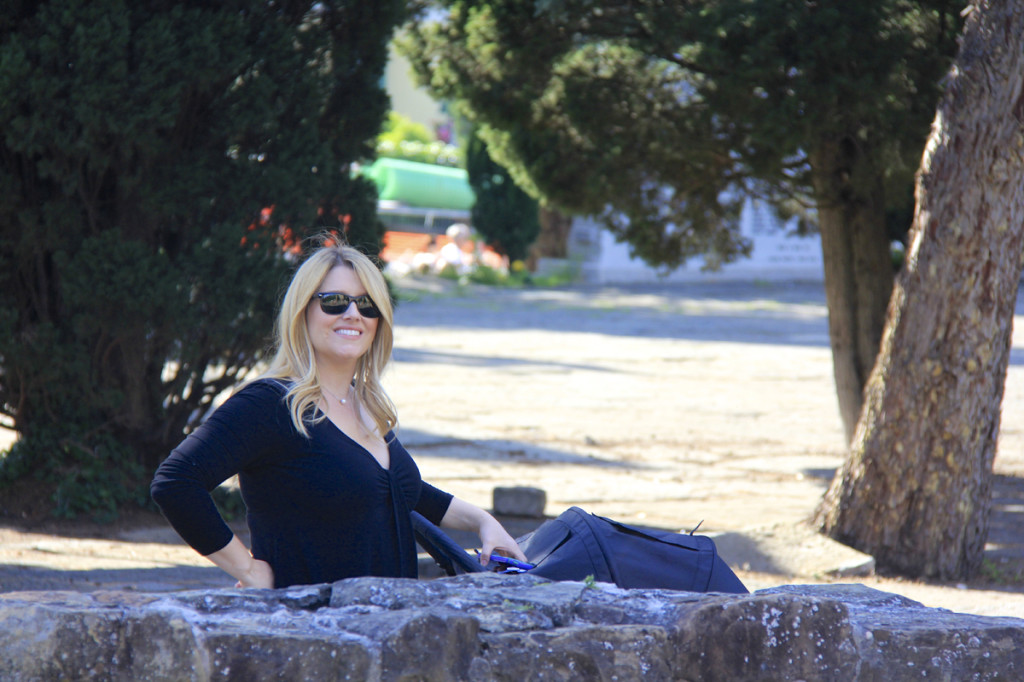
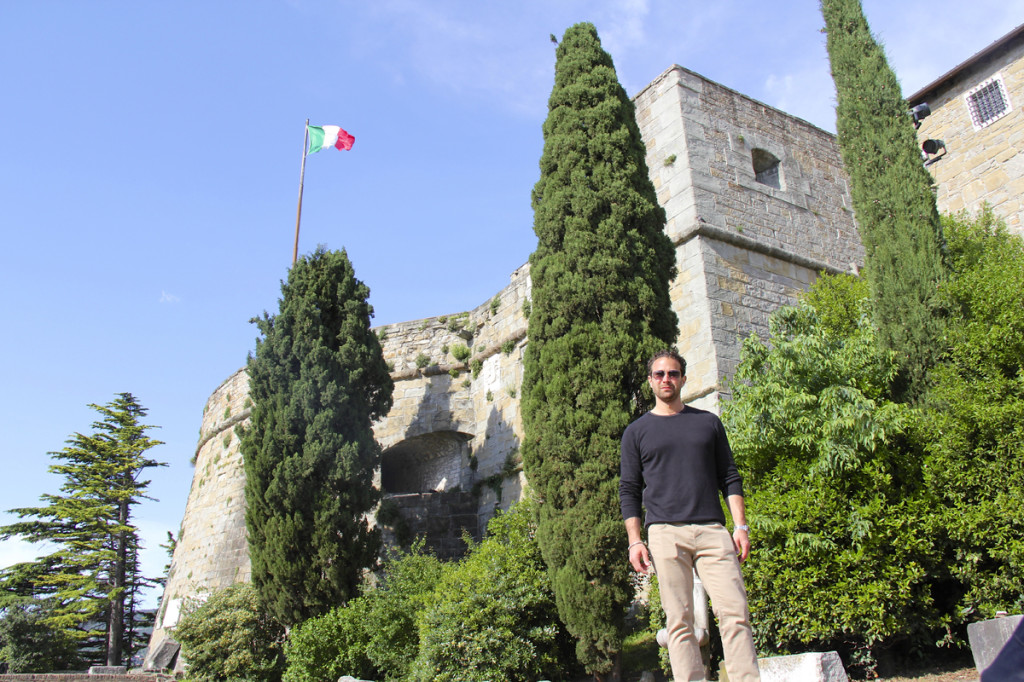
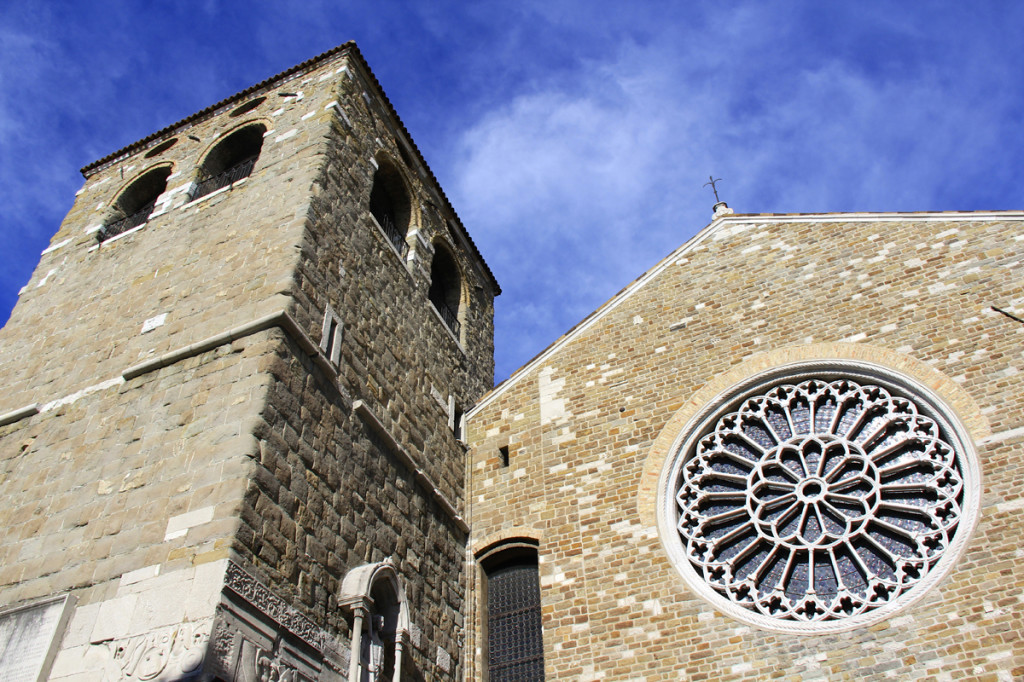
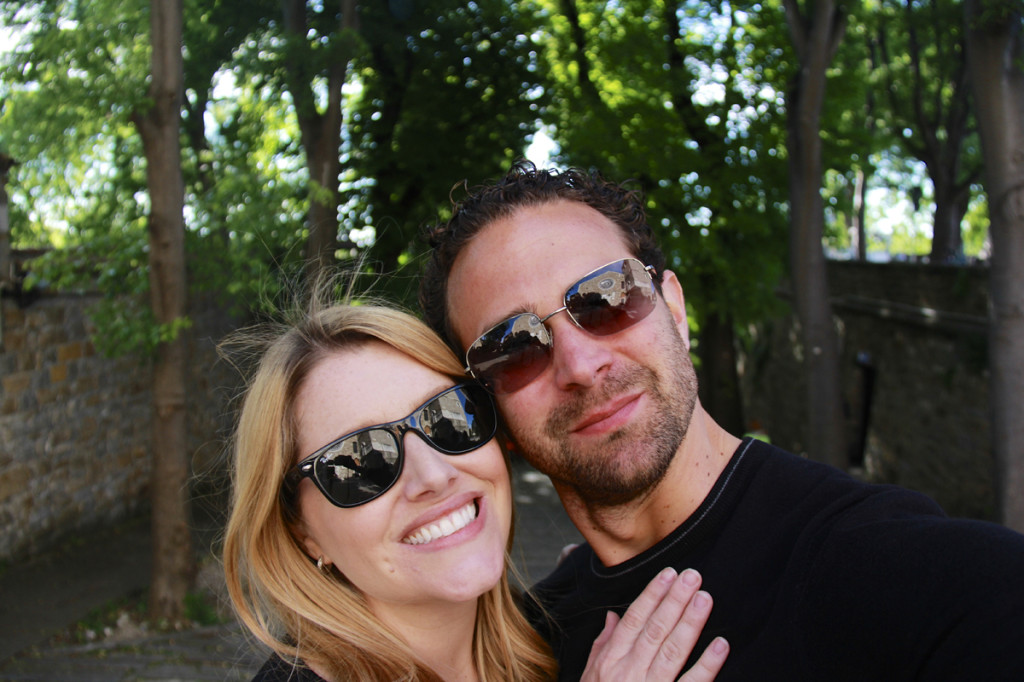
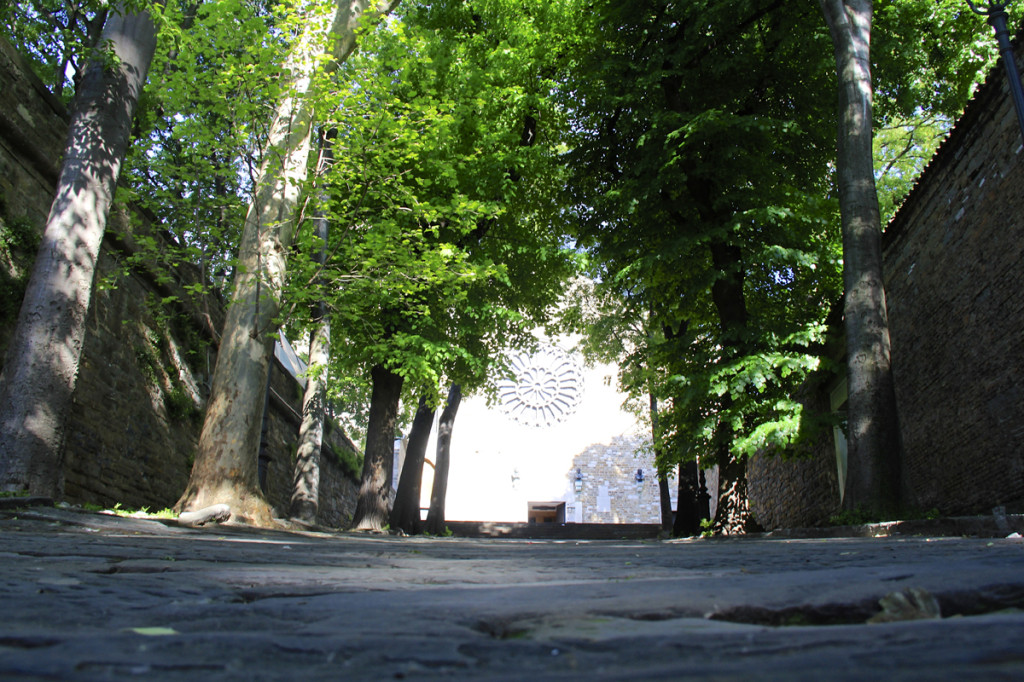
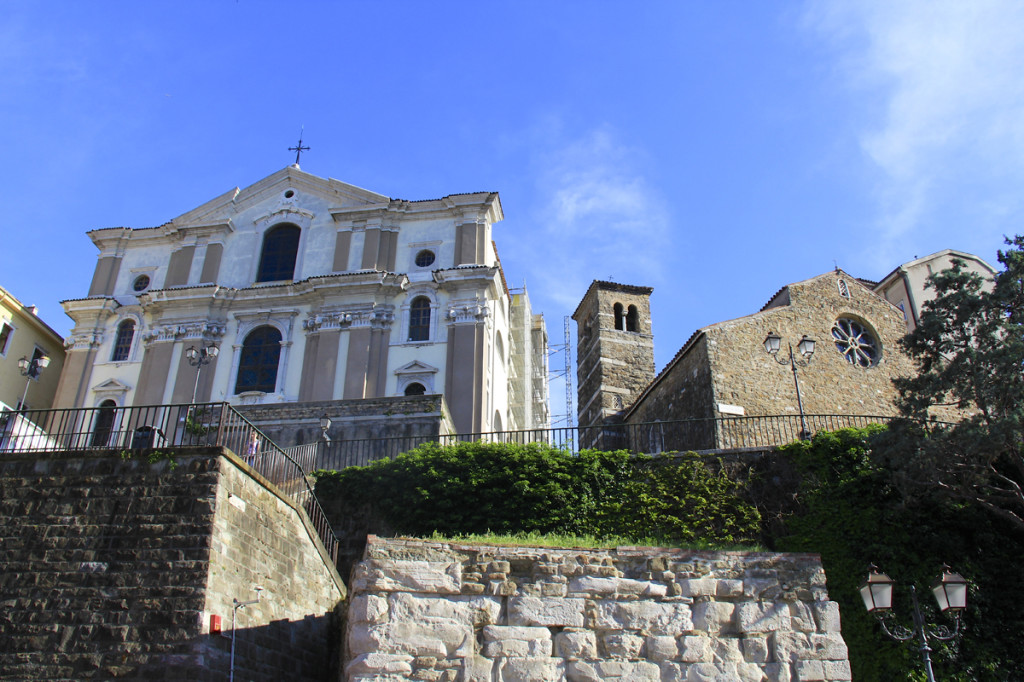
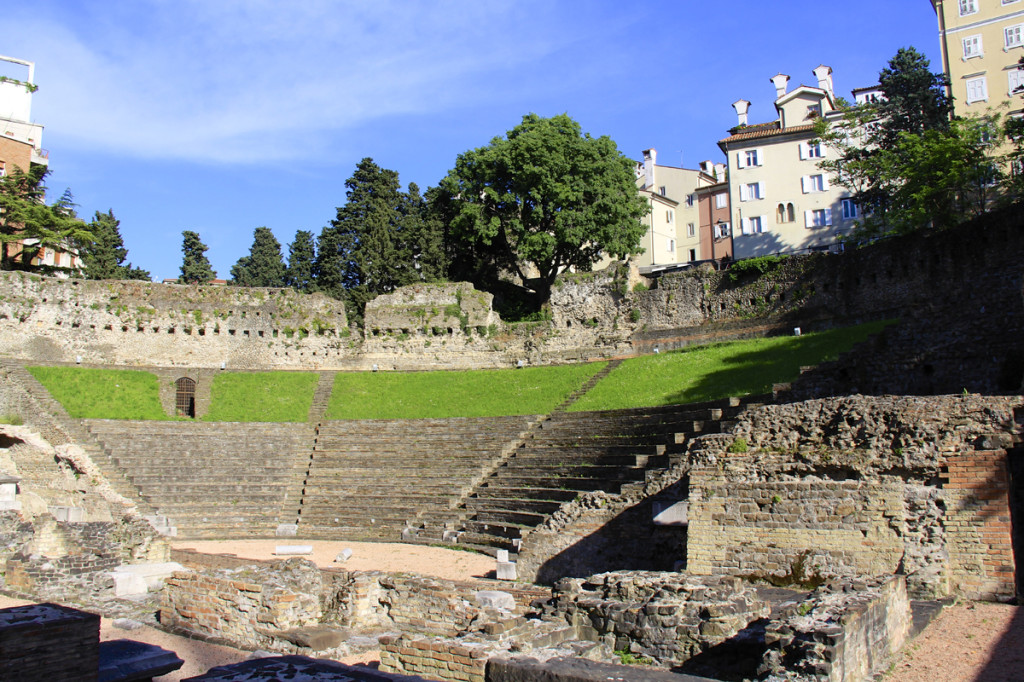
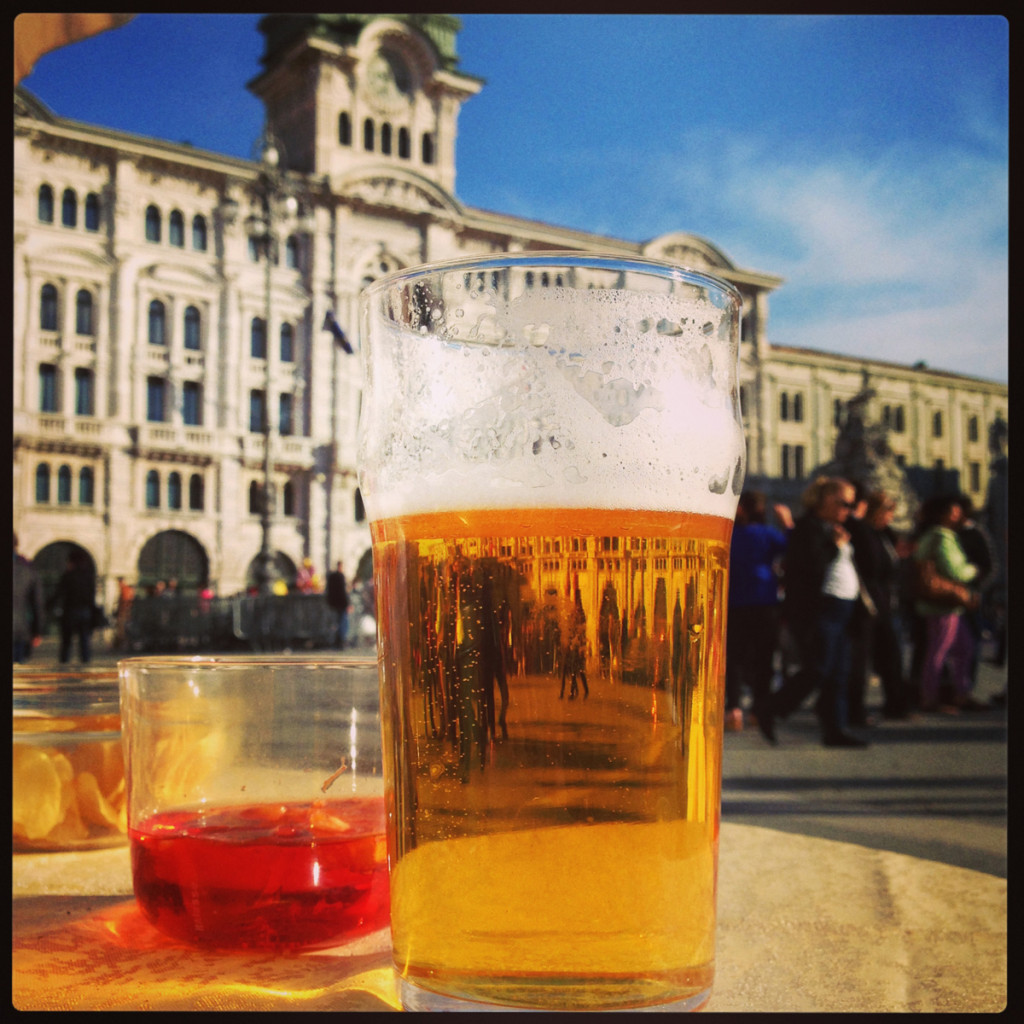
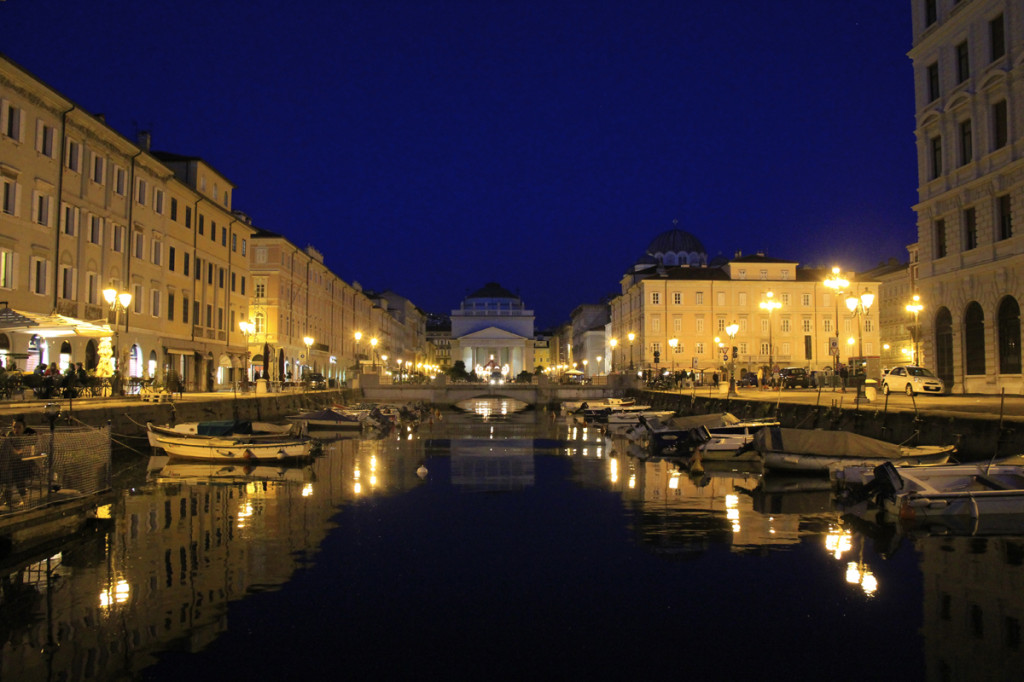
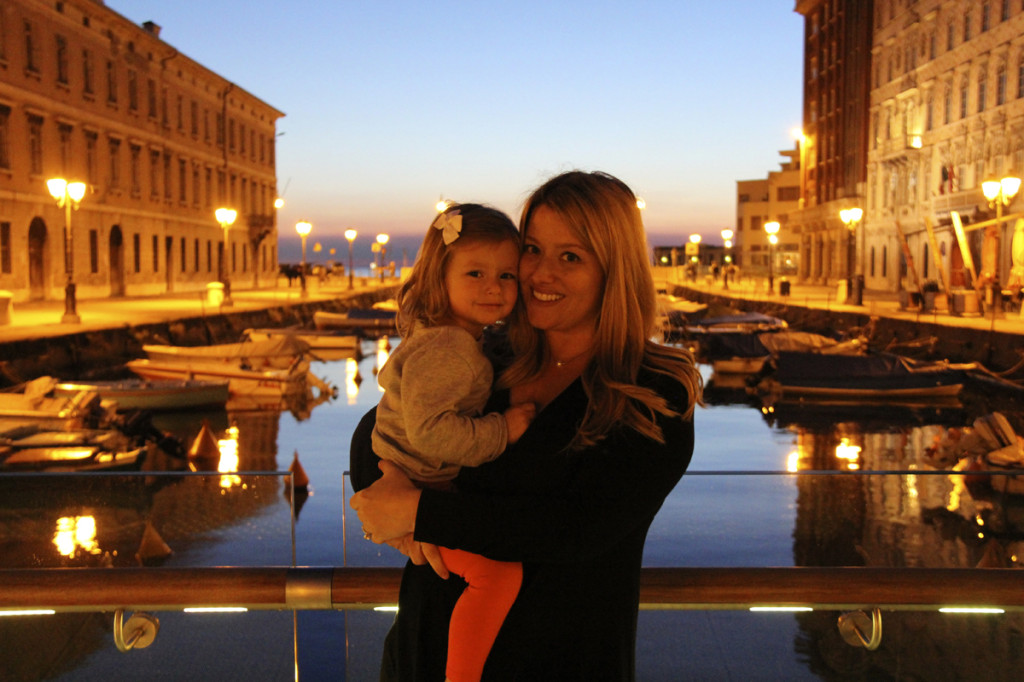
We stopped for a beer and light snack along the canalJulia rode a merry-go-roundThe touring began with the Scala dei Giganti (Giant Steps) – this is only about 25% of themAfter a long uphill climb, we got this panoramic of the cityWe arrived at the Castello di San GiustoStatue in front of the castle depicts maritime soldiers at warIn front of the castle were ancient Roman ruinsYoung soccer players compete where ancient Roman soldiers stood a thousand years beforeI can never catch Jen for a candid!Here I am in front of the Castello di San GiustoNearby is the Cattedrale di San Giusto – see if you can find the two cannon balls that have been lodged in the stone during a siege from the sea centuries beforeLovebirdsWonderful ancient streets – this is Viale XX SettembreHalf-Marathon or not… this kid had to get up and down these stairs somehowChiesa di San SilvestroTeatro Romano di Trieste – ancient Roman theatreWe stopped back in the piazza for happy hourMy happy hour Instagram shotJulia and I took a stroll around the piazzaChiesa di Sant’Antonio Nuovo at the end of the Canale Grande – well-lit at nightMy girls at night
If you ever find yourself in northeast Italy (I’m talking to YOU, when you plan that inevitable visit Venice) – do yourself a favor and carve out a couple of days to see Trieste. You’ll be glad you did!
If you read the title of this post with your best impression of an Italian accent, then you probably nailed the pronunciation of one of our new favorite Italian towns. Lucca has been on our bucket list to visit for quite some time and now we can happily say we’ve been.
Lucca, Italy viewed from the Torre GuinigiAnother angle from Torre GuinigiLucca viewed from the city walls
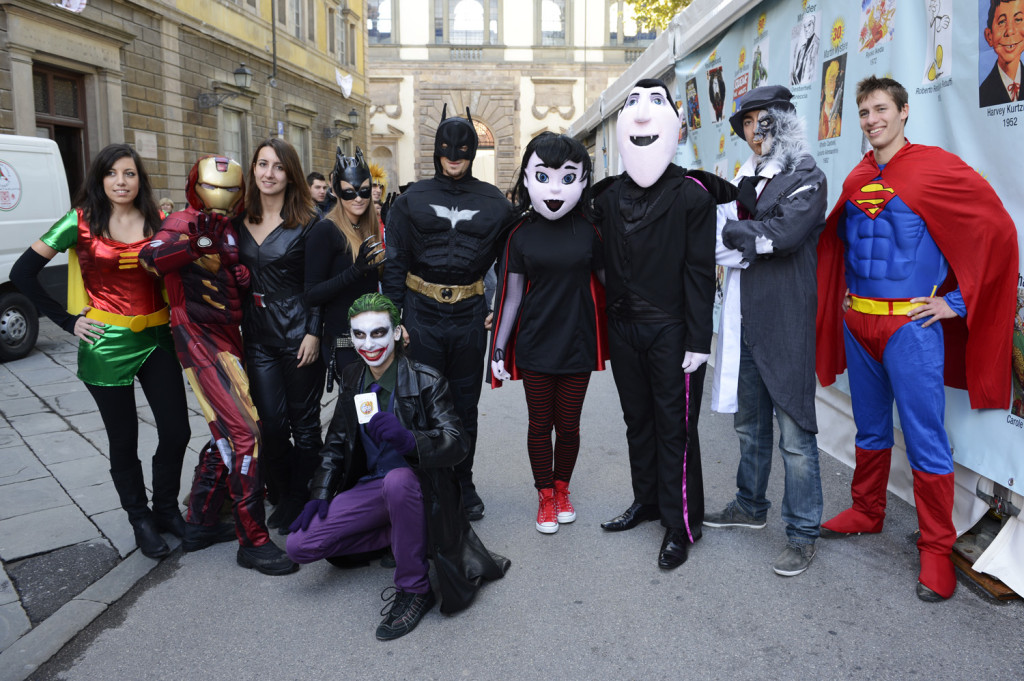
The city is renowned for many things, not the least of which is the giant annual gathering of comic book nerds and fantasy film geeks. Lucca plays host to Europe’s version of Comic-Con, the Fiera Internazionale del Fumetto (International Festival of Comics) or as it’s commonly referred – Lucca Comics and Games.
Some participants of Lucca Comics and Games. Photo courtesy of Francesco Petrucci
For those of us that don’t have any desire to put on a Superman costume (yes, I’m just enough of a geek to know the term cosplay), there is more than enough to do in Lucca, which I will detail below. Thanks very much to some free press bestowed on me by Italia Living, I have recently picked up a few new readers (benvenuto a Sipping Espresso) and so I’m going to treat this post a little differently than in the past. As opposed to running through our little vacation part by part, instead I will opt to go a bit more “mainstream” and simply highlight the featured attractions of the city. Of course, I haven’t boiled it down to a “Top 10 Things To Do In Lucca” just yet. I like to hear myself talk far too much!
Piazza del Giglio near our hotel
During Medieval and Roman times, it was quite common to fortify entire cities behind massive protective walls. Today, Lucca is a preeminent example of such fortification and one of the few cities left in Italy with her ancient walls fully intact. It is a wonderful experience to drive your car through the same gate that was quite possibly used by Julius Caesar himself. Of course, in this scenario, I’m simply the chauffeur and my own little Julia is the royalty riding in the back of the chariot. Even though I can’t positively date the existing walls as far back as Caesar, I can place him in Lucca for the well documented Lucca Conference, along with Pompey and Crassus in 56 BC. The origin of the city itself date back as far as 180 BC. Eventually Lucca rose in importance to the Roman empire and achieved immense wealth and status in the 11th century, thanks to the silk trade. The result of this wealth is evident today; the city is very well maintained. Nearly every street features an ancient church boasting a façade clad with expensive marble. Well designed piazzas are now the gathering places for tourists, street performers and restauranteurs. Streets lined with charming shops and wonderful cafes full of patrons keep the vibe of the city humming well into the night.
The ancient walls completely enclose the cityYou can find many fine examples of sculpture and statues along the top of the wallsThe walls are wide enough for cars to pass along the top, but it is solely pedestrianOne of the many churches that can be found on nearly every corner in the city
Our reason for being in Lucca was to visit our good friend, Beth (although here she goes by, Elizabeth which is better understood in Italian). We had an amazing time when we stayed at her home in Tuscany last year, which I wrote about HERE and HERE. She hosted us once again, but this time it was in the Bed & Breakfast she recently purchased, Le Violette. The place matches her personality perfectly; warm and inviting with an extra pinch of charm. I’ll write a full review of her B&B in an upcoming post. After we unloaded our bags in the room, Beth started our tour of the city beginning with the walls, which were widened centuries ago. In fact, not that long ago they used the walls for racing cars. Today, they are purely pedestrian.
View of the main bell tower of Lucca from on top of the wallsWe made our way to the walls several times throughout our tripJulia wanted to walk on her ownJen and Julia stop for a photo on the wall
We hopped off the walls and strolled through the city, enjoying Lucca as only a pedestrian can.
Via del Fosso has a canal running through the centerVia Cenami is one of the main shopping streetsBeth helps Julia take a drink of waterJulia takes a picture with me in Piazza San FrancescoThe old market building where vendors would set up their stalls
Most Italian cities feature outdoor markets one-two times a week. We made our way to one of the fabulous Lucca mercato (market), which is held every Wednesday and Saturday.
Vendors set up for the market twice a weekWe discovered that we accidentally strolled outside the walls by following the long line of vendorsBeautiful flowers are just one of the many things you could buy in the marketI catch Jen for a photo in the marketThe markets can get crowded but they are a great place to pick up a picnic lunch
While in Lucca, you will want to position yourself in a vantage point that will command a view of the entire city, valley and mountains. You can choose to scale the Torre delle Ore (Clock Tower) or the Torre Guinigi (Guinigi Tower). We opted for the later, because it is the only tower in the city that has trees planted on top. But the ascent is not for the faint of heart; it’s a steep 230 steps until you get to the top. Compared to other similar towers, I found the €6 entry fee a bit steep, considering you don’t get anything other than the view (many similar sites also feature other historical items – this was purely just the tower). I quickly reversed my position on the fee when I actually took in the view. Breathtaking might be an appropriate word to describe the panorama.
The final staircase ascending toward the top of the tower (shooting from below, looking up)I lost my cool when I thought this was the top and I would have to view the city through a cage. When I calmed down, I realized there was a door and simply pushed onView of the city with the prominent Cattedrale di San Martino in viewMore of the city and Torre dell Ore (clock tower)Lucca is a beautiful city set with a backdrop of luscious green mountainsPanoramica da Torre Guinigi – I just noticed that almost this exact shot is in the Lucca city guideI noticed a few groups of school children; Lucca is a popular destination for Italians
You will certainly want to pay a visit the Piazza dell’Anfiteatro, a Roman amphitheater that has been reconstructed into a piazza compete with charming shops and cafes. We sat and enjoyed a few drinks while Julia enjoyed running around with Beth’s son, Indi.
Panoramic of the Piazza inside the amphitheaterJulia and Indi play inside the Piazza AnfiteatroJulia loves chasing pigeons!Outside the Lucca Amphitheater you can see the remains of the original Roman structure
Of course, no trip to Lucca would be complete without a visit to the Piazza San Michele and a tour through the Chiesa di San Michele in Foro.
Chiesa (church) di San MicheleThe Romanesque architecture is clearly demonstrated in the façade, which was built in the 13th centuryThe wealth of Lucca is demonstrated by their larger churchesThe piazza hosts some performers that loved playing American 90’s rock (primarily Nirvana)Julia can’t hear the words of Kurt Cobain without being moved to tipJen and Julia in Piazza San MicheleJulia pushes Beth’s son, Indi across the piazzaPlaying in the piazzaChiesa di San Michele at night
I hope you enjoyed our tour through Lucca together and consider adding it as your next Italian destination. Below are a couple more pictures to temp you even further…
Buccellatio di Lucca is a typical bread that is eaten year roundWe constantly commented on how clean and well maintained the city isJulia enjoys some gelato after dinner one night“Come along for an upcoming post all about a couple restaurants in Lucca!”
Sicilia (Sicily) was the birthplace of the original Godfather, Don Vito Corleone; its shoresharbored his son, Michael Corleone and recently the island hosted Don Greggorio and his small family. My only disappointment in visiting Sicily was that my wife, Jen wouldn’t let me wear a white suit and hat while walking around passing out fruit like I was Don Vito himself. Oh well, there’s always next time…
The sun rises over Catania. How can you be expected to walk around without a white suit?!
I was so excited to visit Sicily because I’ve wanted to see this unique part of the country for as long as I can remember. This region of Italy is so far south from where we live that I wasn’t sure if we would ever get the opportunity to explore the island while living here. Sicily boasts a plethora of interesting facts that I couldn’t begin to detail in a single post. However, perhaps the most interesting few points are that the island is the largest in the Mediterranean, archeological evidence dates human inhabitants are far back as 8,000 BC and the terrain has changed hands dozens of times (from Greek to Byzantine to Roman and all over again and again).
Coastline along SicilyÌsula Bedda is local dialect for Isola Bella, or Beautiful Island
While the capital city of Palermo is the largest and most populous on the island, Catania is another popular tourist destination and the port city that received us on our visit. The city also bore nostalgic significance – Catania was the birthplace and home of Jen’s bisnonna (great-grandmother), Rapisardi. Even though there is plenty to do in Catania, we decided to take the hour-long train ride up the coast to Taormina. We were not the first to make this journey – Taormina has been one of the most popular tourist destinations in Sicily since the early 19th century. However, we came at a particularly interesting time. The infamous Mount Etna had just erupted a couple of days before our arrival and evidence of the black soot was everywhere.
The black soot from the explosion of Mount Etna covered the entire areaThe beaches became black with sootJulia enjoyed walking on what became a black pathwayWe were all fascinated how far the soot traveled, literally blanketing the town
The rapid expansion of Taormina is believed to have begun around 345 BC. It originally started as part of the Greek empire before falling into the hands of the Romans. Today, the city remains high atop the ridges of the coastline, commanding a beautiful (and strategic) view of the sea. Before we could walk her ancient streets, we had to ascend the long and winding roads from the train station. We secured ourselves a cab and helped some other non-Italian speaking tourists get cabs of their own. Since there were more people than cabs, I offered to share our cab with a German couple. I arranged a pick-up time with the same cab driver at a discounted rate. Not only did we get to split the fare, but we got a discount by giving the same guy round-trip business. I’m always happy to find good travel deals!
Taormina has beautiful coastline and wonderful beachesThe city is nestled high atop the cliffsThe city is something truly wonderful to beholdWe enjoyed hiking aroundJulia took turns posing with her parentsWhat fun!Pretty gals and a pretty view“Momma… listen to me”Once again, Julia was a hit with the other tourists that wanted to hold her and take pictures
Upon arriving in Taormina, we spent some time walking around, soaking up the lovely street scenes. Eventually, we wound our way to the Teatro Antico di Taormina (Ancient Theatre of Taormina). The amphitheater is a fine example of Greek engineering that dates to the seventh century BC. What is most fascinating about this theatre (apart from its spectacular position overtop the Mediterranean) is that the use of brick in its composition hint at Roman construction (an era much later than the seventh century BC). But the design is that of ancient Greece. This architectural style in combination with other archeological elements has unfurled the prevailing theory that the Romans rebuilt the amphitheater overtop an existing Greek theatre. Today, the preservation of this ancient wonder is truly remarkable.
The view as an audience member in the amphitheaterThis ancient theatre dates all the way back to the seventh century BCThe design of the theatre is that of ancient GreeceThe views from the top of the theatre are remarkableJulia and I take a picture with the theatre and coastline behind usShe leans in for a hugI’m a lucky guy – Julia gives me a kissWe soak up the view together
After quite a bit of time exploring the amphitheater, we strolled through the city streets, marveling at the beauty behind each turn. However, we had more on our minds than just lollygagging. We were bound and determined to try arancini, which are essentially balls of fried rice. Of course, there is oh so much more to it than just that! This local Sicilian treat dates all the way back to the 10th century. The perfectly fried balls of heaven are often times stuffed with ragu, pancetta, cheese or other treats. We got a simple variation, just risotto fried lightly beneath breadcrumbs – we couldn’t be happier with our decision. I’ve included a link to a recipe HERE, although we haven’t tried to make them ourselves yet. We’ve since eaten arancini in other parts of Italy – but it’s never quite as good as it was that day in Sicily.
“Quick, dad – take my picture… photo-op!”Mandarini (mandarin oranges) were in seasonJulia found some pigeons that she became friends withJulia is no stranger to her winged friendsShe even made friends with a micino (little kitty)We loved the cityARANCINI! Amazing!!
We took our final walk through Taormina and back toward our departing ship. We had one last port to round out our time at sea – a day in the historic city of Naples.
W got one last look at the beautiful city streetsWe barely made it back to the ship before we set sail toward our final destination
If you read about our recent trip to Venice (HERE), then you’ll know that we finally unlocked the key to really enjoying Venice. In a nutshell, it involves beating the other tourists to the finish line. If the “finish line” is a guided tour in Palazzo Ducale (Doge’s Palace), then be the first person in line in the morning. If the finish line is grabbing a moment of solace in an empty Piazza San Marco, then you’d better be there as the sun rises (conversely, you can arrive well after the sun has set and listen to the beautiful music of the dueling bands). Or, more simply, you can do what we did; visit this magical city in the off-season and get to know the city of Venezia (Venice) without having to put up a fight.
San Marco Campanile and Doge’s Palace seen from the water
If you’re blessed with a couple of days in Venice, I would suggest that you go a bit deeper than the surface level attractions. Skip the gondola ride (it’s overpriced anyhow) and instead tour the neighboring islands. With 117 to chose from, you’ll have your pick. You can visit the Jewish Ghetto on the island of Cannaregio. Many of the beautiful parks and gardens on the island of Lido are free of charge to you botany lovers. Or, for the real adventurers, you could opt to wade into the marshes and cast nets with local fishermen near the island of Chioggia.
The Church of San Giorgio Maggiore Church on the island that shares the same name
We knew that we wanted to visit the island Murano and watch how the world-famous Venetian glass was blown. This would require a little preparation and so I enlisted the assistance of a guided tour. I discovered a wonderful website that offers local tours at very reasonable prices – Viator. Travel bugs, take note of that website! It is a great resource for sight-seeing tours in cities all over the world. We will definitely use them again; my only regret was not discovering the website sooner. When searching for a tour of Murano, we found a better option – a tour that also included the islands of Burano and Torcello. You can find the link to our specific tour HERE. I bought my tickets ($28 pp) and had the confirmation sent to my smart phone. I showed up at the designated area, presented the pass on my phone and received our tickets to the boat. Easy, breezy, lemon-squeezy.
Venetian workers were out in the early morningWorking on the water here is no different than working on a truck in another city
Before our tour departed the main island, we had enough time in the early morning to drop by Venice’s famous fish market. The Mercato di Rialto (Rialto Fish Market) is in the area affectionately known as Cuore della Città (heart of the city) behind the Rialto bridge. This area by the famous bridge was settled in the 9th century and becoming a booming marketplace by 1097. Today, the fish market still stands as a wonderful place to visit and buy fresh seafood.
We enter the market – the Winged Lion of San Marco warns not to touchThe ladies are excitedPESCE (FISH)!This guy looks tastyThe granchi (crabs)I wouldn’t want to get bit by this guyThe displays were beautifulThere was also wonderful looking produce – these are delicious peperonciniA butcher – this one specializes in horse meat, common to find in Italy
After viewing the market, we wound our way to the tour meeting-point next to San Marco Square. Our four-hour tour included a professional guide, a glass-blowing demonstration in Murano, a hand-crafted lace demonstration in Burano and round-trip transportation to all three islands via boat. I thought the price was very reasonable for all that was included, but truth be told – the price paid for little more than transportation. The guide was impossible to understand over the boat’s roaring engine. All in all, I’m still happy with the deal and it forced us to be back on our cruise ship in time for departure. Nothing like being stranded on a remote Venetian island and watching your cruise ship sail past to ruin your vacation!
Julia walks on the pier of Burano
Venetian glass, which is more commonly referred to as Murano glass today, is widely recognized as one of the most specialized and beautiful hand-crafted items the world over. Venice emerged as a prominent glass manufacturing center as early as the 8th century. The origins of glass making going back to the Roman Empire when molded glass was used to assist in the illumination of bathhouses. The island gained it’s notoriety when the Venetian glass blowers were all ordered to move their foundries to the island of Murano in 1291, for fear of fire on the main island. By the fourteenth century, the glassblowers were considered among the most elite of Venetian citizens. The closely guarded secrets developed on the island laid the foundation for a glassmaker monopoly on high quality glass that lasted for centuries. Our tour guide explained that even to this day the artisans of Murano are highly trained in this unique skill that is closely monitored by the Glassmakers Guild. Among other things, a Murano glassmaker must be the son of a tenured glassmaker and apprentice for twenty years before being allowed to make his own glass. A “young” glassmaker on the island would be someone who is in his mid forties.
We toured this factory, C&A GiserrieriThe artisan stands next to his furnaceHere he shapes or “marvers” the glass by rolling itNext, he “cuts in” to score the piece’s neckThis is where he is “trimming the lip” with shearsAnother example of design, he quickly molded a horseHe demonstrated the heat of the piece by simply laying a piece of paper on her neck, which immediately burst into flames
Next, we set sail for Burano, which is known mainly for its painted houses and the church of San Martino’s leaning campanile (bell tower). They also have an established reputation for their creations of lace.
As we sailed toward Burano, we could clearly see the leaning bell tower (in the background)A better shot of the bellower – it is leaning quite a bitThe painted houses were something to beholdThere were canals just like on the main islandThe vibrant colors were really something else!We loved strolling around and taking in all the beauty of the island
Lastly, we finished on the island of Torcello. We were surprised to learn that this was actually the first island to be settled by Venetians, and once held the largest population of the Republic of Venice. Today, you can hardly see evidence of this; the island is so sparsely inhabited that only a few structures remain and the inhabitants number fewer than a couple dozen. The main attraction nowadays is the Cattedrale di Santa Maria Assunta (Cathedral of Santa Maria Assunta) founded in 639 AD.
Torcello was very different from the other islands of Venice proving that each island offers it’s own unique beautyJulia and I walk along the ancient canal in TorcelloSince it was cold, we warmed up with a little vin bruléJulia and I take a stroll over this bridgeSanta Maria Assunta (left) and Santa Fosca (right)The historic Santa Fosca church – you can distinguish the Byzantine influence
If you are planning a trip to Venice anytime soon, I would definitely recommend a tour of the peripheral islands. If you discover any other fun places to visit, please drop me a line and let me know!
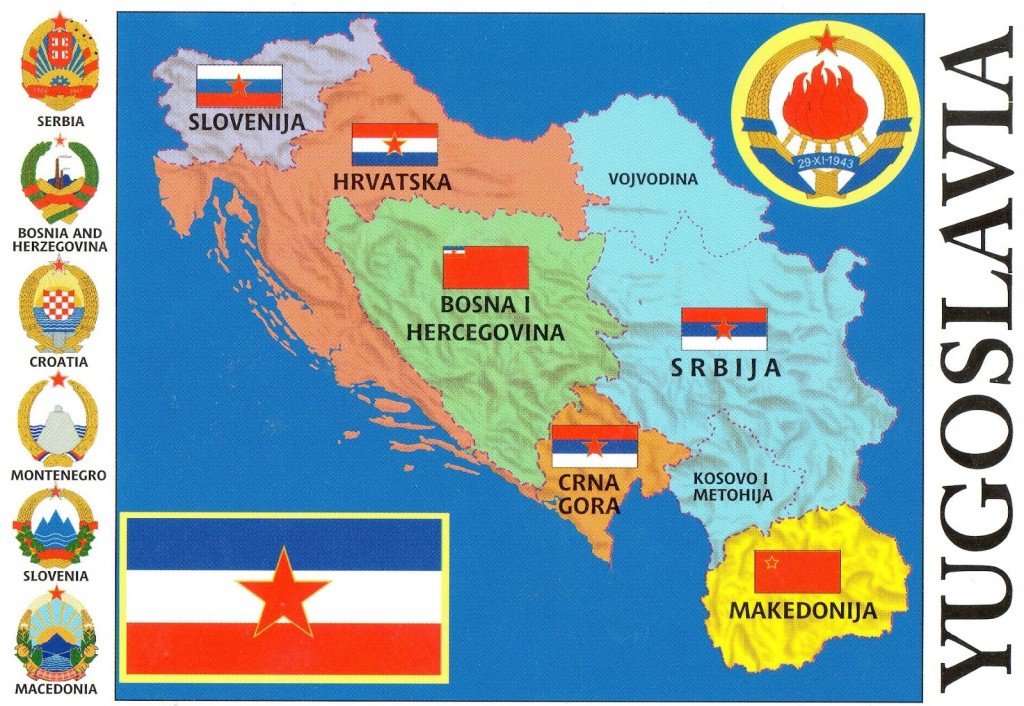
I am not a dedicated student of history or geography, although I like to believe I have a little knowledge of the world. I recently exposed my own ignorance on the recent affairs of eastern Europe and I am embarrassed to admit the depths of it to you now. Let this paragraph serve as my confession booth when I tell you that just over a year ago, I had never heard of the country of Montenegro. Allow me to further confess that as recently as six months ago, I didn’t know that Yugoslavia was no longer a country, but rather a former Socialist Republic that had been divided into what stands today as seven independent countries (Serbia, Kosovo, Macedonia, Croatia, Montenegro, Bosnia, Slovenia) .
Of course, I knew that this entire Slavic area of the European continent was [very recently] rife with political tension and civil unrest. The result of which sparked years of bloody wars culminating in both great losses for many of the citizens and great victories for each independent nation. I knew this because when I was younger, my sister and father each had friends from the area. But eleven-year old Greg was more interested in tuning in to see how MacGyver was going to use a pocketknife to escape from a flooding submarine than he was to tuning into C-SPAN.
I find that most of my current reading and research regarding the evolution of the world we know today pre-dates what I would call, “modern-history”. I love to read about the Roman or Greek Empires. I am intrigued by all the British Colonies and absolutely love the history of my native America and my adopted Italy. It didn’t really occur to me that major territorial lines were still being redrawn through force as recently as the 90’s. Sixteen-year old Greg was more focused on deciding which plaid Abercrombie shirt best matched his denim jean jacket. It was even more shocking to just recently learn that an entire country as significant as Montenegro could become independently recognized less than a decade ago (they were granted independence in May of 2006). And even though I could easily cite another example of something else that preoccupied my time when the referendum was signed on May 21st 2006…. it would be embarrassing since I was clearly an adult eight years ago. Even as I write these words, Ukraine is fighting [a losing battle] with Russia over Crimea, further proving that nothing in this world is permanent.
I was recently intrigued with the matter of Yugoslavia by chance. Shortly after we moved to Italy, a friend sent me an article – one of those “Places You Have To See” type things. He and I both agreed that Montengro appeared to be one of the most stunning locations on the list. This was the first I had heard of Montenegro and I was excited when Google maps confirmed that this young country was close to Italy. I knew that I wasn’t going to leave Europe without setting foot on her shores. I recently had that opportunity when we embarked on a cruise with Celebrity Cruises. Our cruise began in Rome, Italy (HERE and HERE) and continued to Florence, Italy (HERE) before moving onto Corfu, Greece (HERE) – but not without a couple pitstops in some of the ship’s wonderful restaurants (HERE).
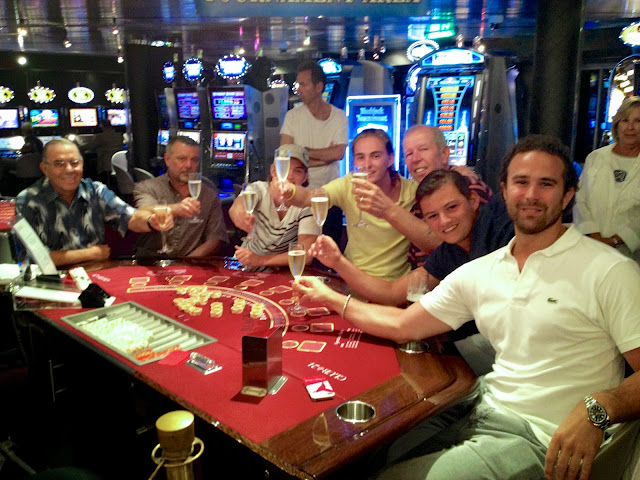
A couple days before arriving in Kotor, Montenegro I was given an interesting narrative of the city, as well as a brief history of Yugoslavia by none other than my favorite blackjack dealer, Brajuško (you’ve got to talk about something to pass the time while you’re splitting your 8’s and doubling down on your 11’s). He was a native of a neighboring city and recounted an interesting personal history of his country’s independence.
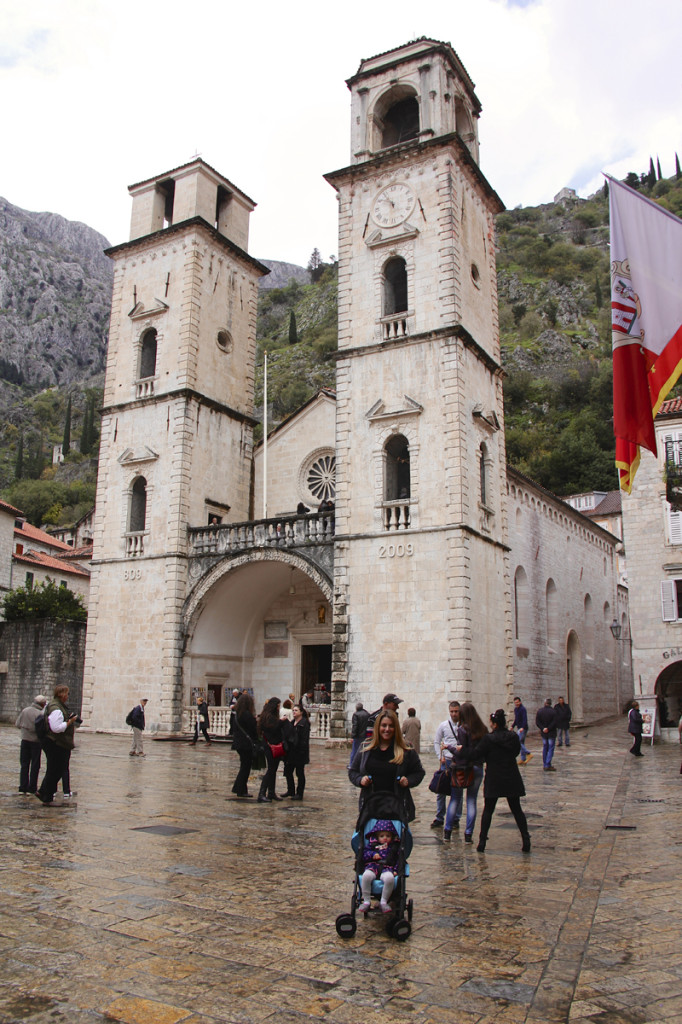
Kotor hosts about 13,000 inhabitants. The fortified city rests along the shores in the Gulf of Kotor – an ancient Mediterranean port. The city was first settled in 168 BC by the Ancient Romans. The city became fortified in the middle ages when it’s importance in the region grew (port cities were often crown jewels of any large empire and therefore targeted by many outside invaders). The city eventually fell under the control of the First Bulgarian Empire before becoming acknowledged by the Republic of Venice in 1420. This Venetian control over the city was evident to me as we walked up to the city gates and saw the Winged Lion of Saint Mark. This symbol marks the cities that were under the control of the Venetians… a symbol that we encounter regularly across northern Italy.
The Winged Lion of Saint Marco immediately told the story of Venetian control
Jen and I both awoke early on the day we were set to arrive in Kotor. This was fortunate because we had not yet arrived in port and our large sea craft was slowly drifting through the narrow gulf. We got to bear witness to the massive ship deftly navigating the shallow waterway. We thread through the narrow aqua valley like an accurate strike thrown from Aikman to Irvin. There were times when I felt as though I could easily toss a peanut off either side of the ship, only to have it find dry land.
Our massive ship skillfully navigated the narrow waterwaysOur only footprint was a small ripple as we navigated through the gulf
As soon as our ship cleared the local port authority, we were first in line to take one of the tenders (little boats that deliver you to shore when the ship has to stay some distance from the port). We walked through the city walls with eager anticipation. Kotor is truly one of Europe’s best preserved cities of the medieval era and Renaissance. I was thoroughly impressed with the local receiving committee. Dozens of locals had prepared for our reception with tables full of local treats and plenty of people positioned to give tourist information.
We reach the shores of KotorI was particularly excited about this port of callMy enthusiasm rubbed off on my two girls
Before we had the chance to take in the main sites of the city, the sky decided to give us the wonderful gift of rain (note the sarcastic tone). We ducked into a local cafe to wait out the wet weather and check our email. Since we had gone ashore without umbrellas or Julia’s rain cover, we found ourselves stuck for nearly an hour. As the time ticked by, we got restless and tried to set out once again. The weather hadn’t improved so we decided our best option was to head back to the ship and collect our rain gear. We also had the benefit of eating a free lunch on the ship before returning to Kotor, properly dressed and equipped for anything.
We ducked into a small cafeJulia steered the tender boat back to the ship while we waited out the rain
Fortunately, the sun made an appearance in the afternoon and we got to see the old Town Clock Tower, dating from 1602. We visited 17th century palaces and 11th century churches. We went in Regional Institute for the Preservation of Culture Moments. We strolled along ancient cobblestone streets that made me concerned I might come face to face with a 600 year-old vampire at any moment. My eyes kept glancing up the hill (the town is nestled at the base of a mountain) toward the Church of Our Lady Remedy (Црква Госпе од здравља or Црква Марије Колеђате) with the idea to climb the city walls toward her massive doors. Jen read the idea in my mind before the words were formed by my mouth and quickly put a kibosh on that plan. She had to remind me that it was a few-hundred meter climb along a slick stone path with a stroller and kid before I relented. There were still enough sites in the city to keep me entertained and so I agreed to stay closer to sea level.
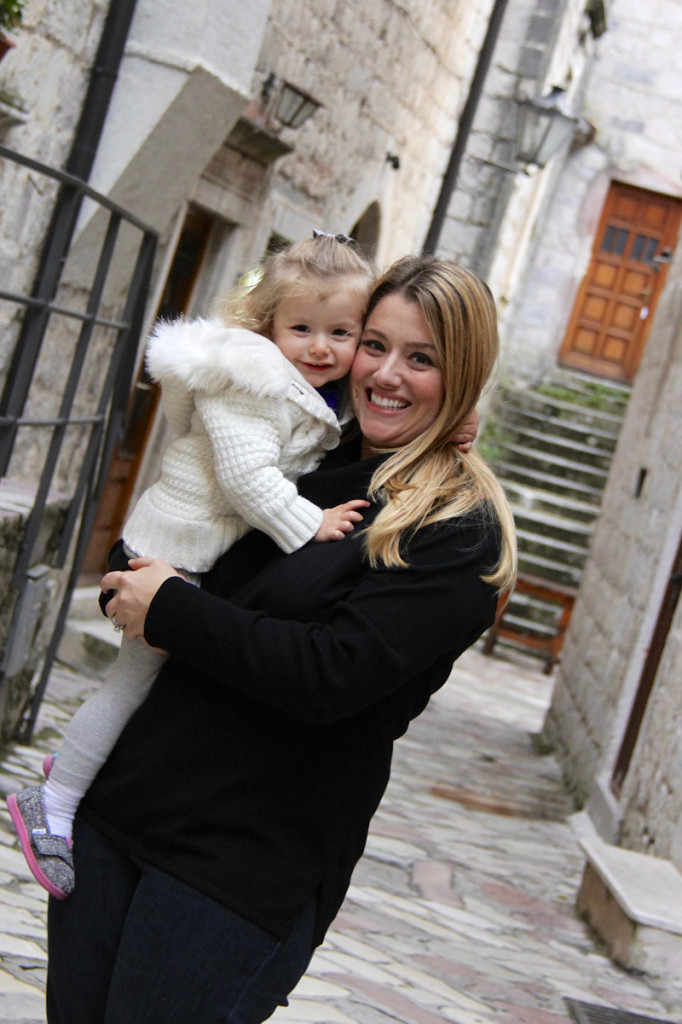
Pima Palace 17th centurySt. Triphon’s Cathedral, 1166Beautiful historic buildingsCharming piazzasAncient cobblestone streets…wait, is there a vampire in the background? Oh no, it’s just a shadowThe Gurdic Gate – the south gate, 1540
We thoroughly enjoyed Kotor and I would recommend a visit to this magical place to anyone interested. If you happen to make it to this part of Europe, plan a few extra days and visit some of Montenegro’s beautiful beaches. They have some fabulous looking resorts that I hope to visit myself some day.
Oh, I would be remiss not to mention that night’s entertainment. Julia had recently become best of friends with a young girl named Ava and we had become good friends with her parents and their family. Jen forced me onstage with our friends, Catherine, Mike and Feng to be “hypnotized” by David Knight, one of the world’s preeminent hypnotists. I eventually excused myself from the stage, but not before there was some “sexy dancing” and “piano playing”.
David Knight puts Catherine and me (background) under his tranceI think he had a stronger hold over Cat than he did over meThe girls were thoroughly entertainedWe joined the Ni family for dinner after the showJulia treated us to a song after dinner
It’s been nearly a month and a half since my last meaningful post and I am once again faced with the monumental task of getting caught back up. I’m not sure how or why I allowed myself to get so far behind, but I do know that I have left myself a lot of work. The wine, cheese and salami will just have to wait (well, I suppose it can’t hurt to have a little wine while I write). I would like to apologize to my readers for this delay and I would like to acknowledge one loyal reader in particular; Helen actually reached out to me through our Contact Us page and basically said, “what the hell, Greg – where’ve you been?!” Helen and everyone – even though it can’t excuse the lack of content, we just got back from a two-week trip to the States where, in my capacity as Best Man, I roasted my good buddy Josh and toasted his beautiful bride, Abby (read about Josh and Abby’s trip to visit us here and here).
While we were home, I rediscovered some magical things – burritos, quality customer service and Netflix. We haven’t watched as much TV over the past year as we did over the past two weeks. I became obsessed with the Netflix original series, House of Cards – an amazing drama starring, Kevin Spacey as Frank Underwood, a cagey and politically ambitious congressman who is constantly scheming and conniving to reach the next rung of the political ladder. If Frank Underwood can work through all hours of the night and stay ten moves ahead of his opposition, surely I can bang out a few extra blog posts in the next couple weeks.
You and me both, Frank
We still have tons of travel left to do together – I’ve only written about the very first part of our cruise late last year and so much has happened since. So put on your boating shoes and let’s get going…
Here we go again!
When I last left you, we had already visited Rome (here and here) before hitting the Mediterranean Sea for Florence. We spent the next day at sea (which means there is no port and therefore no disembarking the ship), which can often be my favorite time onboard a cruise ship. We tend to pick our cruises based on the ports of call, but I always like to be sure there are two or three sea days allotted in the itinerary. It may sound crazy – but it’s nice to have a day to relax in the middle of it all. Carrying a toddler, stroller, backpack (and sometimes even a wife) across miles and miles of city streets, on and off tour buses and in and out of museums [while rewarding] is a lot of work. To have a day where you cannot do anything other than enjoy your ship’s amenities is a pretty sweet prospect. That, and I like to gamble – sea day’s are the only time you can sit in the casino all day (or as long as your wife can tolerate being left alone with your child).
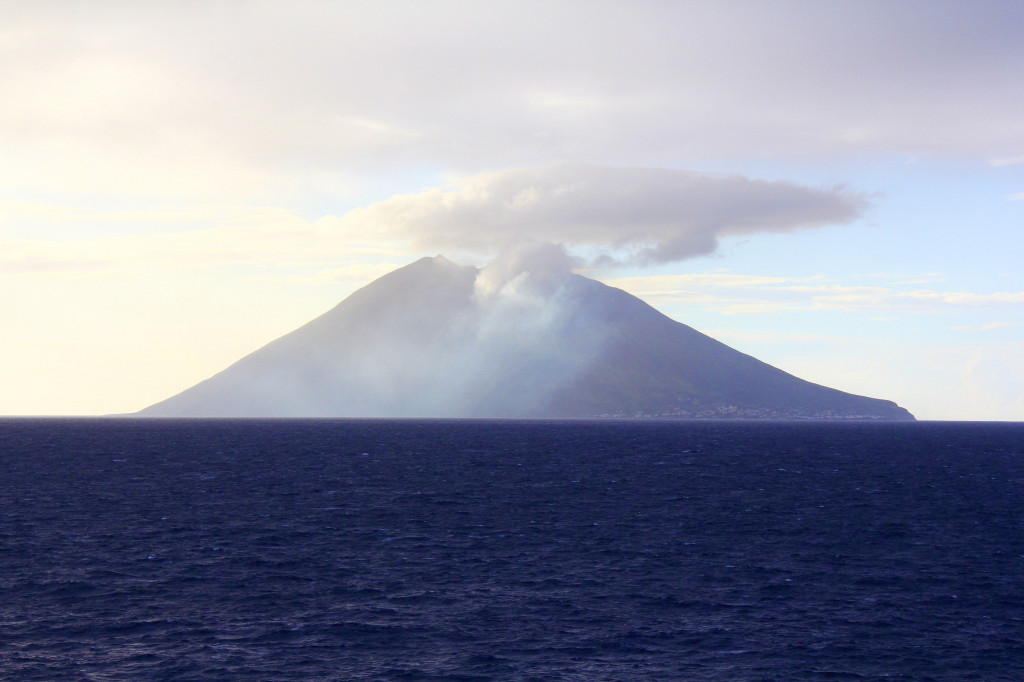
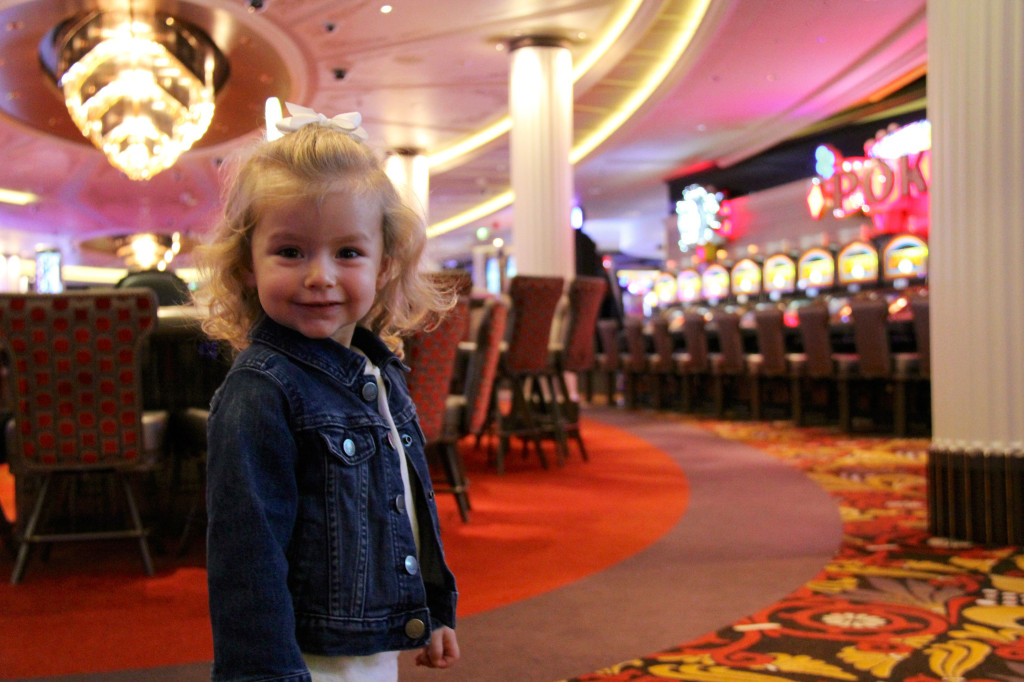
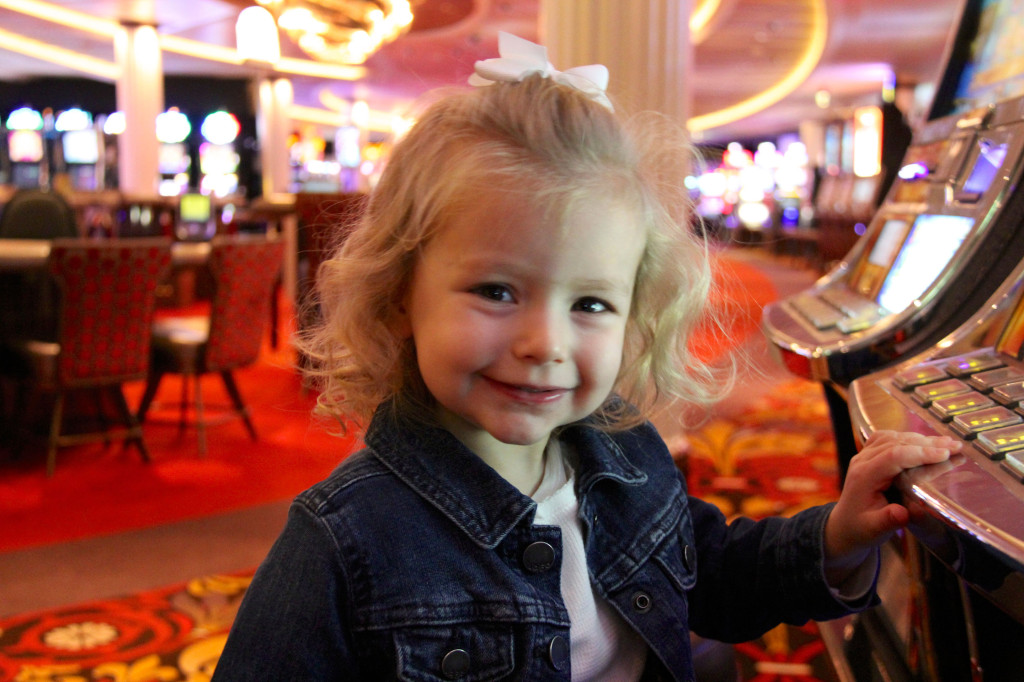
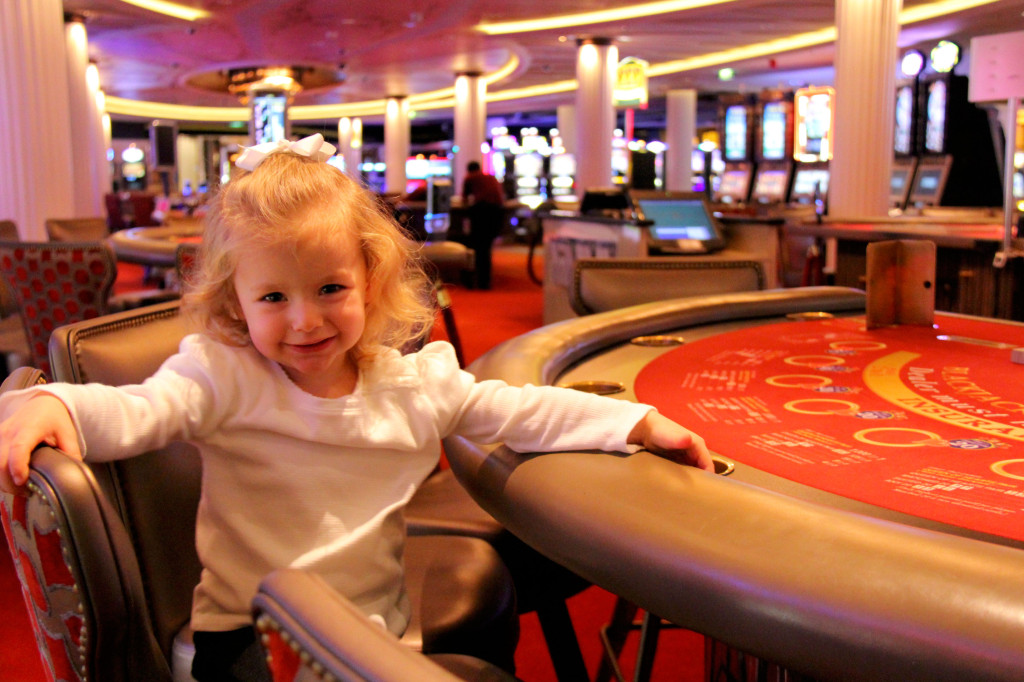
A dormant volcano visible from the ship while we sailed past SicilyApparently, gambling is a part of our blood line – Julia enjoys the Casino as much as I doFirst she hit the slotsNext, she discovered the blackjack tables – that is definitely my little girl
The first sea day was also the first “formal night” and so we all three enjoyed an opportunity to get dressed up and go to dinner. I was up a little after a hard day playing blackjack and so I was in high spirits. The delicious prime rib they served helped to keep me and my tummy happy (they even brought it out “bloody and still mooing with a mountain of horseradish”, just like I asked) . After dinner, we took in a very enjoyable show and went to bed content with a day of doing… well, not much of anything.
Ready for a fun “night on the town”Julia let me take her for a spin on the dance floor before dinnerJulia and Jen at dinner
The next day we woke up at port in Corfu, Greece. It was drizzling and we had a long day at port in a relatively small city, so we decided we would try to wait out the rain on the ship. We spent the morning participating in some of the cheesy activities organized by the ship’s Cruise Director (imagine a business team building activity). It would have been an uneventful morning if it had not been for a strengthening bond between two little girls who would quickly be known as the fastest of friends onboard Celebrity’s Silhouette. Ava had met Julia in one of the cafe’s the day before and she didn’t hesitate to chat her up on either occasion. She was likely craving companionship of someone close to her own age (Ava is about a year older). The two instantly clicked and after the game, they spent some time dancing, playing and “conversing” (if you can consider each girl stating her independent and random observations a conversation).
We meandered about the ship while we waited for the clouds to disperseAva found a new friend in Julia and Julia discovered her new hero
As the girls played, we spent some time getting to know Ava’s parents, Catherine and Jim without realizing that we were making fast friends of our own. After just a few minutes talking with Cat and Jim, we learned that they have a close-knit family too – they were cruising with Jim’s brother, “Uncle” Mike and his wife, Feng as well as the boy’s parents – Bob and Dorothy. The entire family was very pleasant and even though we didn’t realize it at the time, we were forming a relationship with a big family we would “adopt” as our own for the remainder of the cruise. Eventually, the rain let up and we took our leave for Corfu.
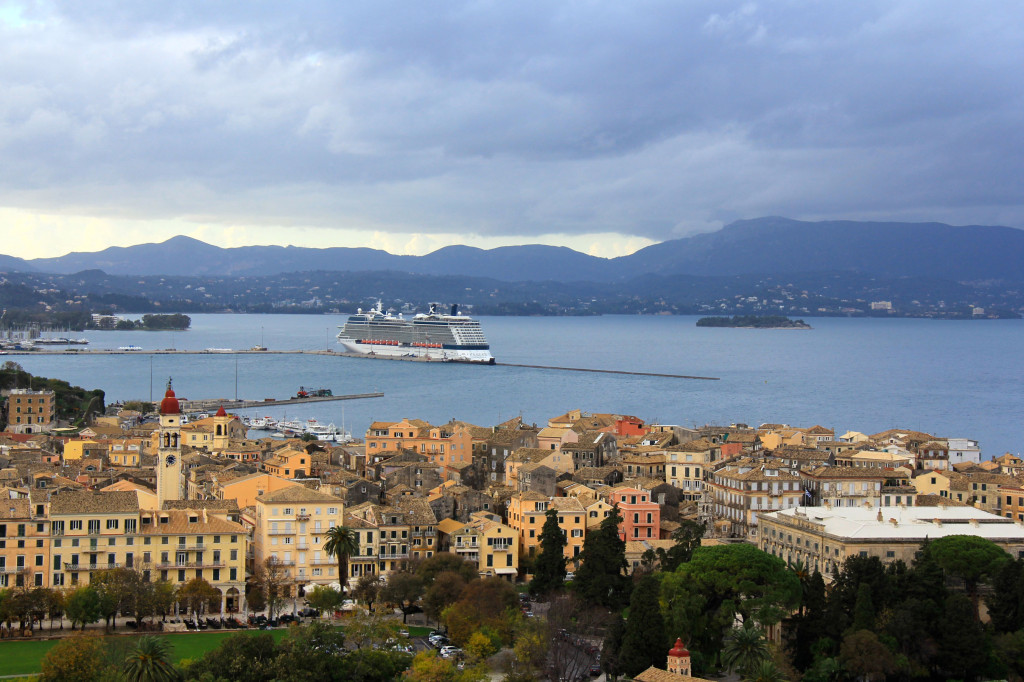
A panoramic of Corfu, Greece
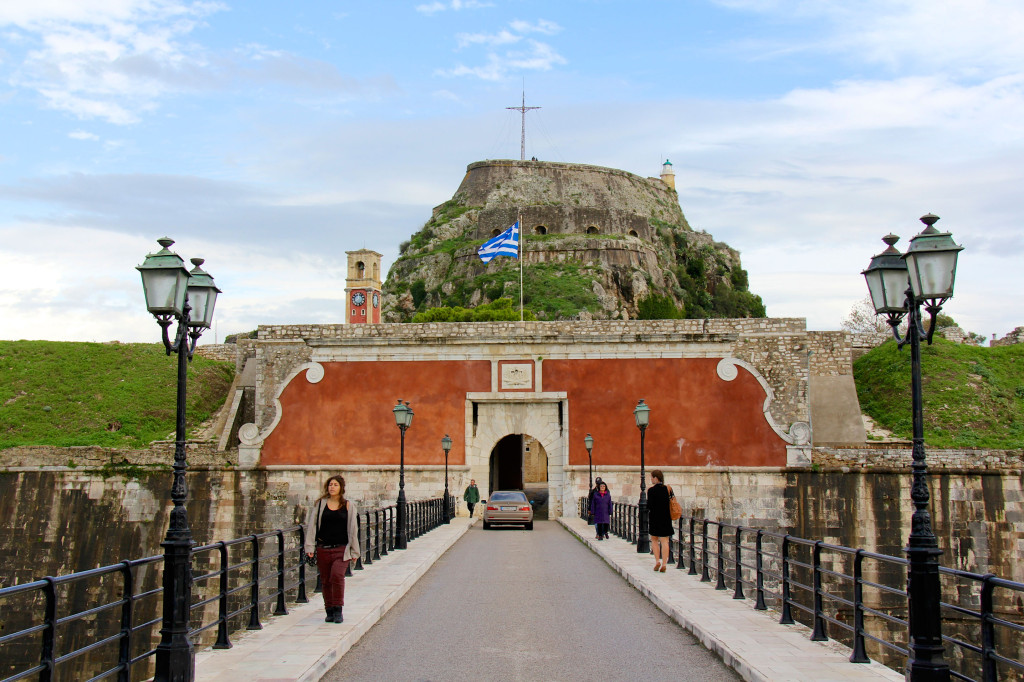
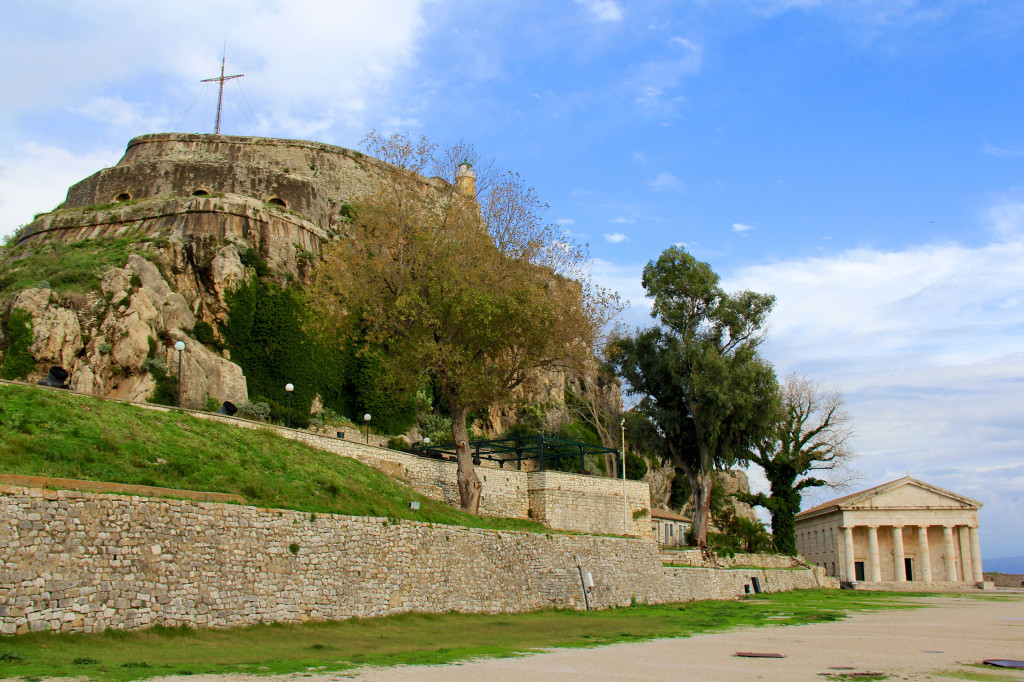
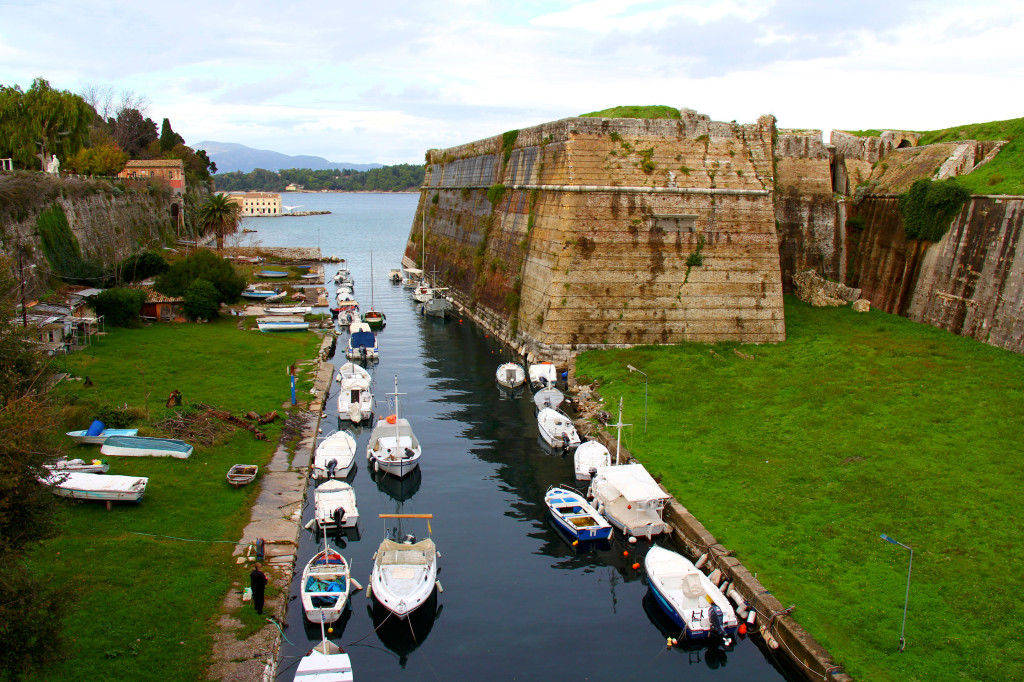
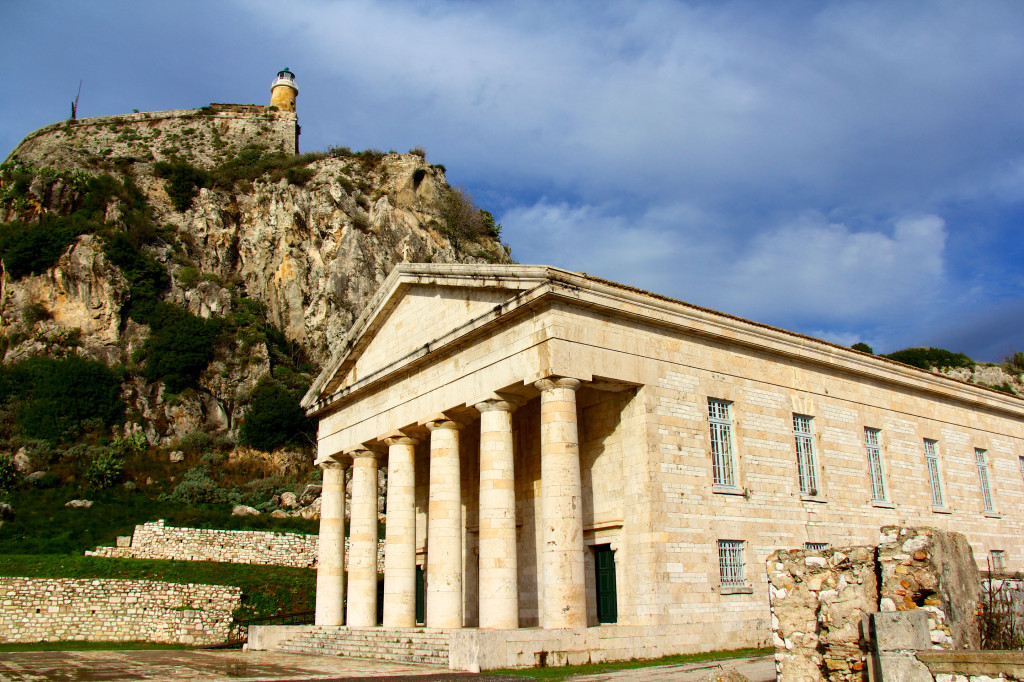
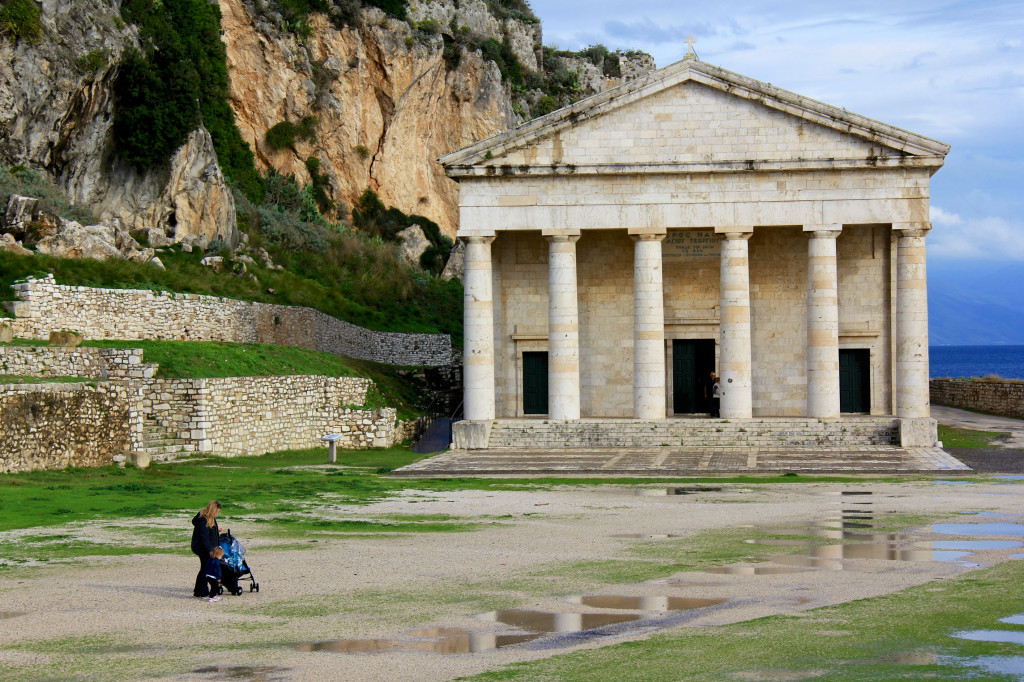
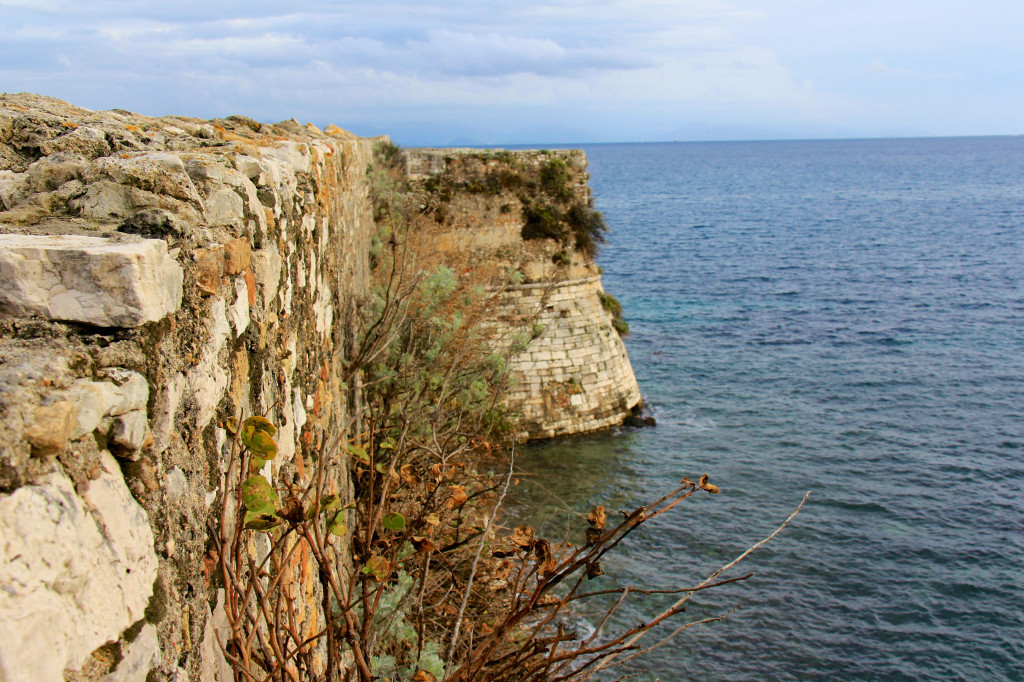
Corfu is a Greek Island dating back to 1300 BC when it was first inhabited by the Phaeacians. The history of the island is a story penned by bloody battles and conquests. This is evidenced by the two fortresses that enclose the capital city; two formidable structures standing as pillars of protection against would-be invaders from the sea . Jen and I decided that we were up for a walk and so we strolled from the ship, past the “New” Fortress (Νέο Φρούριο) and into the downtown area. We meandered past ancient churches and charming shops and restaurants when heard a tiny, little voice scream, “Juila”! It was her new friend Ava, who came barreling up and generously gave Julia a big hug and a piece of her bread. We kept hiking past the outskirts of town and into the Old Fortress (Παλαιό Φρούριο) – a citadel that offers the most magnificent panoramic of the ancient city, justifiably deemed a UNESCO World Heritage Site.
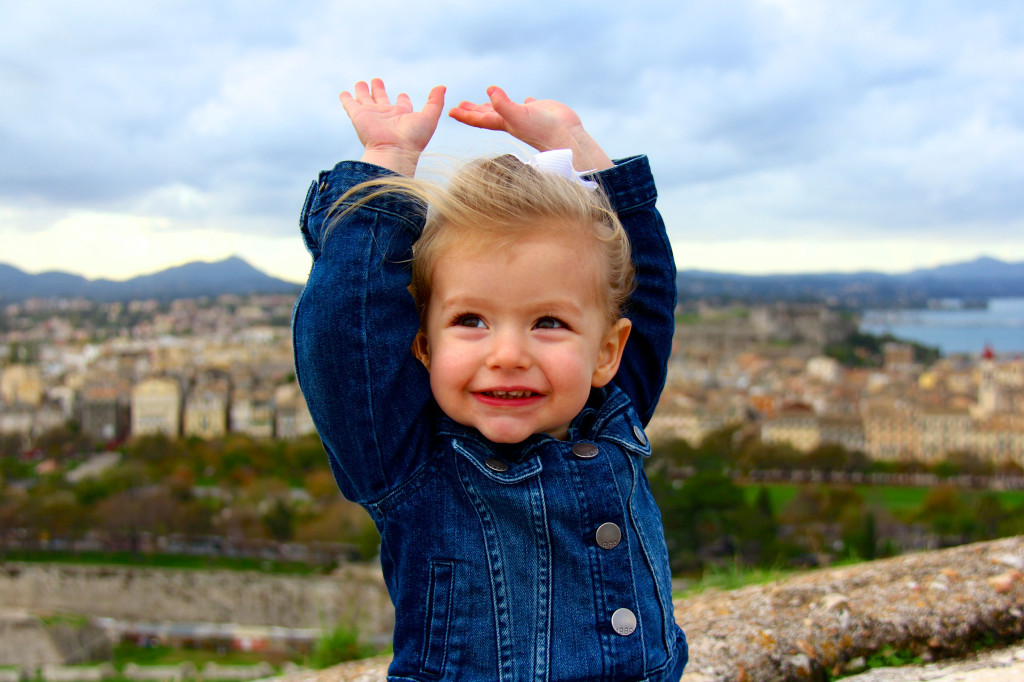
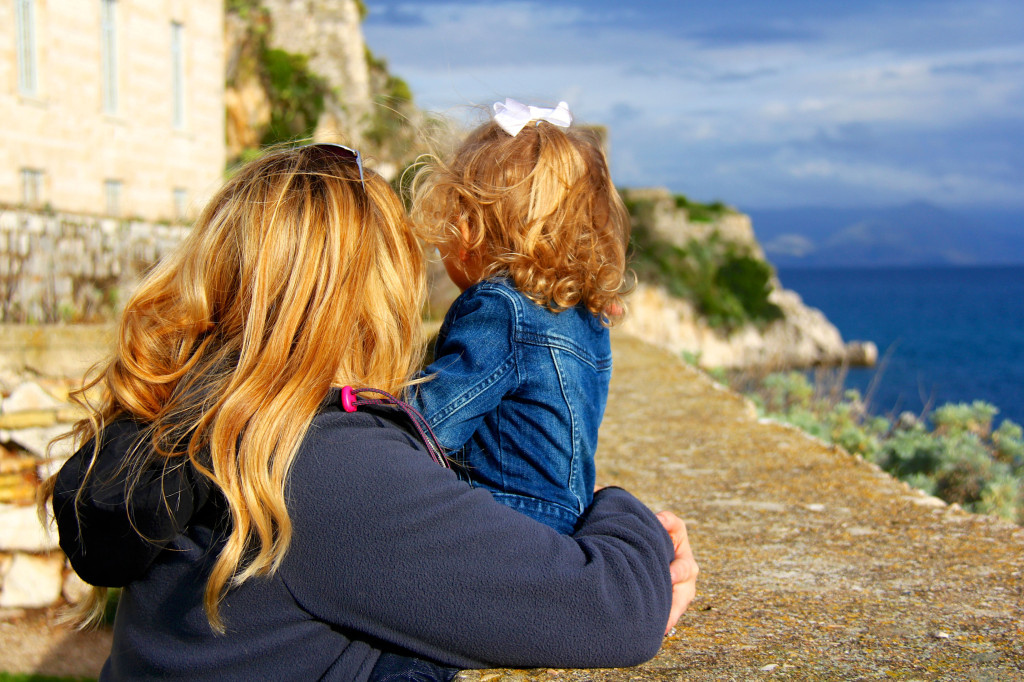
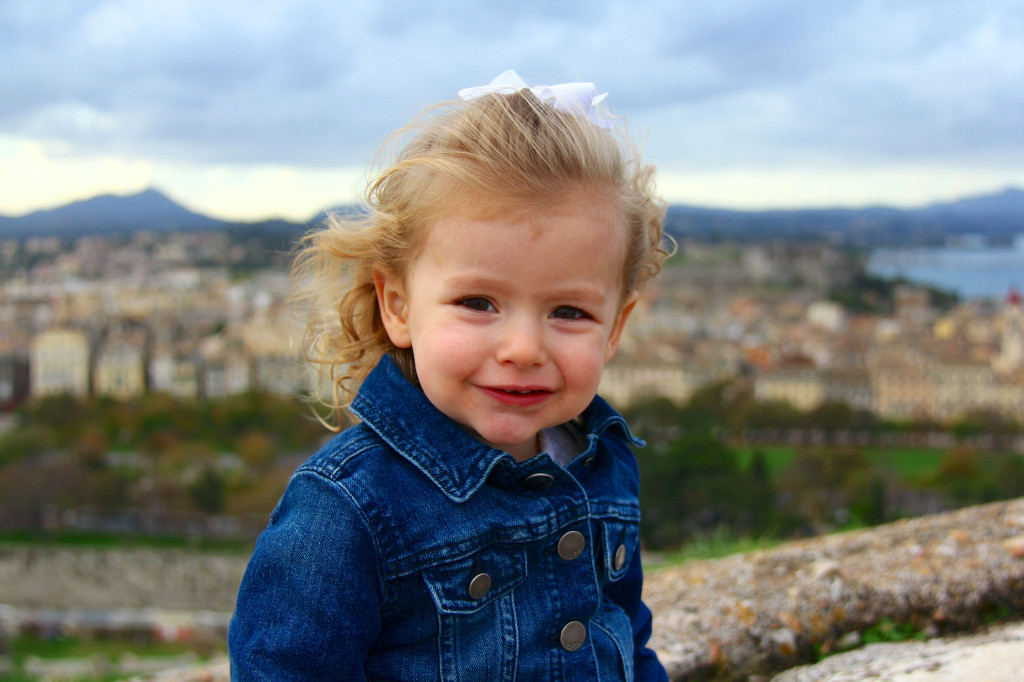
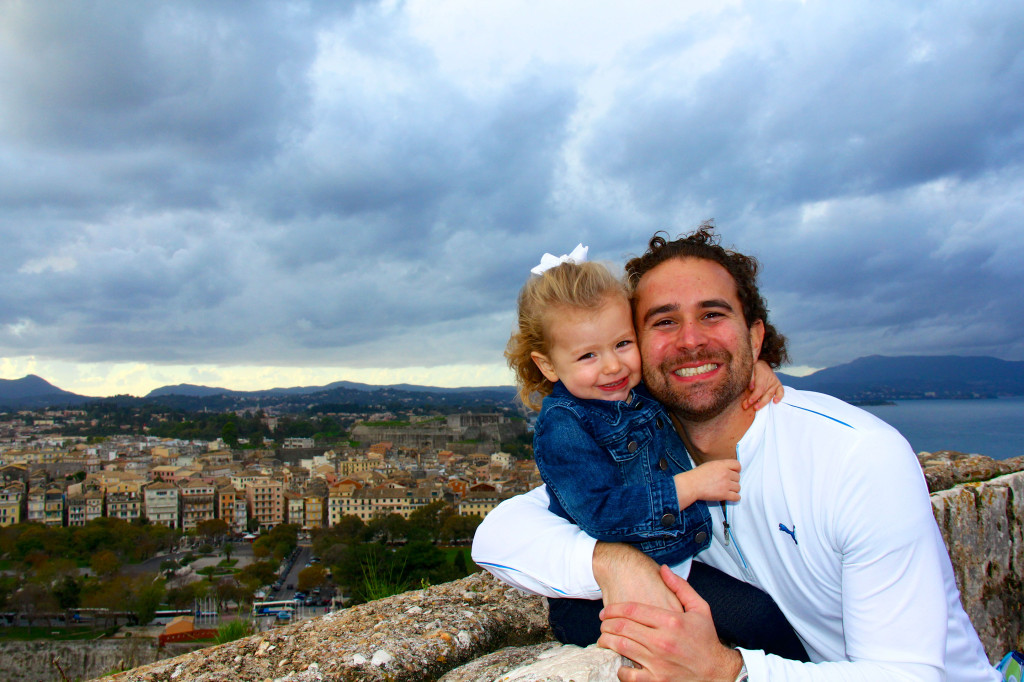
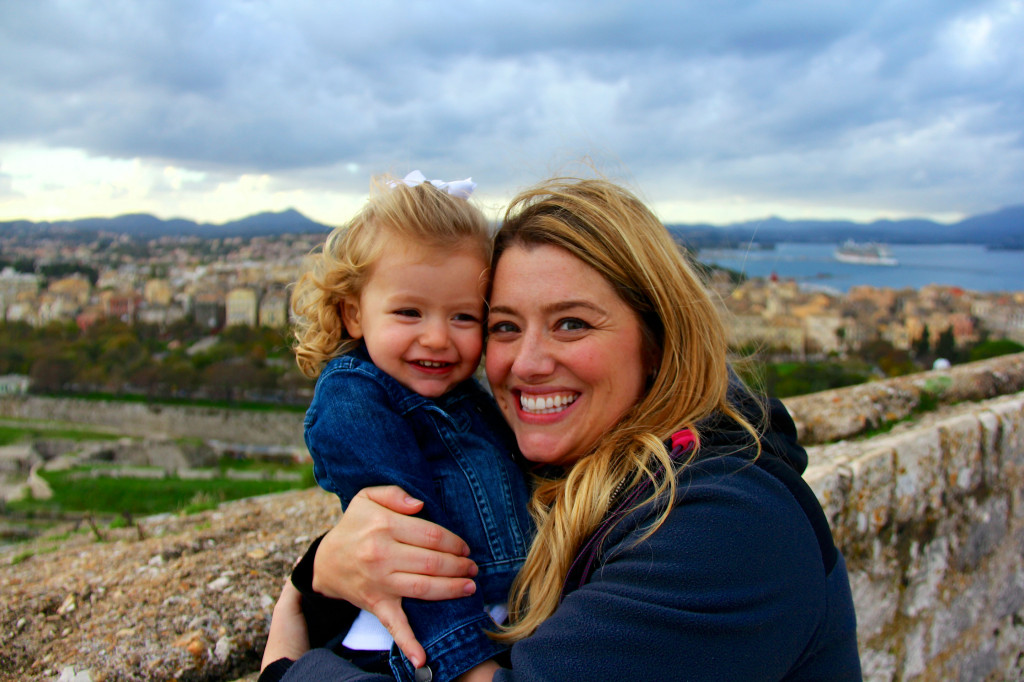
Strolling through the city streets and taking in the shopsThe city streets of ancient Corfu are full of charmWe walked past beautiful churchesWe came across Ava eating lunch with her familyOld Fortress (Παλαιό Φρούριο)The Old Fortress and church that was built on the grounds for the soldiersCrossing the drawbridge toward the Old FortressThe church and Old Fortress high atop the rocksJen and Julia stroll across a desolate stretch on their way toward the churchA view of the sea from the fortress wallsJen and Julia take in the viewFrom the top of the cliff, we had a great view of the city and our shipJulia sits along a fortress wall with Corfu in the backgroundShe gives me a big hugJen wanted to get in on that action
After a pleasant and rewarding day, we concluded our self-guided tour when we missed the last bus back to the ship, thereby closing the loop on our long walk by hustling back to the ship on foot. We were just moments away from getting back on a course of exploration throughout eastern Europe, just as I am back on track blogging. For any other HOC (House of Cards) fans out there, imagine me concluding this post with two quick raps of my class ring on the desk. Frank Underwood would be proud!
We recently had the most amazing vacation aboard Holland America’s Nieuw Amsterdam and I have had a wonderful time writing about it. I have discovered even more about each destination as I’ve researched them further and I have had the pleasure of reliving it all over again as I post the pictures. I hope that you’ve enjoyed your time aboard with us. Sadly, I will close this chapter of our overseas adventure and move onto the next story in an upcoming post. There is still plenty more to come in the blog pipeline…
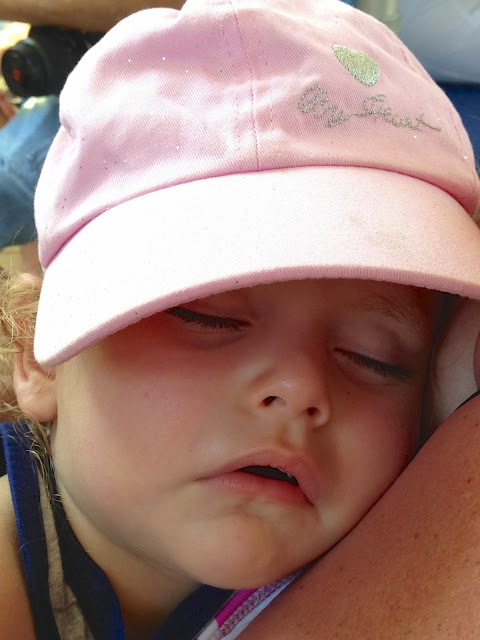
“Dad, wrap this up already – you’re putting us all to sleep!”
If you joined us thus far, you’ll know we visited Venice, Olympia and Athens in our first post and then Istanbul and Lesbos in the second post. The final leg of our cruise transports us to Kuşadası, Santorini and Argostoli. As always, we’ll include some of our shipboard life and hopefully you’ll be able to stick with me – I’ve got a ton of pictures in this final post.
When I last left you, we were sailing away from the Greek island of Lesbos and I was getting knocked out of a blackjack tournament final table with some unlucky cards. The only thing that could wash away that feeling of despair was some spiritual enlightenment. Sure, they have a chapel aboard the ship – but I think strolling directly from the casino into the chapel is the sort of thing that the Big Guy frowns upon, so I waited for our port the following day.
We woke up in Kuşadası, Turkey – a beautiful resort town on the Aegean coast; wonderful in it’s own right, but not our intended destination. We were set to visit, Ephesus – an ancient city with a plethora of historic treasures. There are two main spectacles to behold within the vicinity of Ephesus – the Ancient City itself and the House of the Virgin Mary. Since the terrain was difficult to access and far from the ship, we hired a private driver to bring us to the notable sites. We first started with the House of the Virgin Mary, arriving fairly early in the morning. This small home was said to be the final home and final resting place of the Virgin Mary, carried here to live out her final days by St. John, the Apostle. Our early arrival time did little to help put us in a tolerable position in the queue (yes, I just “British’d” it up). The house is both a Catholic and Muslim shrine (so… um, yeah – number one and two religions in term of size). Given that fact, the line would normally be long – but we happened to arrive on the most “holy” of days. The annual pilgrimage to the House of the Virgin Mary coincided with our visit and threatened to consume our entire day along with the thousands of other visitors cramming in to see a tiny house.
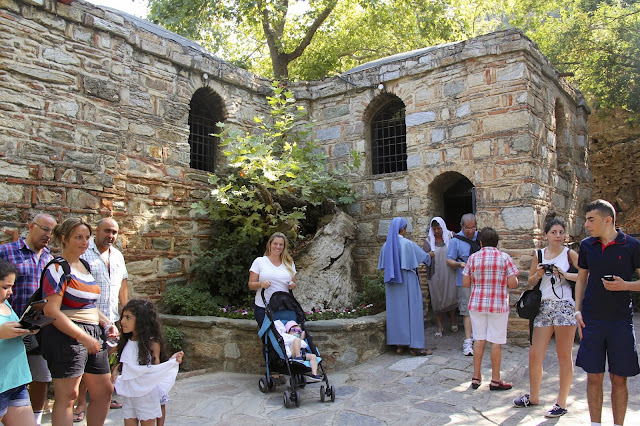
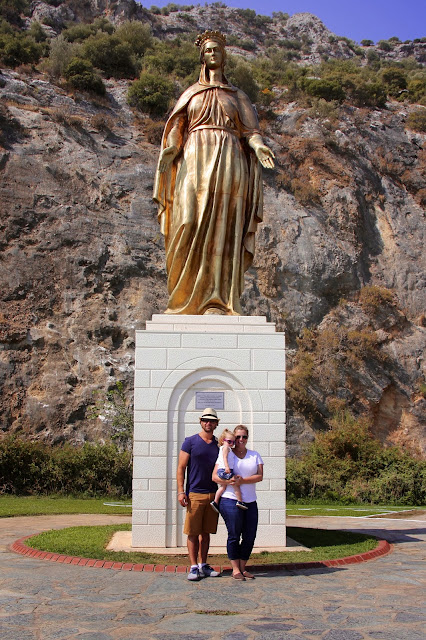
Jen and Julia in front of the House of the Virgin Mary
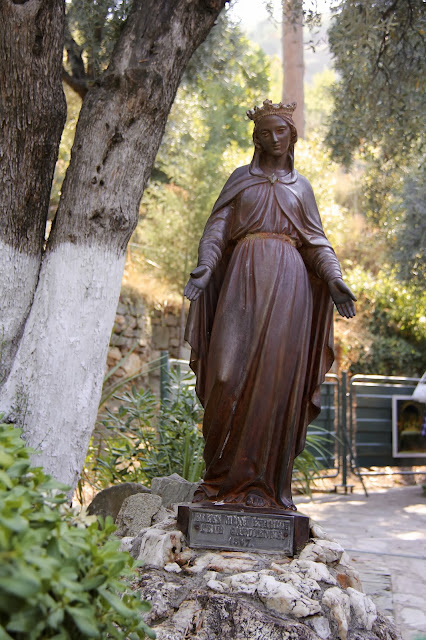
A bronze statue of the Virgin Mary welcomes all visitors
As spiritually enlightening as seeing a 150 sq. foot home could be (admittedly, this was more my wife’s gig than mine), I was not thrilled at the prospect of standing in line under the hot sun all day. I saw an alternative option and struck with military precision when the time was right. First, I set out on a reconnaissance mission to scout additional routes for people with strollers. Coming up empty handed in that department, I formulated a plan. When I returned to Jen and Julia standing in line, I uttered the following words verbatim; “follow me, don’t ask any questions, don’t stall and keep up with my pace”. You see, my wife is a perpetual “rule follower” and I am a habitual “rule breaker”. Her innocence often thwarts my plans for easy advancement – but I think she was on board this time; moving at a snails pace under a hot Turkish sun will cause any mother to want to move! We whisked past the crowds, through an outdoor church service and out the other end to a gate immediately in front of the house. It certainly helped that I was pushing a baby stroller and can dish a kind smile that I reserve for occasions like these. My little stunt saved us an estimated three hours (no exaggeration). Jen was pleased with my shenanigans for once… now maybe I can convince her to come over to the dark side.
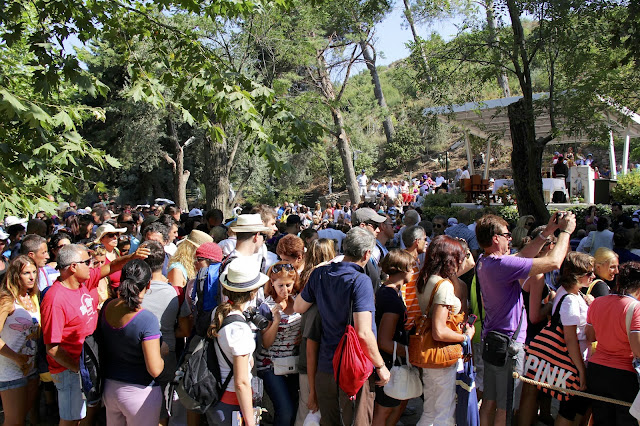
Just a portion of the long line that was making the annual pilgrimage to see the house
Mary would not approve of my behavior – I did have a baby to worry about though
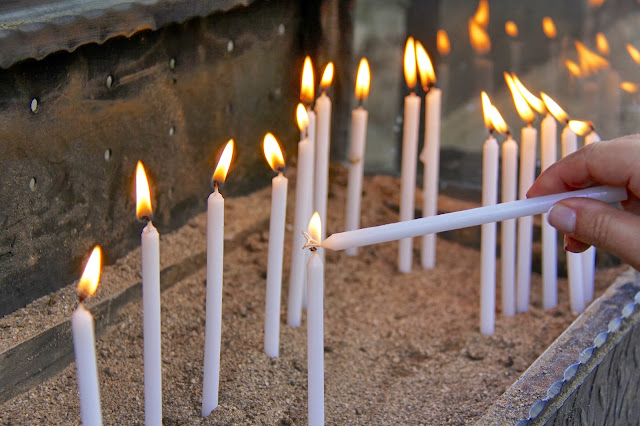
Jen lights a candle to ask forgiveness for my shenangins
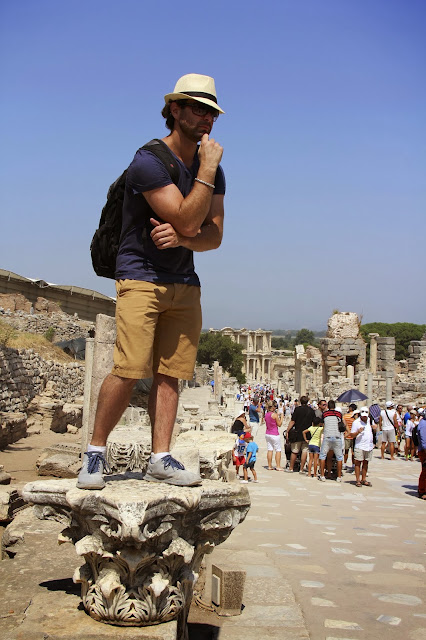
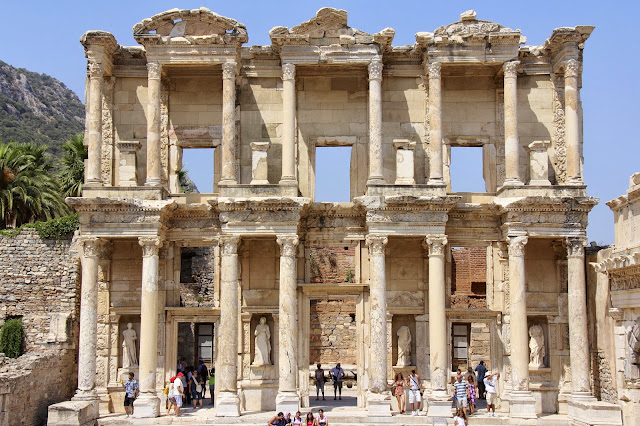
Our next stop was the the Ancient City of Ephesus. Artifacts excavated on site have proved that there were inhabitants in this area as far back as the Neolithic Age (6,000 BC), with consistent development throughout the Bronze Age and into the Archaic Period, when the city really began to prosper (650 BC). The city changed from Greek to Roman and finally into Turkish domain in 1304. Today, archeologists are constantly amazed by the plethora of treasures being discovered on a continual basis. The prevailing theory is that they have only unearthed a fraction of the city (a lot of major discoveries were made as recently as the 1970’s), but limited funds have slowed down excavation and restoration efforts. Some of the more notable discoveries are the Temple of Artemis, which is one of the Seven Ancient Wonders of the World and the Library of Celsus, which appeared on the Turkish Lira between 2001 and 2009.
We passed this large Virgin Mary on the way to the Ancient City
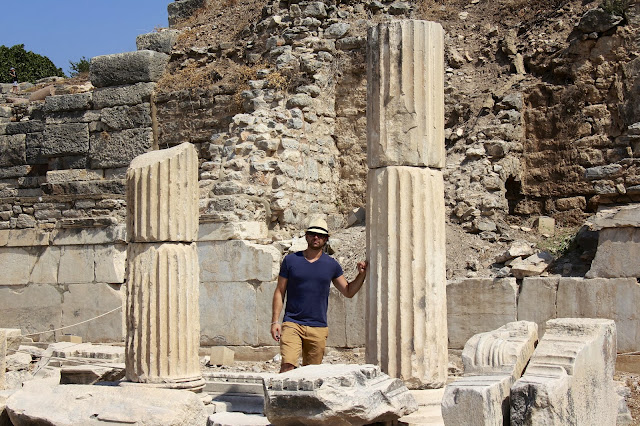
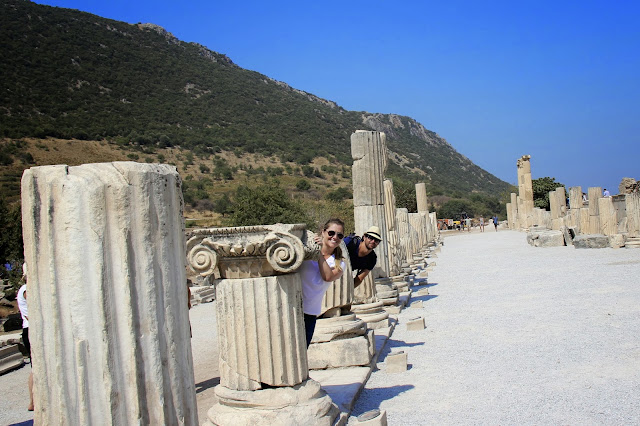
Standing next to the Basilica Stoa
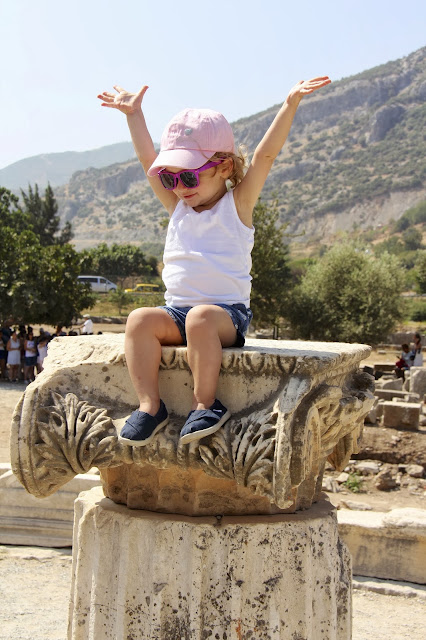
Julia decides to lead the tour for our little group
“Peekaboo!”
“Look at me!”
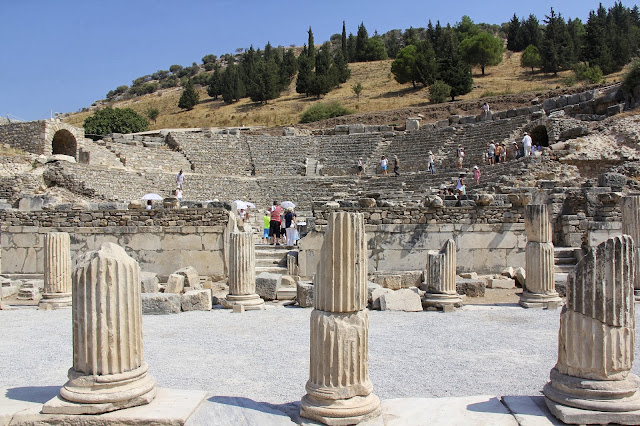
The Bouleuterion (100 AD) housed the meetings of the council
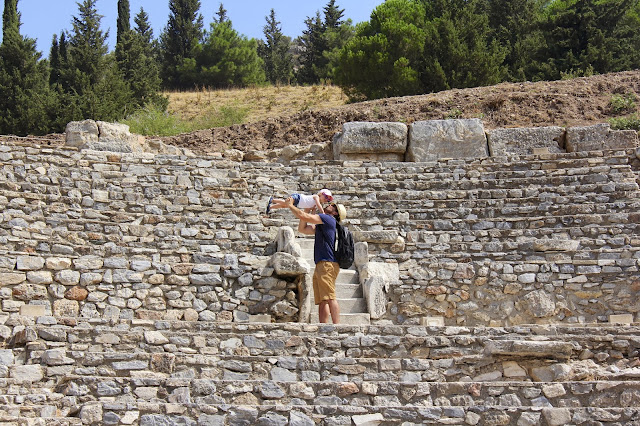
Julia and I hiked all the way to the top of the Bouleuterion
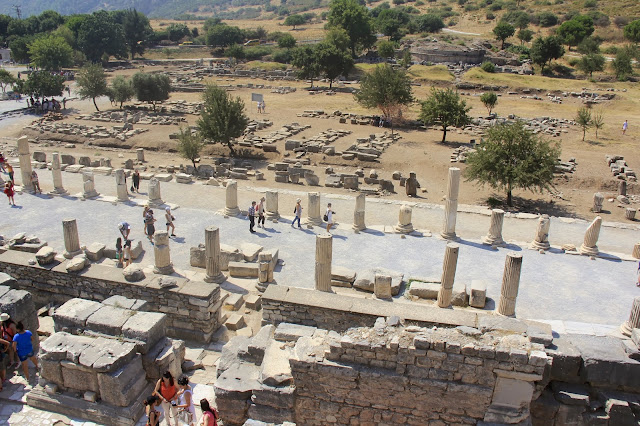
Street lined with archeological excavations
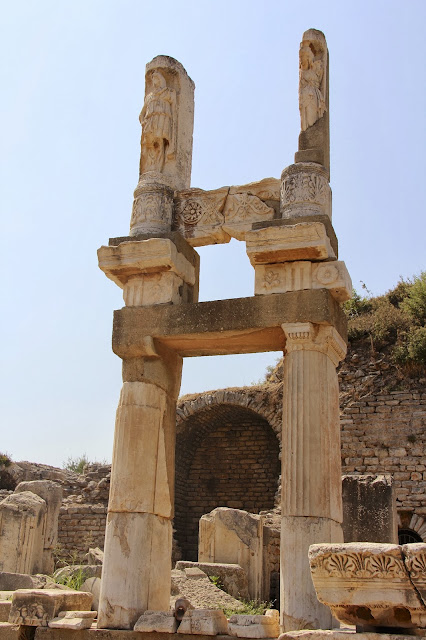
The Temple of Domitian (81 AD)
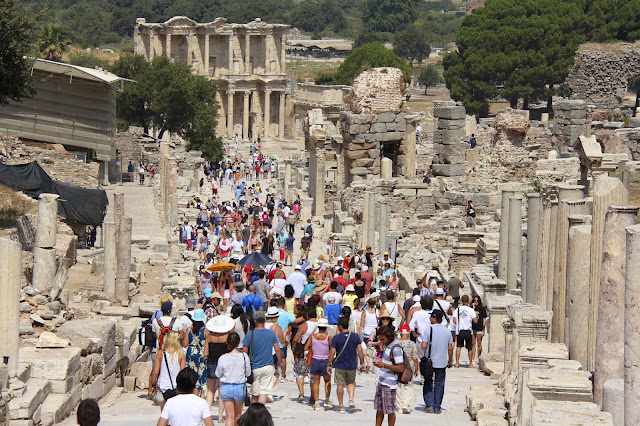
The Curetes Street – a main boulevard prestigiously equipped with marble paving and home to many boutiques
The Deep Traveler statue recovered in 2013 dates back to 1980 – Jen’s favorite piece
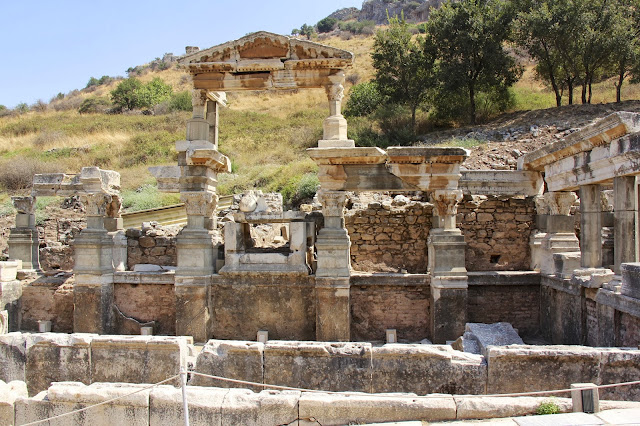
The Trajan Fountain (102 AD)
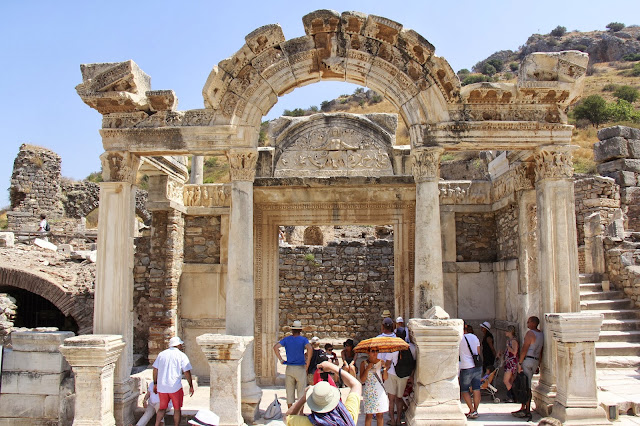
The Temple of Hadrian (138 AD) – one of the most stunning ruins along the Curetes Street
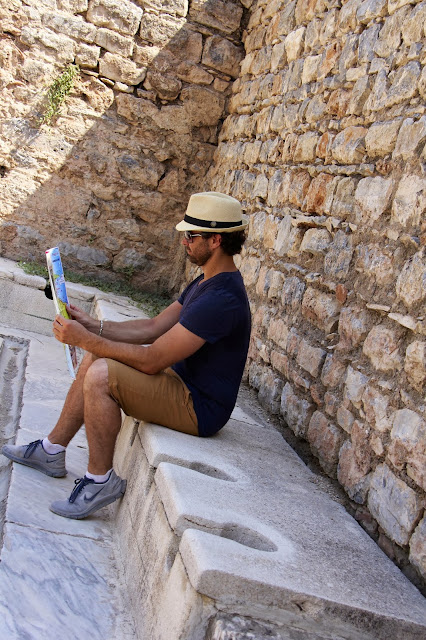
We discovered a seldom seen gem, the Latriana
Public latrines where residents would literally sit cheek to cheek
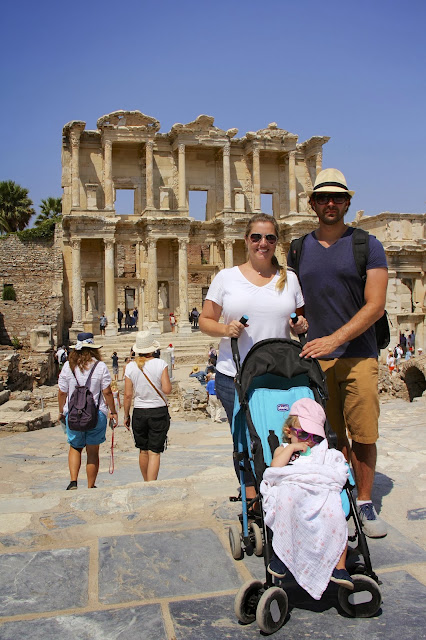
Family photo in front of the Celsus Library
Tiberius Julius Aquila commissioned the Celsus Library (110 AD) as a mausoleum for his father
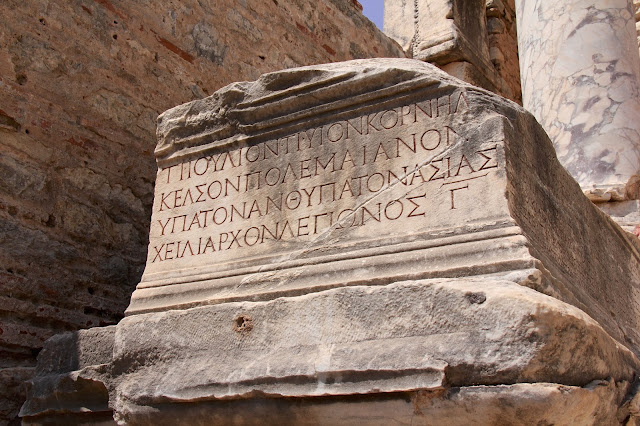
Column base with writing from Ancient Greek times
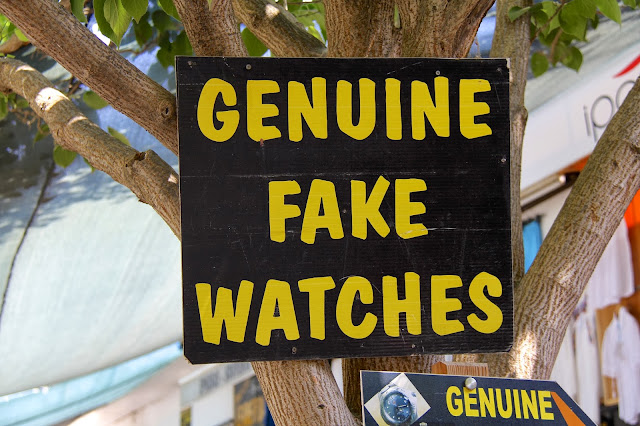
A market enclosed the exit gate of the ancient city – I happened to love this guy’s honesty
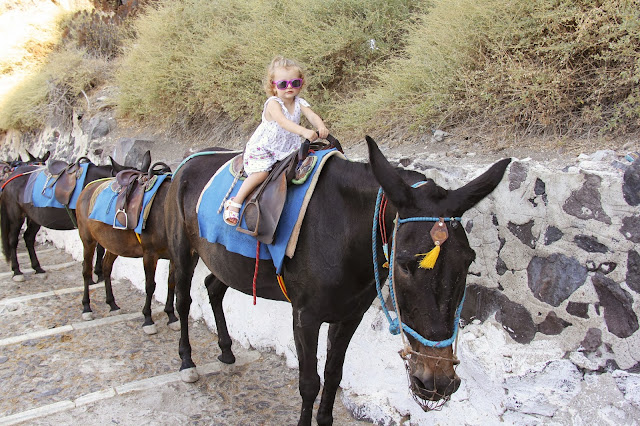
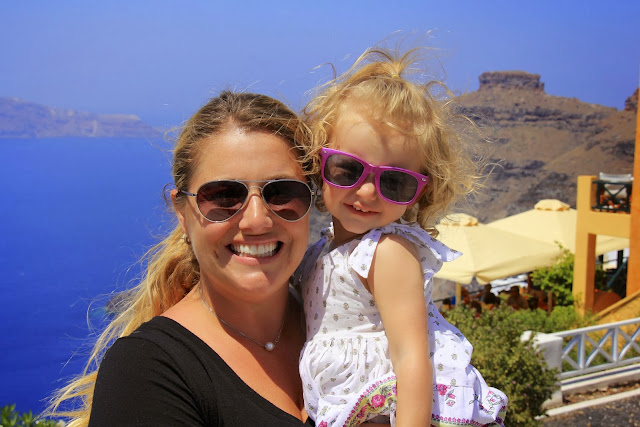
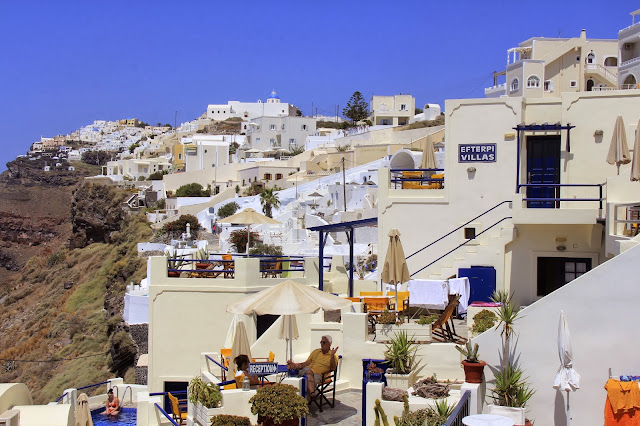
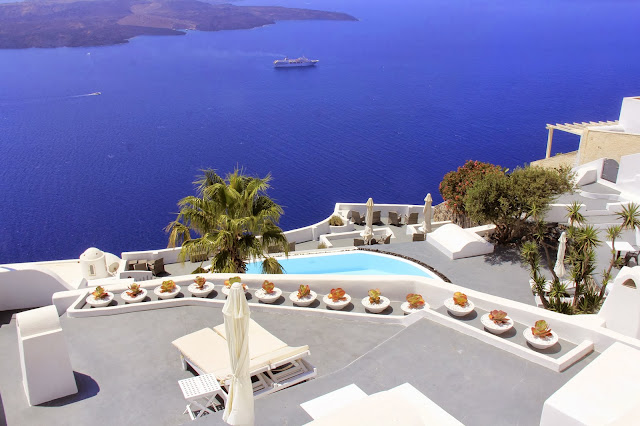
The next stop on our cruise was the port I was most excited about above all our other destinations – Santorini, Greece. Images of white homes with blue trim overlooking the Aegean danced in my head all night. Our wonderful Cruise Director, Anthony and Location Guide, Tom would televise a show about each port prior to our arrival. Through this in-room broadcast, I learned that Santorini (Σαντορίνη) sits perched high atop a cliff, with three ways to ascend. You can traverse the vertical 260 meters (853 feet) by climbing a difficult 580 steps (not ideal for couples with strollers) or you could opt to take the cable car for a fast and scenic arrival. Finally, you can chose to climb the absolute best way possible – by donkey!! Believe me, it was not easy to sell this option to Jen – but I never take “no” for an answer. We had an absolute blast climbing, laughing and trying not to fall off. I don’t think Julia has ever had so much fun in her life and I haven’t laughed quite so hard as I did to the shrieks of pure terror coming from Jen. The donkeys climb the pathway unassisted and will [at times] pin you against a wall while they wait for the overcrowding of ascending and descending donkeys to clear. All in all – a wonderful experience.
“eehh-aaaww!”
“You want me to carry you AND you’re baby?!”
The guide helps us on – that was the last we saw of him, this donkey was on autopilot
And w’ere off
Julia wanted to take a turn on her own
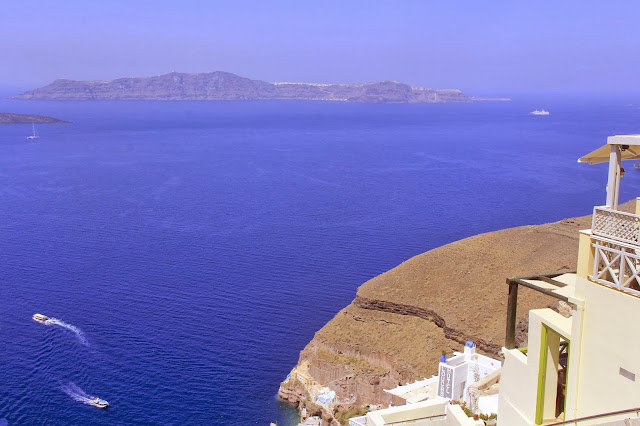
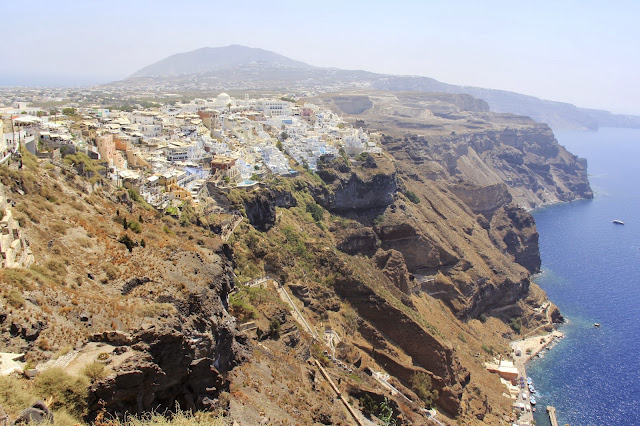
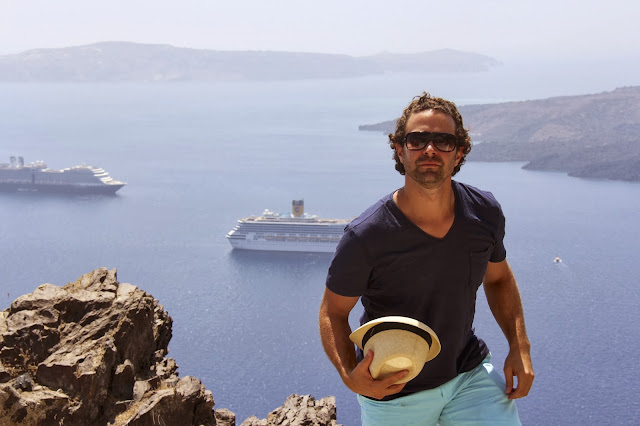
Santorini is an island unlike any we’ve ever seen. First of all, the entire complex of islands was formed by a volcanic eruption over 60 million years ago. The city today is essentially what remains after a more recent volcanic explosion in the modern age (this area is the most active volcanic area in the South Volcanic Aegean Arc). Santorini is financially supported by the bustling tourism industry; not surprising as ours was one of three cruise ships waiting patiently off shore for the tenders to bring passengers back and forth. In fact, Santorini was the only port to provide their own tenders – much larger boats than any cruise ship could provide in order to bring more people ashore quickly. It is actually quite smart of them to recognize that opportunity.
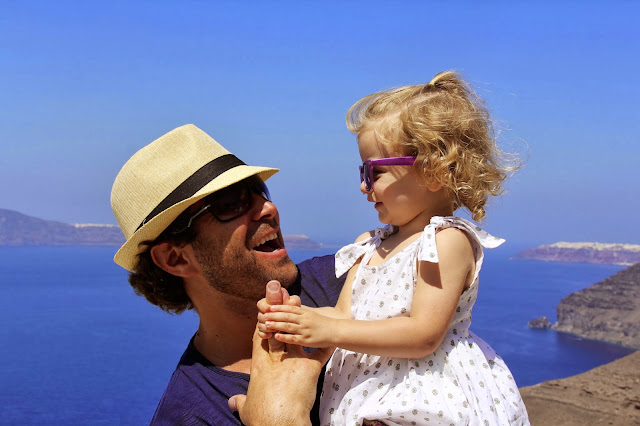
Horsing around with daddy
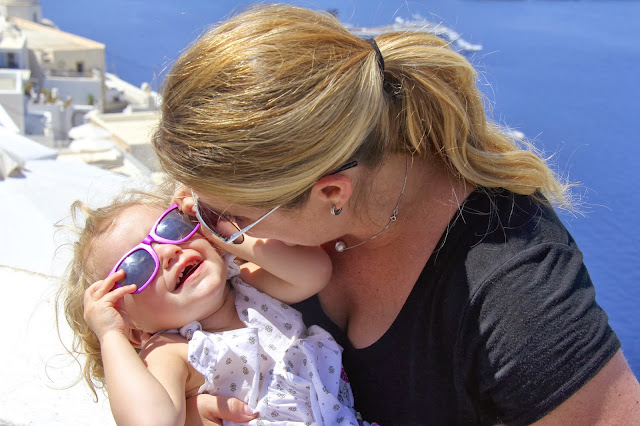
And then mommy
The blue ocean was simply magnificent
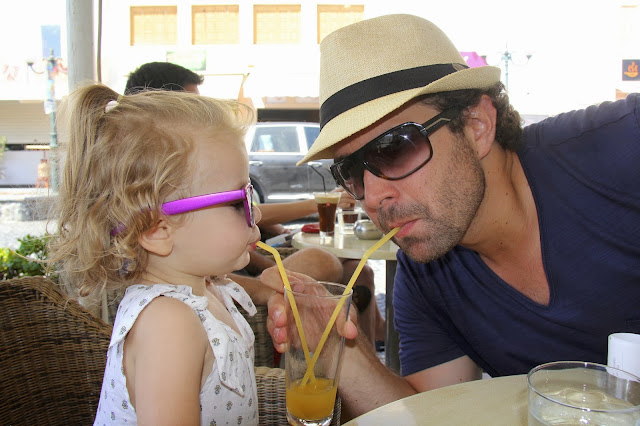
Julia is kind enough to share her drink with me
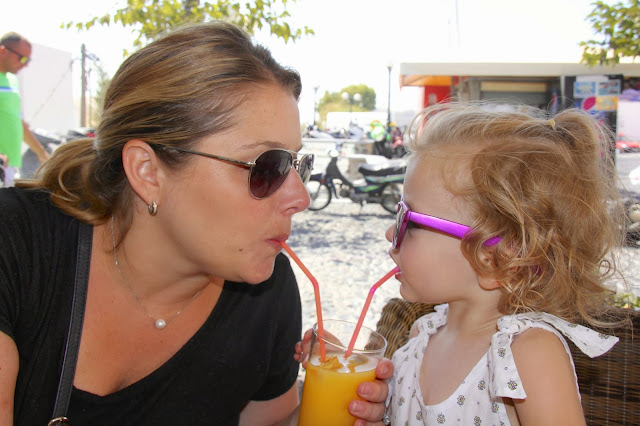
As well as her mother
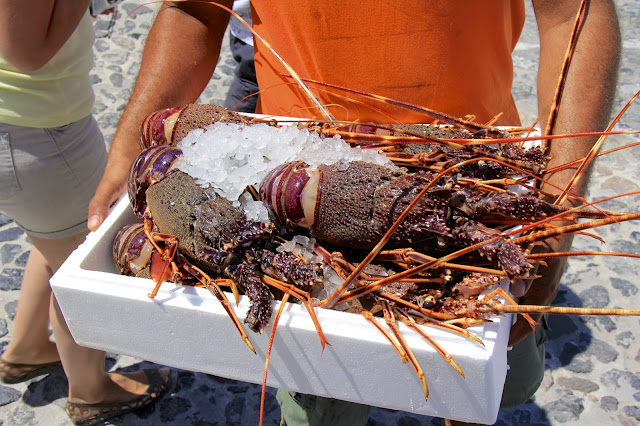
This guy was selling freshly caught lobsters – look at the size of those beauties
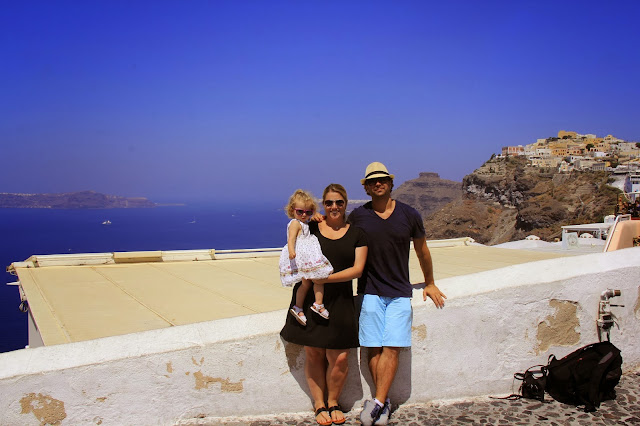
Family photo
My two girls
Santorini
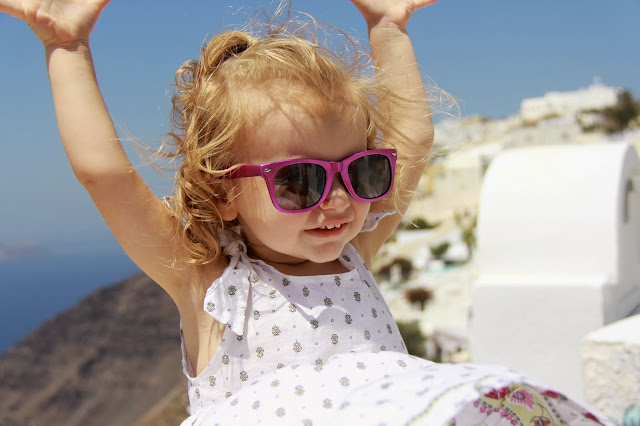
“I love this place!”
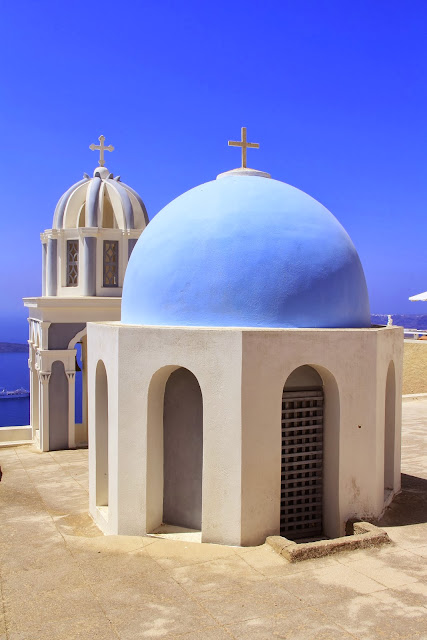
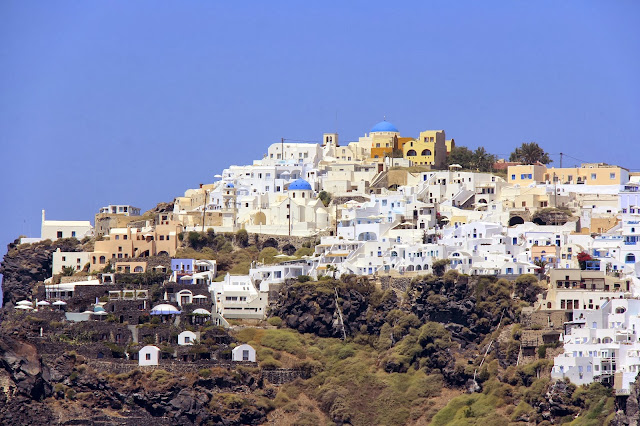
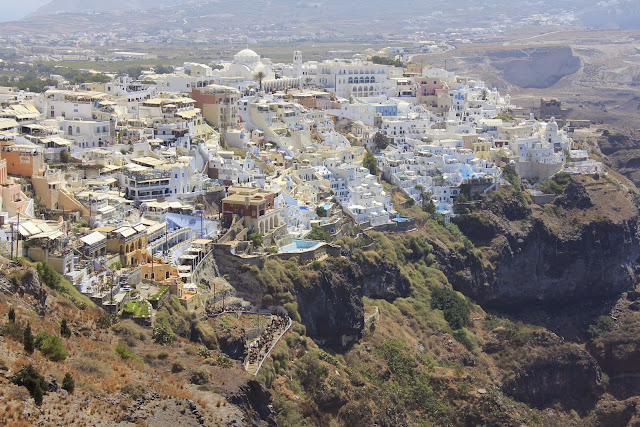
The blue domed churches were exactly what I envisioned
Some of the resorts offered stunning views – of all our ports, we want to come back to Santorini the most
A city unlike any other
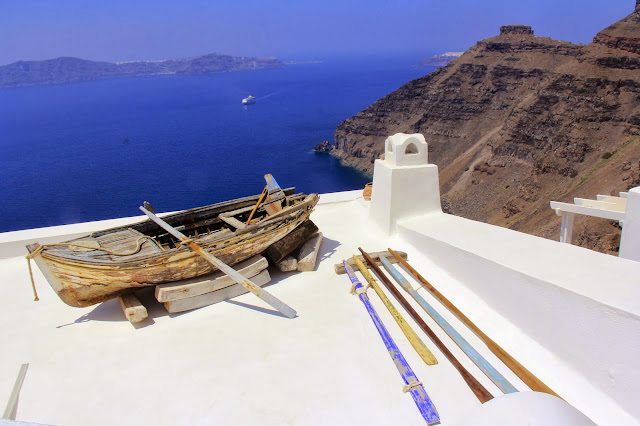
I thought this was a great “artistic” shot – I was later validated when I saw this image in a travel magazine
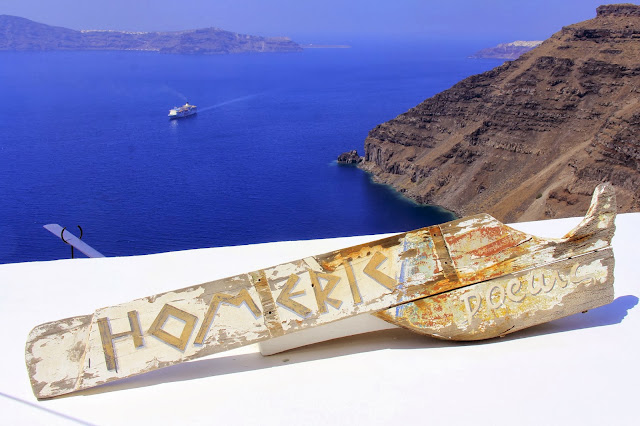
From Homer’s Odyssey?
Here you can really get a sense of the volcanic caldera upon which the city was built
The white houses and blue domed roofs were just as promised
Climbing up a portion of the volcano – just off the beaten path
Jen covers Julia from the sun
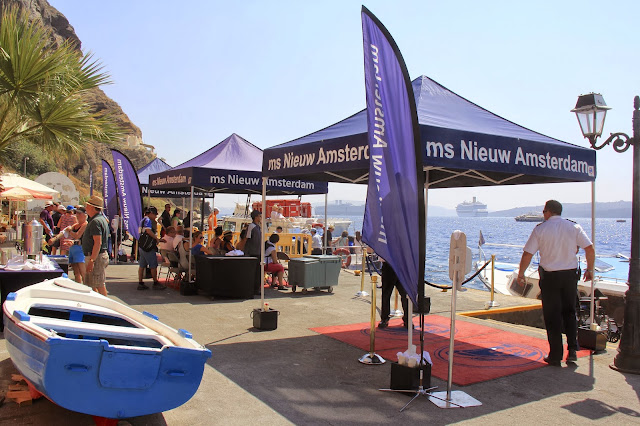
#HollandAmerica would have these amazing reception areas at every port before re-boarding the ship
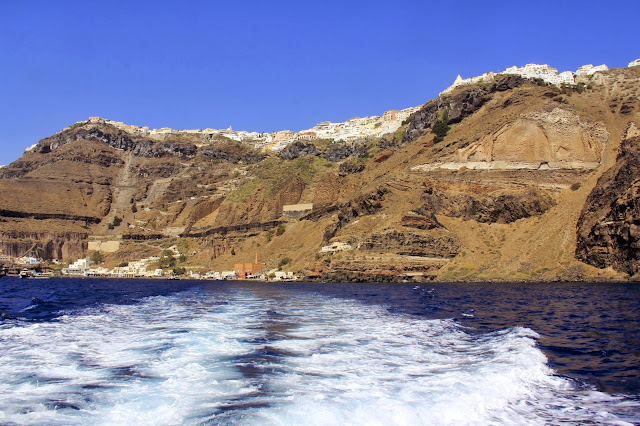
Sailing away gave you a true sense of the grandeur of the island
After Santorini, we saw the end of our cruise approaching quickly. I think we both somewhat dismissed our final destination, since neither of us had heard of Argostoli, Greece (in fact, when we woke up at port Jen proclaimed, “Oh! We have another stop?!”). Quietly dismissing Argostoli (Αργοστόλι) as, “just another stop” was foolish since it turned out to be one of the most pleasant days we experienced. The island is one of the larger of Greek Isles and was has the pleasure of hosting gorgeous beaches.
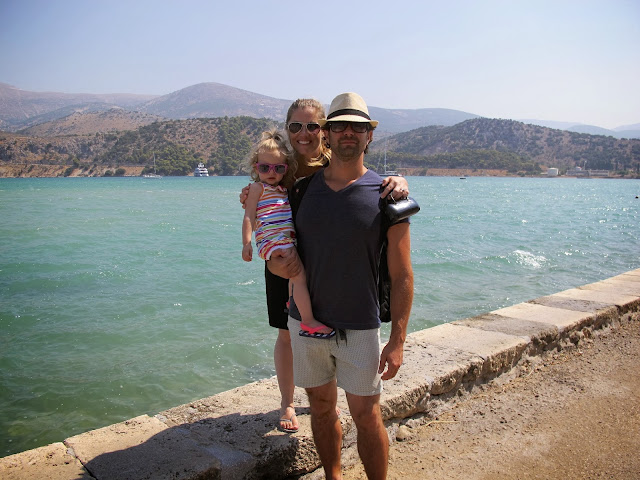
Family photo in front of the aqua-green waters of Argostoli
We passed through a brief section of woods before arriving at the beach
The beach opened before us like a butterfly spreading it’s wings for the first time (too much??)
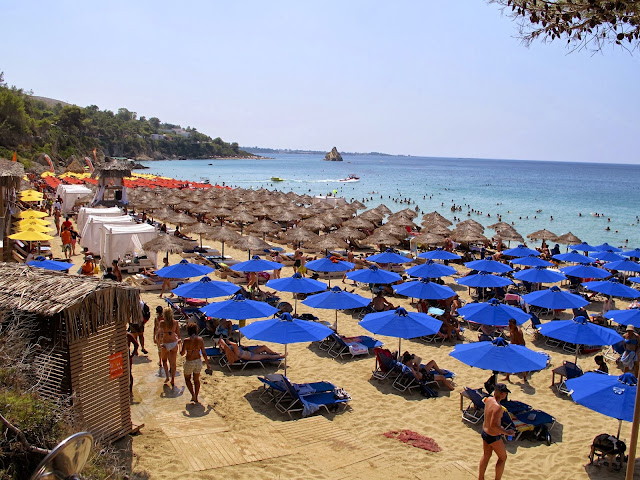
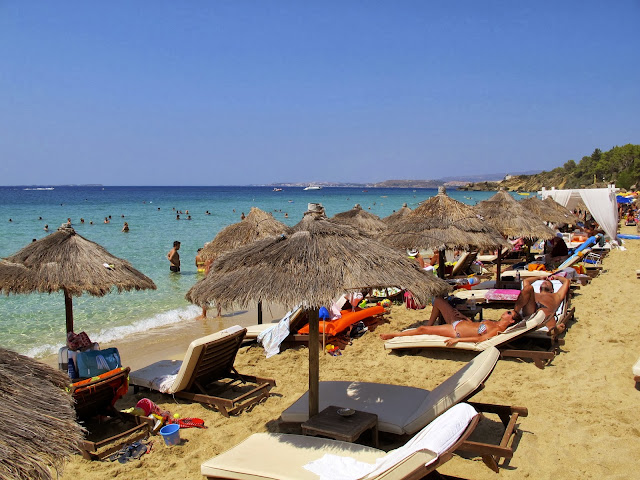
You can never go wrong when you can rent straw beach umbrellas for the day
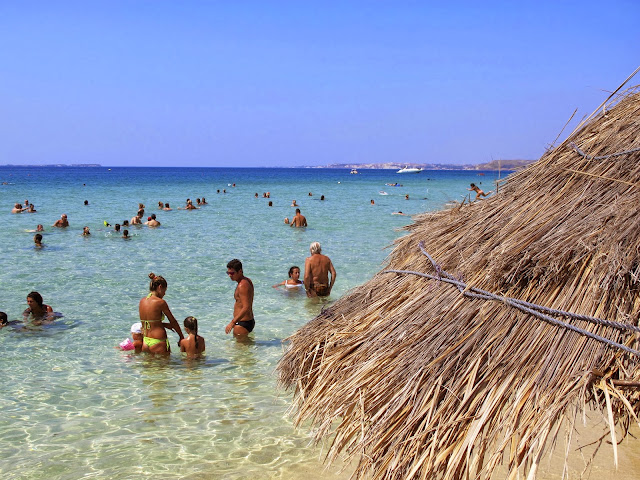
There were tons of people in the warm water
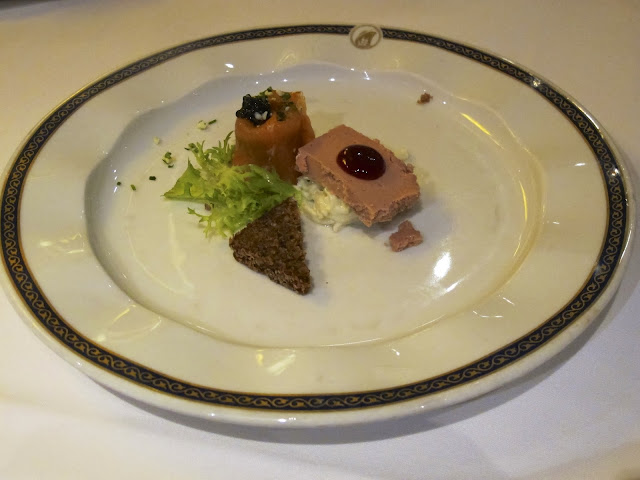
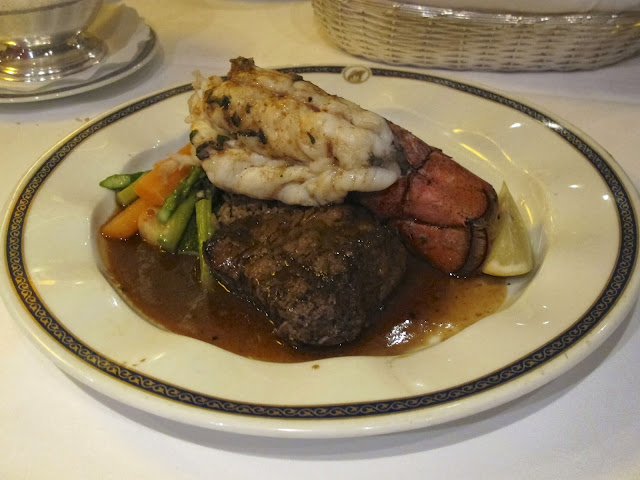
When we pulled away from Argostoli, we had one final “formal night” aboard the ship. Holland America went all out for this final night and served lobster tails and filet mignon in many of the ship’s restaurants.
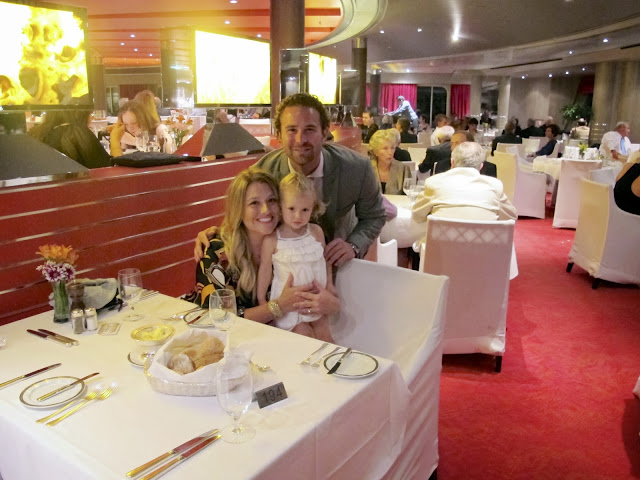
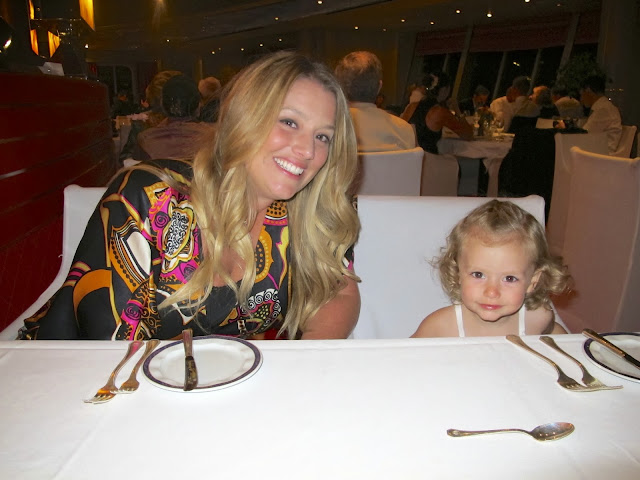
Family photo in the Manhattan Dining Room on the formal night
Jen and Julia get ready for their meals
We started with foie gras
We each ordered surf and turf
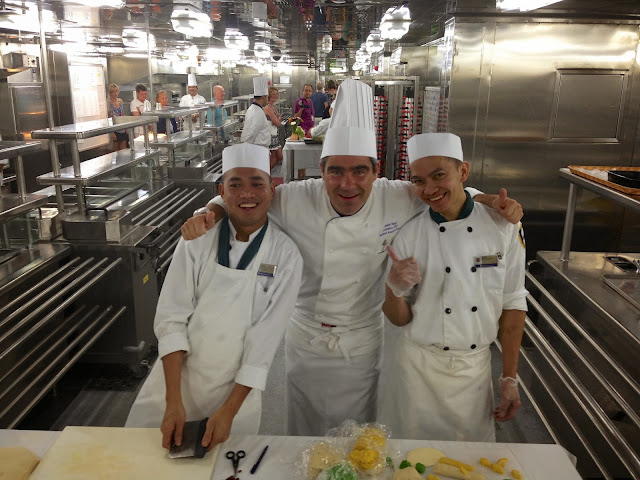
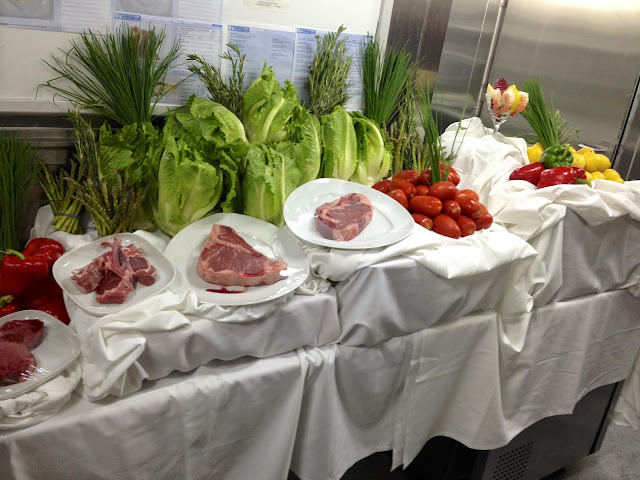
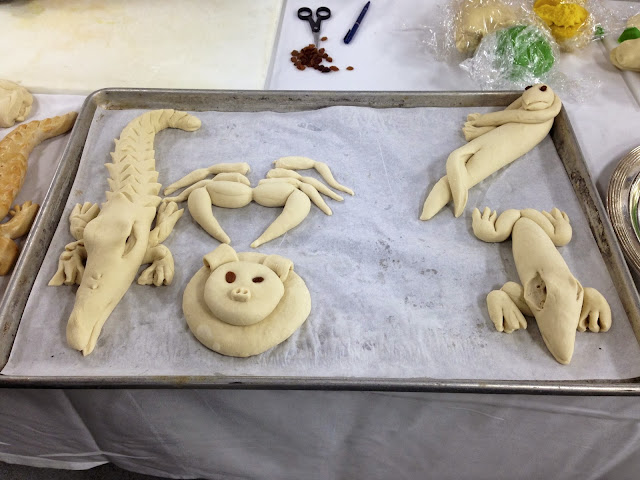
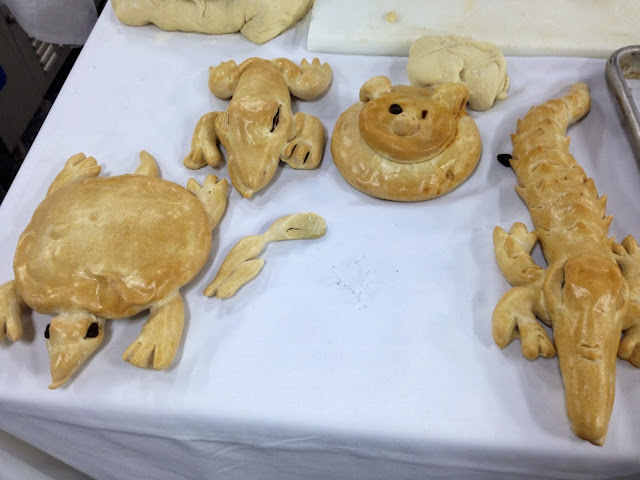
The last day aboard was a sea day and so the world was our oyster. As always, there were plenty of activities to keep us entertained. One activity in particular caught my eye – a behind the scenes tour of the Nieuw Amsterdam’s amazing kitchen. We got to walk through their massive, industrial kitchen and I learned a few interesting facts about our ship. A kitchen crew of 150 individuals prepare food for 223 service staff to serve the guests each day. Each week 11,830 lbs of meat is consumed aboard the ship. A fact that I thought was staggering until I learned that 1,675 lbs of butter is also consumed each week (yuck – heart attack)! The tour was wonderful and the crew gave Julia one of their display crabs made from cooked bread dough.
The Executive Chef, Daniel Hergic poses with two of his chefs
A display of some of their finer beef and lamb
The form of their “bread-animal” displays before they were cooked
And then the final product. Julia got to keep the crab (the missing gap in the middle)
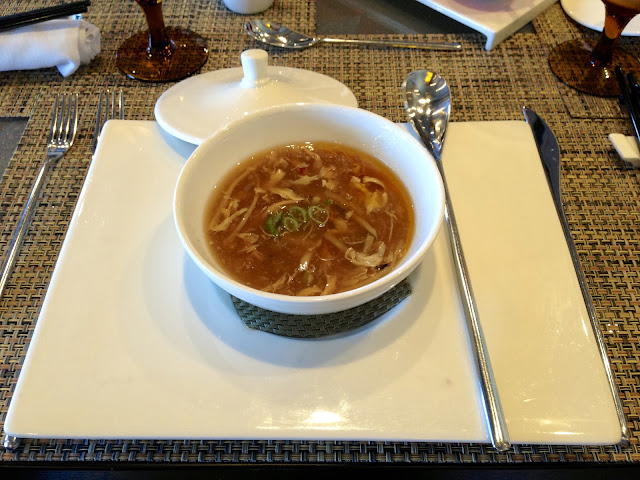
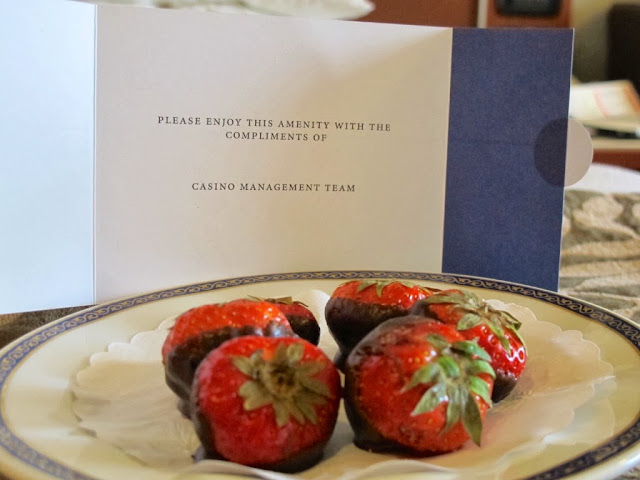
Included in the cost of most cruises is unlimited food at a variety of restaurants (casual dining, poolside dining, room service and the main dining rooms). Many cruise ships also offer the option to pay a nominal fee for more specialized dining (usually between $15 – $35/pp). On our previous cruise, Norwegian Cruise Line had a Japanese steak house complete with hibachi show. On our last day aboard the Nieuw Amsterdam, we decided to try two of the three specialized restaurants. We had a lunch of dim-sum in the Tamarind Restaurant, an upscale Asian specialty restaurant and then finish our cruise with a celebratory dinner at the Pinnacle Grill, a five-star steakhouse. Our last dinner was made even more special when the casino sent a bottle of wine to our room prior to dinner and then another one to the table as we dined! What a wonderful way to cap off the most amazing vacation of our lives.
We started with a hot and sour soup
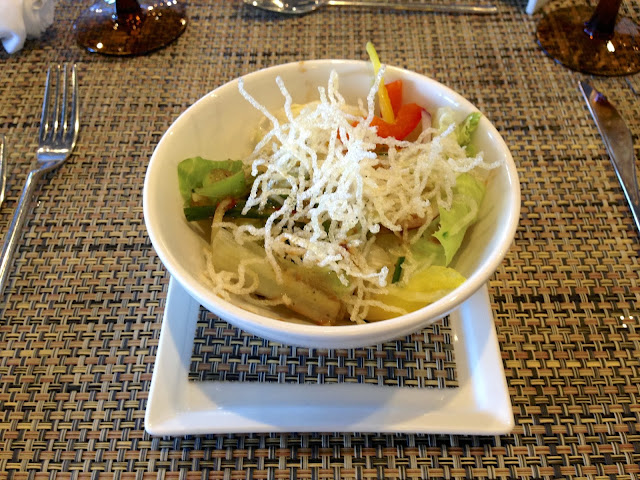
Asian Herb Szechuan Sesame Salad
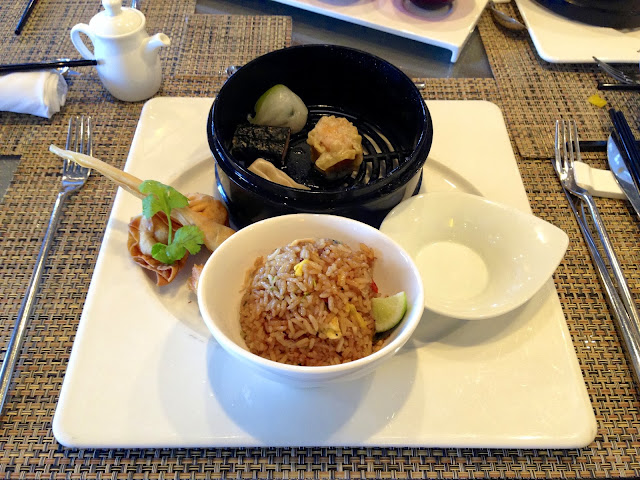
Steamed classic dumplings and a mixture of items from the wok, paired with fried rice
Later that night, at the Pinnacle Grill…
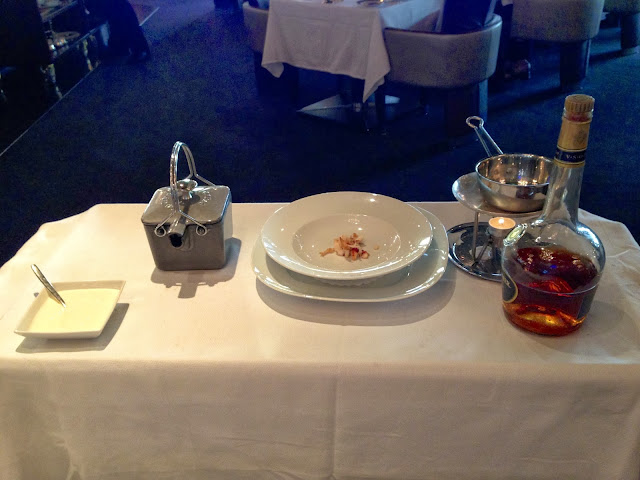
Jen started with a lobster bisque made tableside
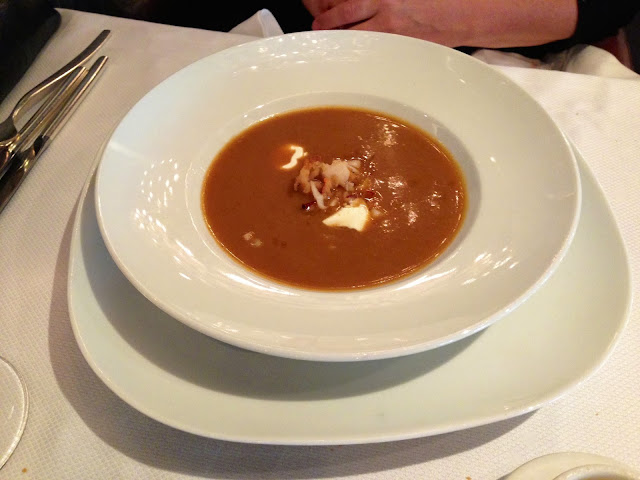
Lobster bisque with crème fraîche and aged cognac
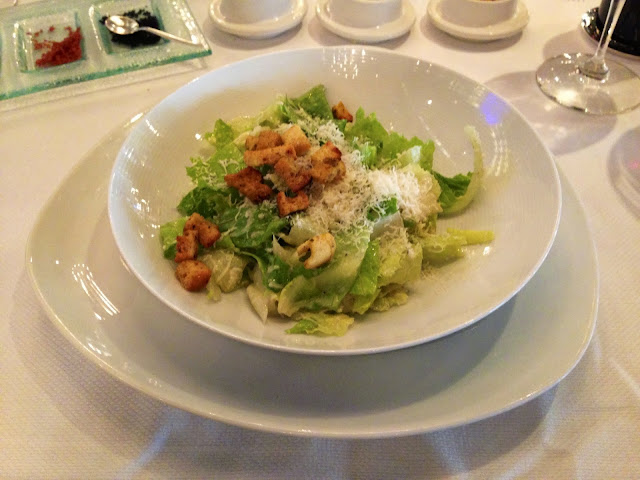
My caesar salad with homemade dressing, grated parmesan cheese, garlic croutons and anchovies, prepared tableside
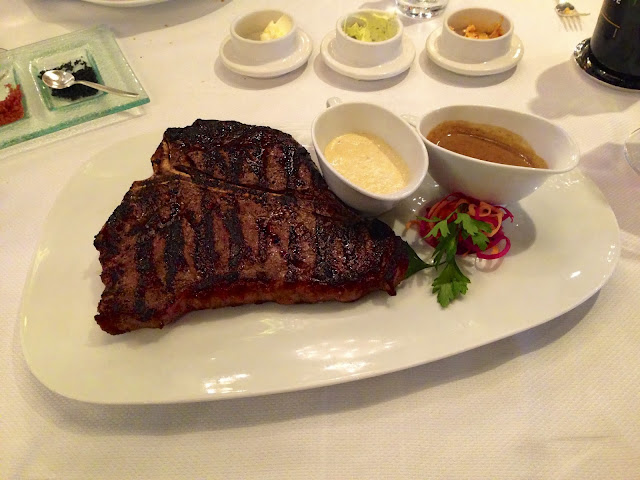
My porterhouse with horseradish-mustard and master chef’s green peppercorn on the side
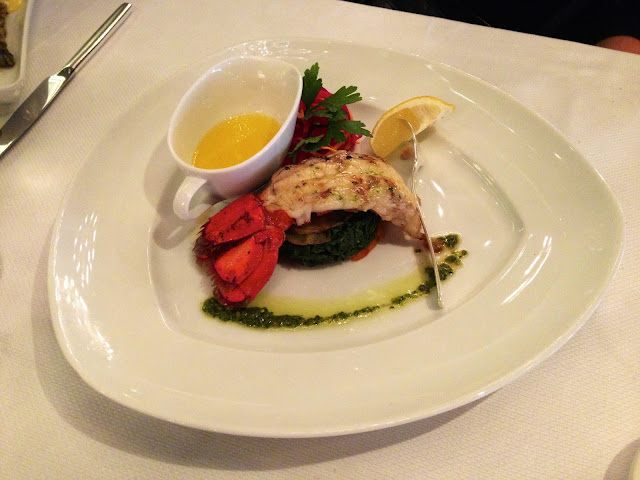
Jen ordered the lobster tail on a bed of wilted spinach and arugula, with “mango-churri” pesto sauce
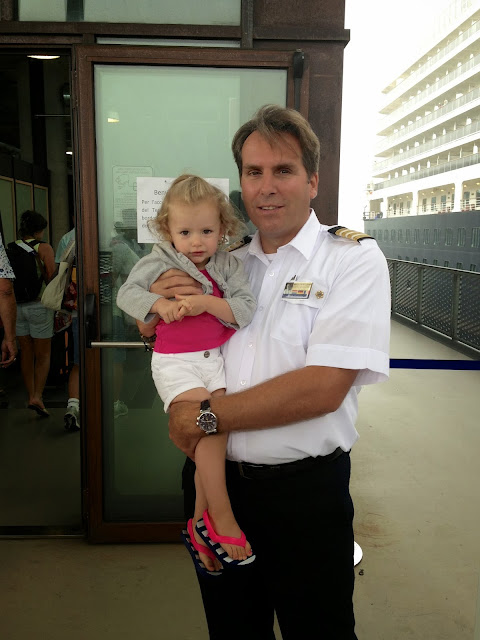
Julia thanks Captain Edward G. van Zaane
Thank you Holland America for hosting us and thank you for reading all about it!
In my most recent blog post, we embarked on a cruise throughout the Mediterranean. I’d love for you to continue the adventure with us as we head to Istanbul, Turkey and the beautiful Greek island of, Lesbos. I’ll finalize our voyage in an upcoming post that will include the final ports of call and some more stories about our shipboard life.
“Oh, tell me… tell me all about it!”
When I last left you, we had visited Venice, Olympia and Athens. By this point in the cruise, we really hit our stride and had fully immersed ourselves in everything Holland America’sNieuw Amsterdam had to offer. We were overeating delicious food (and then trying to work some of it off in their state-of-the-art gym), spending time in the casino (maybe too much time… literally every casino worker knew me by name), taking in shows and making friends all over the ship. We found a couple of other families with small children, but for the most part – we were in the minority (not fitting into your typical “cruise-goer” demographic). I’ll tell you what… if you ever want affirmation about your kids cuteness – go on a cruise with thousands of grandparents missing their grandkids. They were all so happy to pay us compliments about Julia that it made us excited to take her anywhere on board.
Julia made friends wherever she went
She gained a large following of fans
That grew the longer we were on board
Midway through the cruise, we arrived in Istanbul, Turkey. This was to be the only port mid-voyage that had an overnight stay, allowing us two days to explore the massive city. To describe Istanbul as “massive” is underselling it. The city boasts a population of nearly 14 million people in the urban area alone and is ranked as the second largest city in the world ranked by population within city limits [source]. It is the only city in the world that stretches across two continents (Europe and Asia). Istanbul is home to over 3,000 mosques and welcomes nearly 12 million visitors each year. These are just a few of the fun facts about this amazing city, so yeah… massive really undersold it! If only there was some sort of book… kind of like a dictionary… that would give you alternate versions for specific words…
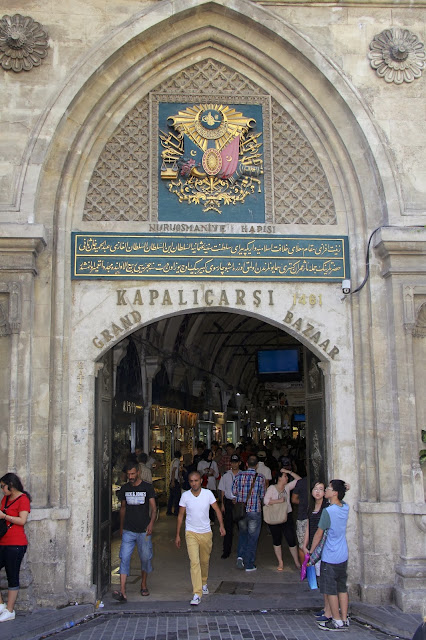
When we got off the ship on the first day, we took a bus directly to the Grand Bazaar. This location was ideal, because it would afford us the time we wanted to shop and then walk around that particular area of the city. We walked through the gates of the Grand Bazaar and our mouths dropped. I still remember the first time I went to a flea market. My great aunt Barbara took me to a market in New York when I was 8 years old. I was awestruck by all the amazing things that could be found with just a little looking. She bought me a brand new GIJoe Cobra Stun vehicle that I probably still have in a basement somewhere to this day. If I could reconstruct that image of my first market in my mind, with all my boyish enthusiasm and multiply it by a hundred – it couldn’t reach the level of awe I found myself in as a man standing in the Grand Bazaar. You can even factor in the fact that I had a wife repeatedly telling me, “I’m ready to shop – make sure you have plenty of Euro’s handy” weighing on my mind!
Main Gate of the Grand Bazaar
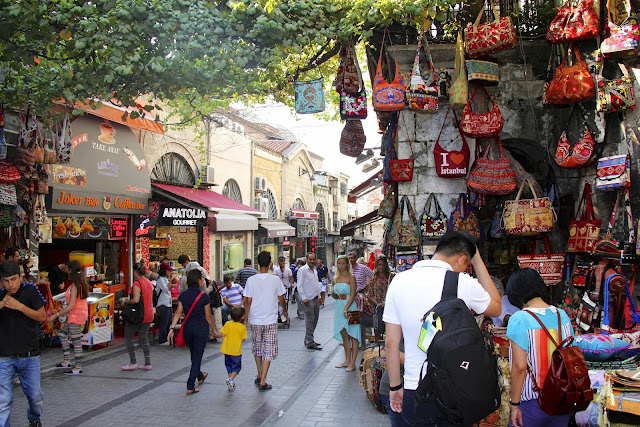
Shops extend around the outside of Grand Bazaar
The Grand Bazaar is like nothing we’ve ever seen. It is an enclosed market that ranks among the oldest in the world. 61 city streets house 3,000 shops that eagerly accept the money of up to 400,000 visitors every single day. This does not include the open air markets that have been built around the Bazaar and dominate many more city streets. Originally, each shopkeeper was allotted a 6′ or 8′ dolap (stall) in which to showcase their wares, the finest of which were kept hidden in drawers. The market was erected after the Ottoman Empire between 1455 and 1460. It reached it’s final form in the 17th century and not much has changed since. The main reason for the collective, enclosed space were to prevent against theft, fire and uprising. Even though the Turkish Lira is the currency of the country, merchants accept US dollars, Euros or Turkish Lira.
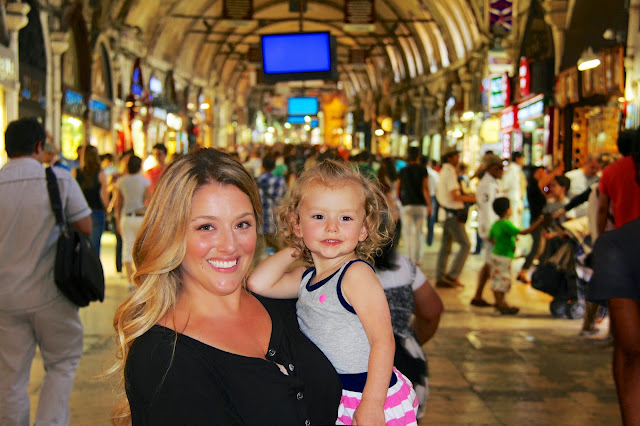
Jen and Julia enter the Grand Bazaar
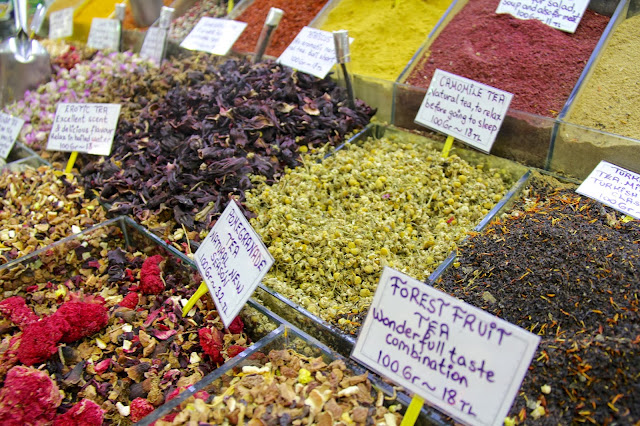
Some teas for sale
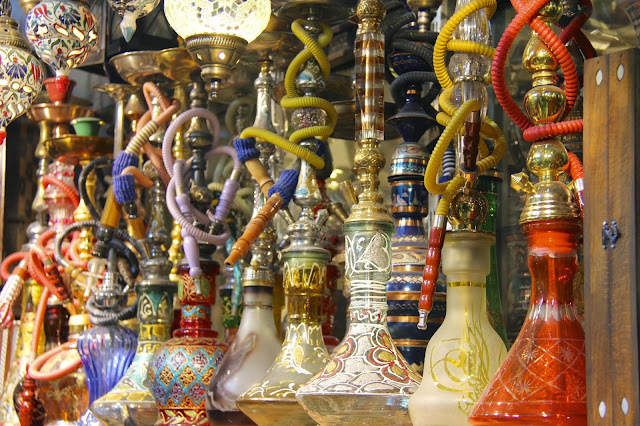
The Turkish nargile (hookah) became popular during the Ottoman Empire
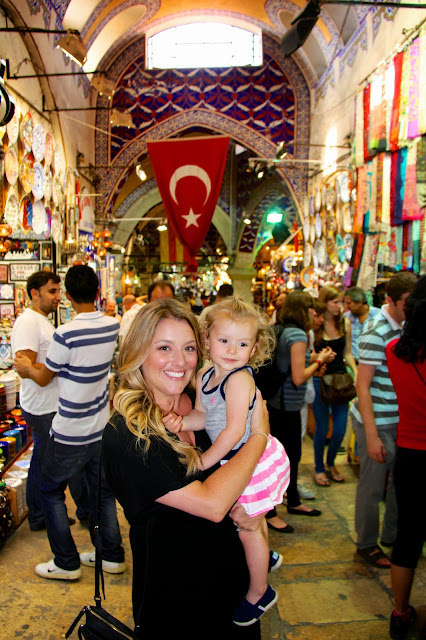
Jen and Julia with a Turkish flag behind them
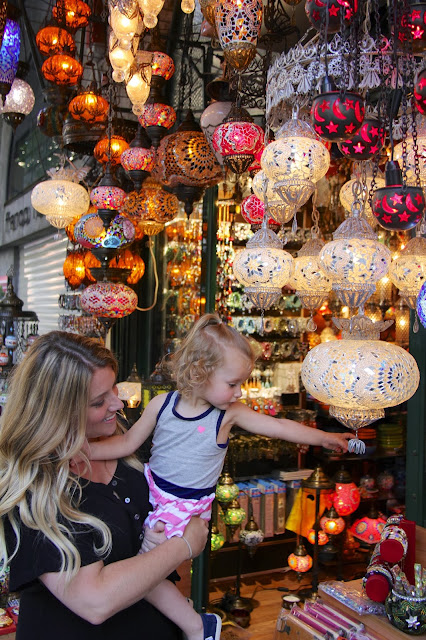
Julia was fascinated with the beautiful lamps
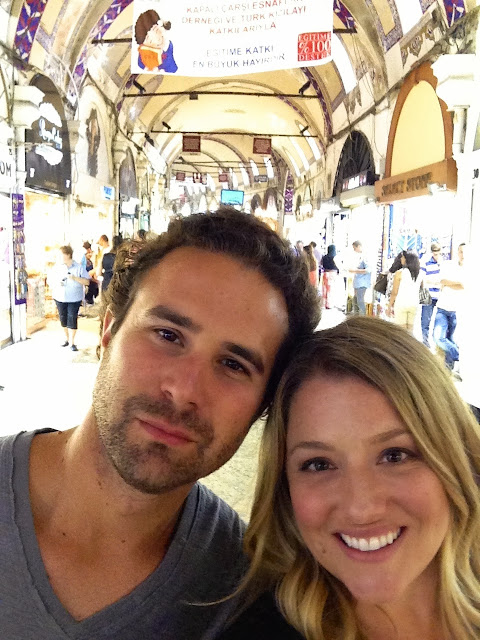
Jen and I pause for a picture in the market
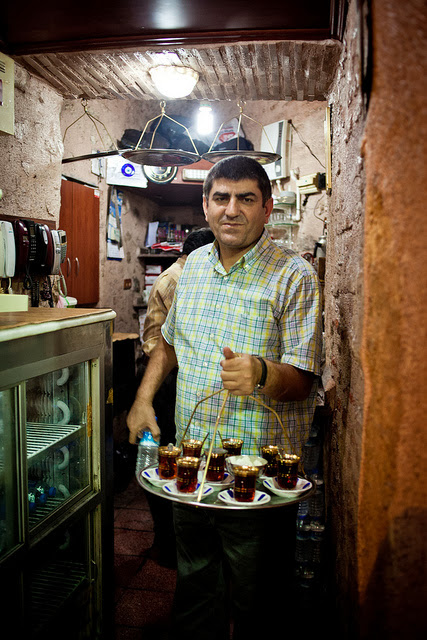
We didn’t notice any food vendors or restaurants inside the Bazaar – it turns out, the merchants have been bringing their lunches in boxes called sefertas for hundreds of years. However, they can get simple dishes like döner kebabs delivered right to their stalls (although, it’s more common for one of the merchants to bring back lunch for the entire shop). What I did notice quite a bit (and became somewhat fascinated with) was the bustling tea delivery business. Turkish tea is a huge part of the culture throughout the country. Tea is most often consumed in Turkish households – offering it to guests is a part of Turkish hospitality. It’s no different in the Bazaar; the custom of drinking tea blends the important tradition hospitality with the other main component for drinking the tea – the social congregation of men. Tea runners (as I was calling them) would skillfully whisk past the crowds and deliver un-spilled tea by balancing the cups on a tray with a long handle. What fascinated me the most was that I never saw any money exchanged for the tea. I imagined the tea runners marking how much tea a merchant drank and collecting on the tab at the end of the week. I have searched the internet to prove or disprove my theory of a “tab” system – but I could not find anything. Any Turkish merchants or Tea Salesmen reading this – please weigh in.
Guys like these would run all over the market, delivering tea
*photo credit – flickr: photographer unknown
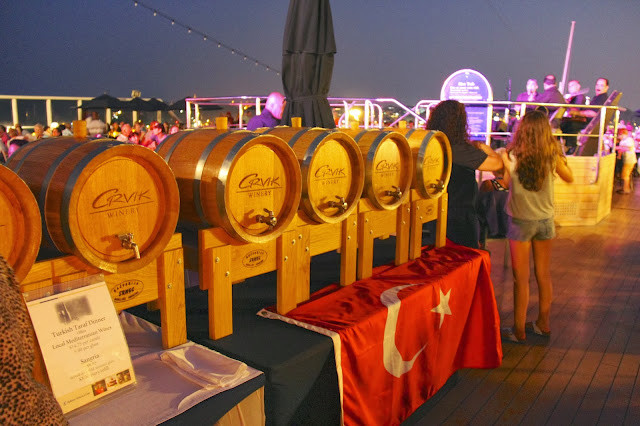
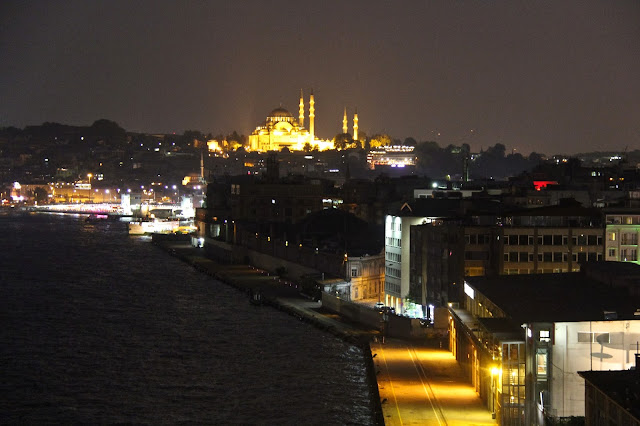
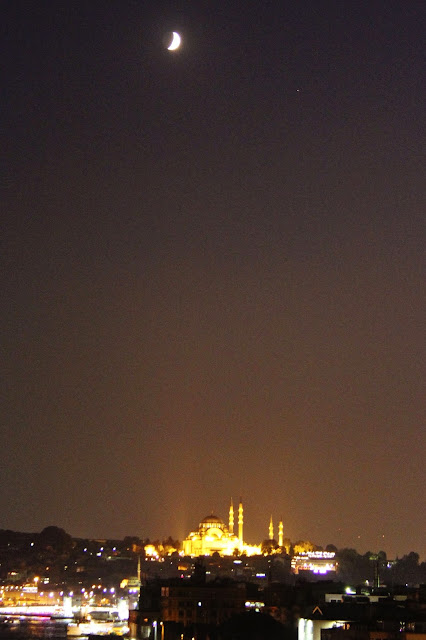
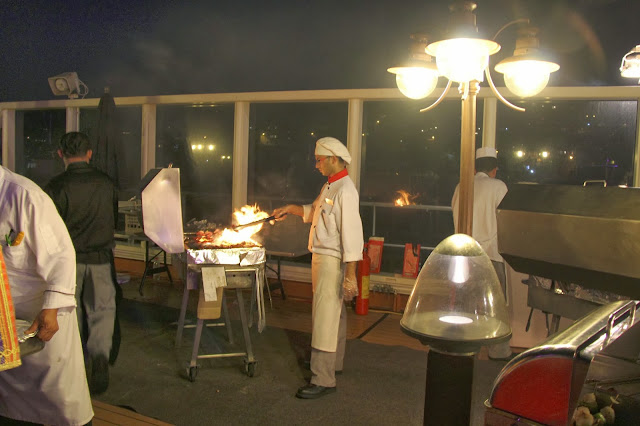
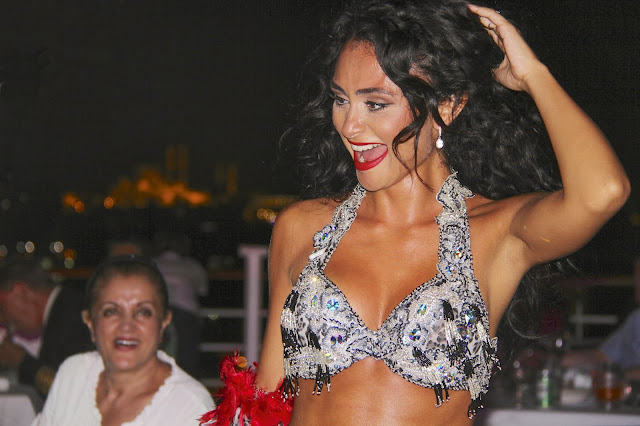
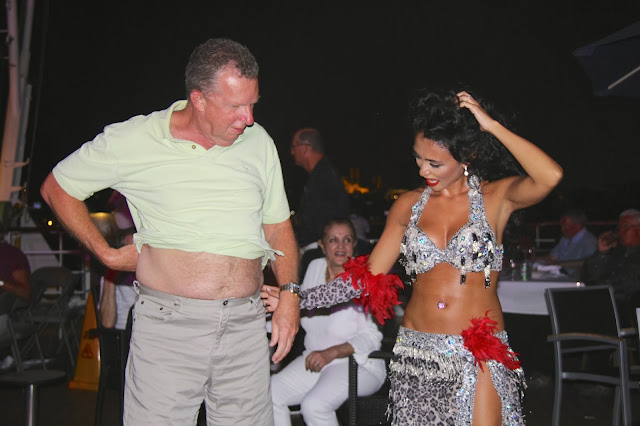
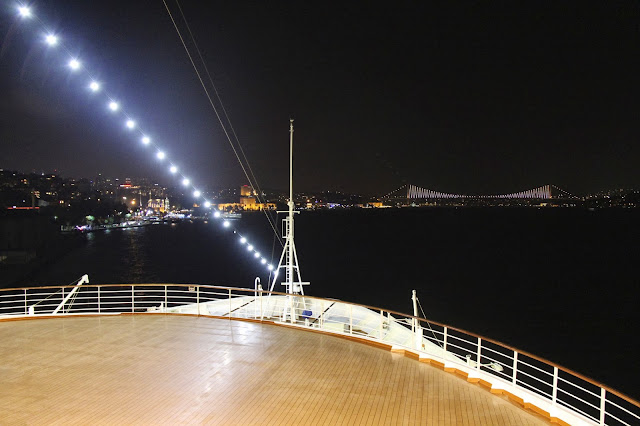
We spent hours navigating the maze that is the Grand Bazaar before we realized the sun was setting. Our intention was to walk the city around after we’d shopped. We had the flexibility to stay out as long as we liked because our ship wasn’t leaving until the next day; although we agreed that we were ready to head “home” for the night and set out early the next day. It turns out that it was a good thing we did! The ship was hosting a Turkish Taraf – a poolside party complete with live music, a Turkish belly-dancer, exotic drinks and spicy kebabs. An outdoor pool party is always a great thing, but if you have the shimmering city lights and uplight mosques of Istanbul framing the backdrop (and did I mention the belly-dancer), there is no greater party combination in the world (this is coming from the guy that was basically the President of Parties in college).
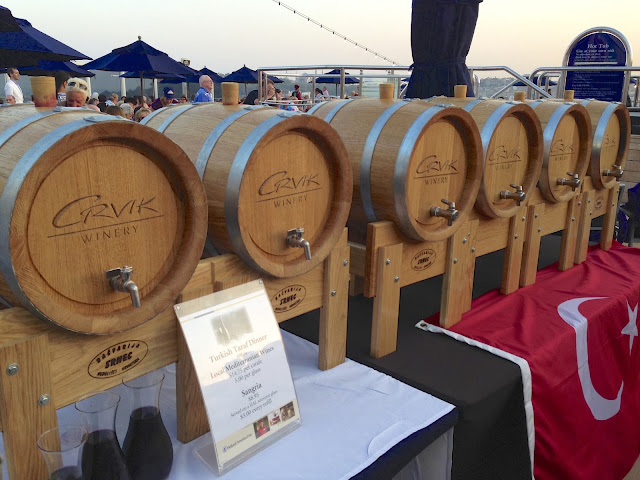
A variety of wine was served at the party – live band in the background
The Blue Mosque at night
The quarter moon looked exactly like quarter moon on the Turkish flag
They were grilling authentic Turkish food
The belly dancer takes the stage
She recruited guests to help her move and move their own hips
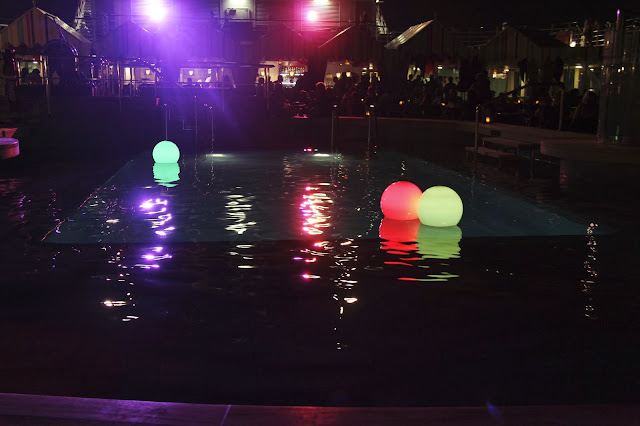
The pool was decorated with lights
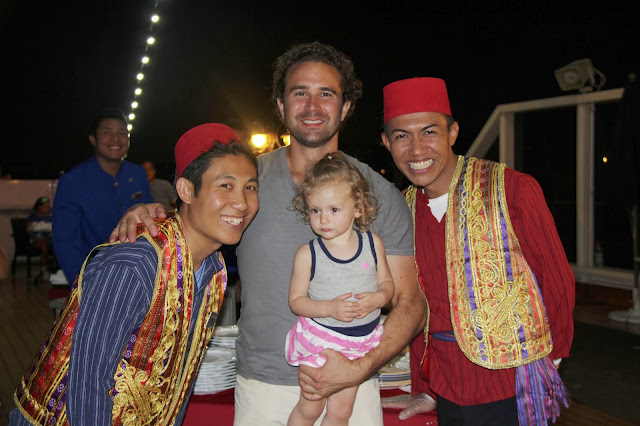
The crew dressed the part
The scenery was beautiful
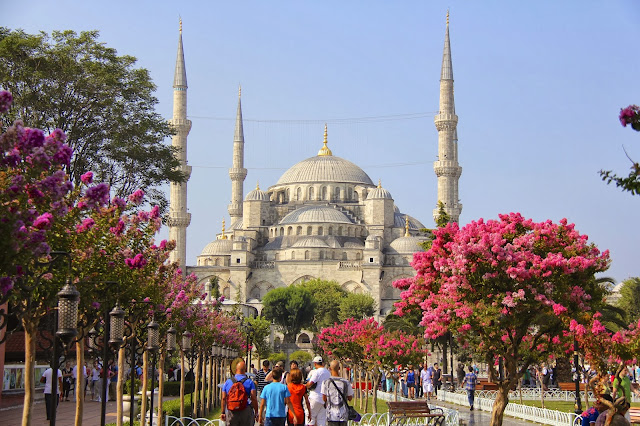
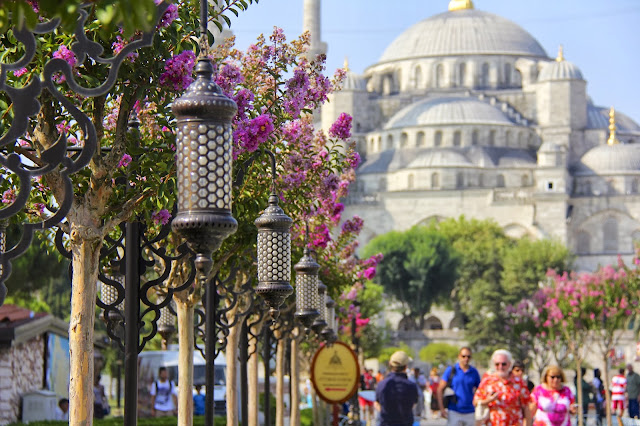
The next day we got an early start – with so much of the city left to take in, we wanted to get in as much as physically possible. We decided we would try to beat most of the crowds and start with the mosque’s. Specifically, the Hagia Sophia and the Blue Mosque – which sit opposite one another. We only ended up touring the Sultan Ahmed Mosque – or Blue Mosque, as it’s commonly called due to it’s blue tiles that adorn the inside walls. The mosque’s construction began in 1609 when it was commissioned by Sultan Ahmed I to not just rival the Hagia Sophia, but to surpass it. The mosque has an unprecedented six minarets (still the only mosque in Istanbul with six to this day), which garnished the wrath of the public. The display of six minarets was preserved for the Prophet’s mosque in Mecca – therefore the Sultan was criticized for incorrectly thinking that he was the man. The prevailing urban legend is that there was a miscommunication in which the Sultan told his architect he wanted gold minarets (altin minare) and the architect understood six minarets (alti minare). Seems fishy to me – sounds like he concocted a scapegoat to shift the heat off himself. Ultimately, he corrected the situation by shelling out the dough to build a seventh minaret on the Prophet’s mosque in Mecca. Whatever the correct history, it was fascinating to absorb in the first person.
We started our day before the city really woke up – just shop keepers setting up
Sulton Ahmed Mosque (the Blue Mosque)
Approaching the mosque
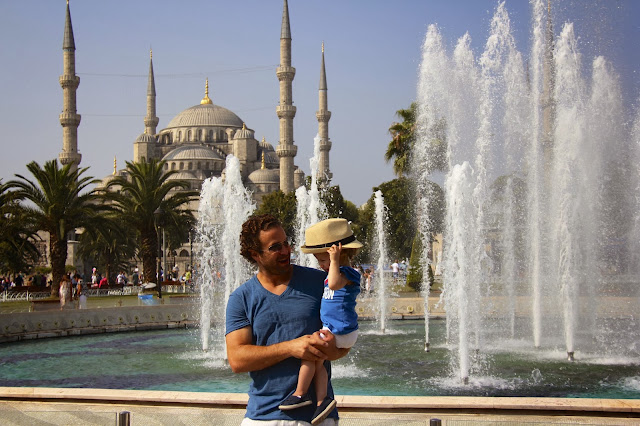
We had fun playing in front of a fountain
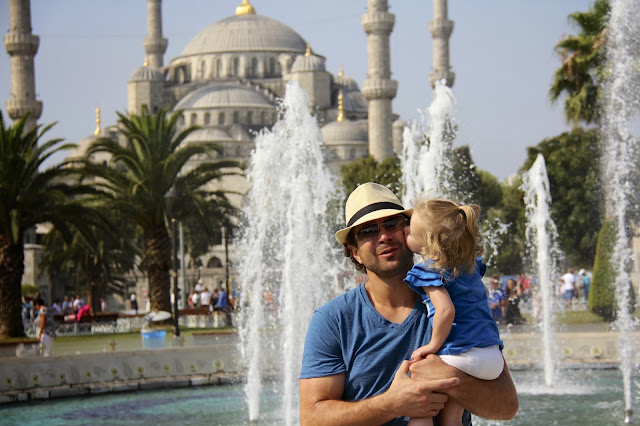
Julia steals my hat – I guess she wanted to block the sun
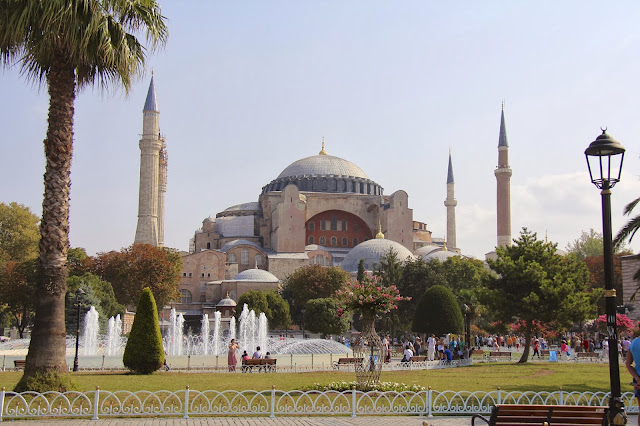
Hagia Sophia Mosque
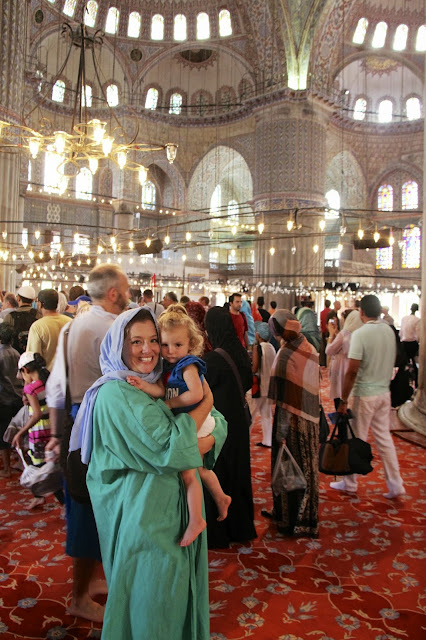
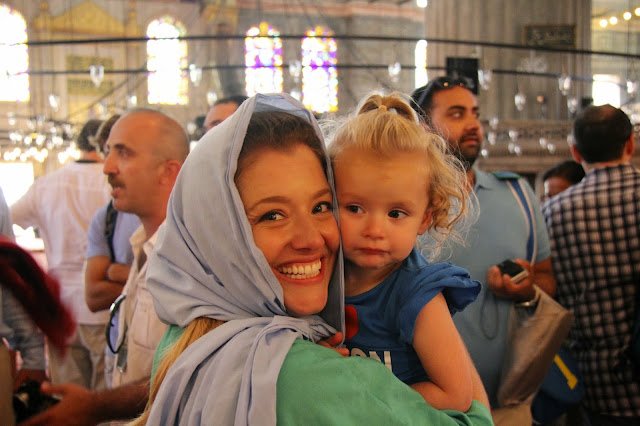
All female visitors are required to wear proper garments
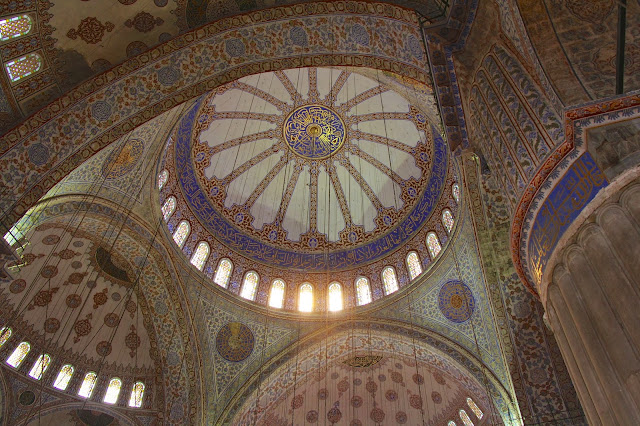
The ceiling and some of the blue tiles that are the reason for the nickname, Blue Mosque
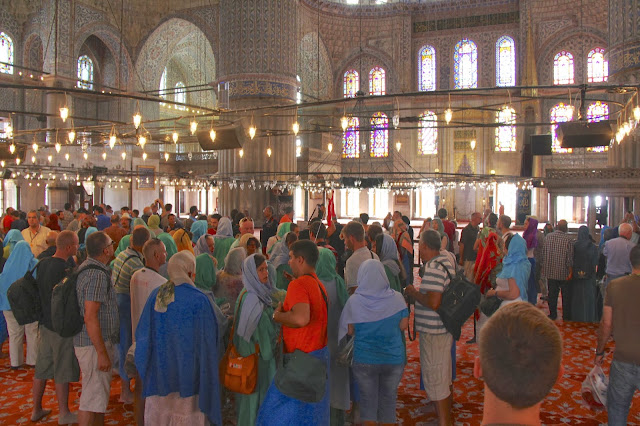
The mosque sees a large number of visitors every day
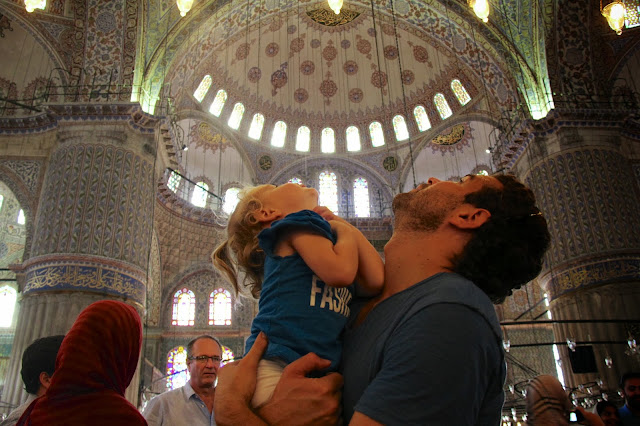
It’s impossible not to gaze upward at the amazing display of over 20,000 handmade tiles
Jen and Julia in the mosque
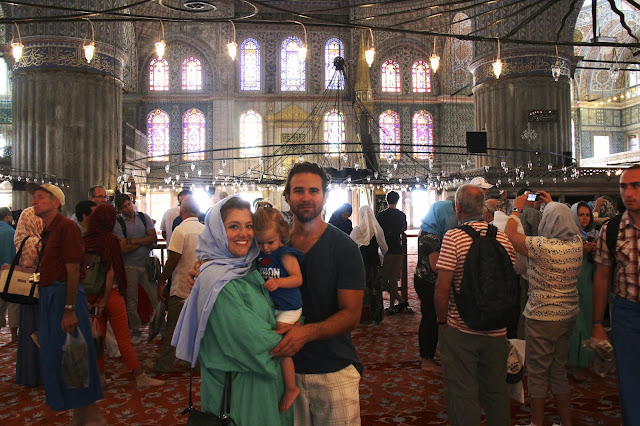
Family photo in the mosque
Another family photo
After the mosque tour, we headed northeast by foot to the Topkapi Palace. The palace was the primary residence of Ottoman Sultans for over 400 years. To this day, the residence consumes more land mass along the shoreline than any other single property and has been deemed by UNESCO as “the best example of ensembles of places of the Ottoman period.” We were very excited to see the palace, but unfortunately it was closed and so we had to settle for a stroll through the public gardens.
Inside the gardens of the Topkapi Palace
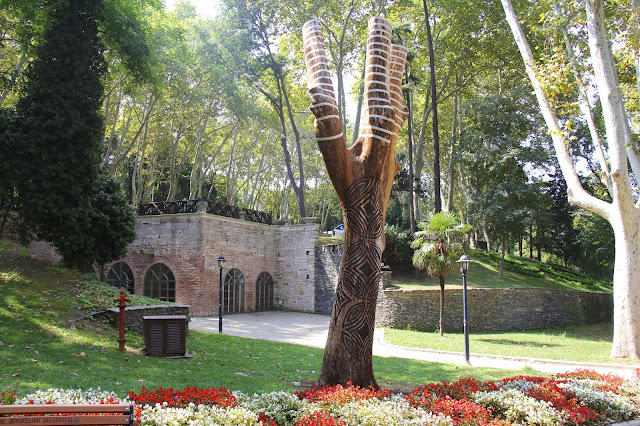
This unique tree appeared as if it had tattoos
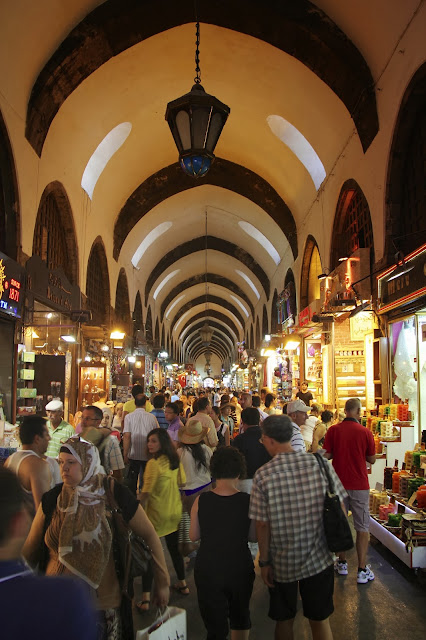
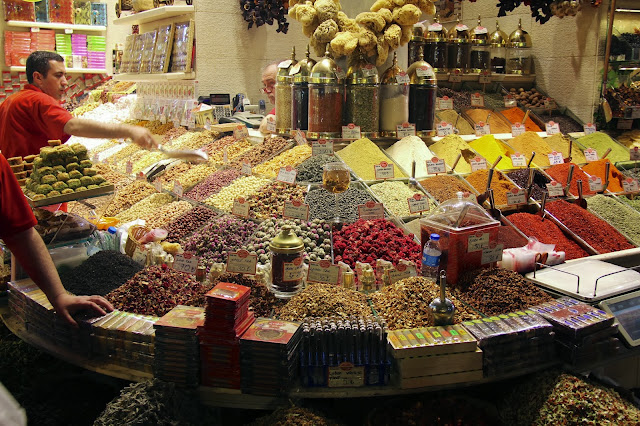
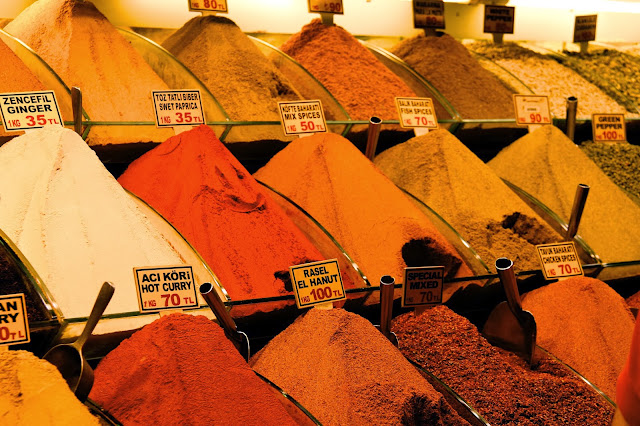
After a long walk to our next destination, we first wanted to stop and have lunch. I had been dying for one thing since arriving in Turkey – a döner kebab. We found a restaurant that looked perfect and ducked inside for lunch. Just prior to walking in, we heard the adhan, called out by the muezzin from mosques across the city – amplified by loudspeakers. More commonly known in English as the call to prayer, this unique chant is called out five times a day, summoning Muslims for mandatory worship. After lunch we entered the famous Spice Bazaar – the center for spice trade in Istanbul. The market is the city’s second largest covered market behind the Grand Bazaar.
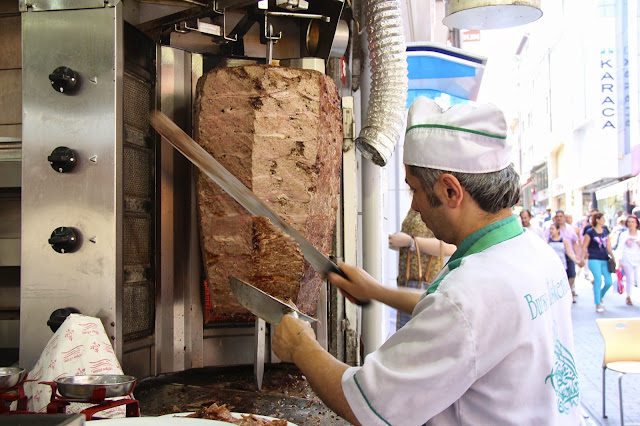
Döner kebab – a mixture of meat, usually veal and or beef with lamb and sometimes chicken
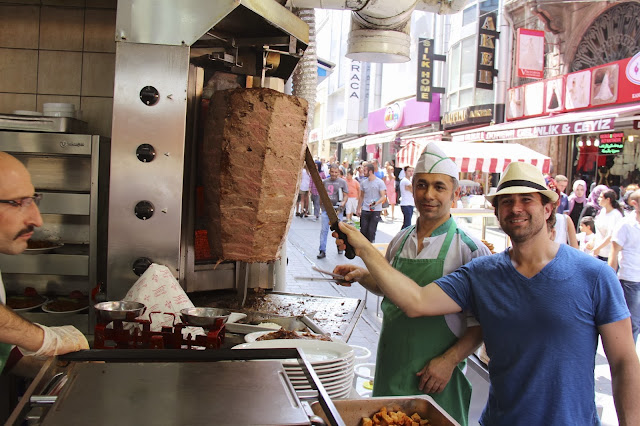
The only thing better than a freshly made döner kebab is one that you slice yourself!
Entering the Spice Bazaar
Merchants showcase their wares, including the ever-popular, Turkish Delight
Here you can find most all spices, from hot curry to sweet paprika
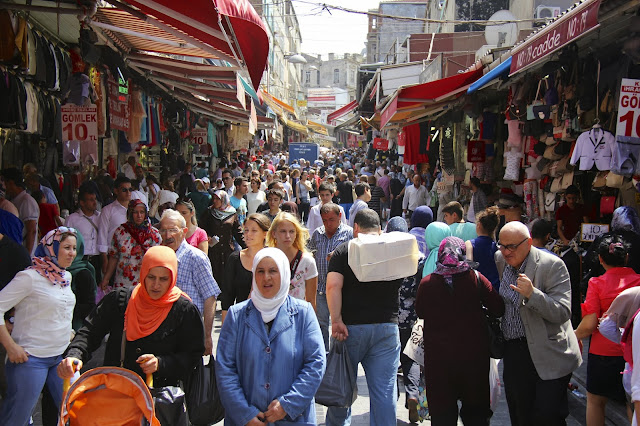
The markets in Istanbul seemed endless – this is departing the Spice Bazaar
The ship hosted another party, this time a “sail away” party that included wonderful wine
As well as delectable and authentic treats
After our trip to the bustling city of Istanbul, a little bit of unplugging was just what we needed. We easily accomplished this on the island of Lesbos, Greece. This Greek island in the northern part of the Aegean Sea is Greece’s third largest, with a bustling capital (Mytilene) and 200 miles of coast line). Some ports were too small for our monolithic cruise ship, and so we had to use the tender system. All large cruise ships are equipped with smaller boats that can transport passengers from the ship to land when arriving in smaller ports of call. Generally, you are assigned a group number (depending on how quickly you arrive to collect it) and then send ashore in that order. Surprisingly, we arrived fairly early and got to shore just in time to snatch up one of the few remaining tiki huts on the beach. After that, it was clear sailing – nothing but relaxing and sitting in the crystal clear water. Oh, and one more thing… skipping stones. The ocean was just full of perfect stone-skipping rocks. I could easily average six skips but got as high as fourteen skips – the crowing achievement of the day, only to be topped by making the final table at the Casino’s Blackjack Tournament later that night.
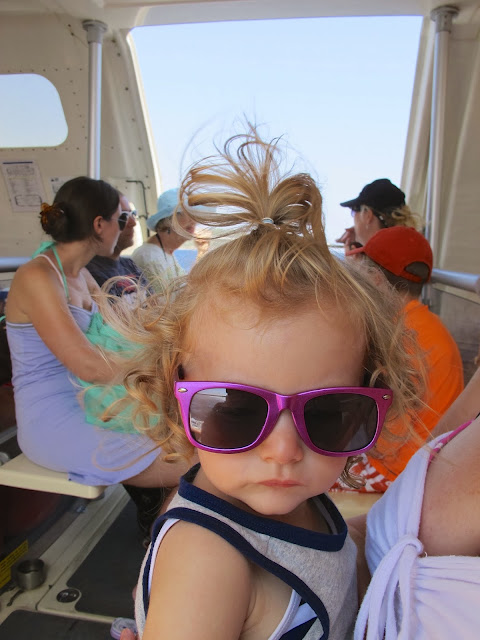
We rode in the tender to get to Lesbos
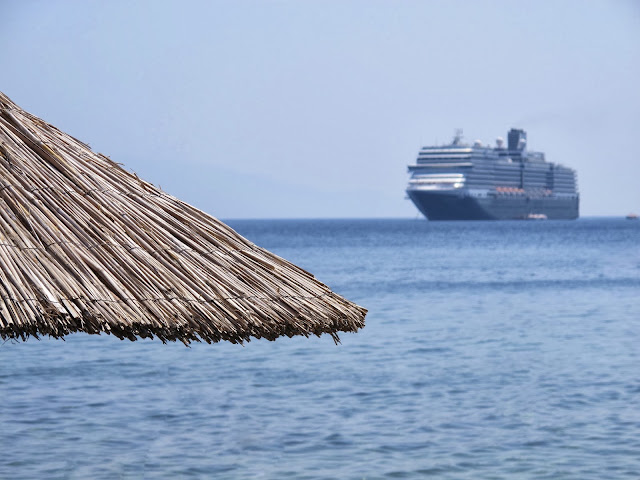
A view of our boat from the tranquil setting under our beach umbrella
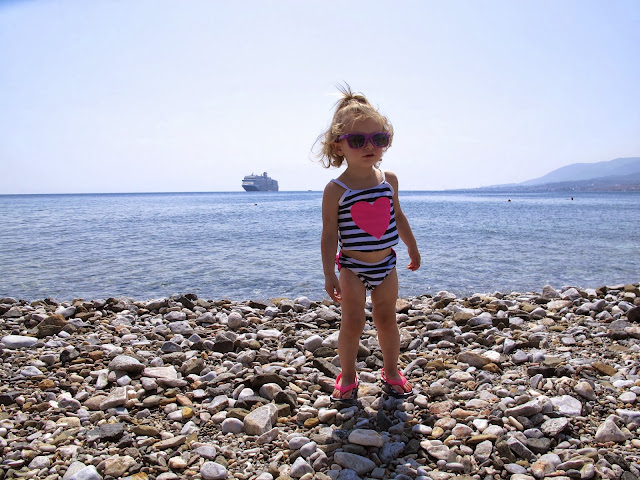
Julia poses for a picture
Skipping rocks with Daddy
Julia wanted to try on her now – she almost got the hang of it
The water was so clear it was fun to just soak
Family toesies
The sun wore Julia out – she was asleep on the ride back
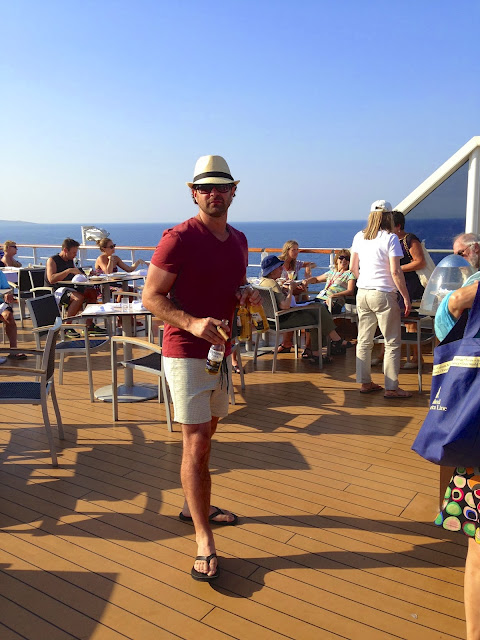
Two beers and a cigar – oh man, oh man! Relaxing on the ship as we sail away
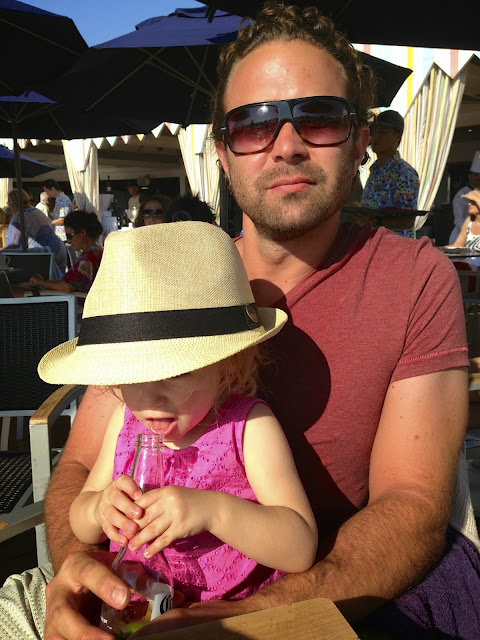
I’m posing for a picture with my girl, little did I know what she was up to under my hat!
Blackjack tournament final table. Got knocked out doubling down on 10 against a dealer 6. It would have given me an unbeatable chip stack with three hands left. The winner had no idea what he was doing which put me on tilt
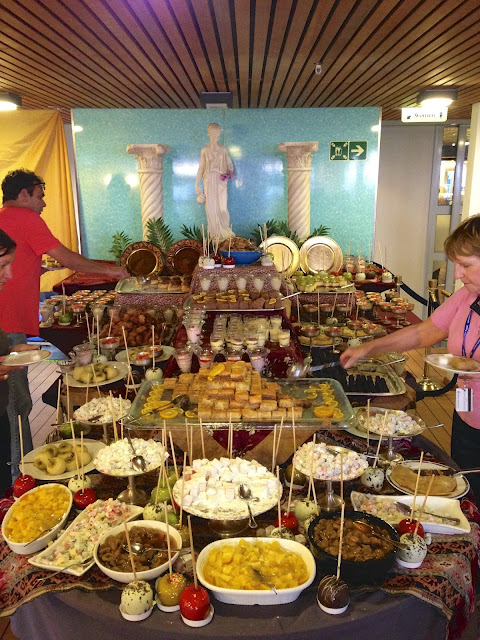
The casino would send up desserts and bottles of wine with their compliments. Perhaps I was too frequent of a visitor??
We still have plenty more adventure to come… please tune back in to the final section of our cruise in the next post.
Admit it… you sang the title in your head, complete with the voice raising on the “and-a I”…
I love to cruise. Jen loves to cruise. And now… Julia absolutely loves to cruise. We have very few experiences aboard cruise ships, but each time we’ve been on one of these massive floating hotels (or mini-floating city’s… I couldn’t choose between adjectives – you pick your favorite), we feel like royalty. We know that we will chose this method of vacation many more times in our lives. Cruising requires little planning and you are always rewarded with the very best customer service, the opportunity to see many more cities than you normally could in a given time period, endless activities aboard the ship, wonderful food, the benefit of unpacking only once and perhaps best of all – a very affordable vacation (you can get very good deals if you hawk the last-minute deal sites).
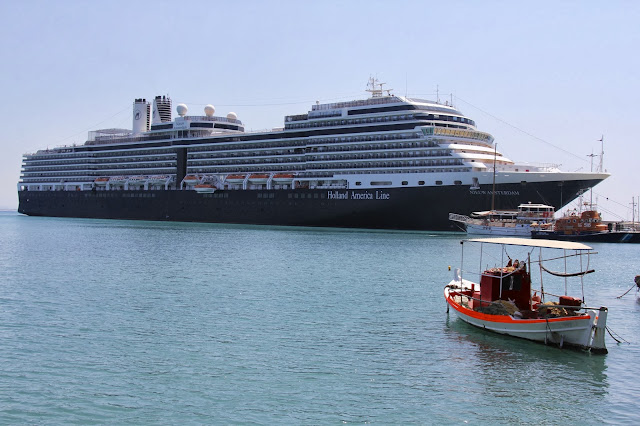
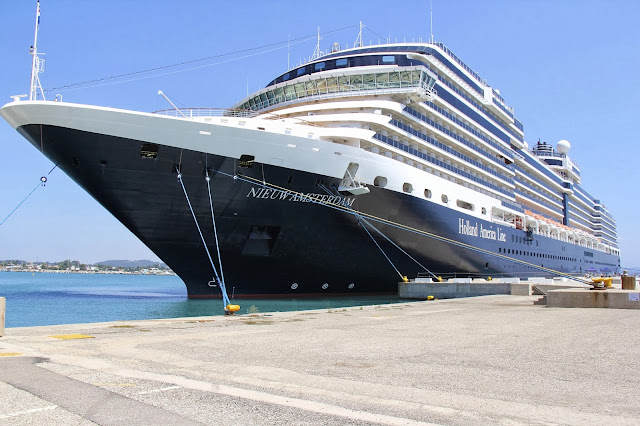
Our ship – Holland America’s MS Nieuw Amsterdam
The first time that Jen and I took a cruise was on our honeymoon. We spent three weeks sailing around South America (from Buenos Aires, Argentina all the way around Cape Horn and on to Santiago, Chile). I chose Norwegian Cruise Line (NCL) for our first cruise, primarily because the itinerary was perfect and I found it to be reasonably priced. I wasn’t nearly the internet-nerd I am today and so I did little research beyond that. We had a wonderful vacation, ate way too much food, enjoyed some lovely scenery (I have thousands of pictures to prove it) and had an absolute blast. However, I had no idea how amazing cruising could really be until we recently boarded Holland America’s, MS Nieuw Amsterdam (pronounced, n-e-w); one of the newer ships in their fleet.
Boarding the Nieuw Amsterdam
I had a few checklist items when we moved abroad – things I wanted to do and to see. Experiencing a cruising-adventure was definitely on that list. For the first time in our lives, we had the flexibility to really take advantage of a “last-minute” vacation, and so the plan was to use that to our full advantage. Unfortunately, we discovered that having a child prevents you from really getting those steep 70% off discounts you see flashing on the side of your favorite webpages. Some cruise lines require a child to pay a full fair. Others require that he or she have a special room or special bed. Either way, it seemed that the myth of really inexpensive cruising (at least with a child) was just that – a myth. Eventually, we searched for dates further into the future (ensuring the ability to book a room that could accommodate a small child) and narrowed our choice down to two cruises with two very different itineraries on two very different cruise lines.
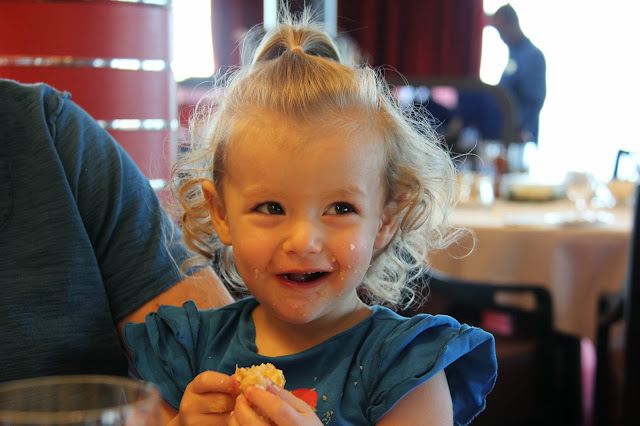
Could this little peanut (eating until her heart is content) actually prevent us from finding our perfect cruise?!
“Who me?! No way, Dad. Now, let’s EAT!”
World travelers and vacation aficionados – here’s where you need to pay attention. I am going to share two valuable resources I discovered throughout this process. First, I had been paying a fortune in cell phone bills, calling these various companies to get accurate information about their cruises. Then I stumbled across, gethuman.com – an internet based voiceover IP company that allows you to call most major companies from your computer – for free! I have spent this past year calling American Express, Visa, Wells Fargo and other companies at a cost of roughly €10 per call… just to get past the automated prompts! This site has revolutionized my ability to manage tasks at home while living abroad. Second, we discovered cruisecritic.com – the ultimate guide when selecting a cruise. Consider it the yelp or trip advisor of the sea. This site allows you to plug in any cruise line and read reviews – but more importantly it allows you to search specific cruise ships, ranking everything on that unique vessel from the food to the service – ultimately awarding the ship a nice, neat approval percentage number. It’s all very easy and streamlined. What I learned was that a cruise line can offer a vastly different experience aboard any number of their ships (for example, an older ship with lesser quality food may not be nearly as pleasant as one of their newer ships). Therefore, we learned that the ship itself is more important than the cruise operator. And we learned this lesson just in time. I was on the phone with Costa (the losing company), about to book our cruise. I had selected this particular cruise because of the funky itinerary. In addition to the “normal” places, we would have ventured into Ukraine, Romania and Bulgaria. I was moments away from giving my credit card number when Jen motioned at me frantically, having just discovered this particular ship only had a 54% approval rating. I got off the call as quickly as possible and called Holland America, booking aboard the Niew Amsterdam.
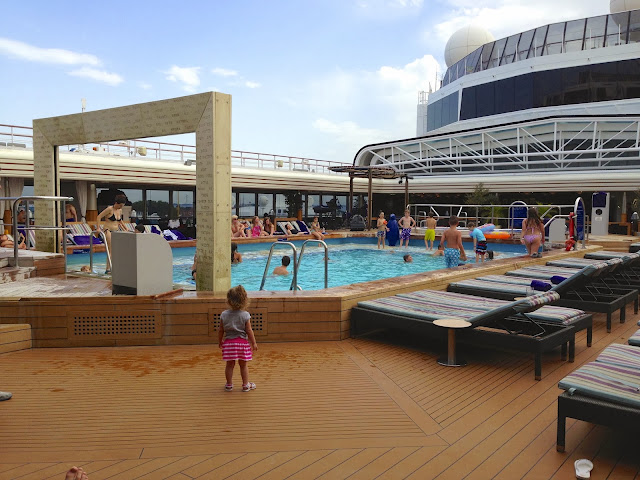
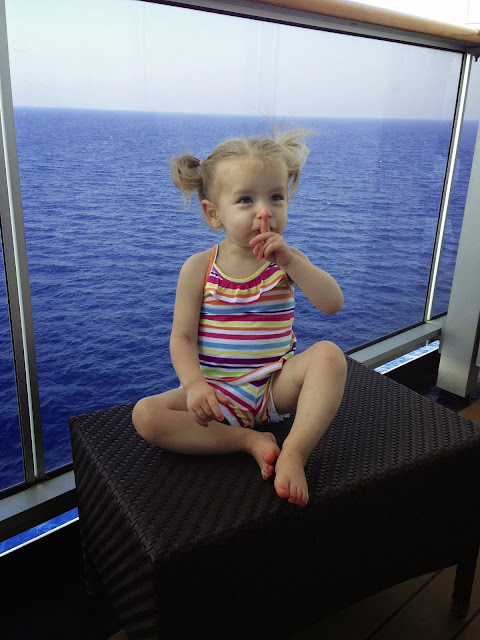
Julia evaluates one of the rooftop pools – this one was located midship
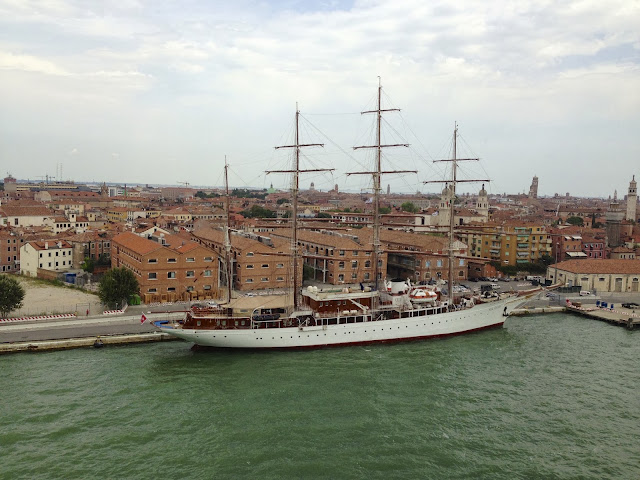
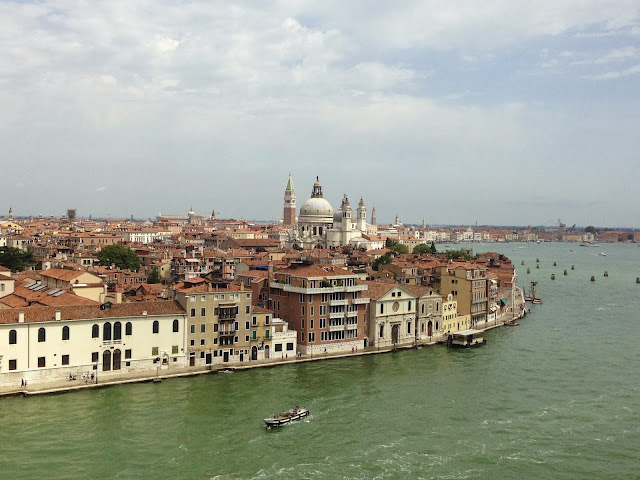
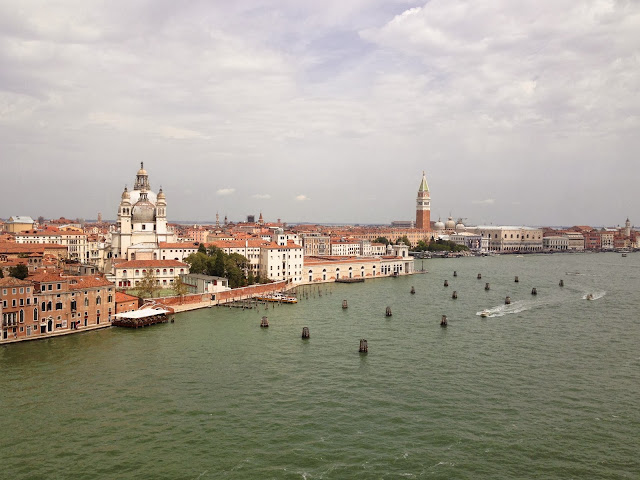
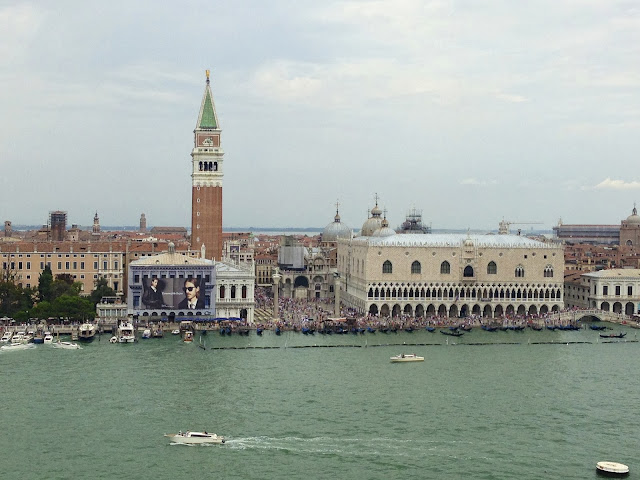
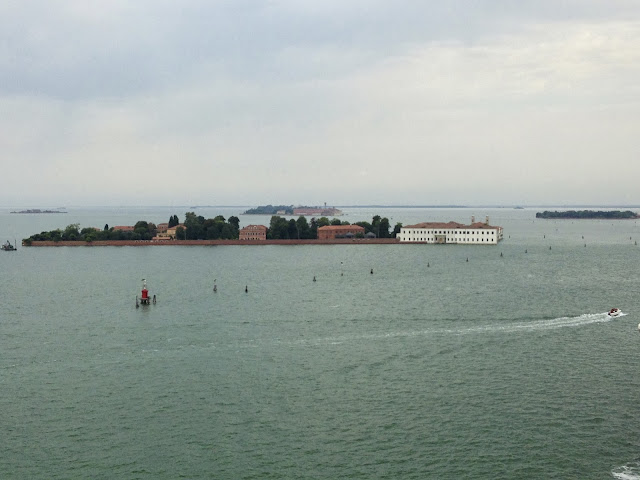
Our cruise departed from Venice, and so we took the three hour train from our home. We were in no rush to get into Venice early, having been there on previous occasions. We bypassed the throngs of tourists vying for photos of the canals and simply went right to the ship. We stayed in Venice’s port the first night, but set sail early in the morning. As we sailed through the Canale Della Giudecca in the middle of the city (I had no idea that it was deep enough to accommodate our massive ship), our fabulous Location Guide, Tom gave a memorable and insightful tour of everything that we were seeing. I apologize in advance for the pictures, I only had Jen’s cell phone with me – poor planning.
Sailing past another ship in the harbor
From high atop our cruise ship – we could see the entire city unfold before our eyes
A beautiful view of Santa Maria della Salute and the Campanile of Piazza San Marco
From this height we could actually look down and across Piazza Saint Marco – a very unique perspective
Here you can see many of the 118 different islands that make up Venice
Our first full day aboard the ship was a Sea Day, which means exactly that – we were at sea all day. This is wonderful portion of the cruise for anyone that likes to eat, gamble, drink, workout, spa, play in the pool, attend cooking courses, read, mingle, do nothing, do everything…. you get the point. I think I hit about four or five of those things in the first three hours – eating and gambling at the top of the list.
We woke up early, eager to start the day – but Julia reminds us not to wake our neighbors
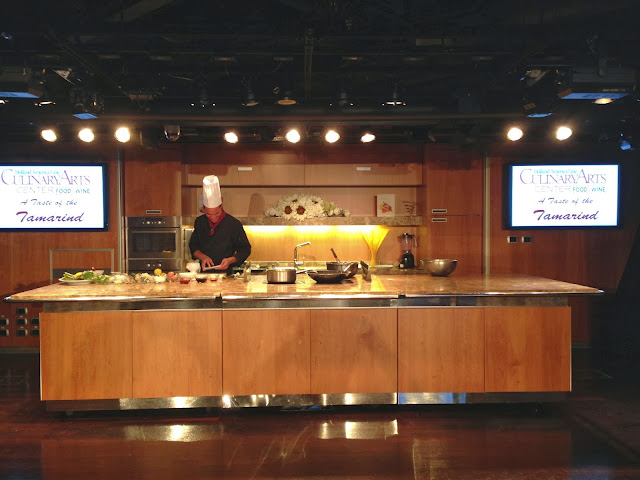
We enjoyed a cooking demonstration
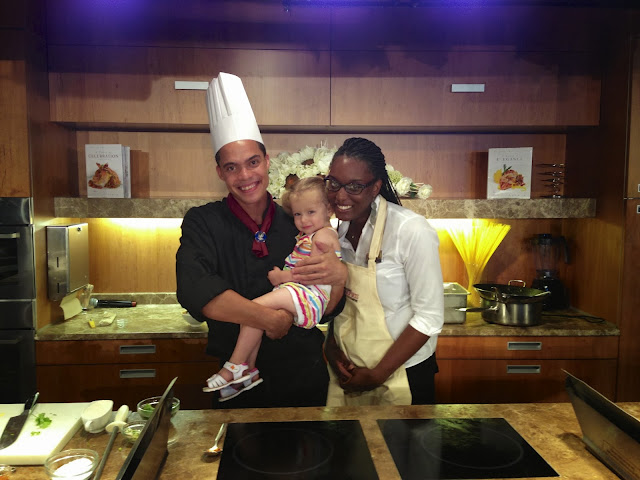
Posing with the Chef and Activities Coordinator
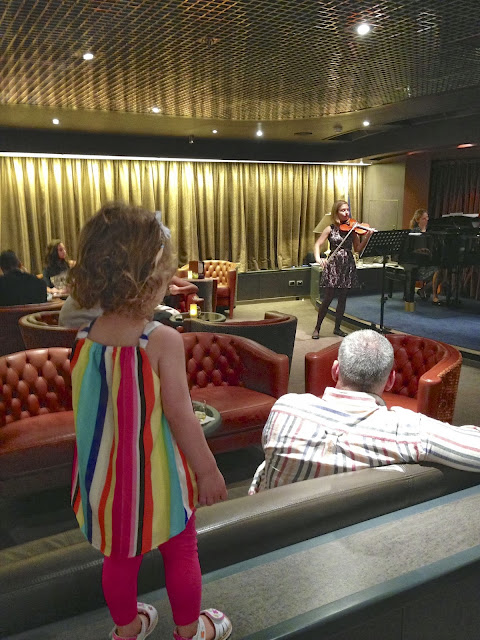
Julia would stop and watch this duo, Adagio perform each night after dinner
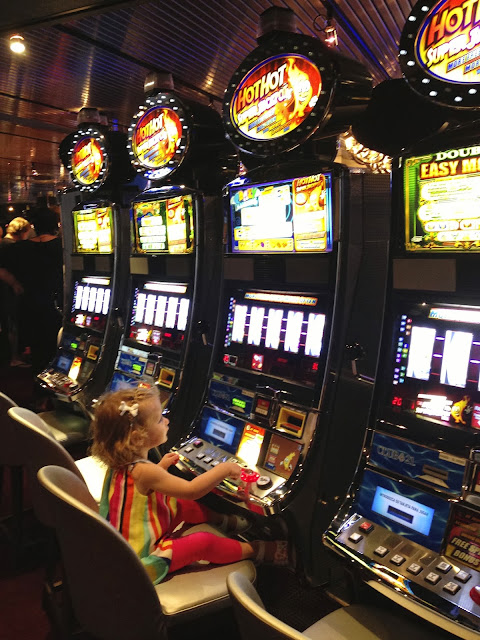
We hoped that lady luck would find Julia
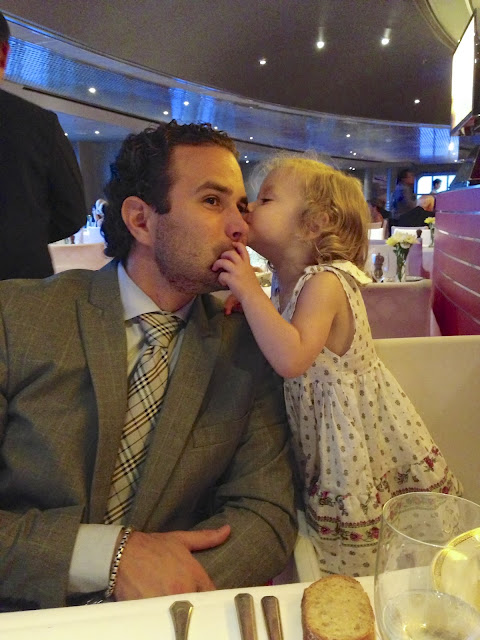
Julia treats me to a kiss during one of the “formal nights”
The following morning was a real treat – our first Port Day. We were at port in Katakolon, Greece, which was just a short bus ride away from something you may have heard of… Olympia, Greece. As in… the place the very first Olympic Games were ever held. As in, the place that contains the ruins of Zeus’ temple. And so I was a little geeked-up to see it all. I didn’t have to imagine standing in the very first olympic stadium – where the worlds best athletes competed since the 8th century BC; we actually got to do it. It was very awe-inspiring.
Our first sunrise at port
We strolled through Katakolon before our bus departed for Olympia
Travel-bugs… please allow me to give you another tip. If you are reading this post and thinking, “Greg is making a convincing argument for a cruise… I think I’ll give it a go”; don’t make the mistake many cruise-goers make. Do not book excursions through the cruise directly. Sure, it’s easier. Some may say safer. Others may tell you they’re better designed. That’s all true… but at an immense premium. Please allow me to state my case. Below is one of the excursion options at our first port (copied from Holland America’s site). Just skim it if you’d like… I’ll recap:
The small fishing village of Katákolon is your gateway to the mystical site of ancient Olympia, 25 miles to the east. The sanctuary of Olympia has the appearance of a park, and as you step back 2,000 years into the past, imagine the area crowded with athletes, orators, merchants and philosophers surrounding the Temple of Zeus with its forty-foot statue of the god, the ruins of which you will see today. It’s easy to imagine the roar of the spectators as the athletes took their marks on the marble starting blocks, and to picture the temples, treasuries, porticoes and statues as they were. After your visit to Olympia, you will continue to Mercouri Estate, known not only for its wines of supreme quality but also for its magnificent location. This is the area where the Refosco grape was first planted after being imported from Italy. In 1930, the Mercouris built a modern winery and distillery, updated again in 1990 with the latest technology. You are invited to experience the beauty and charm of the vineyards, to see the old and new wineries, and also to taste the locally produced wines.
OK – so you get a bus ride with 40 other schmoes to Olympia, gate access and a wine tasting. It’s very well written and this guy is singing a sweet sirens song – but he couldn’t lure me. Guess what it costs… $150 per person plus $60 for kids. OK – so we’d be all in for $360. Guess what we did? We got off the ship, walked over to the person selling bus tickets to Olympia (the same cushy travel bus with A/C and TV’s that the cruise people take) and bought both tickets for $20. Then another $20 at the gate and I’m all in for $40. A savings of $320. With that much left in my pocket, I had my choice of any number of Greek wines “known for their supreme quality” that we picked up at Duty Free on the way back to the ship.
We stop for a family photo in front of the Palaestra
Julia does a little dance number
Ruins of the Theokoleon
A lone column capital (top) remains… 1,000 years old? 2,000 years old? 2,500 years old??
I stop to stand in front of the Temple of Hera
Jen and Julia challenge competitors on the Stadium ground
Lost amongst the rocks in front of the Temple of Zeus
Another view of the Theokoleon
Impressive remains of the Philippeion
The next day we woke up in Piraeus, Greece – which is the port city outside Athens, Greece. Same thing as before – I bypassed the tempting, but expensive excursions and departed with Jen and Julia in tow. We walked around the corner and found that the Greek Gods were smiling on us that day. In addition to the regular cabs and buses to take us the 20 minutes into Athens, there were “Hop On-Hop Off” open-top tour buses. That meant we would get a ride, an audio tour and the ability to come and go as we pleased, all for $30.
Athens is an amazing city with a recorded history spanning 3,400 years
We rode around Athens, enjoying our tour and chuckling to ourselves at the Greek music they kept playing over and over (imagine the soundtrack to “My Big Fat Greek Wedding” on repeat). My plan was to complete the loop and finish the audio tour before getting off, but when I saw the majesty of the Parthenon, I knew we needed to depart the bus immediately.
The Parthenon sits atop the Acropolis of Athena
The Parthenon is the featured temple within the Acropolis of Athena; a temple built to honor the Goddess, Athena. Construction of the temple began in 447 BC and today it is widely considered the most important surviving building from Ancient Greece. In order to reach the temple, you must climb the imposing slate steps to reach the Acropolis of Athens, an ancient citadel set high atop a rocky outcrop far from today’s modern Greece. But before we climbed the steps of the Acropolis, we first climbed a neighboring cliff for a view of the magnificent ancient city and the more modern one below.
Athens has roughly 3.2 million inhabitants – Greece’s largest city by a wide margin
Hundreds of visitors passing through the gates of the Acropolis
Ancient ruins are a part of the city – even as modern urban sprawl is built around it
Some more “modern” temples perched atop their own cliffs
My girls begin their ascent
Julia fights the wind and I steal a kiss
I think Athena herself would have been pleased to have this little guest in her temple
As we climbed the steep incline of the Acropolis toward the temples, we narrowly missed slipping and sliding back down to the bottom. The slate steps were slick even though they were bone dry – I couldn’t imagine making the climb if it had rained. There were many sights to see, including the amazing expanse of a remarkable city below. We marched through the ancient doorway leading into the city and stopped for a rest and some photos.
Odeon of Herodes Atticus – a steep sloped amphitheater built in 161 AD
The southern wall remains well intact
Julia lets me kiss her for all of Athens to see
The Parthenon – Temple of Athena
It’s amazing how well the Parthenon has been preserved
Julia pays her respects to the Greek flag
Family photo in front of the Parthenon
While the Parthenon is clearly the star of the show within the Acropolis, there are many other important ancient buildings and temples. The Greek word Acropolis (Ακρόπολη) is made up of two components – akron, meaning “edge” and polis, meaning “city”. While there are many other Acropolis’ within Greece, it is commonly accepted that the Acropolis of Athens is the Acropolis in all of Greece. From the moment we walked through the gateway into the city, I truly felt as if I was transported into an ancient, mythical world – where Gods and Goddesses ruled from on high. Perhaps I have seen too many movies, but I really did feel as though I was apart of something far bigger than I’ve ever known. I think I was even annoying Jen a bit with my enthusiasm and newfound feeling of power (as if I was somehow apart of the world of The Gods and could strike down any mere mortal…). It was probably good that I got out of there when I did, lest I try to actually smite someone.
The Erechtheum – a Temple for both Athena and Poseidon built between 421 and 406 BC
The Porch of the Caryatids (maidens) built to conceal a 15 foot support beam
Another view of the Erechtheum from the south west
We had worked up quite the appetite touring the Acropolis and so we descended the ancient city toward a more modern part of town. We found a charming pedestrian area of the modern city and stopped for a lunch of what else… Greek salad! We drank a couple of refreshing Greek beers and then strolled through the ample markets.
Greek salad – the authentic way!
Finally, we boarded the ship and set sail for our next adventure… I hope you’ll hop back aboard for Part II (coming soon)!
I don’t know anyone in their thirties that really goes around saying, “I’m Greek” because he or she was in a fraternity or sorority – but it was certainly fun to be a part of Greek Life during college. Jennifer and I were both “Greeks” while we attended Virginia Tech together and we each established lifelong friendships that have opened world’s of opportunities.
Lauren and Jen in front of Lake Garda
One of Jen’s sorority sisters, Lauren recently came to visit – and they instantly fell into their old college routine. We welcomed Lauren at the train station; she was arriving from Switzerland having visited another friend living abroad. We went to downtown Como and had a nice dinner, before enjoying a few drinks in the piazza while a live band entertained us.
We took an opportunity to visit, Lake Garda, the largest lake in all of Italy. There is an amazing town on Lake Garda called, Sirmione. What will strike you most about the town; apart from it’s beautiful castle, hip “beach vibe” and amazing architecture – is that the water shimmers a pure aqua-marine blue, as if you’re been transported to Caribbean waters in the middle of Italy. The lake was formed by glaciers at the end of the last ice age, perhaps contributing to the unique color of the water.
The shores of Sirmione on Lake Garda
Family photo
Sirmione is certainly a wonderful place to own a boat
The history of Sirmione is quite rich – traces of civilization date all the way back to the 5th century BC. As early as the 1st century AD, the town became a favorite resort place for families from Verona (the closest major city). I would imagine a vacation home back then would be a place you’d spend an entire summer (or longer) since I would assume it would take quite some time to reach the lake from Verona (horses can only go so fast). I suppose nothing much has changed over the last 2,000 years – the rich and fabulous still snatch up the choicest water-front property for their personal playgrounds.
The medieval village stretches across a long peninsula
Sirmione has a stunning roofline
The village’s beauty is framed behind the natural beauty of trees, mountains and the lake
We loved this home inside the town
Lauren poses with me and Julia
We had an incredible lunch lake-side and then drove into the ancient Roman city. One of the main sites and a most impressive examples of fortification, is the Scaliger Castle. We spent hours walking around, stopping only for pictures and the required coffee and gelato pitstops.
The front of our restaurant
And out back, Julia takes a stroll
Julia took this picture of Lauren at lunch – apart from the partial finger over the lens, it’s pretty good!
Scaliger Castle sits as an imposing fortification in front of the ancient city
Restaurants and shops line the castles moat
A good place for a “selfie”
The castle as well as the only entry-way into the ancient city
“Cheese”
The drawbridge had been lowered
I would love to know the story behind this
The castle has it’s own marina protected by a large, fortified wall
Lauren walks along the castle’s walls
Julia tries to climb the drawbridge
Jen and Lauren stop for a picture
Another day, we visited Lecco a major lake town along our Lake Como. If you can picture the lake as a pair of legs, Como is the left “foot” while Lecco is the right “foot”. In fact, people in the town of Lecco often refer to the lake as, Lake Lecco. Of course, we all know that’s not the case – but it’s a beautiful town nonetheless.
The mountains in Lecco are quite striking
Sailboats back from a beautiful day on the water
Lauren and I take our picture in front of the lake
We loved having Lauren visit and enjoyed seeing a new part of Italy ourselves.