In my most recent blog post, we embarked on a cruise throughout the Mediterranean. I’d love for you to continue the adventure with us as we head to Istanbul, Turkey and the beautiful Greek island of, Lesbos. I’ll finalize our voyage in an upcoming post that will include the final ports of call and some more stories about our shipboard life.
“Oh, tell me… tell me all about it!”
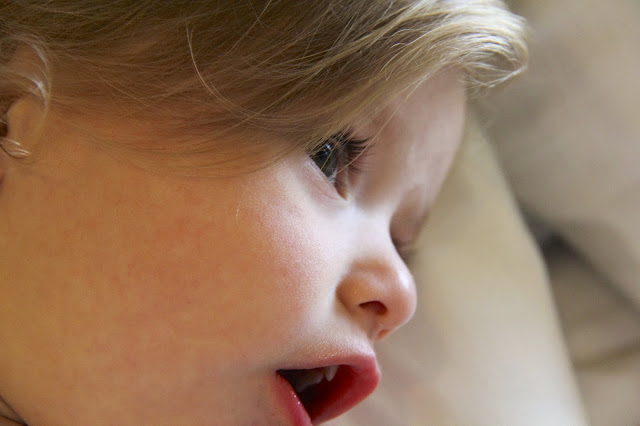
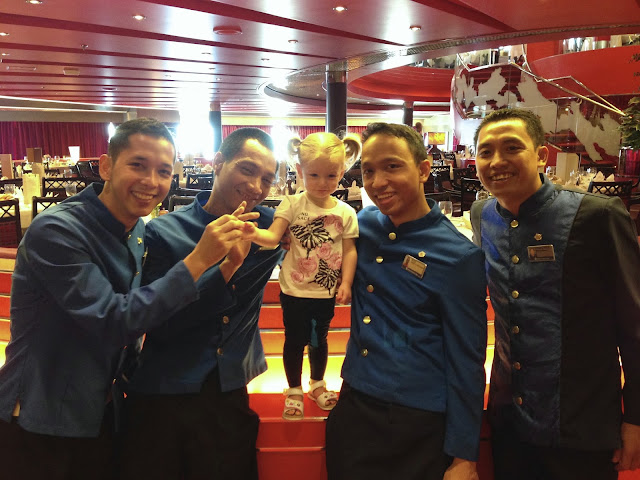
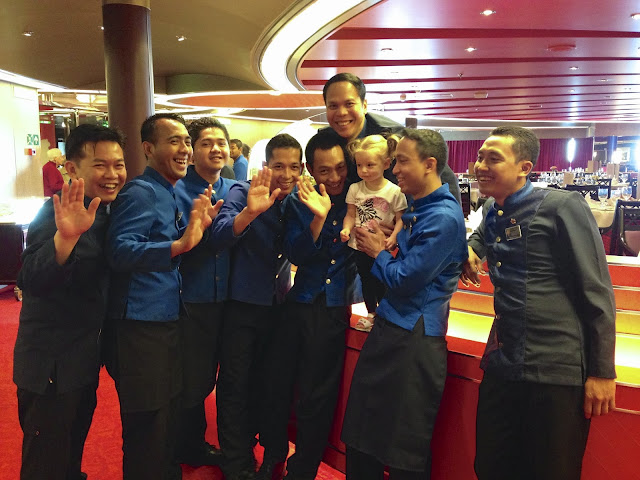
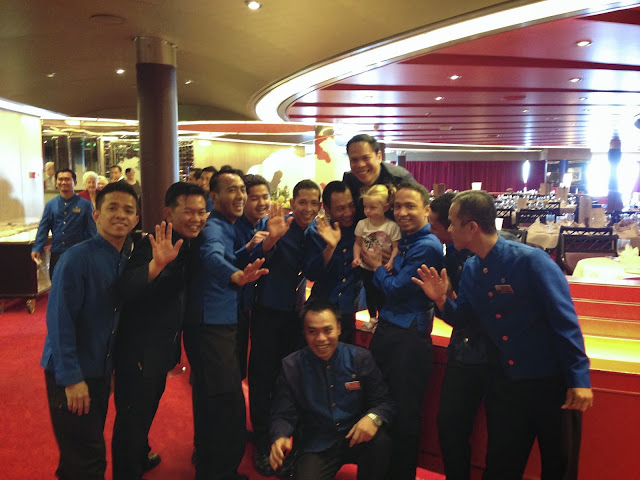
When I last left you, we had visited Venice, Olympia and Athens. By this point in the cruise, we really hit our stride and had fully immersed ourselves in everything Holland America’sNieuw Amsterdam had to offer. We were overeating delicious food (and then trying to work some of it off in their state-of-the-art gym), spending time in the casino (maybe too much time… literally every casino worker knew me by name), taking in shows and making friends all over the ship. We found a couple of other families with small children, but for the most part – we were in the minority (not fitting into your typical “cruise-goer” demographic). I’ll tell you what… if you ever want affirmation about your kids cuteness – go on a cruise with thousands of grandparents missing their grandkids. They were all so happy to pay us compliments about Julia that it made us excited to take her anywhere on board.
Julia made friends wherever she went
She gained a large following of fans
That grew the longer we were on board
Midway through the cruise, we arrived in Istanbul, Turkey. This was to be the only port mid-voyage that had an overnight stay, allowing us two days to explore the massive city. To describe Istanbul as “massive” is underselling it. The city boasts a population of nearly 14 million people in the urban area alone and is ranked as the second largest city in the world ranked by population within city limits [source]. It is the only city in the world that stretches across two continents (Europe and Asia). Istanbul is home to over 3,000 mosques and welcomes nearly 12 million visitors each year. These are just a few of the fun facts about this amazing city, so yeah… massive really undersold it! If only there was some sort of book… kind of like a dictionary… that would give you alternate versions for specific words…
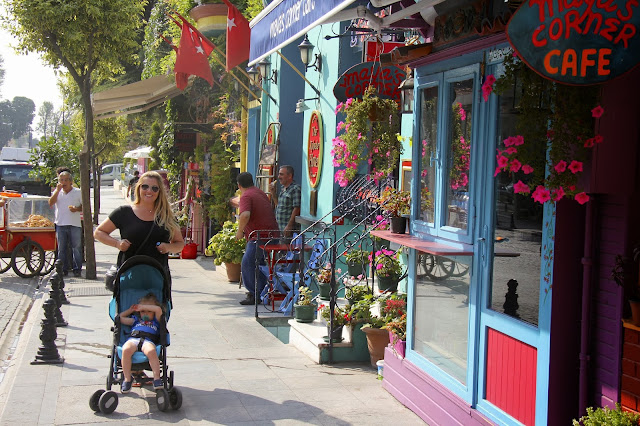
When we got off the ship on the first day, we took a bus directly to the Grand Bazaar. This location was ideal, because it would afford us the time we wanted to shop and then walk around that particular area of the city. We walked through the gates of the Grand Bazaar and our mouths dropped. I still remember the first time I went to a flea market. My great aunt Barbara took me to a market in New York when I was 8 years old. I was awestruck by all the amazing things that could be found with just a little looking. She bought me a brand new GIJoe Cobra Stun vehicle that I probably still have in a basement somewhere to this day. If I could reconstruct that image of my first market in my mind, with all my boyish enthusiasm and multiply it by a hundred – it couldn’t reach the level of awe I found myself in as a man standing in the Grand Bazaar. You can even factor in the fact that I had a wife repeatedly telling me, “I’m ready to shop – make sure you have plenty of Euro’s handy” weighing on my mind!
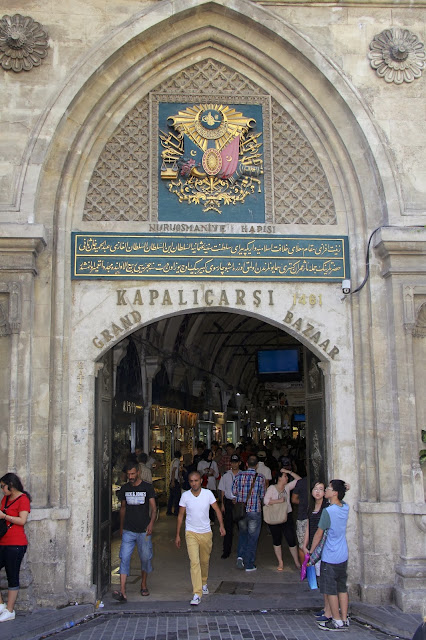
Main Gate of the Grand Bazaar
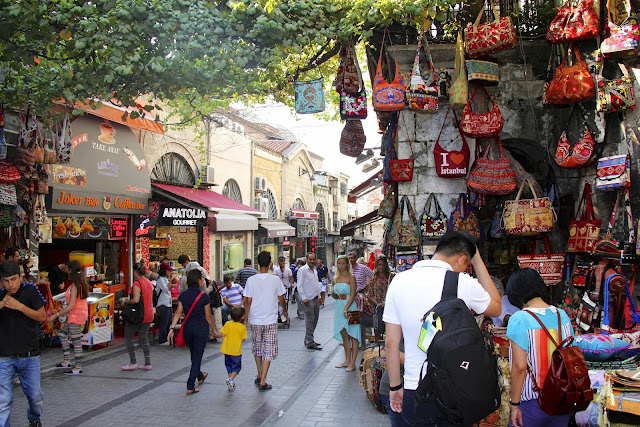
Shops extend around the outside of Grand Bazaar
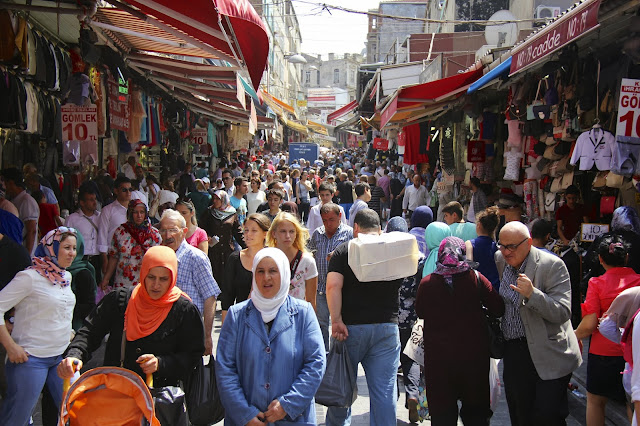
The Grand Bazaar is like nothing we’ve ever seen. It is an enclosed market that ranks among the oldest in the world. 61 city streets house 3,000 shops that eagerly accept the money of up to 400,000 visitors every single day. This does not include the open air markets that have been built around the Bazaar and dominate many more city streets. Originally, each shopkeeper was allotted a 6′ or 8′ dolap (stall) in which to showcase their wares, the finest of which were kept hidden in drawers. The market was erected after the Ottoman Empire between 1455 and 1460. It reached it’s final form in the 17th century and not much has changed since. The main reason for the collective, enclosed space were to prevent against theft, fire and uprising. Even though the Turkish Lira is the currency of the country, merchants accept US dollars, Euros or Turkish Lira.
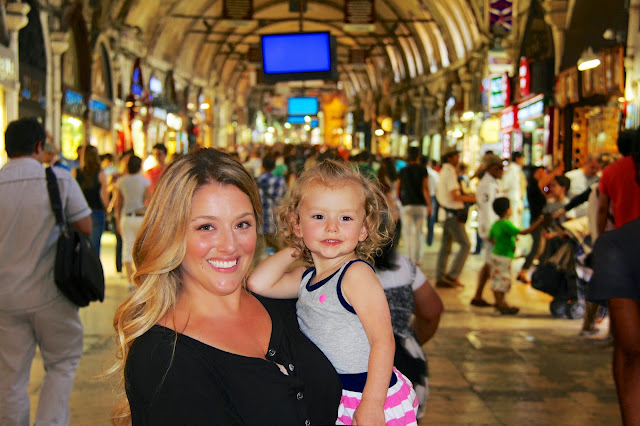
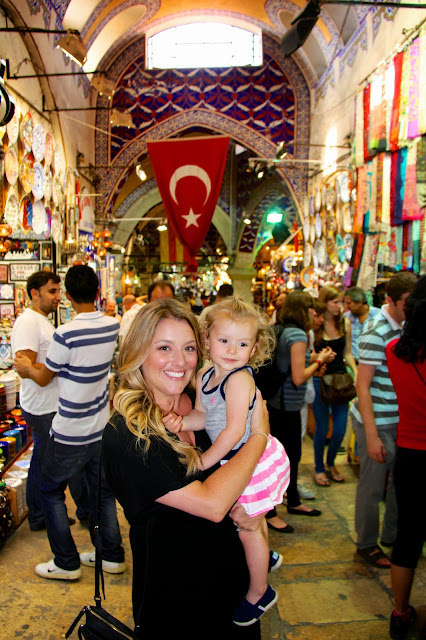
Jen and Julia enter the Grand Bazaar
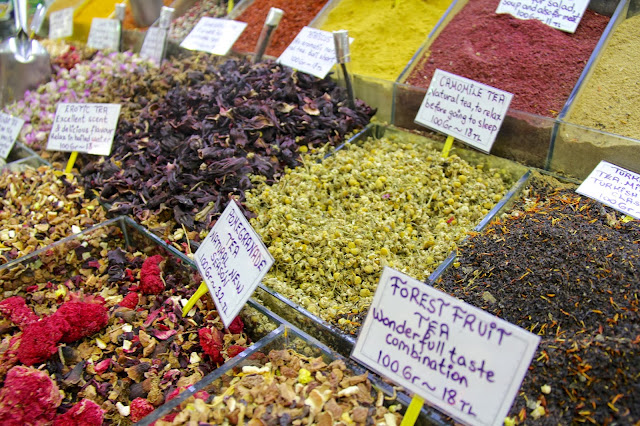
Some teas for sale
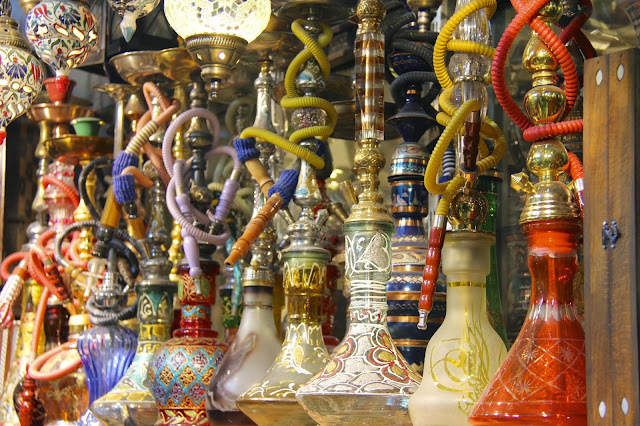
The Turkish nargile (hookah) became popular during the Ottoman Empire
Jen and Julia with a Turkish flag behind them
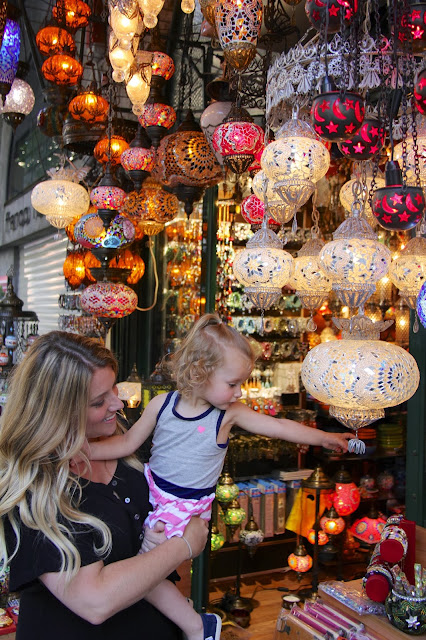
Julia was fascinated with the beautiful lamps
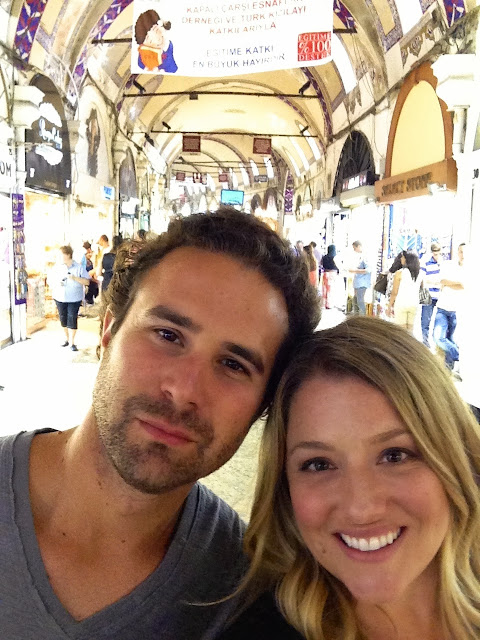
Jen and I pause for a picture in the market
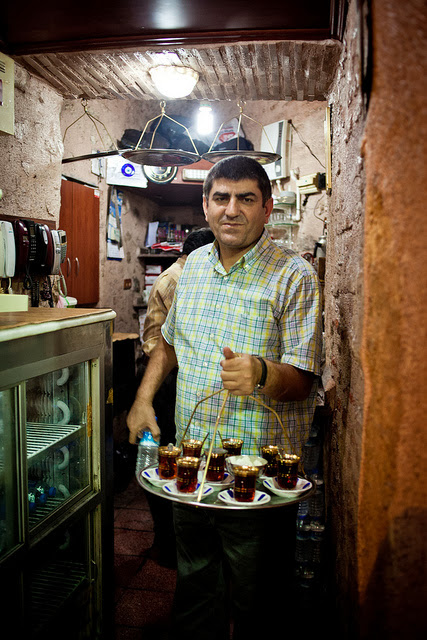
We didn’t notice any food vendors or restaurants inside the Bazaar – it turns out, the merchants have been bringing their lunches in boxes called sefertas for hundreds of years. However, they can get simple dishes like döner kebabs delivered right to their stalls (although, it’s more common for one of the merchants to bring back lunch for the entire shop). What I did notice quite a bit (and became somewhat fascinated with) was the bustling tea delivery business. Turkish tea is a huge part of the culture throughout the country. Tea is most often consumed in Turkish households – offering it to guests is a part of Turkish hospitality. It’s no different in the Bazaar; the custom of drinking tea blends the important tradition hospitality with the other main component for drinking the tea – the social congregation of men. Tea runners (as I was calling them) would skillfully whisk past the crowds and deliver un-spilled tea by balancing the cups on a tray with a long handle. What fascinated me the most was that I never saw any money exchanged for the tea. I imagined the tea runners marking how much tea a merchant drank and collecting on the tab at the end of the week. I have searched the internet to prove or disprove my theory of a “tab” system – but I could not find anything. Any Turkish merchants or Tea Salesmen reading this – please weigh in.
Guys like these would run all over the market, delivering tea
*photo credit – flickr: photographer unknown
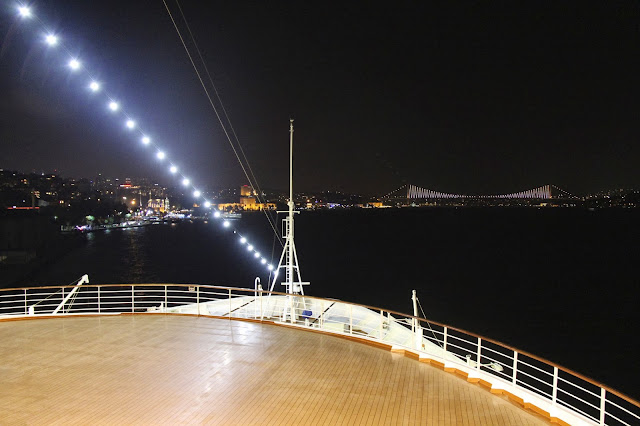
We spent hours navigating the maze that is the Grand Bazaar before we realized the sun was setting. Our intention was to walk the city around after we’d shopped. We had the flexibility to stay out as long as we liked because our ship wasn’t leaving until the next day; although we agreed that we were ready to head “home” for the night and set out early the next day. It turns out that it was a good thing we did! The ship was hosting a Turkish Taraf – a poolside party complete with live music, a Turkish belly-dancer, exotic drinks and spicy kebabs. An outdoor pool party is always a great thing, but if you have the shimmering city lights and uplight mosques of Istanbul framing the backdrop (and did I mention the belly-dancer), there is no greater party combination in the world (this is coming from the guy that was basically the President of Parties in college).
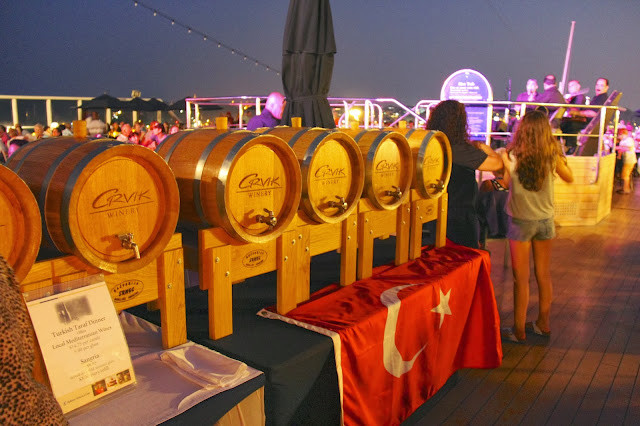
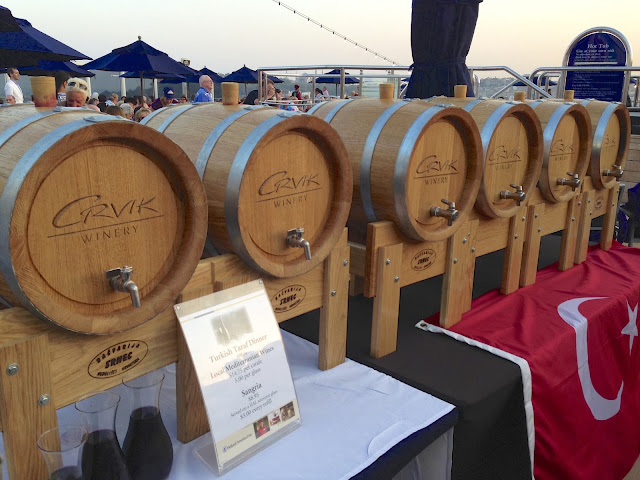
A variety of wine was served at the party – live band in the background
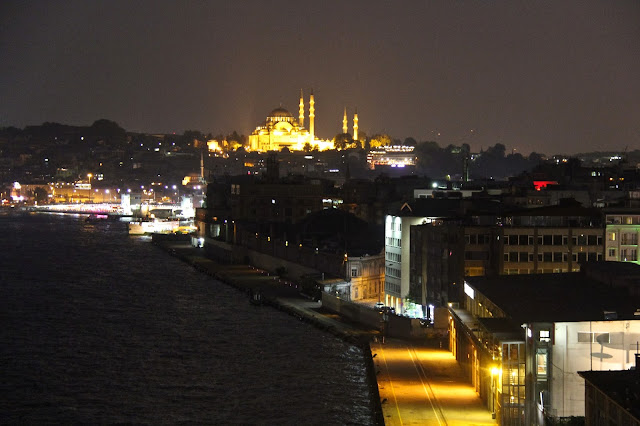
The Blue Mosque at night
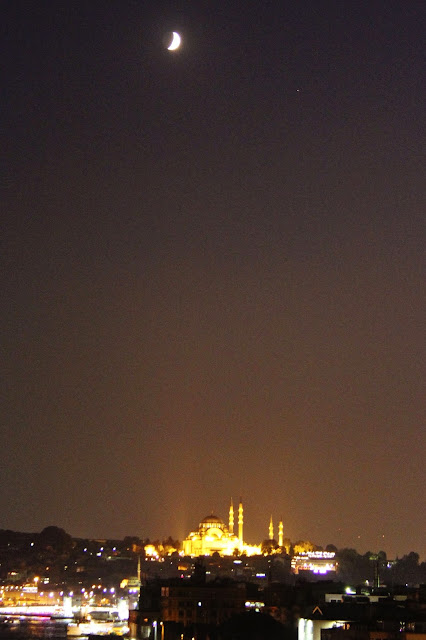
The quarter moon looked exactly like quarter moon on the Turkish flag
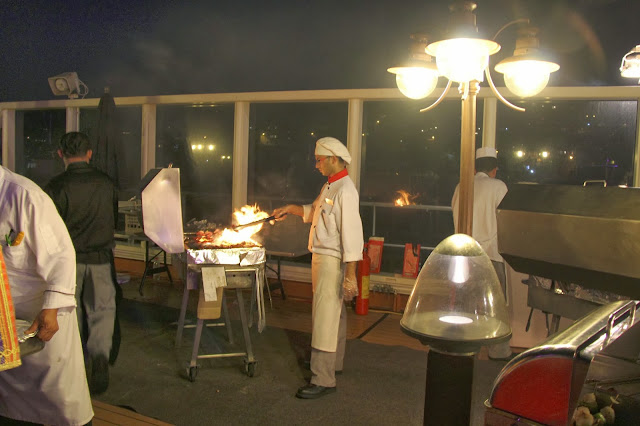
They were grilling authentic Turkish food
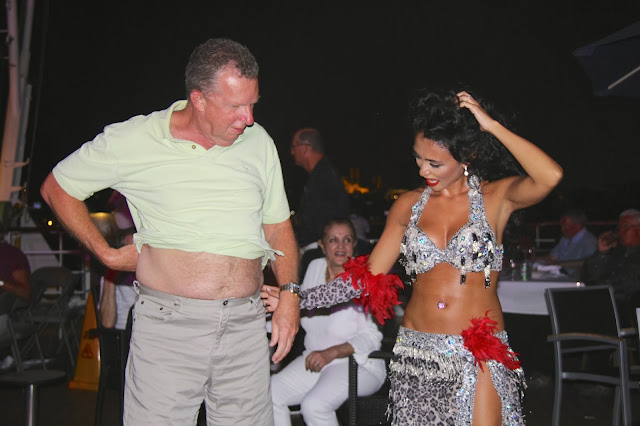
The belly dancer takes the stage
She recruited guests to help her move and move their own hips
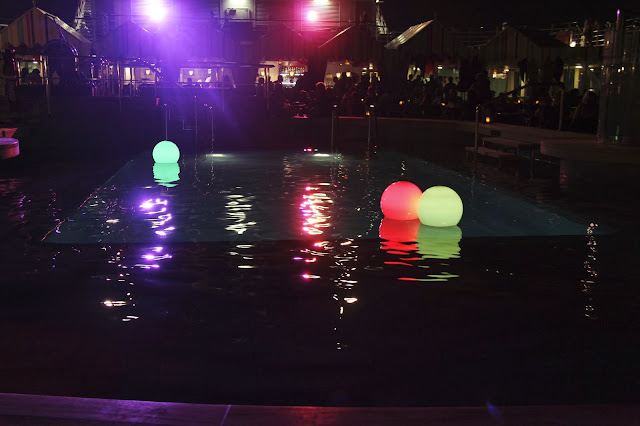
The pool was decorated with lights
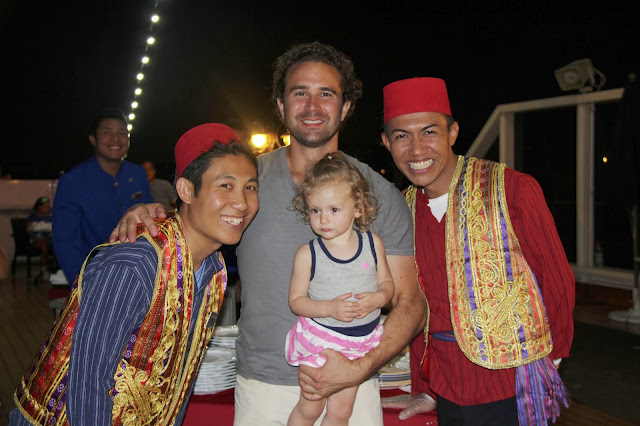
The crew dressed the part
The scenery was beautiful
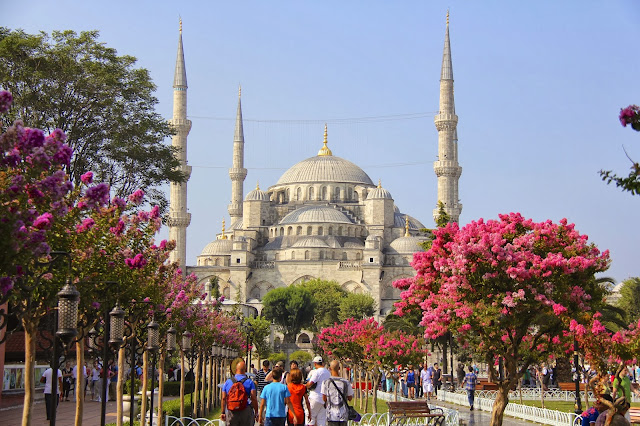
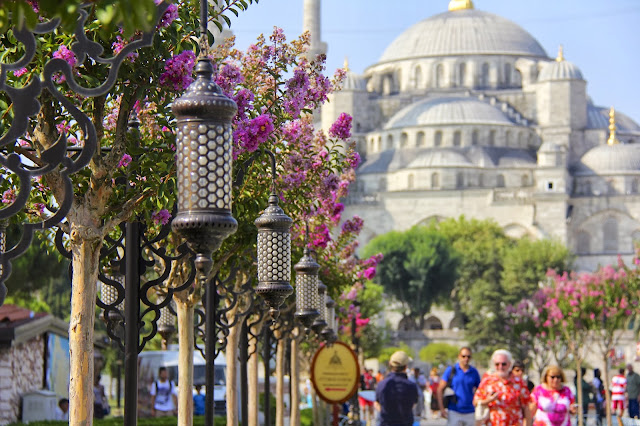
The next day we got an early start – with so much of the city left to take in, we wanted to get in as much as physically possible. We decided we would try to beat most of the crowds and start with the mosque’s. Specifically, the Hagia Sophia and the Blue Mosque – which sit opposite one another. We only ended up touring the Sultan Ahmed Mosque – or Blue Mosque, as it’s commonly called due to it’s blue tiles that adorn the inside walls. The mosque’s construction began in 1609 when it was commissioned by Sultan Ahmed I to not just rival the Hagia Sophia, but to surpass it. The mosque has an unprecedented six minarets (still the only mosque in Istanbul with six to this day), which garnished the wrath of the public. The display of six minarets was preserved for the Prophet’s mosque in Mecca – therefore the Sultan was criticized for incorrectly thinking that he was the man. The prevailing urban legend is that there was a miscommunication in which the Sultan told his architect he wanted gold minarets (altin minare) and the architect understood six minarets (alti minare). Seems fishy to me – sounds like he concocted a scapegoat to shift the heat off himself. Ultimately, he corrected the situation by shelling out the dough to build a seventh minaret on the Prophet’s mosque in Mecca. Whatever the correct history, it was fascinating to absorb in the first person.
We started our day before the city really woke up – just shop keepers setting up
Sulton Ahmed Mosque (the Blue Mosque)
Approaching the mosque
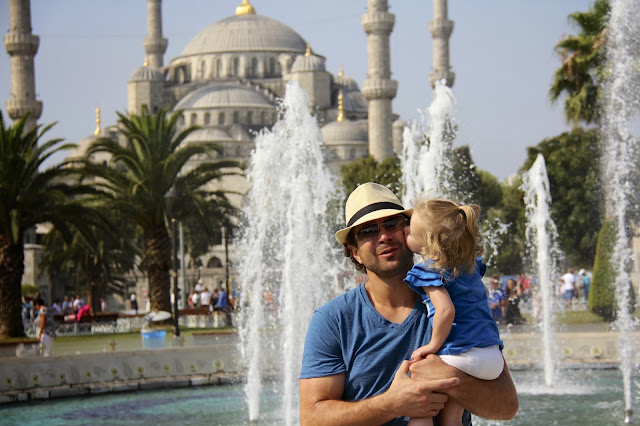
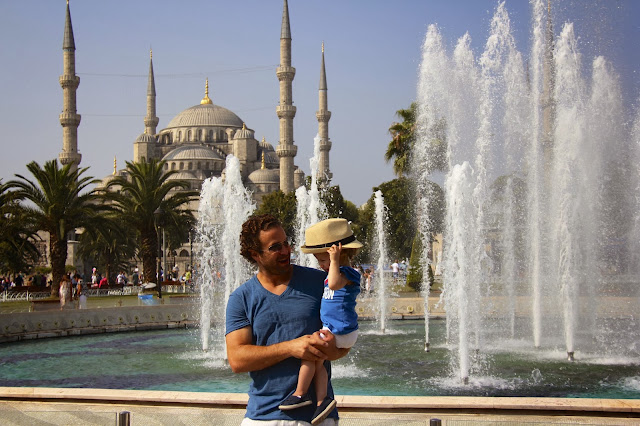
We had fun playing in front of a fountain
Julia steals my hat – I guess she wanted to block the sun
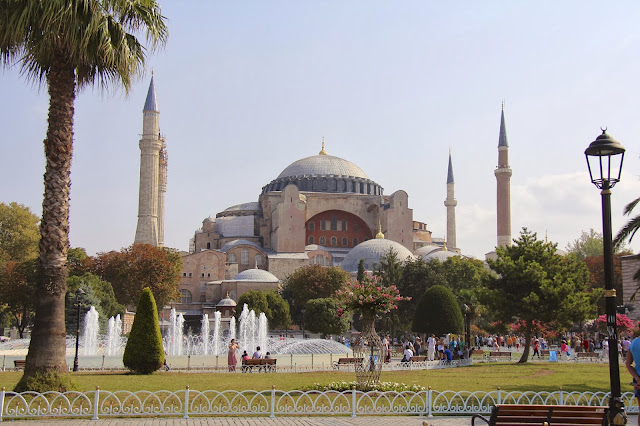
Hagia Sophia Mosque
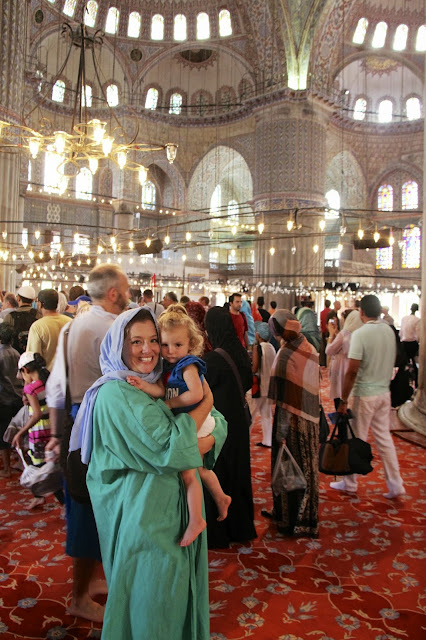
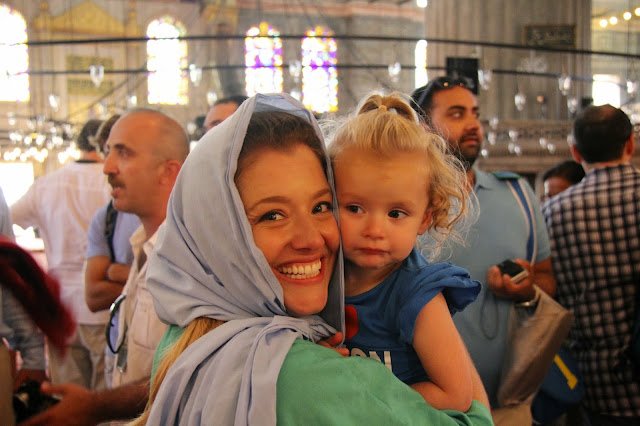
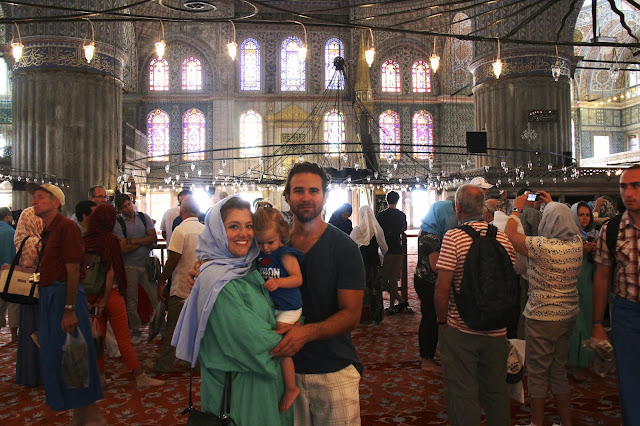
All female visitors are required to wear proper garments
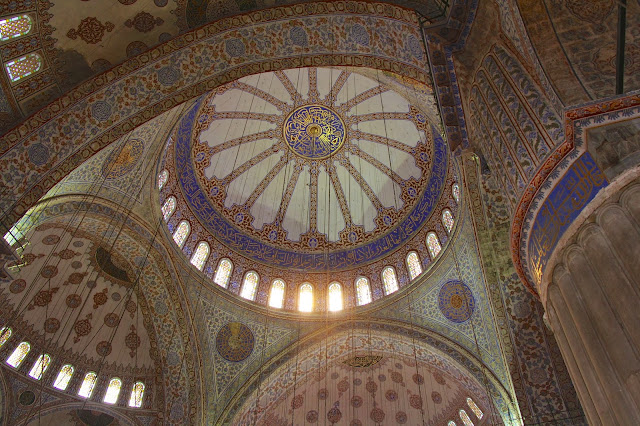
The ceiling and some of the blue tiles that are the reason for the nickname, Blue Mosque
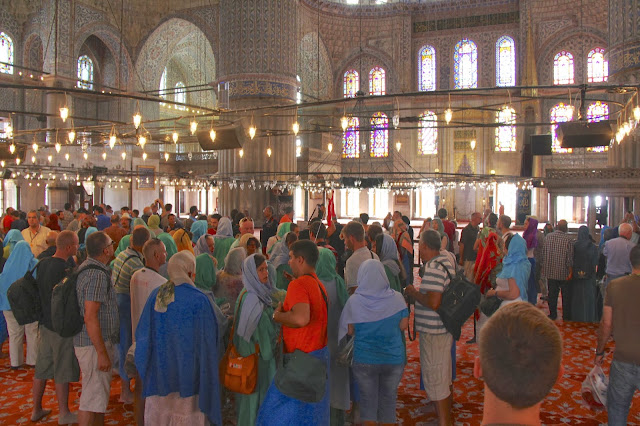
The mosque sees a large number of visitors every day
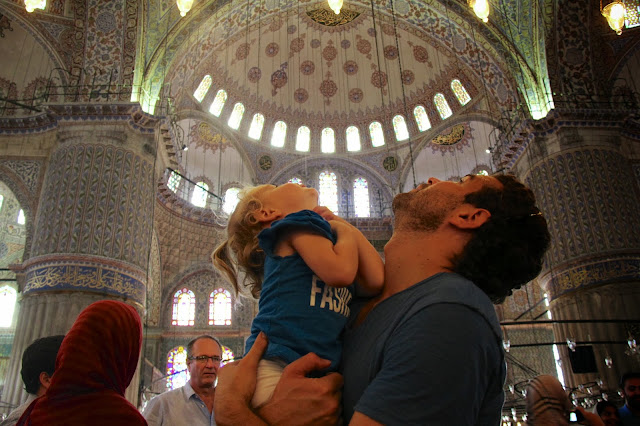
It’s impossible not to gaze upward at the amazing display of over 20,000 handmade tiles
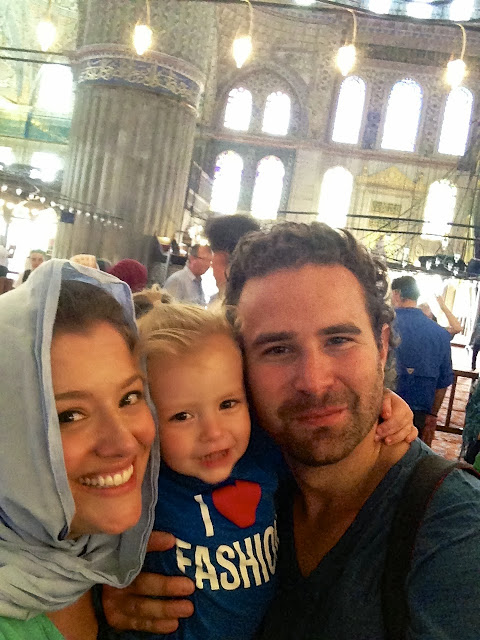
Jen and Julia in the mosque
Family photo in the mosque
Another family photo
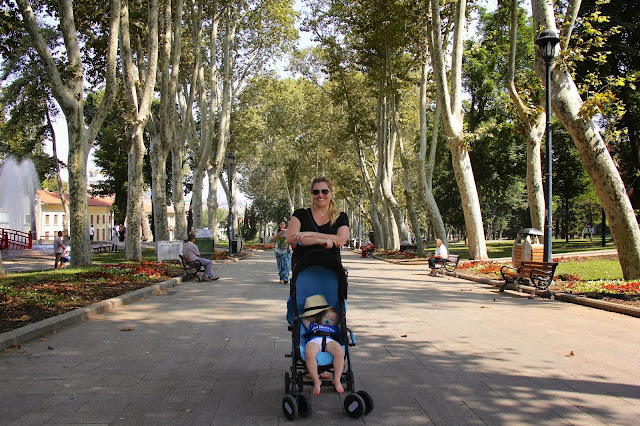
After the mosque tour, we headed northeast by foot to the Topkapi Palace. The palace was the primary residence of Ottoman Sultans for over 400 years. To this day, the residence consumes more land mass along the shoreline than any other single property and has been deemed by UNESCO as “the best example of ensembles of places of the Ottoman period.” We were very excited to see the palace, but unfortunately it was closed and so we had to settle for a stroll through the public gardens.
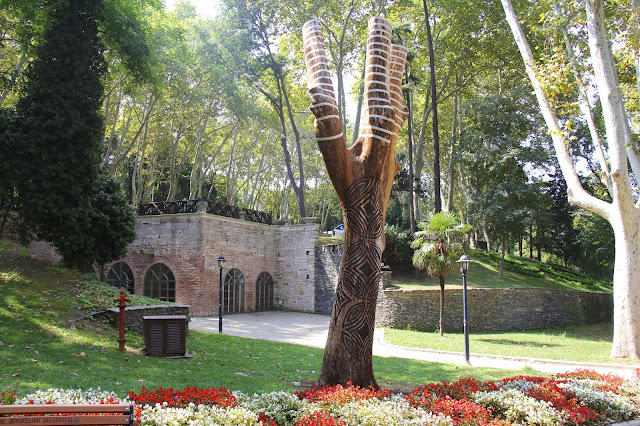
Inside the gardens of the Topkapi Palace
This unique tree appeared as if it had tattoos
After a long walk to our next destination, we first wanted to stop and have lunch. I had been dying for one thing since arriving in Turkey – a döner kebab. We found a restaurant that looked perfect and ducked inside for lunch. Just prior to walking in, we heard the adhan, called out by the muezzin from mosques across the city – amplified by loudspeakers. More commonly known in English as the call to prayer, this unique chant is called out five times a day, summoning Muslims for mandatory worship. After lunch we entered the famous Spice Bazaar – the center for spice trade in Istanbul. The market is the city’s second largest covered market behind the Grand Bazaar.
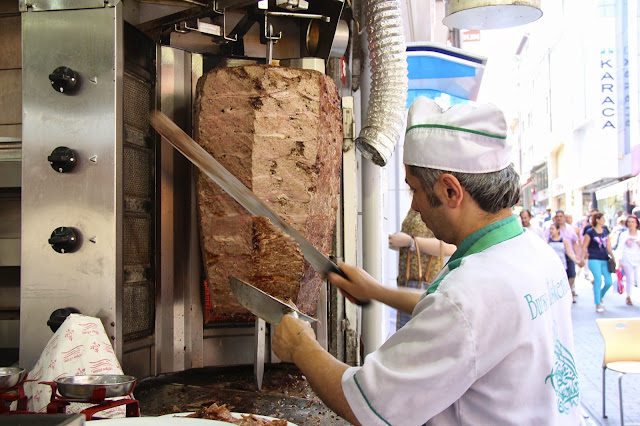
Döner kebab – a mixture of meat, usually veal and or beef with lamb and sometimes chicken
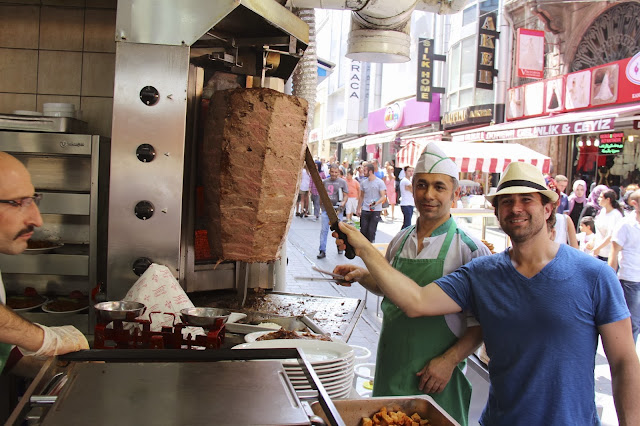
The only thing better than a freshly made döner kebab is one that you slice yourself!
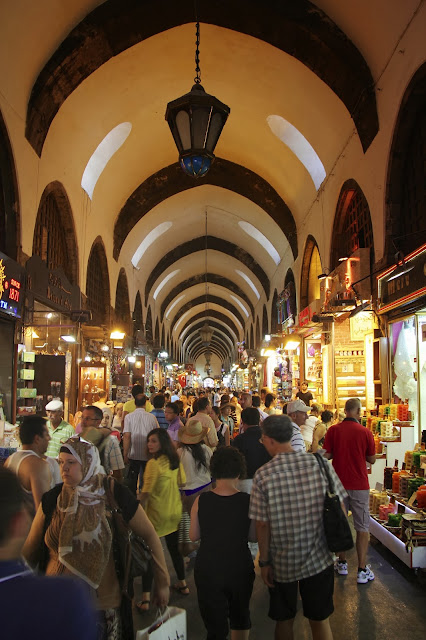
Entering the Spice Bazaar
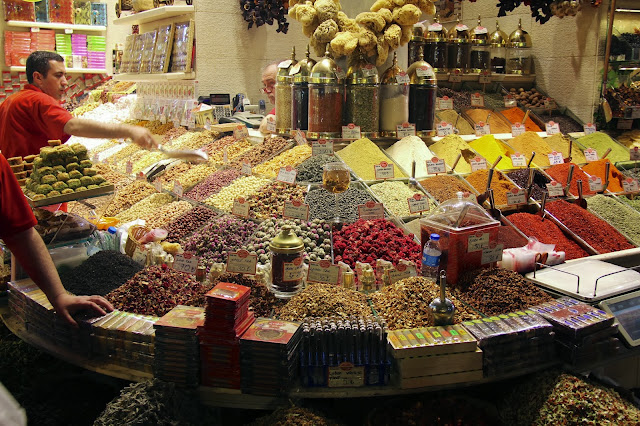
Merchants showcase their wares, including the ever-popular, Turkish Delight
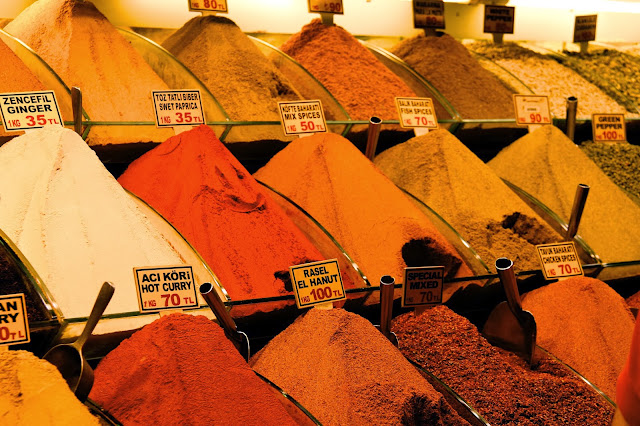
Here you can find most all spices, from hot curry to sweet paprika
The markets in Istanbul seemed endless – this is departing the Spice Bazaar
The ship hosted another party, this time a “sail away” party that included wonderful wine
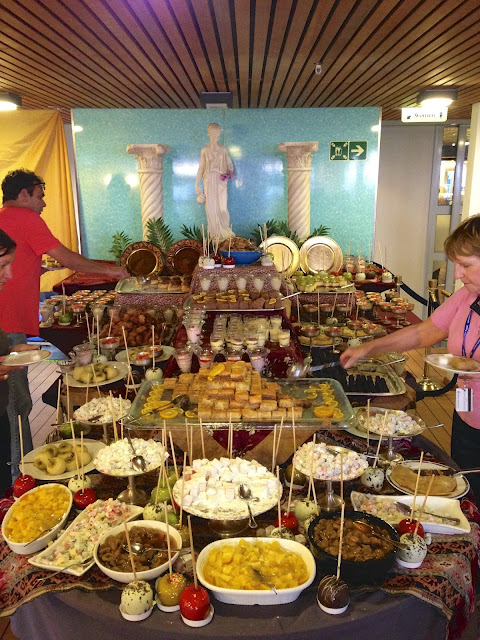
As well as delectable and authentic treats
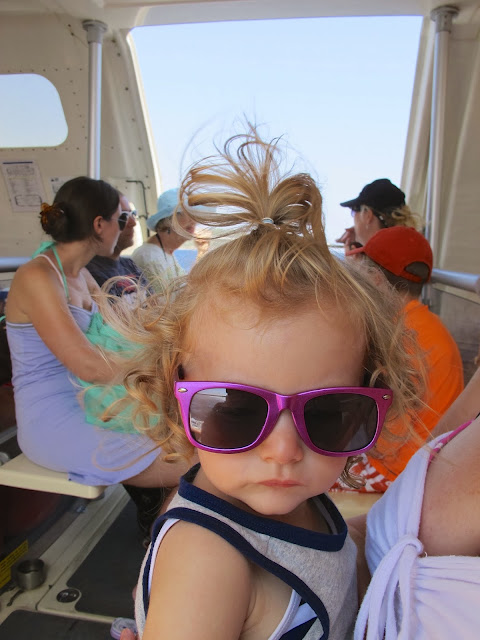
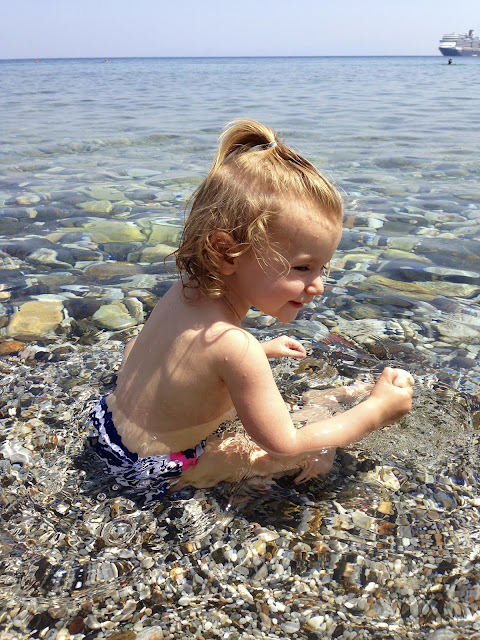
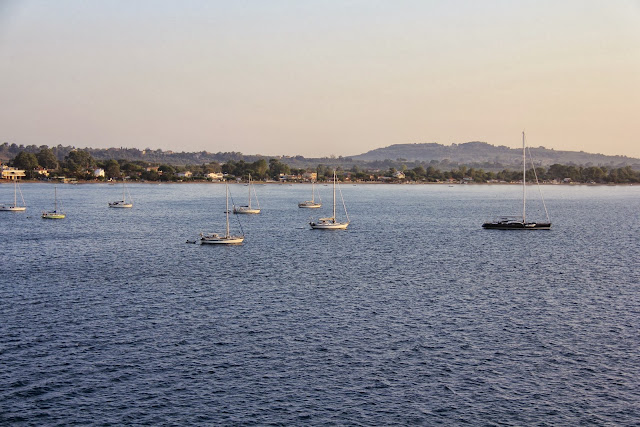
After our trip to the bustling city of Istanbul, a little bit of unplugging was just what we needed. We easily accomplished this on the island of Lesbos, Greece. This Greek island in the northern part of the Aegean Sea is Greece’s third largest, with a bustling capital (Mytilene) and 200 miles of coast line). Some ports were too small for our monolithic cruise ship, and so we had to use the tender system. All large cruise ships are equipped with smaller boats that can transport passengers from the ship to land when arriving in smaller ports of call. Generally, you are assigned a group number (depending on how quickly you arrive to collect it) and then send ashore in that order. Surprisingly, we arrived fairly early and got to shore just in time to snatch up one of the few remaining tiki huts on the beach. After that, it was clear sailing – nothing but relaxing and sitting in the crystal clear water. Oh, and one more thing… skipping stones. The ocean was just full of perfect stone-skipping rocks. I could easily average six skips but got as high as fourteen skips – the crowing achievement of the day, only to be topped by making the final table at the Casino’s Blackjack Tournament later that night.
We rode in the tender to get to Lesbos
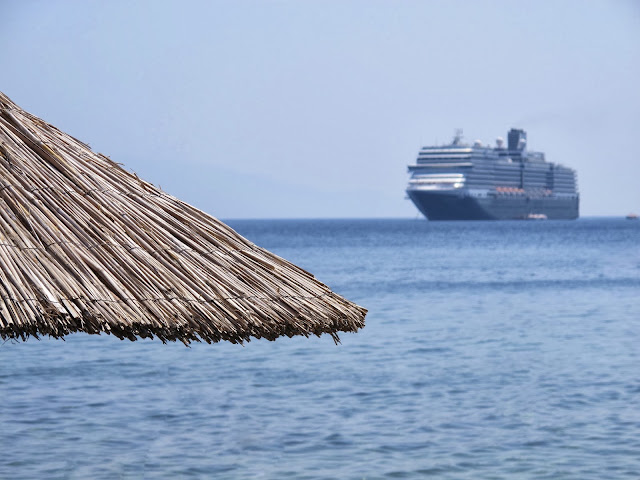
A view of our boat from the tranquil setting under our beach umbrella
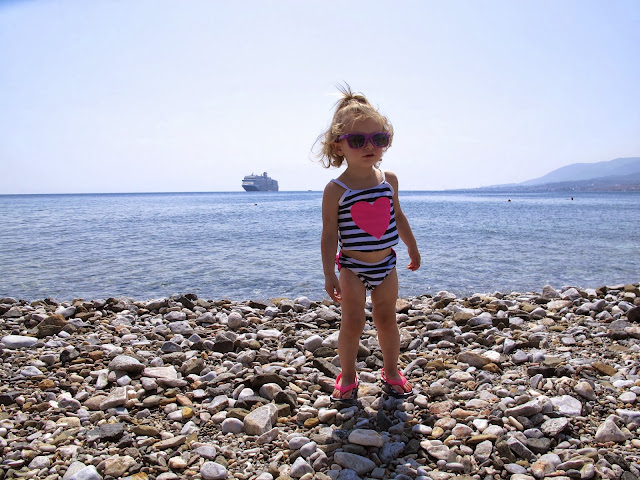
Julia poses for a picture
Skipping rocks with Daddy
Julia wanted to try on her now – she almost got the hang of it
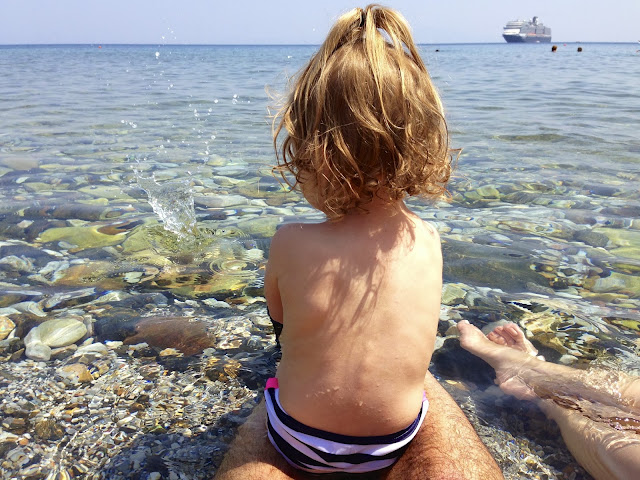
The water was so clear it was fun to just soak
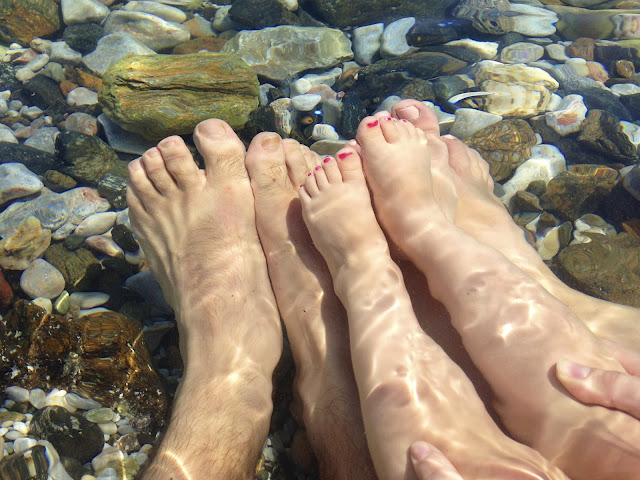
Family toesies
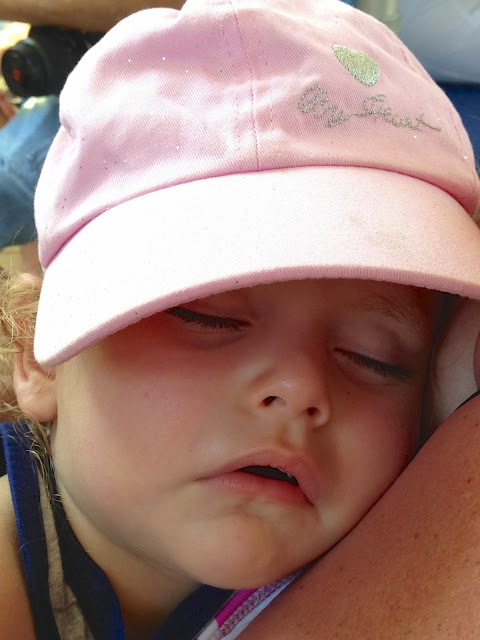
The sun wore Julia out – she was asleep on the ride back
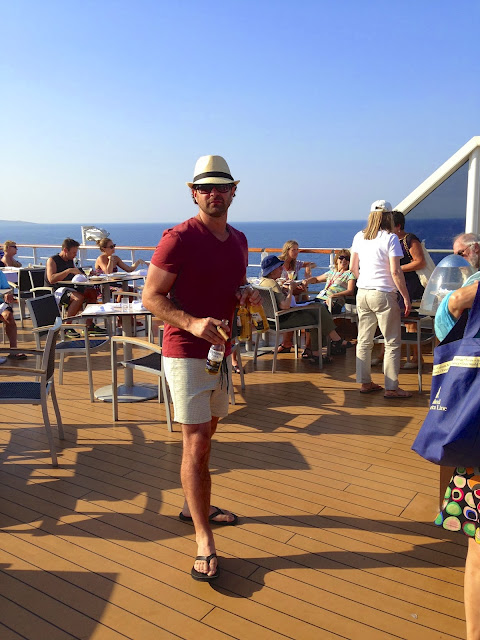
Two beers and a cigar – oh man, oh man! Relaxing on the ship as we sail away
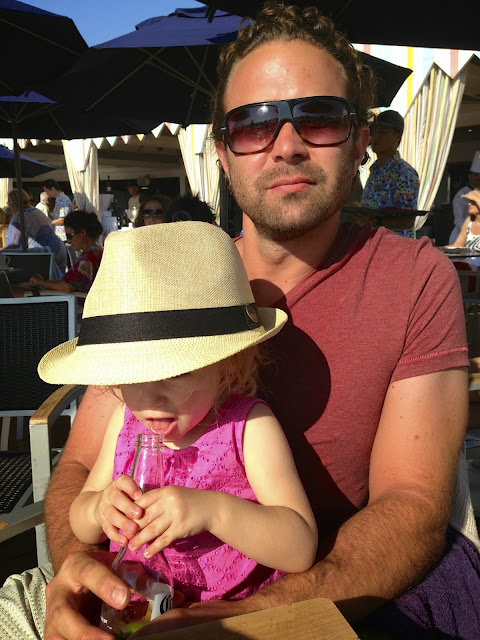
I’m posing for a picture with my girl, little did I know what she was up to under my hat!
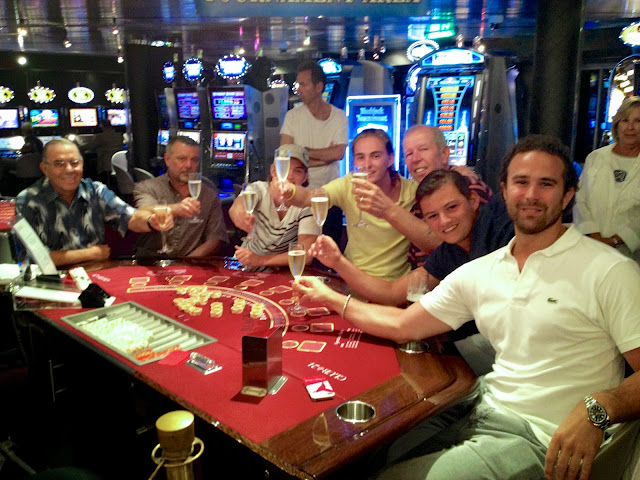
Blackjack tournament final table. Got knocked out doubling down on 10 against a dealer 6. It would have given me an unbeatable chip stack with three hands left. The winner had no idea what he was doing which put me on tilt
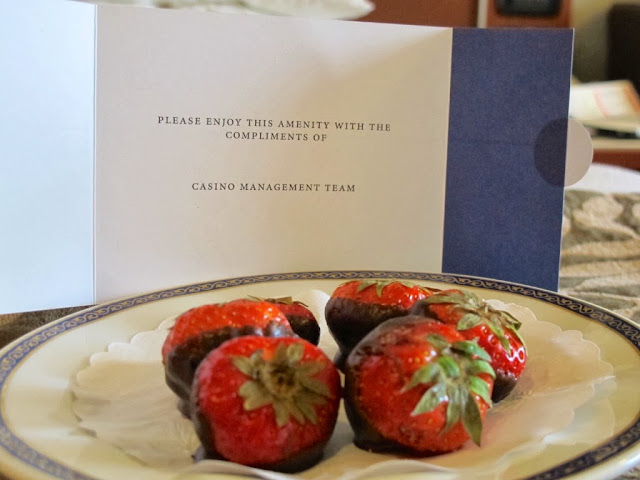
The casino would send up desserts and bottles of wine with their compliments. Perhaps I was too frequent of a visitor??
We still have plenty more adventure to come… please tune back in to the final section of our cruise in the next post.
Admit it… you sang the title in your head, complete with the voice raising on the “and-a I”…
I love to cruise. Jen loves to cruise. And now… Julia absolutely loves to cruise. We have very few experiences aboard cruise ships, but each time we’ve been on one of these massive floating hotels (or mini-floating city’s… I couldn’t choose between adjectives – you pick your favorite), we feel like royalty. We know that we will chose this method of vacation many more times in our lives. Cruising requires little planning and you are always rewarded with the very best customer service, the opportunity to see many more cities than you normally could in a given time period, endless activities aboard the ship, wonderful food, the benefit of unpacking only once and perhaps best of all – a very affordable vacation (you can get very good deals if you hawk the last-minute deal sites).
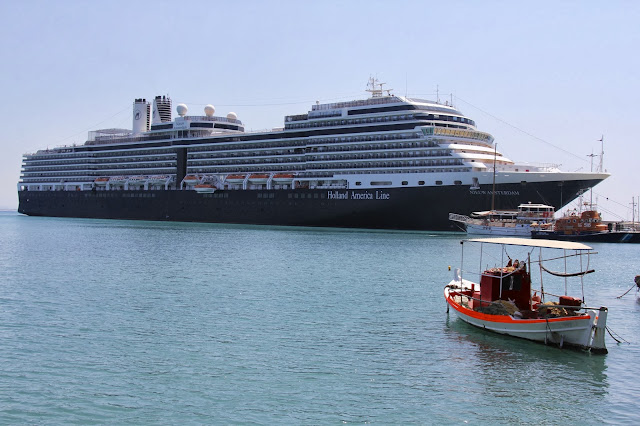
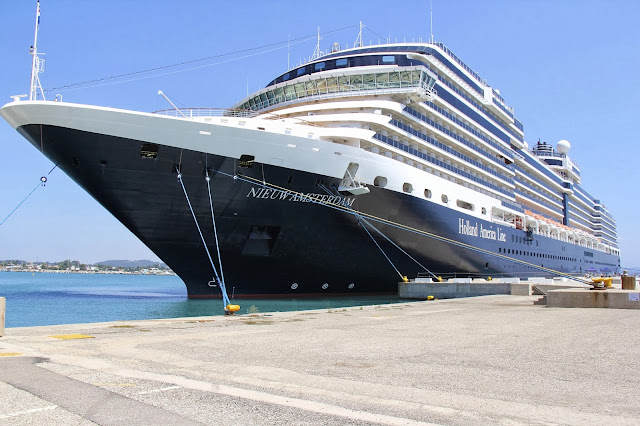
Our ship – Holland America’s MS Nieuw Amsterdam
The first time that Jen and I took a cruise was on our honeymoon. We spent three weeks sailing around South America (from Buenos Aires, Argentina all the way around Cape Horn and on to Santiago, Chile). I chose Norwegian Cruise Line (NCL) for our first cruise, primarily because the itinerary was perfect and I found it to be reasonably priced. I wasn’t nearly the internet-nerd I am today and so I did little research beyond that. We had a wonderful vacation, ate way too much food, enjoyed some lovely scenery (I have thousands of pictures to prove it) and had an absolute blast. However, I had no idea how amazing cruising could really be until we recently boarded Holland America’s, MS Nieuw Amsterdam (pronounced, n-e-w); one of the newer ships in their fleet.
Boarding the Nieuw Amsterdam
I had a few checklist items when we moved abroad – things I wanted to do and to see. Experiencing a cruising-adventure was definitely on that list. For the first time in our lives, we had the flexibility to really take advantage of a “last-minute” vacation, and so the plan was to use that to our full advantage. Unfortunately, we discovered that having a child prevents you from really getting those steep 70% off discounts you see flashing on the side of your favorite webpages. Some cruise lines require a child to pay a full fair. Others require that he or she have a special room or special bed. Either way, it seemed that the myth of really inexpensive cruising (at least with a child) was just that – a myth. Eventually, we searched for dates further into the future (ensuring the ability to book a room that could accommodate a small child) and narrowed our choice down to two cruises with two very different itineraries on two very different cruise lines.
Could this little peanut (eating until her heart is content) actually prevent us from finding our perfect cruise?!
“Who me?! No way, Dad. Now, let’s EAT!”
World travelers and vacation aficionados – here’s where you need to pay attention. I am going to share two valuable resources I discovered throughout this process. First, I had been paying a fortune in cell phone bills, calling these various companies to get accurate information about their cruises. Then I stumbled across, gethuman.com – an internet based voiceover IP company that allows you to call most major companies from your computer – for free! I have spent this past year calling American Express, Visa, Wells Fargo and other companies at a cost of roughly €10 per call… just to get past the automated prompts! This site has revolutionized my ability to manage tasks at home while living abroad. Second, we discovered cruisecritic.com – the ultimate guide when selecting a cruise. Consider it the yelp or trip advisor of the sea. This site allows you to plug in any cruise line and read reviews – but more importantly it allows you to search specific cruise ships, ranking everything on that unique vessel from the food to the service – ultimately awarding the ship a nice, neat approval percentage number. It’s all very easy and streamlined. What I learned was that a cruise line can offer a vastly different experience aboard any number of their ships (for example, an older ship with lesser quality food may not be nearly as pleasant as one of their newer ships). Therefore, we learned that the ship itself is more important than the cruise operator. And we learned this lesson just in time. I was on the phone with Costa (the losing company), about to book our cruise. I had selected this particular cruise because of the funky itinerary. In addition to the “normal” places, we would have ventured into Ukraine, Romania and Bulgaria. I was moments away from giving my credit card number when Jen motioned at me frantically, having just discovered this particular ship only had a 54% approval rating. I got off the call as quickly as possible and called Holland America, booking aboard the Niew Amsterdam.
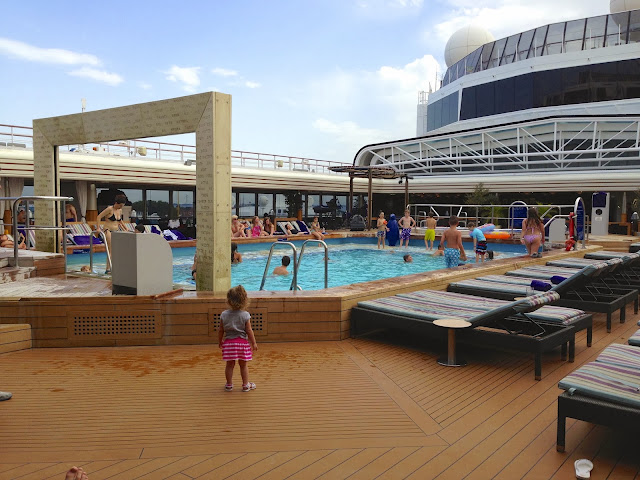
Julia evaluates one of the rooftop pools – this one was located midship
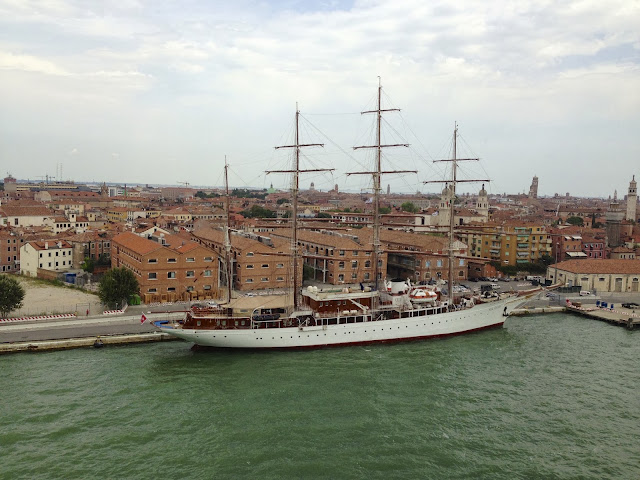
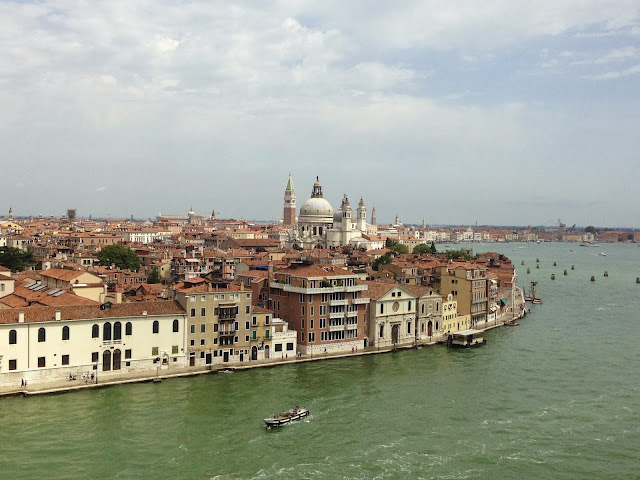
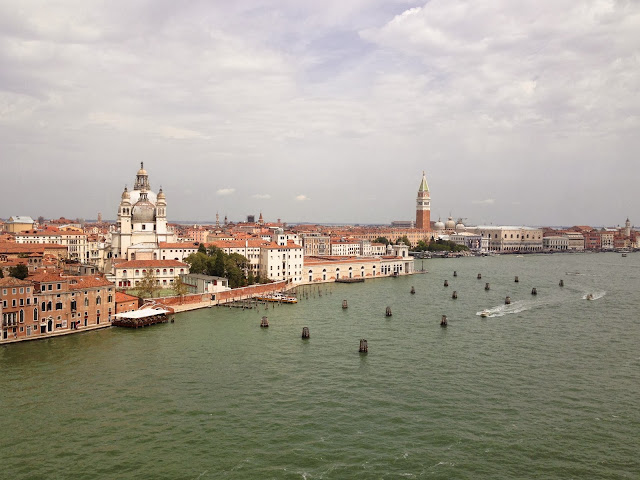
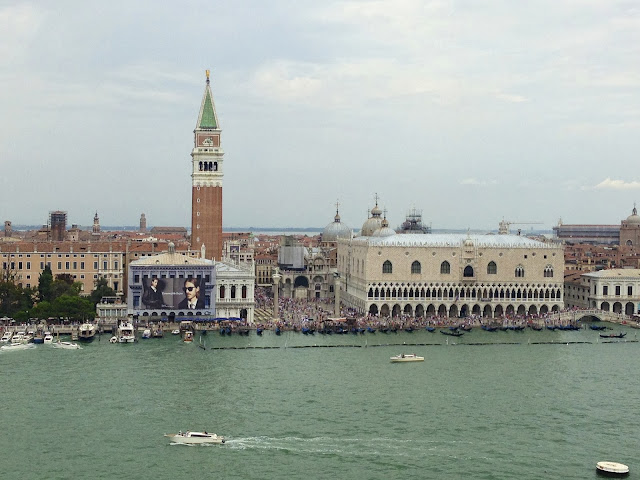
Our cruise departed from Venice, and so we took the three hour train from our home. We were in no rush to get into Venice early, having been there on previous occasions. We bypassed the throngs of tourists vying for photos of the canals and simply went right to the ship. We stayed in Venice’s port the first night, but set sail early in the morning. As we sailed through the Canale Della Giudecca in the middle of the city (I had no idea that it was deep enough to accommodate our massive ship), our fabulous Location Guide, Tom gave a memorable and insightful tour of everything that we were seeing. I apologize in advance for the pictures, I only had Jen’s cell phone with me – poor planning.
Sailing past another ship in the harbor
From high atop our cruise ship – we could see the entire city unfold before our eyes
A beautiful view of Santa Maria della Salute and the Campanile of Piazza San Marco
From this height we could actually look down and across Piazza Saint Marco – a very unique perspective
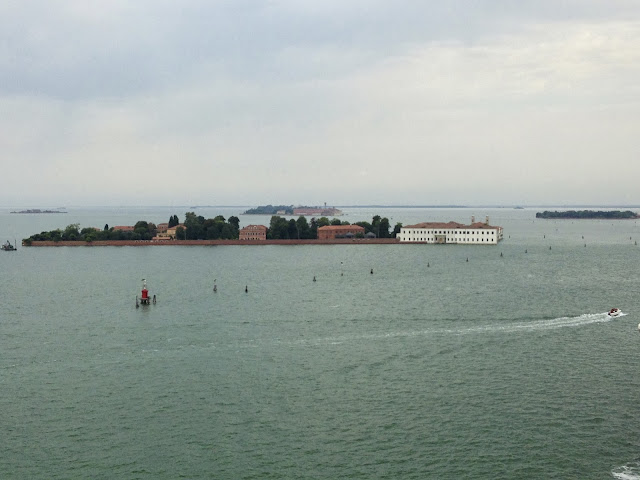
Here you can see many of the 118 different islands that make up Venice
Our first full day aboard the ship was a Sea Day, which means exactly that – we were at sea all day. This is wonderful portion of the cruise for anyone that likes to eat, gamble, drink, workout, spa, play in the pool, attend cooking courses, read, mingle, do nothing, do everything…. you get the point. I think I hit about four or five of those things in the first three hours – eating and gambling at the top of the list.
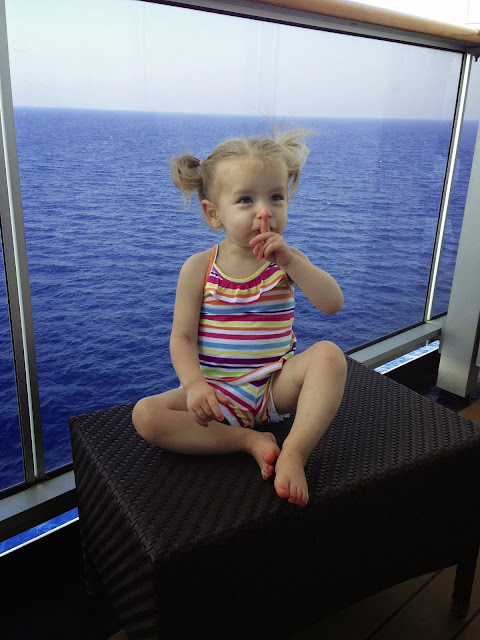
We woke up early, eager to start the day – but Julia reminds us not to wake our neighbors
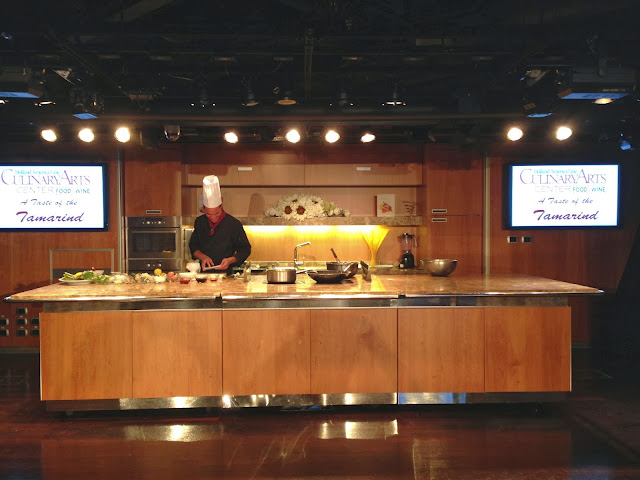
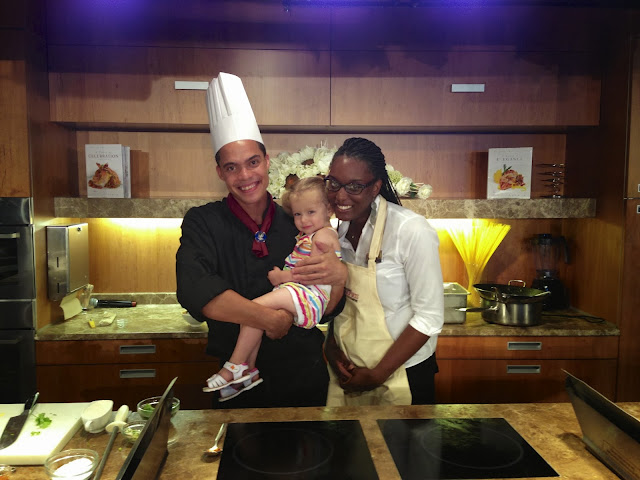
We enjoyed a cooking demonstration
Posing with the Chef and Activities Coordinator
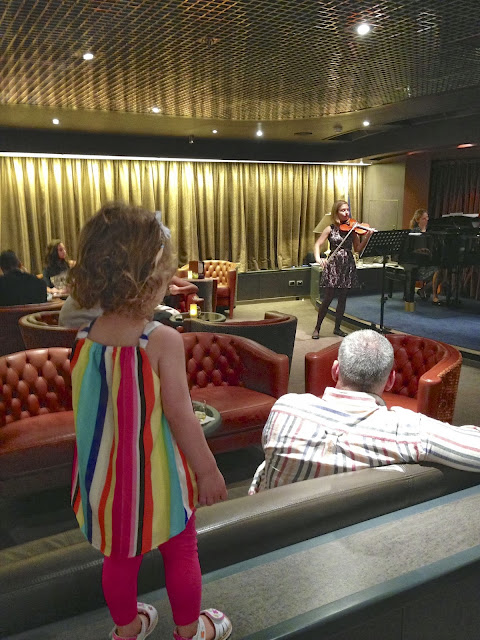
Julia would stop and watch this duo, Adagio perform each night after dinner
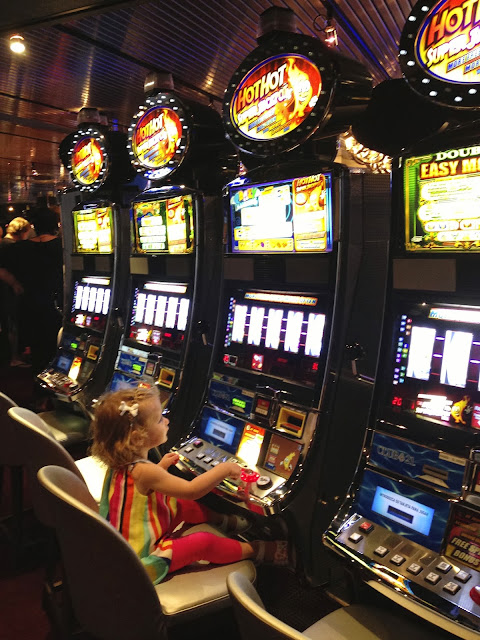
We hoped that lady luck would find Julia
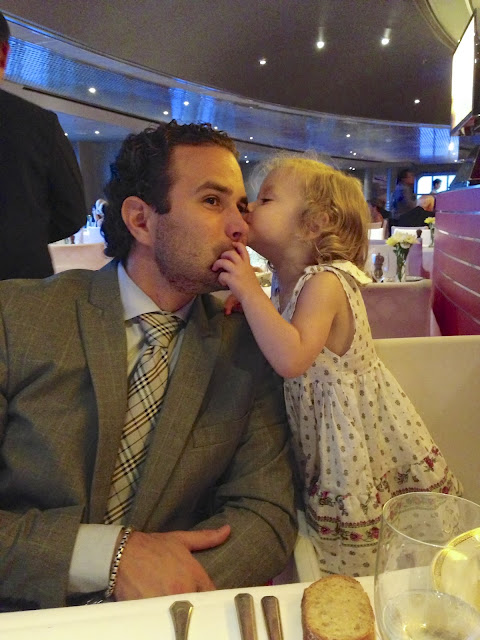
Julia treats me to a kiss during one of the “formal nights”
The following morning was a real treat – our first Port Day. We were at port in Katakolon, Greece, which was just a short bus ride away from something you may have heard of… Olympia, Greece. As in… the place the very first Olympic Games were ever held. As in, the place that contains the ruins of Zeus’ temple. And so I was a little geeked-up to see it all. I didn’t have to imagine standing in the very first olympic stadium – where the worlds best athletes competed since the 8th century BC; we actually got to do it. It was very awe-inspiring.
Our first sunrise at port
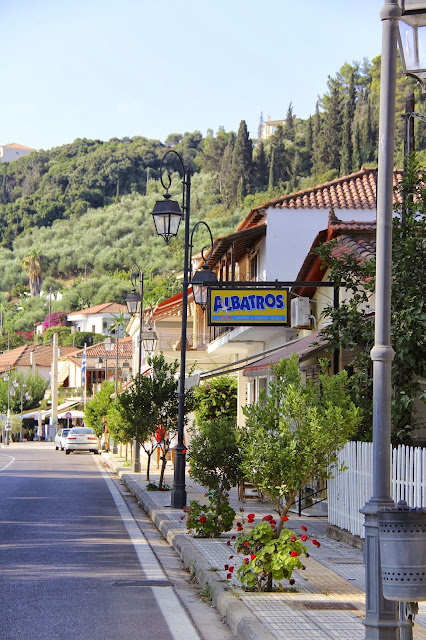
We strolled through Katakolon before our bus departed for Olympia
Travel-bugs… please allow me to give you another tip. If you are reading this post and thinking, “Greg is making a convincing argument for a cruise… I think I’ll give it a go”; don’t make the mistake many cruise-goers make. Do not book excursions through the cruise directly. Sure, it’s easier. Some may say safer. Others may tell you they’re better designed. That’s all true… but at an immense premium. Please allow me to state my case. Below is one of the excursion options at our first port (copied from Holland America’s site). Just skim it if you’d like… I’ll recap:
The small fishing village of Katákolon is your gateway to the mystical site of ancient Olympia, 25 miles to the east. The sanctuary of Olympia has the appearance of a park, and as you step back 2,000 years into the past, imagine the area crowded with athletes, orators, merchants and philosophers surrounding the Temple of Zeus with its forty-foot statue of the god, the ruins of which you will see today. It’s easy to imagine the roar of the spectators as the athletes took their marks on the marble starting blocks, and to picture the temples, treasuries, porticoes and statues as they were. After your visit to Olympia, you will continue to Mercouri Estate, known not only for its wines of supreme quality but also for its magnificent location. This is the area where the Refosco grape was first planted after being imported from Italy. In 1930, the Mercouris built a modern winery and distillery, updated again in 1990 with the latest technology. You are invited to experience the beauty and charm of the vineyards, to see the old and new wineries, and also to taste the locally produced wines.
OK – so you get a bus ride with 40 other schmoes to Olympia, gate access and a wine tasting. It’s very well written and this guy is singing a sweet sirens song – but he couldn’t lure me. Guess what it costs… $150 per person plus $60 for kids. OK – so we’d be all in for $360. Guess what we did? We got off the ship, walked over to the person selling bus tickets to Olympia (the same cushy travel bus with A/C and TV’s that the cruise people take) and bought both tickets for $20. Then another $20 at the gate and I’m all in for $40. A savings of $320. With that much left in my pocket, I had my choice of any number of Greek wines “known for their supreme quality” that we picked up at Duty Free on the way back to the ship.
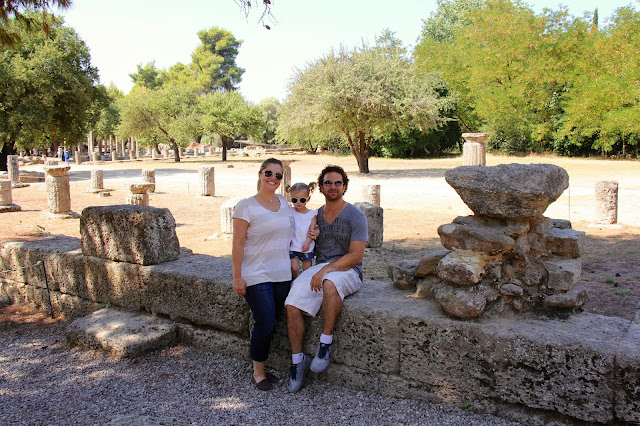
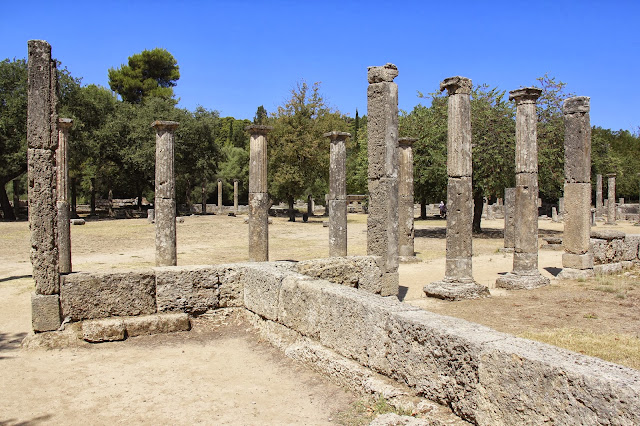
We stop for a family photo in front of the Palaestra
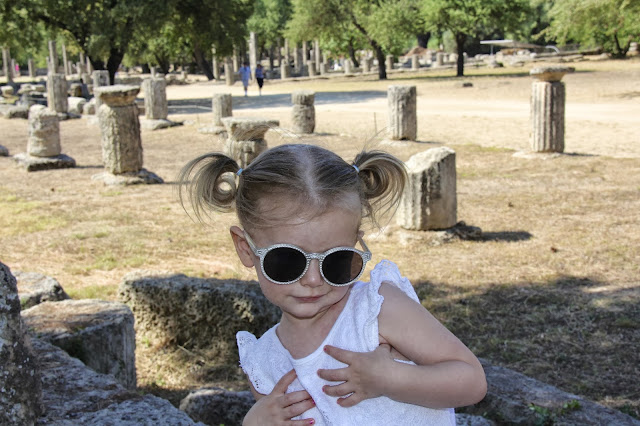
Julia does a little dance number
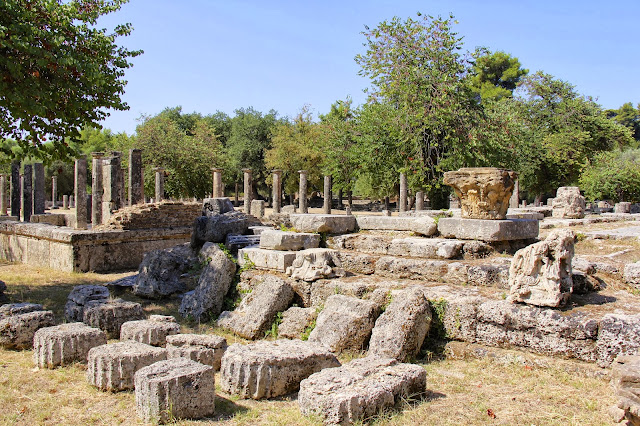
Ruins of the Theokoleon
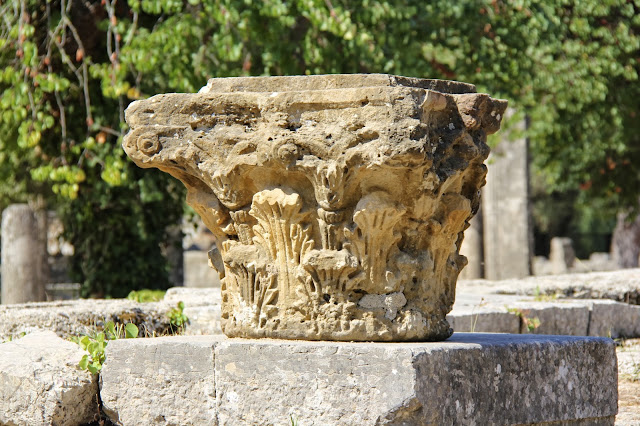
A lone column capital (top) remains… 1,000 years old? 2,000 years old? 2,500 years old??
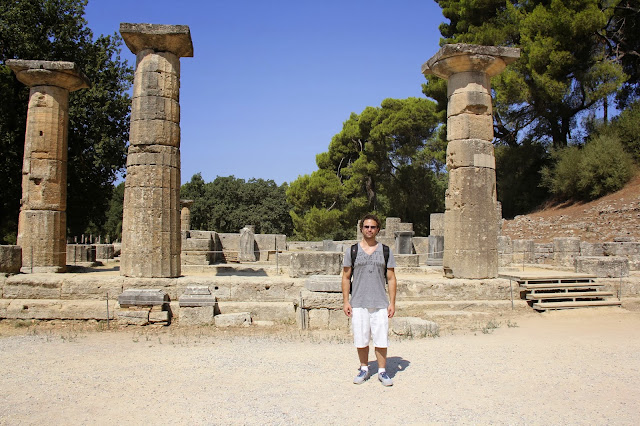
I stop to stand in front of the Temple of Hera
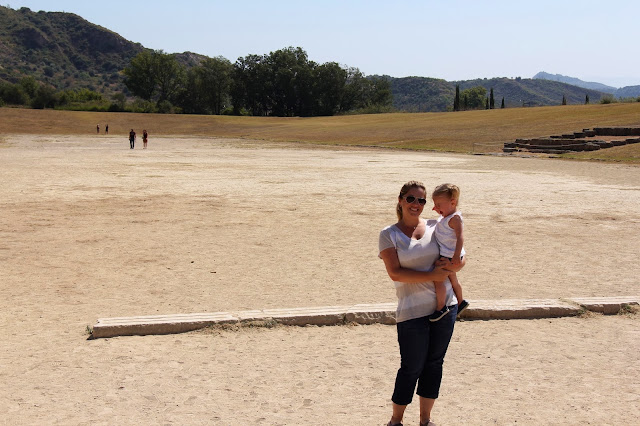
Jen and Julia challenge competitors on the Stadium ground
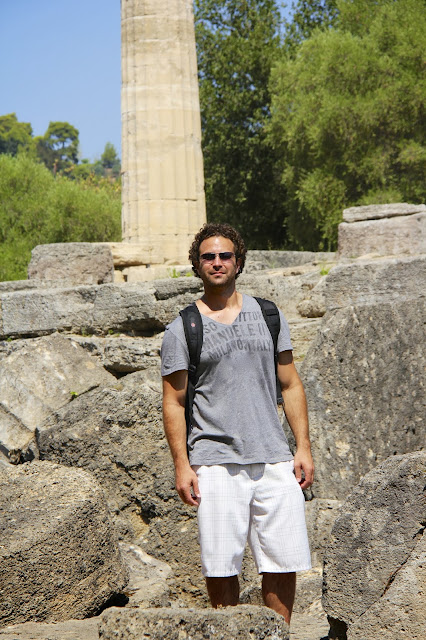
Lost amongst the rocks in front of the Temple of Zeus
Another view of the Theokoleon
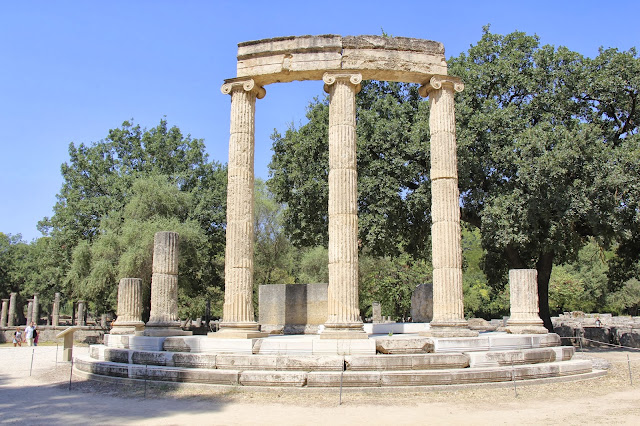
Impressive remains of the Philippeion
The next day we woke up in Piraeus, Greece – which is the port city outside Athens, Greece. Same thing as before – I bypassed the tempting, but expensive excursions and departed with Jen and Julia in tow. We walked around the corner and found that the Greek Gods were smiling on us that day. In addition to the regular cabs and buses to take us the 20 minutes into Athens, there were “Hop On-Hop Off” open-top tour buses. That meant we would get a ride, an audio tour and the ability to come and go as we pleased, all for $30.
Athens is an amazing city with a recorded history spanning 3,400 years
We rode around Athens, enjoying our tour and chuckling to ourselves at the Greek music they kept playing over and over (imagine the soundtrack to “My Big Fat Greek Wedding” on repeat). My plan was to complete the loop and finish the audio tour before getting off, but when I saw the majesty of the Parthenon, I knew we needed to depart the bus immediately.
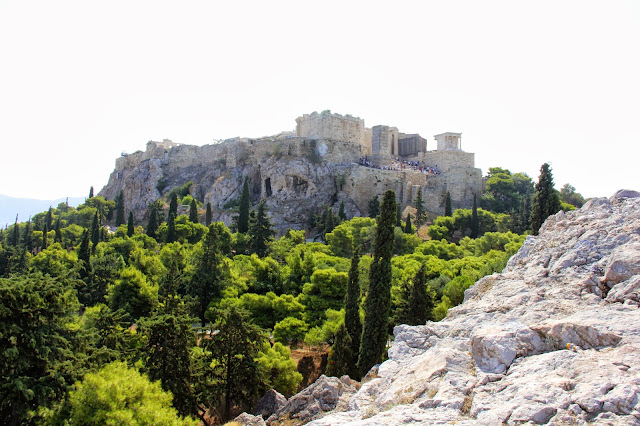
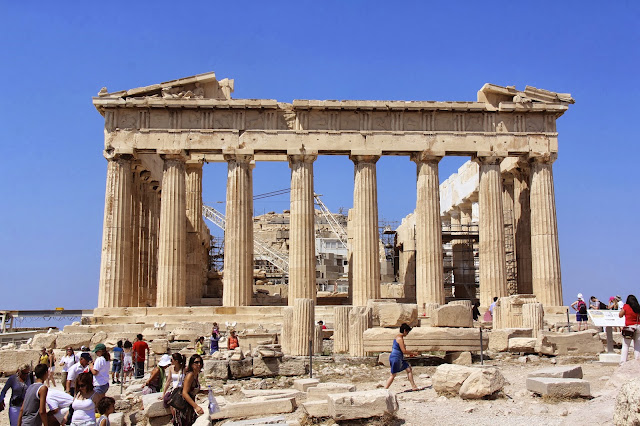
The Parthenon sits atop the Acropolis of Athena
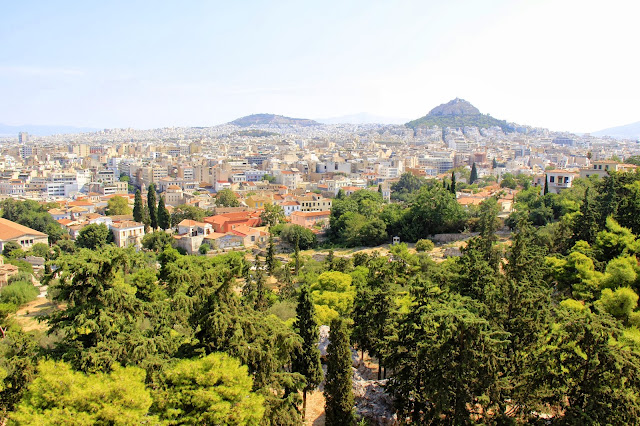
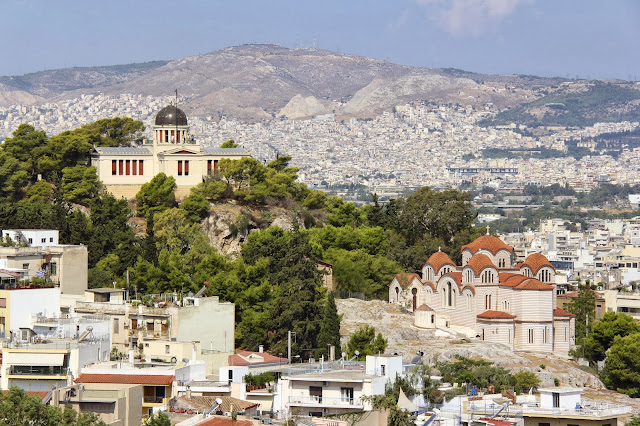
The Parthenon is the featured temple within the Acropolis of Athena; a temple built to honor the Goddess, Athena. Construction of the temple began in 447 BC and today it is widely considered the most important surviving building from Ancient Greece. In order to reach the temple, you must climb the imposing slate steps to reach the Acropolis of Athens, an ancient citadel set high atop a rocky outcrop far from today’s modern Greece. But before we climbed the steps of the Acropolis, we first climbed a neighboring cliff for a view of the magnificent ancient city and the more modern one below.
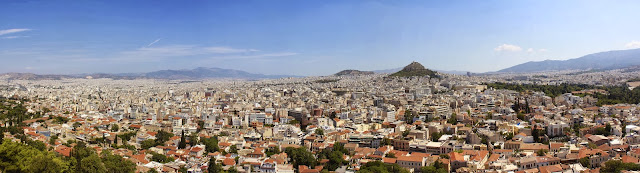
Athens has roughly 3.2 million inhabitants – Greece’s largest city by a wide margin
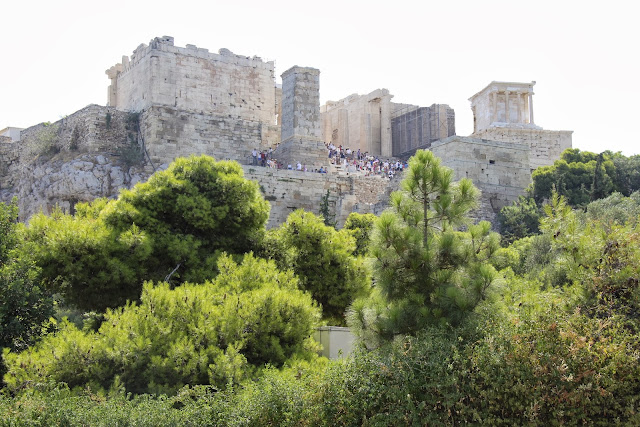
Hundreds of visitors passing through the gates of the Acropolis
Ancient ruins are a part of the city – even as modern urban sprawl is built around it
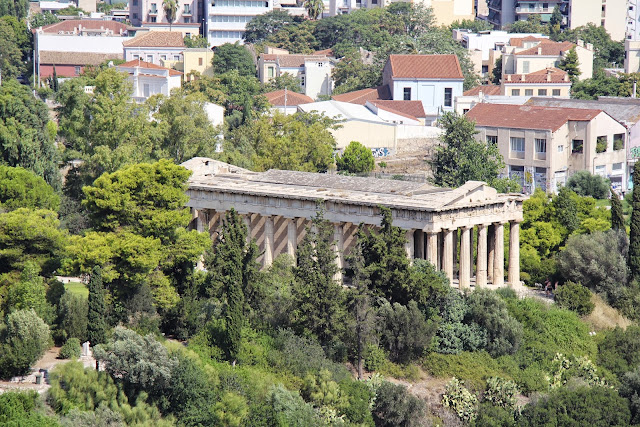
Some more “modern” temples perched atop their own cliffs
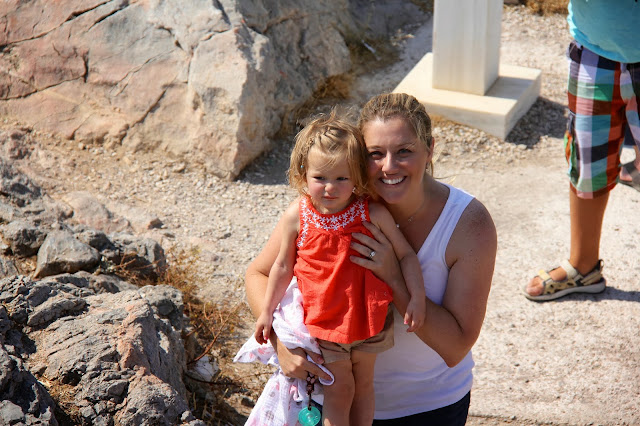
My girls begin their ascent
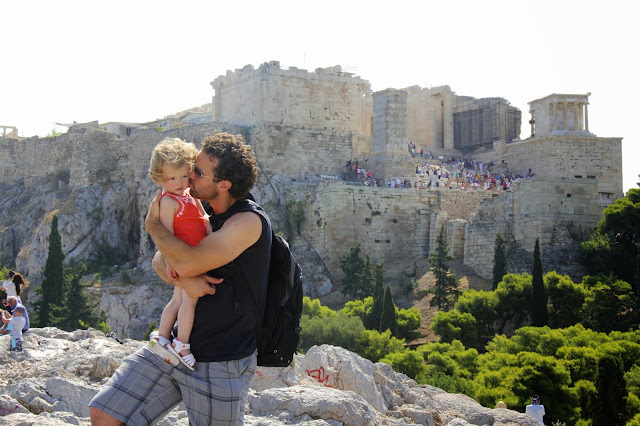
Julia fights the wind and I steal a kiss
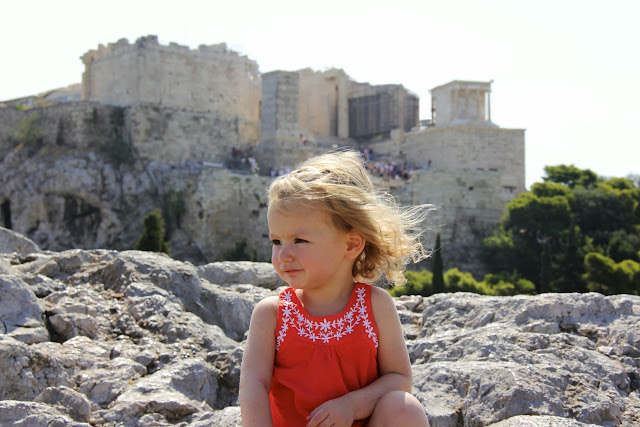
I think Athena herself would have been pleased to have this little guest in her temple
As we climbed the steep incline of the Acropolis toward the temples, we narrowly missed slipping and sliding back down to the bottom. The slate steps were slick even though they were bone dry – I couldn’t imagine making the climb if it had rained. There were many sights to see, including the amazing expanse of a remarkable city below. We marched through the ancient doorway leading into the city and stopped for a rest and some photos.
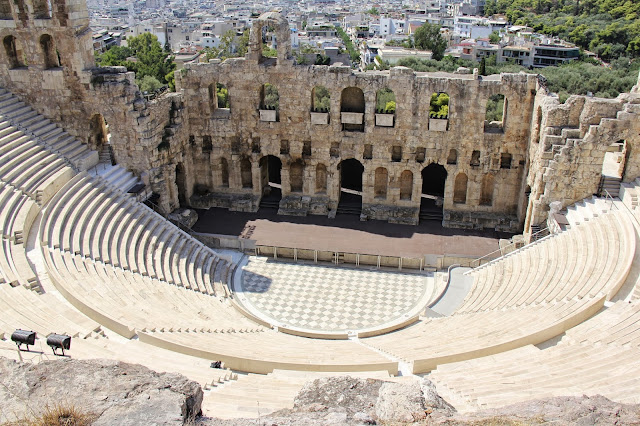
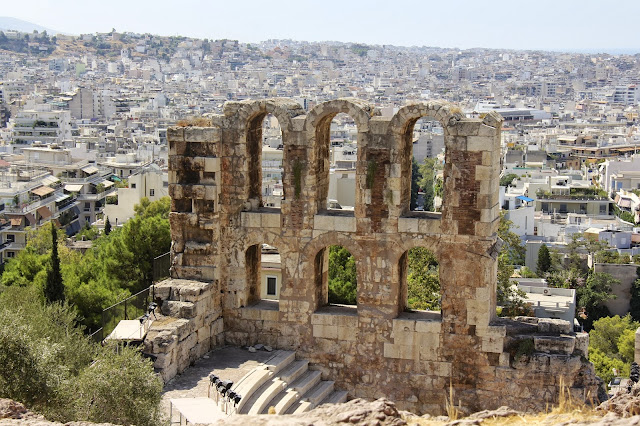
Odeon of Herodes Atticus – a steep sloped amphitheater built in 161 AD
The southern wall remains well intact
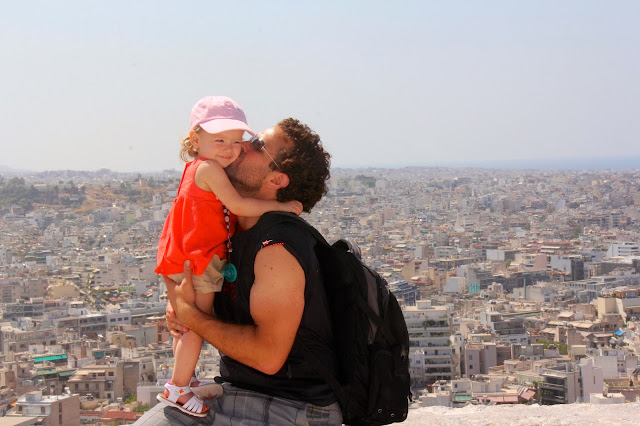
Julia lets me kiss her for all of Athens to see
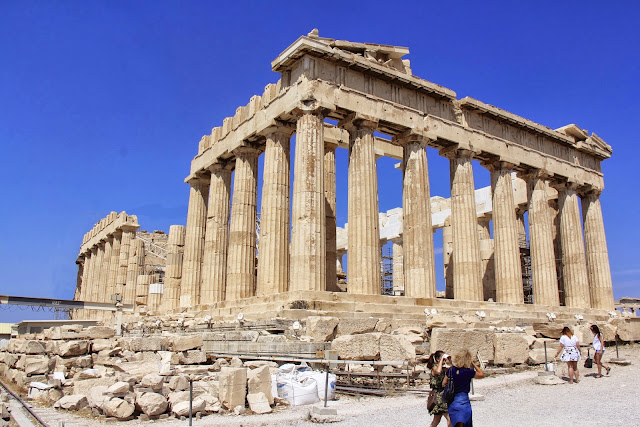
The Parthenon – Temple of Athena
It’s amazing how well the Parthenon has been preserved
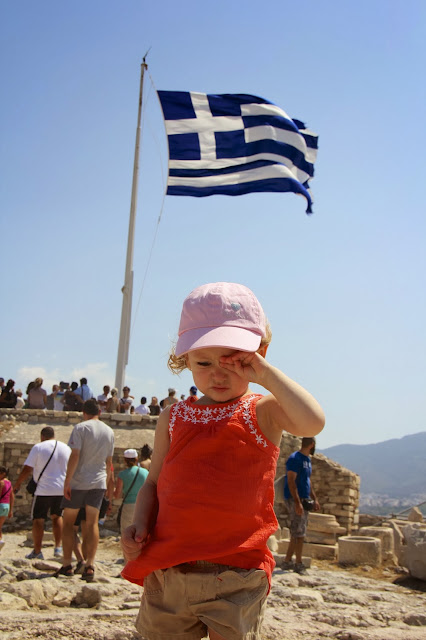
Julia pays her respects to the Greek flag
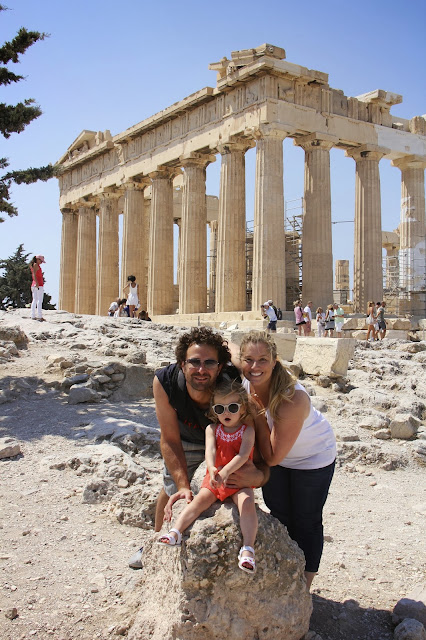
Family photo in front of the Parthenon
While the Parthenon is clearly the star of the show within the Acropolis, there are many other important ancient buildings and temples. The Greek word Acropolis (Ακρόπολη) is made up of two components – akron, meaning “edge” and polis, meaning “city”. While there are many other Acropolis’ within Greece, it is commonly accepted that the Acropolis of Athens is the Acropolis in all of Greece. From the moment we walked through the gateway into the city, I truly felt as if I was transported into an ancient, mythical world – where Gods and Goddesses ruled from on high. Perhaps I have seen too many movies, but I really did feel as though I was apart of something far bigger than I’ve ever known. I think I was even annoying Jen a bit with my enthusiasm and newfound feeling of power (as if I was somehow apart of the world of The Gods and could strike down any mere mortal…). It was probably good that I got out of there when I did, lest I try to actually smite someone.
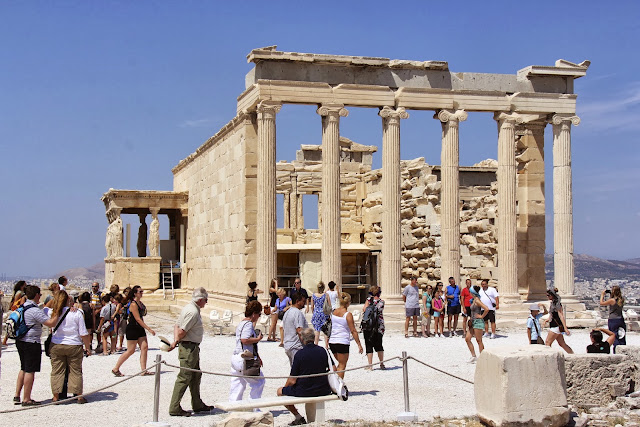
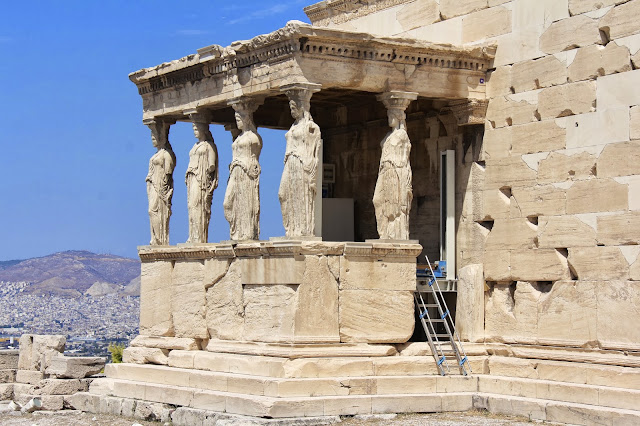
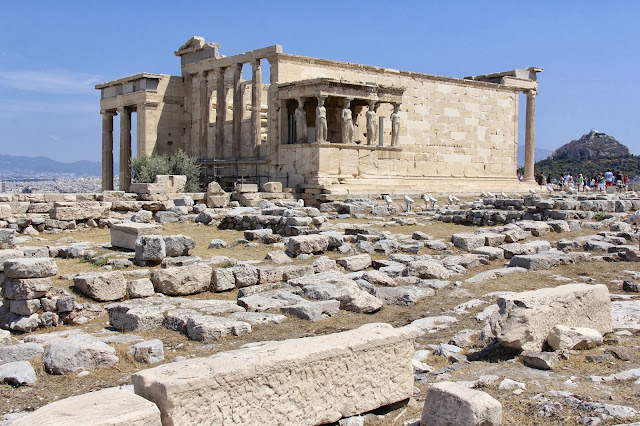
The Erechtheum – a Temple for both Athena and Poseidon built between 421 and 406 BC
The Porch of the Caryatids (maidens) built to conceal a 15 foot support beam
Another view of the Erechtheum from the south west
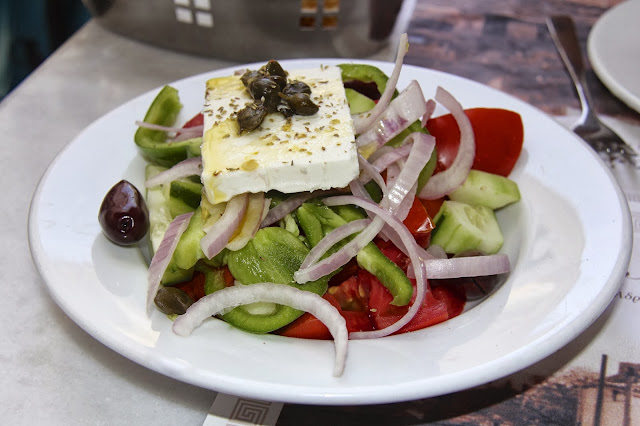
We had worked up quite the appetite touring the Acropolis and so we descended the ancient city toward a more modern part of town. We found a charming pedestrian area of the modern city and stopped for a lunch of what else… Greek salad! We drank a couple of refreshing Greek beers and then strolled through the ample markets.
Greek salad – the authentic way!
Finally, we boarded the ship and set sail for our next adventure… I hope you’ll hop back aboard for Part II (coming soon)!