 |
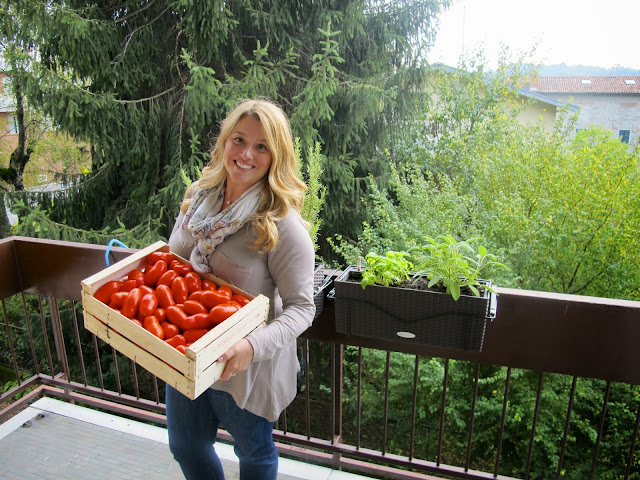
| Jen shows of her tomatoes |
I may not know a lot, but I have learned two things while living in Italy:
First, every home has two types of olive oil. They all have the generic store bought one (that’s still delicious) for cooking and salads as well as the “special” olive oil that is pressed by someone’s nonno in some small town in the mountains somewhere…
Second, (along the same vein) every home has homemade passata (tomato purée) that is either fatto in casa (made in house) or gifted by a friend of family member. Why the homemade passata, you ask? And what the heck is passata to begin with?! Well, let’s travel back several thousand years to a time when food was seasonal, fresh and delicious. In the time of the ‘hunters-gatherers’ people would eat whatever they could get – whatever was walking around and growing nearby that time of year. They quickly learned that proper storage of proteins (those delicious saber-toothed tigers) was an important part of surviving the winter. Fast forward to the early 19th century and technological advances allowed people to store fresh vegetables alongside their meat and fish. Since Italians love to cook with fresh, unaltered flavors – the benefit of having access to tomatoes year round was paramount. Grazie, Louie Pasteur for your contribution to Italian cuisine. So, the passata that we are talking about, is simply a puréed tomato that is jarred and stored in the cupboard for use throughout the winter.
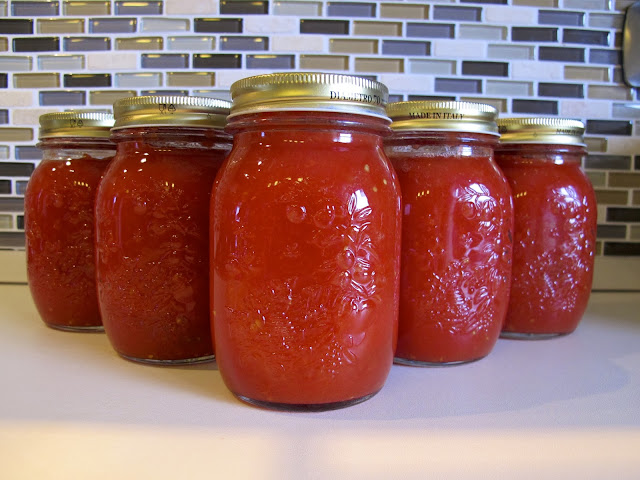 |
| Our freshly jarred passata |
Many recipes call for a tomato purée including soups, stews, sauces and dishes that require a tomato flavor (Jen’s easy and delicious marinara recipe). Most of the tomato purée sold in the US is processed and has a different consistency than passata. While that type of purée also has it’s purpose in Italian cooking, you can’t be without freshly jarred passata. At the end of the “tomato season” (early fall) all the grocery stores and fruit stands recognize this fact, and sell crates of San Marzano tomatoes for (in this case, we bought Roma tomatoes).
Here’s how you do it:
Equipment
>Canning jars and lids (the ones that have the little “pop” and can be sealed)
>Several large pots
-One to boil the tomatoes
-One to puree the tomatoes
-One to boil the jars in order to seal them
>A passaverdura (vegetable mill)
>Funnel to pour the purée
>Kitchen dishtowels to separate the jars (in order to prevent breakage)
Ingredients
>The best tomatoes that you can find (Jen’s preference is San Marzano)
>Basilico fresco (fresh basil)
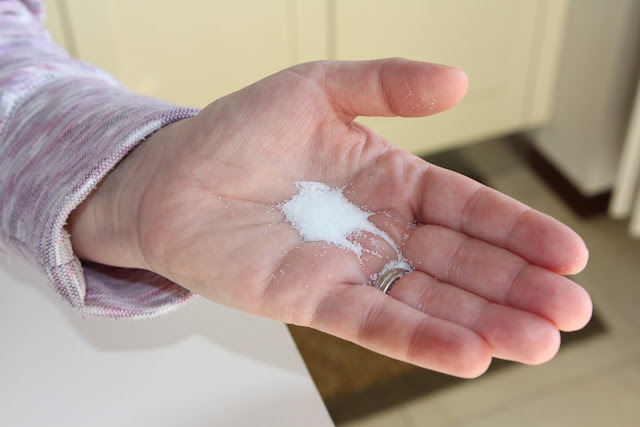
>Coarse salt (the kind you would use in pasta water)
*Note – the ratio of tomato to passata roughly 2 to 1 (so for 10lbs of passata, you’ll need 20lbs of tomatoes)
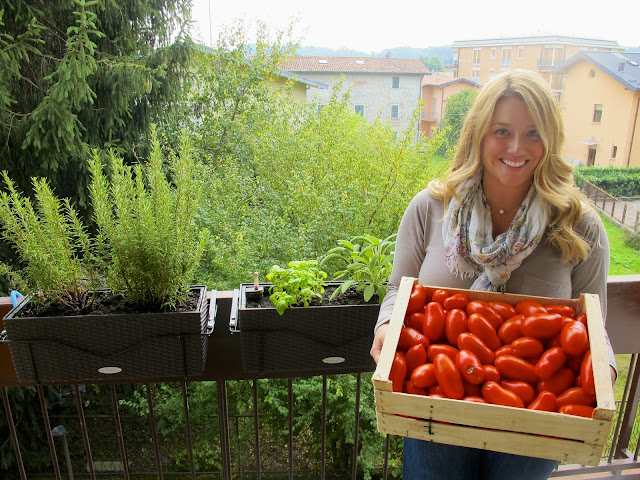 |
| Get the freshest tomatoes you can find |
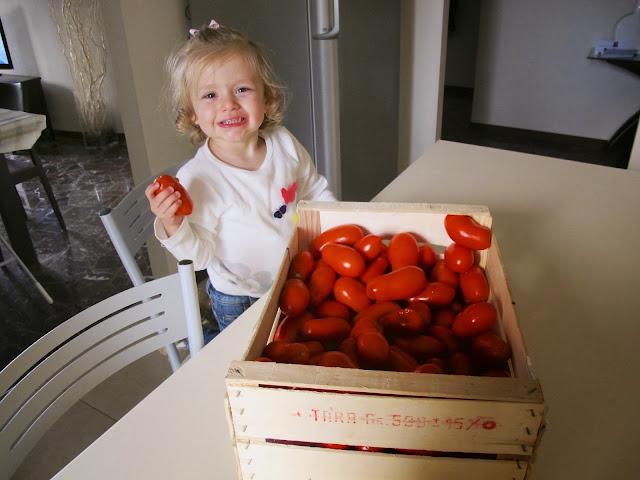 |
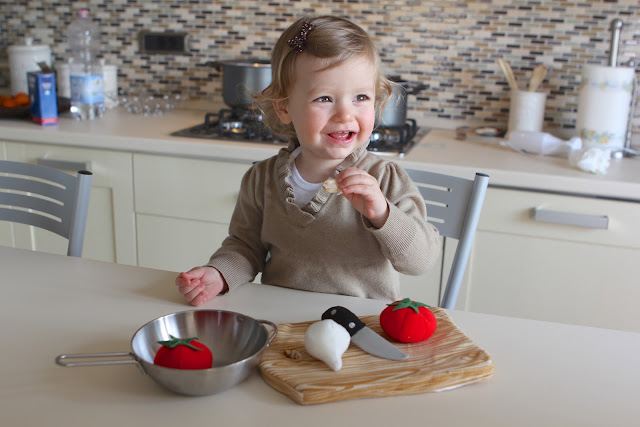
| It’s always a benefit if you have a willing helper |
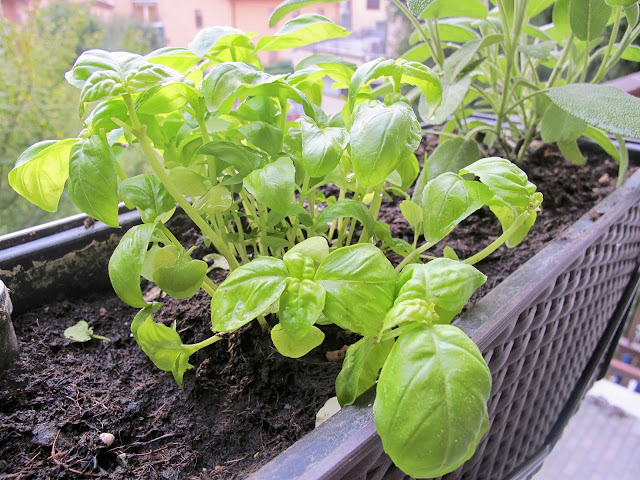 |
| We have basil growing on our balcony |
Steps
>Clean and sterilize your jars (run them through your dishwasher)
>Put on your husbands nasty old painting tee-shirt; you will get messy
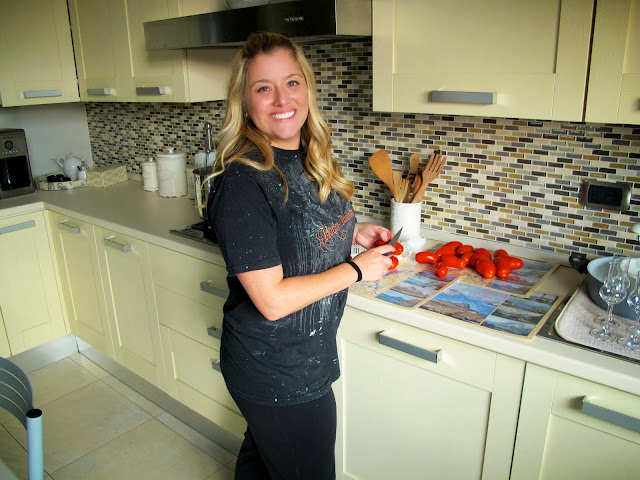 |
| Clean any bruised or damaged tomatoes |
>Place the tomatoes in the pot, cover with water
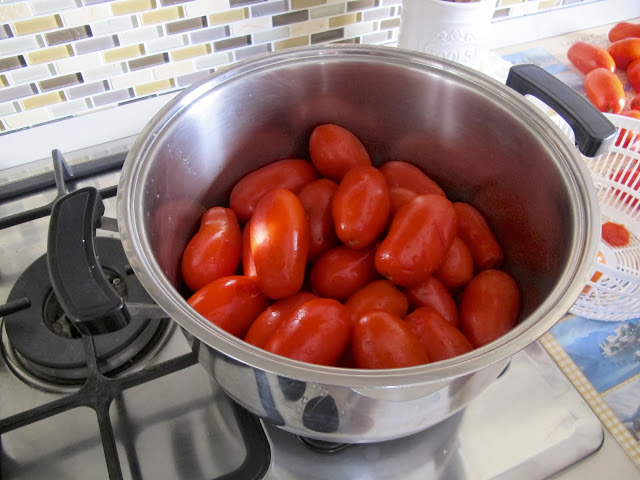 |
| Place your tomatoes in a pot and cover with water |
>Add salt to the water (you’ll need 7 teaspoons of salt for 20 pounds of tomatoes)
>Cover pot and bring water to boil
>Once water boils, remove lid and let simmer for 15 minutes
>Remove tomatoes and place into the vegetable mill (which will rest over another large pot)
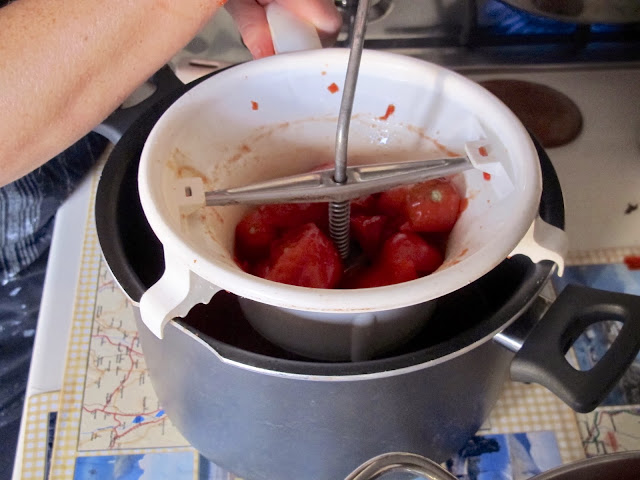 |
| Place the tomatoes in the mill |
>Grind tomatoes through the mill, which remove the skins and seeds
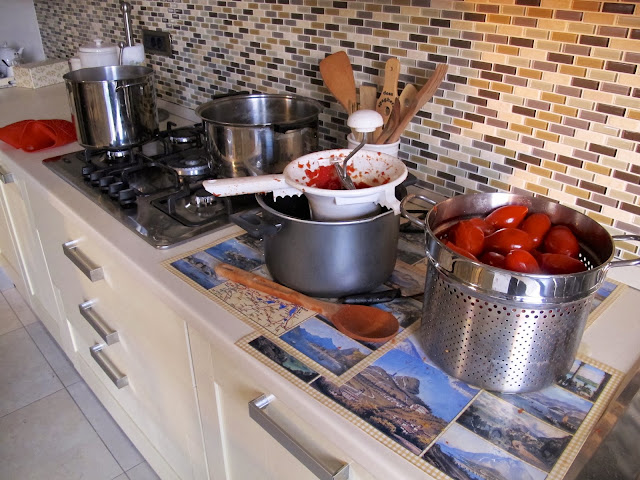 |
| You can see the entire station set up here – it’s quite the process |
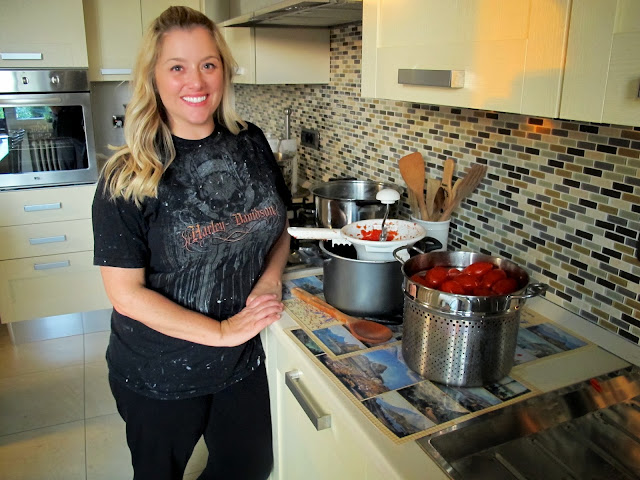 |
| This one was a pro managing her assembly line |
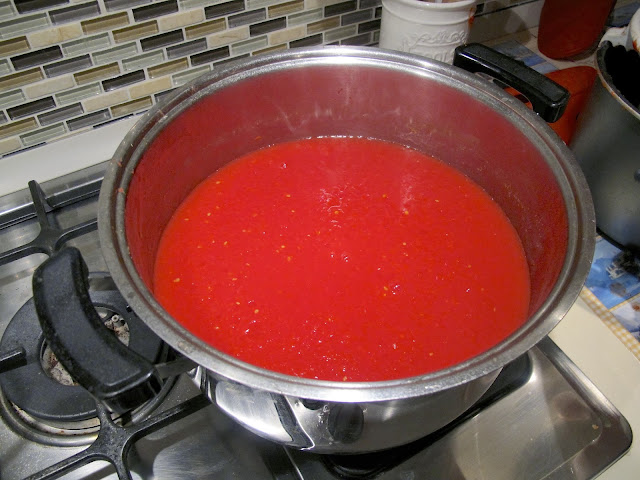 |
| The passata once it has been strained through the passaverdura (mill) |
>Now you’re jarring begins – place 3 fresh basil leaf in the bottom of each jar and filter the passata through the funnel to the top of the jar
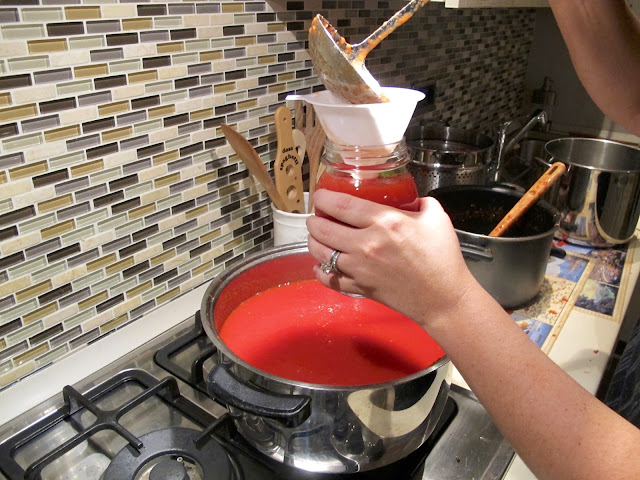 |
| Pass the passata through the filter so that it all fits into the jars – leave about an inch at the top |
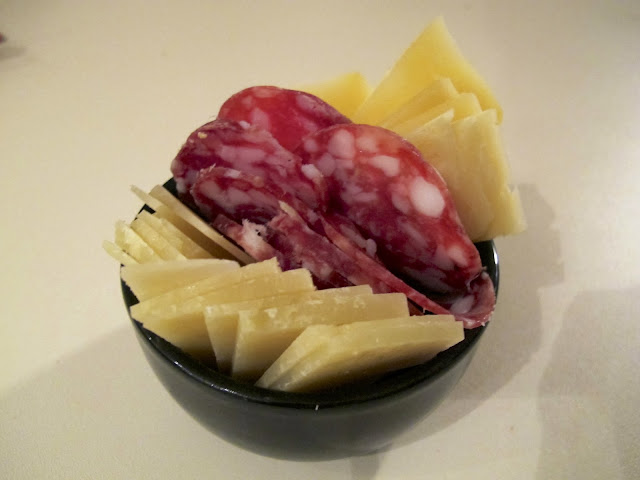 |
If your husband is a dream and a catch wrapped up in a bundle of charm – maybe he’ll make you a snack  |
>Place a towel in the bottom of your third pot and place jars inside, separating by additional dishtowels. This will prevent breakage while working with a fragile medium
>Add enough water to cover the jars by roughly an inch (lukewarm water; cold water will cause the jars to break)
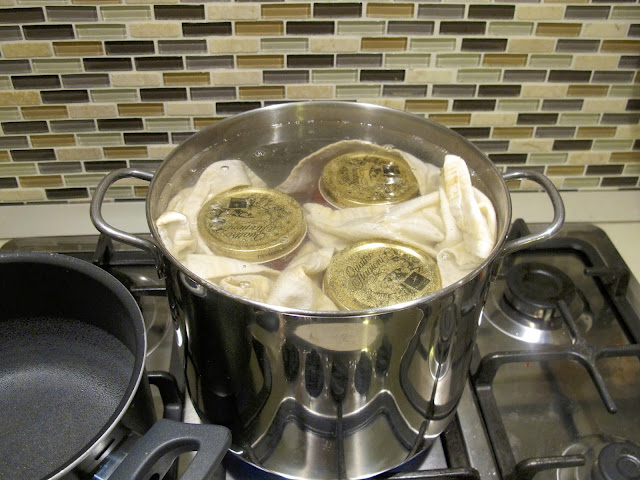 |
| The simmering bottles, protected from one another by a dishtowel |
>Simmer on a low boil for 45 minutes, removing once they are cool enough to touch
>Rest in a cool, dry place and leave them alone. The jars will create a vacuum seal within the next 12 hours. You can test the seal because the little “pop” in the center of the lid will “suck down”
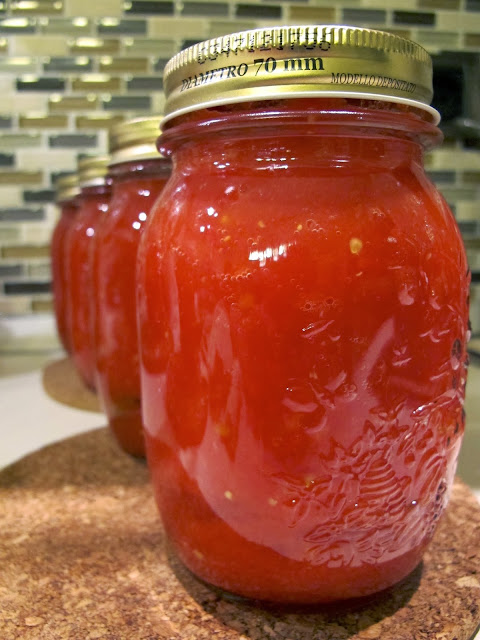 |
| You’ve done it! You have passata |
Congratulations! You have just made genuine, Italian passata! One last step is to have fun creating your own labels. I made these for Jen at the same time I made our grappa labels. Do you like them?
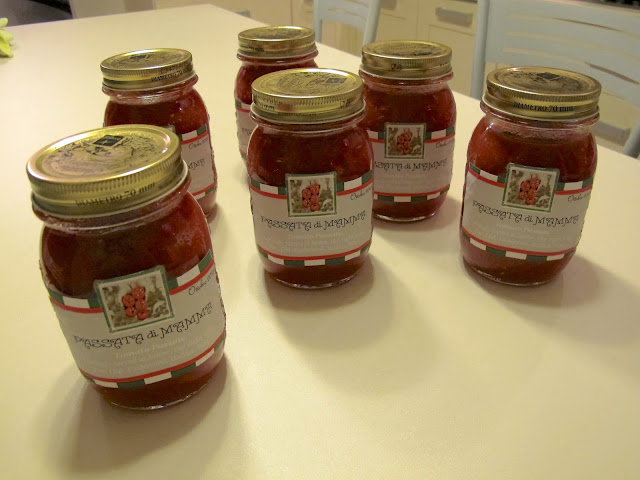 |
| Have fun – add some custom-made labels |
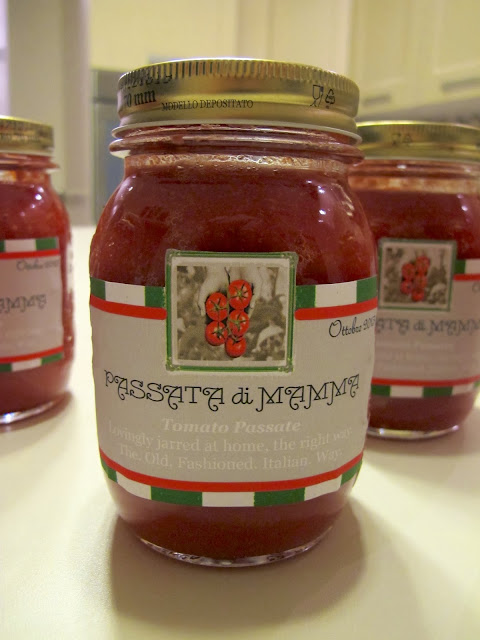 |
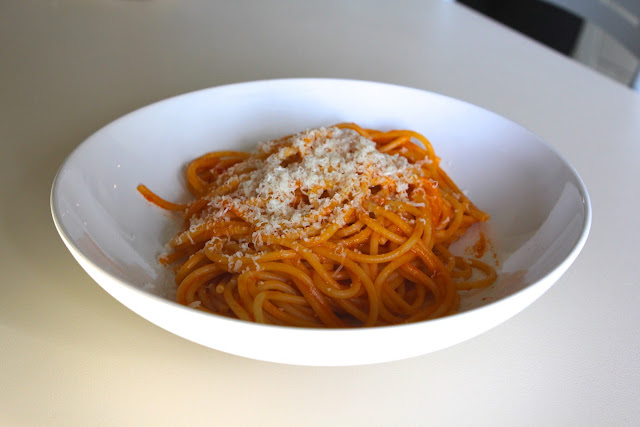
| Come have some of our “Passata di Mamma” – we would love to make some sugo for you |
Let us know if you try this and have the benefit of enjoying fresh tomato passata all winter long!