If all roads lead to Rome, nowadays you could also say that all European cruises start from Rome. Well, maybe not all – but a good many of the cruise ships use this port of call as a starting point for their Mediterranean voyages. At least, this was the case on our cruise aboard Celebrity Cruise Lines ship, Silhouette. The Silhouette is one of five ships in their newest Solstice Class – a group of sleek, modern ships with a heavy emphasis on style and dining. The ship and the cruise did not disappoint. We had many ports of call and a lot of wonderful activities that I’d like to write about, so let’s start at the beginning…
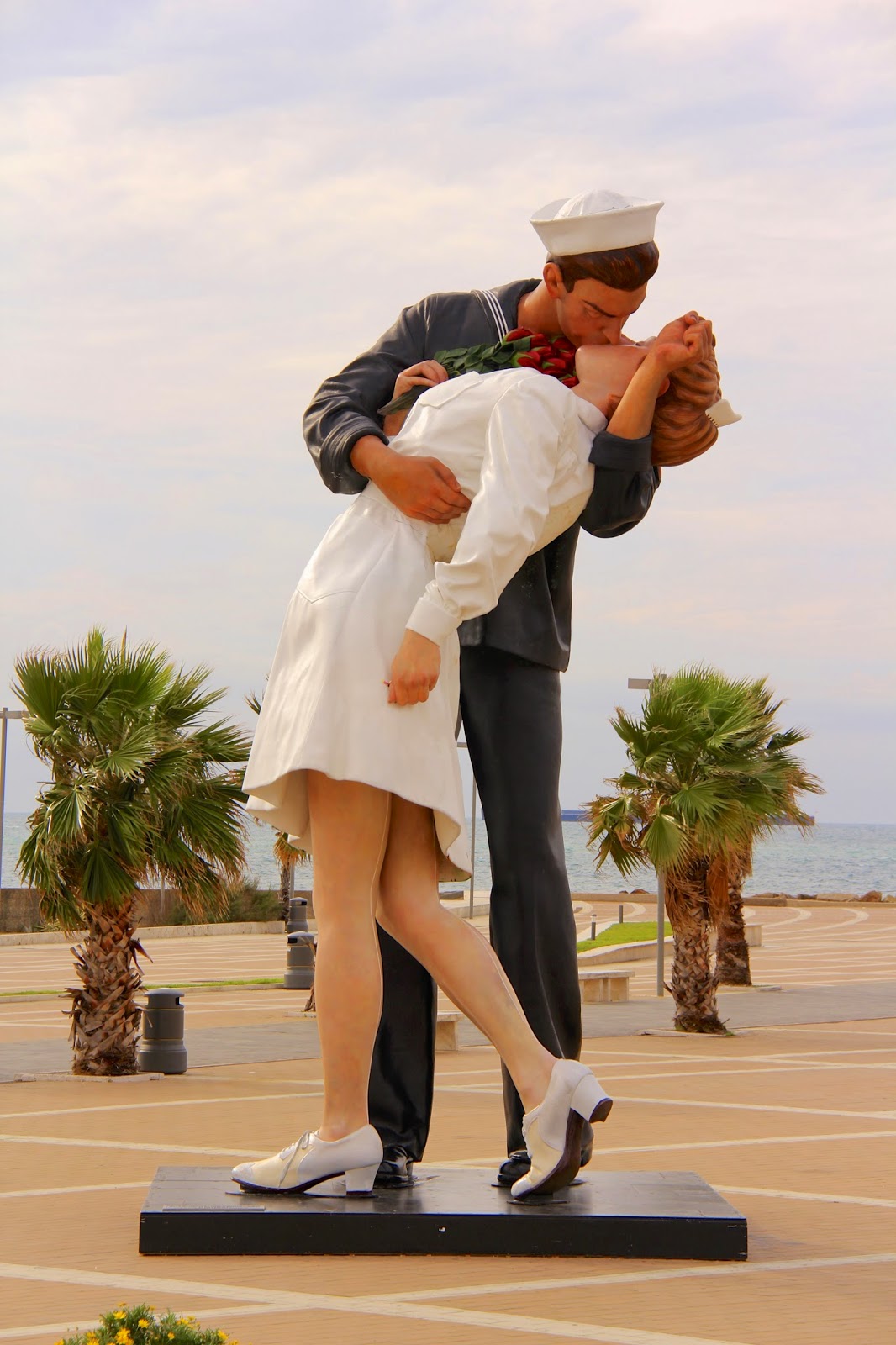
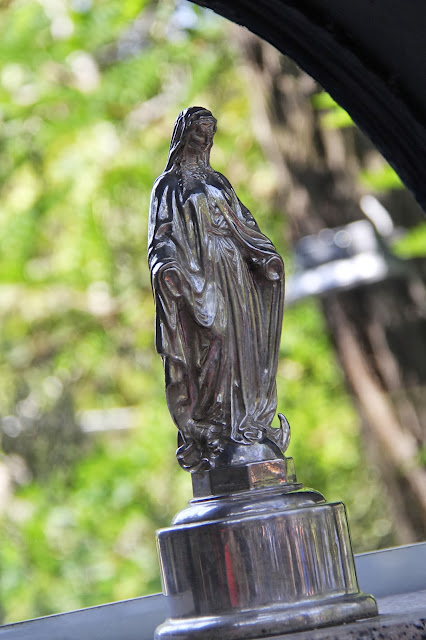
A wonderful statue stands outside the port of our ship
We arrived in Rome two days ahead of our ship’s departure to explore the city’s history, experience the cuisine and absorb the magic of a place you absolutely must see in your lifetime. Two days is barely enough time to scratch the surface, but we did our best to fit in as much as possible. On this blog, I’ll often write about a city’s history before detailing our adventures. The history of Rome is so storied and captivating, that a single paragraph couldn’t possibly do it justice. Instead, I invite you to click on this link to read about Rome and this link to read about Ancient Rome. Or get off the internet and pick up a book (but not until you finish reading my blog post)!
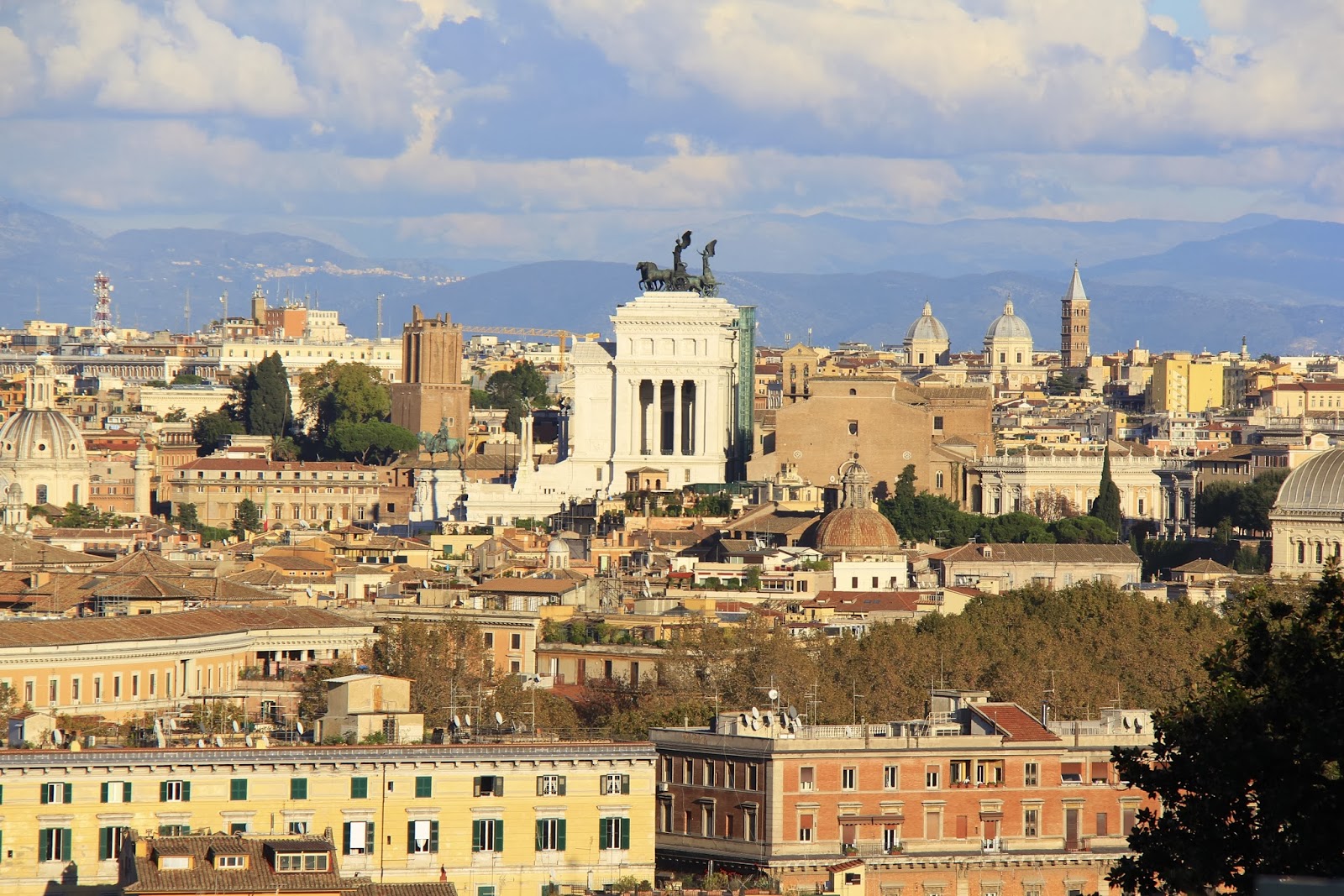
A view of Rome – Altare della Patria stands prominently above the rest of the city
After living in Italy for nearly a year, we are still learning travel tips on a constant basis. A new lesson you may be surprised to learn (and one that could possibly be applied to real life) – procrastination doesn’t pay. Even though I knew our travel dates, I waited months to reserve our train tickets. I paid roughly €80 for two tickets from Milano to Roma on the express train (a great price), but more than triple that amount on the way back – they only had first class seats available. Suggestion – if you know your dates, book early! Better suggestion – if you have flexibility in your dates, book your train first and then schedule everything around it (for example, I could have stayed an extra night in Rome for the difference in train fare). Additionally, go talk to someone at the ticket counter (most of them speak English). They often have access to fares that are different (and better) than the kiosks. If you travel from Milano to Roma, book aboard the velocità alta (high speed train), which whisks you across the country at a remarkable 300km per hour, delivering you in just over three hours.
We arrived in Rome just after lunch and went immediately from our hotel to Città del Vaticano (Vatican City), thereby entering a country not apart of Italy. The city-state is sovereign territory of roughly 110 acres entirely enclosed behind large ancient walls. The city boasts a population of around 840 people, making it the world’s smallest internationally recognized independent nation in terms of both size and population. As they say, good things come in small packages. We opted to join a tour group, since there is so much to see and do inside the city walls. The tour included the Vatican Museums, the Sistine Chapel and Saint Peter’s Basilica – the three main attractions in the city.
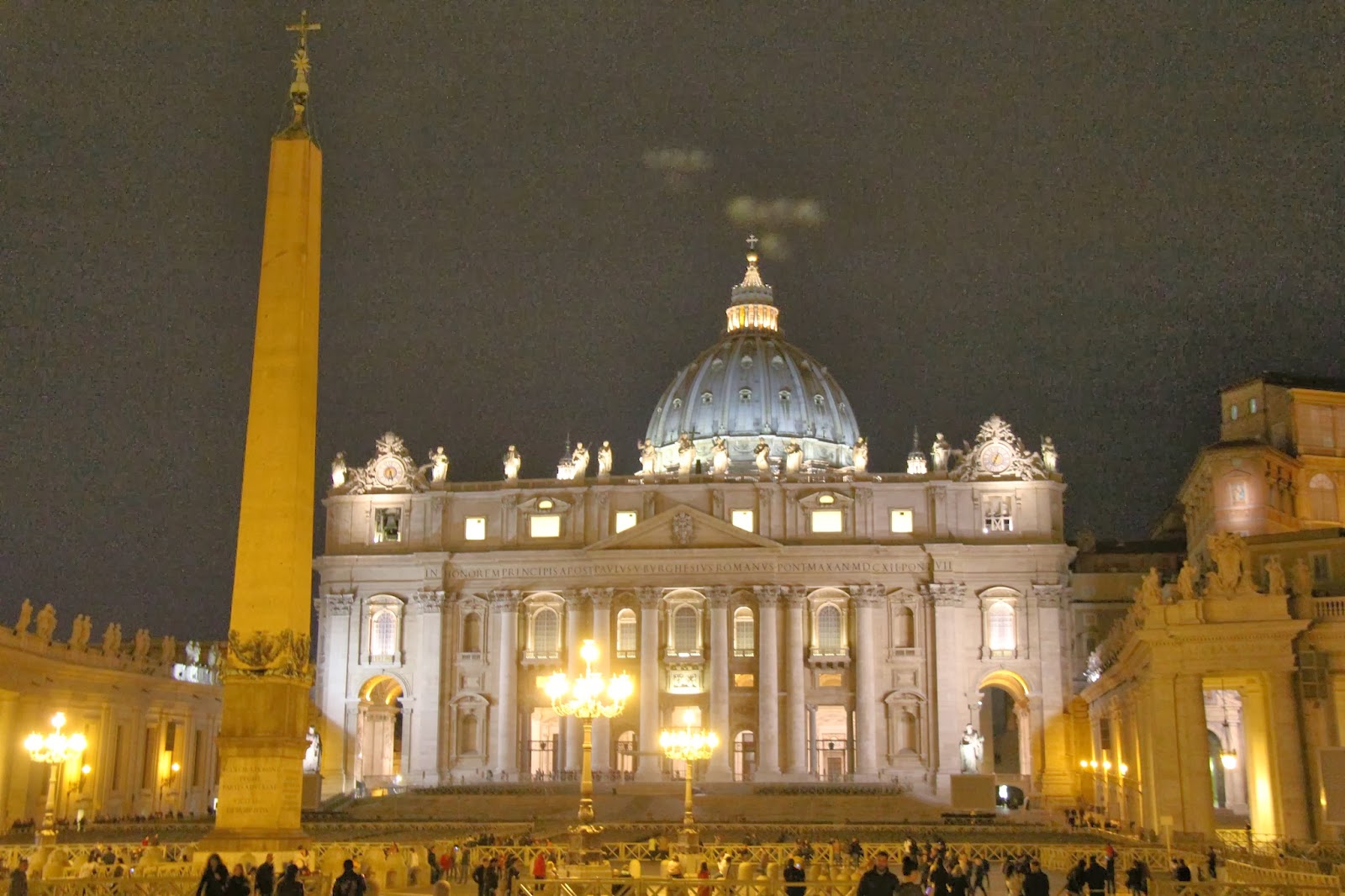
Saint Peter’s Square at night – shown here are the Basilica and the obelisk
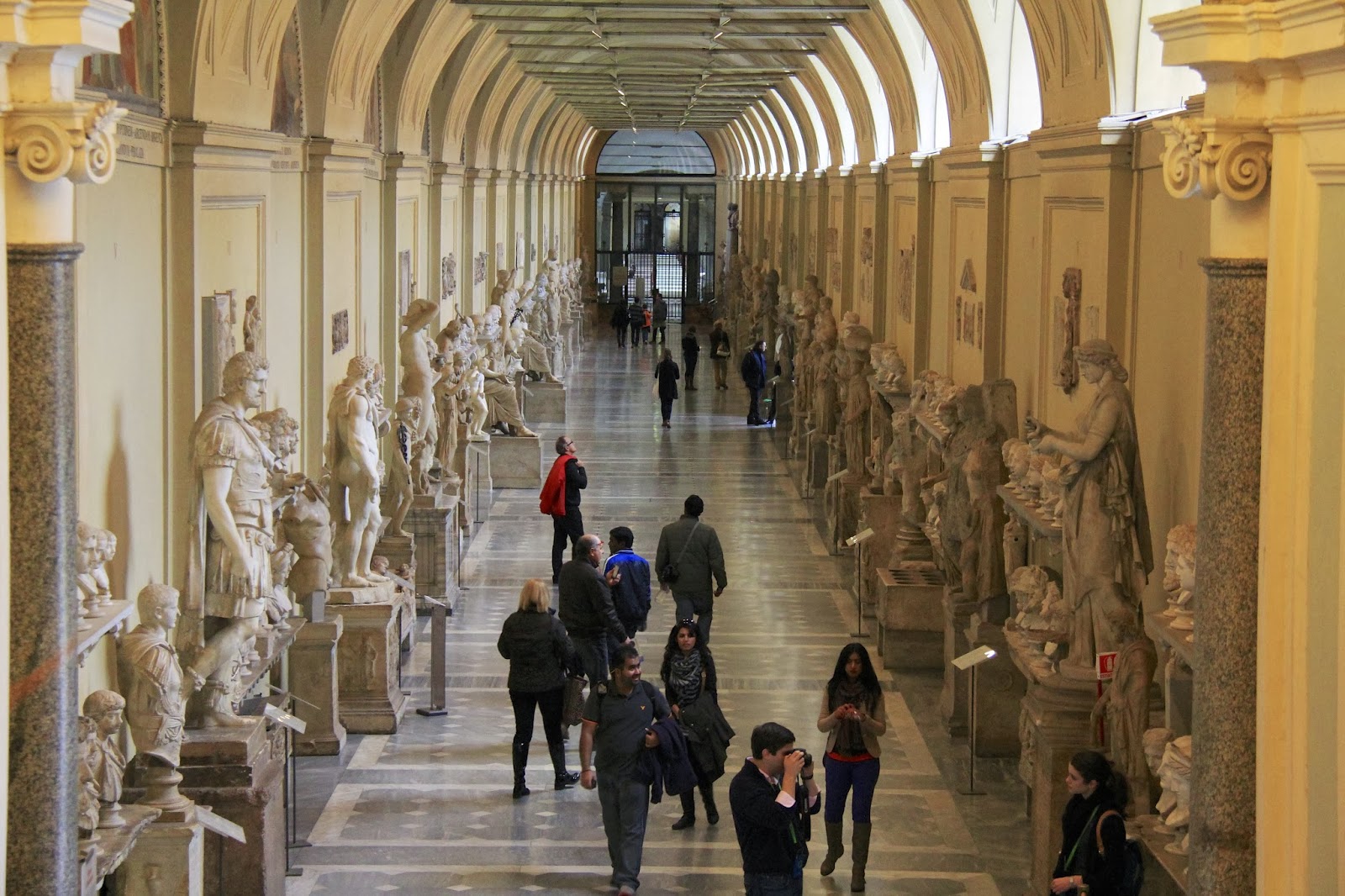
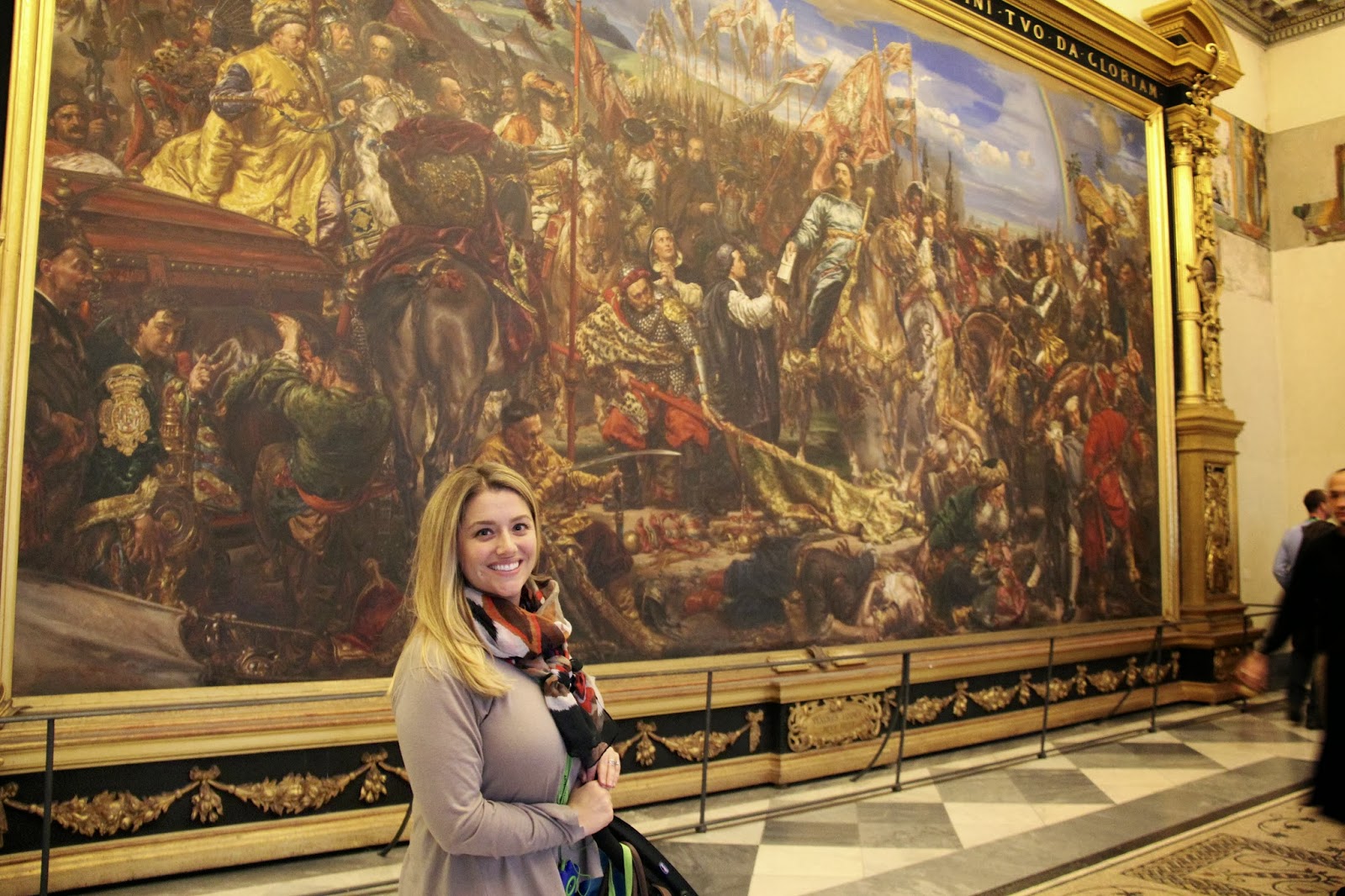
We started in the Vatican Museums, a collection of buildings that hold some of the world’s most priceless and inspiring works of art. My camera was smoking from staying on overdrive. In 2011 over five million people visited the museums founded by Pope Julius II in the early 16th century [source]. Our tour included passage through the Borgias’ house; family of the controversial Pope Callixtus III, popularized by the hit Showtime series, The Borgias.
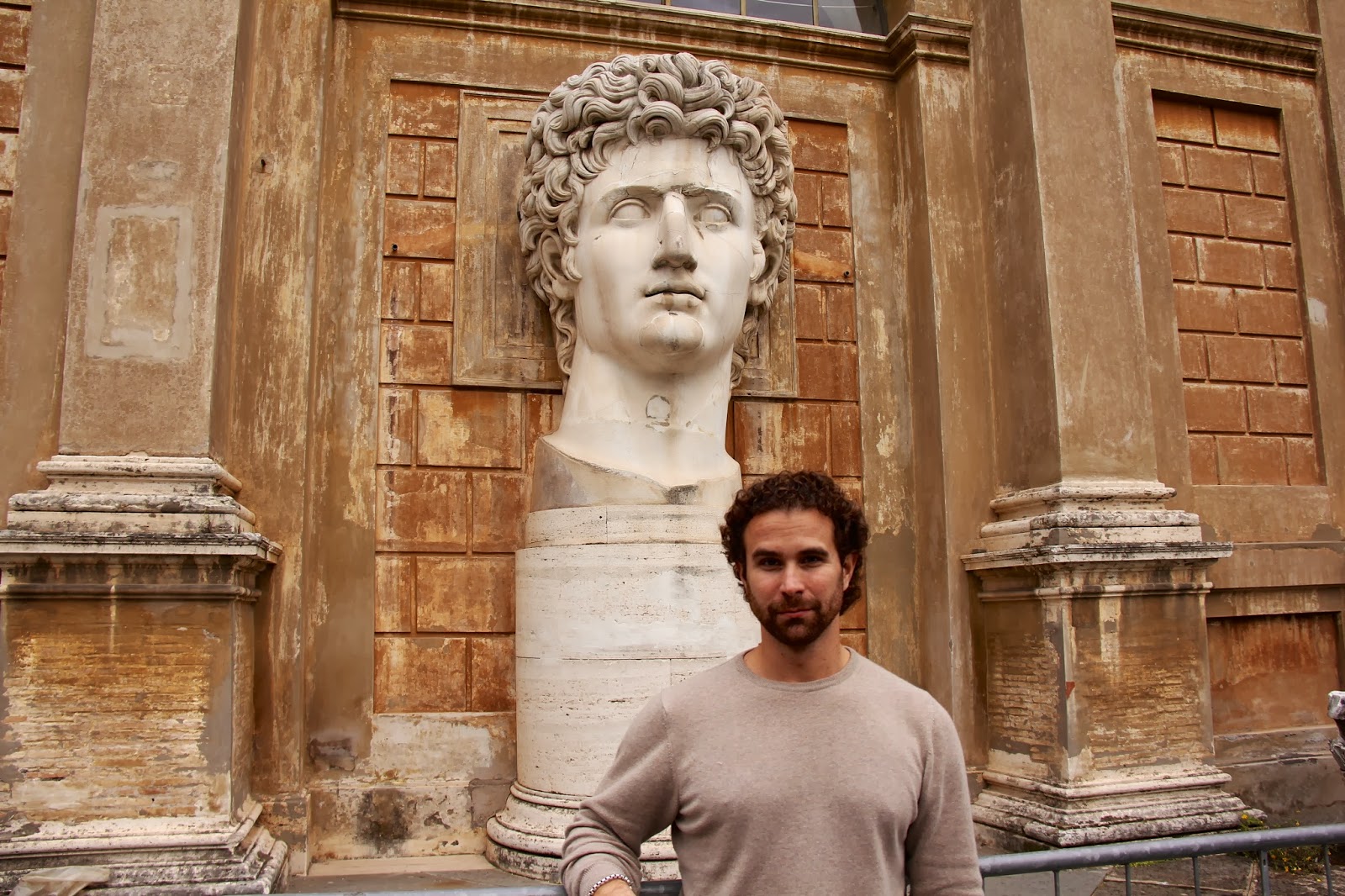
Just hanging out with my pal, Augustus – “hmm, I like his hair… but he needs a beard”
Amazing works of art carved from marble greet us in the entryway
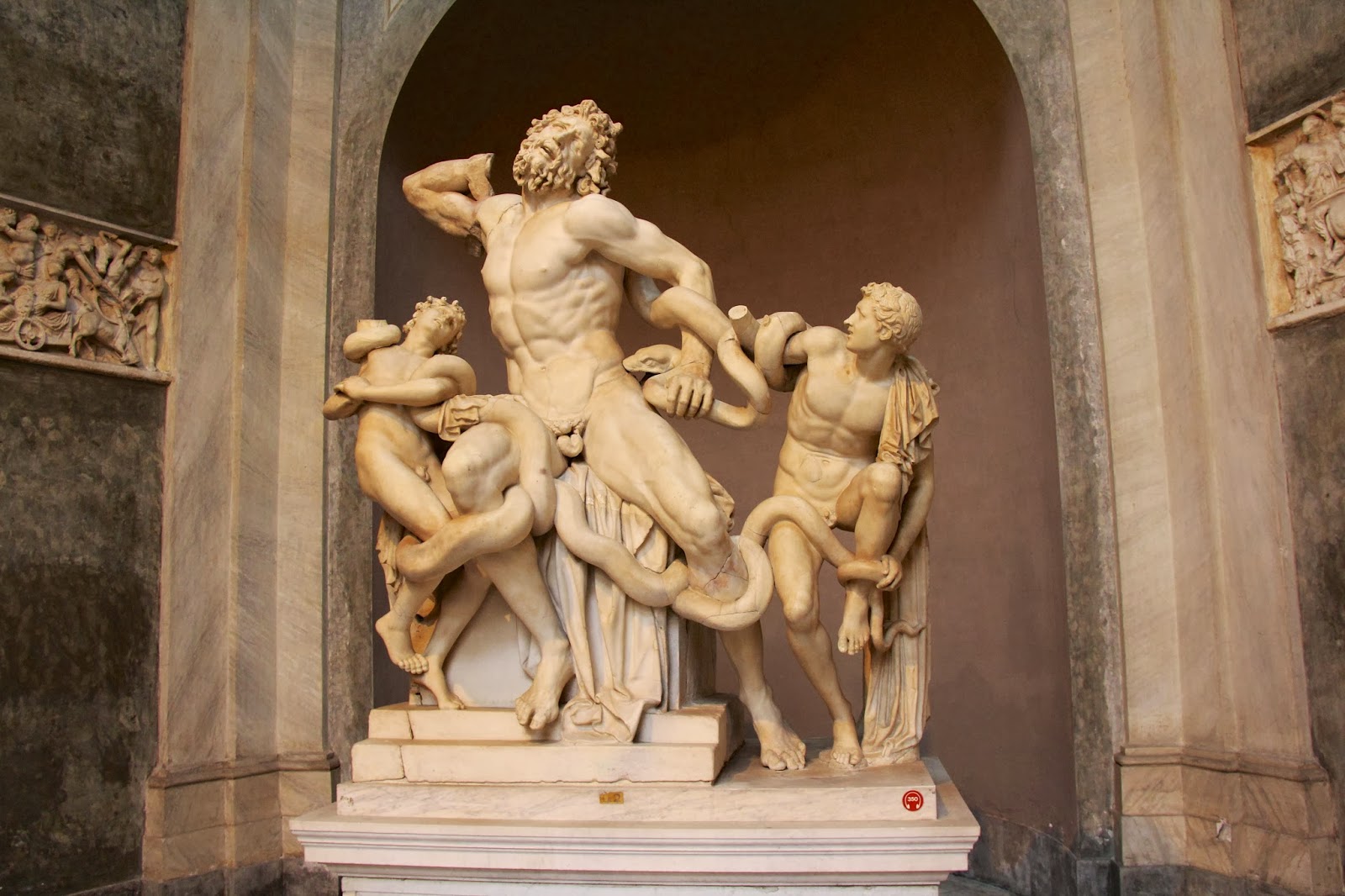
Laocoön and His Sons excavated in Rome in 1506
The piece is dated between 200 BC and 70 AD
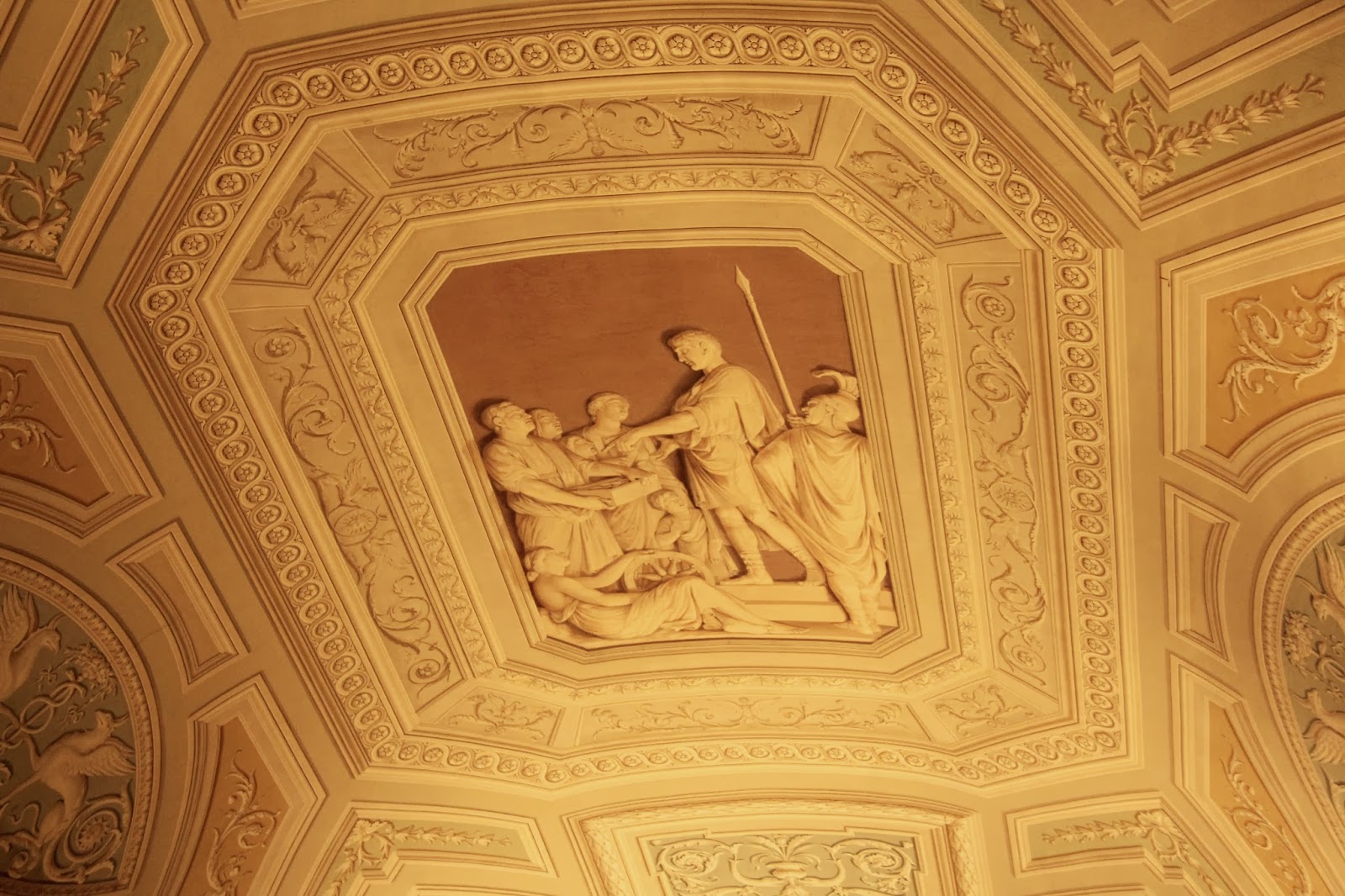
An example of the French painting style, trompe-l’œi (deceive the eye) – the image appears three-dimensional
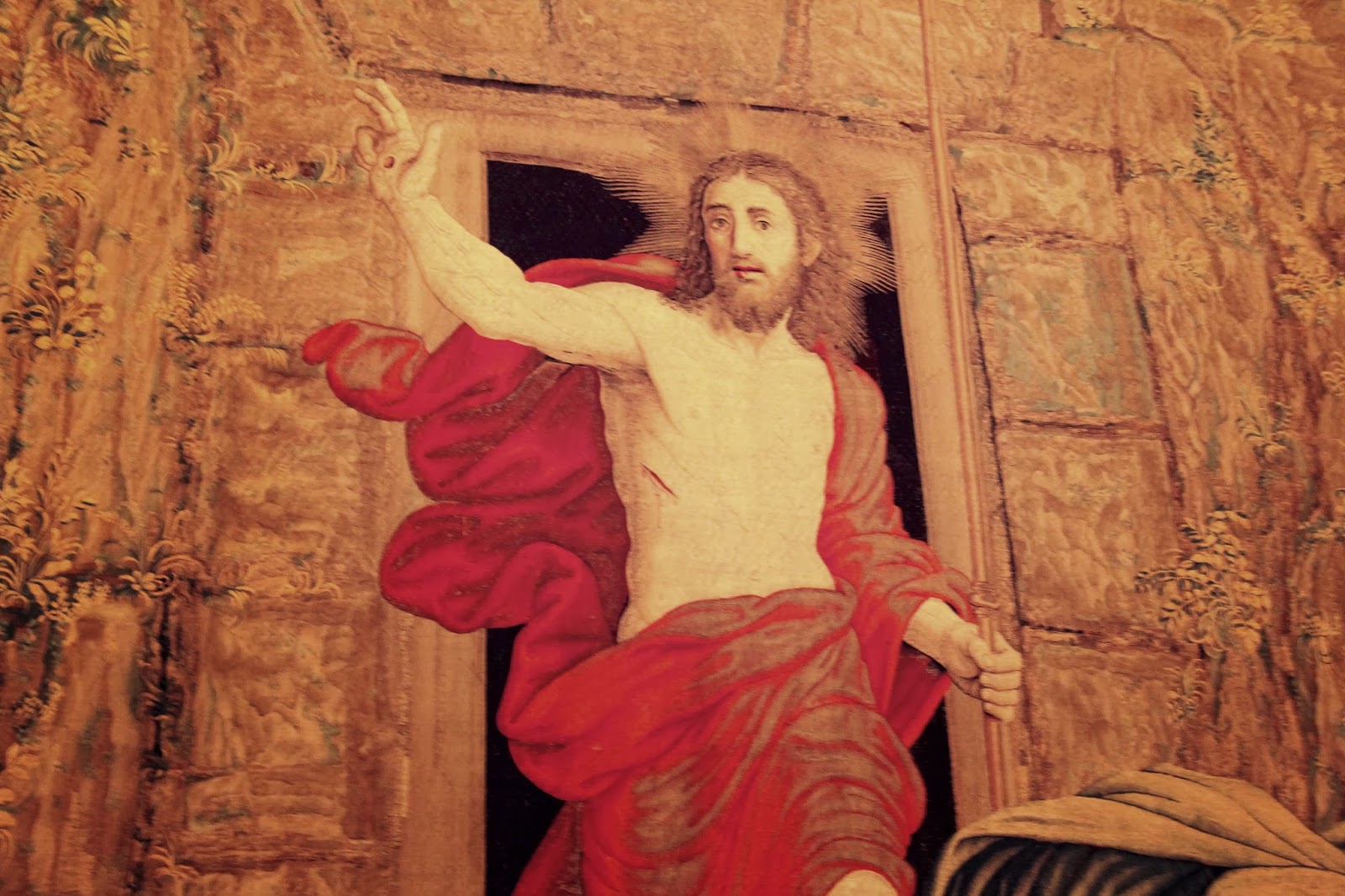
Central portion of the tapestry, The Resurrection of Jesus
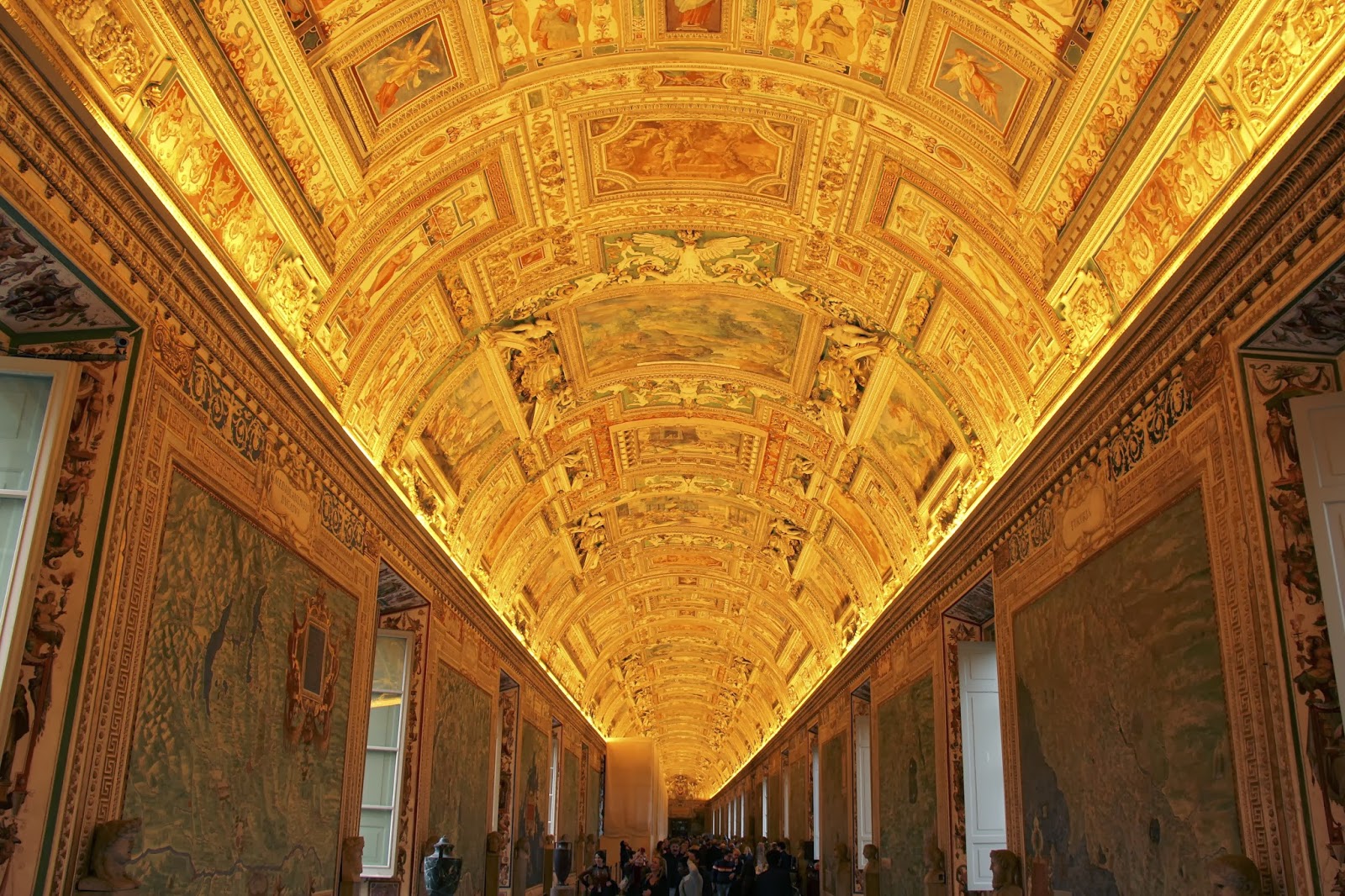
Eye-popping ceiling in the impressive Galleria delle Carte Geografiche (Gallery of Maps)
Jen stops for a photo
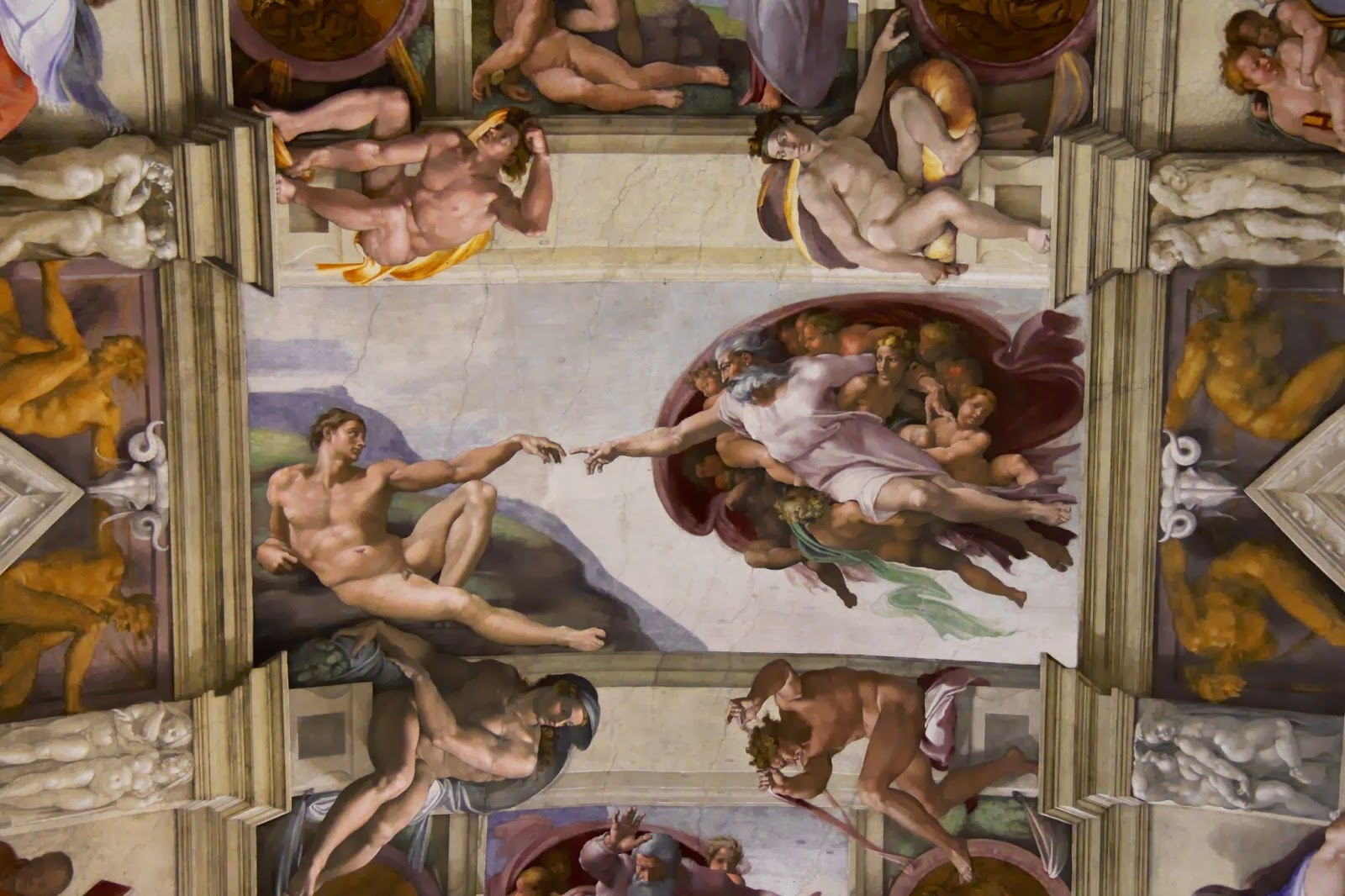
Next, we walked into the adjoining Sistine Chapel. On the tour, we learned that the Sistine Chapel is the largest chapel in the world. A chapel, practically by definition is a small place of worship (either freestanding or attached to a larger church). This is significant because the papal conclave (the sequestering of cardinals when electing a new Pope) is held in the Sistine Chapel (as opposed to the more spacious Basilica, next door). Inside the basilica, Michelangelo’sLast Judgement monopolizes the back wall, while the even more famous Creation of Adam rests prominently in the center of the ceiling. Words cannot describe the feeling that washes over you as you sit in such a historically significant place. The amazing frescoes inspire images of Michelangelo, resting on his back atop scaffolding and slowly painting each section, a brush in one hand and a candle in the other.
The most iconic portion of Michelangelo’s ceiling in the Sistine Chapel, The Creation of Adam
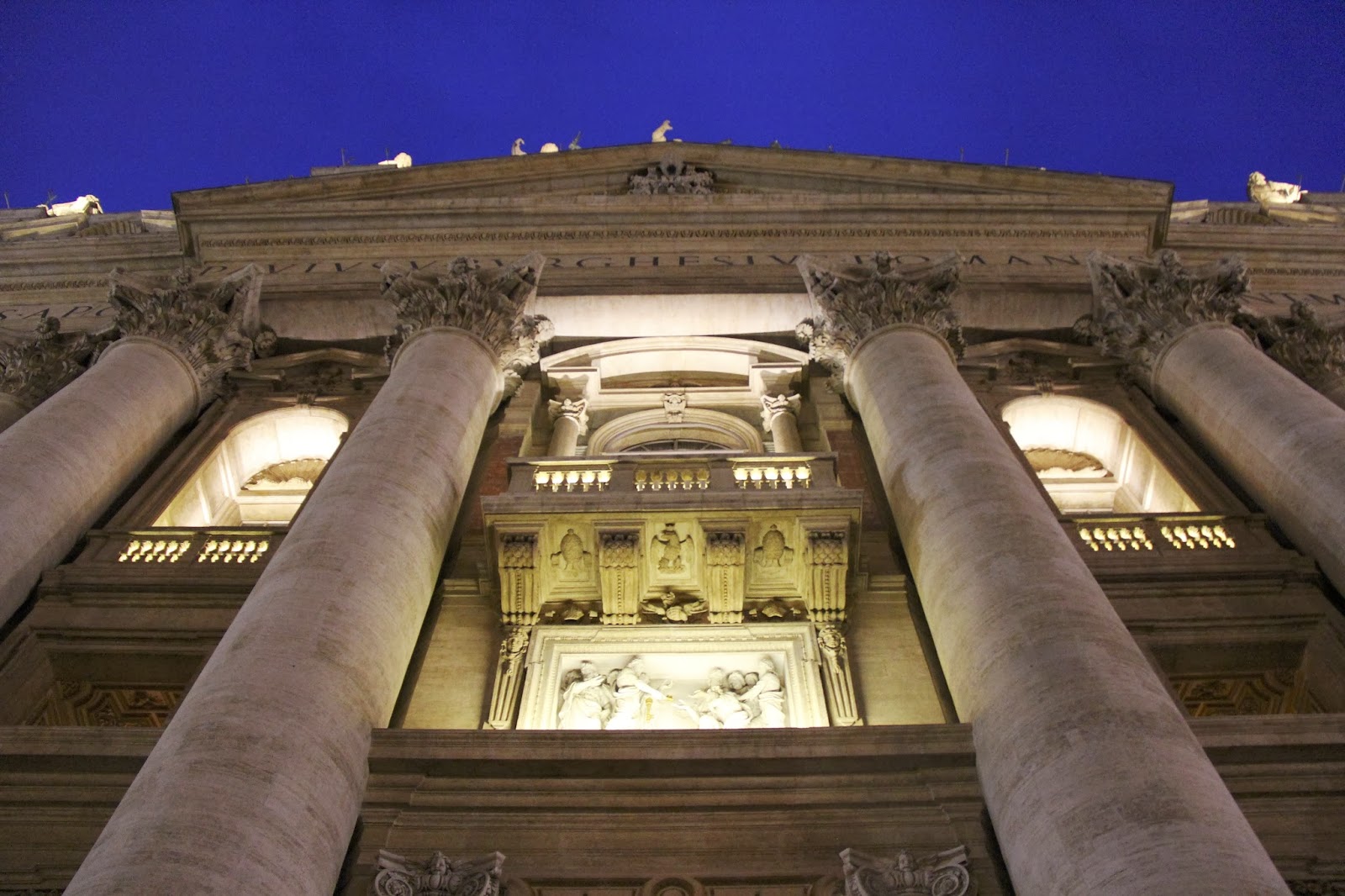
As the sun set on our tour, we visited Saint Peter’s Basilica, one of the largest churches in the world. The church sits in the center of St. Peter’s Square, which is flanked by large rounded colonnades – intentionally reaching out like long arms embracing visitors. From an aerial perspective, you’ll see that the church itself is designed in the shape of the cross, while the entire square resembles a keyhole (echoing Saint Peter’s role as holder of keys to heaven).
A beautiful blue night’s sky had settled over St. Peter’s Basilica
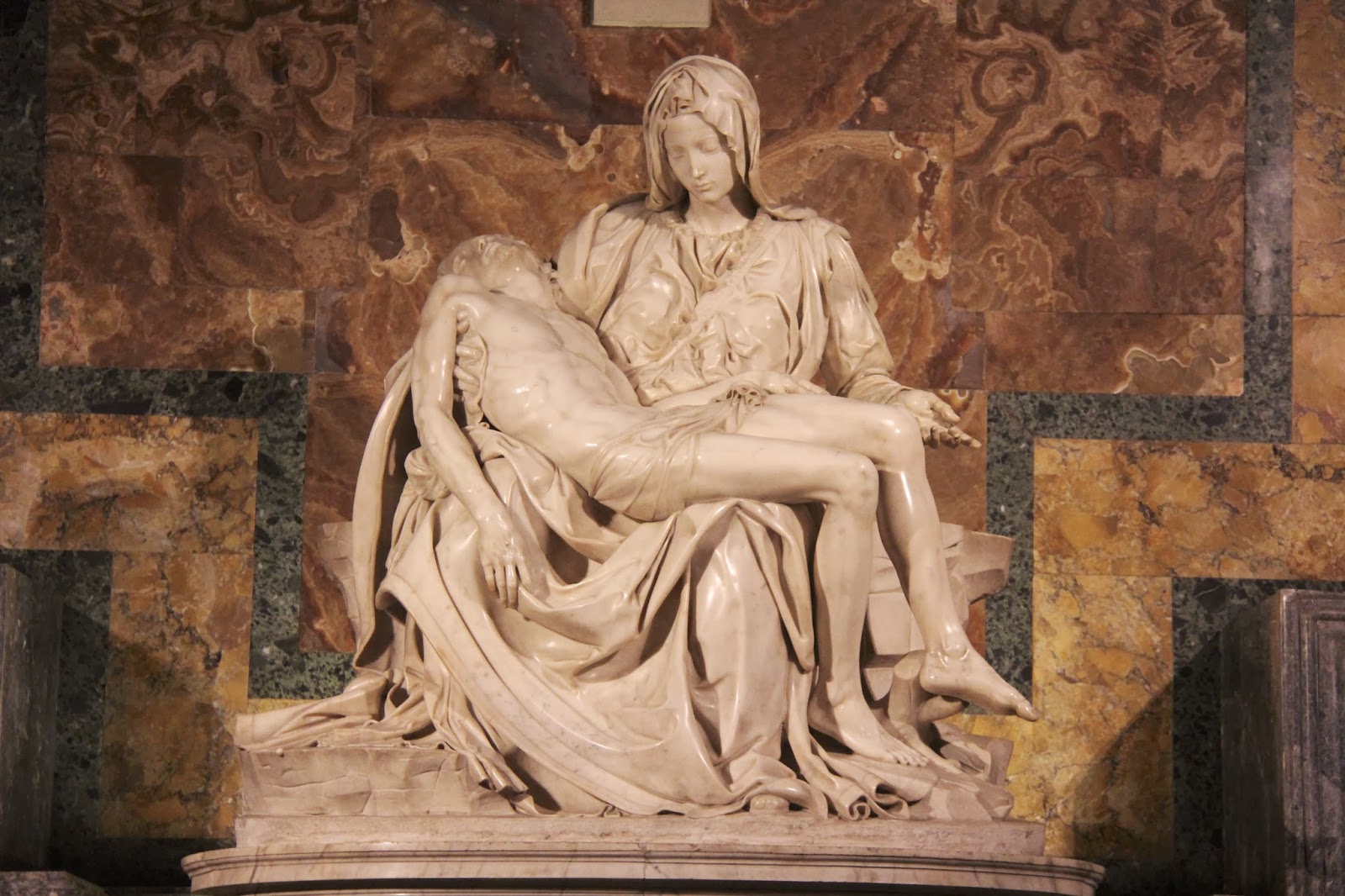
Pietà, also by Michelangelo
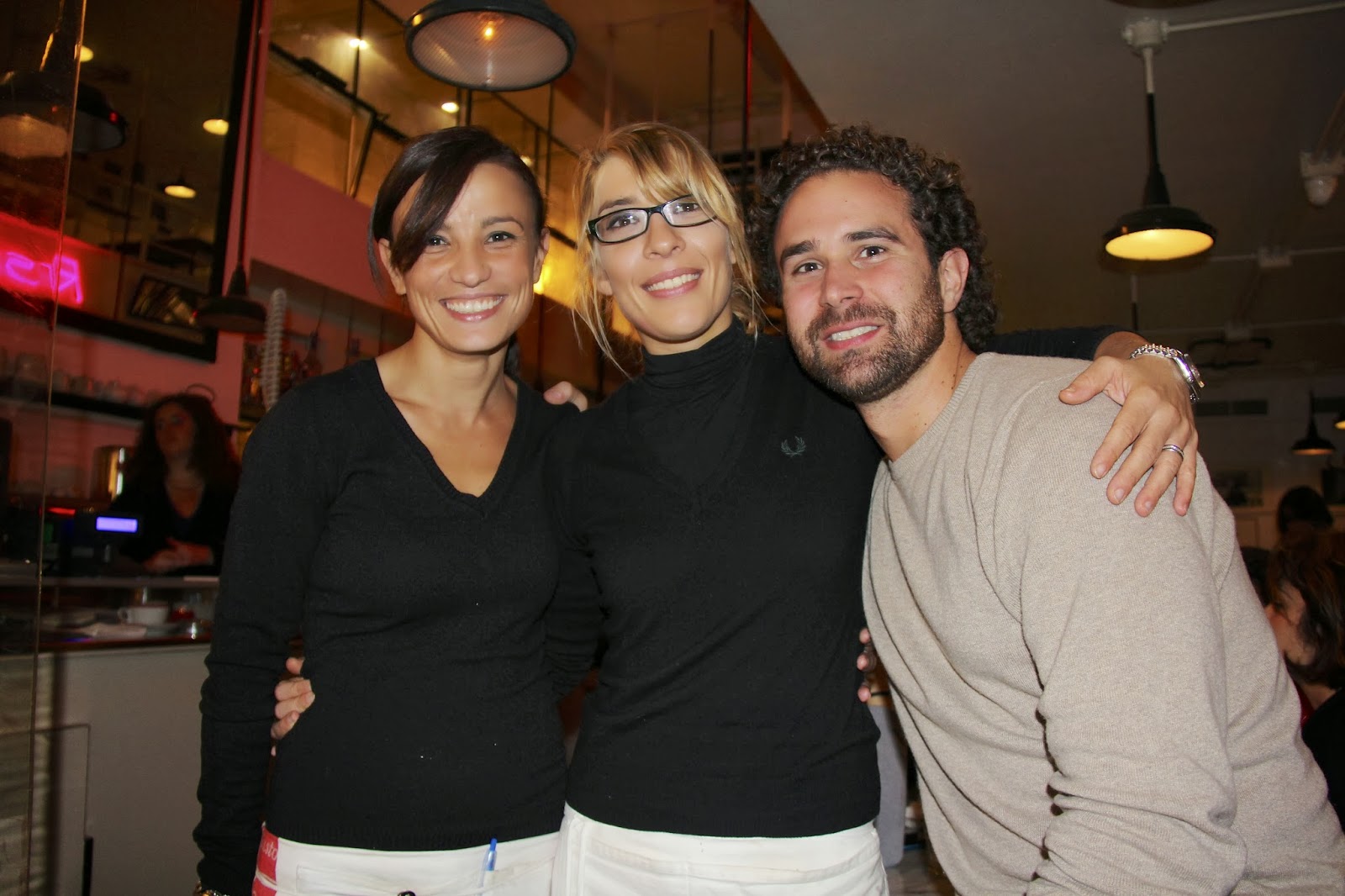
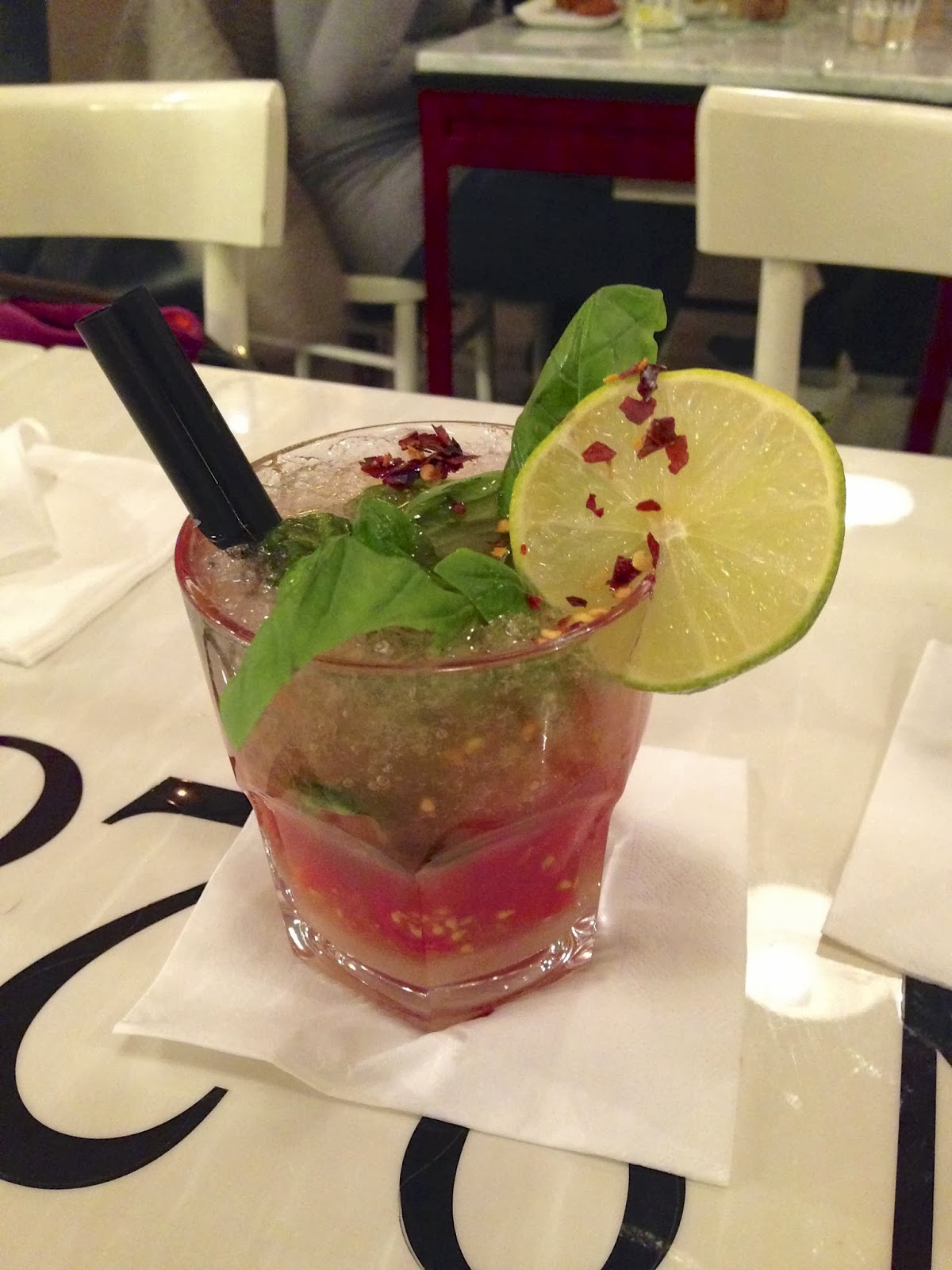
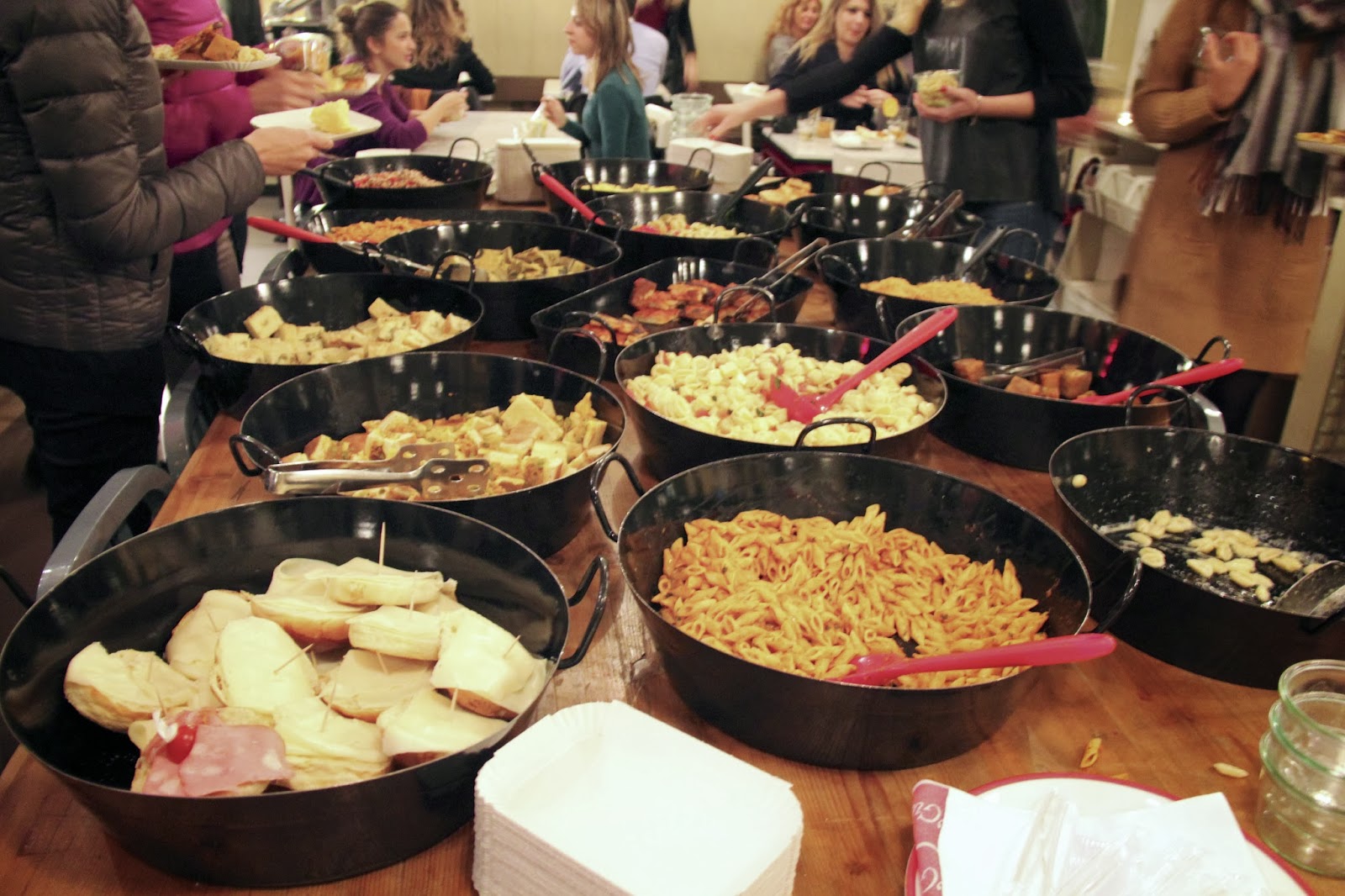
While our appetites for spiritual enlightenment had been quenched, our appetite for food was ravishing. We found a wonderful place, Gusto Forno and went in for dinner. What we found was even better – a happy hour with a buffet included in the price of your drink. And the drinks were magical! The bar-genius, Nina had created a cocktail inspired by a margherita pizza. Sounds weird, but the result was nothing short of fabulous. If you’re in Rome, stop by and see her.
I take a picture with our wonderful waitress and the fabulous bartender, Nina
Nina’s creation – the Pizza Margherita cocktail
Some of the buffet that was included with the order of a cocktail
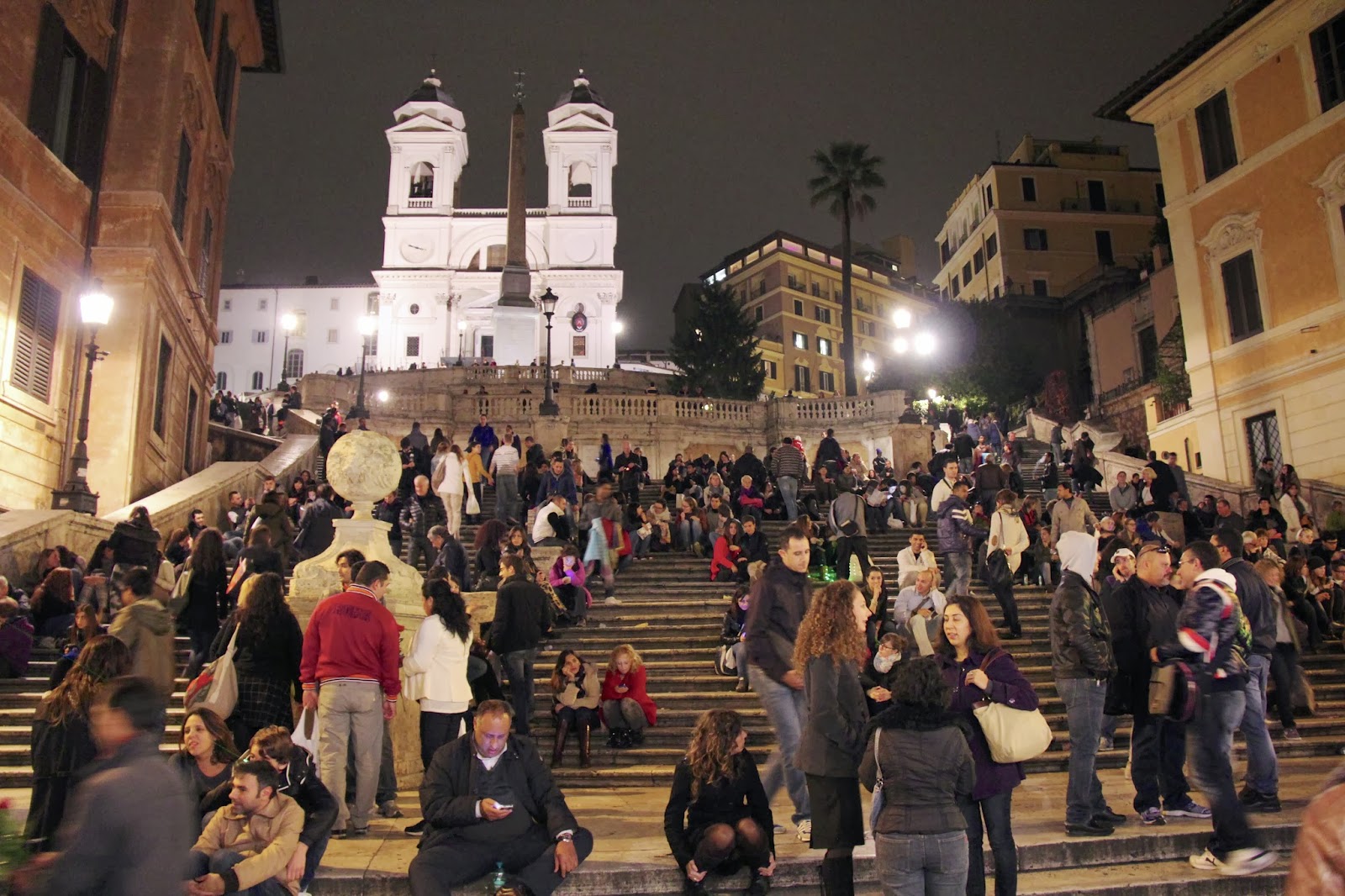
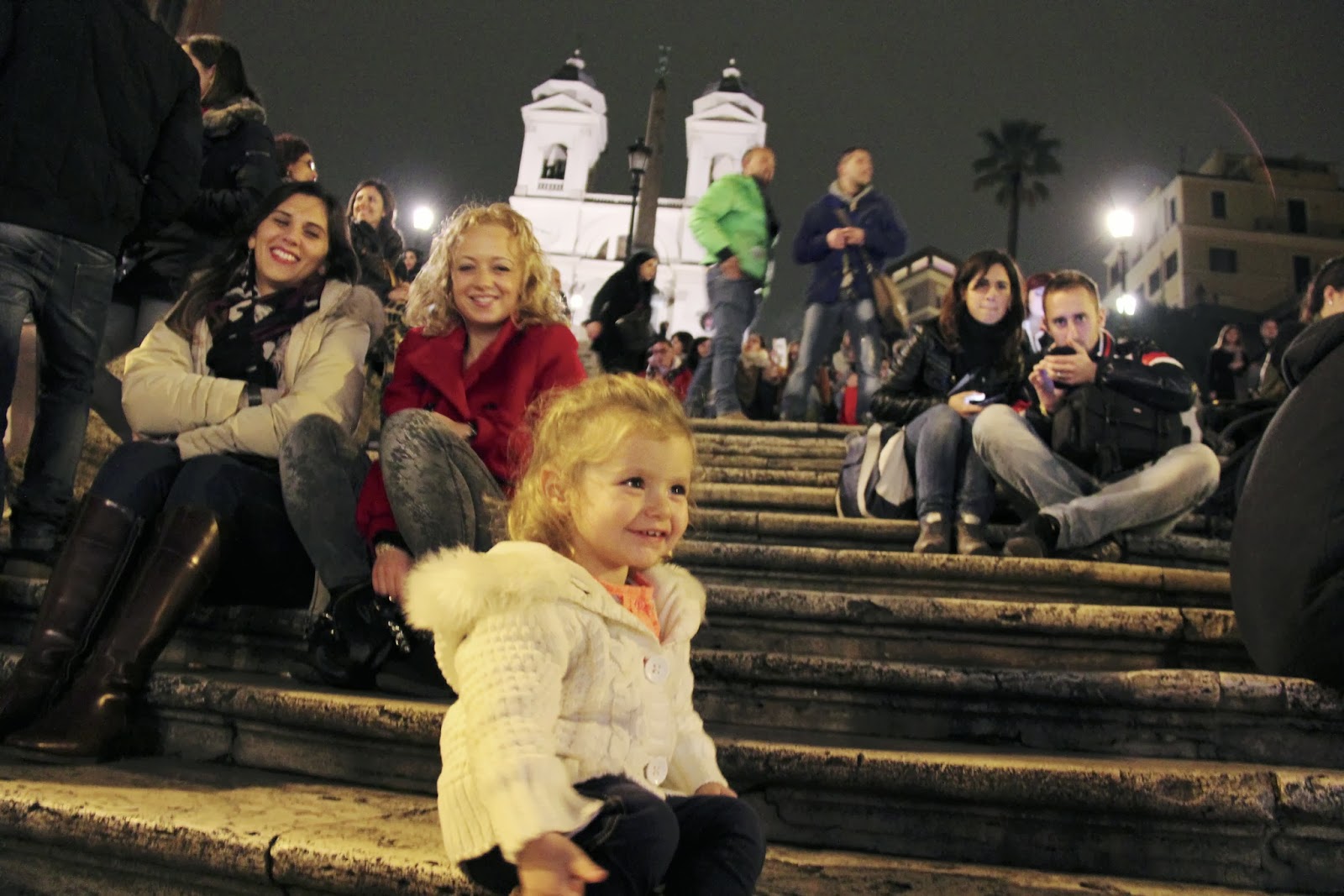
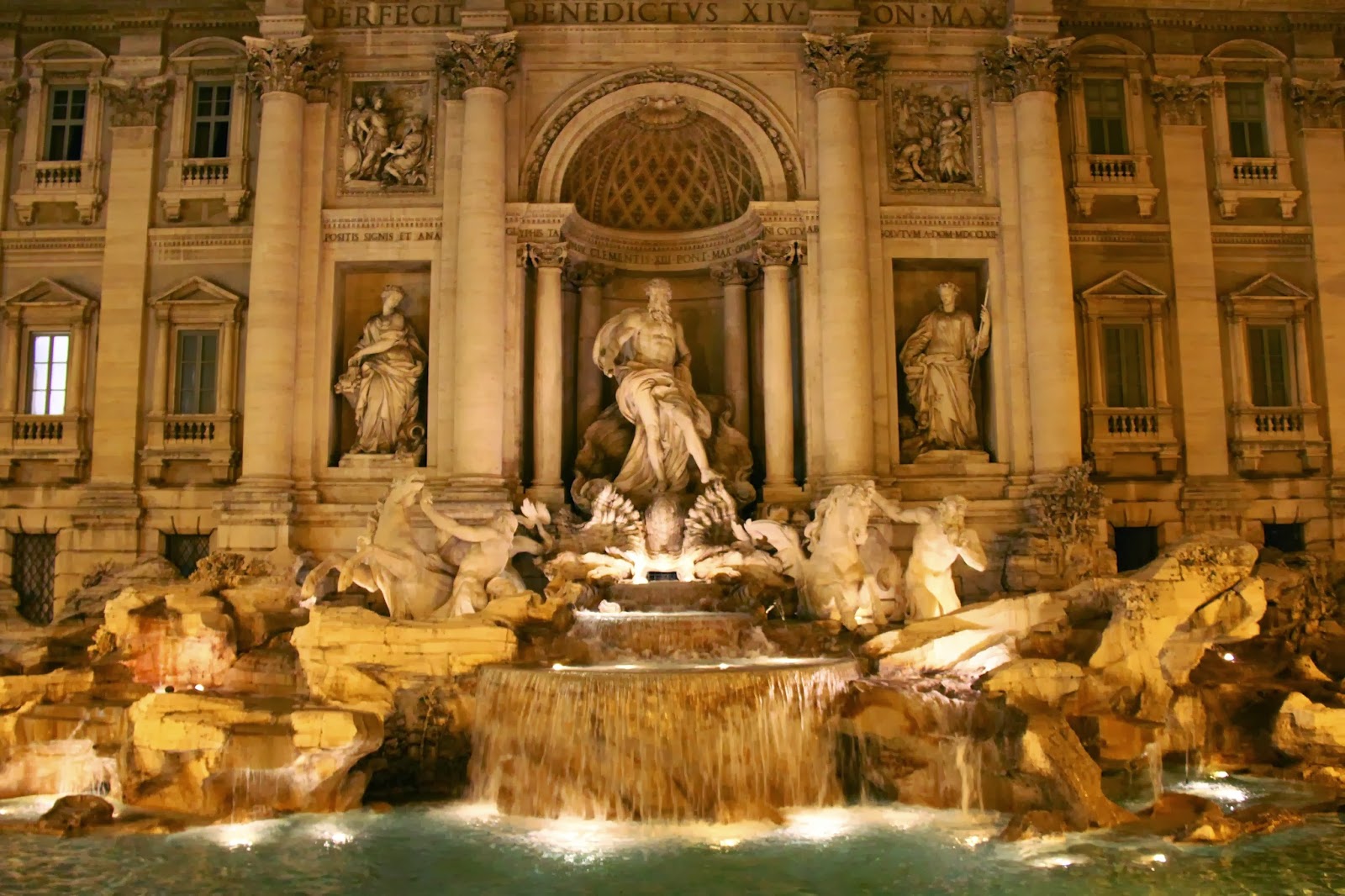
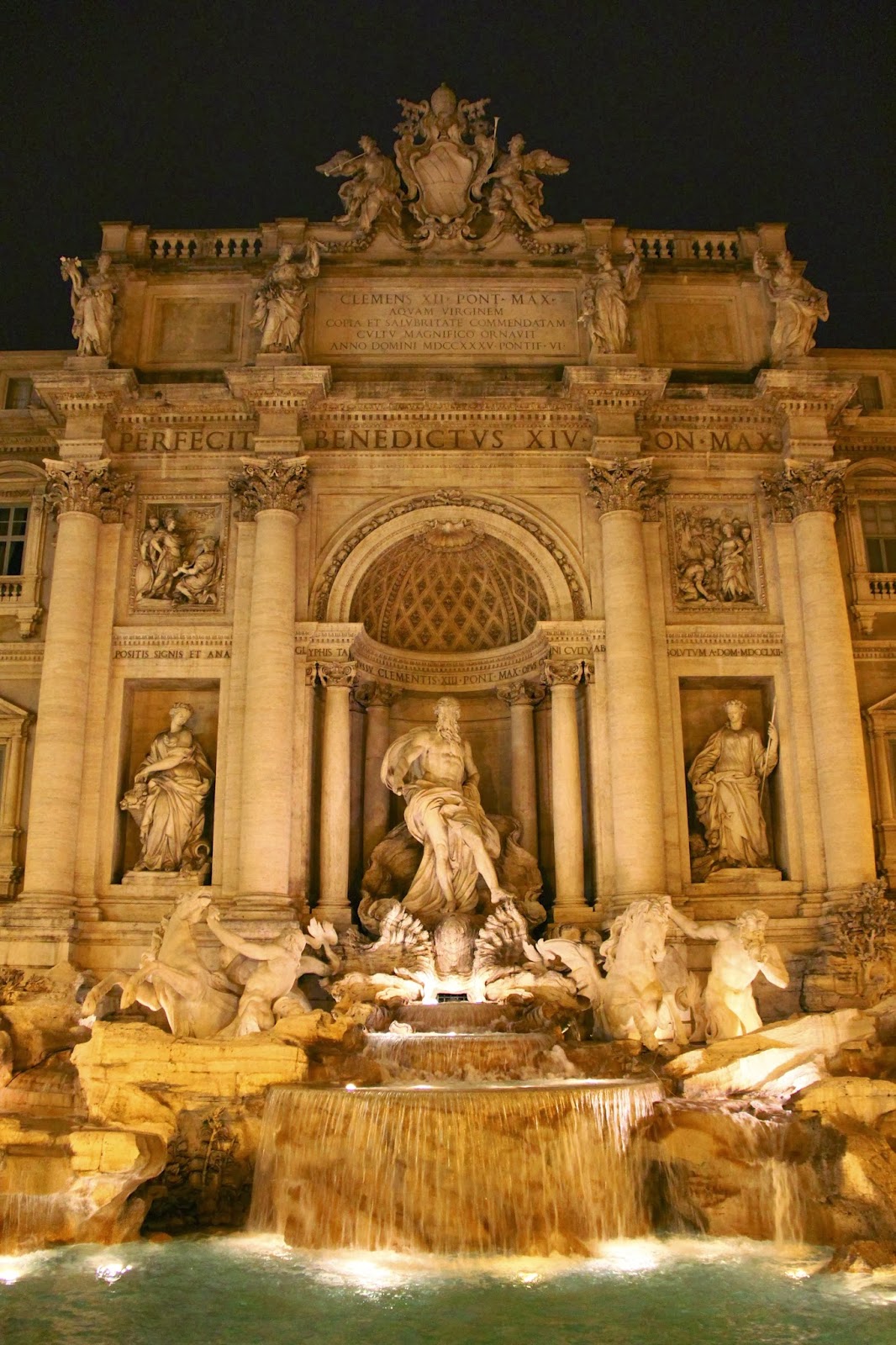
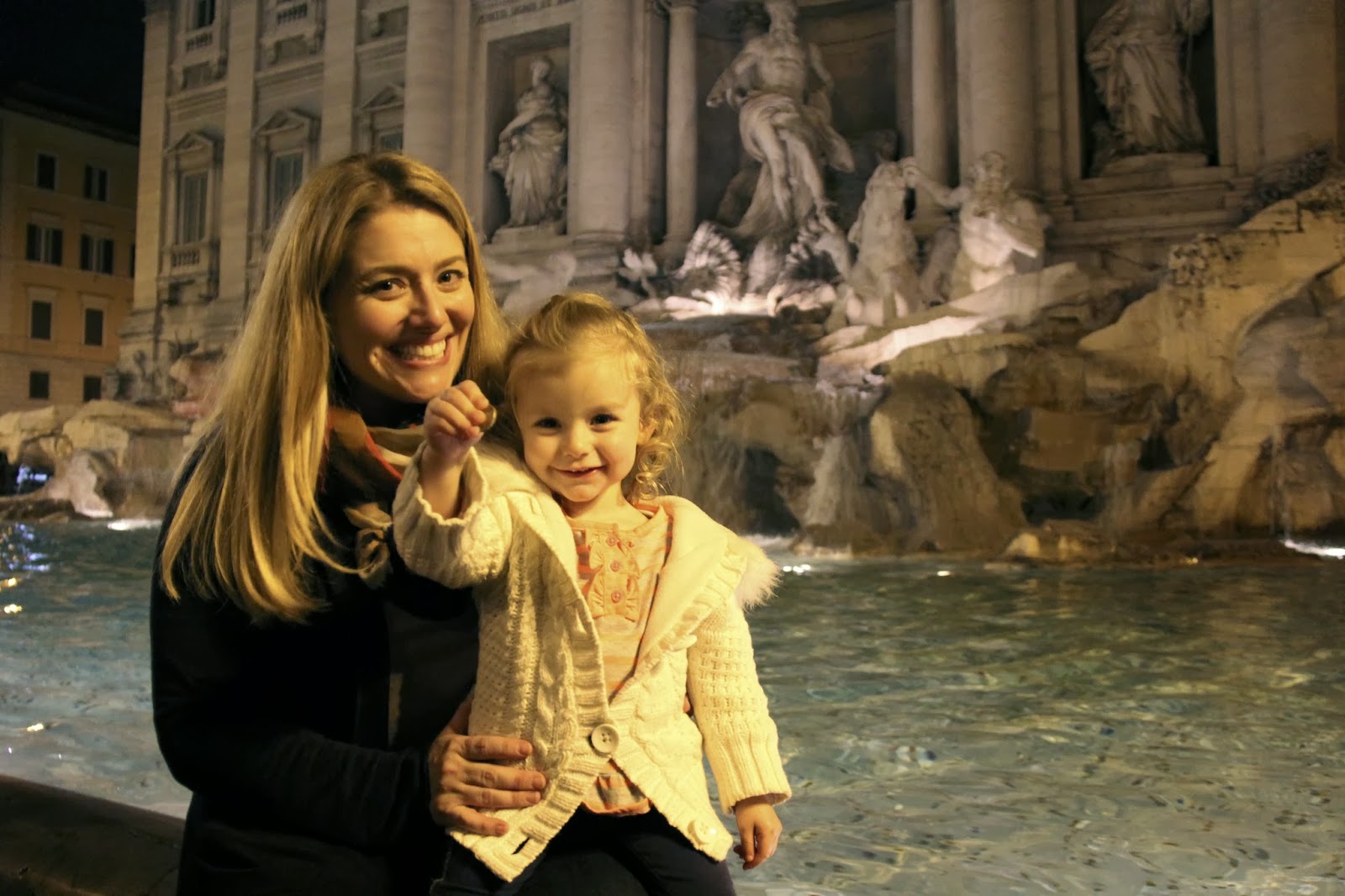
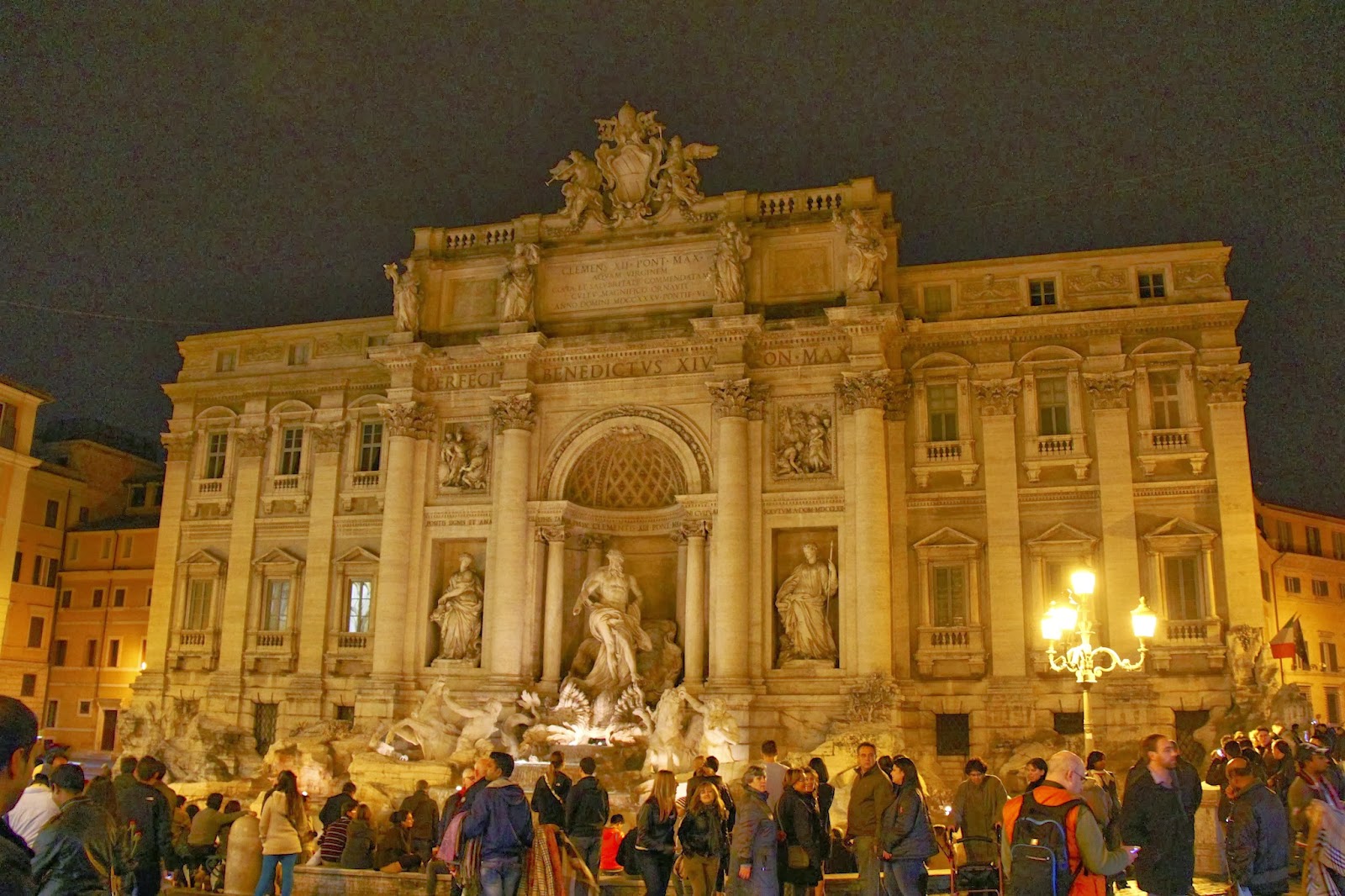
Before the night was over, we stopped by Scalinata della Trinità dei Monti (Spanish Steps). Of course, no visit to Rome would be complete without throwing a coin over your shoulder (guaranteeing your return to the city) in the Fontana di Trevi (Trevi Fountain).
Scalinata della Trinità dei Monti (Spanish Steps)
Julia on the Spanish Steps
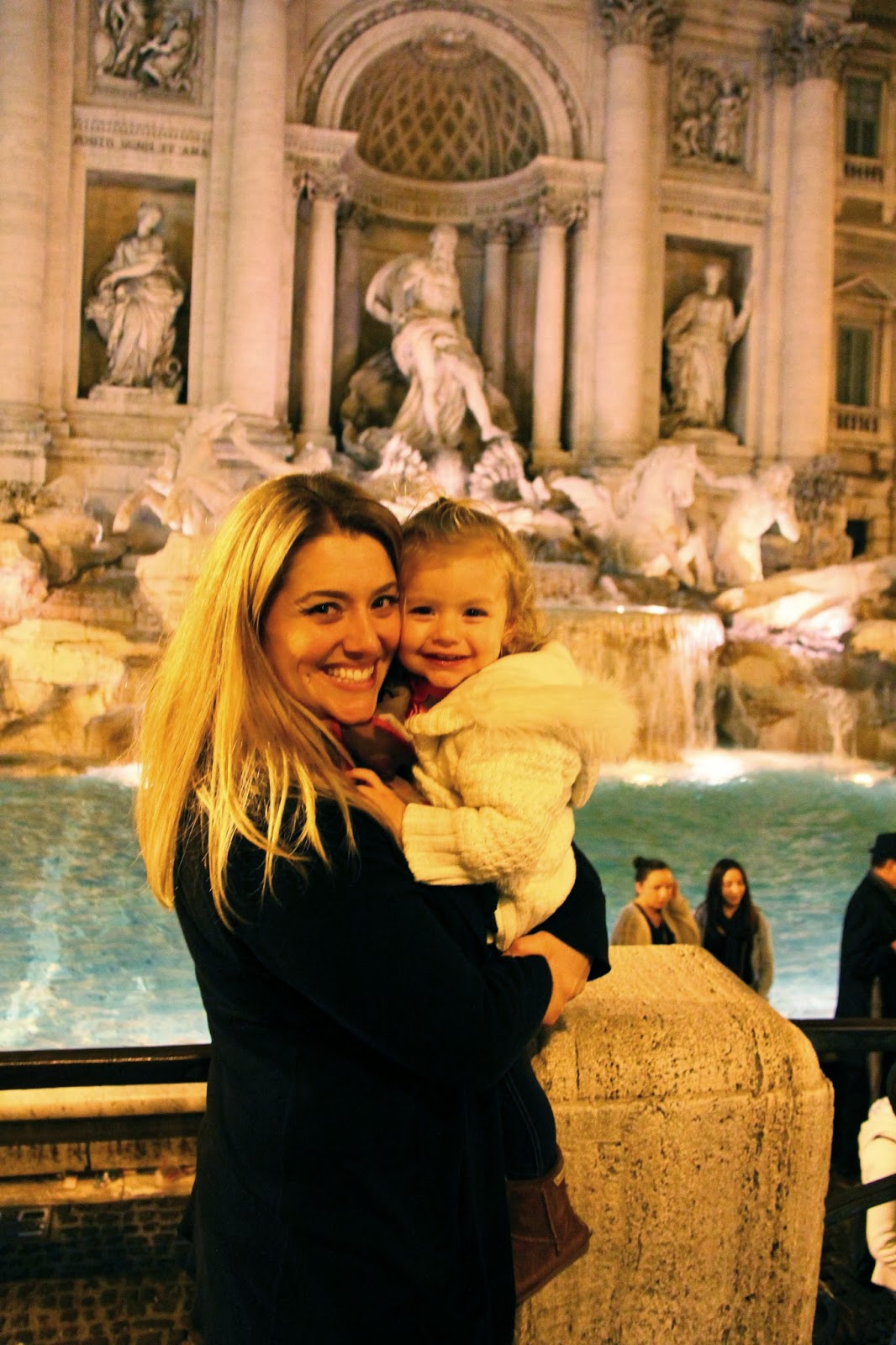
Fontana di Trevi (Trevi Fountain) at night
This magnificent fountain stands 86 ft. high
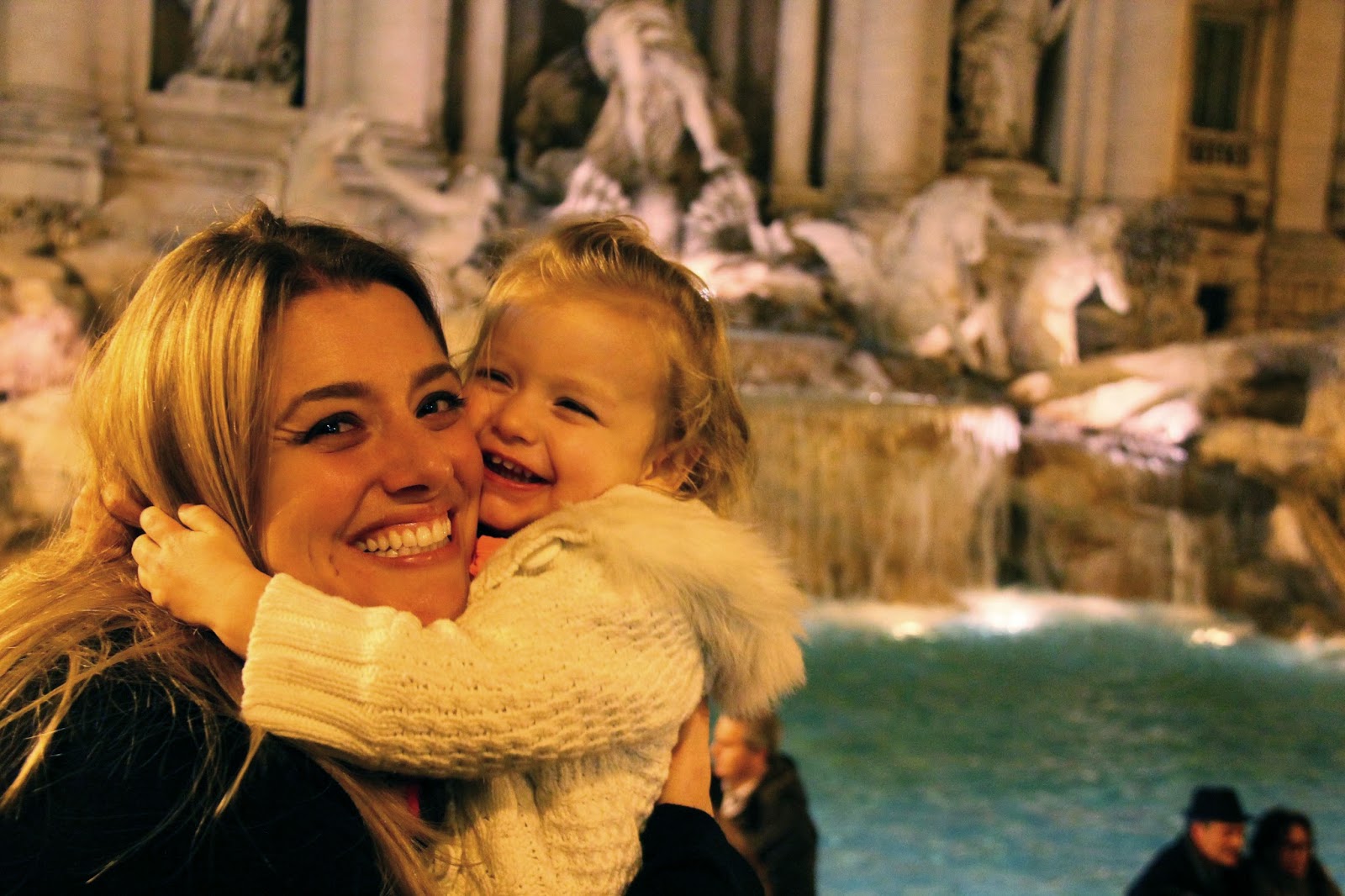
Julia gives her momma a hug
Jen and Julia in front of the Trevi Fountain
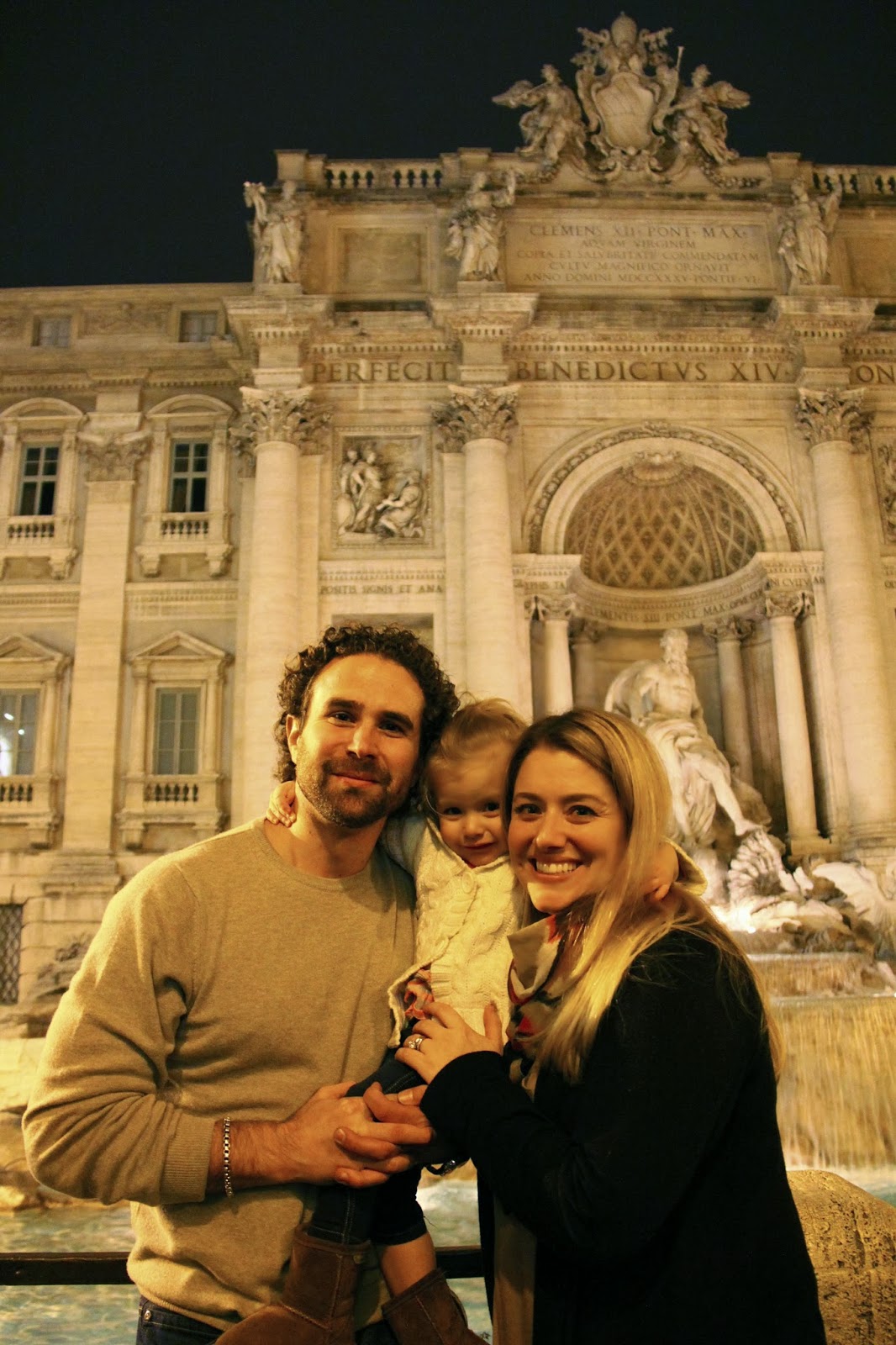
Family photo
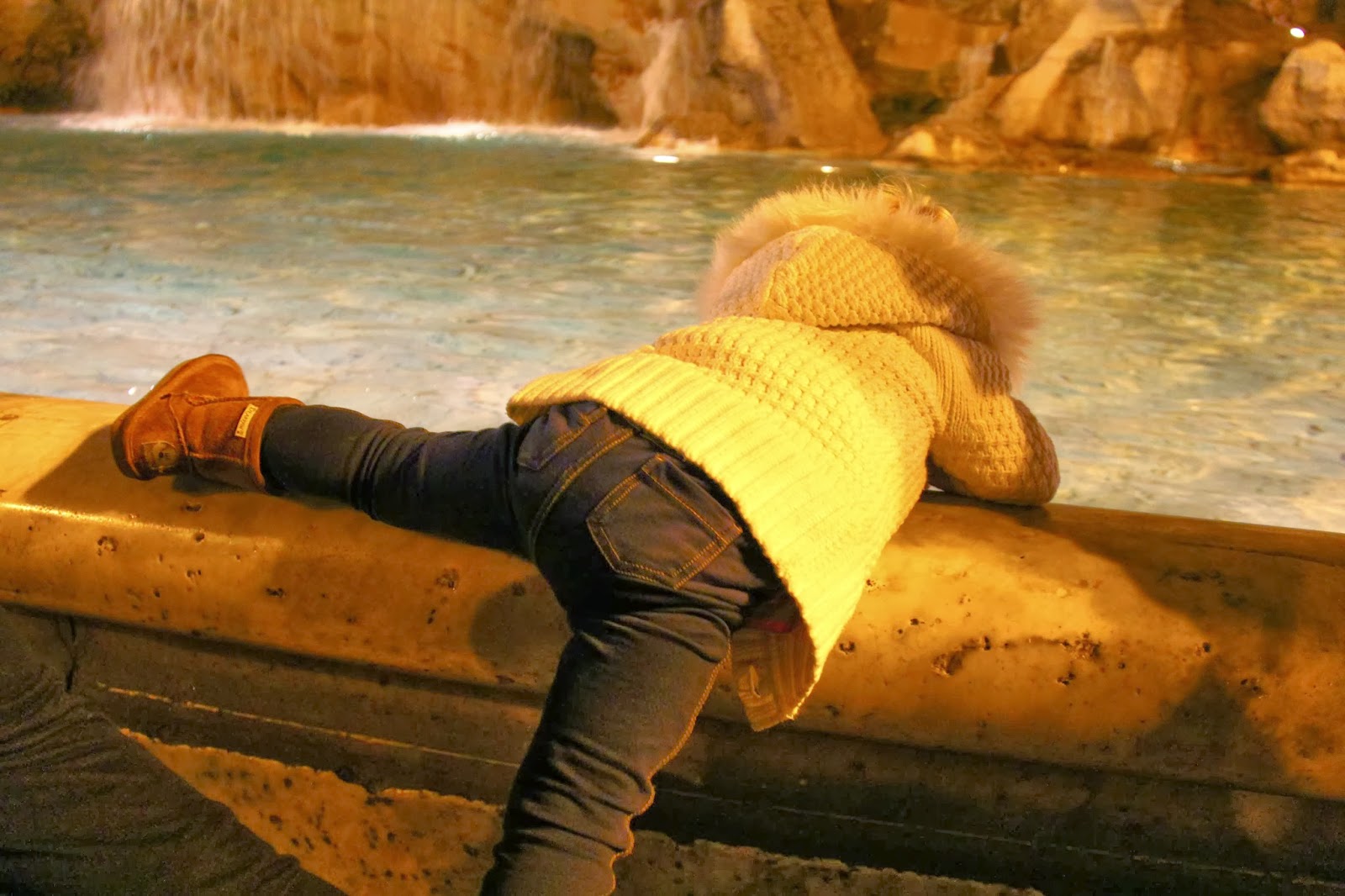
Julia wanted to go for a swim
Julia gets ready to toss her coin and ensure her return to Rome
Italian architect Nicola Salvi lost the original contest to design the fountain, but was awarded the commission anyway due to public outcry in Rome that a Florentine (Alessandro Galilei) had won – a fortunate turn of events
As it turns out, two days in Rome is too action packed to fit into one post – so I’ll continue in a subsequent posting. Ciao for now!
“It’s the most wonderful time of the year”… and that means so many things! It means snow flakes and Christmas lights. It means cold weather and hot chocolate. It means Santa Claus and stockings stuffed with goodies. When you live in Europe, it also means tremendous Christmas markets and delicious vin brulè (cooked wine, usually sold on the streets). Over the past couple weeks, we have been taking advantage of it all! Because Christmas is only four days away – I will spend the next four days posting about our Christmas fun. In order to do that, I have to bend my “unbreakable rule” and publish blog posts out of order. I’ll fast-forward to Christmas and then flash back to some exciting posts that I have in the pipeline.
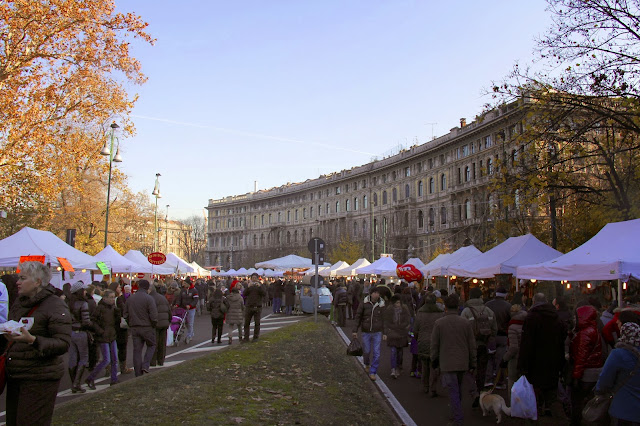
Oh bej! Oh bej! No, you don’t have to say “gesundheit”! I didn’t sneeze. That is the name of a festival held each year in Milan, spanning from December 7th through the following Sunday. How did it get that wonderful name, you ask? “Oh bej! Oh bej!” means, “oh so nice! Oh so nice!” in the Milanese dialect. It is by far, the most important Christmas festival held in Milan. December 7th is the day of the Patron Saint of Milano, Santo Ambrogio. The festival is said to date back all the way to 1510.
Vendors line the streets during Oh Bej! Oh Bej!
We arrived in Milan early and parked far outside of the central zone. You would think that living just outside of Milan for nearly a year would make me an expert driving in the city. It’s quite the opposite, in fact. I’m even more gun-shy now than I was when I first moved here. Driving through limited zones and parking in residential areas has cost me hundreds of euros in fines. So this time, I didn’t chance it – we parked in a garage outside the central zone and hoofed it just over a mile. The brisk winter weather was cold on our faces, but the fresh air and excitement of the day filled us with an energetic warmth.
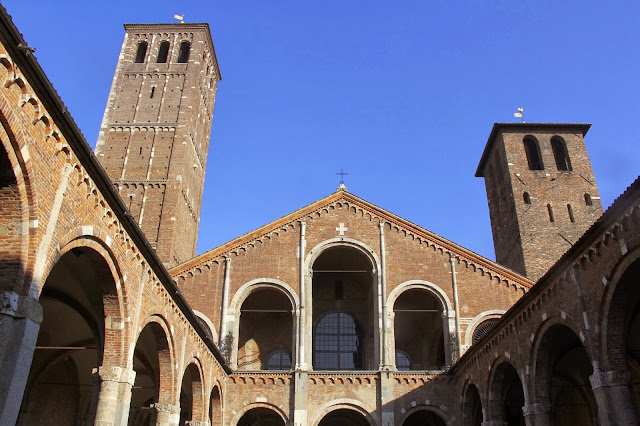
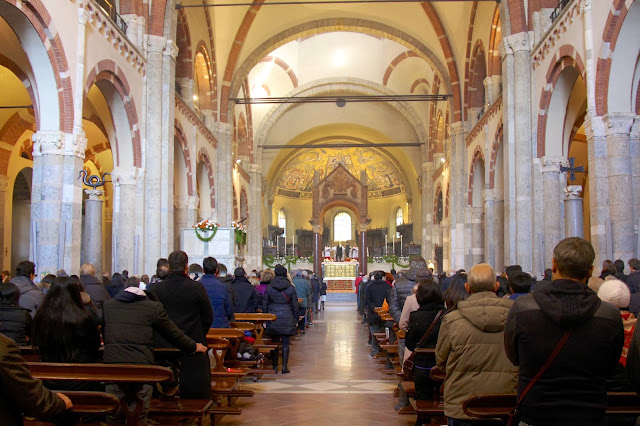
Our first stop was the Basilica of Sant’Ambrogio, the basilica commissioned by and named after Milan’s Patron Saint. Construction of the basilica began in 379, making it among the oldest and most significant churches in Milan. Since we were in the city on the actual day of Sant’Ambrogio, there was a large service being held in the basilica.
Basilica Sant’Ambrogio named for Milan’s Patron Saint, Santo Ambrogio
There was a large church service being held, even though it was a Saturday
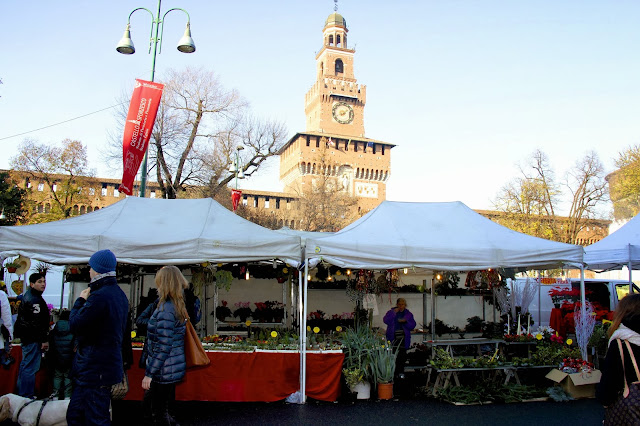
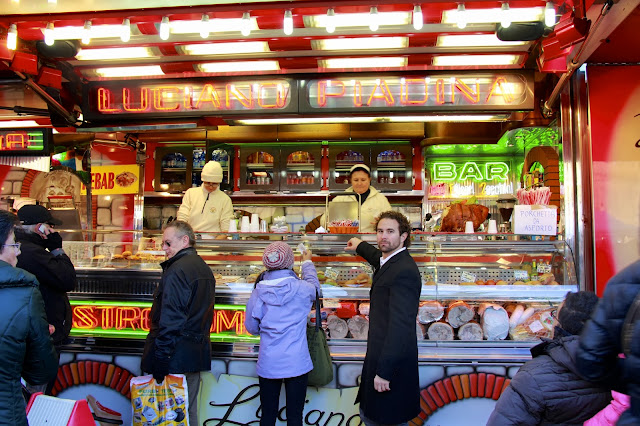
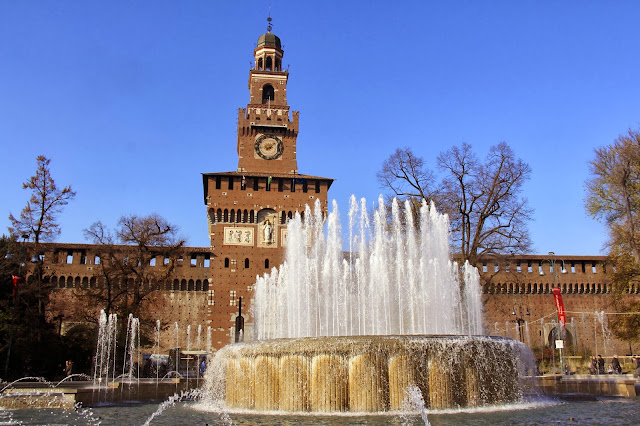
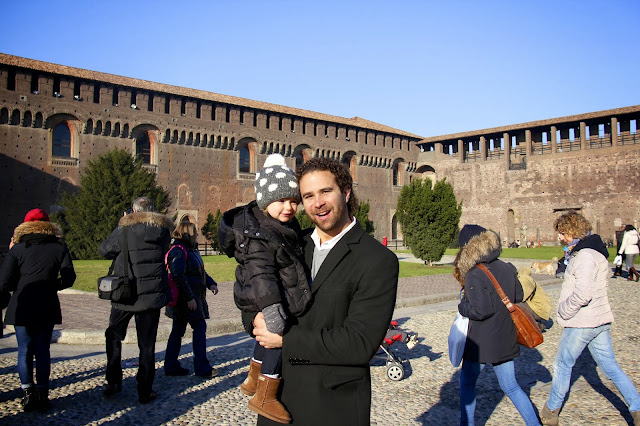
Next, it was time for us to see the festival and enjoy some of my favorite things – vendor food and vin brulè! In the center of the city stands the Sforza Castle, a medieval fortification built in the 15th century. Here in the 21st century, the fortification plays host to hundreds of vendors that encircle the great castle walls. Over 400 vendors vie for the attention of shoppers looking for food, crafts, Christmas ornaments, books and so much more. We got a couple wonderful pannini (sandwiches) and jockeyed for a spot to enjoy them. After lunch and some shopping, we walked through the gates of the castle and explored the courtyard.
Over 400 vendors flanked the ancient castle walls
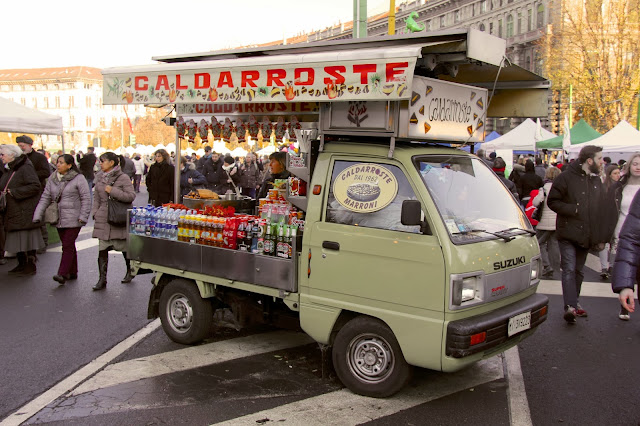
The best roasted chestnuts come from the back of trucks
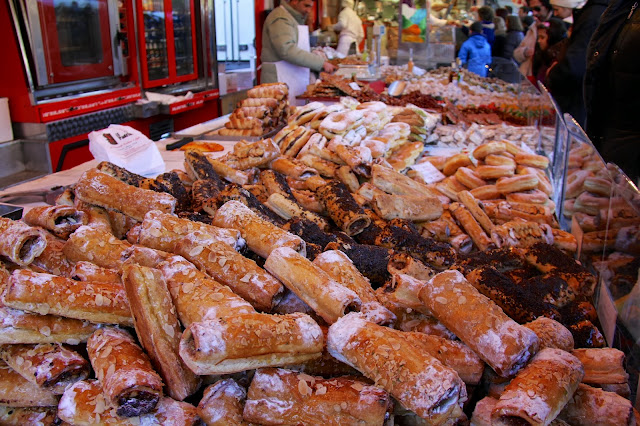
There were literally dozens of stands with delicious Sicilian treats
A stand full of artisanal goods
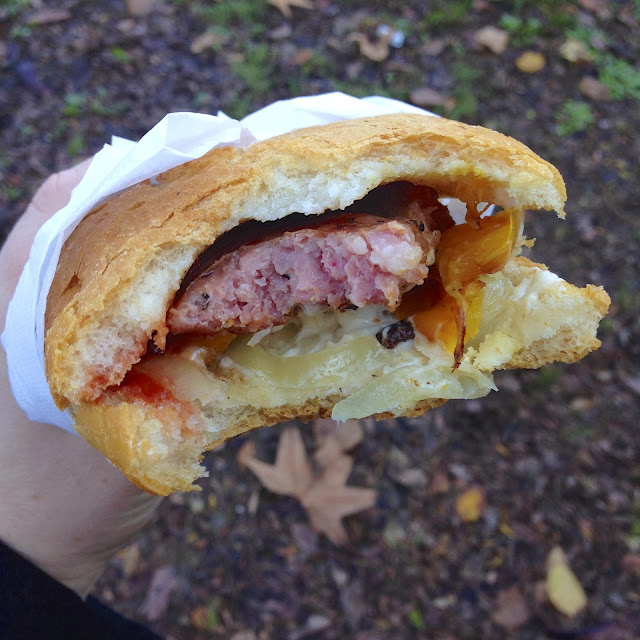
I picked us up a couple sandwiches – porchetta and salamelle
Salamelle panino
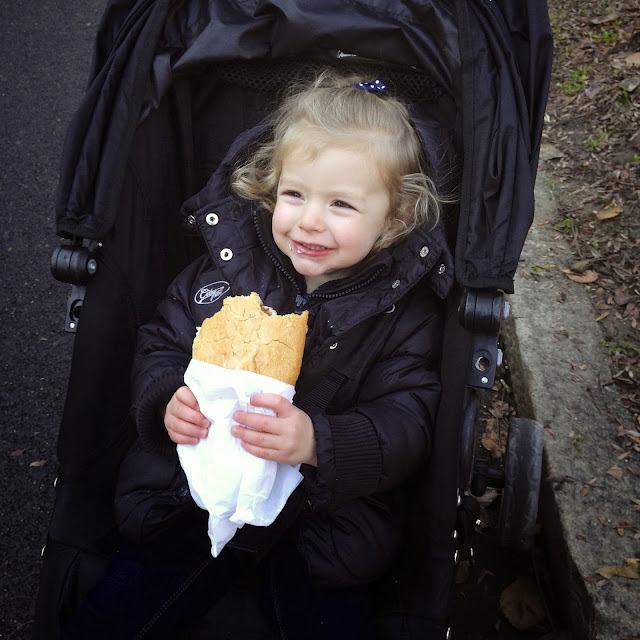
After her first bite, Julia decided she didn’t want to share – I couldn’t blame her
A fountain sprays in front of Sforza Castle
We went inside to explore the courtyard
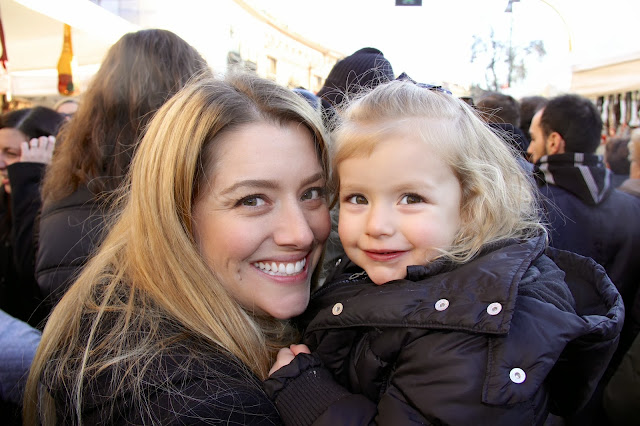
Jen holds Julia tight in a crowd full of people
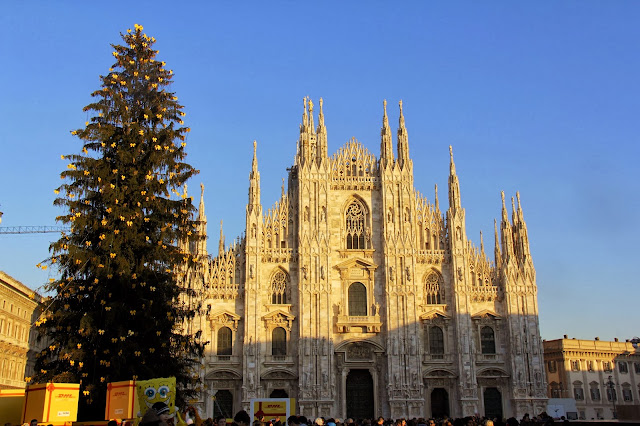
When we had our fill of the market, we strolled down Via dei Mercanti toward the Duomo. No trip to Milan would be complete without seeing one of the most amazing architectural examples of our age. The Duomo is particularly special during Christmas time. Ablaze with sparkling lights and framed behind a giant Christmas tree, you can’t help but become filled with Christmas spirit.
Duomo di Milano
The festival just whet our appetites for all the Christmas fun that we would enjoy. I hope that I’ve been able to do the same for you. We still have so much left to explore together, including the Christmas markets of Switzerland and a tour of some of Italy’s “best towns for Christmas.” Plus, I got an early present… I hope that you’ll help me unwrap it. I’ll give you a hint – it’s got four wheels, two doors and 572 horsepower! Grab a warm cup of vin brulè and get comfy (oh yeah, we’ll give you a recipe for that too) – we’ve still got a lot of exploring Christmas time in Europe left to do.
Jennifer, Julia and I had a wonderful time when my Uncle S and Aunt Deborah came to visit us this past March. That’s why we were thrilled when they mentioned that they would like to come back to Italy again this fall. They wanted to do a bit of traveling and invited us to join them on their adventures, using our condo in Como as a “home base”. They had sketched a rough itinerary and just wanted a little help filling in the blanks – assistance I was happy to give. They knew that they wanted to spend some time with us here in Como, some time in Piemonte and Emilia-Romagna (two regions adjacent to our region of Lombardia) as well as a quick jaunt down to the historically significant city of Pompeii and another to Venezia.
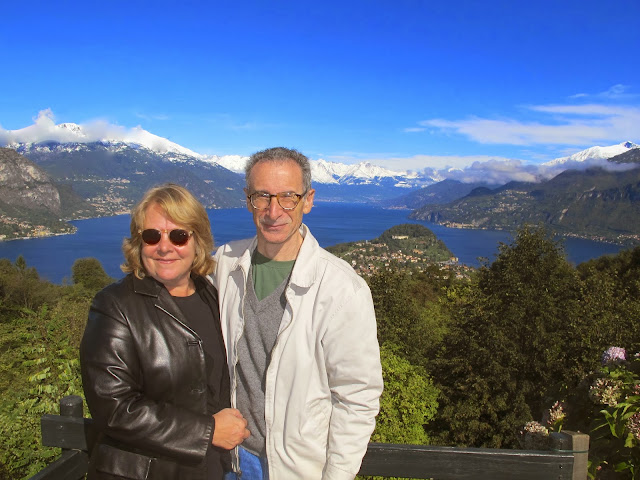
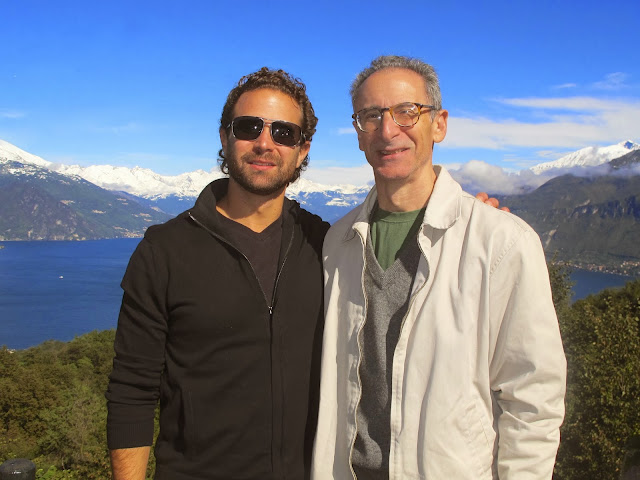
S and Deborah standing near the divide of Lake Como
Jen and I share the responsibility of planning our trips – researching restaurants, activities and hotels. But they’re usually in three or four day stints and one location at a time. This time, I had to navigate through a two week itinerary, complete with activities, restaurants, hotel stays and all at new locations each day. Putting the puzzle pieces of their trip together was a challenge not for the faint of heart. Jen and I dug in, and by the time S and Deb landed in Milan, we had an itinerary that we were both proud of. I think all of us agreed that it came together quite nicely. Of course, the key ingredient was the company, mixed with a little food and wine!
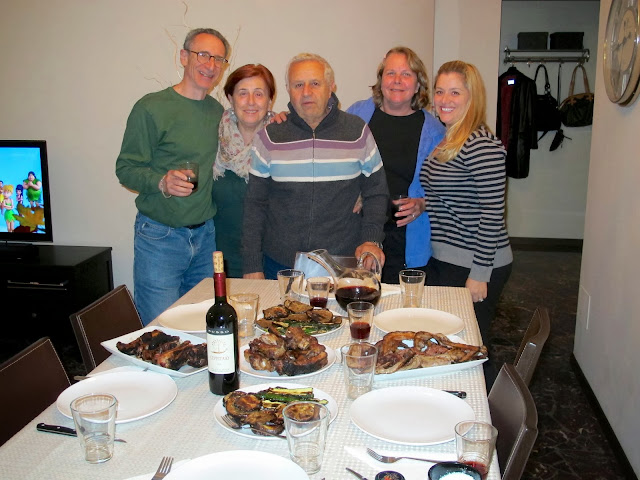
I manned the grill for a family feast on their second night. I’ll get Franco to smile for one of these pictures, yet…
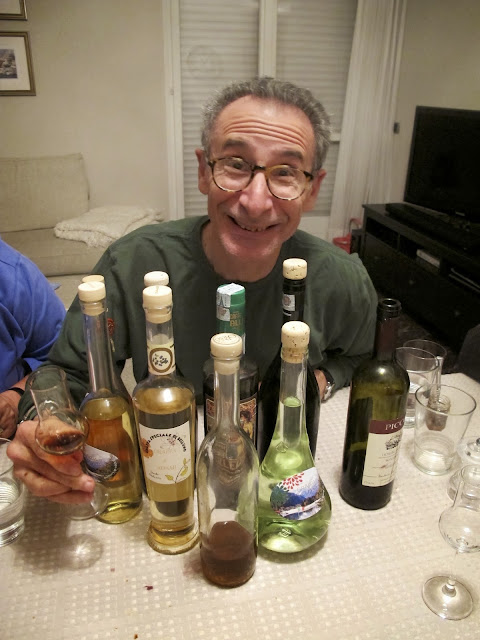
S enjoys a little grappa after our meal
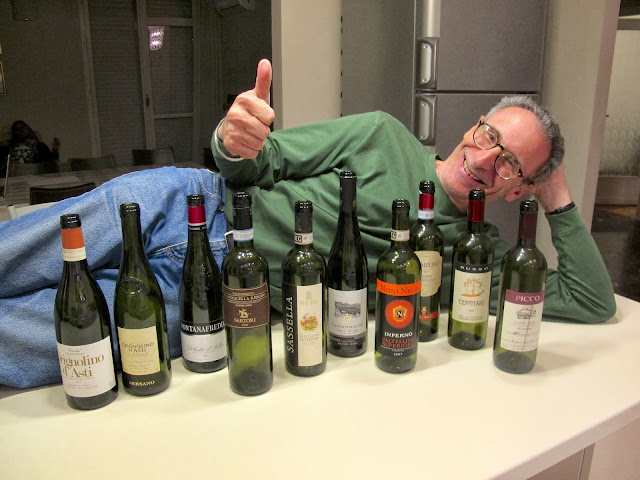
S gives us a thumbs up as he displays our first two days worth of “work”
We divided the trip into the three things that Italy is best known for. Part I was wine. Part II was food. And part III was history. Jen and I accompanied S and Deb for parts I and II (our personal favorites) and let them venture off on their own for part III. This clean break in adventures divided the trip quite nicely and will also allow me to easily organize these blog posts into two parts. Easy breezy, vino-squeezy. However, before we hit the open road, we spent a day here on Lake Como in one of our favorite towns – Bellagio (if you’ve been reading this blog for a little while, you’ve seen us here many times before). The unique beauty of the town is like nothing else on the world.
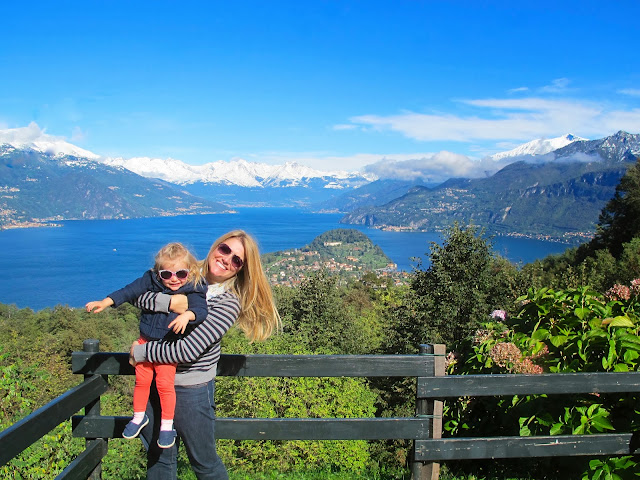
The weather was absolutely beautiful the day we drove to Bellagio
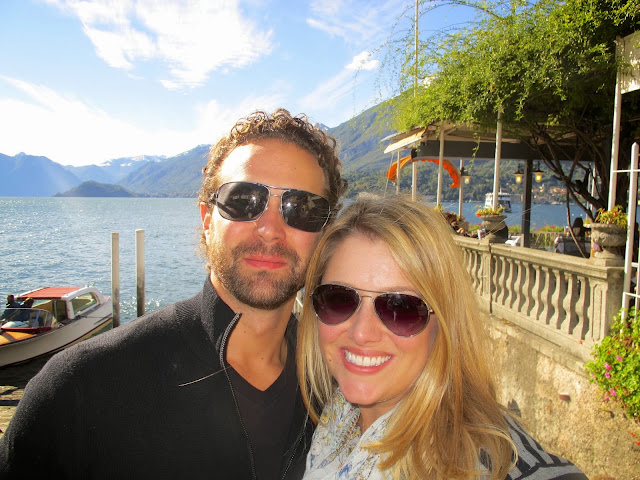
I teach my uncle how to take a “selfie” (after explaining what a “selfie” was)
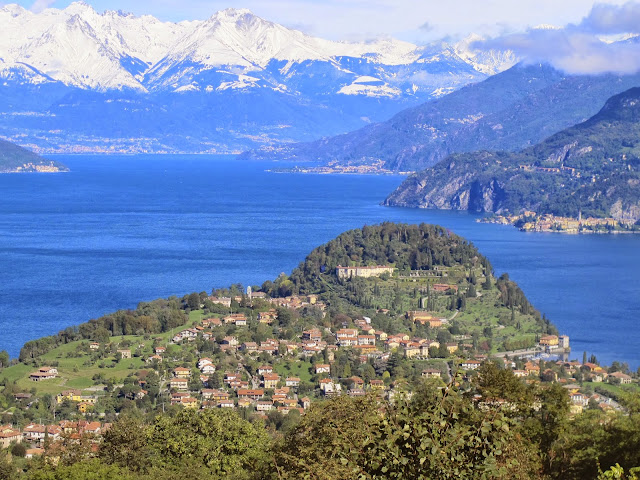
Bellagio from above – a unique vantage point. Bellagio divides Lake Como into the two “legs”
Jen and I pose for a picture
S and I take a picture together
My two girls
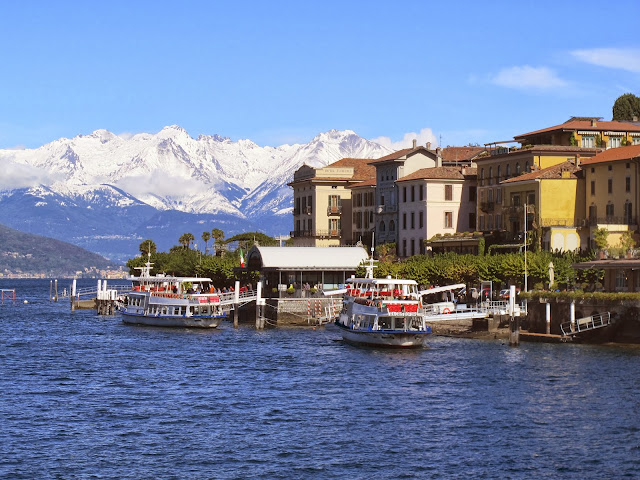
Bellagio is a beautiful town at the center of Lake Como
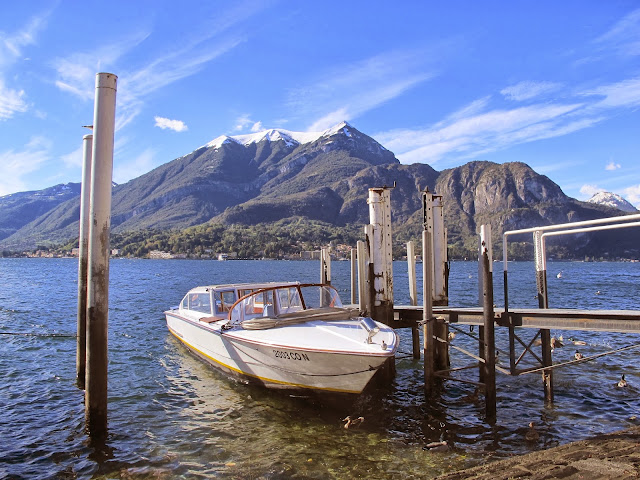
A boat rests after bringing passengers from another lake town
“Hey… I think I’ll make this my profile pic”
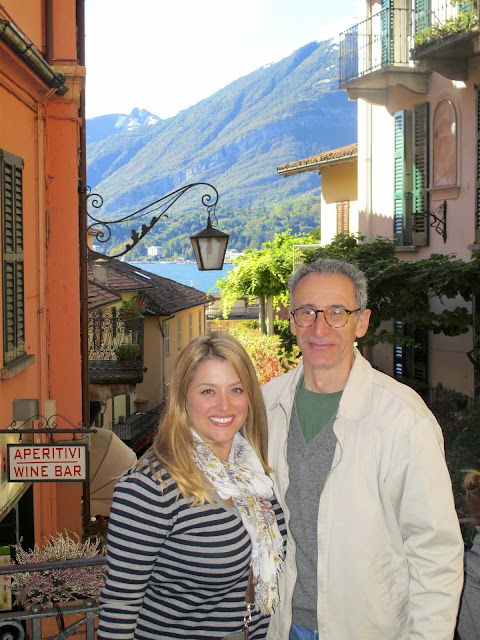
Jen and S stand near the wine bar where we had lunch
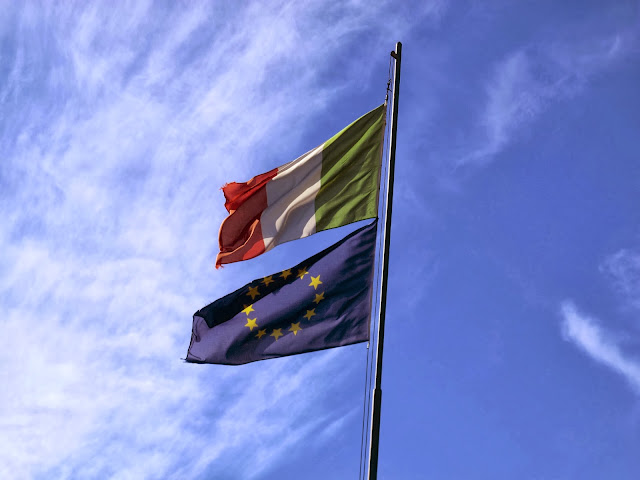
The Italian flag blows in the wind alongside the European flag
Piemonte (Piedmont) is a region in northwest Italy that borders France to the west and [our region of] Lombardia to the east. The capital city of Piemonte is Torino, which was once the capital of all of Italy and the springboard for the unification of the country. Of the twenty regions in Italy that each produce wine, Piemonte is probably the most well-renowned for their vintages. The rolling hills and mild climate result in some of the world’s best wine – the Barolos and Barbarescos produced here are often the prize jewels of wine cellars the world over. These wines, made primarily from the nebbiolo grape age very well, and in fact improve and develop richer and more powerful flavors as the decades pass. It was easy that to recognize that this portion of our trip was going to be entitled simply, Vino (wine).
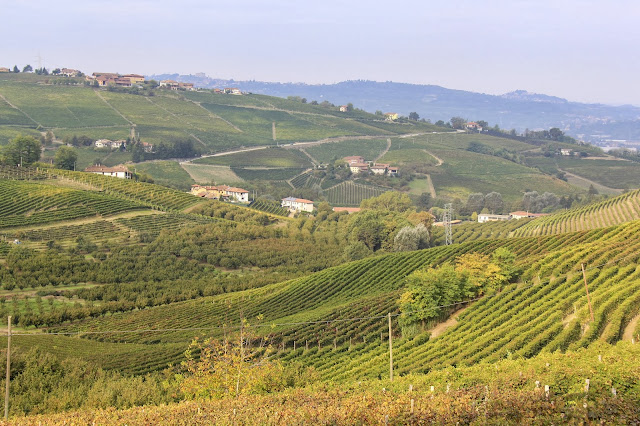
The rolling hills of Piemonte are a perfect place to grow grapes
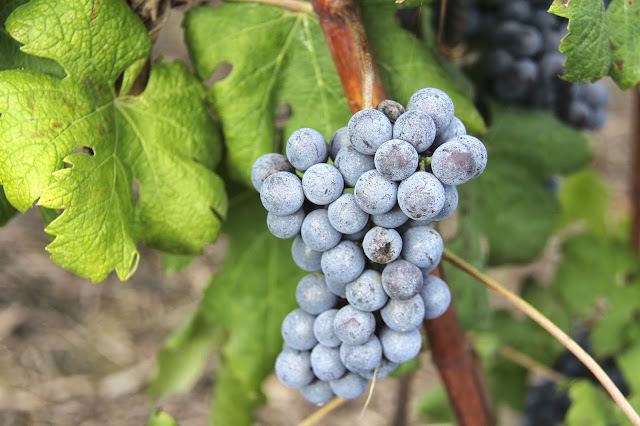
They look delicious now… just wait until they are turned into a Barolo or Barbaresco
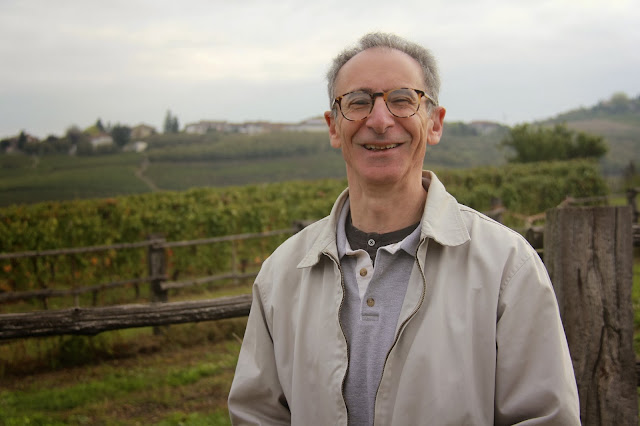
S stands in front of a field of grape vines early in the morning
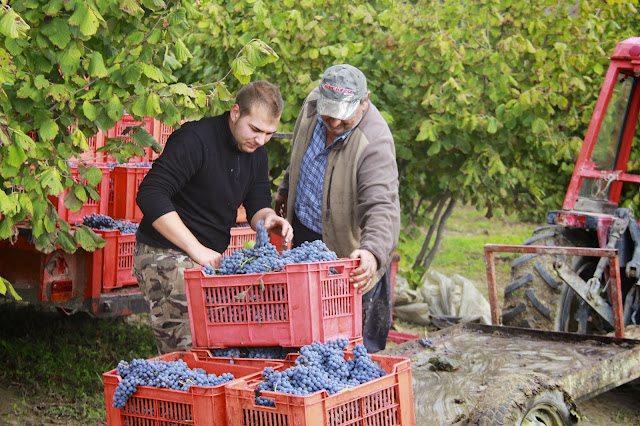
A father and his son load grapes onto a flatbed during their harvest
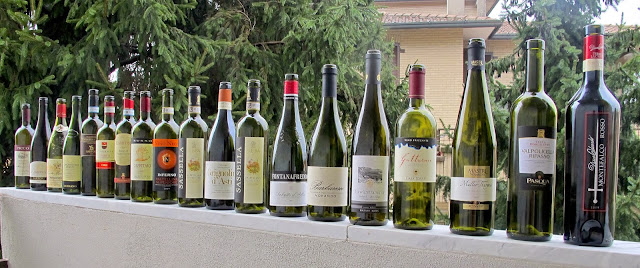
The finished product of our five nights together in the condo – wine was definitely a theme central to their visit
We spent the first day of our road trip in the small village of Barolo. During our drive to Barolo, S imparted some of his knowledge about the famous wine, which I’ll now share with you. Historically, Barolo wines were very rich on tannin and therefore could require as many as ten years to soften enough to drink. The long fermenting time and aging process in large, wooden barrels causes this complexity in the wine. The problem with this method is that it is very time-consuming and therefore expensive. A newer breed of producers have cut the fermenting time by as much as 2/3 and age the wine in smaller, French oak barrels. This allows the consumer to drink the wine much earlier and appeals more to the more modern, international palate (it creates a fruitier wine). As an aside, the more modern palates that prefer “big”, fruitier wines is often attributed to world-famous wine critic, Robert Parker (often referred to as the “Parkerization” of wine). The differing styles in Barolo has created a controversy between “old” and “new” – a conflict often referred to as the, Barolo Wars.
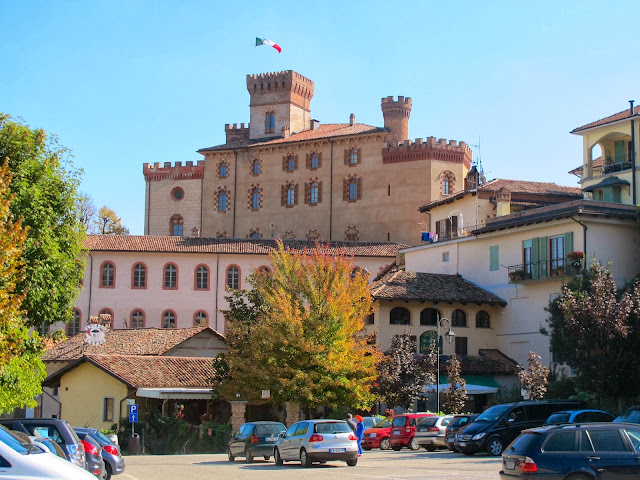
Castello di Barolo stands proudly overtop the town with the same name
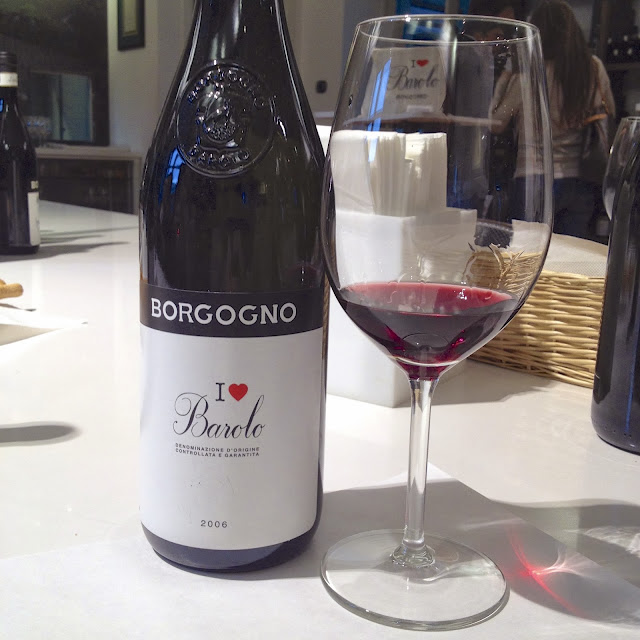
I ♥ Barolo!
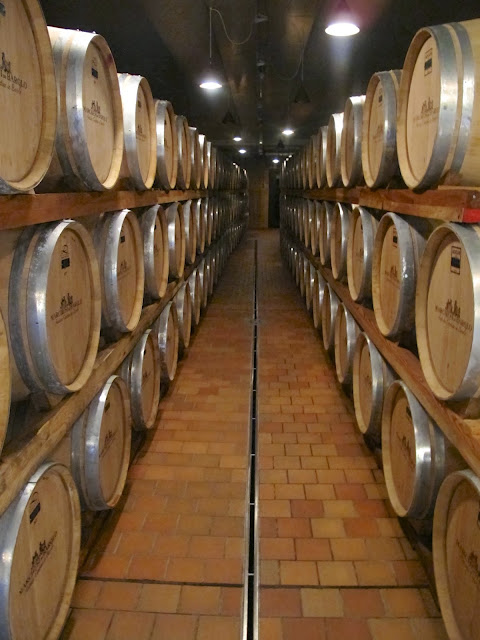
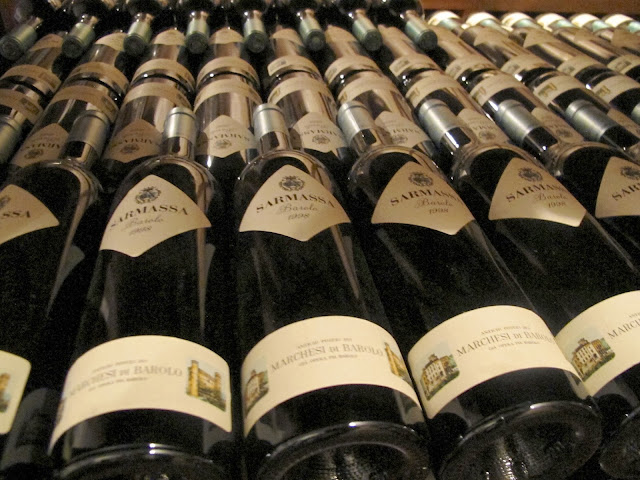
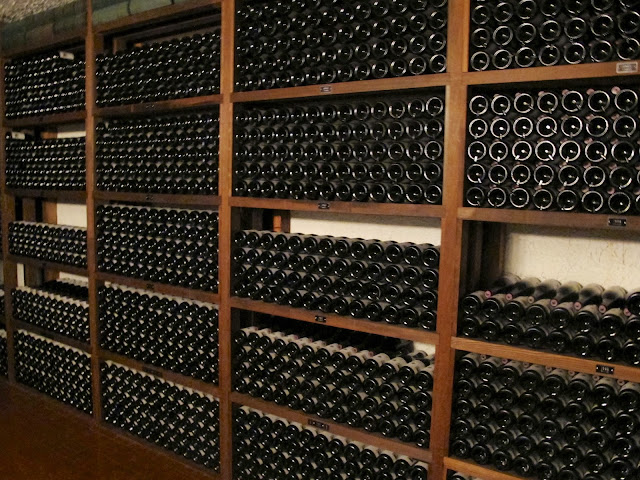
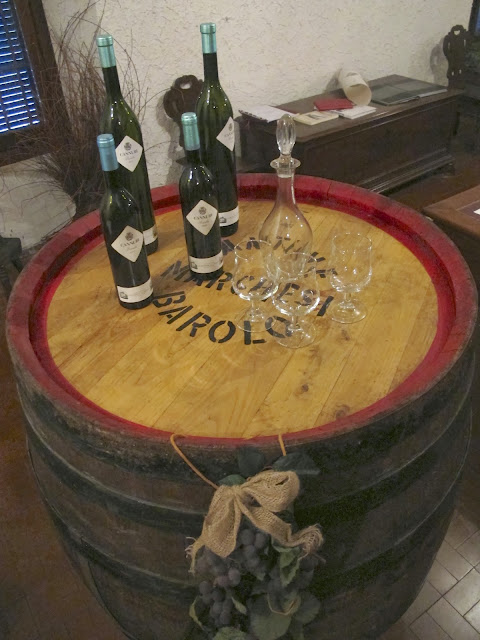
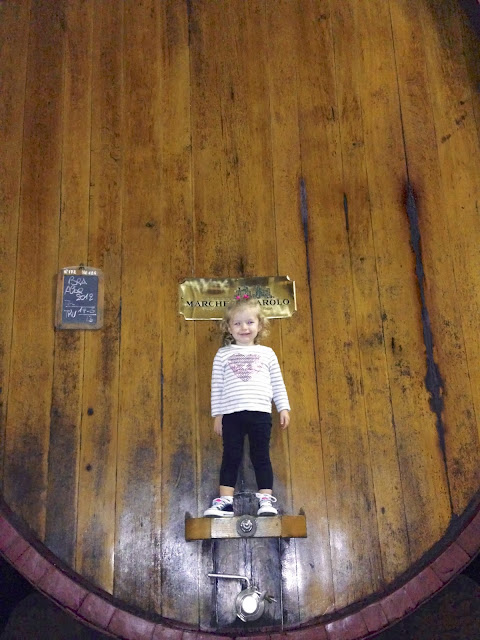
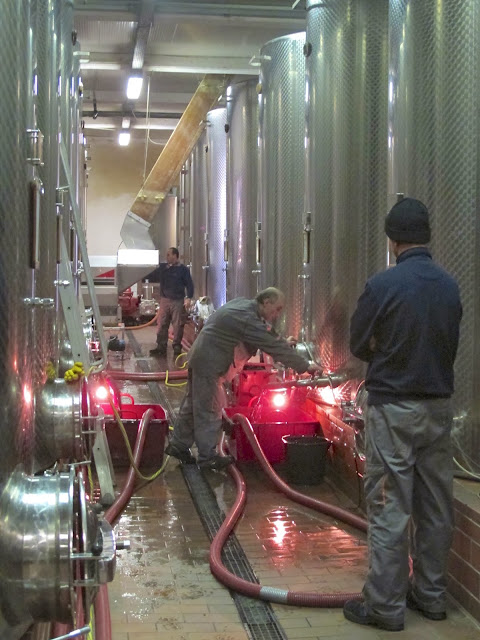
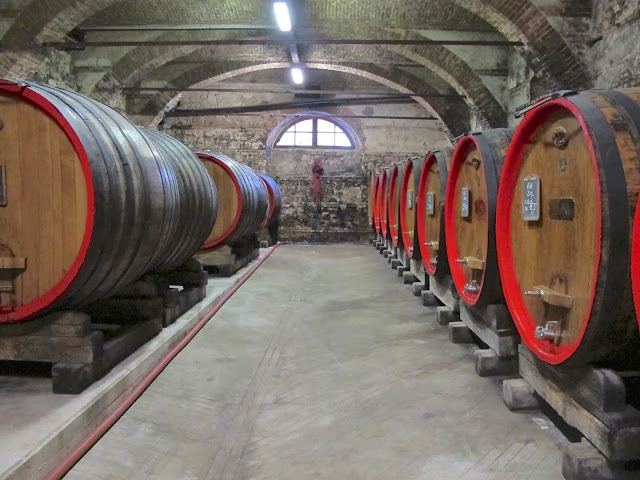
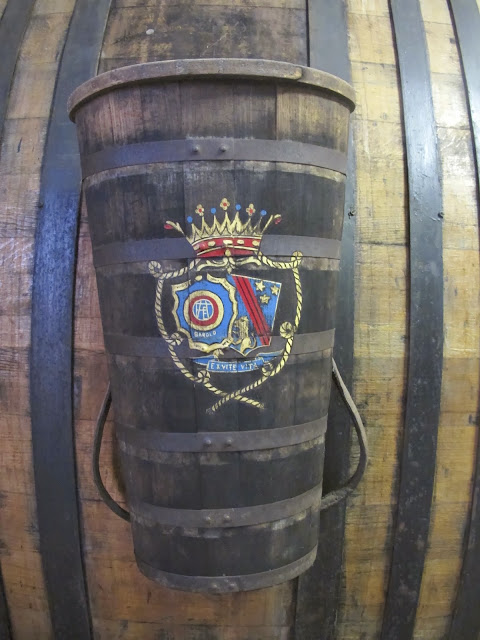
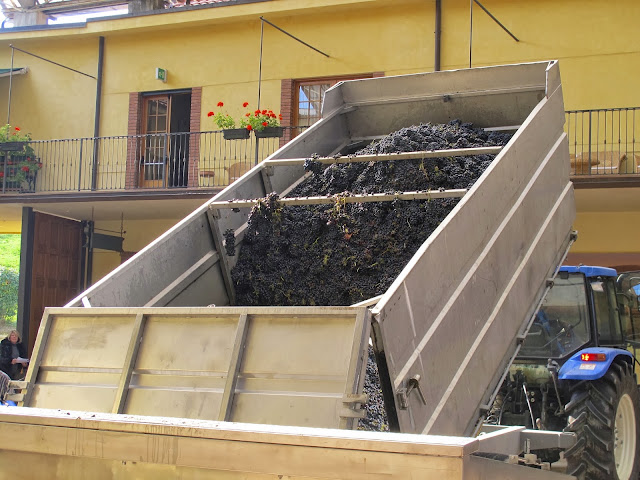
After a wonderful lunch at Osteria Cantinella, I had pre-arranged for a tour and wine-tasting at Marchesi di Barolo. This particular cantina boasts a very genuine and interesting history (I encourage you to click on the link and visit their website). It was explained to us that this particular winery was where Barolo itself was born – we even saw the original cask that was home the world’s first Barolo over 200 years ago. Our tour began in one of the cantina’s vast rooms where they were aging wine in botte di vino (wine casks). These barrels were made from oak from several countries. S and Deb saw some of the barrels were made by an American cooper (barrel maker) they know in Napa Valley. Small world! We next moved into the Marchesi’s private family cellar, where an impressive collection of wines rendered us all speechless. As we descended down into the heart of the cantina, we saw the juice of fresh “crush” flowing though long winding hoses, attached to the floor above where tractors were dumping the grape fresh from the “harvest”. This was exciting for all of us, knowing that we played a small part in the 2014 vintage (primarily by not tripping over the hoses and spilling the precious nectar on the floor). After the tour, we enjoyed a tasting of some of their finer wines – a wonderful way to casually spend the afternoon.
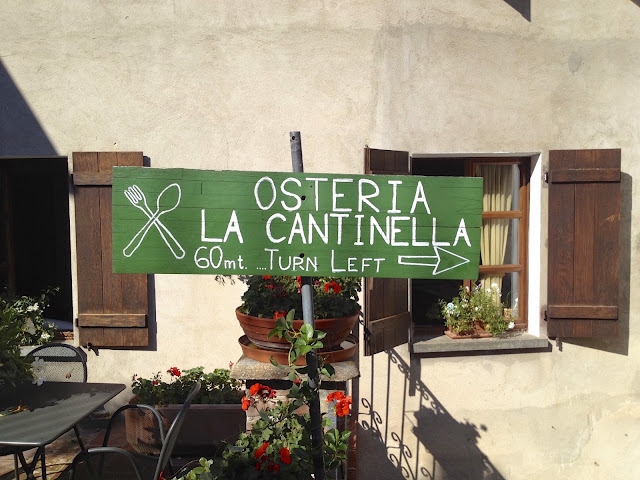
We merely had to follow the signs to reach our restaurant
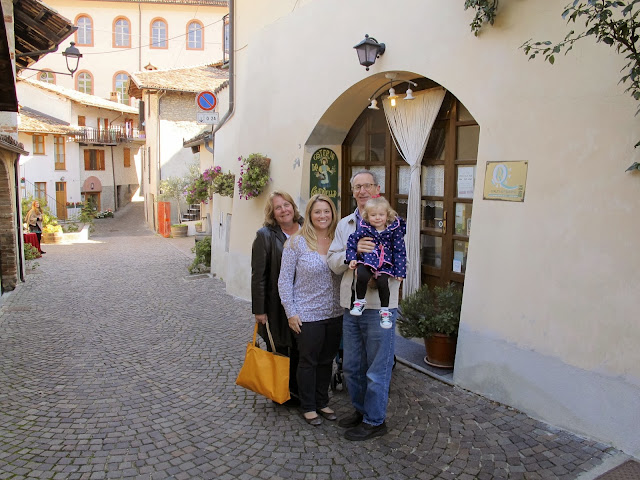
Our group is eager to dine at Osteria Cantinella
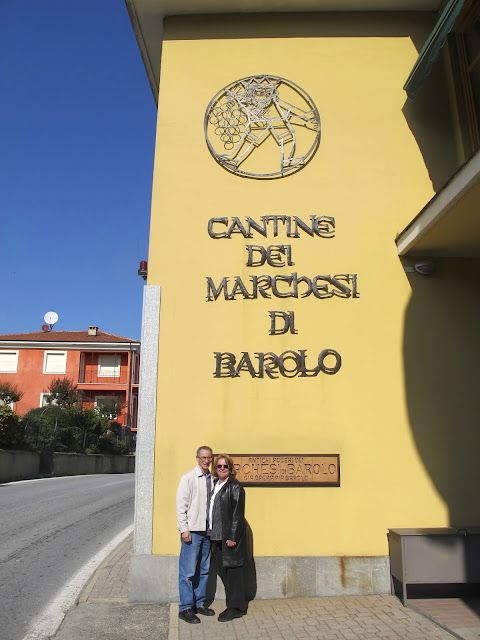
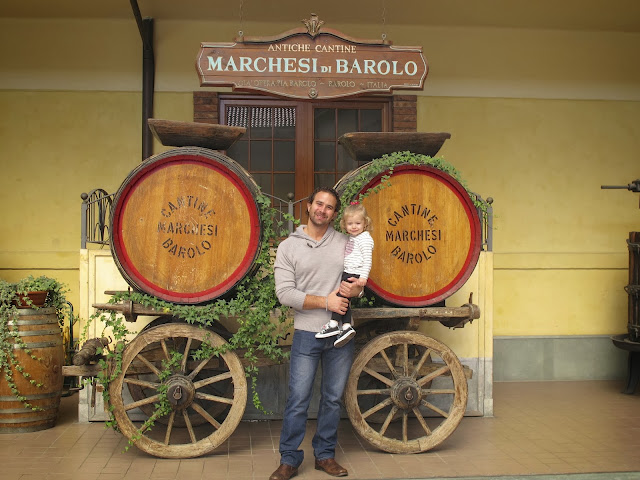
S and Deborah stand just outside Cantine dei Marchesi di Barolo
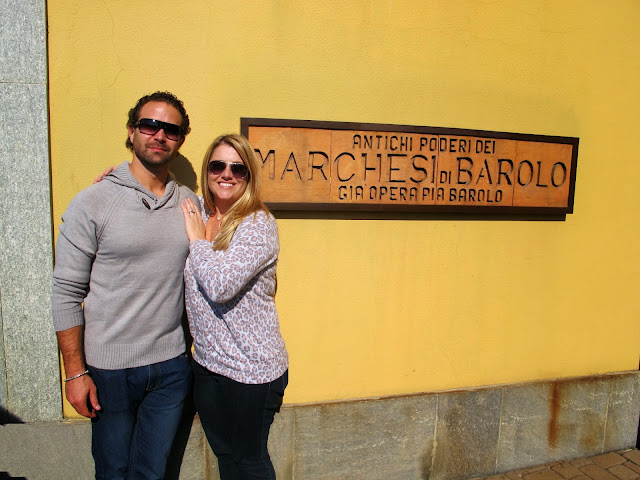
Jen and I take a picture here as well
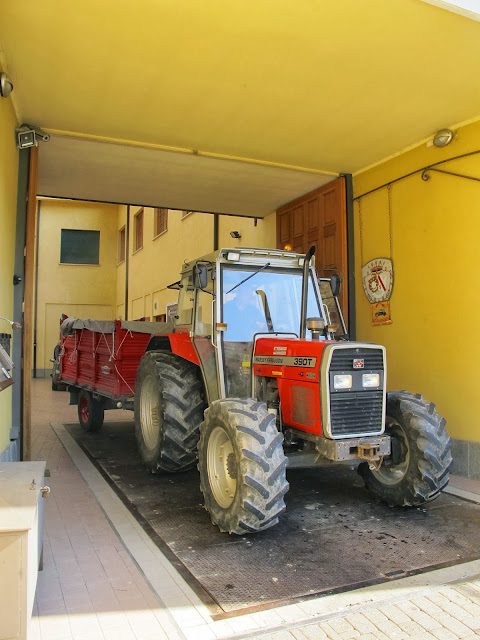
Tractors were coming in out along with us, bringing grapes fresh from harvest
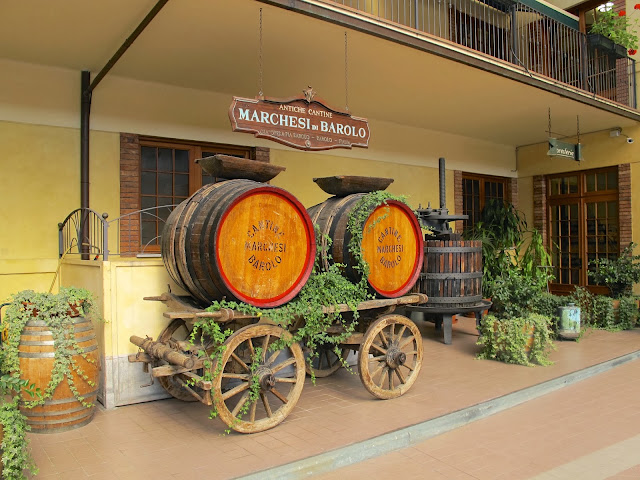
A display in the interior courtyard shows an old fashioned way to transport the wine from town to town
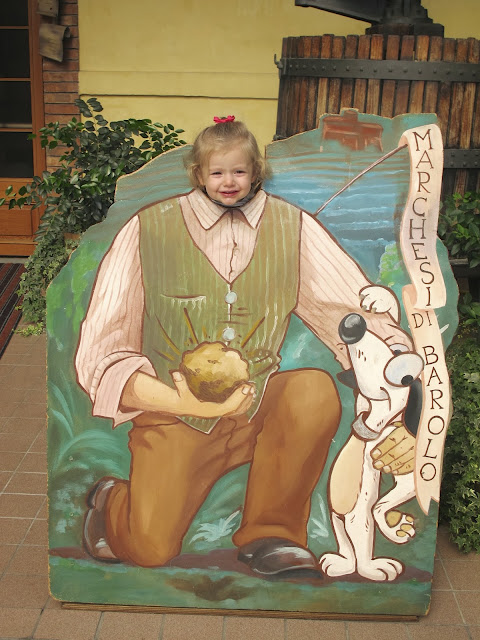
Julia also doubles as an expert Truffle Farmer
We smile in front of the old fashioned barrels and wagon
French oak botte in the first room we visited
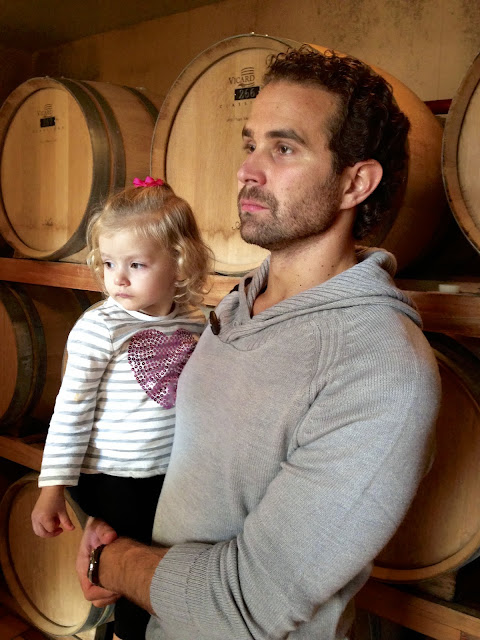
Julia and I listen to our tour guide
Barolo can age in the bottle for many years, most Barolo shouldn’t even be opened for at least 10 years
Going into the personal cellar of the family… quite the collection
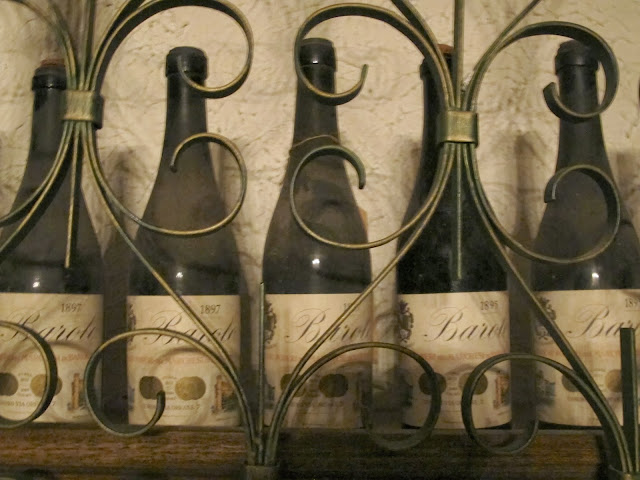
Some of the much older bottles are on display – these are no longer for drinking (hence the vertical position)
The oldest bottle in the cellar is from 1859 (not drinkable) and the oldest that is still drinkable is from 1938
A private tasting area
Some of these large barrels date back as far as the 1950’s
Downstairs the juice from the crush flow into these large steel vats through long hoses
These large barrels are made by hand and are very expensive
A basket that was once used for the harvest many years ago is now used as decoration
Tractors dump the grapes they collected at harvest into a machine that crushes them
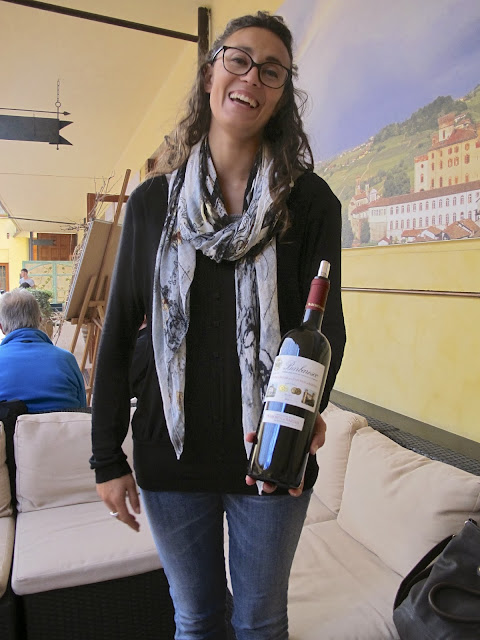
Our guide showcases one of the bottles that we would be tasting – this a Barbaresco
Deborah and Julia start a dance party
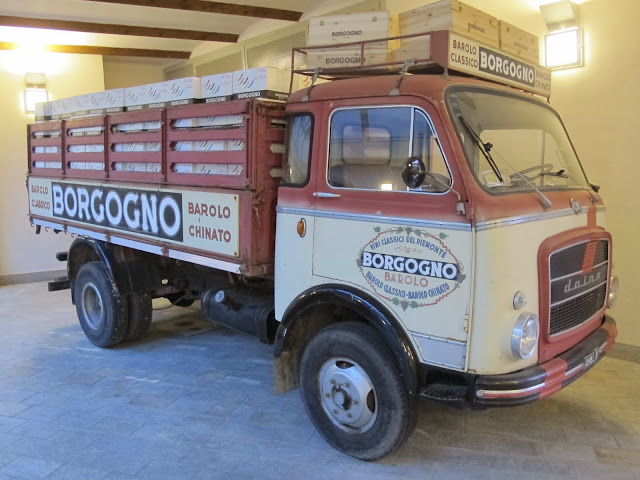
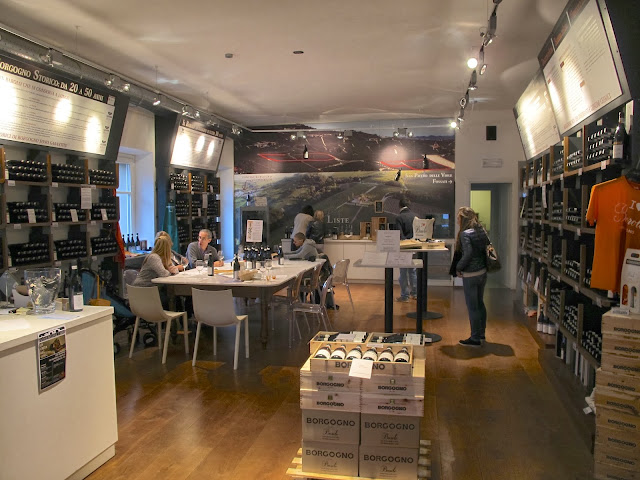
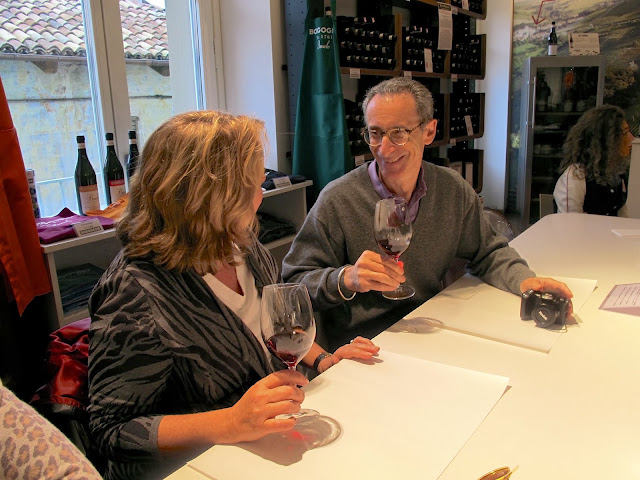
But we weren’t done – we still had another tasting on the books. We next went to Borgogno – a producer of fine wine since 1761. We opted for the more comprehensive vertical flight, consisting of six different wines. I cannot accurately describe to you the pure bliss one can discover whilst sipping on some of the worlds best wines, with fun people who’s company you really enjoy and basking in the glory of a napping baby. We tried our best to “play it cool” but I think perhaps got a little rowdier than we even realized. You have to give us a break, we had each had several glasses of wine at this point. Between me and S (mainly, S) – we bought so much wine that they included two of the four tastings and threw in canvas bags, custom wood cases and bottle openers. If you find yourself in Barolo – duplicate our exact schedule of eating and drinking – it was an amazing day.
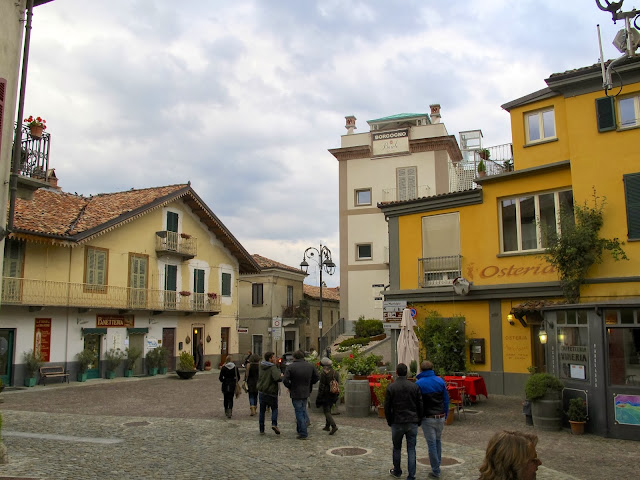
We walk through Barolo on our way to Borgogno (the tall white building)
One of their old trucks now sits on display in the cantina
A wonderful place to taste wine, surrounded by all the amazing bottles that can be acquired with the simple swipe of a card
S and Deborah share a laugh
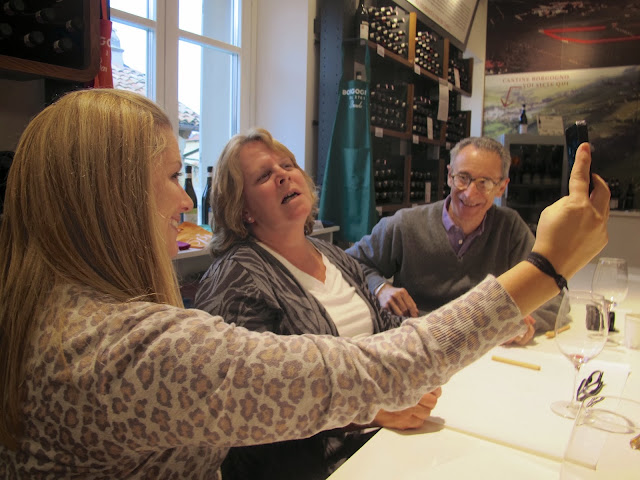
Jen explains what a “selfie” is and shows her how to do it
I wouldn’t call Deborah’s first attempt “successful”
“Here, let a pro show you how it’s done”
Deborah’s second attempt was much better – I think she’s nailed the “selfie”
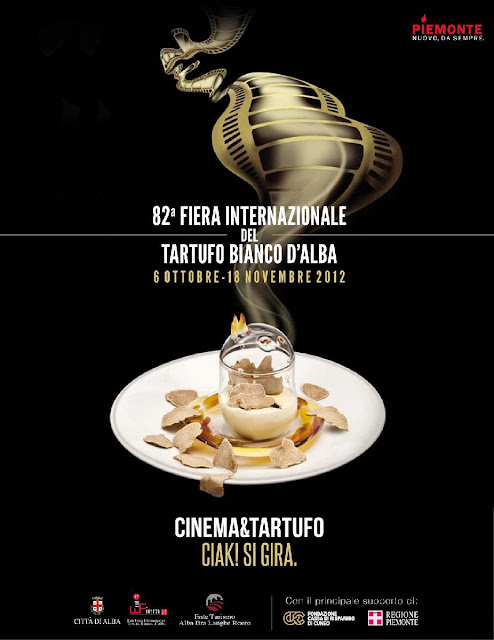
For 83 years, Alba has been host to the Fiera Internazionale del Tartuf Bianco d’Alba (International White Truffle Fair of Alba). This year, the festival is open for five weeks, from the 12th of October until the 17th of November, spanning across the entire city. There are hundreds of events (including a donkey race, music concerts and food & wine tastings), vendors set up in markets throughout the city, celebrity chefs dropping in all over town, cooking demonstrations and of course – thousands upon thousands of truffles. Admittedly, we were undertaking a “food” related activity in the “wine” portion of our trip – but we have learned that nothing pairs with the worlds most exquisite wine better than one of the world’s most elusive and desirable food items.
Last year’s poster for the event
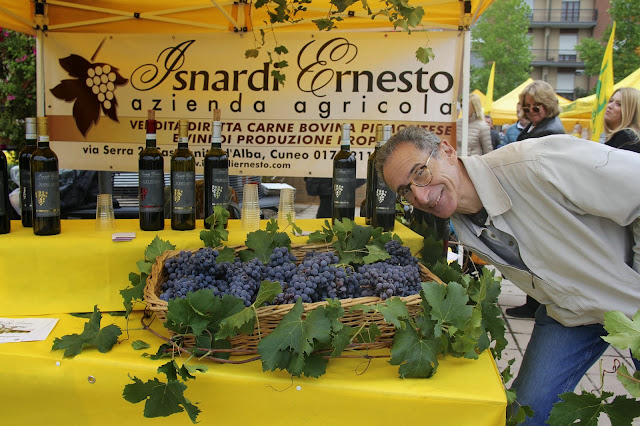
S gets close the grapes of a small producer selling his wine
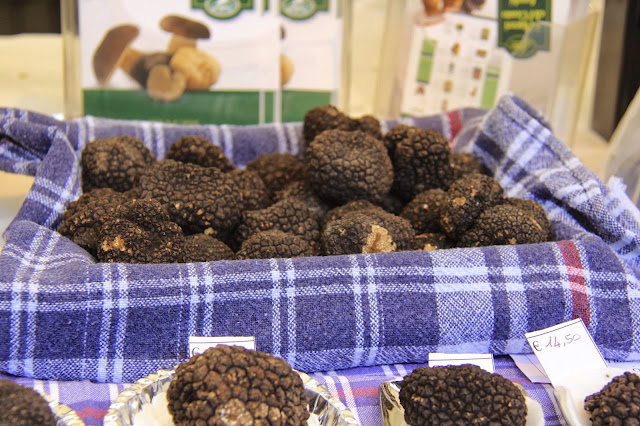
Some black truffles displayed for sale
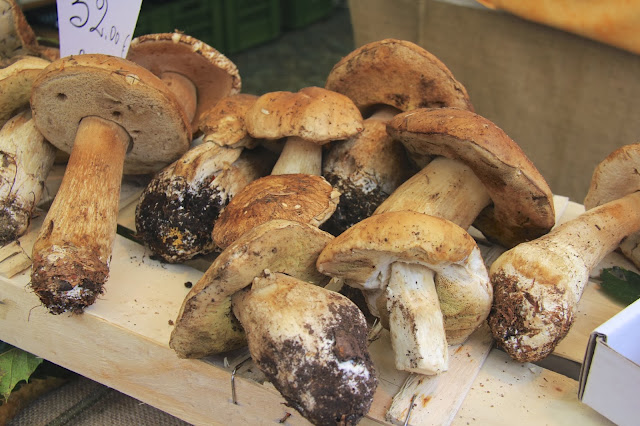
It is the season for truffles as well as mushrooms – there were some fine examples for sale
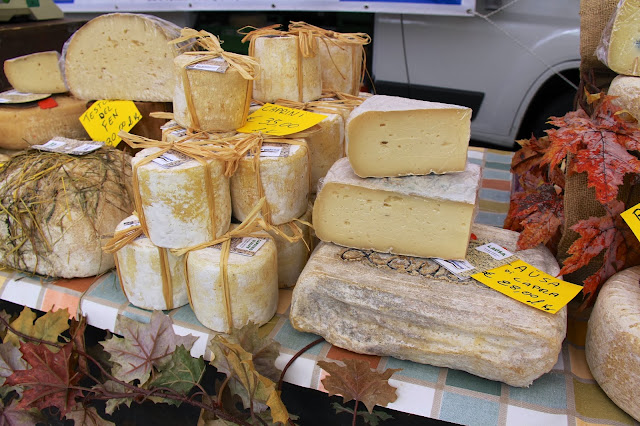
A cheese vendor showcases his various goat, cow and sheep cheese
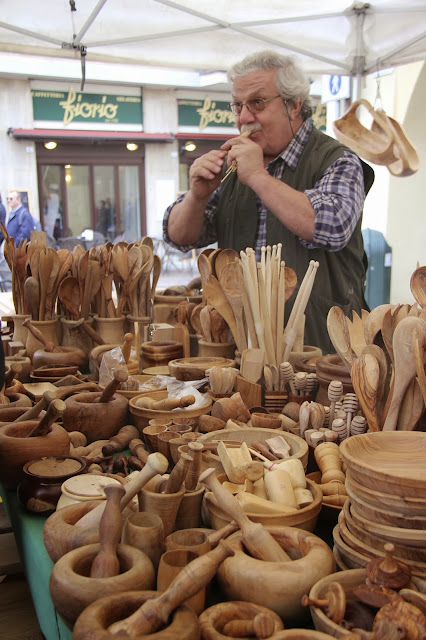
This artisan hand crafts items out of olive wood – Deborah got several spoons
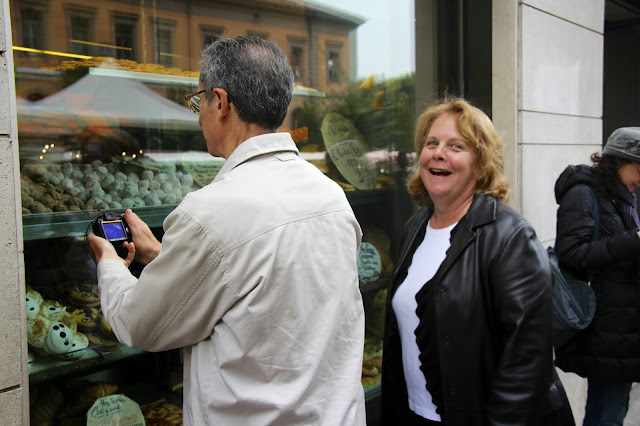
Deborah laughs as S takes a picture of the window display at a pasticceria (pastry shop)
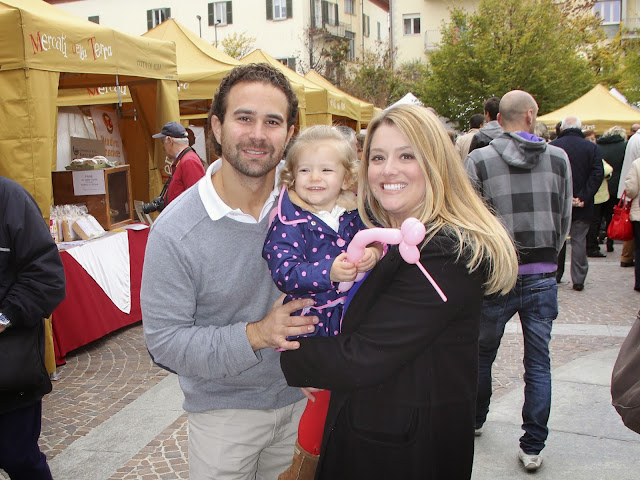
Family photo in one of the markets
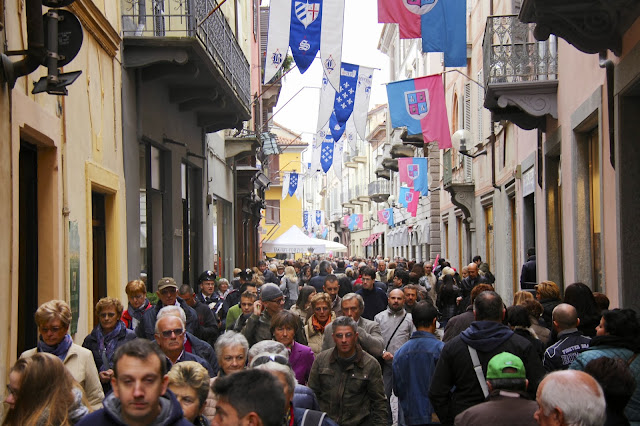
The city is flooded with thousands of visitors each day during the month-long event
Like many of the world’s finer foods, a truffle may seem strange to many people (caviar = fish eggs, foie gras = goose liver, etc.). A truffle is in fact, a fungus – but nonetheless, affectionately referred to by many as the diamond of the kitchen. It is no wonder that this event is considered the Sundance Film Festival of the culinary world. The likes of Mario Batali, Joe Bastianich and dozens of other celebrity chefs make appearances each year. Lesser known restaurateurs can be seen in the main truffle tent, intently smelling every single truffle and purchasing thousands of euro’s worth of this little, spongy item. They will use the ingredient in various recipes (soups, stews, meat dishes and anything else their creative minds can concoct), but primarily – they will shave the truffles over pasta, table-side.
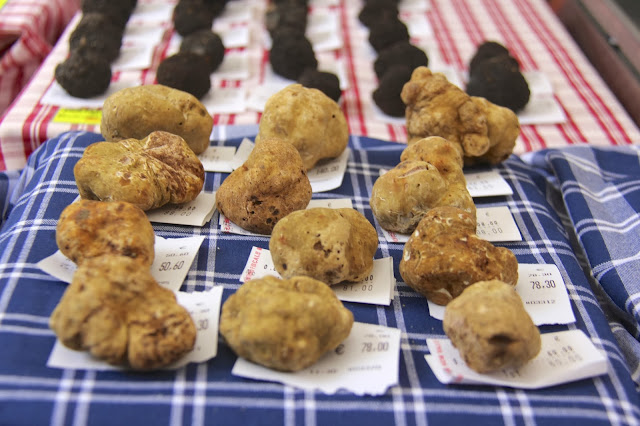
A collection of white truffles in the front – black truffles are in the background
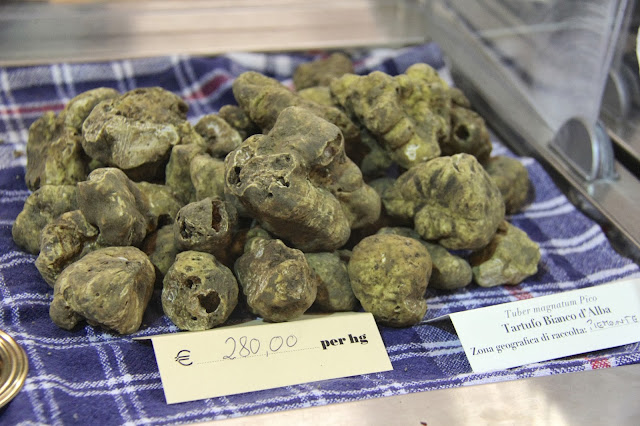
Truffles are small, hard to acquire and require the perfect soil conditions to achieve a proper balance. Italy is regarded as the foremost area for the natural cultivation of truffles (and the ultra-elusive “white truffle” grows in the Langhe area, specifically Alba as well as Tuscany and Abruzzo). As popularity and demand has increased, other countries have tried to cultivate white truffles (including Slovenia, Croatia and now even China). It is commonly accepted that these areas produce a lesser-quality truffle. One of the benefits of purchasing your truffles within the main enclosed tent at the festival is that you are guaranteed a certified, locally cultivated truffle. Many of the merchants selling their truffles were the actual farmers themselves. Today, farmers mainly use Truffle Dogs to sniff out the truffles. Historically, Truffle Pigs were used (because of their acute sense of smell and innate ability to find truffles) – but their love of the delectable treat often had them eating the merchandise before the farmers could snatch them from their snouts. The Truffle Dogs have to be trained to find the goods, but are much easier to control. We sniffed out some of our own truffles and plunked down €50 to acquire two small truffles and a truffle shaver.
White truffles for sale – they are not cheap!
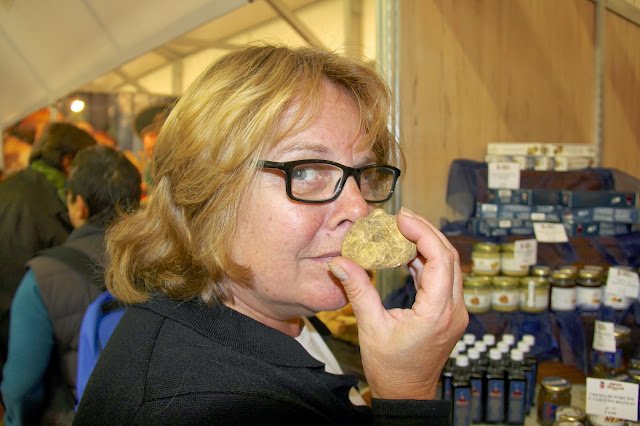
Deborah catches the scent of a beautiful specimen – that truffle probably cost around €300 ($400)
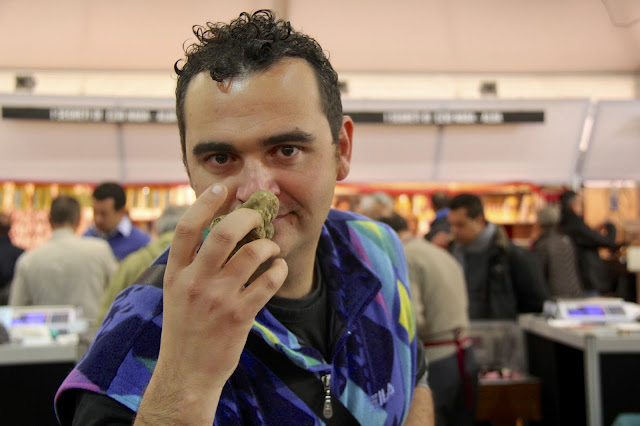
I give the truffle a smell as well
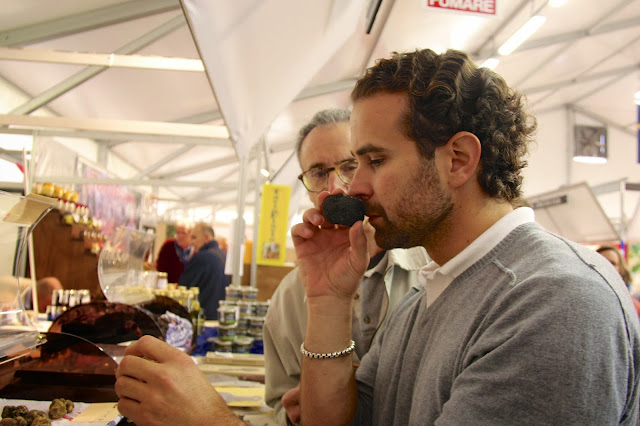
This guy really knows how to do it and shows us – it’s all in the wrist and perfectly timed nostril flare
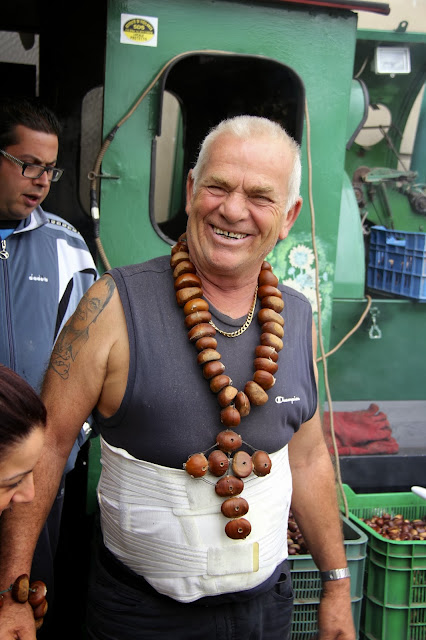
We found this guy selling roasted chestnuts outside
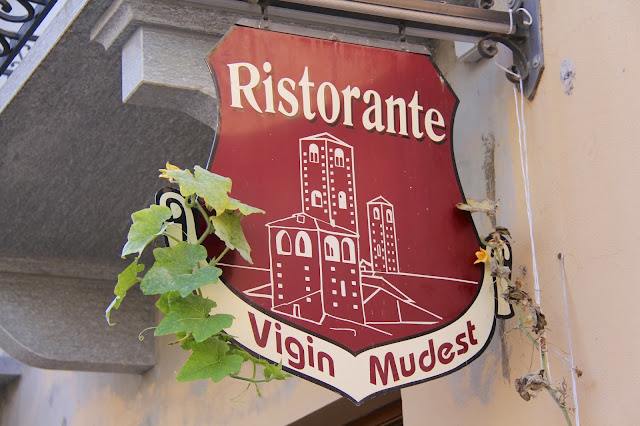
After touring the markets, we had lunch at Ristorante Vigin Mudest
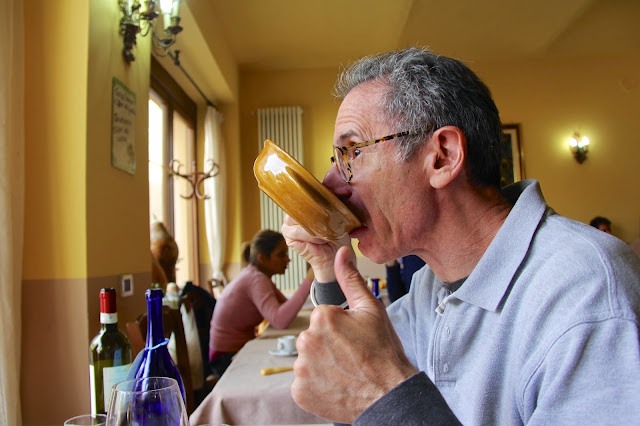
Ever heard anyone say, “this sauce is so good I could drink it”? Well, when S says it – he really means it
I became the “garbage disposal” of the group, finishing everyone’s plates (3 plates and a bowl)
Julia hugs her great aunt and uncle after lunch
Before we left Alba, Julia insisted on ripping her shoes and socks off
Our final stop in Piemonte was a visit to Asti, a city that has been occupied since the Neolithic Period and today boasts a population of about 75,000 inhabitants. Unfortunately, we caught the city on a Monday… during lunchtime. This meant that virtually every museum, shop and attraction was closed. We ate a makeshift lunch of pizza and flatbread on park benches before heading for home.
Julia built a throne of her own from some firewood at our agriturismo
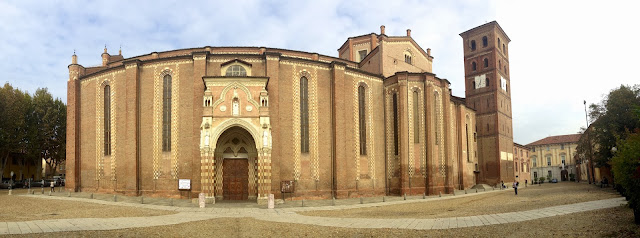
Cattedrale di Asti (Cathedral of Asti) dates to 1309
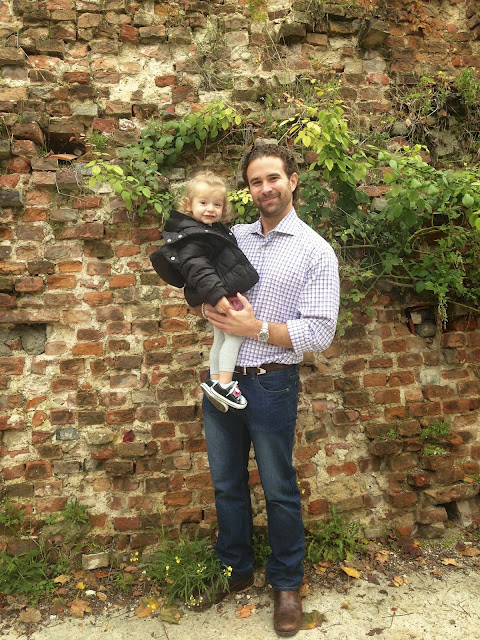
Ruins of an ancient tower that had been built into a more modern home
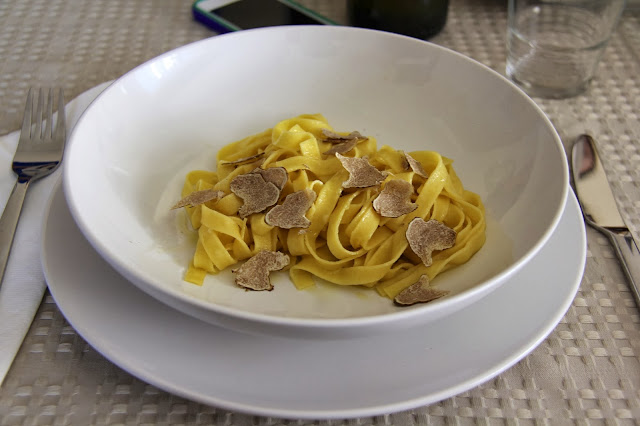
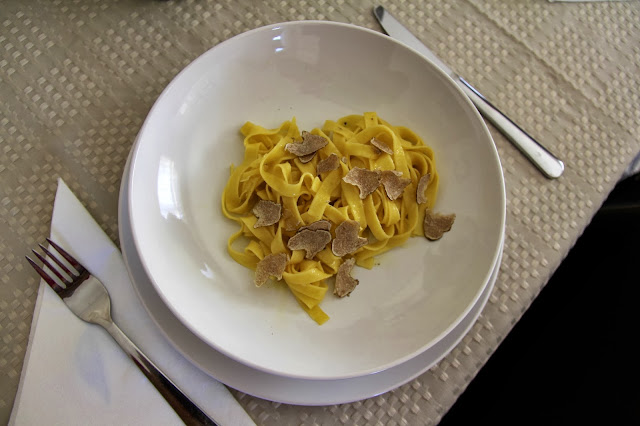
A couple days later, we took our prized truffles out of the refrigerator and cooked tagliatelle con olio with shaved truffle. It was a delicious lunch that nearly put us in a content, comatose state – a good way to tease our pallets for Part II of the trip. We would depart the next morning for Emilia-Romanga. If Part I was entitled Vino, then Part II of their trip would definitely be called Cibo (food).
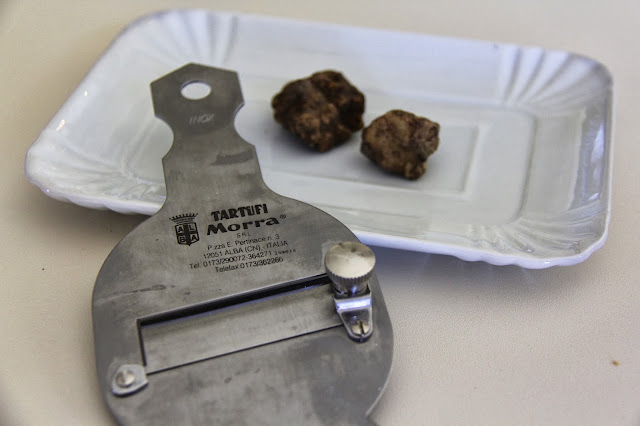
This is what €50 ($68) worth of truffles looks like
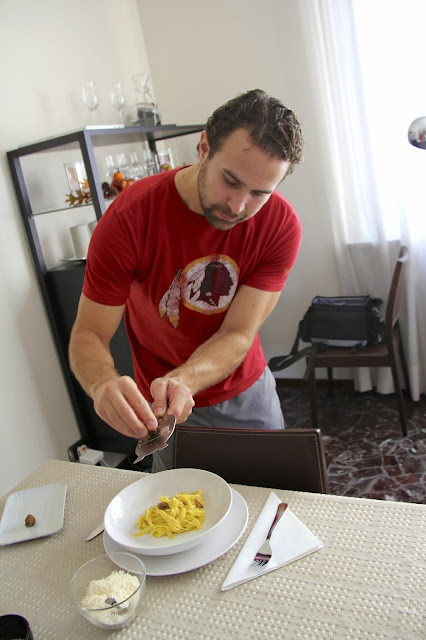
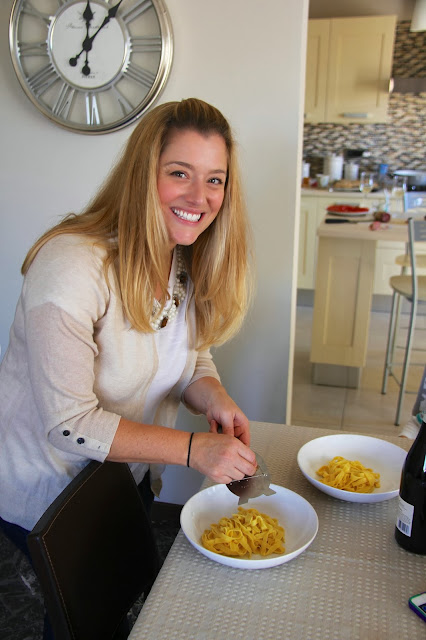
I shave the white truffle on my pasta
Jen takes her turn
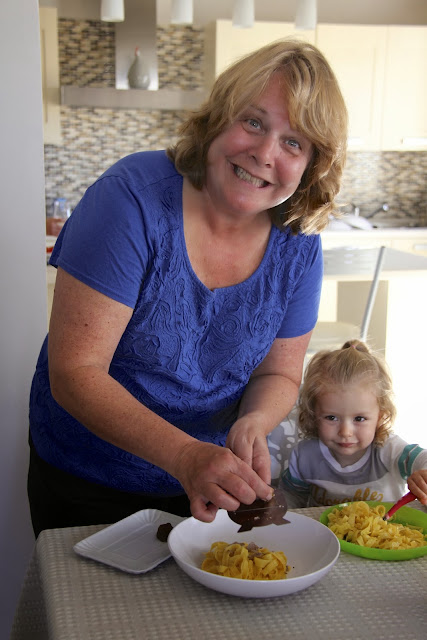
Deborah is happy to shave her truffles
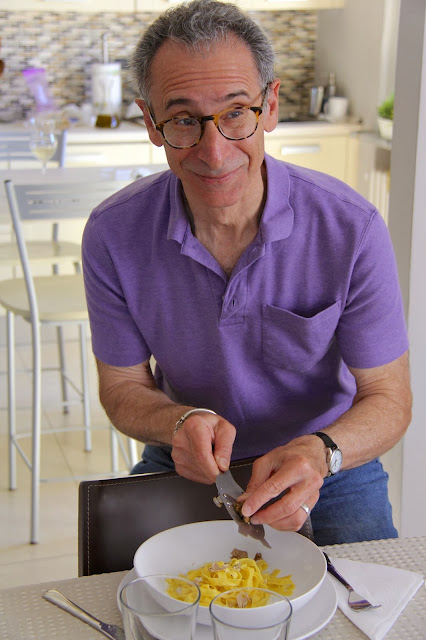
S looks great when he’s shaving truffles
Now that looks great!
It tasted great too
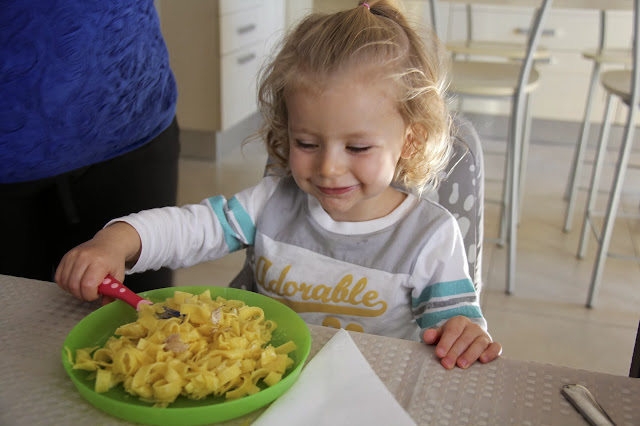
Even Julia got to try some truffles
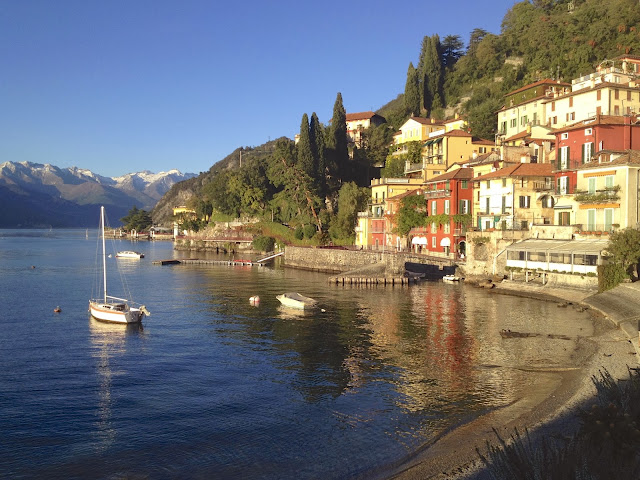
We visited Varenna after our truffle lunch
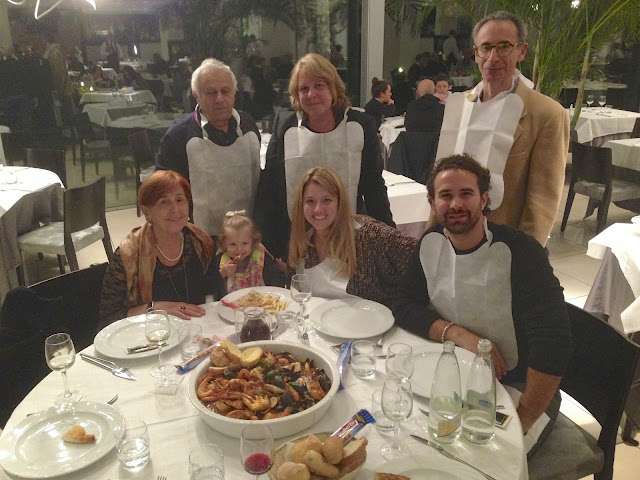
That night we all went to dinner at Ristorante Simposio to celebrate Claudia’s birthday – still can’t get Franco to smile
We recently had the most amazing vacation aboard Holland America’s Nieuw Amsterdam and I have had a wonderful time writing about it. I have discovered even more about each destination as I’ve researched them further and I have had the pleasure of reliving it all over again as I post the pictures. I hope that you’ve enjoyed your time aboard with us. Sadly, I will close this chapter of our overseas adventure and move onto the next story in an upcoming post. There is still plenty more to come in the blog pipeline…
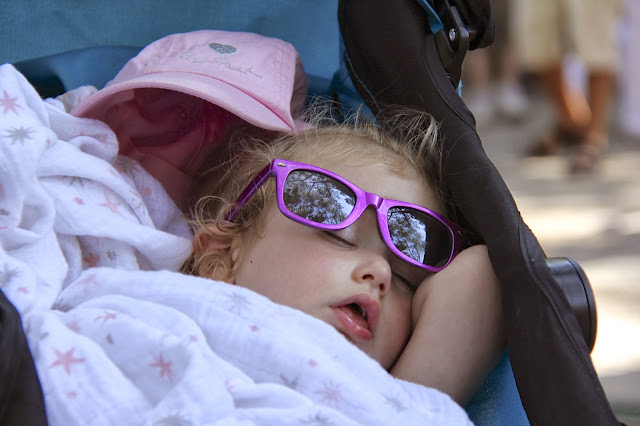
“Dad, wrap this up already – you’re putting us all to sleep!”
If you joined us thus far, you’ll know we visited Venice, Olympia and Athens in our first post and then Istanbul and Lesbos in the second post. The final leg of our cruise transports us to Kuşadası, Santorini and Argostoli. As always, we’ll include some of our shipboard life and hopefully you’ll be able to stick with me – I’ve got a ton of pictures in this final post.
When I last left you, we were sailing away from the Greek island of Lesbos and I was getting knocked out of a blackjack tournament final table with some unlucky cards. The only thing that could wash away that feeling of despair was some spiritual enlightenment. Sure, they have a chapel aboard the ship – but I think strolling directly from the casino into the chapel is the sort of thing that the Big Guy frowns upon, so I waited for our port the following day.
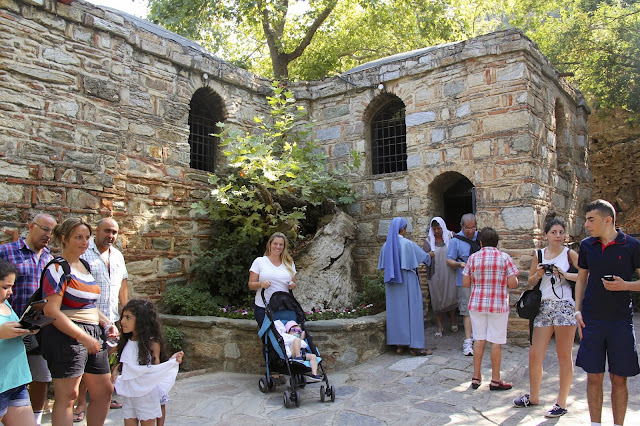
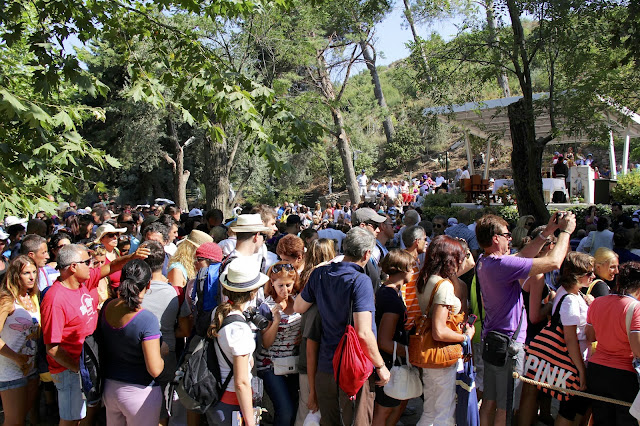
We woke up in Kuşadası, Turkey – a beautiful resort town on the Aegean coast; wonderful in it’s own right, but not our intended destination. We were set to visit, Ephesus – an ancient city with a plethora of historic treasures. There are two main spectacles to behold within the vicinity of Ephesus – the Ancient City itself and the House of the Virgin Mary. Since the terrain was difficult to access and far from the ship, we hired a private driver to bring us to the notable sites. We first started with the House of the Virgin Mary, arriving fairly early in the morning. This small home was said to be the final home and final resting place of the Virgin Mary, carried here to live out her final days by St. John, the Apostle. Our early arrival time did little to help put us in a tolerable position in the queue (yes, I just “British’d” it up). The house is both a Catholic and Muslim shrine (so… um, yeah – number one and two religions in term of size). Given that fact, the line would normally be long – but we happened to arrive on the most “holy” of days. The annual pilgrimage to the House of the Virgin Mary coincided with our visit and threatened to consume our entire day along with the thousands of other visitors cramming in to see a tiny house.
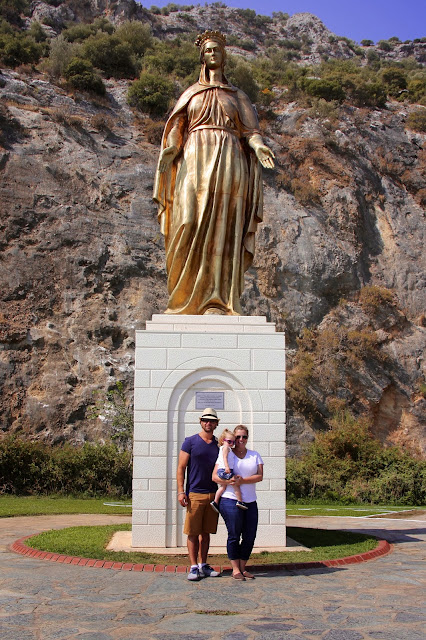
Jen and Julia in front of the House of the Virgin Mary
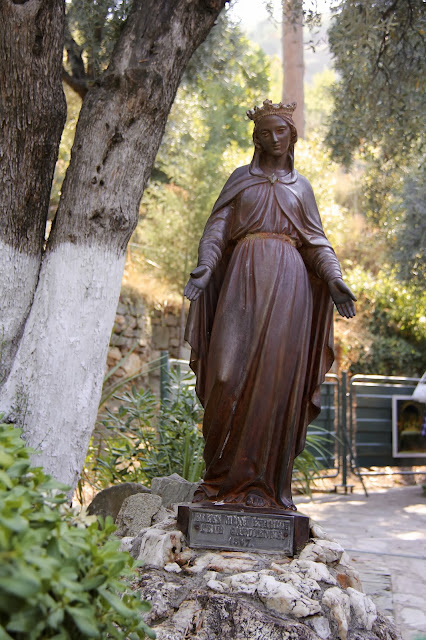
A bronze statue of the Virgin Mary welcomes all visitors
As spiritually enlightening as seeing a 150 sq. foot home could be (admittedly, this was more my wife’s gig than mine), I was not thrilled at the prospect of standing in line under the hot sun all day. I saw an alternative option and struck with military precision when the time was right. First, I set out on a reconnaissance mission to scout additional routes for people with strollers. Coming up empty handed in that department, I formulated a plan. When I returned to Jen and Julia standing in line, I uttered the following words verbatim; “follow me, don’t ask any questions, don’t stall and keep up with my pace”. You see, my wife is a perpetual “rule follower” and I am a habitual “rule breaker”. Her innocence often thwarts my plans for easy advancement – but I think she was on board this time; moving at a snails pace under a hot Turkish sun will cause any mother to want to move! We whisked past the crowds, through an outdoor church service and out the other end to a gate immediately in front of the house. It certainly helped that I was pushing a baby stroller and can dish a kind smile that I reserve for occasions like these. My little stunt saved us an estimated three hours (no exaggeration). Jen was pleased with my shenanigans for once… now maybe I can convince her to come over to the dark side.
Just a portion of the long line that was making the annual pilgrimage to see the house
Mary would not approve of my behavior – I did have a baby to worry about though
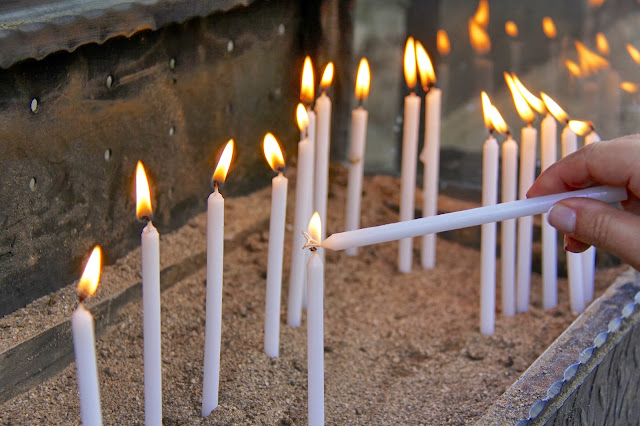
Jen lights a candle to ask forgiveness for my shenangins
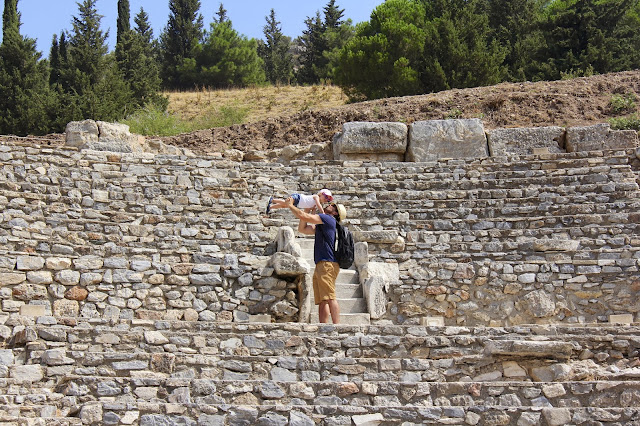
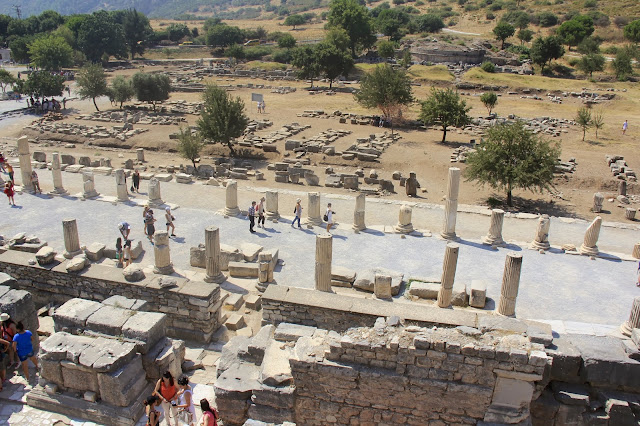
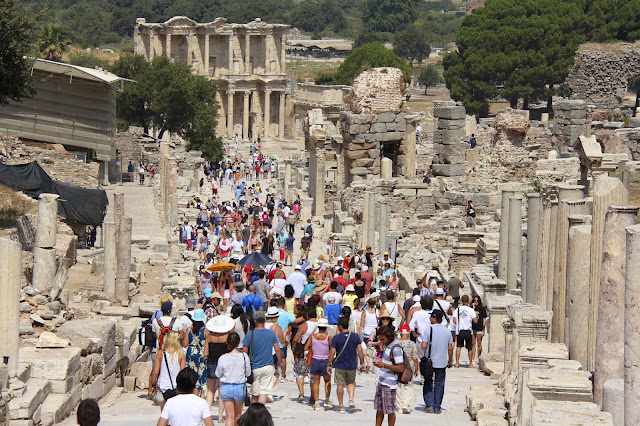
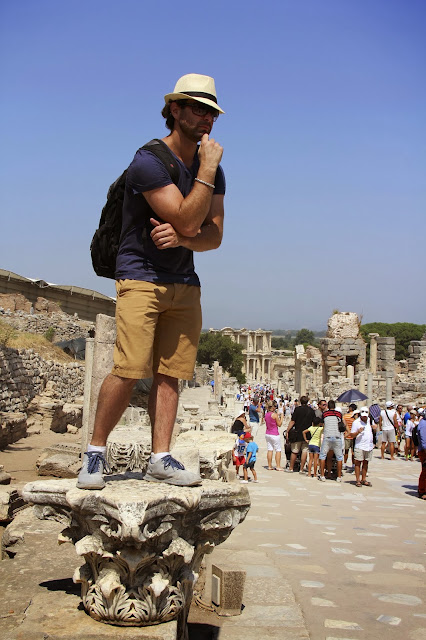
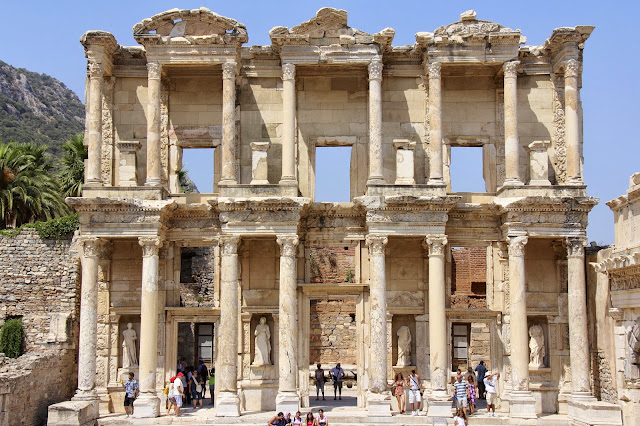
Our next stop was the the Ancient City of Ephesus. Artifacts excavated on site have proved that there were inhabitants in this area as far back as the Neolithic Age (6,000 BC), with consistent development throughout the Bronze Age and into the Archaic Period, when the city really began to prosper (650 BC). The city changed from Greek to Roman and finally into Turkish domain in 1304. Today, archeologists are constantly amazed by the plethora of treasures being discovered on a continual basis. The prevailing theory is that they have only unearthed a fraction of the city (a lot of major discoveries were made as recently as the 1970’s), but limited funds have slowed down excavation and restoration efforts. Some of the more notable discoveries are the Temple of Artemis, which is one of the Seven Ancient Wonders of the World and the Library of Celsus, which appeared on the Turkish Lira between 2001 and 2009.
We passed this large Virgin Mary on the way to the Ancient City
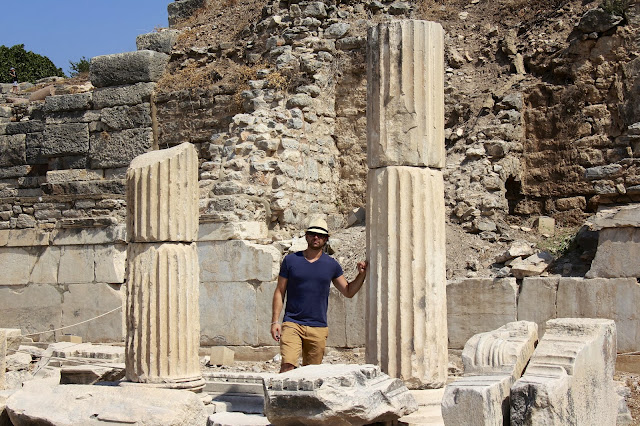
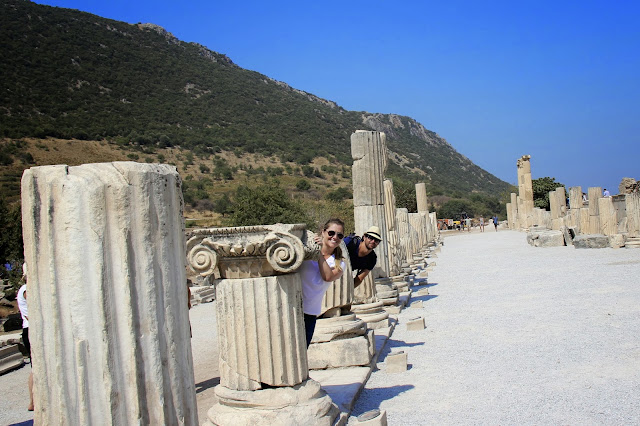
Standing next to the Basilica Stoa
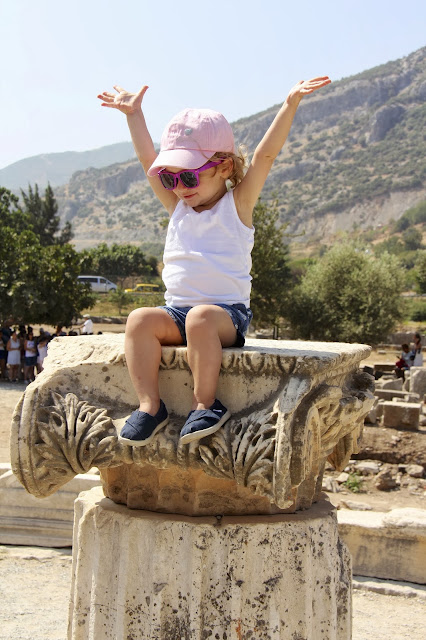
Julia decides to lead the tour for our little group
“Peekaboo!”
“Look at me!”
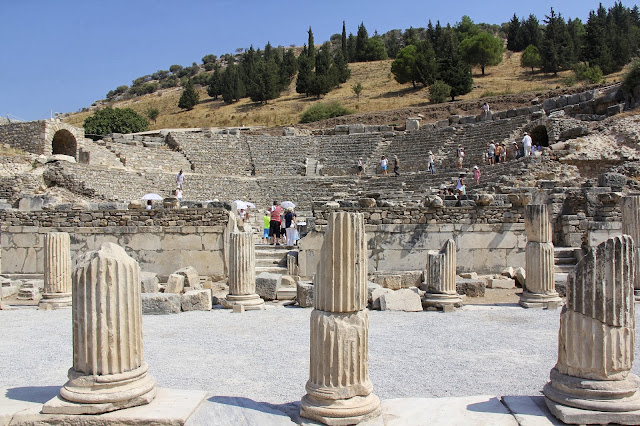
The Bouleuterion (100 AD) housed the meetings of the council
Julia and I hiked all the way to the top of the Bouleuterion
Street lined with archeological excavations
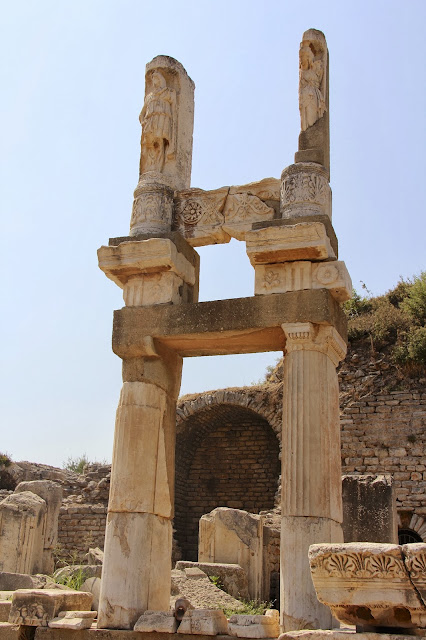
The Temple of Domitian (81 AD)
The Curetes Street – a main boulevard prestigiously equipped with marble paving and home to many boutiques
The Deep Traveler statue recovered in 2013 dates back to 1980 – Jen’s favorite piece
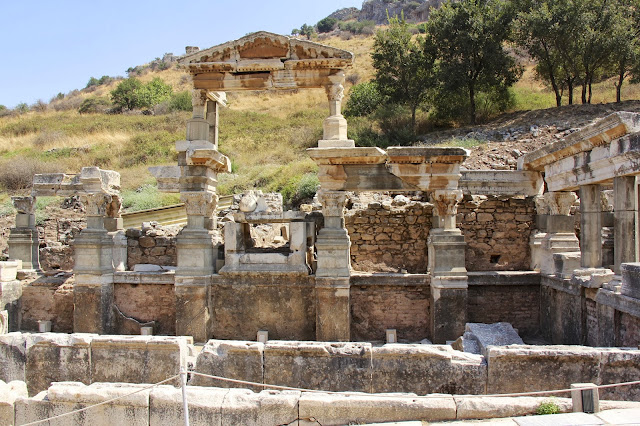
The Trajan Fountain (102 AD)
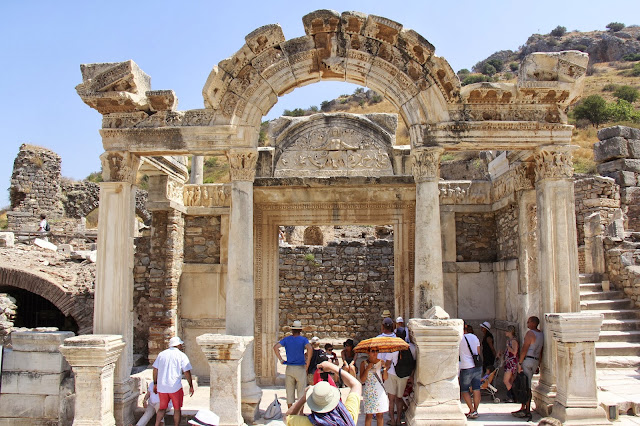
The Temple of Hadrian (138 AD) – one of the most stunning ruins along the Curetes Street
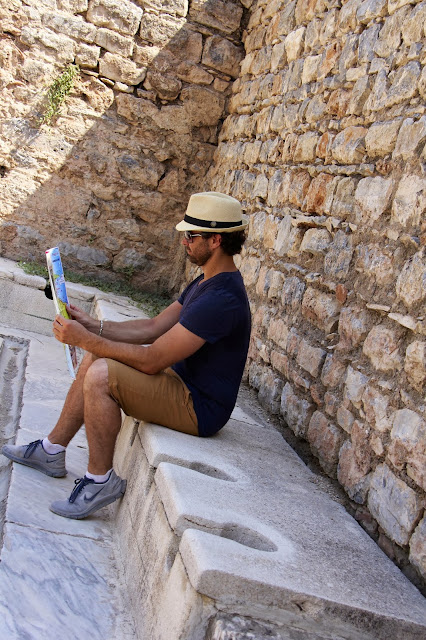
We discovered a seldom seen gem, the Latriana
Public latrines where residents would literally sit cheek to cheek
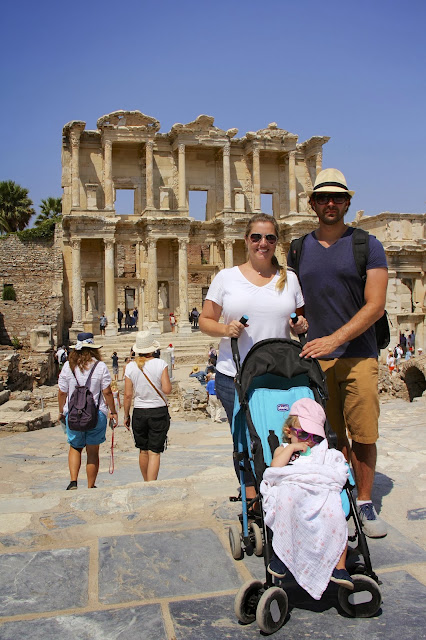
Family photo in front of the Celsus Library
Tiberius Julius Aquila commissioned the Celsus Library (110 AD) as a mausoleum for his father
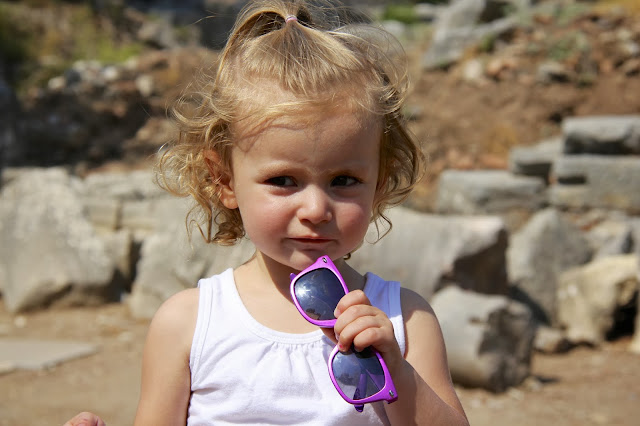
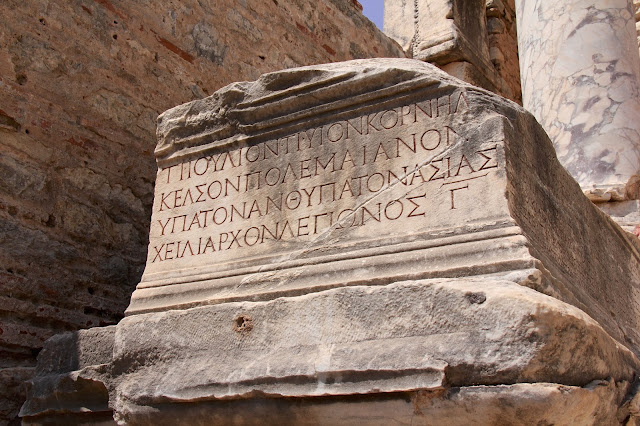
Column base with writing from Ancient Greek times
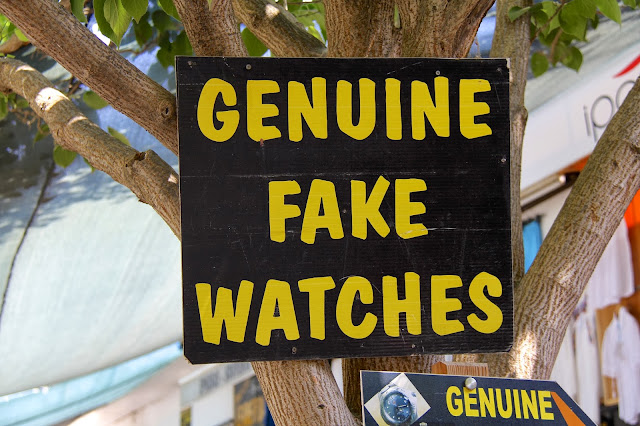
A market enclosed the exit gate of the ancient city – I happened to love this guy’s honesty
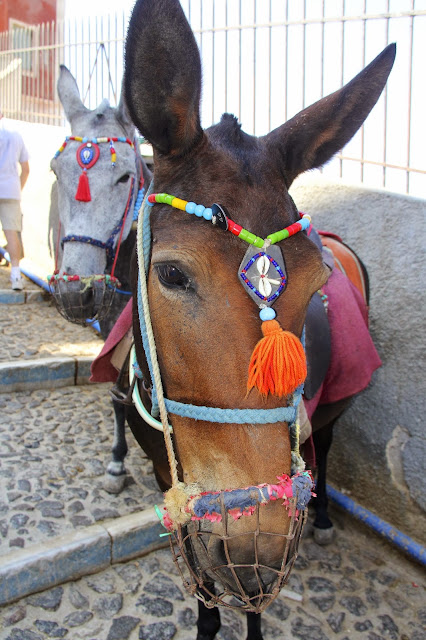
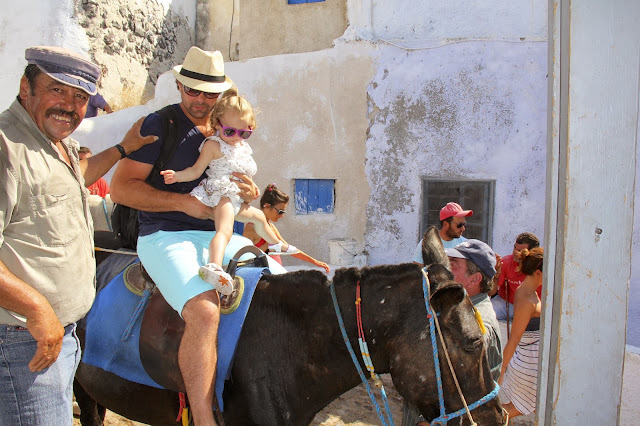
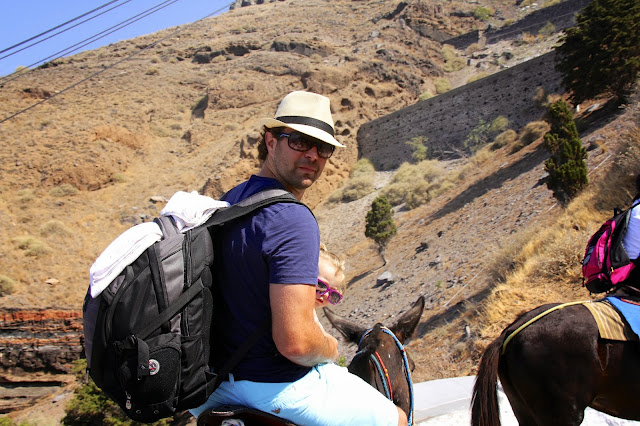
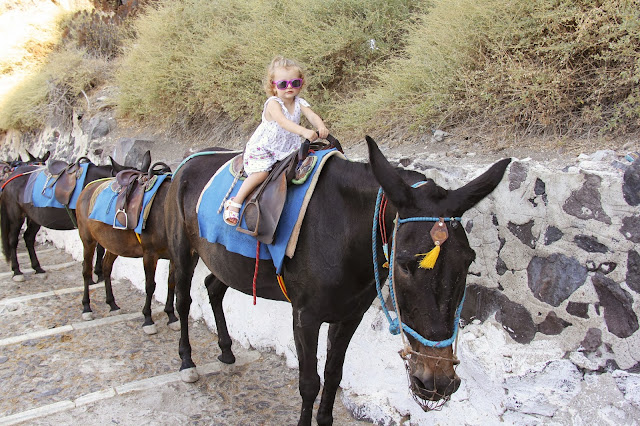
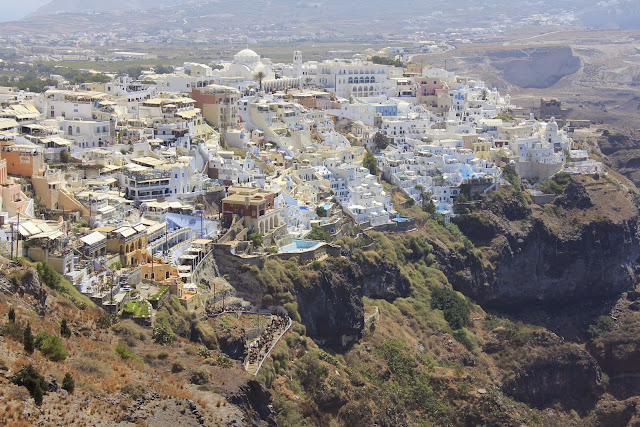
The next stop on our cruise was the port I was most excited about above all our other destinations – Santorini, Greece. Images of white homes with blue trim overlooking the Aegean danced in my head all night. Our wonderful Cruise Director, Anthony and Location Guide, Tom would televise a show about each port prior to our arrival. Through this in-room broadcast, I learned that Santorini (Σαντορίνη) sits perched high atop a cliff, with three ways to ascend. You can traverse the vertical 260 meters (853 feet) by climbing a difficult 580 steps (not ideal for couples with strollers) or you could opt to take the cable car for a fast and scenic arrival. Finally, you can chose to climb the absolute best way possible – by donkey!! Believe me, it was not easy to sell this option to Jen – but I never take “no” for an answer. We had an absolute blast climbing, laughing and trying not to fall off. I don’t think Julia has ever had so much fun in her life and I haven’t laughed quite so hard as I did to the shrieks of pure terror coming from Jen. The donkeys climb the pathway unassisted and will [at times] pin you against a wall while they wait for the overcrowding of ascending and descending donkeys to clear. All in all – a wonderful experience.
“eehh-aaaww!”
“You want me to carry you AND you’re baby?!”
The guide helps us on – that was the last we saw of him, this donkey was on autopilot
And w’ere off
Julia wanted to take a turn on her own
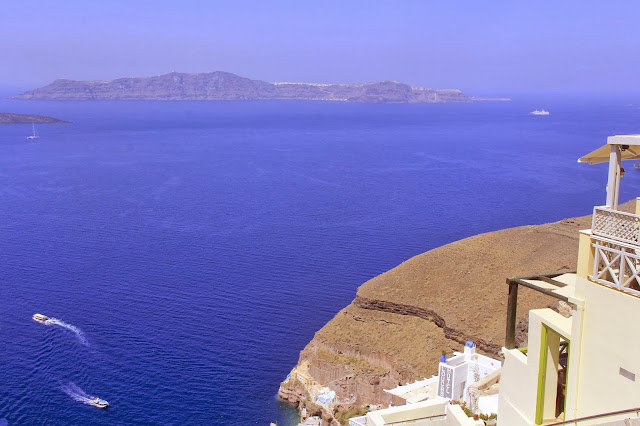
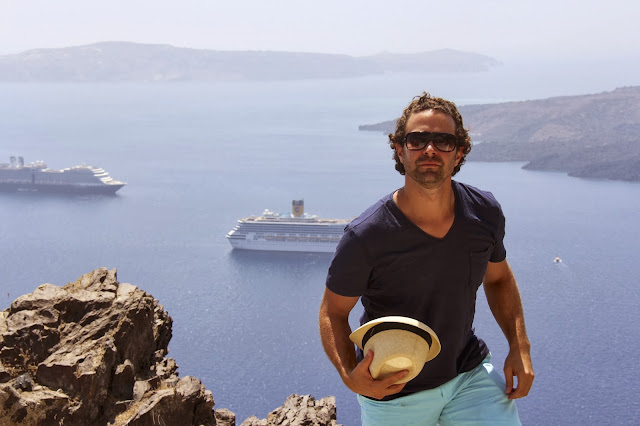
Santorini is an island unlike any we’ve ever seen. First of all, the entire complex of islands was formed by a volcanic eruption over 60 million years ago. The city today is essentially what remains after a more recent volcanic explosion in the modern age (this area is the most active volcanic area in the South Volcanic Aegean Arc). Santorini is financially supported by the bustling tourism industry; not surprising as ours was one of three cruise ships waiting patiently off shore for the tenders to bring passengers back and forth. In fact, Santorini was the only port to provide their own tenders – much larger boats than any cruise ship could provide in order to bring more people ashore quickly. It is actually quite smart of them to recognize that opportunity.
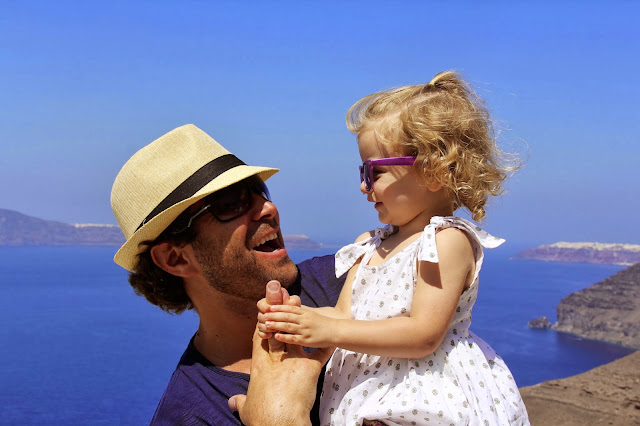
Horsing around with daddy
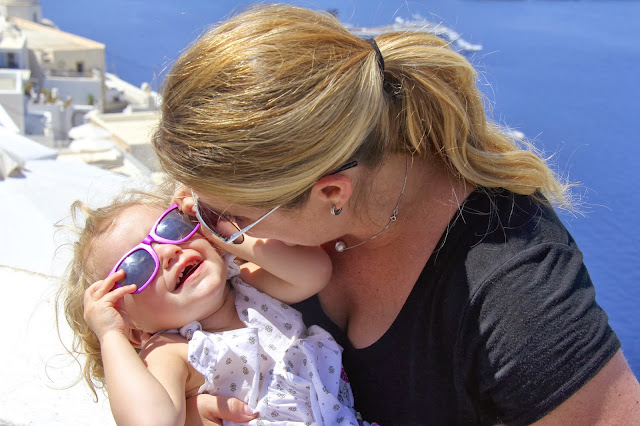
And then mommy
The blue ocean was simply magnificent
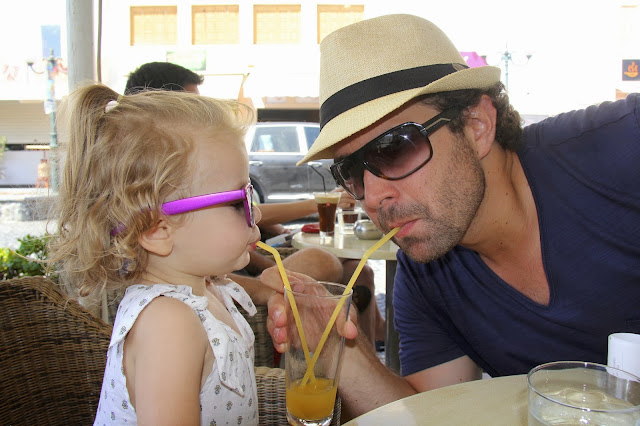
Julia is kind enough to share her drink with me
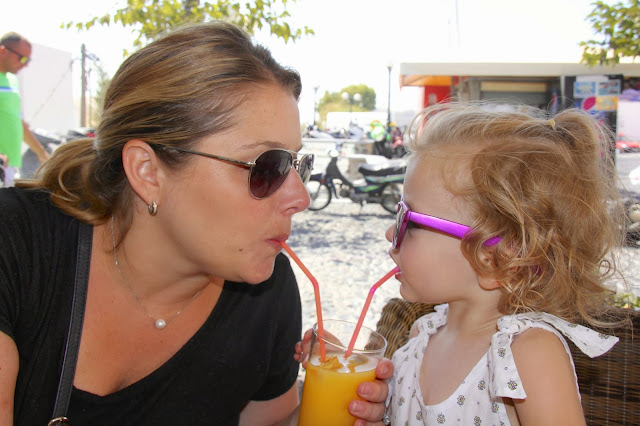
As well as her mother
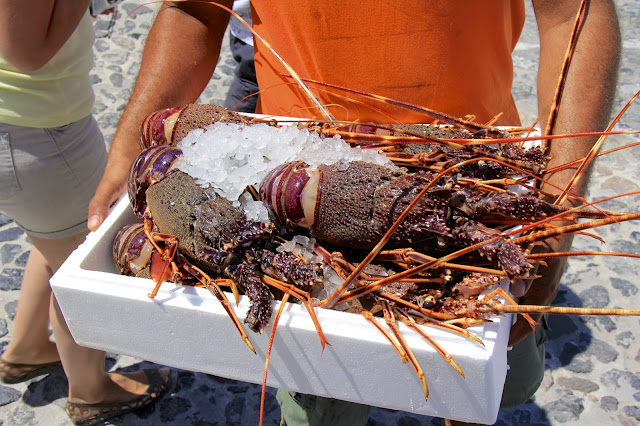
This guy was selling freshly caught lobsters – look at the size of those beauties
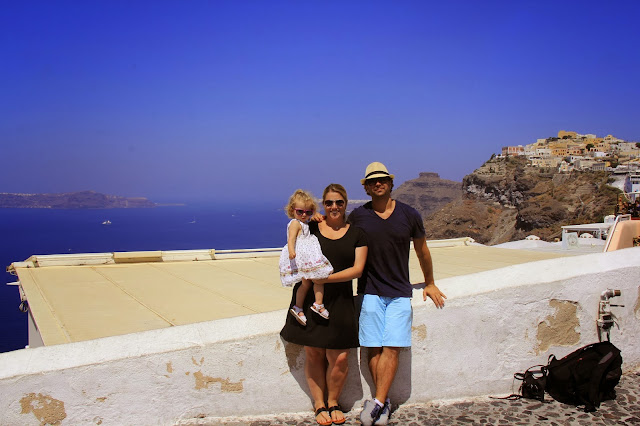
Family photo
My two girls
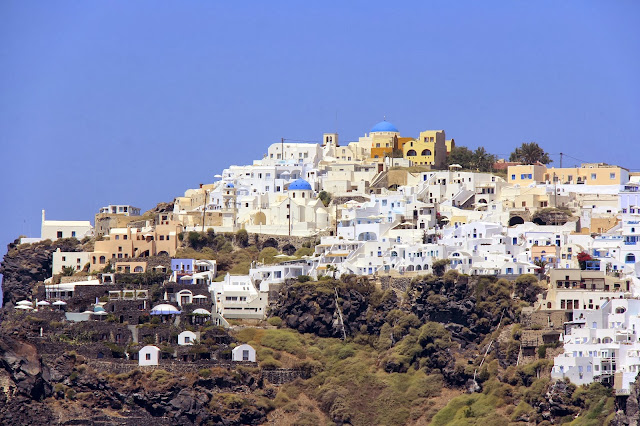
Santorini
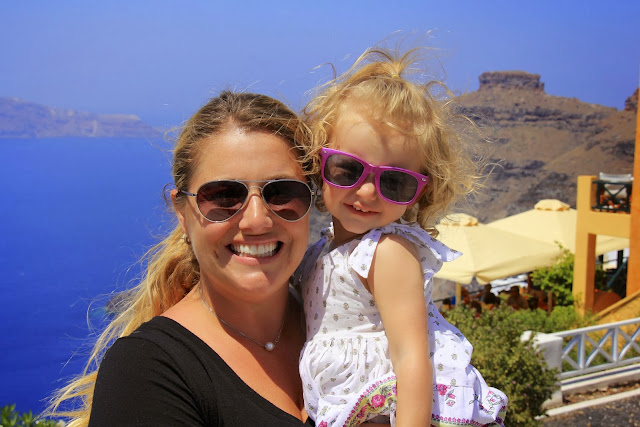
“I love this place!”
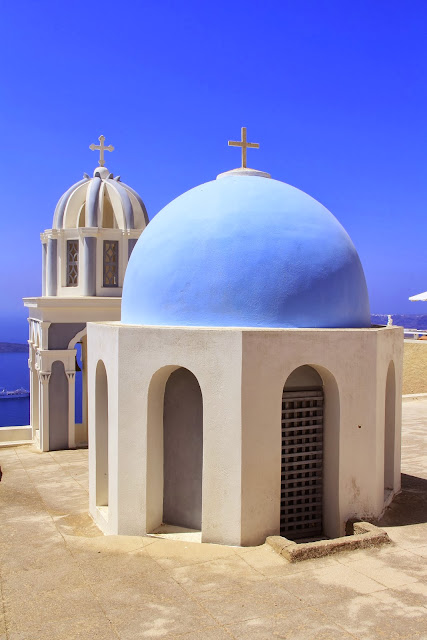
The blue domed churches were exactly what I envisioned
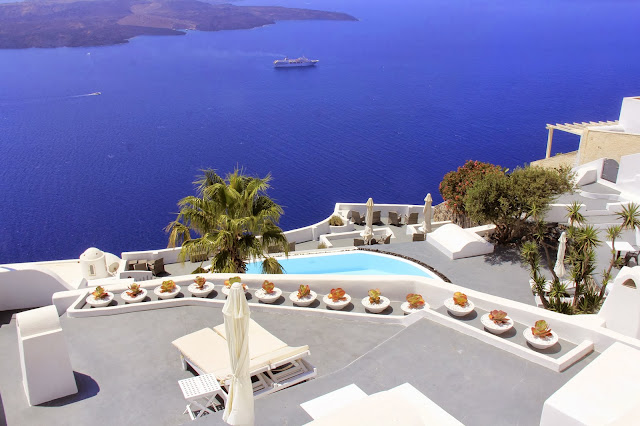
Some of the resorts offered stunning views – of all our ports, we want to come back to Santorini the most
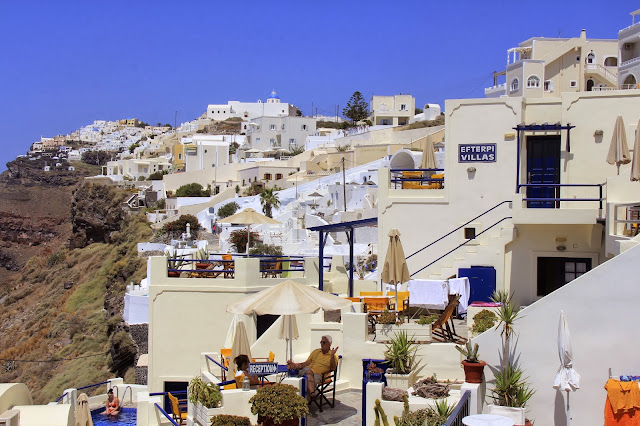
A city unlike any other
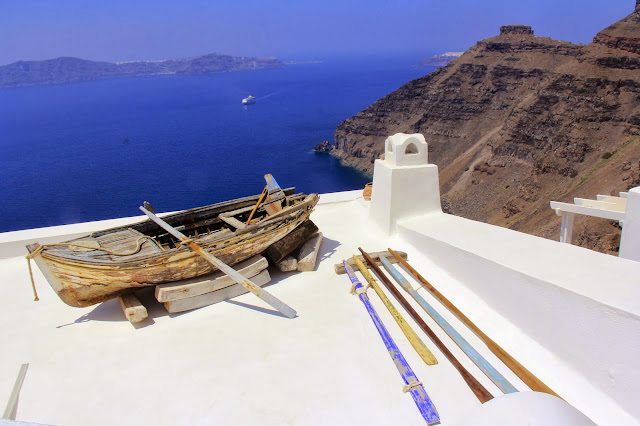
I thought this was a great “artistic” shot – I was later validated when I saw this image in a travel magazine
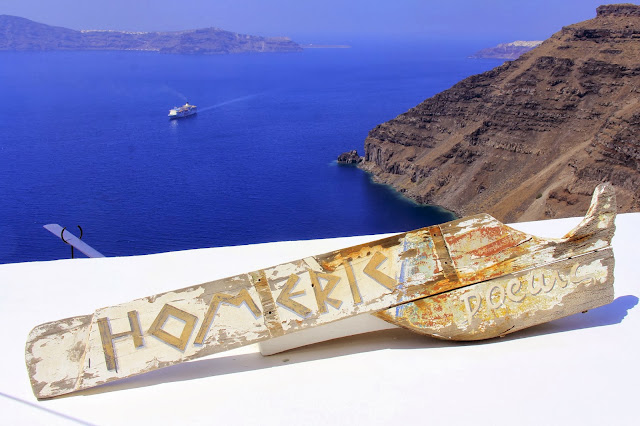
From Homer’s Odyssey?
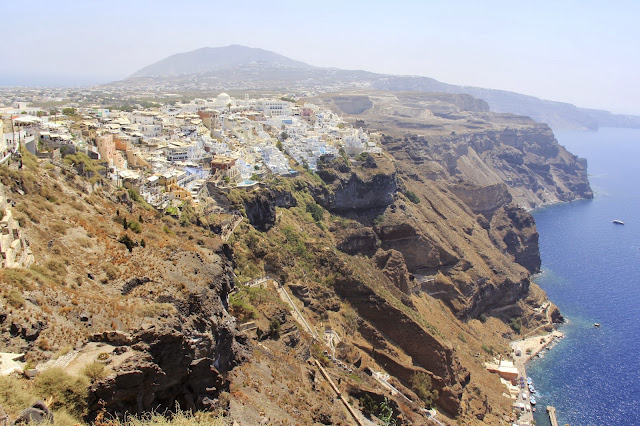
Here you can really get a sense of the volcanic caldera upon which the city was built
The white houses and blue domed roofs were just as promised
Climbing up a portion of the volcano – just off the beaten path
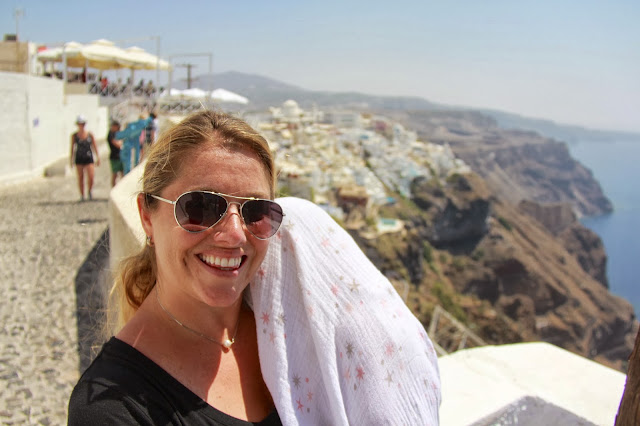
Jen covers Julia from the sun
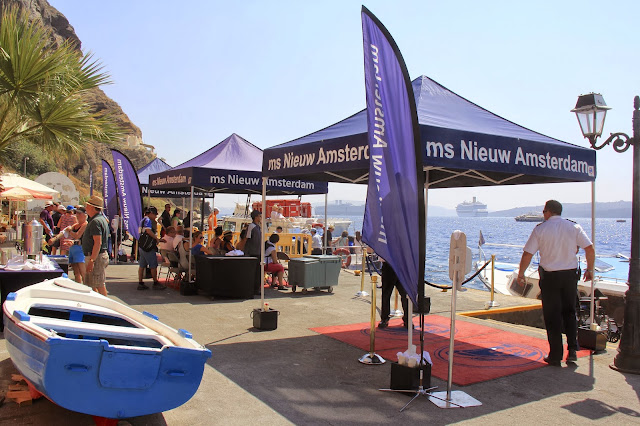
#HollandAmerica would have these amazing reception areas at every port before re-boarding the ship
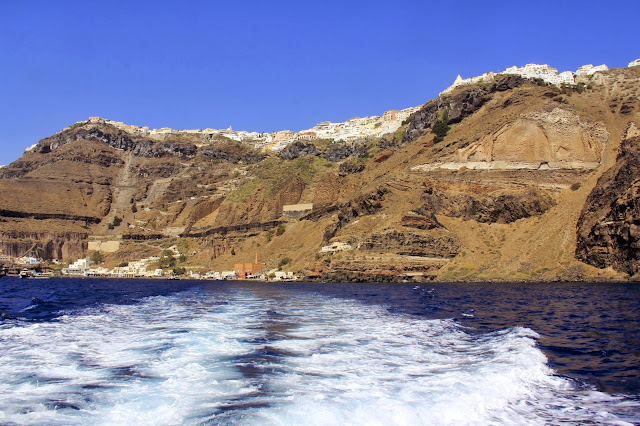
Sailing away gave you a true sense of the grandeur of the island
After Santorini, we saw the end of our cruise approaching quickly. I think we both somewhat dismissed our final destination, since neither of us had heard of Argostoli, Greece (in fact, when we woke up at port Jen proclaimed, “Oh! We have another stop?!”). Quietly dismissing Argostoli (Αργοστόλι) as, “just another stop” was foolish since it turned out to be one of the most pleasant days we experienced. The island is one of the larger of Greek Isles and was has the pleasure of hosting gorgeous beaches.
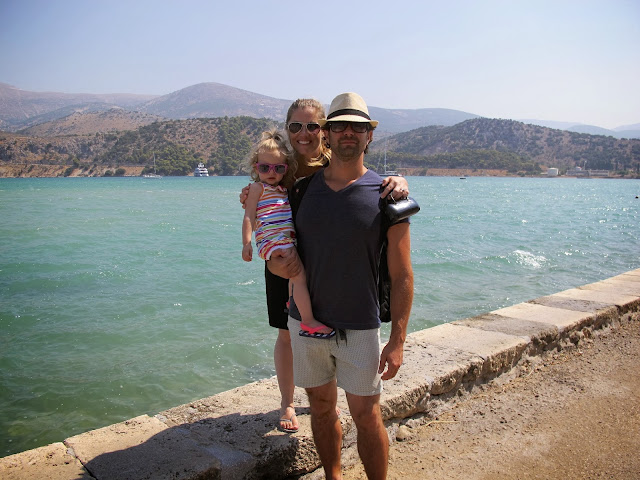
Family photo in front of the aqua-green waters of Argostoli
We passed through a brief section of woods before arriving at the beach
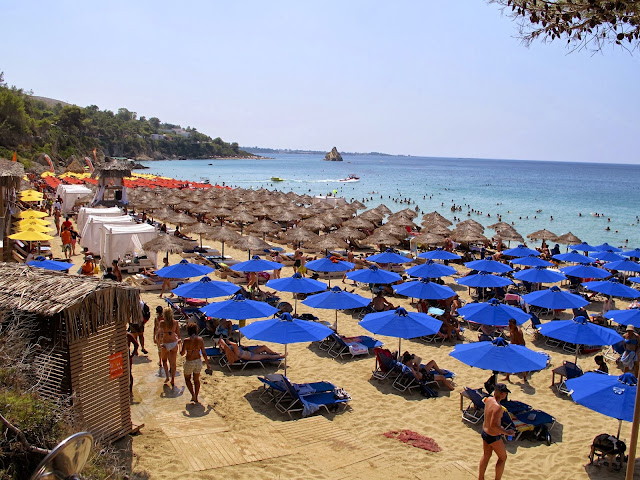
The beach opened before us like a butterfly spreading it’s wings for the first time (too much??)
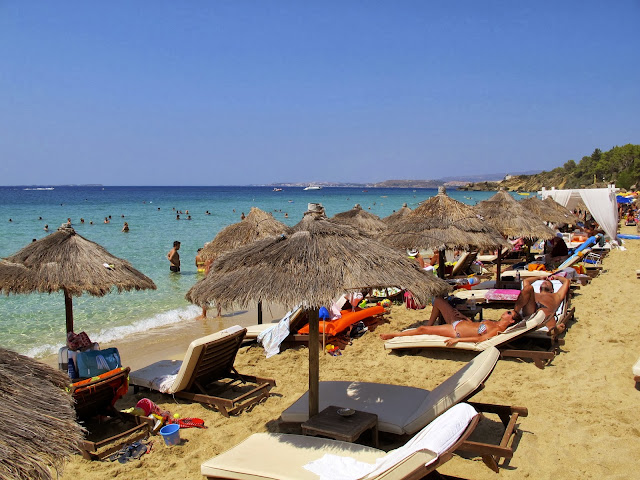
You can never go wrong when you can rent straw beach umbrellas for the day
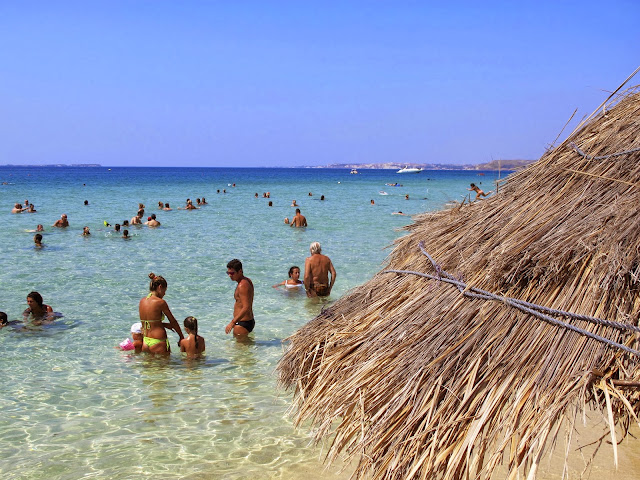
There were tons of people in the warm water
When we pulled away from Argostoli, we had one final “formal night” aboard the ship. Holland America went all out for this final night and served lobster tails and filet mignon in many of the ship’s restaurants.
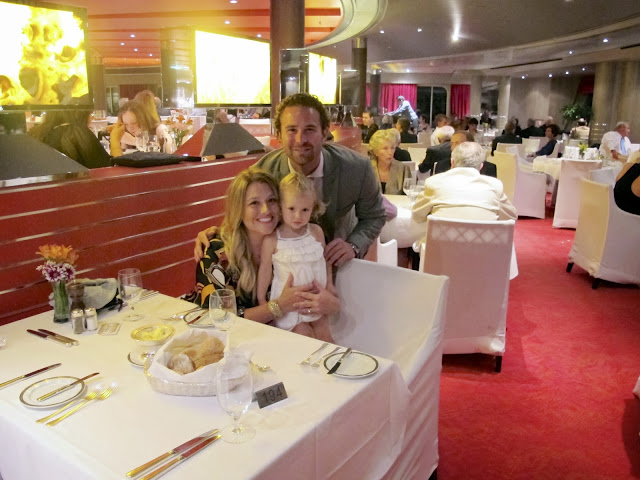
Family photo in the Manhattan Dining Room on the formal night
Jen and Julia get ready for their meals
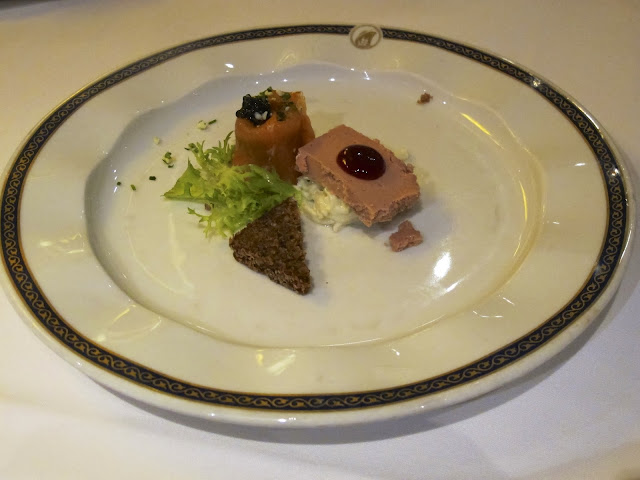
We started with foie gras
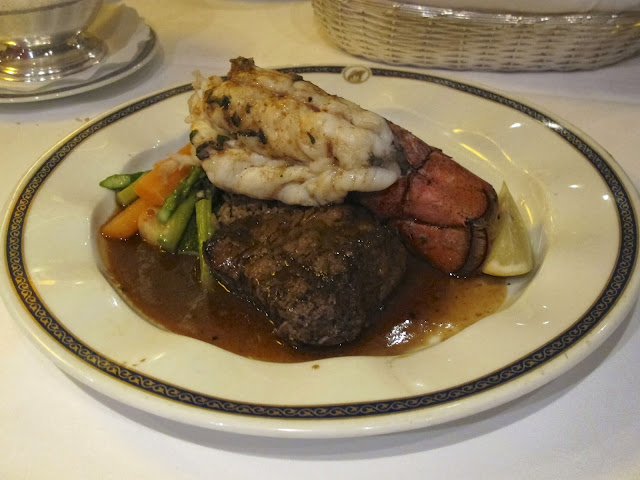
We each ordered surf and turf
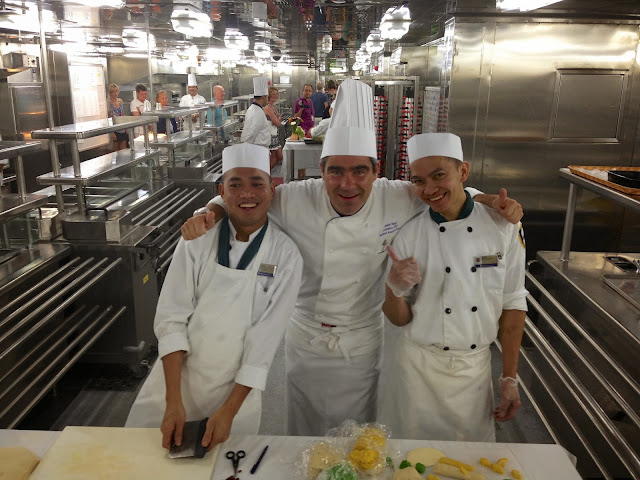
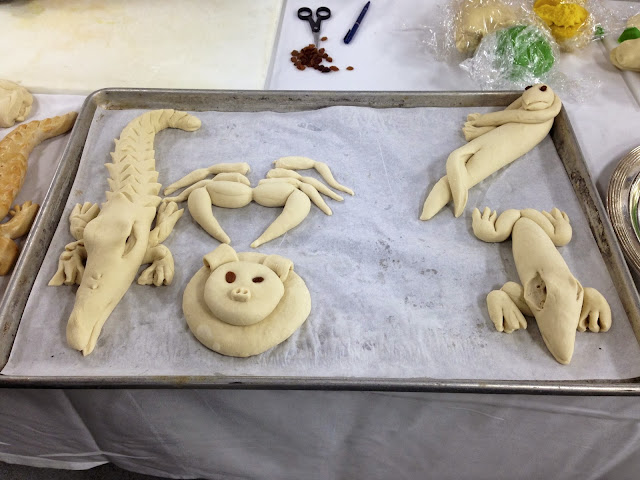
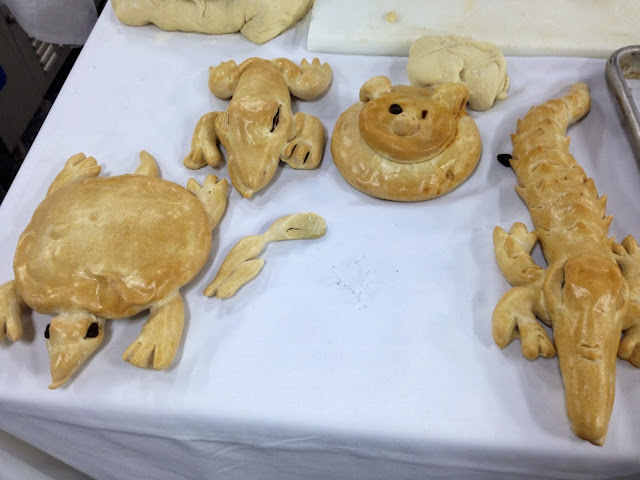
The last day aboard was a sea day and so the world was our oyster. As always, there were plenty of activities to keep us entertained. One activity in particular caught my eye – a behind the scenes tour of the Nieuw Amsterdam’s amazing kitchen. We got to walk through their massive, industrial kitchen and I learned a few interesting facts about our ship. A kitchen crew of 150 individuals prepare food for 223 service staff to serve the guests each day. Each week 11,830 lbs of meat is consumed aboard the ship. A fact that I thought was staggering until I learned that 1,675 lbs of butter is also consumed each week (yuck – heart attack)! The tour was wonderful and the crew gave Julia one of their display crabs made from cooked bread dough.
The Executive Chef, Daniel Hergic poses with two of his chefs
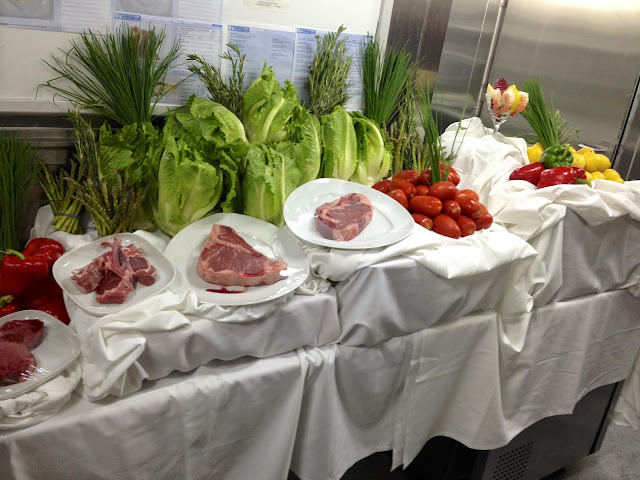
A display of some of their finer beef and lamb
The form of their “bread-animal” displays before they were cooked
And then the final product. Julia got to keep the crab (the missing gap in the middle)
Included in the cost of most cruises is unlimited food at a variety of restaurants (casual dining, poolside dining, room service and the main dining rooms). Many cruise ships also offer the option to pay a nominal fee for more specialized dining (usually between $15 – $35/pp). On our previous cruise, Norwegian Cruise Line had a Japanese steak house complete with hibachi show. On our last day aboard the Nieuw Amsterdam, we decided to try two of the three specialized restaurants. We had a lunch of dim-sum in the Tamarind Restaurant, an upscale Asian specialty restaurant and then finish our cruise with a celebratory dinner at the Pinnacle Grill, a five-star steakhouse. Our last dinner was made even more special when the casino sent a bottle of wine to our room prior to dinner and then another one to the table as we dined! What a wonderful way to cap off the most amazing vacation of our lives.
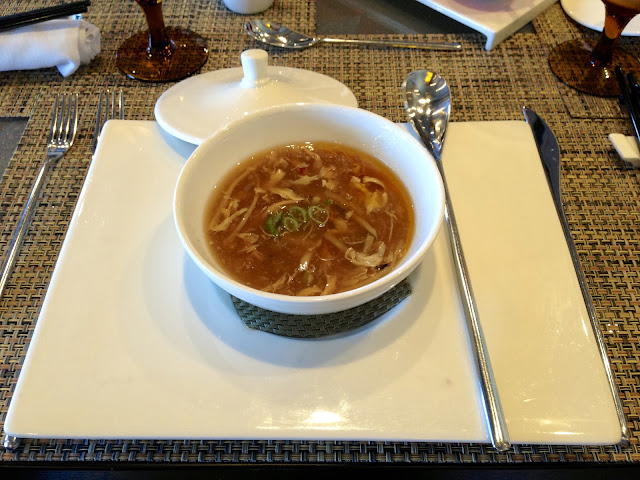
We started with a hot and sour soup
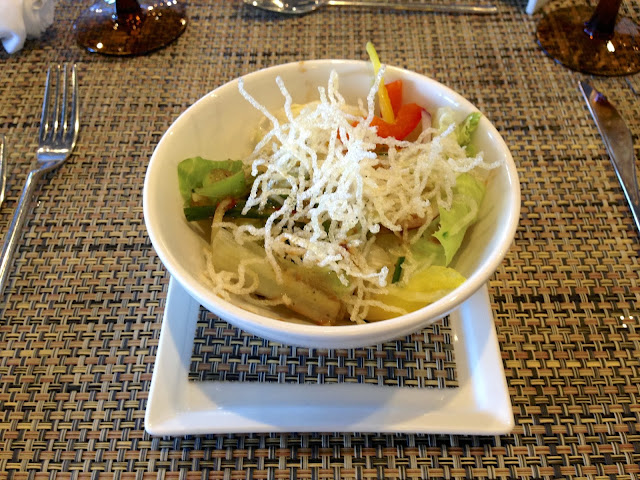
Asian Herb Szechuan Sesame Salad
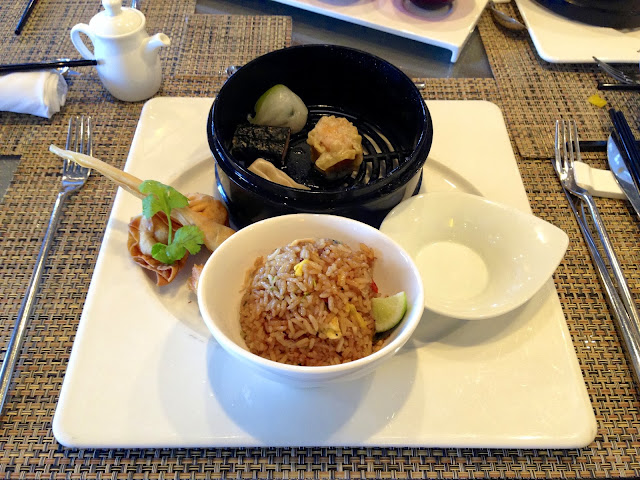
Steamed classic dumplings and a mixture of items from the wok, paired with fried rice
Later that night, at the Pinnacle Grill…
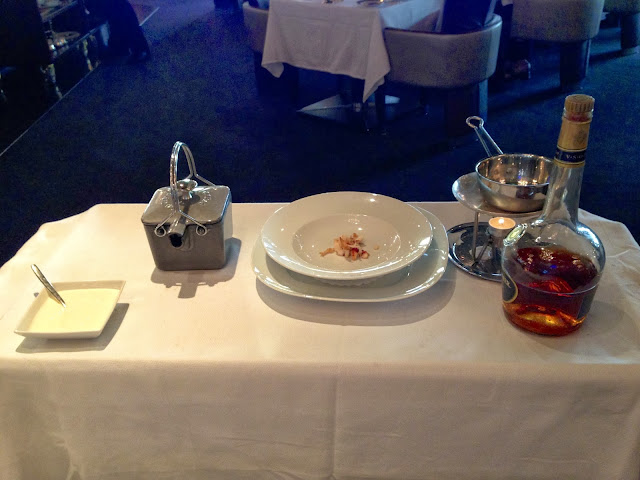
Jen started with a lobster bisque made tableside
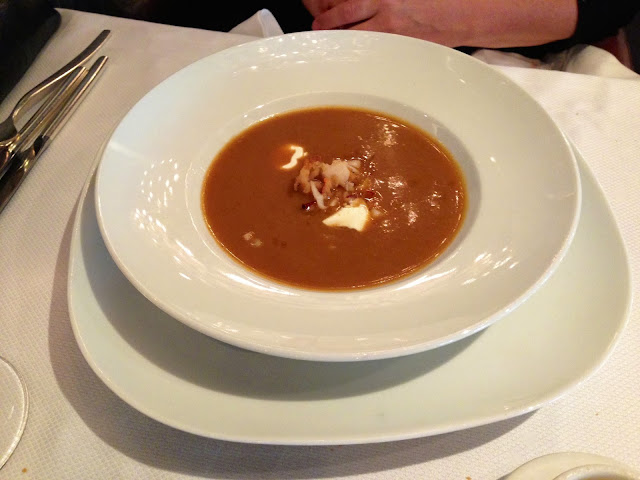
Lobster bisque with crème fraîche and aged cognac
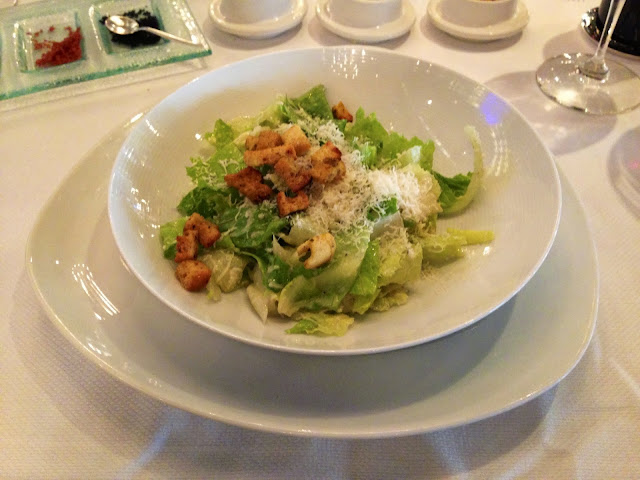
My caesar salad with homemade dressing, grated parmesan cheese, garlic croutons and anchovies, prepared tableside
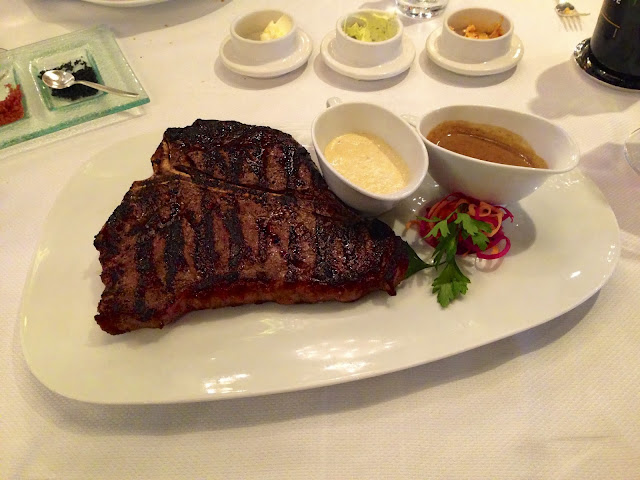
My porterhouse with horseradish-mustard and master chef’s green peppercorn on the side
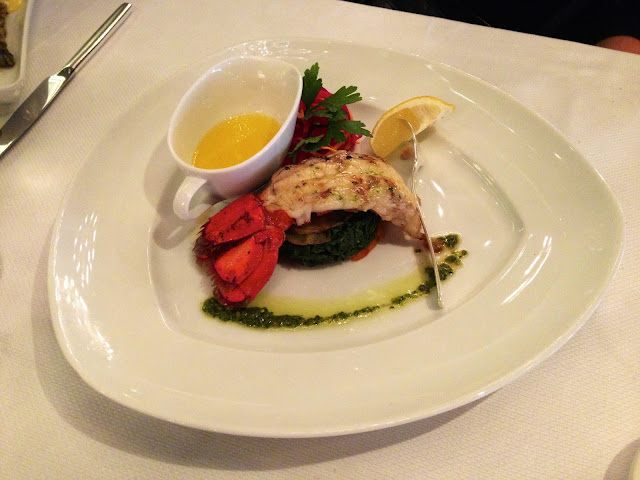
Jen ordered the lobster tail on a bed of wilted spinach and arugula, with “mango-churri” pesto sauce
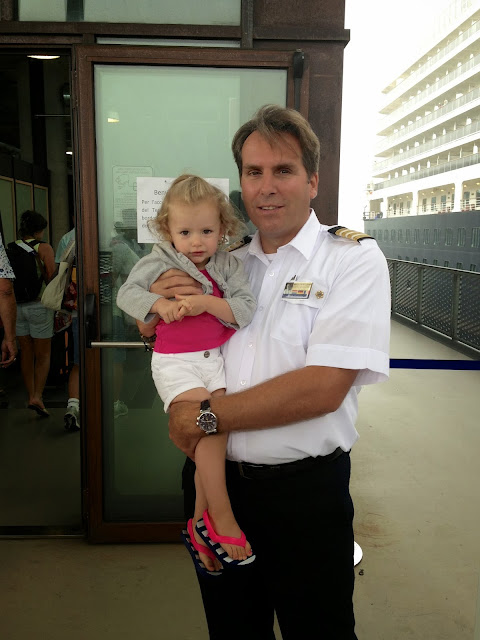
Julia thanks Captain Edward G. van Zaane
Thank you Holland America for hosting us and thank you for reading all about it!
Admit it… you sang the title in your head, complete with the voice raising on the “and-a I”…
I love to cruise. Jen loves to cruise. And now… Julia absolutely loves to cruise. We have very few experiences aboard cruise ships, but each time we’ve been on one of these massive floating hotels (or mini-floating city’s… I couldn’t choose between adjectives – you pick your favorite), we feel like royalty. We know that we will chose this method of vacation many more times in our lives. Cruising requires little planning and you are always rewarded with the very best customer service, the opportunity to see many more cities than you normally could in a given time period, endless activities aboard the ship, wonderful food, the benefit of unpacking only once and perhaps best of all – a very affordable vacation (you can get very good deals if you hawk the last-minute deal sites).
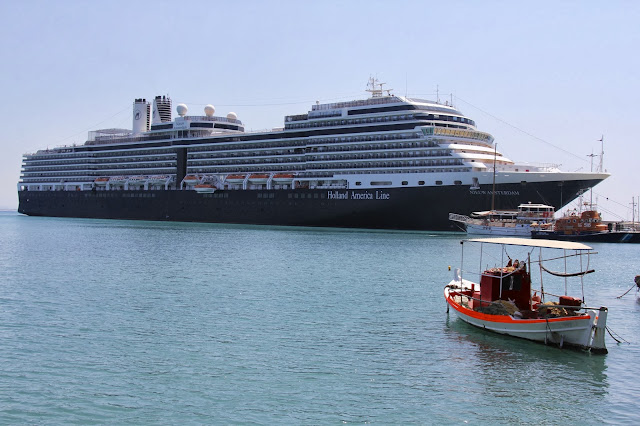
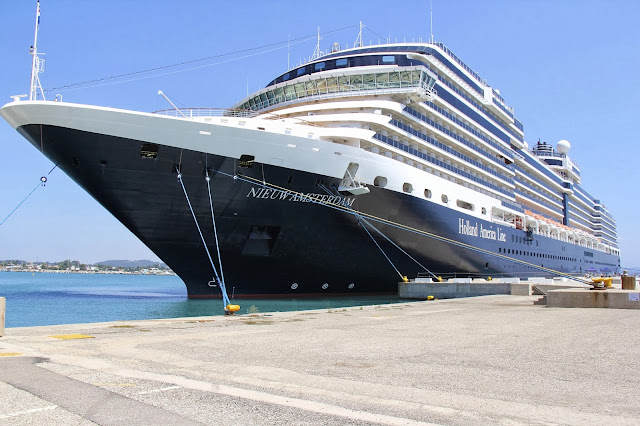
Our ship – Holland America’s MS Nieuw Amsterdam
The first time that Jen and I took a cruise was on our honeymoon. We spent three weeks sailing around South America (from Buenos Aires, Argentina all the way around Cape Horn and on to Santiago, Chile). I chose Norwegian Cruise Line (NCL) for our first cruise, primarily because the itinerary was perfect and I found it to be reasonably priced. I wasn’t nearly the internet-nerd I am today and so I did little research beyond that. We had a wonderful vacation, ate way too much food, enjoyed some lovely scenery (I have thousands of pictures to prove it) and had an absolute blast. However, I had no idea how amazing cruising could really be until we recently boarded Holland America’s, MS Nieuw Amsterdam (pronounced, n-e-w); one of the newer ships in their fleet.
Boarding the Nieuw Amsterdam
I had a few checklist items when we moved abroad – things I wanted to do and to see. Experiencing a cruising-adventure was definitely on that list. For the first time in our lives, we had the flexibility to really take advantage of a “last-minute” vacation, and so the plan was to use that to our full advantage. Unfortunately, we discovered that having a child prevents you from really getting those steep 70% off discounts you see flashing on the side of your favorite webpages. Some cruise lines require a child to pay a full fair. Others require that he or she have a special room or special bed. Either way, it seemed that the myth of really inexpensive cruising (at least with a child) was just that – a myth. Eventually, we searched for dates further into the future (ensuring the ability to book a room that could accommodate a small child) and narrowed our choice down to two cruises with two very different itineraries on two very different cruise lines.
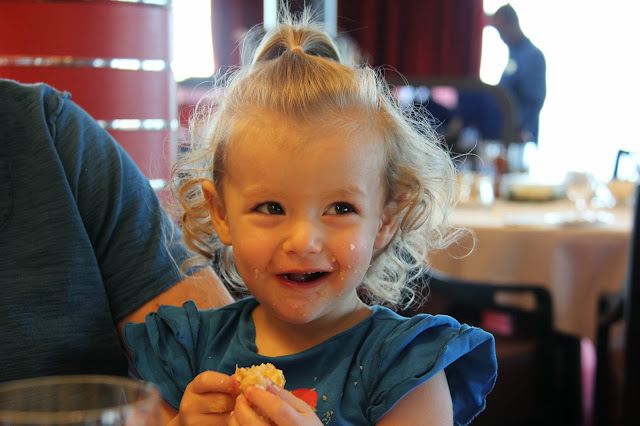
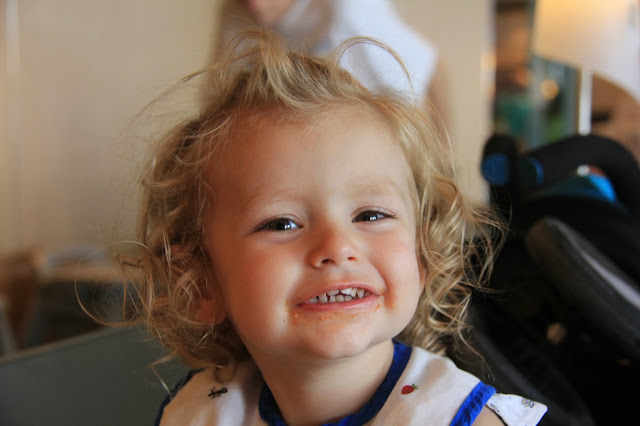
Could this little peanut (eating until her heart is content) actually prevent us from finding our perfect cruise?!
“Who me?! No way, Dad. Now, let’s EAT!”
World travelers and vacation aficionados – here’s where you need to pay attention. I am going to share two valuable resources I discovered throughout this process. First, I had been paying a fortune in cell phone bills, calling these various companies to get accurate information about their cruises. Then I stumbled across, gethuman.com – an internet based voiceover IP company that allows you to call most major companies from your computer – for free! I have spent this past year calling American Express, Visa, Wells Fargo and other companies at a cost of roughly €10 per call… just to get past the automated prompts! This site has revolutionized my ability to manage tasks at home while living abroad. Second, we discovered cruisecritic.com – the ultimate guide when selecting a cruise. Consider it the yelp or trip advisor of the sea. This site allows you to plug in any cruise line and read reviews – but more importantly it allows you to search specific cruise ships, ranking everything on that unique vessel from the food to the service – ultimately awarding the ship a nice, neat approval percentage number. It’s all very easy and streamlined. What I learned was that a cruise line can offer a vastly different experience aboard any number of their ships (for example, an older ship with lesser quality food may not be nearly as pleasant as one of their newer ships). Therefore, we learned that the ship itself is more important than the cruise operator. And we learned this lesson just in time. I was on the phone with Costa (the losing company), about to book our cruise. I had selected this particular cruise because of the funky itinerary. In addition to the “normal” places, we would have ventured into Ukraine, Romania and Bulgaria. I was moments away from giving my credit card number when Jen motioned at me frantically, having just discovered this particular ship only had a 54% approval rating. I got off the call as quickly as possible and called Holland America, booking aboard the Niew Amsterdam.
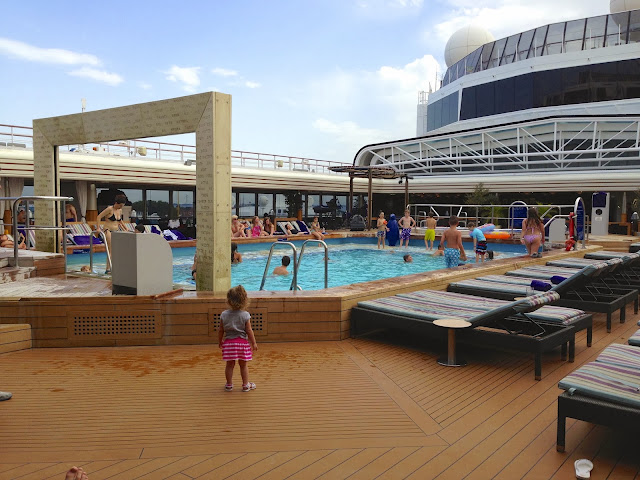
Julia evaluates one of the rooftop pools – this one was located midship
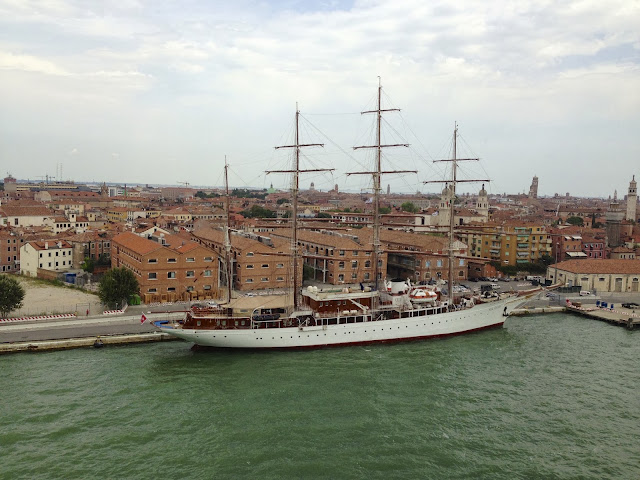
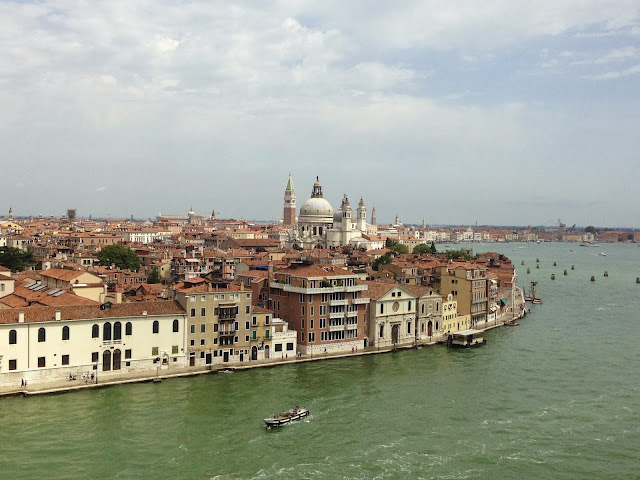
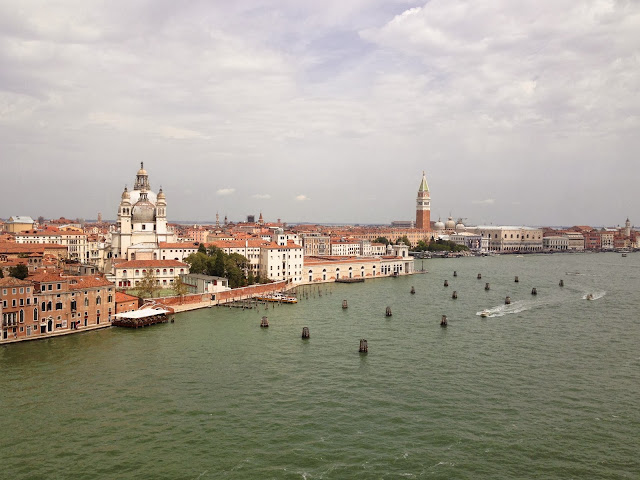
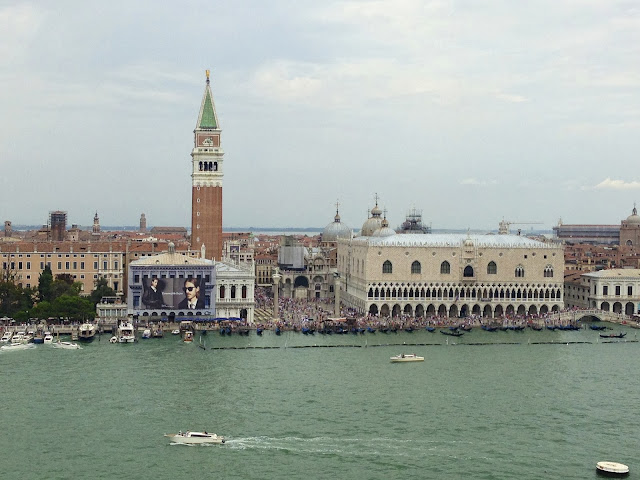
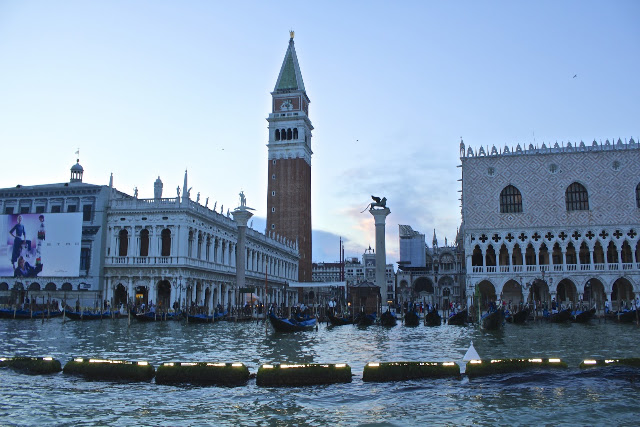
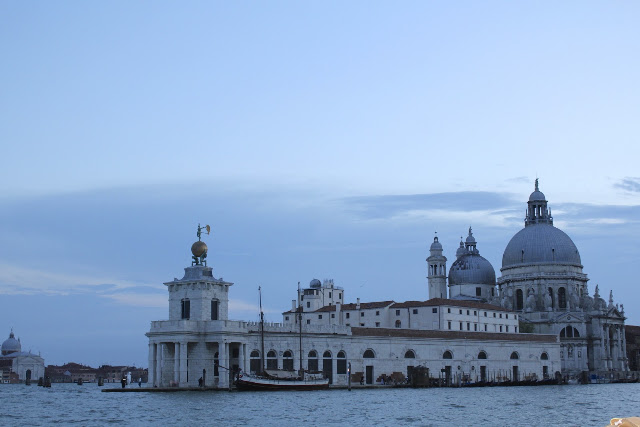
Our cruise departed from Venice, and so we took the three hour train from our home. We were in no rush to get into Venice early, having been there on previous occasions. We bypassed the throngs of tourists vying for photos of the canals and simply went right to the ship. We stayed in Venice’s port the first night, but set sail early in the morning. As we sailed through the Canale Della Giudecca in the middle of the city (I had no idea that it was deep enough to accommodate our massive ship), our fabulous Location Guide, Tom gave a memorable and insightful tour of everything that we were seeing. I apologize in advance for the pictures, I only had Jen’s cell phone with me – poor planning.
Sailing past another ship in the harbor
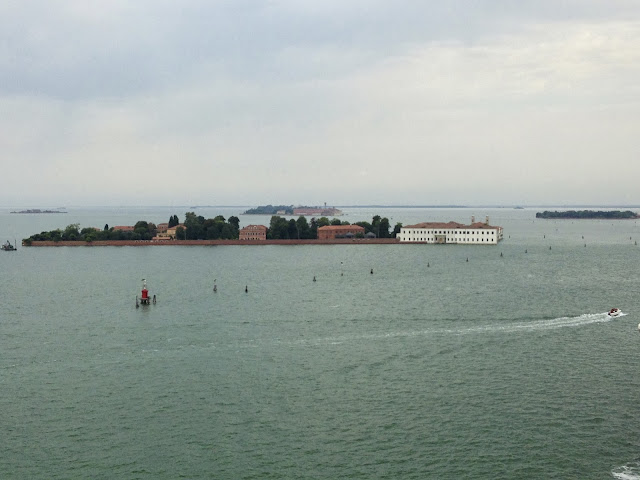
From high atop our cruise ship – we could see the entire city unfold before our eyes
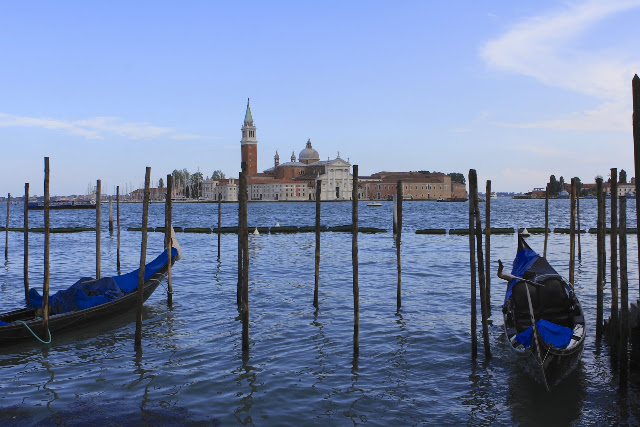
A beautiful view of Santa Maria della Salute and the Campanile of Piazza San Marco
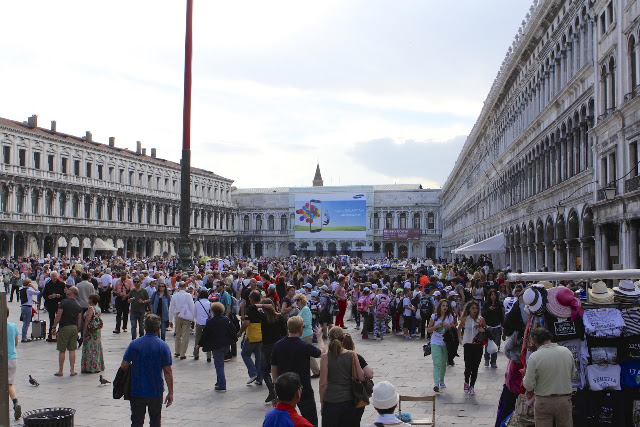
From this height we could actually look down and across Piazza Saint Marco – a very unique perspective
Here you can see many of the 118 different islands that make up Venice
Our first full day aboard the ship was a Sea Day, which means exactly that – we were at sea all day. This is wonderful portion of the cruise for anyone that likes to eat, gamble, drink, workout, spa, play in the pool, attend cooking courses, read, mingle, do nothing, do everything…. you get the point. I think I hit about four or five of those things in the first three hours – eating and gambling at the top of the list.
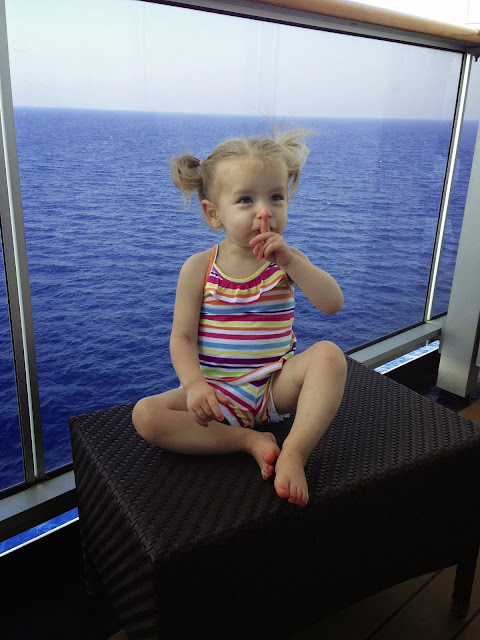
We woke up early, eager to start the day – but Julia reminds us not to wake our neighbors
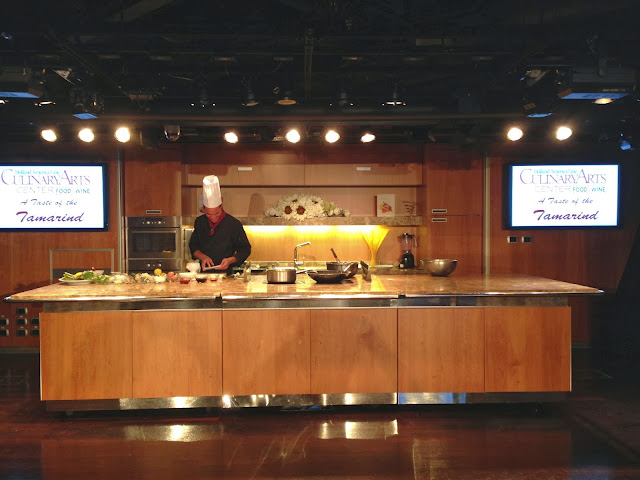
We enjoyed a cooking demonstration
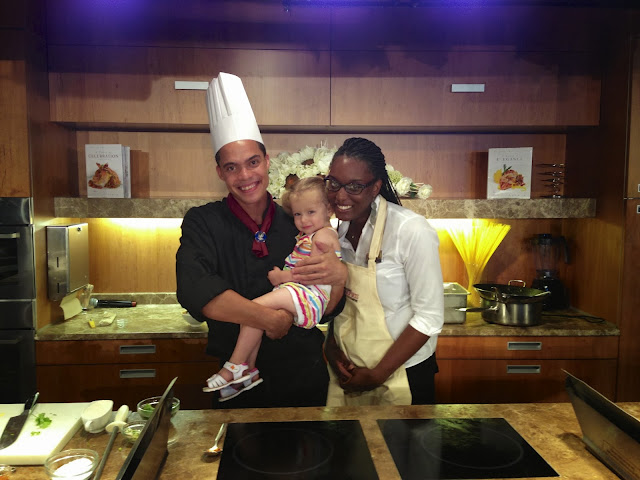
Posing with the Chef and Activities Coordinator
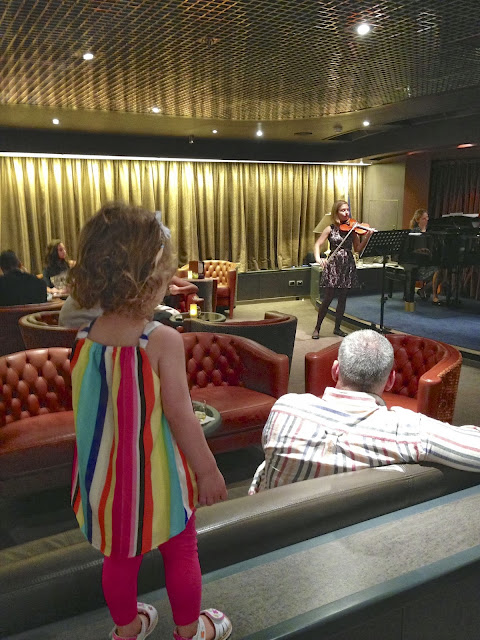
Julia would stop and watch this duo, Adagio perform each night after dinner
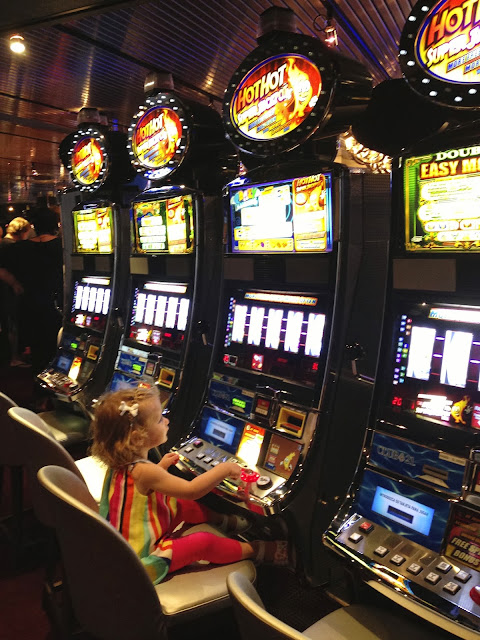
We hoped that lady luck would find Julia
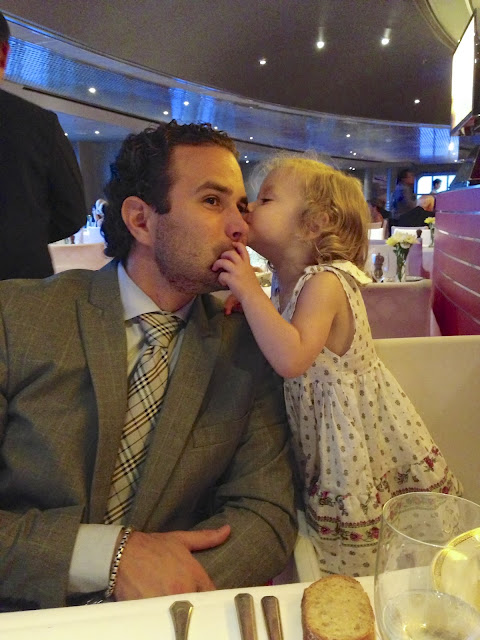
Julia treats me to a kiss during one of the “formal nights”
The following morning was a real treat – our first Port Day. We were at port in Katakolon, Greece, which was just a short bus ride away from something you may have heard of… Olympia, Greece. As in… the place the very first Olympic Games were ever held. As in, the place that contains the ruins of Zeus’ temple. And so I was a little geeked-up to see it all. I didn’t have to imagine standing in the very first olympic stadium – where the worlds best athletes competed since the 8th century BC; we actually got to do it. It was very awe-inspiring.
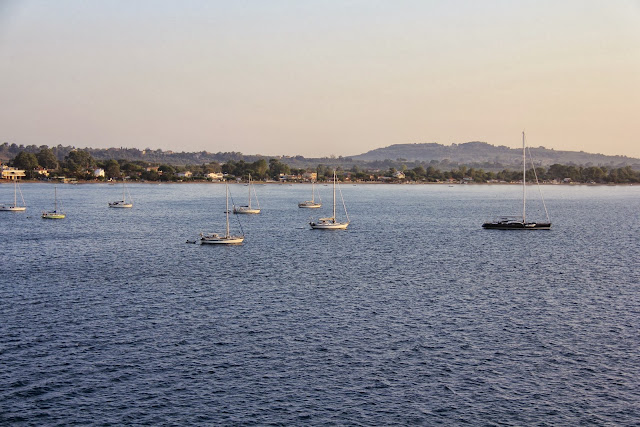
Our first sunrise at port
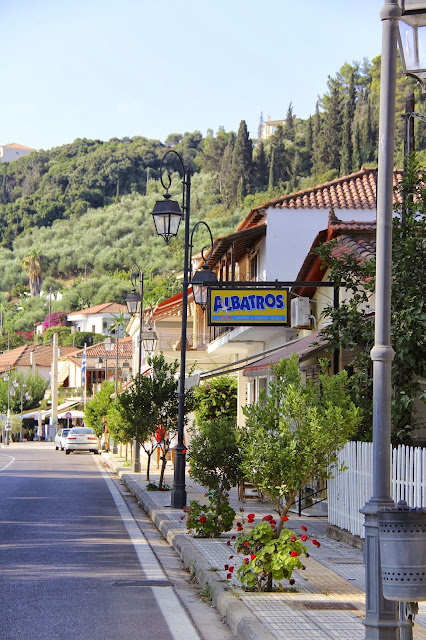
We strolled through Katakolon before our bus departed for Olympia
Travel-bugs… please allow me to give you another tip. If you are reading this post and thinking, “Greg is making a convincing argument for a cruise… I think I’ll give it a go”; don’t make the mistake many cruise-goers make. Do not book excursions through the cruise directly. Sure, it’s easier. Some may say safer. Others may tell you they’re better designed. That’s all true… but at an immense premium. Please allow me to state my case. Below is one of the excursion options at our first port (copied from Holland America’s site). Just skim it if you’d like… I’ll recap:
The small fishing village of Katákolon is your gateway to the mystical site of ancient Olympia, 25 miles to the east. The sanctuary of Olympia has the appearance of a park, and as you step back 2,000 years into the past, imagine the area crowded with athletes, orators, merchants and philosophers surrounding the Temple of Zeus with its forty-foot statue of the god, the ruins of which you will see today. It’s easy to imagine the roar of the spectators as the athletes took their marks on the marble starting blocks, and to picture the temples, treasuries, porticoes and statues as they were. After your visit to Olympia, you will continue to Mercouri Estate, known not only for its wines of supreme quality but also for its magnificent location. This is the area where the Refosco grape was first planted after being imported from Italy. In 1930, the Mercouris built a modern winery and distillery, updated again in 1990 with the latest technology. You are invited to experience the beauty and charm of the vineyards, to see the old and new wineries, and also to taste the locally produced wines.
OK – so you get a bus ride with 40 other schmoes to Olympia, gate access and a wine tasting. It’s very well written and this guy is singing a sweet sirens song – but he couldn’t lure me. Guess what it costs… $150 per person plus $60 for kids. OK – so we’d be all in for $360. Guess what we did? We got off the ship, walked over to the person selling bus tickets to Olympia (the same cushy travel bus with A/C and TV’s that the cruise people take) and bought both tickets for $20. Then another $20 at the gate and I’m all in for $40. A savings of $320. With that much left in my pocket, I had my choice of any number of Greek wines “known for their supreme quality” that we picked up at Duty Free on the way back to the ship.
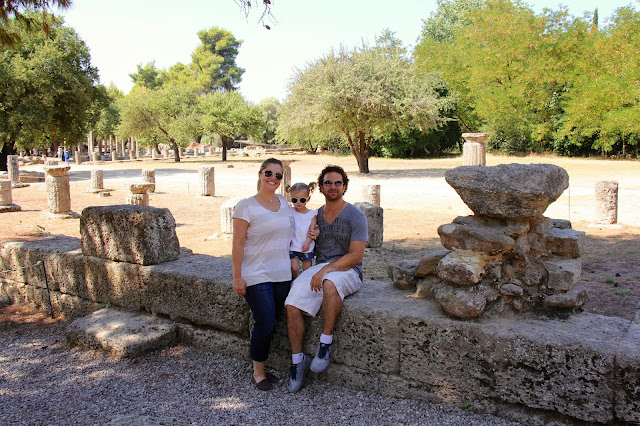
We stop for a family photo in front of the Palaestra
Julia does a little dance number
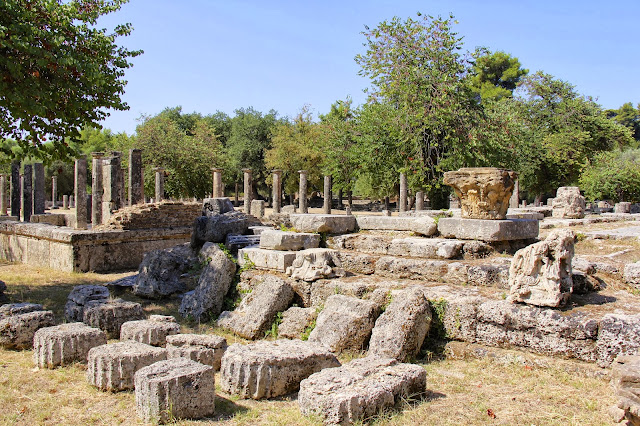
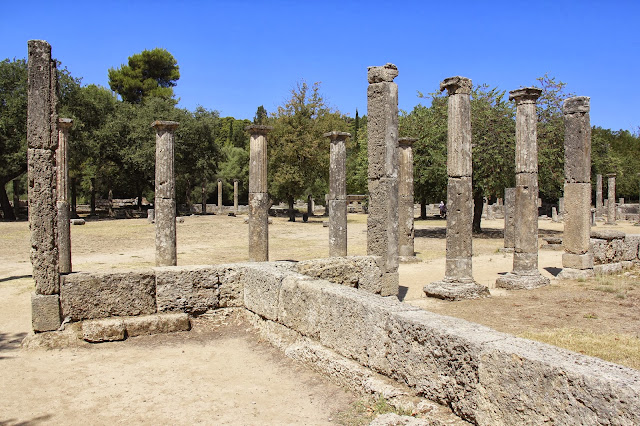
Ruins of the Theokoleon
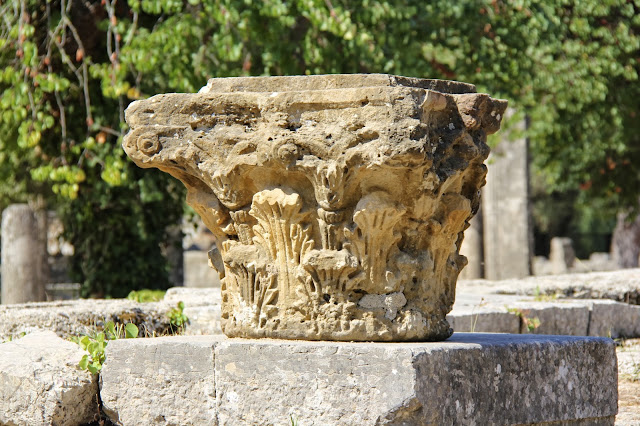
A lone column capital (top) remains… 1,000 years old? 2,000 years old? 2,500 years old??
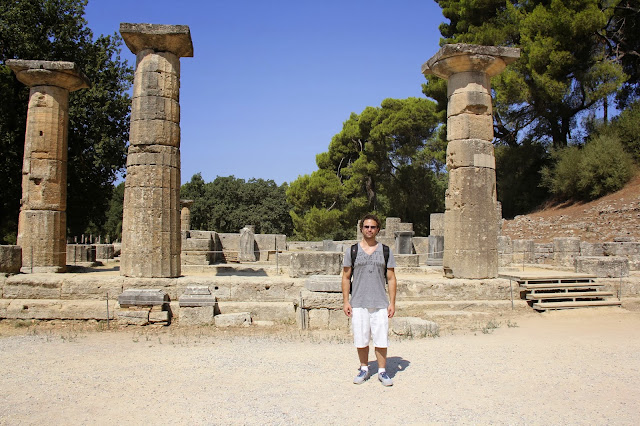
I stop to stand in front of the Temple of Hera
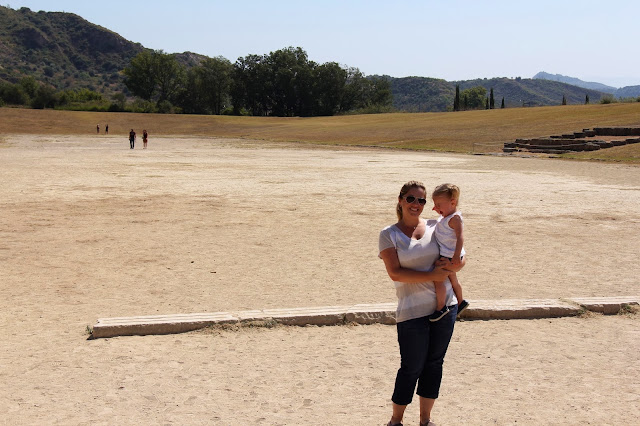
Jen and Julia challenge competitors on the Stadium ground
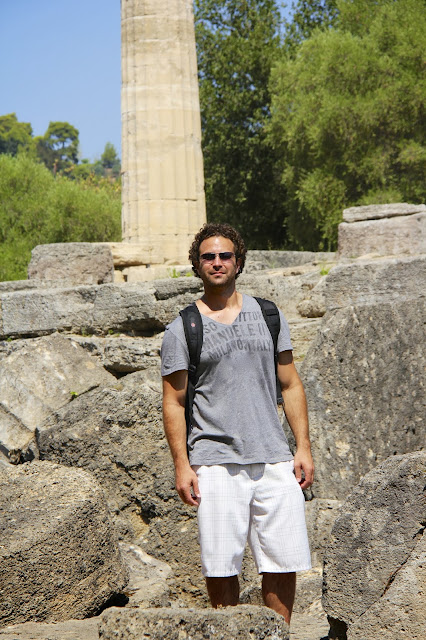
Lost amongst the rocks in front of the Temple of Zeus
Another view of the Theokoleon
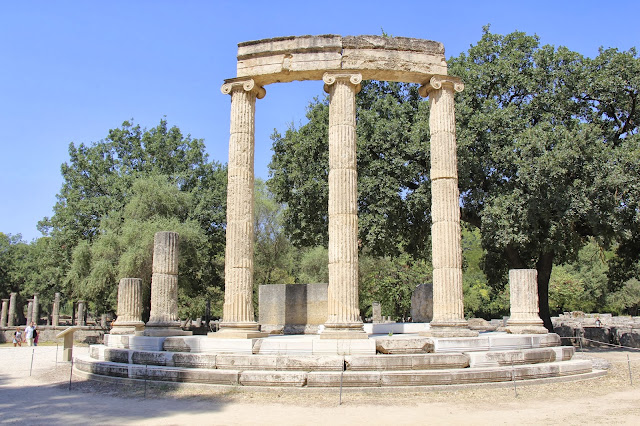
Impressive remains of the Philippeion
The next day we woke up in Piraeus, Greece – which is the port city outside Athens, Greece. Same thing as before – I bypassed the tempting, but expensive excursions and departed with Jen and Julia in tow. We walked around the corner and found that the Greek Gods were smiling on us that day. In addition to the regular cabs and buses to take us the 20 minutes into Athens, there were “Hop On-Hop Off” open-top tour buses. That meant we would get a ride, an audio tour and the ability to come and go as we pleased, all for $30.
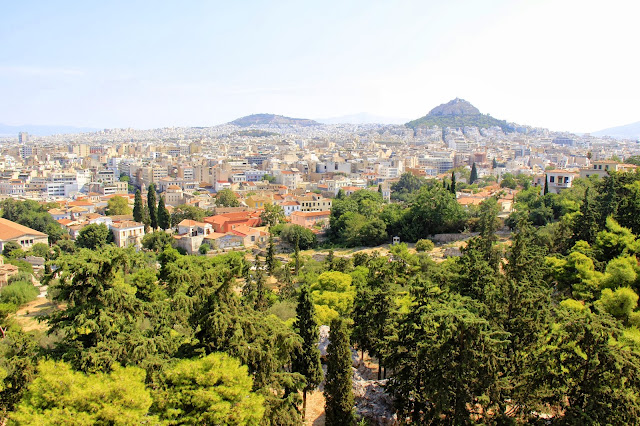
Athens is an amazing city with a recorded history spanning 3,400 years
We rode around Athens, enjoying our tour and chuckling to ourselves at the Greek music they kept playing over and over (imagine the soundtrack to “My Big Fat Greek Wedding” on repeat). My plan was to complete the loop and finish the audio tour before getting off, but when I saw the majesty of the Parthenon, I knew we needed to depart the bus immediately.
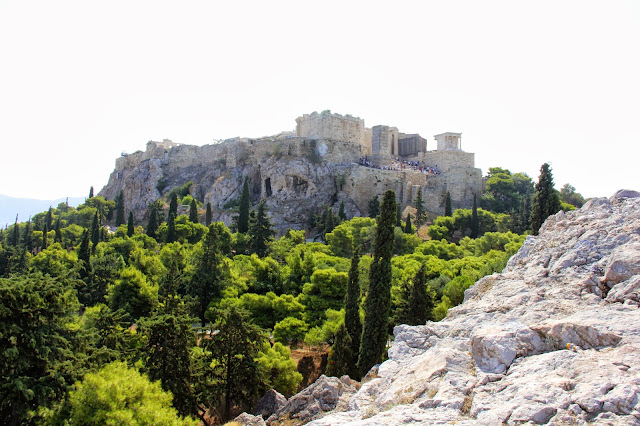
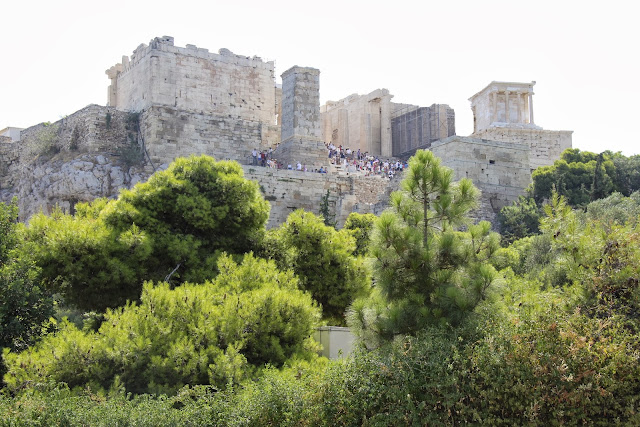
The Parthenon sits atop the Acropolis of Athena
The Parthenon is the featured temple within the Acropolis of Athena; a temple built to honor the Goddess, Athena. Construction of the temple began in 447 BC and today it is widely considered the most important surviving building from Ancient Greece. In order to reach the temple, you must climb the imposing slate steps to reach the Acropolis of Athens, an ancient citadel set high atop a rocky outcrop far from today’s modern Greece. But before we climbed the steps of the Acropolis, we first climbed a neighboring cliff for a view of the magnificent ancient city and the more modern one below.
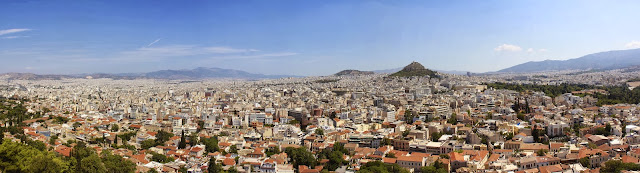
Athens has roughly 3.2 million inhabitants – Greece’s largest city by a wide margin
Hundreds of visitors passing through the gates of the Acropolis
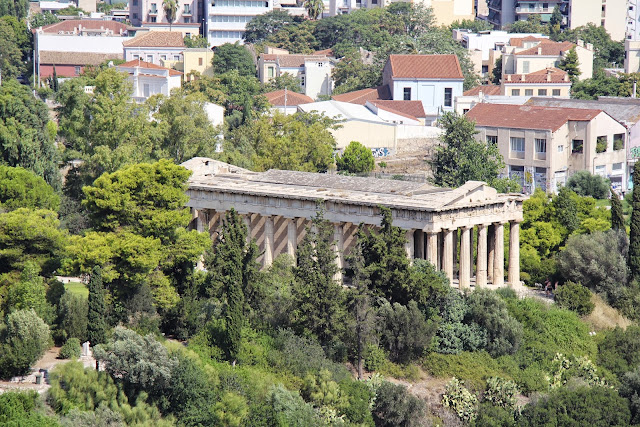
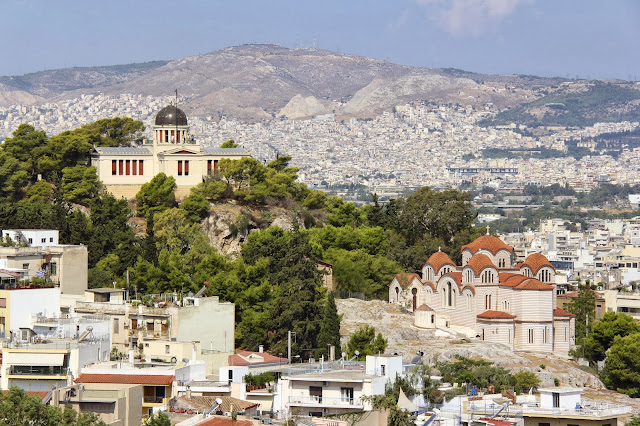
Ancient ruins are a part of the city – even as modern urban sprawl is built around it
Some more “modern” temples perched atop their own cliffs
My girls begin their ascent
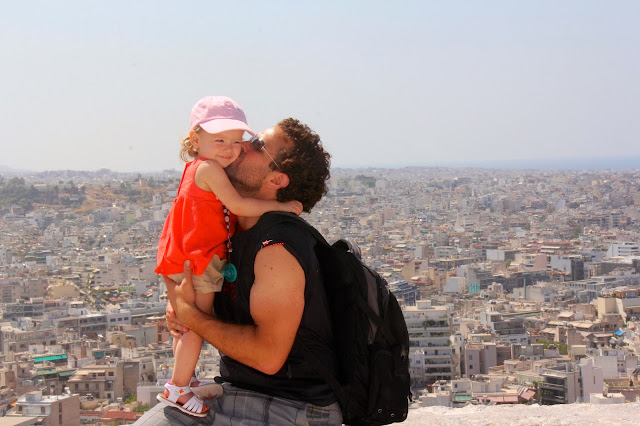
Julia fights the wind and I steal a kiss
I think Athena herself would have been pleased to have this little guest in her temple
As we climbed the steep incline of the Acropolis toward the temples, we narrowly missed slipping and sliding back down to the bottom. The slate steps were slick even though they were bone dry – I couldn’t imagine making the climb if it had rained. There were many sights to see, including the amazing expanse of a remarkable city below. We marched through the ancient doorway leading into the city and stopped for a rest and some photos.
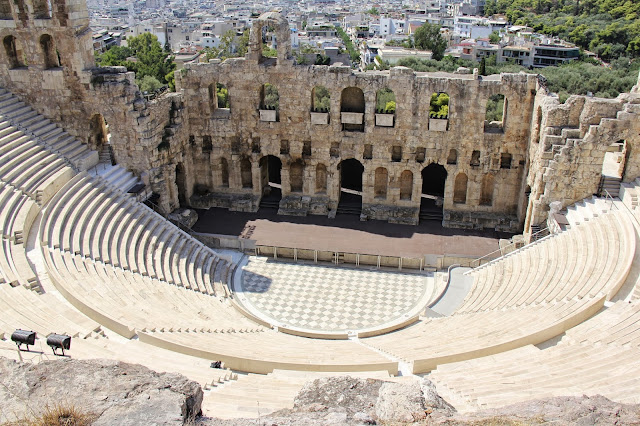
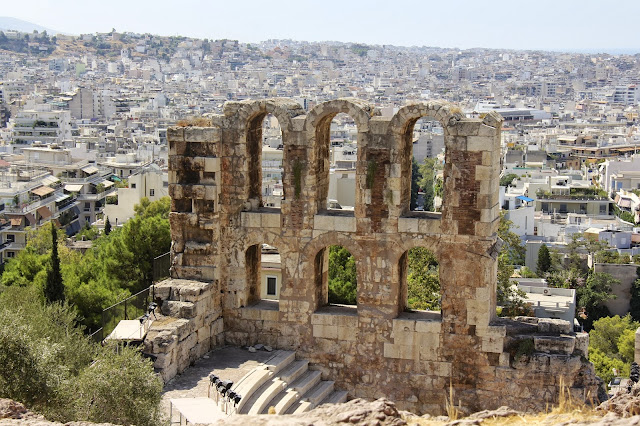
Odeon of Herodes Atticus – a steep sloped amphitheater built in 161 AD
The southern wall remains well intact
Julia lets me kiss her for all of Athens to see
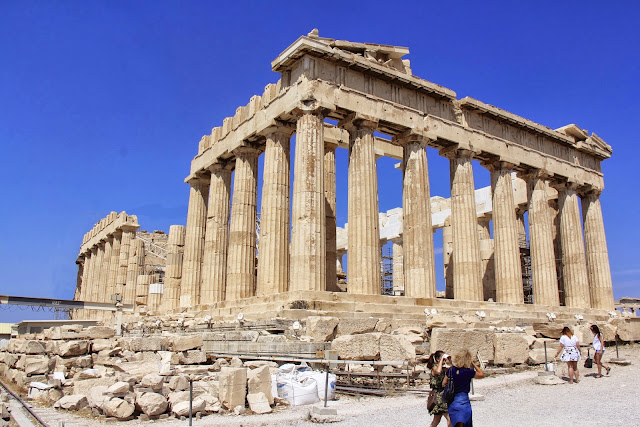
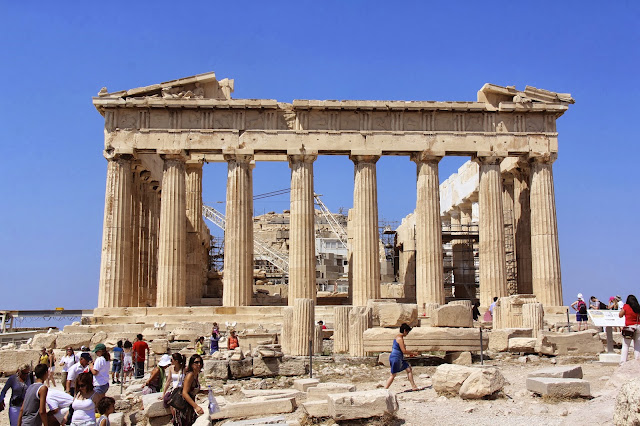
The Parthenon – Temple of Athena
It’s amazing how well the Parthenon has been preserved
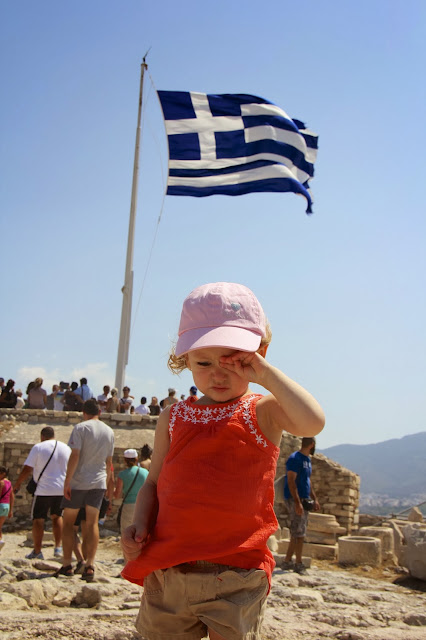
Julia pays her respects to the Greek flag
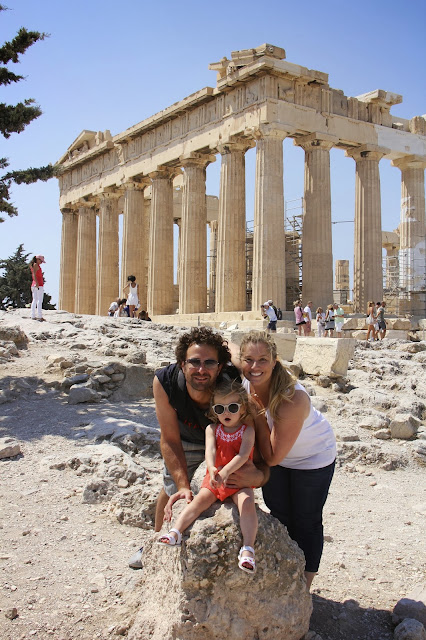
Family photo in front of the Parthenon
While the Parthenon is clearly the star of the show within the Acropolis, there are many other important ancient buildings and temples. The Greek word Acropolis (Ακρόπολη) is made up of two components – akron, meaning “edge” and polis, meaning “city”. While there are many other Acropolis’ within Greece, it is commonly accepted that the Acropolis of Athens is the Acropolis in all of Greece. From the moment we walked through the gateway into the city, I truly felt as if I was transported into an ancient, mythical world – where Gods and Goddesses ruled from on high. Perhaps I have seen too many movies, but I really did feel as though I was apart of something far bigger than I’ve ever known. I think I was even annoying Jen a bit with my enthusiasm and newfound feeling of power (as if I was somehow apart of the world of The Gods and could strike down any mere mortal…). It was probably good that I got out of there when I did, lest I try to actually smite someone.
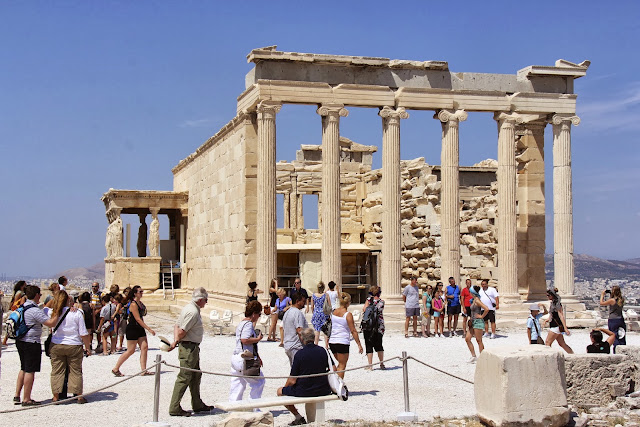
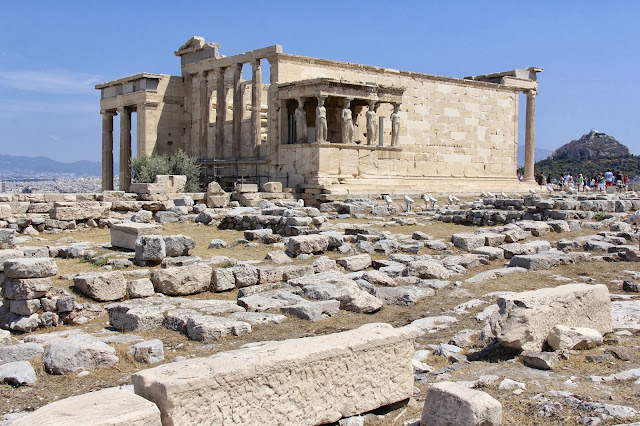
The Erechtheum – a Temple for both Athena and Poseidon built between 421 and 406 BC
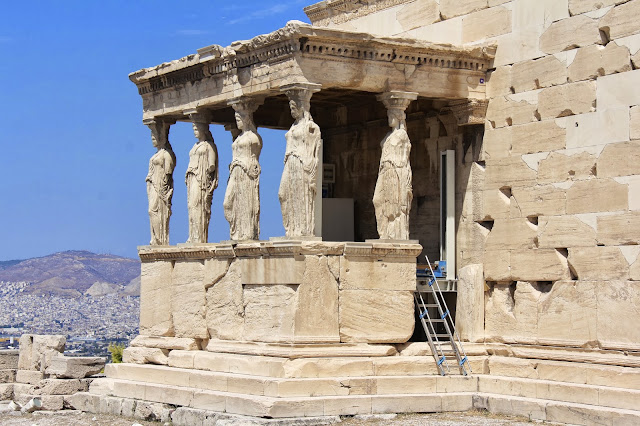
The Porch of the Caryatids (maidens) built to conceal a 15 foot support beam
Another view of the Erechtheum from the south west
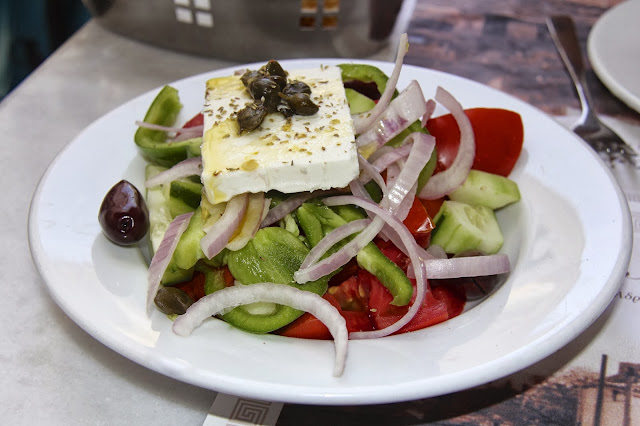
We had worked up quite the appetite touring the Acropolis and so we descended the ancient city toward a more modern part of town. We found a charming pedestrian area of the modern city and stopped for a lunch of what else… Greek salad! We drank a couple of refreshing Greek beers and then strolled through the ample markets.
Greek salad – the authentic way!
Finally, we boarded the ship and set sail for our next adventure… I hope you’ll hop back aboard for Part II (coming soon)!
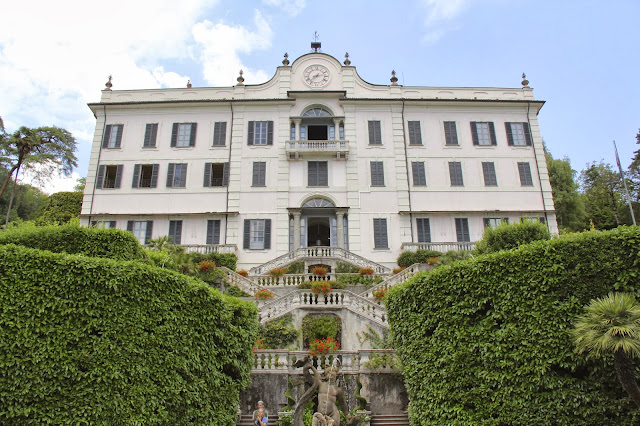
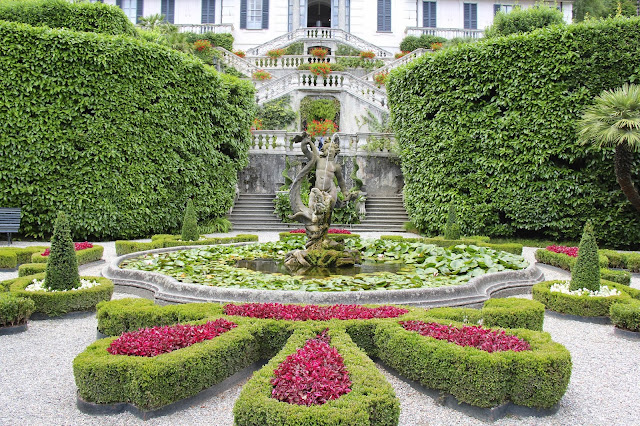
There is a wonderful town along Lake Como, called Tremezzo. Most people have heard of Bellagio, which sits on the exact shore opposite Tremezzo, but the lesser known town is a true gem with far fewer tourists crowding the streets. Tremezzo is home to a couple of our favorite restaurants and gelaterie (ice cream parlors). It is also home to Villa Carlotta, a 17th century treasure that has been beautifully restored and maintained.
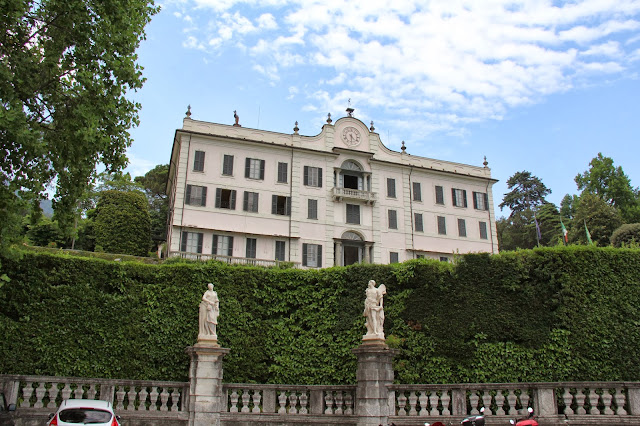
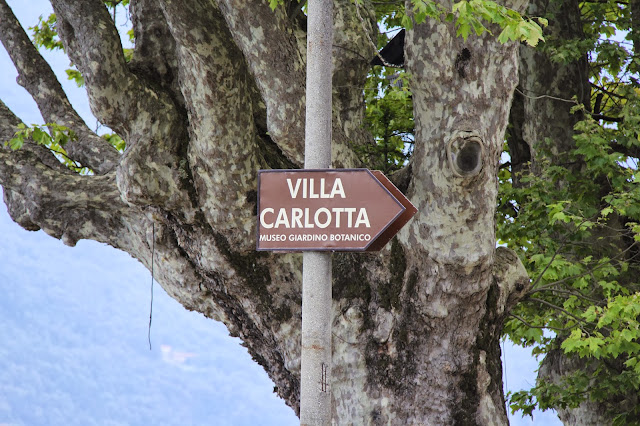
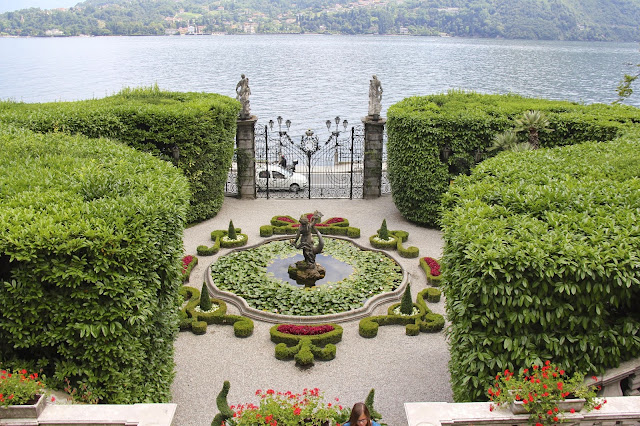
Villa Carlotta
Jen and I have been wanting to visit Villa Carlotta since we moved to Como. The beauty of the villa and the gardens are well known in this area and attract thousands of visitors each year. We had planned on going in March when my aunt and uncle were visiting, but the villa is not open to the public until the 15th (just a few short days after they departed). Since the gardens are the main attraction, the preservation society wants to ensure all the flowers are in full bloom. Jen and I decided that since my mom is a big fan of gardens, we would visit while they were here (read about the first part of their trip HERE).
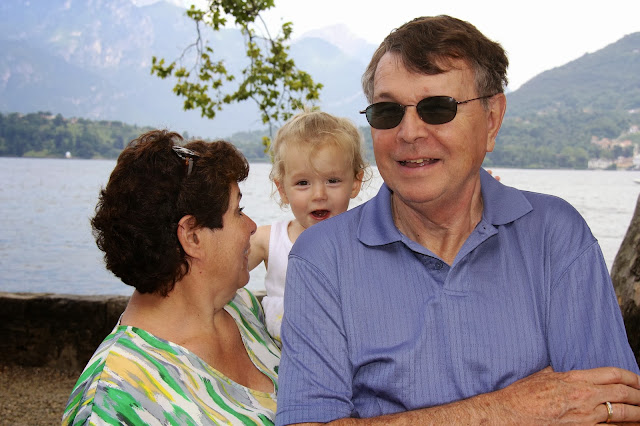
Julia peeks out from behind her Grandma and Pop-Pop
We had planned a drive along the lake to arrive in Tremezzo just in time for lunch. We took my parents to one of our favorite restaurants, La Fagurida that we had discovered some time ago (blog post HERE). Their specialty is rabbit – and once again, we were not disappointed with the food.
Jen and Sonny outside of La Fagurida
Julia was all kisses after lunch
After lunch, we drove back down the long and windy mountain road toward the center of town. We parked and got our admission tickets to the villa. We spent some time walking through the villa, but the real beauty was in walking through the elaborate and seemingly endless gardens.
Villa Carlotta, Museum and Botanical Garden
Impressive stairway leading to an impressive facade
The ornate gardens begin the moment you enter the grounds
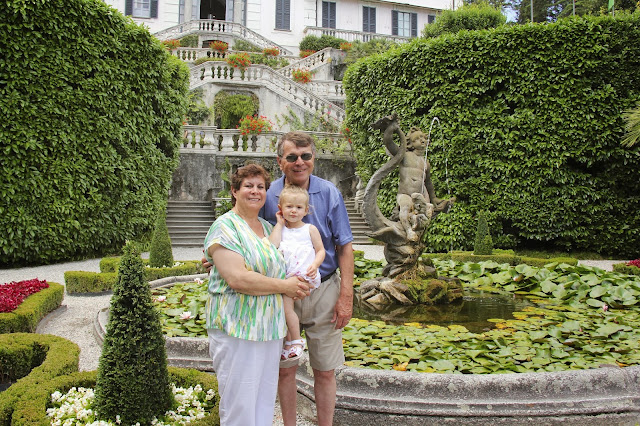
Julia stops for a photo with her grandparents, Stefani and Sonny
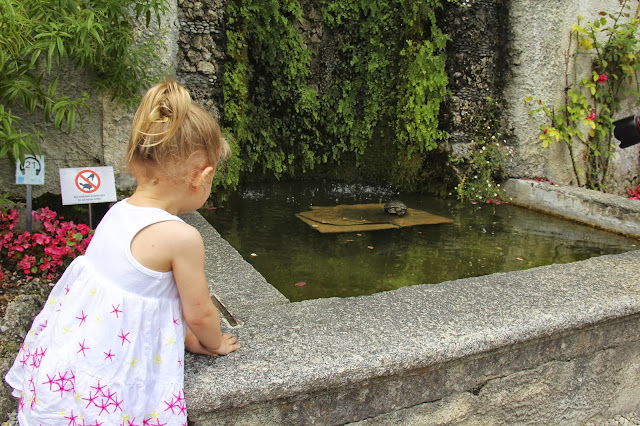
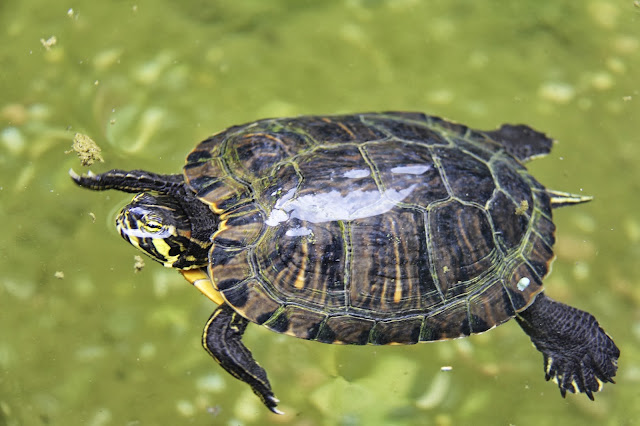
She was amazed by the turtle pond
There were half a dozen of these little guys
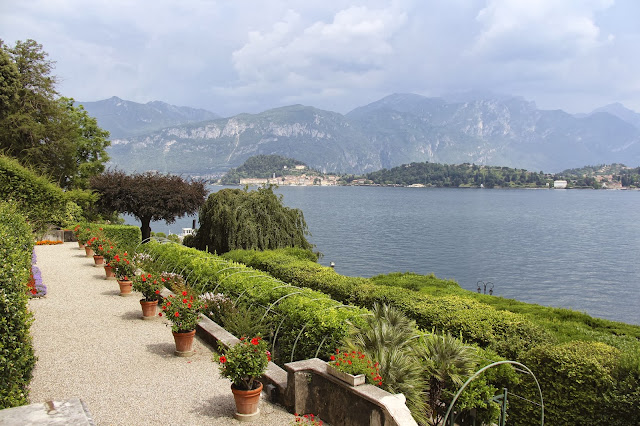
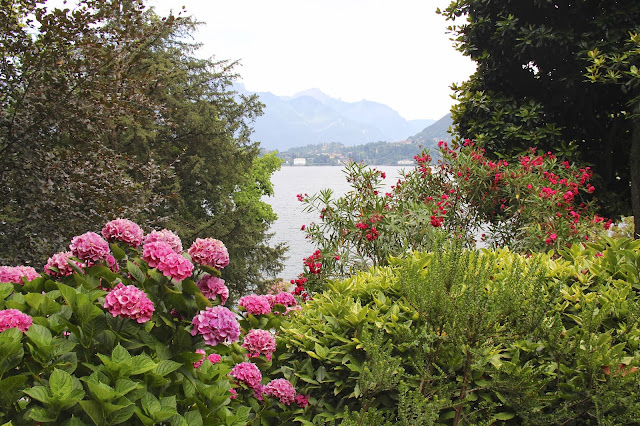
View from the front of the villa’s terrace overlooking Lake Como
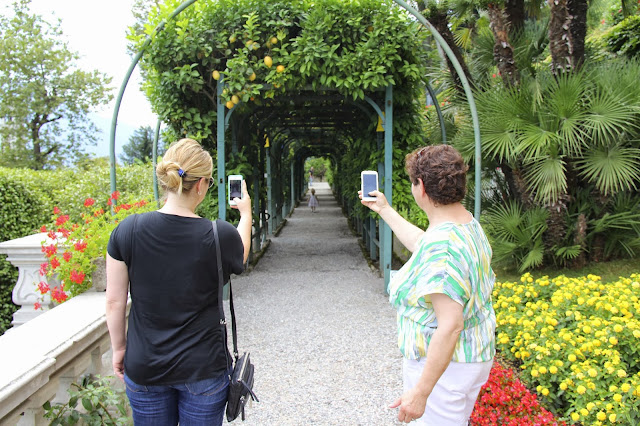
A mom and a grandma snap pictures of our little Julia
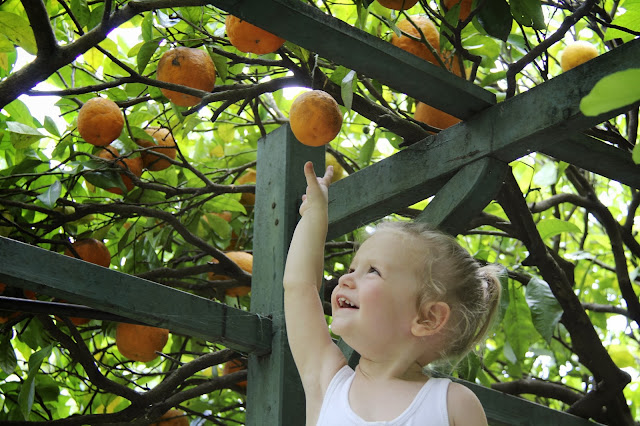
They had oranges growing in the trellis that Julia wanted to pluck
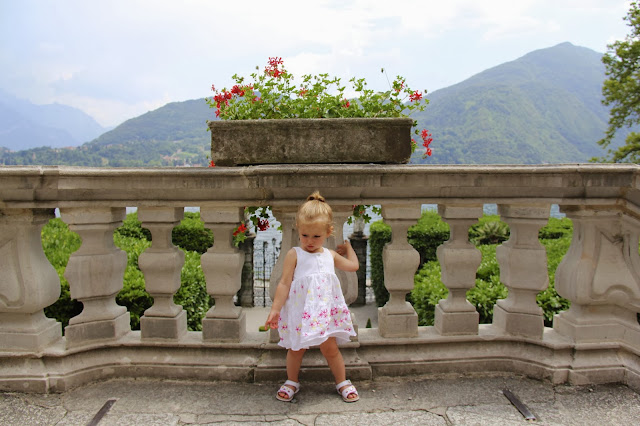
Julia strikes a fashionable pose on the terrace
The villa was positioned to overlook the town of Bellagio, across Lake Como
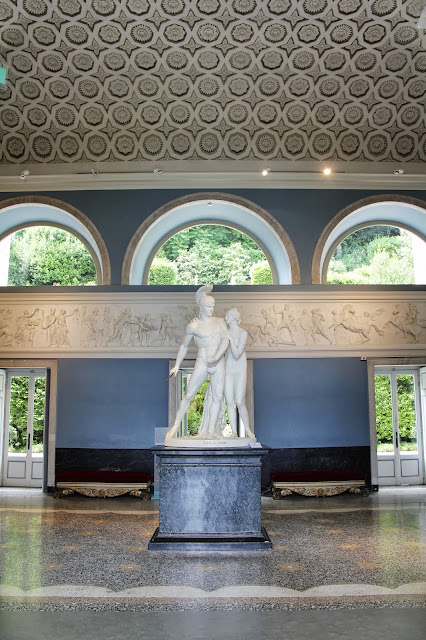
Priceless works of art adorn each room in the villa
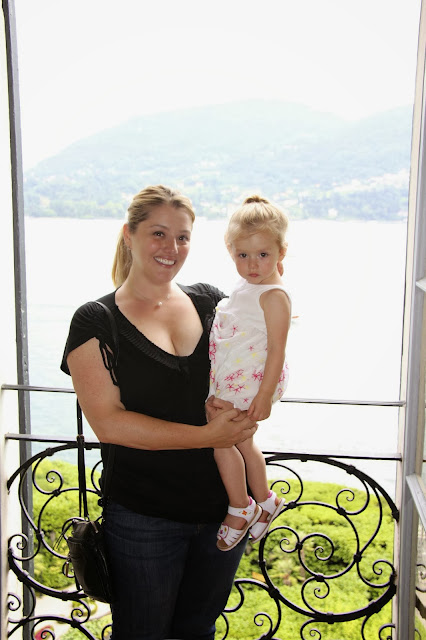
Jen and Julia stop for a picture in the villa
I have copied a brief description of Villa Carlotta directly from the brochure, if you are interested in a bit of it’s unique history:
Villa Carlotta is a place of rare beauty, where masterpieces of nature and art live together in perfect harmony in over 70,000 square meters (17 acres) of garden and museum. The beautiful villa was built at the end of the 17th century in a natural basin between lake and mountains, facing the dolomitic Grignas and the peninsula of Bellagio. The architect created for the Clericis – a noble and powerful Milanese family – an important but somber building, with an Italian garden decorated with sculptures, stairs and fountains. In 1801 Gian Battista Sommariva, famous politician, businessman and patron of arts, bought the villa. Thanks to him, the villa attained the summit of its splendor and became one of the most important halting-place of the Grand Tour with its collection of art (masterpieces of Canova, Thorvaldsen and Hayez) and its fascinating romantic garden. In the second half of the century Princess Marianne of Nassau bought the villa and gave it as a present to her daughter Carlotta in occasion of her wedding with Georg II of Saxe-Meiningen. Georg was passionate about botany and made a lot of improvements and new additions to the park that became more and more famous for its botanical richness and the rhododendrons’ and azaleas’ spring flowering.
The beauty of the gardens did not disappoint, we all enjoyed each moment of the self-guided tour.
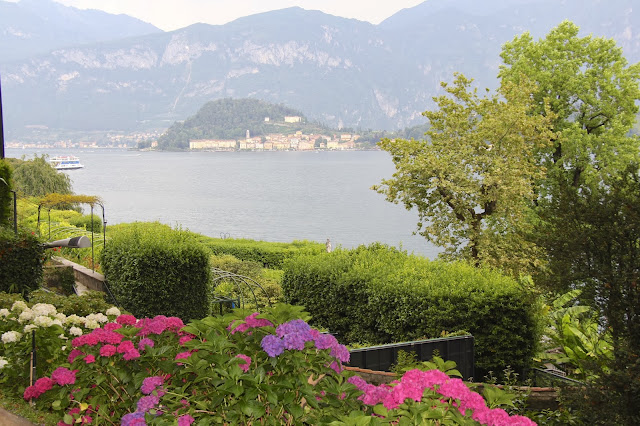
Overlooking Como and Bellagio
Julia couldn’t get enough of the rhododendrons
We had to stop and smell almost every flower
One of my favorite pictures of Julia
Always the lady… or flirt?!
Giving Pop-Pop as kiss as thanks for the ride
Climbing the stairs in La valle delle felci (the valley of ferns)
Walking through Il giardino dei bambù (the gardens of bamboo)
Still in the Bamboo Garden
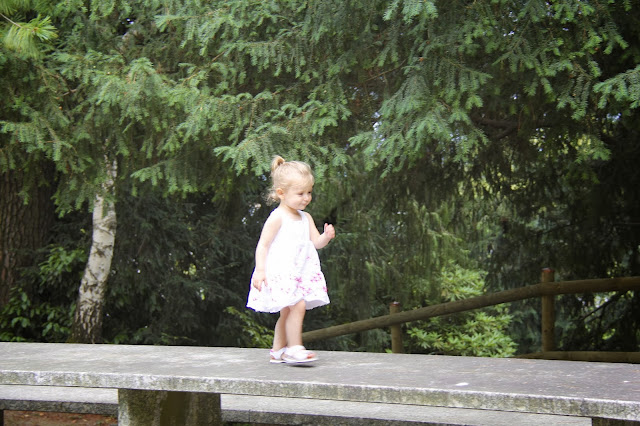
Julia runs quickly across a stone table
Calocedrus decurrens
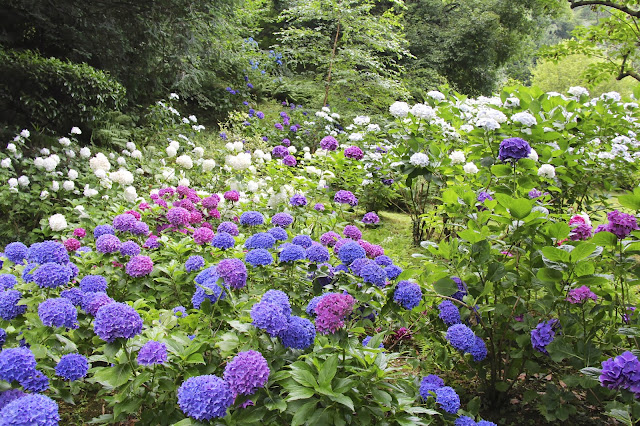
Views from all angles
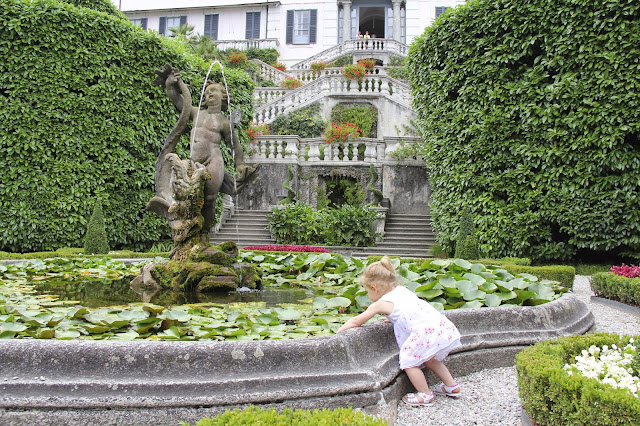
Julia had to play with the fountains one last time
She insisted on making a little splash
Villa Carlotta, more specifically – the gardens of Villa Carlotta are simply stunning to behold. I would strongly recommend copying our itinerary and enjoying pranzo (lunch) at La Fagurida before spending countless hours getting lost in the gardens of Villa Carlotta.
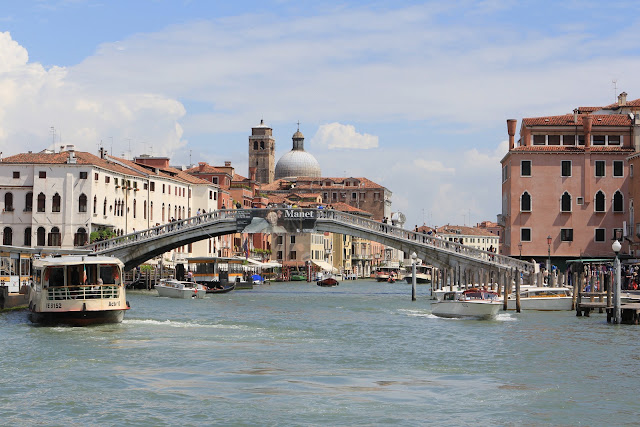
One of the true gems of the world…. Venezia (Venice). The name alone evokes powerful feelings for many people. Romantic gondola rides, historical architectural treasures, beautiful creations blown from Murano glass, unique hand-crafted masks and always… always a city constructed with streets of water. Amazingly, the entirecity is listed as a World Heritage Site in order to preserve it’s unique beauty. According to my Wiki research, Luigi Barzini described it in the New York Times as “undoubtedly the most beautiful city built by man”. I’d have to agree with Luigi!
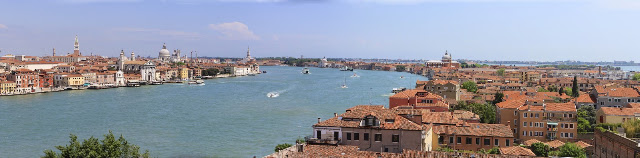
Panoramic view from the roof of our hotel
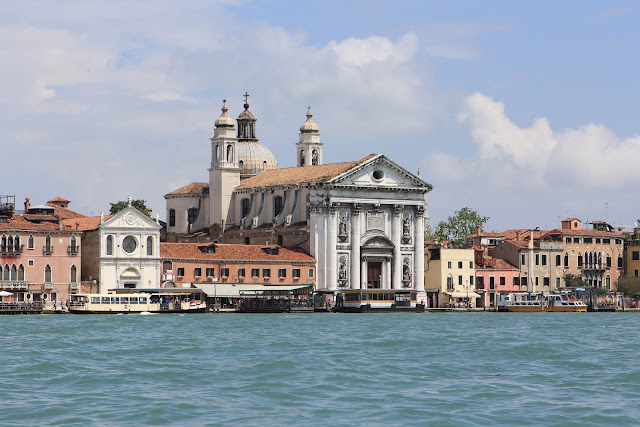
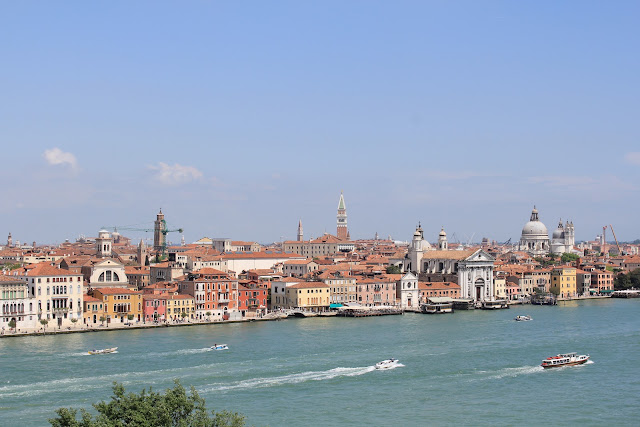
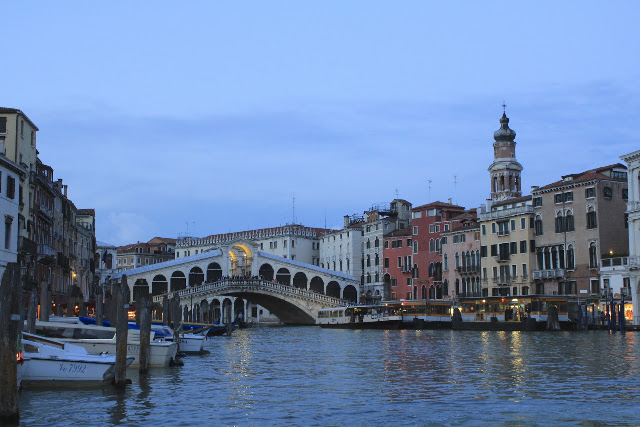
Venice from the water
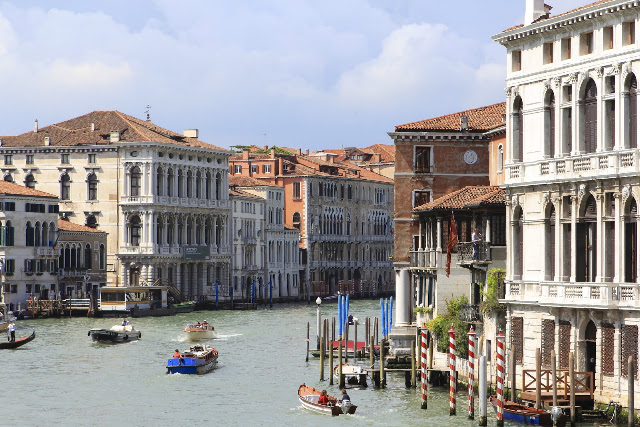
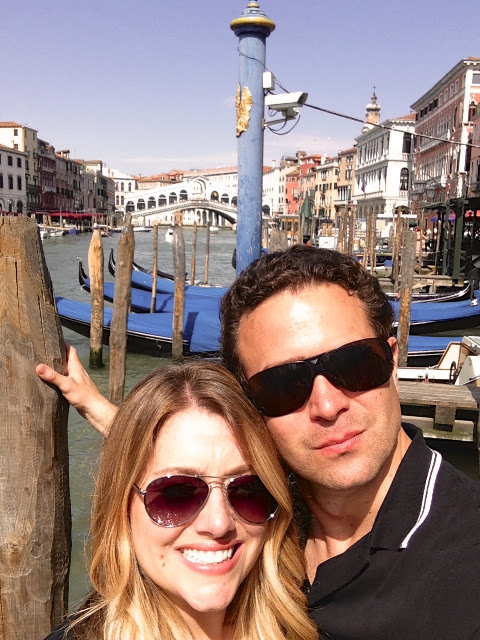
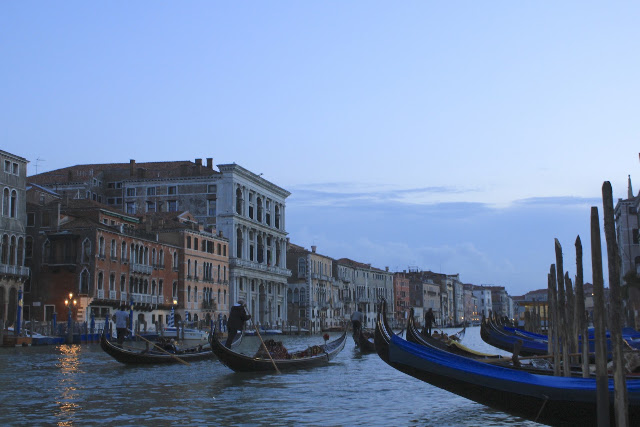
The Grand Canal
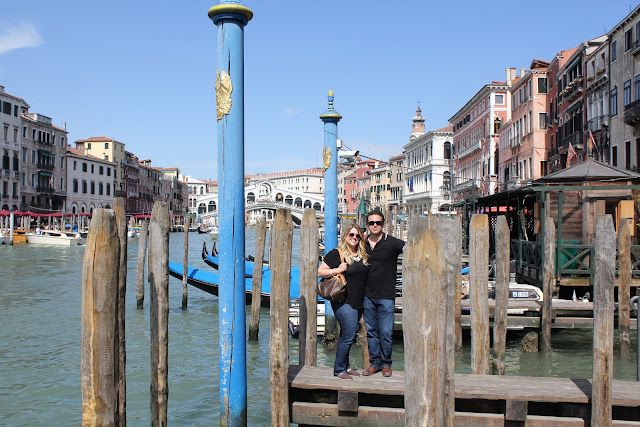
More of the Grand Canal
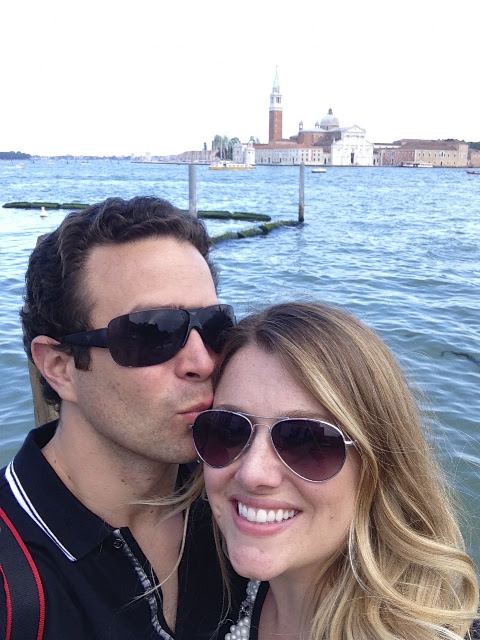
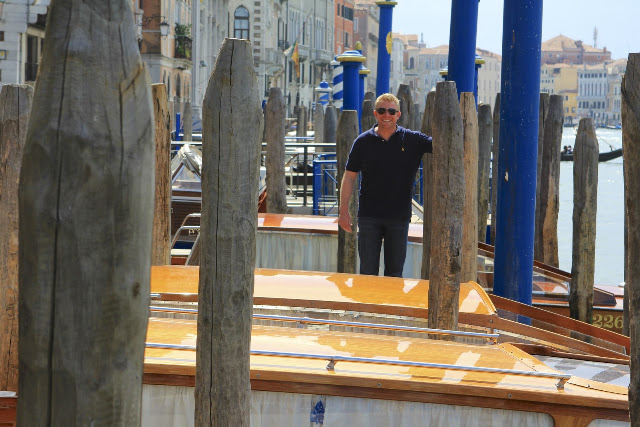
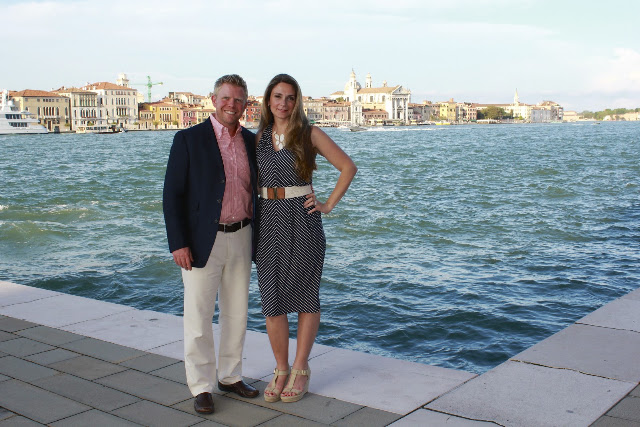
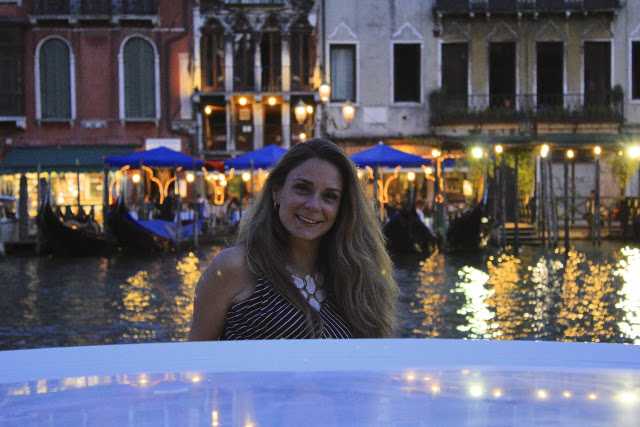
Happy to be here
Our good friends Nathan and Danielle joined us recently for a whirlwind visit filled with food, wine and lots of fun (read about it HERE). We punctuated their trip with a stopover in this romantic city. I was intrigued by the history of such a unique place and just did a little research. Venice consists of 117 islands, formed by 177 canals and connected by 409 bridges. I kept waiting for that “ah-ha” moment when I discovered the name of the genius city planner that decided to create a magical city on the water. But unlike Bugsy Siegel’sLas Vegas or Sheikh Maktoum bin Rashid’s reinvention of Dubai – there was no one person that can be credited with the conceptualization of Venice. The truth is that refugees fleeing from invasion of the Lombards sought shelter in the marshland that is now Venice. And how do any cities really get built? A collection of people working together to establish trade and industry, creating habitation and then services to support the population. And so the city grew around the marsh and homes and churches and municipal buildings were constructed. This begs another question. How can you build a city on water?
The city built on water
Piers and bridges everywhere
Loved this view
There is a tree that grows in Slovenia and Croatia called an alder tree that is noted for it’s water resistance. Thousands of these trees were imported (and subsequently credited as a contributing factor for the barren land of the Kras region). The tree trunks were fashioned into piles that were submerged in the water, penetrating the sand and mud until settling in the much denser layer of compressed clay. Foundations were laid on the piles and buildings of stone and brick were constructed on these footers.
Peekaboo!
Cheese!
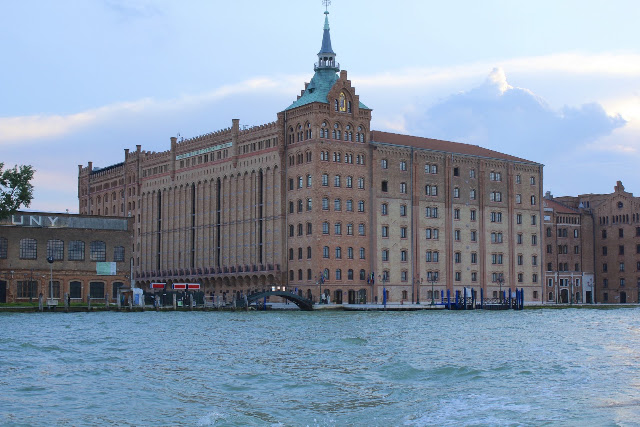
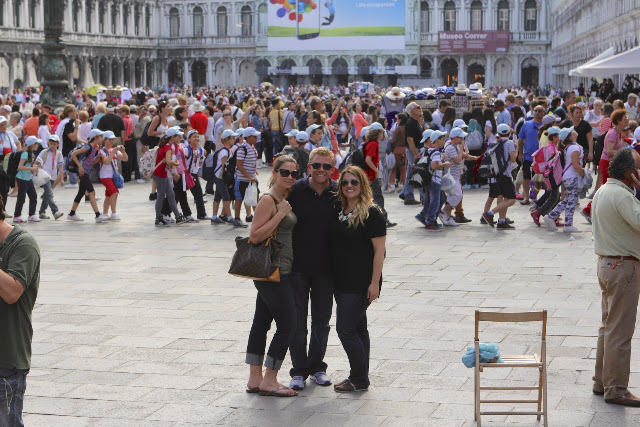
So now that you know the history, you can join us on our journey. We arrived early in the day via train (the easiest way into the city) and checked into our hotel. Our hotel, Molino Stucky is on the island of Giudecca, set in a beautifully renovated flower mill. After a quick lunch on the roof, we hoped on our hotel’s private ferry to the main island. We toured through the streets and canals, passed over bridges and stopped in shops. The girls bought scarves, glass and other souvenirs while Nathan and I took in all the scenery. We visited the infamous Piazza San Marco and fought for space among the crowds of tourists. We stopped for an afternoon cocktail on the water and eventually made our way back to the hotel to change for dinner.
Our hotel from the water
Hotel from the opposite side
Nathan and Danielle on one the pedestrian bridges
Looking good
Having fun touring
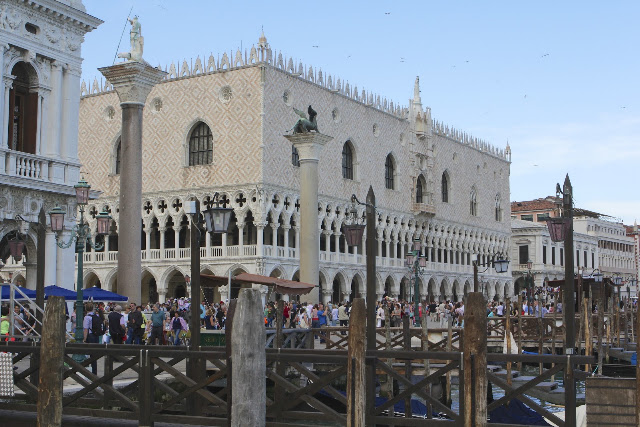
Piazza San Marco
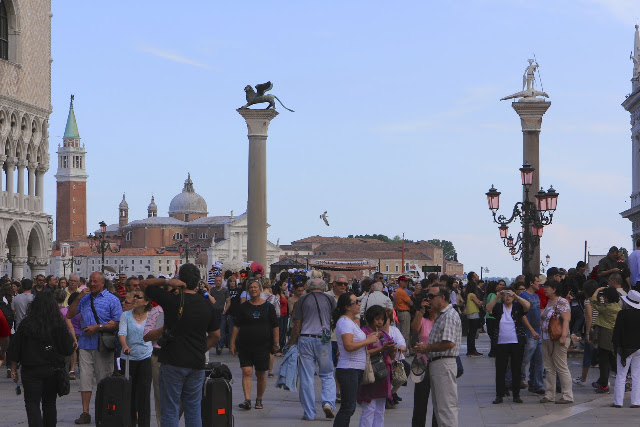
The lion is symbolic of the Veneto region
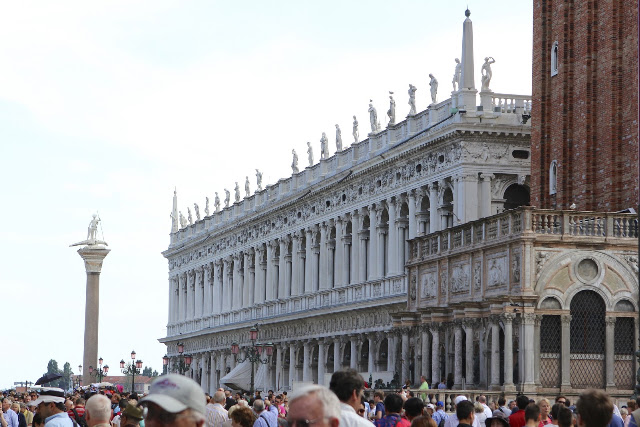
Incredible architecture – the Libreria (library)
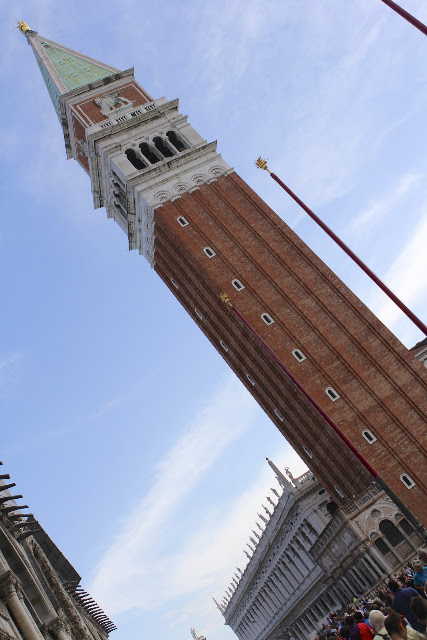
The Campanile – Bell Tower
My three favorite people in the crowd
Procuratie Nuove built by Vincenzo Scamozzi c.1580
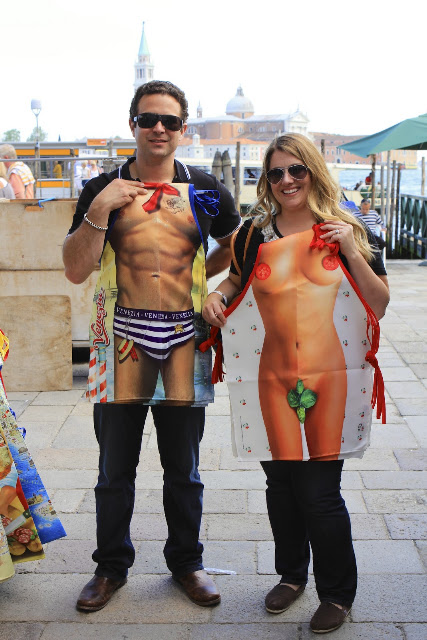
Those aren’t aprons – we just lifted our clothes
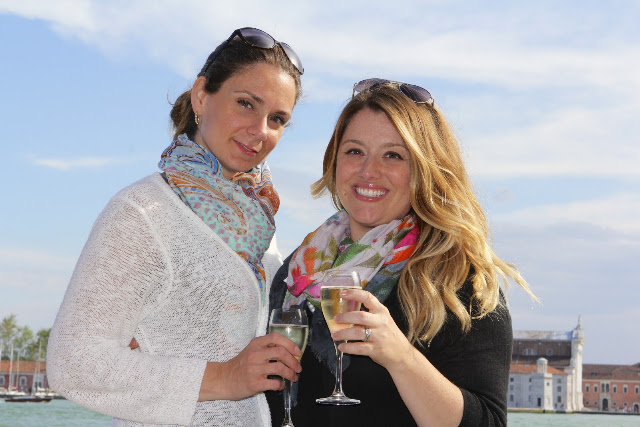
The girls enjoying their prosecco
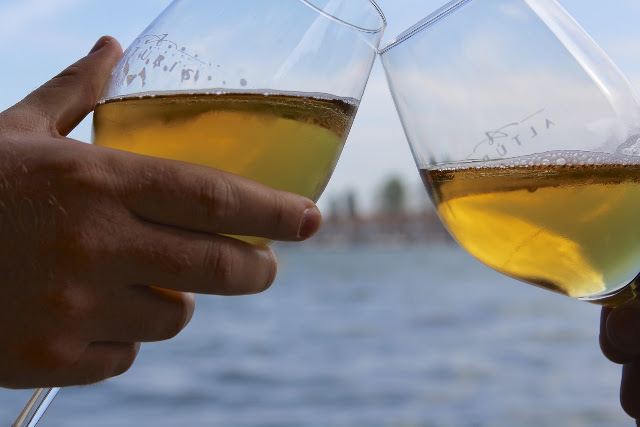
Looks like a romantic moment – really it’s just Nathan and I clinking our beers
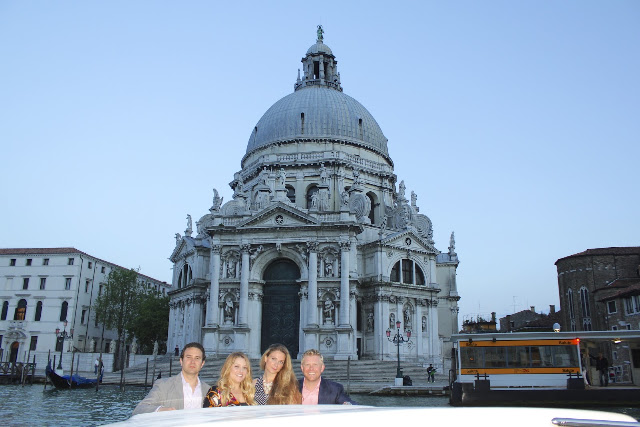
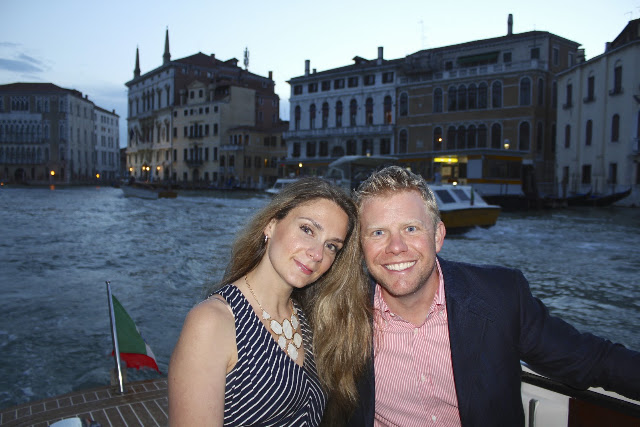
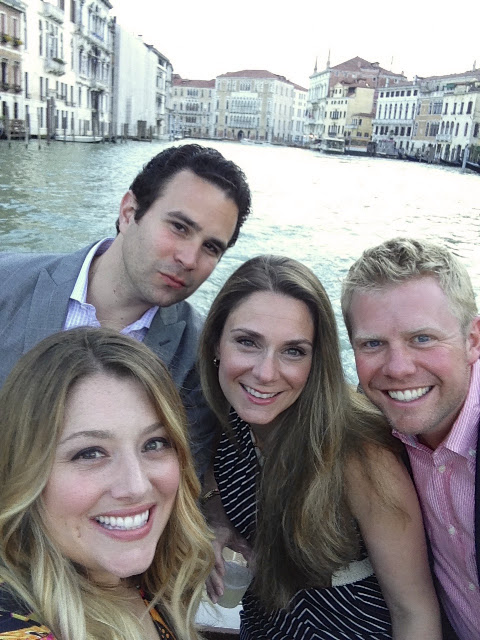
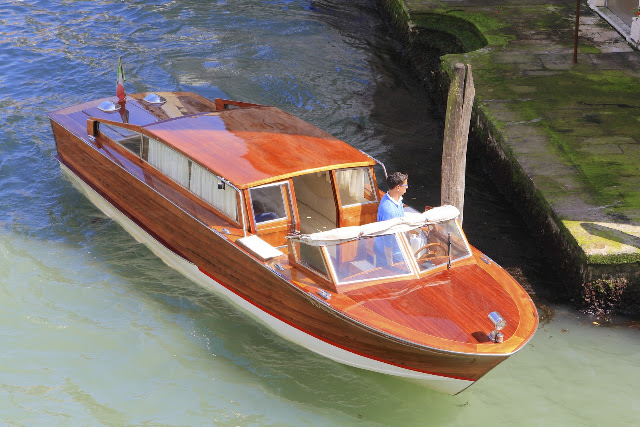
After freshening up, we met in the lobby and discovered that we were in for a real treat. Nathan and Danielle had reserved a private boat to tour us through Venice – a wonderful journey elevated by the setting sun . We stopped for some wine and cheese and sat back to enjoy the ride.
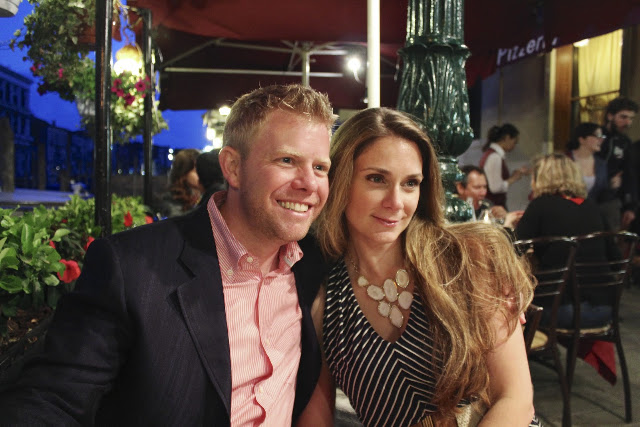
Now look a this couple!
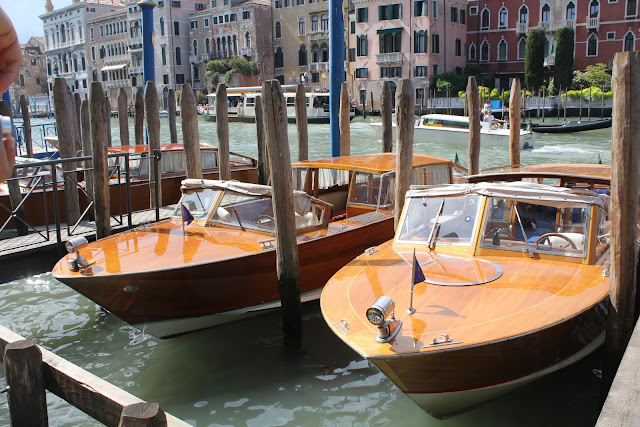
Some similar boats to the one we had
Traveling in style
View of Piazza San Marco from the boat
Along the tour
Stopping for a photo on the boat
Nate and D
Magical at night
The gondoliers were still out as the sun was setting
Danielle on the water
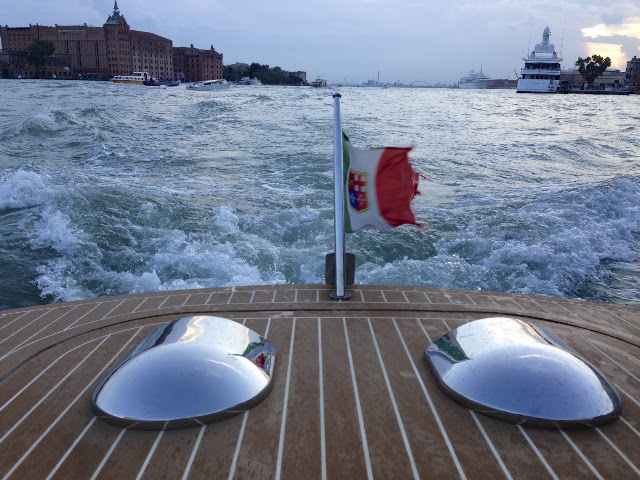
From the rear of the boat
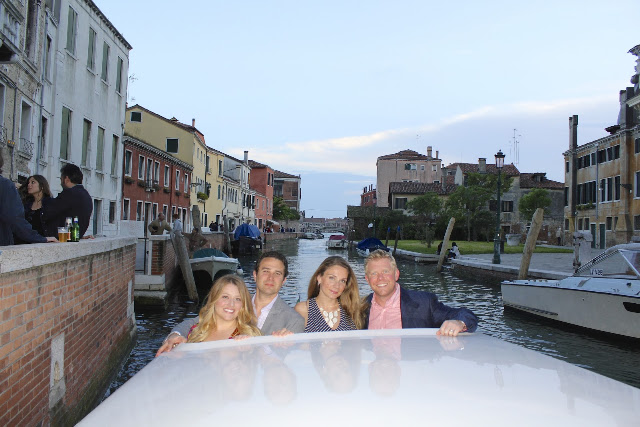
All of us on board
Similar to our boat
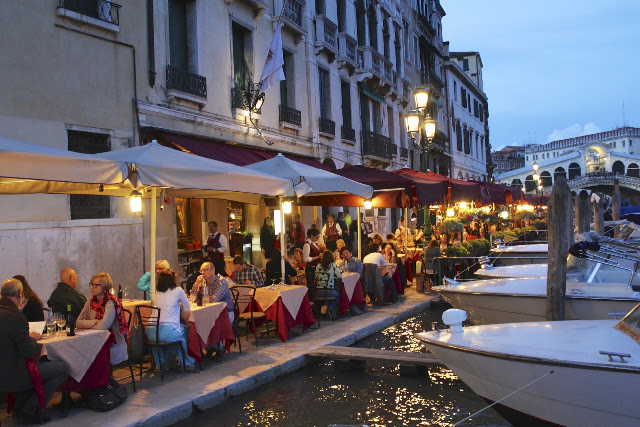
Eventually our driver dropped us at one of his local favorites for seafood. We settled into a table directly on the canal and enjoyed ordering a variety of food to taste and share. At one point, I felt something wet kissing my feet and realized the water in the grand canal had risen high enough to splash the patrons (me) sitting on the edge.
Our restaurant
What a wonderful setting
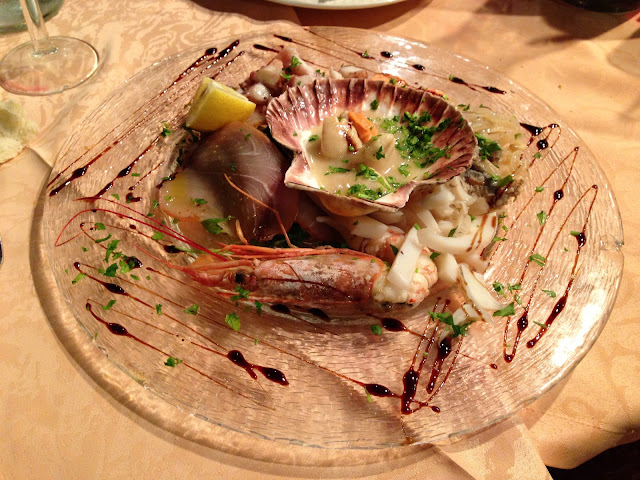
Starter – mixed seafood
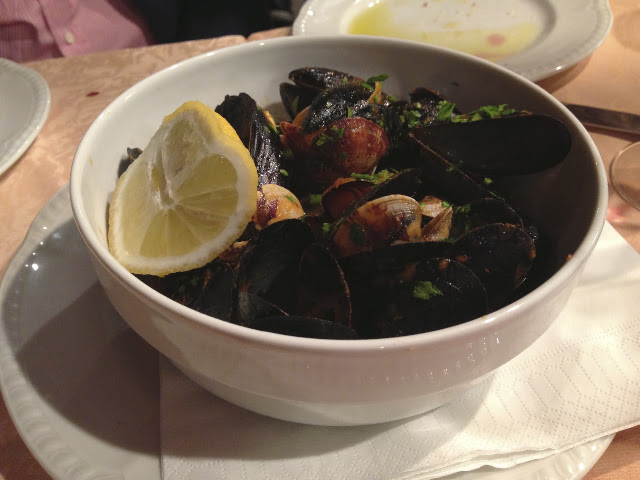
Mussels and clams
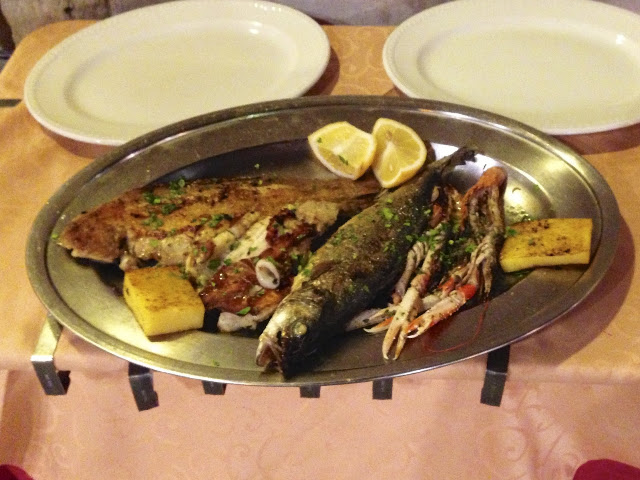
Nathan and I shared grigliata mista di pesce (mixed grilled seafood)
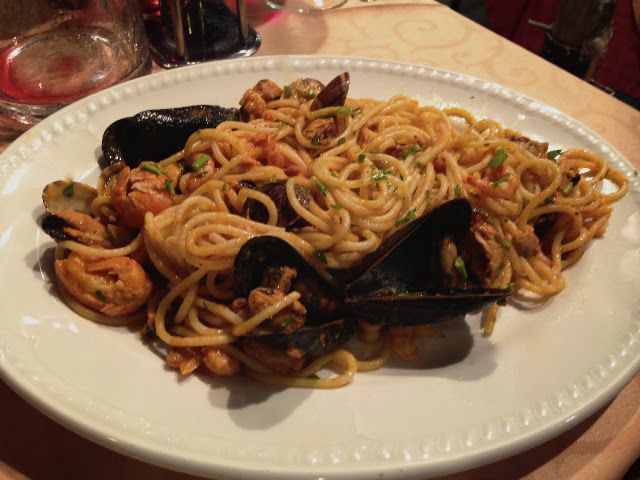
Jen got pasta with a variety of seafood
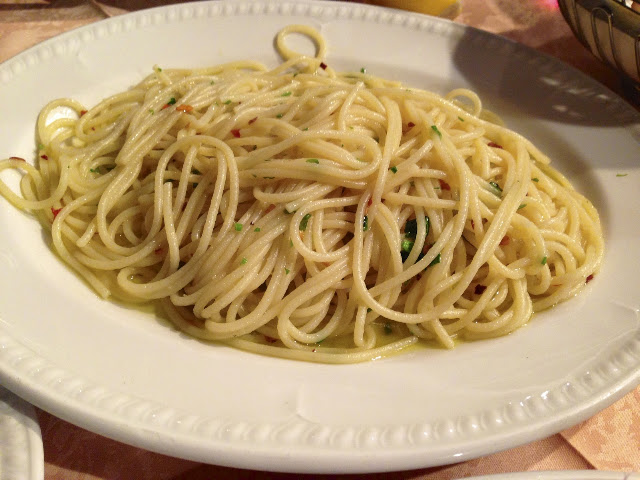
Pasta Aglio e Olio
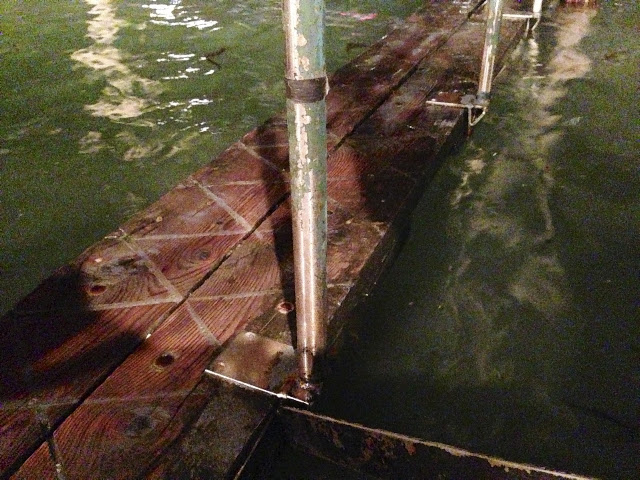
The water started rising above the pier
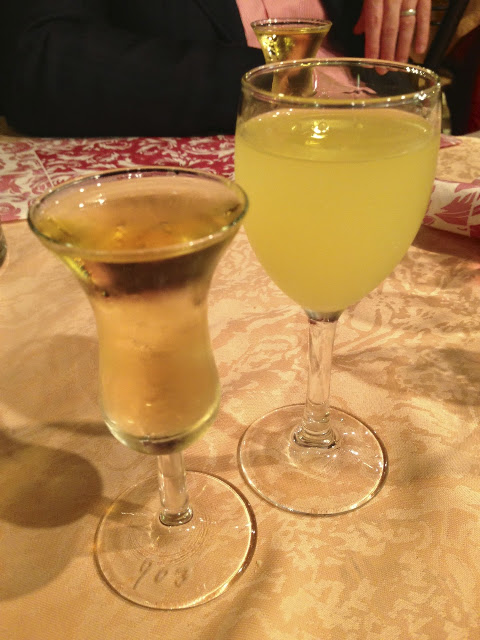
Our grappa and limoncello after dinner
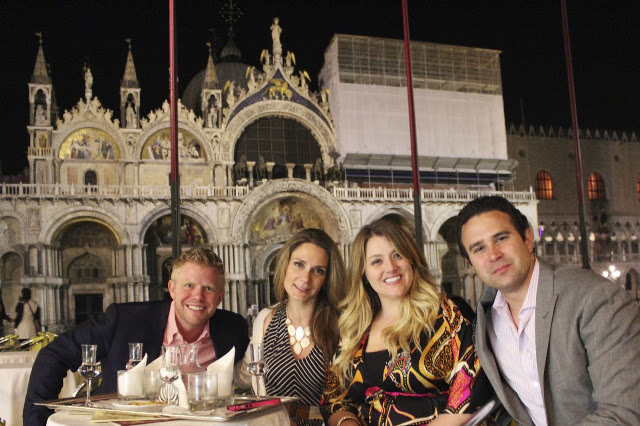
When dinner was over, we wound our way through the city at night to discover an entirely different Venice than the one we had seen all day. Long after the sun sets, the landscape of the city changes significantly. Without droves of tourists jockeying for the position to snap a photo (myself included) you are able to re-discover an entirely new place. Piazza San Marco becomes a magical amphitheater where dueling bands play wonderful music and the crowd shifts back and forth to capture the best view possible. We outsmarted the crowd and took up seats directly in front after ordering a nightcap. It was a great way to end the day before hopping on a boat back to our hotel.
In front of the Basilica
One of the “dueling bands”
Our trip to Venice had come to an end as had Nathan and Danielle’s visit with us. We spent one final day with them in Milano (Milan) and bid them buon viaggio (a good trip) back home. We were so thankful we got to do so many wonderful things with friends so special to us. After dropping them off, we rushed home and immediately started prepping for my sister’s visit… she would be arrived just a couple days later. Stay tuned for upcoming posts about their visit – more action packed fun.
Apparently I’m the only person in the world to forget that, “The Sound of Music” took place in Salzburg, Austria. I base this observation on the countless number of tour operators and tourists we observed visiting and posing at key movie locations. However, thanks to a quick iTunes movie download in the hotel, we were quickly singing our doe-ray-me’s along with the rest of the cheese balls.
Not only was this classic movie set and shot here, but a fairly famous musician was also born and raised in the city. Perhaps you’ve heard of him… Wolfgang Amadeus Mozart. Salzburg is an amazing city filled with a rich history and jaw-dropping beauty. We left northern Italy for Austria on a whim two days prior. We continued riding that whim and drove further into Austria to see Salzburg on the suggestion of family. Since our expectations of the city were nonexistent, they were easy to surpass – but I would think this city could have easily leapt the most lofty of them all.
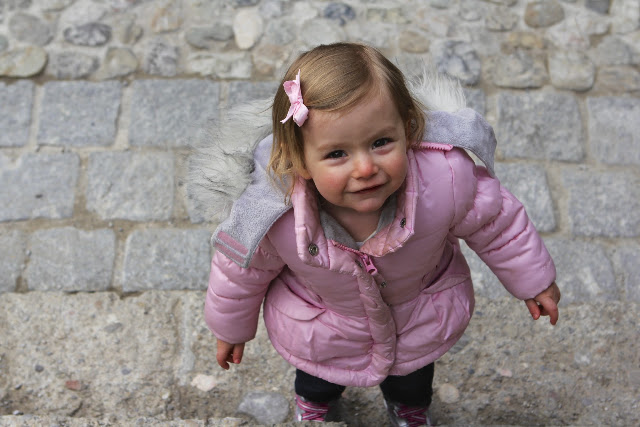
Julia taking in the sights
Since our first day in Salzburg was framed with an incredible visit to Hohenwerfen Castle (HERE), we didn’t arrive in the actual city until mid-afternoon. Having spent more than the anticipated amount of time at the castle, we had a lot of ground to make up. We walked down Linzer Gasse until we crossed over Staatsbrücke Brücke (State Bridge), one of the oldest in the city. The original bridge was built in 1090 and now the 10th incantation of this passage stands with a plaque commemorating the slave labour from Eastern Europe used to reconstruct it during WWII.
View from the Staatsbrücke Brücke
Landestheatre (Provincial Theatre)
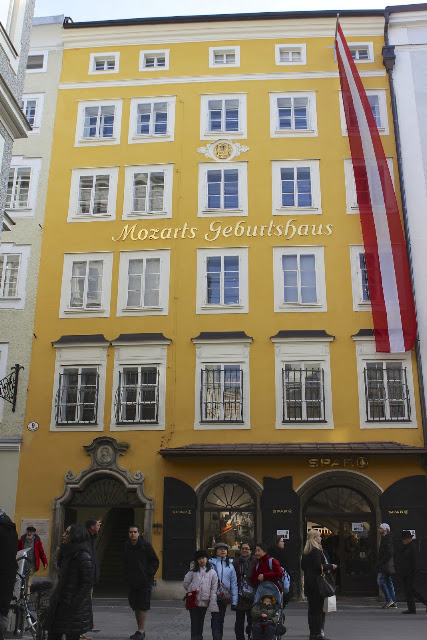
We spent quite a bit of time walking through the Altstadt (Old Town), taking in the marvel of the city. My carefully planned itinerary seemed to constantly evolve as we made turn after turn based on our curiosity, rather than our plan of attack. We strolled past the birthplace of Mozart, but declined to pay the €35 admission (for all of us) to see some old violins. Sorry, Wolfgang… I’m still a fan.
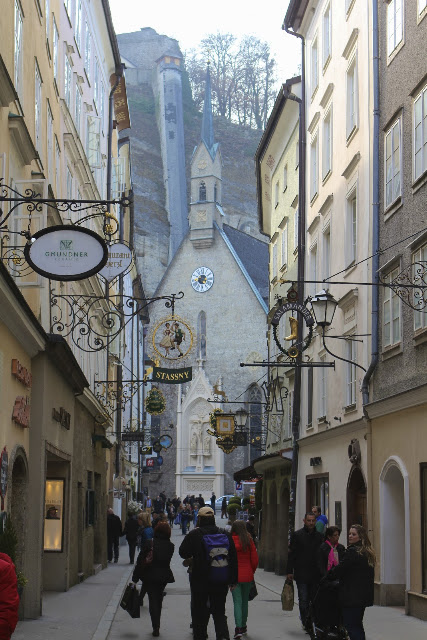
Street view – Google, I’m available for free-lance
St. Blaise’s Church at the end of the shops
Mozart’s first “crib”… literally, he was born here
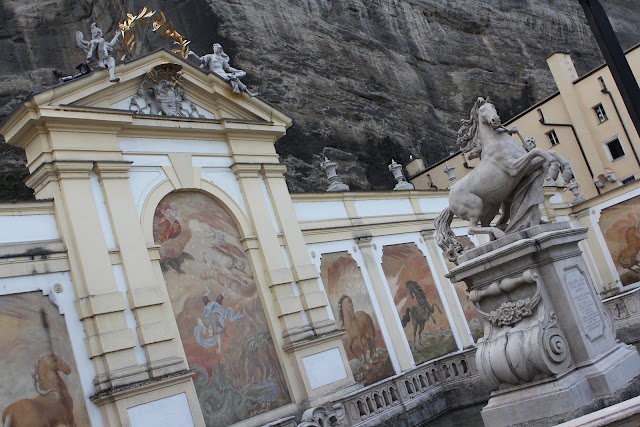
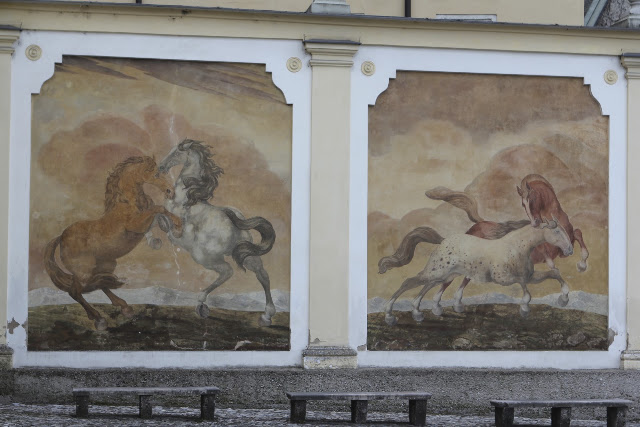
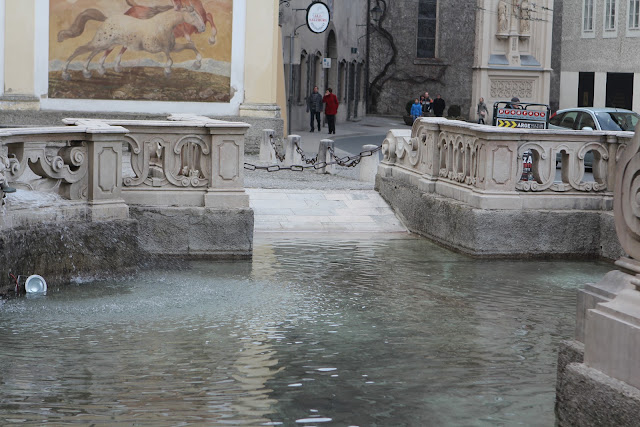
We next discovered the Pferdeschwemme (Horse Pond) – one of two remaining in the city where horses would go to get cleaned. In the middle stands a statue, Der Rossebändiger (horse whisperer), which is a bit of an inside joke unique to the city. Not sure I got the joke, but we did enjoy the spectacle.
The Horse Pond with the “funny” statue in the middle
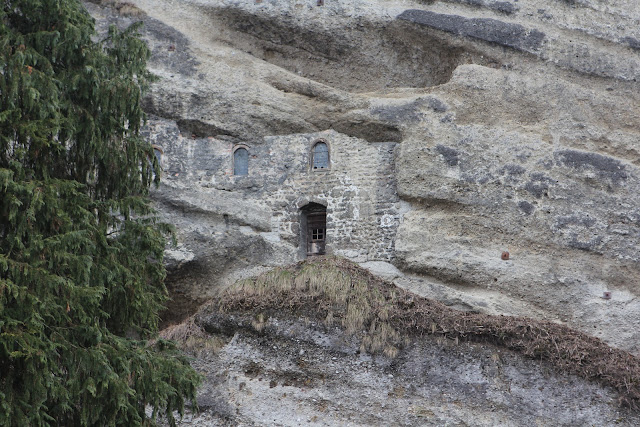
The pond is carved directly into the face of a mountain
A better view of the horse’s entrance
At this point in our voyage we were at a critical crossroads. We could head northwest to the Augustinerkloster und Bräu (Monastery and Beer… a beer garden) for a brew and dinner. This would consume the remainder of our first of only two days. Or we could head southeast and continue further into the city. I wanted it all, but knew we had to chose. So we made the right choice – stay another night and do it all! We postponed the Beer Garden for the next day.
We were happy with our choice to stay another day
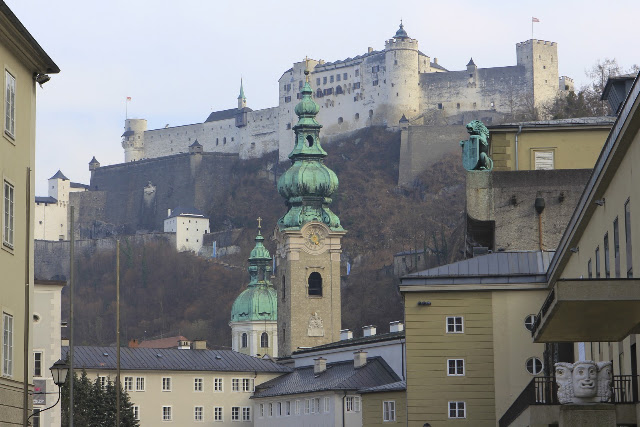
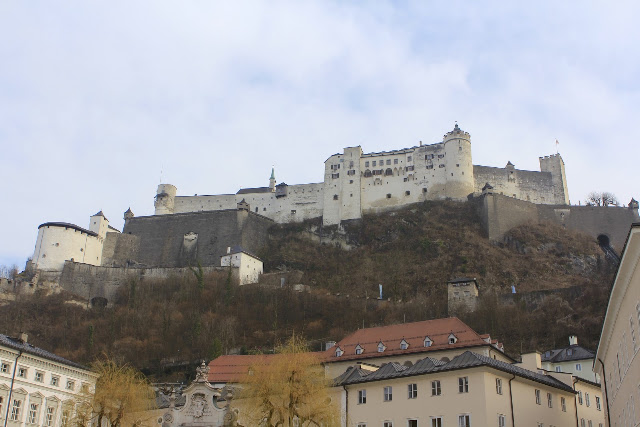
We walked along Hofstallgasee, passing by some incredible sights – and always with an eye upward at Festung Hohensalsburg (the Castle that sits overlooking the city).
Festung Hohensalsburg above the city
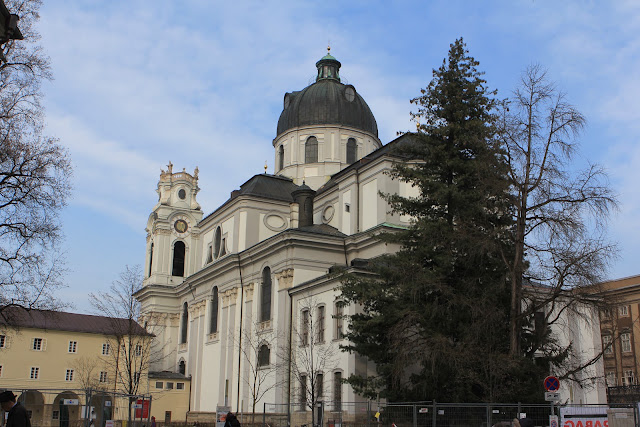
Kollegienkirche (Collegiate Church)
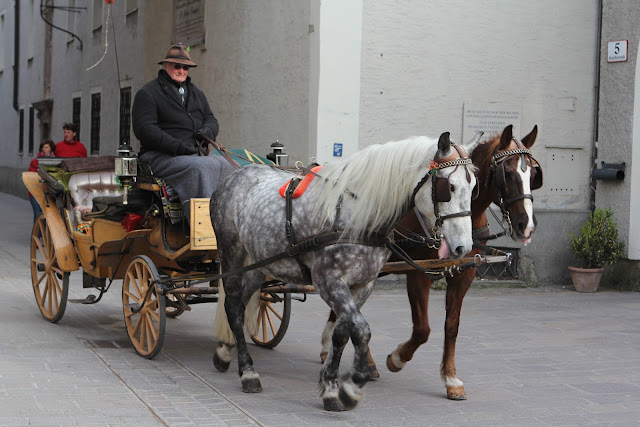
A nice horse and buggy through the city would be fun
And the castle again
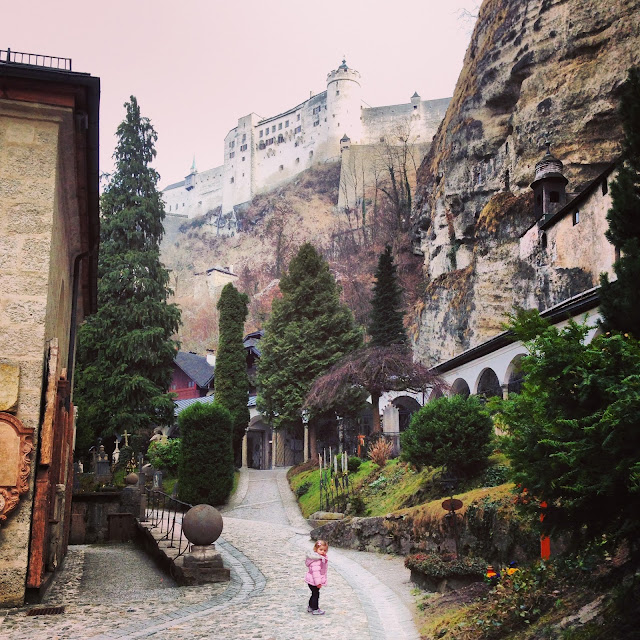
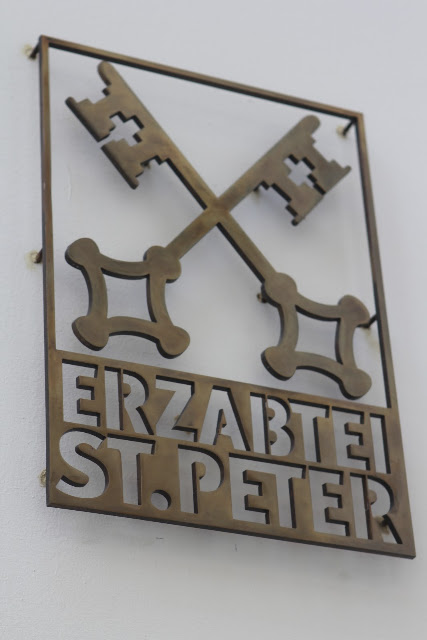
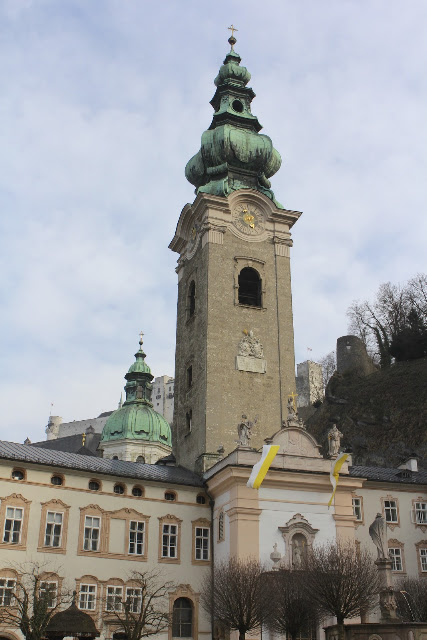
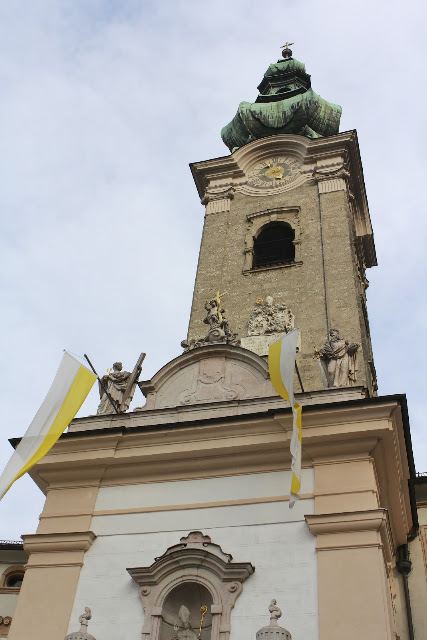
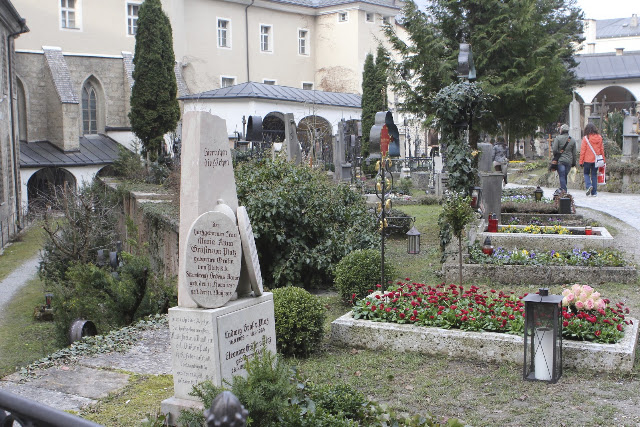
This path led us directly to St. Peter’s Abbey, one of the oldest monasteries in the German area. The abbey was formed in 696 by Saint Rupert. During medieval times, the monastery was known for its educational prowess. Adjacent to the monestary were catacombs that were carved into the face of the mountain, just next to the cemetery. St. Peter’s Cemetery was created at the time of Late Antiquity and therefore, older than the Abbey itself. The dead have been buried here for 1,300 years.
Welcome!
Inside the courtyard
The Abbey at Saint Peter’s
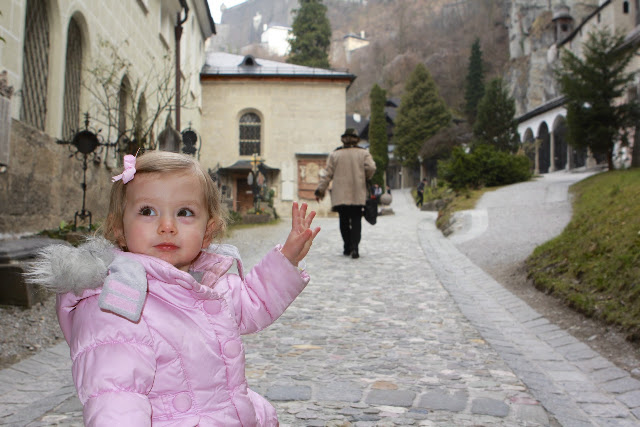
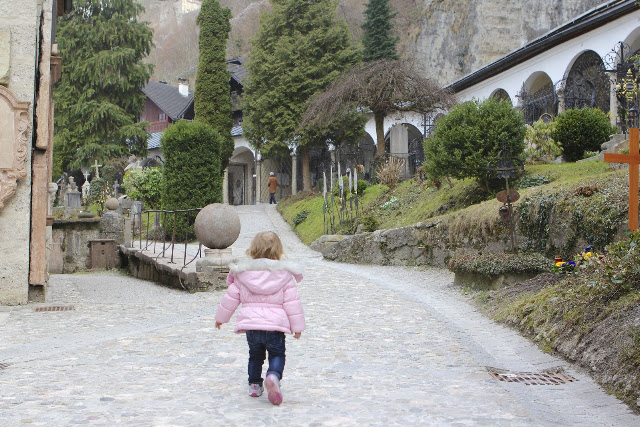
“Hey guys, let’s go!”
“I’m not waiting for you suckers, I’m off!”
“Are you coming?!”
The cemetery
Always time to stop…
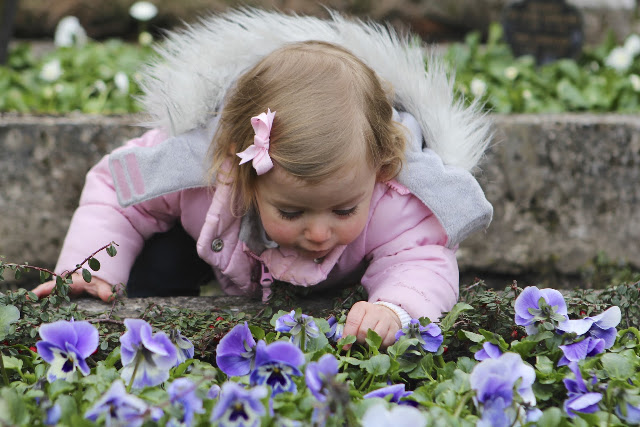
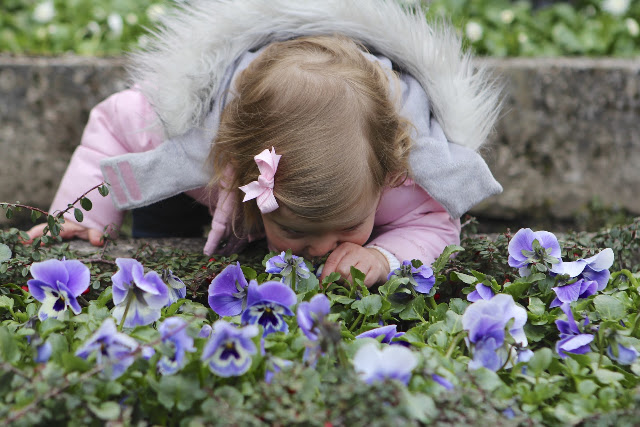
…and smell the roses
Catacomb Chapel built directly into the face of the mountain
Private burial sites
“I love this place!”
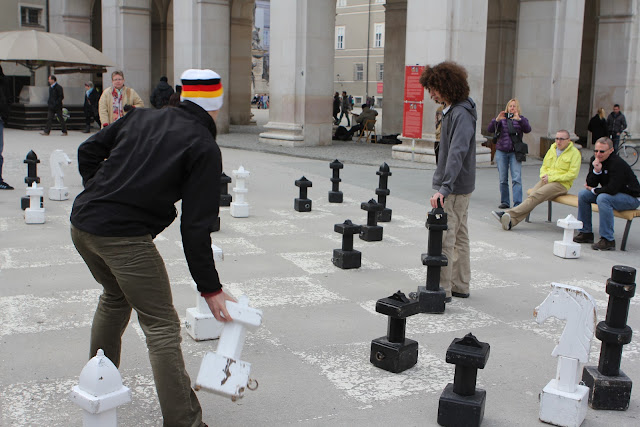
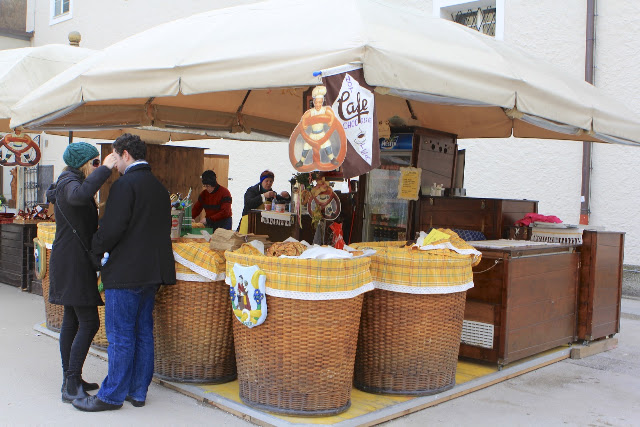
After leaving the awe-inspiring Abbey, we stopped to watch a life-sized chess match in action in the Domplatz (plaza outside the Dom). One of the other spectators was nibbling on a giant pretzel and we had to get in on that action!
Check… and… mate!
Num-num-num!
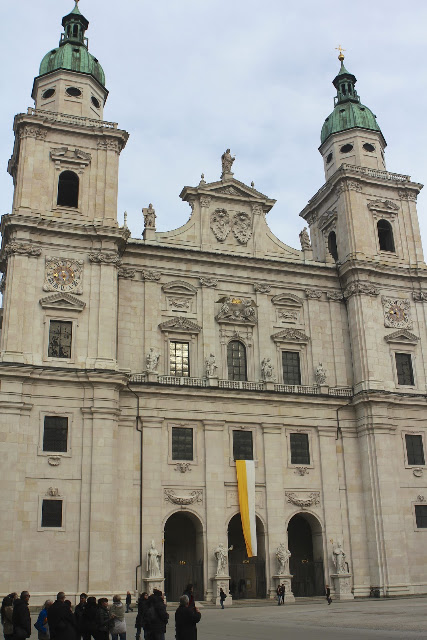
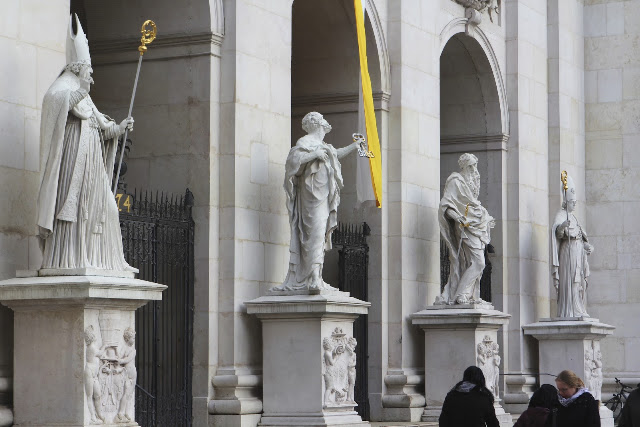
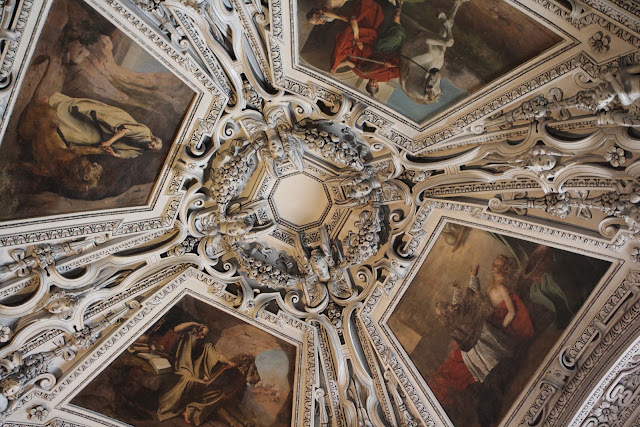
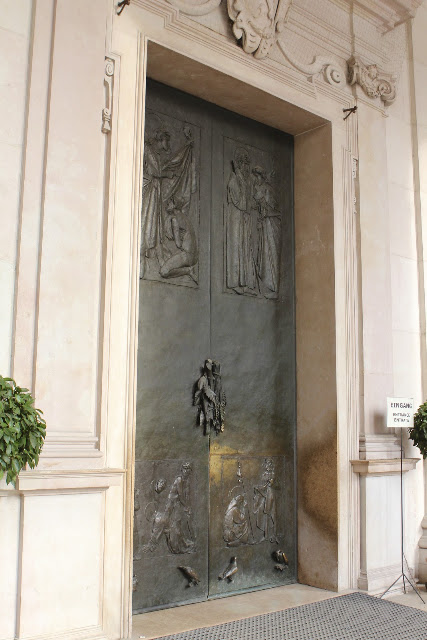
Next up was the Dom of Salzburg, or Salzburg Cathedral. Today’s baroque style cathedral was finished in 1628 and replaces the original cathedral built on the site in 774. I’m sorry to admit, but most European cathedrals, while beautiful – do not particularly hold my attention. However, the Dom was different. My father-in law (Dominic) may say it’s because of the name – but I think perhaps the artwork and painting intrigued me a bit more. We barely got out before closing, and somehow I became the valet as 30 people exited through the surprisingly heavy door I was holding. Good thing I had eaten that pretzel for strength!
The Salzburg Dom
Allegoric figures representing an Angel, Devil, Wisdom and the Church
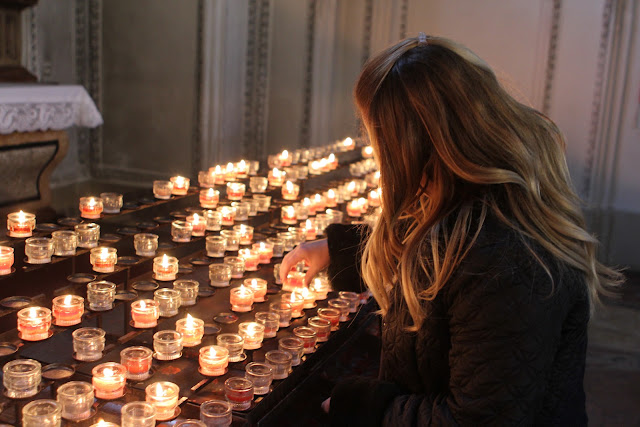
Jen lights a candle
Inside one of the domes
I promise – this door is as heavy as it looks
The day was winding down, and Julia needed to eat. OK… I needed to eat. We walked back toward the hotel and searched for a restaurant the concierge recommended, Das Stadtwirtshaus. Our German hadn’t improved since we first arrived in Austria and we couldn’t find the place. Instead, we found Altstadtheuriger-Bruderhof – a modern place that blended classic German cuisine with a contemporary style. The result was delightful. And Julia couldn’t have had any more fun!
“We’re eating weinerschnitzel?! Hahaha!”
“Daddy, you’re so funny…you said schnitzel!”
“BWHAHAHAHAHA!”
“Oh, did you want to sit here?!”
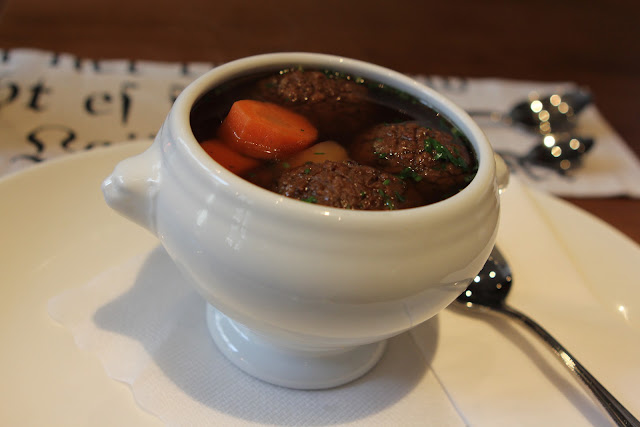
Clear beef soup with root vegetable and liver dumpling
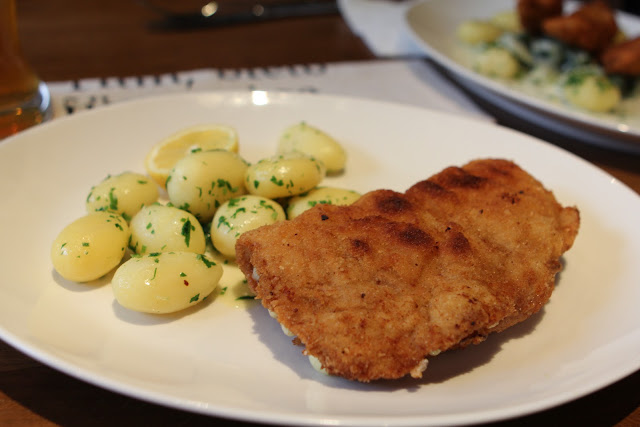
Wienerschnitzel served with parsley potatoes
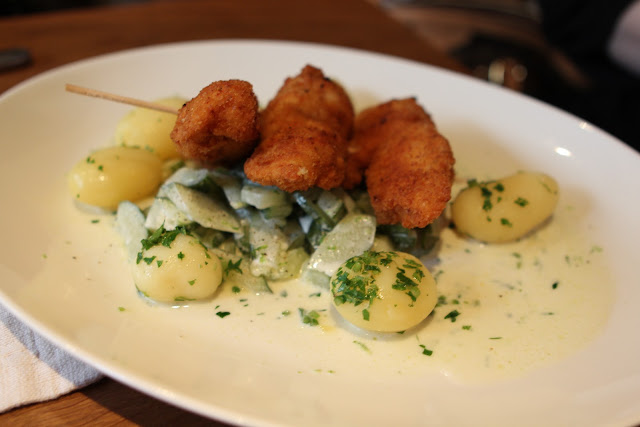
Baked breast of corn chicken
served with a creamy and lime flavored cucumbers and parsley potatoes
At the end of the day, we still hadn’t visited the castle overlooking the city, had a beer at the beer garden or seen any of the classic Sound of Music sights. Glad we had planned to stay an extra day – we would be busy waking up the hills with the sound of our music tomorrow!
I did it! I saw my first castle. It was wonderful – so tender and caring. And it lasted all morning! A first I’ll never forget!
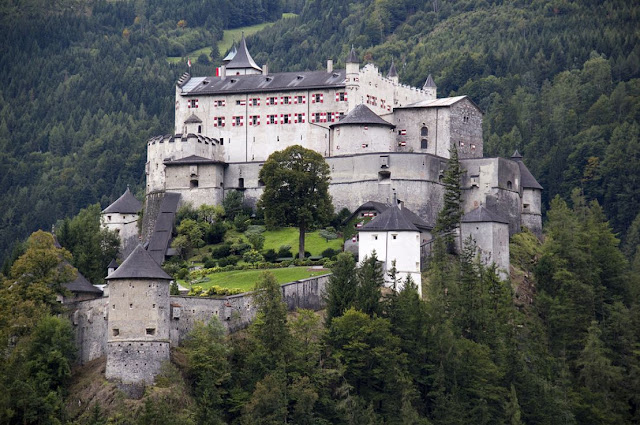
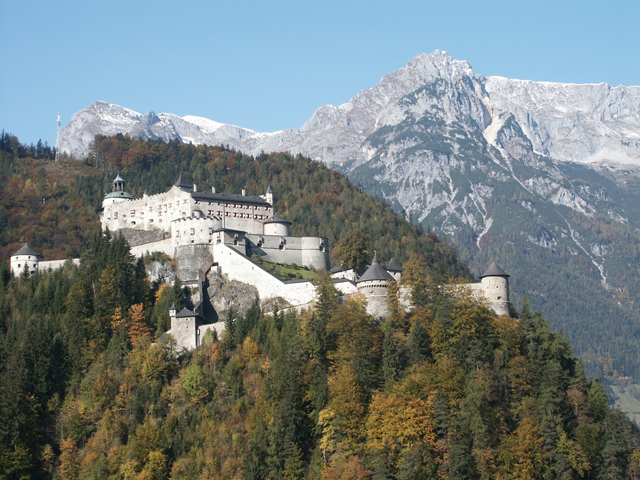
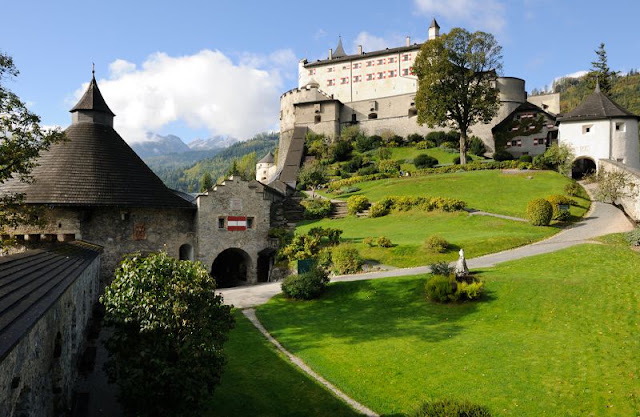
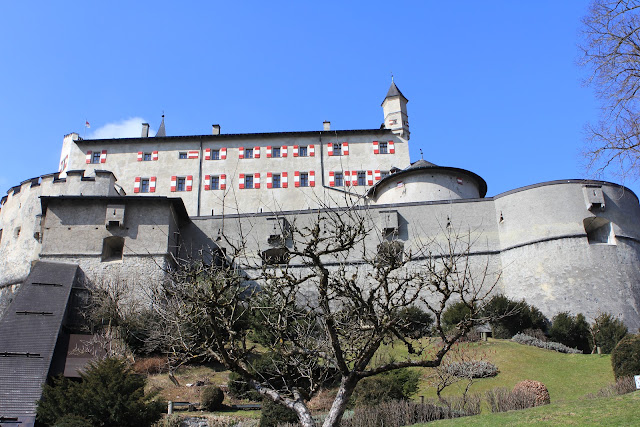
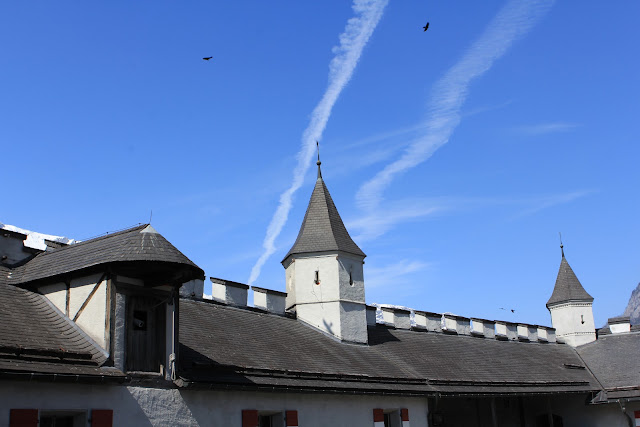
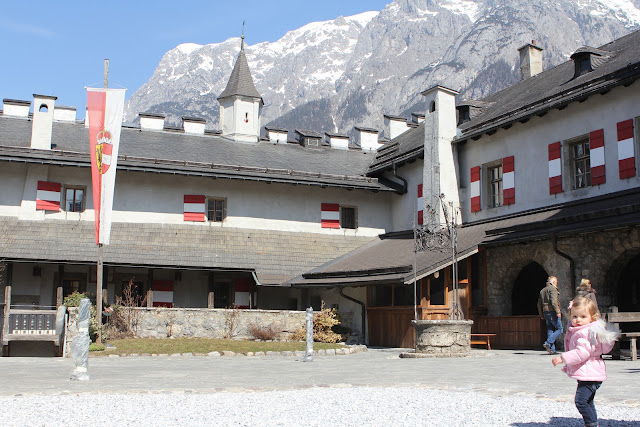
Hohenwerfen Fortress
When we drove into Austria, the hardest part after visiting Innsbruck (read about it HERE) was choosing which castle to visit. We had already planned on visiting Salzburg next, so I carefully chose among the four major castles near the city. I settled on Hohenwerfen Fortress about 40 km southeast of Salzburg. The plan was simple – leave Innsbruck early and drive straight to the castle. We would spend an hour or so at Hohenwerfen Fortress and then head to our hotel in Salzburg. My plan was solid – but I underestimated how much fun we’d have at the castle, and we ended up staying nearly four hours.
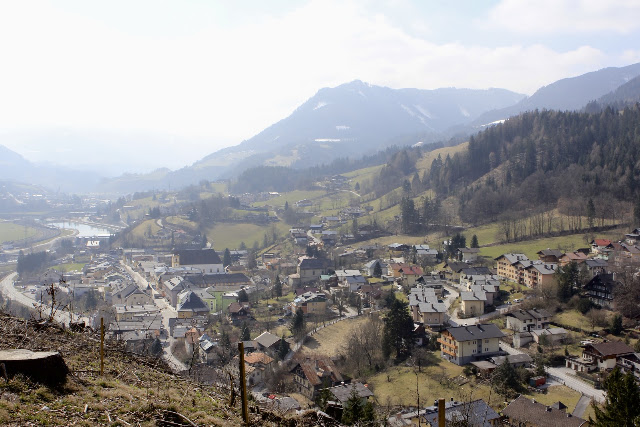
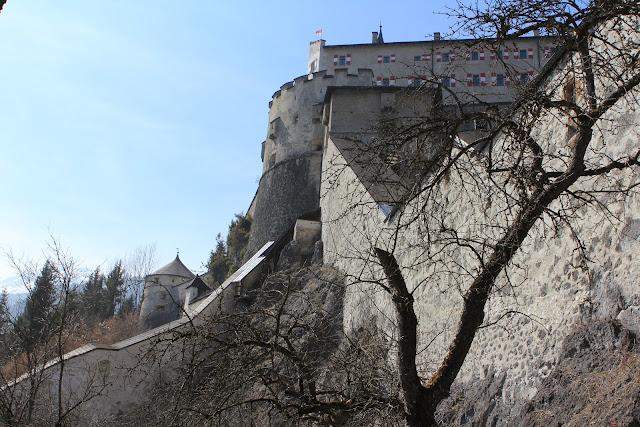
The original fortification was started nearly 1,000 years ago and has withstood an interesting history full of war, civil unrest, fire and constant expansion and re-construction. The castle sits high atop a 155m rock in the town of Werfen, Austria.
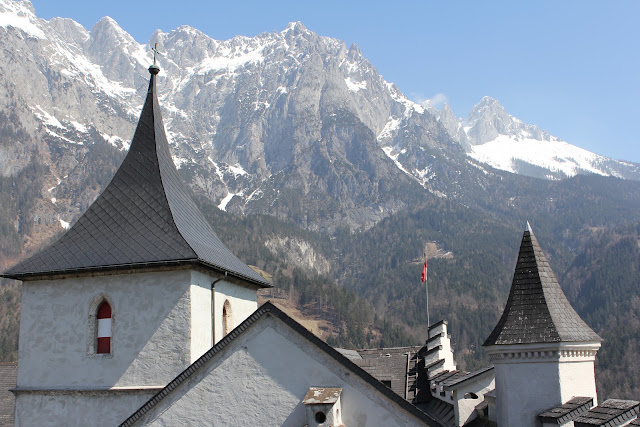
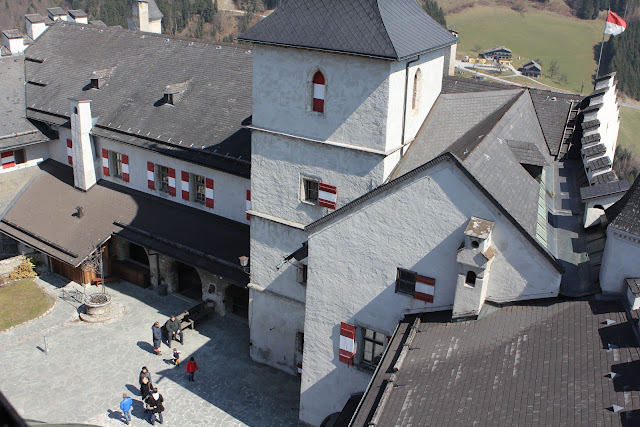
The castle commands a view of the entire valley *stock photo
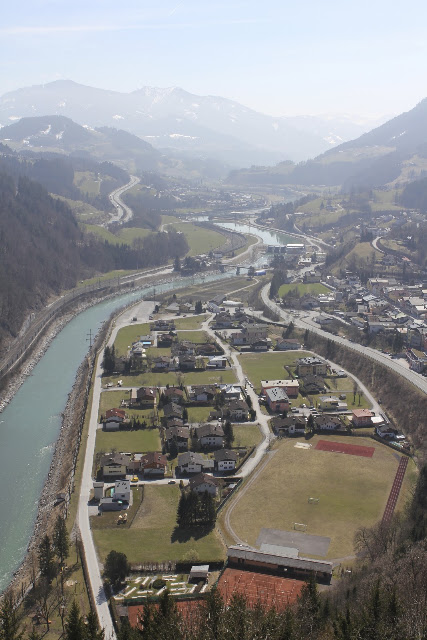
A watch guard’s view from one of the towers
The original fortress was commissioned in 1075 by Archbishop Gebhard of Salzburg (along with it’s “sister” castle Fortress Hohensalzburg, which we saw two days later). It was built as a stronghold during the Investiture Controversy, a beef between Kings and Popes that somehow lasted nearly 50 years. What were they were fighting over, you ask? The right to appoint church officials, such as Bishops and Abbots. I didn’t understand why this was such an important issue for the monarchies, but after reading a bit on the battle – I was not surprised to learn it boiled down to one of the three major “fighting follies” (as defined by me… term is patent pending). It always boils down to money (to include lands), ego (to include power and legacy) or a woman (self explanatory). Back then, the title of Bishop came with a substantial amount of wealth and land. And since a title was simply a commodity that could be appointed by a king… the monarchy could sell the title and make a tidy little profit. So, in this case – it was about money (although, I wouldn’t be surprised if there was a woman in there somewhere).
In one corner, we had King Henry IV – a German King since the age of 6. And in the other corner, we had Pope Gregory VII (I’m pulling for him… his name makes him seem trustworthy. And probably good looking). The Pope essentially claimed that since the Roman church was founded by none other than God, it’s power to appoint Bishops lay solely with the Pope himself. King Henry (now a man) disagreed and vocalized it in a public letter to the Pope, essentially starting a 50 year battle-royale, beginning in 1075. And so the Archbishop of Salzburg (an ally of my man, Gregory) built three major castles as protection against the German king. The ending you ask? Well… everyone should know, you don’t mess with a Gregory! The Papacy gained the right of appointment.
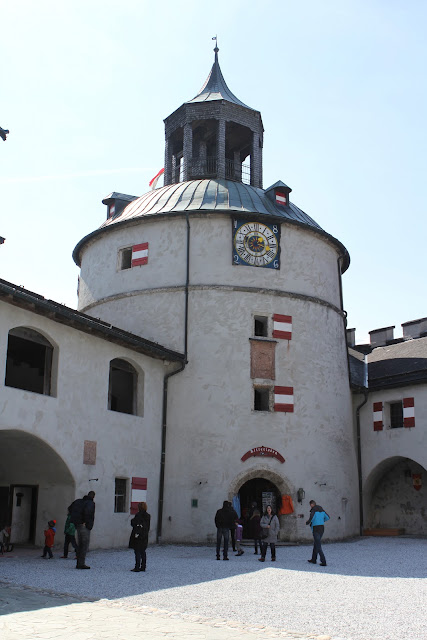
Lower courtyard *stock photo
Even though this castle had a long and bloody past, our visit was rather tranquil and quite pleasant. At the base of the great rock (upon which the castle is perched) we had the option of riding a funicular (cable car) or walking up a path. Since it was early in the day and the weather was perfect, we opted to walk. Julia also enjoyed stretching her legs after being in the car for two hours.
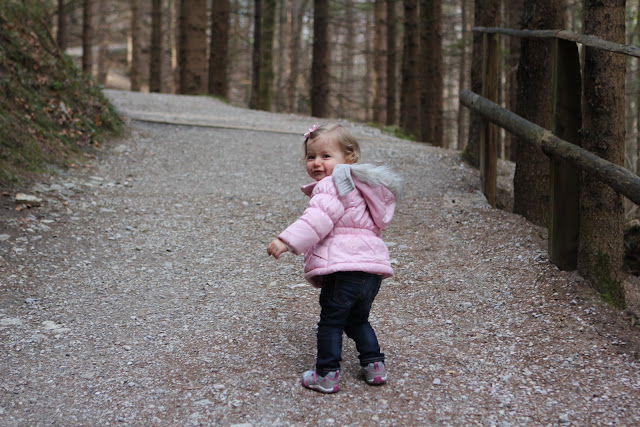
“Look mom, I’m a hiker!”
Julia was definitely happier walking…
…and exploring!
View of the valley from the path
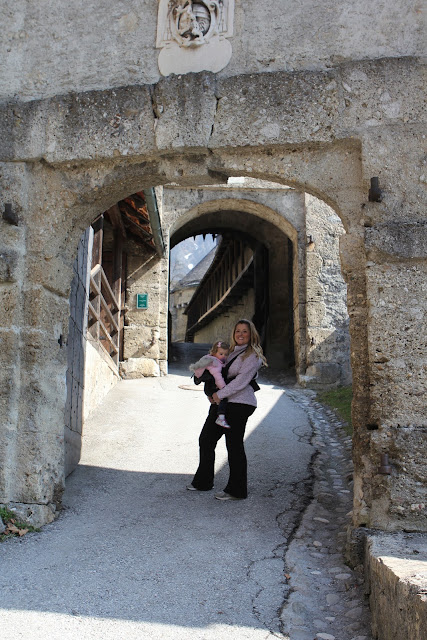
Entering through the gates
The castle’s main fortification walls
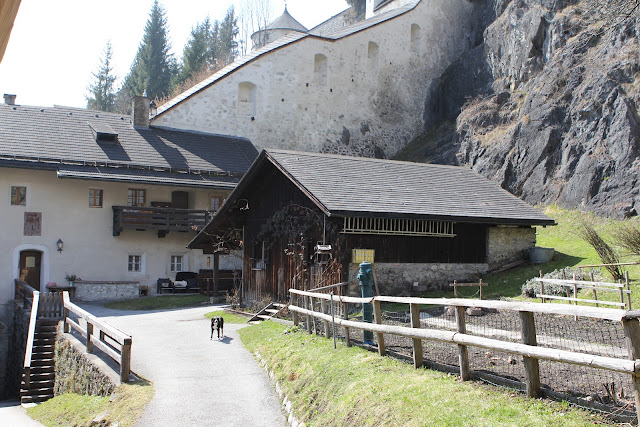
There was a house inside the gates that was inhabited – groundskeeper?
Admission to the castle (€11 per person) included quite a bit. A walking tour with audio guide, an impressive falconry display of flight, an illuminating exhibition on the construction of the castle, an interactive history of weaponry and a museum on the history of falconry. You can see why we were there for four hours!
Julia particularly enjoyed the audio guide
The falconry show was about to begin
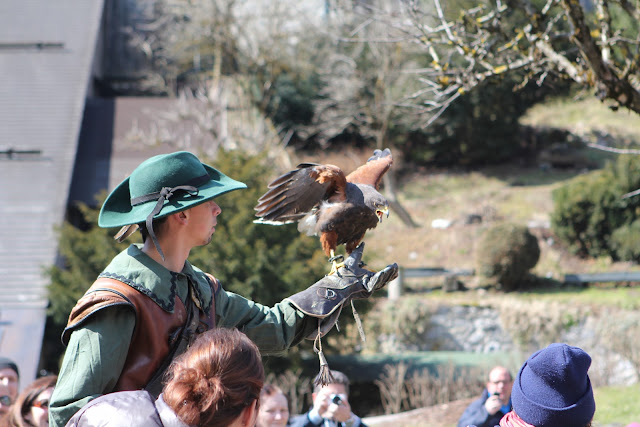
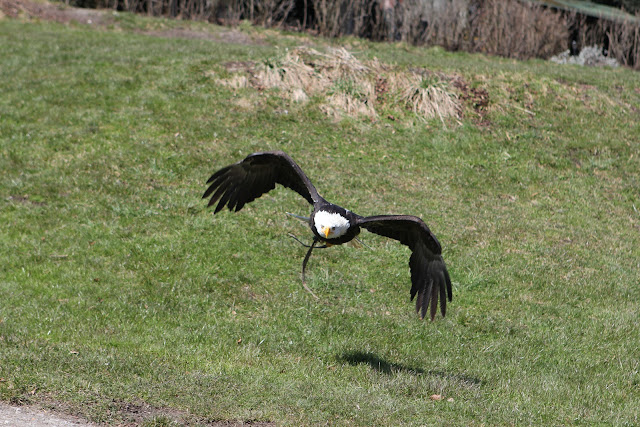
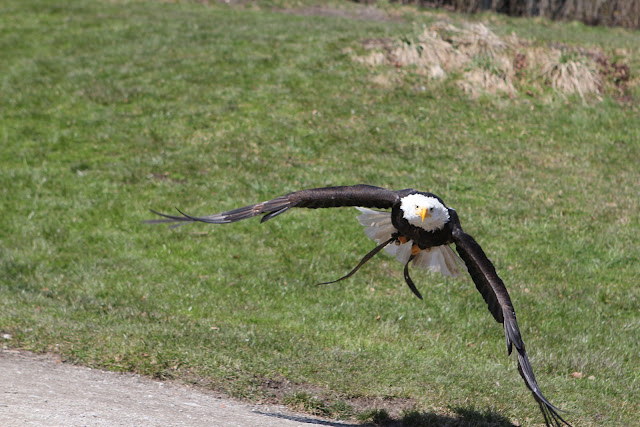
Our timing through the castle gates was perfect. Just minutes after we bought our tickets, the flight show commenced, featuring many different types of falcons and other birds of prey. It was purely breathtaking.
The Falconer explains the presentation
She shows us the first Falcon
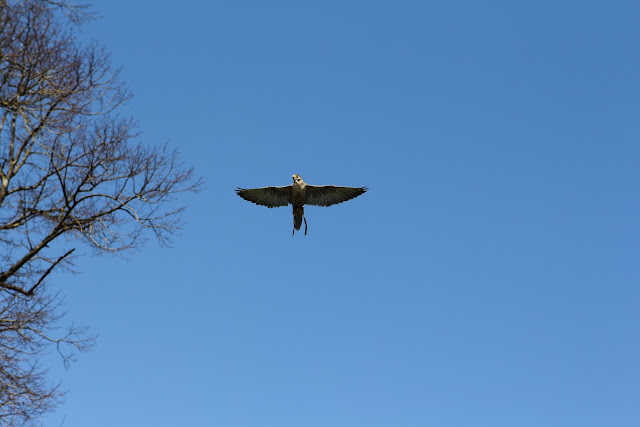
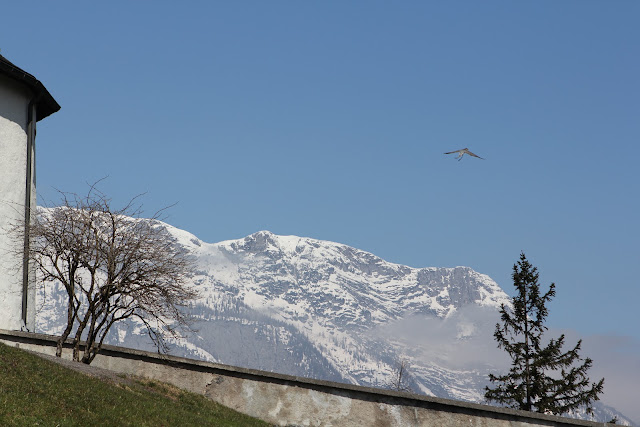
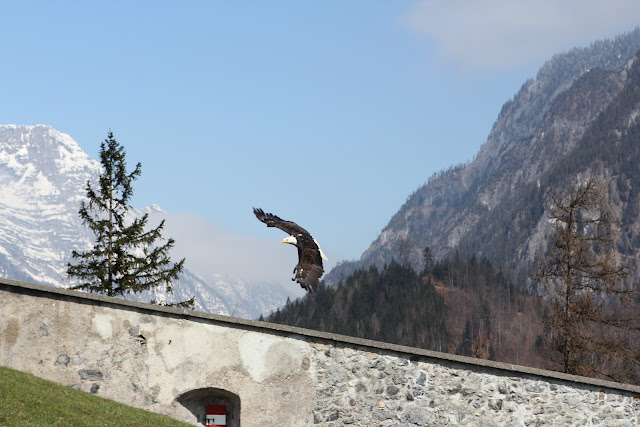
One of the falcons in flight
Naturally, the birds loved taking to the air
The Falcons got right in the crowd
My favorite part was the majestical eagle. The falconer had some fun with the crowds. He would prompt these great birds to fly just a few feet over our heads. It was a great way to start the castle tour.
The eagle – our favorite
He’s headed right for us
RIGHT FOR US!!!
Next, we moved on to the guided castle tour, which was in German. Fortunately, we got electronic audio guides that we used. The tour guide herself was trilingual so she was able to field all our questions. It took some time to navigate through the chapel, prisons, torture chambers, royal quarters, bell tower and more.
We’re about to go in!
Love the turrets
View of the monarchies chambers and courtyard
Birds in flight – another demonstration had commenced
The castle’s chapel, reconstructed in the 16th century
Bob here, simulates an archer at his post
This stone weighed 1/2 ton – no problem for me!
A device in the torture chamber
Our group crammed into the torture chamber
A scene along the tour
The loo – it opened straight down the side of the outer wall
400 year old wood floors in the bell tower
Jen and Julia climbing to the top of the bell tower
The bell would sound to wake everyone up
Julia tried to ring it
We spent some additional time walking around the various parts of the castle, including the main courtyard, and museums of weaponry and falconry. We also grabbed a light lunch at the restaurant in the original dining hall of the castle.
Julia in the courtyard
Playing on one of the unicorns (FYI – I nailed 4/5 rings from 12′ out)
Bell tower (reconstructed in 1826 after a fire)
Julia in the dining hall before her lunch
I was more than happy that my first real castle didn’t disappoint! Next, we headed off to Salzburg… a lot more on that wonderful trip to come!
Strange… not only do they not say, “g’day mate” in Austria – they speak German! Oh well, what’re you gonna do?!
Innsbruck, Austria
After we spent four wonderful days in the Dolomiti mountains (which you can read about HERE and HERE), we planned an impromptu trip to Austria. The Dolomites span across the northern end of the Italy, just south of Austria. A quick google search confirmed that we could arrive in Innsbruck in under three hours and the opportunity was too good to pass up. Once we explained our plan to visit Innsbruck to Claudia’s cousin, Angelo – he suggested we also stop by Salzburg. Well, what’s another couple hours drive and another day or two? After all, we didn’t think we’d be back in Austria anytime soon.
I spent our last night in Canale D’ Agordo (Italy) booking an Innsbruck hotel, researching tourist attractions and planning our itinerary. I was up early, with breakfast in my belly and our luggage in the car by 8:30am. We got on the road at 11:30am.
The GPS took us on small streets winding through the mountains, as opposed to the faster Autostrada – and that was perfectly fine with us. The drive into Austria was probably the most pleasurable drive I’ve ever undertaken. While I loved chauffeuring my wife and baby, I must admit that I did envision instead riding my motorcycle; and sadly missed my poor Harley, sitting all by it’s lonesome in Maryland.
View from the road departing the Dolomites
A two-lane tunnel shooting through the mountain
Jen and I were awe-struck by the mountainous scenery; but also impressed by one noticeable phenomenon. Once we crossed over the border into Austria, there seemed to be a castle or fortress at every turn. I was nearly giddy – I’ve been on a caste-hunt since I moved to Italy. And now I was as excited as a boy on prom night, knowing my first castle was just around the corner.
We were greeted by a castle almost immediately upon entering Austria
Older fortresses lined the newer road
We arrived in Innsbruck around mid-day and checked into our hotel. We set out to walk and enjoy some of the sights the city had to offer. Our hotel was centrally located (thank you, booking.com), so we wound slowly through the old city toward the funicular (cable car up the mountain). Innsbruck has astonishing mountains surrounding the entire city, and we intended on elevating ourselves high enough to command a view of the entire city.
The Old City in Innsbruck
Great architecture
A pretty church peeking out
Along the way, we saw signs for the city zoo – an attraction I had read was enjoyable for families. Since it was on the way, we decided to let Julia have some fun of her own. What we didn’t realize was the trek was going to be quite challenging by foot.
Talk about your uphill climb!
We were tempted to stop here, but we pushed on
We continued to climb for over an hour on steep vertical streets until we finally arrived at the zoo. We eagerly entered, excited to take a break from the climb up the mountain. Oooohhh… so sorry! Since the zoo was literally built into the side of a mountain – the zoo itself wound upward still. I guess that explains why the mountain goats had one of the most impressive exhibits (and one of my favorites).
Alpenzoo – we made it!
Majestic wolf – he had just finished dancing with Kevin Costner
Large brown bear who got within feet of us
Julia wanted to play with a bear of her own
There was a petting zoo for Julia, who always loves getting a chance to pet the cute farm animals.
“Stop watching moooo eat!!!”
Adorable lil guys!
“Uhh, mom – these guys are a little scary”
Stopping for a quick drink
“Momma, guarda (look)!”
As we wound our way through the zoo’s path, we spotted various bird sanctuaries just off to the side. Everyone had the option to enter and get face to face with various birds (without any glass or cages). I opted to go in each one, but Jen has a small fear of birds so she didn’t go in any of these exhibits. However, strangely enough – the path eventually led us directly into one of these sanctuaries. There was no going around it, so Jen would have to confront her fear. Well, how bad could it be?
As we were walking through (a distance of maybe 20 yards from beginning to end) we first noticed the bird’s lunch – recently digested and lying about four feet from where we were walking. It did not help Jen discover a newfound confidence in these winged mammals.
Lunch?! Ummmm, are we next?!
Next, we came face to face with the great bird itself, taking a drink after it’s lunch.
“Oh, he doesn’t look so bad”
“Well, he’s coming closer”
“Umm, and closer!” (at this point – he was hissing)
Here is Jen, gripped by fear and making a dash for the door
This guy was clearly not happy we had come into his world. He perched atop a nearby rock and hissed until we both cleared from his home. I couldn’t help but laugh at Jen’s gripping fear coming full surface. That is, until I had to walk past him myself. I’d be lying if I didn’t say I hugged the right side of the wall. Next, we came to another one of these death cages. Only, this one was marked by heavy chains!!! What is this?! Some kind of torture zoo?! What type of carnivorous bird was in this exhibit?!
What lies behind the chains?!
Nothing but a bunch of these cute, little guys. WHEW!
After we finished at the zoo, we walked the short way to the funicular. The ride up was fun and the view was truly worth it. We stopped to get a bite for Julia – something that proved to be either a mistake or a wonderful turn of events (depending on how we decided to look at it), as we missed the final cable car by mere minutes. We started the long walk down, a bit nervous about how long the walk might take.
The funicular station
Jen and Julia at the base of the station
View over Innsbruck
The beautiful mountains surround the city
We thought it wise to follow a sign to the zoo, quite some distance below. I knew I could easily get us home from the zoo and so following the sign (as opposed to the actual road) seemed smart at the time. We had no idea this particular route would add a significant amount of time… but also give us a memory of Innsbruck we’d always cherish.
A sign we saw later, noting the path
We didn’t seem to notice as the road narrowed, and then the pavement disappeared. We were too taken with the beauty of nature and the view of the city in the twilight.
City view as the sun sets
A portion of the funicular
When the path started making sharp turns and the branches and rocks started bouncing Julia’s stroller more than a lowrider with hydraulics – we realized we made a mistake. As it turns out, our Italian is far better than our German. The signs we saw pointing toward the zoo were for mountain bikers – we had begun a trajectory that wound us deep into the woods, on a steep descent. There was just enough daylight to keep Jen from worrying too badly and so we made light of the situation. I pointed out the positives – it was certainly a much more direct route down the mountain… and when else would we have an opportunity to hike through the hills in Innsbruck?
The path here was still fairly simple
It got a bit trickier – I took over the stroller
At one point, we found a vast clearing in the woods used as a small campground. I reassured Jen that if we couldn’t find our way out of the woods, we had a wonderful place to camp. She reminded me that we didn’t have any camping gear – I refrained from joking that our love would protect us.
A clearing along the way
Charming old bridge we passed by (but not over)
Back on a solid path, nearly at the bottom
It was dark by the end of the journey
We crossed one final bridge to get back to the city
At long last, we made it the base of the mountain just as the sun had set. We rejoiced at our good fortune and decided a celebration was in order. Since Julia was already fast asleep, we grabbed a bottle of wine and had a little party for two in our hotel room.
The main clock tower, back in town
Innsbruck is simply wonderful and we would love to have been able to spend more time there. But I had already planned the next day, andHohenwerfen Fortress (my first castle) was calling my name.