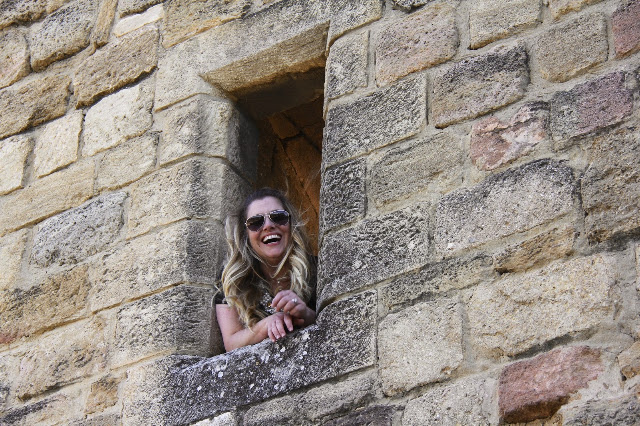
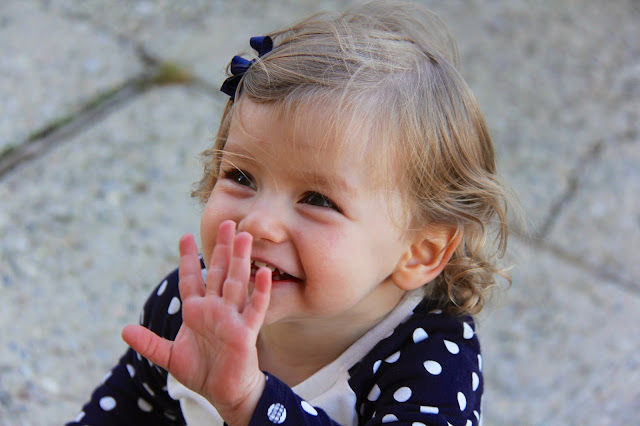
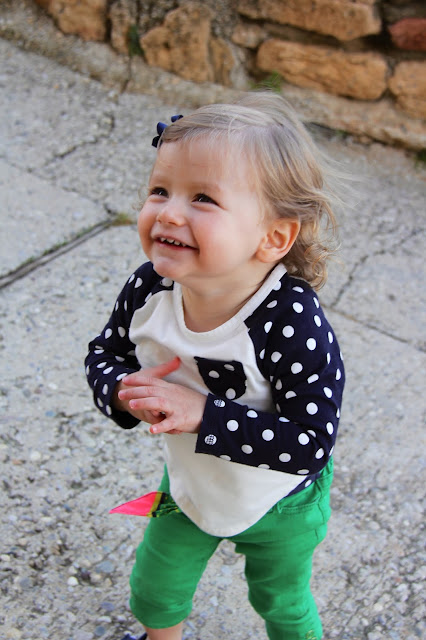
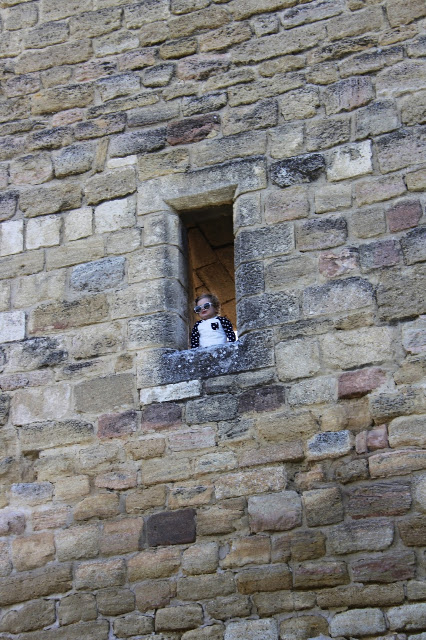
Since I’ll never be a movie producer, I finally have another outlet to satisfy my life-long dream to wrap something up with the simple phrase…
I think this is a fitting title to end our trip in France, which you can read about HERE, HERE and HERE.
Our little family recently journeyed into France for a visit with some wonderful friends, Michel and Shirley (read his blog HERE). We spent a few days with them in their home in Sablet, France. They were wonderful tour guides, packing in many activities that they knew we would enjoy. After a day spent touring some of the most beautiful villages in France, we had a serious thirst to quench. So the next day, we took advantage of our prime location in the Côté du Rhône region of France (arguably one of the most well-known wine producing regions in the world) and drank our way throughout the area.
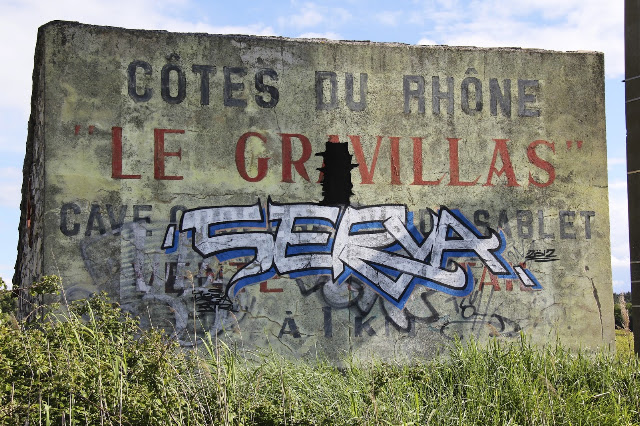
Cool street art just outside of Sablet
Michel owns a charming bistro in Northern California (Bistro des Copains) that has not only increased his knowledge of Californian and French wines, but also given him a unique “in” to the local wine producers surrounding his village. It’s one thing to call and set up a tasting, and another thing entirely to call and set up a tasting because “I might decide to purchase your wine for my restaurant”. Ladies and gentlemen, feel free to unroll your red carpets now!
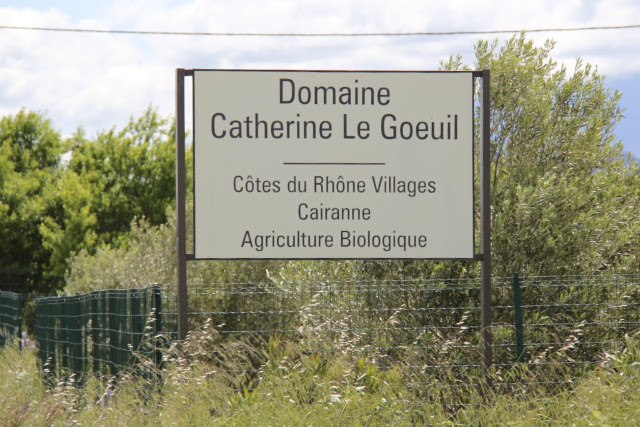
Michel did a wonderful job selecting three wineries to visit, ranging in size of production, type of wine produced and varying ambiance for our tastings. We started the tour at, Domaine Catherine Le Goeuil in Cairanne, a short ride from Michel and Shirley’s home. Catherine had set up a tasting for us in the production facility next to her home. Since I could not possibly tell Catherine’s story better than she could, I have copied her brief biography about the wine she produces from Kermit Lynch’s wine merchant website.
Catherine Le Goeuil’s taste for adventure has made her a leading pioneer in Cairanne. Having been born in the Congo to French parents, she had already lived in interesting places, but she longed to return to her roots. In 1993, with little experience and great determination, she and her family bought a six-hectare domaine. Soon after implementing one of their first chemical treatments on the vines, Catherine became very ill. The viticultural direction for the domaine became instantly clear. In her mind, farming as naturally as possible was the only way to go. Over time, she started the conversion to organic farming, and is now fully certified in this methodology. In a village just shy of one thousand inhabitants and only two others who farm organically nearby, her decisions have been met with suspicion and trepidation. Though rooted to the place both figuratively and literally, she is still considered an outsider—not that she lets this dilute her conviction in any way.
Domaine Catherine Le Goeuil
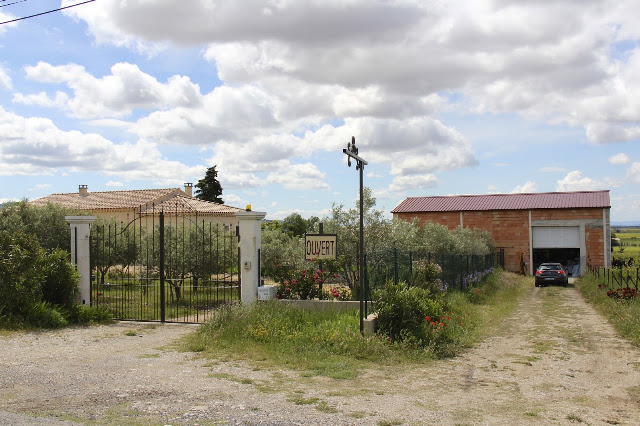
Ouvert (Open)
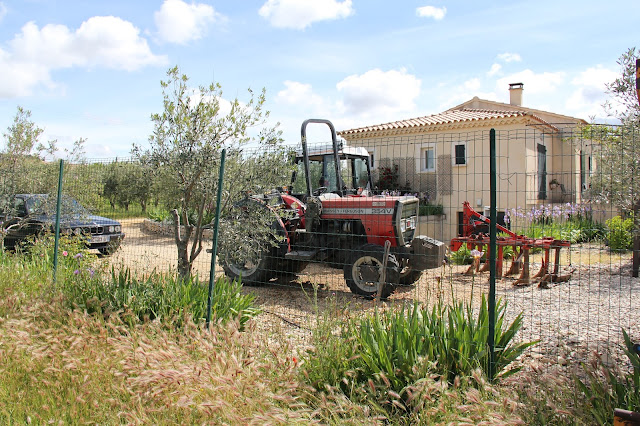
Part of the modest estate
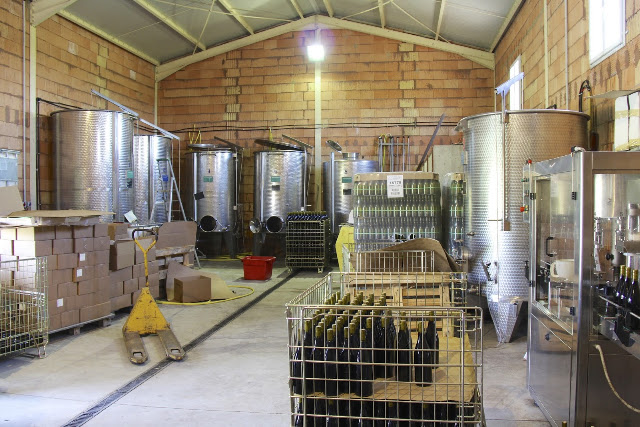
Inside the bottling facility
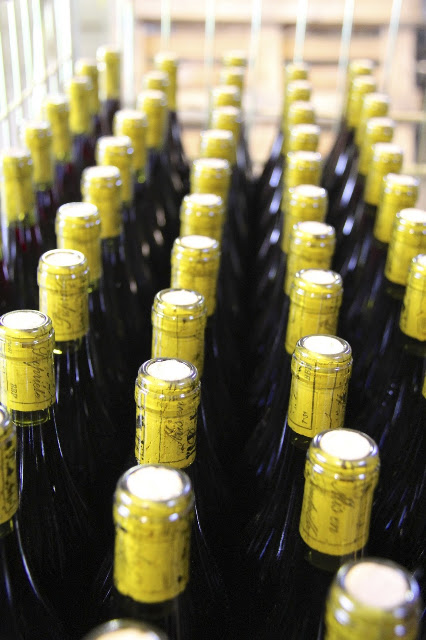
French wine bottles
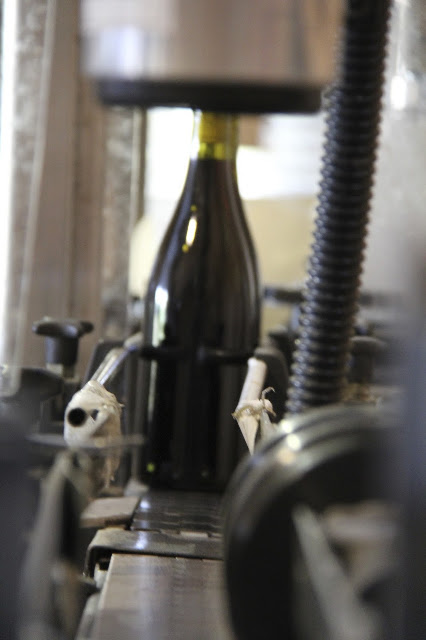
Bottling process in action
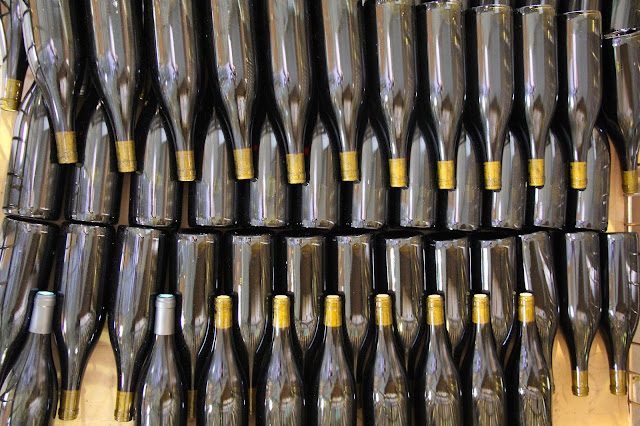
Loved the symmetry of the packaging
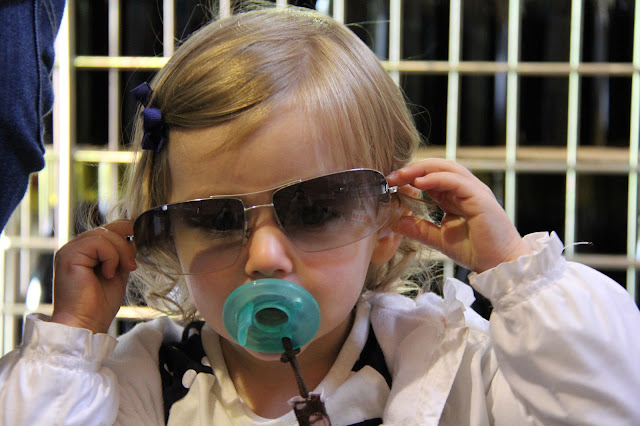
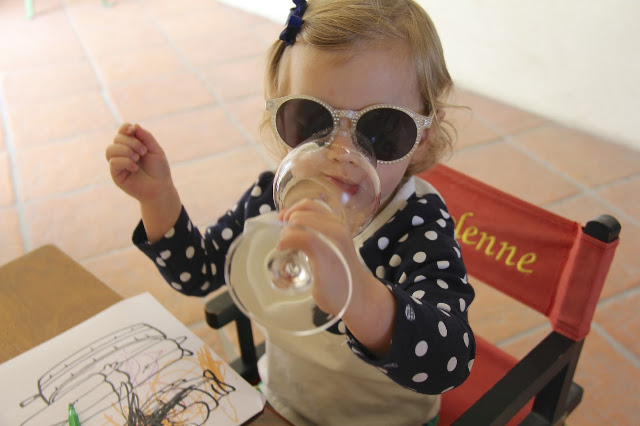
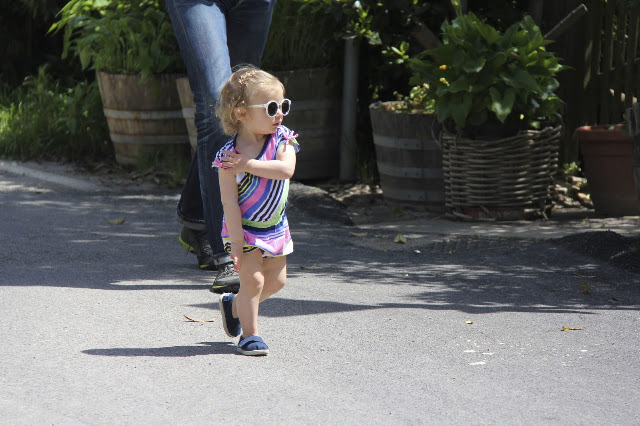
Julia always has to look her coolest
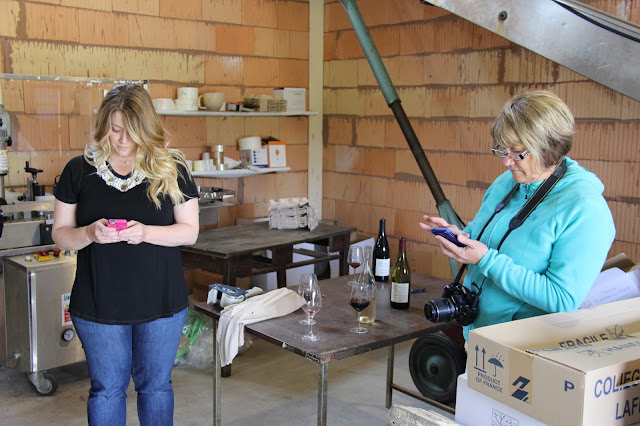
Jen and Shirley were kind enough to be our “scribes” so Michel and I had the necessary information for the our blogs
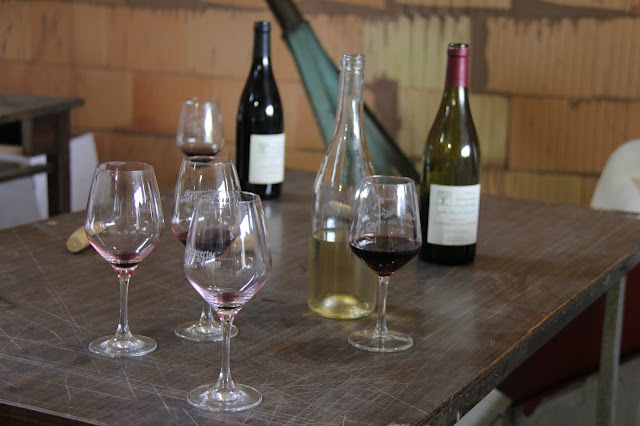
Aftermath of our tasting
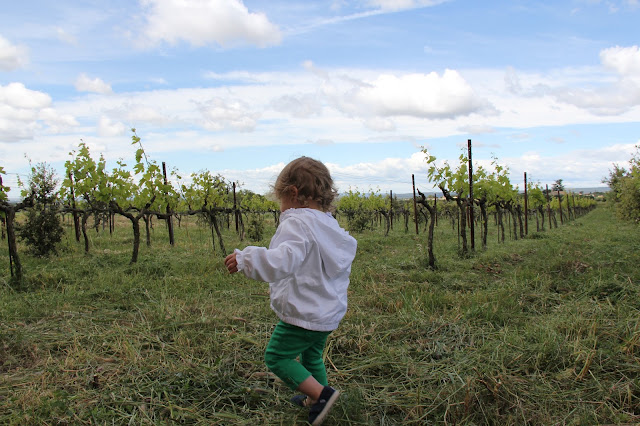
Julia ran wild in the vineyards
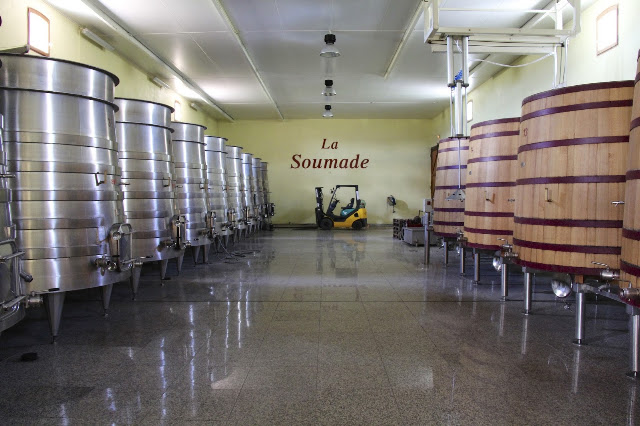
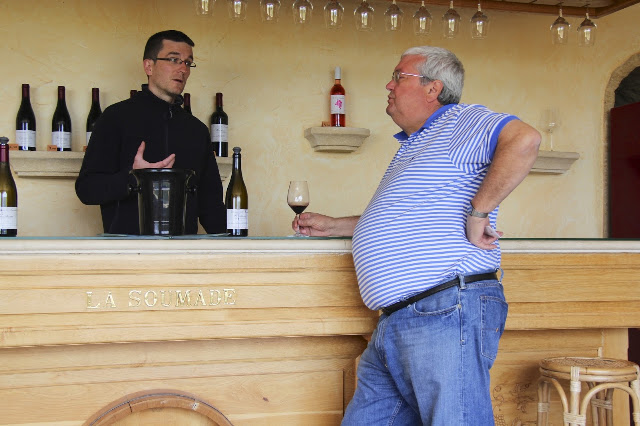
Next, we ventured to Domaine la Soumade, a winery founded in 1979 by André Roméro (website). We slowly worked our way through a flight of Rasteau before selecting which bottles to purchase (or in Michel’s case, which cases to purchase).
Casks
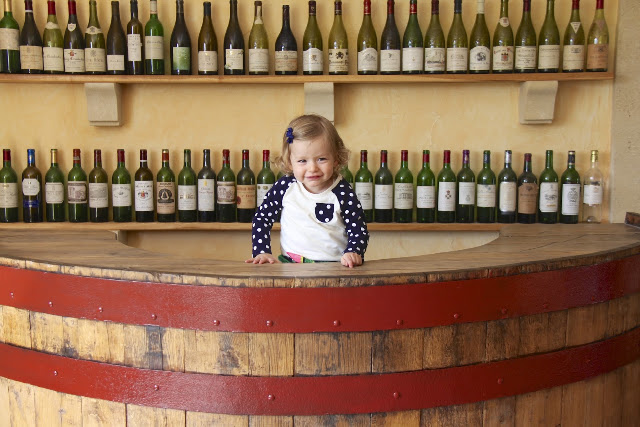
“Step right up… what’ll it be? May I recommend a grenache?”
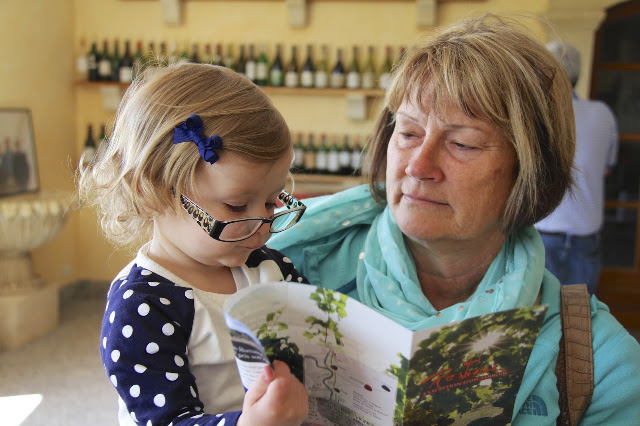
Reading to Shirley
Michel speaking to our host about his wines
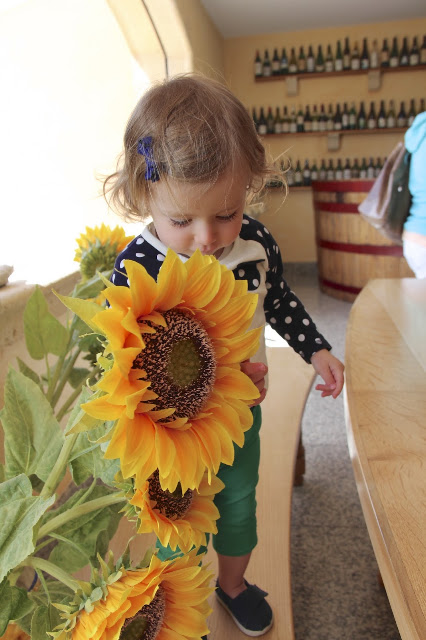
Julia plays with the sunflowers
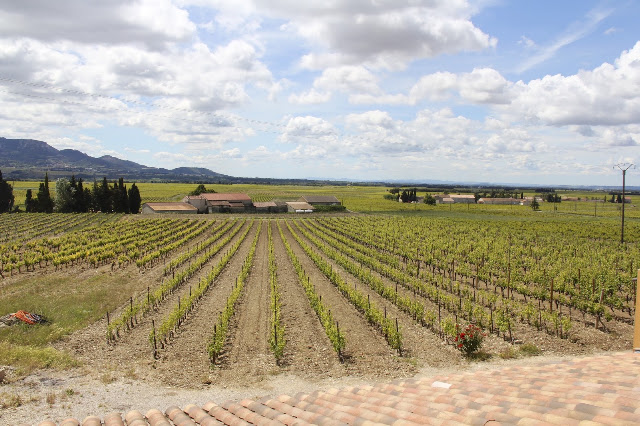
Vineyards out back
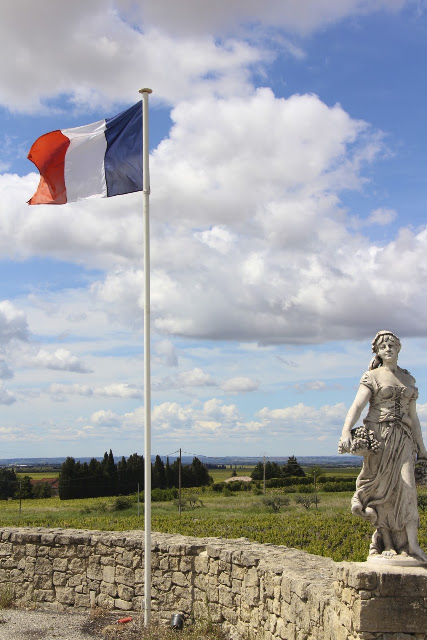
Interesting to see the French flag as opposed to the Italian flag
After lunch, we pointed the car toward the much anticipated village of Châteauneuf-du-Pape. If you’re no more than a casual drinker of French wine (like me), than you may be questioning that statement. “I thought Châteauneuf-du-Pape was a grape, or a style of wine, or (what I thought) a region?” Certainly, a wine as noted around the world as Châteauneuf-du-Pape couldn’t simply take the name of a small village with fewer than 1,000 inhabitants…could it?
Driving into Châteauneuf-du-Pape
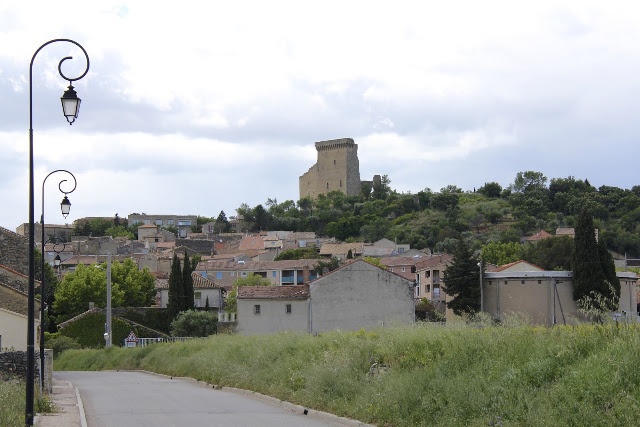
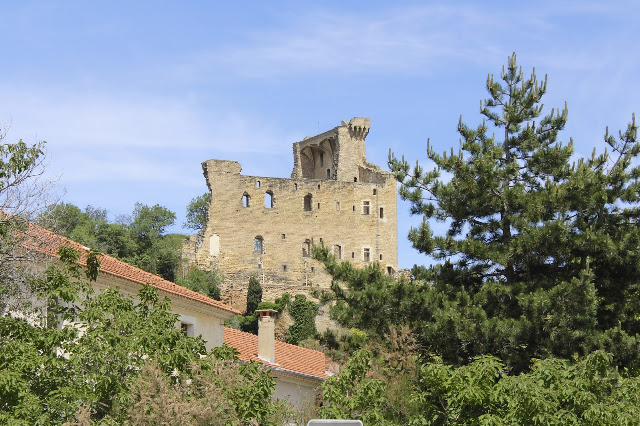
The Popes castle sits high above the village
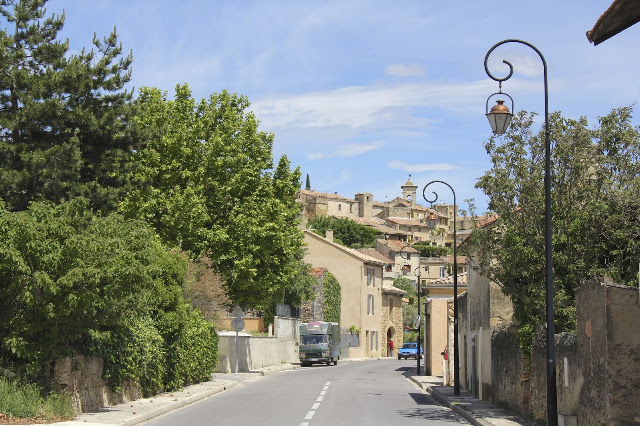
Street in Châteauneuf-du-Pape
The central concept to higher end French wine is the notion of terroir, the location where the grapes are grown and wine is made. The Appellation d’Origine Contrôlée (AOC) classification system uses this concept of terroir when classifying French wine. It is this rigorous classification issued by the government agency that ultimately determines (in part) how your wine bottle reads. The history of the AOC dates all the way back to 1411, when Roquefort (yes, the cheese) was first regulated. It wasn’t until 1935 that the Institut National des Appellations d’Origine (INAO) was created exclusively to manage the process for wines.
I learned that as you drink wines across France- the labeling practices are different and take on their own set of rules depending on which region the wine was made in and what level of classification the wine carries. The minimum information a label will carry is usually the classification and the name of the producer. Michel explained to us that in the Côté du Rhône region the ranking of a wine’s quality is fairly easy to determine, starting with Côté du Rhône (the generic label), thenCôté du Rhône-Villages (which includes 95 communes), next moving on to Côté du Rhône-Villages (named village) (where the village has earned the right to include its name on the label) and finally the highest class-action, Crus (the most demanding level of distinction, upon which the village will use only its name on the label, without needing to include Côté du Rhône). There are only 16 communes that have achieved this high level of distinction. The wines of Châteauneuf-du-Pape have been awarded this high level of crus status and therefore, only use the name of the village on the label.
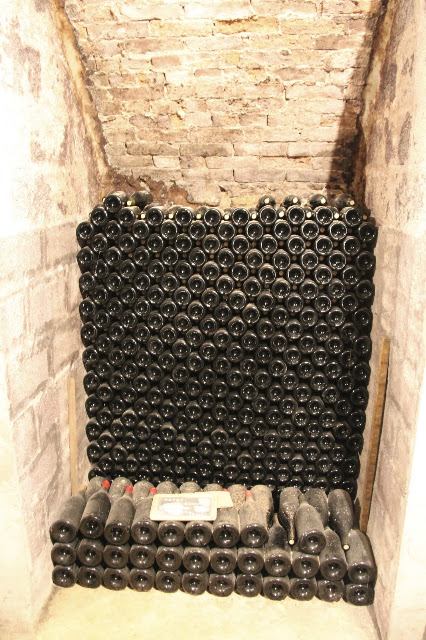
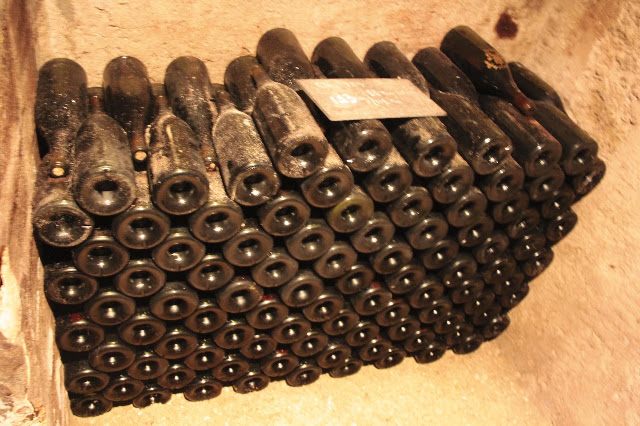
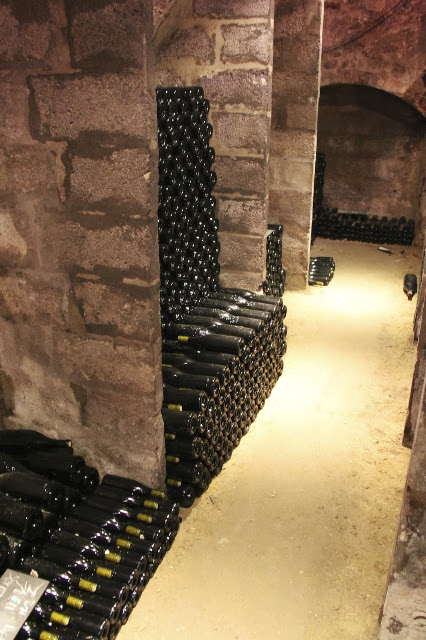
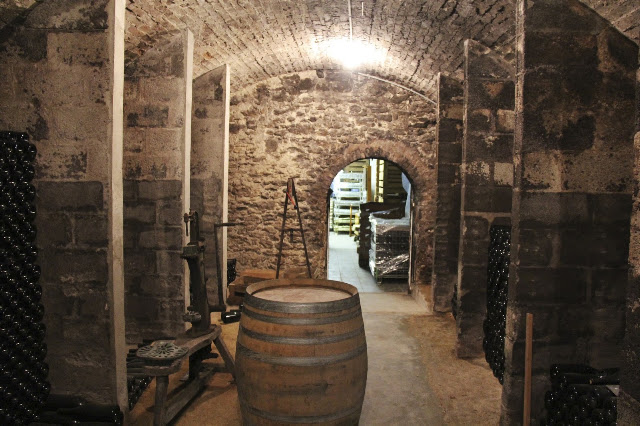
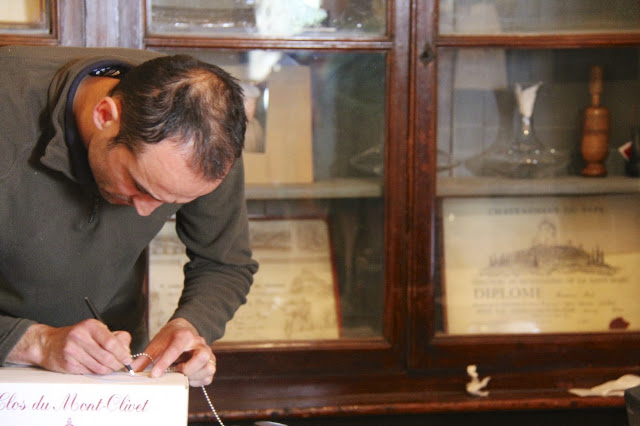
After drinking the spectacular wines of Clos du Mont-Olivet, we toured the proprietors private cellar. It was jaw-dropping indeed to see bottles of wine that were worthy of serving royalty, reaching values too astronomical for me to fathom. It also made my draw drop to see Julia running wild in said-cellar and I had to put my camera down to chase her on more than one occasion. I don’t think stomping grapes the rest of my life to repay the debt of a single broken bottle would have been a wise notion. The estate is managed by David, the third generation in a line of winemakers of the Séraphin family. A kind and gentle man, he was happy to take time to explain his wine, show off his cellar, extol a few interesting anecdotes and allow us to take tons of pictures. David told us that the current spring (when the grapes begin to grow) was the coldest on record since 1887 and that winemakers all over the region were nervous of the outcome. If the outcome was anything like the wines we drank all day – they’ll be just fine!
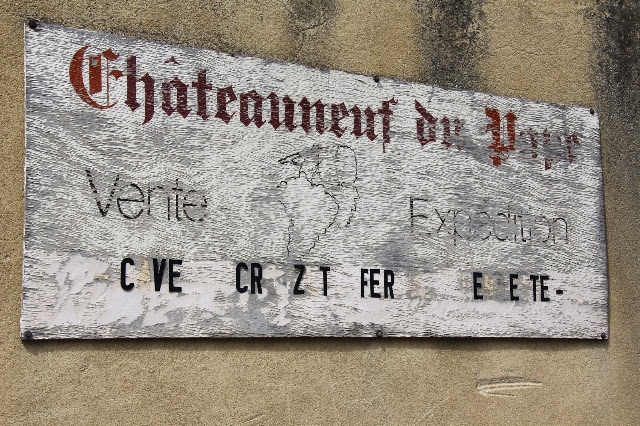
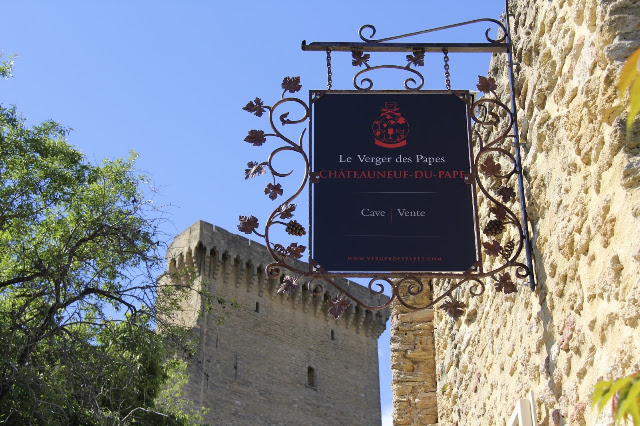
A sign hangs outside Clos du Mont-Olivet
Outside Clos du Mont-Olivet
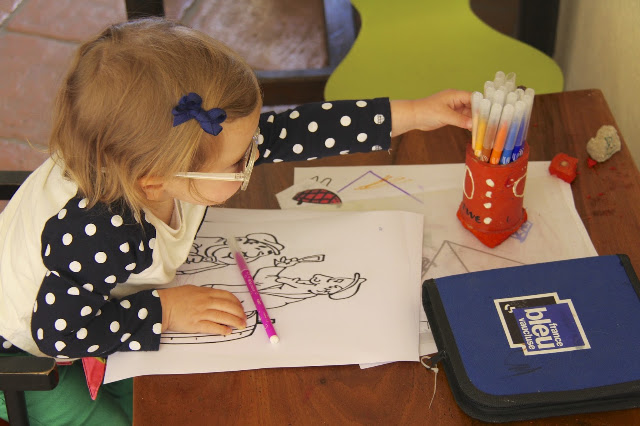
Julia kept herself pre-occupied by drawing…
And tasting French water along with us…
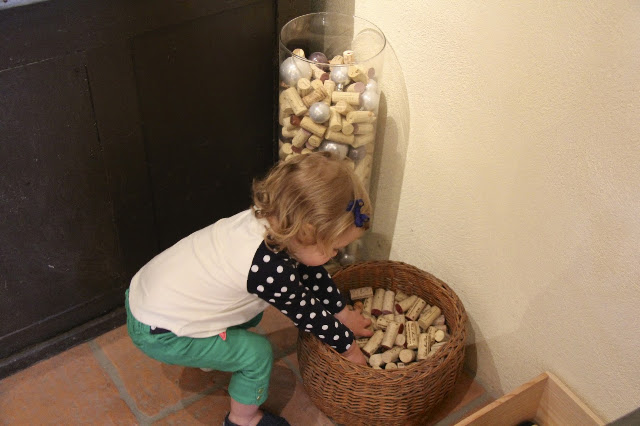
And finally, re-organizing corks
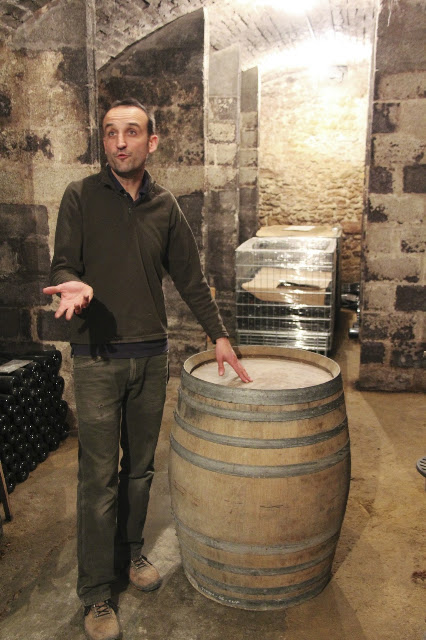
David welcomes us into his family’s cellar
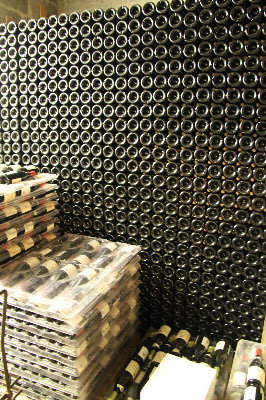
There were thousands of wines inside
Some wines dated back fifty years
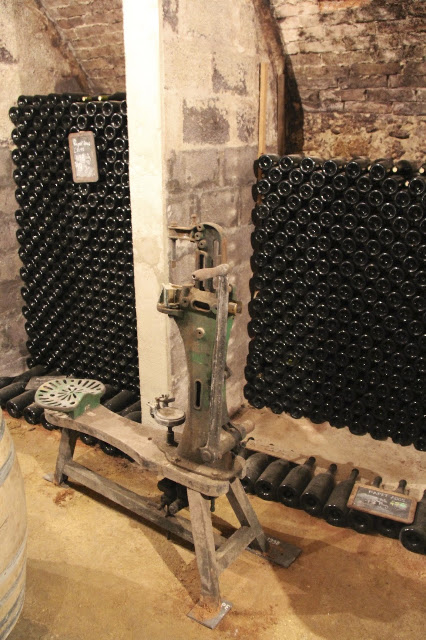
They had one of their original floor corking machines
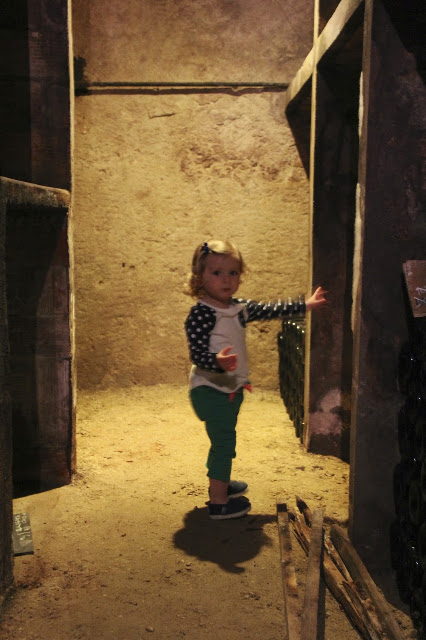
Julia wanted to go “this way” toward the really expensive wines
Another shot of the cellar
Leading back into the production area
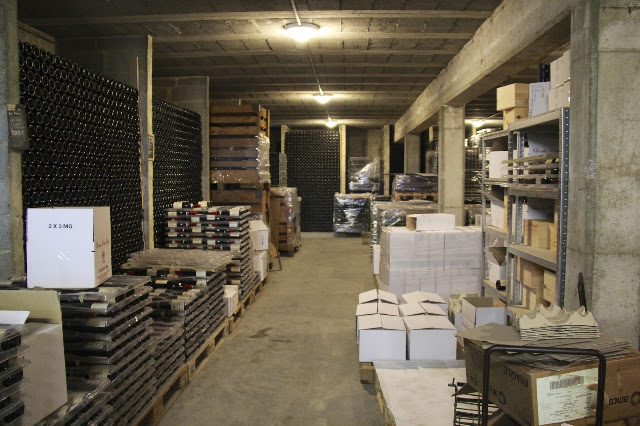
Packaging and storage area
Bottles prepare to ship
David prepares an invoice for our purchases
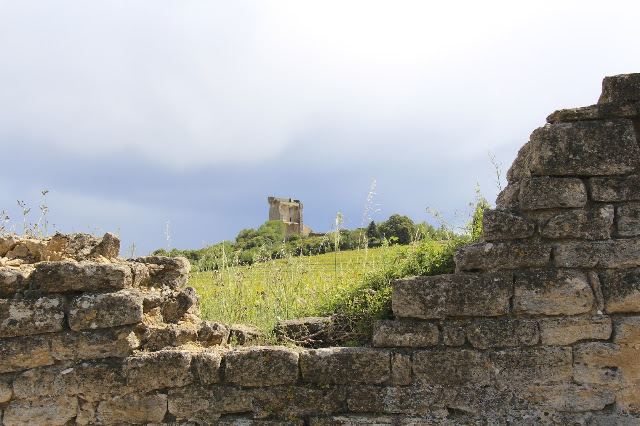
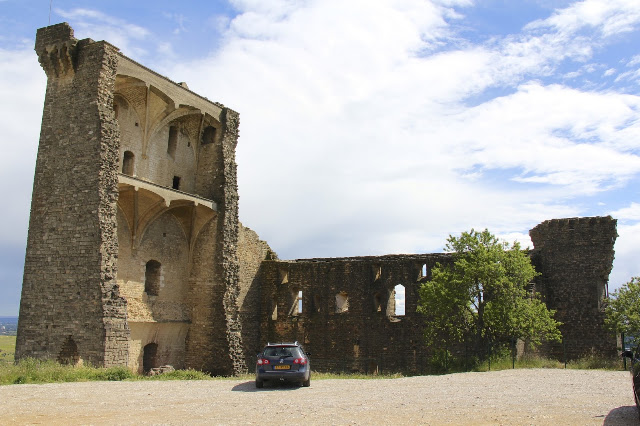
When we left Clos du Mont-Olivet we spent some time touring the village of Châteauneuf-du-Pape, which is as firmly intertwined with papal history as it is wine. In 1308, Pope Clement V relocated the papacy to the city of Avignon. My buddy Clement V and his subsequent “Avignon Popes” were rumored to be great lovers and promotors of wine during the seventy-year duration of the Avignon Papacy. John XXII (who came second) is responsible for erecting the famous castle that still stands today, known as the “Popes Castle”.
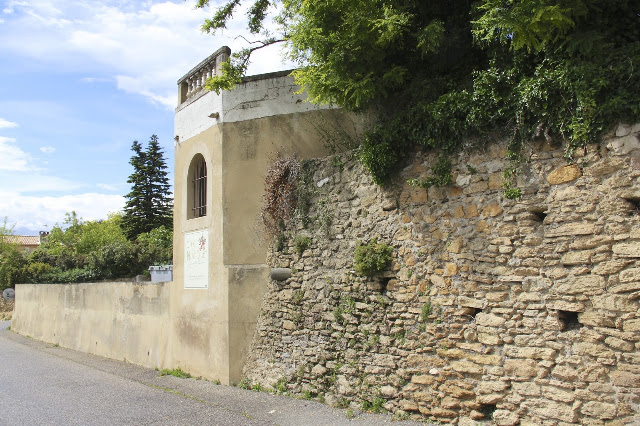
The Pope’s Castle through an ancient wall
Remains of the Pope’s Castle
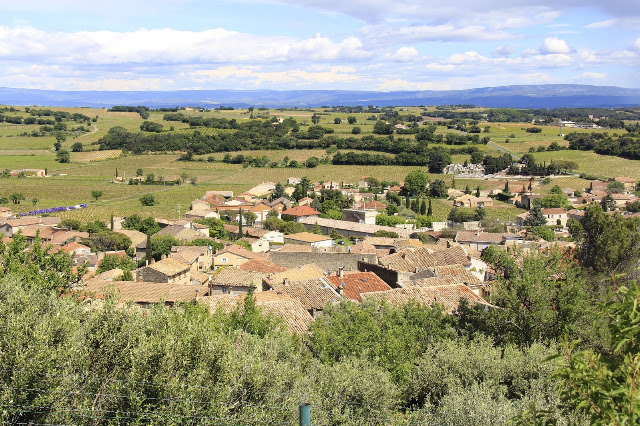
View of the valley
In the village of Châteauneuf-du-Pape
The village was beautiful
Street scene
Looking back up toward the top of the castle
“Hi, everybody!”
“HI, MAMMA!”
“That’s so funny… I want to go up there!”
“Ciao, everyone…errr, I mean bonjour!”
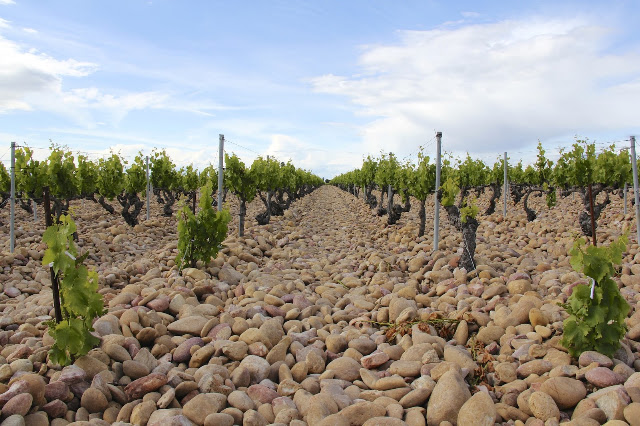
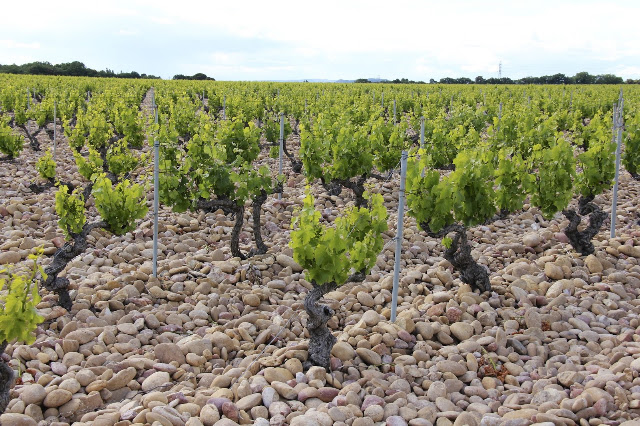
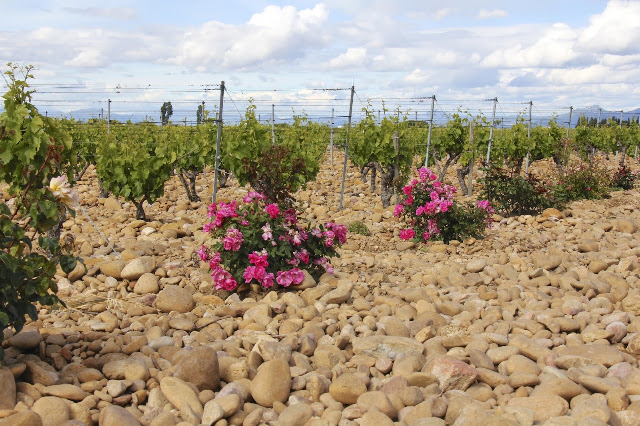
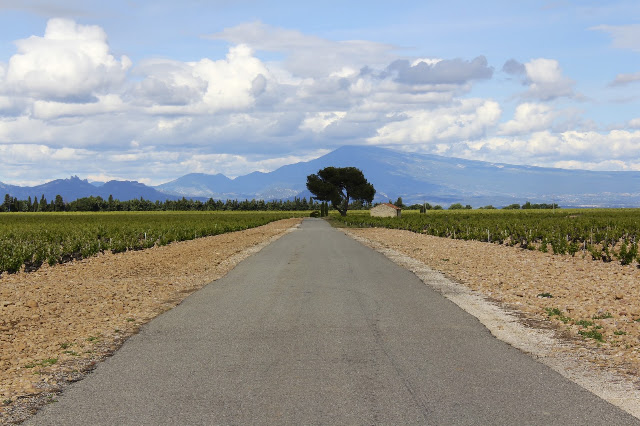
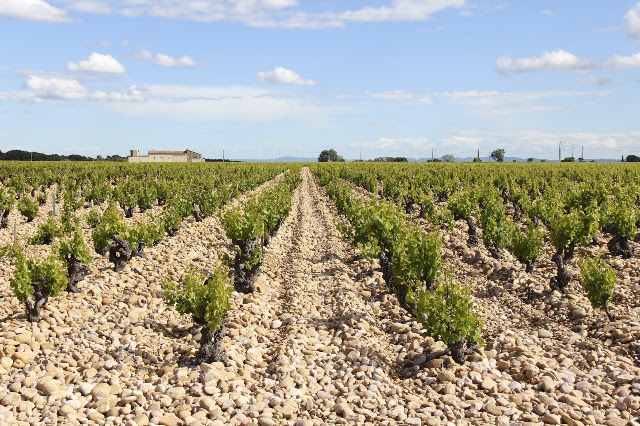
Next, we drove to some of the vineyards, which we were surprised to learn were covered in rocks. Michel explained that these are naturally occurring and even when the farmers rake all the rocks, they simply re-surface again over time. Of course, everyone embraces the rocks and think its what gives Châteauneuf-du-Pape it’s unique terroir.
The rocks were amazing
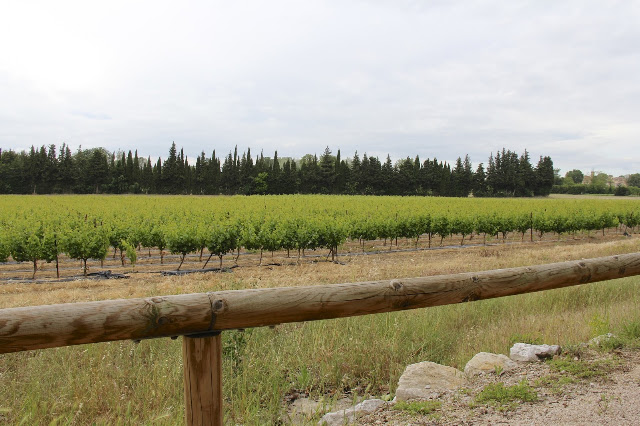
Vineyards in Châteauneuf-du-Pape
One of the wineries planted roses at the end of each row of grapes
View in the middle of the vineyards
Another angle
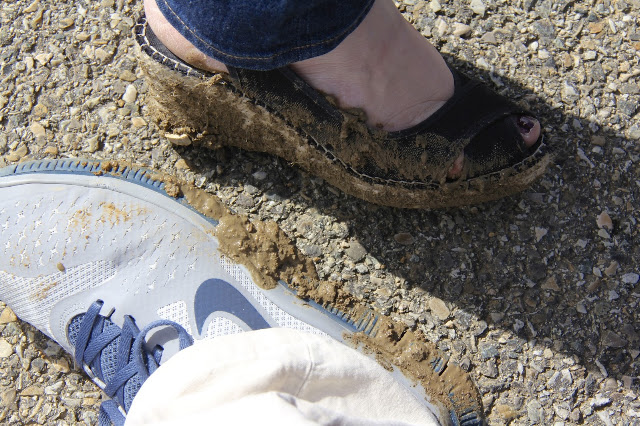
Jen and I paid the price for stepping into the fields to snag a couple rocks as souvenirs
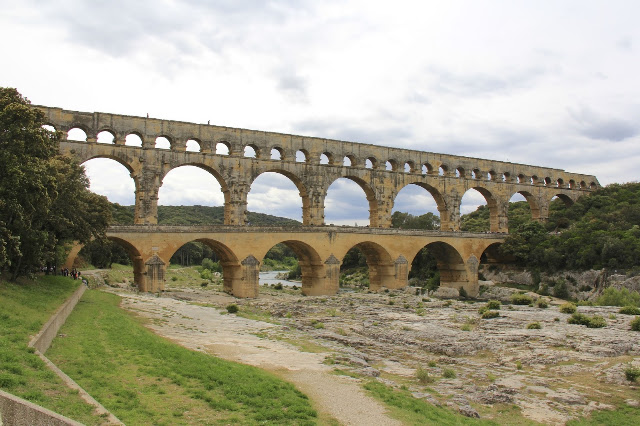
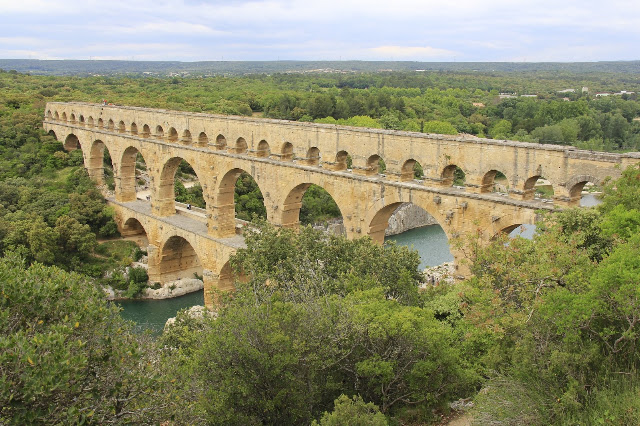
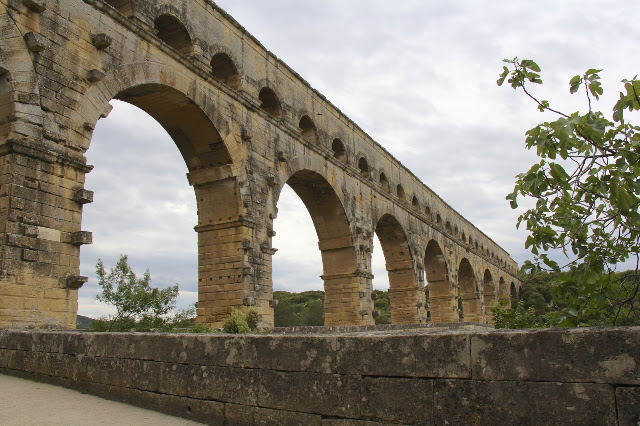
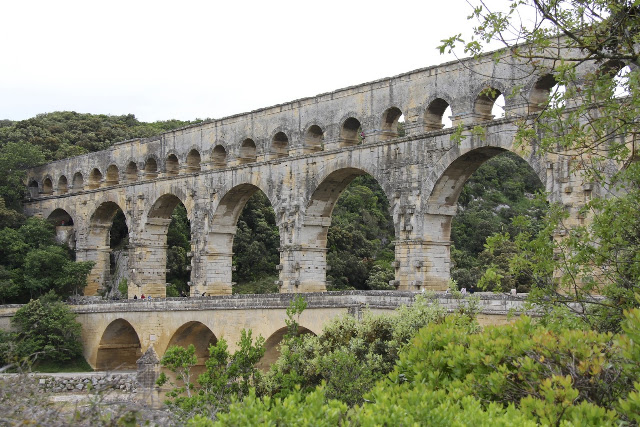
On our final day in France, we visited the Pont du Gard, an ancient Roman aqueduct bridge that crosses the Gardon River. The site is simply stunning to behold, and the UNESCO World Heritage Centre agreed, adding it to their list of World Heritage Sites in 1985 because of it’s historical importance.
Pont du Gard
The opposite side, higher viewpoint
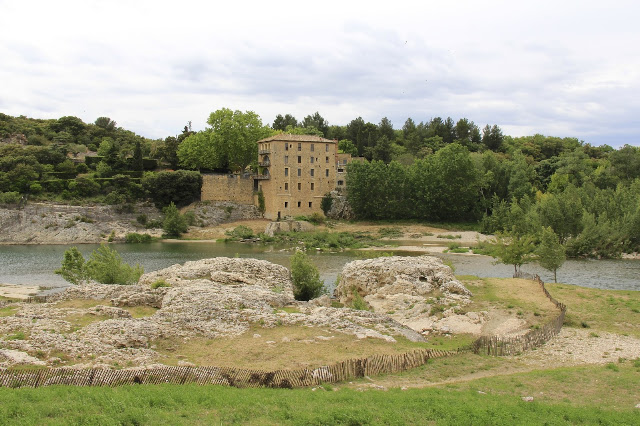
Ancient villa on the Gardon River
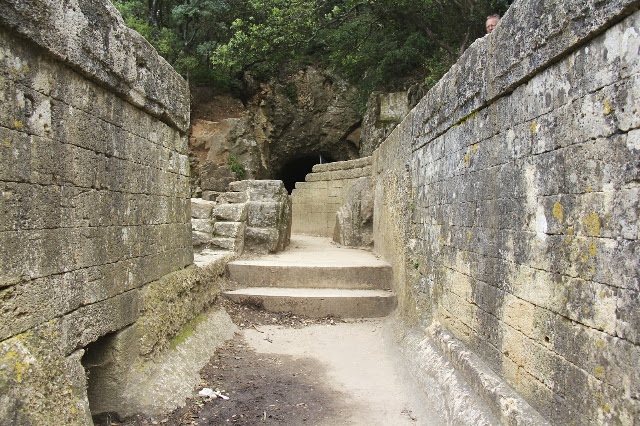
We walked to the top of the aqueduct
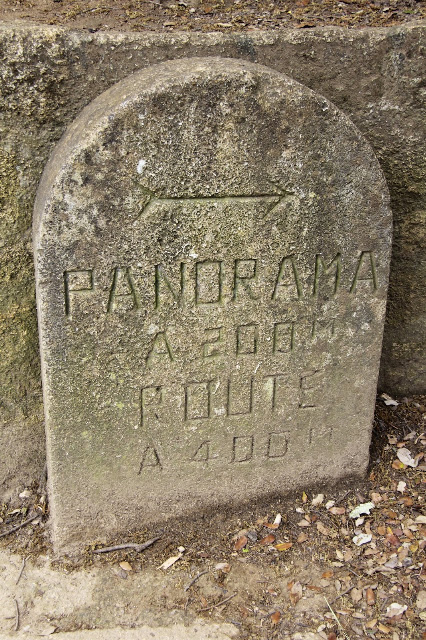
We followed the route up to the panoramic viewpoint
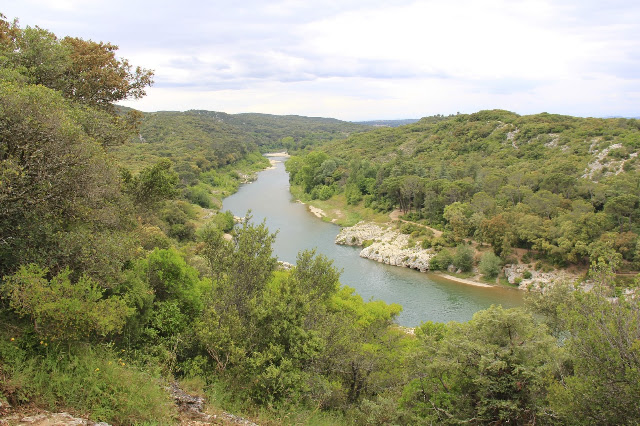
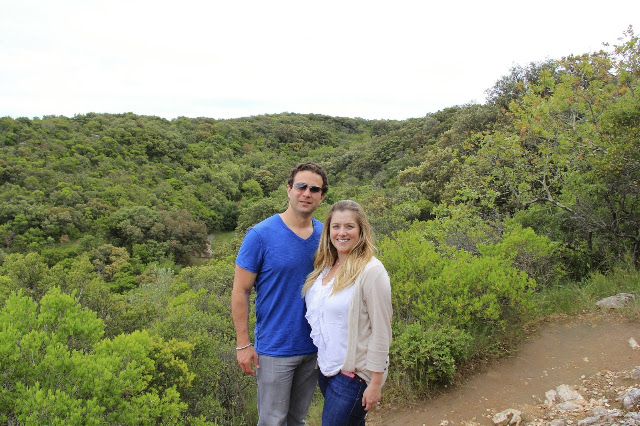
The trek was worth it – there were stunning views
At the top
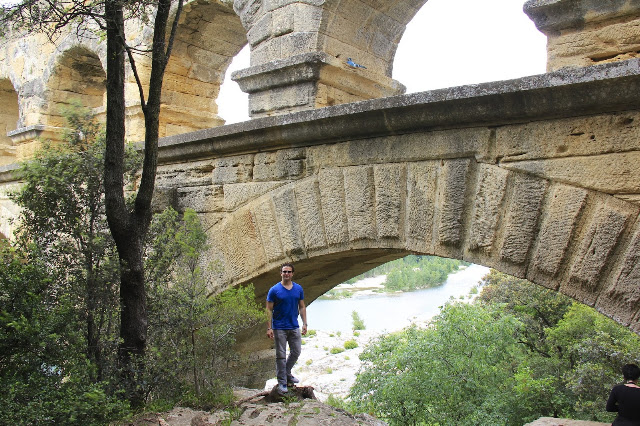
Amazing to see the bridge up close
Angle from below
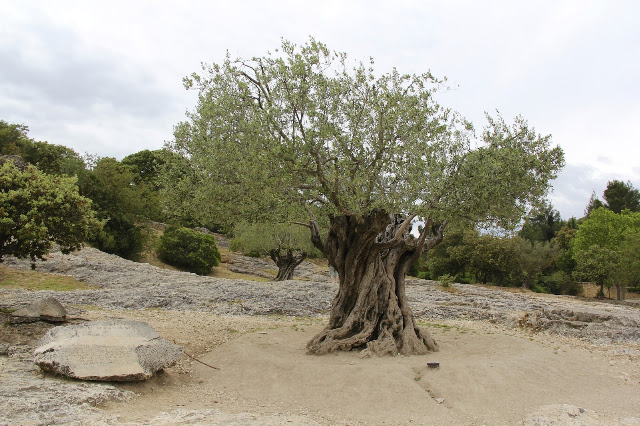
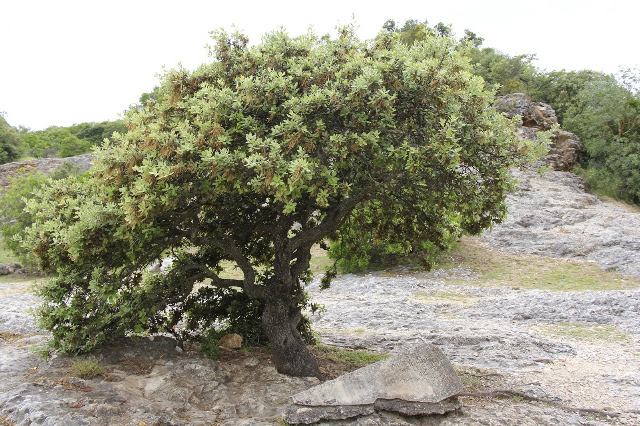
This olive tree, along with it’s sister tree were relocated here and have thrived since 908 AD
Sister tree
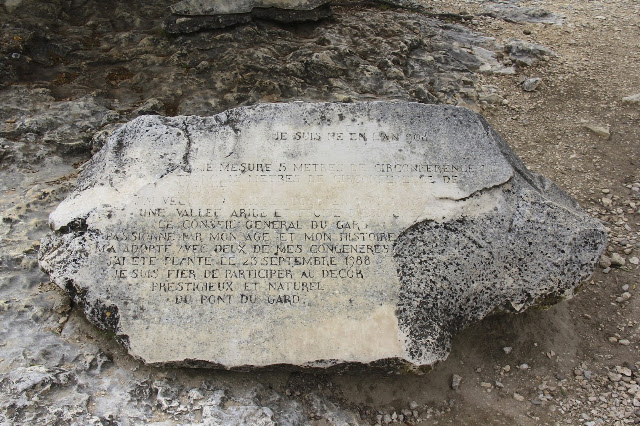
Stone placard commemorating and expelling the trees’ history
View from the opposite bank
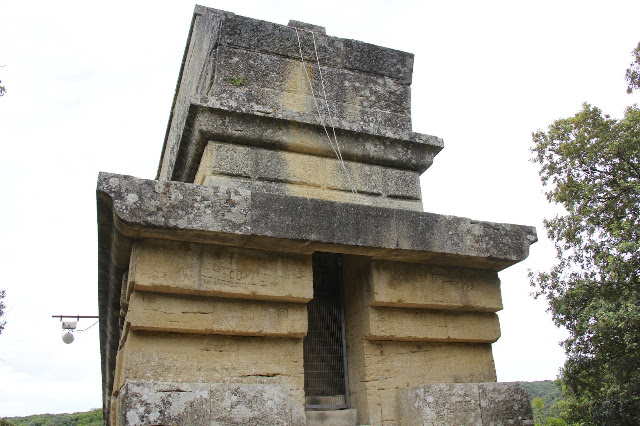
One of the end caps
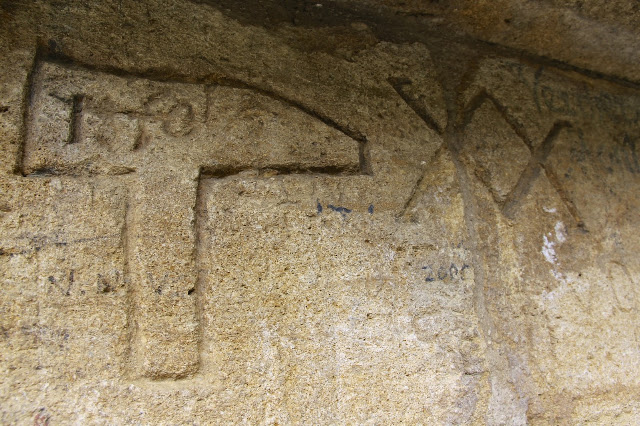
The ancient carvings were magnificent. I think this says, “this end up”
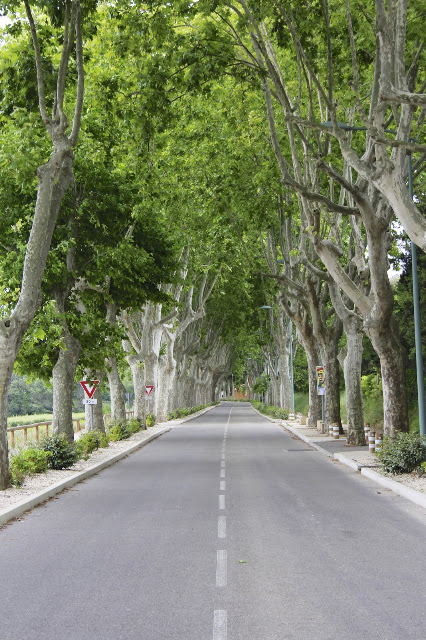
Trees covered the roads to offer shade to the soldiers in ancient times
Nice scenery shot
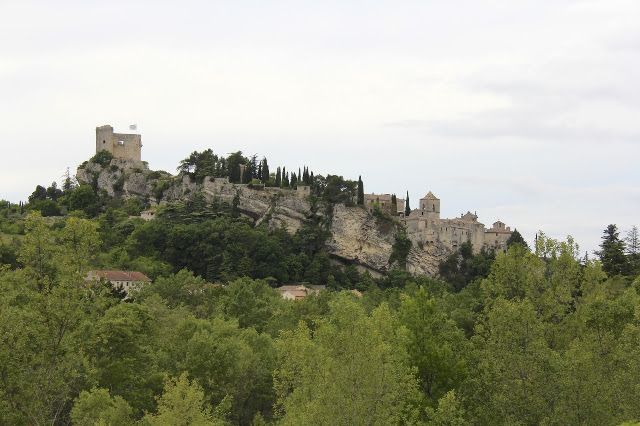
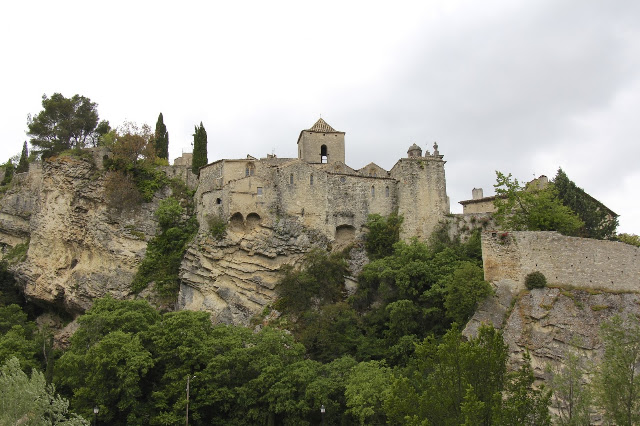
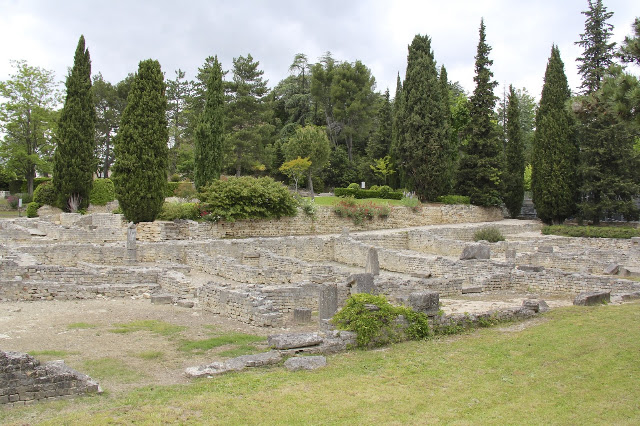
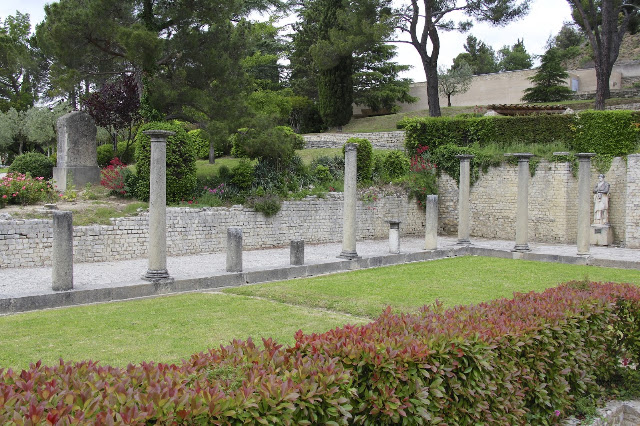
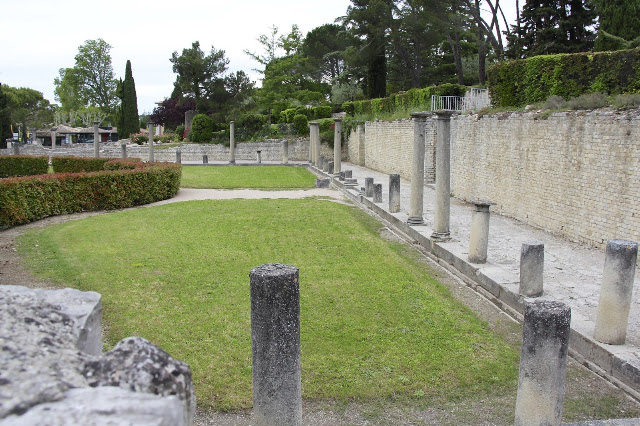
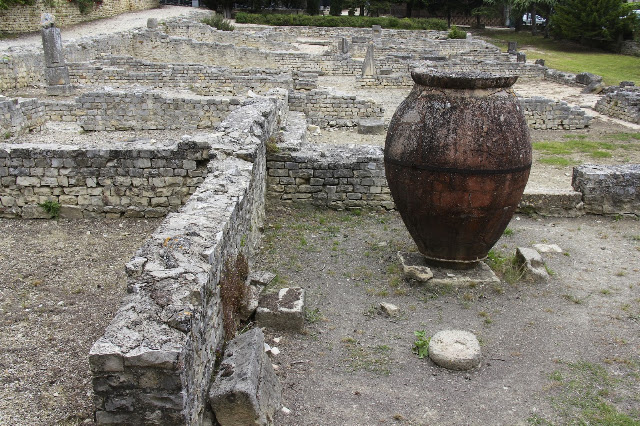
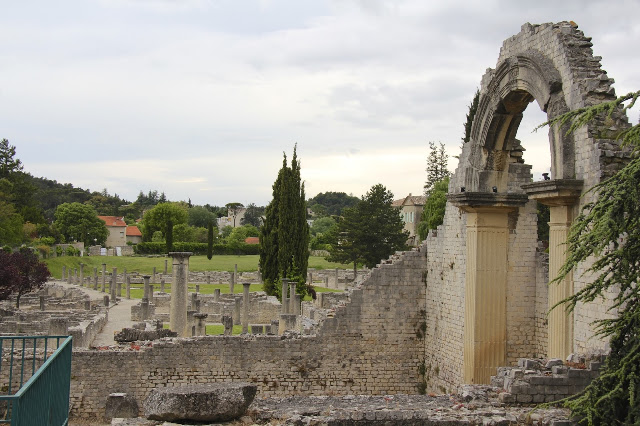
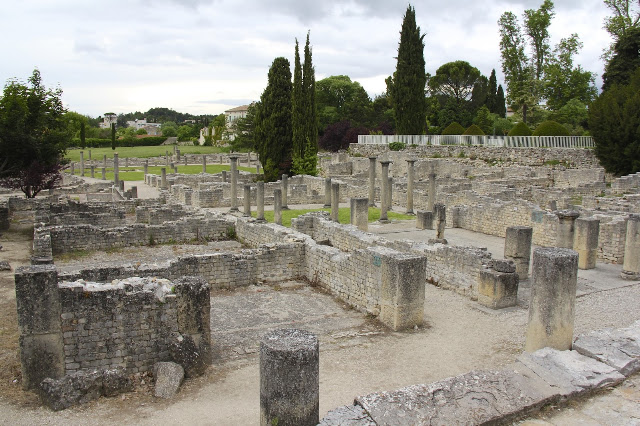
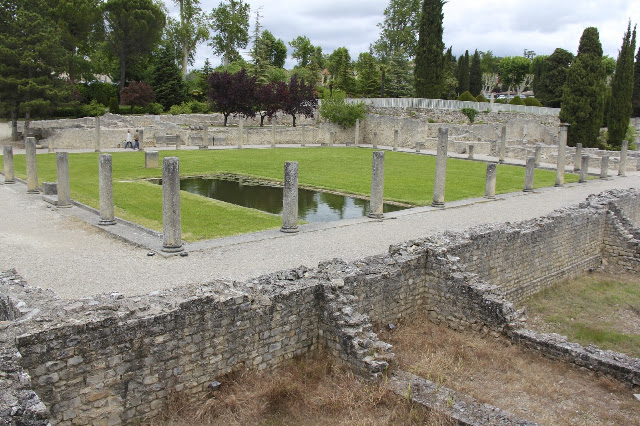
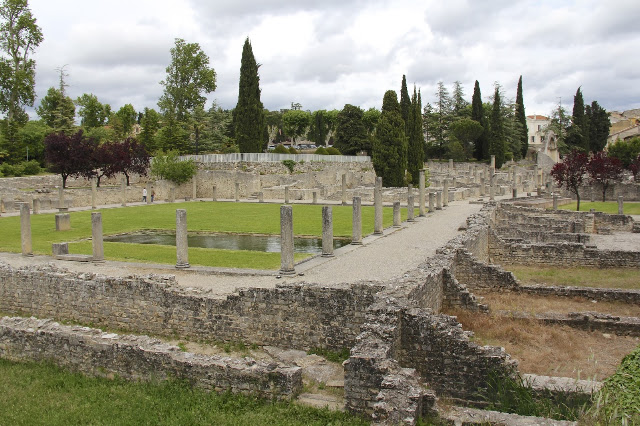
Finally, we ended our day in Vaison-la-Romaine, a village that showcases an interesting historic perspective. Not only is the historic section separated into two parts, it is divided in two distinct ways. On the high side of the dividing river, Ouvèze you have Medieval ruins including a castle. On the lower side, centered on the Colline de la Villasse, you have the largest filed of Roman ruins in France. It’s quite stunning to take it all in.
The upper city – the Medieval city
View of the Medieval castle
Some of the Roman ruins
Roman ruins – pillars surrounding a courtyard
Courtyard
They believed this portion was housing
Ancient Roman gate still intact
The ruins covered such an impressive and vast amount of land
Would have loved to known who’s pool this was… some ancient tycoon?
A final look back over the Roman ruins
I hope you enjoyed your tour through France with us (both historical and culinary) as much as we did. Stay tuned as we return back to Italy and stay busy while Jen’s family comes to stay a month.
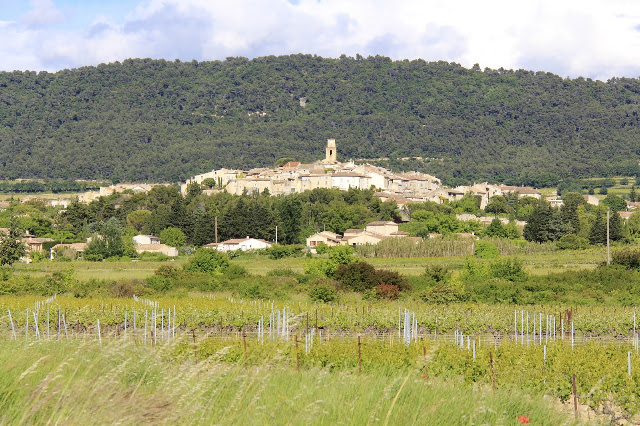
Our good friends Michel and Shirley have a wonderful home in a small village in the Côtes du Rhône region of France. They invited us to join them for a few days recently, an invitation we were happy to accept. Google maps told me that the journey from our home to theirs was approximately six hours and so we decided a stopover at the beach for a night would break up the drive nicely (read about it HERE). After a relaxing night in Beaulieu-Sur-Mer, we headed north to Sablet, France so that we could savor an enjoyable visit with good friends.
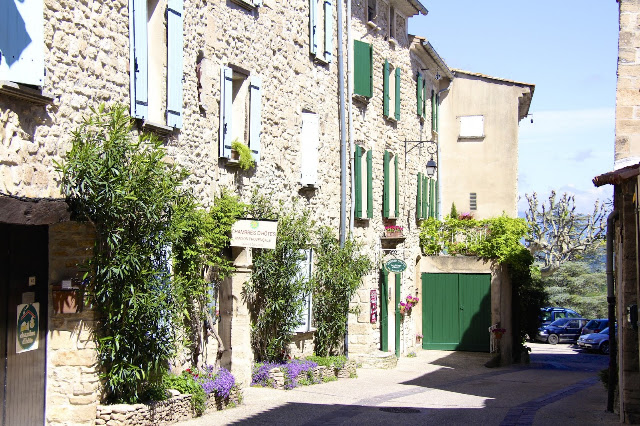
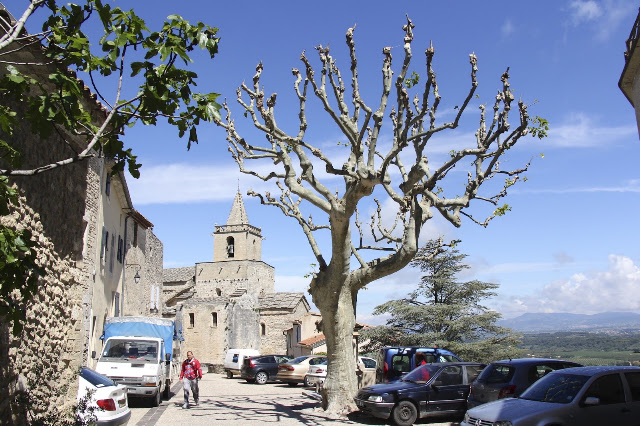
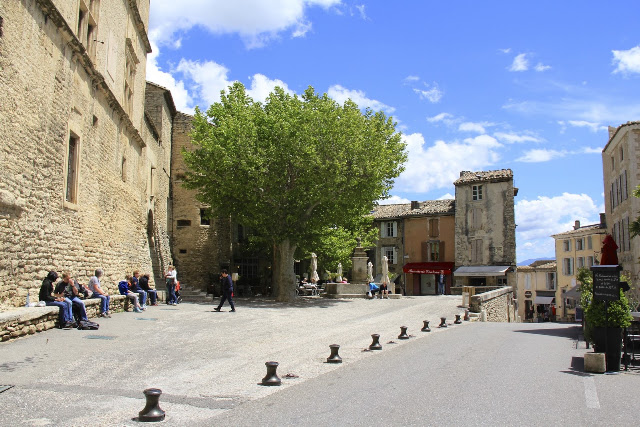
Sablet, France
We arrived in Sablet as scheduled, late in the afternoon. However, I had misplaced all the phone numbers to reach Michel and so I wasn’t quite sure exactly where to go upon arriving in the village. Michel gave me specific instructions not to attempt a drive directly to his home. “The roads are far too narrow – many cars scrape on either side. Don’t attempt it – park at the local bakery and head by foot”. I only had his home address plugged into the GPS and admittedly, I had the words of Barney Stinson ringing in my head “I shouldn’t attempt the drive… challenge ACCEPTED!” After creeping up, up, up, slowly, slowly, slowly – I made it to their home. Luckily I made it with all car paint intact – but it was close. I had been far too cocky and got lucky – I literally had centimeters on either side of my car at times. We found their home and discovered they were just out at the local market, preparing for our arrival.
Michel is a business man, blogger (his blog), wine connoisseur and a fabulous chef. He owns a restaurant that I’ve mentioned in past blog posts, Bistro des Copains in Northern California. Jen and I knew that we were going to be in for a treat if he was coming back from the the market with fresh groceries to make dinner. When they returned home, we walked in, unpacked and quickly settled in for an epic meal. Luckily, Michel and Shirley are grandparents of four wonderful kids – and so they were naturals with Julia, who instantly fell in love with them both. After a wonderful dinner, stuffed and tired from a long day – we turned in, excited about the following day. Even though we didn’t know the plans, we were still eager knowing that we would have an action-packed day lead by two wonderful guides.
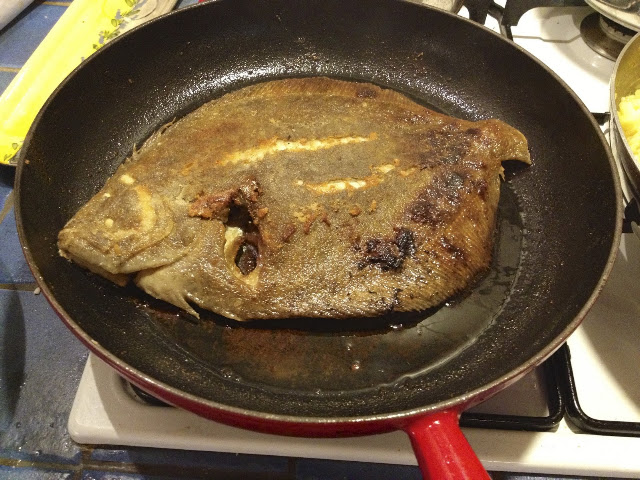
Pan fried fish cooked by Michel
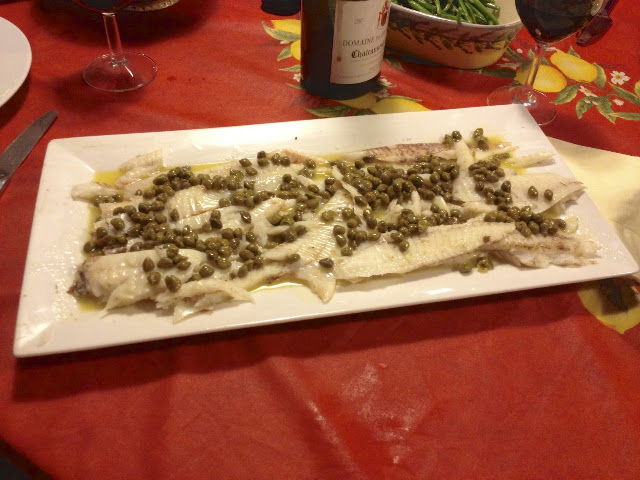
Filleted and seasoned with butter, oil and capers
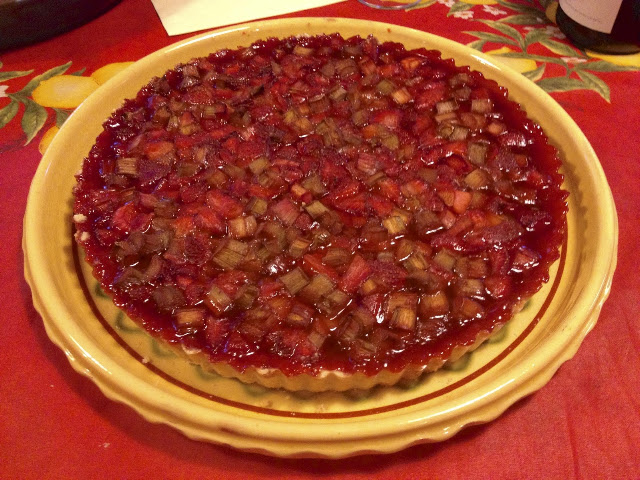
Shirley made the most amazing strawberry and rhubarb torte
Cheese and baguettes for breakfast. Not something you normally think of eating at 8:00am. However, this rich indulgence seems perfectly normal when you’re in France…and when the cheese and bread are that good, you are happy to get your fill. After breakfast, but before I finished my last sip of coffee, Michel jumped up and declared that, “we will be leaving in ten minutes!” For me, this was wonderful – an early start to the day. For Jen, nothing could be more horrific. She rushed to get herself ready, get the baby ready, get the diaper bag packed, etc. and still make it to the car before we pulled away. Somehow she managed and we set out to the first of three villages we would see throughout the day.
The term, L’un des Plus Beaux Villages de France (official site) means, One of the Most Beautiful Villages of France. This is a formal classification, reserved for only the most special of villages that dot the landscape of this fantastic country. Of the 32,000 villages that make up the country, only 157 are classified as such. 15 of these villages are in Provence, where Michel and Shirley have their home. We were fortunate enough to see 3 of these impressive places all in one day.
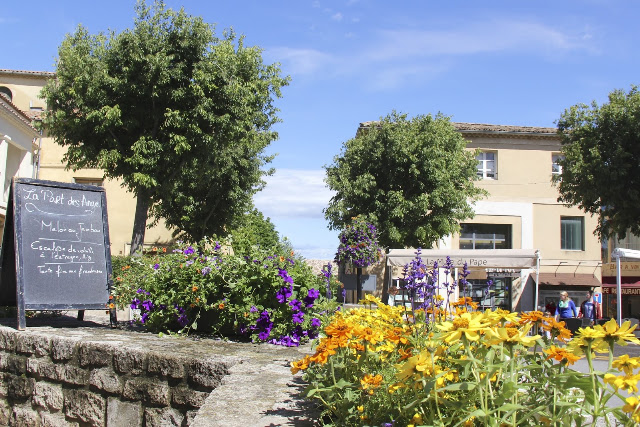
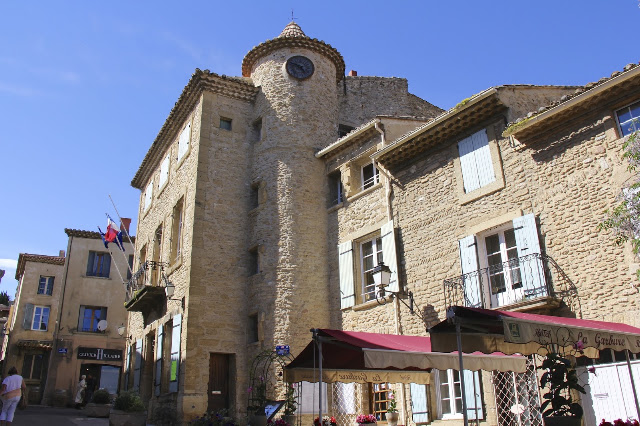
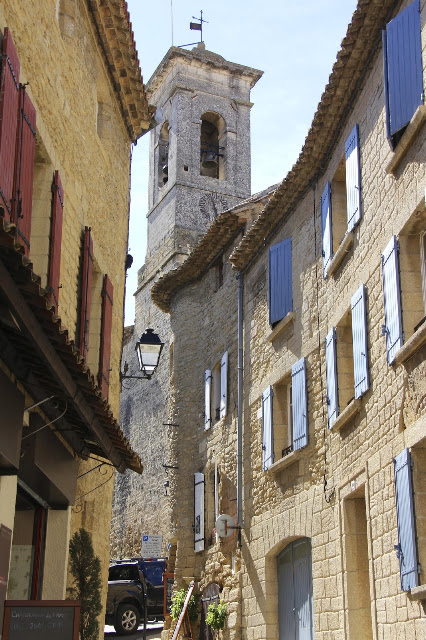
One of the Most Beautiful Villages of France
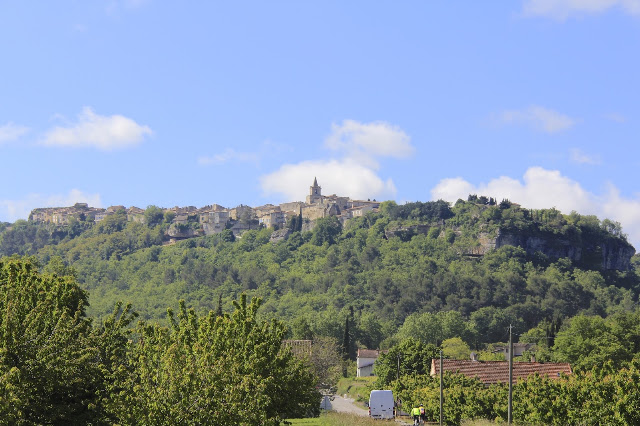
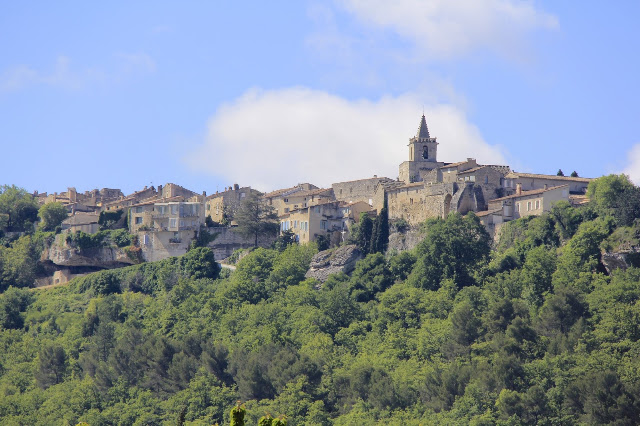
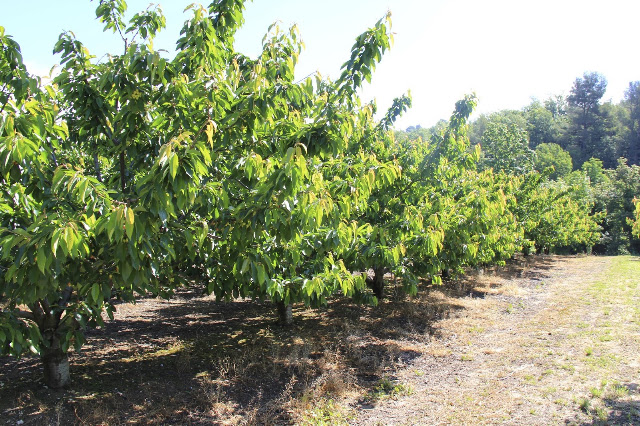
The first stop on our tour was Venasque, a hill-top village at the foot of Mont Ventoux. Venasque overlooks vineyards of many types, including vast fields of cherry trees (a unique sight in a landscape otherwise dominated by grape vineyards). The cherry’s were just starting to come into bloom and so we stopped to take a couple pictures. This medieval town has only the remains of three Saracen towers from those times. A large church from the 11th century stands in the center of town, composing part of the unique beauty we discovered while there.
Approaching Venasque
Venasque sits high atop a hill
We passed fields of cherry trees
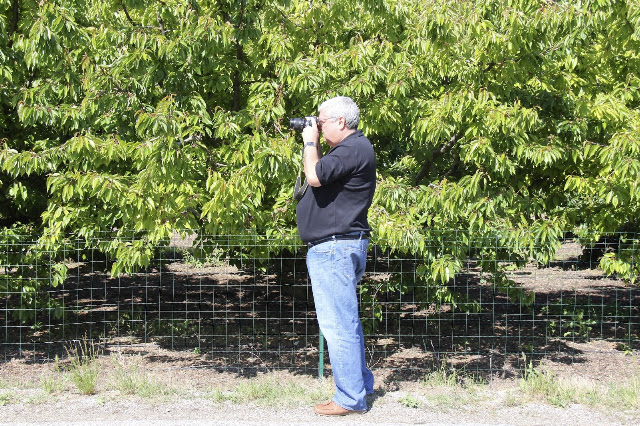
Michel in action, capturing images for his own blog
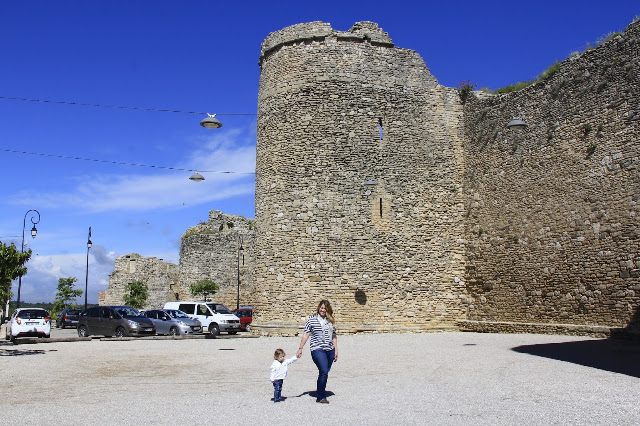
Julia and Jen in front of the remains of the medieval castle
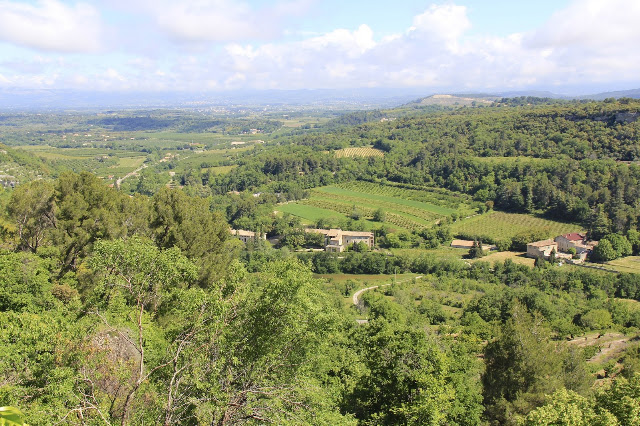
The view of the valley below
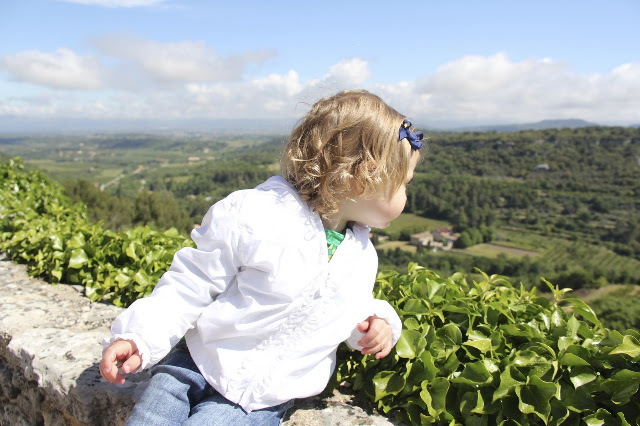
Julia enjoying the scenery
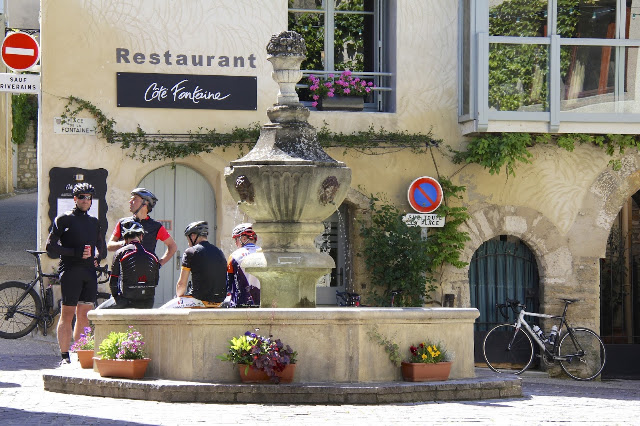
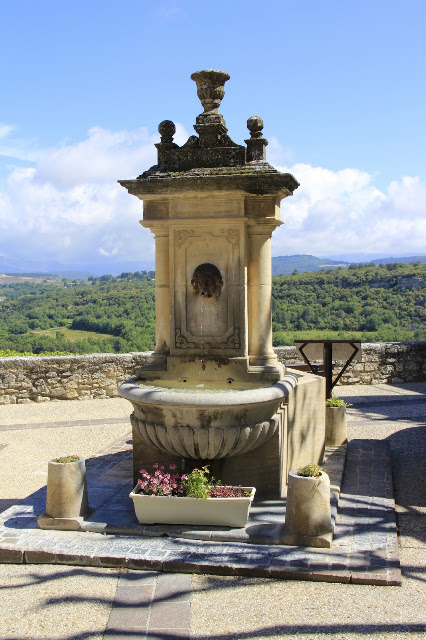
A fountain in the center of town
We passed many bicycle tour groups in each of the villages
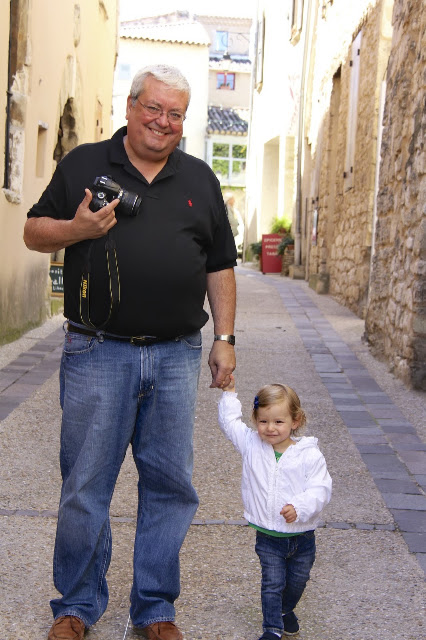
Michel strolling along with Julia
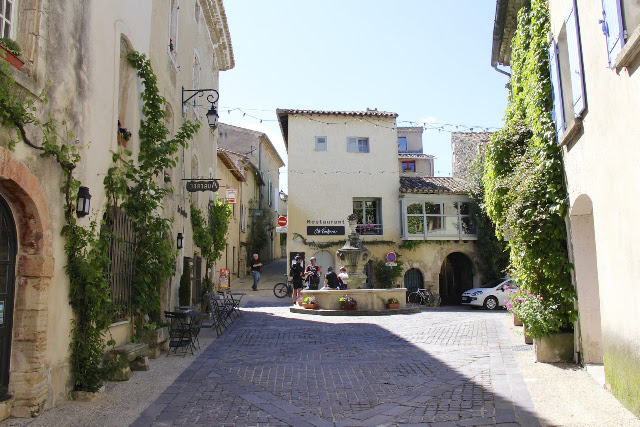
A street scene in Venasque
The villages main church framed behind a wonderful tree
A fountain in town, La Planette
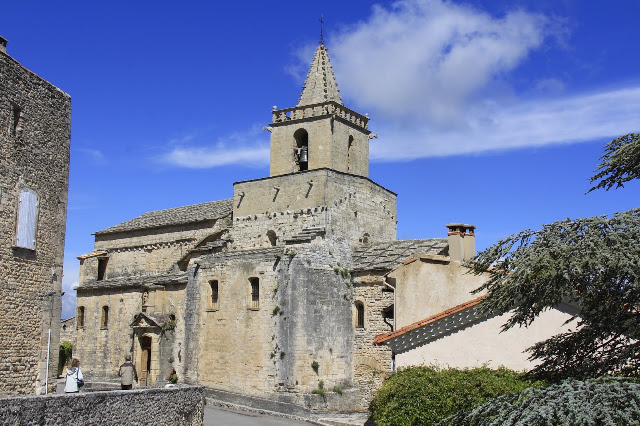
Church in the center of town, dating back to the 13th century
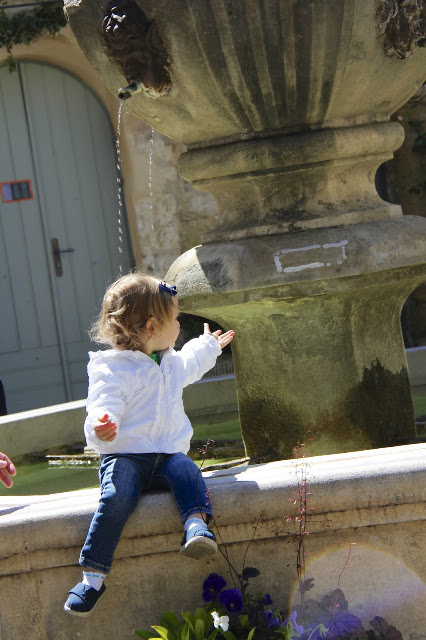
Julia playing in the fountain
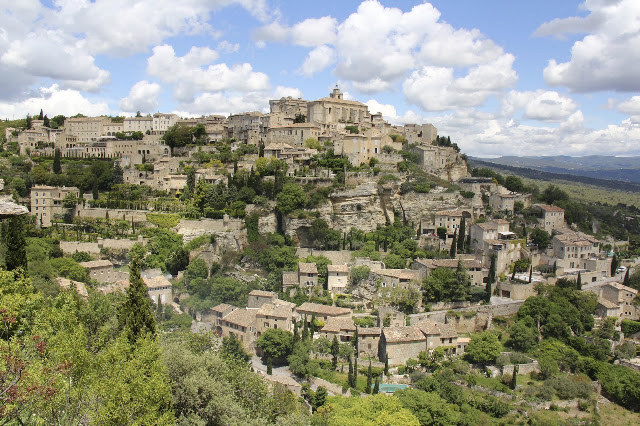
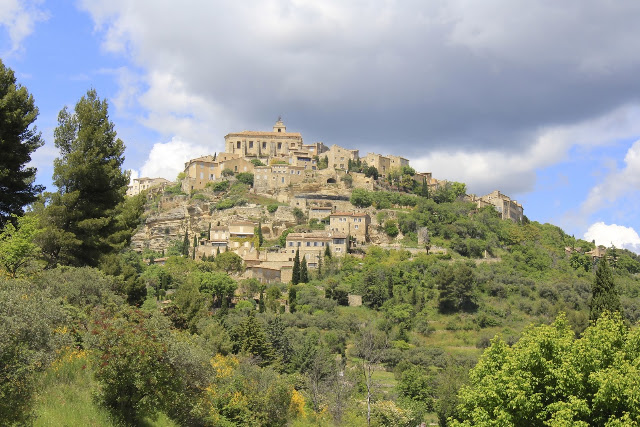
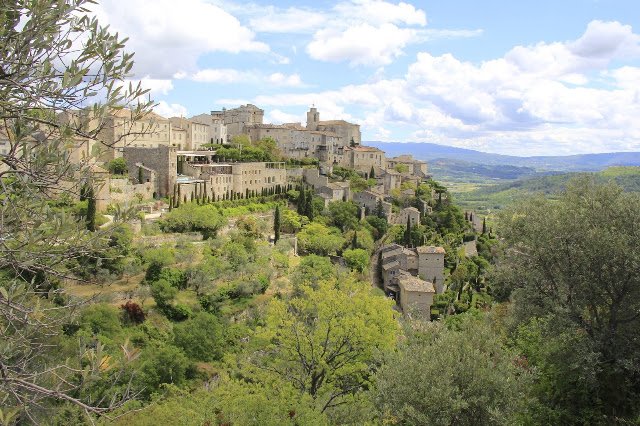
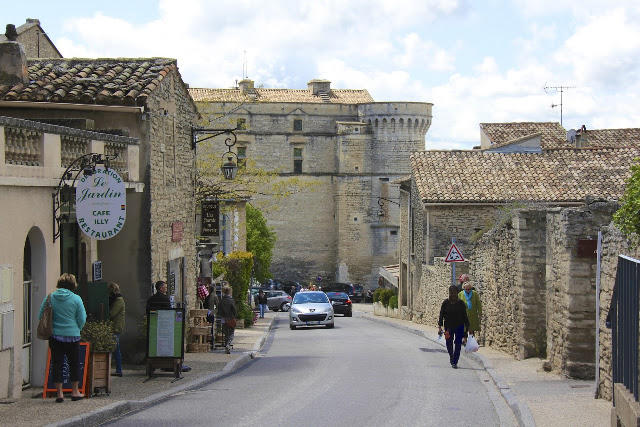
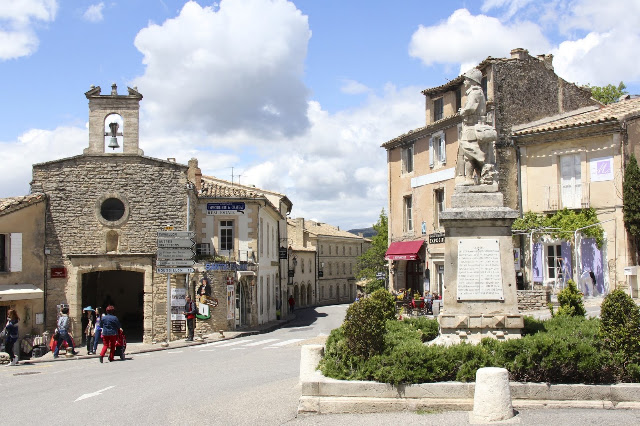
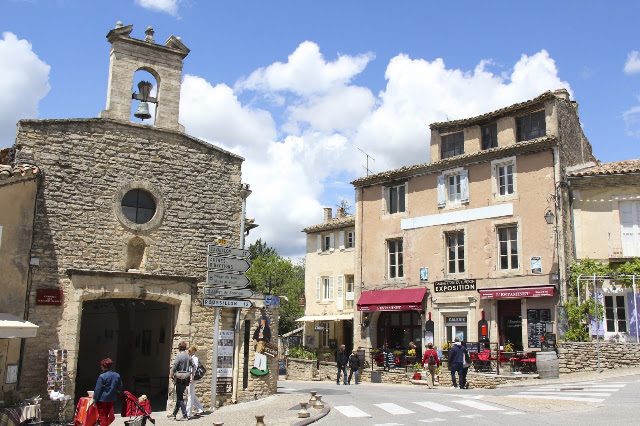
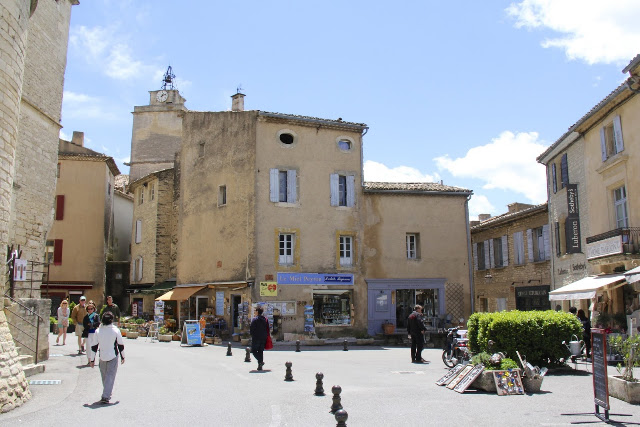
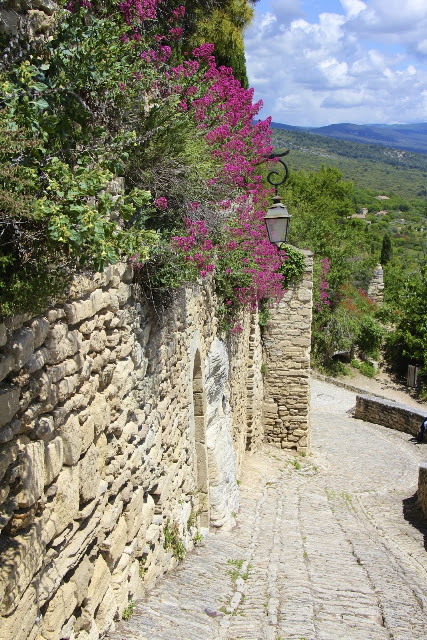
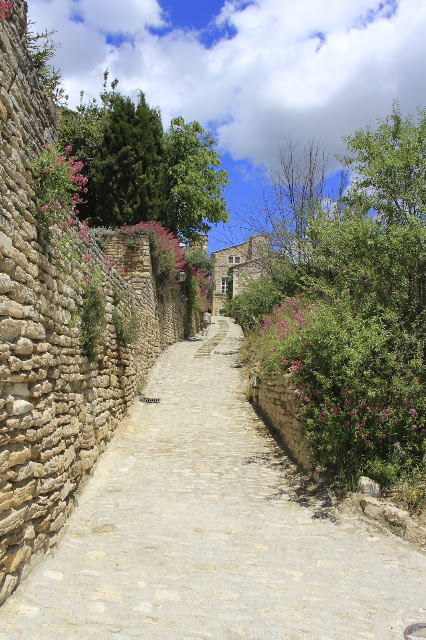
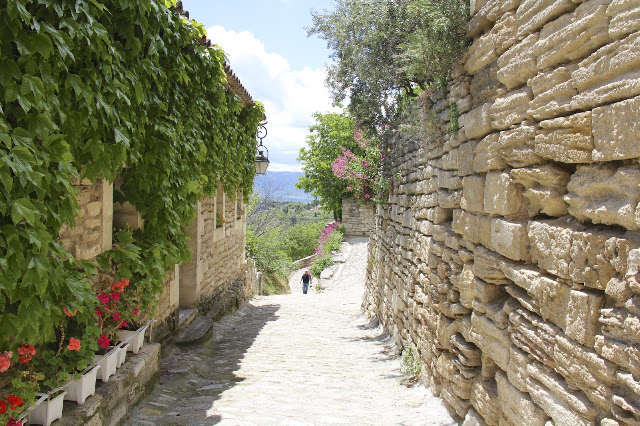
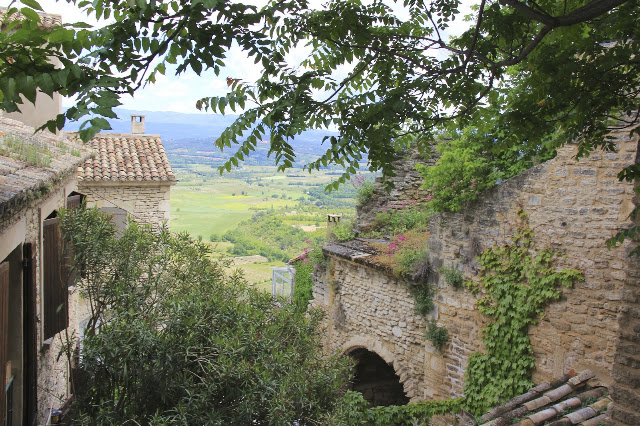
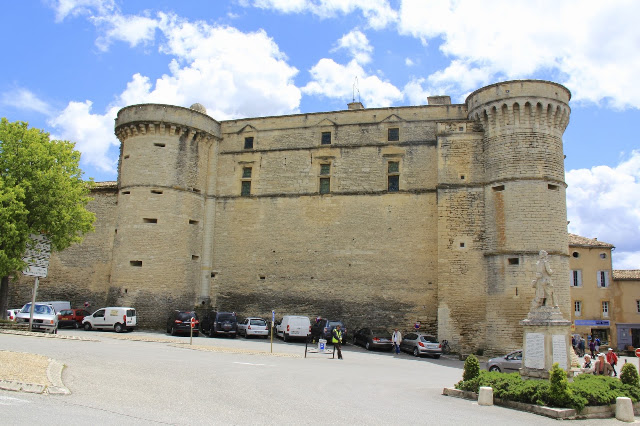
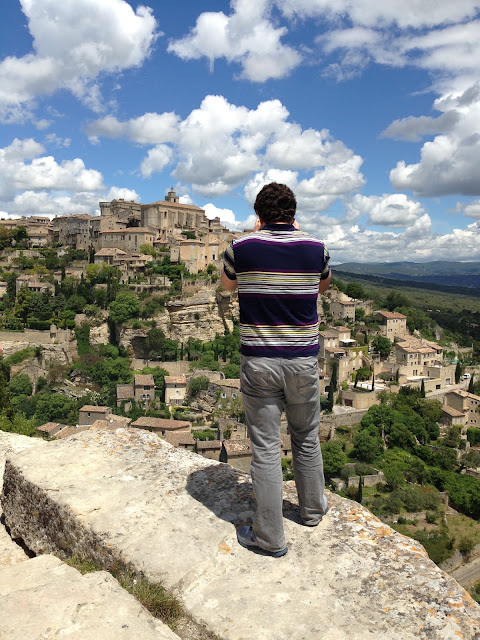
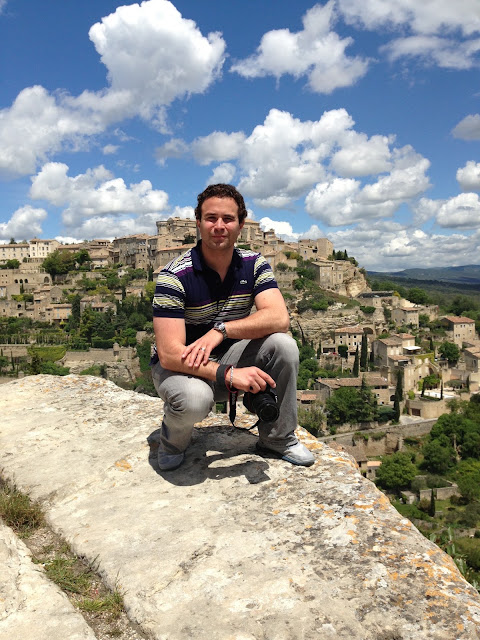
After leaving Venasque, next we drove to Gordes, a village with houses literally clinging to the sides of the Vaucluse ridges, overlooking the Cavaillon plain. The houses and narrow cobble streets are arranged in winding tiers all the way up to the [existing] Renaissance castle and church. Gordes is a village well known to artists, including Chagall (and others I don’t know and can’t remember). Before entering the village from the top and winding our way down and back… we needed to refill and refuel. Lunch time! Michel and Shirley selected a place they had dined before – a charming outdoor restaurant tucked behind a local gift shop. After a delicious lunch, we started winding our way through the streets of Gordes. Jen and I bought Julia a cute hand-made sun dress. We found some of the most picturesque scenes we’ve ever encountered. And right on cue for our magical family photo – Julia didn’t want to cooperate for a posed photo. At least I got some nice landscape photos.
I’ve never seen anything quite like this before – simply stunning in person
Gordes – another angle
It almost appears to be sliding off the side of the cliff
Approaching the city wall – marked by the medieval castle
The main square, what we call a piazza… what do they say in French?
Further into the main entry point
Walking through the village
We had a great time walking around
The girls had fun
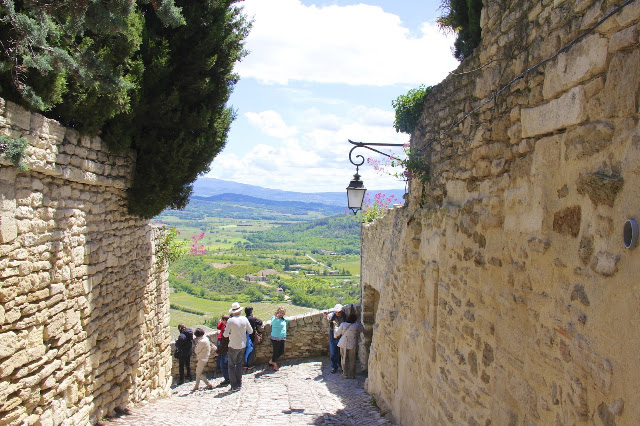
A scenic view, indeed!
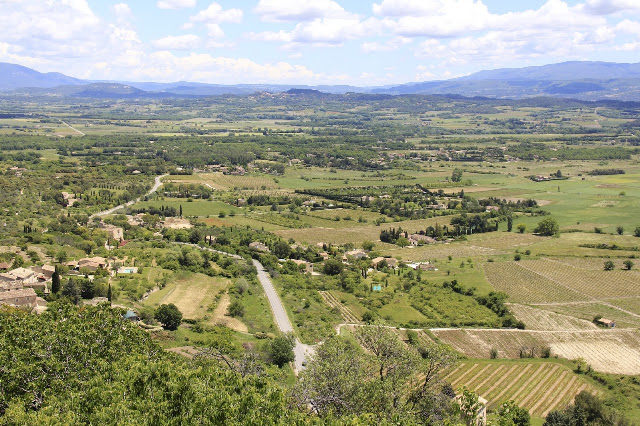
View of the valley below
Loved this…
and this…
and of course, this!
The buildings in Gordes were truly special
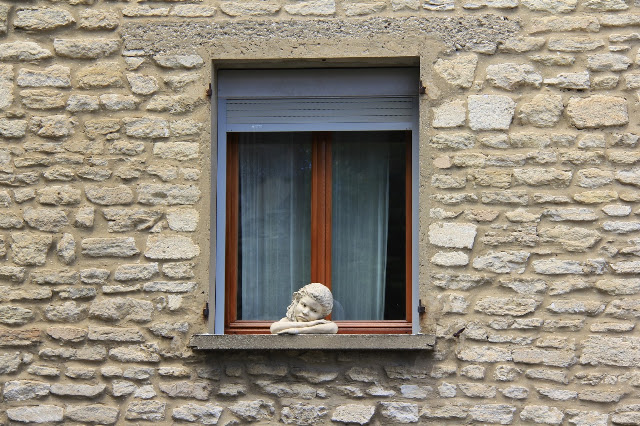
Even the angels come here to day dream
A better view of the castle
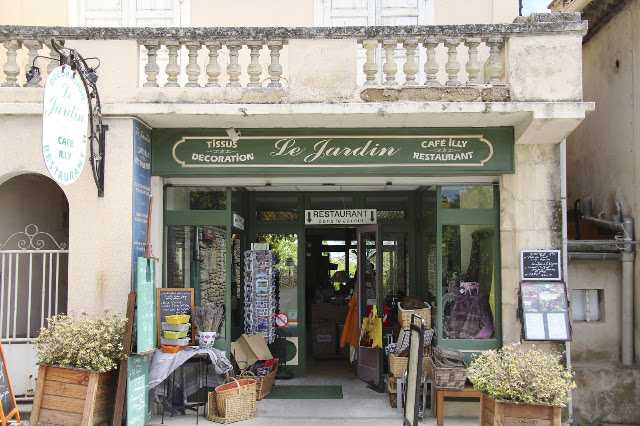
Le Jardin – store in the front, restaurant in the back
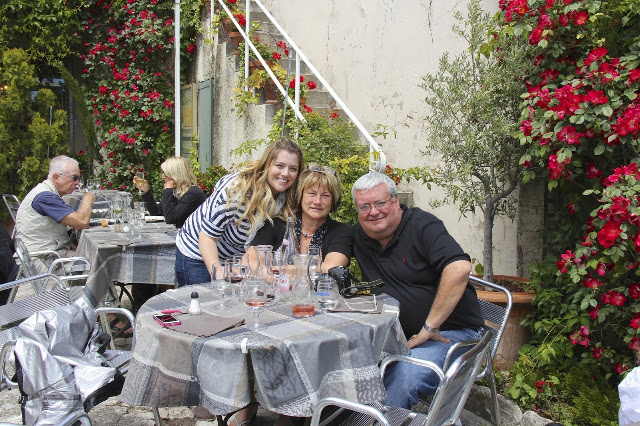
Enjoying a wonderful lunch
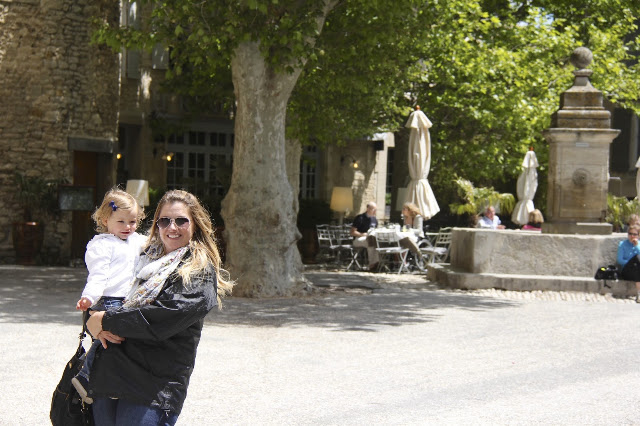
Julia stopping to smell the flower with Shirley
Jen took a picture of me taking a picture of the village
Cheeeeese!
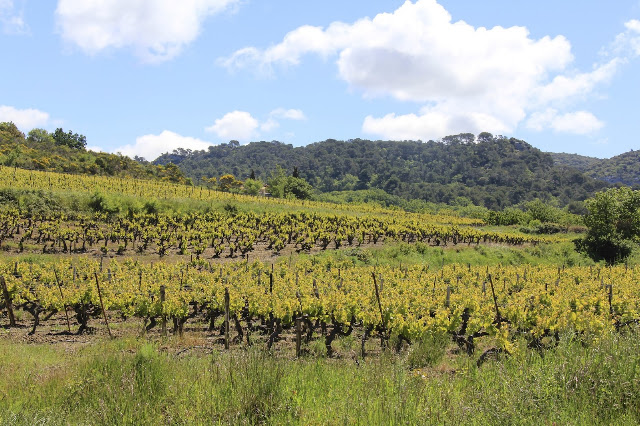
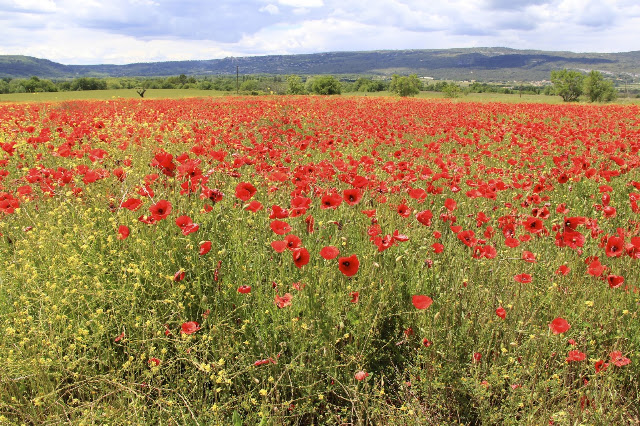
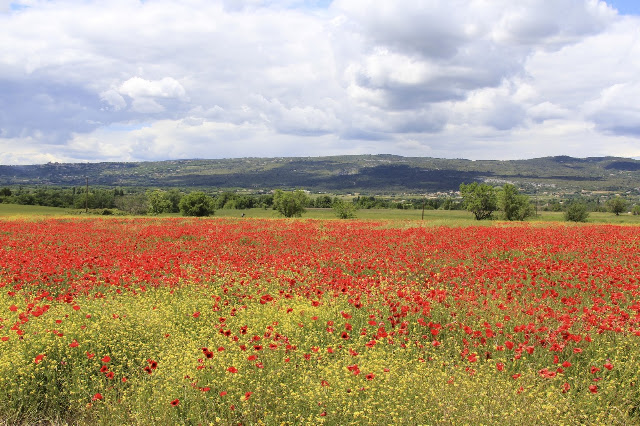
We eventually left Gordes and drove to Roussillon, a village far different than the first two. Along the drive in between towns, we passed a beautiful vineyard that I thought to be so typically French. But the real bonus was when we discovered a huge field of poppies, growing wild – we had to pull over and take some pictures.
Anyone up for a bottle of wine?
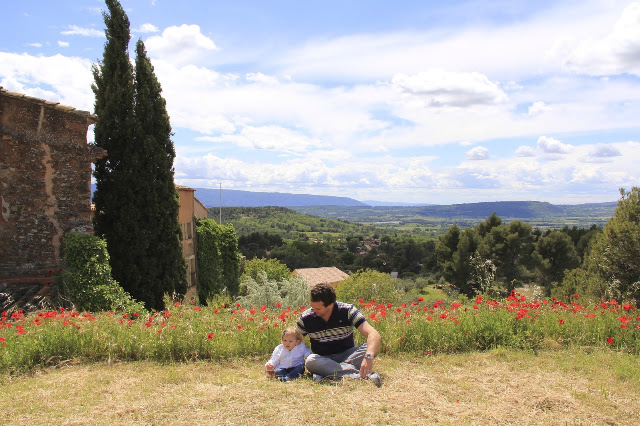
Large field of poppies
The poppies were growing wild
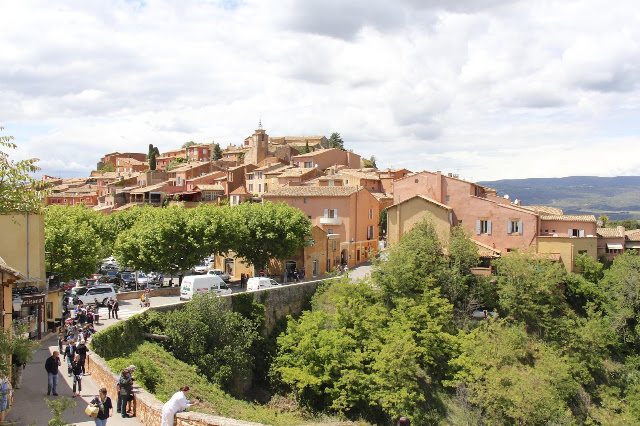
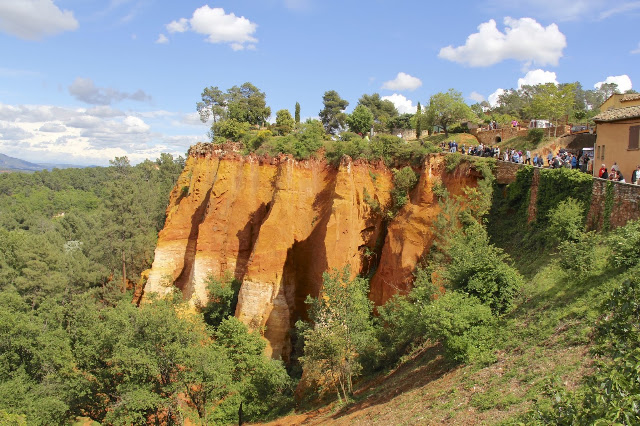
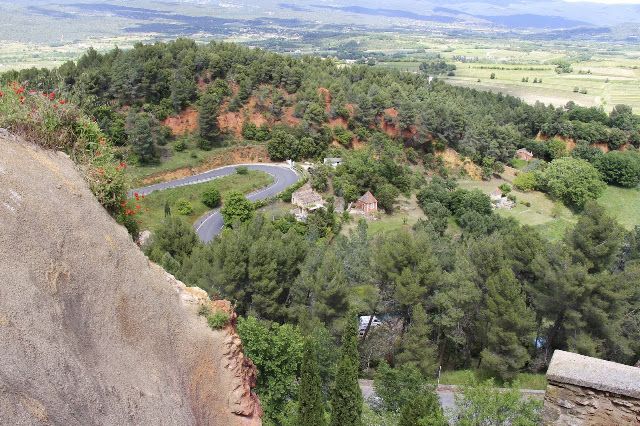
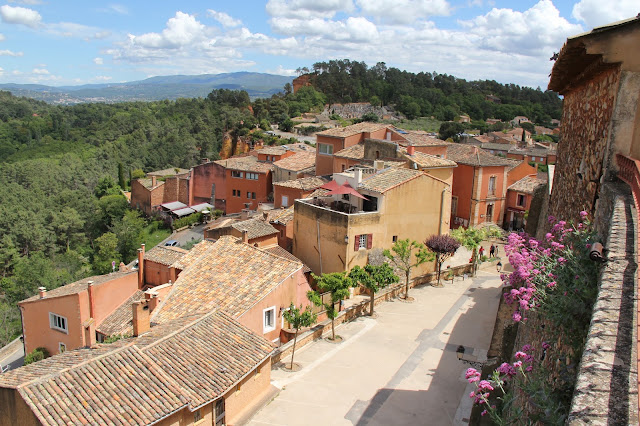
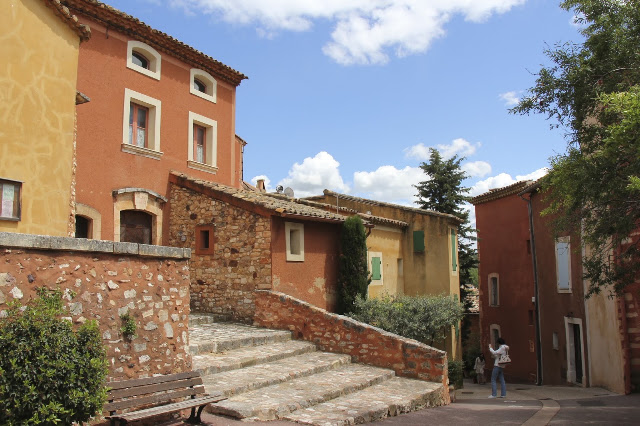
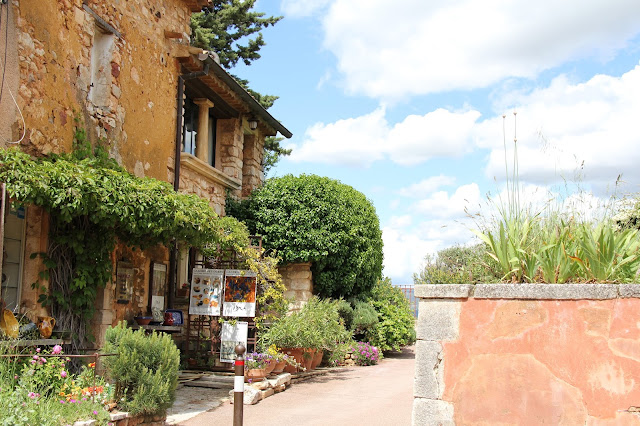
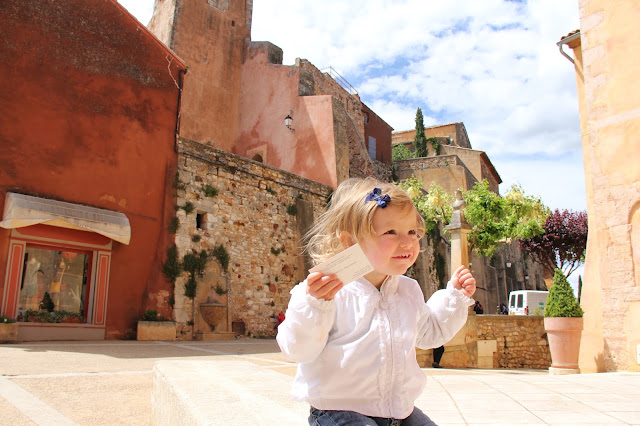
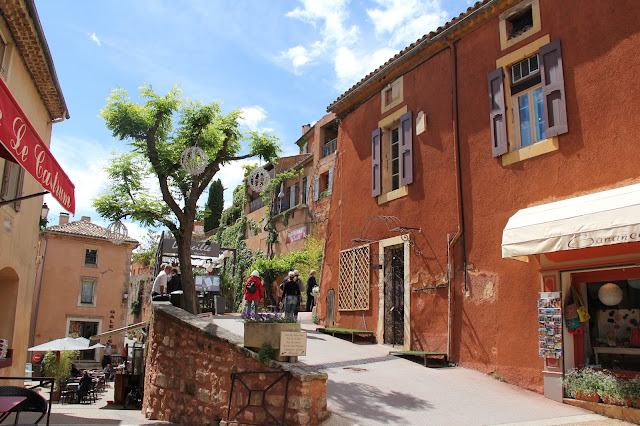
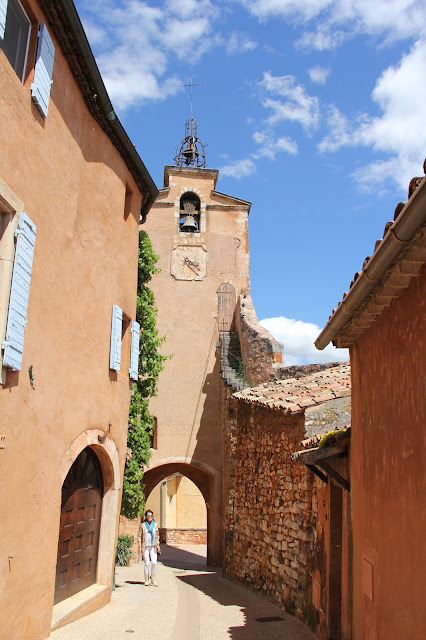
Roussillon screams its independence from other nearby villages by proudly brandishing peaks of vibrant red and ridges of bright orange. We were instantly reminded of Sedona, Arizona. The village sits atop the biggest ochre deposit in all of Europe and the result is a civilization built on bright orange clay-like earth. The village itself has since been shaped by the surrounding land and the homes, churches and buildings all marry this natural beauty perfectly. After a long time exploring, we stopped and had an a apéritif at an outdoor cafe.
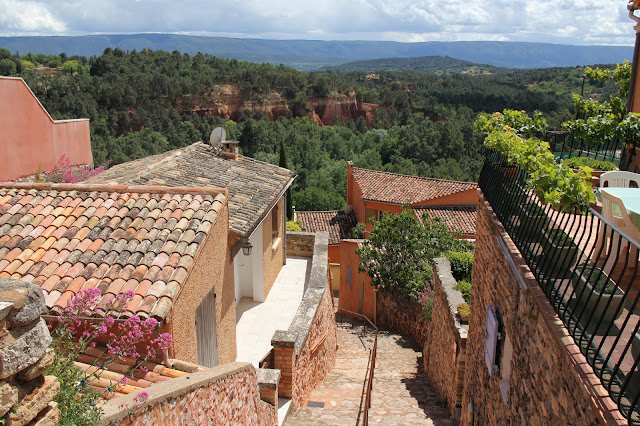
Roussillon from slightly above
The earth beneath the village was wonderful to behold
The orange earth follows the bends in the road
The houses were painted to match the landscape and unique soil
Strolling through town was wonderful
Beautifully landscaped front yards
Julia started dancing to music she heard coming from a nearby store
Street scene
Julia snuggled up to me in a nice field overlooking the valley
Great bell tower
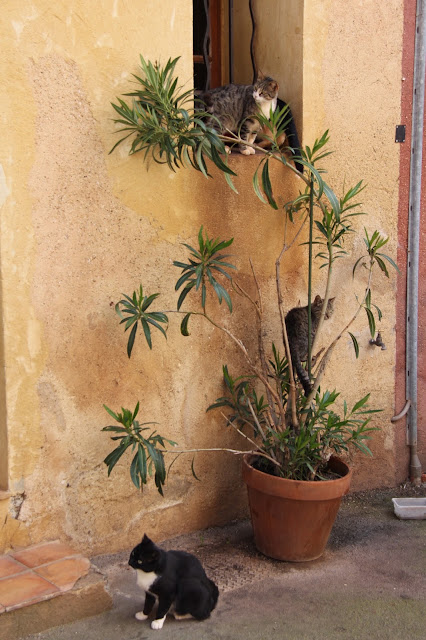
We found “cat-lady’s” home – we counted 8 cats just in this area
Stairway to heaven?
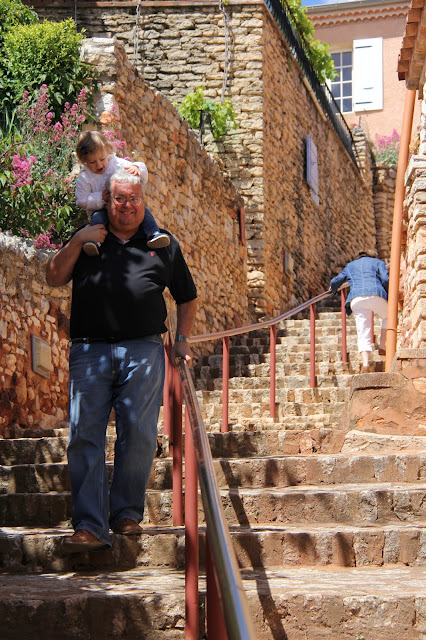
Now that’s the way to ride down a long set of stairs
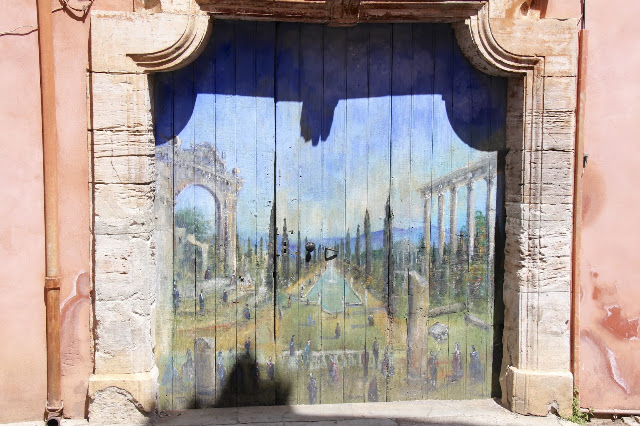
Beautifully painted door
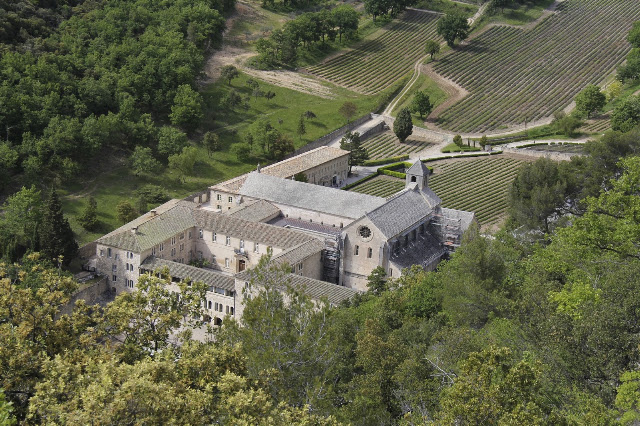
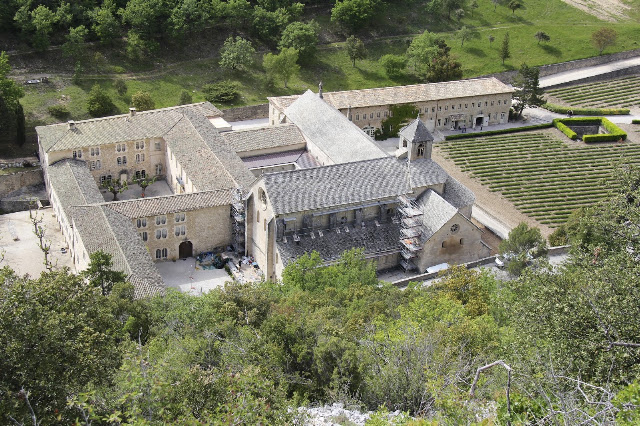
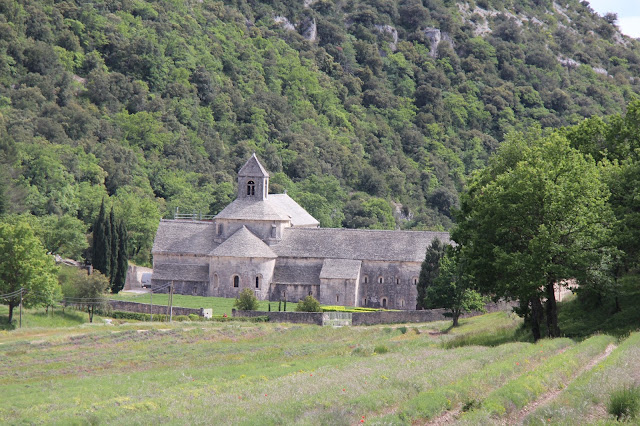
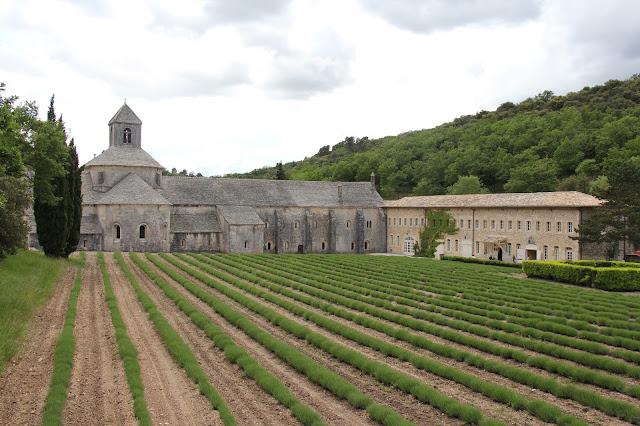
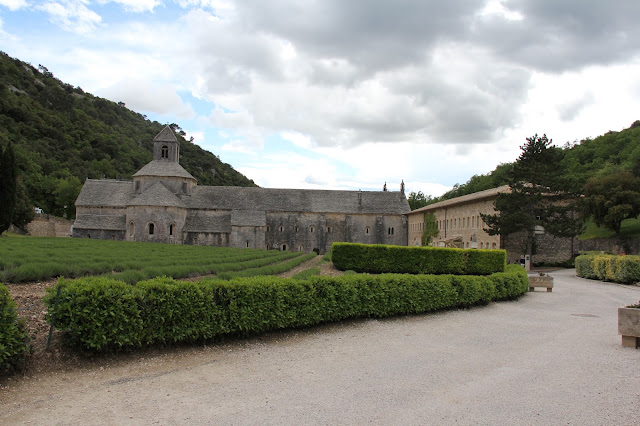
We had one more stop left – an abbey built in the middle of the 12th century. Abbaye Notre-Dame de Sénanque is a working abby, where the local monks tend to large fields of lavender that they sell to subsidize the abby (along with tourist sales of tours and merchandise).
Abbey as we approached from above
Another angle
The monks “front yard”
Fields of lavender, not yet in bloom
12th century Abbey
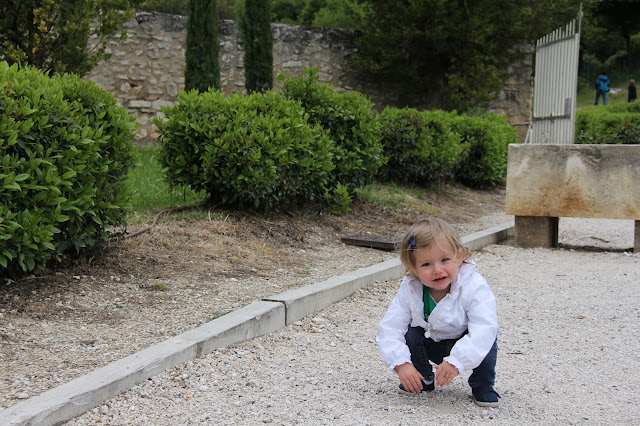
Julia had fun
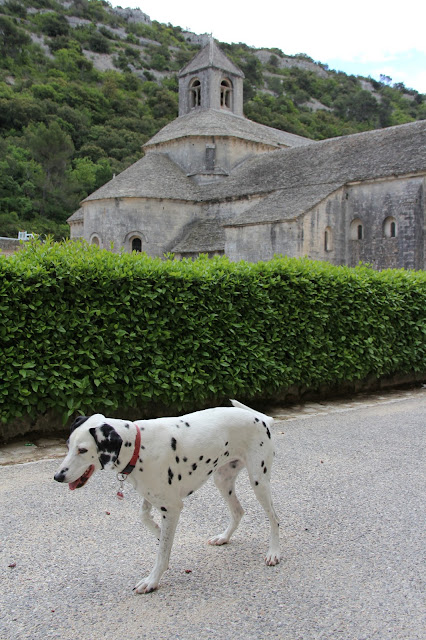
Julia thought this was the dog from, 101 Dalmatians
By the time we reached our “home” village of Sablet at the end of a long day, we were wiped out. But we were only half-way done! We had dinner plans with friends of Michel and Shirley’s – a couple that owns the local bar in town. We had just enough time to freshen up and then head down the street to meet them in front of their bar. We all shared a nice bottle of rosé over introductions and then headed out for dinner. I’ll feature this dinner, along with a few others in a separate “food” post.
Jen and I decided that we had so much fun on our first day, we needed to extend our two day trip into a three day trip and our wonderful hosts obliged us. Stay tuned for tales of glorious wine tastings, wonderful meals and impressive historical sights.
I have no proof that when my sister, Michelle came to visit with her husband and daughter (David and Elsa) that he was the tallest man in all of Italy… but I’d say there’s a good shot! When I picked them up at the airport, I simply looked for the tallest/shortest couple combo possible (he’s a hair over 6’8″ and she’s a modest 5’2″). I spotted them instantly and helped them get some caffeine before taking them home for our big Italian lunch.
David, Elsa and Michelle – he’s crouching down to make it in the frame
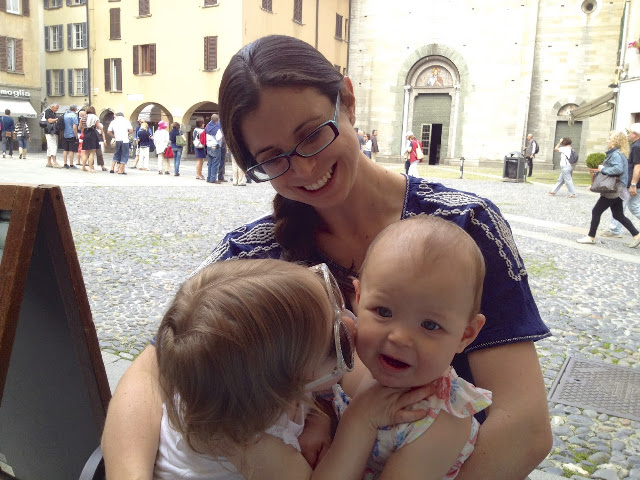
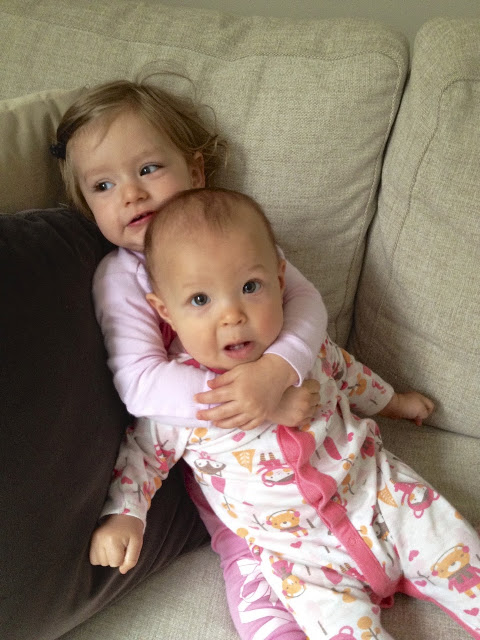
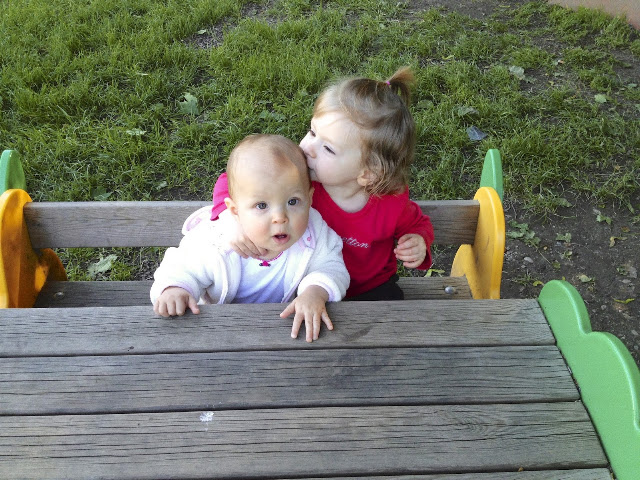
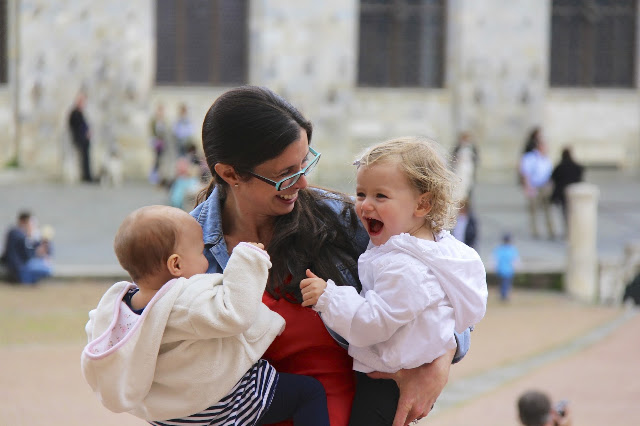
Julia’s younger cousin, Elsa was her newest obsession and she had been excited all week leading up to their visit. She would wake up every day and scroll to some of the video’s or pictures we had on our iPad and scream “ELSA!” When the real thing walked (or rather, crawled) through the door – she was like a kid on Christmas. She couldn’t stop hugging and kissing her. Although, she had an awkward way of pulling her in by the neck – so much so that we dubbed Julia the, “Scranton Strangler” (you “Office” fans will get the reference).
The girls all reunited – Julia just wanted to kiss Elsa all the time
“Is my cousin trying to strangle me?!”
Michelle and David have a high-paced, action-packed lifestyle in Chicago and they were looking forward to a couple weeks of unplugging from their demanding jobs that they both do so well. We were happy to accommodate and show them a slow-paced trip filled with lots of good food and wine. We spent a couple days in the area, taking it easy. We visited the local park with the girls, we walked around downtown Como, we drove through many of the smaller lake towns. I showed David my favorite 5k loop and we went running together nearly every morning. Michelle cracked up one day after her privacy was invaded by our little Julia, somewhere in the beginning stages of potty training. She barged in and saw Michelle on the “potty” and declared to her, “Michelle… potty… YAHHH!”
The girls playing at the park
Jules sporting a pose in Como
It was drizzling when we went to Menaggio
Getting close to the ducks
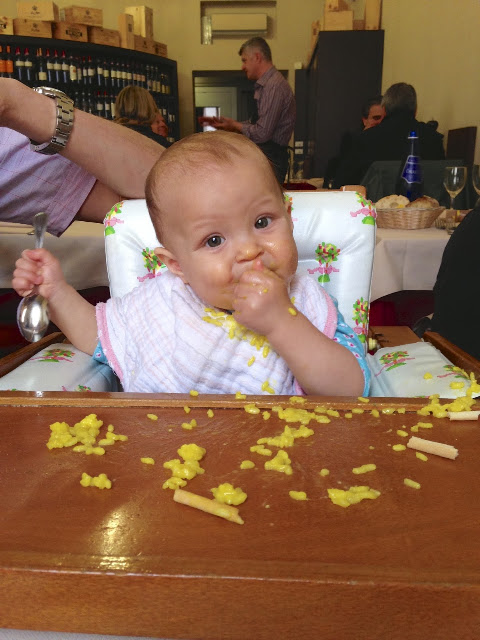
Elsa fell in love with Italian food – especially risotto
“Mom, why is Julia always all up on my grill?!”
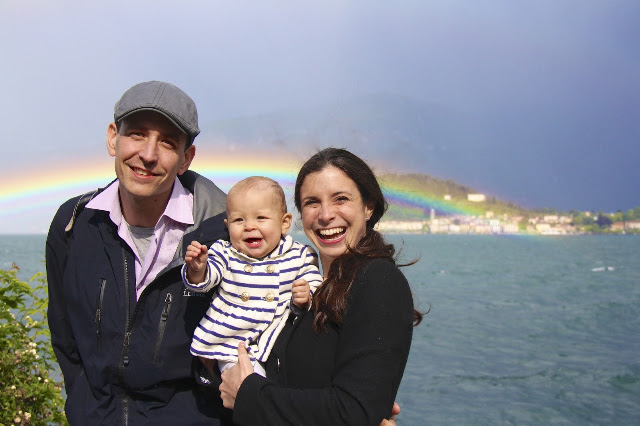
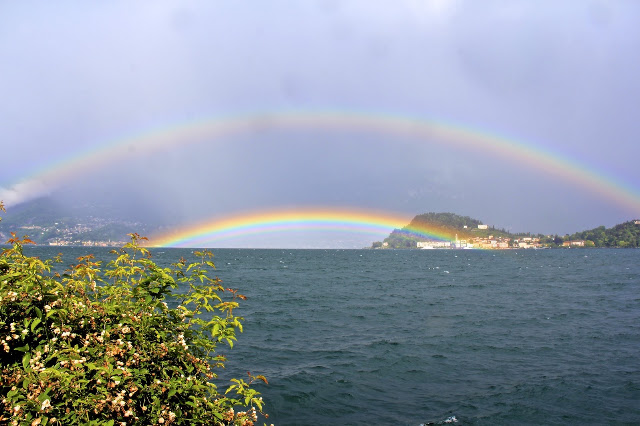
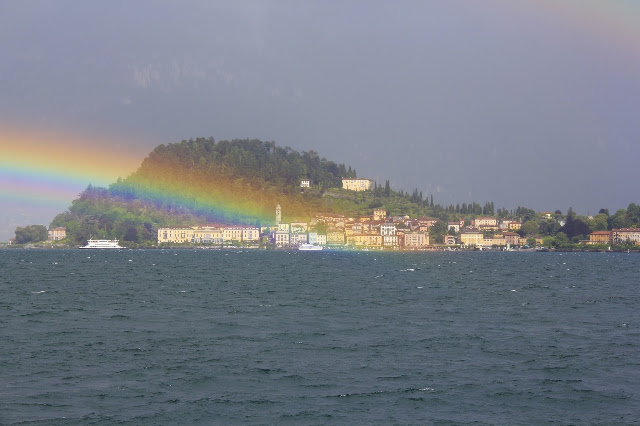
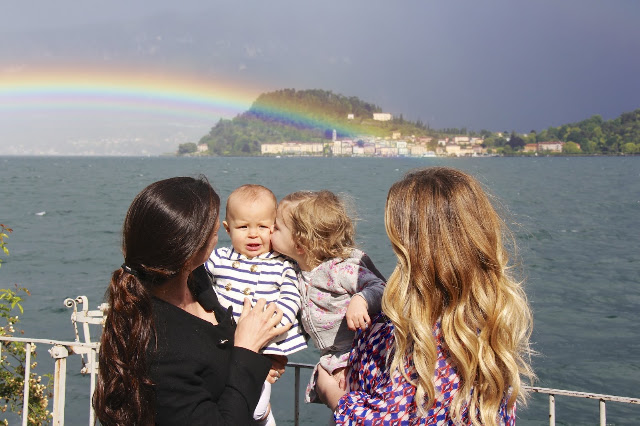
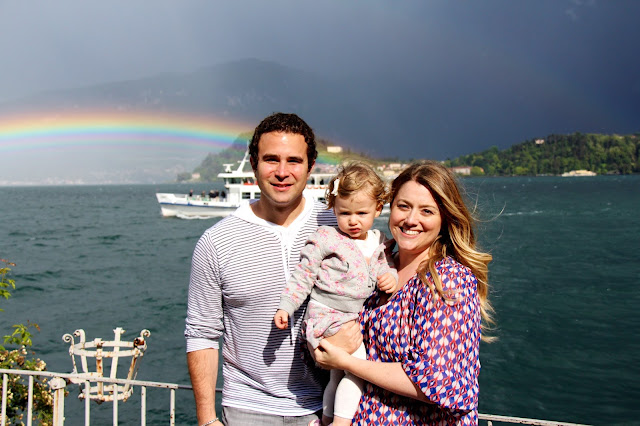
The day we spent driving around the lake was not the most cooperative of days – the temperature was pleasant, but the views were impeded by a haze and a constant drizzle dampened our tour. We stopped for a coffee and a leg-strech in one of our favorite towns, Menaggio before two fussy babies told us it was time to get home. On our way back, the constant drizzle gave us a wonderful gift – a double rainbow! This was something I’d personally never seen and only heard about in the internet-sensation youtube video.
We pulled over and took about 10,000 photos. Below are my favorites.
You could really see both rainbows so clearly
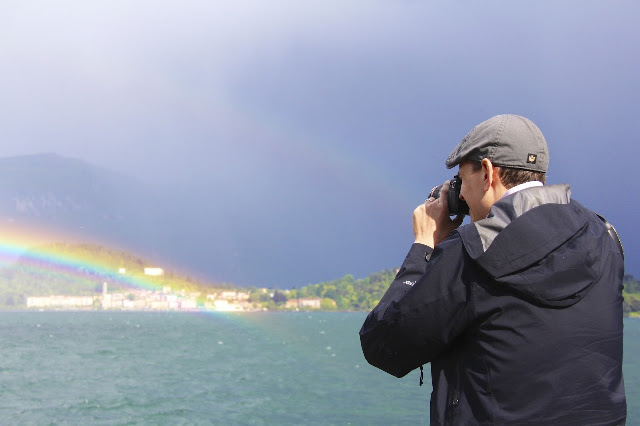
The “inside” rainbow landed directly on Bellagio
All the girls
Family photo
David shooting the rainbow
The original plan for Michelle and David’s vacation was to spend a week with us and another week exploring another part of Europe. We convinced them that it was much easier to just stay with us, making our place the home-base. So a few days into the trip, they planned to go to Cinque Terre. Jen and I had plenty to keep us busy around the house so we sent them off exploring on their own.
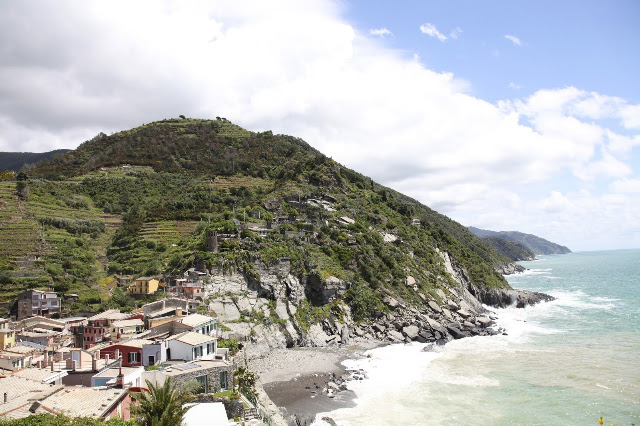
Levanto (David’s photo)
Cinque Terre is a beautiful gem in the Italian Riveria. The area consists of five rural fishing villages (the name means, “five lands“) that are interconnected via a pedestrian walkway. I first discovered this not-so-well-known destination 10 years ago during a study abroad and instantly fell in love. Today, the popularity of the place has reached stratospheric heights and tourists from all over the world come to see the uniquely beautiful terrain. While the change in visitors has altered the local landscape and flavor, it does not deteriorate the beauty of the villages themselves. Michelle and David selected a beautiful B&B in a town just outside Cinque Terre, Levanto which offers beautiful panoramics of the area. They had such a lovely time that they extended their trip by an extra day to really soak it all up. I borrowed a few of David’s photos in order to post them.
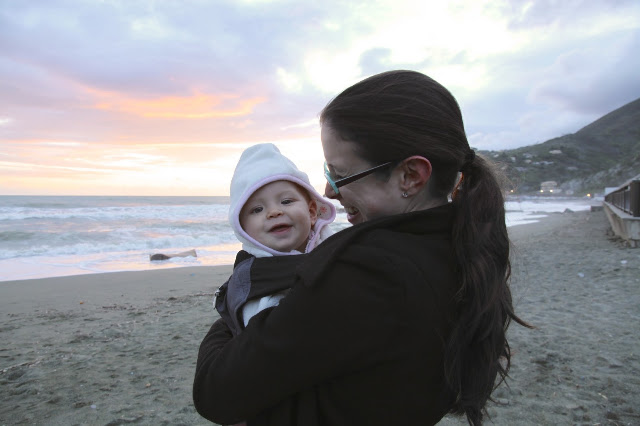
Momma with her baby
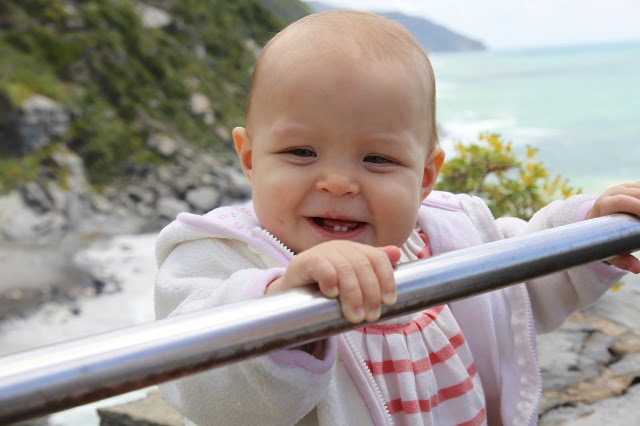
Elsa, the little adventurer
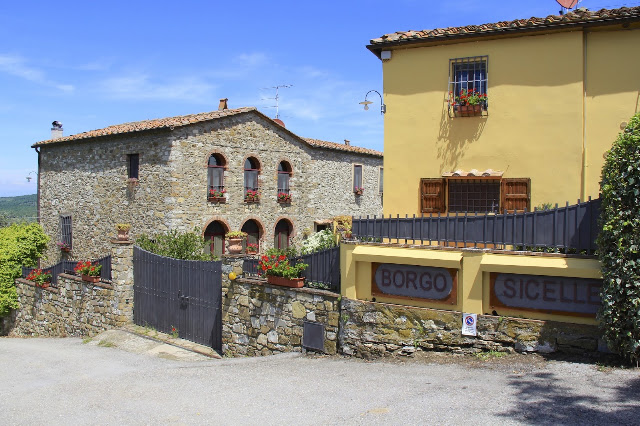
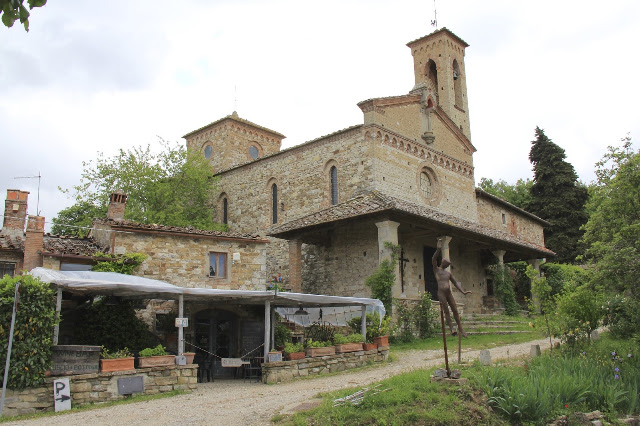
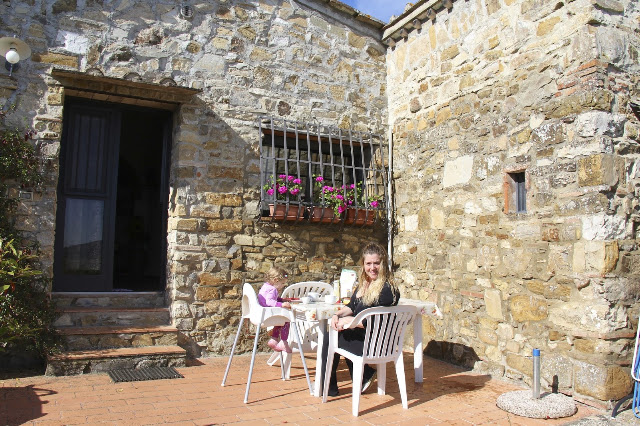
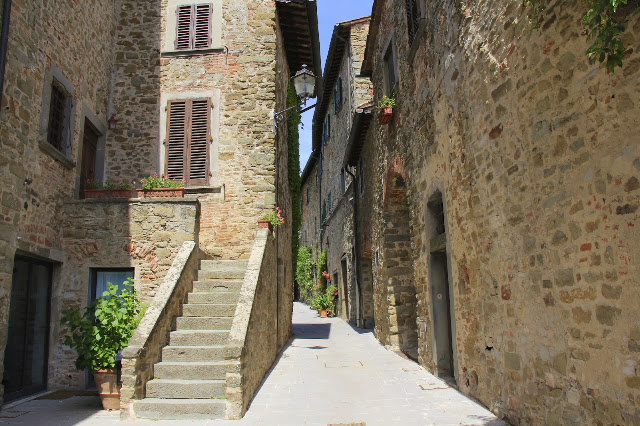
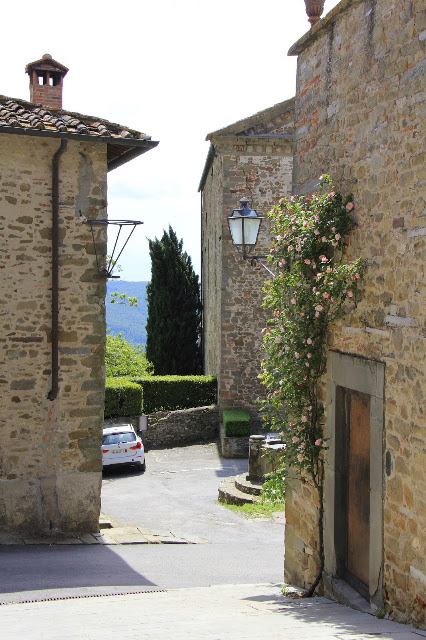
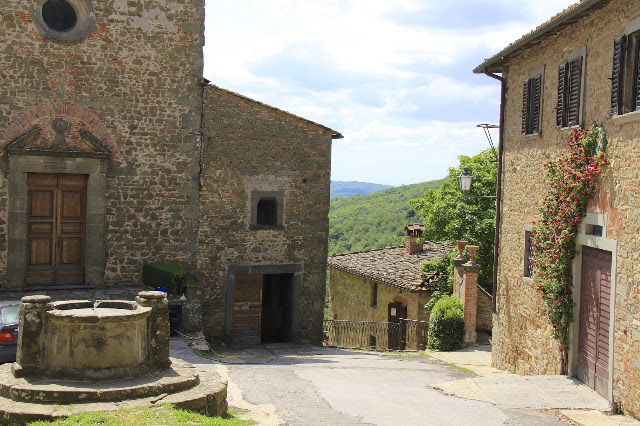
When they returned from their road trip, we spent a few more days locally (the seemingly endless rain kept us close to home) before embarking on another trip, this time all together. The destination – Tuscany. The specific area – open ended. Tuscany is probably the most well known region in Italy. What many people don’t realize is that it’s quite large with a lot of wonderful places to see. What you can’t do is pick a bad area, so I was confident that my internet search would yield a choice that was at least suitable for us. I underestimated just how perfect a location we would discover. A search across many of my favorite websites for this type of thing (trip-advisor, booking.com, agriturismo.net, etc.) lead me to a B&B in the Chianti region of central Tuscany. Borgo Sicelle was the perfect place. The location (midway between Florence and Sienna) offered us a chance to embark on great day trips. The property (originally an old farmhouse, carefully renovated) allowed us to rent a small apartment with individual rooms and a kitchen. The owners (Franco and Silvia) were so hospitable that we had everything we could want and more (including pack-n-plays in each bedroom). I don’t usually use this blog as a forum to recommend places to eat, see or stay (at least not intentionally) – but I will in this case. If you find yourself in Tuscany, stay at Borgo Sicelle!
Borgo Sicelle from the road
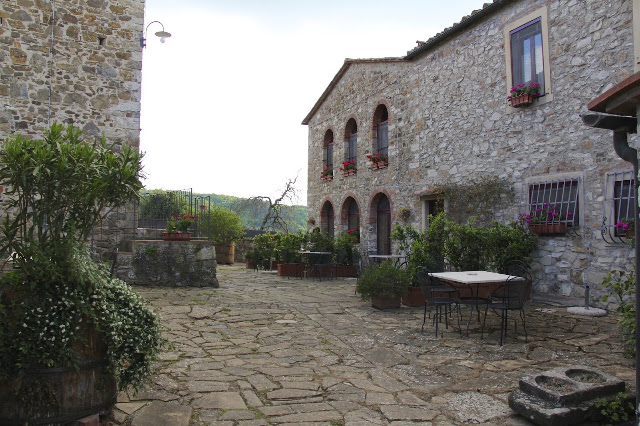
Inside one of the courtyards, showing some of the apartments
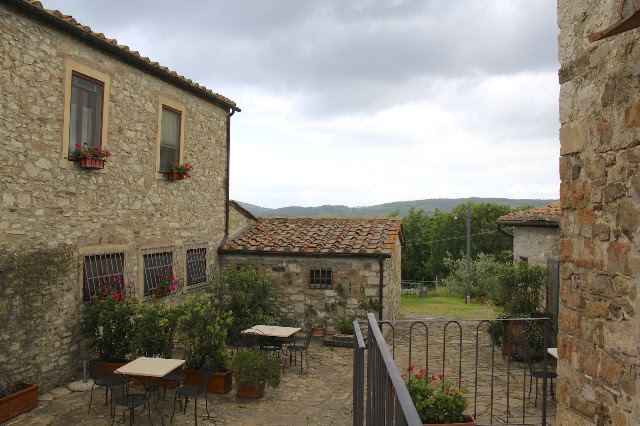
Another apartment with their own outdoor tables
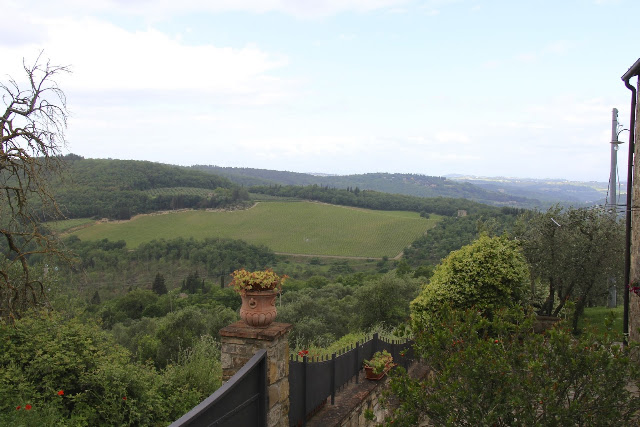
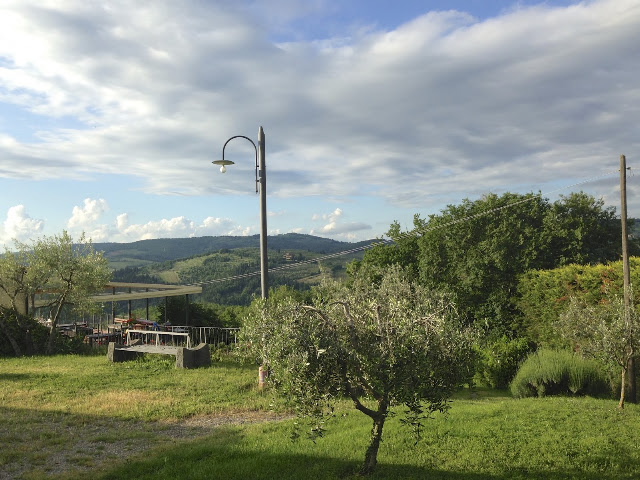
One view from the property – the large open patch is a vineyard
Directly across is a small trattoria (restaurant) and next door is a church
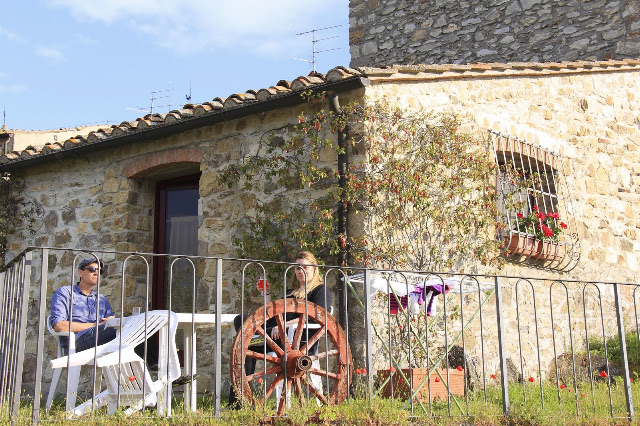
Our “front yard”… at least for a few days
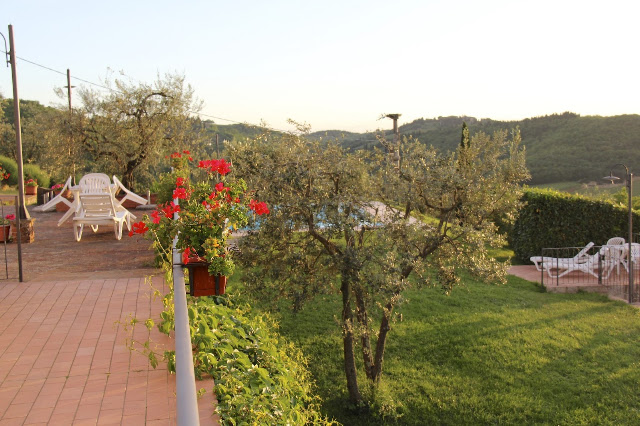
The upper terrace
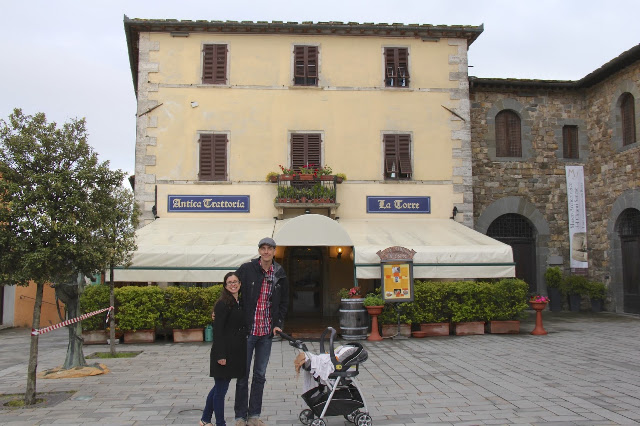
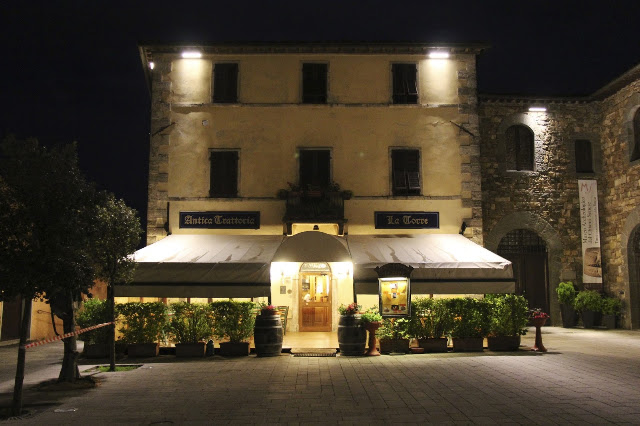
When we arrived, Franco gave us the lay of the land. He also gifted us a bottle of wine made by his brother-in-law (a Chianti, of course) and helped us get settled in by touring us around his amazing property (complete with several private apartments, infinity pool, multiple terraces, a playground, rec room and more). He also explained that many of the local restaurants were participating in a pseudo “restaurant-week” where they were offering pre-fix menu’s at discounted prices. Silvia helped us call and make a reservation at a restaurant, La Torre in Castellina in Chianti, one of the main villages in the area. We arrived on time for our 7:00pm reservation and didn’t leave until all six courses had been served and we’d had our grappa. It was close to 11:00pm by the time we got home and got the girls in bed.
Outside the restaurant
Night fell while we were inside
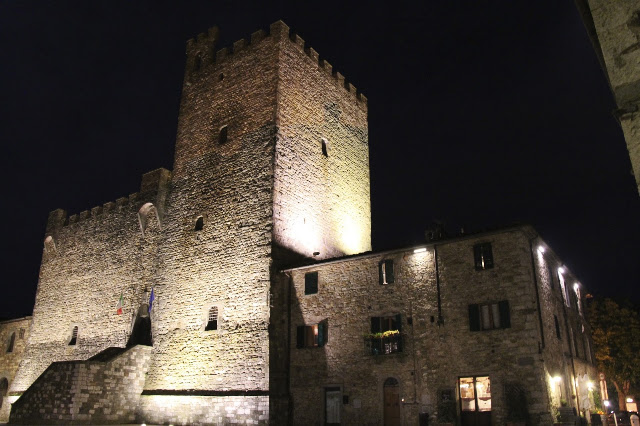
The Rocca of Castellina at night
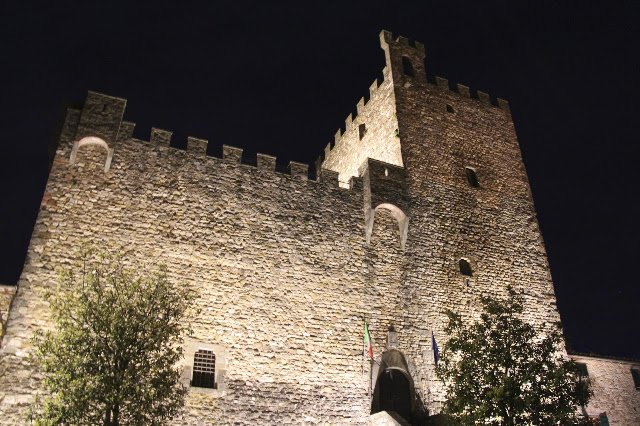
Another angle of the Rocca
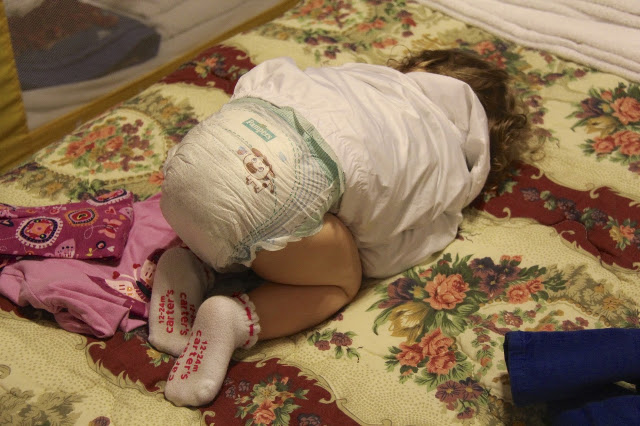
Julia was exhausted by the time we got home
The next day, we all took our coffee outside before setting out on an excursion Franco helped us script. We visited a few of the nearby villages, including a stopover for lunch in Volpaia – a medieval village that is as rich in history and beauty as it is in quality wine.
Coffee on our patio
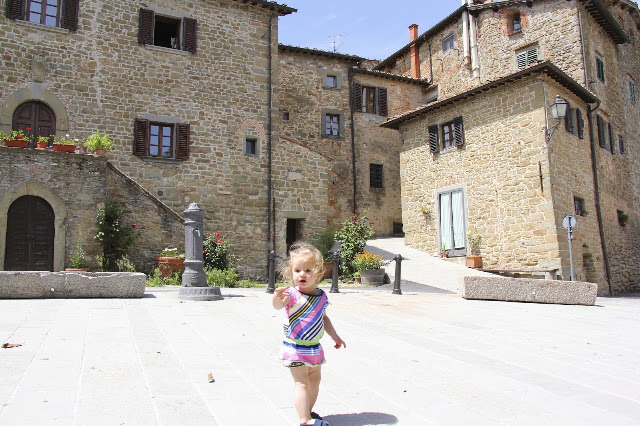
Exploring Volpaia
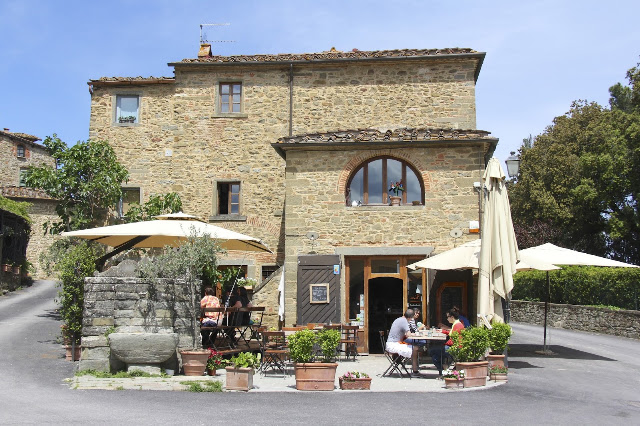
We had a wonderful lunch here
After lunch Julia took a stroll
David tried to keep up
The girls had fun together
Julia calling out to the people below
Looking cool with mommy
A street scene in Volpaia
Another street
In the center of town
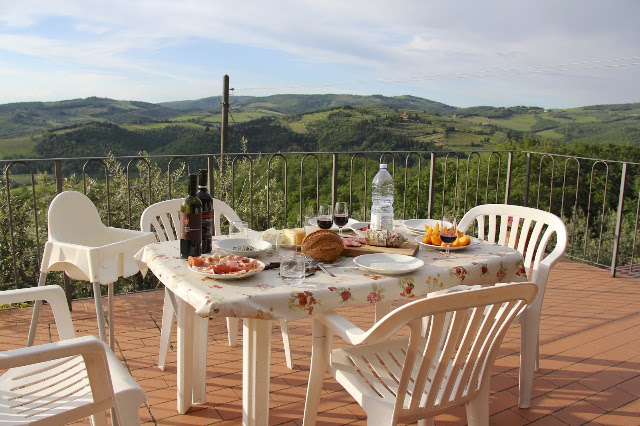
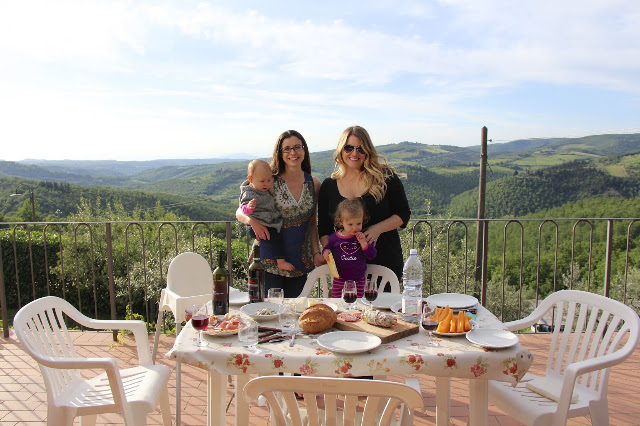
At the end of the day, we pulled together a nice selection of food (meats, cheeses, olives, sardines, etc.) and dined outside while the sun set behind us.
Rustic dinner we threw together to dine al fresco
About to sit down to dinner
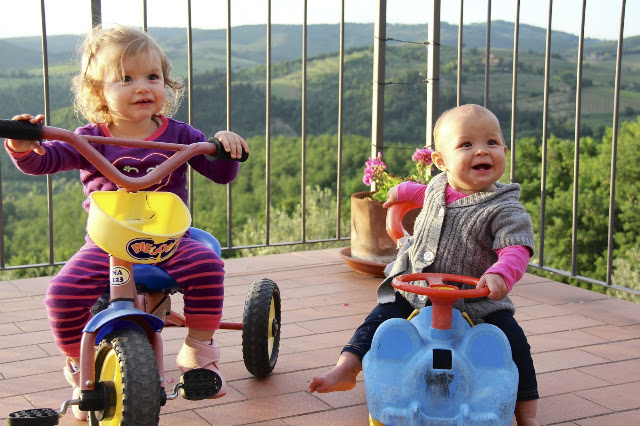
The girls were quick to finish eating so they could play
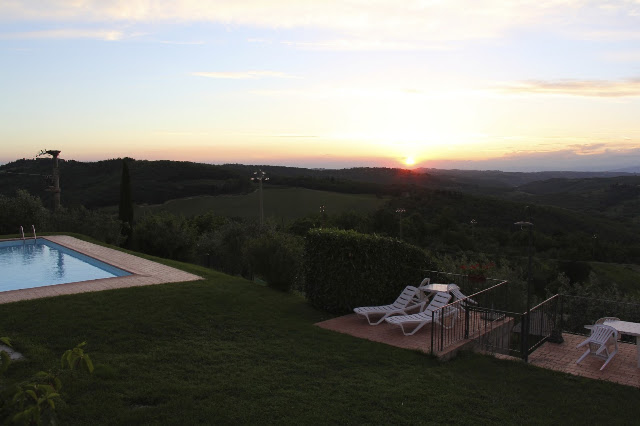
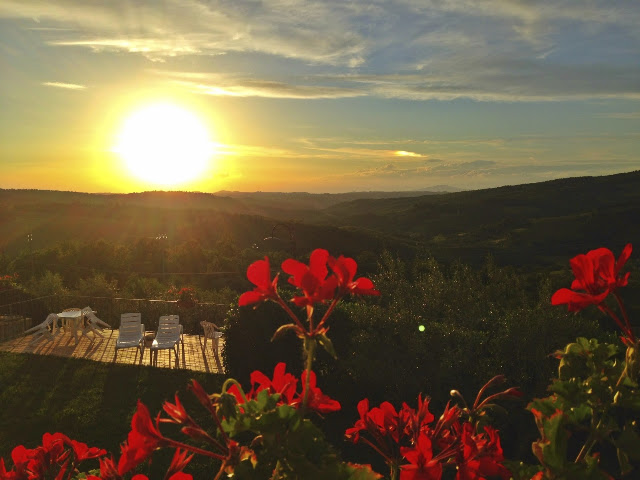
We loved the sunset
The Tuscan hills came to life with such vibrant colors
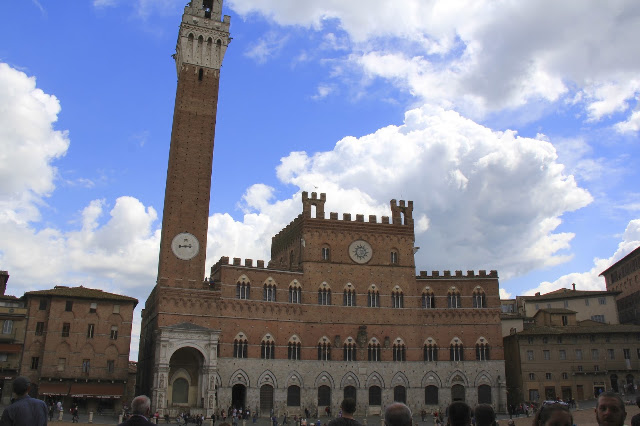
The following day we went to Siena, a short 30 minute drive from our hotel. Siena was settled by the Etrucans between 900 – 400 BC. Today, it stands as one of the most visited locations in Italy. The city center has been named a UNESCO World Heritage Site. Besides the rich art, architecture, museums and cuisine – the city is famously known for Il Palio, a horserace held twice a year in the main square, Piazza del Campo.
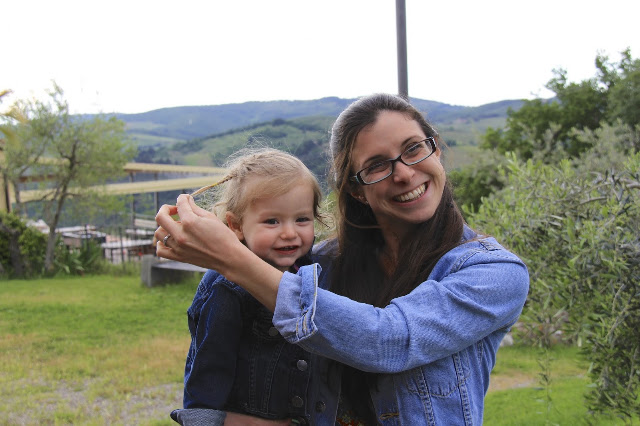
Julia and Michelle made matching braids for the day
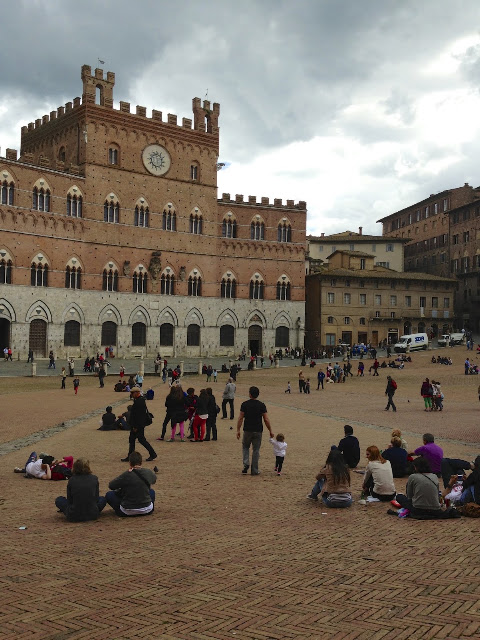
Inside Piazza del Campo
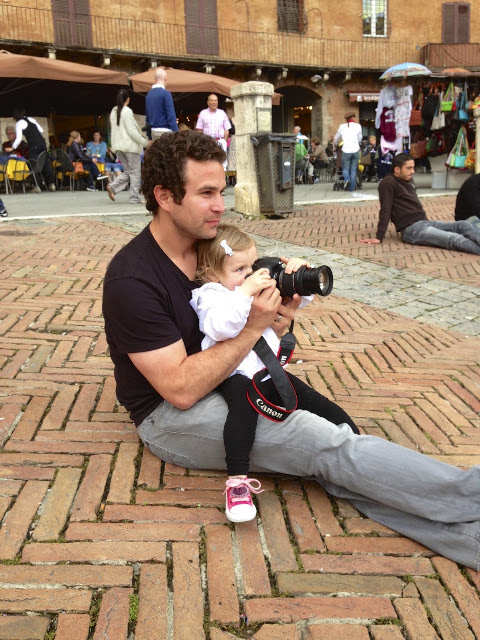
Teaching Julia how to use the camera
I took her for a walk in the piazza
Michelle with her hands full
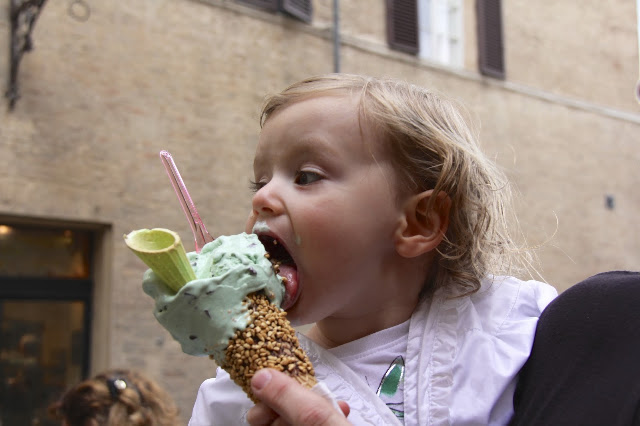
Julia ate all of my mint gelatto
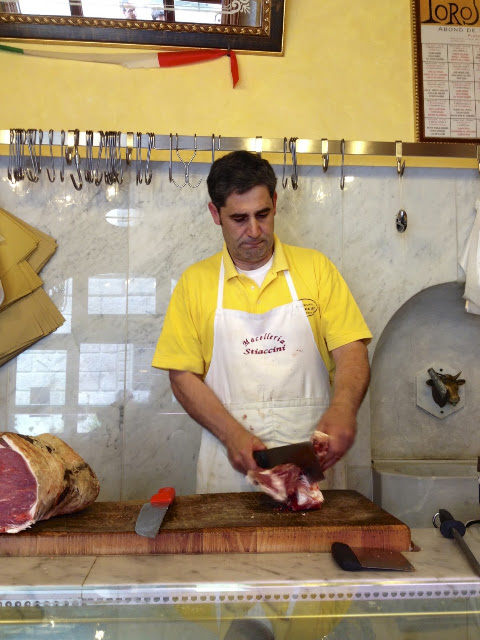
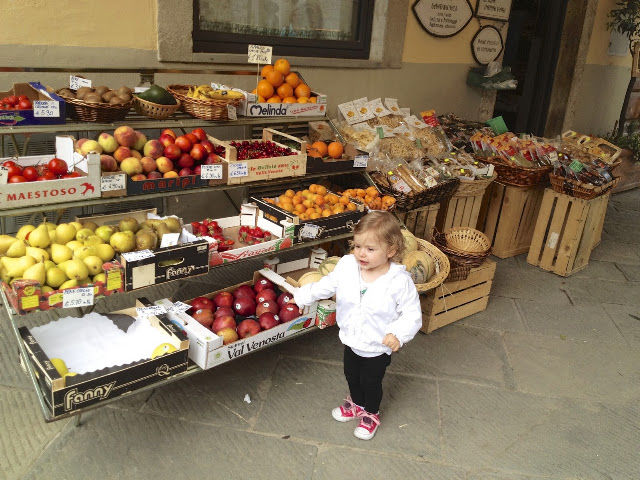
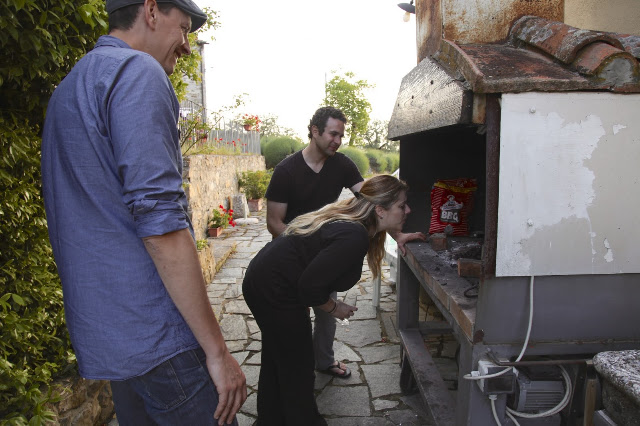
At the end of the day, we swung back by Castellina in Chianti to visit the Macellaio (butcher) and pick up some fresh fruit and vegetables. We had seen Franco using the BBQ the night before and David and I couldn’t get it out of our mind. Our first choice to grill… a big hunk of cinghiale (boar), a specialty of the Tuscan region. Unfortunately, the only boar he had in that day was in a salami (which we got – delicious). For the BBQ, we opted for another Tuscan speciality, bistecca (steak) and salsiccia (sausage). As David and I approached the grill, we admitted to each other that it had been a while since either of us had grilled using charcoal (hedging in case either of us made a critical error). We were further handicapped by the fact that the charcoal provided wasn’t the posh, self-burning American kind – but rather some hard-to-light wood variation. Finally, we both had the gnawing image of Franco’s perfect coals glowing like small pillows delivered straight from Hades the night before. We managed to get enough of a fire going to grill meat – our manhood was in tact and we delivered perfectly cooked steak and sausage to the family. Thousands of years of genetic programing proved to be successful.
The butcher wielding his tools
Julia helped us pick our fruit
We had some of the antipasti in front of our “house” before the grilling commenced
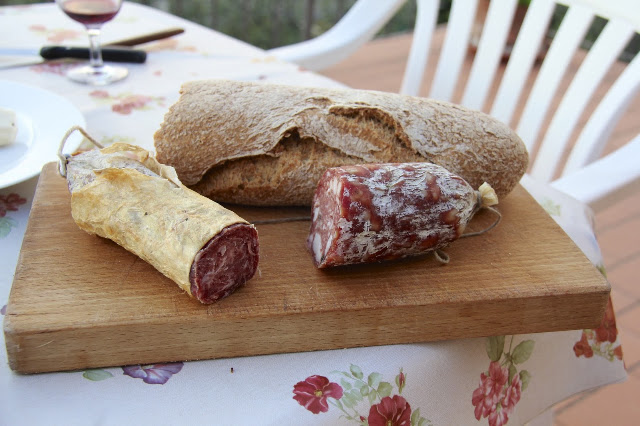
Salami (boar salami on the left) and bread
Jen helping us stoke the fire
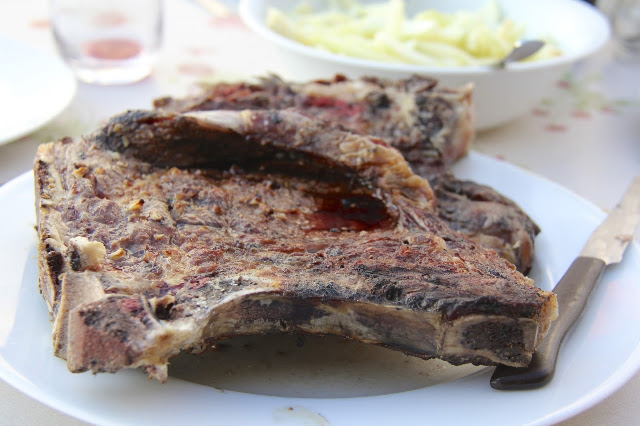
Our steaks!
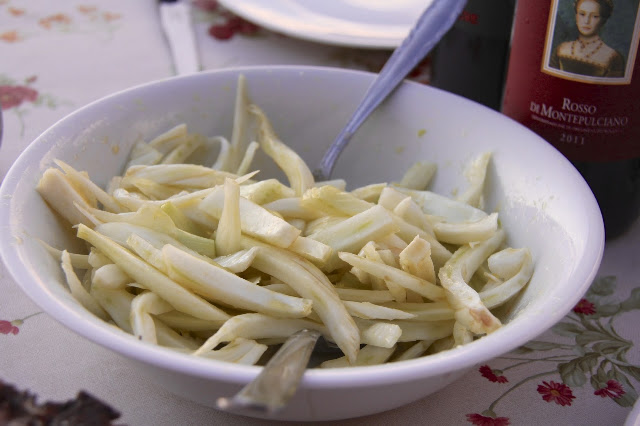
A finocchio (fennel) salad
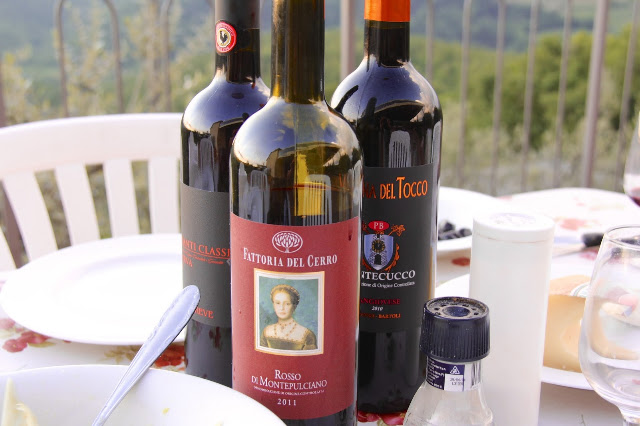
We had learned that we were a “three-bottle” family
Eventually, our time in Chianti came to an end (even after extending an extra day) and we headed back to home to Como. Sadly, Michelle and David’s visit to Italy had also come to an end and we helped Michelle pack for her flight home the next day. What about David, you ask? Well, he must have liked us so much that he stayed an extra night and flew to London the day following day on a business trip. We were thrilled to host their little family, Julia loved having Elsa and we will always remember that trip to Tuscany as something truly special.